






30+ Things to Do in Vietnam: An Honest North-to-South Travel Guide
This works best for travelers with 10–21 days who want a structured but flexible plan. It won’t help if you’re looking for a single-city deep-dive or a package holiday itinerary. Vietnam...


This works best for travelers with 10–21 days who want a structured but flexible plan. It won’t help if you’re looking for a single-city deep-dive or a package holiday itinerary.
Vietnam drew a record 21.2 million international visitors in 2025 — a 20.4% surge year-on-year, according to Vietnam’s General Statistics Office (January 2026). That’s not a tourism algorithm. That’s word of mouth, at scale.
People go. They come back. They send their friends.
But here’s the disconnect: the majority of content about Vietnam online was written before 2020 — some of it before 2018. Phu Quoc barely existed as an international destination back then. Quy Nhon was completely off radar. The e-visa system was unreliable and required a travel agent. All of that has changed. This guide reflects where Vietnam actually is right now.
What “Things to Do in Vietnam” Actually Means
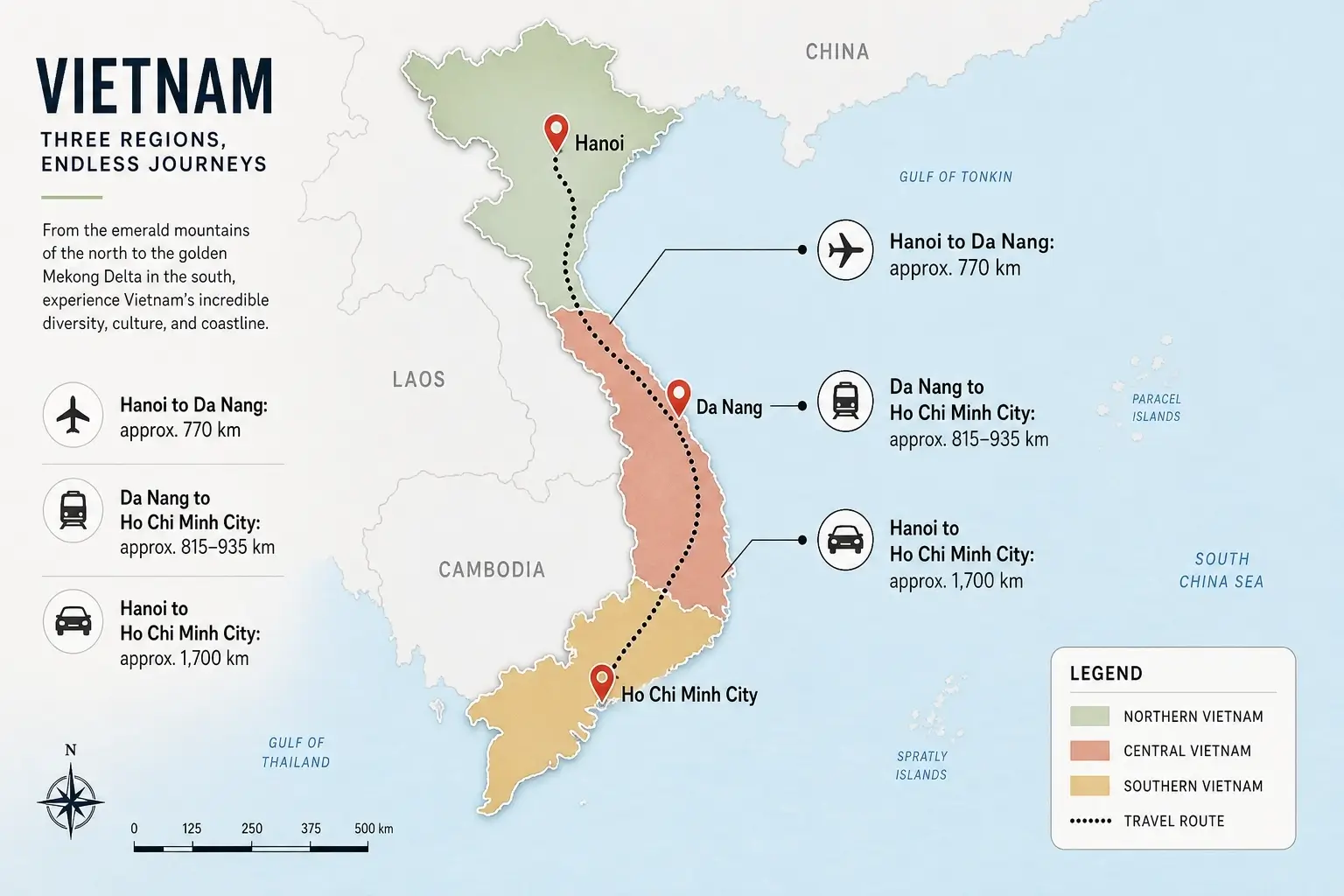
Things to do in Vietnam span three geographically and culturally distinct zones — the north, central coast and highlands, and south — each with different weather windows, transport infrastructure, and traveler personalities. Treating Vietnam as a single destination is the most common planning mistake first-timers make, and it’s why so many itineraries feel rushed.
The country stretches more than 1,600 kilometers tip to tip — roughly the distance from London to Marrakech. The north and south don’t share a cuisine, a climate, or a pace. They barely share an architecture.
Vietnam’s top things to do fall across six experience types: ancient history and UNESCO World Heritage sites, war history and living memory, dramatic natural landscapes (mountains, bays, rice terraces, cave systems), beach and island experiences, street food and cooking immersion, and active adventure (trekking, caving, motorbike riding). Most travelers overweight the cities and underplan the natural and adventure side. The payoff on getting that balance right is significant.
What Vietnam is most known for internationally: Vietnam is recognized globally for Ha Long Bay’s karst seascape, the UNESCO Ancient Town of Hoi An, the imperial city of Hue, and a street food culture that ranks among the world’s best by most culinary travel benchmarks. According to Vietnam’s General Statistics Office, European visitor numbers surged 46.1% year-on-year in early 2026, driven primarily by cultural tourism and food travel demand — a pattern consistent with what’s drawing people rather than just the beaches.
Vietnam is best for first-time Southeast Asia visitors who want variety — multiple landscapes, cultures, and food traditions in one trip — and for second-timers ready to move off the standard trail into Cao Bang, Ha Giang, or Quy Nhon.
The North: Hanoi, Ha Long Bay, Sapa & Ninh Binh
The north is where Vietnam gets dense, misty, and genuinely complicated. It’s also where most travelers either fall completely in love with the country or spend three disoriented days before catching a flight south. The difference usually comes down to pace.
Hanoi (2–3 Days)
Hanoi isn’t Bangkok. It’s not trying to be.
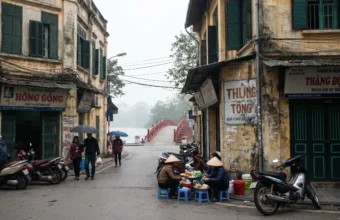
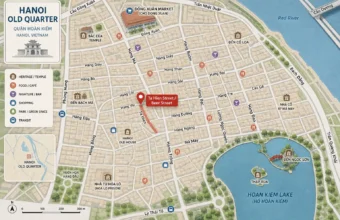
The Old Quarter’s 36 traditional trade streets operate on a logic that predates modern city planning by several centuries — narrow lanes, multi-generational family businesses spilling onto sidewalks, and a coffee culture (ca phe trung, egg coffee, served in ceramic cups at knee-height tables) that makes you genuinely reconsider your hometown’s café scene. The Temple of Literature (Van Mieu), Hoan Kiem Lake and Ngoc Son Temple, and the Ho Chi Minh Mausoleum complex are the anchors. Do all three. Then spend an afternoon on a street food walking tour — operators listed on GetYourGuide include licensed local guides with verified reviews, not hotel concierge recommendations reading from a laminated card.
Travelers who’ve done Hanoi well often describe one specific evening: bia hoi (fresh draft beer, roughly 20 cents a glass) at a plastic-stool corner near Ta Hien Street, watching the city operate at full chaos around them. That’s not something you book. That’s something you find.
One thing that catches first-timers off guard: Hanoi traffic doesn’t pause. The trick to crossing streets isn’t waiting for a gap — it’s walking at a slow, steady pace so motorbike drivers can predict and flow around you. Grab works reliably here for anything beyond comfortable walking distance, with prices shown before you confirm the ride.
Ha Long Bay & Ninh Binh
Here’s the thing: whether you book a 1-night or 2-night Ha Long Bay cruise matters more than which operator you choose.
One night gets you the logistics — you arrive, cruise for a few hours, sleep on the boat, kayak in the morning, return by afternoon. Two nights gets you into quieter sections of the bay (particularly Lan Ha Bay, which borders Cat Ba Island), smaller crowds at sunrise, and enough time to actually breathe. Mid-range cruises — around $120–$180 USD per person for two nights — book out 4–6 weeks in advance during peak season (November through March). GetYourGuide aggregates licensed cruise operators with verified traveler reviews, which matters when the quality gap between Ha Long Bay boats is genuinely extreme — the worst-reviewed budget boats share the same water as the best.
Quick note: If Ha Long Bay feels too busy or expensive when you’re planning, don’t drop the idea — shift to Ninh Binh instead.
Ninh Binh is 90 minutes from Hanoi and badly underserved by most Vietnam travel content. Slow boat trips through flooded limestone cave systems at Trang An (UNESCO World Heritage), ancient capital ruins at Hoa Lu, and cycling through the rice paddies at Tam Coc — all for a fraction of Ha Long Bay prices and crowds that are a fraction of the size. Travelers who’ve visited both regions often report that Ninh Binh landed harder as an experience. One night here is worth it. This isn’t a day trip.
Sapa & the Northern Highlands
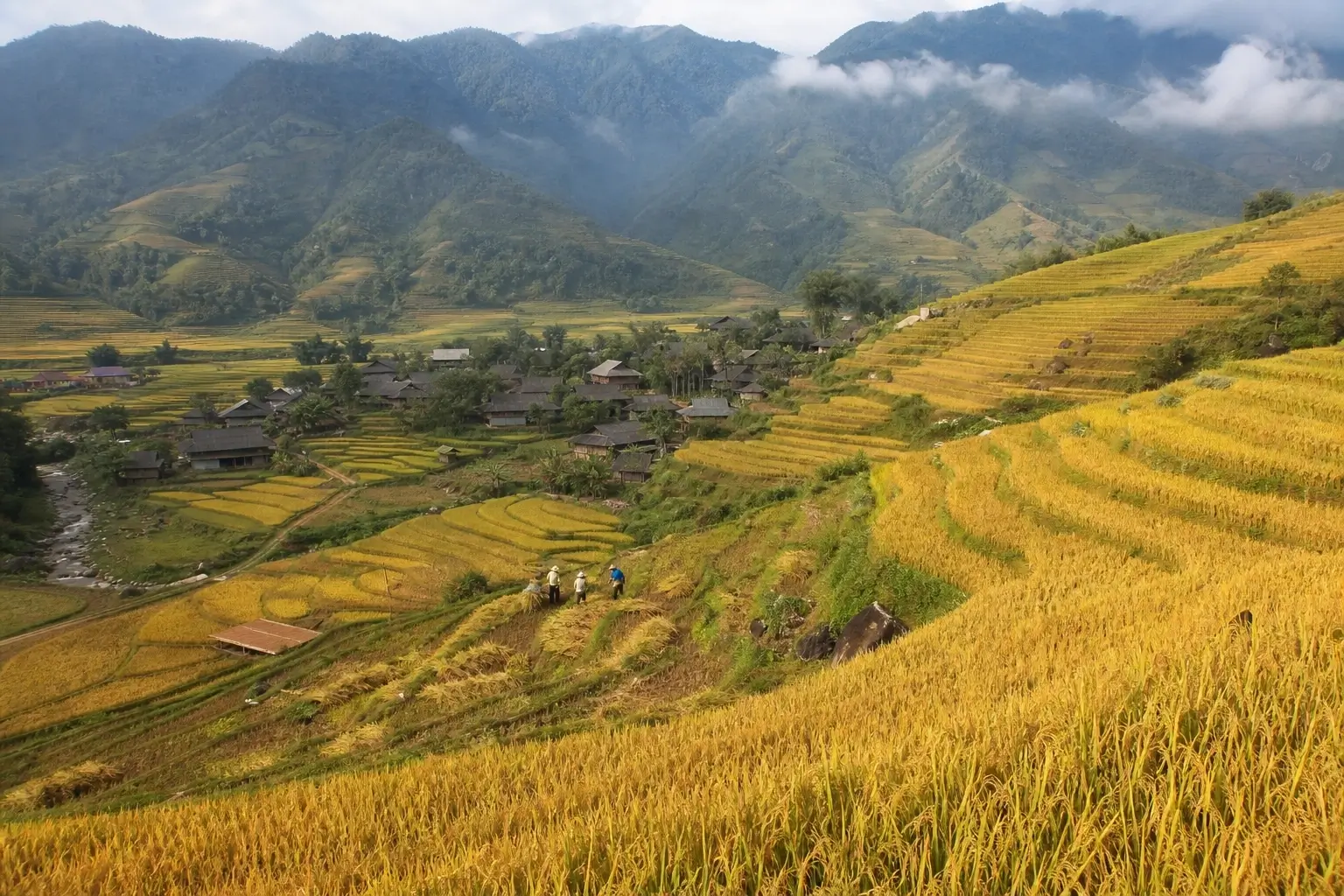
Sapa sits at 1,500 meters in the Hoang Lien Son mountains. The rice terrace landscapes surrounding it — particularly during harvest season in September and October — are the most photographed in the country for a reason that becomes immediately obvious when you’re standing in them.
The treks between ethnic minority villages — Cat Cat, Y Linh Ho, Lao Chai, Ta Van — are achievable for moderately fit travelers. I’ve seen conflicting guidance on this: some sources say the Sapa treks are completely navigable solo, others say a guide is non-negotiable. My read: the Cat Cat loop (2–3 hours, well-marked) is fine independently. Anything past Lao Chai toward Ta Van gets genuinely harder to navigate without local knowledge, and hiring a Hmong guide directly from the village rather than through a hotel desk puts money where it matters and gives you a completely different conversation.
Ha Giang is the frontier option. The motorbike loop through the Dong Van Karst Plateau Geopark — dramatic gorge roads, ethnic minority Sunday markets, the Lung Cu flag tower at the Chinese border — requires 3–4 days and genuine motorbike confidence. If you’ve got both, it’s probably the single best adventure experience in Vietnam that doesn’t require a special permit.
Central Vietnam: Hue, Da Nang & Hoi An
Central Vietnam carries the country’s historical and emotional weight. It’s also the most weather-volatile region — October and November bring typhoon-season rains and periodic flooding, particularly in Hoi An. The best window for the central region is February through August.
Hue (1.5–2 Days)
Hue was Vietnam’s imperial capital for 143 years under the Nguyen dynasty. The Imperial Citadel is enormous — half a day minimum for the main Forbidden Purple City complex. The royal tombs (the Minh Mang and Tu Duc tombs are the standouts) are scattered along the Perfume River, most efficiently reached by rented bicycle or motorbike rather than organized tour. A full self-guided day covering the citadel and two tombs costs roughly $8–$15 USD including entry fees.
Hue’s food is seriously underrated. This is where bun bo Hue comes from — the spicy lemongrass beef noodle soup that many serious food travelers argue outranks pho — along with banh beo, banh nam, and a collection of small rice-based dishes served in family restaurants that don’t have English menus. Treat that as a feature.
Da Nang and the Hai Van Pass
Da Nang has evolved from functional transit hub to legitimate destination. The Marble Mountains (Ngu Hanh Son) are 30 minutes south — five marble-and-limestone hills containing cave temples and coastal panorama viewpoints that most visitors budget two hours for when they actually need half a day. My Khe Beach is clean, long, and served by accommodation options ranging from budget guesthouse to luxury five-star resort.
What most Vietnam travel guides skip entirely is the Hai Van Pass. This mountain road connecting Da Nang and Hue briefly became internationally known after a Top Gear episode in 2008 and has somehow remained intact as an experience. Riding it on a motorbike — north-facing descent toward Da Nang in the afternoon gives you the coastal views — is the kind of 45-minute stretch that ends up in “top three things I’ve ever done” categories for a lot of travelers. Not comfortable on a bike? Hire a xe om (motorbike taxi) driver who runs the route regularly. Do not take the bus through the tunnel. The tunnel exists to skip exactly the part you came to see.
Hoi An (2–3 Days)
Or maybe I should say it this way — Hoi An is the one destination in Vietnam where the tourist experience and the authentic experience are basically the same thing, because the Ancient Town itself is the attraction.
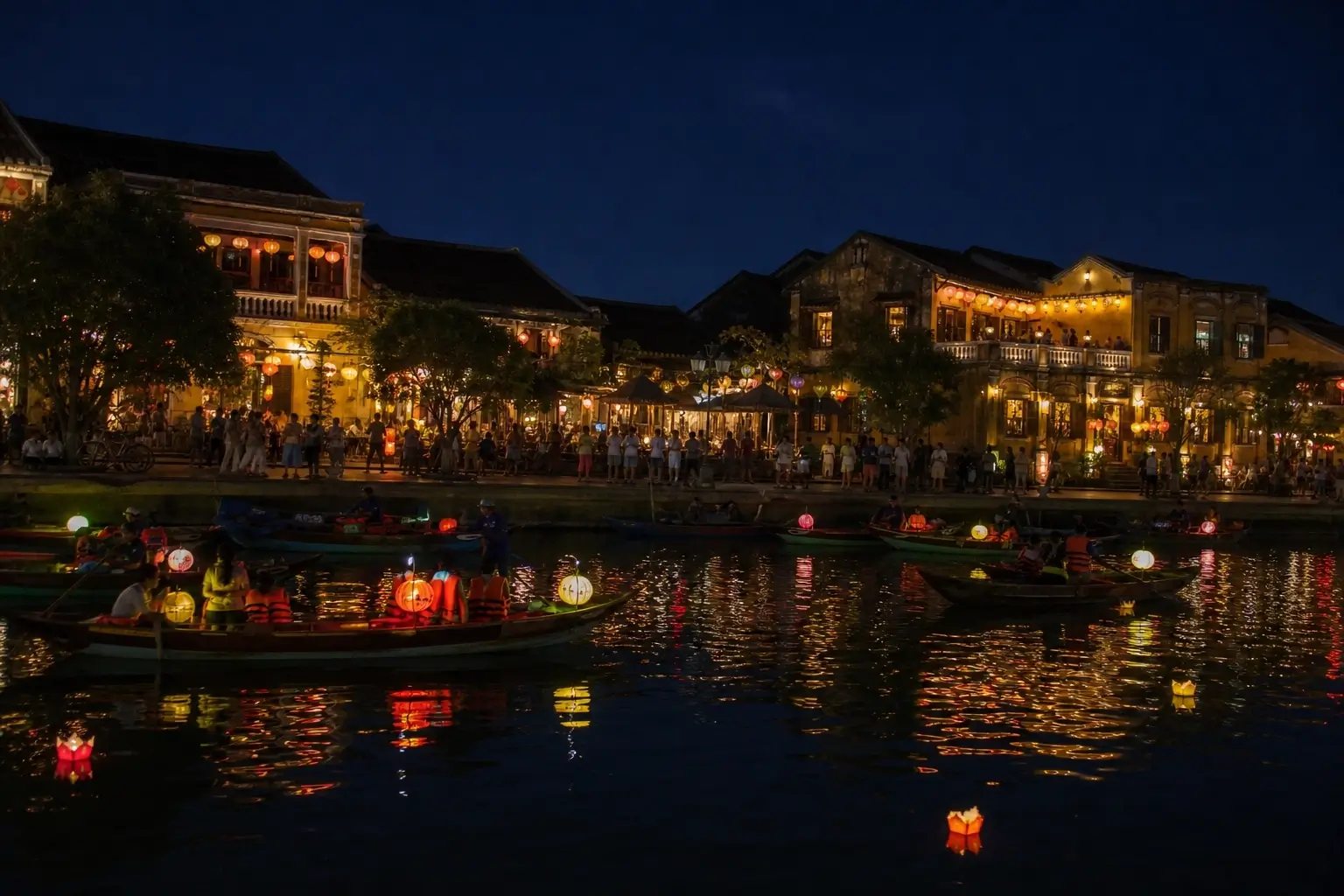
The Hoi An Ancient Town at night — paper lanterns reflecting off the Thu Bon River, the yellow-walled 15th-century merchant houses, the pedestrian-only lanes — lands differently than photographs suggest, in both directions. It’s more beautiful in person, and more crowded than you expect. Mornings before 8 AM and weekdays in shoulder season are the best windows for a less saturated version of it.
Hoi An is also one of Vietnam’s best places for custom tailoring ($40–$120 USD for a made-to-measure dress or suit in 24–48 hours), hands-on cooking classes (the market-to-table format is genuinely good here), and day trips to the My Son Sanctuary — Cham civilization ruins 40 minutes away that most travelers forget to put on the list. Book the lantern release ceremony or a basket boat tour through Klook for confirmed bookings with flexible cancellation. Both fill fast on weekends.
An opinion some readers will push back on: Hoi An is not Vietnam’s best food city — Hue and Ho Chi Minh City both outperform it on culinary depth. Hoi An’s restaurant scene skews heavily toward tourist-adjusted menus. The street food is still good, but it’s not the reason to go. The town and its atmosphere are the reason to go.
The South: Ho Chi Minh City, Mekong Delta & Phu Quoc
The south is warmer, commercially louder, and faster-paced than anywhere else in Vietnam. The wet season (May–November) brings afternoon downpours that typically last an hour and then stop. Don’t let them dictate your planning.
Ho Chi Minh City (2–3 Days)
The War Remnants Museum is not optional. It’s difficult — deliberately, honestly so — and it’s one of the most important museum experiences in Southeast Asia. Go early before tour groups arrive. Plan a minimum of one hour; most visitors spend two.
Cu Chi Tunnels, 40 kilometers northwest of the city center, is the other essential southern stop — a 250-kilometer network of underground passages used by Viet Cong fighters during the American War, now partially accessible to visitors. The expanded tunnel sections let you crawl through on your hands and knees in the dark for a short stretch. Book a half-day tour through Klook with a licensed guide; the context transforms it from a novelty into something genuinely meaningful, and you won’t get that context from walking around independently.
The food scene in HCMC is the best in Vietnam. Full stop. Banh mi on every corner. Pho in bowls the size of your head for 60,000–80,000 VND (roughly $2.50–$3.50 USD). Com tam (broken rice with grilled pork, cucumber, pickled vegetables, and a fried egg) from sidewalk spots that have served the same neighborhood for decades. Download Grab before you land — it’s the only reliable way to move around a city this size without negotiating every fare. The app shows the price before you confirm. It also handles food delivery when you need a recovery day.
Mekong Delta & Phu Quoc
The Mekong Delta is Vietnam’s most consistently underused experience. Most travelers take a one-day tour from HCMC and declare it done. That scratches the surface. The move is to spend at least one night in Can Tho, wake up at 5:30 AM for the Cai Rang floating market before the tourist boats outnumber the working boats, eat breakfast purchased from a boat selling noodle soup, and watch an entire riverine economy operate before 9 AM. It costs almost nothing and feels completely unlike anywhere else in the country.
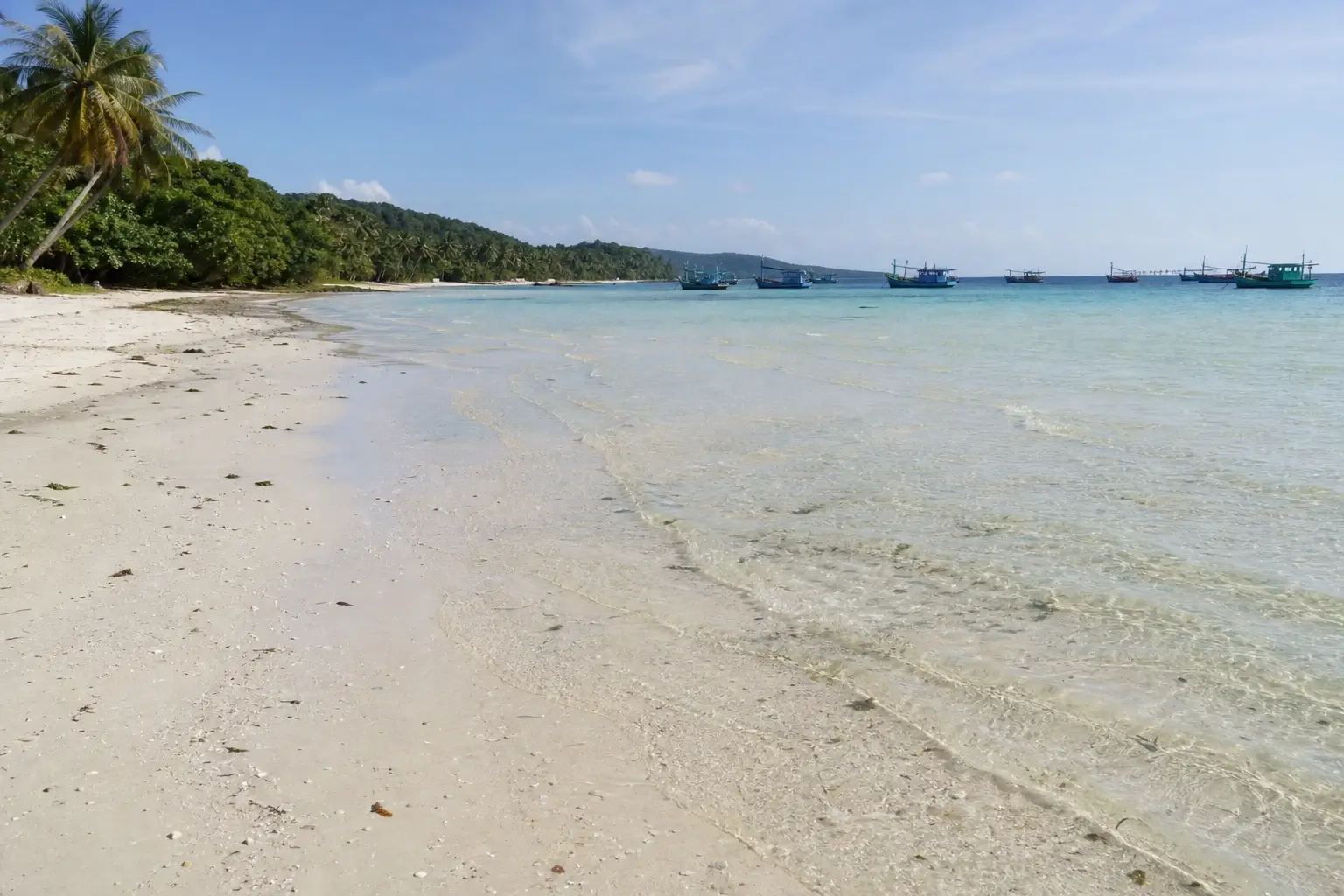
Phu Quoc has transformed beyond recognition. Since 2020, direct international flights from Singapore, Seoul, Tokyo, and an expanding list of European hubs have connected the island to the global travel market. Bai Sao Beach on the southern tip is genuinely excellent — white sand, clear water with good visibility, and noticeably quieter than the resort-heavy north. The Sun World Phu Quoc cable car spanning the An Thoi Island chain gives coastal aerial views that are difficult to overstate. If you visited Phu Quoc before 2020 and wrote it off, the infrastructure has changed enough to warrant a second look.
Hidden Gems, Itinerary Planning & Vietnam by Traveler Type
Places Most Vietnam Lists Miss
Quy Nhon sits on the south-central coast, midway between Da Nang and HCMC — which is exactly why most itineraries skip it. That’s changing. The beaches here (Ky Co Beach, Bai Xep) are among the cleanest and least crowded in Vietnam. The ancient Cham towers at Banh It and Thap Doi are in better condition and far less visited than My Son. Direct flights from Hanoi and HCMC connect in under 90 minutes. Budget 2–3 days and you’ll feel like you found something before everyone else did.
Phong Nha-Ke Bang National Park, near Dong Hoi in north-central Vietnam, contains what scientists have confirmed is the world’s largest cave system. Son Doong Cave — the world’s largest known cave by volume — requires an expedition permit that costs over $3,000 USD and books out years in advance. Paradise Cave and Phong Nha Cave are accessible to any visitor with no special permit and are still extraordinary on their own terms. Base yourself in Phong Nha village. Minimum two nights.
Cao Bang, in the far north bordering China, is home to Ban Gioc Waterfall — one of the largest waterfalls on any international border anywhere in the world, and one of Vietnam’s most spectacular natural sights. Almost no mainstream travel content covers it because it requires a dedicated route: it’s genuinely remote, it takes real effort to reach, and that’s entirely the point.
How to Plan a Vietnam Itinerary by Trip Length
To build a Vietnam itinerary that actually works, follow these steps:
- Choose your entry and exit city based on available flights from your home country.
- Select your region focus based on trip length — don’t try to cover everything on a short trip.
- Book internal flights or overnight trains for distances over 300 kilometers.
- Reserve Ha Long Bay cruises and Phong Nha cave tours at least 4–6 weeks before travel.
- Download Grab before landing — it activates immediately at Vietnamese airports.
Quick Comparison
| Option | Best For | Key Benefit | Limitation |
|---|---|---|---|
| 7-Day North Focus | First-timers with limited PTO | Depth in Hanoi, Ha Long, Sapa | South and central missed entirely |
| 14-Day North to South | Most first-time visitors | Covers key regions at a reasonable pace | South region feels compressed |
| 21-Day Full Country | Repeat visitors, slow travelers | Includes hidden gems and genuine downtime | Requires significant time off work |
| Budget Backpacker Route | Solo travelers, under $50/day | Maximum flexibility, low daily cost | Less comfort, longer surface transport |
| Luxury Couple Route | Honeymooners, milestone trips | Best boutique hotels and private experiences | Misses raw local street-level energy |
North-to-South vs. South-to-North
North-to-south is better suited for most first-time itineraries because it aligns with Vietnam’s regional weather logic — the north is best between October and April, while the south stays accessible year-round. South-to-north works better when you’re flying into HCMC on a short trip and can’t afford the repositioning time. The key difference is weather alignment, not traveler preference.
Some travel advisors argue south-to-north is more logical because HCMC receives more direct international flights. That’s valid if you’re flying from certain US and European hubs. But if you’re dealing with a standard 14-day window and flexibility on entry point, the north-first approach gives you the best seasonal conditions for each region as you move through it.
Look — if you’ve got 14 days and you’re flying into Hanoi, here’s what actually works: 3 nights Hanoi (with a 1-night Ha Long Bay cruise counted in that), 1 night Ninh Binh, overnight train to Hue, 2 nights Hoi An (using Da Nang airport), internal flight to HCMC, 3 nights HCMC with a Mekong Delta overnight built in. That’s 12 structured nights with 2 buffer days for delays, spontaneous stops, or the meal that makes you miss your train. It’s not exotic planning. It works.
Getting Around Vietnam: Transport, Booking & Timing
Vietnam’s internal transport options have expanded significantly since 2022. VietJet Air and Bamboo Airways both operate budget domestic routes — Hanoi to Da Nang typically runs $20–$60 USD depending on lead time. The Reunification Express train (SE1–SE8 routes) covers the full coast and gives you coastal scenery no flight can match; the Da Nang–Hue leg in particular runs along cliffs above the South China Sea. For distances under 300 kilometers, the overnight sleeper bus (the modern “limousine” style with individual pods, not the standard coach) is comfortable and cost-efficient on routes like HCMC to Da Lat or Mui Ne.
Grab is the operational baseline for in-city transport in HCMC, Hanoi, Da Nang, Hue, and Hoi An. It shows the fare before confirmation. It works for motorbike rides, cars, and food delivery. Download it before you land. Non-negotiable.
Vietnam’s e-visa covers stays up to 90 days for citizens of most Western countries and is processed entirely online through the official immigration portal (evisa.immigration.gov.vn) — typically 3 business days to approval. Citizens of the UK, EU, Australia, and the US are all eligible. Visa-on-arrival at the airport is also available but requires pre-approval through a third-party agency. The e-visa is faster, cheaper, and cleaner.
On seasonal timing: Vietnam doesn’t have one best season because its three regions follow different weather windows. The north (Hanoi, Ha Long Bay, Sapa) is clearest and most comfortable October through April. Central Vietnam (Hue, Da Nang, Hoi An) is best February through August — avoid October and November due to typhoon risk and flooding, especially in Hoi An. The south (HCMC, Mekong, Phu Quoc) is best November through April during the dry season. For a full north-to-south trip, November through March is the closest thing to a universally workable window.
People Also Ask: Vietnam Travel Q&A
What’s the best time to visit Vietnam for the first time?
For a north-to-south itinerary, November through March is the most reliable window across all three regions. The south stays dry, the north is cool and clear, and central Vietnam avoids typhoon season. Avoid October–November in Hoi An specifically.
How do I get around between cities in Vietnam?
Budget internal flights on VietJet or Bamboo Airways for distances over 300 kilometers. The Reunification Express train works well for the Da Nang–Hue coastal stretch. Use Grab for all in-city transport — upfront pricing, works in every major Vietnamese city, and also covers food delivery.
Should I explore Vietnam independently or hire a guide?
Most travelers do both. Independent exploration works well in cities and at well-marked sites. Local guides add real value at Hue’s royal tombs, the Cu Chi Tunnels, Sapa’s village treks beyond the Cat Cat loop, and the Phong Nha cave systems — places where historical and cultural context is everything.
Why does Vietnam attract so many repeat international visitors?
Vietnam reached a record 21.2 million international arrivals in 2025 (General Statistics Office), with high return rates driven by food diversity, geographic variety, and relatively low travel costs. No other Southeast Asian country packs mountains, ancient towns, bays, and megacity energy into one contiguous journey.
When should I book a Ha Long Bay cruise in advance?
Book at least 4–6 weeks ahead for November through March travel. Mid-range licensed operators on GetYourGuide and direct booking sites sell out fast in peak season. Check reviews dated within the last 12 months — boat quality on Ha Long Bay degrades faster than most destinations, and a 2019 review tells you nothing reliable about 2025 conditions.



No Comment! Be the first one.