




Everything You Need Before Installing a Built-In Bathroom Vanity
You’ve seen the photos. Floor-to-ceiling cabinetry, seamless countertops, that polished “it came with the house” look that no prefab unit ever quite pulls off. A built-in bathroom...

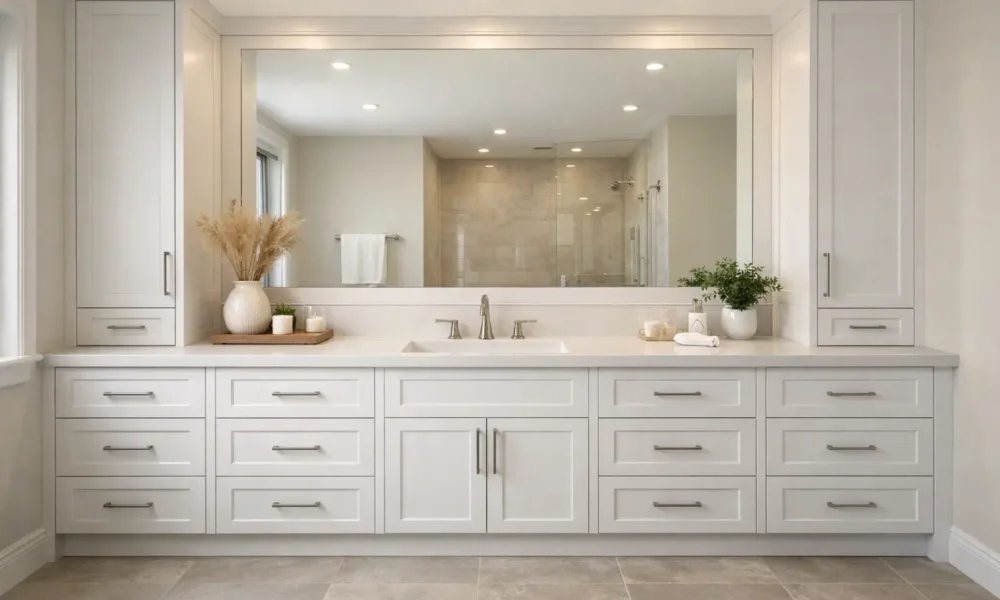
You’ve seen the photos. Floor-to-ceiling cabinetry, seamless countertops, that polished “it came with the house” look that no prefab unit ever quite pulls off. A built-in bathroom vanity can genuinely transform a space — but if you go in without understanding the real costs and what installers actually find once walls come open, this project will cost you more than money.
Here’s what this guide does: it gives you real numbers, flags the installation problems most renovation articles skip entirely, and helps you decide whether a built-in is actually worth it for your specific bathroom.
What Is a Built-In Bathroom Vanity?
A built-in bathroom vanity is a fixed cabinet unit integrated directly into a bathroom’s architecture, typically spanning wall to wall and running flush to the floor. Unlike a freestanding vanity, it doesn’t stand independently — it’s anchored to wall studs and customized to fit the room’s exact dimensions, creating a seamless, architectural appearance.
That distinction matters far more than most buyers realize before the project starts.
Built-ins are structurally similar to kitchen base cabinets: multiple cabinet boxes joined together, attached to the wall, then finished with a separately purchased and cut countertop. That last detail — the countertop being a separate line item — is one of the first cost surprises buyers encounter.
The countertop never comes included. Plan for it from day one.
According to Research and Markets (2024), the global bathroom vanity market is valued at $16.7 billion and growing at a CAGR of 5.5% through 2030 — driven primarily by homeowner demand for customized, built-in installations over mass-produced freestanding units. That shift shows up in renovation budgets too: custom built-in projects have grown from a luxury segment into a mainstream remodeling choice.
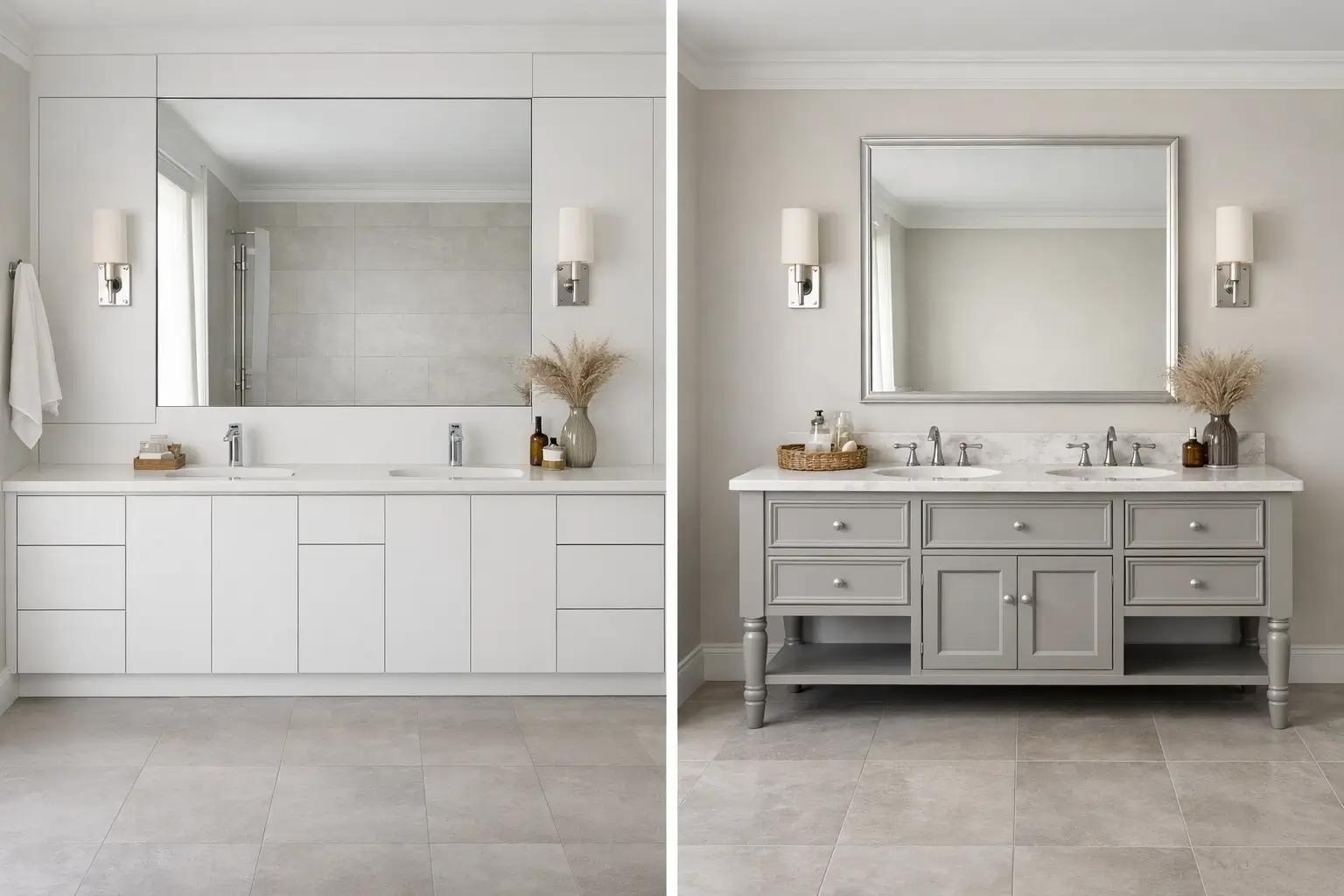
Built-In vs. Freestanding: What Nobody Actually Tells You
Here’s the thing: most vanity comparison articles frame this as a style debate. It isn’t. It’s a permanence and budget decision with structural consequences.
Some design professionals argue freestanding vanities give bathrooms more character — a furniture-like warmth that feels intentional rather than contractor-default. That’s a valid point, especially for smaller guest baths or homes leaning into eclectic or maximalist design. But if you’re dealing with an awkward wall niche, irregular floor dimensions, or genuinely need to maximize every inch of a primary bathroom, a built-in handles challenges a freestanding unit can’t.
Quick Comparison
| Option | Best For | Key Benefit | Limitation |
|---|---|---|---|
| Built-In Vanity | Permanent remodels, maximizing storage | Custom fit, seamless look, strong resale value | Higher cost, wall prep required, difficult to swap later |
| Freestanding Vanity | Budget updates, rentals, small baths | Easier install, countertop usually included | Standard sizing leaves gaps in non-standard spaces |
| Floating/Wall-Mounted | Modern aesthetic, small bathroom illusion | Open floor visual, height-adjustable | Structural wall support required, exposes plumbing |
| IKEA GODMORGON Hack | DIY built-in look on a tight budget | Low cost, modular, widely available | Requires custom trim and scribing to look truly built-in |
Built-in vanities are better suited for permanent, primary bathroom remodels where storage capacity and long-term value matter. Freestanding units work better when flexibility or budget is the priority. The real difference isn’t aesthetic — it’s that built-ins become part of the room’s structure. Freestanding units stay furniture.
A 2026 contractor analysis by Jaspector found that freestanding vanities often require filler trim in non-standard-width spaces and are harder to adapt to out-of-plumb walls — problems built-ins solve by design, but at higher fabrication and labor cost.
How Much Does a Built-In Bathroom Vanity Actually Cost?
Real numbers. Not ranges so wide they’re meaningless.
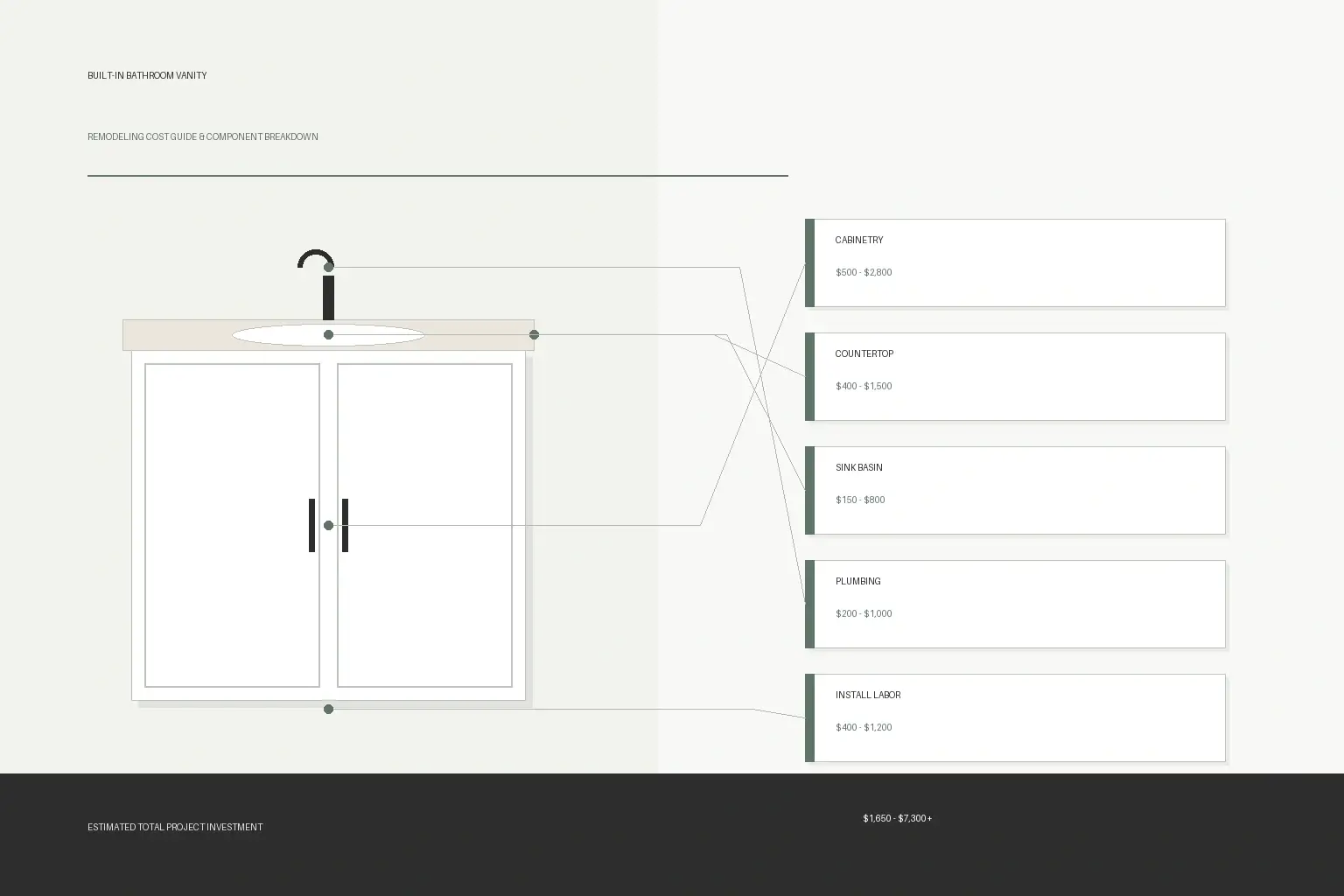
A prefabricated built-in-style vanity — stock cabinet units from a home improvement store assembled in a row — runs $300–$1,500 for the cabinetry. A custom-built vanity fabricated to your exact dimensions by a cabinetmaker or specialty brand costs $500–$3,000 for the cabinet boxes alone, before countertop, sink, or installation.
Then add the rest:
- Countertop: $250–$3,000 depending on material (laminate, quartz, granite slab)
- Sink installation: ~$400 in labor, plus $40–$300 for the sink itself
- Plumbing adjustment: $450–$1,800 if supply or drain lines need repositioning
- Cabinet installation/carpentry: $200–$1,000 for standard work, higher for custom trim
- Flooring adjustments: $500–$1,000 if the new vanity footprint differs from the old one
Total realistic range: $1,200–$6,000+ for a single-sink built-in in a primary bathroom. Custom double-sink builds with stone countertops routinely exceed $8,000 when full labor is included.
Quick note: quotes that come in under $800 all-in almost always exclude countertop, sink, and plumbing adjustment. Ask specifically, “Does this include countertop fabrication and drain relocation if needed?” before assuming the number is complete.
According to HomeGuide (2025), if the new built-in vanity matches existing plumbing line locations, total project cost usually stays under $2,500. Move the drain or supply lines, and you’re adding $450–$1,800 before cabinetry work even begins.
The Hidden Installation Problems Most Guides Ignore
The Plumbing Rough-In Problem
When you replace a freestanding vanity with a built-in, the drain and supply lines may not align with your new cabinet’s sink cutout. If the new unit is wider, deeper, or has a different sink position than the original, a plumber has to reposition the rough-in. That’s an additional $450–$1,800 — and it typically only becomes clear once your old vanity is already removed and sitting in the driveway.
Look — if you’re getting quotes and no contractor has mentioned plumbing rough-in adjustment, ask directly: “Does your price include drain relocation if the new sink position doesn’t match existing rough-in?” Most standard quotes don’t include it.
Wall Prep Nobody Mentions
It’s not that contractors hide this. It’s just never in the articles.
Built-in vanities attach to wall studs for structural support, unlike freestanding units that simply rest on the floor. That means stud locations must be mapped before cabinets are ordered — cabinet widths often need to align with stud spacing. The wall surface also needs to be flat: out-of-plumb walls require custom scribe molding or shimming, which adds both material cost and hours of skilled labor.
What most installation guides skip entirely is that older homes frequently have walls that are 3/4″ to 1″ out of plumb over a 6-foot vanity run. Common enough that any experienced cabinetmaker expects it. Rare enough that most homeowners don’t know to budget for the fix.
A moisture barrier or cement board backing should also be installed in wet zones before the cabinet goes in — especially behind the sink area. Skip this step and you’re introducing a mold problem behind $3,000 worth of cabinetry.
The Countertop Is Always Separate
Or maybe I should say it this way: this is the single most consistent surprise in built-in vanity projects. Unlike freestanding vanities — where the countertop and integrated sink usually come included as a single unit — a built-in almost always means buying the countertop separately, having it cut to size by a fabricator, and paying for its installation as a separate labor line.
Designer-grade options like Ultracraft Cabinetry and James Martin Furniture produce exceptional built-in cabinet systems. Ultracraft is available through designers and offers fully custom configurations; James Martin offers 275+ semi-custom styles across price points. Both brands quote cabinetry only. The stone or quartz top is a separate conversation.
Design Options, Styles, and Storage Worth Knowing
The 2024 Houzz Bathroom Trends Study found wood is the top vanity material choice among renovating homeowners at 26%, with white finishes close behind at 22%. Transitional and contemporary styles dominate built-in projects specifically — both work well because built-ins are inherently architectural, and strong styling tends to feel overdone when the cabinetry itself already makes a statement.
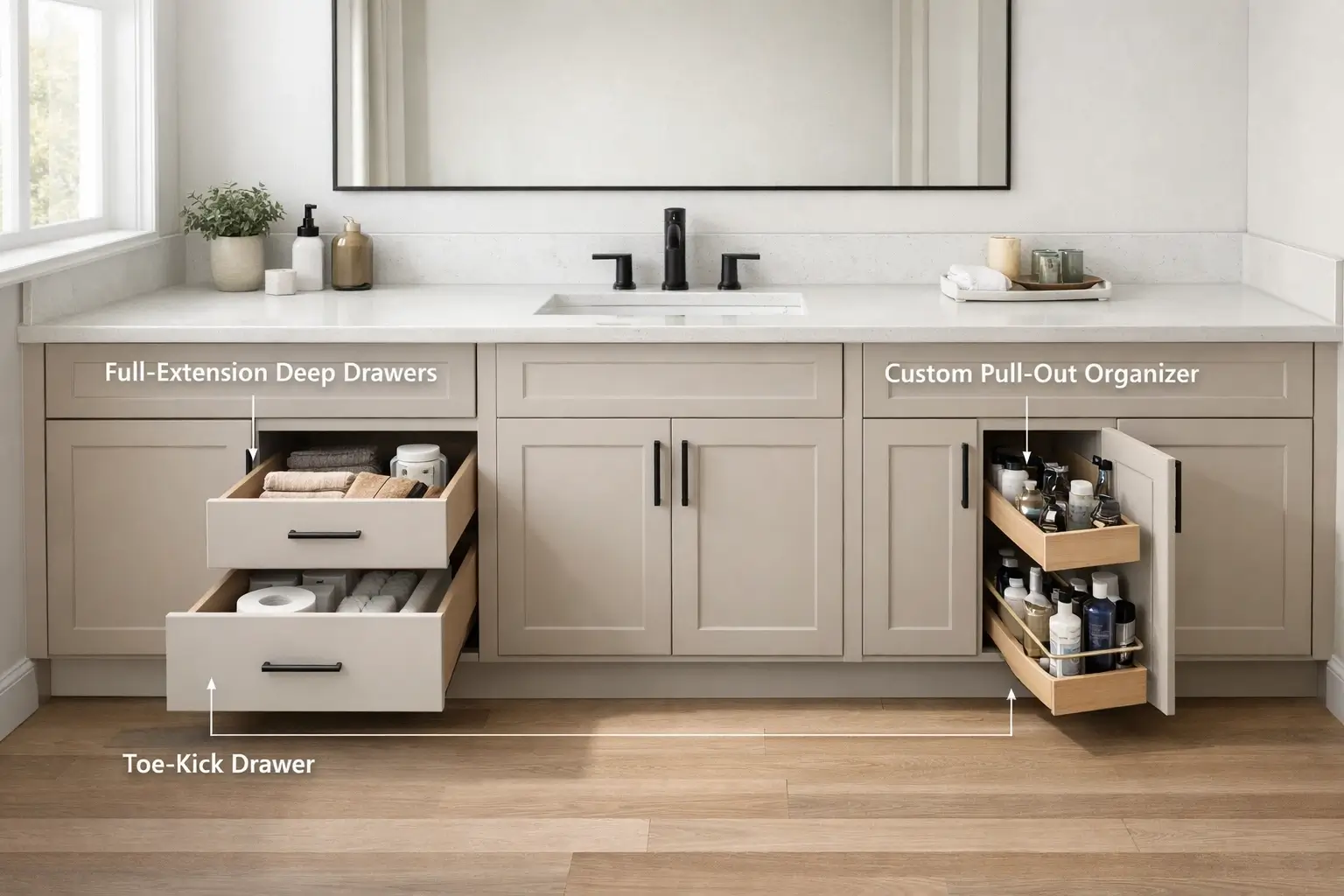
Storage is where built-ins genuinely justify their cost premium over freestanding options. A well-designed built-in can incorporate:
- Full-depth base drawers with soft-close, full-extension glides (better daily access than doors)
- Integrated electrical outlets inside upper drawers for hair tool storage and charging
- Toe-kick drawers that use otherwise dead space at floor level
- Custom pull-out organizers sized around your actual products — not generic inserts
I’ve seen conflicting data on what drives homeowners toward built-ins: some remodeling surveys rank storage capacity as the primary reason, others put seamless aesthetics first. My read is it’s typically both, and the two reinforce each other — a well-built vanity looks uncluttered because everything has a designated place.
For DIY builders working with tighter budgets, the IKEA GODMORGON system is legitimately popular as a built-in base. The results can be excellent. But it requires custom toe-kick trim, filler panels, and careful scribing to walls to read as a true built-in rather than IKEA furniture sitting in a bathroom — and that finish work takes real time.
Should You DIY or Hire a Pro?
It’s not a binary. It depends on which parts of the project are in front of you.
Most homeowners with intermediate DIY experience — someone who’s hung cabinets, done basic plumbing connections, and can work accurately with a level — can handle the cabinet installation phase. It’s not that it’s not that complicated. What they typically can’t DIY: countertop fabrication (requires a stone fabricator with templating equipment), significant plumbing rough-in relocation, and scribing to severely out-of-plumb walls without visible gaps.
To assess whether your built-in vanity project is DIY-viable, work through these five checks:
- Confirm plumbing alignment: Can the new vanity’s sink cutout use existing drain and supply line locations without moving them?
- Check wall plumb: Run a 6-foot level across the full vanity wall. A gap over 1/4″ means custom scribing is needed.
- Map your studs: Mark them before ordering cabinets — cabinet widths often need to coordinate with stud spacing for solid attachment.
- Get a countertop fabrication quote separately: Stone requires a fabricator. Get this quote before finalizing your cabinet order so total dimensions align.
- Check local permit requirements: Some municipalities require permits for vanity replacements that involve plumbing changes, even minor ones.
Hiring a general contractor to manage the full project adds 13–22% in overhead and markup over contracting individual trades directly. For a project in the $2,500–$5,000 range, that’s a meaningful number worth factoring in.
It’s not that hiring a GC isn’t worth it — they’re not worth it — it’s that they’re the right call when you can’t coordinate a plumber, cabinetmaker, and countertop fabricator yourself without the project stalling for weeks between trades.
Frequently Asked Questions
What’s the best built-in bathroom vanity for a small bathroom?
A single-sink built-in spanning the full wall width with deep drawers instead of doors maximizes storage without consuming floor space. A shallower 18″ depth cabinet works well if the bathroom is under 50 square feet.
How do I know if my bathroom can support a built-in vanity?
Check that the wall has accessible studs for mounting, that the floor is level, and that existing plumbing rough-in locations roughly align with the new cabinet’s sink placement. Out-of-plumb walls and misaligned drains are the two most common structural complications.
Should I use IKEA cabinets for a DIY built-in bathroom vanity?
Yes, with realistic expectations. The IKEA GODMORGON system is a solid budget built-in base, but it requires custom trim work, filler panels, and scribing to walls. That finish work is what separates the final result from looking like furniture placed in a bathroom.
Why does a built-in vanity cost more than a freestanding one?
Three reasons: the countertop is purchased and installed separately, plumbing rough-in often needs repositioning, and custom carpentry is typically required to fit irregular walls. The cabinet itself may cost less than a premium freestanding unit — the labor and associated costs are where the real difference grows.
When should I choose a freestanding vanity over a built-in?
When you’re on a tight timeline, the bathroom has standard dimensions, or you’re planning another full remodel within five years. Freestanding units are far easier to swap out and cost less upfront. Built-ins make more sense as a permanent, long-term investment.




No Comment! Be the first one.