






Two Weeks in Vietnam: The Day-by-Day Route That Actually Works
This works best for first or second-time visitors with 13–15 days on the ground. It won’t help if you have fewer than 10 days or are focused on a single region. What is a vietnam travel...


This works best for first or second-time visitors with 13–15 days on the ground. It won’t help if you have fewer than 10 days or are focused on a single region.
What is a vietnam travel itinerary 2 weeks? A standard 14-day Vietnam route covers the country’s north-to-south spine: Hanoi (2–3 nights), Ha Long Bay cruise (2 nights), Hoi An (3 nights), and Ho Chi Minh City (2–3 nights), connected by domestic flights. Two weeks is enough to hit the highlights without rushing every transition between cities.
Why 14 Days Is the Sweet Spot — and What You’ll Have to Cut
Vietnam hit an all-time high of 21.2 million international arrivals in 2025 — a 20.4% year-on-year surge, according to the Vietnam General Statistics Office (January 2026), making it Southeast Asia’s fastest-growing tourist destination. The majority of those visitors spent 8–12 days. Two weeks puts you ahead of the average and, more practically, gives you genuine breathing room between city transitions without burning a day every time you move.
Here’s what 14 days realistically covers: Hanoi, a Ha Long Bay overnight cruise, Hoi An with its beach access, and Ho Chi Minh City with a Mekong Delta day trip. That’s the core. You’ll need to cut something — Mui Ne, Phú Quốc, Dalat, and Nha Trang are all worth the detour, but adding them to this window turns a trip into luggage cardio.
Most competing articles try to stuff 8–10 destinations into 14 days. That’s not a vacation.
The Classic Route: Hanoi to Ho Chi Minh City in 14 Days
This is the direction most first-time visitors travel. Fly into Hanoi, work your way south, fly home from Ho Chi Minh City. Clean, logical, and — for most months of the year — weather-optimal.
Days 1–3: Hanoi
Don’t plan anything demanding for Day 1.
Jet lag is real, and Hanoi’s Old Quarter is chaotic enough to disorient a well-rested traveler who’s still running on home-timezone coffee. Give yourself the afternoon to walk, eat something at street level, and find your bearings.
Day 2 is when the city opens up. The Temple of Literature, Hoan Kiem Lake, and a street food crawl through Bun Cha and Banh Mi stalls along Ma May Street can fill a full day without feeling rushed. On Day 3, consider the Ho Chi Minh Mausoleum complex (closed Monday and Friday mornings — check before you go) with the afternoon free for packing and logistics before the next leg.
Hanoi mid-range daily budget: $35–$55 USD per person including accommodation, food, and local transport.
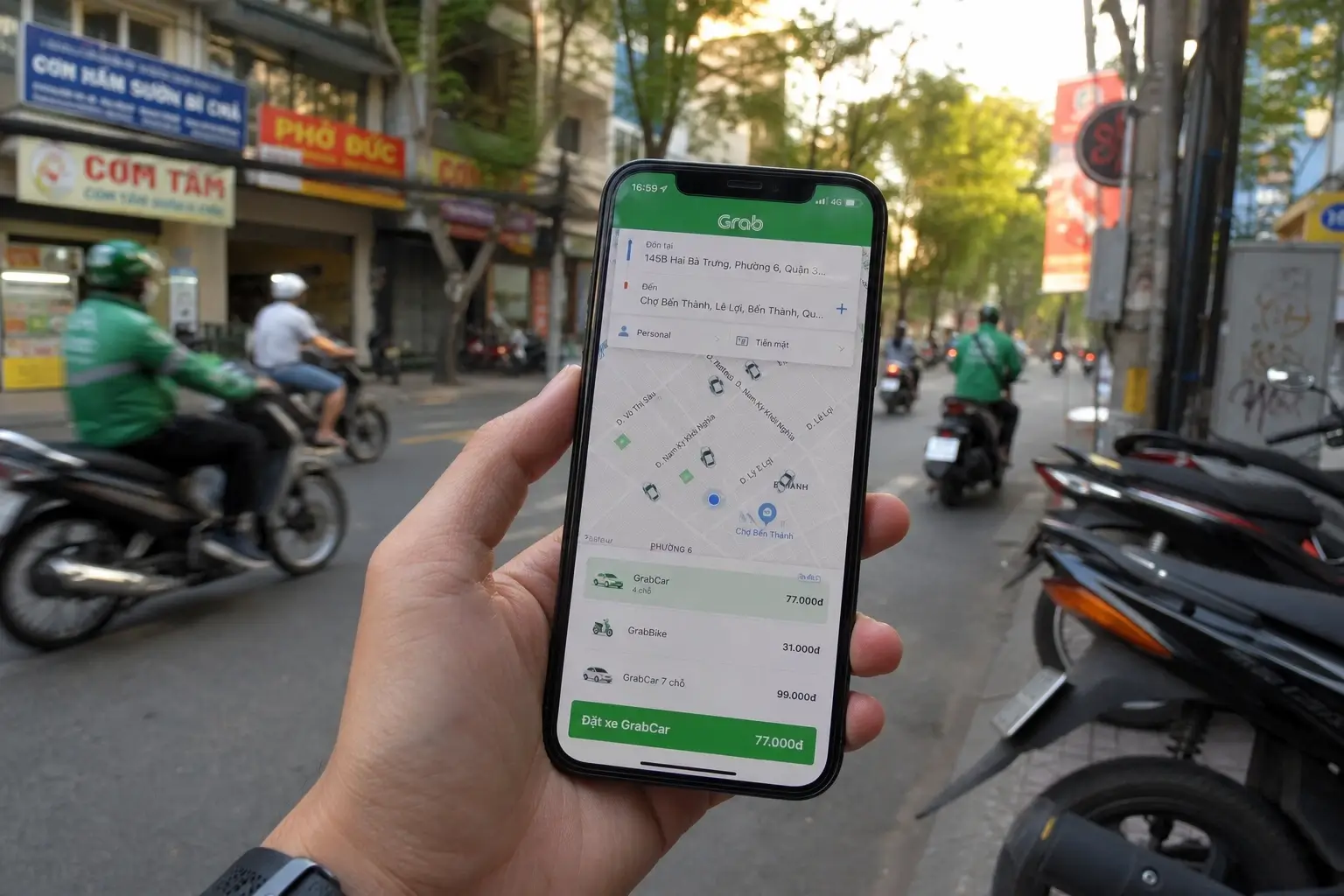
Use Grab for every in-city ride. Meter taxis at Noi Bai Airport regularly quote double the Grab rate. Download the app before you land — it’s available on both iOS and Android and works exactly like Uber.
Days 4–5: Ha Long Bay (2-Night Cruise)
Pre-book. Full stop.
Walk-in prices negotiated on the dock run 30–40% higher than online rates, and mid-range boats genuinely sell out three to four weeks in advance. Klook is currently the most reliable platform for Ha Long Bay cruise packages — their cancellation policies are clearer than most direct operators, and their mid-range selection (think Glory Legend, Orchid Cruiser, or Paradise Elegance) sits in the right quality-to-price band for most travelers.
A 2-night cruise gives you one sunset on the bay, one kayaking morning, and one sunrise before returning to Hanoi by early afternoon. One night is not enough to justify the 3.5-hour road transfer each way. Three nights is only worth it if you’re specifically heading to Lan Ha Bay.

Quick note: Some guides push Ninh Binh as a Ha Long Bay alternative — and it’s a fair swap for repeat visitors or those who’ve already done the cruise. It’s cheaper, faster to reach independently, and consistently underrated. But if it’s your first Vietnam trip, Ha Long Bay is still the one.
Days 6–8: Hoi An
Fly from Hanoi to Da Nang. The flight is about an hour; VietJet Air and Bamboo Airways both price it at $25–$55 one-way when booked 4–6 weeks ahead. Do not fly into Hue — Da Nang airport is far better connected, and Hoi An is only 30 minutes by taxi from arrivals.
Hoi An earns three full days, and each one delivers something different. Day 6 is for the Ancient Town: the Japanese Covered Bridge, tailors (set a fitting for Day 7 pickup), and a cooking class if that’s your thing. Day 7: hire a bicycle and ride to An Bang Beach — 7 km, flat road, genuinely pleasant even in heat. Day 8: either a half-day trip to My Son Sanctuary (Cham temple ruins, strong if you haven’t done Angkor Wat) or a free morning before the flight south.
Hoi An mid-range daily budget: $30–$50 USD. It’s cheaper than Hanoi, with better food and more atmosphere per dollar — the best value stop on this entire route.
Days 9–10: Ho Chi Minh City — Arrival and City Days
Fly Da Nang to Ho Chi Minh City. About 1.5 hours; $30–$60 on VietJet or Bamboo. You could add a Hue stopover between Hoi An and HCMC — the Imperial Citadel and Thien Mu Pagoda are genuinely worth it — but only if you cut a day from somewhere else. It’s a detour, not a shortcut.
HCMC hits differently from Hanoi. Faster, louder, more commercial, and wealthier-looking in certain districts. The War Remnants Museum is one of the most affecting museums in Southeast Asia — go on Day 9 before the tour groups arrive. Ben Thanh Market is fine for an hour; the real food scene lives in the District 1 street stalls and Binh Tay Market in District 5 (Chinatown).
HCMC mid-range daily budget: $40–$65 USD. It’s the most expensive stop on this route.
Days 11–12: Mekong Delta Day Trip + Deliberate Buffer Day
Most visitors do the Mekong as a day trip from HCMC. My Tho and Ben Tre are the closest entry points — roughly two hours by road. Book in advance through Klook to avoid the chaos of negotiating with local operators at the bus station on arrival morning.
Day 12 is your buffer. Don’t fill it in advance.
Vietnam will throw something at you — a delayed domestic flight, a boat that runs long, a street food situation that demands a second hour. The buffer isn’t wasted time; it’s the thing that prevents one disruption from cascading into missed connections across the final days.
Days 13–14: Cu Chi Tunnels + Departure
Cu Chi Tunnels is a half-day, about 70 km northwest of HCMC. Go in the morning — heat and tour buses both peak by midday. Most international flights out of Tan Son Nhat depart in the evening, which makes the timing clean.
To Set Up This Vietnam Travel Itinerary 2 Weeks
To set up this vietnam travel itinerary 2 weeks:
- Book international flights — fly into Hanoi, out of Ho Chi Minh City.
- Reserve a Ha Long Bay cruise immediately — mid-range boats fill 3–4 weeks ahead.
- Book Hanoi–Da Nang and Da Nang–HCMC flights on VietJet or Bamboo 4–6 weeks out.
- Download Grab before departure for all in-city rides.
- Leave Day 12 deliberately unscheduled as a buffer against disruptions.
When to Travel — The Weather Problem Nobody Explains Properly
Or maybe I should say it this way: the direction you travel isn’t a preference — for certain months, it’s a practical decision that determines whether you’re looking at clear skies or fog-closed bays.
Vietnam’s weather runs in opposite cycles across its length. When the north is cold and grey (November–March), the central coast and south are dry and warm. When the south enters monsoon season (May–October), the north is clear. The country spans roughly 1,650 km from Hanoi to Ho Chi Minh City — you’re almost always in different weather zones depending on where you are on the map.
North-to-south vs. south-to-north — which is better? The north-to-south route suits travel from March through August, when Ha Long Bay is calm and the north is warm. The south-to-north direction is smarter from November through February — start in HCMC while the north recovers from its grey season, then reach Hanoi as it clears. The key difference: Ha Long Bay from November to February can bring fog and choppy water that significantly reduces what you actually see.
Quick Comparison: Route Direction by Month
| Route Direction | Best Months | Ha Long Bay Conditions | Central Coast Weather | Best For |
|---|---|---|---|---|
| Hanoi → HCMC | March – August | Clear, calm, good visibility | Hot, mostly dry | First-timers, classic experience |
| HCMC → Hanoi | November – February | Foggy, possible chop | Dry season peak | Avoiding northern winter, beach-first pacing |
| Either direction | September – October | Unpredictable, some cancellations | Typhoon risk (central coast) | Flexible travelers with solid travel insurance |
I’ve seen conflicting data on this — some sources flag the first half of October as manageable in Hoi An, others call the entire month a typhoon risk. My read is: early October is usually workable, but you wouldn’t want a non-refundable anniversary trip depending on that forecast. Travel insurance stops being optional from September onwards.
Domestic Transport: Flights, Trains, or Buses?
The most time-efficient approach for a 2 weeks in Vietnam itinerary north to south uses domestic flights for the long hauls and local transport for shorter legs. VietJet Air and Bamboo Airways connect Hanoi, Da Nang, and Ho Chi Minh City for $25–$80 one-way when booked 4–6 weeks ahead, saving 6–8 hours versus equivalent train journeys. Prices climb steeply inside the two-week booking window — early booking is the budget move here, not an abundance of caution.
The overnight sleeper train between Hanoi and Da Nang is a real option for travelers who genuinely want the rail experience — or who are trying to save $20–$30 on the fare. It takes 13–16 hours. The daytime stretch through the Hai Van Pass between Da Nang and Hue is legitimately spectacular. On a night train, you’ll sleep through it.
Look, if you’re genuinely debating train versus flight on this leg, here’s what actually works: take the flight. Spend the 13 hours you save in Hoi An instead. You won’t second-guess it.
Recommended Transport Legs
| Transport Leg | Recommended Method | Approximate Cost | Time |
|---|---|---|---|
| Hanoi → Ha Long Bay | Tour operator shuttle | $5–$15 | 3.5 hrs |
| Ha Long Bay → Hanoi (return) | Same operator | $5–$15 | 3.5 hrs |
| Hanoi → Da Nang | VietJet / Bamboo flight | $25–$55 | 1 hr 10 min |
| Da Nang → Ho Chi Minh City | VietJet / Bamboo flight | $30–$65 | 1 hr 25 min |
| All in-city rides | Grab app | $1–$5 per ride | varies |
Daily Budget Breakdown — What Most Guides Leave Out
A realistic mid-range budget for a 14-day Vietnam trip runs $1,100–$1,600 USD total per person, excluding international flights and the Ha Long Bay cruise package. Based on current pricing across Vietnam’s major tourist stops, Hoi An is consistently the most affordable destination on this route — roughly 20–30% cheaper than Hanoi for equivalent accommodation quality. Ho Chi Minh City is the most expensive stop for dining and after-dark spending. Budget travelers spending carefully can cut the total to $700–$900 USD for two weeks; travelers who want reliable air-conditioning, beachfront rooms, and restaurant meals should budget toward the higher end or above.
What most guides skip is the domestic transport budget. Flights alone will cost $80–$180 USD per person depending on how early you book. That’s a real line item that disappears from nearly every “Vietnam on a budget” breakdown you’ll find.
Vietnam 2-Week Budget Breakdown
| Destination | Budget/Day (per person) | Mid-Range/Day | What Costs Most |
|---|---|---|---|
| Hanoi | $20–$30 | $35–$55 | Old Quarter accommodation |
| Ha Long Bay | $60–$90 (all-in) | $110–$160 (all-in) | Cruise package |
| Hoi An | $18–$28 | $30–$50 | Tours, tailoring, day trips |
| Ho Chi Minh City | $25–$40 | $40–$65 | Food, nightlife, Grab rides |
| Mekong Delta (day add-on) | $15–$25 | $30–$45 | Tour operator fee |
| Domestic flights (total) | $80–$120 budget | $120–$180 mid | Booking timing |
The Reverse Route: When Flying Into HCMC First Is Smarter
Certain months make starting in Ho Chi Minh City the more logical call. November through February is the central coast’s best season — dry, warm, and not oppressively humid. Beginning in the south lets you arrive in Hoi An at its peak and reach Hanoi in late February as the city slowly emerges from its winter grey.
The reverse itinerary runs: HCMC (Days 1–3) → Mekong Delta (Day 4) → Hoi An via Da Nang flight (Days 5–7) → optional Hue day (Day 8) → Hanoi (Days 9–11) → Ha Long Bay cruise (Days 12–13) → Hanoi departure (Day 14).
One practical caveat: check Ha Long Bay conditions before locking in dates. January and February can bring heavy fog that reduces on-water visibility to near-zero. Operators rarely cancel outright — the cruise still runs — but the experience is materially different from a clear-sky trip. If your travel dates fall in January or February, consider Ninh Binh as a backup plan. It’s drivable from Hanoi in under two hours and gives you karst scenery without the weather dependency.
Some travelers argue you should stay in one region and go deeper rather than hitting 5–6 stops in 14 days. That’s a valid approach — for a repeat visitor, or someone who’s specifically chasing rural depth over variety. But if this is your first Vietnam trip, the north-to-south spine gives you mountains, bay water, ancient streets, French colonial architecture, river deltas, and war history across two weeks. A one-region focus can’t offer that range.
Anyway, the single biggest logistical mistake first-timers consistently make is underestimating transit time. Every domestic flight requires a 90-minute airport window. Every Ha Long Bay return is a full afternoon back to Hanoi. Budget your hours, not just your days.
Vietnam Travel Tips That Actually Move the Needle
Get a local SIM card on arrival. Viettel and Mobifone both sell tourist SIMs for $5–$10 with 30-day data packages at Noi Bai and Tan Son Nhat airports. Don’t rely on international roaming — it’s expensive, slower, and completely unnecessary.
Book Ha Long Bay through vetted platforms, not street touts. Every legitimate cruise operator sells through their own website or through platforms like Klook. Anyone approaching you on a Hanoi pavement with a “special price today only” is not offering you a mid-range boat — full stop.
Cash is still essential outside major cities. ATMs in Hoi An and rural Mekong stops can run dry on weekends. Withdraw in HCMC or Hanoi before heading to smaller destinations.
Carry your passport for hotel check-ins. Vietnam hotels are legally required to record passport details. Keeping a phone photo isn’t always enough — some smaller guesthouses want the physical document overnight for registration.
Counter-intuitive insight: the train between Hanoi and HCMC is not the romantic experience many travelers expect based on European rail comparisons. Vietnam’s Reunification Express is comfortable by regional standards, but it’s slow, warm, and stops frequently. The value is in specific scenic daylight segments — particularly the Hue to Da Nang section — not in overnight efficiency.
FAQs
What’s the best route for a 2-week Vietnam itinerary?
The north-to-south route — Hanoi, Ha Long Bay, Hoi An, Ho Chi Minh City — is the classic and works best from March through August. South-to-north is smarter from November through February to avoid northern winter weather and hit Hoi An’s peak dry season.
How do I get between cities on a 14-day Vietnam trip?
Fly the long legs. VietJet Air and Bamboo Airways connect Hanoi, Da Nang, and Ho Chi Minh City for $25–$80 one-way. Book 4–6 weeks out for the best prices. Domestic flights save 6–8 hours over equivalent train journeys.
Should I travel Vietnam north to south or south to north?
It depends on your travel month. North-to-south suits March through August when northern weather is clear. South-to-north is better November through February. September–October carries typhoon risk on the central coast — travel insurance is non-negotiable if your trip falls in that window.
What’s a realistic daily budget for 2 weeks in Vietnam?
Mid-range travelers typically spend $40–$60 USD per person per day, excluding international flights and the Ha Long Bay cruise. Total in-country cost runs $1,100–$1,600 USD per person over 14 days at mid-range spending levels.
When should I book Ha Long Bay for a 2-week Vietnam trip?
Book at least 3–4 weeks before departure, ideally further. Use Klook or the cruise operator’s direct website. Walk-in dock prices run 30–40% higher than pre-booked rates, and the better mid-range boats genuinely sell out well in advance.





No Comment! Be the first one.