




Everything You Need to Know About a 4 Season Sunroom Before You Spend a Dime
You’ve seen the price ranges. Twenty-five thousand on the low end, ninety thousand or more on the high end. The question most homeowners are actually asking — the one that doesn’t quite...

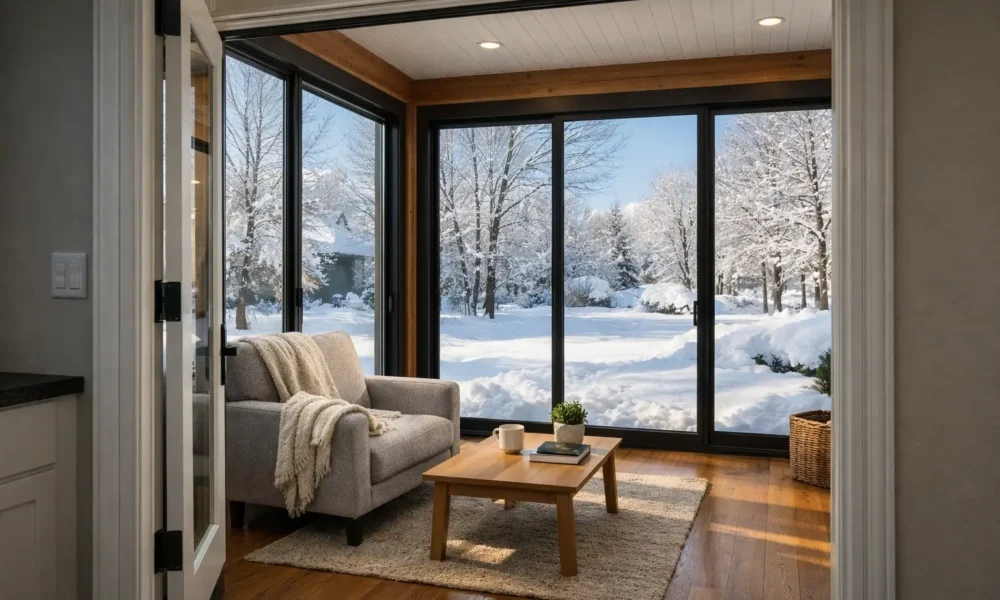
You’ve seen the price ranges. Twenty-five thousand on the low end, ninety thousand or more on the high end. The question most homeowners are actually asking — the one that doesn’t quite fit into a Google search — is whether the room will still feel like a room when it’s 14 degrees outside.
That’s what “4 season sunroom” really means. Not square footage. Not skylights. Whether it’s genuinely livable year-round, or a three-season room with better marketing.
According to HomeAdvisor’s 2025 cost data, a properly built 4 season sunroom delivers an average ROI of 49–51% — one of the higher returns among residential addition types. But that return is conditional. It depends almost entirely on whether the room meets code as conditioned living space. Most guides stop before getting there.
This one won’t.
What Is a 4 Season Sunroom?
A 4 season sunroom is a fully enclosed, insulated room addition attached to a home, designed to be used comfortably in all four seasons — including winter. Unlike a 3-season room, it connects to the home’s HVAC system or has its own dedicated unit, meets residential building code, and uses thermally efficient framing materials.
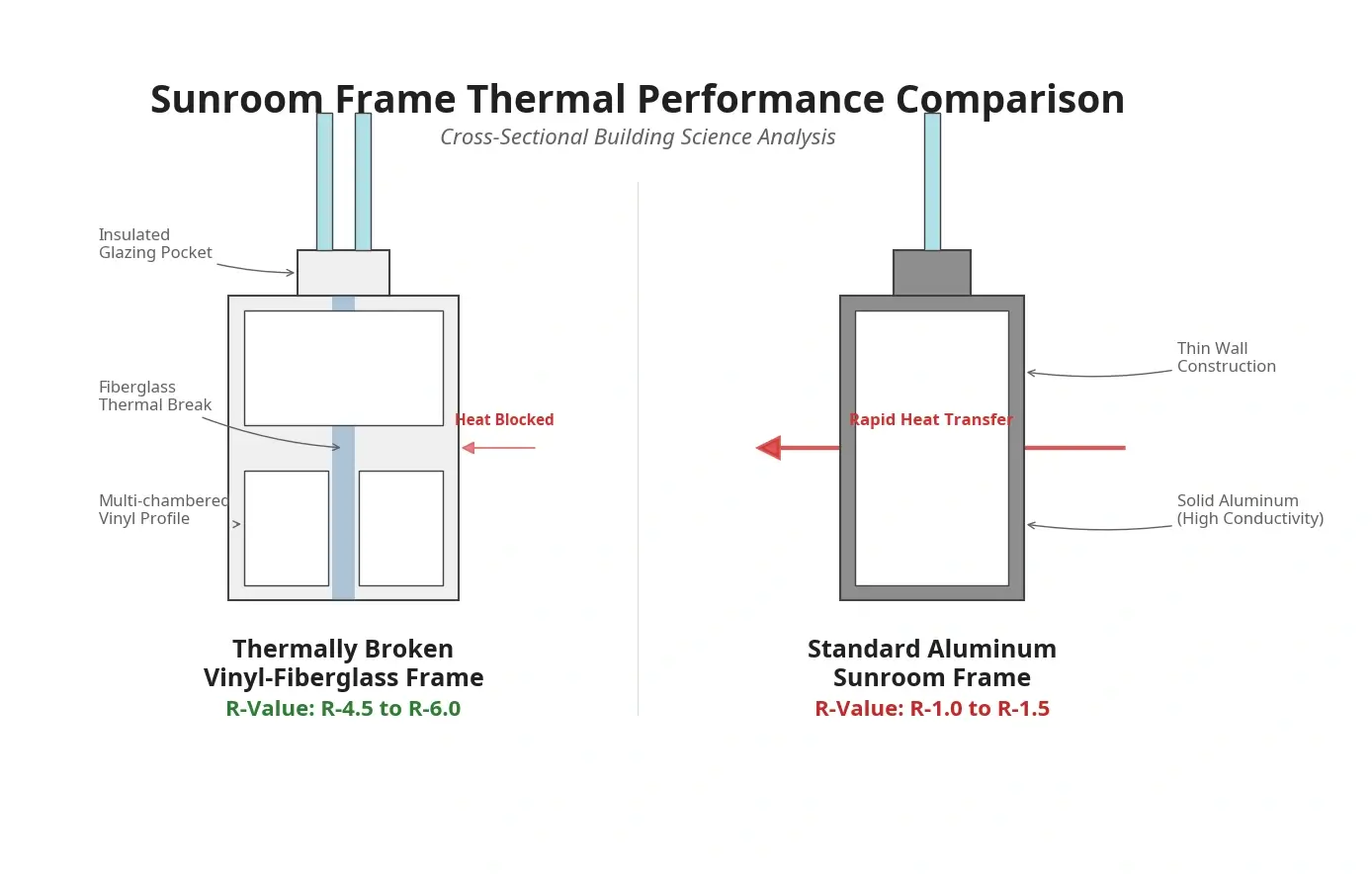
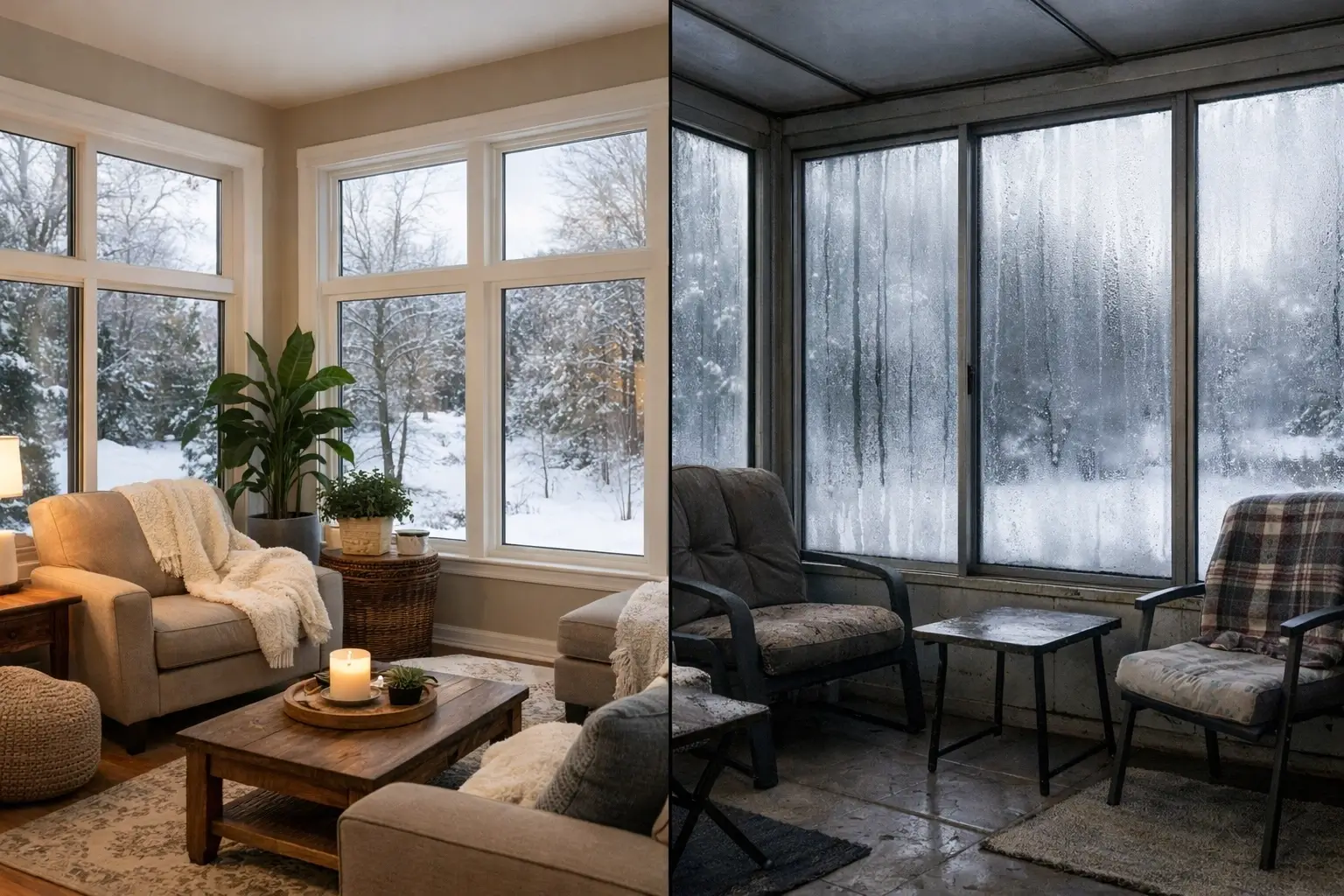
The term “4 season” gets used loosely. A lot of products wear that label without the insulation values or structural integrity to back it up. Homeowners who’ve bought aluminum-frame “4 season” rooms regularly report that by January, the space runs ten to fifteen degrees colder than the rest of the house — and they’re dragging in a space heater just to sit in it.
Or maybe I should say it this way: the label describes an aspiration. Not always a specification.
What separates a real 4 season room from a cold-weather disappointment is frame engineering. Standard aluminum conducts heat aggressively. In winter, warmth escapes through the frame itself — not just through the glass. A thermally broken frame interrupts that transfer using a non-conductive barrier (typically polyurethane or a vinyl composite strip) built into the aluminum profile. Without it, you’ve built a giant radiator on the side of your house.
According to U.S. News & World Report (2024), a 4 season sunroom costs between $22,000 and $72,000 depending on size and materials, with an average ROI of approximately 49%. The catch: that ROI applies specifically to properly insulated, code-compliant structures — not every product marketed under the “4 season” name qualifies.
4 Season vs 3 Season Sunroom: What’s Actually Different
Most comparisons stop at “one has heating, one doesn’t.” True. But it misses the engineering underneath.
4 season sunroom vs 3 season sunroom: A 4 season room is better suited for year-round family living because it connects to HVAC, uses insulated framing, and meets residential building code. A 3 season room works better when budget is the priority and cold-weather use isn’t a requirement. The key difference is thermal frame engineering — not just whether a heating unit is present.
Quick Comparison
| Option | Best For | Key Benefit | Limitation |
|---|---|---|---|
| 4 Season Sunroom | Year-round use in any climate | HVAC-connected, code-compliant, adds assessed home value | Higher upfront cost ($30K–$90K) |
| 3 Season Sunroom | Warm climates, spring/summer-only use | Lower cost ($10K–$50K), faster install | Unusable in winter; rarely adds assessable sq. footage |
| Aluminum-frame “4 season” | Mild climates with few freezing days | Affordable mid-tier price point | Poor thermal performance; high ongoing energy costs |
| Vinyl/fiberglass thermally broken frame | Cold-climate year-round living | Highest insulation value; meets code as conditioned space | Higher material cost; fewer contractors are trained on it |
A 3-season room isn’t a bad product. It’s a different product — and calling it that honestly would save a lot of buyers a lot of disappointment.
How Much Does a 4 Season Sunroom Cost?
According to HomeAdvisor’s 2025 pricing data, a 4 season sunroom costs between $30,000 and $90,000 for most homeowners, with an average project running around $47,000. Size is the biggest cost driver — custom-built rooms typically run $250–$450 per square foot. Prefab panel systems start around $100 per square foot but require separate HVAC work, permitting, and foundation costs that the kit price never includes.
Here’s what drives the number up faster than buyers expect:
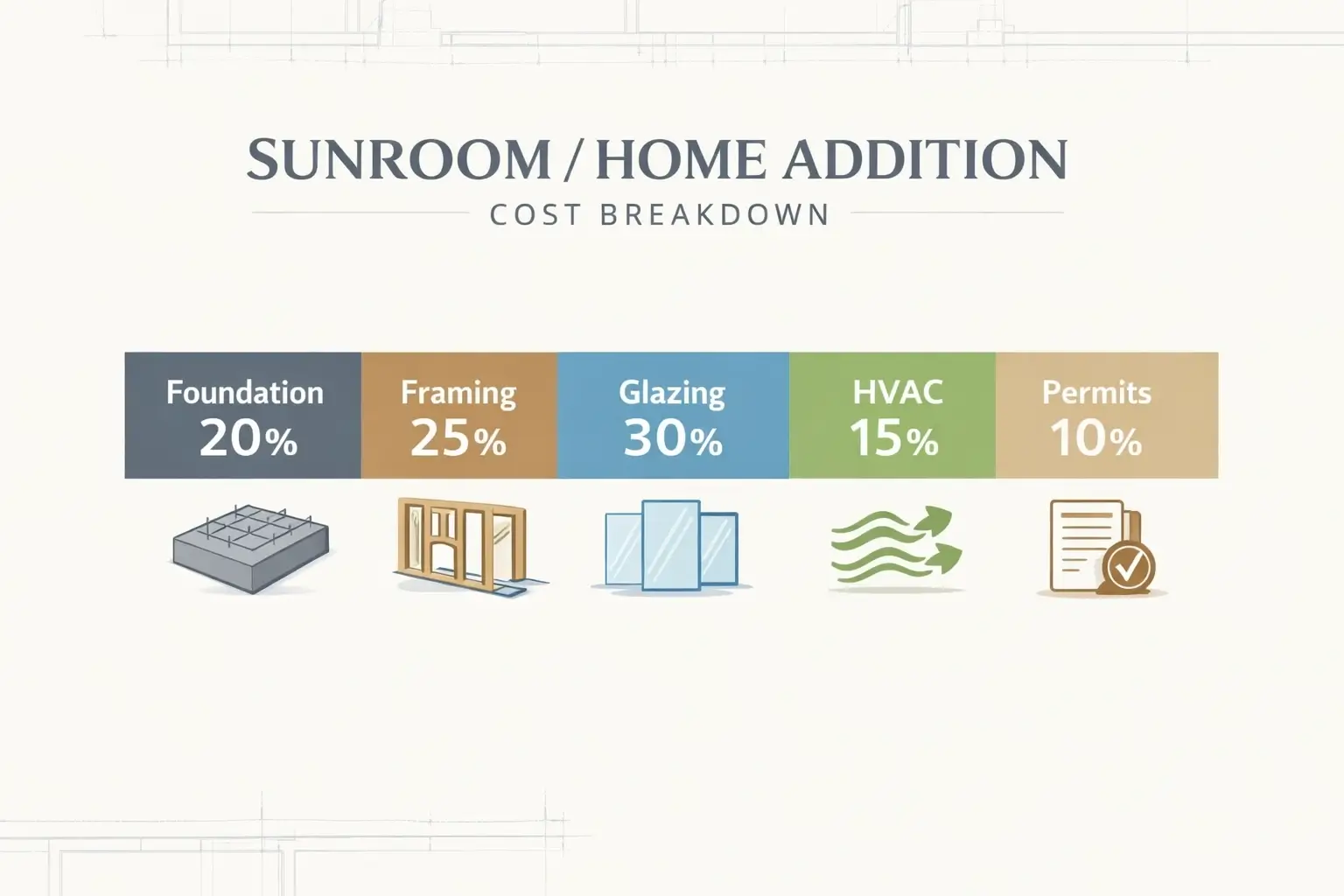
- Foundation work — Most sunrooms require a concrete slab or frost-protected shallow foundation. Add $4,000–$12,000 depending on soil conditions and local frost depth
- HVAC extension or dedicated unit — Your existing system may not have capacity for extra square footage without an equipment upgrade ($2,000–$8,000)
- Permit and inspection fees — Typically $500–$2,500, variable by municipality
- Glazing upgrades — Stepping from standard double-pane to low-E triple-pane glass adds cost upfront but meaningfully reduces heating bills over time
I’ve seen conflicting data on installation timelines — some brands claim three days, others cite two to four weeks. My read is that three-day installs apply specifically to prefab panel systems on pre-poured slabs. Custom full-room additions with HVAC integration realistically take two to six weeks, depending on permit turnaround in your jurisdiction.
The most popular room sizes are 12×12 and 16×24. A 200 sq ft addition at $300/sq ft is $60,000. That’s your real anchor number for planning purposes.
Insulation, HVAC, and Building Code: What Most Guides Skip
This is the section competitors leave out entirely. It’s also the section that determines whether your $65,000 sunroom becomes a real living room — or an expensive vestibule.
The Code Problem Most Buyers Don’t Know About
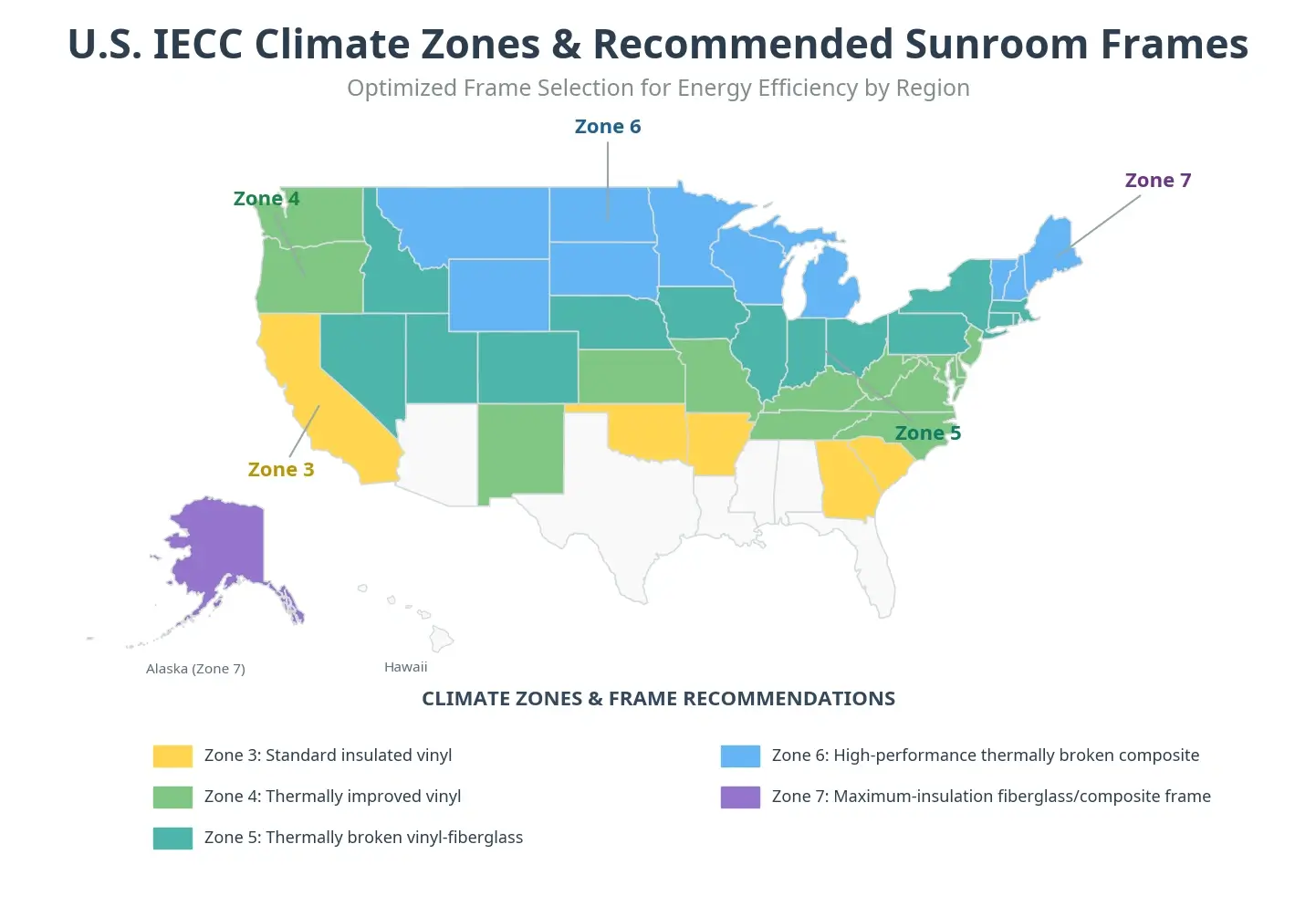
Look — if you’re in a climate with actual winters, here’s what actually matters: your sunroom may need to meet your local residential energy code (often IECC 2021 or your state-adopted equivalent) to be classified as conditioned living space. If it doesn’t meet that standard, it can’t be counted as heated square footage in your home’s assessed value. That affects your property tax calculation and — critically — your resale appraisal.
Many aluminum-frame sunrooms, even branded “4 season” products, don’t meet these code thresholds without significant modifications. Ask your contractor directly: “Will this structure meet IECC insulation requirements as conditioned space?” If they’re vague, if they’re hedging, if they’re not sure what IECC means — don’t sign anything.
Quick note: code requirements vary substantially by state and municipality. Always verify with your local building department before finalizing a contractor agreement.
Which Brands Address This
LivingSpace Sunrooms uses what they call the PulTrex Framing System — a pultruded vinyl-fiberglass composite that eliminates the aluminum conductivity problem and is engineered to meet residential code as conditioned space. Champion Window’s All-Season Sunroom line uses thermally broken aluminum with documented U-values, which performs reasonably well in moderate climates. Four Seasons Sunrooms’ product hierarchy ranges from their entry-level Crystal View up to the Liferoom — different tiers represent different thermal performance levels, not just aesthetic upgrades.
Some experts argue aluminum-frame sunrooms are adequate in IECC climate zones 3 and 4 — the American South and mid-Atlantic. That’s valid for mild winters. But in zone 5 and above — most of the Midwest, Northeast, and Pacific Northwest — the thermal performance gap between aluminum and vinyl-fiberglass framing is substantial, and it shows up on your energy bill every month.
What most guides skip is this: a sunroom that doesn’t meet code as conditioned space isn’t a 4-season room, legally or practically, regardless of what the brochure says.
Does a 4 Season Sunroom Increase Home Value?
A well-built 4 season sunroom delivers an average ROI of 49–51%, according to HomeAdvisor 2025 data corroborated by U.S. News & World Report (2024). Homes with properly permitted, code-compliant 4-season rooms can command a 4–8% price premium over comparable properties without one — especially in colder climates where year-round living space is scarce. However, a room that doesn’t qualify as conditioned space under local code may add little to no assessed value.
Most people assume sunroom ROI is automatic. The data says otherwise.
The return depends on whether your county’s assessment methodology counts the room as finished, heated living space. A 4-season sunroom that fails code doesn’t add assessable square footage. A 3-season room almost never does. In practical terms, that distinction alone can represent a $15,000–$30,000 difference in what your home appraises for when you sell.
Here’s the counter-intuitive part — and it’s one most buyers don’t expect: in warm Southern markets where outdoor living is already easy, a 4-season sunroom often delivers a lower ROI than it does in cold-climate markets. The premium exists because it solves a real problem. Cold-climate buyers pay for the ability to drink coffee with a view of snow-covered trees in February. That’s not a feature you can get any other way.
Four-season rooms deliver an ROI of approximately 50–60% according to Envy Home Services’ 2024 analysis — higher than 3-season rooms (30–50%) and roughly comparable to full room additions when code compliance is achieved.
How to Plan and Choose a 4 Season Sunroom
To plan and choose a 4 season sunroom addition, follow these steps:
- Confirm your climate zone (IECC zone map) — this determines minimum insulation requirements.
- Check local building department requirements for conditioned space additions before contacting contractors.
- Get an HVAC load calculation before choosing a sunroom system — many homes need equipment upgrades.
- Request documented frame specs — ask specifically about thermal break design and R-value ratings.
- Compare at least three quotes using identical square footage and glazing specs for accurate comparison.
- Verify warranty coverage for structure and glass separately — these often have different terms.
Don’t choose a brand before you know your frame requirements. That’s the order that matters.
LivingSpace Sunrooms is the strongest option for cold-climate performance. Champion Window is widely available and competitive on glazing. Four Seasons Sunrooms offers dealer flexibility and a wide product range — just make sure you’re pricing the right tier for your climate.
They’re all selling something. Your job is to know which specifications matter before you walk into a showroom or take a contractor call.
Common Questions About 4 Season Sunrooms
What’s the best 4 season sunroom option for cold climates?
For IECC climate zones 5–7, look for vinyl or fiberglass composite framing with a documented thermal break, triple-pane low-E glass, and confirmation the structure meets local residential energy code as conditioned space. Aluminum-frame rooms underperform in sustained freezing temperatures.
How do I know if a 4 season sunroom requires a building permit?
Almost universally, yes. Any attached structure that connects to HVAC and adds conditioned space requires a permit in most U.S. jurisdictions. Unpermitted sunrooms create title and appraisal problems at resale. Contact your local building department before signing a contractor agreement.
Should I connect a 4 season sunroom to my existing HVAC or add a separate unit?
Only connect to your existing system if a load calculation confirms it has capacity — which many homes don’t. A dedicated mini-split is often more cost-effective, installs faster, and gives you independent climate control without stressing your central equipment.
Why does a neighbor’s “4 season” sunroom still feel cold in winter?
Almost always an aluminum-frame system without a proper thermal break, or HVAC that was never sized for the additional square footage. Aluminum conducts heat aggressively. No heating equipment fully compensates for a structurally conductive frame.
When should I choose a 3 season sunroom over a 4 season sunroom?
If you’re in IECC zones 2–4 (Gulf Coast, Southern California, low-elevation Pacific Northwest), a 3-season room may serve you nine to ten months a year at roughly half the cost. The 4-season premium makes financial sense where winters are genuinely limiting — not where they’re mild.


No Comment! Be the first one.