




Which Home Addition Fits Your House? Real Costs, ROI Data, and What to Build First
Home addition ideas refer to the full range of structural expansions – from modest bump-outs to complete second-story builds – that create new livable square footage without relocating....

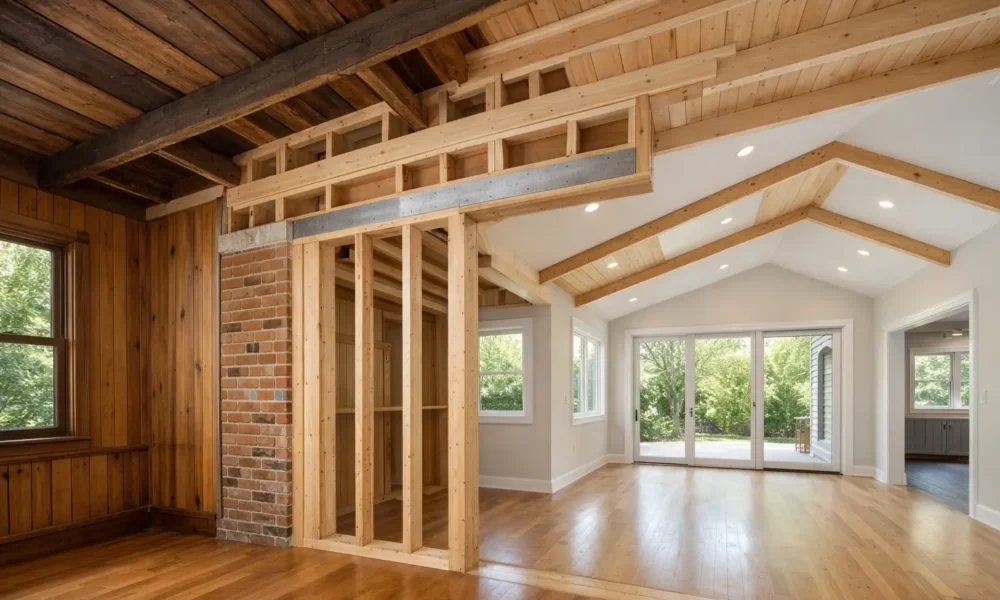
Home addition ideas refer to the full range of structural expansions – from modest bump-outs to complete second-story builds – that create new livable square footage without relocating. Unlike a renovation, which reconfigures existing space, a home addition constructs entirely new square footage attached to or above the existing structure. Most types require permits, architectural drawings, and a licensed general contractor.
That distinction matters more than most articles let on.
What “Home Addition” Actually Means (And What It Doesn’t)
A lot of homeowners confuse additions with remodels. They’re related – but not interchangeable.
A remodel changes what’s already there. An addition builds new space: new framing, a new roofline connection, new permits, and in most cases a new foundation. Knocking down the wall between your kitchen and dining room? That’s a remodel. Pushing the exterior kitchen wall outward by 12 feet to gain a real breakfast area? That’s a bump-out addition. Two completely different projects, two completely different budgets.
The confusion costs people real money.
Here’s the thing: someone who’s been Googling “open-concept kitchen ideas” for three weeks might actually need a 200-square-foot kitchen addition – but they don’t have the vocabulary to know that yet. This article is designed to close that gap.
Featured snippet – Definition block: A home addition is any construction project that adds new livable square footage to an existing home by extending its footprint, building vertically, or converting non-livable attached space. It requires permits, structural work, and typically costs $25,000-$300,000+ depending on type, size, and region.
The 6 Main Types of Home Additions (And When Each One Makes Sense)
Most articles show you pretty photos and stop there. Here’s what actually differentiates each type – and which situations they solve.
Bump-Out Addition
A bump-out extends one existing room – usually a kitchen, bathroom, or bedroom – by 2 to 15 feet. Smaller bump-outs that cantilever over the existing foundation don’t require new footings; anything beyond roughly 4 feet typically does.
Best for: Homeowners who need more space in a specific room, not an entire new room. Typical cost: $5,000-$30,000, depending on size, whether footings are required, and finish level. What most guides skip: Cantilevered bump-outs are cheaper and faster to permit, but they’re structurally limited in how far they can extend. If your contractor doesn’t raise this distinction early, ask.
Full Room Addition
The classic: a new room framed onto the side or rear of the house with its own foundation, framing, electrical, HVAC extension, and roof tie-in. A bedroom, home office, family room, or guest suite all fall here.
Best for: Families who need a net-new functional room – not just a larger version of an existing one. Typical cost: $80,000-$200,000+ for a fully finished addition, with higher-end finishes pushing past that.
Second-Story Addition
You build up, not out. This is the right call when your lot coverage is maxed out – common in urban neighborhoods, dense suburbs, or homes sitting on smaller lots where setback rules eliminate outward expansion.
It’s also the most disruptive type. Many families need to temporarily relocate during construction. That’s a real, recurring cost that almost no addition article mentions, and it belongs in any honest budget discussion.
Typical cost: $100,000-$350,000+, depending on whether you’re adding a full floor or a partial story.
Garage Conversion
Convert an attached garage into finished livable space – typically a bedroom, playroom, or home office. No new foundation required. Often the fastest type to permit.
Best for: Homeowners in areas where parking isn’t tied to property value, who rarely use their garage for actual vehicles. Watch out for: In car-dependent suburbs, losing garage space can genuinely hurt resale. Know your local market before committing.
Accessory Dwelling Unit (ADU)
A self-contained unit with its own entrance, bathroom, and kitchen – detached or attached. Used for in-law suites, adult children, or rental income. ADUs are the fastest-growing addition category in the U.S. right now, driven by multigenerational living trends and rising housing costs.
Typical cost: $60,000-$200,000+, depending on whether it’s a garage/basement conversion or a new detached build. Key variable: Zoning rules governing ADUs vary wildly by city and county. Check local code before designing anything.
Sunroom or Four-Season Room
A glass-heavy room addition that creates an indoor-outdoor transition space. A three-season room is cheaper (uninsulated or minimally insulated, not usable year-round). A true four-season room is fully heated and cooled and usable in any weather.
Typical cost: $15,000-$80,000. ROI note: Sunrooms offer lifestyle value more than financial return – useful to know if resale is your primary driver.
Quick Comparison
| Addition Type | Best For | Key Benefit | Key Limitation |
|---|---|---|---|
| Bump-Out | Enlarging one specific existing room | Lower cost, minimal site disruption | Limited extension range; structural ceiling |
| Full Room Addition | Adding a net-new functional room | Maximum design flexibility | Full permit process; higher cost |
| Second Story | Lots at coverage limit; need multiple rooms | Major square footage gain | Most disruptive; temporary relocation likely |
| Garage Conversion | Fast, low-cost room creation | No new footprint; quick permitting | Eliminates parking; can affect resale in some markets |
| ADU | Multigenerational living or rental income | Income potential; strong long-term ROI | Zoning complexity; highest permitting variability |
| Sunroom | Indoor-outdoor lifestyle space | Natural light; relatively affordable | Lower resale ROI than structural additions |
Home Addition Ideas Matched to Your Actual Situation
Look – if you’re creating space for an aging parent, your priorities are fundamentally different from someone adding a home office. Matching the idea to the situation is the part most inspiration articles completely skip.
- Your parents are moving in: A first-floor primary suite addition or a detached ADU. Accessibility is the priority – single-story living, wider doorways, roll-in shower if needed. A second-story addition doesn’t serve this scenario.
- Your family is growing: A bedroom addition, or a second-story build if you need multiple rooms at once. One bump-out won’t solve a three-kid, one-bathroom problem.
- You work from home full-time: A detached ADU used as a dedicated workspace, or a bump-out into an unused area of the home. The key isn’t size. It’s separation – a door that closes between work and home.
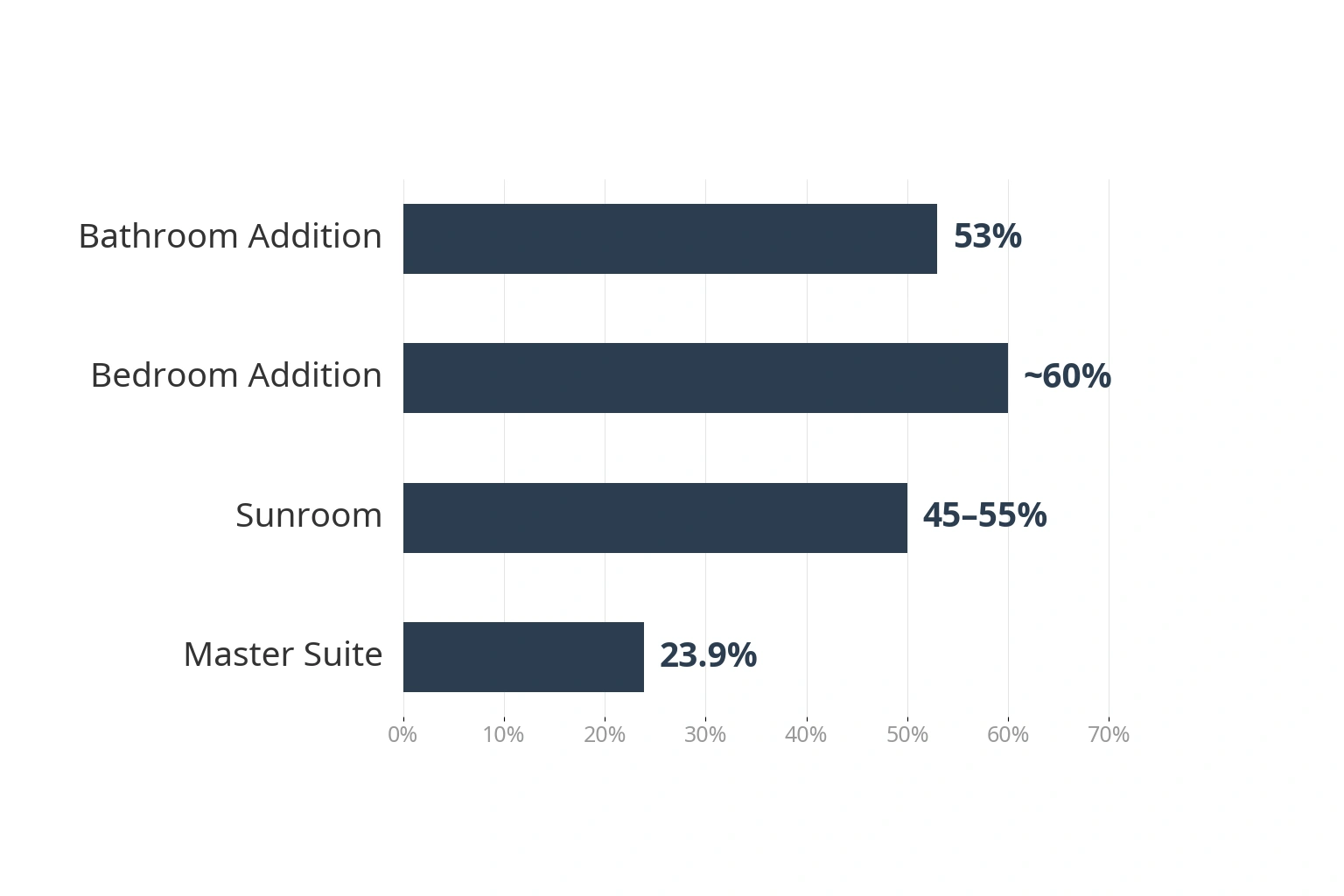
- Your goal is resale value: A bathroom addition. According to Fixr 2025 analysis of the JLC Cost vs. Value Report data, a midrange bathroom addition returns approximately 53% ROI at resale – one of the stronger returns available among structural addition types.
- Your lot is too small to build outward: Second story or garage conversion. Pushing past your setback limits won’t get permitted. That’s not a negotiation – it’s a zoning rule.
What a Home Addition Actually Costs
I’ve seen conflicting data on this – some sources quote $80-$200 per square foot, others cite up to $400 in high-cost coastal markets. My read: $100-$300 per square foot for a finished addition is the realistic 2025-2026 national range, with meaningful regional spread on both ends.
A 400-square-foot bedroom addition in the Midwest might run $80,000-$120,000. That same build in coastal California or the Northeast? Often $150,000-$250,000.
The variables that actually move the final number:
- Foundation type – slab versus crawlspace versus full basement. Significant cost difference.
- Roof tie-in complexity – matching an irregular roofline adds labor and material cost.
- HVAC extension – more square footage means extending your existing system or adding a zone. Don’t underestimate this line item.
- Finish level – standard builder-grade versus custom cabinetry, tile work, and fixtures can swing the interior finish cost by 30-50%.
Quick note: always budget 15-20% above your contractor estimate. Material cost volatility and permit-driven change orders are consistent realities in addition work, not rare exceptions.
ROI: Which Home Addition Ideas Are Actually Worth the Money?
Most people assume bigger additions deliver better returns. The data says otherwise.
According to Remodeling Magazine’s 2024 Cost vs. Value Report, an upscale primary suite addition returns approximately 23.9% ROI at resale – meaning a $339,000 investment recovers roughly $81,000 in added home value. A midrange bathroom addition, meanwhile, returns 53% in 2025 data.
Or maybe I should say it this way: the additions that feel most luxurious tend to have the worst financial returns. The ones that fix a functional gap – an extra bathroom, a bedroom that brings you to the neighborhood’s typical standard – hold their value better because they solve a problem buyers also have.
The counter-intuitive conclusion: a modest bathroom addition often beats a sprawling master suite addition on pure ROI.
Some advisors argue that moving is smarter than adding. That’s a valid position when the numbers work. But with mortgage rates staying elevated through 2025-2026, homeowners sitting on 3-4% fixed-rate loans face a real financial penalty for trading up. For many, an addition is the more rational choice – not just an emotional one.
This guide does not address tax treatment of home improvements. A CPA can advise on how capital improvement documentation affects your cost basis at sale.
How to Plan a Home Addition: The Right Order of Operations
Most homeowners call a contractor first. That’s actually step three or four.
To plan a home addition properly, follow this sequence:
- Verify your zoning and setback rules with your local building or planning department – before sketching anything.
- Use a layout tool like RoomSketcher to visualize your rough dimensions and communicate your vision.
- Hire an architect or designer to produce construction drawings – required for permit applications in most jurisdictions.
- Get at least three contractor bids, and verify each contractor’s license, insurance, and references.
- Apply for permits before any ground is broken. Never let a contractor skip this step.
- Establish a draw schedule with your contractor – payments tied to project milestones, not a lump sum upfront.
That’s the correct sequence. Skipping step one – zoning verification – is the most common expensive mistake in addition planning. Finding out your setback rules eliminate your planned layout after you’ve paid for architectural drawings is a painful and avoidable situation.
Tools Worth Knowing Before You Start
Houzz is the most useful platform for browsing real completed additions by style, room type, and geographic region. The contractor directory also lets you find and vet local professionals by project type.
RoomSketcher is a free online layout tool useful for sketching your addition concept before meeting with a designer. It won’t replace professional drawings, but it helps you show up to those meetings with a clear vision rather than a vague one.
Synchrony Bank financing is offered by a significant number of general contractors as a point-of-sale financing option. If you’re working with a contractor who doesn’t mention financing options, ask directly whether they’re enrolled with Synchrony or a similar program.
5 Real Questions About Home Additions
What’s the cheapest home addition that still adds real square footage?
A bump-out is typically the most affordable structural addition, ranging from $5,000-$30,000 for a modest single-room extension. A garage conversion is another lower-cost route if you have attached garage space you’re not actively using for vehicles.
How do I know if my lot allows a home addition?
Contact your local building or planning department and ask about your property’s setback requirements and lot coverage limits. These vary by municipality and directly determine how far outward or upward you can legally build.
Should I add a second story or build outward?
Build outward if your lot allows it – it’s less disruptive to your household and almost always cheaper per square foot. A second-story addition makes sense when your lot coverage is maxed out or when you need multiple new rooms at once.
Why does a bathroom addition have better ROI than a master suite?
Bathroom additions fix a functional gap that buyers universally recognize – particularly when a home has more bedrooms than bathrooms. A master suite addition is expensive and highly personal in its finishes, which limits its universal appeal to future buyers who have their own preferences.
When should I start planning a home addition?
Start 6-12 months before you want construction to begin. Permitting timelines, architect scheduling, and contractor availability all add lead time that consistently surprises first-time addition owners. Starting a full year out gives you real options.




No Comment! Be the first one.