




27 Fireplace Decor Ideas That Actually Make Your Mantel Look Finished
The mantel is the spot in the room that draws every eye — and it’s also the spot where most people give up after two failed attempts. You’ve probably been there: placed a candle trio in...

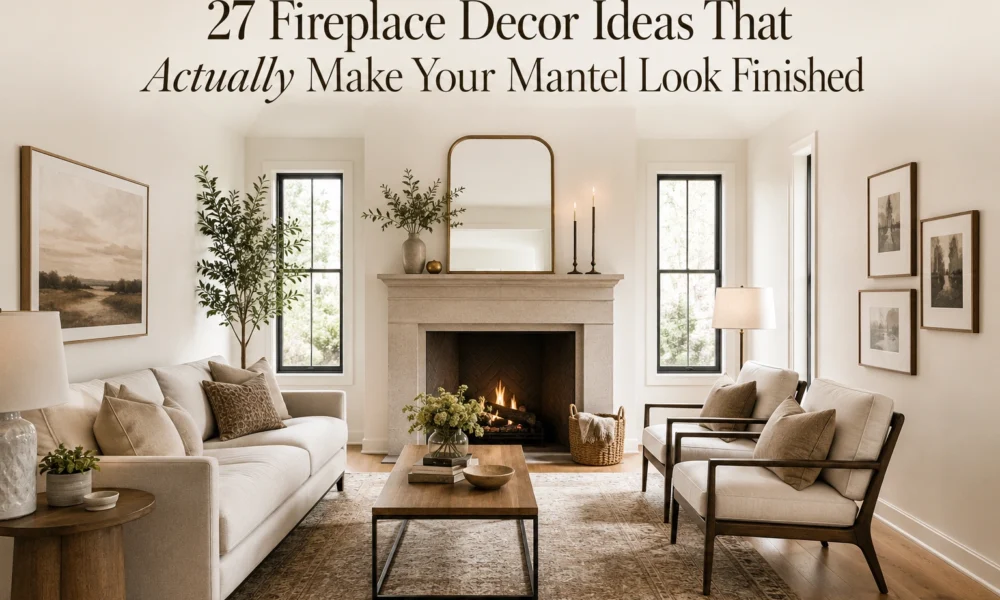
The mantel is the spot in the room that draws every eye — and it’s also the spot where most people give up after two failed attempts. You’ve probably been there: placed a candle trio in the center, added something small on each side, stepped back, and thought this still looks wrong.
Here’s the thing: it’s not your taste. It’s the design logic underneath that nobody explains clearly. Mantels need scale, height contrast, and depth to feel finished — not just objects sitting in a row.
According to Redfin’s 2025 listing data, homes with fireplaces receive an average of 733 views per listing — the highest number among all tracked home features. That one number says everything about what a fireplace does to a room. When your mantel is styled well, the whole space reads differently.
This guide covers 27 real, practical fireplace decor ideas organized by style, fireplace type, and year-round styling principles — so you can find what fits your actual space, not just a staged photo.
What Are Fireplace Decor Ideas?
Fireplace decor ideas are the styling choices made on and around the mantel shelf, firebox, and surrounding wall to create a cohesive, visually balanced focal point. This includes layered object arrangements, height contrast, texture mixing, seasonal accent swaps, and candle or botanical solutions for non-working or decorative fireplaces.
The Foundation: Classic Mantel Arrangements That Always Work
Decorating a fireplace mantel that looks finished comes down to three principles: anchoring with one tall element, building scale variation across the shelf, and grouping objects in odd numbers. According to professional interior stylists, these three decisions resolve the majority of “something looks off” mantel complaints before any individual objects are even chosen.
How to Style a Fireplace Mantel From Scratch
To decorate a fireplace mantel that looks finished, follow these steps:
- Choose one tall anchor piece — a mirror, artwork, or tall vase.
- Place two matching bookend objects at each outer edge of the shelf.
- Fill the center with grouped items in odd numbers at three different heights.
- Add one textural element — woven, ceramic, or botanical.
- Step back and remove any piece that disrupts the height or spacing rhythm.
Look — if your mantel has felt permanently off no matter what you put on it, the issue is almost certainly scale. Objects too small for your mantel width disappear visually regardless of how nice they are. A $12 bud vase on a wide marble mantel looks like a mistake.
1. Anchor With a Leaning Oversized Mirror
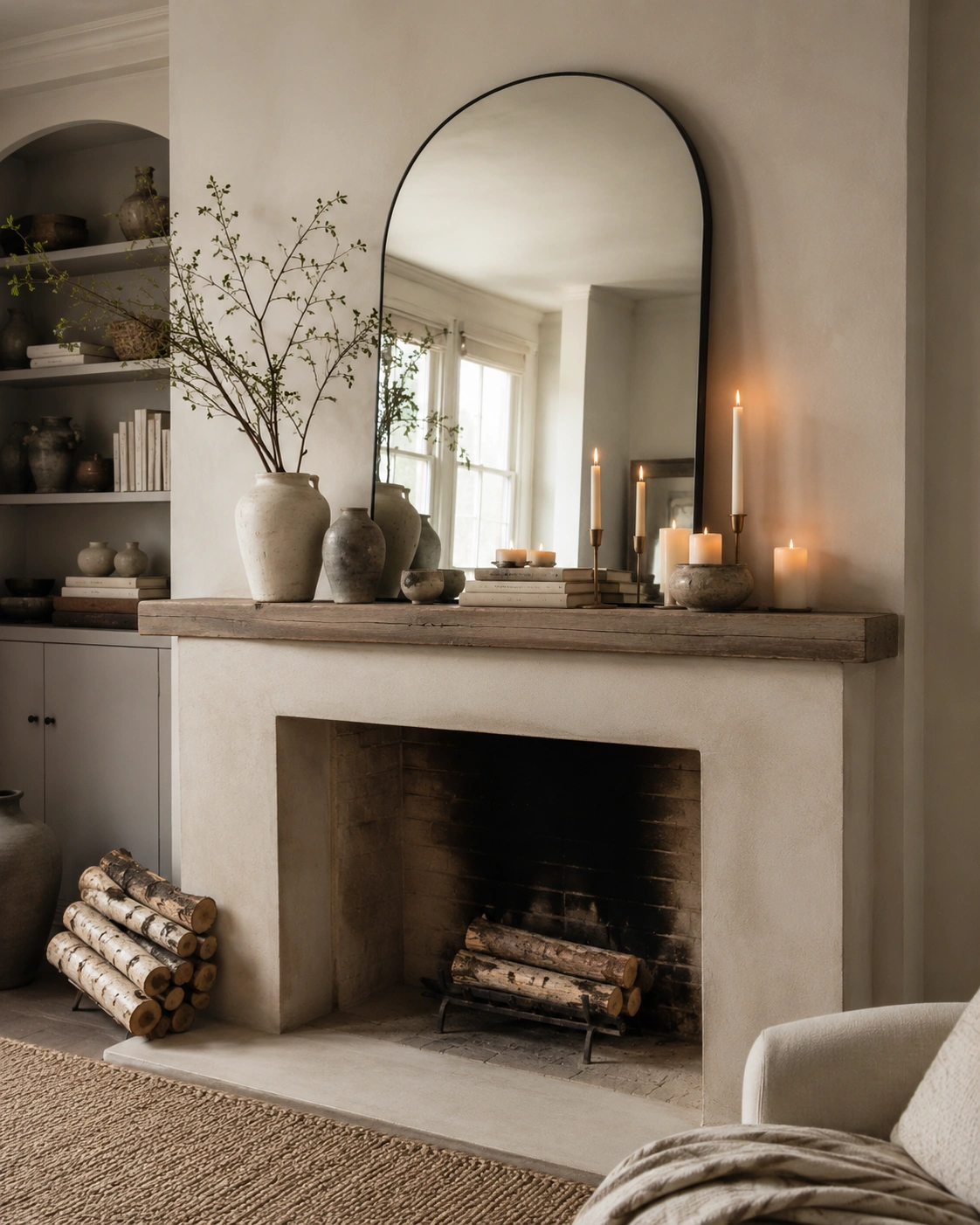
A leaning mirror is the single highest-impact move for a bare mantel. It reflects light, adds significant height, and frames everything placed in front of it. Size matters: choose a mirror at least one-third the width of your mantel shelf. A round arch-top style — like those from McGee & Co. — reads as modern and soft without needing to be mounted to look intentional.
2. Build Height With a Three-Tier Candle Arrangement
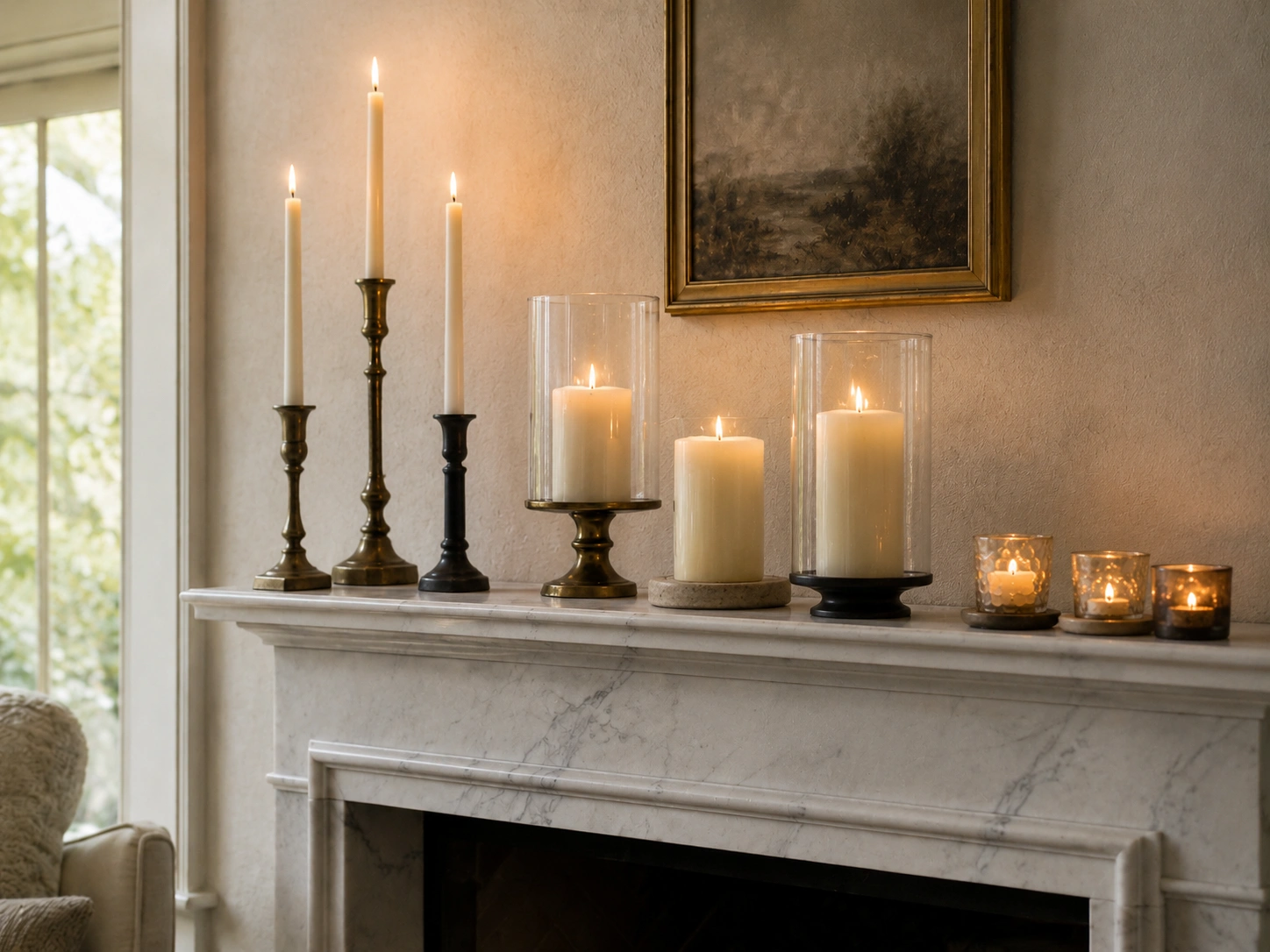
Flat mantels look unfinished because everything sits at the same level. The fix is height variation: tall taper candleholders, a medium pillar cluster, and a low votive grouping. Use odd numbers within each tier. Pottery Barn’s fireplace candle collection is a reliable reference point, but mismatched thrift finds look just as good and read as more personally collected over time.
3. Apply the Rule of Odds to Every Object Group
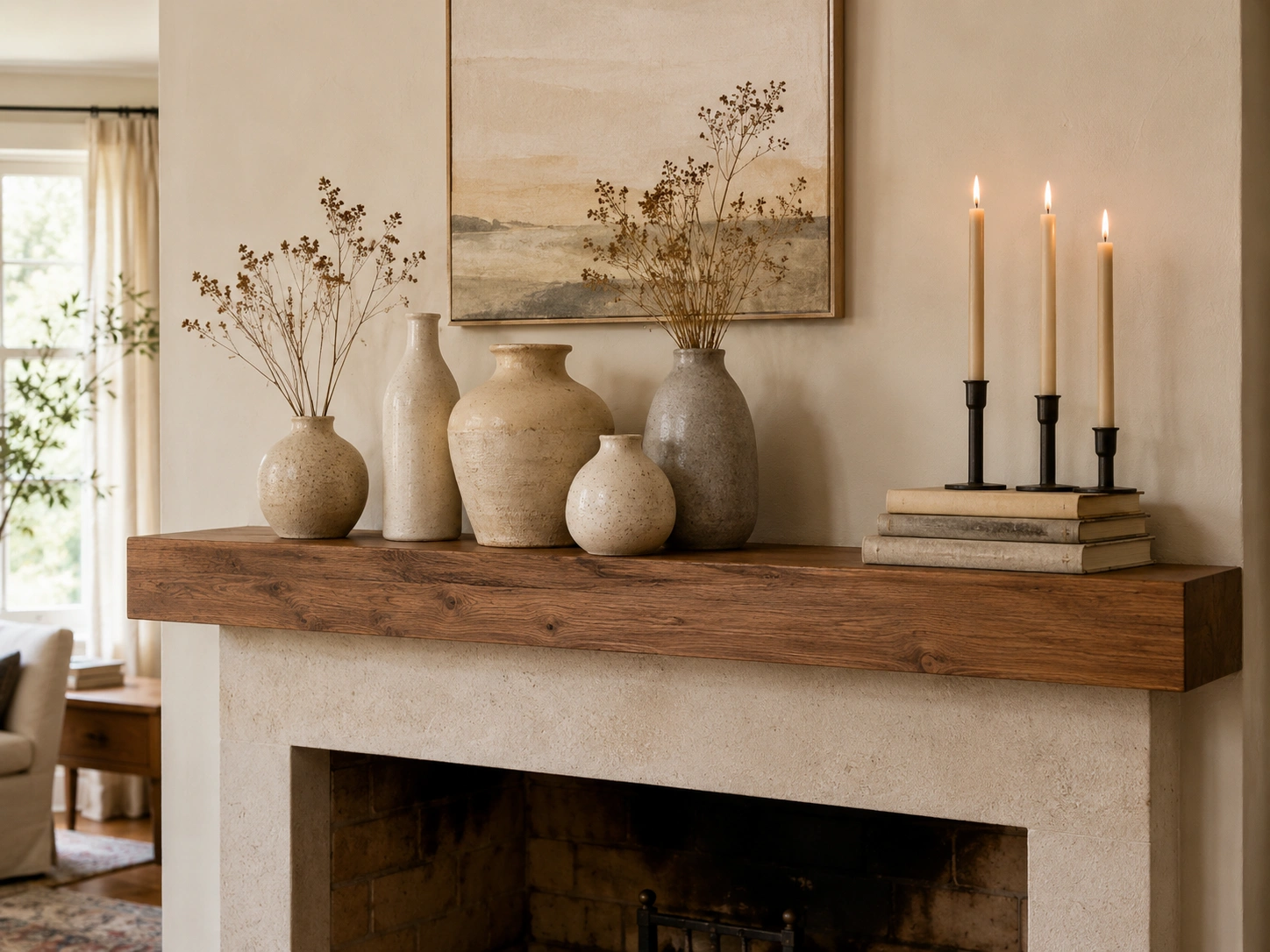
Grouping objects in odd numbers — three, five, or seven — prevents the visual evenness that makes mantels look like a retail display. Two matching vases look purchased. Three vases at different heights look curated. This rule applies whether you’re styling with ceramics, books, botanicals, or a mix of all three. It works even for the number of candle flames visible in any single arrangement.
One simple rule. Everything changes.
4. Layer a Print or Artwork Behind Sculptural Objects
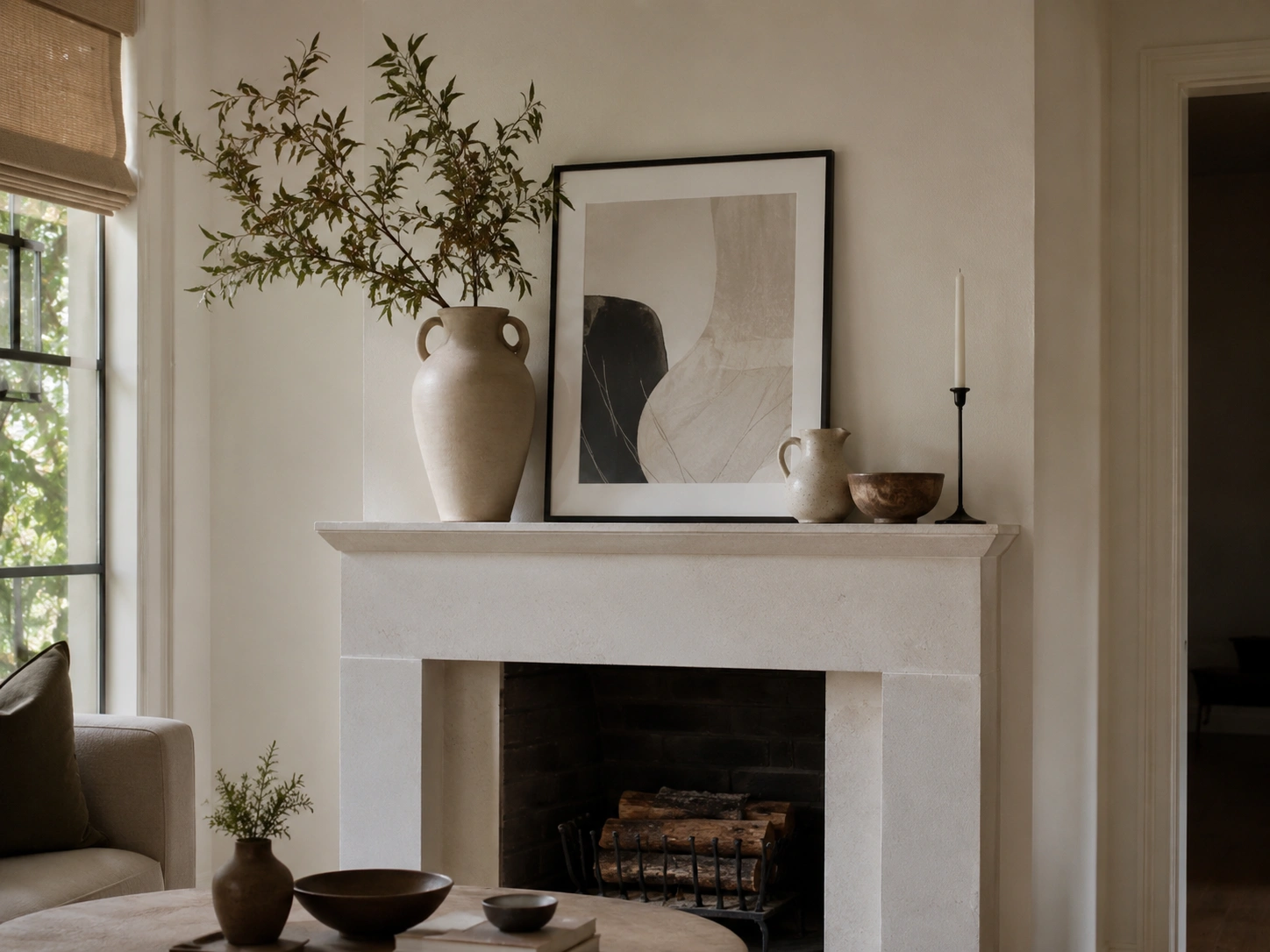
Artwork placed against the wall behind your mantel objects creates depth that a row of objects alone can’t achieve. You don’t need an expensive piece — a single 16×20 print in a thin frame, overlapped slightly by a tall vase in front, creates the layered look that appears on styled Pinterest boards. The art doesn’t need to be perfectly centered. Off-center often reads as more intentional than precisely placed.
5. Use a Large Clock as the Dominant Center Piece
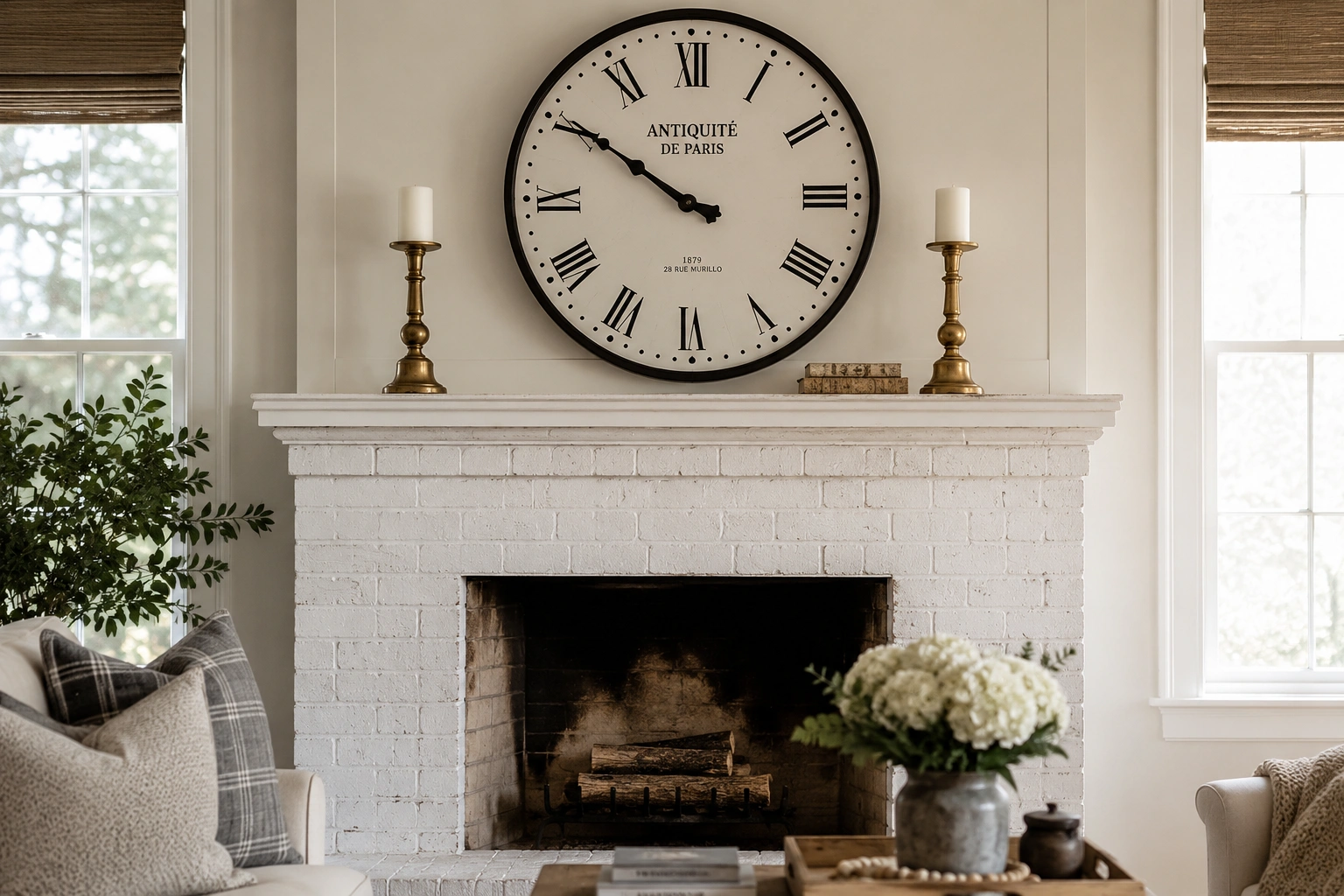
A statement clock — oversized relative to the mantel width — serves as both decor and structural anchor. Unlike a mirror, it works as the main piece without anything leaned behind it. A 20- to 24-inch round metal or wood clock gives a traditional mantel a subtly updated feel. Pair it with two flanking objects of similar height and the composition completes itself without competing with the clock’s presence.
6. Frame the Mantel With Matching Bookend Pieces
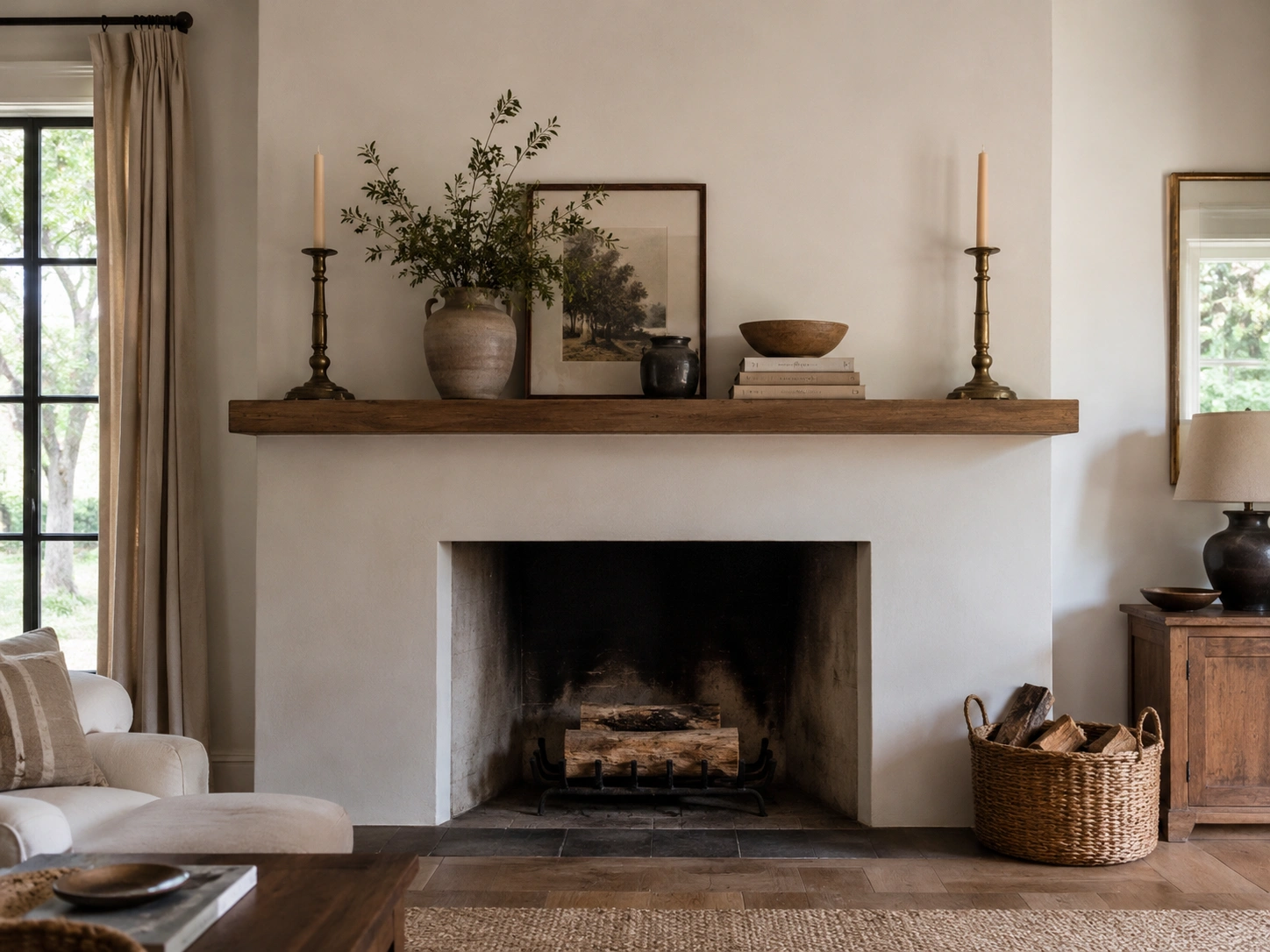
Placing two identical or near-identical objects at each far end of the mantel is the foundational technique that makes everything in between look intentional. Bookends can be matching candlesticks, matching vases, topiaries, or two stacks of books at the same height. What you place between them can be completely asymmetrical — and it’ll still read as balanced, because the outer frame holds the whole composition together.
Organic and Nature-Inspired Mantel Ideas
Nature-inspired mantel decor has dominated Pinterest saves among the 25–44 age group for two consecutive years because it works across nearly every interior style — traditional, transitional, and contemporary. Dried botanicals, sculptural ceramics, and organic textures signal warmth without seasonal restriction. Unlike fresh flowers, these elements require no maintenance and tend to look better as they age into the space.
It’s not that more objects can’t coexist on a mantel — they can, when they’ve been selected with real intent and don’t share the same scale. But most mantels don’t start there. One oversized sculptural piece does more visual work than seven small objects competing for attention. Less, chosen more deliberately, wins.
7. Display Dried Pampas Grass in a Tall, Narrow Vase
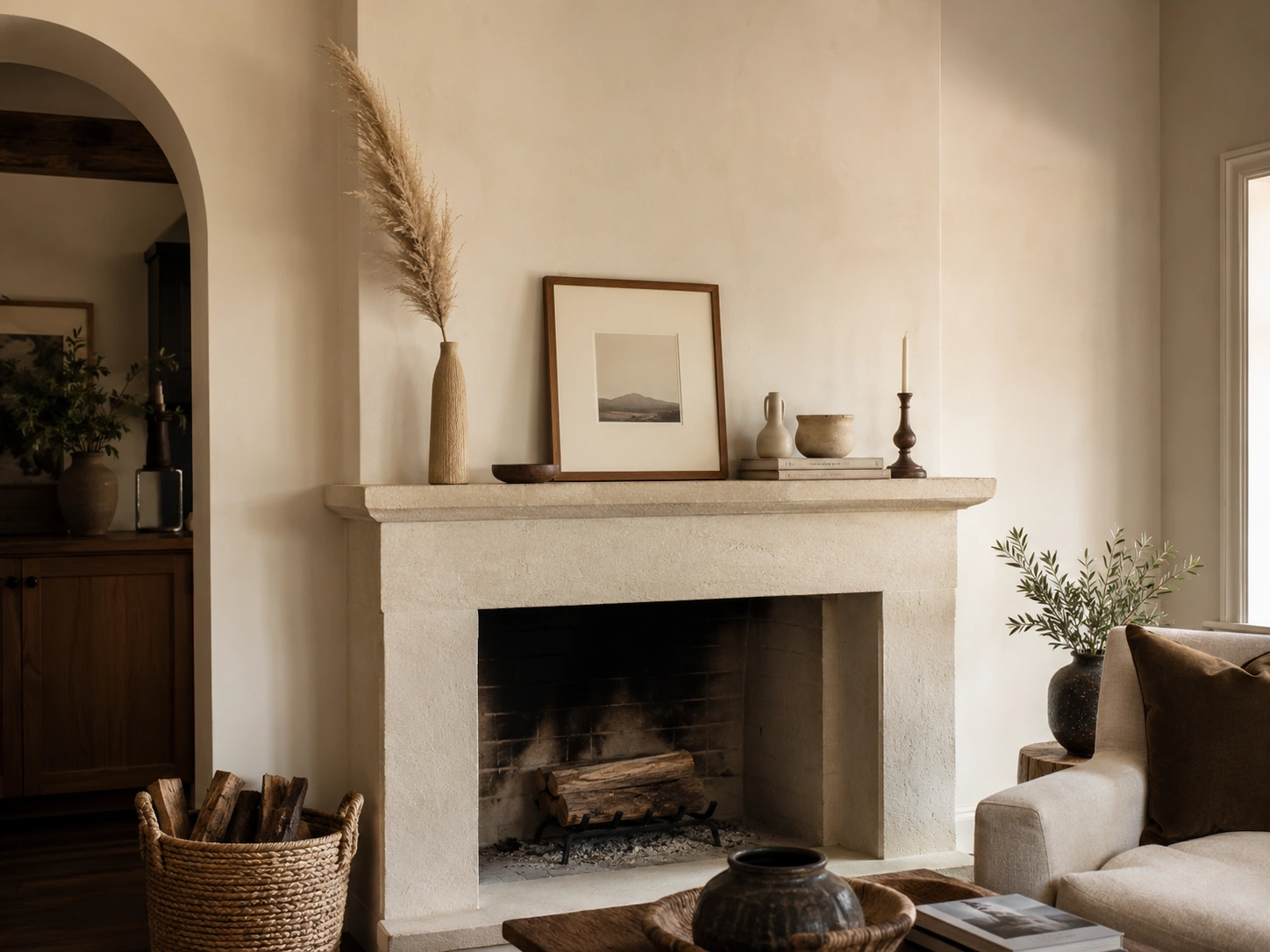
Pampas grass in a tall, narrow vase remains one of the most-saved mantel images on Pinterest — and it works because it adds height without visual weight. The feathery plumes bring a softness no hard object can replicate. Source dried stems from Afloral.com, where quality holds for years without shedding. A single stem in a 12- to 16-inch ceramic or rattan vase cleanly anchors one side of the mantel.
8. Drape Preserved Eucalyptus Garland Along the Mantel Edge
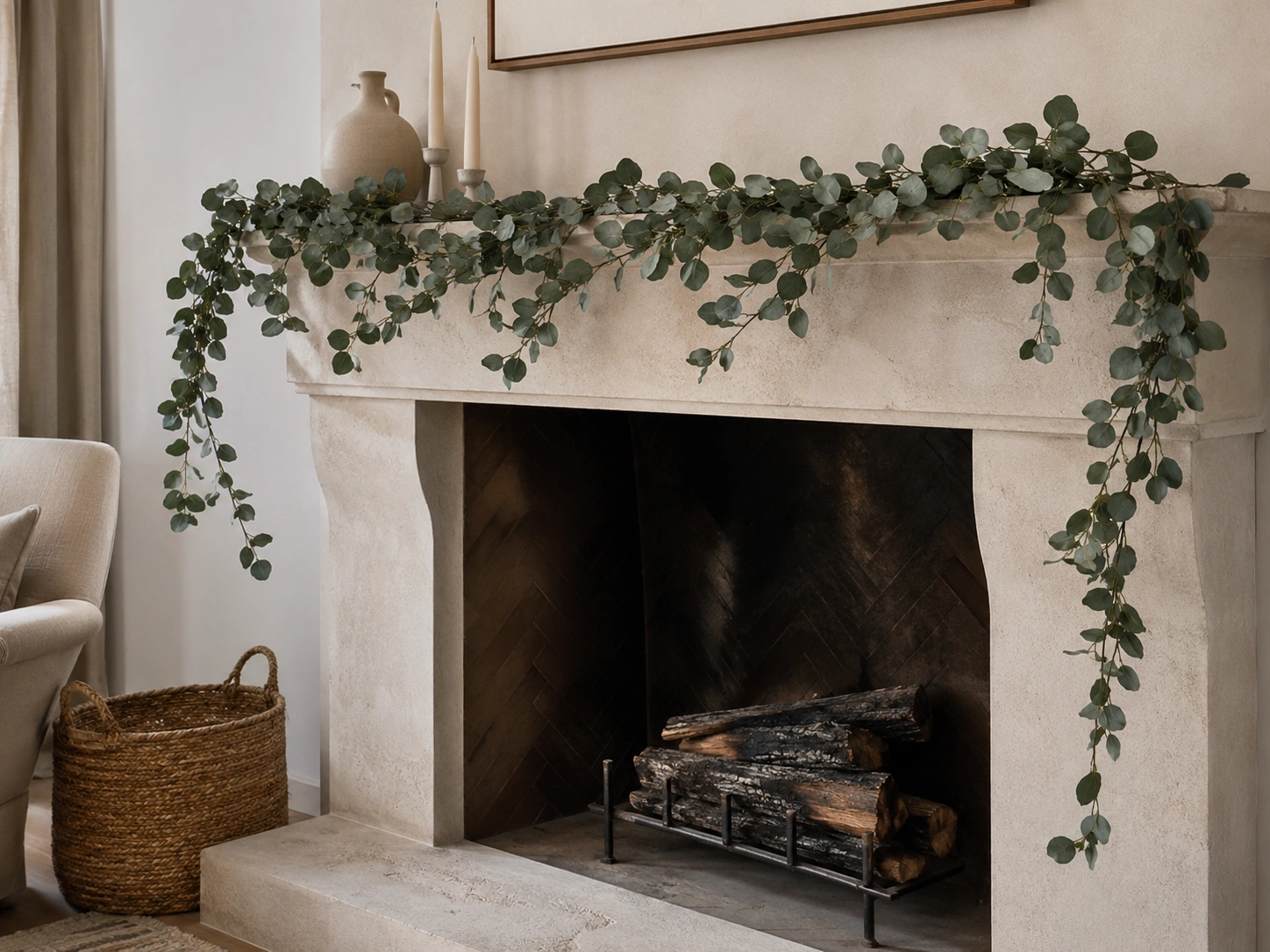
A eucalyptus garland draped loosely along the front edge of the mantel shelf adds color, texture, and movement in one step. Preserved stems hold their grey-green color for months without water. The key is draping unevenly — too precise and it looks like seasonal holiday ribbon. Afloral.com carries preserved varieties in multiple lengths that work for both wide and narrow mantels without looking sparse between the ends.
9. Make an Organically Shaped Ceramic Vase the Hero Piece
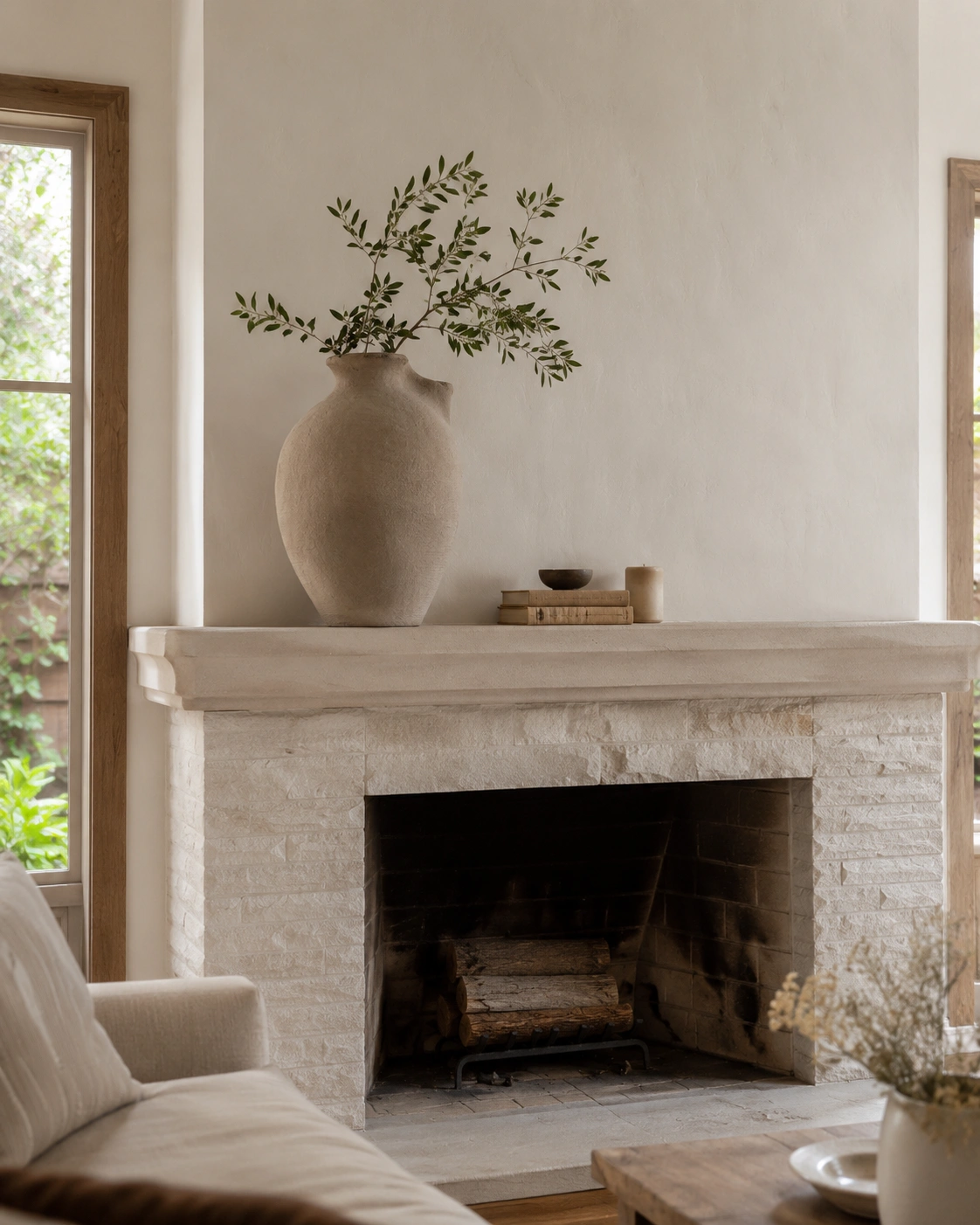
One oversized ceramic vase placed off-center does more visual work than five smaller objects combined. The form should feel imperfect — irregular necks, uneven shoulders, raw clay textures. This is the signature move of the organic-luxe aesthetic that McGee & Co. has defined most clearly across 2025 and 2026. Keep everything else around it smaller and quieter so the vase reads as the single clear focal point.
10. Cluster a Collection of Varying Bud Vases
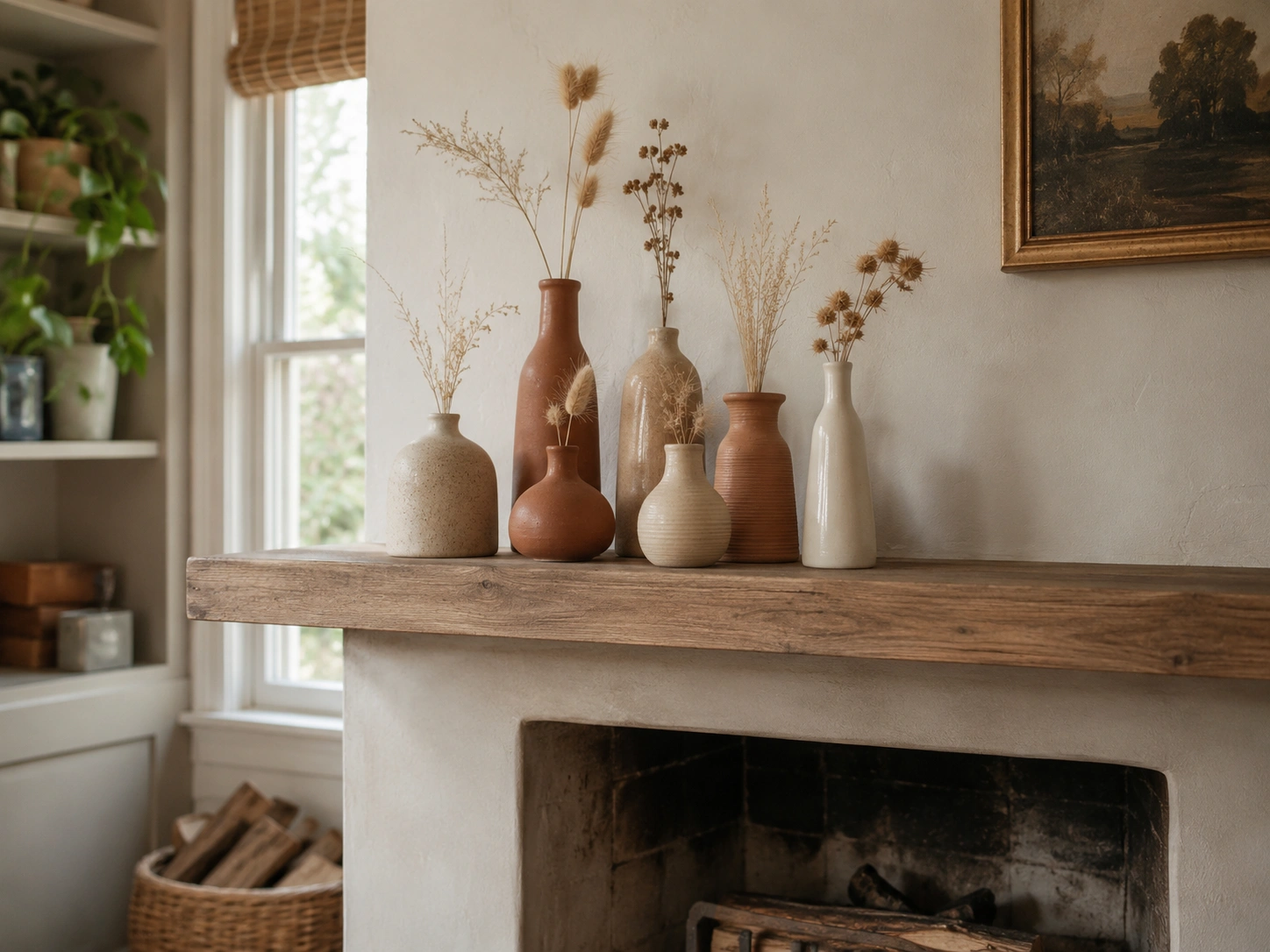
Five to seven bud vases in different heights, materials, and neck widths read as a curated collection rather than clutter — as long as they share one unifying quality. Same color family (all cream, all terracotta), same material (all glass, all ceramic), or the same stem type in each. Achievable for under $30 using thrift stores, IKEA, and a single pack of dried blooms from a craft supplier.
11. Use a Flat Woven Tray to Anchor a Vignette
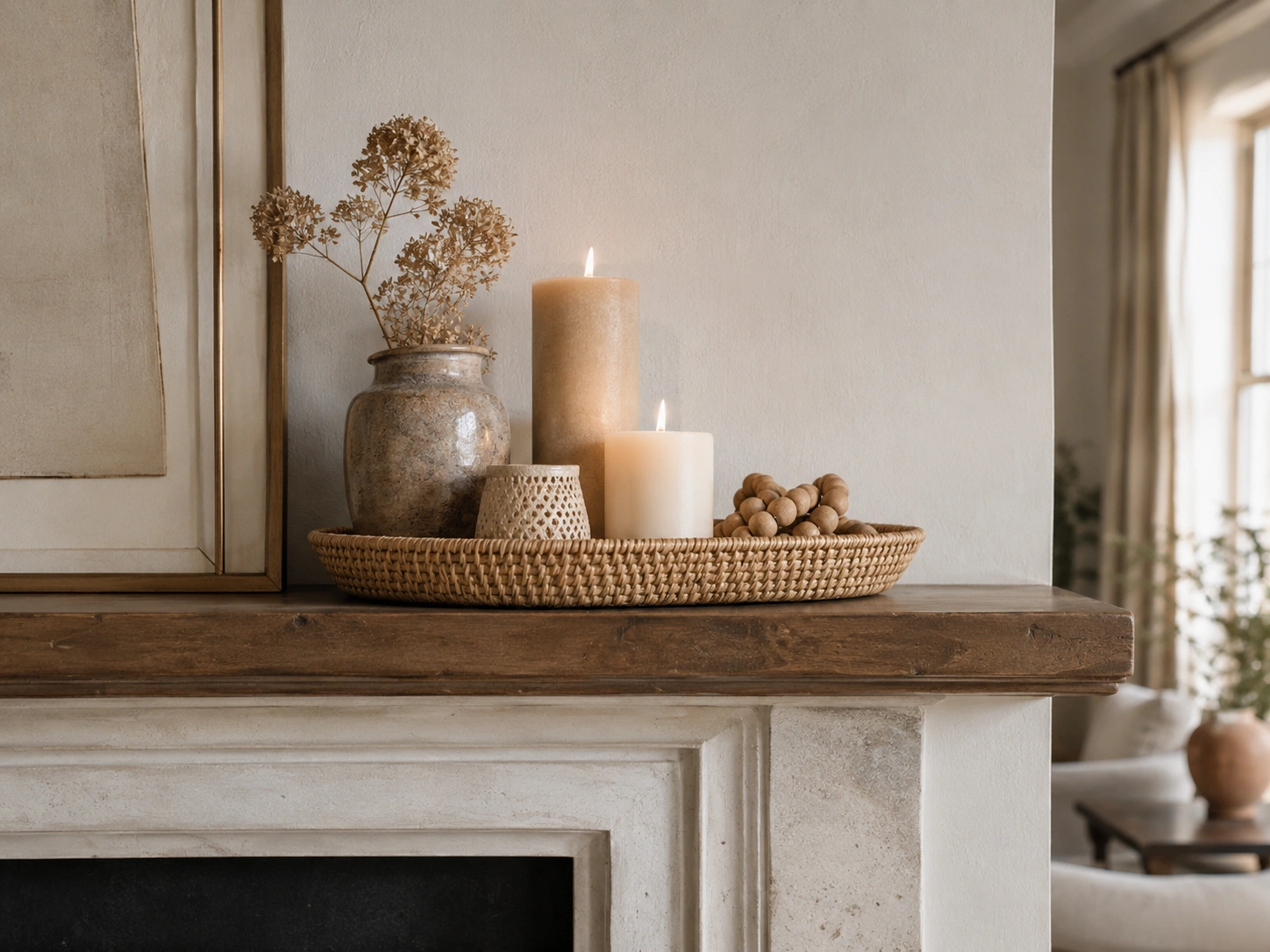
A woven rattan or seagrass tray used as a base for your mantel arrangement pulls disparate objects together instantly. Place candles, a small vase, and one textural object on the tray, and they read as a cohesive vignette rather than random pieces. The tray also makes the entire arrangement portable — lift it off for dusting or swap it out when changing seasonal accents without losing the underlying composition.
12. Trail a Small Plant Over the Mantel Edge
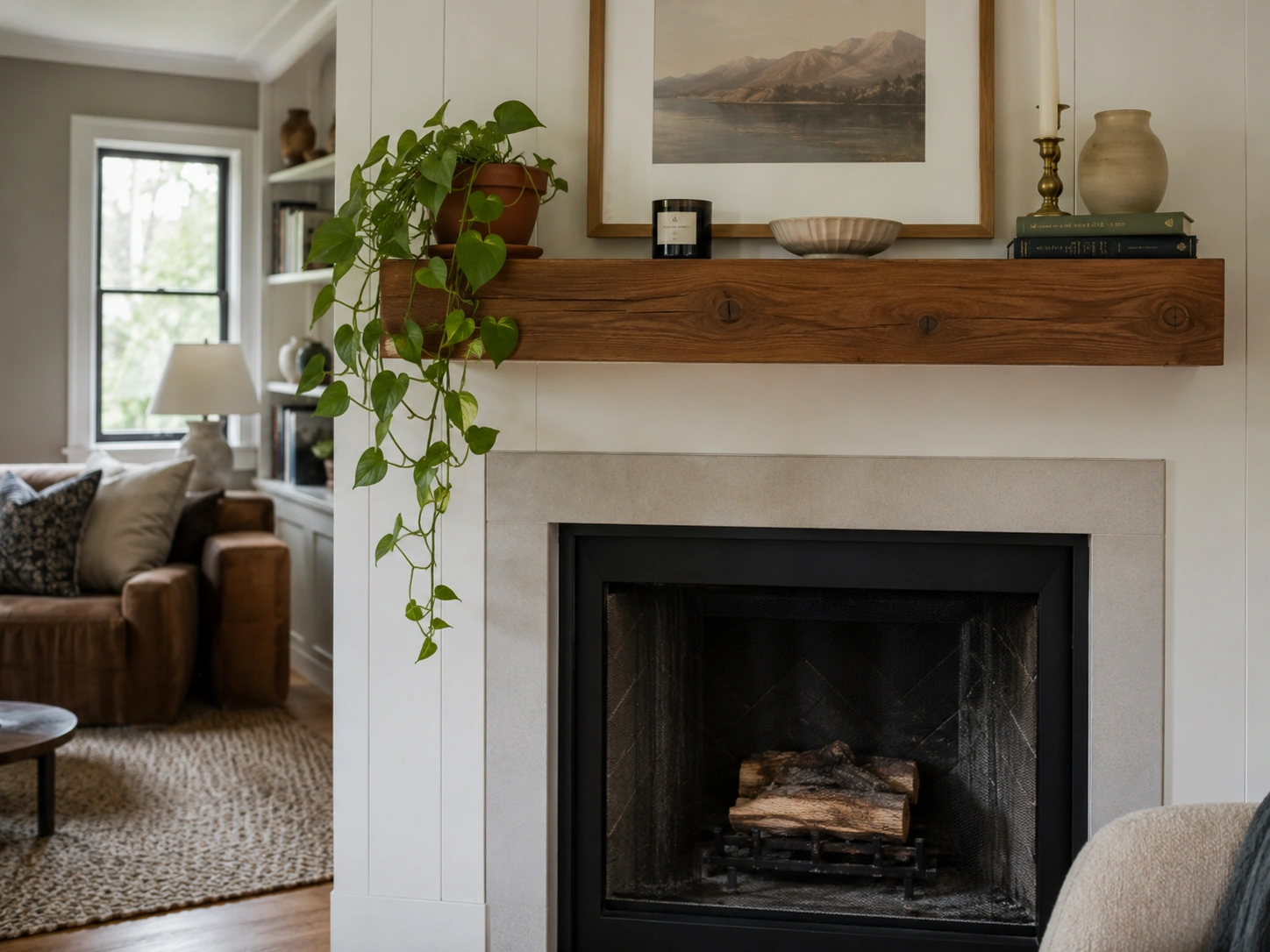
A trailing plant — pothos, string of pearls, or a trailing philodendron — in a terracotta or matte ceramic pot adds life that no dried botanical can replicate. Position it at one end so the vines drape slightly over the shelf edge. The organic movement creates visual interest and makes the arrangement feel less deliberately arranged. It’s also the most budget-friendly and beginner-proof mantel element on this entire list.
Non-Working and Decorative Fireplace Styling
Most guides stop at the mantel shelf and ignore the firebox entirely. But if your fireplace is sealed, ornamental, or renter-restricted — common in older homes, apartments, and urban rentals — the firebox opening is one of the most underused styling surfaces in any room. What you place inside it changes the entire visual weight of the surround, not just the shelf above it.
Leaning mirror vs. framed artwork above a non-working fireplace: A leaning mirror works better in darker rooms because it reflects ambient light back into the space. Framed artwork suits bright rooms where the piece itself is the focal point. The key difference is whether your room needs the mantel to add light or to add color and personality.
13. Fill the Firebox With Pillar Candles of Varying Heights
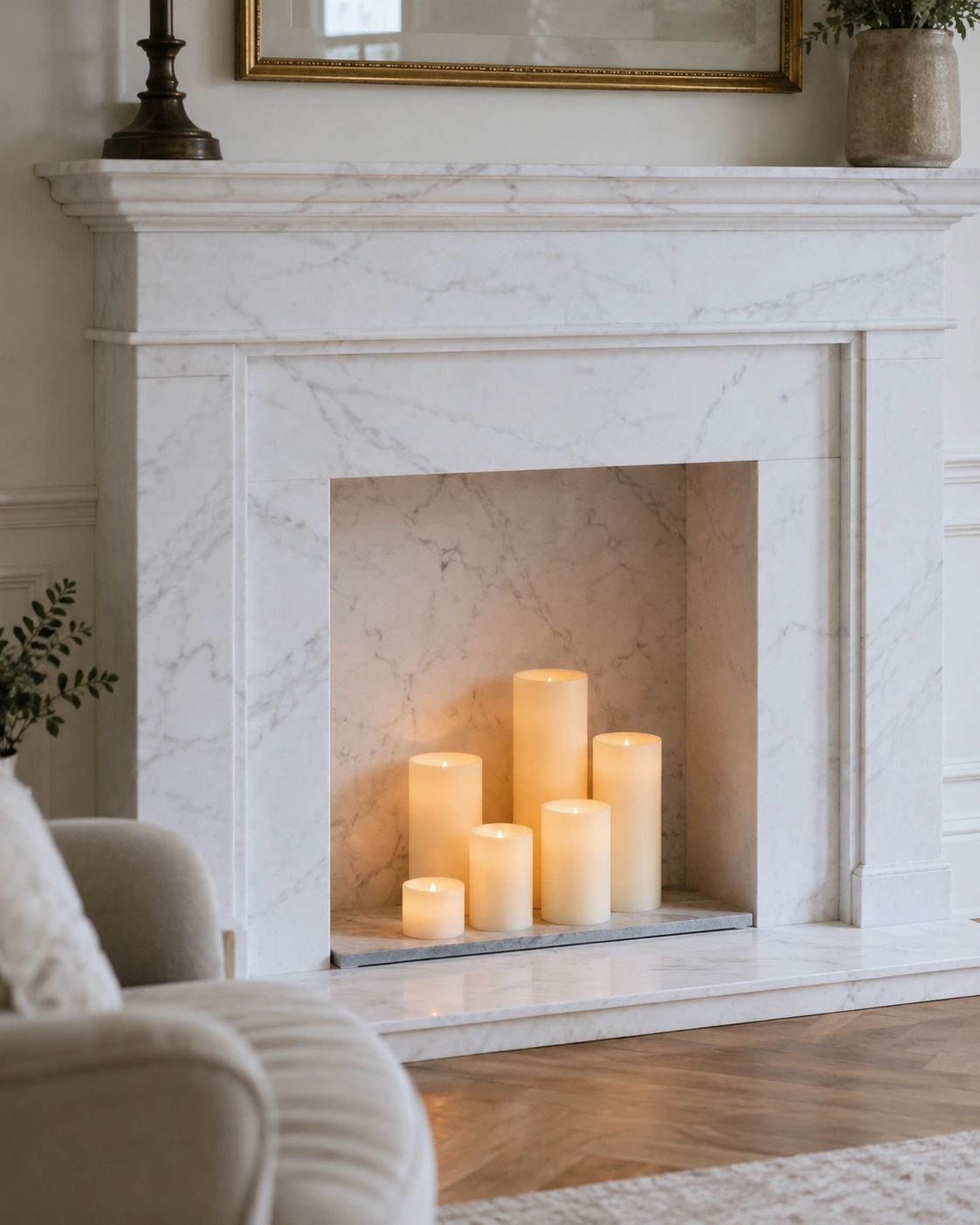
Grouping pillar candles inside a sealed firebox creates the visual warmth of a real flame without any gas or electrical connection. Use at least five to seven candles in different heights, clustered asymmetrically rather than spaced in a line. Set them on a slate tile, small metal tray, or marble slab to protect the firebox floor. LED pillar candles are the better choice for households with young children, pets, or low ceiling clearance above the opening.
14. Stack Decorative Birch Logs or Driftwood Inside the Firebox
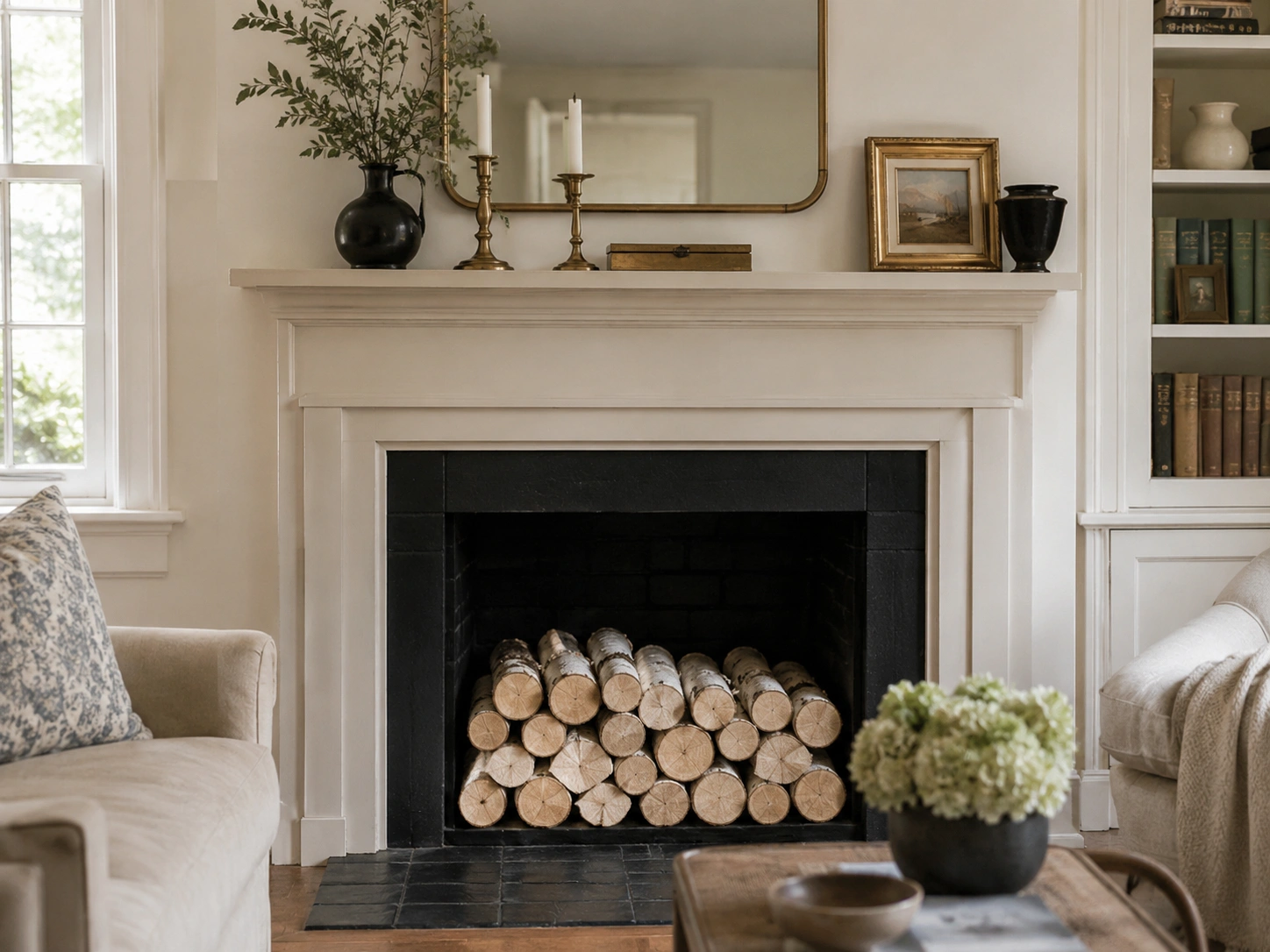
A stacked log display inside a non-working firebox is one of the most convincingly warm looks you can create without actual fire. Birch logs — sold in bundles at Pottery Barn and most home goods stores — photograph beautifully with their white bark and work in every season, not just winter. Stack them with cut ends facing out for a polished look, and let the top layer sit slightly unevenly for a natural, uncurated feel.
15. Install a Decorative Screen or Fireplace Insert
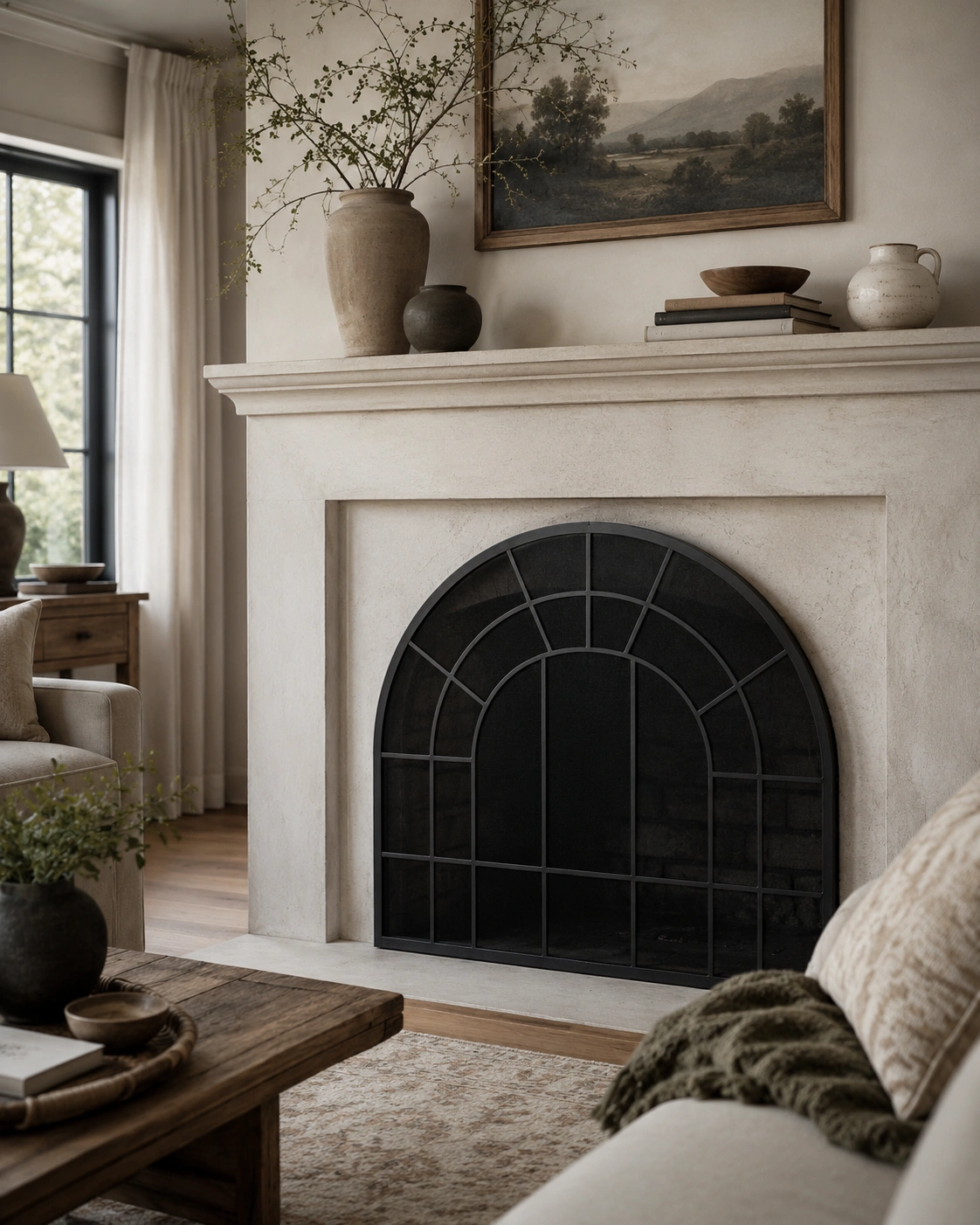
A decorative fireplace screen covers a dark, empty firebox opening while adding an architectural detail at the same time. A vintage brass peacock screen, a modern black geometric frame, or an arched iron screen each read differently depending on your interior style. This is the lowest-effort fix for a firebox that feels unfinished. No tools, no hardware — most decorative screens sit flush against the opening and lift out in seconds.
16. Warm Up a Sealed Firebox With LED String Lights
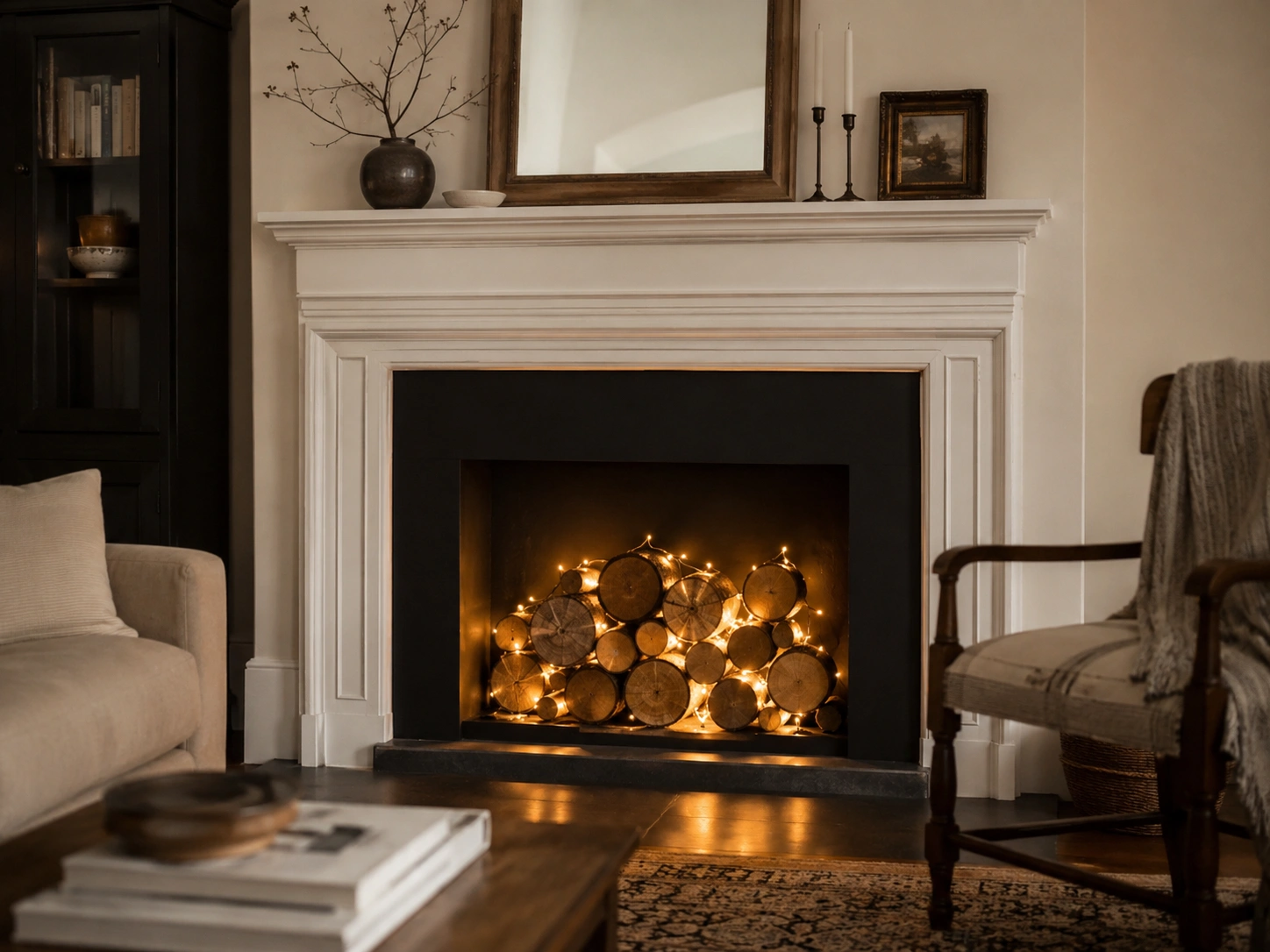
I’ve seen conflicting opinions on this one — some designers call it a cheap fix, others use string lights in client homes and post the results. My read: done correctly, with warm-white micro LED lights layered loosely inside a clean, dark firebox behind a log stack or a simple botanical wreath frame, they create a genuinely soft ambient glow. It photographs exactly like candlelight. It’s also the most renter-safe option for any sealed or ornamental firebox.
17. Place a Large Dried Botanical Arrangement Directly in the Opening
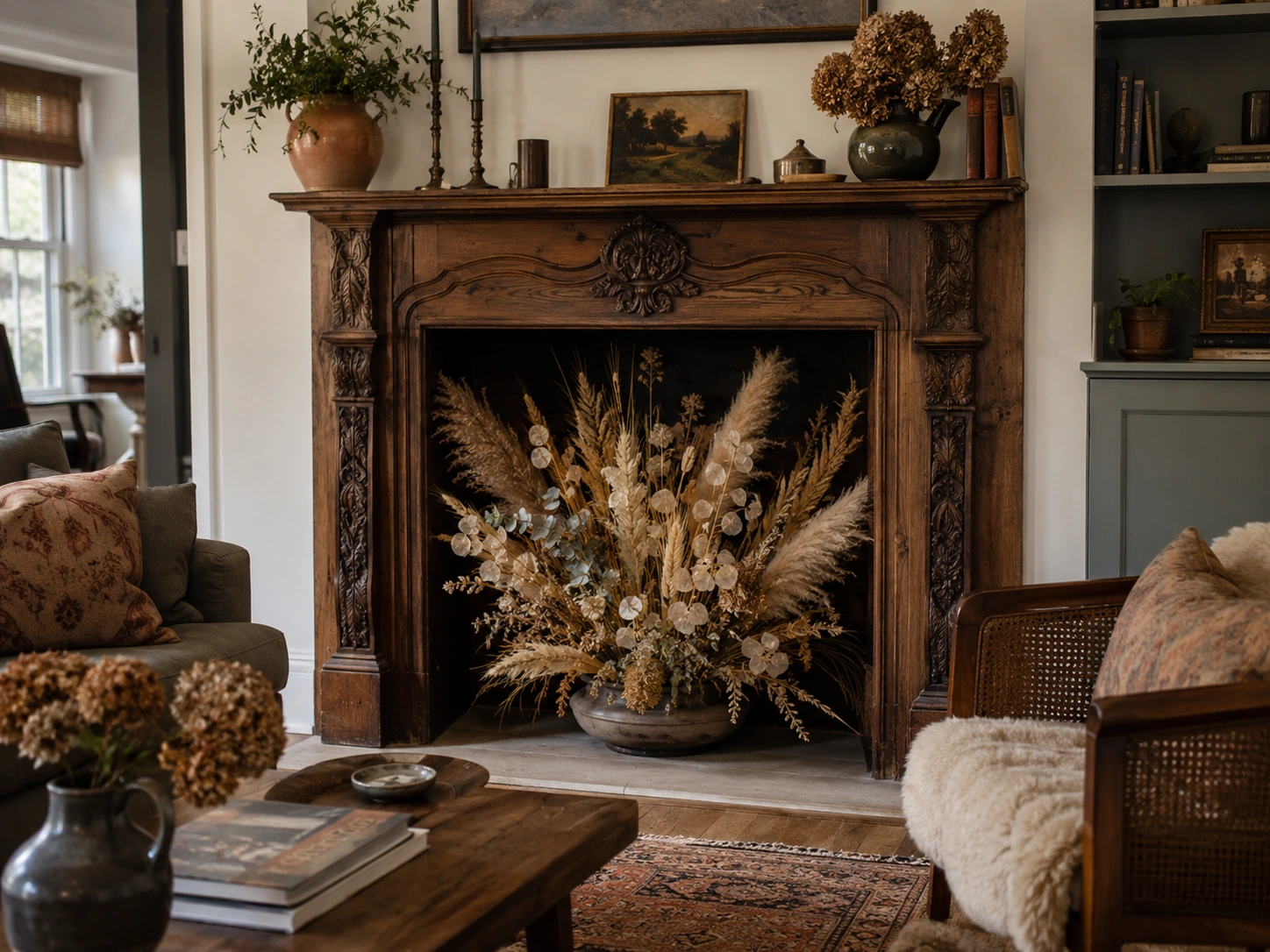
A dried flower arrangement — pampas stems, dried wheat, lunaria, or a mixed botanical bundle — placed on the firebox floor creates a focal point that reads as both dramatic and effortlessly styled. Use a wide, low vessel so the arrangement fans outward naturally inside the opening. This works especially well in cottagecore and bohemian interiors where an ornate carved surround frames the arrangement like a built-in display niche.
Style-Specific Mantel Looks
The style you choose matters more when your fireplace surround already has a strong architectural character. A carved white marble mantel reads as traditional and pairs naturally with cottagecore or organic-luxe styling. A flat, painted drywall surround is a blank canvas for minimalism or maximalism. Matching your decor style to the architectural character of the surround is what separates a styled mantel from an arrangement that happens to sit in front of one. What most guides skip: the surround itself is always part of the composition.
18. Build the Organic-Luxe Look With an Arched Mirror and Raw Textures
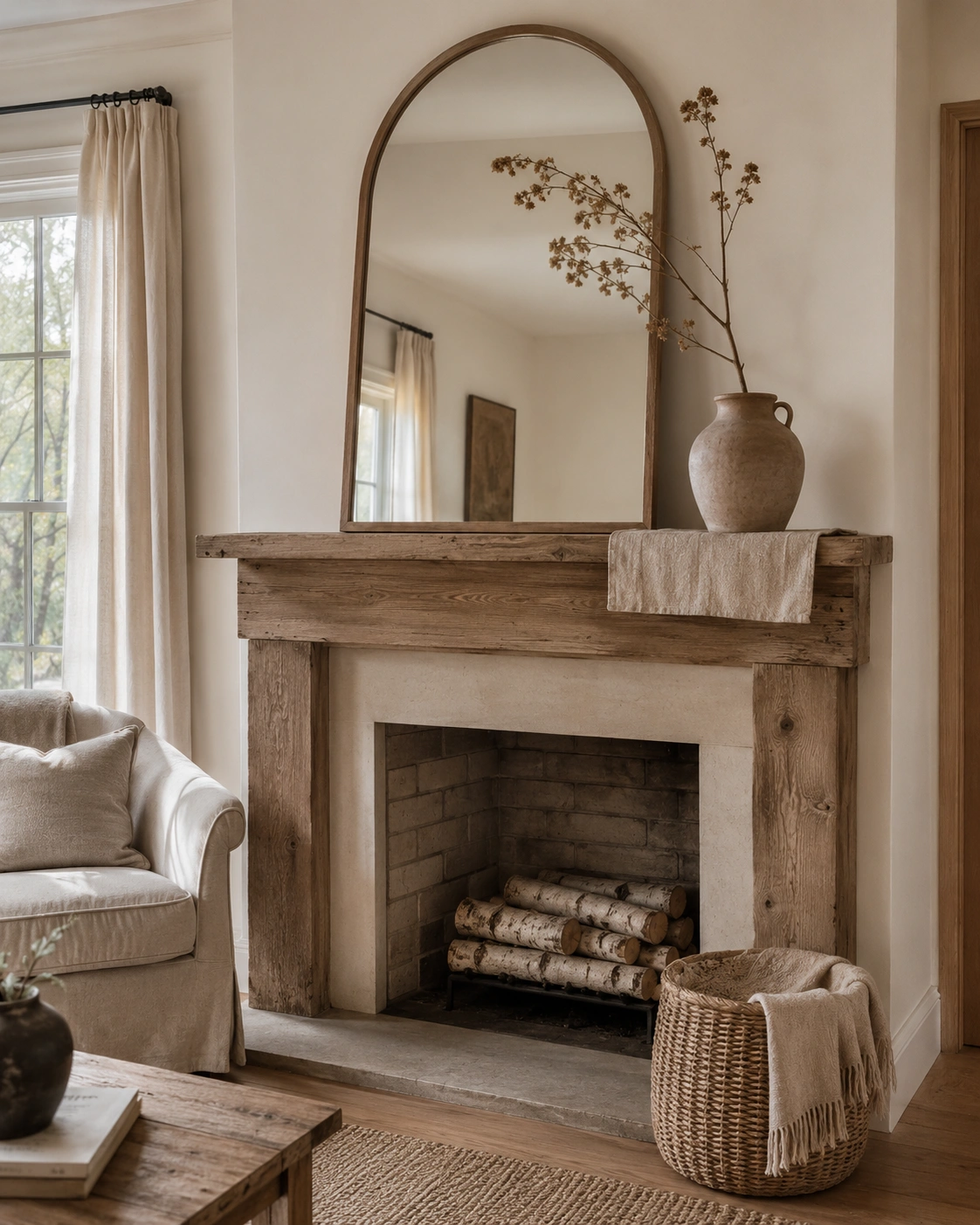
The organic-luxe mantel — the aesthetic that has dominated Pinterest boards through 2025 and 2026 — centers on an arched or round mirror leaning against the wall, one sculptural ceramic piece placed off-center, a single dried botanical stem, and at least one linen or raw-woven texture. McGee & Co.’s product line is the clearest current reference for this aesthetic. The palette is cream, warm white, aged wood, and raw clay. Nothing shiny. Nothing matching perfectly.
19. Style a Modern Minimalist Mantel With One Statement Piece
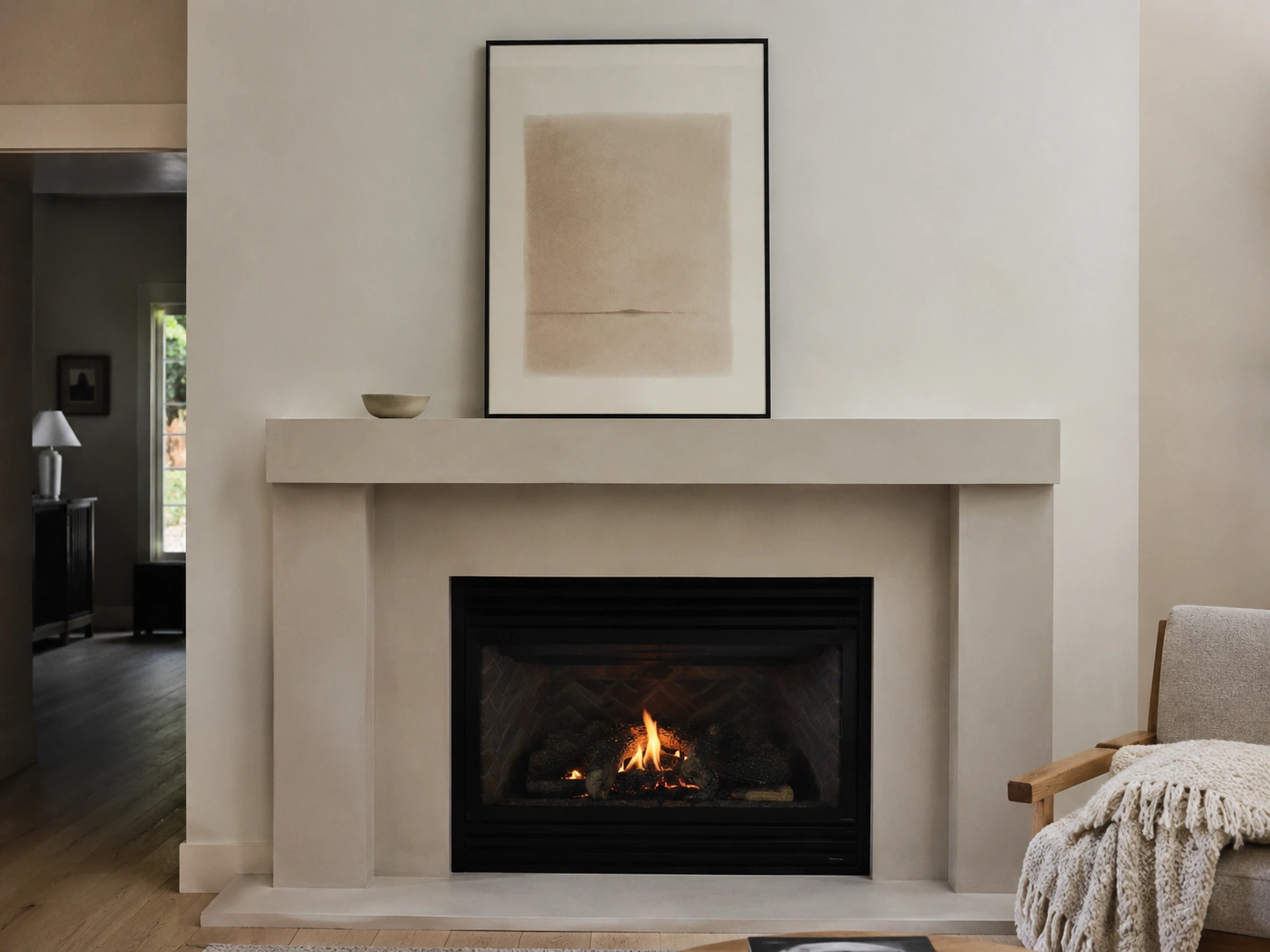
Minimalist mantel styling works only when you commit fully. One large art print — 18×24 or bigger — in a thin black or natural wood frame, hung or leaned above the mantel, is the entire arrangement. Add one low object in front: a single ceramic, two stacked books, or a small plant. The mistake most people make is adding more to “complete” it. The empty shelf space is intentional. That negative space holds as much visual weight as any object.
20. Go Maximalist With a Gallery Wall Above the Mantel
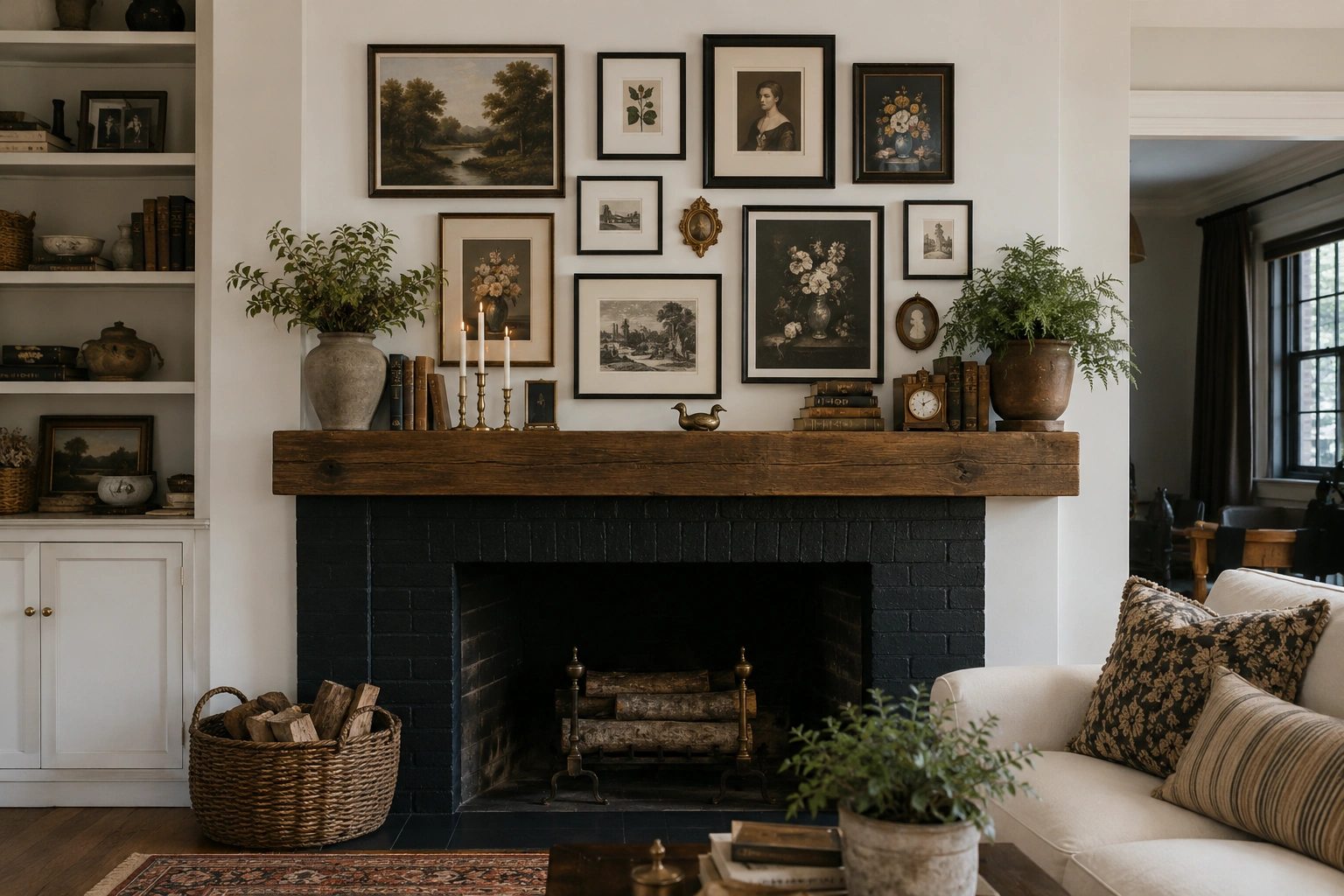
A maximalist approach uses the wall above the fireplace as an extension of the mantel arrangement. Hang three to seven frames in different sizes and orientations in a loose gallery cluster, then carry that layered energy down onto the shelf with an eclectic mix of objects. What keeps it from looking chaotic: one consistent thread. All black frames, all warm wood tones, or all prints from the same color palette. Pick one thread and hold it through the whole composition.
21. Use Matching Topiaries for a Classic Traditional Arrangement
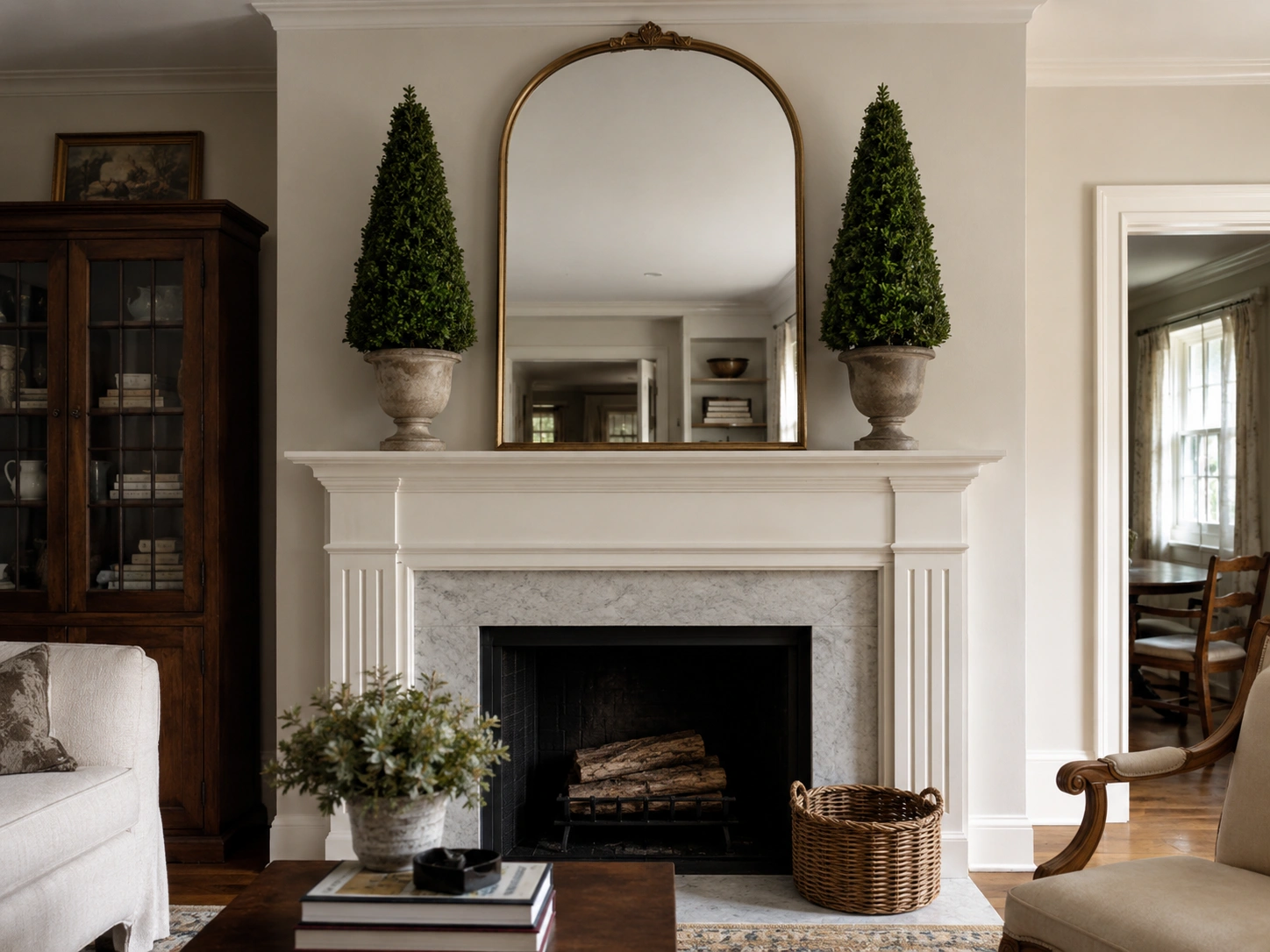
Two matching topiary balls or cone-shaped forms placed at each end of a traditional mantel bring symmetry, greenery, and height in a single move — and they’ve anchored American mantel styling for decades without becoming dated. Faux versions from Pottery Barn or Target are visually indistinguishable from live ones in photographs, require no care, and work year-round without replanting. Pair them with a centered mirror or clock and the arrangement is complete.
22. Build a Cottagecore Mantel With Antique Frames and Pressed Botanicals
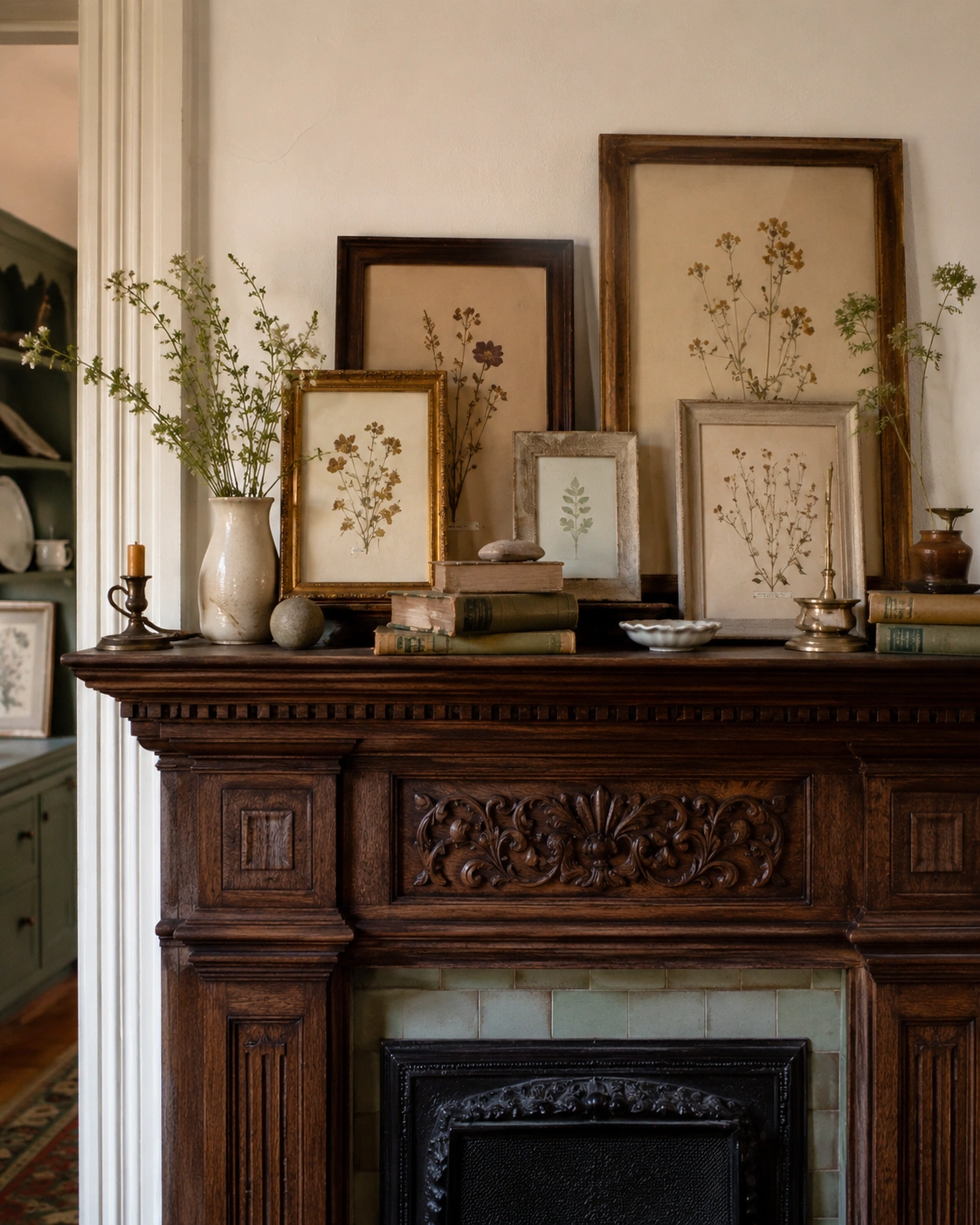
A cottagecore mantel layers imperfect antique frames, pressed botanical prints, old books stacked at slight angles, and small ceramic or stone objects that look slowly collected rather than purchased together. Intentional mismatching — different frame finishes, different print scales, different object materials — held together by a soft earthy palette of sage, cream, rust, and aged wood. This is the best style choice for ornate carved wood mantels in older homes or character apartments.
Year-Round and Seasonal Styling Strategies
Seasonal redesigns are how most people approach mantel styling — and they also explain why most mantels look curated in December and completely bare by March. A more practical approach is a permanent base framework you keep year-round, with a small set of interchangeable accent pieces you rotate seasonally. The base does the structural work. The accent pieces do the seasonal work. They’re separate jobs.
23. Build a “Forever Base” Framework First, Then Layer Seasonally
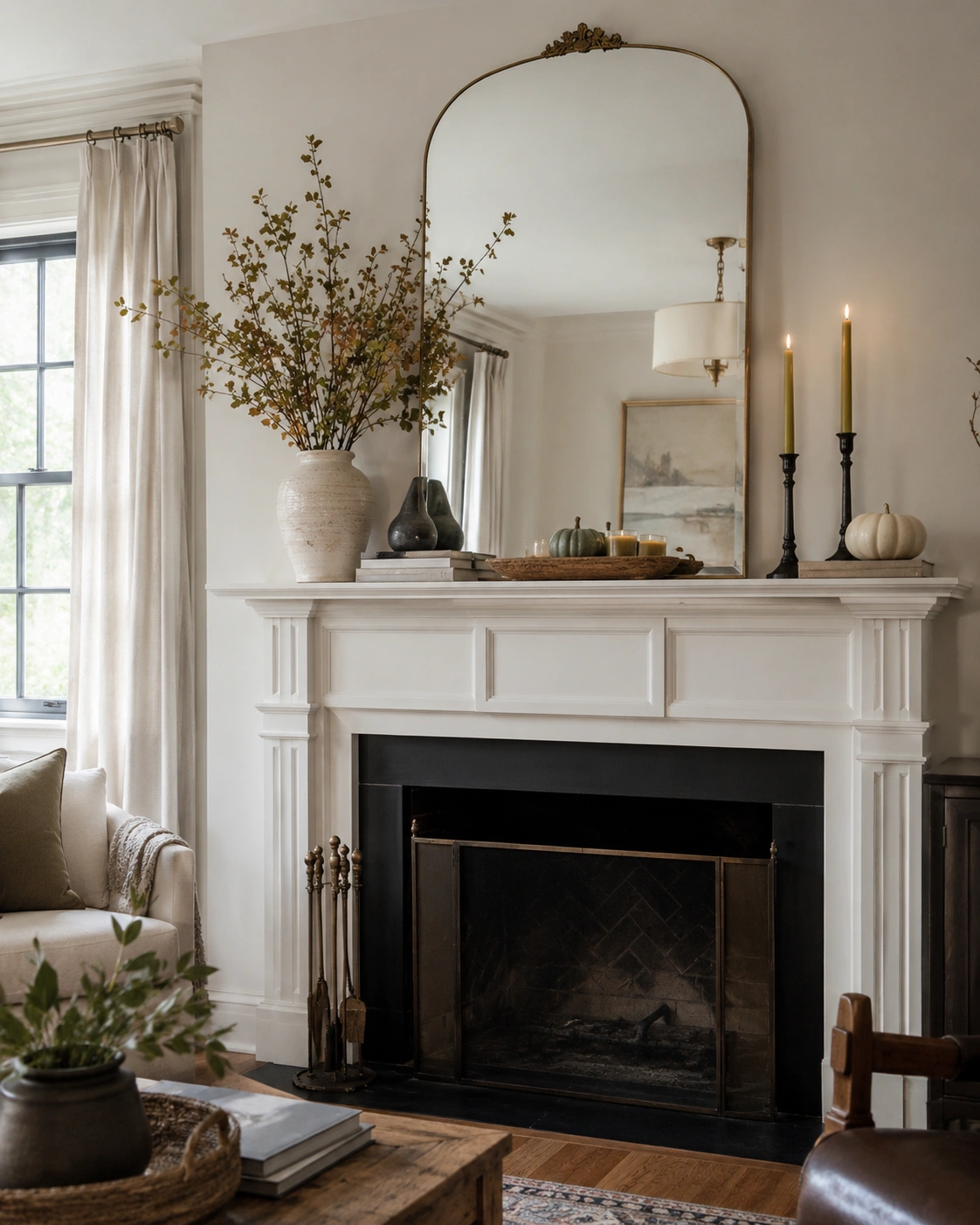
The most practical mantel strategy isn’t a complete seasonal overhaul — it’s a permanent base that stays all year with three to four interchangeable accent slots. Your base: the mirror or art piece, the bookend objects, and one permanent textural element. Your swap items: the botanical stems, tray contents, candle colors, and one seasonal accent object. This approach cuts decorating time to under 15 minutes per season and keeps the total cost manageable across the year.
24. Style a Fall Mantel With Amber Tones, Dried Stems, and One Textured Gourd
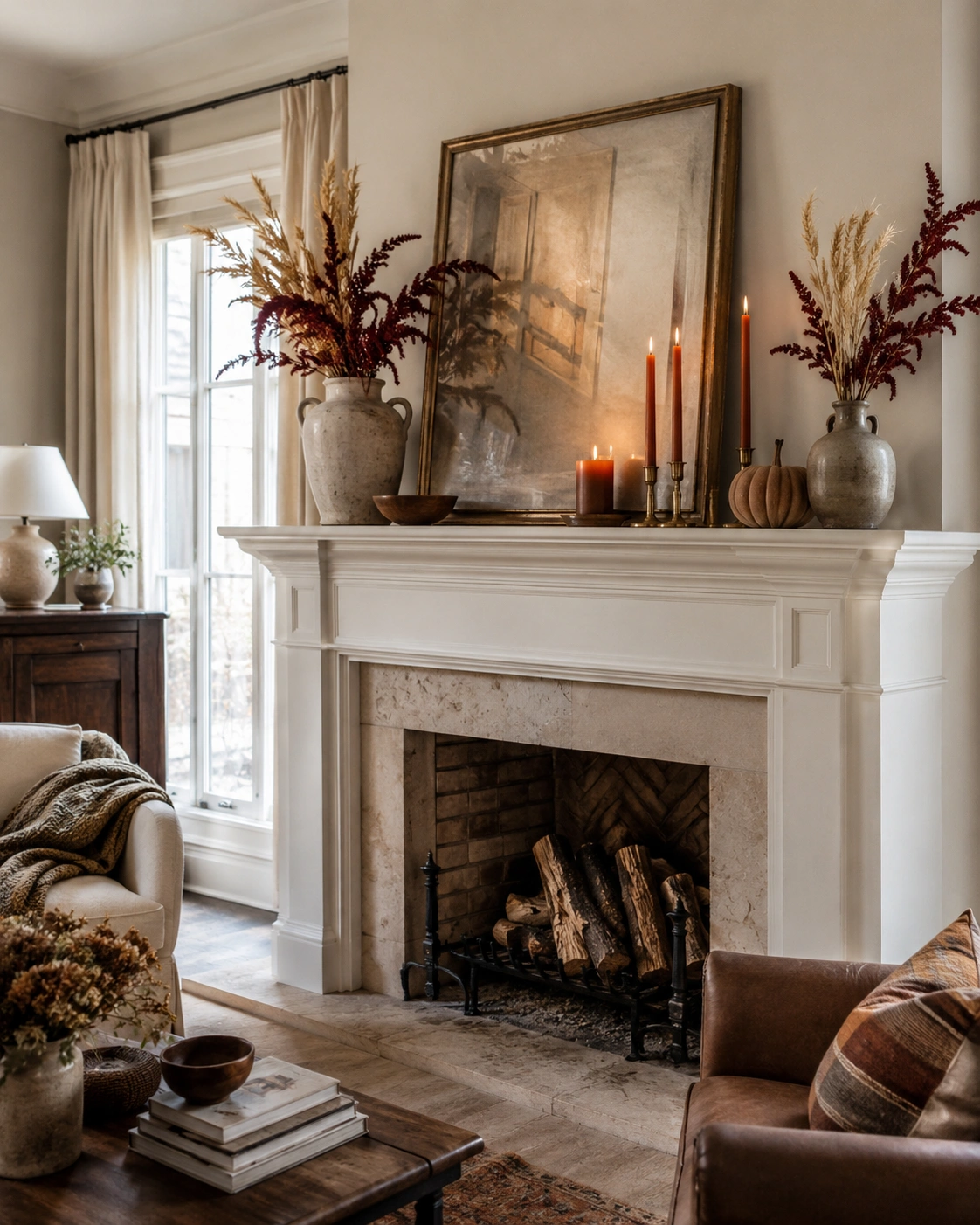
A fall mantel doesn’t need a row of shiny pumpkins — that reads as seasonal decoration rather than interior styling. Instead: swap botanical stems to dried wheat and burgundy amaranth, replace white candles with amber or deep rust tones, and add one matte-finish decorative gourd or a small ceramic pumpkin in an earthy glaze. Keep your permanent base arrangement unchanged and the fall palette does the entire seasonal shift on its own.
25. Create a Winter Mantel With Pinecones, Plaid, and Warm Metallics
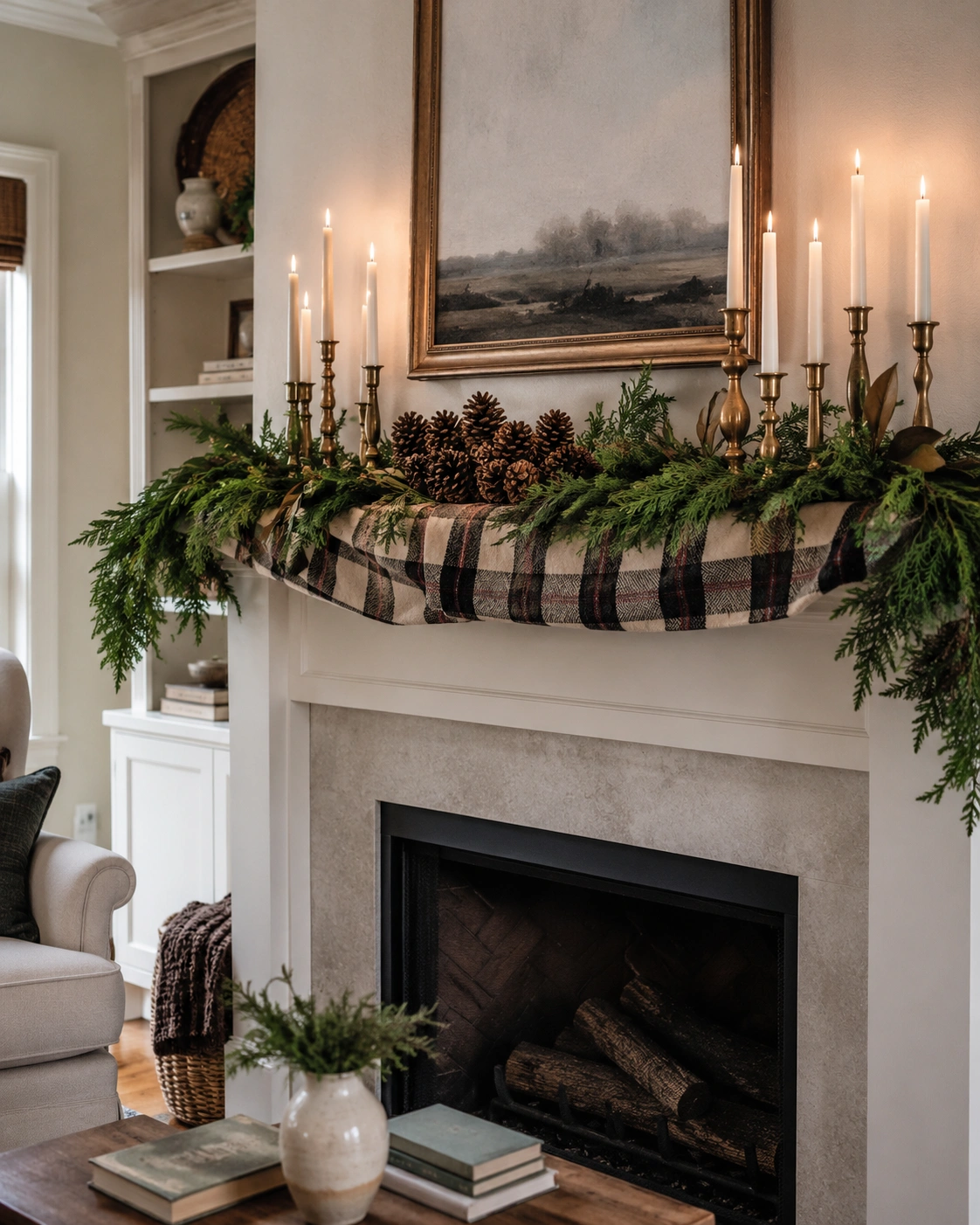
Winter mantel styling works best when it layers textures that feel warm to look at: a bundled pinecone cluster, a plaid or buffalo check table runner draped loosely along the shelf edge, a cluster of brass or gold taper candlesticks, and a cedar or magnolia garland. Pottery Barn’s holiday garland options are widely used for this effect, but natural magnolia branches from a garden or florist are less expensive and more interesting up close.
26. Build a Spring and Summer Mantel With Soft Botanicals and Pale Neutrals
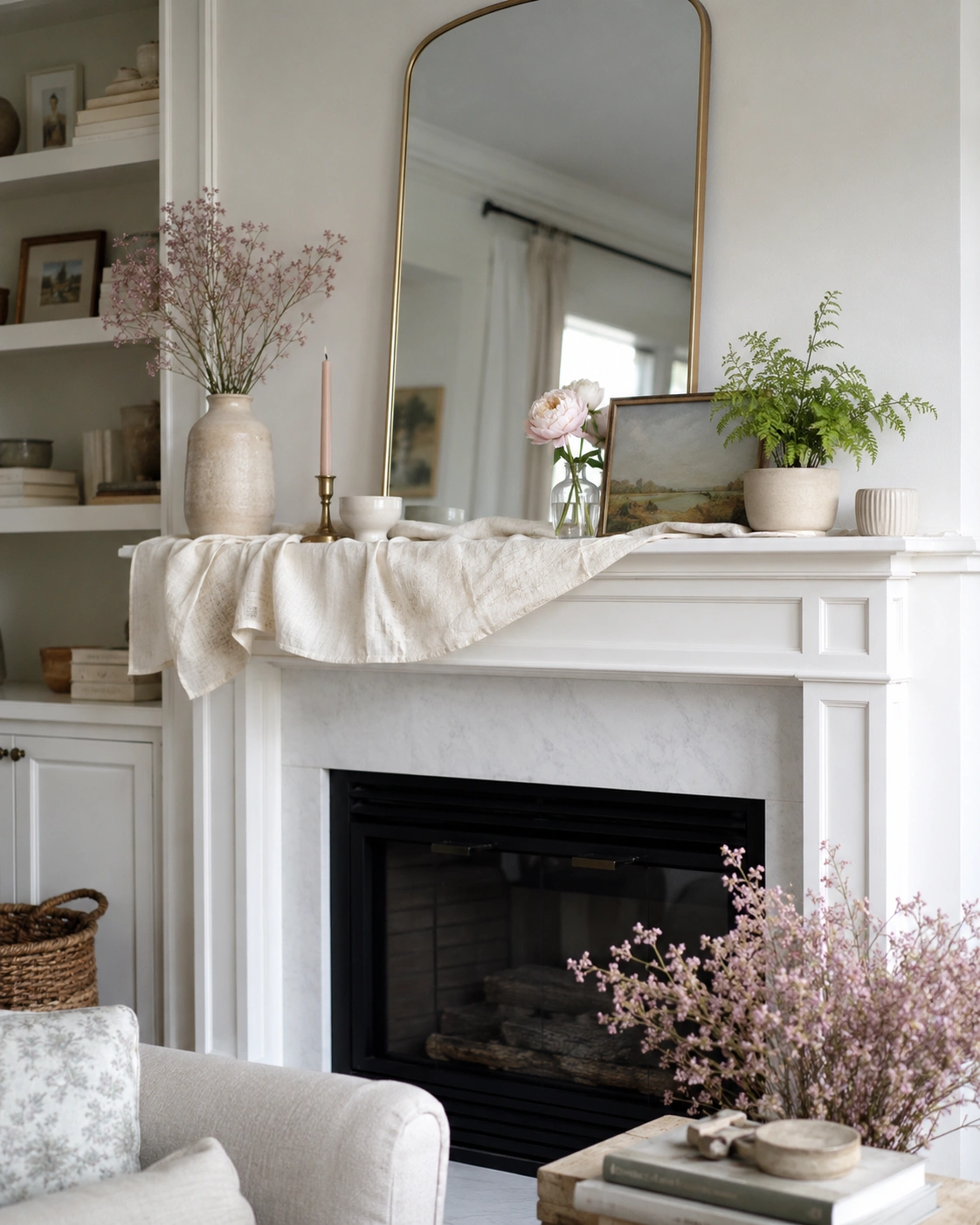
The warm-weather mantel shift is the lightest seasonal update you’ll make. Swap heavy textures for lighter ones — linen instead of wool, pale blush or lavender dried stems instead of deep-toned ones — and bring in one small potted plant or a fresh peony or ranunculus stem in a bud vase. Keep the palette within cream, pale green, blush, and white. The arrangement should feel noticeably airier than the winter version, even if the base objects are identical.
27. Make the Mantel a Display for Objects That Actually Mean Something
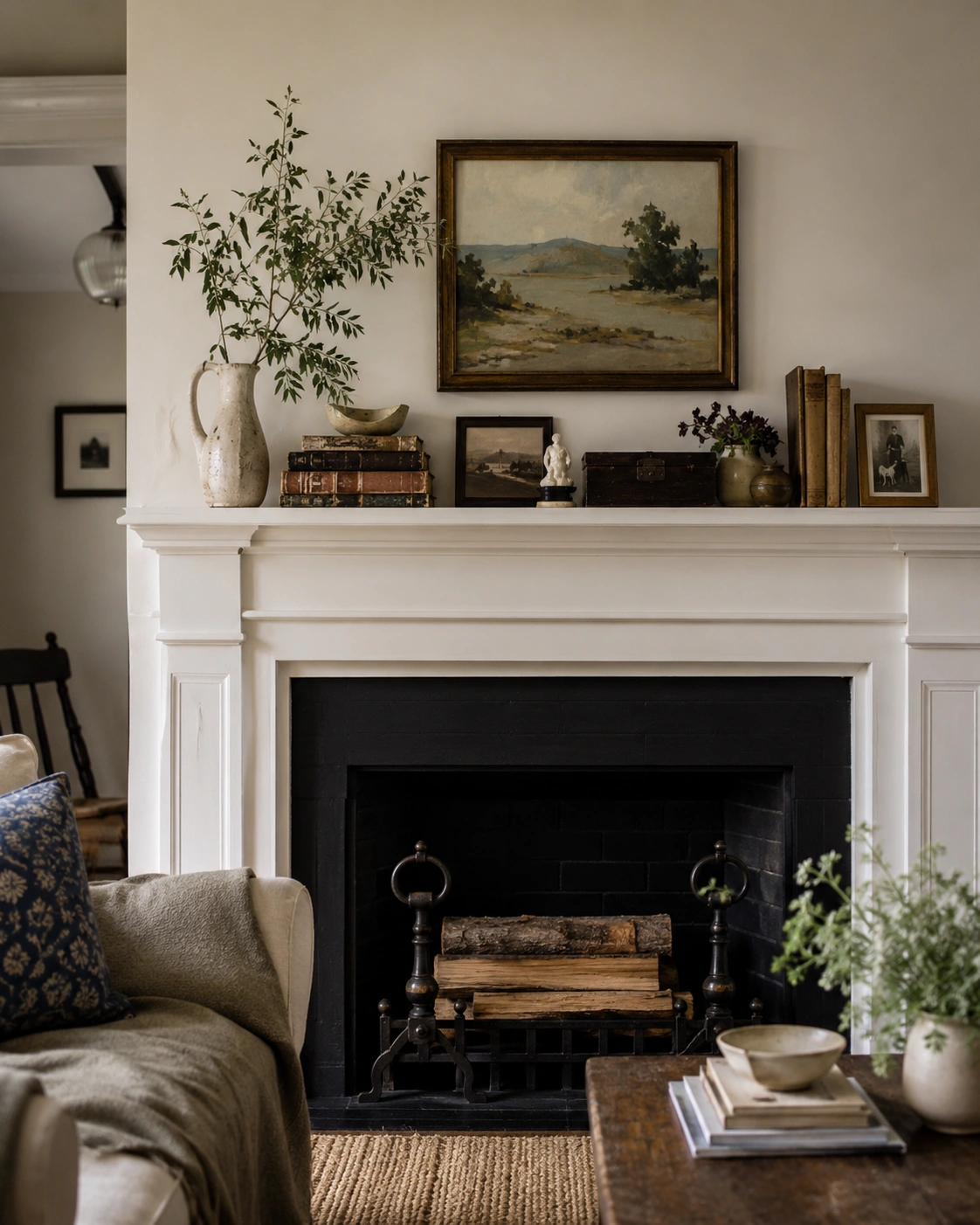
Or maybe I should say it this way: the most visually compelling mantels in real homes aren’t the most decorated ones — they’re curated around pieces that mean something to the person living there. A well-worn book. A ceramic a friend made. A small painting from a weekend market. The same design principles — scale, height contrast, layering — apply whether your pieces cost $300 or were free. Meaning holds an arrangement together in a way no purchased styling kit ever will.
Quick Comparison: Mantel Decor Approaches
| Mantel Style | Best For | Key Benefit | Limitation |
|---|---|---|---|
| Organic-Luxe | Modern and transitional rooms | Works beautifully across all four seasons | Requires a few quality anchor pieces to land correctly |
| Cottagecore | Ornate or traditional carved mantels | Highly personal, layered, and liveable | Can read as cluttered if scale isn’t controlled |
| Modern Minimalist | Narrow or small mantel shelves | Easy to maintain; never looks overloaded | Very unforgiving if one piece is the wrong size or material |
| Maximalist Gallery Wall | Wide mantels with generous wall space above | Bold visual impact and high Pinterest appeal | Difficult to update seasonally without full rearrangement |
| Seasonal Swap System | Any mantel style or fireplace type | Budget-friendly; always feels current and intentional | Requires storage space for off-season accent pieces |
FAQs
What’s the best way to decorate a fireplace mantel?
Start with one tall anchor — a mirror, artwork, or tall vase. Then add objects in odd numbers at three different heights. Height variation and odd-number grouping create the finished look that flat, evenly spaced arrangements always miss.
How do I decorate a non-working fireplace?
Treat the firebox as a display space. Fill it with pillar candles, stacked birch logs, or a dried botanical arrangement in a wide, low vessel. Add a decorative screen at the opening to frame the firebox and give the surround a finished architectural detail.
Should mantel decor be symmetrical or asymmetrical?
Use symmetrical bookend pieces at each outer edge, then arrange everything in between asymmetrically. This creates a sense of balance without the rigid, overly staged look that full symmetry tends to produce in real rooms.
Why does my mantel look off even when I follow the styling rules?
Scale is almost always the problem. Objects too small for your mantel width disappear visually no matter how nice they are individually. Your tallest piece should reach at least two-thirds of the way toward the ceiling or the top of the wall space above the mantel.
When should I change my mantel decor for each season?
If you have a permanent base framework in place, seasonal swaps take under 15 minutes. Change botanical stems, candle colors, and one seasonal accent object at the start of each meteorological season: March, June, September, and December.
Final Thoughts
Your mantel doesn’t need to look like a staged photo to feel finished. It needs scale, height variation, and one clear reason to draw the eye — whether that’s a mirror that bounces light across the room, a sculptural piece that commands attention, or simply three objects you actually love arranged with some thought about proportion.
Start with one idea from this list. Not five. Not a complete redesign. Pick the one that solves your most obvious problem right now, and see what it changes.
The rest of the mantel usually works itself out from there.



No Comment! Be the first one.