




27 Shared Boys Room Ideas That Work for Small Spaces, Big Age Gaps, and Real Budgets
If you’ve got two boys and one bedroom between them, you already know the real challenge isn’t finding a cute room on Pinterest. It’s finding one that survives Lego explosions,...

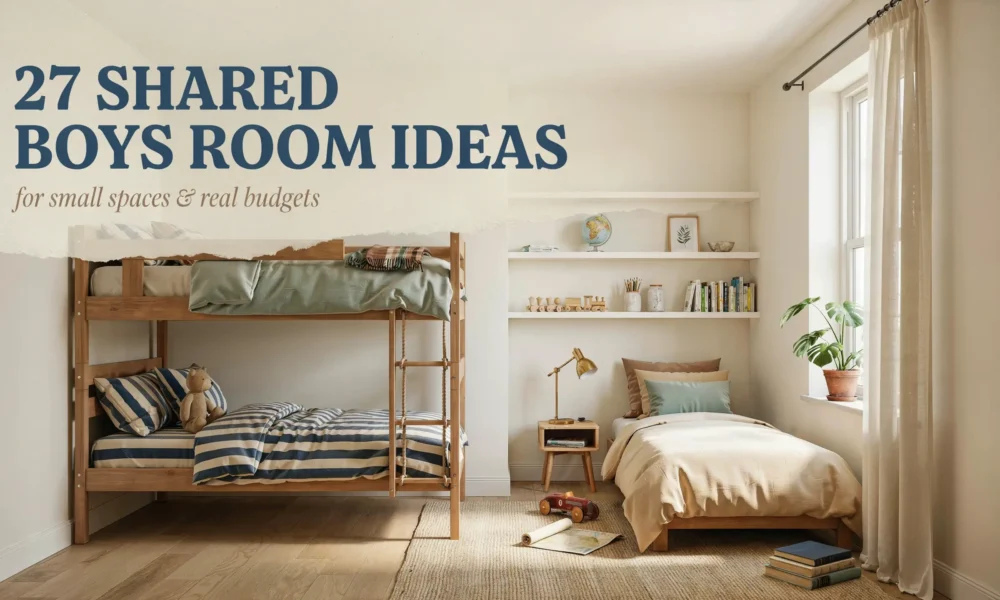
If you’ve got two boys and one bedroom between them, you already know the real challenge isn’t finding a cute room on Pinterest. It’s finding one that survives Lego explosions, works for two different ages, and doesn’t start a nightly argument over who gets the top bunk.
A good shared boys room isn’t about matching everything down to the last pillow. It’s about giving each kid a spot that feels like his, inside a room that still works as a whole space. That balance is what makes a shared boys room livable, not just photogenic.
Below you’ll find layout options, storage tricks, decor that grows with them, budget and renter-friendly swaps, and a few honest mistakes to avoid. Whether you’re working with a big kids’ suite or a 10×10 box with one window and no closet to speak of, there’s something here for your space.
Start With the Bed Layout (Everything Else Depends on This)
Before you think about paint colors or bedding, the bed layout decides how the whole room will function day to day. Grab a tape measure first. Note the doorway swing, window placement, and how far the closet door needs to open, since those three things rule out layouts faster than style preferences do.
1. Classic Bunk Beds for Max Floor Space
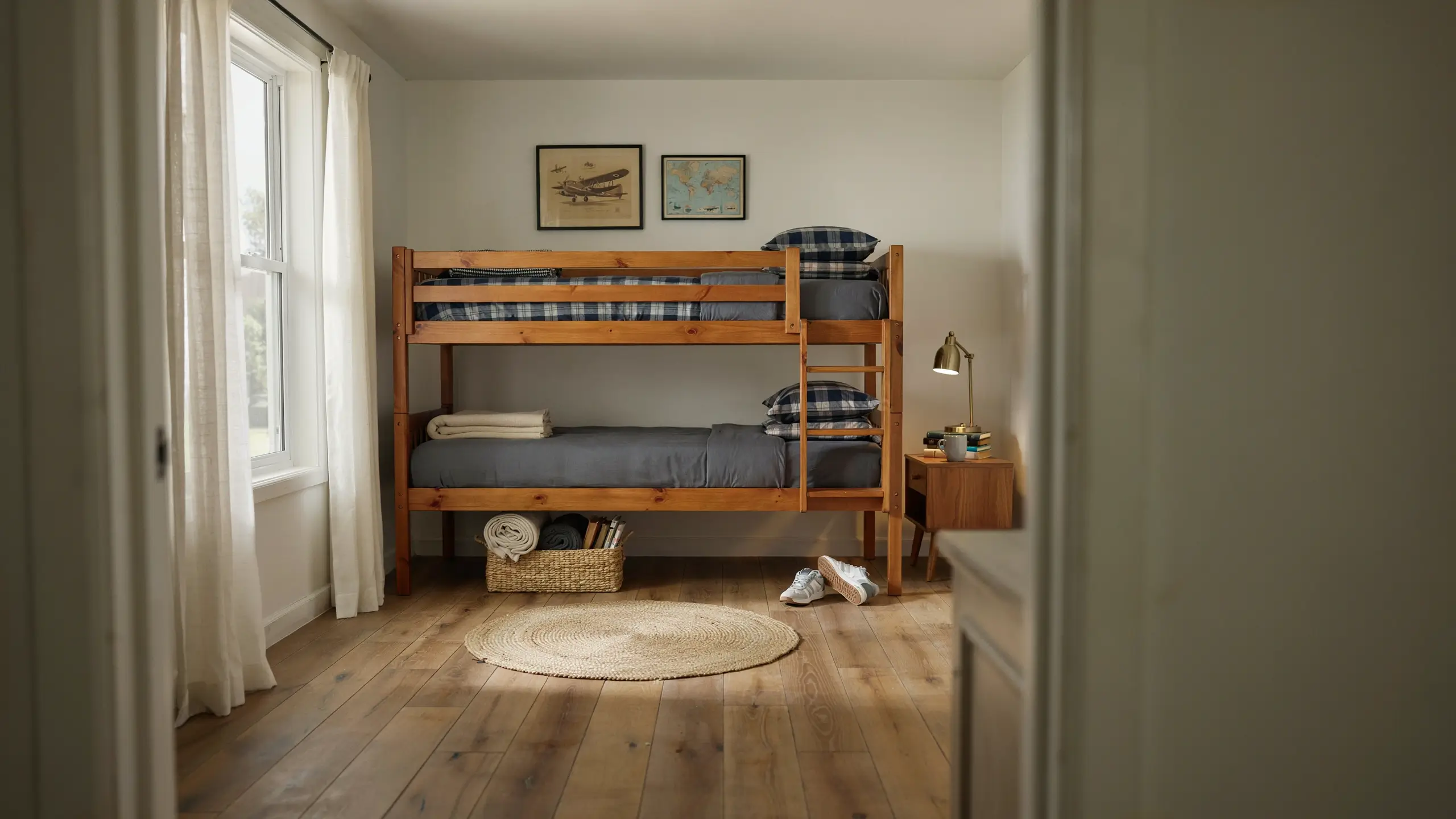
A standard twin-over-twin bunk keeps the footprint to roughly one bed’s worth of floor, freeing up the rest of the room for a rug, a toy bin, or a small desk. Put the older or steadier sleeper on top. Most pediatric and safety guidelines recommend kids under 6 stay on the bottom bunk, and it’s worth checking the manufacturer’s weight limit and making sure the guardrail and ladder hardware are fully tightened before anyone climbs up.
2. Twin Beds Side-by-Side With a Shared Nightstand
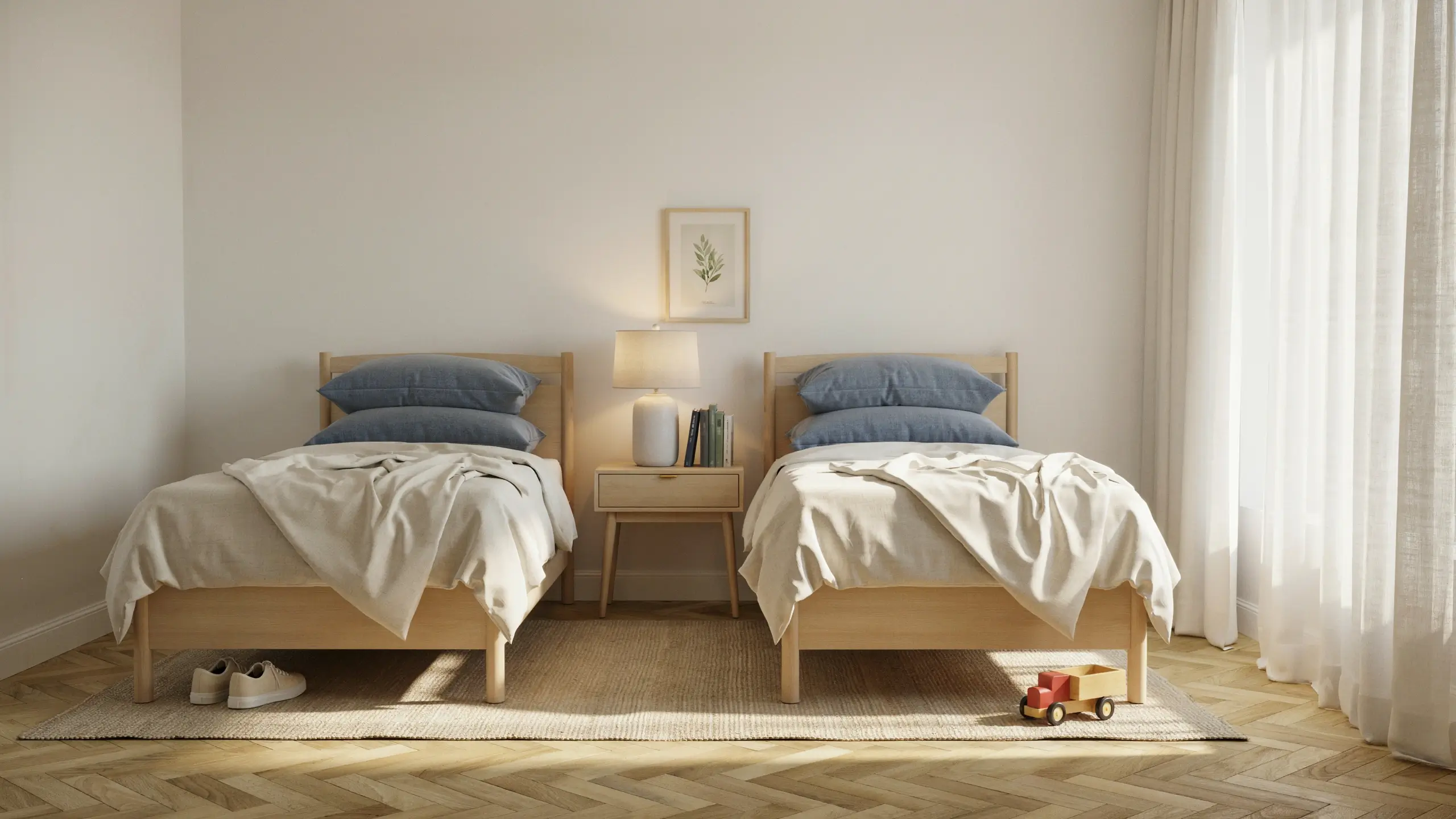
This is the simplest layout to pull off and one of the most budget-friendly. Two twin beds against one wall, with a narrow console or nightstand between them, gives each boy a spot for a lamp and a book without needing two separate pieces of furniture. Works best in rooms at least 10 feet wide.
3. L-Shaped Corner Layout
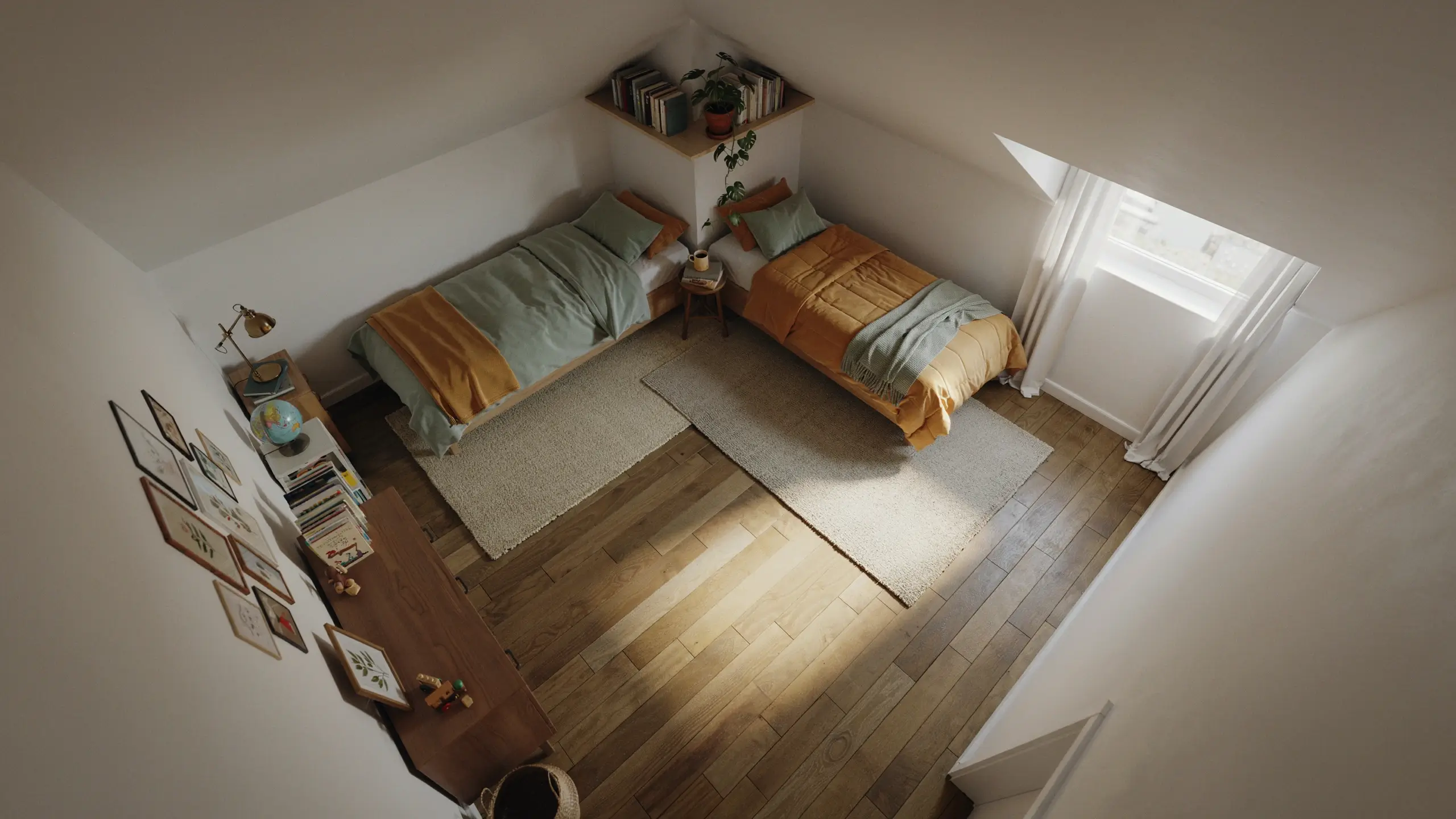
Push one twin bed against one wall and the second bed perpendicular in the corner, meeting at a shared corner shelf. This works especially well in square rooms and leaves an entire wall open for a dresser, desk, or bookshelf. It also reads as two distinct “corners” on Pinterest, which photographs nicely even in a smaller room.
4. Head-to-Head Layout With a Low Divider
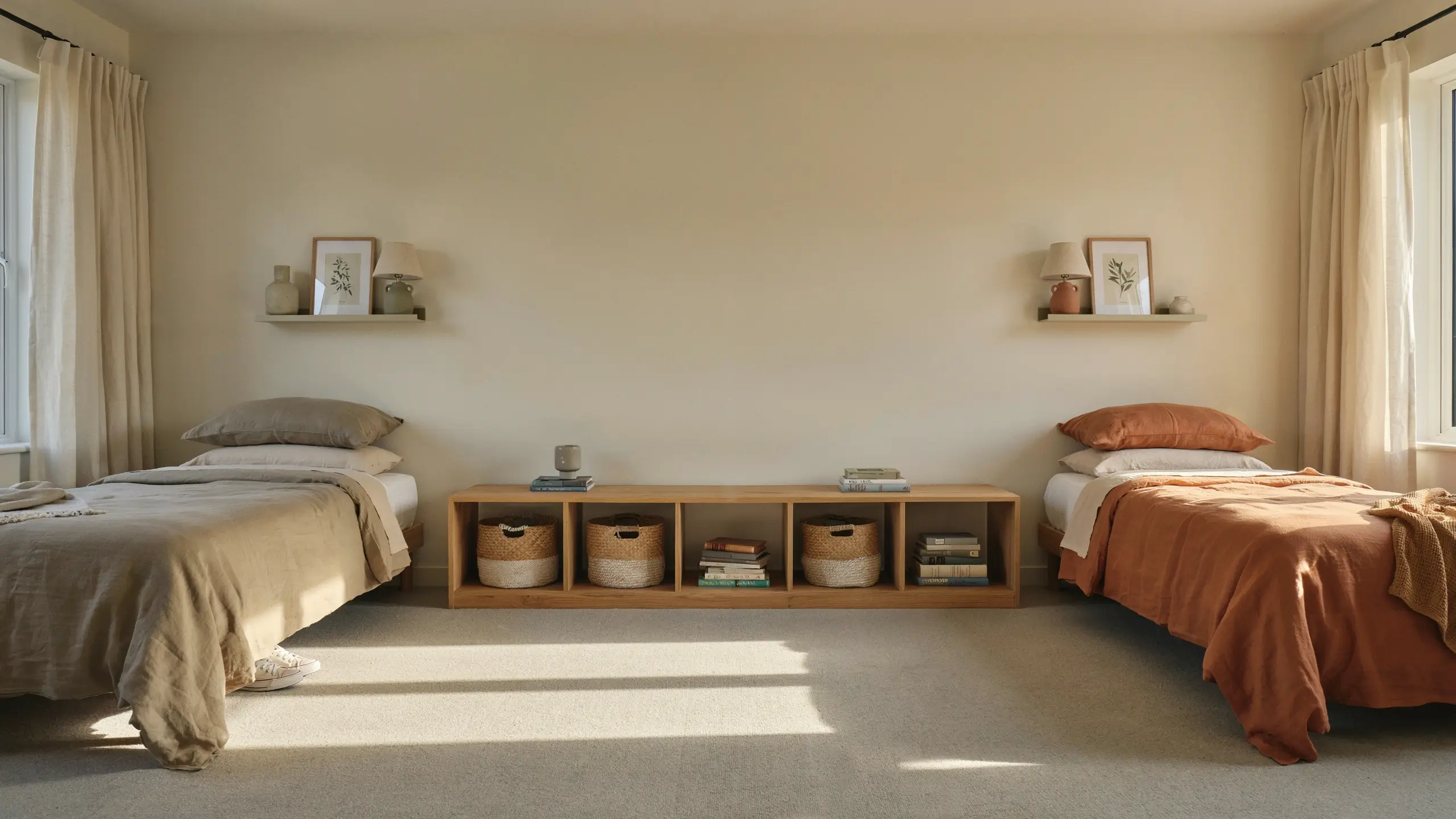
Place the beds on opposite walls with the headboards meeting a low bookshelf or storage bench in the middle of the room. Each boy gets his own wall to decorate, and the low divider cuts down on the whispered conversations that happen when beds sit right next to each other after lights out.
5. Loft Bed With a Desk or Reading Nook Underneath
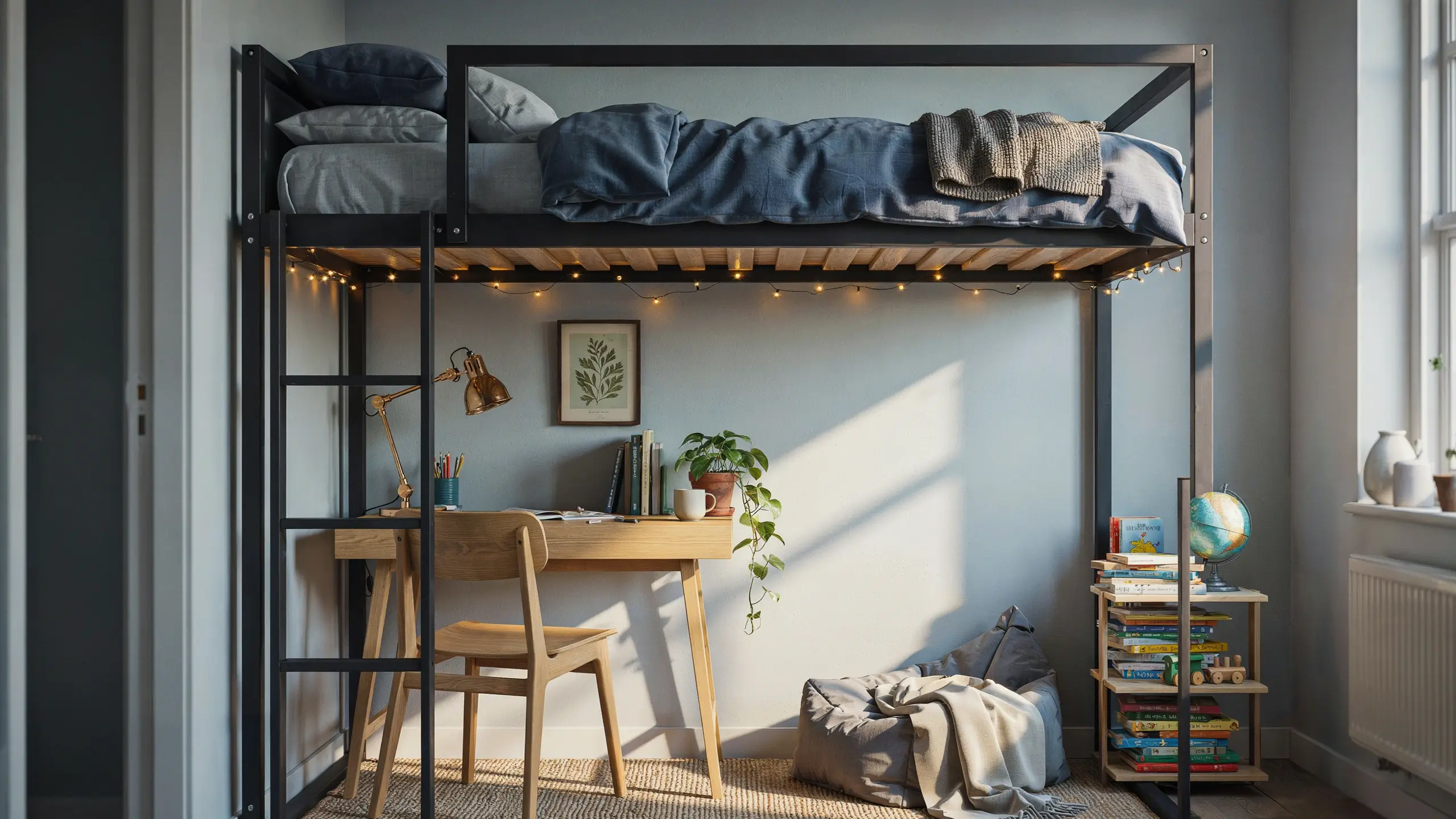
For older boys, roughly age 8 and up (always check the bed’s stated minimum age), a loft bed frees up the entire footprint under the mattress. Tuck a desk, a bean bag reading corner, or an extra dresser underneath. This is one of the best small-room solutions if floor space matters more than having two full-size beds.
6. Bunk Bed With a Trundle for Sleepovers
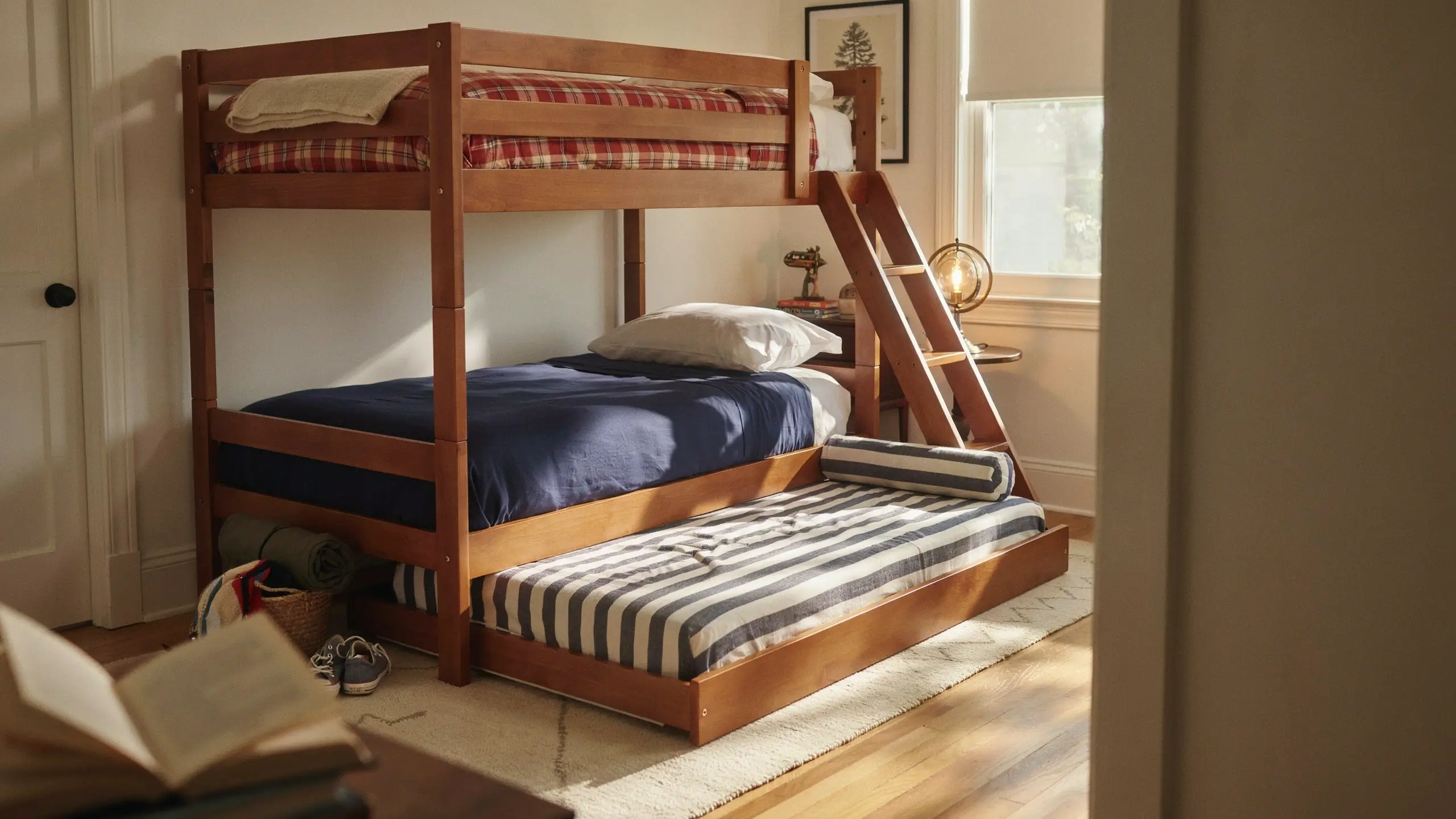
If cousins or friends stay over often, a twin-over-twin bunk with a pull-out trundle on the bottom bed adds a third sleeping spot that tucks completely out of sight the rest of the time. It’s a smart pick for families who host a lot without a guest room to spare.
Zone the Room So Both Boys Get a Little Privacy
Even brothers who genuinely like sharing benefit from having one spot that’s just theirs. Zoning doesn’t require a construction project, just a few visual and physical cues that say “this part is mine.”
7. Curtains or a Canopy Over Each Bed
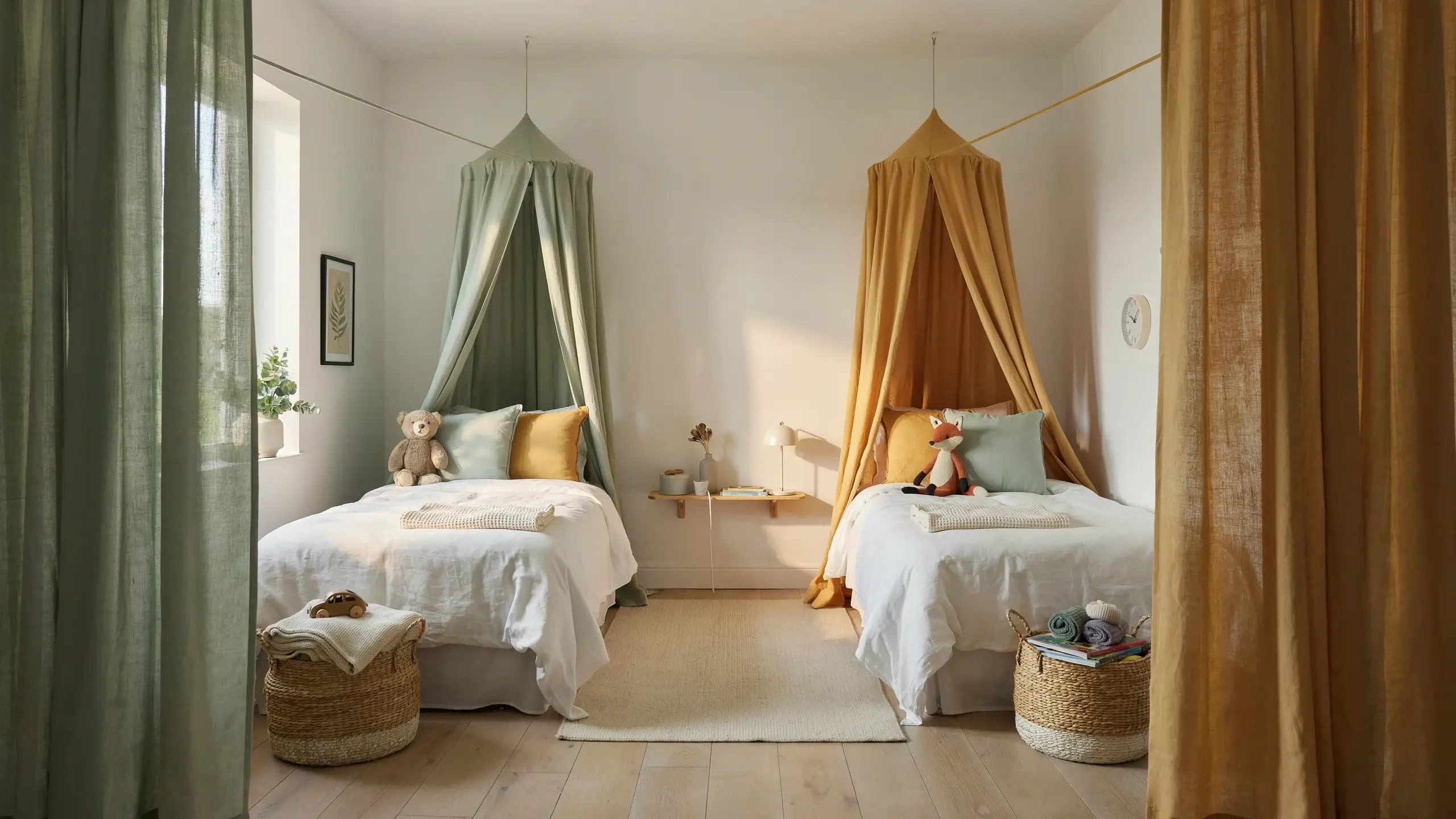
Mount a simple curtain rod above each bed frame, a tension rod works great for renters, and hang a lightweight curtain that pulls closed at night. It turns each bed into a little cave and gives a younger sibling a cozy, tent-like feel that photographs beautifully for Pinterest.
8. A Bookshelf or Dresser as a Middle Divider
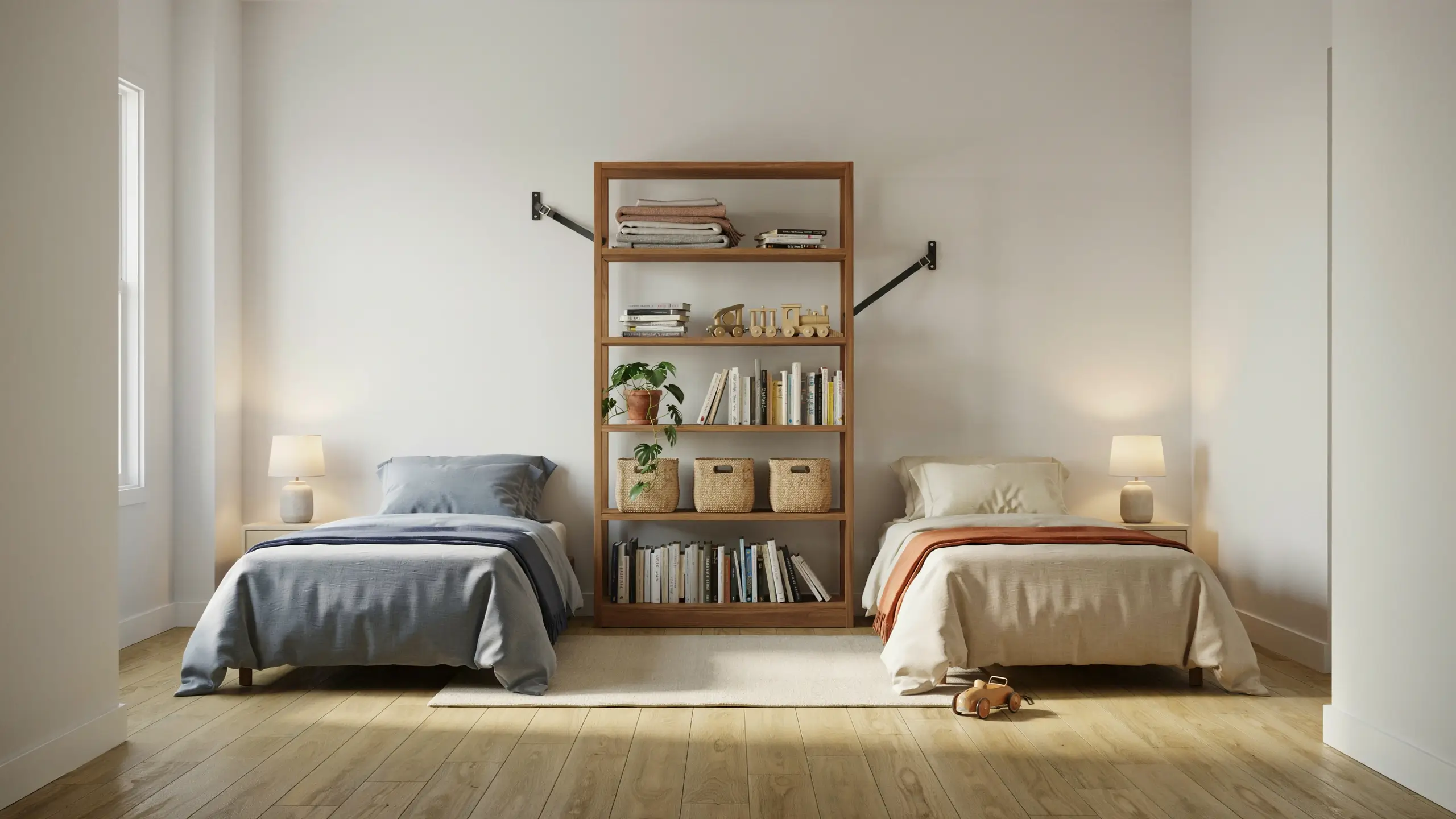
Position a tall bookshelf or dresser between the two beds so it works double duty as storage and a visual dividing line. Since this is a piece a kid might climb, anchor it to the wall with an anti-tip strap. It’s cheap insurance and takes about five minutes.
9. Two Rugs Instead of One
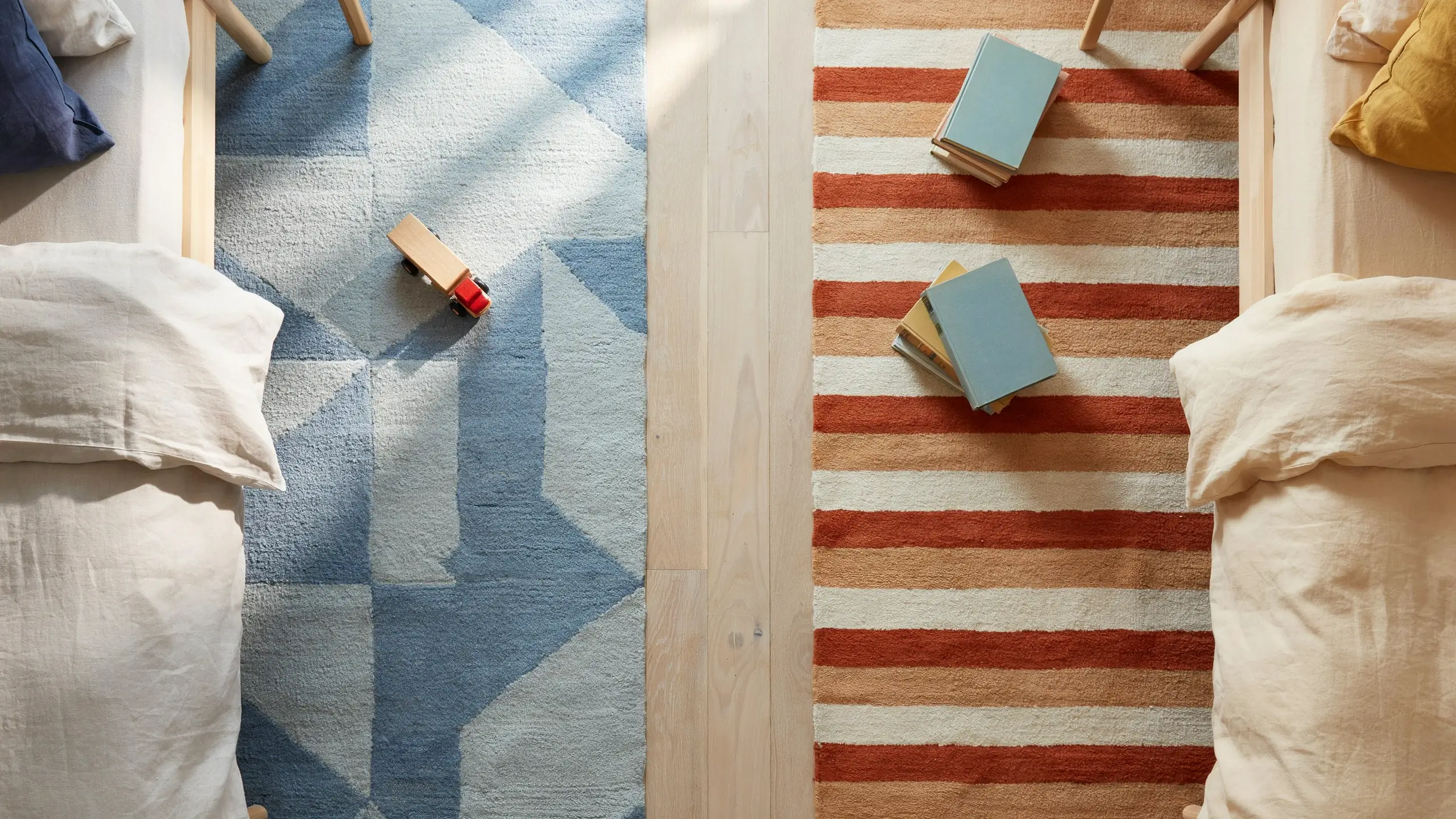
Rather than a single large rug, use two matching rugs, one under each bed, or one rug with a clear color-blocked line down the center. It gives each side its own visual footprint even in a room too small for a real physical divider.
10. Individual Reading Lights, Not Just One Overhead Fixture
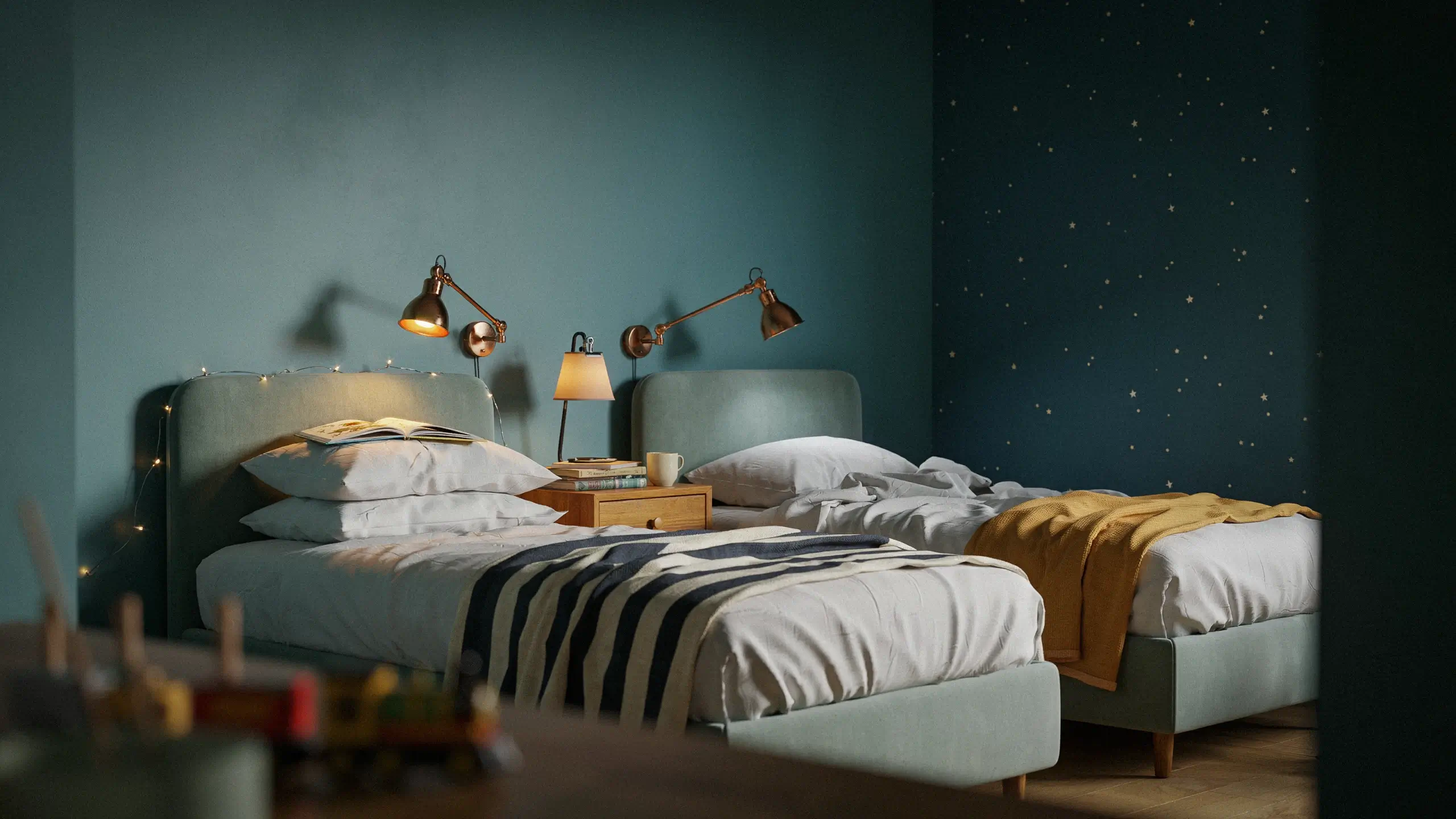
Bedtimes rarely match for two boys of different ages. Give each one his own clip-on or wall-mounted reading light he can turn off without waking his brother. This small detail solves more nightly arguments than almost anything else on this list.
11. A Slatted Screen or Hanging Divider (Renter-Friendly)
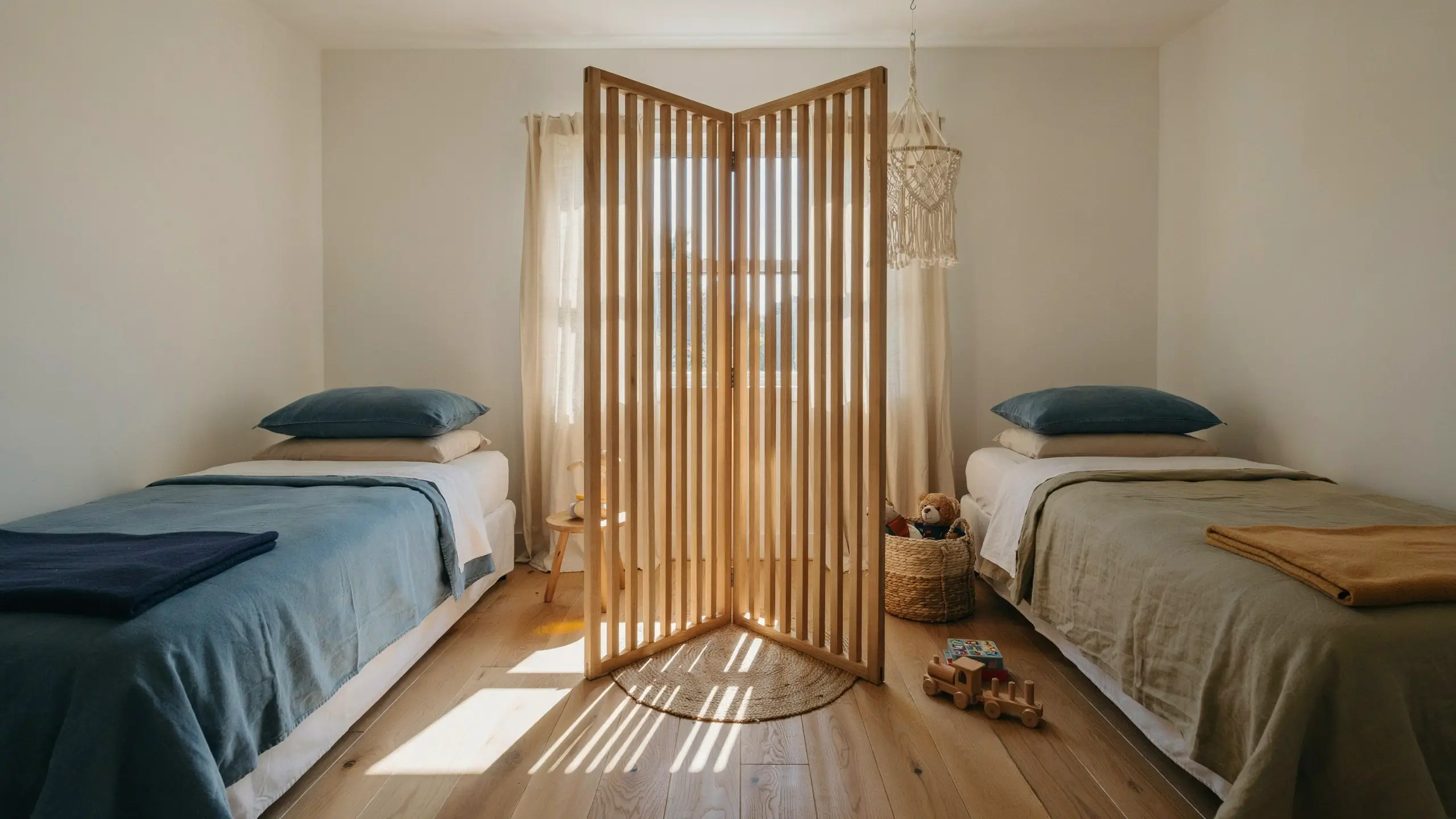
A folding privacy screen or a macrame-style hanging room divider adds a soft partition without a single nail or drilled hole. It’s an easy swap for rentals, and it can move with you if the boys ever get their own rooms down the road.
Smart Storage Ideas for a Shared Boys Room
Two kids means double the shoes, backpacks, action figures, and mystery socks. Storage is where most shared boys rooms fall apart, so give it as much planning as the decor.
12. Under-Bed Storage Bins or Drawers
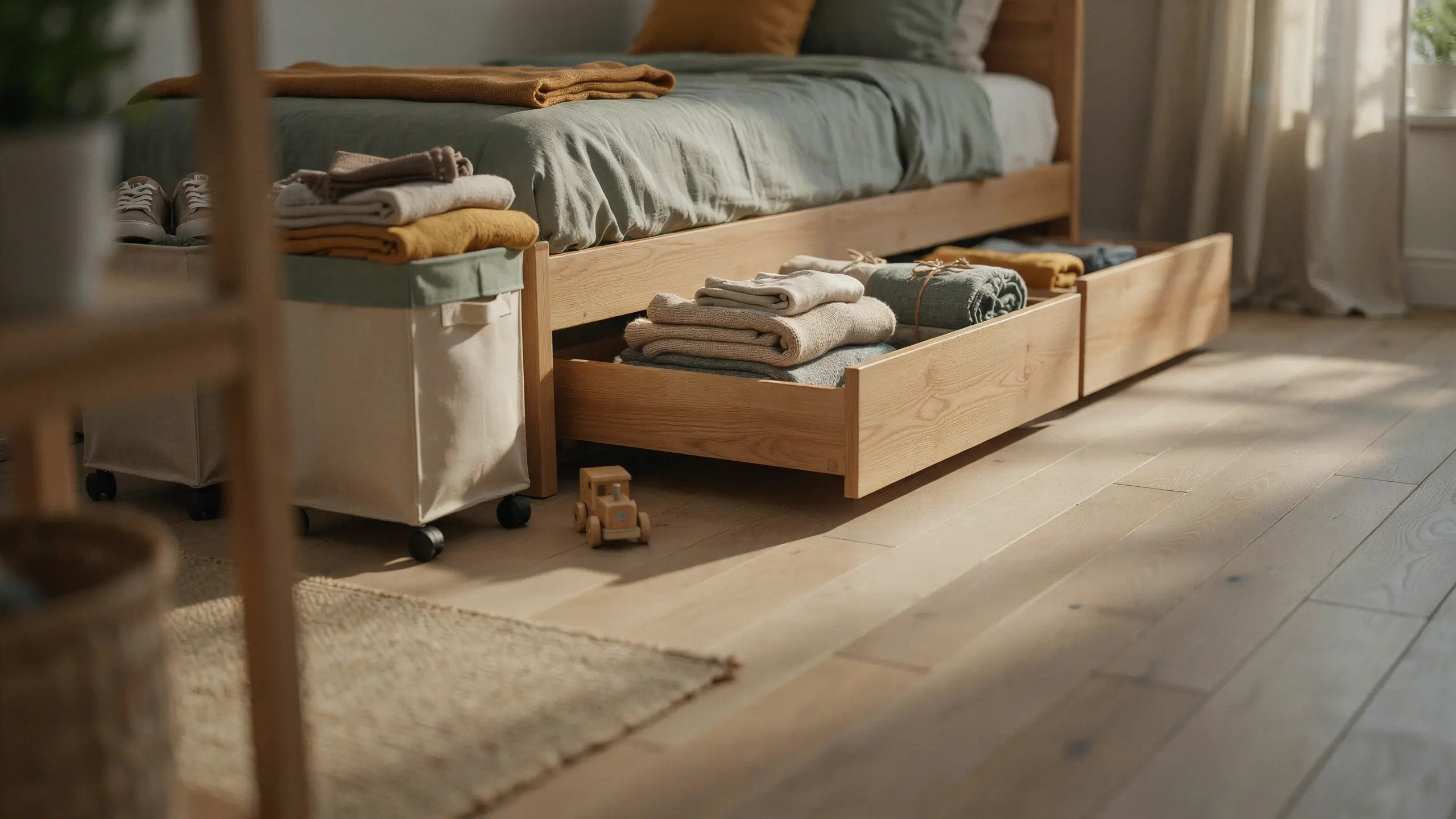
Rolling fabric bins or a bed frame with built-in drawers turns dead space into real storage for off-season clothes, extra bedding, or toy overflow. This matters even more in bunk bed setups, where floor space is already tight.
13. Split the Closet Right Down the Middle
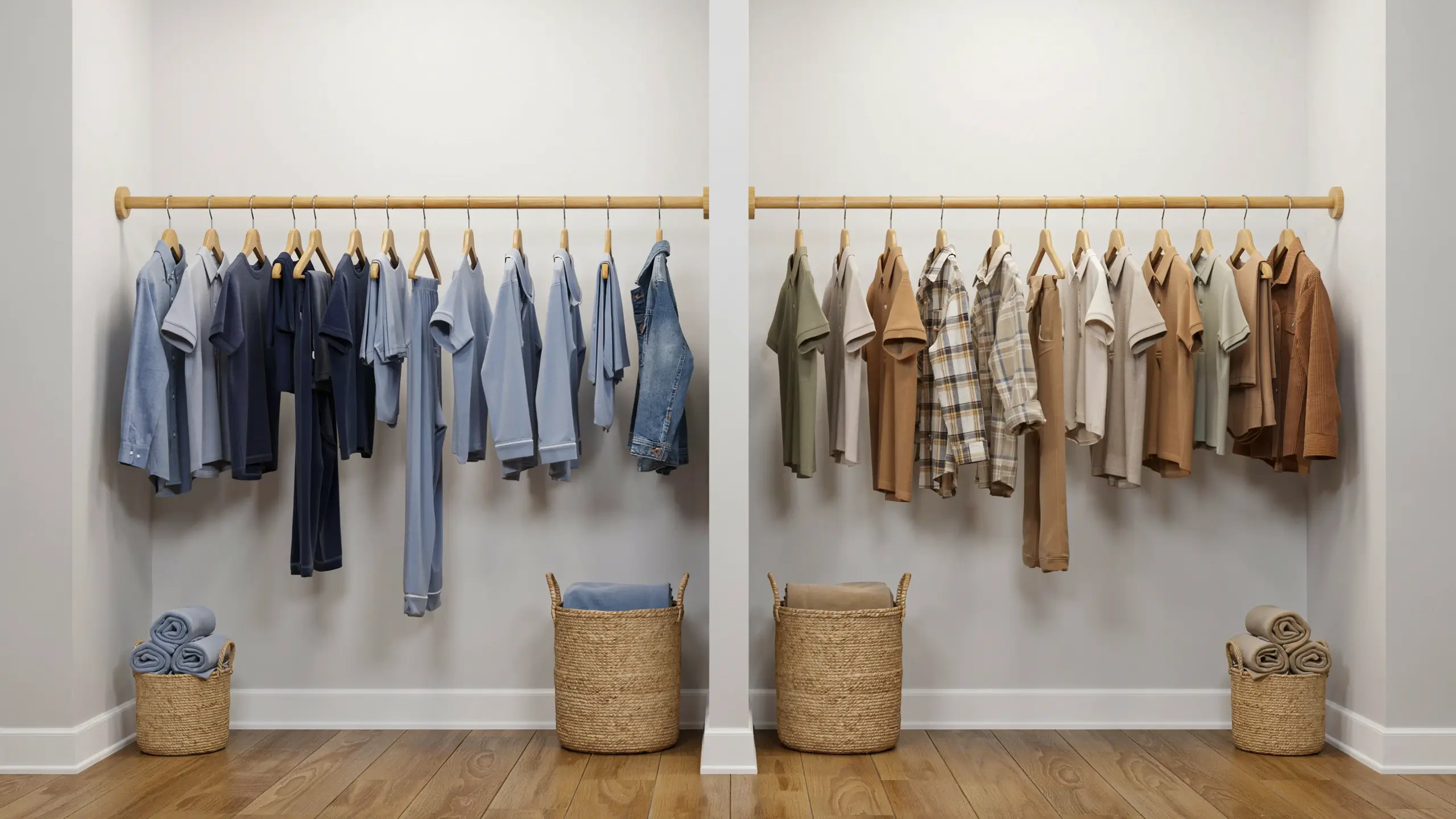
Install a second closet rod at kid height on one side, or add an over-the-door double rod if the closet is small. Give each boy his own hanging space and a matching hamper on the floor. A well-organized closet does more for a shared room’s overall tidiness than any amount of decor.
14. Sort Toy Bins by Category, Not by Kid
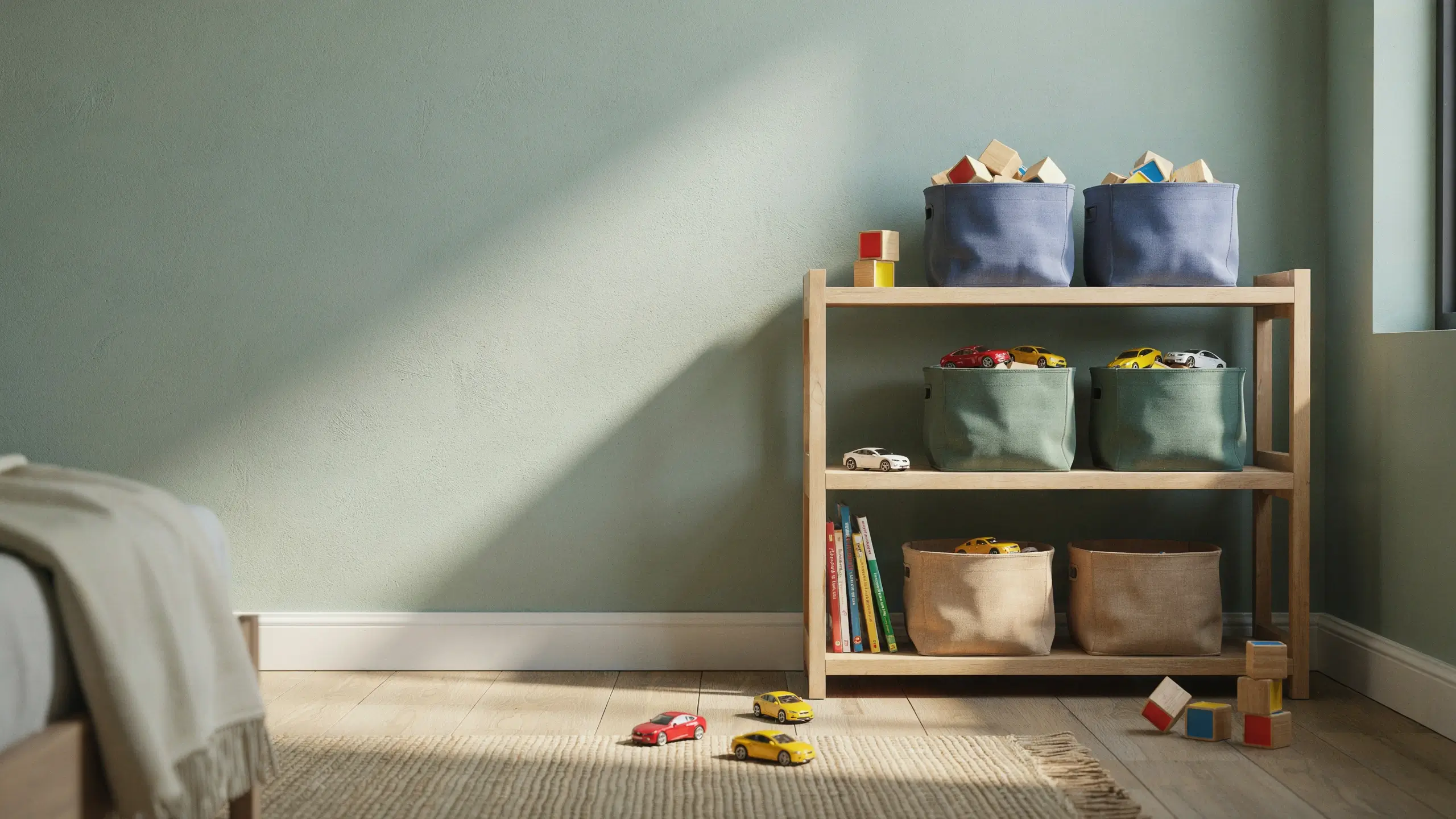
Fewer fights happen when bins are labeled “Legos,” “Cars,” and “Books” instead of split by name. Shared categories also make cleanup faster, since either boy can toss an item in the right spot without hunting for “his” bin.
15. Vertical Wall Shelves Above Each Bed
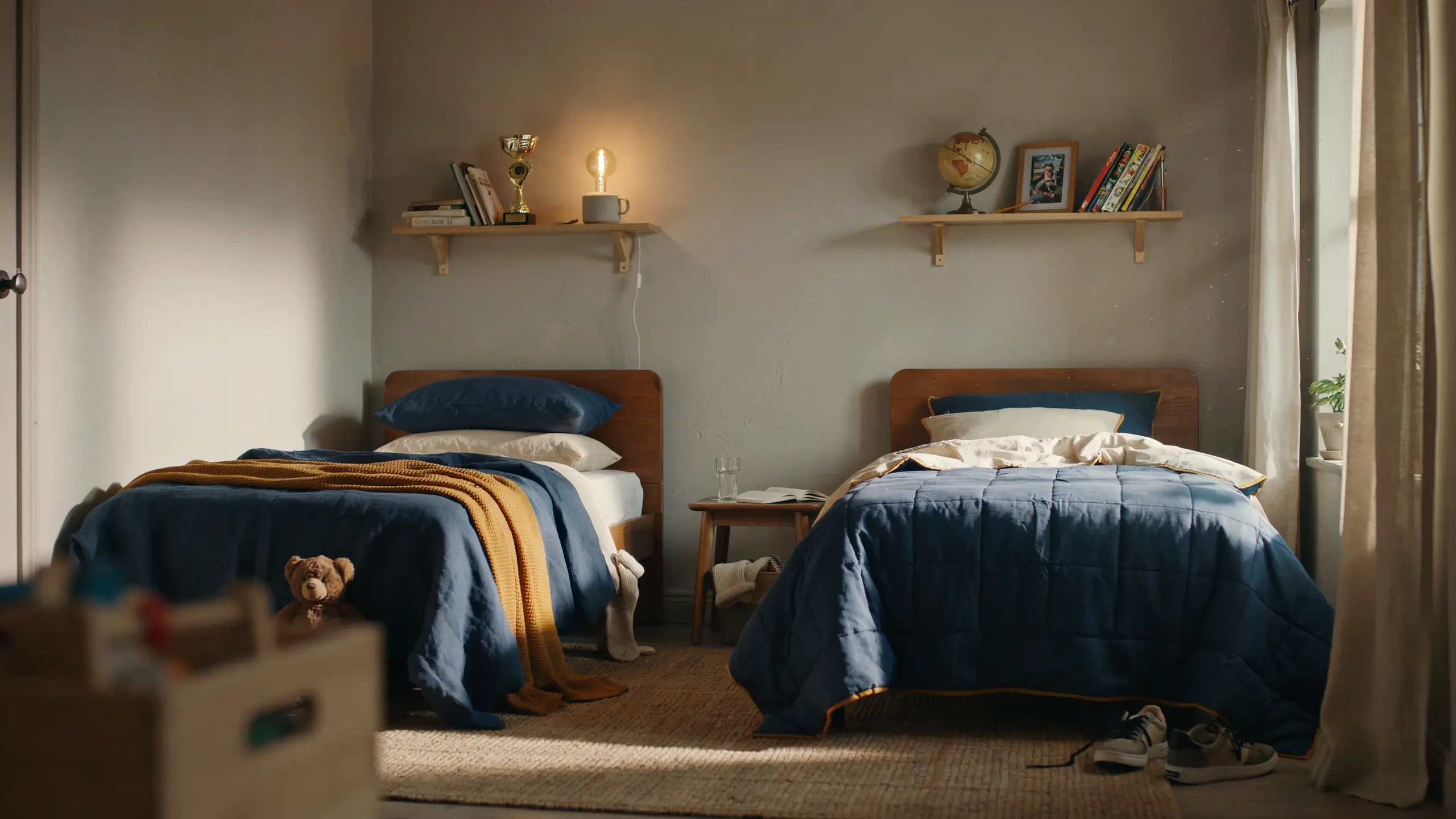
Floating shelves mounted above each headboard hold books, trophies, or a small lamp without eating up floor space. Keep weight light and mount into studs, especially over a bed where a shelf might get climbed on or bumped.
16. A Shared Dresser Doing Double Duty as a Divider
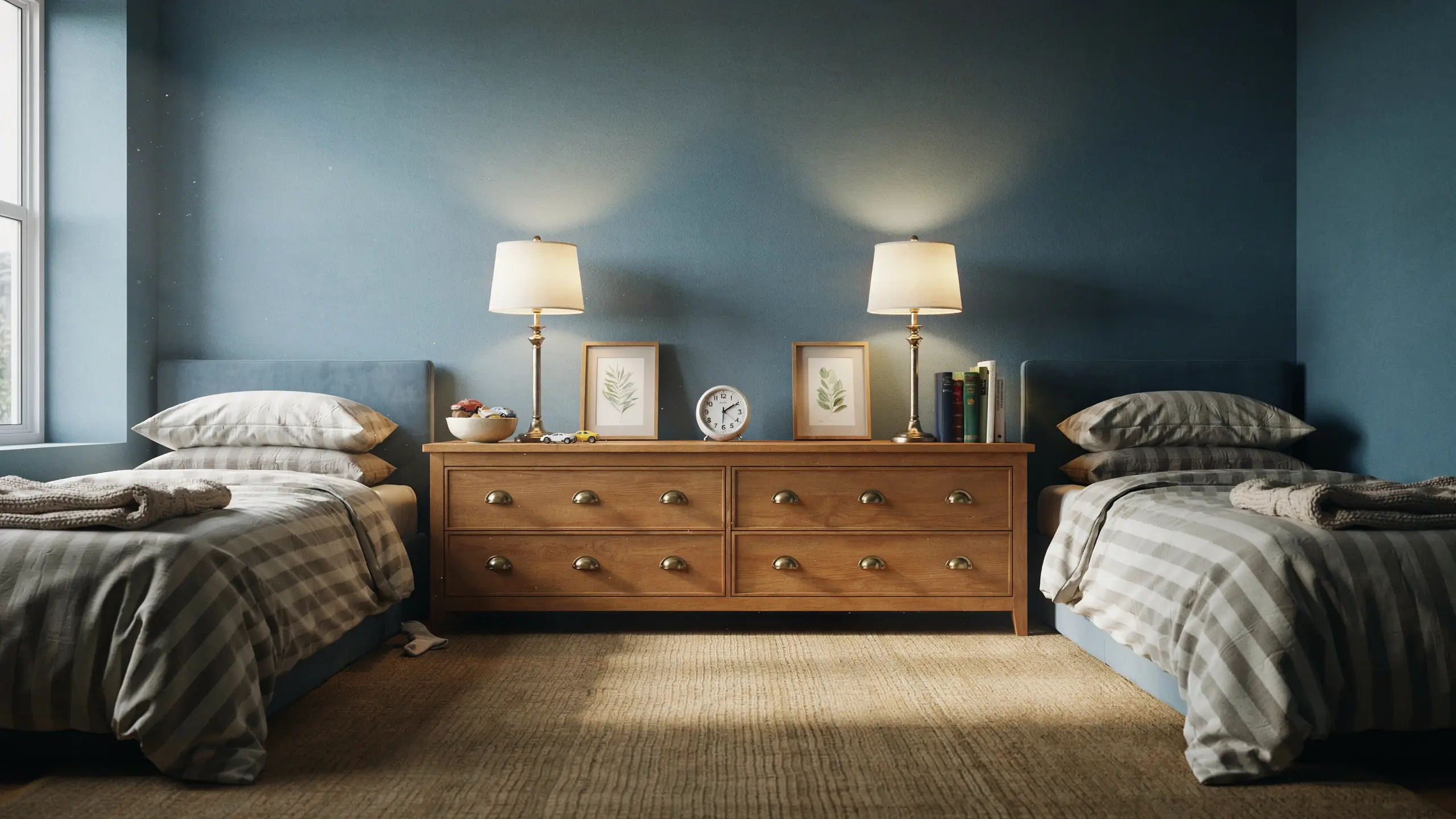
One long, low dresser placed perpendicular to the wall between the two beds gives both boys drawer storage and doubles as a visual room split. Top it with two matching lamps or a shared alarm clock to keep it feeling neutral.
17. A Rotating Toy System for Small Rooms
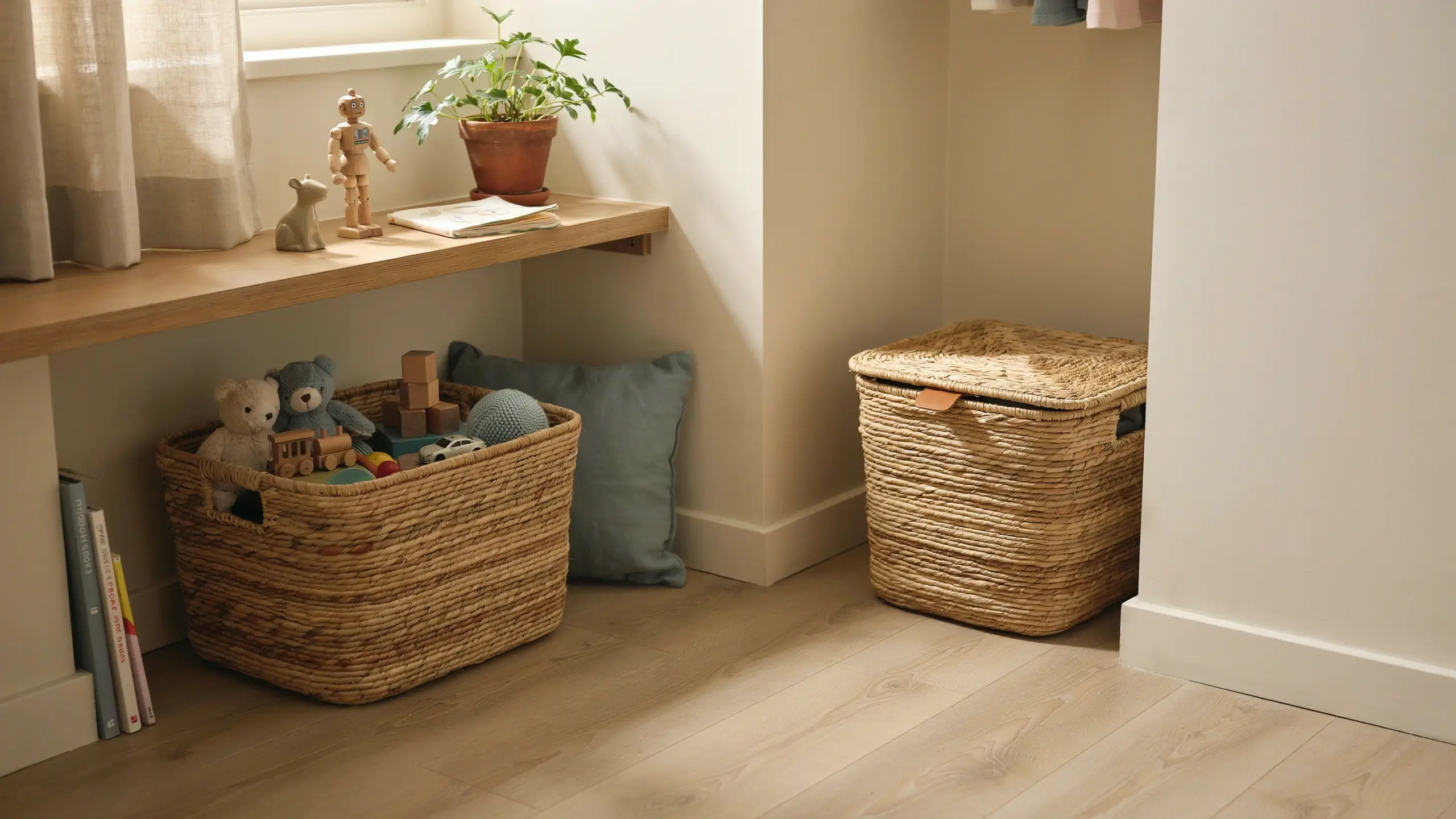
Store half the toys in a closet, garage bin, or under a sibling’s bed elsewhere in the house, then swap every few weeks. It keeps a small shared room from feeling stuffed without buying a single extra piece of furniture.
Let Each Boy Feel Like the Room Is Also His
This is the part most competing articles skim past, and it’s often the actual key to a peaceful shared boys room. A space that’s too generic can feel like nobody’s room. One that’s split into two totally different themes can feel like a battle line down the middle. The sweet spot is a shared base with small personal touches.
18. Personalized Name Signs Above Each Bed
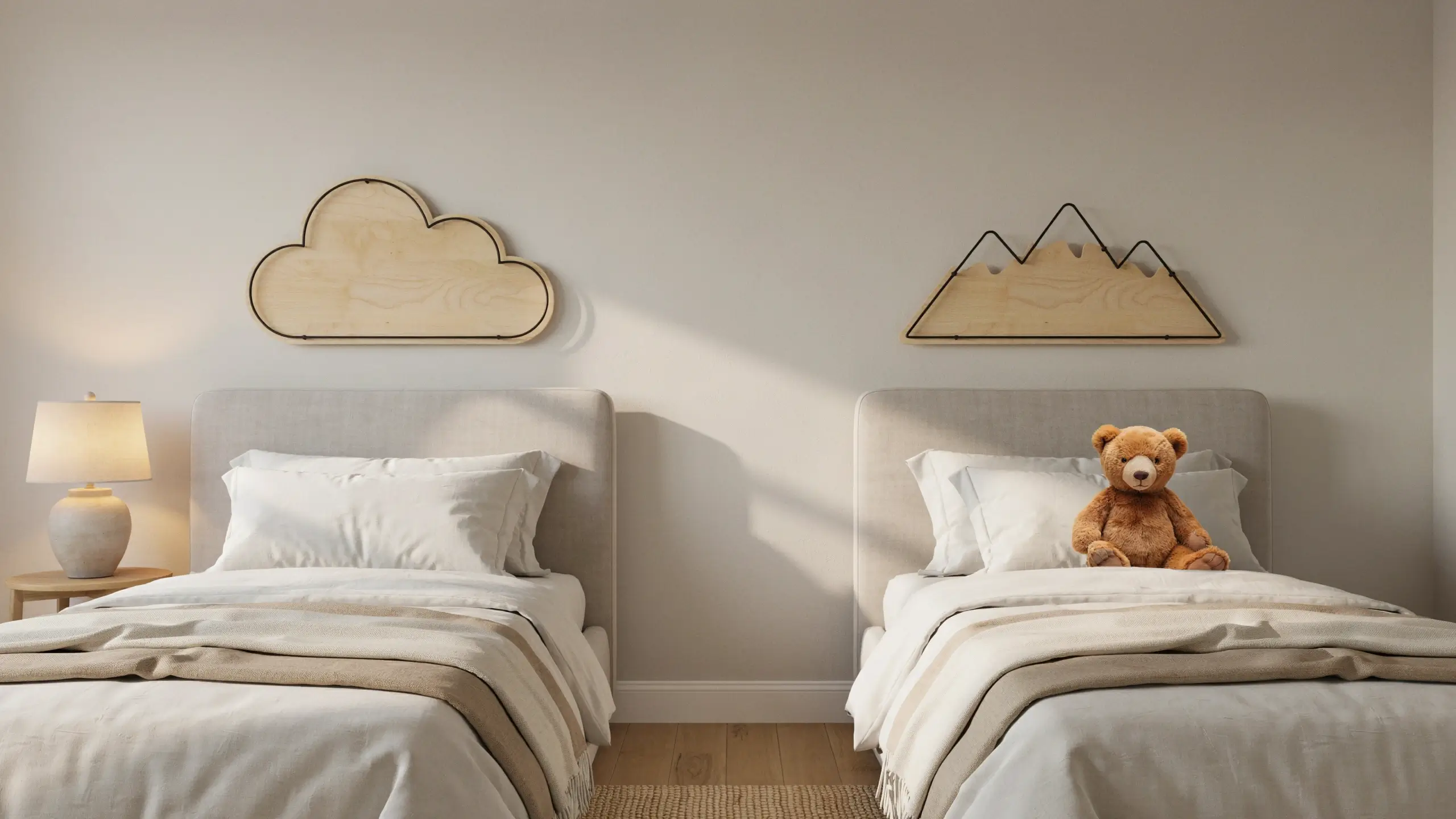
A simple wood or wire name sign above each headboard is an easy, low-cost way to mark territory without repainting a thing. It’s also one of the most saved styling details on Pinterest for exactly this reason.
19. One Accent Color Per Side, Inside a Shared Palette
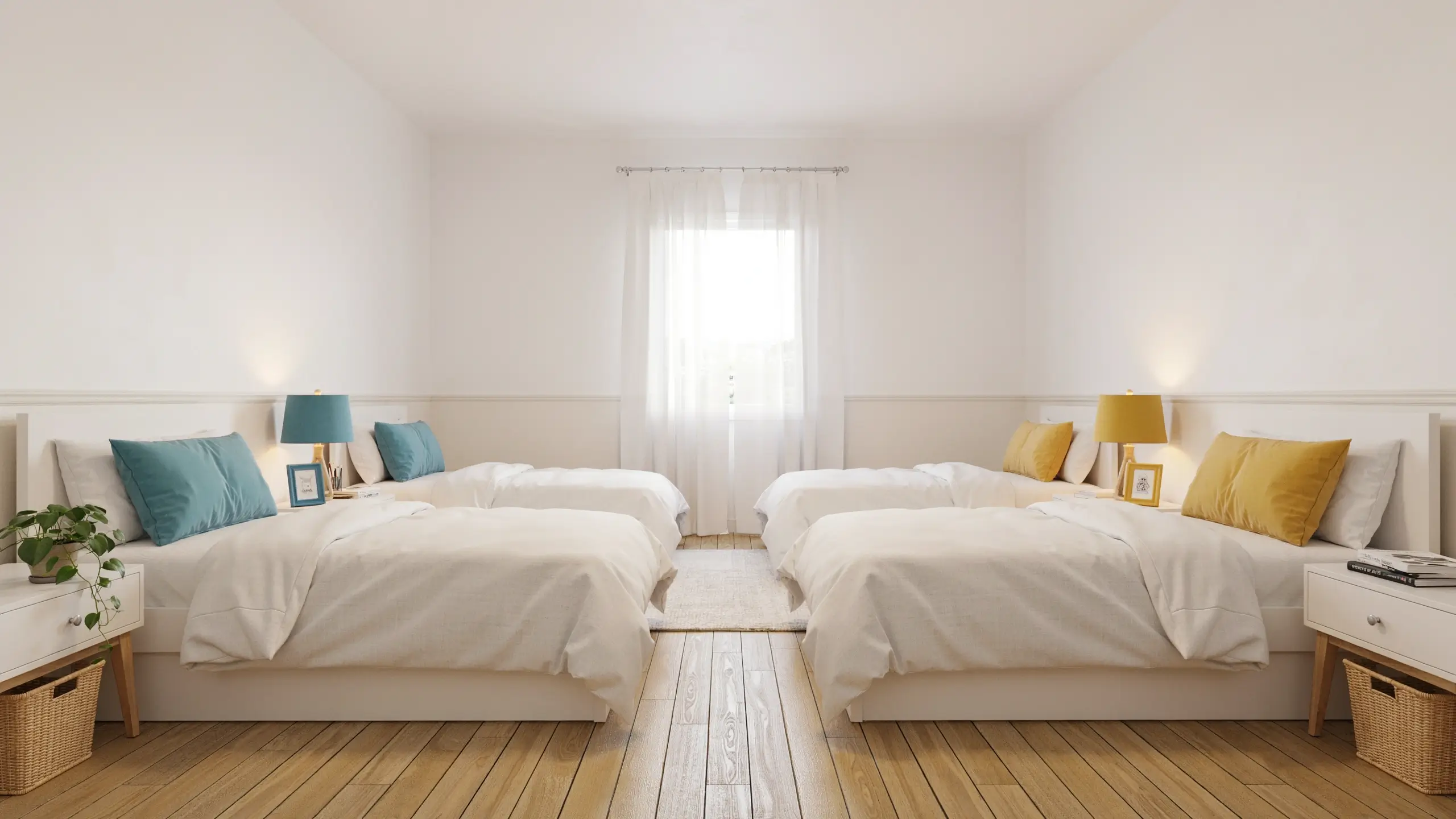
Pick one neutral base, soft greige, warm white, or a pale blue, for the whole room, then let each boy choose one accent color for his side: a pillow, a lamp shade, or a picture frame. The room still reads as one cohesive space, but each kid gets a say.
20. A Split Gallery Wall
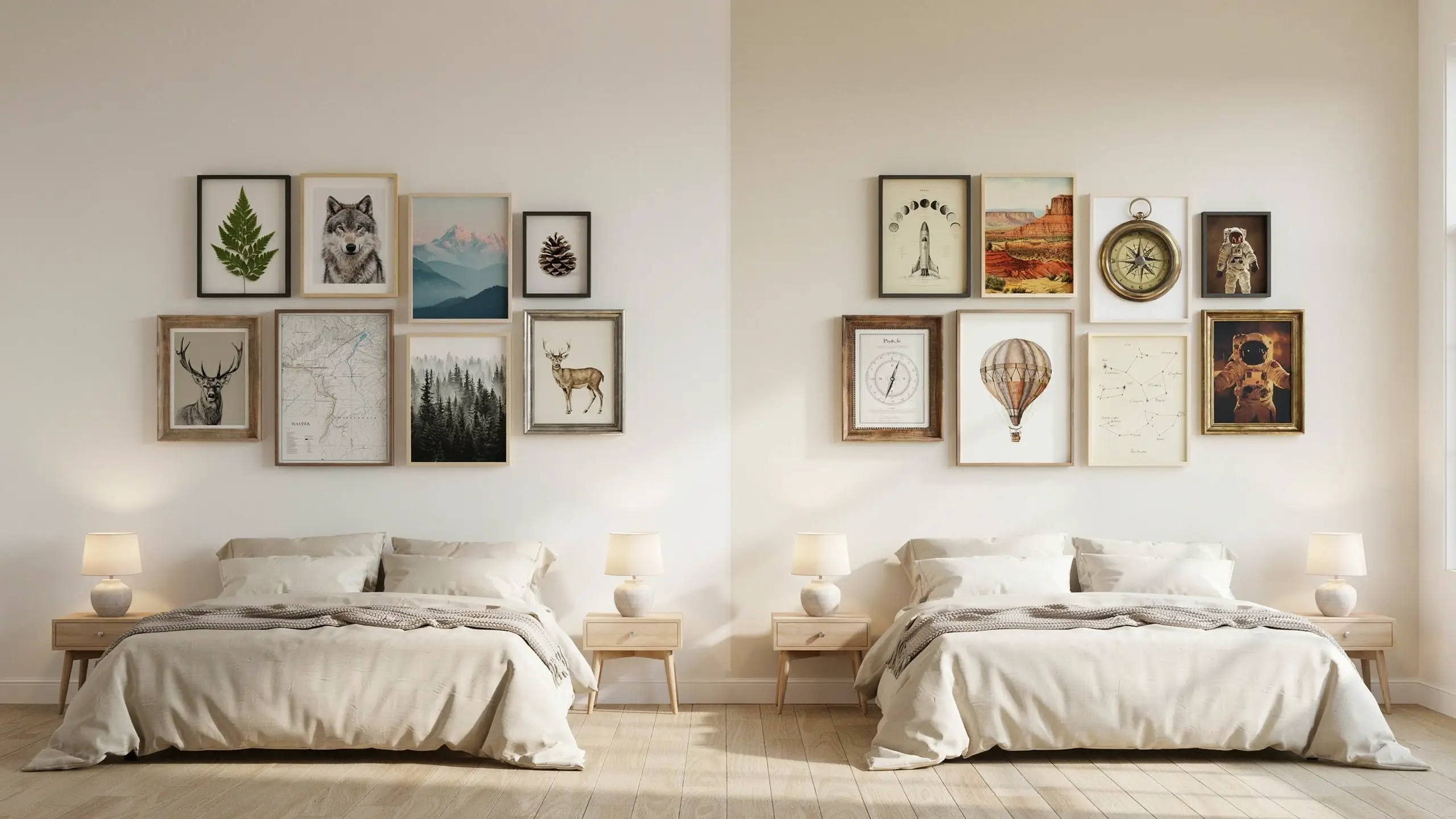
Give each boy an equal section of wall space to fill with his own art, photos, or posters, divided by a piece of washi tape or a thin painted line as a boundary. It’s a great project to do together and it naturally updates itself as interests change.
21. Matching Bedding, Different Colorways
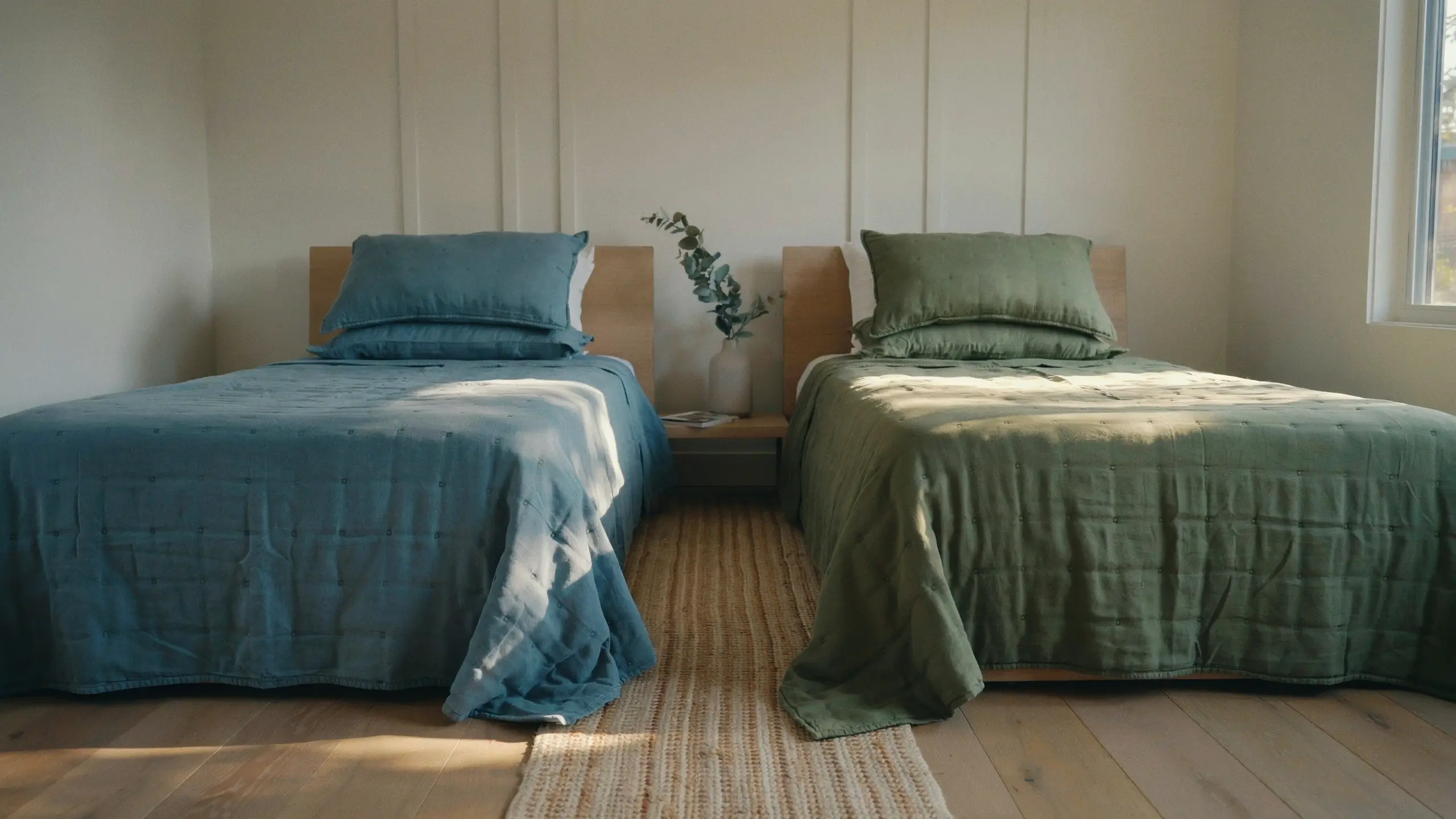
The same quilt pattern or the same brand of bedding in two different colors keeps a shared boys room looking pulled together for photos, while letting each boy pick a favorite shade. This avoids the “who has the cooler bed” comparison that identical bedding can sometimes trigger.
Color and Decor Trends Worth Pinning for 2026
22. A Neutral Base Wall With Trend Accent Colors
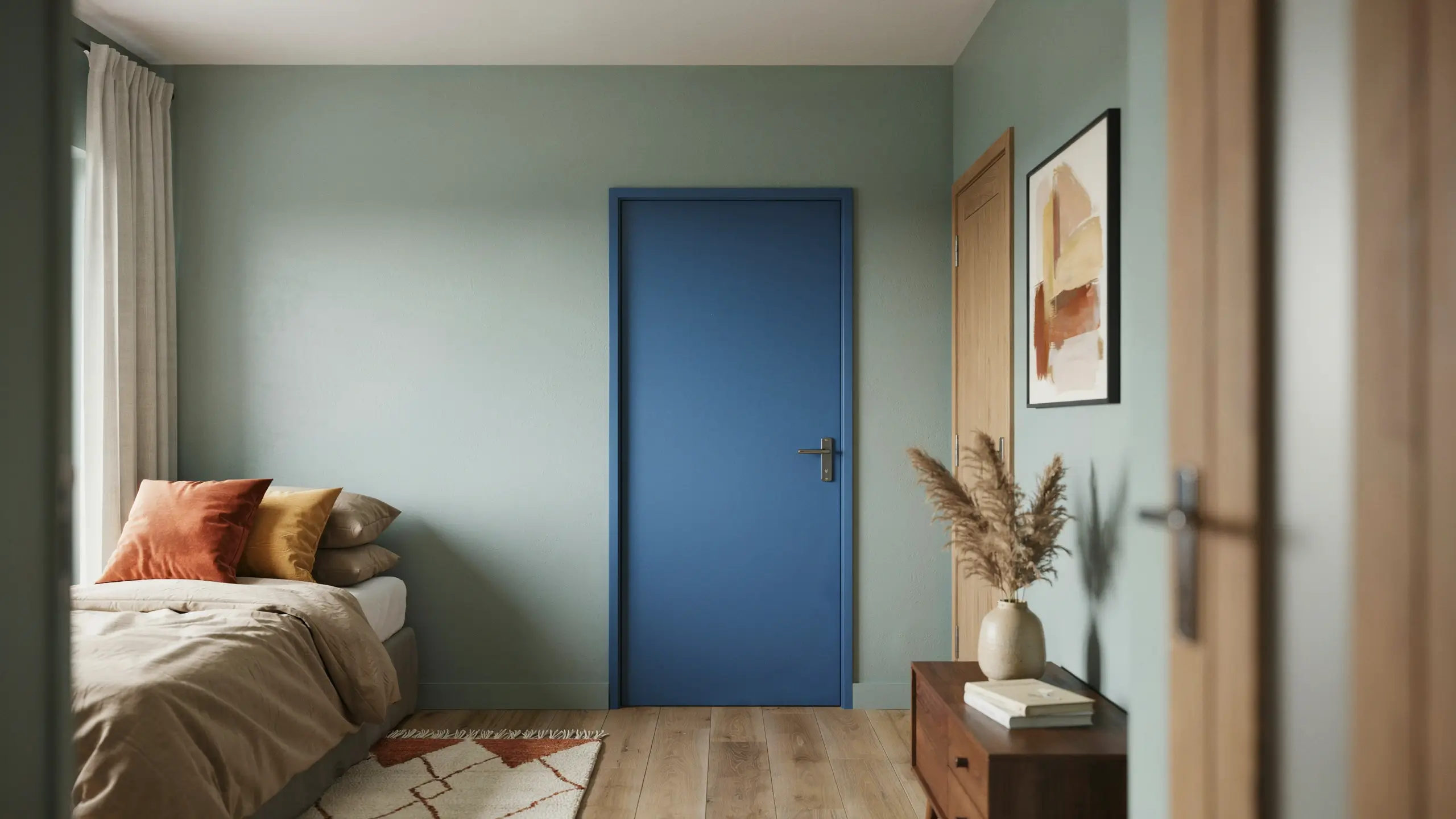
2026 palettes for kids’ rooms are leaning warm and grounded: soft sage, warm khaki, and denim blue as base tones, paired with punchier accents like persimmon, mustard, or cobalt worked in through pillows, art, or a single painted closet door. Keeping the big surfaces neutral and the accents swappable means the room can shift as interests change without repainting the whole space.
23. Removable Wallpaper for a Flexible “Theme”
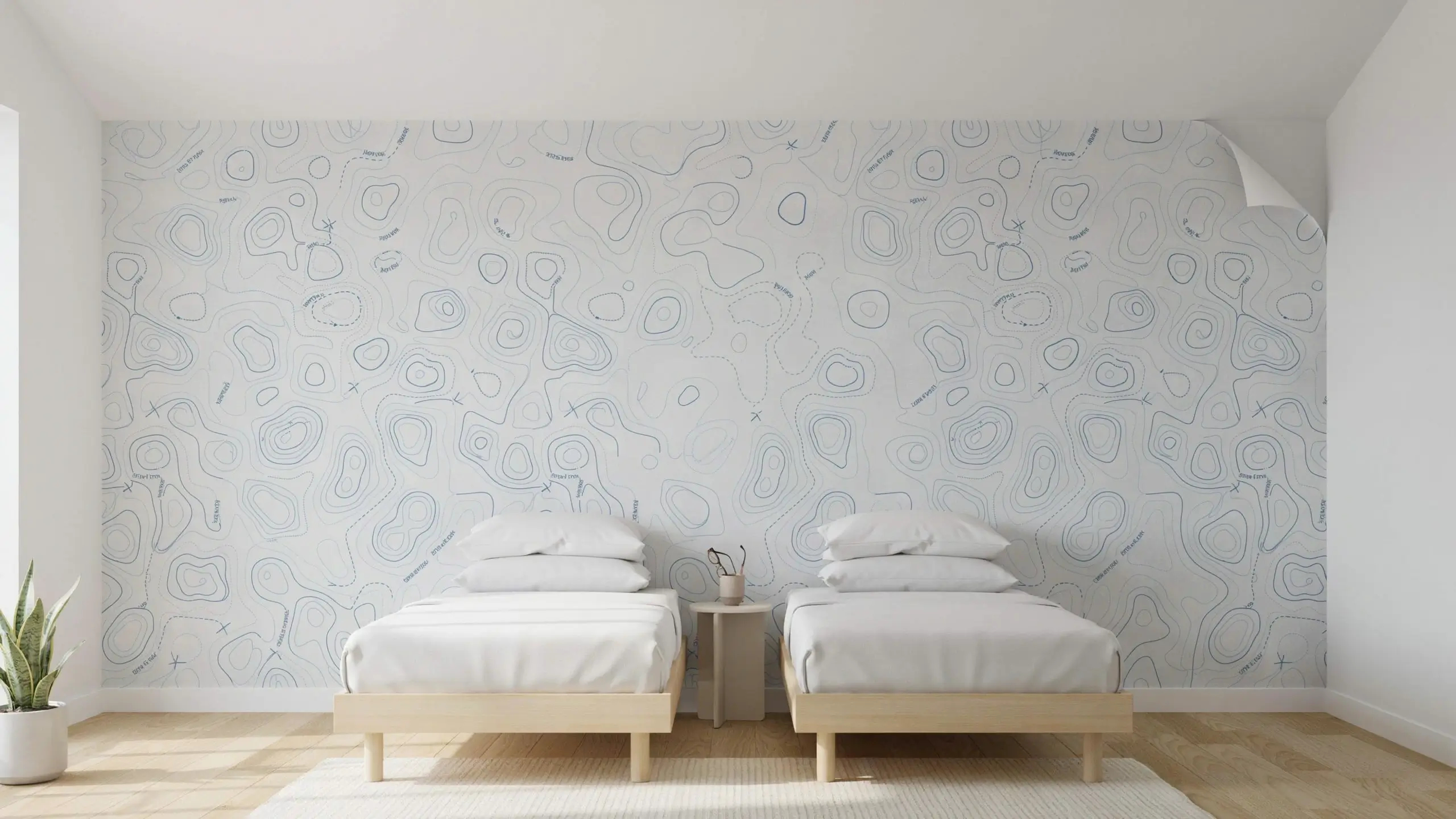
Instead of committing to a full mural, use peel-and-stick wallpaper on one accent wall behind the beds. It gives the room personality (maps, topography lines, a subtle pattern) without the commitment, and it’s fully renter-safe since it comes off clean when you’re ready for a change.
24. A Shared Rug and Curtains to Unify Two Different Styles
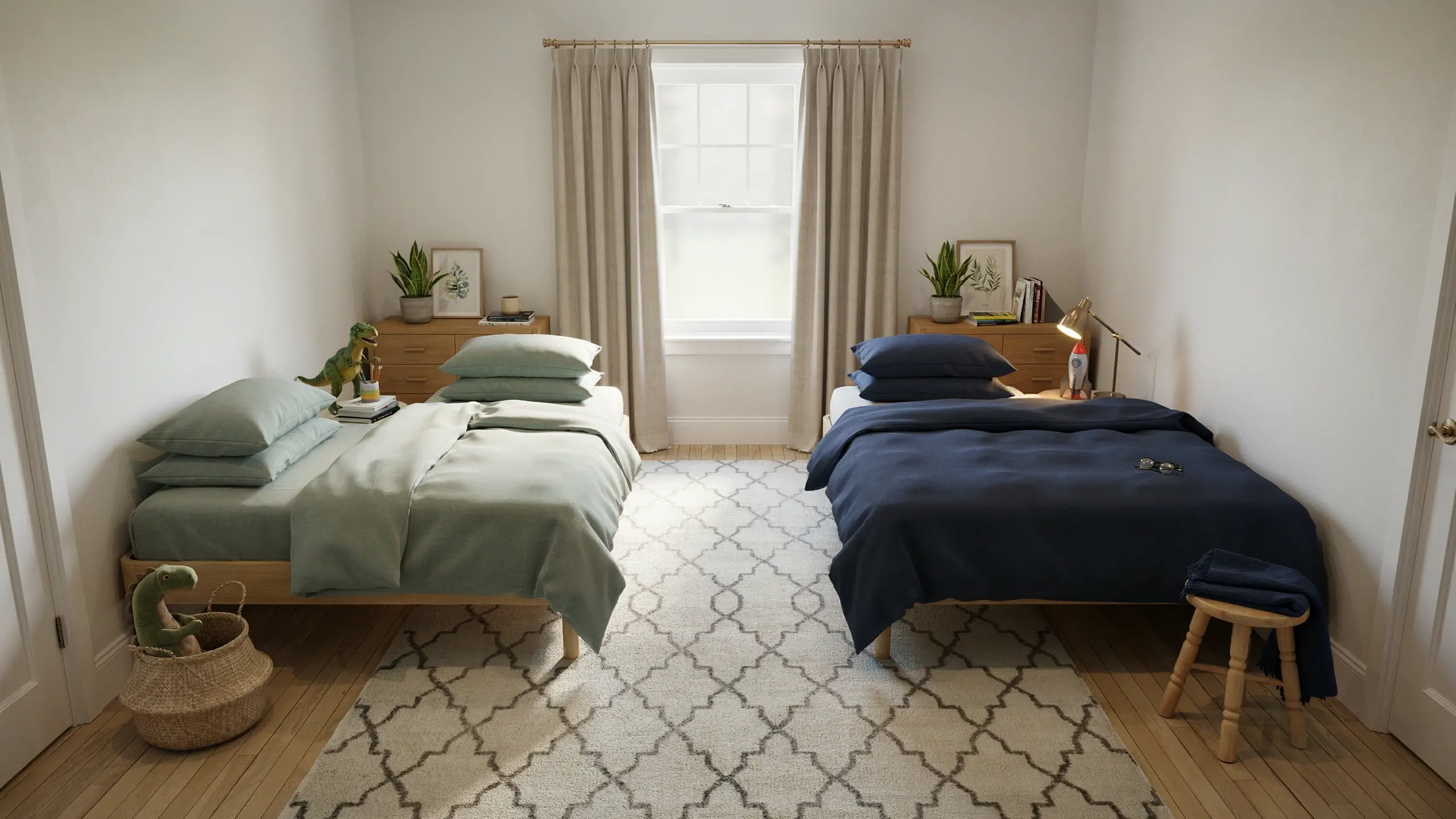
If one boy is into dinosaurs and the other is into space, matching curtains and one shared rug in a neutral pattern pull the whole room together visually, even when the wall art and bedding don’t fully match. This is the trick a lot of professionally styled rooms use to make two personalities look like one design.
Budget-Friendly and Renter-Friendly Upgrades
25. Buy the Bunk Bed Secondhand, Style It New
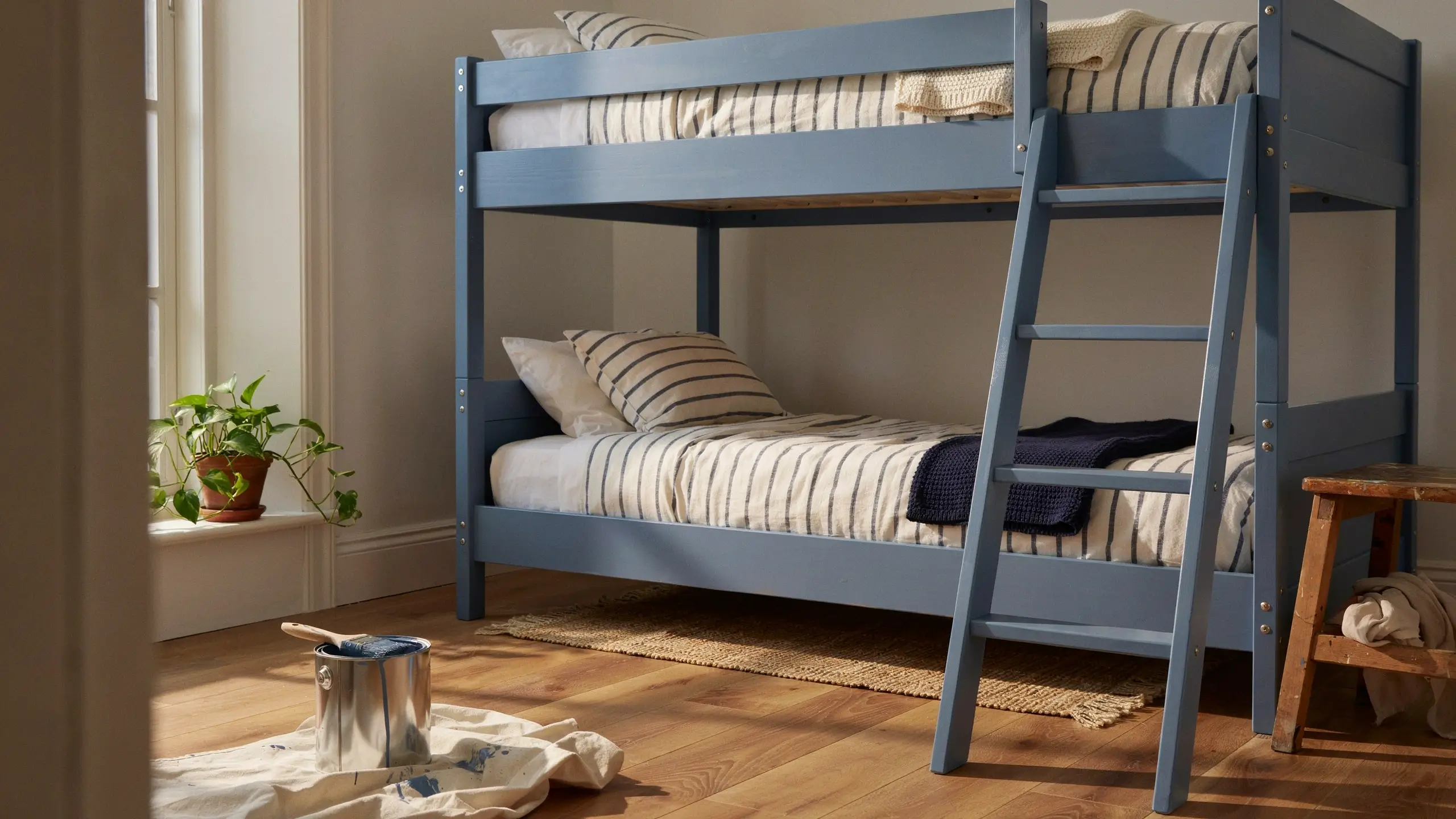
Marketplace and secondhand bunk beds are everywhere and usually a fraction of retail price. Give the frame a fresh coat of paint (check it’s not older than current safety standards first, and confirm all original hardware is present), then style it with new bedding so it looks brand new for a fraction of the cost.
26. Command Hooks and Tension Rods Instead of Drilling
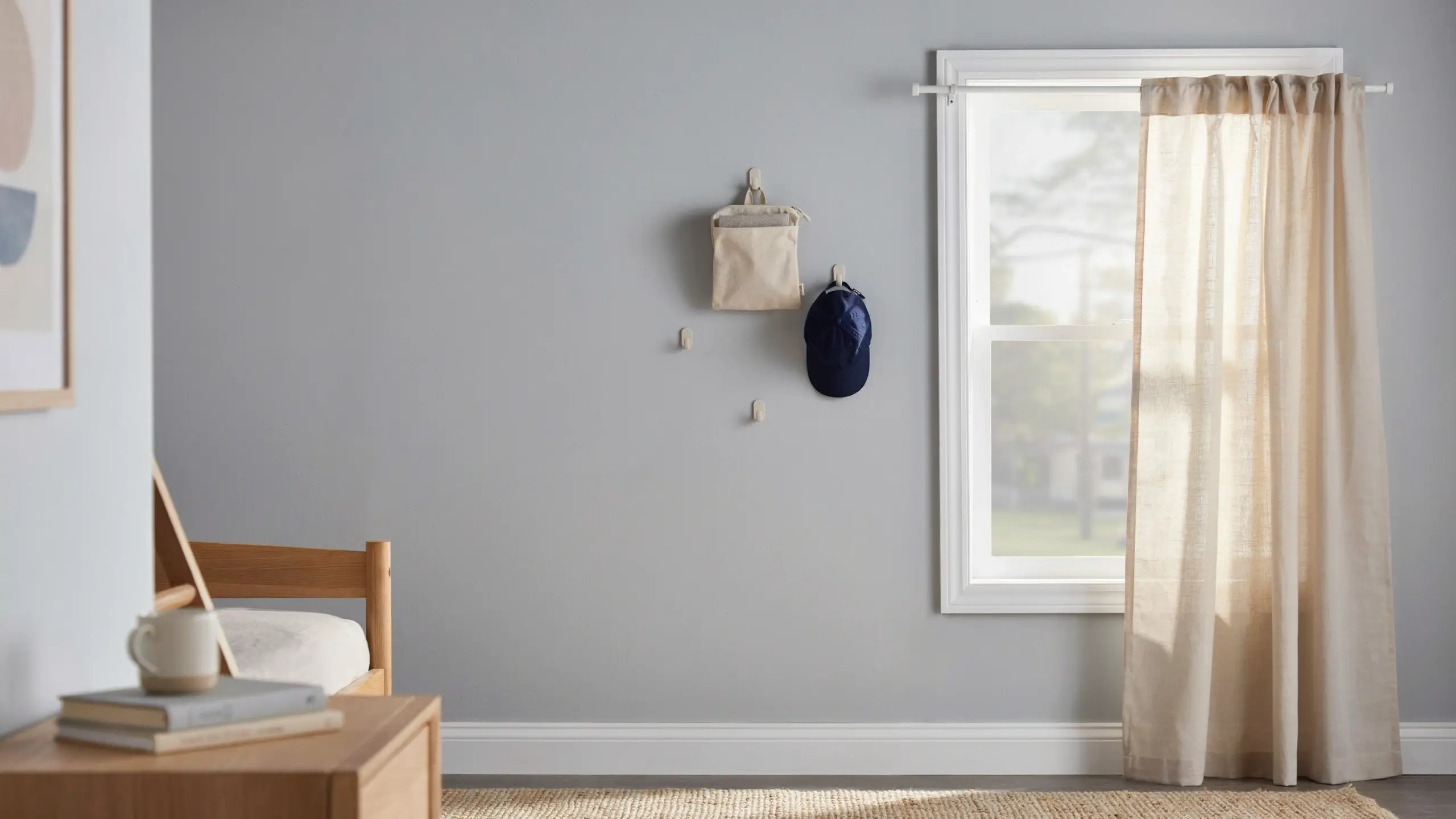
For rentals, swap wall-mounted curtain rods for tension rods, use command strip hooks for light shelves or hanging storage, and skip anything that requires drilling into drywall. Most of these hold plenty of weight for kids’ decor and remove without damage at move-out.
27. An IKEA Hack for a Budget Divider
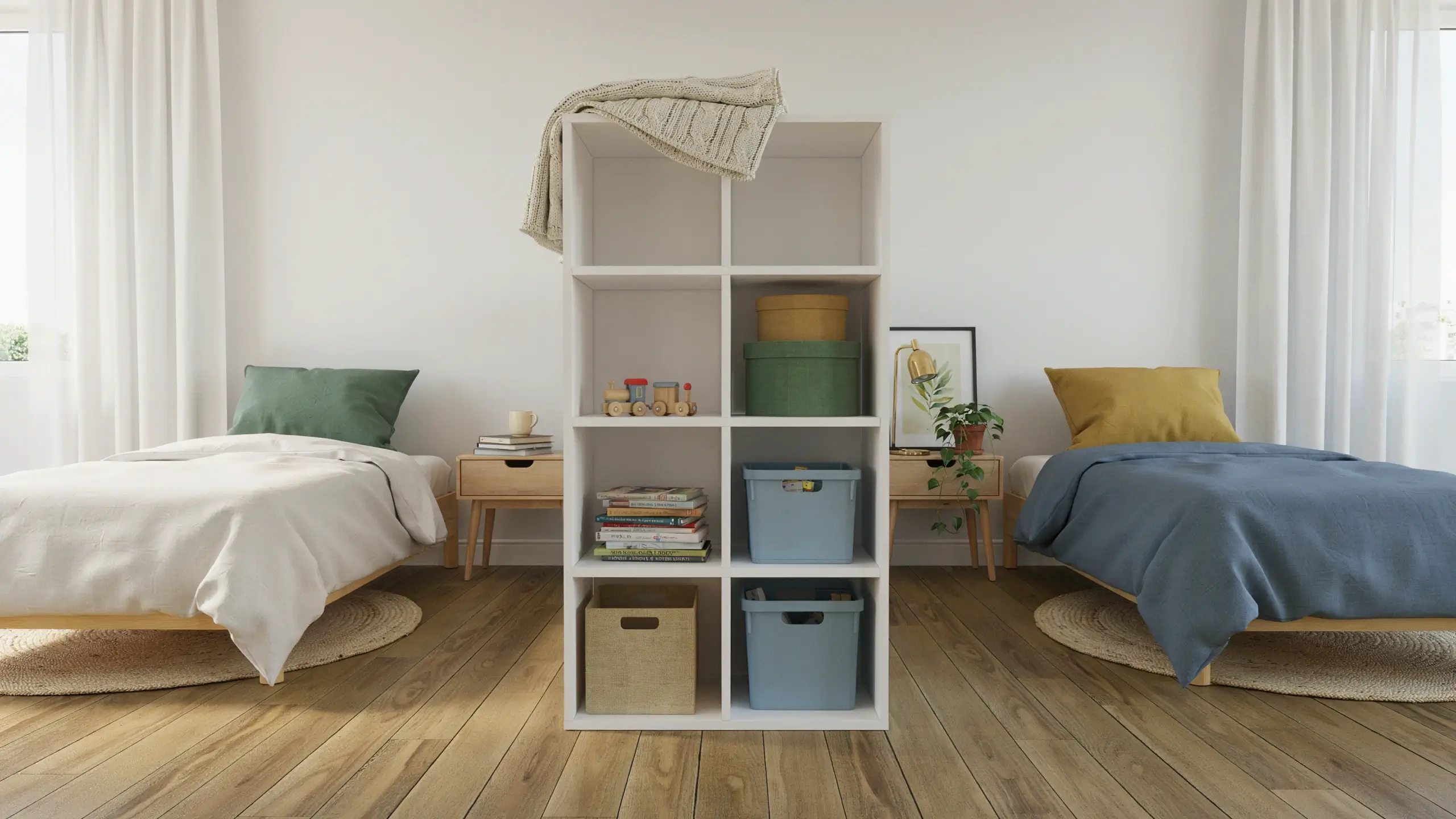
A KALLAX shelving unit turned sideways between two beds works as a bookshelf, toy storage, and privacy divider all at once, usually for close to the price of one nightstand set. It’s one of the most repeated tricks among real families decorating shared kids’ rooms because it solves three problems with one purchase.
Managing Different Ages and Bedtimes in a Shared Boys Room
This is the part most shared boys room articles skip entirely, but it’s often the actual daily challenge for parents. If your boys are a few years apart, bedtimes rarely match, and that mismatch alone can make or break how peaceful the room feels.
A few things that genuinely help:
- Put the younger child’s bed closer to the door. It avoids nighttime bathroom trips or early wake-ups that require climbing past an older sibling’s space.
- Give the older boy a quiet activity before his real bedtime. A clip light for reading or an audiobook on headphones keeps him occupied without lying in the dark bored while a younger sibling settles.
- Add a white noise machine on the younger child’s side. It masks the normal sounds of an older sibling still moving around the room after “lights out.”
- Plan to revisit the setup around age 8 to 10. Kids commonly start wanting more privacy for changing and sleeping as they approach puberty, so it helps to plan ahead for a curtain, screen, or eventual room swap rather than assuming today’s layout is permanent.
- Set a couple of simple room rules together with both boys. Quiet after lights out, ask before borrowing a sibling’s things. Rules kids help create tend to stick better than ones just handed down.
Mistakes to Avoid in a Shared Boys Room
- Skipping the safety check on a secondhand bunk bed. Confirm all original hardware is present, the guardrail is secure, and the frame meets current safety standards before anyone sleeps in it.
- Not anchoring furniture to the wall. Any dresser, bookshelf, or bunk frame a kid could climb needs an anti-tip kit. It’s inexpensive and one of the easiest safety upgrades to skip by accident.
- Blocking a window with a bed frame. Windows often serve as a secondary exit in an emergency, so leave a clear path to open and climb through if needed.
- Going too matchy-matchy. A room that’s identical on both sides can actually increase rivalry over “whose side looks better.” A shared palette with small personal differences tends to cause less friction than a perfect mirror image.
- Forgetting the closet. Beautiful bedding and a styled shelf won’t matter much if backpacks, shoes, and clothes have nowhere organized to land.
- Choosing one full theme instead of a flexible base. A room built entirely around dinosaurs or superheroes can leave one sibling feeling like it was never really his, especially if the boys don’t share the same interests or one outgrows a phase faster than the other.
Final Thoughts on Designing a Shared Boys Room
A shared boys room doesn’t have to be a compromise for anyone. With the right bed layout, storage that gets used instead of ignored, and just enough personal touches on each side, two boys can genuinely share one room and both feel like it belongs to them. Start with the layout, layer in storage next, then have fun with color and personality last. That order matters more than any single idea on this list.
If you try any of these ideas in your own space, I’d love to hear how it goes. Drop a comment below with the layout you chose, or tag your photos if you post them. Real shared boys rooms are always more helpful than a perfectly staged one, and I’m always adding new ideas to my boards.





No Comment! Be the first one.