




25 70s-Inspired Living Room Ideas That Work in Real Homes: Not Just Editorial Shoots
What Actually Makes a Room Feel Like the 70s? 70s living room design refers to an interior style built on earthy warmth, layered natural textures, and low-profile organic forms. Core elements include...

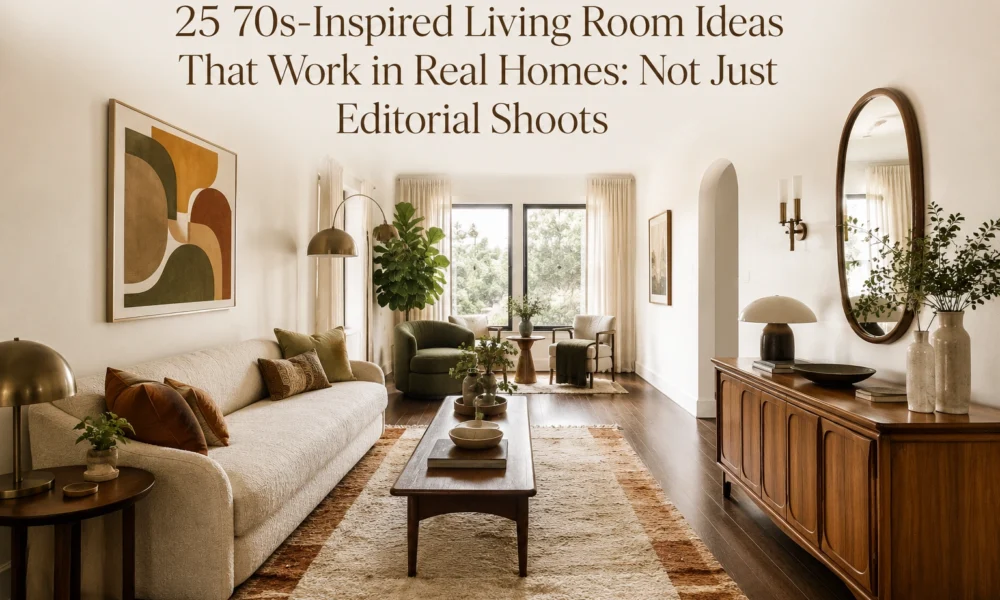
What Actually Makes a Room Feel Like the 70s?
70s living room design refers to an interior style built on earthy warmth, layered natural textures, and low-profile organic forms. Core elements include shag rugs, rattan or wicker lighting, velvet upholstery, and a color palette of burnt orange, mustard yellow, terracotta, chocolate brown, and avocado green — unified by warm amber lighting.
That definition matters because “retro” gets misused constantly. Mid-century modern — the style most commonly mislabeled as 70s — runs cooler, more geometric, and cleaner in line. Think less Eames lounger. More macramé. Less polished concrete. More shag. The 70s aesthetic sits warmer, softer, and far more layered.
The most-saved 70s living room images on Pinterest consistently show five elements together: a burnt orange shag rug, a rattan pendant light, a low velvet sofa, a monstera in a terracotta pot, and warm amber lighting. According to that same platform trend data, these five are the building blocks readers actually search for and save — not full-room renovation concepts. They’re the visual foundation of the trend as it’s being styled today.
25 70s Living Room Ideas
Every idea below is real, visually specific, and usable in a typical home or rental — not just in a styled photoshoot. Budget tiers are included for each.
1. Layer a Burnt Orange Shag Rug Over Your Existing Floor
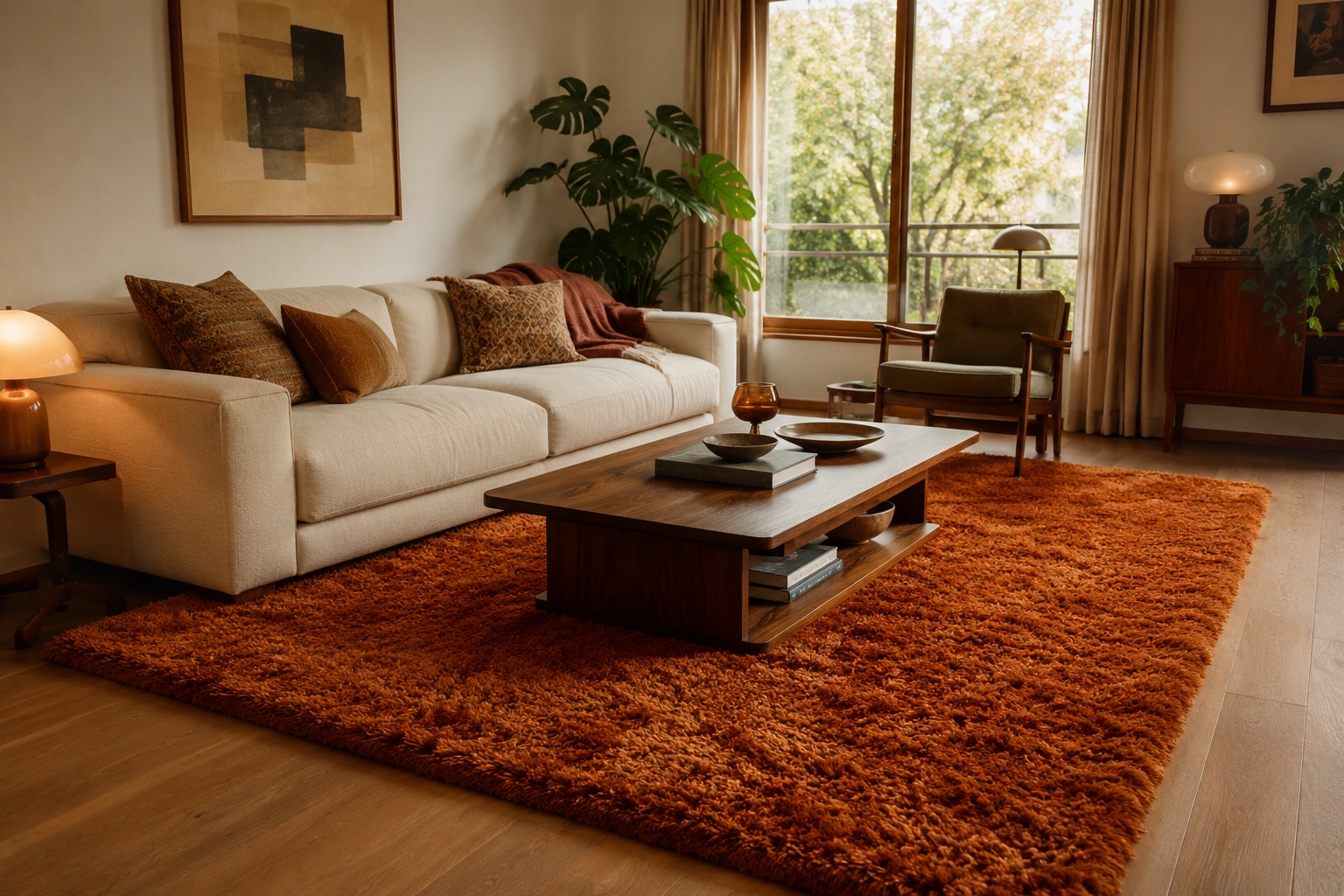
A shag rug is the single fastest move to shift a room toward the 70s. Go for rust, burnt orange, or caramel — these read as grounded and warm, not costume-adjacent. An 8×10 size works well under a sofa and coffee table. IKEA’s VINDUM shag runs under $150; similar sizes appear on Amazon regularly under $80. Budget tier: Under $50–$200.
2. Swap Your Sofa for a Low-Slung Velvet Sectional
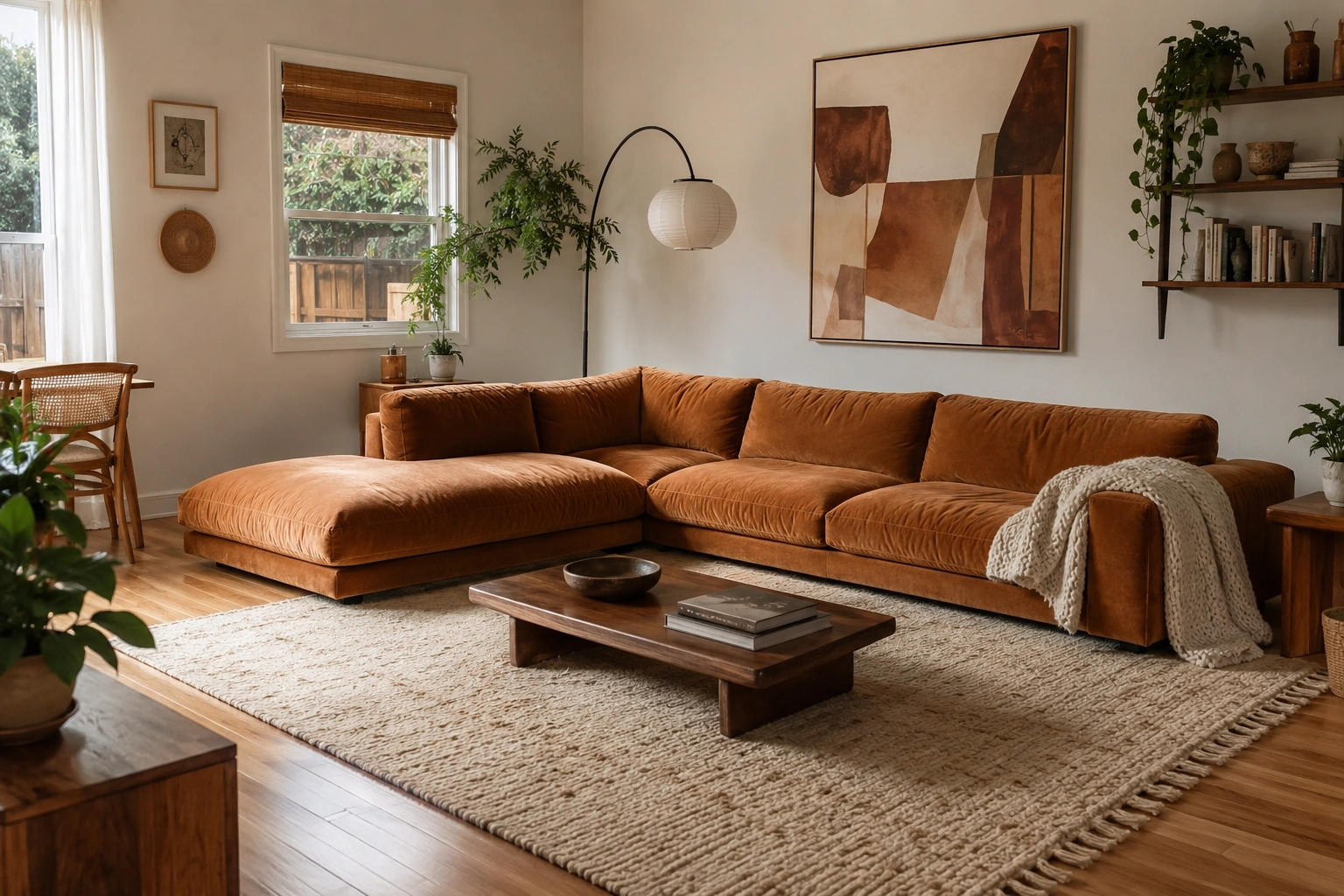
Height is the defining structural detail of 70s furniture — it sat close to the floor deliberately. A low-profile sectional in caramel, rust, or chocolate velvet creates the right silhouette without a full room overhaul. West Elm’s Haven Sectional hits this aesthetic at mid-range. One chunky throw draped over an arm adds the final textural note. Budget tier: $200+.
3. Hang a Rattan or Wicker Pendant Light
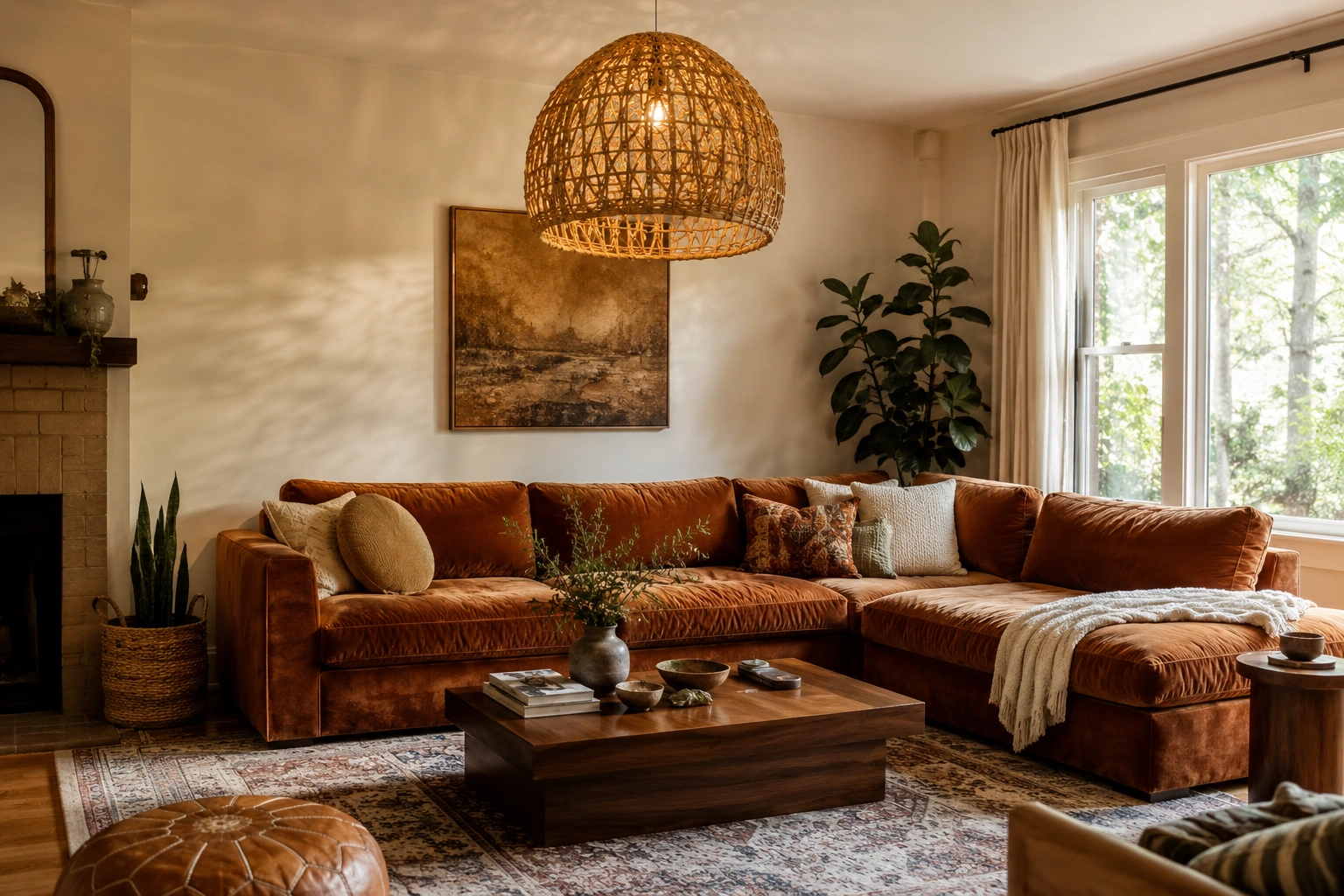
Overhead lighting is the most neglected lever in any living room refresh. A woven rattan pendant transforms the ceiling plane and casts organic dappled shadows at night — something no recessed LED can replicate. IKEA’s TORARED shade starts at $10–$15. For more visual weight, West Elm’s rattan range and Etsy handwoven sellers are both worth searching. Budget tier: Under $50–$200.
4. Mount a Sunburst Mirror Above the Sofa
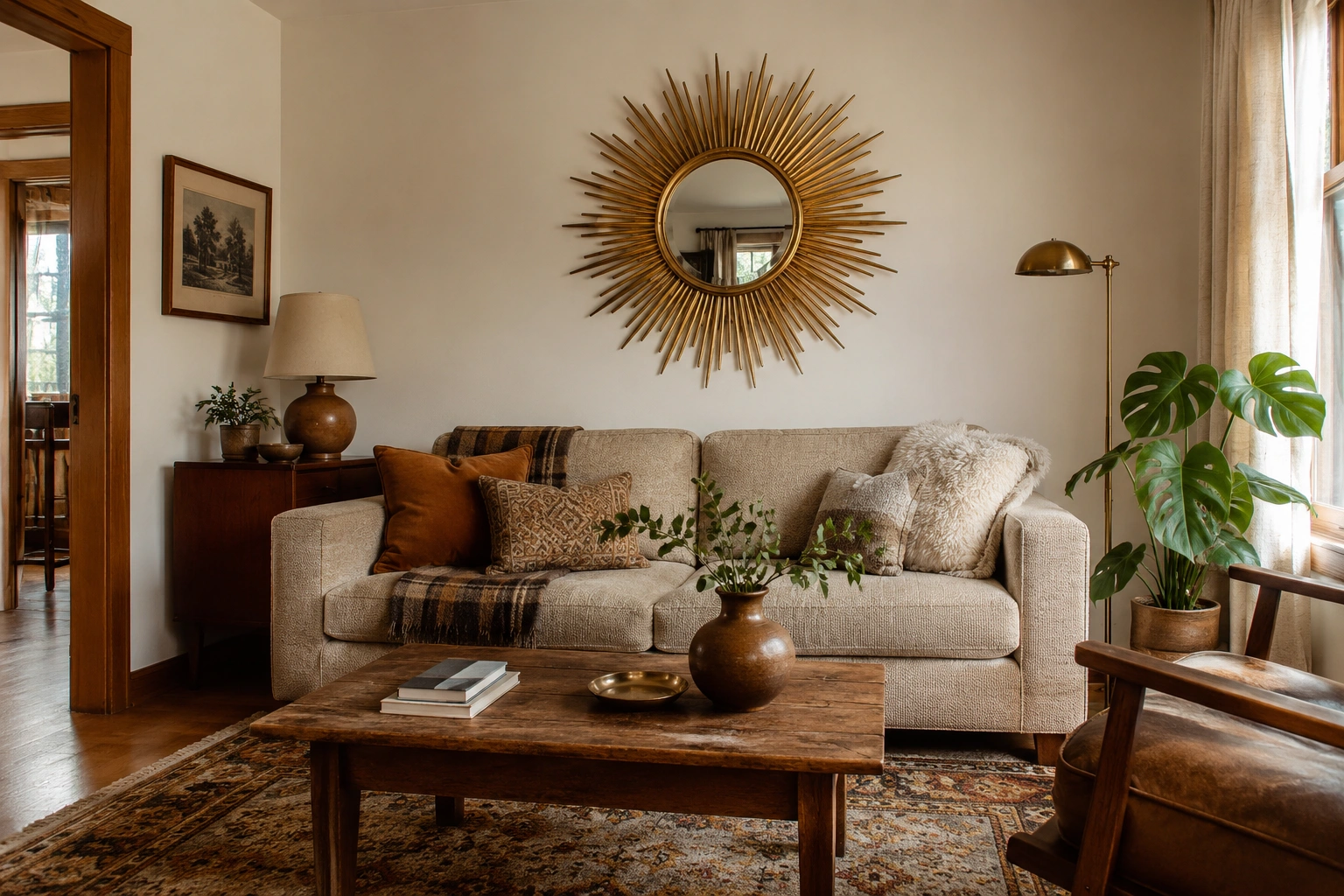
Few pieces do more work per dollar. A sunburst or starburst mirror in gold or brass — mounted over the sofa or centered above a fireplace — creates an instant room focal point that reads as authentically 70s without overpowering the space. Vintage originals appear on Etsy regularly; Amazon and HomeGoods carry solid dupes from $35–$90. Budget tier: Under $50–$200.
5. Place a Monstera in a Wide Terracotta Pot
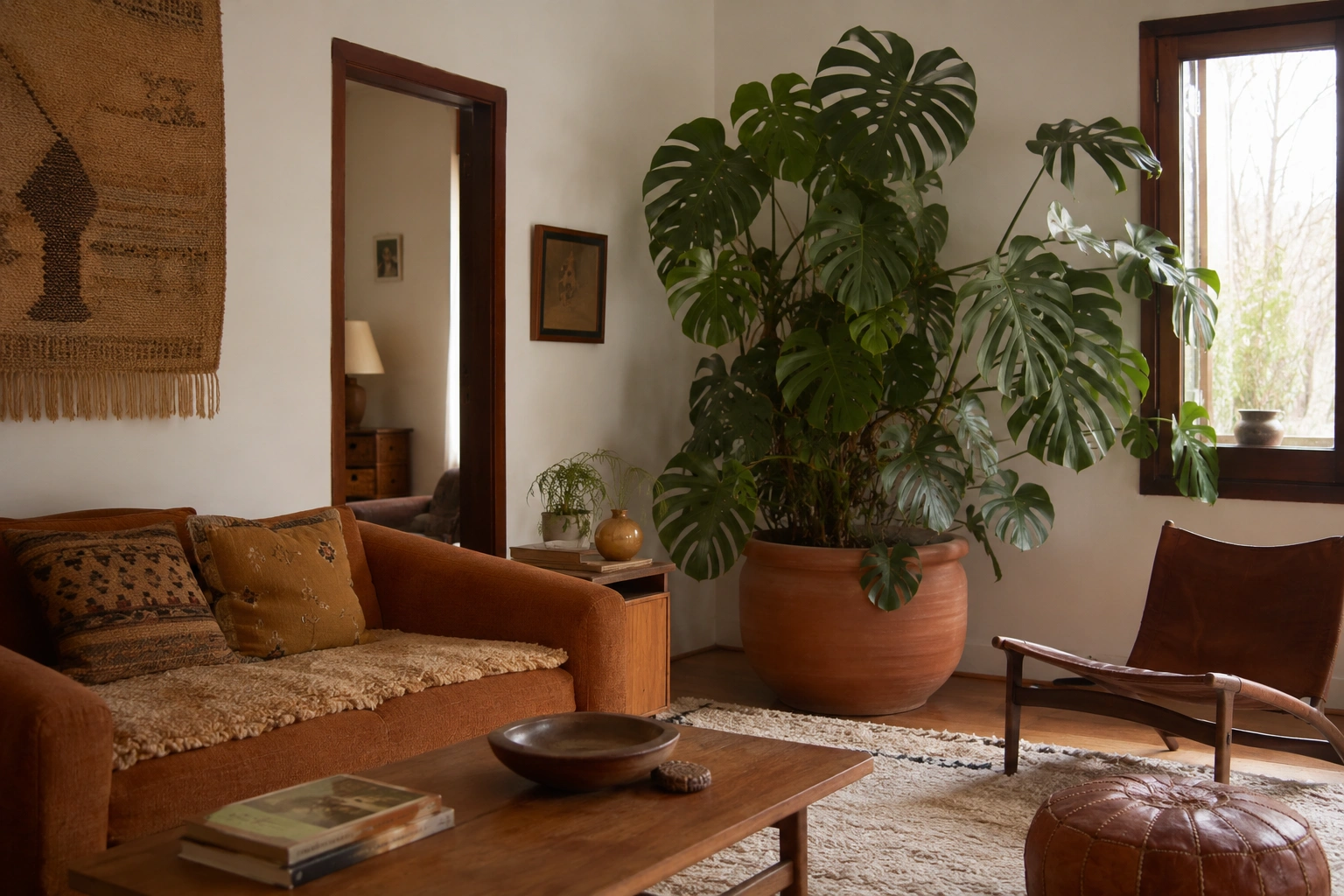
Plants in 70s interiors weren’t accessories — they were structural elements. A monstera deliciosa or split-leaf philodendron in a wide, squat terracotta pot placed in a room corner costs under $40 total and adds immediate life. The warm clay color of the pot complements earthy tones naturally. Go large. A 6-inch plant in a 4-inch pot disappears in a full room. Budget tier: Under $50.
6. Install Peel-and-Stick Wood Paneling on One Feature Wall
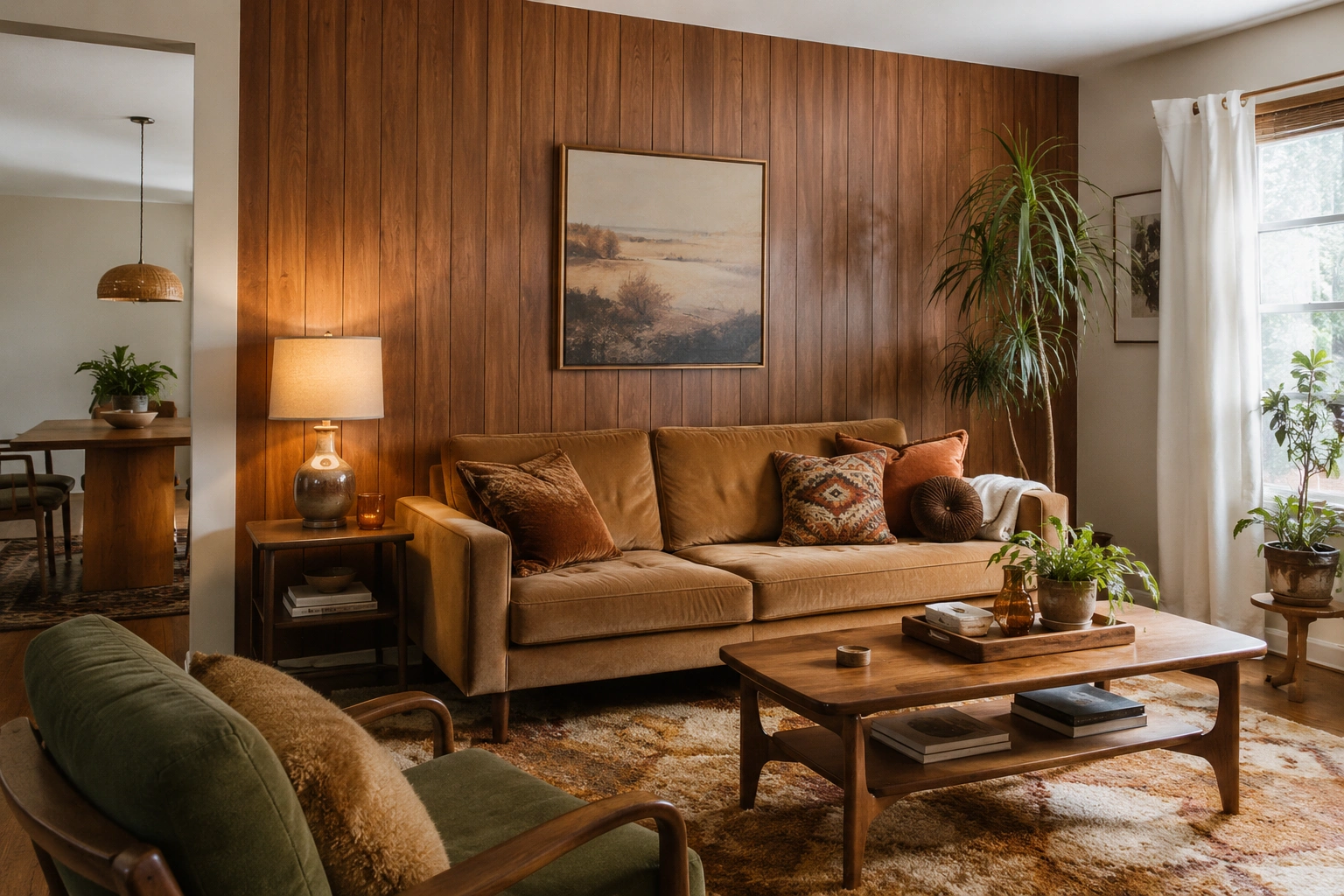
Real wood paneling is expensive and permanent — two problems for renters. Removable peel-and-stick panels from Etsy and Amazon deliver the same warm, textured visual at a fraction of the cost. Apply to the wall directly behind your sofa only. Full-room paneling can feel heavy; one accent wall adds depth without weighing the space down. Budget tier: $50–$200.
7. Use Large-Scale Geometric Wallpaper as an Accent Wall
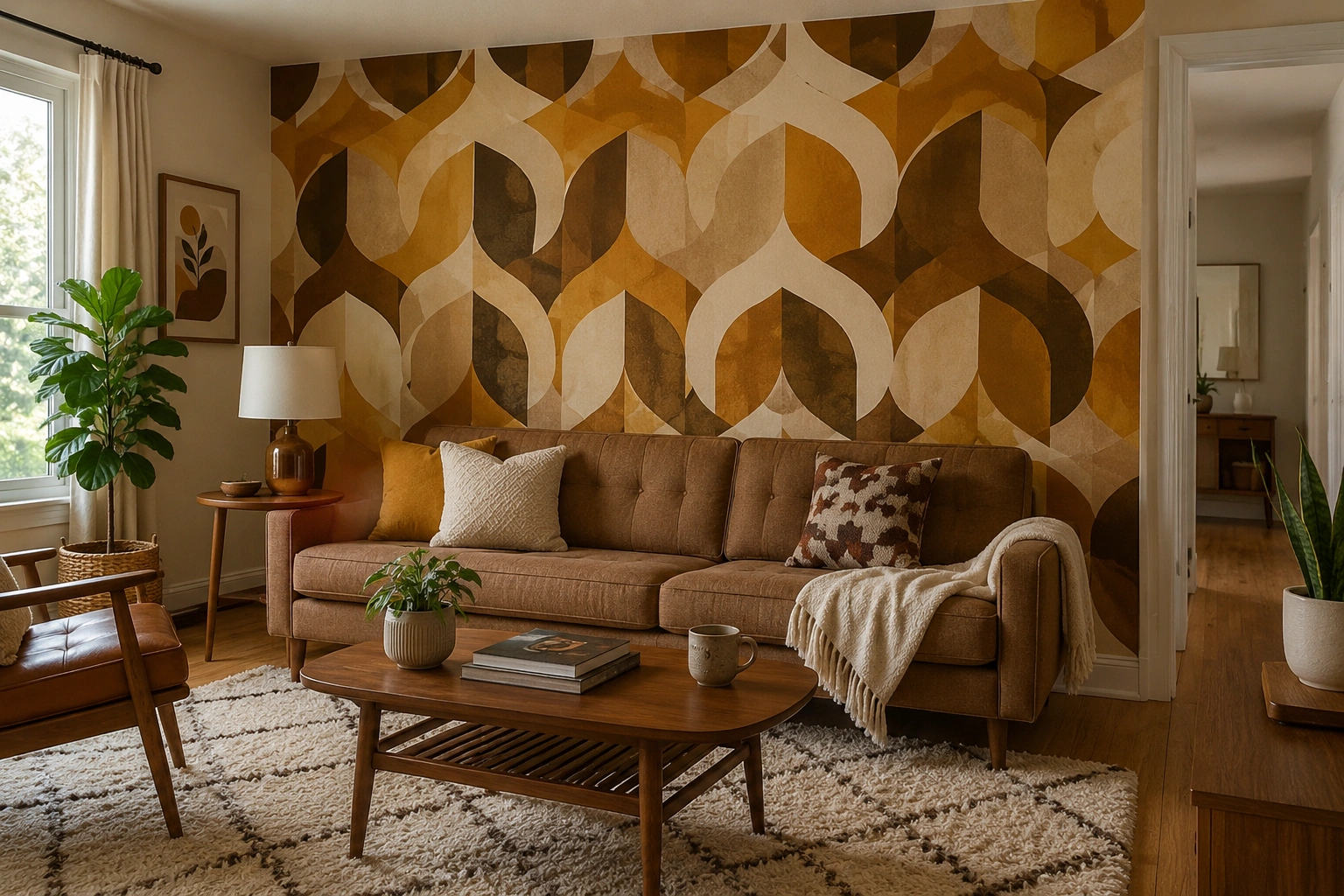
Geometric prints in mustard, cream, and chocolate brown were a defining 70s wallpaper motif. An accent wall with hexagonal repeats, abstract curves, or an ogee pattern pulls the room’s retro direction into immediate focus. Peel-and-stick geometric wallpaper from Etsy is renter-safe and repositionable. One standard wall typically runs $60–$140 depending on pattern scale. Budget tier: $50–$200.
8. Add an Arc Floor Lamp with a Mushroom or Saucer Shade
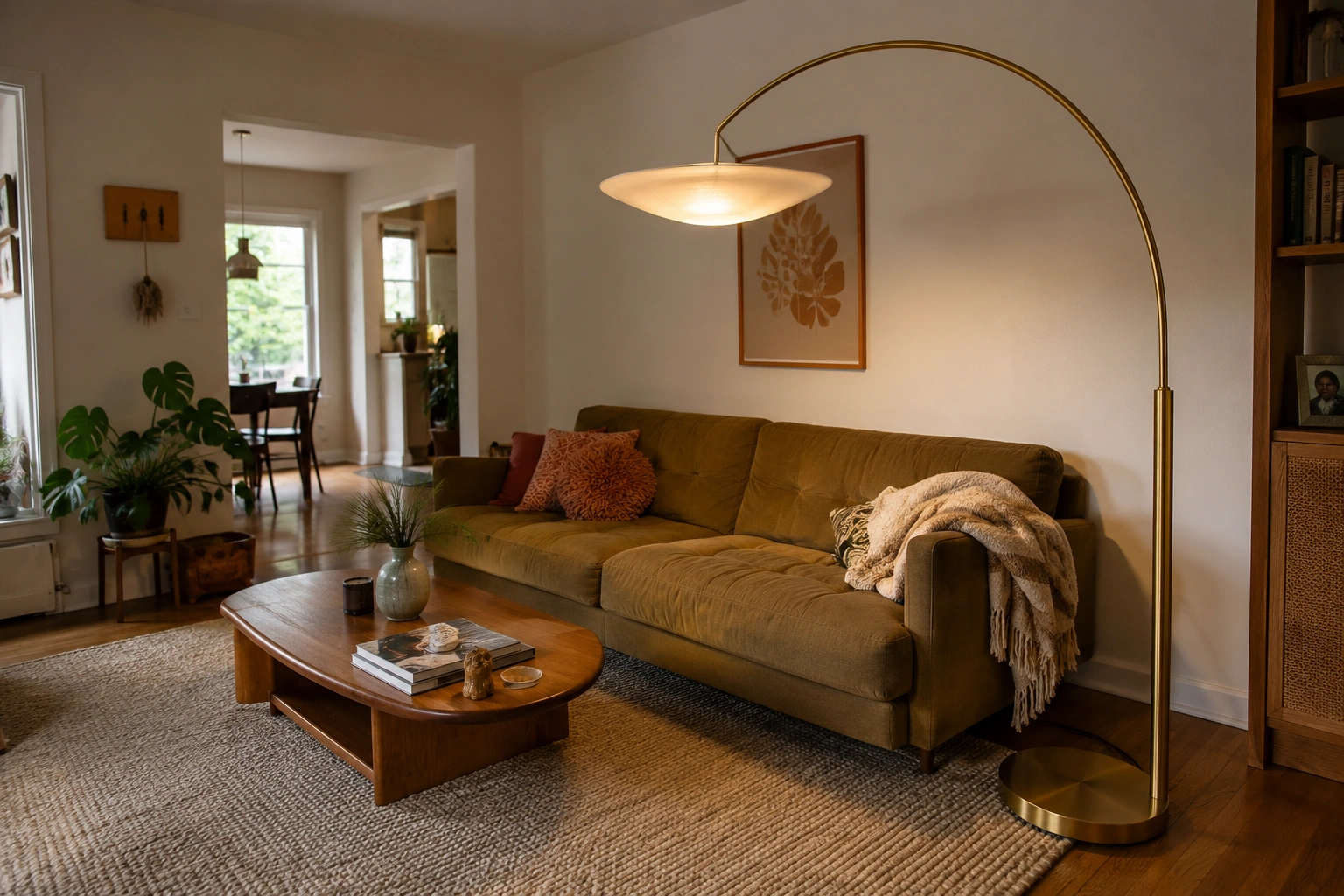
The arc floor lamp is the most underrated 70s decor piece currently available at every price point. A tall lamp whose arm curves out over the sofa — with a wide, flat saucer or mushroom-shaped shade at the end — recreates the ambient overhead glow 70s rooms were built around. IKEA arced floor lamps start from $60; brass-finish versions run $120–$180. Budget tier: $50–$200.
9. Style a Teak or Walnut Sideboard as Your Media Console
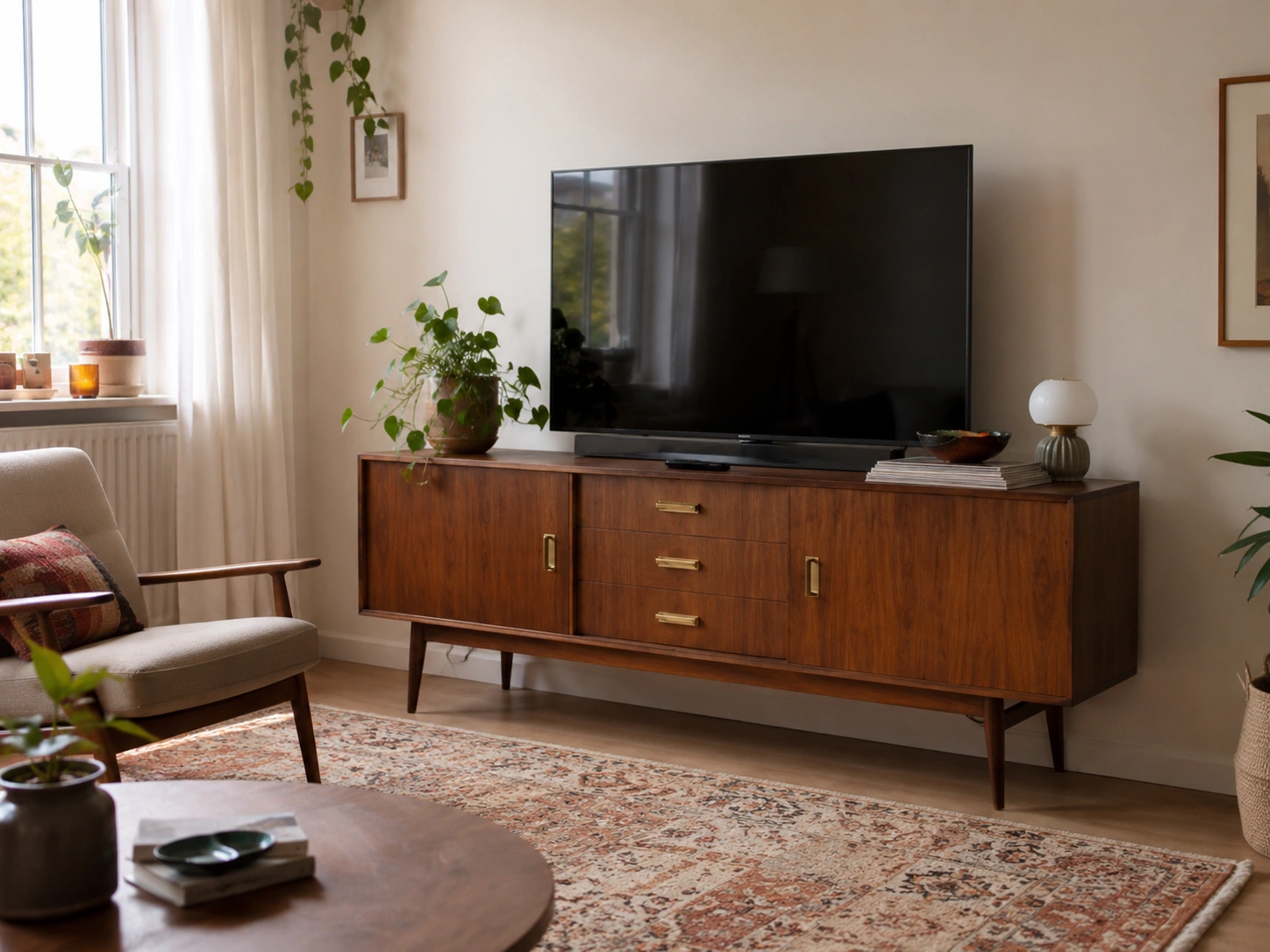
TV units don’t have to look like generic flat-pack storage. A low, long teak or walnut sideboard — tapered legs, flat-panel doors, brass pulls — does double duty as a period-correct piece and practical media storage. Legs raised clearly off the floor are essential; a sideboard sitting directly on the ground loses the 70s visual signature. West Elm and Etsy vintage sellers both carry options. Budget tier: $200+.
10. Build a Vinyl Corner with a Record Player and Open Shelf
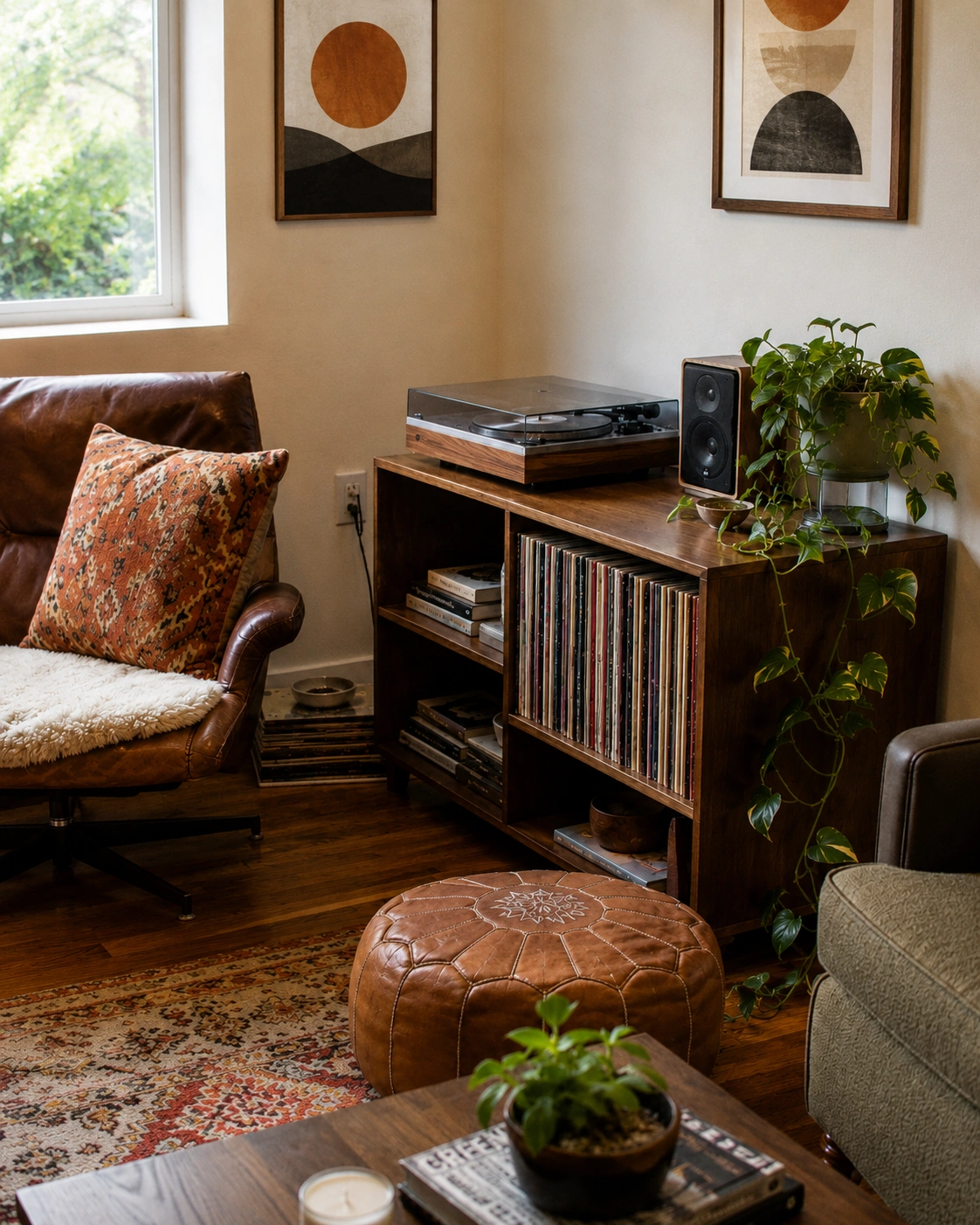
Look — if you already own a record player, or have been thinking about getting one, this is the easiest design decision you’ll make this year. A turntable on a low shelf or sideboard, vinyl albums displayed spine-out beside it, a small vintage-style speaker, and one trailing plant creates a 70s lifestyle signal that reads as real rather than staged. Budget tier: Under $50–$200.
11. Layer Throw Pillows in Corduroy, Velvet, and Chunky Knit
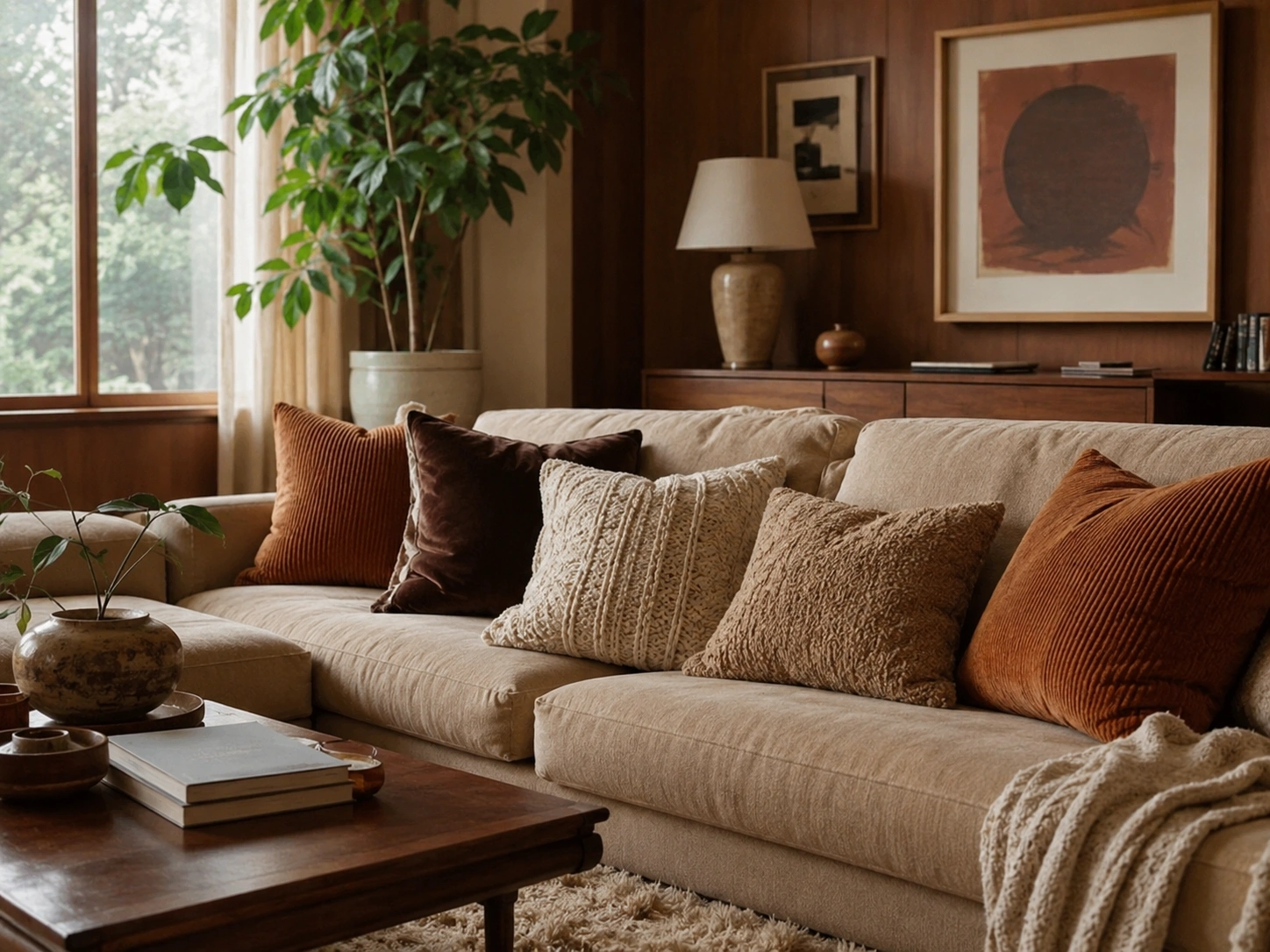
Texture layering defined 70s interiors more than color alone. Don’t buy a matching five-piece cushion set — buy five different textures in the same color family. Corduroy in rust. Velvet in chocolate. Chunky knit in cream. The variation reads as sophisticated when the palette stays cohesive. H&M Home and Primark carry individual covers for $8–$20 each. Budget tier: Under $50.
12. Swap Generic Prints for Vintage Botanical or Retro Art Posters
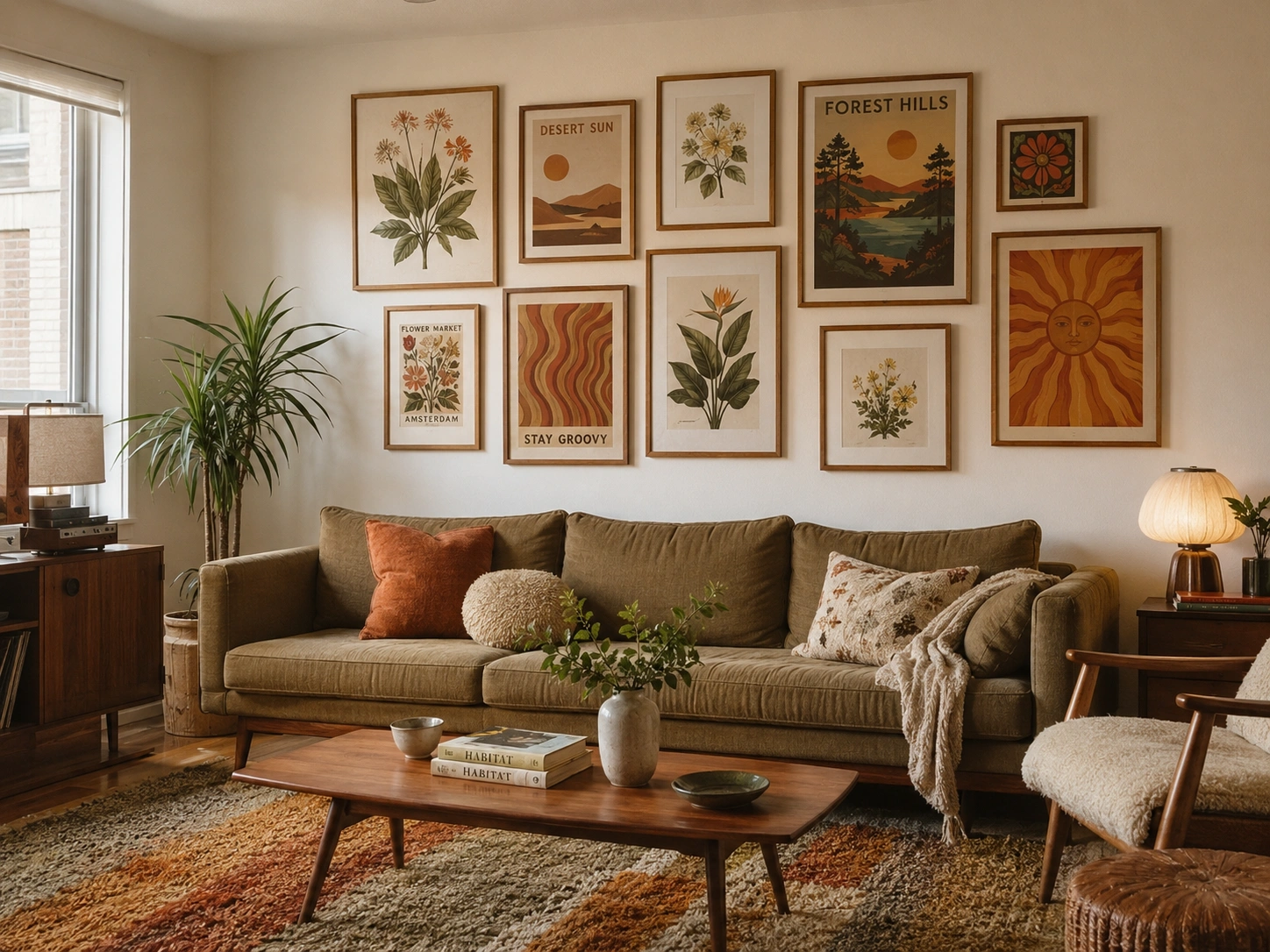
What hangs on the walls matters as much as what sits on the floor. Replace placeholder prints with 70s-style botanical illustrations, abstract landscape posters in earthy tones, or warm-palette psychedelic-adjacent art. Etsy digital downloads run $3–$8 per file — print locally at A2 or A1 size and frame in thin natural wood. That’s a full gallery wall for under $40. Budget tier: Under $50.
13. Drape a Faux Sheepskin or Boucle Throw Over One Sofa Arm
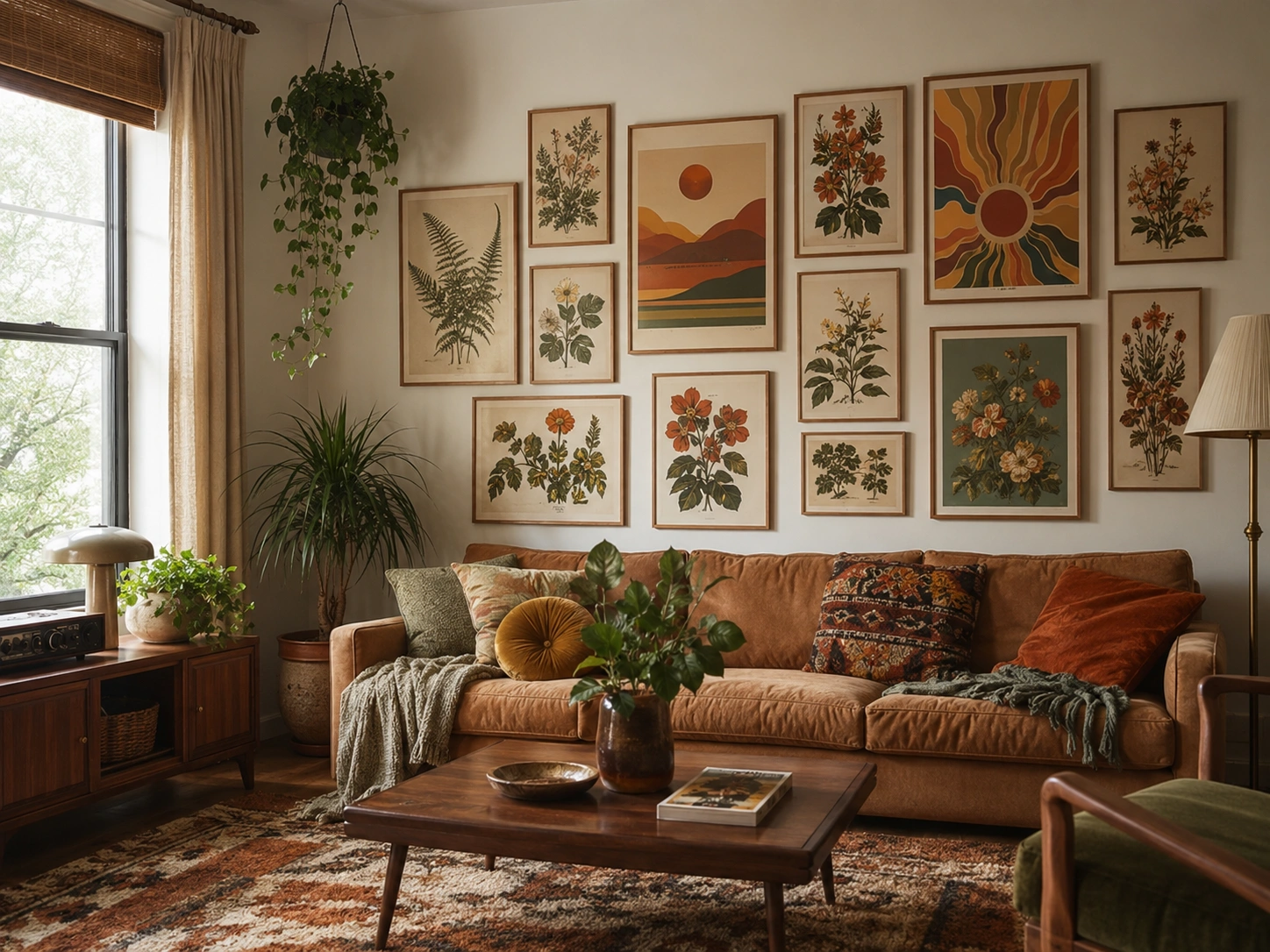
One throw, placed correctly, shifts the entire mood of a sofa. Faux sheepskin in cream, boucle in warm white, or a chunky woven in caramel — draped casually over an armrest or sofa back, not folded neatly — adds the layered textural depth 70s rooms carried naturally. IKEA’s OFELIA faux sheepskin runs about $15. Genuinely hard to beat at that price point. Budget tier: Under $50.
14. Choose a Kidney-Shaped or Oval Coffee Table
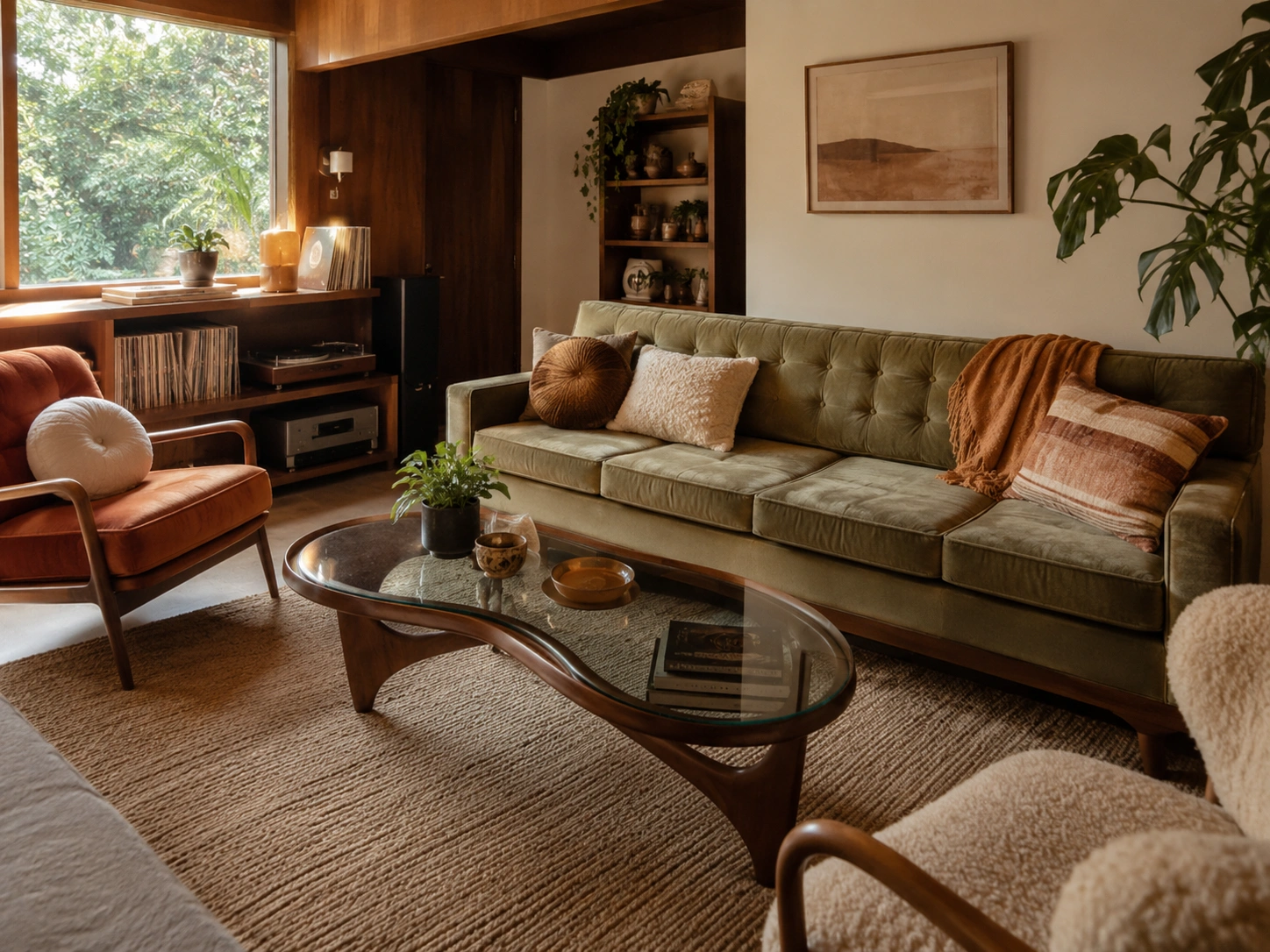
Organic shapes dominated 70s furniture design. A kidney-shaped coffee table — or a wider oval alternative — in walnut veneer, smoked glass, or rattan breaks the boxy geometry most living rooms default to and adds a clear decade reference. Vintage-style options appear on Amazon from $150. CB2 and West Elm carry elevated versions with more material detail. Budget tier: $150–$200+.
15. Layer a Jute or Woven Flatweave Rug Under Your Shag
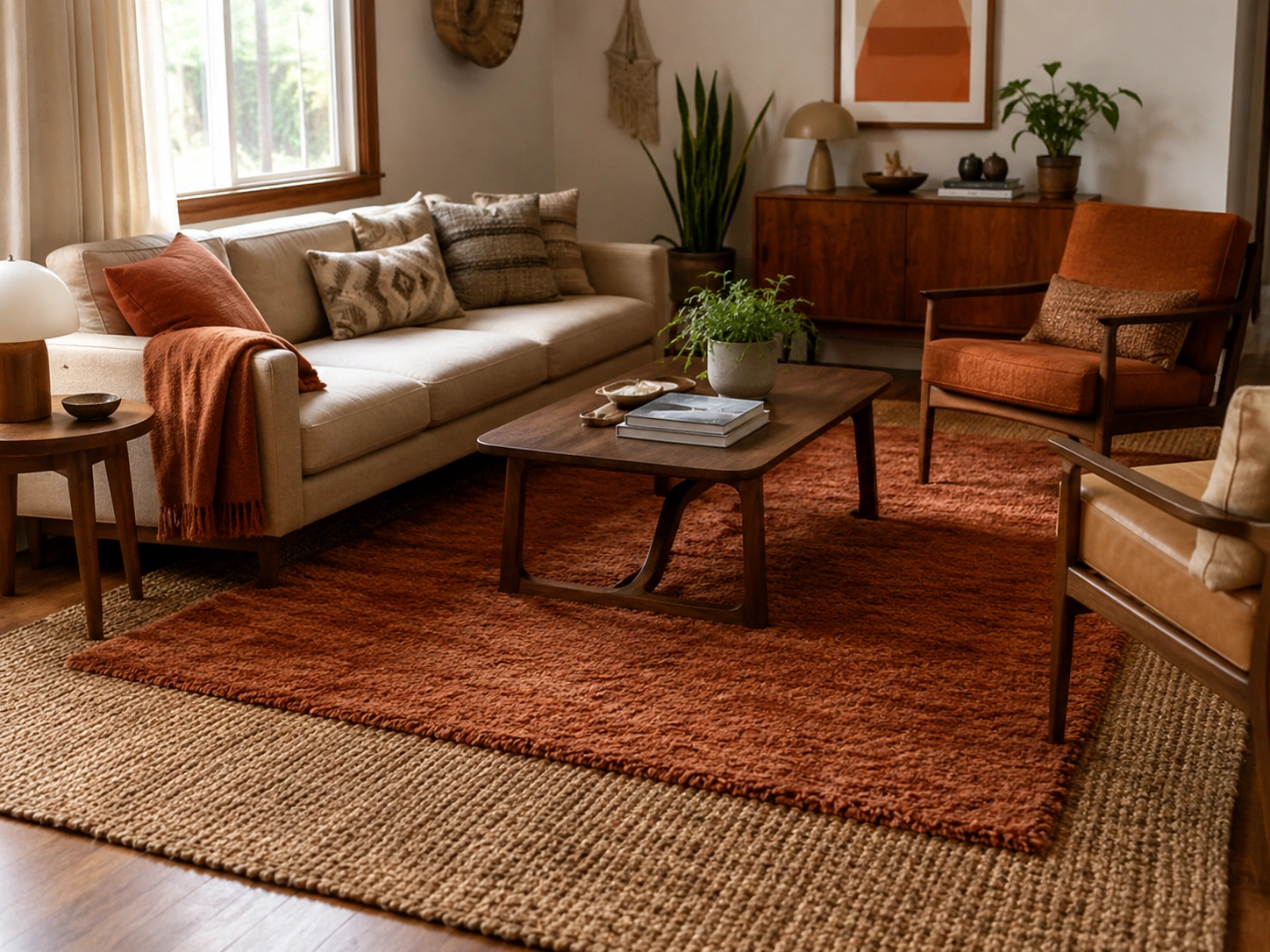
Rug layering looks expensive. It usually isn’t. A natural jute flatweave as a base, topped with a smaller shag in rust or terracotta, adds depth and dimension to the floor while defining the seating zone more precisely. If you already own one rug, you’re halfway there. Jute flatweaves start at $30–$80 for standard living room sizes. Budget tier: Under $50–$200.
16. Scale Up Your Macramé Wall Hanging
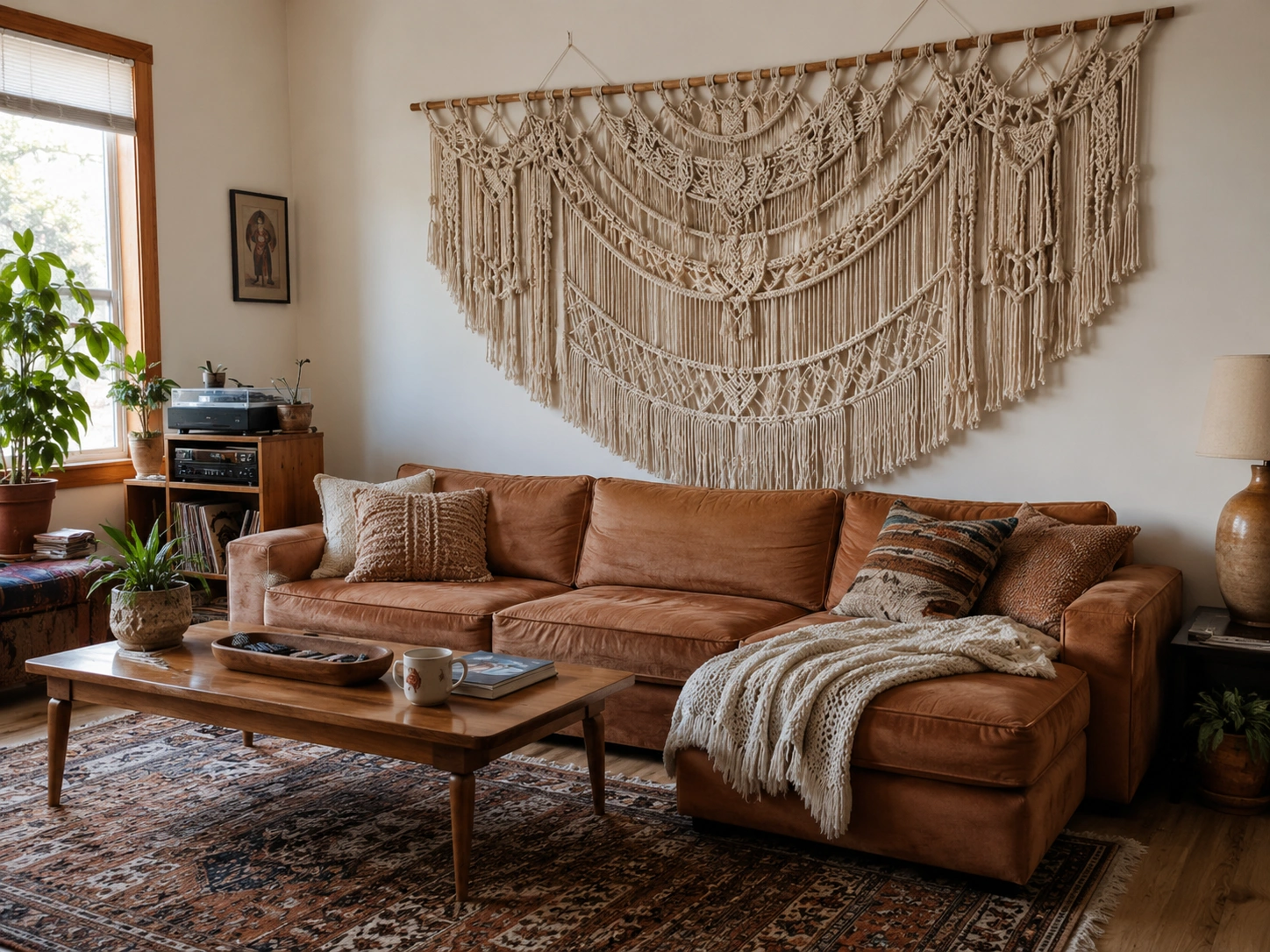
Small macramé pieces disappear on a full wall. If you’re using macramé — and in a 70s room, you should — go large. A piece that covers at least two-thirds of the sofa wall becomes a real focal point instead of a decorative afterthought. Etsy sellers offer large handmade pieces from $60–$250. A macramé kit lets you make one yourself over a long weekend for under $30. Budget tier: $50–$200.
17. Add a Barrel Chair or Egg Chair in Burnt Orange or Mustard
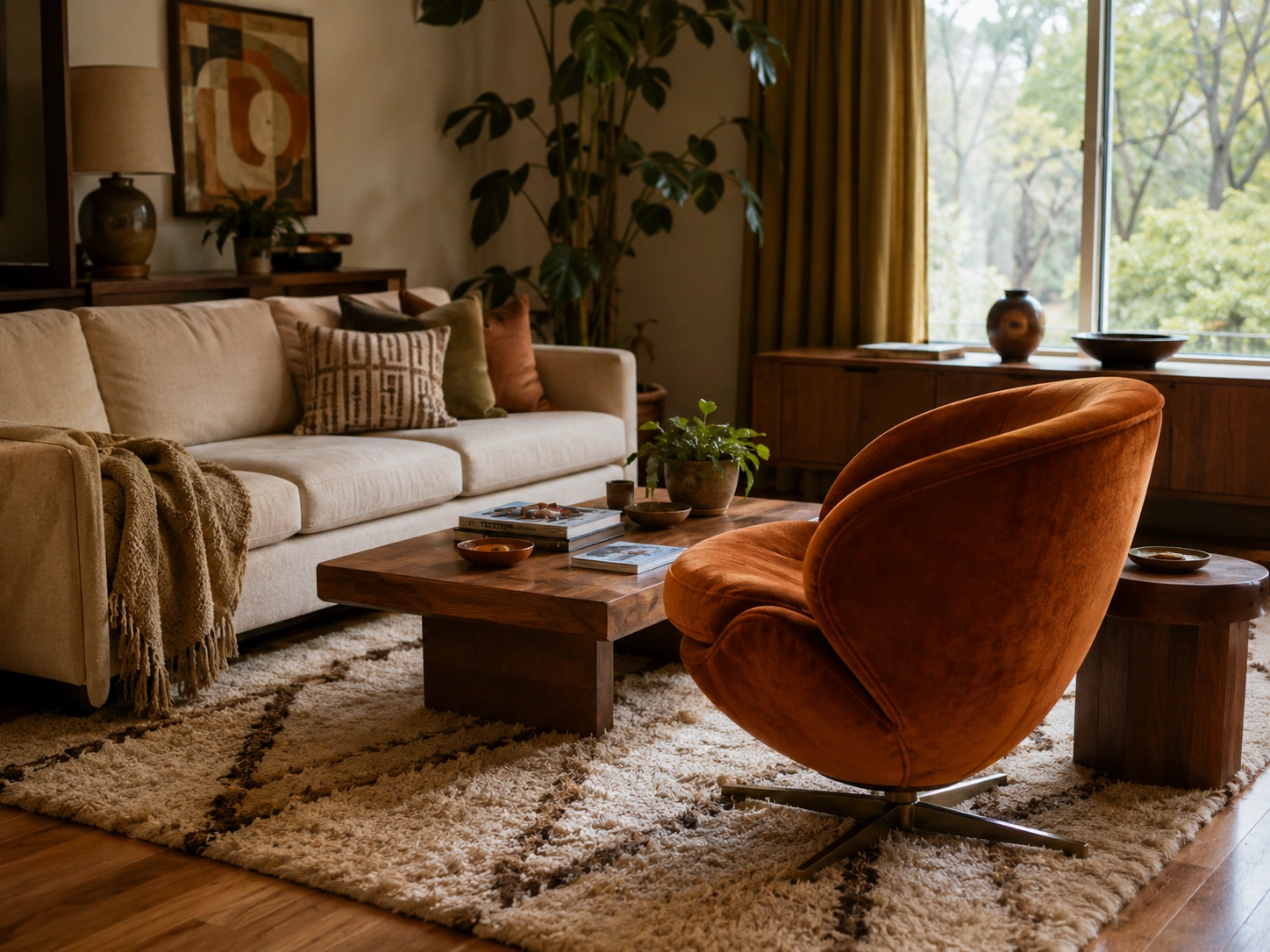
A single accent chair can do more design work than an entire gallery wall. Barrel chairs and egg-style pod chairs in burnt orange velvet, mustard boucle, or a retro-print fabric are unmistakably 70s. Position it at a slight angle to the sofa rather than parallel — that diagonal creates the casual conversation layout the decade was built around. Budget tier: $200+.
18. Replace Cool-Toned Bulbs with Warm Amber Globe Lights
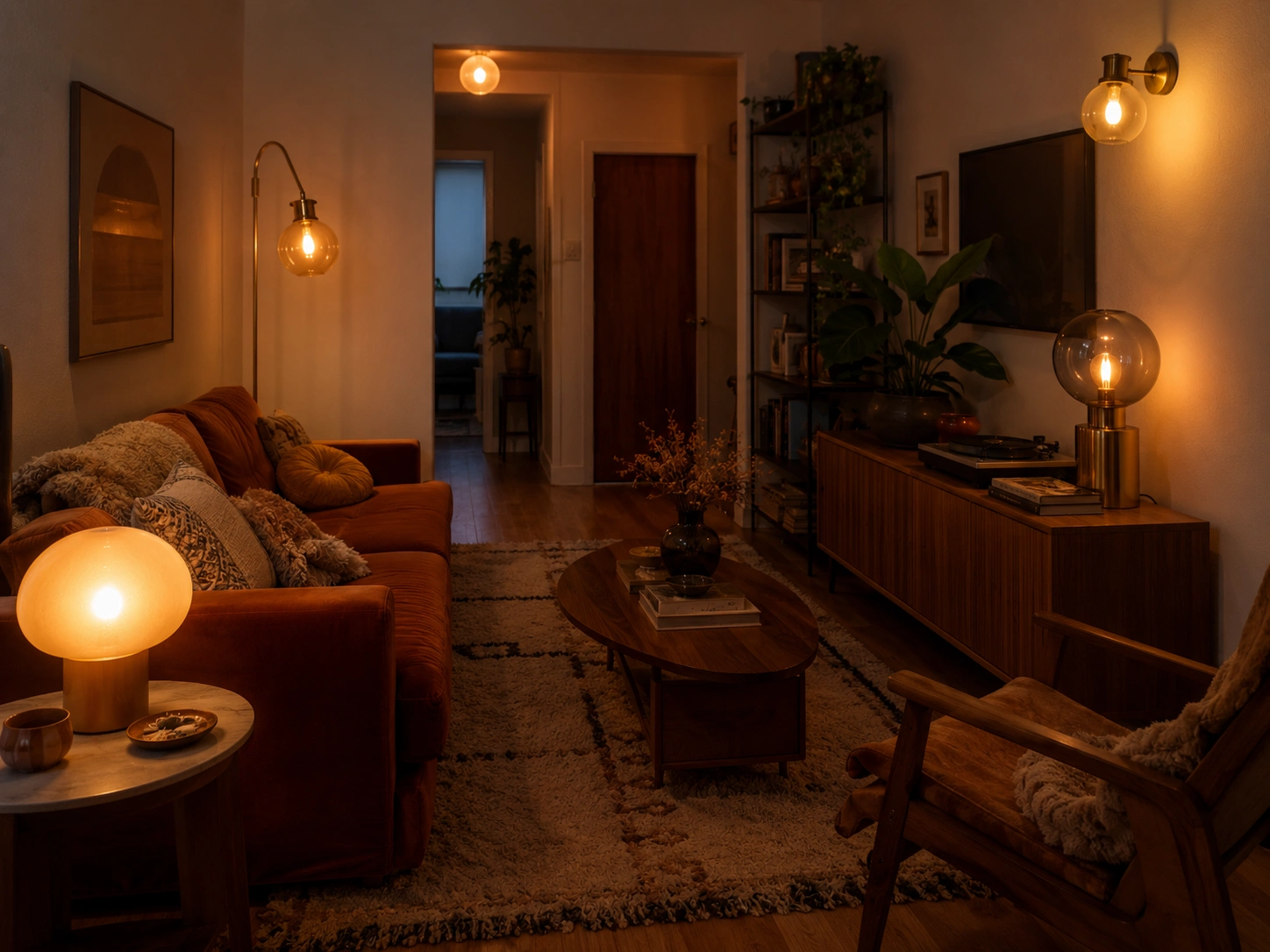
This is the cheapest fix on the list. Cool-white LEDs undermine the 70s mood immediately — even when everything else is right, the wrong light temperature works against every warm-toned piece you’ve added. Swap to warm amber Edison-style bulbs (2200–2700K) in every fixture. Add a dimmer switch where possible. A four-pack of amber globes runs under $15. Budget tier: Under $50.
19. Style Floating Shelves with Vintage Pottery and Earth-Toned Books
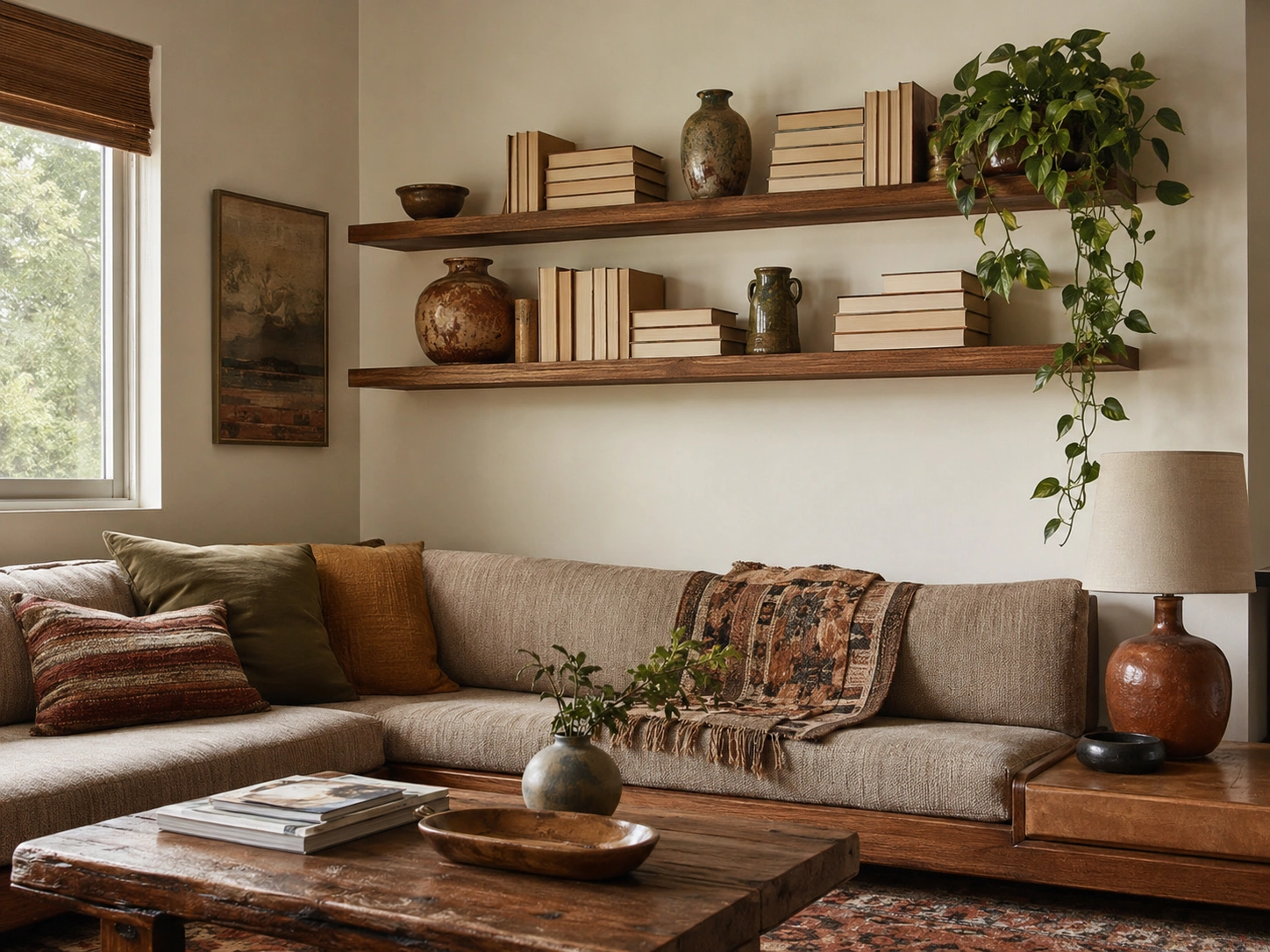
Floating shelves styled with intention are a free upgrade if you already own them. Turn books spine-inward so the cream page edges face out — this creates a soft neutral mass instead of color chaos. Place two or three pieces of vintage-style ceramic pottery in rust, olive, or brown between the stacks. One trailing pothos at the end completes the composition. Budget tier: Under $50.
20. Hang Macramé Plant Holders at Staggered Heights
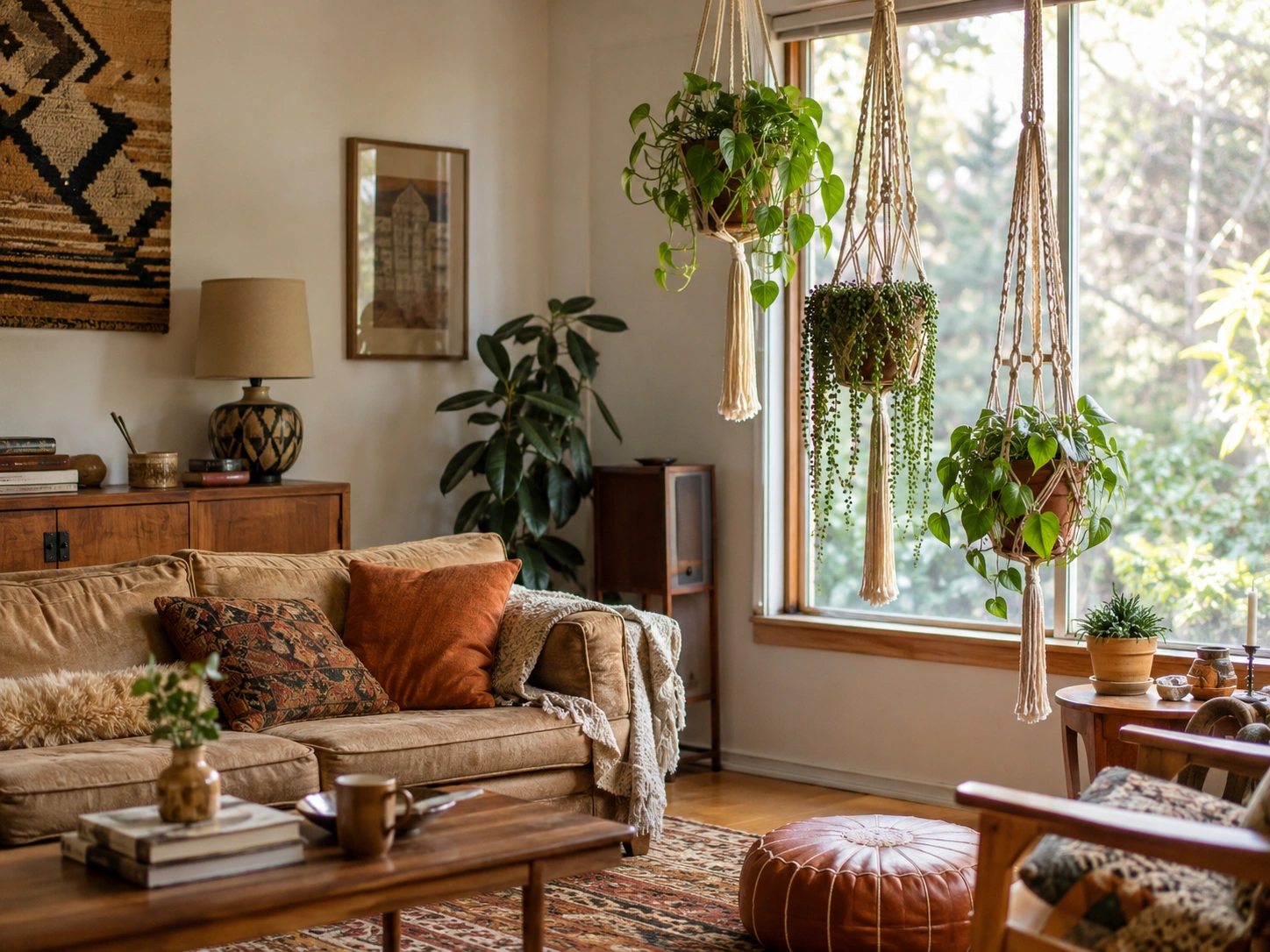
Macramé plant hangers do two jobs at once: add textured wall interest and get living greenery off the floor. Hang two or three at different heights near a window using trailing varieties — pothos, string-of-pearls, or heartleaf philodendron. The layered heights create a vertical bohemian movement that floor-level pots simply can’t replicate. Three hangers plus plants comes in under $40 total. Budget tier: Under $50.
21. Try a Sculptural Ceramic or Mushroom Table Lamp
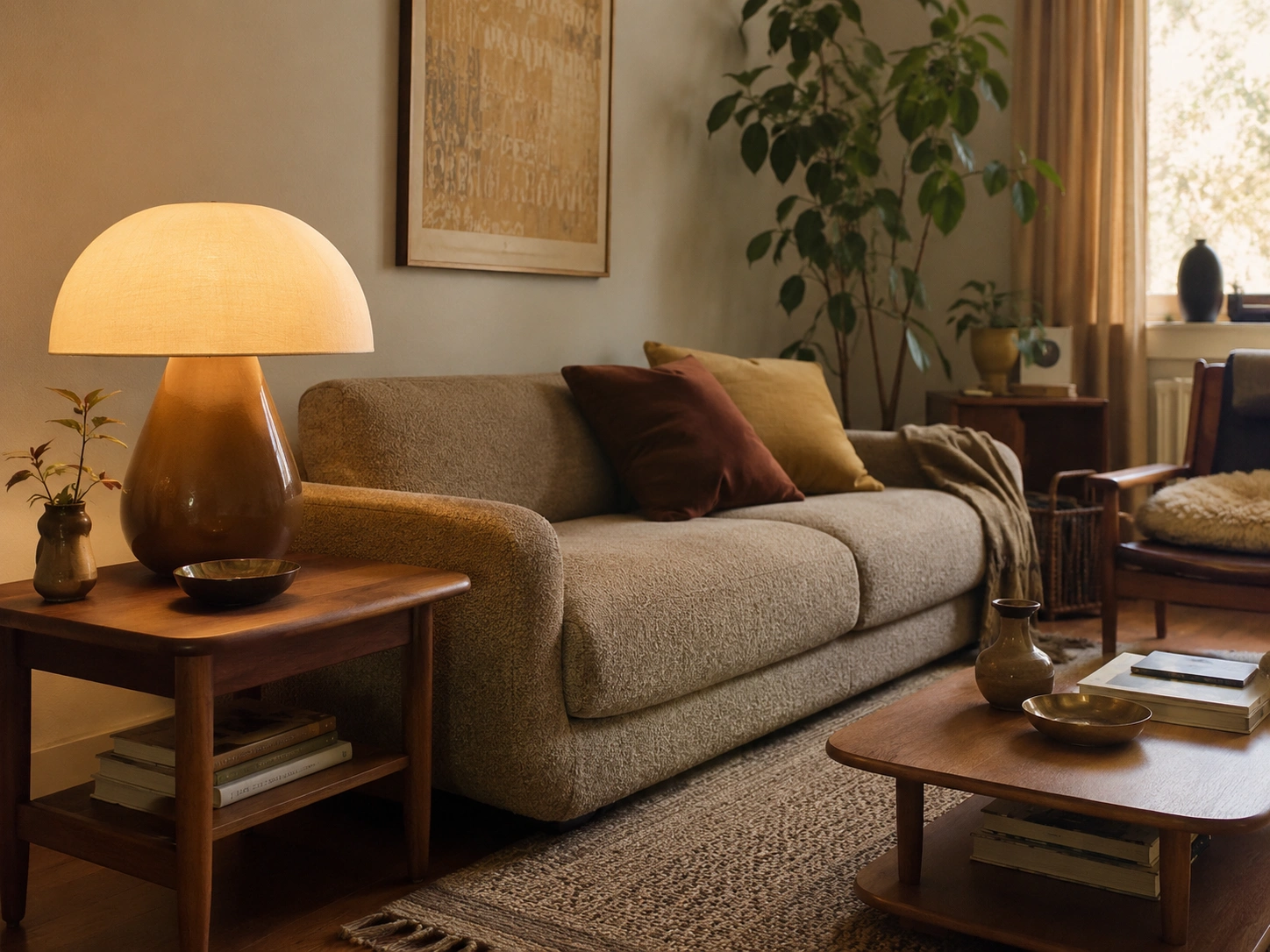
Mushroom-shaped table lamps were one of the most recognizable 70s interior details — and they’ve made a full comeback. A squat, sculptural ceramic base in rust, warm cream, or chocolate brown with a wide fabric shade reads as genuinely retro without calling attention to itself. Style it on a sideboard or teak end table. Etsy carries handmade versions from $45; Amazon has solid dupes from $30. Budget tier: Under $50–$200.
22. Create a Conversation Corner with Floor Cushions and Poufs
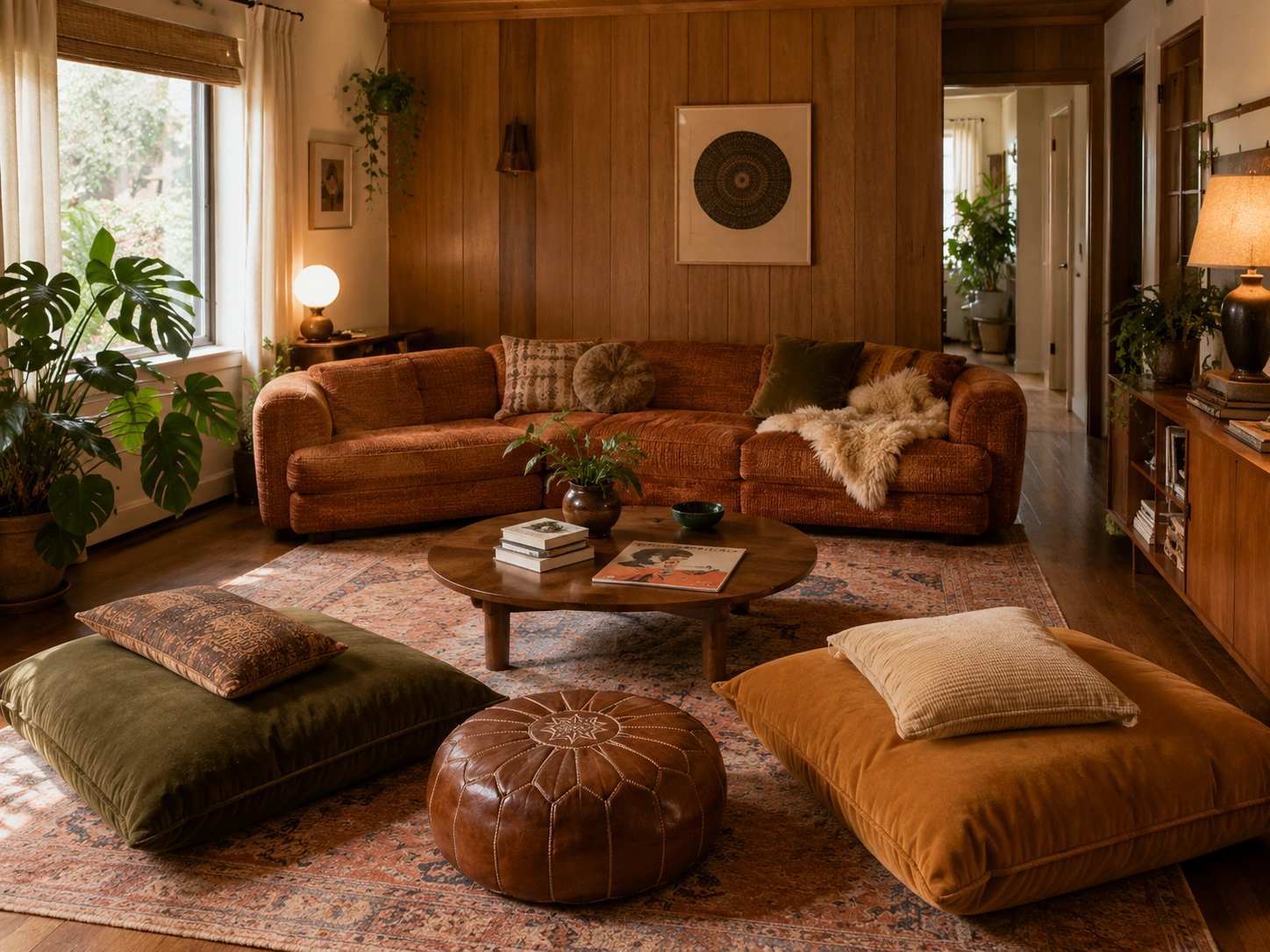
Most people skip this idea because it requires rethinking the seating layout. That’s exactly why it has the most impact. Pull the sofa slightly away from the wall. Add two large floor cushions or a low Moroccan leather pouf opposite. That low, circular arrangement recreates the social energy 70s living rooms were genuinely built around — without digging a sunken pit. Poufs start at $35–$60 on Amazon. Budget tier: $50–$200.
23. Use Mustard Yellow or Avocado Green as a Soft Furnishing Accent
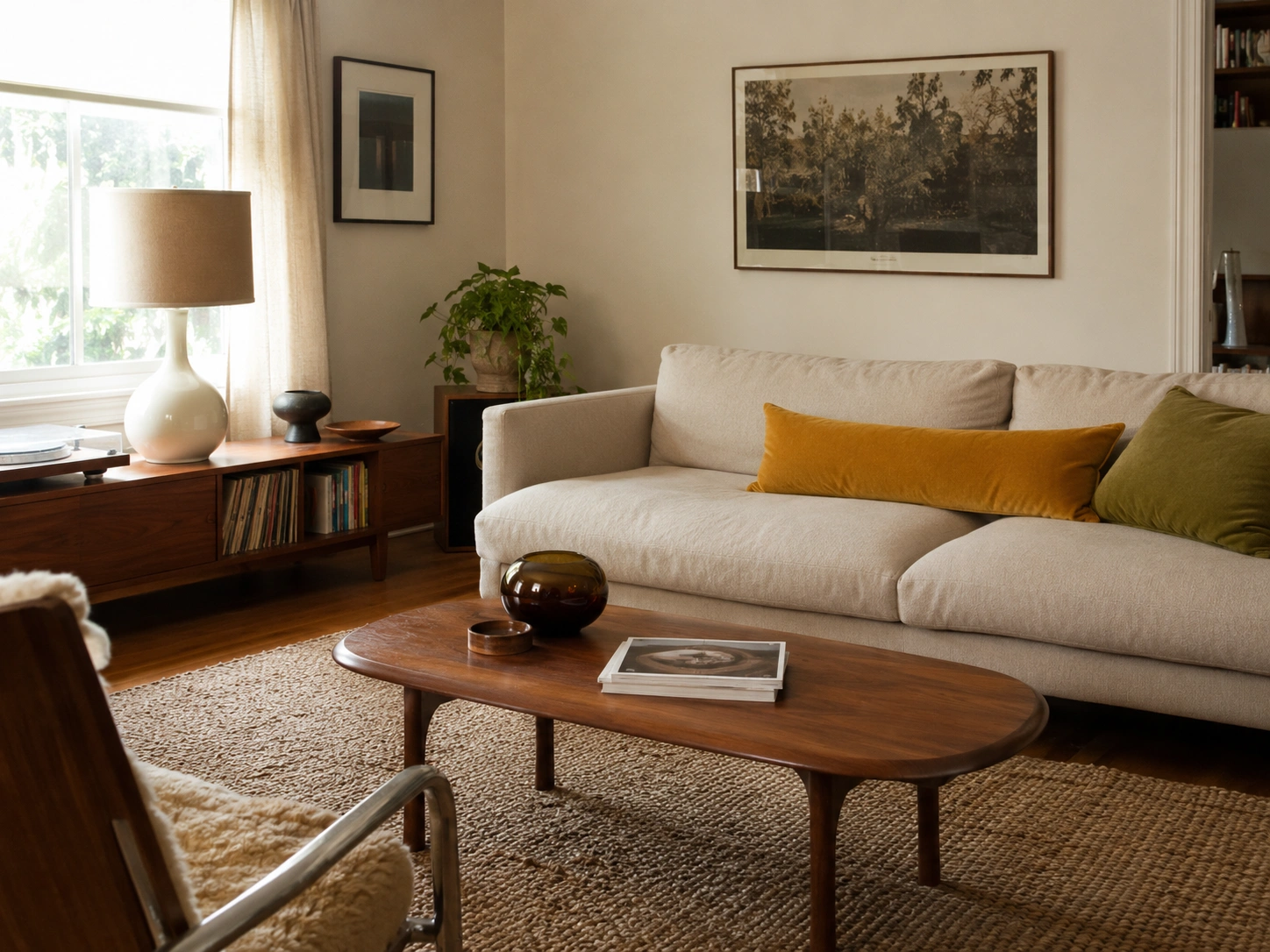
These are the colors people hesitate over — which is exactly why they carry impact. Some interior stylists argue avocado green reads as retro-generic rather than specifically 70s; others use it fully and confidently. The most successful rooms tend to deploy it as a targeted accent rather than a dominant wall color. Or maybe I should say it this way: one good mustard velvet lumbar pillow does more work than five mediocre ones in a similar shade. Budget tier: Under $50.
24. Add a Round Rattan Side Table Next to Every Seat
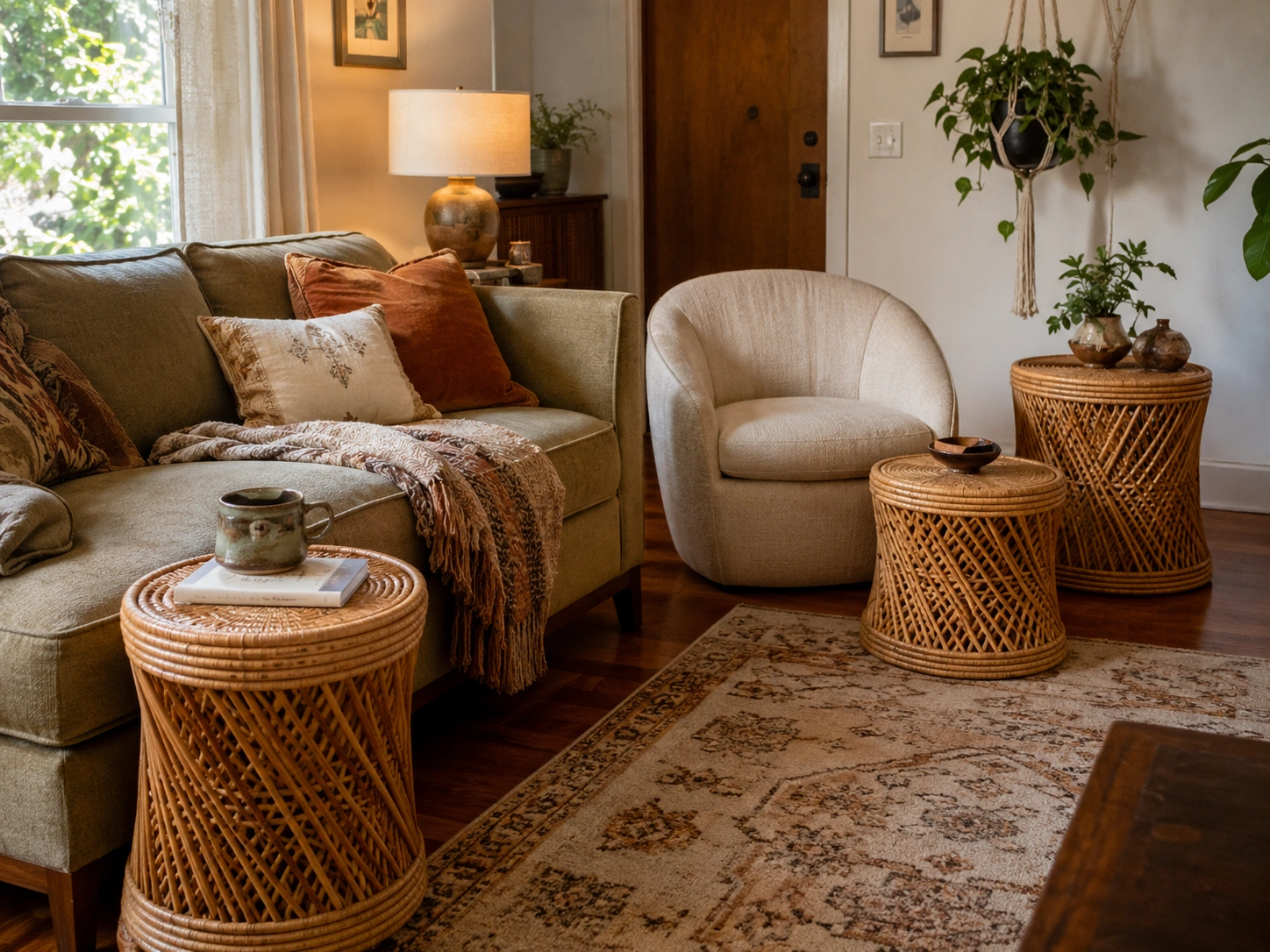
Rattan side tables are the highest visual-return material in the 70s toolkit per dollar spent. Small, round, with a naturally uneven handmade texture — one beside the sofa, one next to the barrel chair, one under a plant hanger. Staggering the heights between them adds a layered look that reads as intentional rather than accidental. IKEA’s ÅSUNDEN side table starts at $15–$25. Budget tier: Under $50.
25. Ground the Room with One Modern Sofa and One Bold 70s Chair
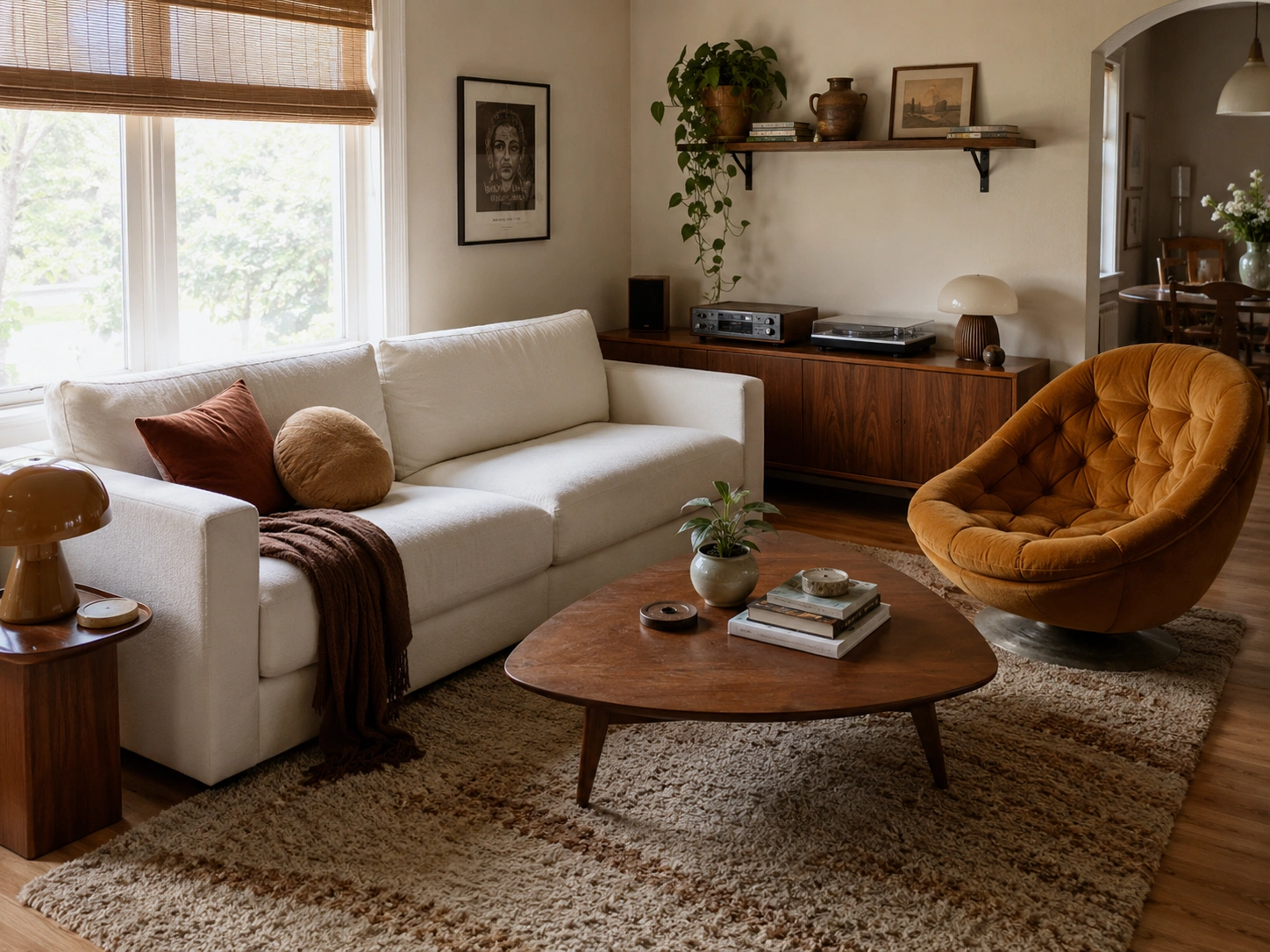
This is the modern-retro move that makes the whole approach click. A white or cream contemporary sofa — clean lines, minimal silhouette — acts as a neutral base that lets every 70s element in the room breathe. Then add one genuinely bold piece: a burnt orange barrel chair, a mustard egg chair, or a velvet-tufted retro recliner. The contrast makes both look deliberately chosen. Budget tier: $200+.
How to Mix 70s Decor with Modern Pieces Without Overdoing It
Most guides show you the individual elements and stop there. Proportions are what actually determine whether a room feels curated or costumed — and that’s the part nobody writes down.
To build a balanced 70s living room without it reading as dated:
- Start with a neutral base — white, cream, or greige walls and a simple contemporary sofa
- Add one anchor 70s material — a shag rug, rattan pendant, or teak sideboard
- Layer earthy color through soft furnishings — cushions, throws, and lined curtain panels
- Replace every bulb with warm amber (2200–2700K) across every fixture in the room
- Finish with one bold 70s statement piece — a barrel chair, sunburst mirror, or large macramé panel
Full retro vs modern-retro: A fully retro room suits collectors who want total aesthetic immersion and own their space. Modern-retro — where 60–70% of the room stays contemporary — works better for renters and first-time decorators who want warmth without the time-capsule effect. The key difference is the proportion of contemporary neutrals anchoring the space.
It’s not a binary choice, and it’s not something you’ve got to nail on the first try — most rooms land somewhere between the two, which is exactly where they should be.
What most guides skip is the lighting fix. Cool-white bulbs work directly against every warm-toned piece you add. Fix the lighting first. Everything else reads better the moment you do.
Quick Comparison: 70s Style Approaches
| Style Approach | Best For | Key Benefit | Limitation |
|---|---|---|---|
| Full Retro 70s | Collectors and homeowners | Deep, immersive aesthetic | Can feel themed or dated |
| Modern-Retro Mix | Renters and first-time decorators | Warm and current, not costume-y | Needs deliberate restraint |
| Boho-Retro | Maximalists and plant lovers | Layered, visually rich, dynamic | Can look cluttered without editing |
| Budget Retro | New decorators starting small | Strong impact via textiles alone | May lack cohesion without a plan |
| Retro-Neutral | Commitment-shy decorators | Easily reversible starting point | Neither look fully lands |
Budget Breakdown: What Each 70s Look Actually Costs
Here’s the version most style articles don’t give you.
- Under $50 — The foundation layer. Warm amber bulbs, textured throw pillows, a faux sheepskin throw, a monstera in a terracotta pot, downloadable vintage prints, macramé plant hangers. These items cumulatively shift a room’s tone more than any single $300 purchase. Start here.
- $50–$200 — The impact layer. A shag rug, rattan pendant shade, sunburst mirror, peel-and-stick wood paneling, geometric accent wallpaper, a sculptural table lamp, round rattan side tables. One or two items from this tier make the room feel designed, not just decorated.
- $200+ — The transformation layer. A low velvet sectional, teak sideboard, barrel chair, kidney-shaped coffee table. These are long-term investments — buy one at a time and let each anchor the room before adding the next.
IKEA, West Elm, and Etsy together cover all three tiers reliably. You don’t need a specialist vintage dealer to get the look right.
Frequently Asked Questions
What colors define a 70s living room?
Burnt orange, mustard yellow, avocado green, terracotta, chocolate brown, and warm cream. These work in pairs or small groups — you don’t need all of them in one room to land the look.
How do I get a 70s look without the room feeling dated?
Keep the sofa and walls neutral and contemporary. Layer in 70s energy through rugs, lighting, textiles, and one statement piece. Proportion matters more than which specific items you choose.
Should I use real vintage furniture or modern dupes?
Modern dupes from West Elm, IKEA, and CB2 are often better-built and more practical for renters than true vintage pieces. Etsy is the best source if you want authentic vintage at lower prices than antique stores.
What’s the easiest 70s living room update under $50?
Swap every bulb to warm amber (2200–2700K) and add one textured throw pillow in rust or mustard. The lighting shift changes the room more than most $200 purchases would.
Can I do 70s living room decor in a rental with white walls?
Yes, and white walls actually help. They provide neutral contrast that makes earthy 70s tones pop. Use removable peel-and-stick wallpaper or wood panels for a single accent wall without touching the lease terms.
The Groovy Room Is Closer Than You Think
You don’t have to replace everything. Start with the shag rug, the amber bulbs, and one plant in a terracotta pot. That combination — texture on the floor, warmth in the light, life in the corner — shifts the room’s mood more than any gallery wall or furniture splurge will.
This guide covers 25 of the most practical and visually effective 70s living room ideas for typical homes and rentals. It doesn’t address period-specific structural changes like sunken conversation pit installation, wood-burning fireplace additions, or full-wall commissioned murals — those are separate scope and budget decisions entirely.
The best 70s rooms don’t announce themselves. They just feel warm.


No Comment! Be the first one.