




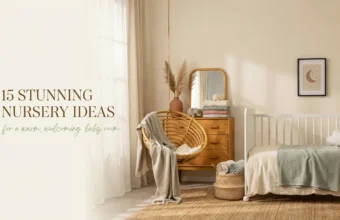
15 Stunning Nursery Ideas for a Warm, Welcoming Baby Room
If you’ve been scrolling Pinterest for more than twenty minutes, you already know the problem. Every third pin is the same white crib, the same gray accent wall, and the same fox decal floating...

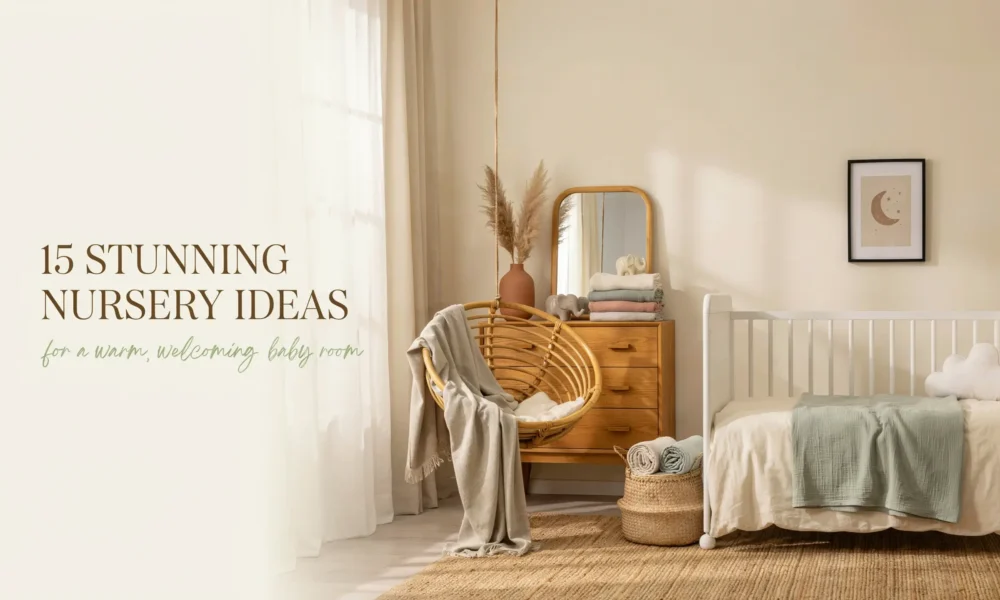
If you’ve been scrolling Pinterest for more than twenty minutes, you already know the problem. Every third pin is the same white crib, the same gray accent wall, and the same fox decal floating over the changing table. There’s nothing wrong with that look, but it starts to blur together fast, and you probably want your baby’s room to feel like your home, not a showroom.
This list pulls together 15 stunning nursery ideas that go beyond the usual gray-and-white formula. Some are full room concepts, some are small styling swaps you can finish in an afternoon, and a few work even if you’re renting and can’t touch the walls. Mix and match whatever fits your space, your budget, and the mood you’re actually going for.
1. Trade Stark White for a Warm, Earthy Palette
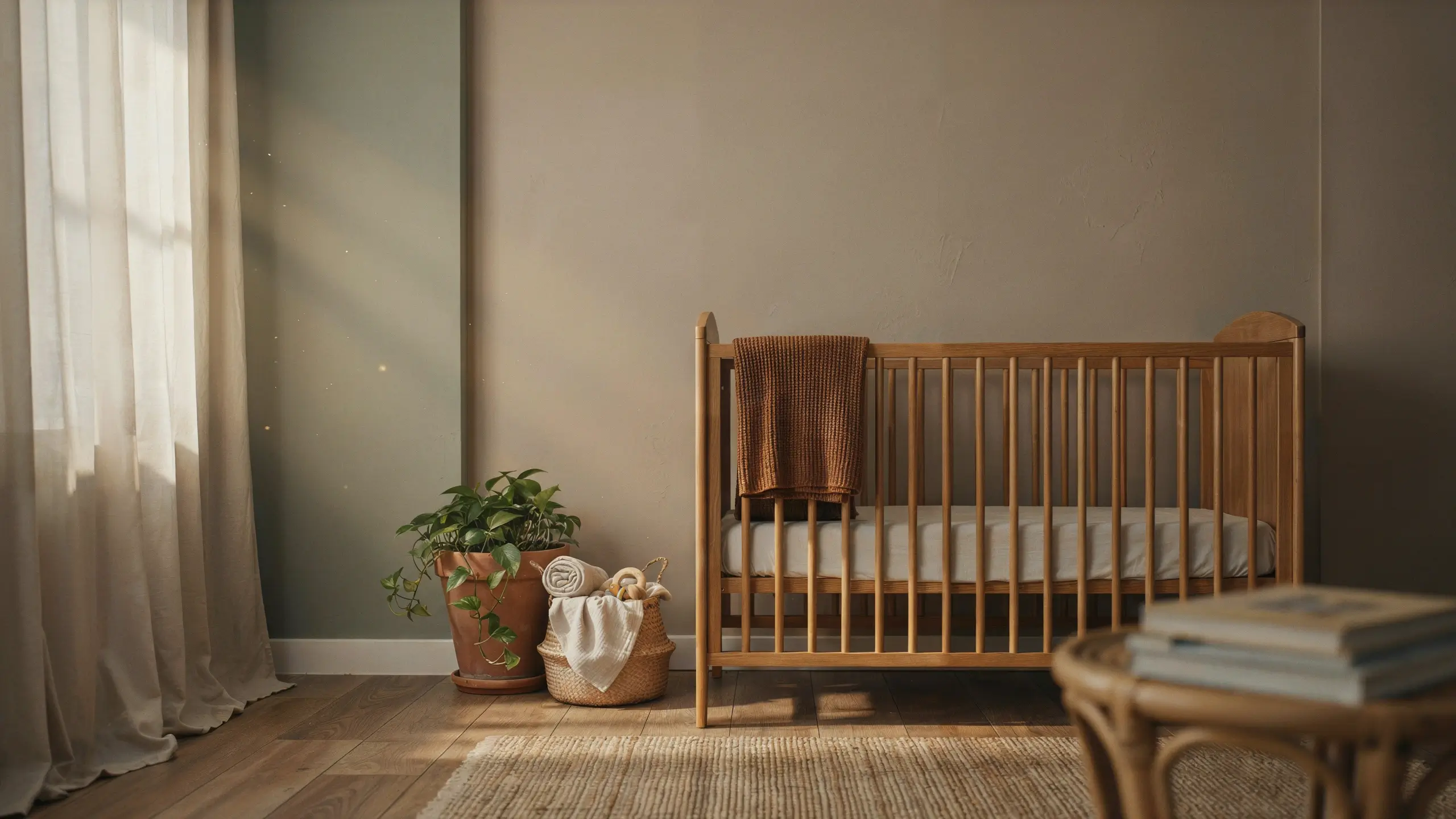
The all-white, all-gray nursery is finally softening into something cozier. Think mushroom taupe, smoky sage, warm clay, terracotta, and soft cocoa brown instead of cool neutrals. These tones photograph beautifully in natural light and don’t scream “baby room,” which means you won’t feel the urge to repaint when your newborn turns into a toddler.
Use the color on all four walls for a cocooned feel, or keep it to one wall and let warm white trim do the rest. Pair it with natural wood furniture and it instantly feels grounded instead of sterile.
Mistake to avoid
Don’t commit to a dark or saturated color from a paint chip alone. Tape up a large sample and watch it for a full day, colors shift dramatically depending on when the sun hits that wall.
2. Add a Painted Arch Behind the Crib
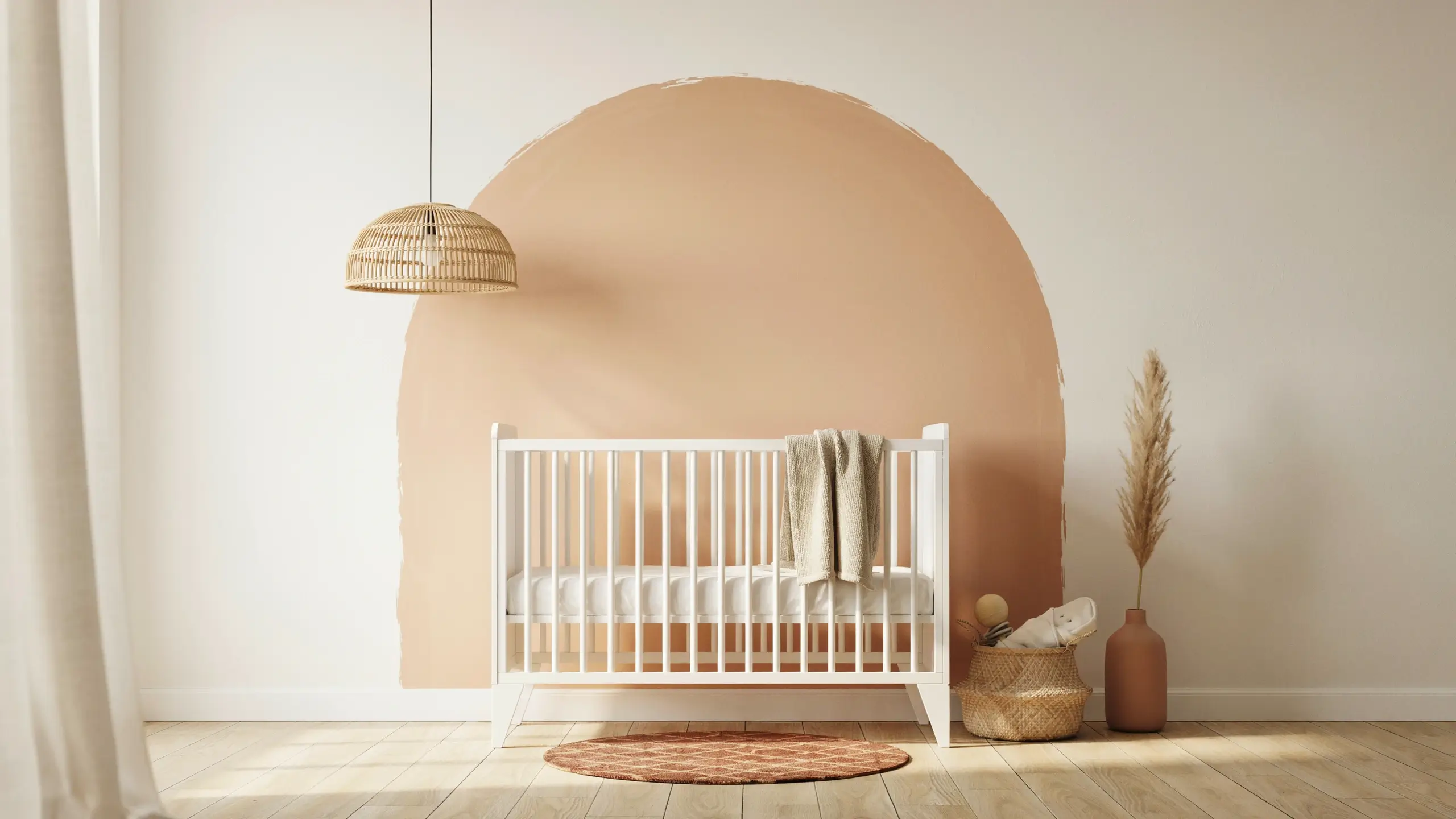
This is one of the most saved nursery looks on Pinterest right now, and it’s genuinely easy to do yourself. All you need is painter’s tape, a pencil, a piece of string tied to a pushpin (as a makeshift compass), and a small can of paint in a contrasting or complementary shade.
Center the arch behind the crib headboard, mark your curve, tape the edge, and paint two coats. It gives the room an instant focal point without the cost of wallpaper or a mural.
Renting and can’t paint? A removable wall decal arch does the same job and peels off clean when you move.
3. Try a Color-Drenched Wall (or a Whole Room)
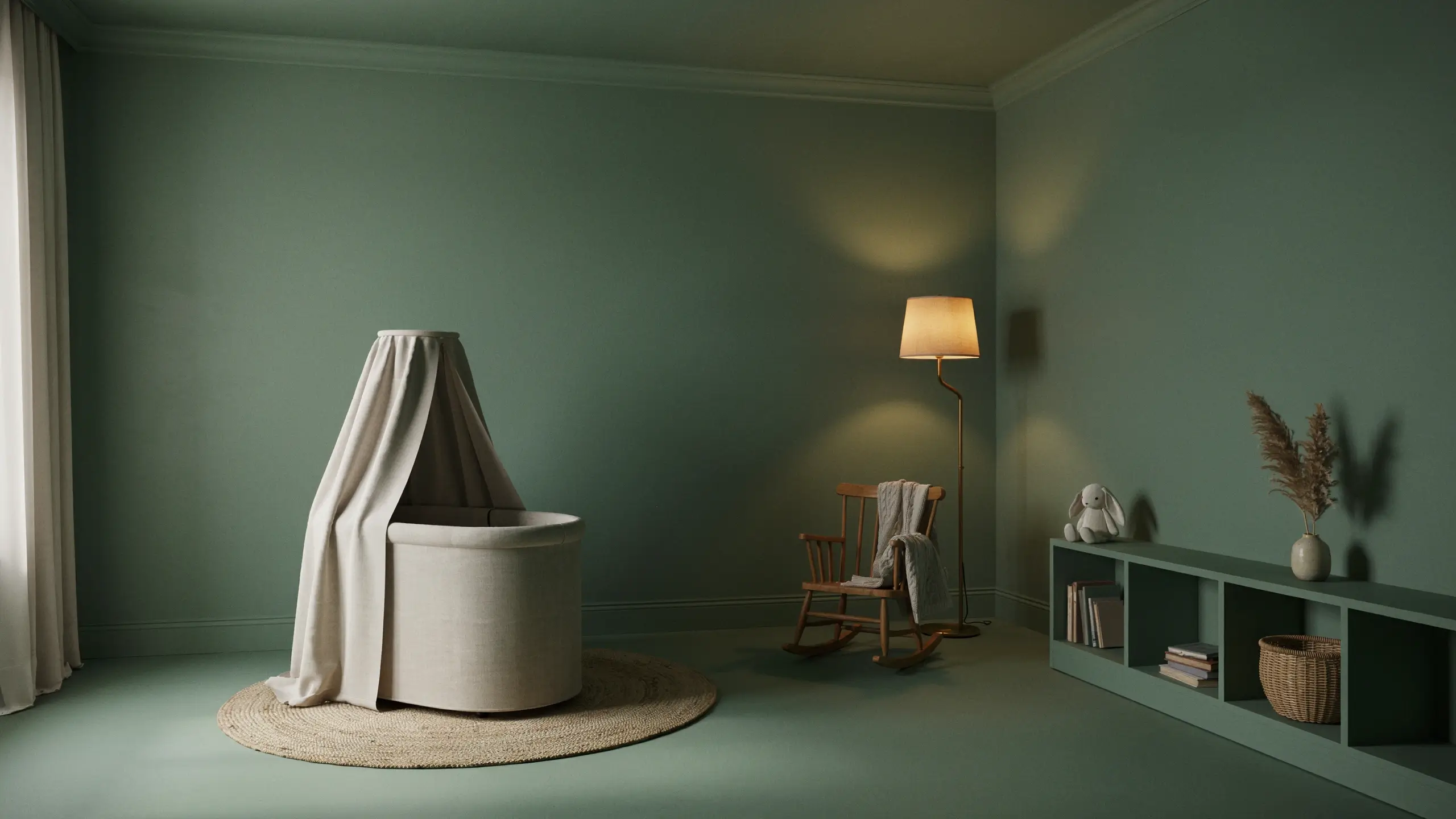
Color drenching means painting the walls, trim, and even the ceiling in the same shade, and it’s one of the biggest nursery trends heading into this year. It softens odd angles, low ceilings, and awkward corners because your eye stops noticing where one surface ends and another begins.
For the coziest effect, use a flat or matte finish on the walls and a slightly different sheen (like eggshell) on the trim and ceiling so there’s still subtle dimension.
Mistake to avoid
Painting the walls but skipping the ceiling. That half-measure tends to make a small room feel choppy instead of enveloping.
4. Bring in Architectural Paneling, Real or Removable
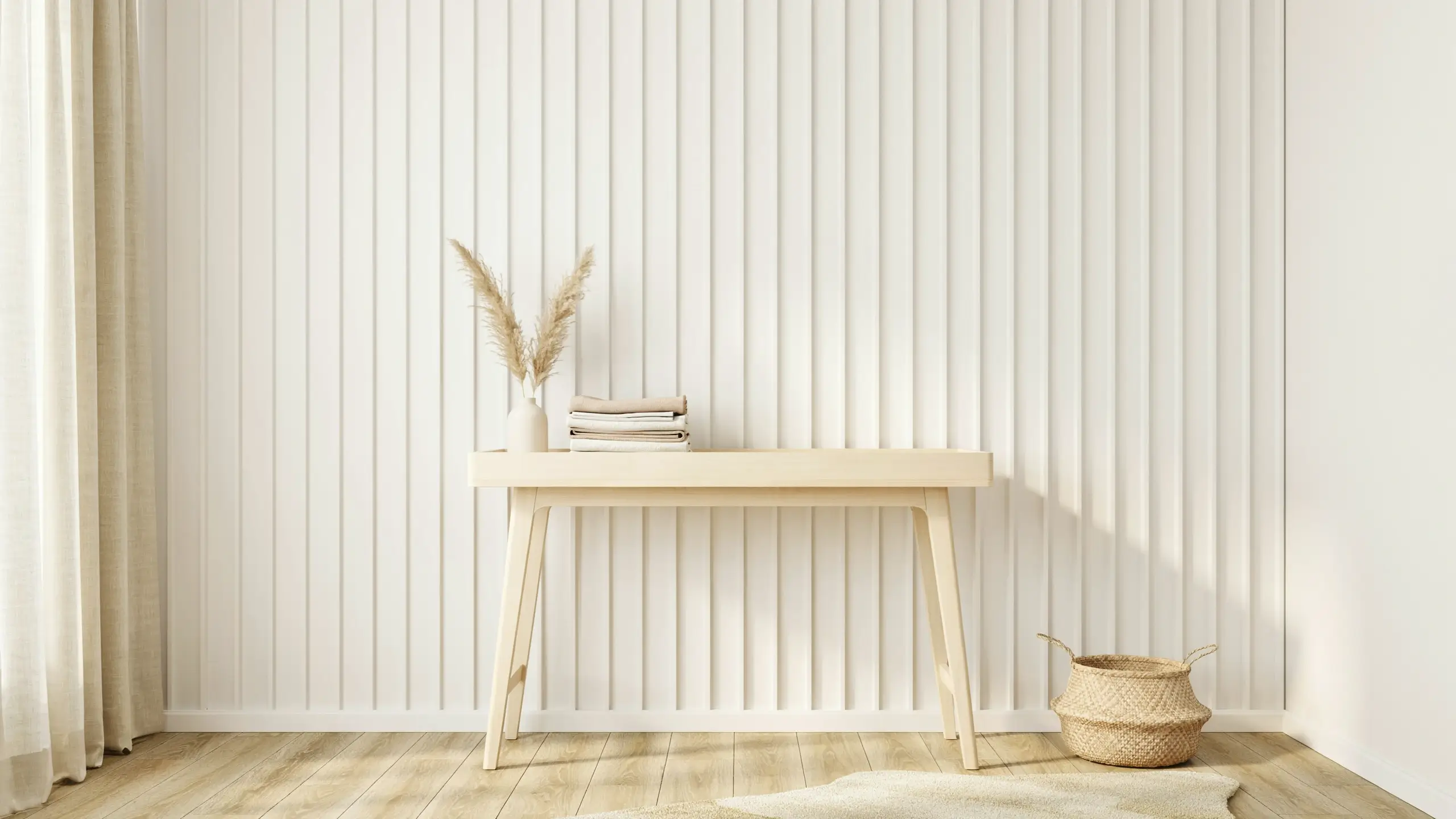
Vertical slat paneling and soft wainscoting painted the exact same color as the wall is one of the quieter, more elevated looks showing up in nurseries this year. It adds texture and shadow without adding pattern, so it works with almost any style.
If you own your home, MDF slats from a hardware store run surprisingly cheap for one accent wall. If you’re renting, look for peel-and-stick batten strips or foam panel kits that use removable adhesive instead of nails.
Mistake to avoid
Pairing paneling with a busy wallpaper in the same room. Let the texture be the statement and keep everything else simple.
5. Choose One Statement Wallpaper Wall
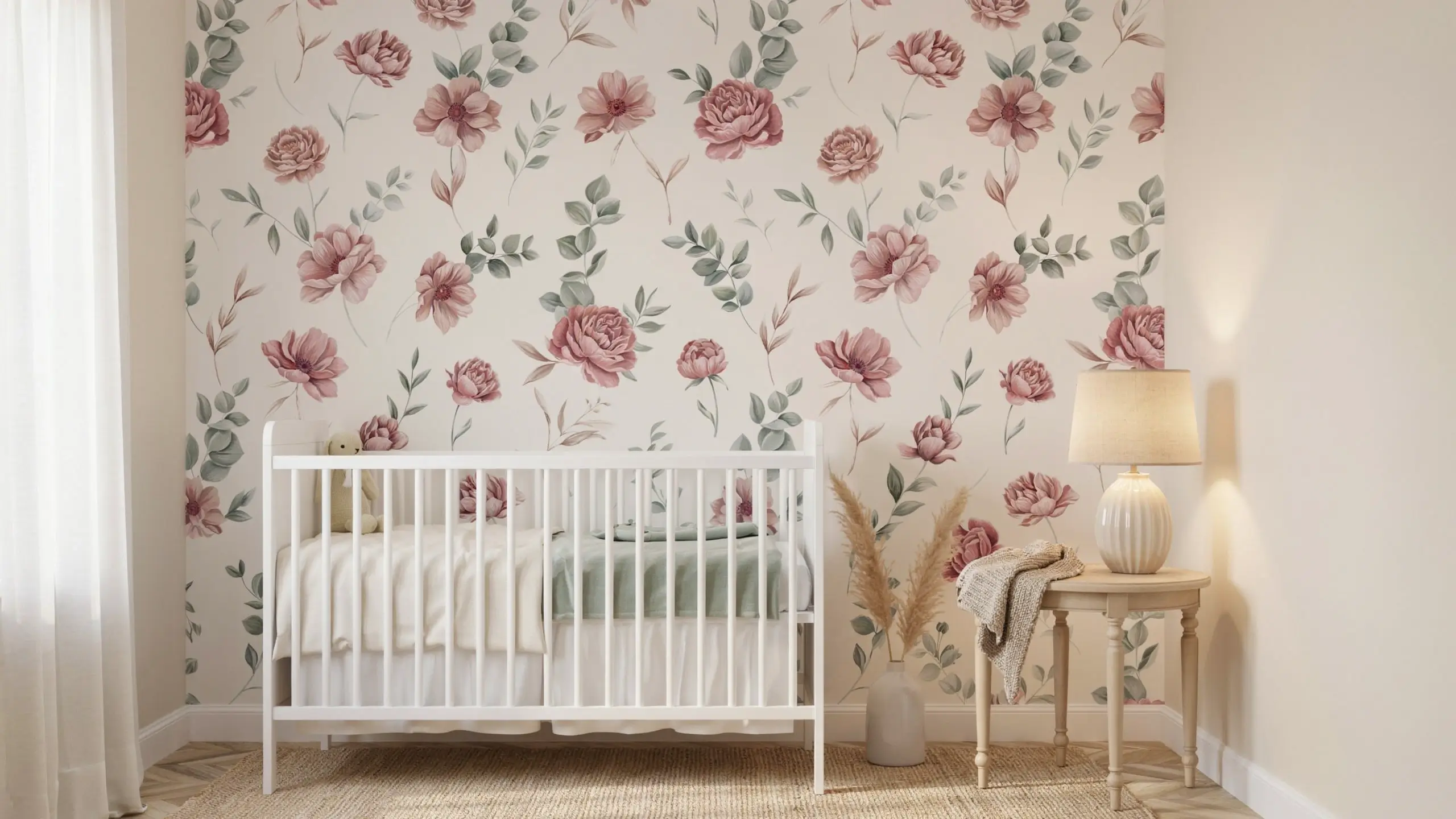
Wallpaper is back in a big way for nurseries, especially florals, scallops, and soft botanical prints. The trick is restraint. Paper the wall behind the crib and leave the rest of the room in a solid, coordinating color.
Peel-and-stick wallpaper is the move if you’re renting, decorating a temporary space, or just don’t want a long-term commitment. It goes up in an afternoon and comes down without damaging drywall.
Mistake to avoid
Wallpapering all four walls in a small nursery. It can start to feel busy fast, and it’s much harder to change later if your taste shifts.
6. Layer in Rattan and Woven Textures
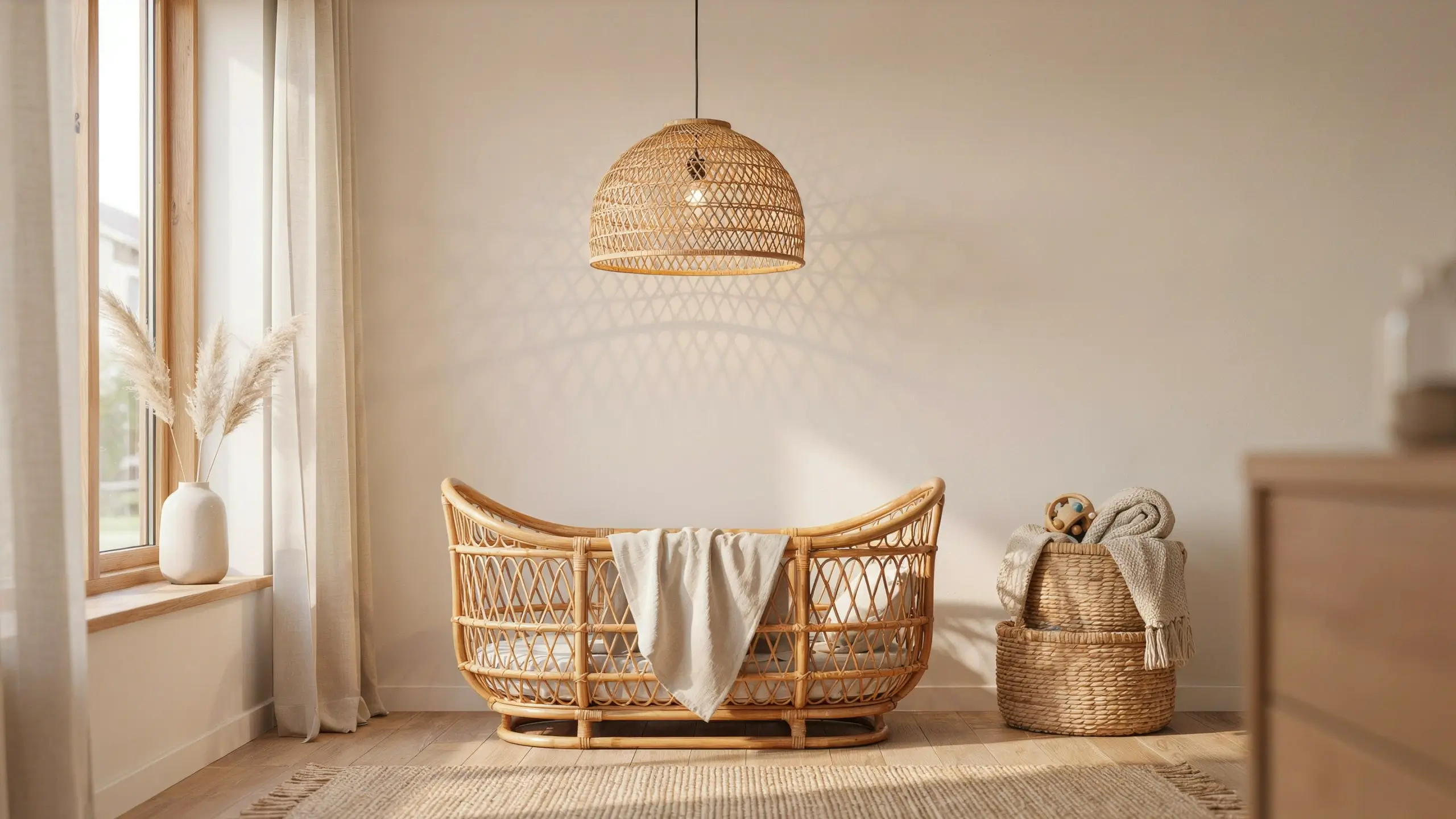
A rattan bassinet, a woven pendant light, a jute or sisal-blend rug, and a few open-weave storage baskets bring warmth and texture into a room without adding more color. This look works whether your style leans boho, coastal, or simple and modern.
It also photographs beautifully for Pinterest because the texture catches light in a way flat surfaces don’t.
Safety note
Secure any rug with a non-slip pad underneath, and keep woven baskets with tall handles out of reach of the crib once your baby starts pulling up, since they can become a climbing hazard.
7. Pick Furniture With Soft, Curved Lines
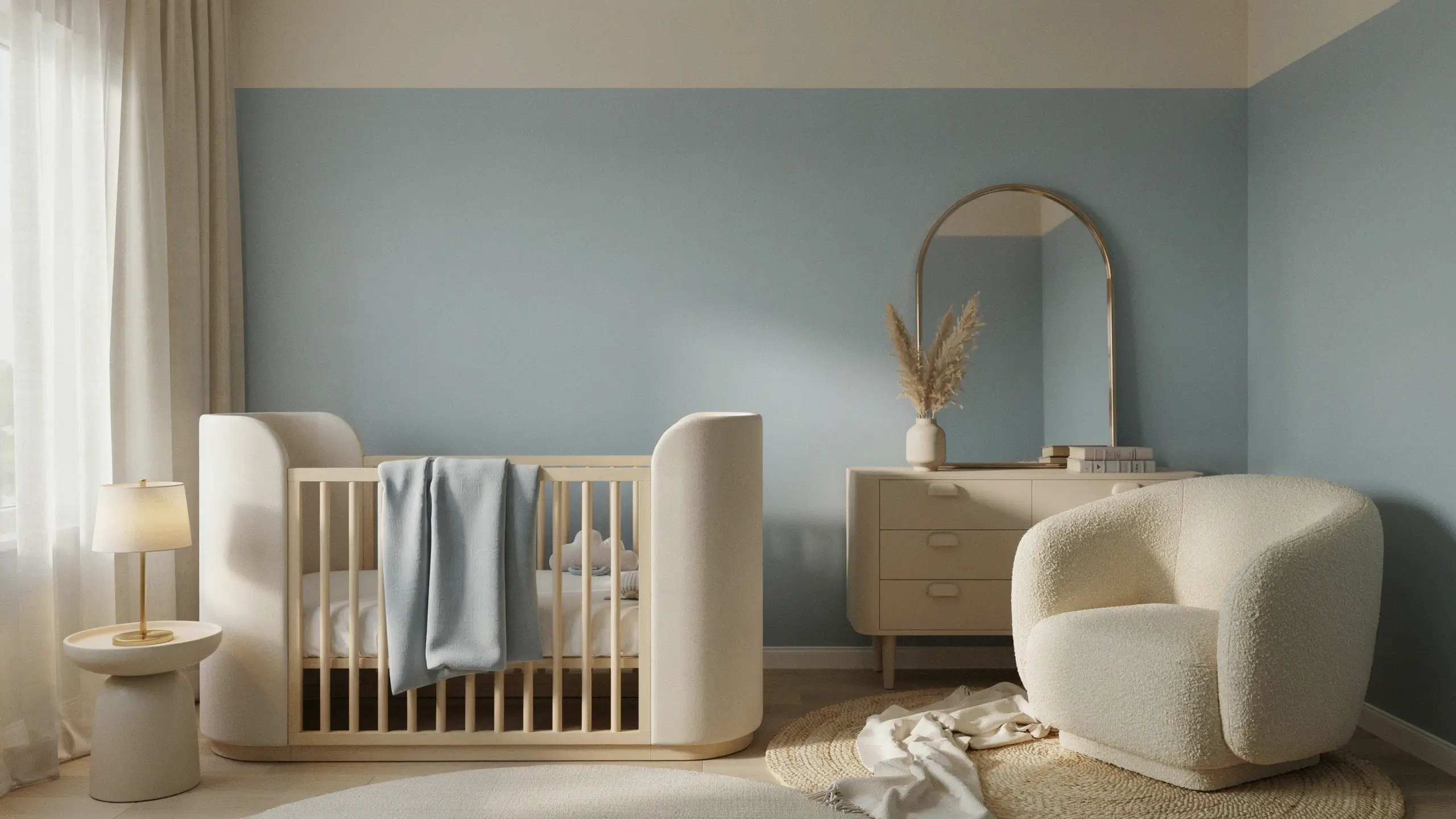
Rounded crib corners, a curved glider, an arched mirror, or a dresser with soft rather than sharp edges are showing up everywhere in nursery design this year. Curves feel instinctively gentler and safer, and they photograph with softer shadows than boxy, straight-lined furniture.
You don’t need to replace your entire furniture set to get this look. One curved statement piece, like an arched mirror over the dresser or a rounded accent chair, is often enough to shift the whole feel of the room.
8. Build a Gallery Wall That Feels Personal
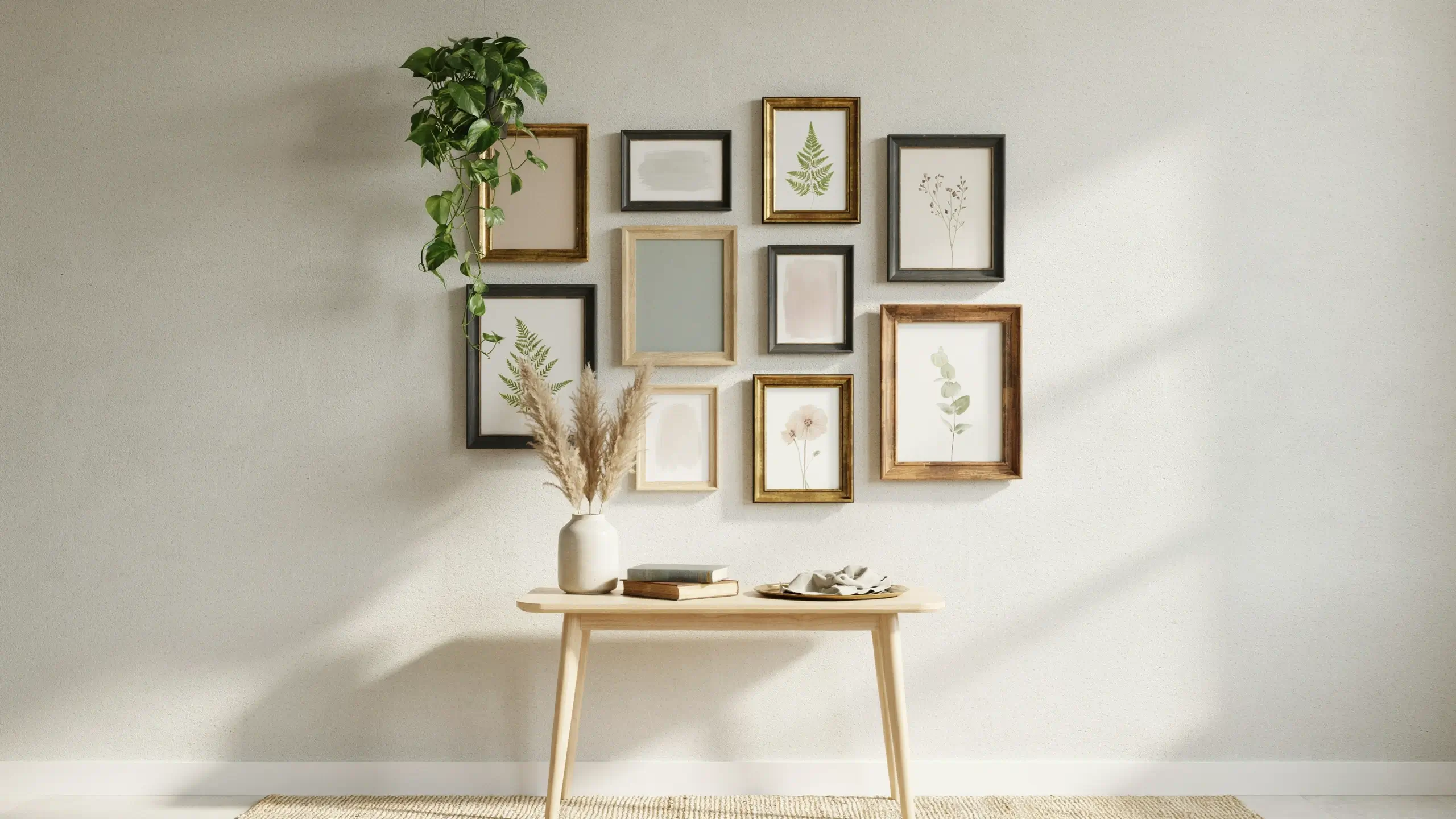
Skip the matching frame set from a big box store and mix it up instead. Combine a vintage frame from a thrift store, a botanical print, your ultrasound photo, and a small piece of hand-me-down art from a family member. It reads as collected and meaningful instead of generic.
Lay your frames out on the floor first to plan the arrangement before you commit to nail holes. Keep about two to three inches between frames, and hang the lowest piece at your eye level, not dead center on the wall.
Mistake to avoid
Buying a bundle of identical frames online. Mixed finishes and sizes look far more curated than a matched set.
9. Carve Out a Cozy Reading Nook
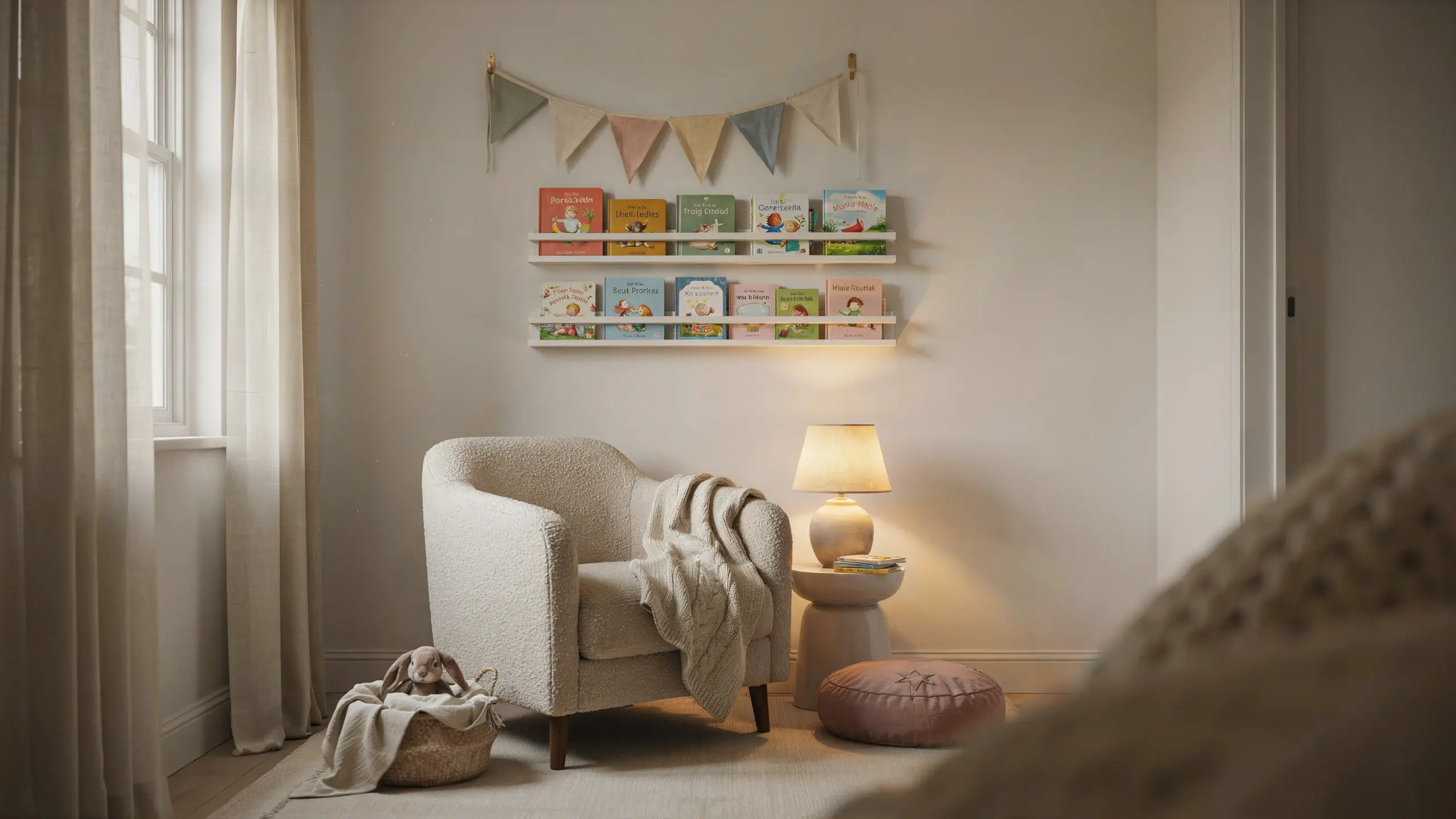
Even a three-by-three-foot corner can become a reading nook with a small chair or floor cushion, a low shelf at kid height, and a soft lamp. Add a fabric flag banner or a growth chart ruler overhead for a little visual interest.
Use a forward-facing picture ledge instead of a traditional bookshelf so covers show instead of spines. It’s more colorful for a pin-worthy photo now, and it makes it easier for your toddler to choose their own books later.
This is one of the few nursery features that keeps earning its space well past the baby stage, so it’s worth the setup.
10. Layer Your Lighting
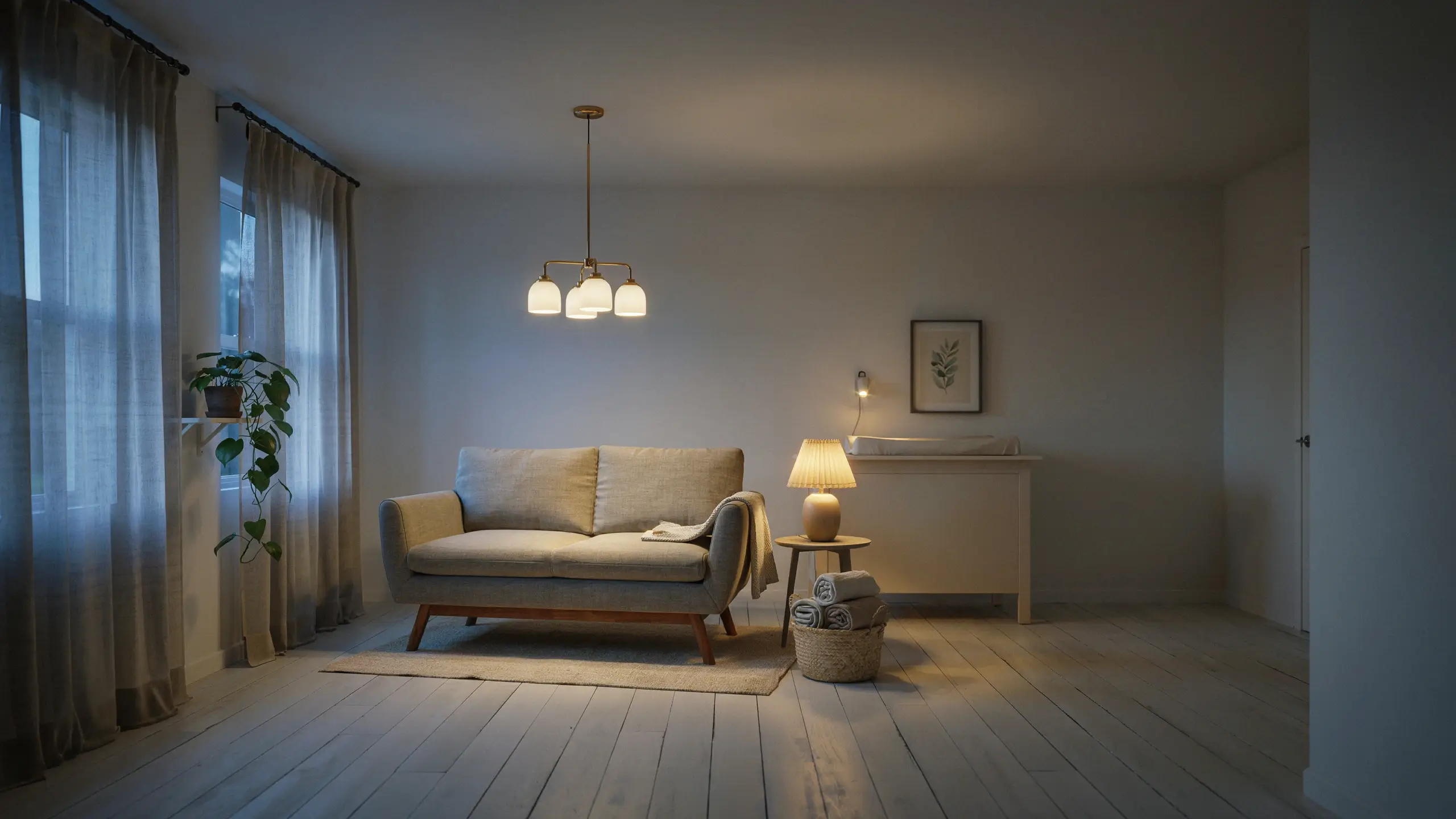
A single overhead fixture leaves a nursery feeling flat and clinical. Layer in a dimmable lamp for late-night feeds, a statement pendant or small chandelier for daytime mood and photos, and a plug-in nightlight near the changing table.
Choose warm-toned bulbs around 2700K rather than cool white, since warm light is easier on tired eyes at 3 a.m. and photographs much softer for Pinterest.
Safety note
Keep lamp cords tucked away from the crib and changing table, and use a cordless or short-cord option for any lamp placed within reach of the crib.
11. Add a Soft Canopy or Simple Mobile
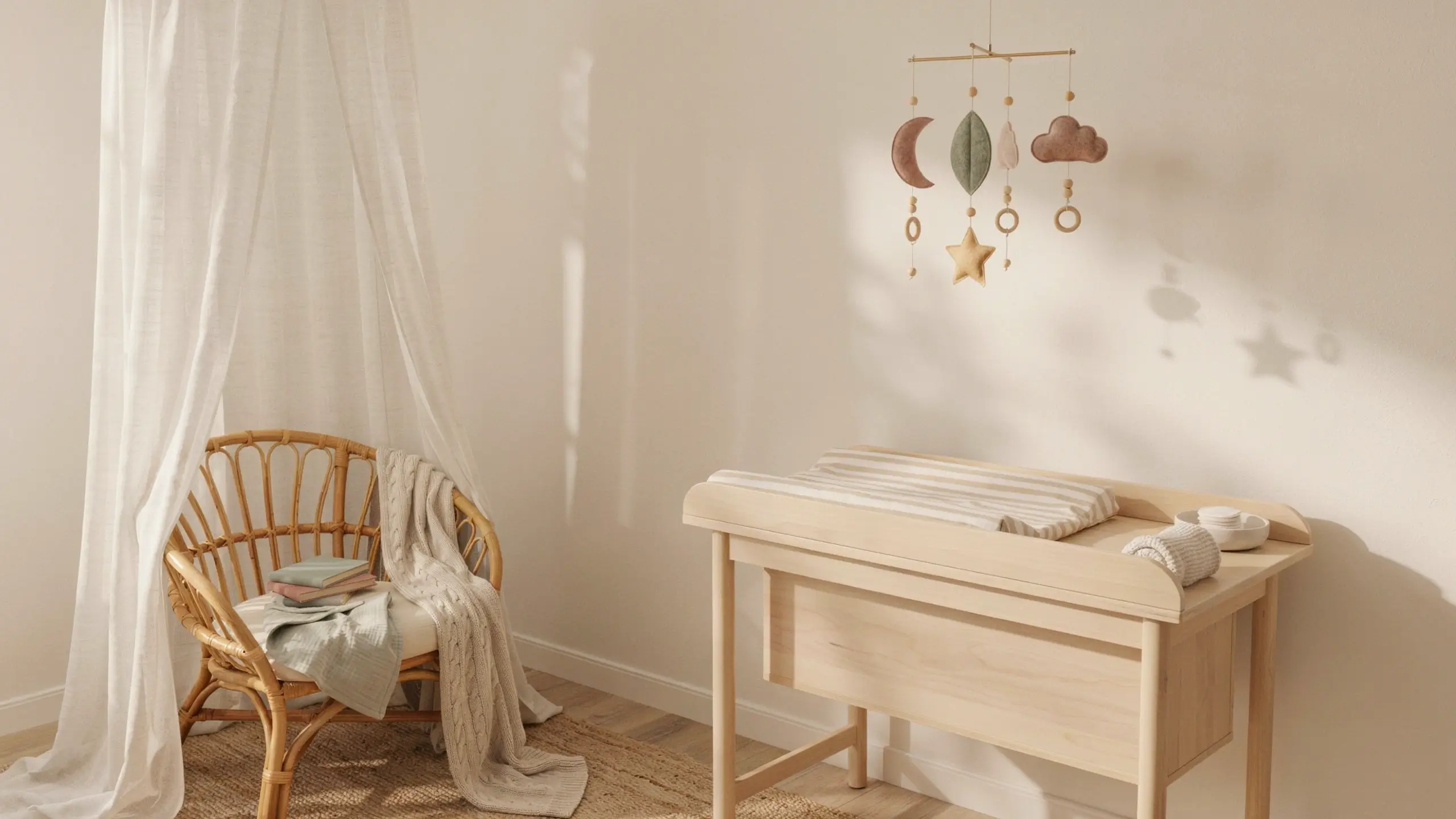
A sheer canopy over a reading chair or glider adds a dreamy, storybook feel without any safety concerns. A felt or wood mobile above the changing table brings in color and texture in a spot where baby will actually look up at it.
Safety note
Nothing should hang directly over or inside the crib once your baby can push up on hands and knees, which often happens by around five months. Follow the manufacturer’s guidance and plan to remove any crib-adjacent mobile or canopy well before then.
12. Style Open Shelving Like Real Decor
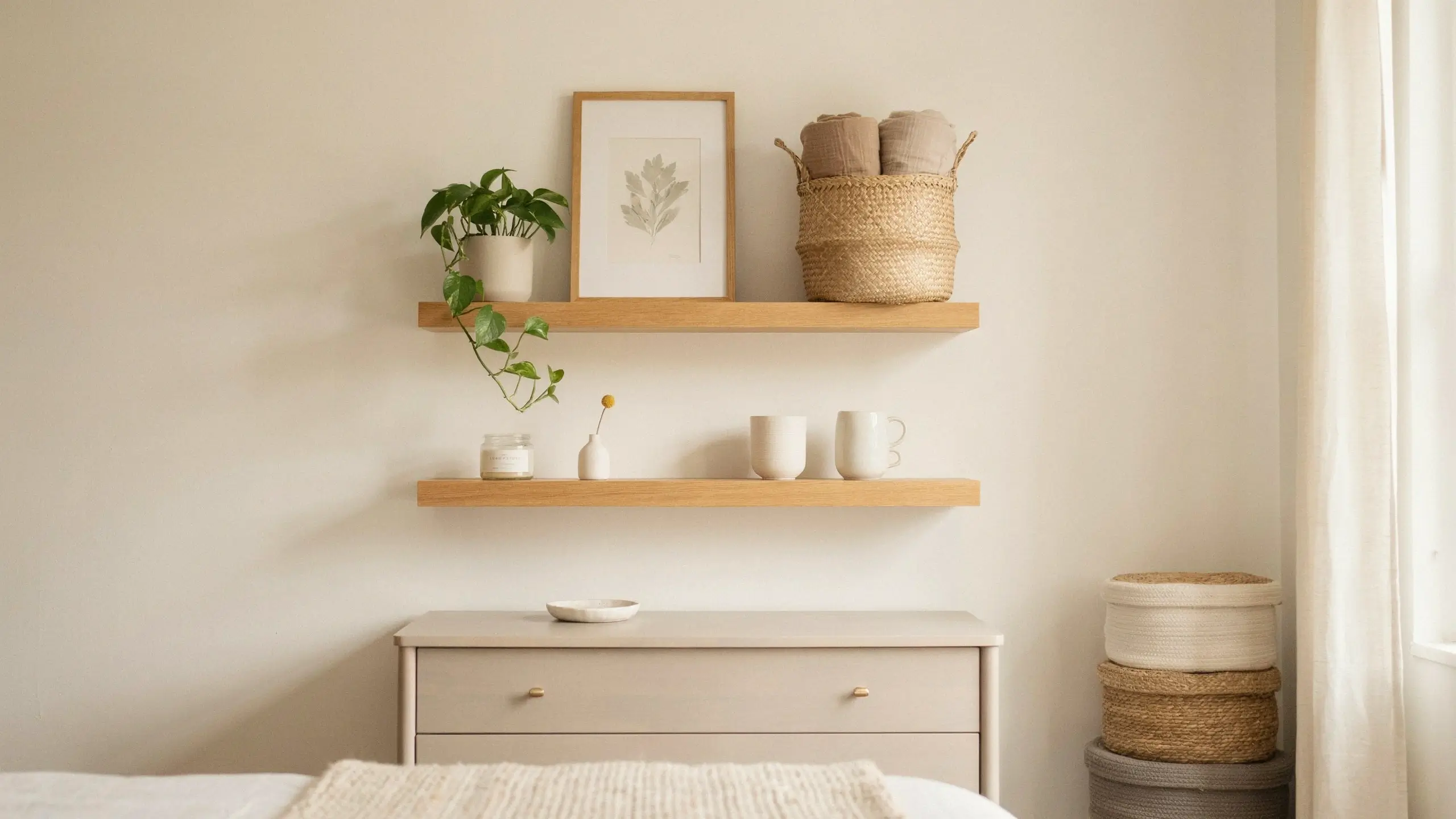
Floating shelves above the dresser or beside the crib can hold more than just diapers. Group three items in odd numbers, a small plant, a framed print, and one labeled basket, the same way you’d style a shelf anywhere else in your home.
Keep your actual diaper and wipe storage in closed bins nearby so the styled shelf doesn’t get raided daily and lose its look.
Mistake to avoid
Crowding the shelf with too many small items. Leave breathing room between groupings so it reads as curated instead of cluttered.
13. Layer Textiles for Texture, Not Just Color
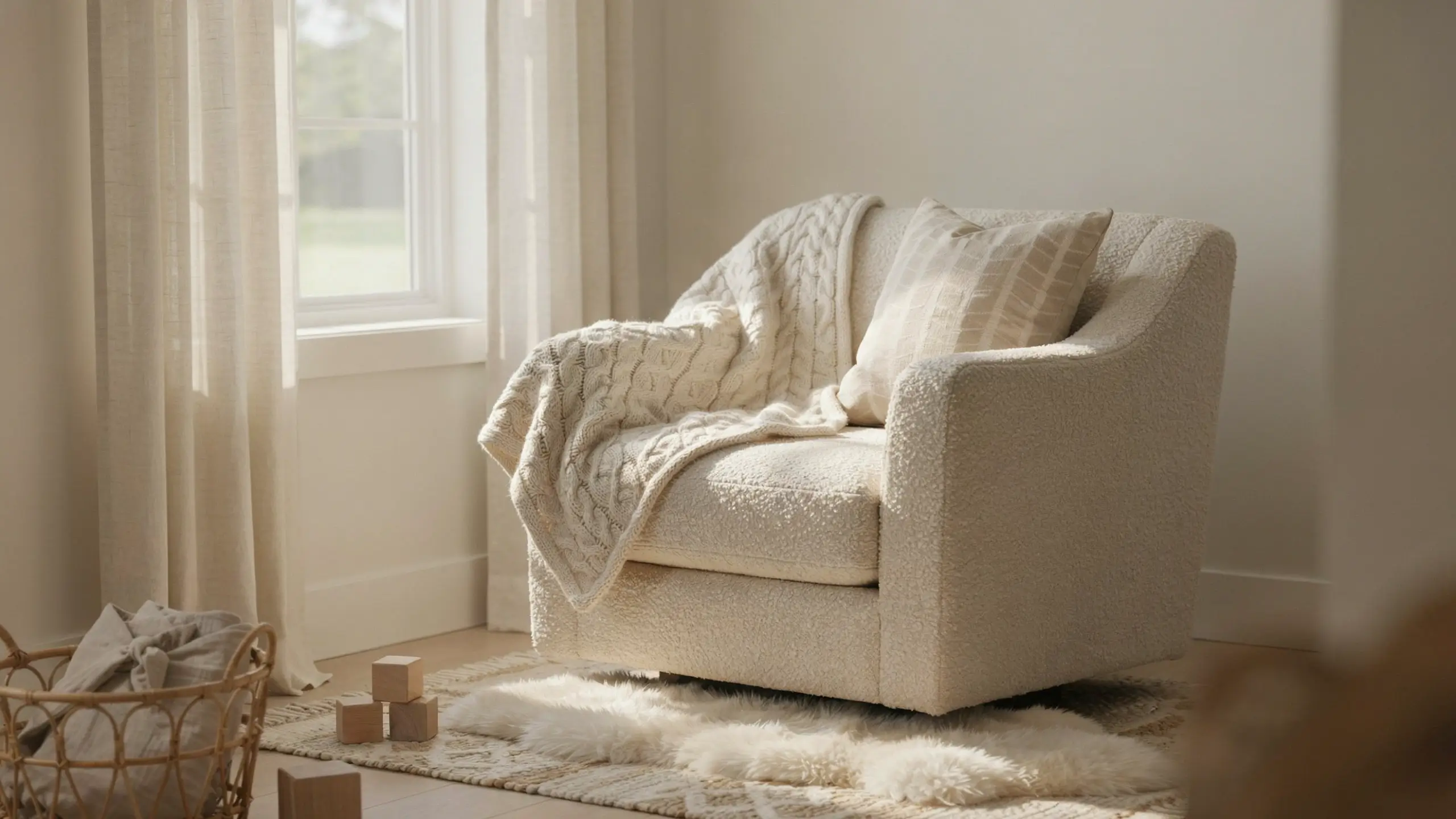
A knit quilt draped over the glider, a sheepskin layered on top of a flatweave rug, linen curtains, and one patterned lumbar pillow can make a neutral room feel rich instead of empty. Mixing textures like knit, linen, faux fur, and cotton adds depth even when the color palette barely changes.
Keep quilts and blankets on the glider or a wall hook for styling, not inside the crib itself, since loose bedding isn’t recommended for sleeping infants.
Mistake to avoid
Matching every textile to the exact same print. A little variation in pattern and texture reads as intentional, not busy.
14. Add One Personalized Detail
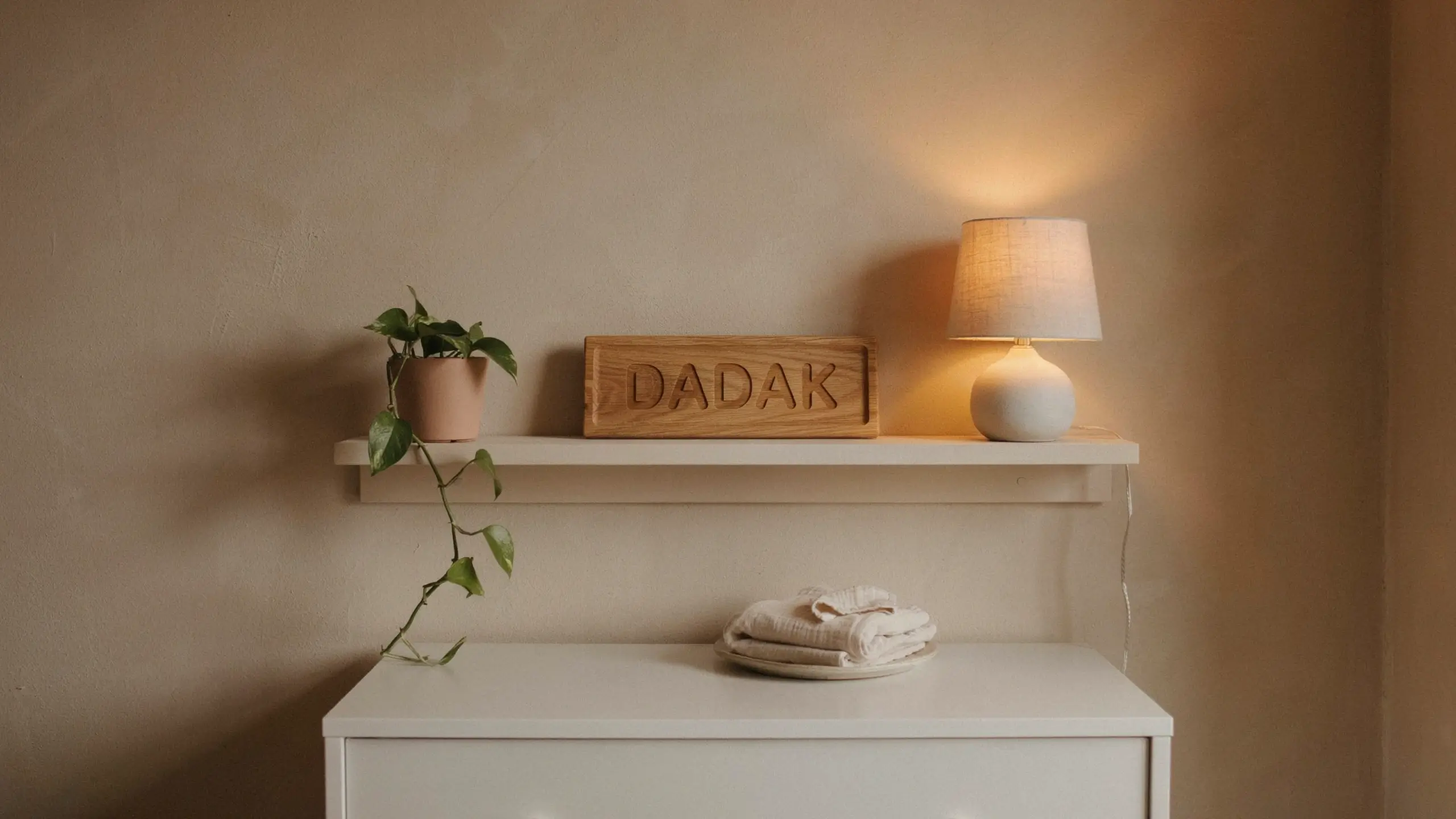
A name sign, a set of initial letters, or a birth stat print gives the room a personal touch without turning it into a monogram shop. Pick one meaningful piece, maybe a DIY painted wood sign or a simple printable from a small Etsy shop, and let it be the detail people notice.
Mistake to avoid
Scattering the baby’s name across five different items in the same room. One well-placed piece feels intentional, five feels cluttered.
15. Choose Furniture That Grows With Your Baby
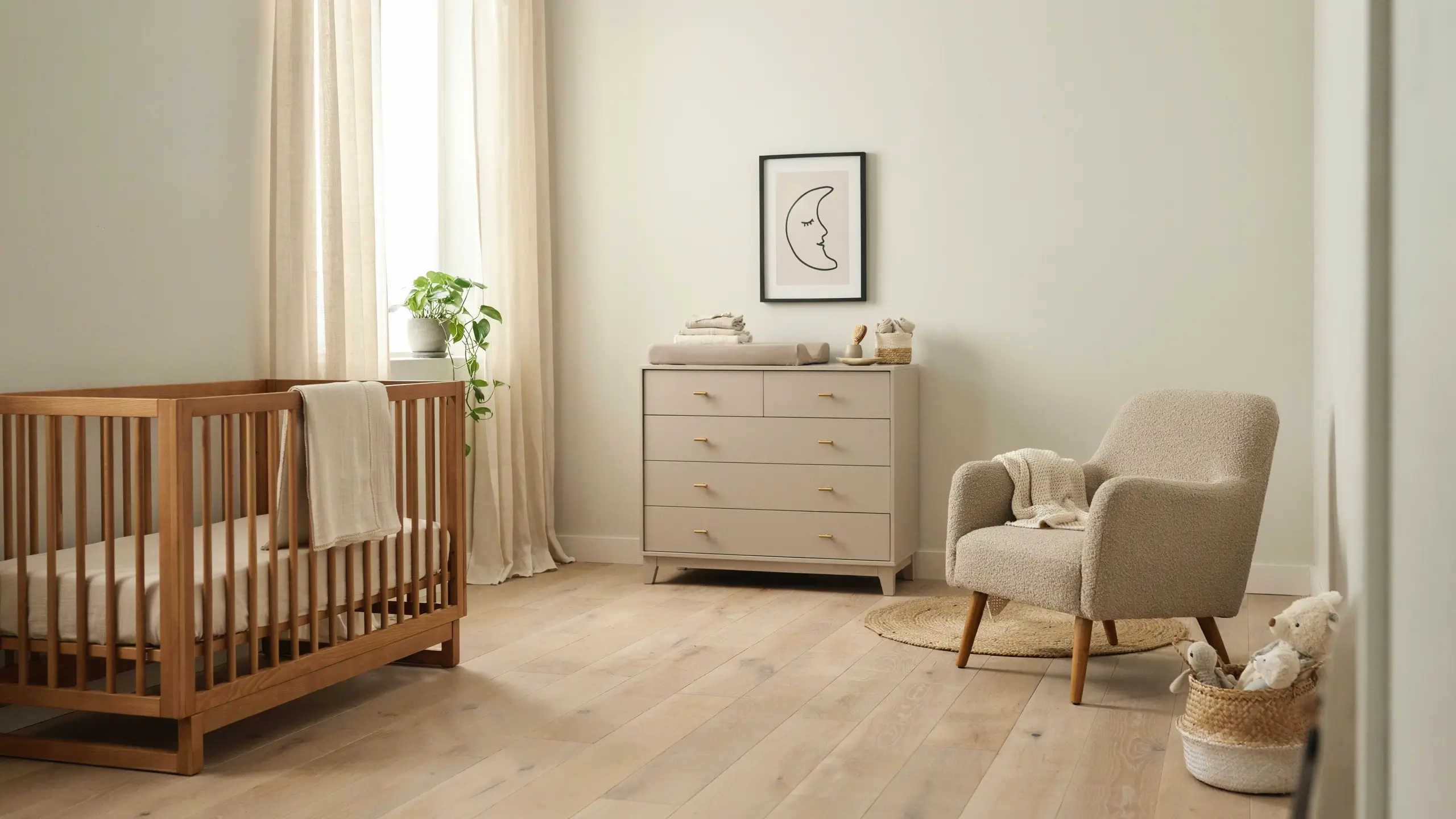
This is the most practical idea on the list, and it’s quietly become one of the biggest nursery trends this year. A convertible crib that turns into a toddler bed, a dresser that doubles as a changing table now and a regular dresser later, and a glider comfortable enough to use for years all save you money and a full redo down the road.
Lean toward timeless, neutral pieces rather than anything ultra-trendy or heavily theme-specific, like a bright primary-colored rocket ship crib. You’ll likely want to change decor before you’re ready to replace furniture, and neutral pieces make that swap painless.
A Few Nursery Safety Notes Before You Decorate
A nursery has to look good, but it has to work safely too. A handful of quick reminders as you plan:
- Keep the crib away from windows, blinds, curtains, and any cords. Cordless blinds are worth the upgrade if your nursery has a corded style already installed.
- Anchor tall furniture like dressers and bookshelves to the wall, especially once your baby becomes a climbing toddler.
- Choose low-VOC or zero-VOC paint for the nursery, since it’s a room where a baby spends most of their time.
- Follow safe sleep guidance for the crib itself: firm mattress, fitted sheet only, no loose blankets, pillows, or bumpers for babies under 12 months.
- Remove crib-adjacent mobiles and canopies before your baby can push up or pull to sitting, usually around five months.
- Skip a rug directly under the crib if it isn’t secured with a non-slip pad, so nothing shifts underfoot during a groggy 2 a.m. pickup.
Bringing It All Together
You don’t need to pick just one of these. The nurseries that end up feeling the most finished usually borrow from three or four ideas on this list: a warm wall color, one textured or curved furniture piece, a personal gallery wall, and lighting that actually works for 3 a.m. feeds.
These 15 stunning nursery ideas are meant to be a starting point, not a checklist you have to complete before the baby arrives. Pick what feels like you, save the rest for later, and let the room come together over time.
Which of these nursery ideas are you drawn to first? Drop a comment below, I’d love to hear what style you’re leaning toward for your baby’s room.





No Comment! Be the first one.