




11 Ways to Make a Small Living Room Look Bigger (Without Knocking Down a Wall)
If your sofa touches one wall and your coffee table touches the other, you already know the feeling. You love your living room, but some days it feels more like a hallway with a TV in it....

If your sofa touches one wall and your coffee table touches the other, you already know the feeling. You love your living room, but some days it feels more like a hallway with a TV in it.
Here’s the good news. Making a small living room look bigger has almost nothing to do with square footage and almost everything to do with a handful of small, deliberate choices. The color on your ceiling, the height of your curtain rod, the legs on your sofa. These tiny decisions add up to a room that reads as open and easy instead of tight and cluttered.
Below are 11 real ways to make a small living room look bigger, the kind interior stagers actually use when they’re prepping a tiny apartment for photos. No renovation required, and most of these you can start this weekend.
1. Paint the Walls, Trim, and Ceiling the Same Color
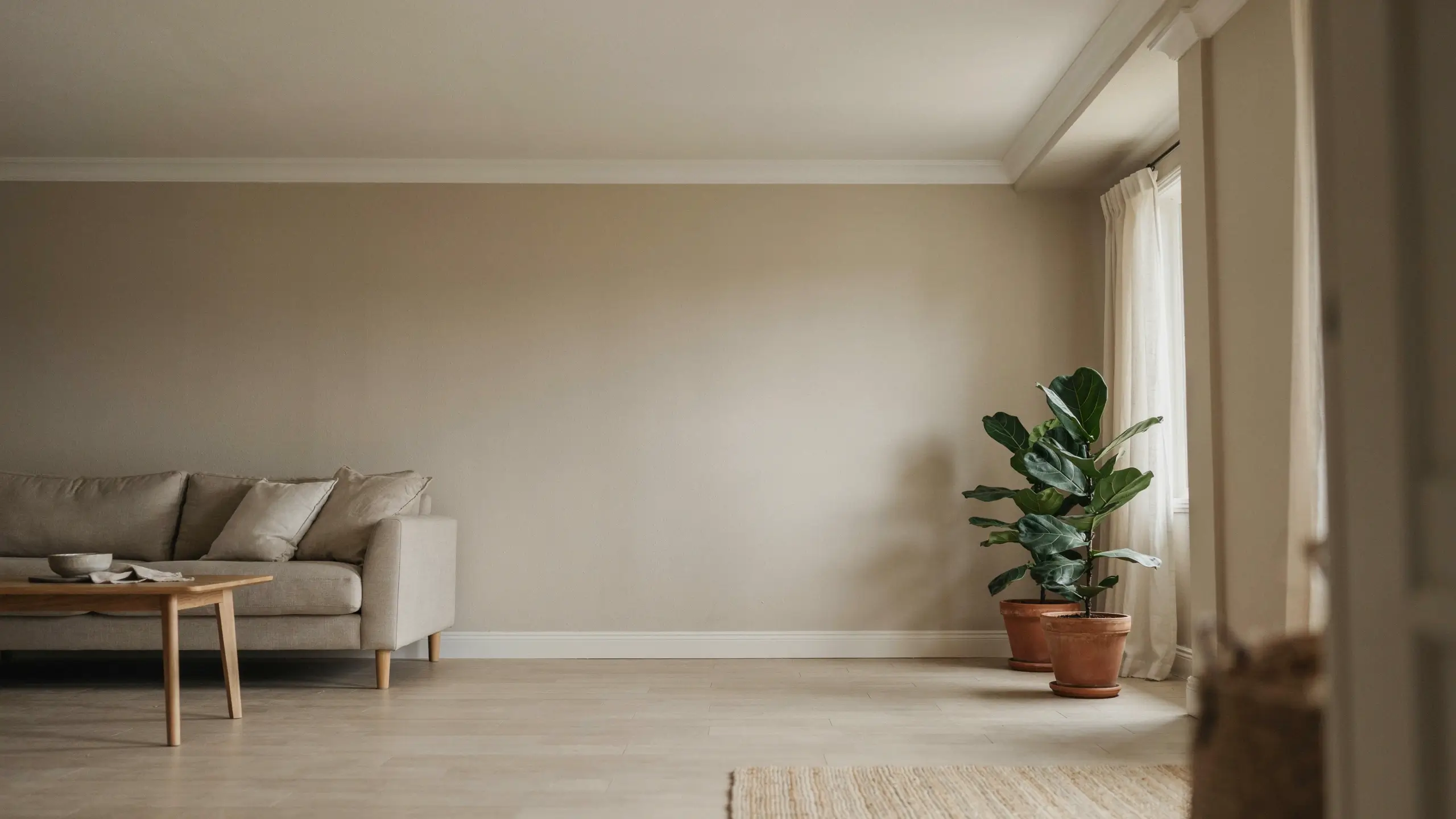
This is the trick that makes the biggest visual difference for the least amount of work. When your trim is bright white and your walls are a different color, your eye catches every single stop and start, and the brain reads that as “this room has edges close by.” Paint the walls, the trim, the baseboards, and even the ceiling in the same soft, light color and those visual stopping points disappear. The room feels like it keeps going.
For 2026, skip the stark, cold white and reach for a warm neutral instead, something like a soft oat, warm greige, or pale dune. Warm tones feel cozier and less clinical than the icy grays that were everywhere a few years back, and they photograph beautifully for a Pinterest pin.
Mistake to avoid: keeping glossy white trim against a colored wall. It feels crisp in photos of large rooms, but in a small living room it chops the space into pieces instead of letting it flow.
2. Hang Your Curtains High and Wide
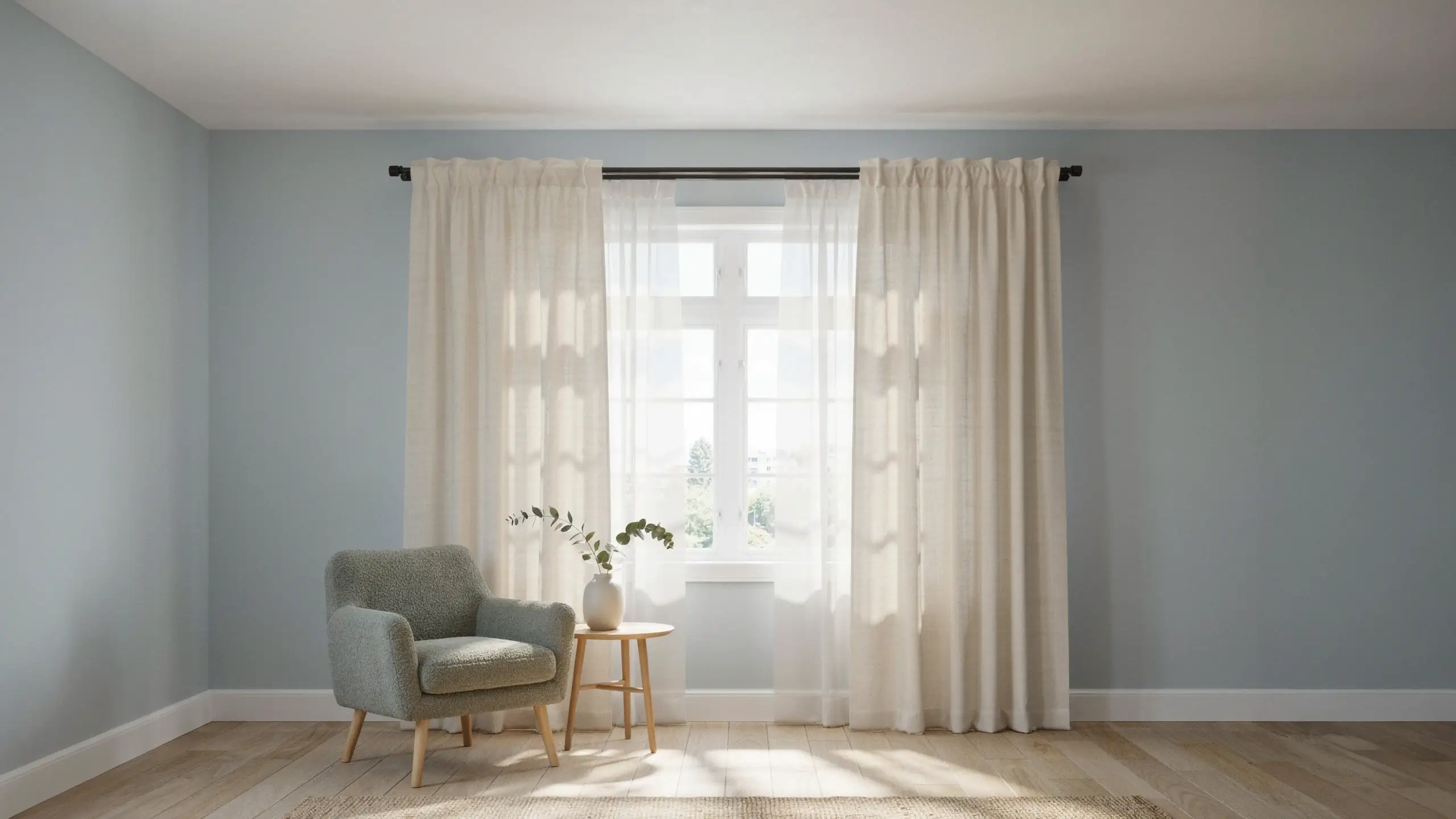
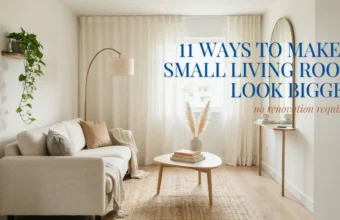
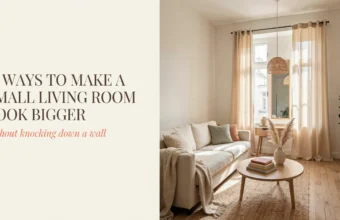
Most people hang curtain rods right above the window frame, with panels that stop at the sill. That choice actually shrinks your window and your walls. Instead, mount the rod as close to the ceiling as you can, ideally four to six inches below it, and extend it four to eight inches past each side of the window frame. Choose panels long enough to just graze the floor.
This does two things at once. It makes the window look taller, which tricks the eye into thinking the ceiling is higher, and it makes the wall look wider, since more of it is covered in soft, flowing fabric instead of bare drywall. This is a renter-friendly upgrade too, since it only requires moving a curtain rod, not touching a window frame.
3. Let One Large Mirror Do the Heavy Lifting
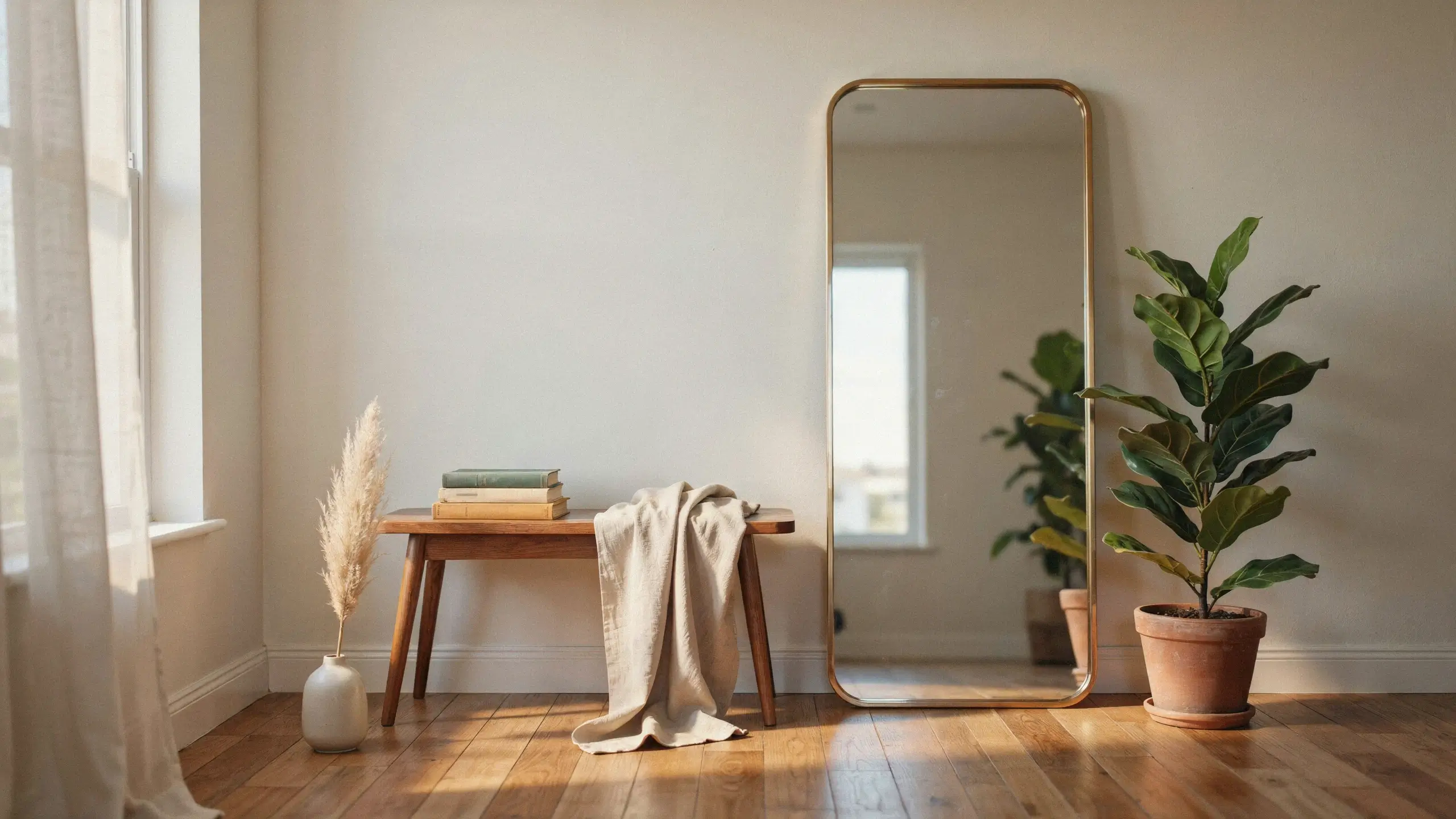
A single well-placed mirror does more for a small living room than five small decorative ones scattered around. Lean or hang a large mirror, at least 30 by 40 inches, across from or beside a window so it catches daylight and bounces it back into the room. If you can angle it to reflect something pleasant, like a plant, a piece of art, or the view outside, even better. It essentially gives you a second window.
For renters, a floor mirror leaned against the wall skips the drilling entirely and adds height at the same time, since tall leaning mirrors draw the eye upward.
Mistake to avoid: hanging a mirror where it reflects clutter, the back of the TV, or a messy hallway. A mirror doubles whatever it reflects, good or bad.
4. Choose Furniture You Can See Under
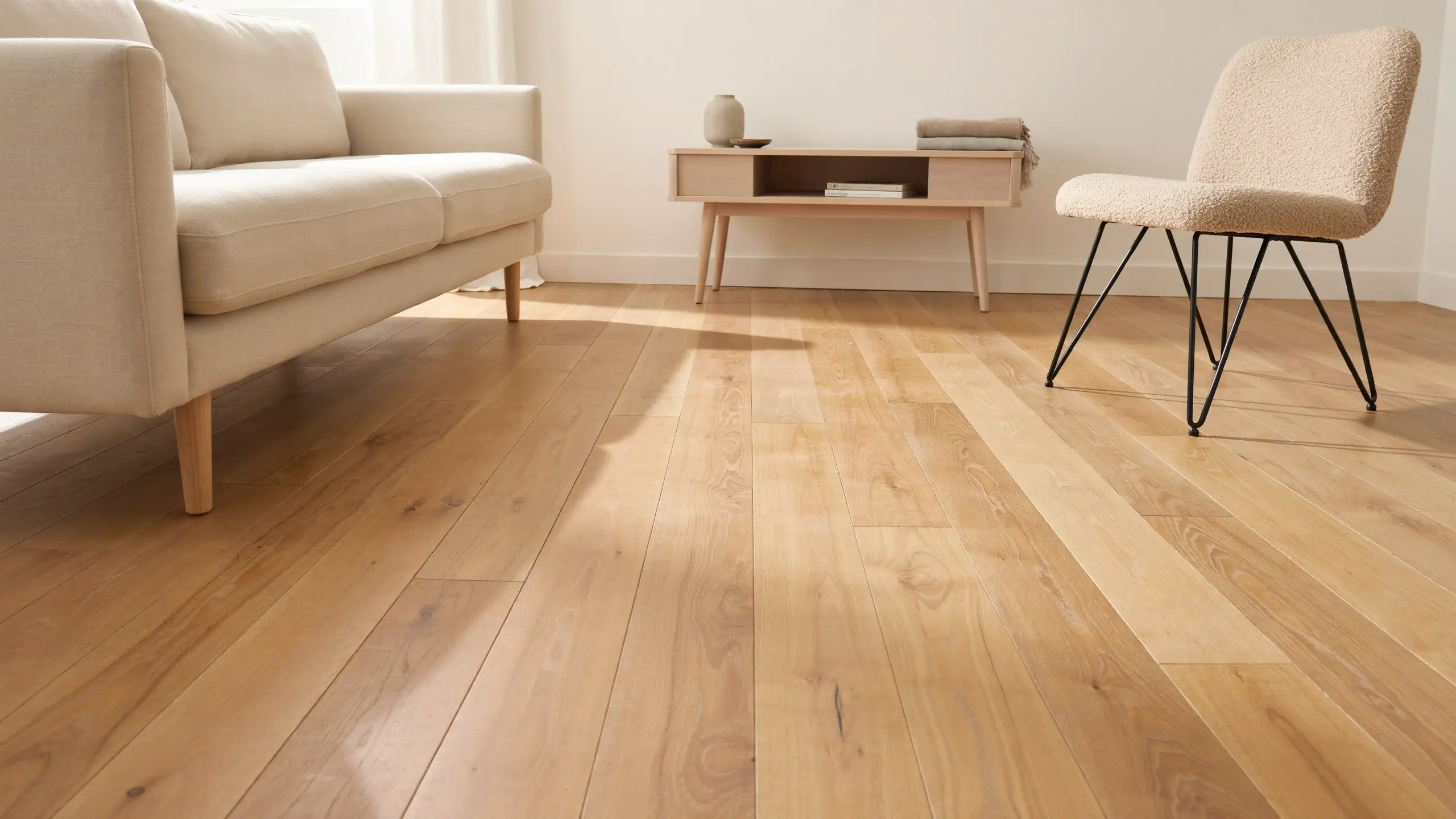
Furniture that sits flush on the floor, like a skirted sofa or a low chunky cabinet, blocks your sightline and makes the floor feel like it stops at the furniture. Furniture on legs lets your eye travel underneath and keep going, which reads as more floor space even though the actual square footage hasn’t changed.
Look for pieces with at least four to six inches of visible space underneath, whether that’s a tapered wood leg on a sofa, a slim metal leg on an accent chair, or a media console raised off the ground instead of sitting like a box on the floor. This one small styling detail is one of the most overlooked ways to make a small living room look bigger, and it costs nothing if you’re furniture shopping anyway.
5. Get the Rug Size (and Placement) Right
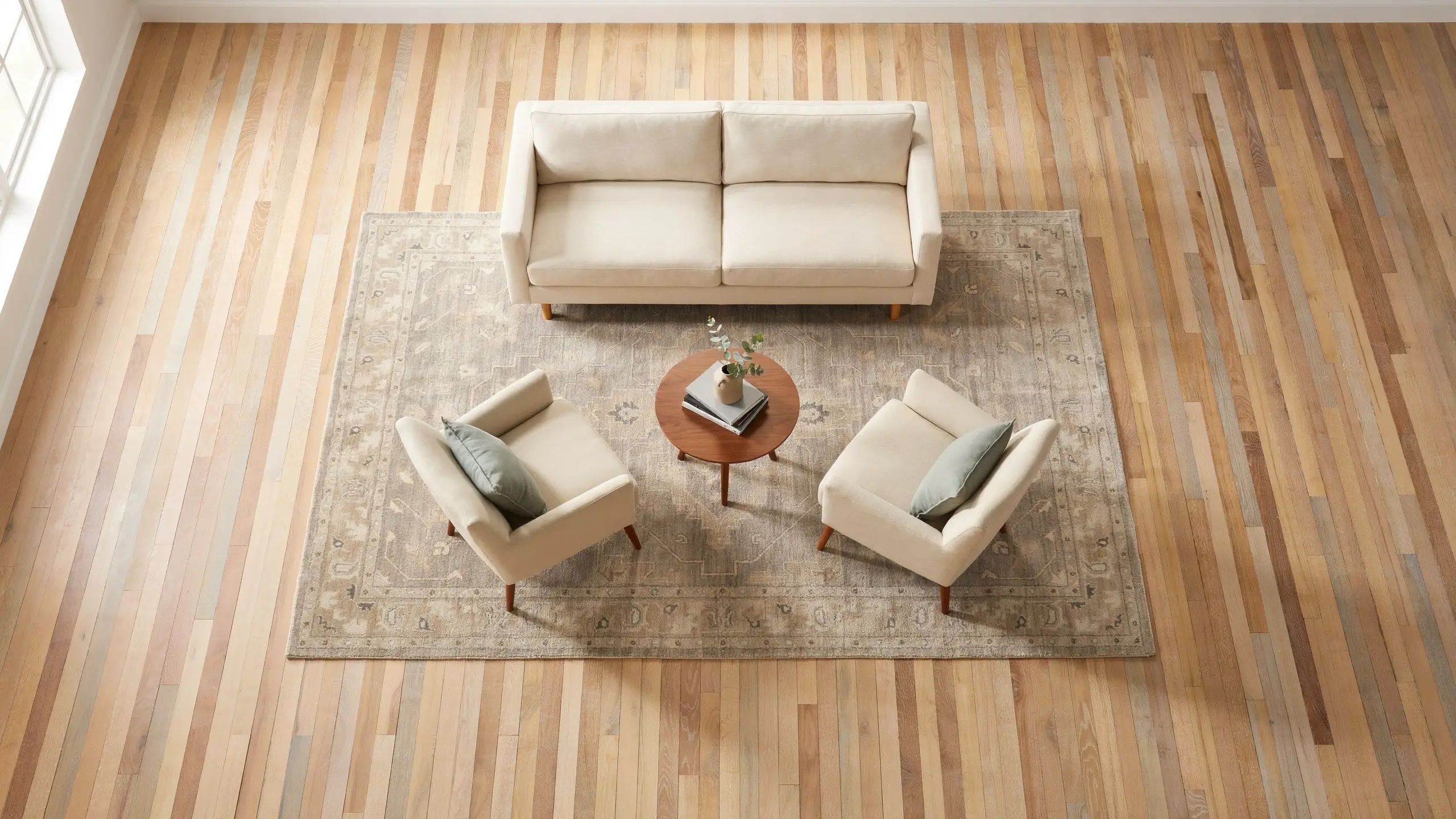
This is where a lot of small living rooms go wrong. A too-small rug floating like an island in the middle of the room, with all the furniture pushed out around its edges, actually makes the room look smaller, not bigger. It draws a visual boundary line right in the middle of your floor.
The rule of thumb: at minimum, the front legs of every seating piece should land on the rug. If your space allows, get a rug big enough that all four legs of your sofa and chairs sit on it. For a small living room with a loveseat and two chairs, that usually means a 5×7 or 6×9 rug rather than a 4×6. Leave 12 to 18 inches of bare floor visible around the rug’s edges rather than pushing it wall to wall, which can feel heavy in a tight space.
6. Pick Fewer, Bigger Pieces Over a Bunch of Small Ones
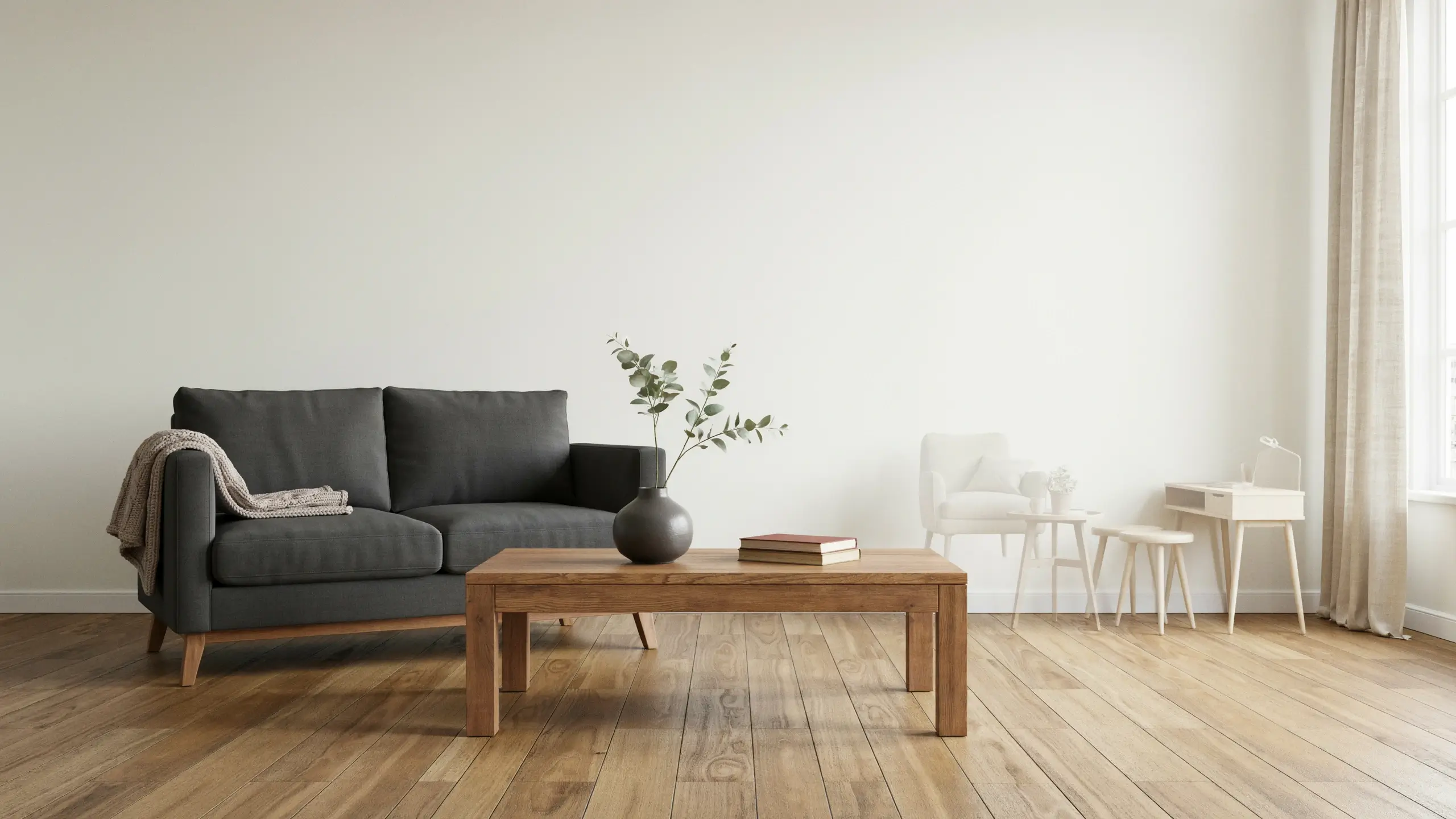
It feels intuitive to fill a small room with small furniture, but that’s usually backwards. A cluster of tiny end tables, mismatched accent chairs, and little ottomans gives your eye a lot of small edges to process, and a busy room reads as a cramped room. One well-scaled loveseat or sofa, sized around 65 to 80 inches for most small living rooms, paired with a single substantial coffee table, tends to feel calmer and more open than five smaller pieces crammed into the same footprint.
If you need extra seating, look for one flexible option, like a pair of stools that tuck under a console when they’re not in use, rather than adding another standalone chair.
7. Use Your Walls, Not Just Your Floor
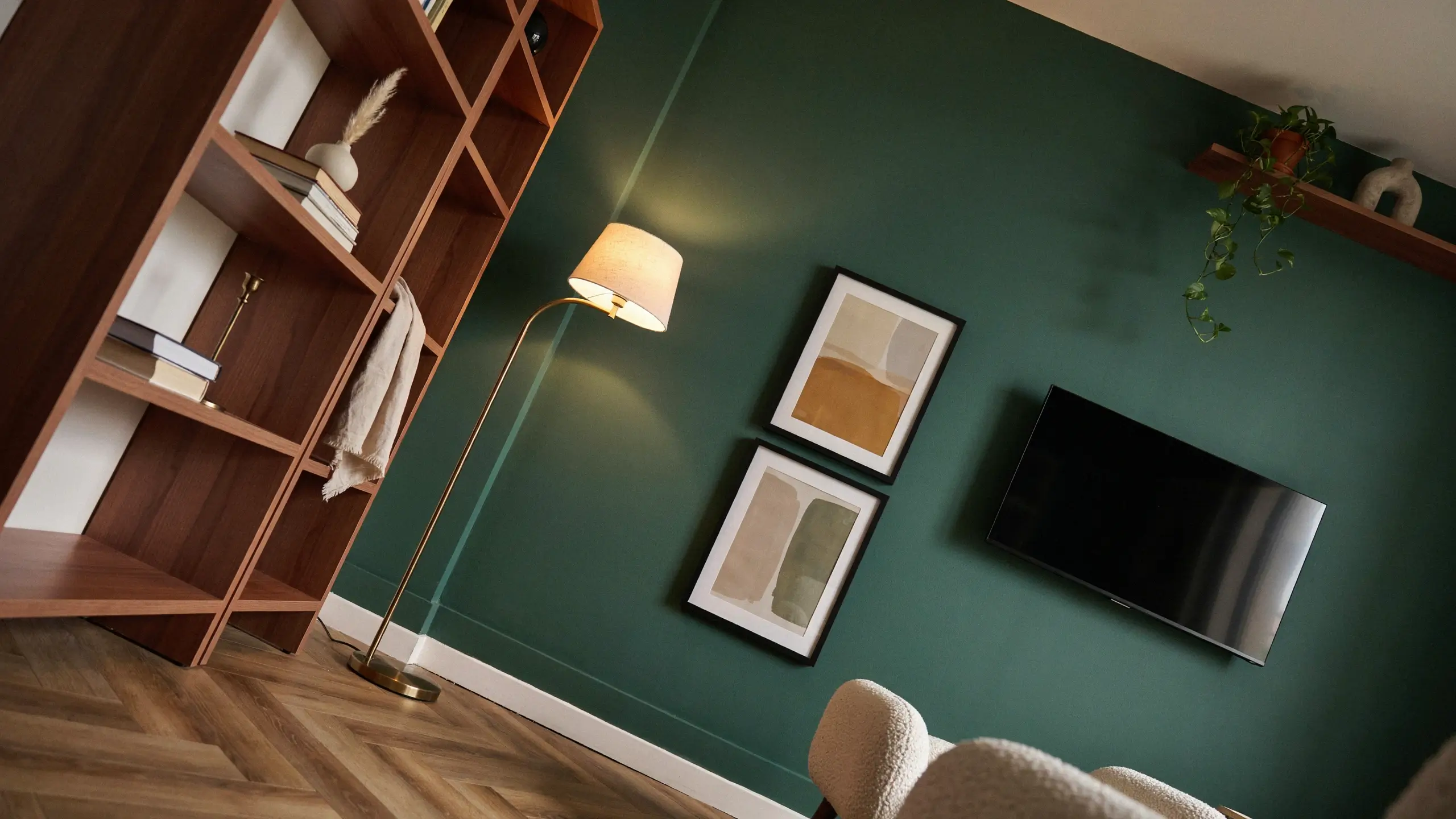
A small living room only feels small if all the visual interest sits at eye level or below. Pull some of it upward. Floating shelves installed near the ceiling, a tall narrow bookcase instead of a low wide one, and artwork hung so the top edge sits closer to the ceiling than the standard eye-level guideline all encourage the eye to travel up, which makes the ceiling feel higher and the whole room feel taller.
If you’re working with art, one or two larger pieces stacked vertically will do more for the room than six small frames scattered across the wall. The scattered gallery look works in a bigger room, but in a small one it tends to read as clutter rather than curated.
Mounting the TV on the wall instead of setting it on a media console is part of this too. It frees up the floor plane and keeps the room from feeling boxed in by furniture on every side.
8. Keep the Window Completely Unblocked
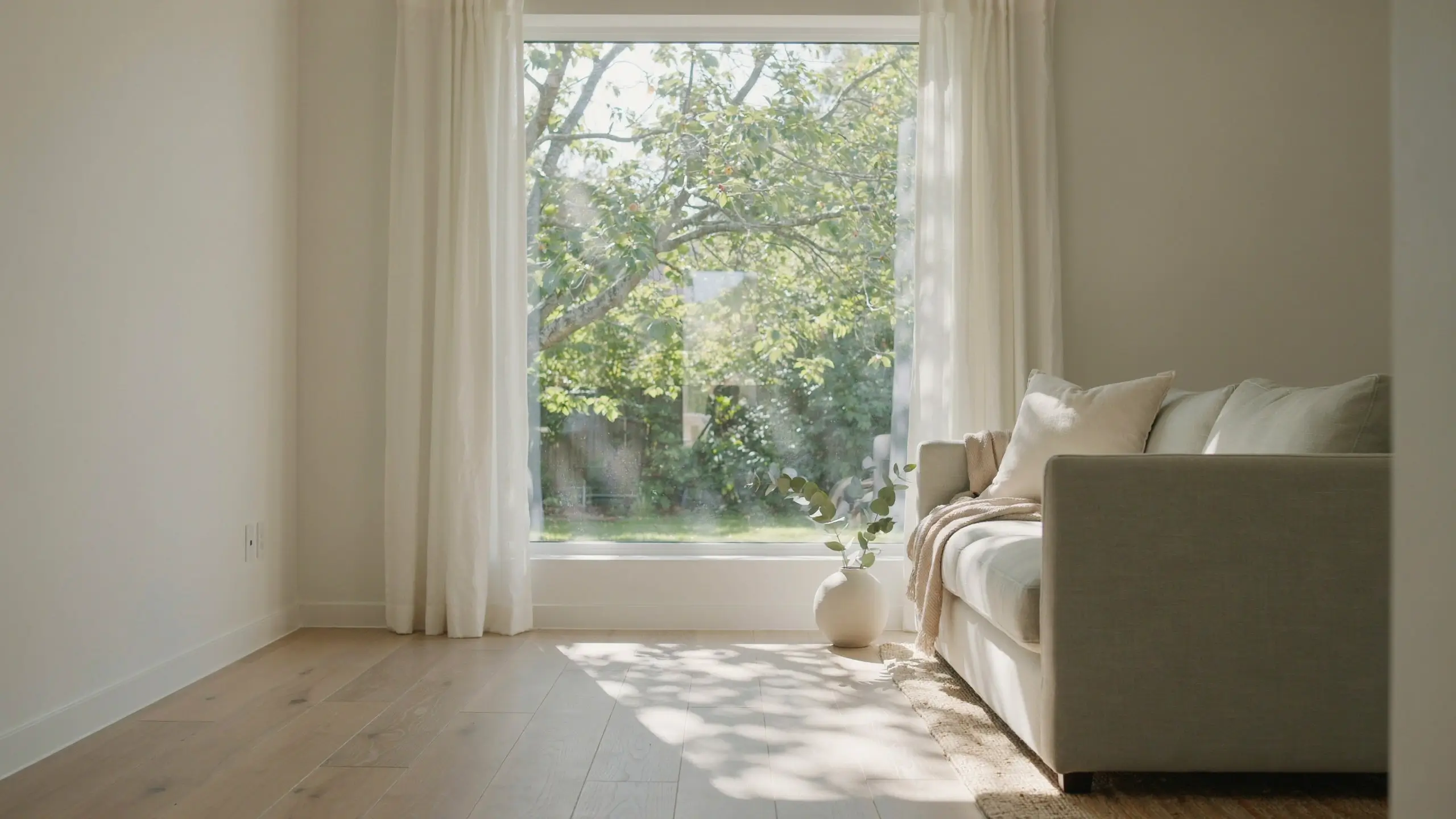
Whatever view sits outside your window, whether it’s a tree, a courtyard, or just the neighbor’s fence, it’s free visual square footage. The moment you plant a bookshelf, a floor lamp, or a stack of storage bins in front of it, you cut that off and trap all the visual interest inside your four walls.
Keep the area directly in front of and beside your window as open as possible. If privacy is a concern, swap heavy blackout drapes for sheers or a solar shade during the day, and save the blackout layer for a second rod behind it that only closes at night. A clear sightline to the outdoors is one of the simplest ways to make a small living room look bigger, and it’s completely free.
9. Let Your Furniture Multitask
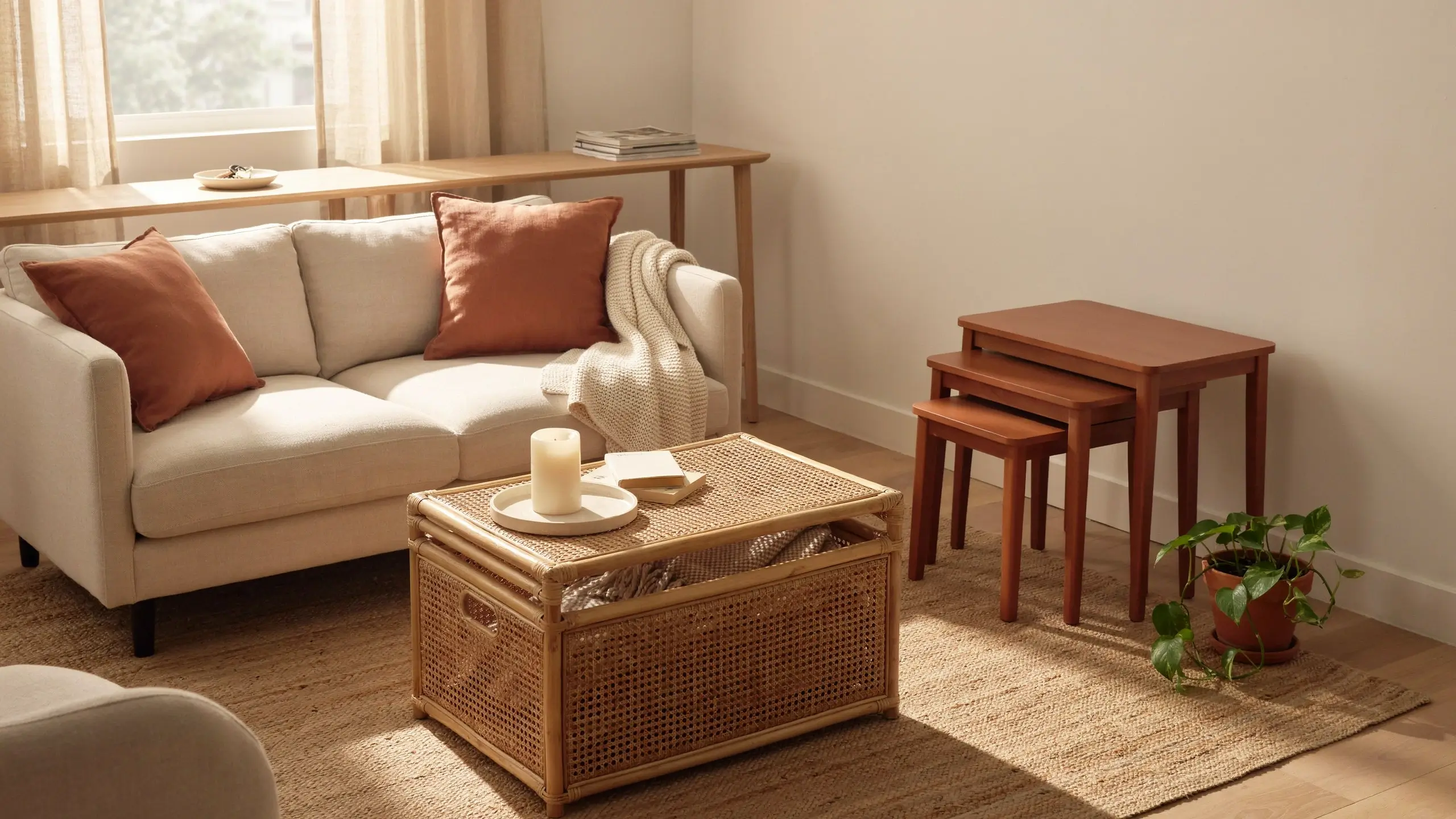
Every piece of furniture that does only one job takes up space you can’t get back. Furniture that pulls double duty gives you the function without the visual bulk. A few worth considering for a small living room:
- A storage ottoman that works as a coffee table, extra seating, and a place to hide blankets or remotes
- Nesting tables that tuck under each other and only pull out when you need the extra surface
- A slim console table behind the sofa that doubles as a media stand on one end and a spot to drop keys and mail on the other
- A daybed instead of a bulky sleeper sofa if you occasionally host overnight guests
This is especially useful for renters and apartment dwellers who don’t have a separate storage room to fall back on.
10. Clear Your Surfaces Down to the Essentials
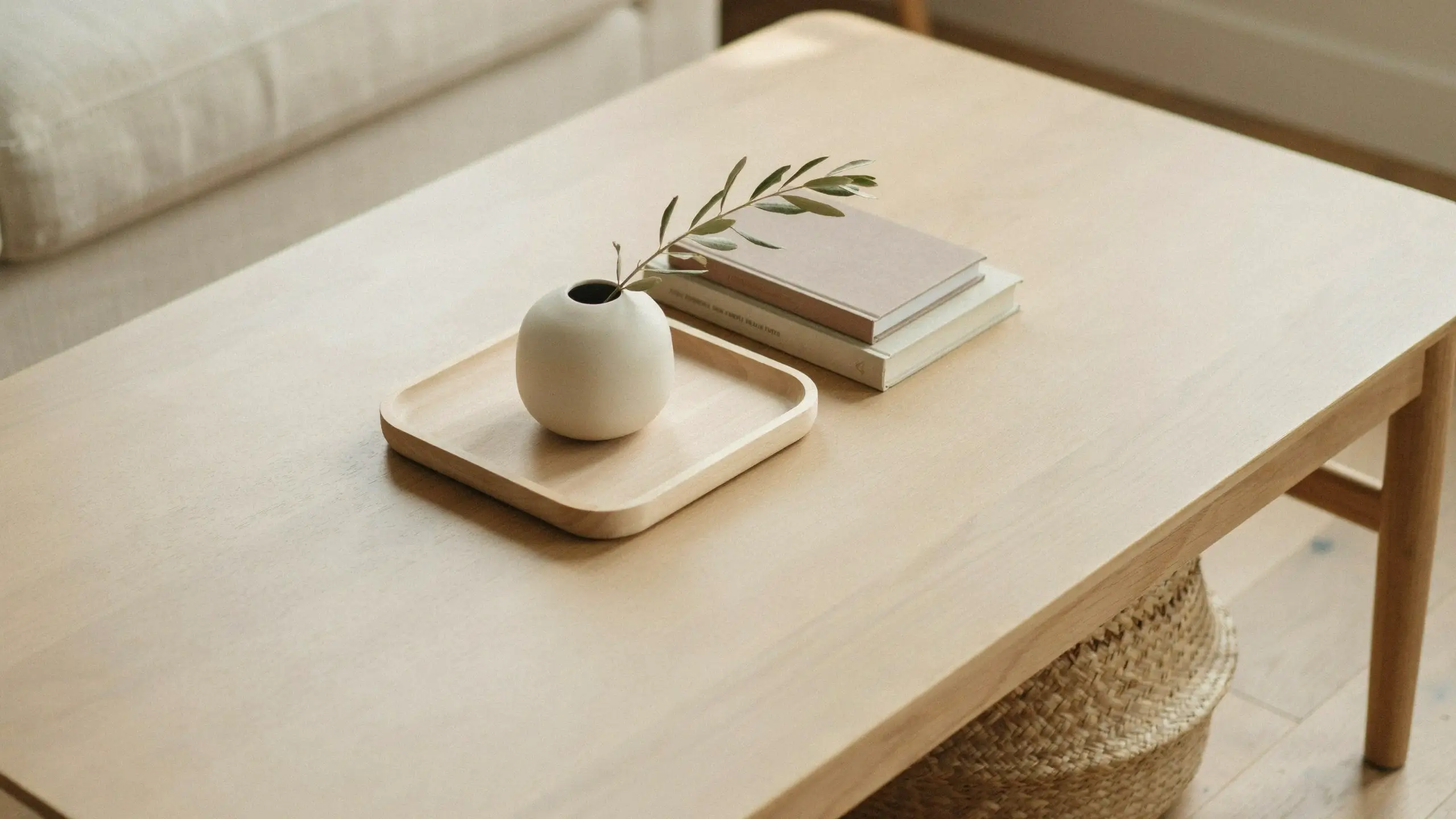
A coffee table covered in remotes, mail, chargers, and half-finished mugs will make even a spacious living room feel chaotic, and in a small one it’s magnified. Aim for three to five items per surface, max, and group them in odd numbers so it reads as styled rather than random. Sticking to a similar material palette, like all wood tones or all matte ceramic, also keeps a small surface from feeling busy.
A small basket or a drawer in your console table is worth its weight for hiding the daily clutter, chargers, remotes, coasters, so your coffee table can stay down to a tray and one object most of the time. It sounds minor, but a clear surface is one of the fastest ways to make a small living room look bigger in photos and in real life.
11. Save the Bold Color or Pattern for One Spot
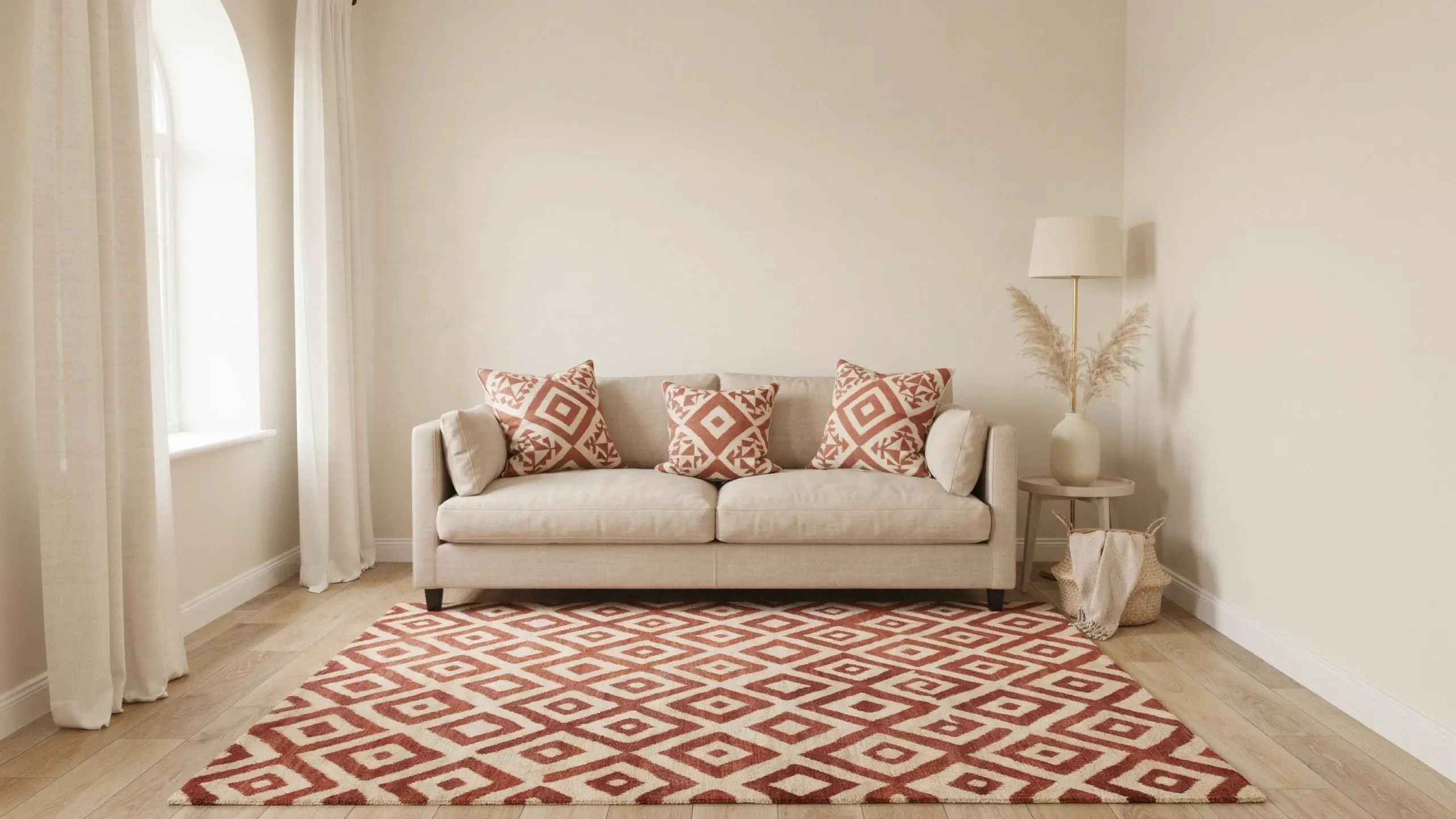
You don’t have to live in an all-neutral box to make a small living room feel open. The trick is committing your boldest color or pattern to one focal point, a patterned rug, one statement pillow fabric repeated across two or three pillows, or a single gallery wall in one accent tone, and keeping the big furniture and walls calm around it.
When pattern and color are scattered in small doses everywhere, a room reads as busy, and busy reads as small. When it’s concentrated in one spot with everything else quiet, it reads as intentional, and intentional spaces almost always feel bigger than they are.
Quick Recap: Mistakes That Shrink a Small Living Room
- A tiny rug floating in the middle of the room instead of anchoring the furniture
- Furniture pushed flush against every wall with no breathing room at all
- Curtains hung right above the window frame instead of near the ceiling
- A mirror that reflects clutter instead of light or a nice view
- A coffee table doing double duty as a junk drawer
Final Thoughts on Making a Small Living Room Look Bigger
Which of these are you trying first? Tell me in the comments, I’d love to see how your small living room turns out.



No Comment! Be the first one.