




20+ Stylish Ways to Decorate Around a Chocolate Brown Couch
That chocolate brown couch felt like a decorating obstacle — too dark, too heavy, too “not what I would have chosen.” But brown is one of the most naturally grounded and versatile tones...

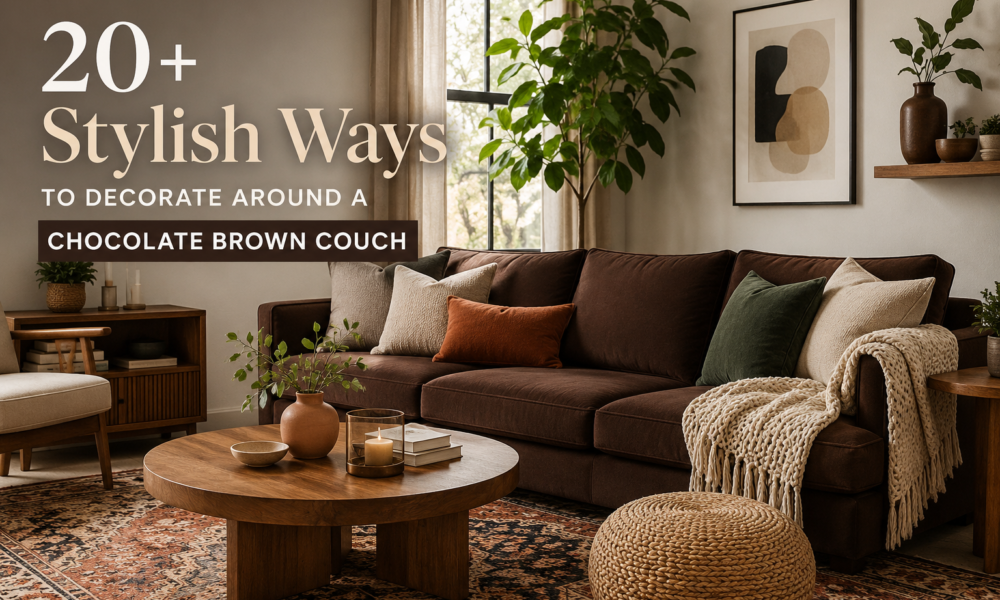
That chocolate brown couch felt like a decorating obstacle — too dark, too heavy, too “not what I would have chosen.” But brown is one of the most naturally grounded and versatile tones an anchor sofa can have. Warm, earthy living rooms are having a real moment right now, and a chocolate brown sofa is perfectly positioned for it. These ideas to style a chocolate brown couch in your living room show exactly how to make yours feel intentional, cohesive, and completely current.
None of these ideas require a paintbrush, a contractor, or a significant budget — many can be pulled together this week with a trip to Target, IKEA, or HomeGoods, and most are completely renter-safe. Every idea here is a complete styled look, not a single product suggestion, so you can picture the finished room and adapt it to your space rather than wonder what it is actually supposed to look like. For additional visual inspiration while you plan, browse real living room setups on Houzz.
These 20+ ideas cover color pairings, rug and pillow combinations, accent furniture, lighting, plants, and seasonal style shifts — all built around one chocolate brown sofa. Each look is designed as a flexible starting point you can adapt to your room’s specific light levels, dimensions, and existing furniture rather than replicate exactly.
What Colors Go With a Chocolate Brown Couch?
If you have been asking “what color goes with a brown sofa,” here are the shades that consistently work — and the mood each one creates:
| Color | Mood It Creates |
|---|---|
| Cream | Softens and warms the space; prevents the brown from reading as too heavy or dark |
| Sage green | Earthy and grounded; connects the sofa to a natural, modern palette without competing |
| Burnt orange | Adds warmth and energy; holds as a cozy autumnal feel year-round |
| Navy blue | Rich and polished; creates a sophisticated, high-contrast look against deep brown |
| Mustard yellow | Brings vintage warmth and a boho edge that sits naturally alongside brown tones |
| Terracotta | Earthy, current, and connected; reinforces rather than interrupts the brown palette |
| Dusty blue | Softens and opens the room; adds an airy quality against the weight of dark brown |
| Blush pink | The most unexpected pairing; adds softness and warmth without a hint of clash |
1. Cream and Ivory Pillow Stack
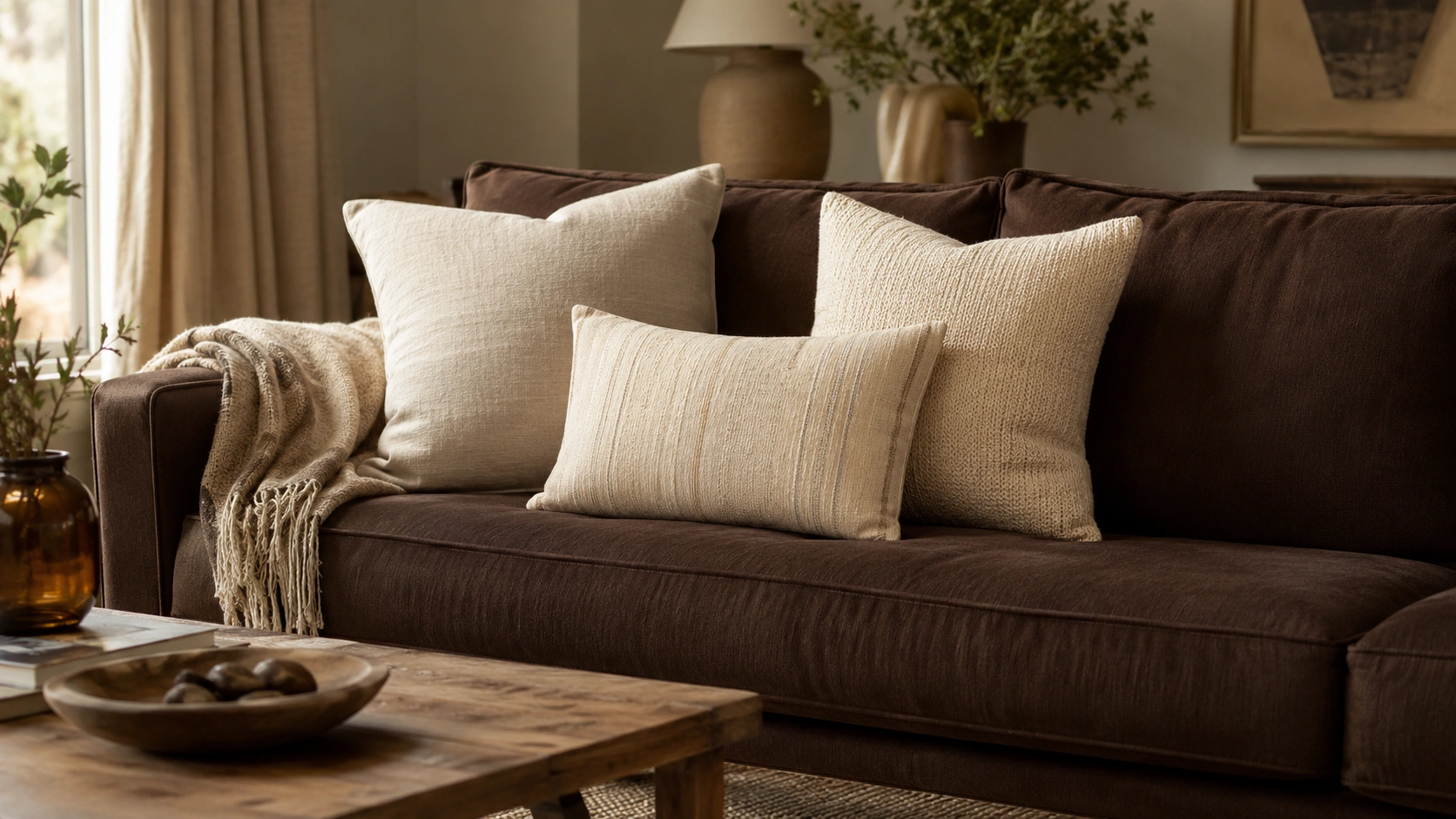
Layering cream and ivory pillows on a chocolate brown couch is one of the fastest ways to lighten the sofa’s visual weight without adding any color complexity. The contrast stays soft and warm rather than stark, which makes the brown read as rich and intentional instead of heavy and flat. A mix of sizes works best: one large 20×20 linen pillow, one 18×18 textured ivory cover, and a lumbar pillow in cream with a subtle stripe or geometric weave across the cushion front.
The trick is staying within warm neutrals rather than reaching for pure white — true white can feel slightly jarring against deep brown undertones, but warm ivory and off-white shades connect naturally because they share the same amber-based warmth. IKEA’s GURLI cushion covers in natural off-white are an affordable, widely available starting point that works beautifully in this kind of layered stack. Place the lumbar slightly off-center for a relaxed, styled feel rather than a rigid, perfectly symmetrical arrangement that reads too showroom-stiff.
2. Burnt Orange Accent Rug and Warm Edison Lighting
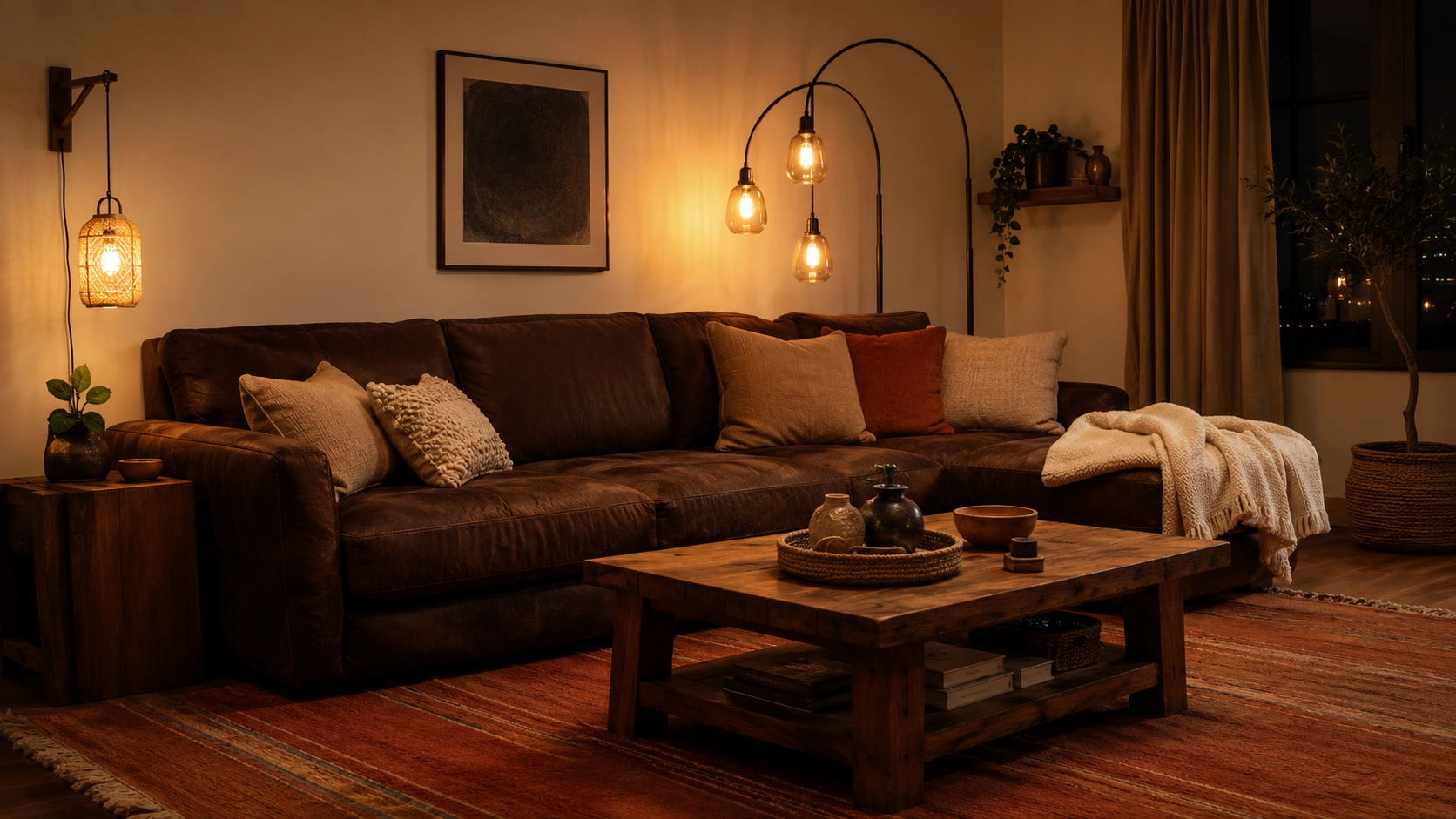
Few combinations feel as natural with a chocolate brown sofa as burnt orange underfoot paired with warm amber lighting overhead. A burnt orange or rust-toned area rug — flat-woven cotton, low-pile wool, or a simple striped weave — grounds the seating area in a color that reads simultaneously earthy and energizing. The warmth pulls the brown sofa into the palette naturally, so it stops feeling like the heaviest object in the room and starts anchoring a cohesive, intentionally warm composition instead.
For lighting, Edison-style bulbs in a floor lamp or a plug-in pendant lantern near the sofa make an enormous visual difference when paired with this palette — they cast a golden glow that deepens the richness of the brown and makes the rug color quietly vibrate with warmth. This works particularly well in apartments where natural light is limited. Position a tall arc floor lamp over the sofa’s far corner and let the warm bulb do the work instead of relying on harsh, flat overhead fixtures that flatten every color in the room.
3. Dark Forest Green Velvet Throw Pillows
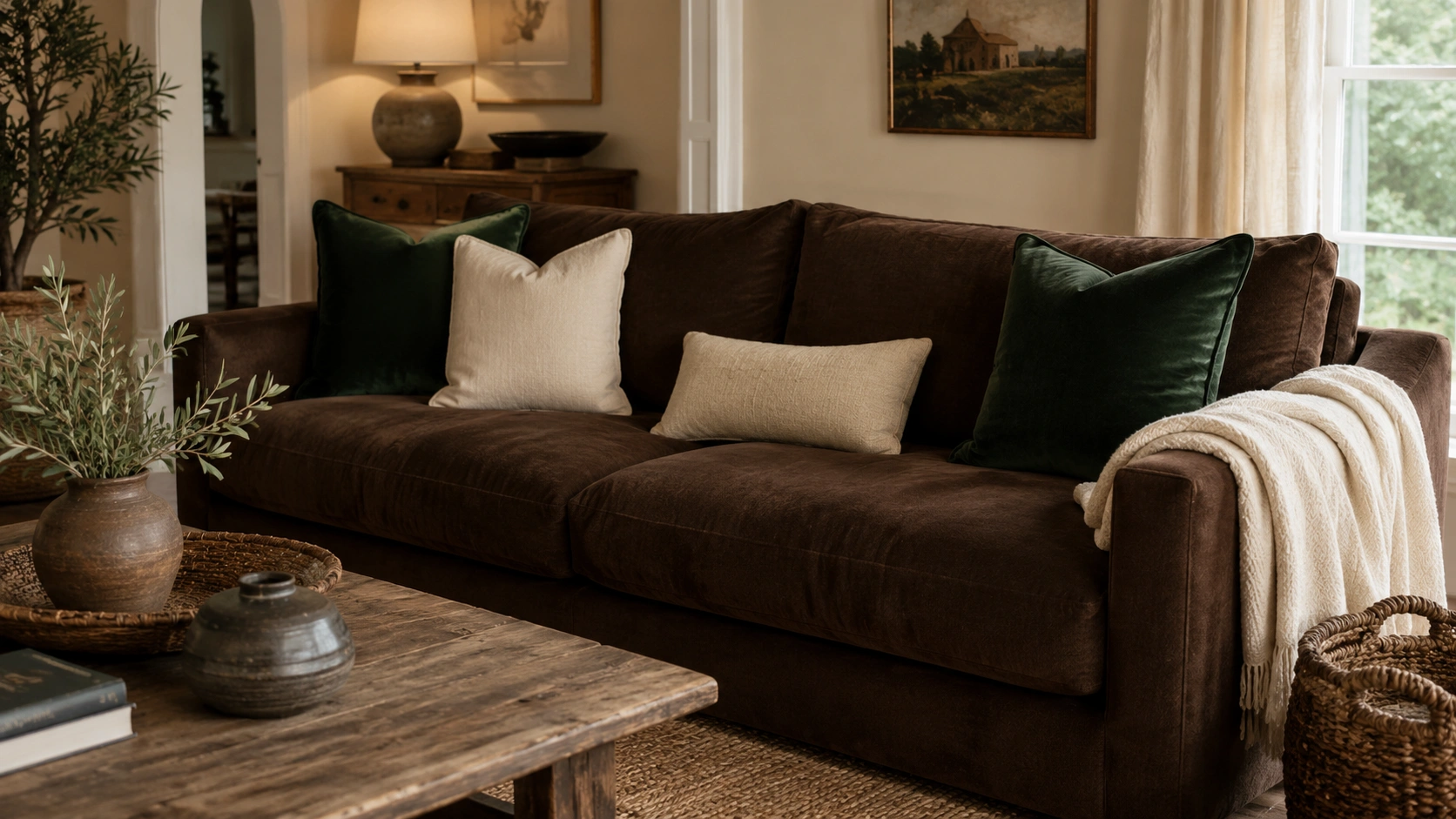
Dark forest green velvet against chocolate brown is a pairing that looks significantly more expensive than it costs, which is one of the main reasons it works so well as a starting point. The velvet texture introduces a tactile contrast that makes the brown sofa feel layered and intentionally designed — suddenly it reads as the anchor of a rich, earthy palette rather than a stand-alone piece floating in an undefined room. Two deep green velvet pillow covers in a 20×20 size, one at each end of the sofa, can shift the entire feel of the space.
This works because both forest green and chocolate brown share deep, nature-inspired undertones that pull from the same earthy spectrum without competing directly. IKEA’s SANELA cushion covers in dark green are a practical and affordable entry point into this look. For visual balance, keep the remaining pillows or throw on the sofa in a warm neutral — cream, ivory, or natural linen — so the green reads as the deliberate statement color rather than contributing to a setup that feels dark, enclosed, and heavy on all sides.
4. Jute Rug and Rattan Side Table Combo
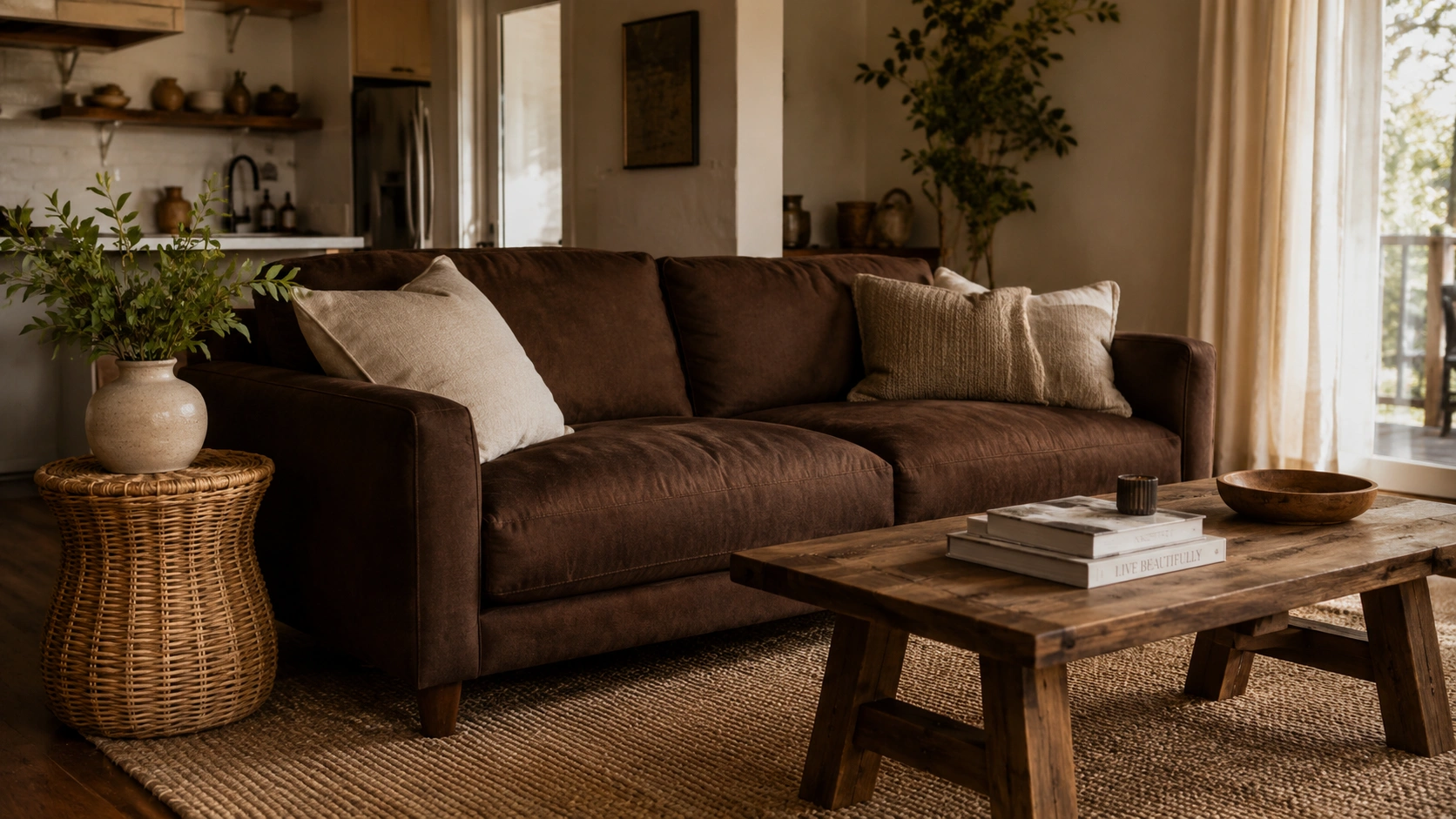
A jute rug underneath a chocolate brown sofa paired with a rattan or wicker side table creates one of those combinations that looks effortlessly considered without requiring any formal design background to pull off. The natural fibers of jute and rattan echo the earthy warmth of the brown sofa upholstery, and the textural difference between smooth fabric and rough-woven fiber adds the visual variety a monochromatic earth-tone setup needs without introducing any competing color. This works equally well in compact apartments and larger open-plan living rooms.
Safavieh’s Natural Fiber Collection jute and sisal rugs are budget-accessible, widely stocked, and style naturally alongside brown sofas in both boho and minimalist palettes. Place the rug so at least the front two legs of the sofa rest on it rather than floating the rug entirely in front with no furniture contact — a common sizing mistake that makes a seating area look unanchored and incomplete. For more guidance on getting the rug placement right, see this guide on choosing the right rug size for your living room.
5. Sage Green Accent Wall Pairing
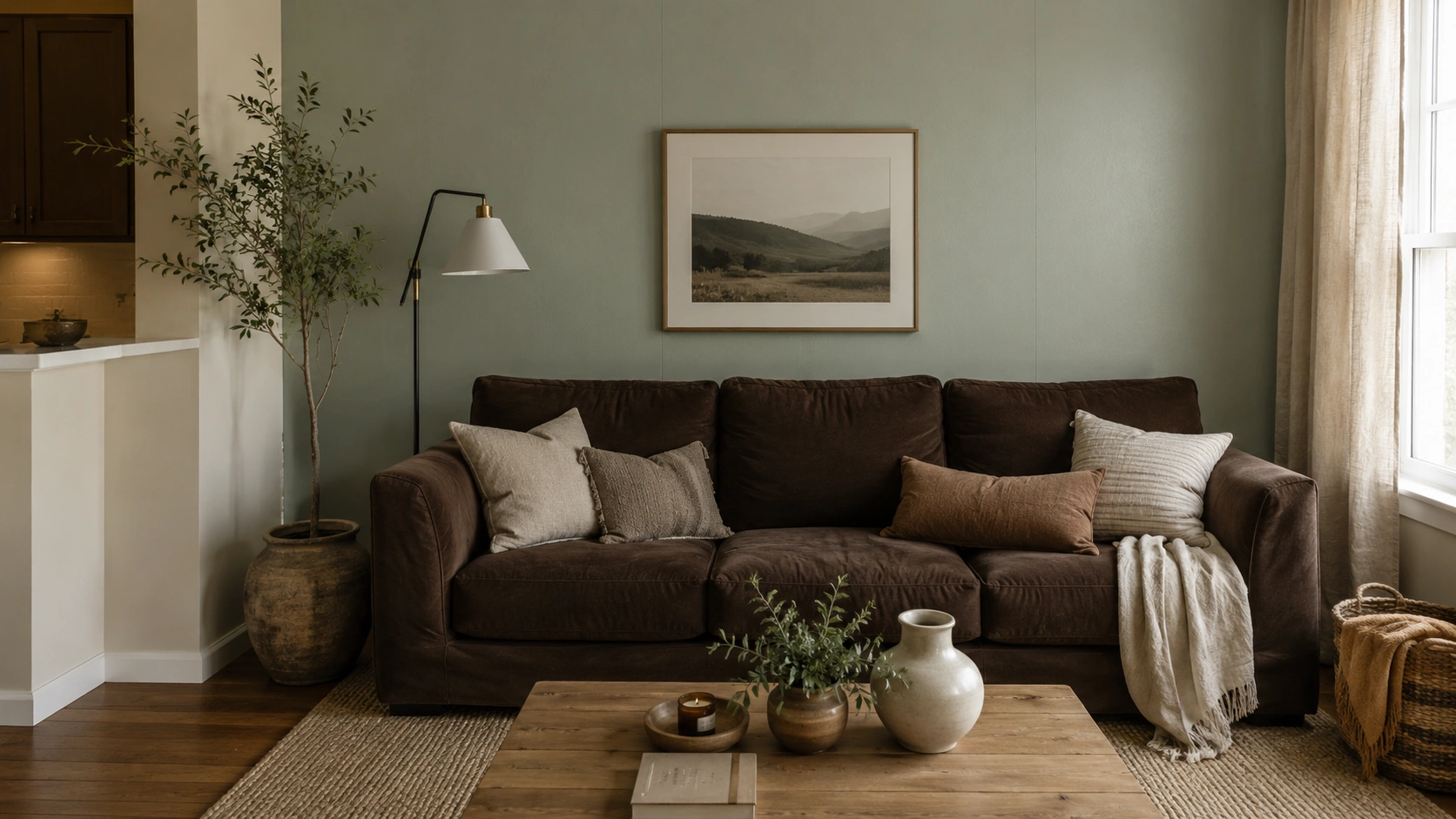
A sage green accent wall behind a chocolate brown sofa is one of the most visually grounded and current color decisions you can make right now. Sherwin-Williams Evergreen Fog (SW 9130) is a specific shade worth exploring — it is muted enough to feel sophisticated, warm enough to connect naturally with brown, and light enough to avoid making a smaller room feel enclosed. Together, sage and chocolate brown create a palette that reads earthy, calm, and unmistakably aligned with today’s warm-neutral design sensibility.
If you rent and cannot paint, large peel-and-stick wallpaper panels in a muted sage or dusty green achieve a similar visual effect without any lease risk whatsoever. Before committing to any paint shade, use the Sherwin-Williams paint color visualizer to test Evergreen Fog or Accessible Beige (SW 7036) against your room’s light conditions digitally — it saves the frustration of choosing a shade from a small store chip only to find it reads completely different on a full wall. To explore complementary color directions beyond sage, browse the best neutral living room color palettes.
6. Chunky Cream Knit Throw for Cozy Texture
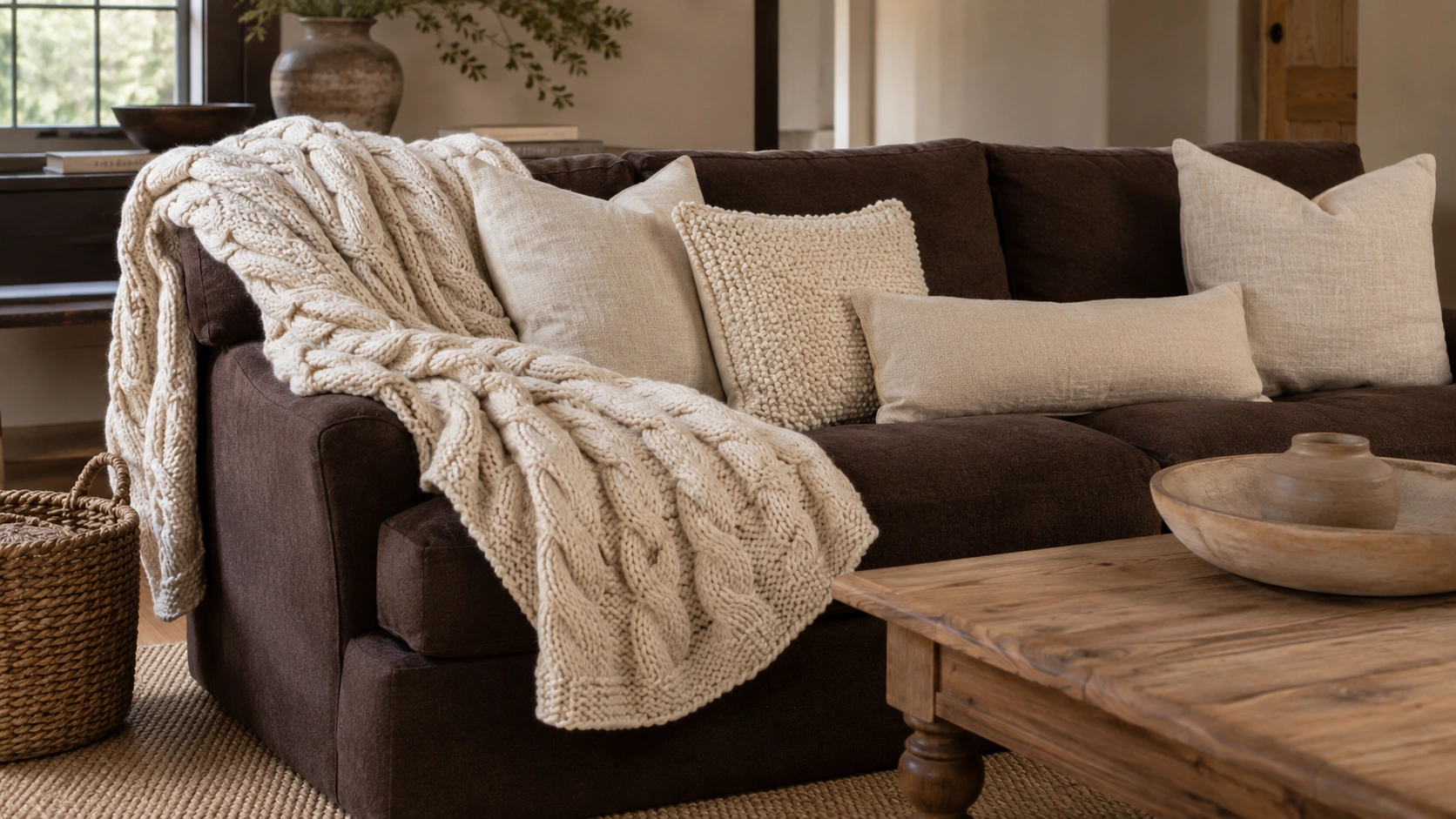
A chunky cream or ivory knit throw draped loosely over the arm or corner of a chocolate brown sofa changes the entire texture story of the piece within seconds. The rough, handcrafted quality of a cable knit or looped throw introduces warmth and lightness simultaneously — visually breaking up the solid brown expanse while adding the cozy, lived-in energy that makes a room feel genuinely welcoming rather than staged. This is also one of the lowest-cost and most instantly reversible ideas on this list, which makes it worth trying before anything else.
The difference between this looking purposefully styled and looking thrown there by accident is entirely in the draping. Do not fold the throw into a tidy rectangle and lay it flat across the sofa cushion. Pull it slightly loose, let one edge fall naturally over the arm, and allow the cable texture to cascade forward onto the seat. Target carries affordable chunky-knit throws in cream and oatmeal tones that photograph well and hold up after repeated washing. Pair with the cream and ivory pillow stack for a tone-on-tone layered look that reads genuinely designer-quality.
7. Terracotta and Rust Ceramic Accessories
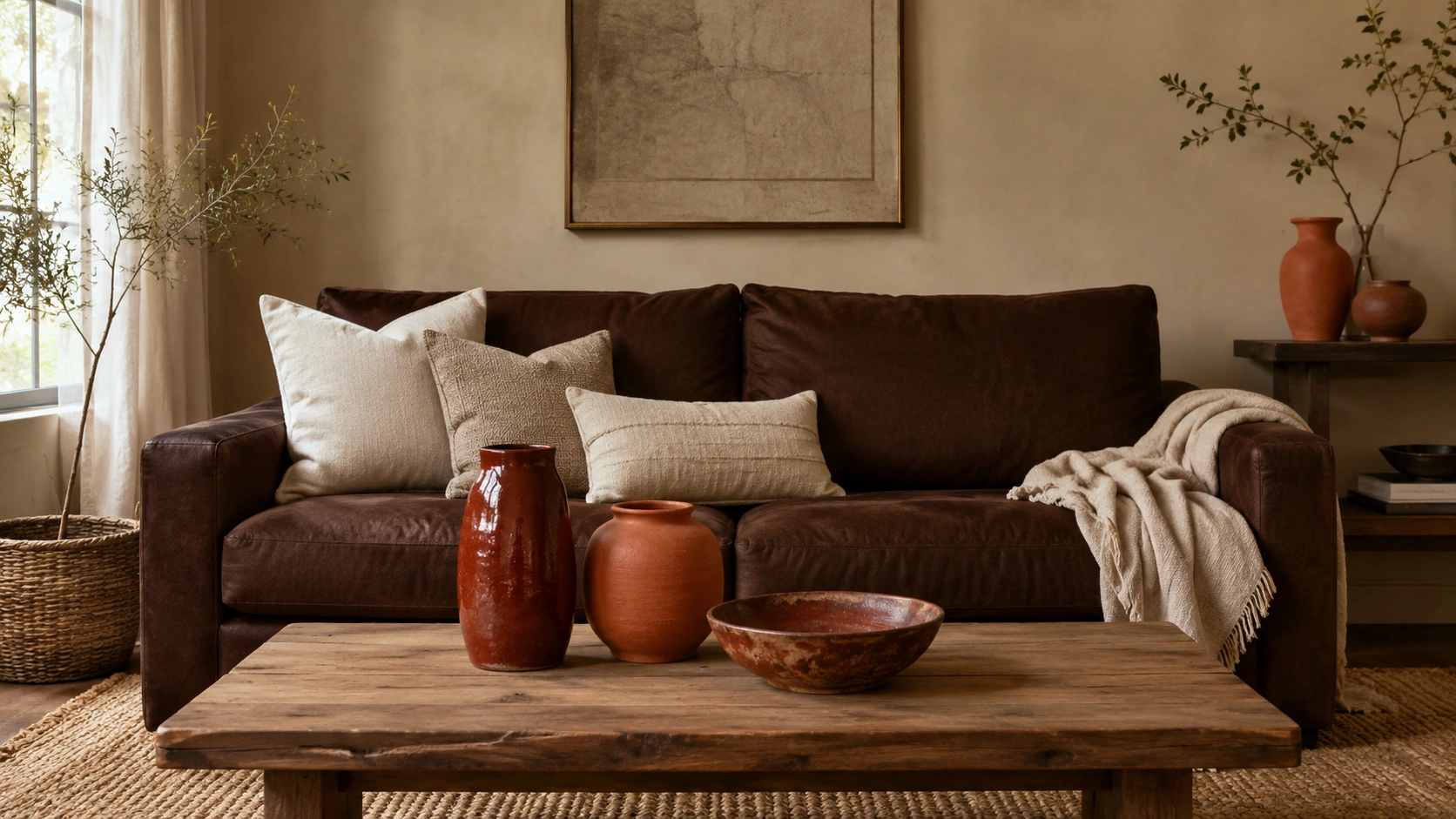
Terracotta and rust-colored accessories — a glazed ceramic vase, a matte pot, a textured bowl placed on the coffee table — are among the quickest ways to anchor a chocolate brown sofa within a recognizable contemporary design aesthetic without touching a single piece of furniture. Earth tones like terracotta, rust, and burnt sienna share color ancestry with the brown in the sofa, which means they reinforce the palette rather than interrupt it. A cluster of two or three pieces in varied heights on a shelf or side table creates a deliberate, professionally styled vignette.
The good news about this idea is the cost — terracotta accessories are widely available at HomeGoods, Marshalls, and TJ Maxx for well under twenty dollars each, and imperfect, handmade-looking ceramics are especially appropriate alongside a warm brown sofa. These earthy tones are deeply aligned with current global design trends, an alignment consistently reinforced by Pantone’s current color trend palette, which has featured warm earth tones across multiple seasons. A rust-glazed vase alongside a matte terracotta pot is a starting point that costs almost nothing and looks collected rather than purchased all at once.
8. White Shag Rug for Bright Contrast
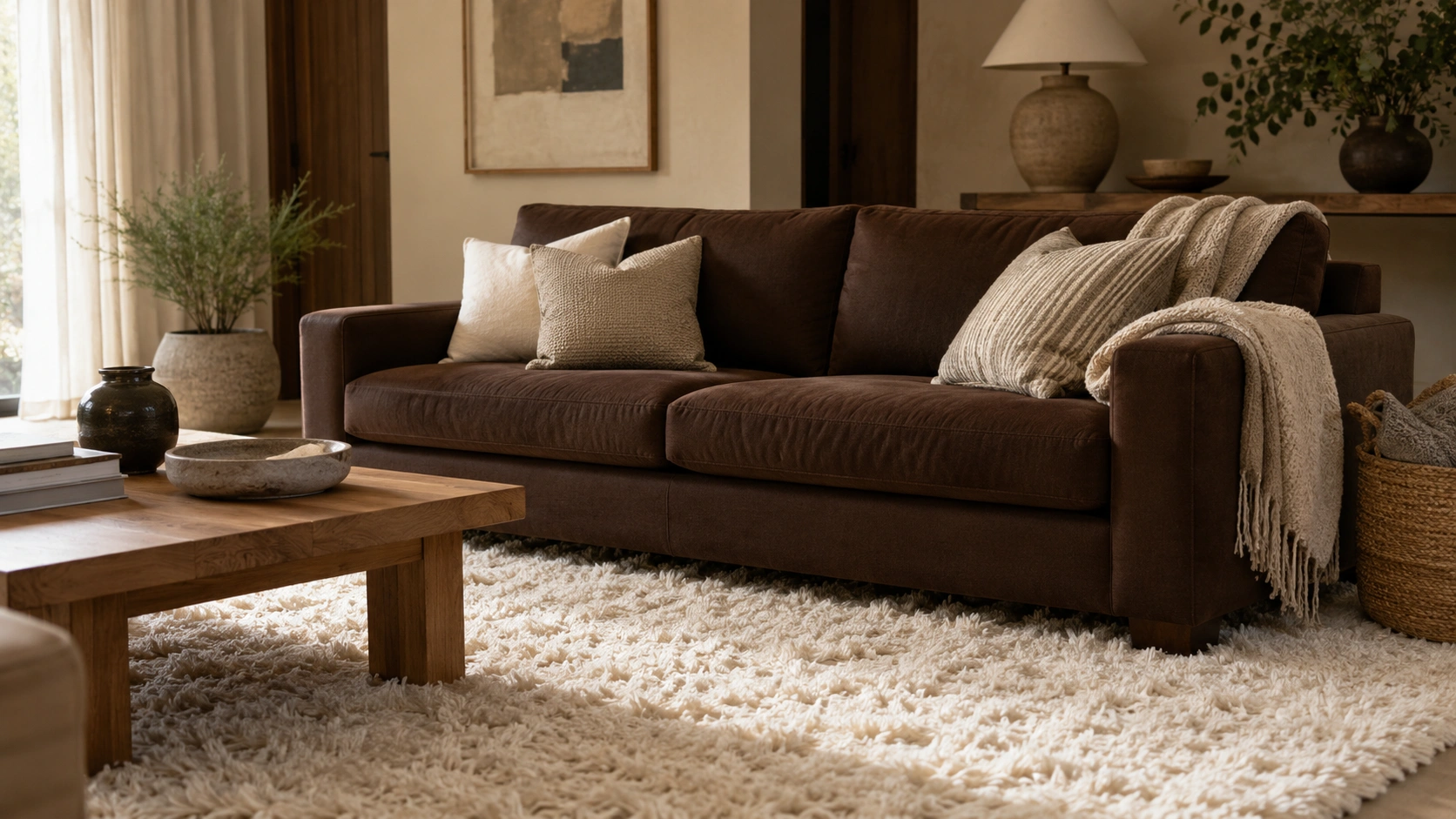
A white or off-white shag rug beneath a chocolate brown sofa creates one of the boldest visual contrasts on this list — and it works precisely because the textures are so dramatically different from each other. The plush, fluffy pile against the smooth, dark mass of the sofa introduces a kind of visual tension that reads almost architectural. The light-colored ground also bounces reflected light into the lower portion of the room, which prevents the seating area from feeling heavy, cave-like, or visually sunken around the sofa’s base.
One honest practical note: white shag rugs require consistent upkeep to stay looking clean, especially in homes with pets or heavy foot traffic. If that is a genuine concern, an ivory or warm white low-pile loop rug delivers similar brightness without the aggressive pile depth that captures every footprint and strand of pet hair. Whichever version you choose, position the sofa with at least its front two legs resting on the rug to anchor the seating area properly — a floating rug with no furniture touching it tends to look like a bath mat dropped in the center of the room.
9. Black and White Gallery Wall Above the Sofa
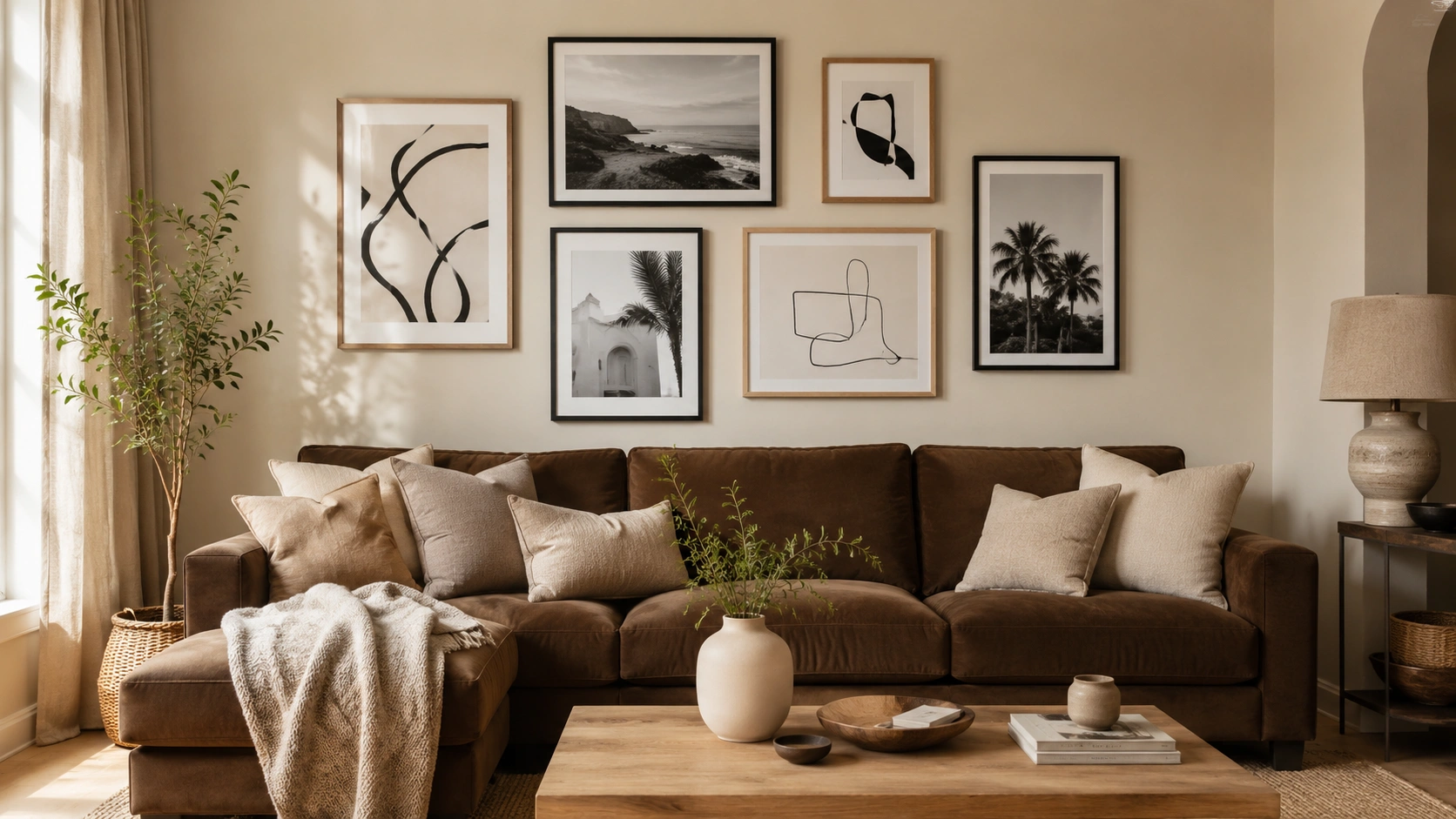
A black-and-white gallery wall mounted above a chocolate brown sofa introduces graphic contrast that modernizes the entire setup without a single paint stroke or new furniture purchase. The monochromatic art against the warm brown sofa creates a visual hierarchy that draws the eye upward, making the room feel taller and more deliberately composed. Mix frame sizes in a loose cluster arrangement — five to seven pieces in black metal or natural wood frames works well for most standard sofa widths, with a few inches of breathing space between each frame.
For renters, large Command strips and slim adhesive hooks handle small to medium framed pieces without drilling. Aim to place the cluster approximately six to eight inches above the sofa’s back cushions — close enough to feel connected to the furniture below, far enough to avoid visual crowding at the top of the sofa. Black-and-white photography prints, simple abstract line art, and minimal typography prints from Etsy, Society6, or Desenio are affordable, easy to source in consistent tones, and simple to swap out seasonally — making this one of the most refreshable and renter-safe setups on the list.
10. Navy Blue Pillow and Cream Rug Combination
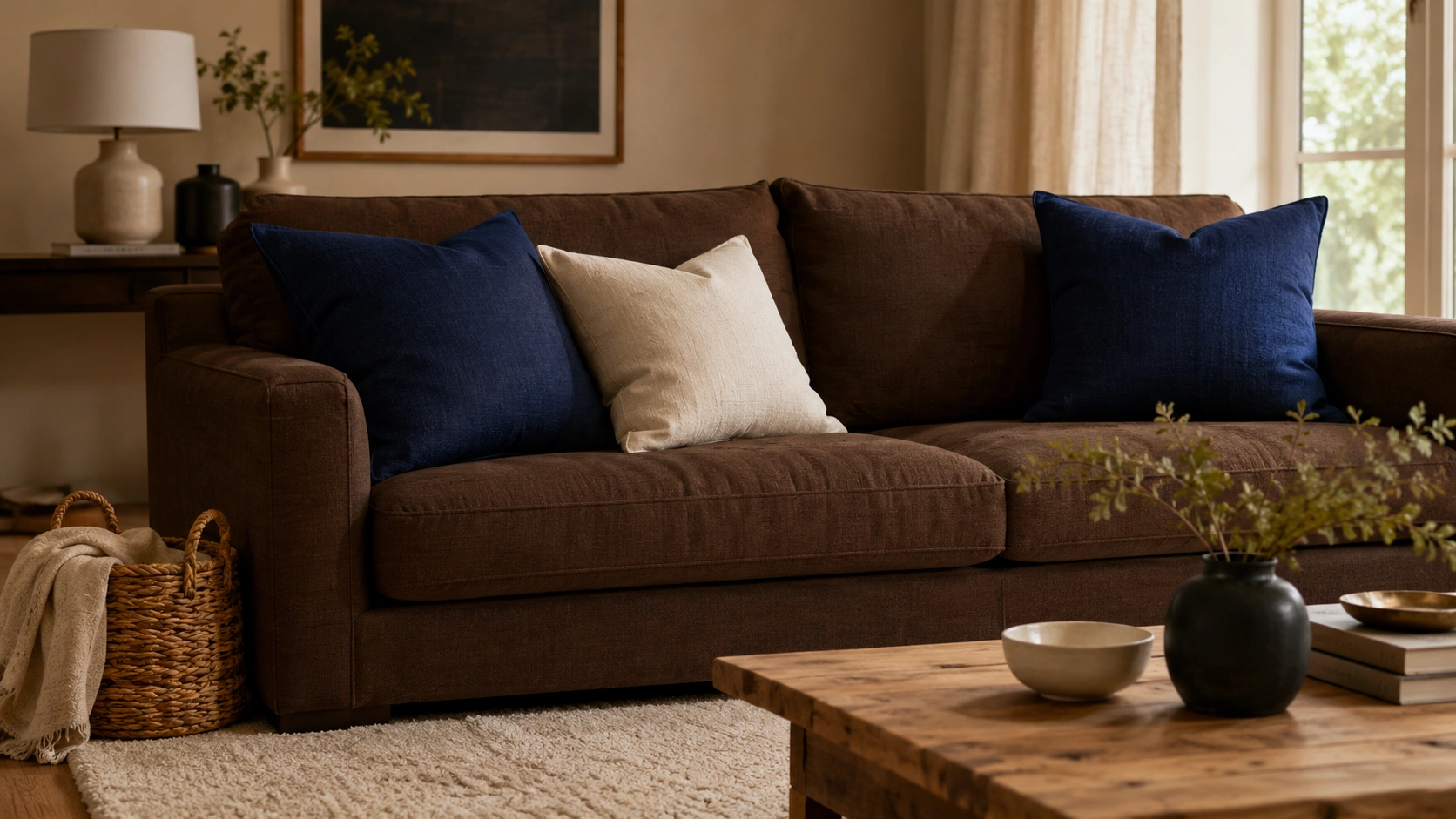
Navy blue throw pillows paired with a cream or ivory area rug is a combination that looks polished and considered while remaining entirely sourceable at mainstream retailers. The deep navy creates a rich, unexpected contrast against the chocolate brown that reads far more sophisticated than either color would alone, while the cream rug underneath softens and opens the base of the seating area so the overall palette feels balanced rather than weighted heavily across the room from floor to sofa in a single dark mass.
For the pillows, choose navy in a linen weave or a lightly textured cotton rather than a shiny polyester fabric — the matte finish harmonizes significantly better against the natural warmth of brown upholstery. Add one cream pillow between the two navy ones to break the symmetry softly without introducing a third color. For the rug, a flat-woven cream or ivory cotton option from IKEA or a tufted cream version from Target keeps the investment manageable while delivering the visual contrast the combination needs to feel intentional and complete rather than accidental and assembled by chance.
11. Gold and Brass Accent Pieces Throughout
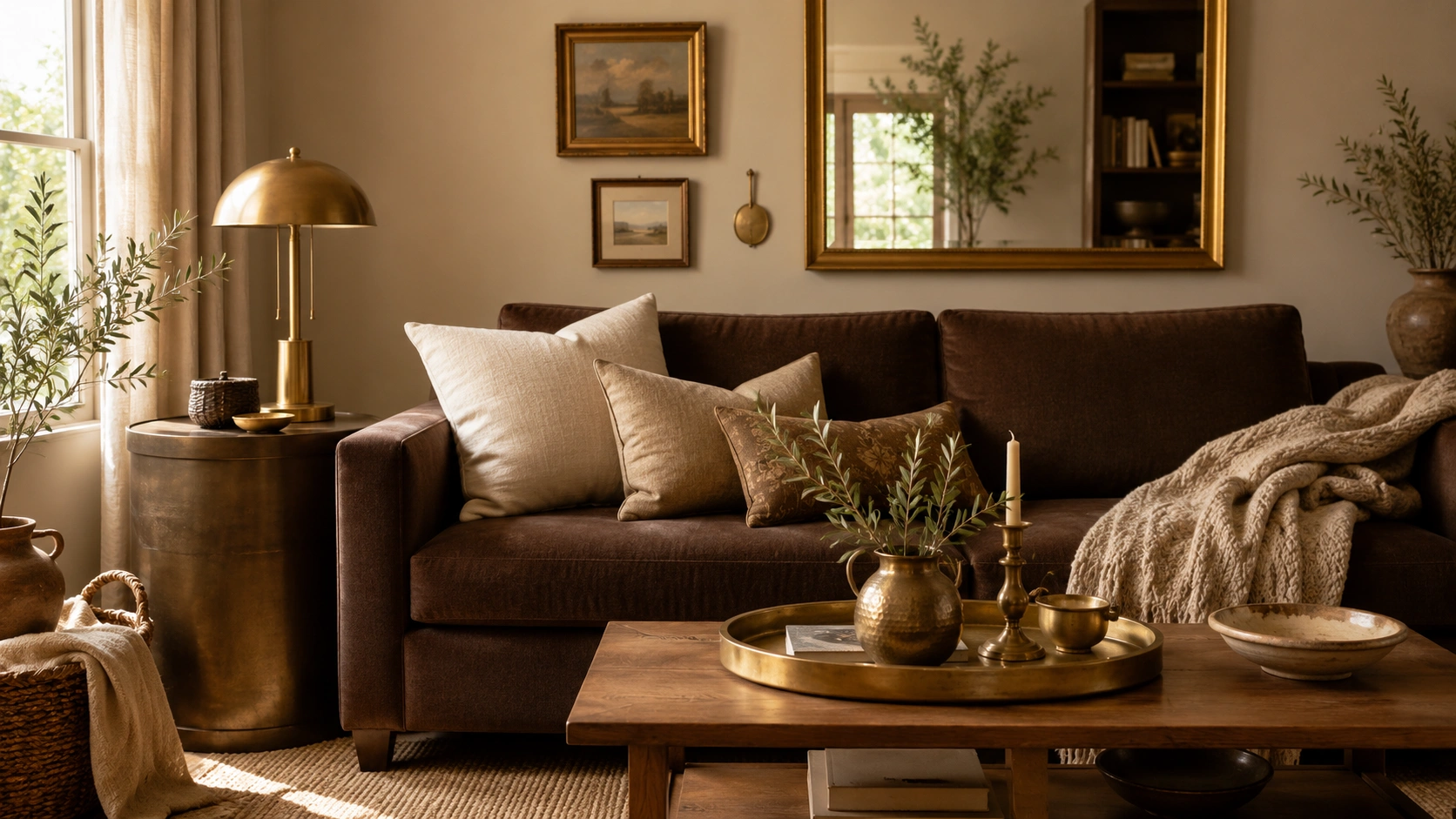
Warm metallic accents — a brass candleholder, a gold-framed mirror, a bronze side table, a set of antique-toned picture frames — do something specific to a chocolate brown sofa setup that cooler metals simply cannot: they amplify the warmth rather than contrast with it. Gold and brass share a yellow-amber base that falls within the same tonal family as brown, so rather than competing, they create a layered warmth that makes the whole room feel more intentional and curated. Even two or three small brass pieces placed thoughtfully can shift the room’s energy noticeably.
The easiest way to introduce brass or gold without committing to new large furniture is through lighting and small accessories. A single brass table lamp on the side table, a gold-toned decorative tray on the coffee table surface, and a small hammered brass vase can completely elevate the area around the brown sofa. HomeGoods and TJ Maxx regularly stock brushed brass and antique gold home accessories at well under thirty dollars each. Mix satin and matte finishes rather than keeping everything the same finish — it creates a collected, layered feel over a uniform catalog-coordinated look.
12. Blush Pink and Mauve Soft Textile Touches
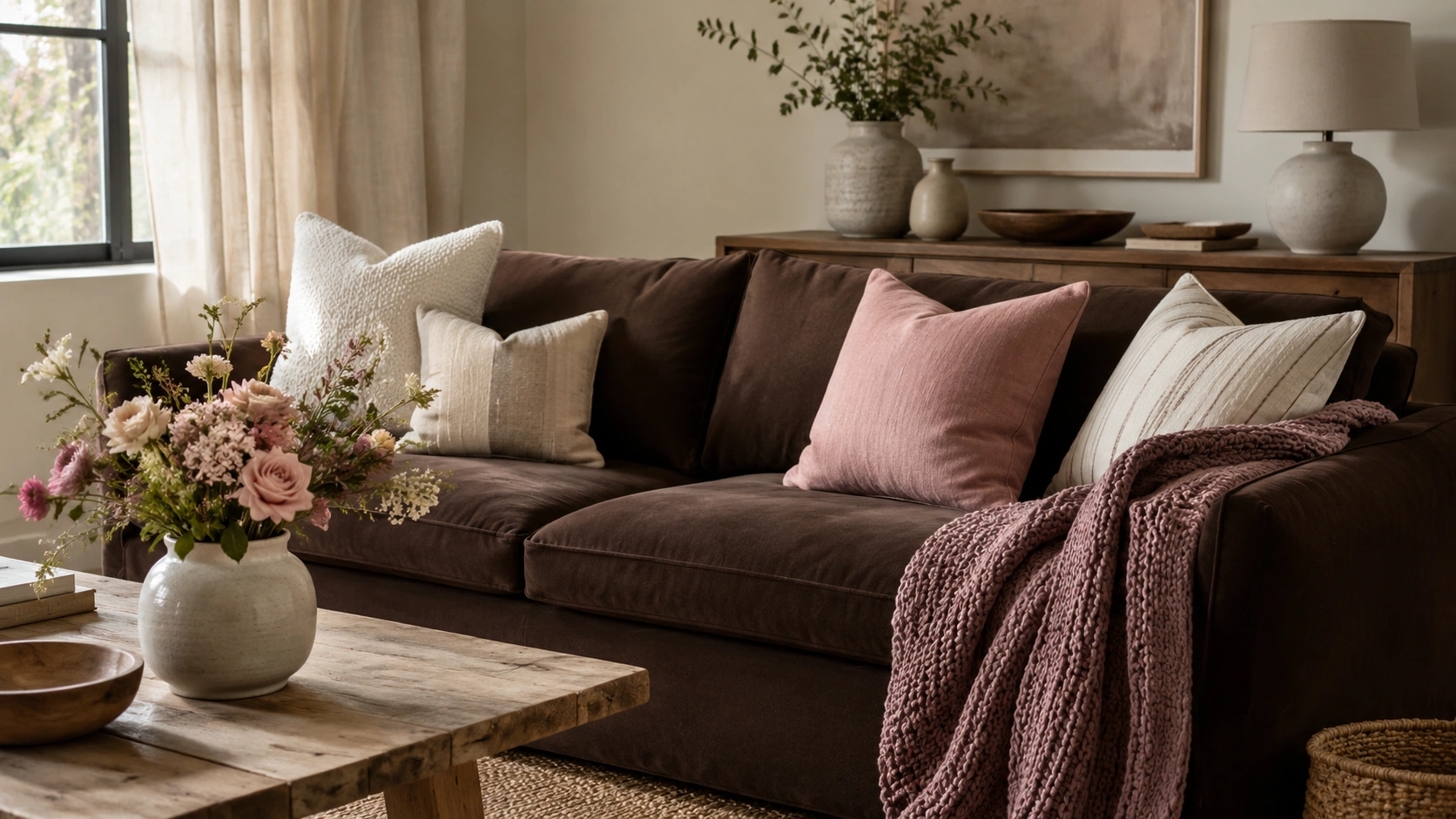
Blush pink and mauve are among the most genuinely surprising and beautiful pairings for a chocolate brown sofa, and they work because warm-toned pinks share the same amber-red base as brown — they soften and brighten the palette without ever competing with it directly. A blush linen throw pillow, a dusty mauve knit throw, and a soft rose-toned floral arrangement on the coffee table together completely shift the emotional register of the room from heavy and traditional to warm, quietly layered, and subtly romantic without changing a single piece of furniture.
The key balance point is keeping the pink tones dusty and muted rather than saturated or bright — hot pink or magenta will clash against deep brown, but soft dusty rose and mauve sit in natural harmony with it. Limit the blush to two textile touches maximum — one pillow and one throw, or one pillow and one arrangement — and keep everything else in neutral cream, warm beige, or natural wood so the blush reads as a considered accent rather than a competing color story that makes the room feel confused rather than layered and intentional.
13. Mustard Yellow Vintage-Inspired Throw
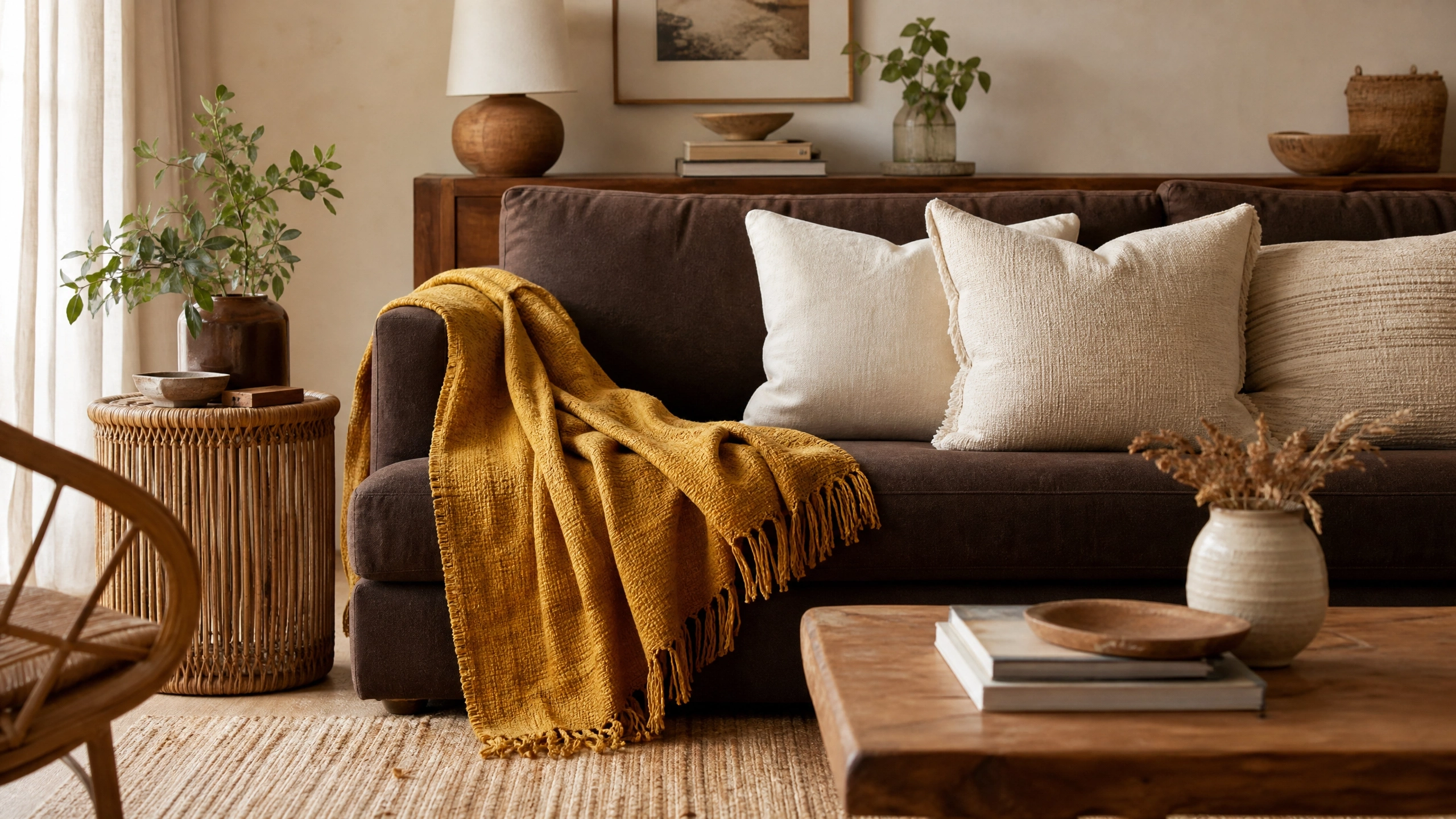
A mustard yellow throw draped over the corner or arm of a chocolate brown sofa does something quiet but distinctly powerful — it signals that the room has a design perspective. Mustard and brown sit close together on the warm side of the color wheel, and the mustard adds a richness and vintage energy that makes the sofa feel more curated and alive by proximity. The slightly aged quality of a good mustard yellow connects beautifully to wood accents, rattan furniture, and warm leather, making it particularly effective in boho, mid-century modern, or eclectic living room directions.
Drape it loosely over one arm or fold it casually across a corner cushion rather than spreading it flat across the entire sofa back, which looks limp and accidental rather than styled. Pair it with cream or ivory pillows rather than additional warm tones competing alongside it — the mustard reads strongest as a statement when the surrounding palette stays restrained and neutral. IKEA’s woven cotton throws and Target’s seasonal homeware collections reliably offer mustard tones in the twenty to forty dollar range that hold their color well after regular washing and use.
14. Oversized Indoor Plant as a Natural Anchor
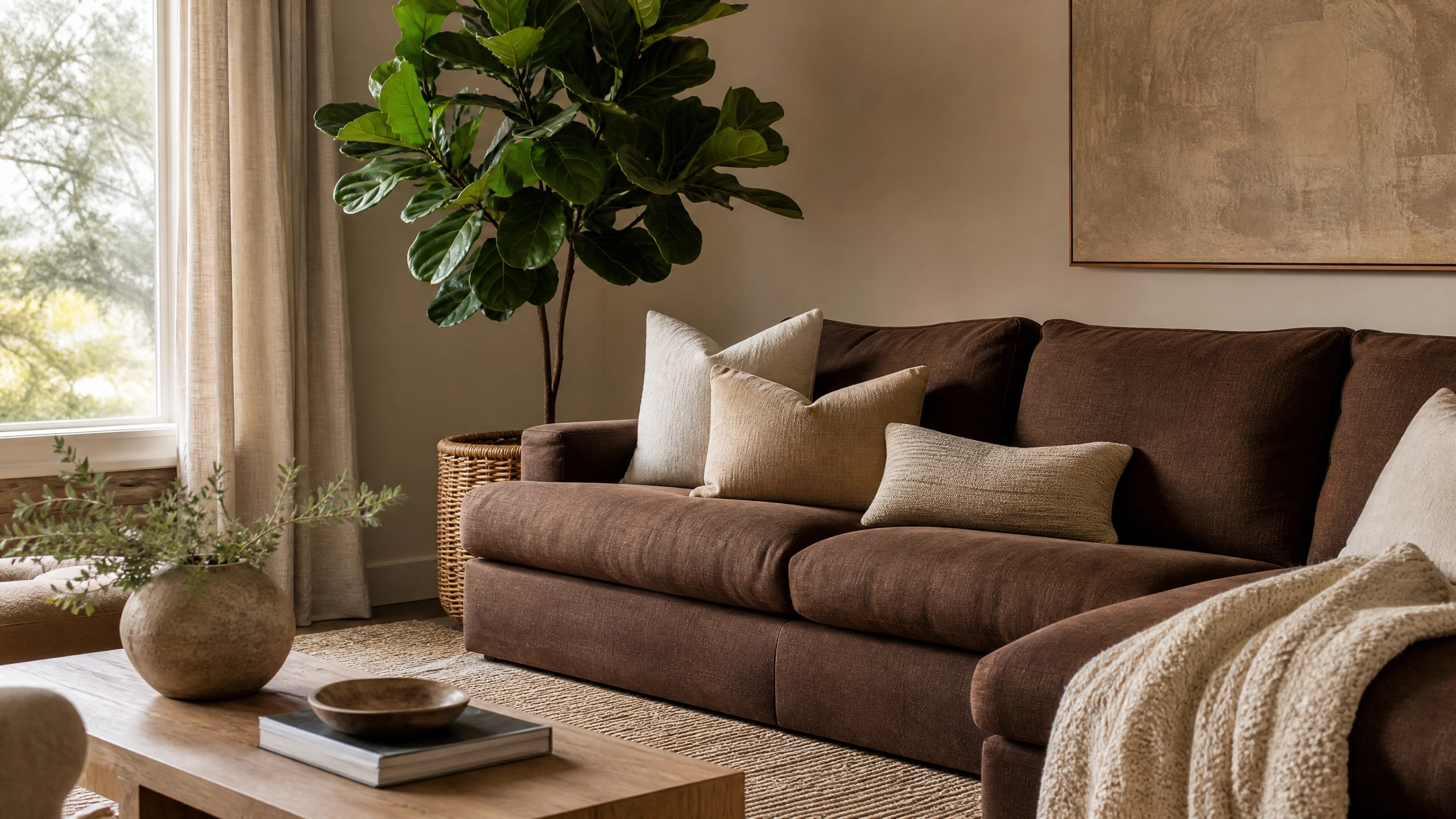
An oversized indoor plant beside or behind a chocolate brown sofa is one of the most powerful single-element changes you can make to the space — and it often costs less than a pair of throw pillows. A large fiddle leaf fig, a dramatic monstera, or a tall snake plant in a simple rattan basket or terracotta pot placed in the corner beside the sofa visually breaks up the mass of the dark furniture and introduces a living, breathing color that no ceramic or textile element can replicate. Green against brown is simply instinctive and immediately reads as intentional.
For smaller rooms, a medium pothos on a plant stand or a trailing vine near the sofa arm achieves a similar visual effect with a lighter spatial footprint. If keeping plants alive is genuinely difficult, high-quality faux versions from IKEA or Target now come in sizes and textures that read as convincingly real in photos and in person. The important rule here is scale — choose a plant with enough volume to hold its own visually beside a large, dark sofa, because a small succulent or a single trailing stem will get entirely swallowed next to substantial brown upholstery.
15. Warm Wood Coffee Table for Tonal Layering
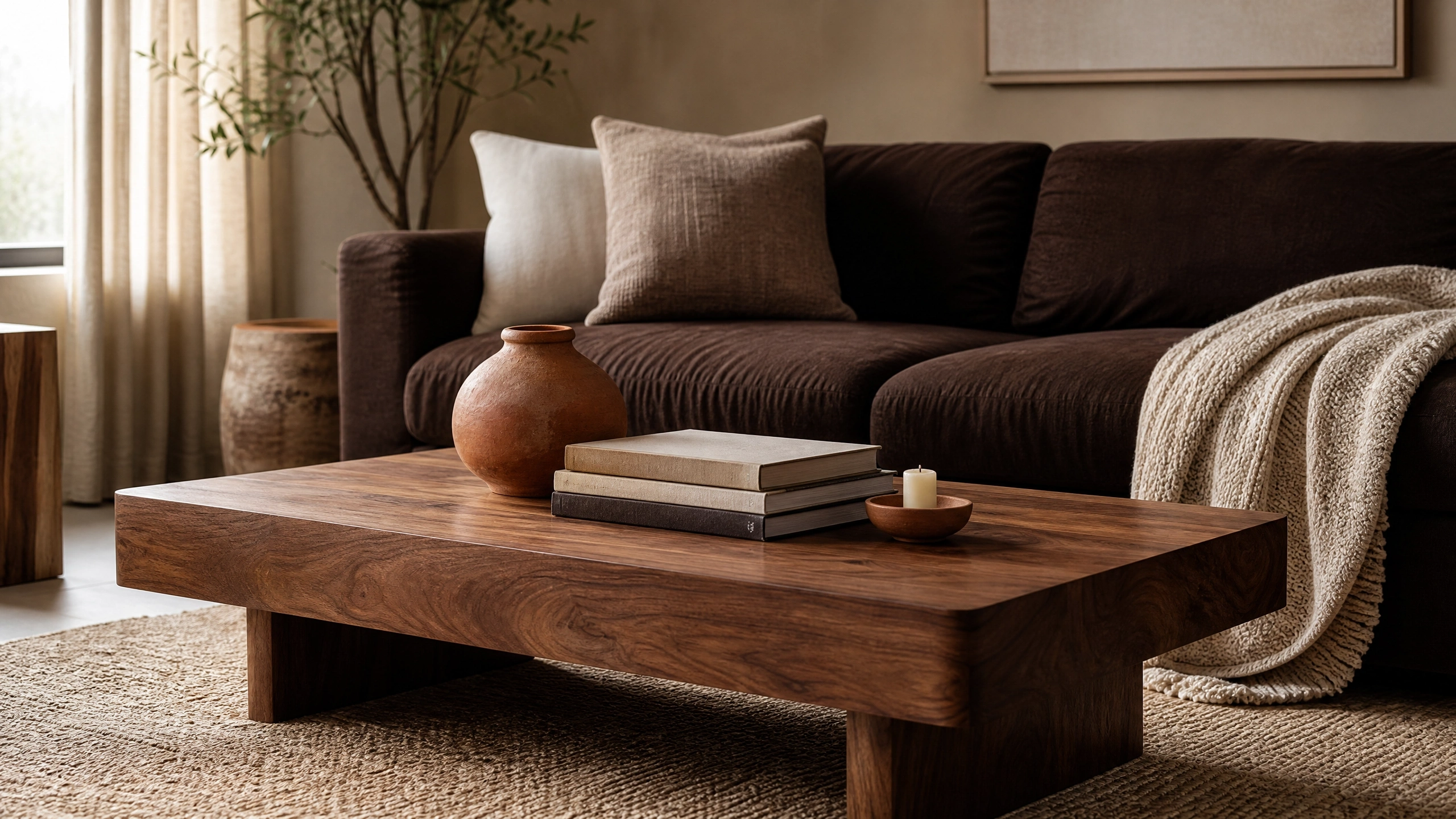
A warm-toned wood coffee table in front of a chocolate brown sofa creates a tonal layering effect that is one of the quietest but most effective approaches on this list. Medium to rich wood tones — oak, walnut, acacia — do not match the brown sofa but complement it through tonal harmony: they share the same warm, earthy undertone without competing directly in color. The result is a room that looks naturally curated and grounded, with visual depth that comes from layering organic materials rather than mixing competing or contrasting ones.
Avoid coffee tables in cool gray finishes or polished chrome, which disconnect from a brown sofa and make it feel heavier by contrast rather than connected through material kinship. A hairpin-leg walnut-finished table from IKEA or a simple acacia slab from HomeGoods both work in this pairing at a reasonable price. Style the table surface with intention: a small terracotta vase, a neat stack of books with interesting spines, and one simple candle in an earthy holder give the seating area a focal point that draws the eye forward and completes the visual story beneath the sofa.
16. Dark Academia Corner With Deep Green Walls and Leather Accents
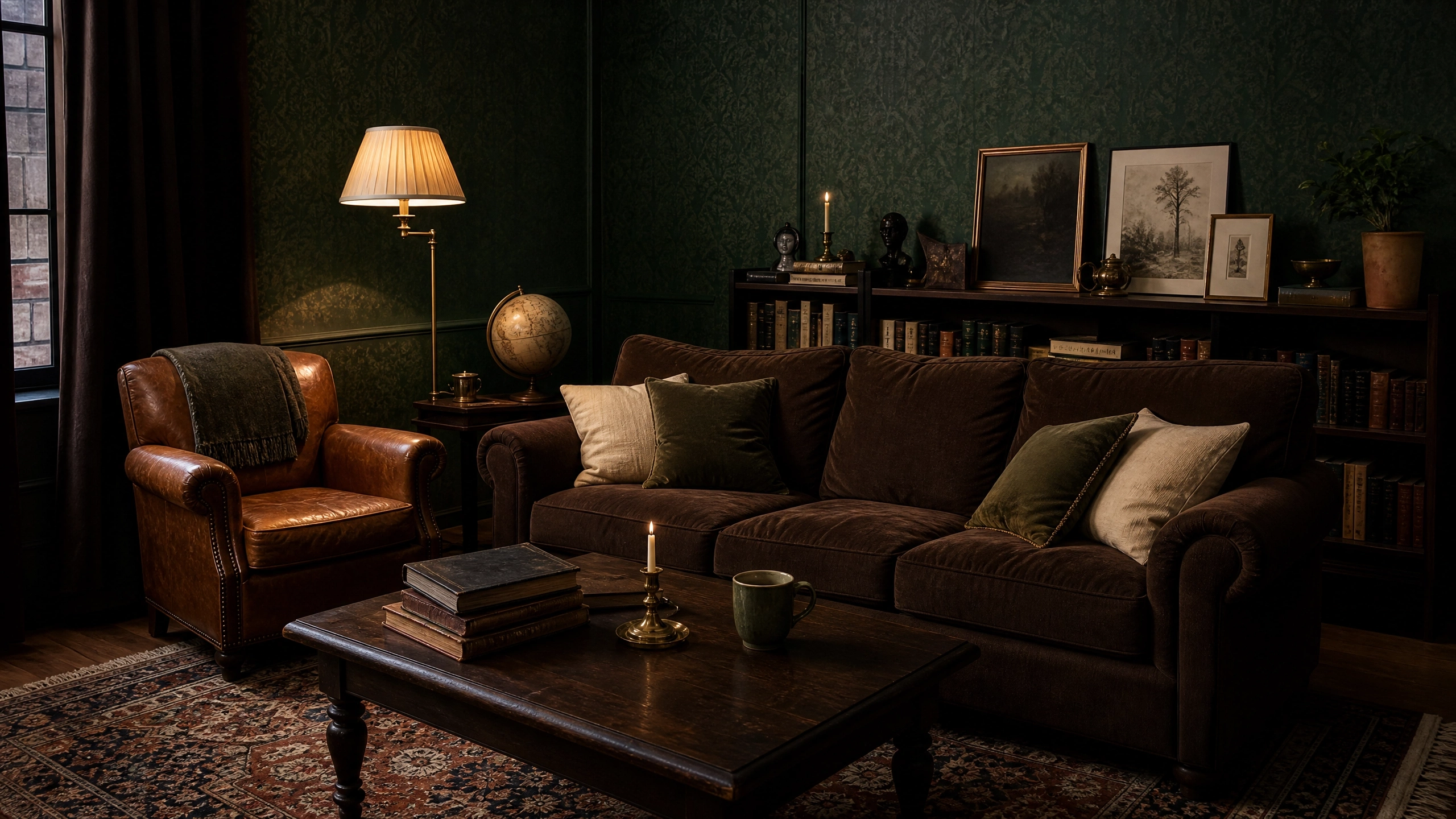
Dark academia as a living room aesthetic was practically designed for chocolate brown sofas. The style — moody, literary, richly textured — leans entirely into deep, warm tones rather than working against them, which makes a brown sofa not just acceptable in this aesthetic but central to it. A corner built around this couch with deep forest green walls, a small cognac or caramel leather armchair alongside it, a vintage-style floor lamp, and a low bookshelf filled with worn paperbacks and small brass objects creates a space that feels atmospheric, intentional, and genuinely distinct.
For renters, large-format deep green peel-and-stick wallpaper panels applied to the wall behind the sofa simulate a dark accent wall without any lease consequences. Layer in a fringed Persian-style area rug in rust, cream, and navy to anchor the seating zone, and add dark wood side tables for maximum atmospheric depth. A vintage-style globe on the side table, a few art prints leaned casually against the shelf rather than hung perfectly, and a leather-bound book stack on the coffee table complete the corner with the slowly collected character that separates this look from a generic room arrangement.
17. Dusty Blue and White Coastal Linen Pillow Look
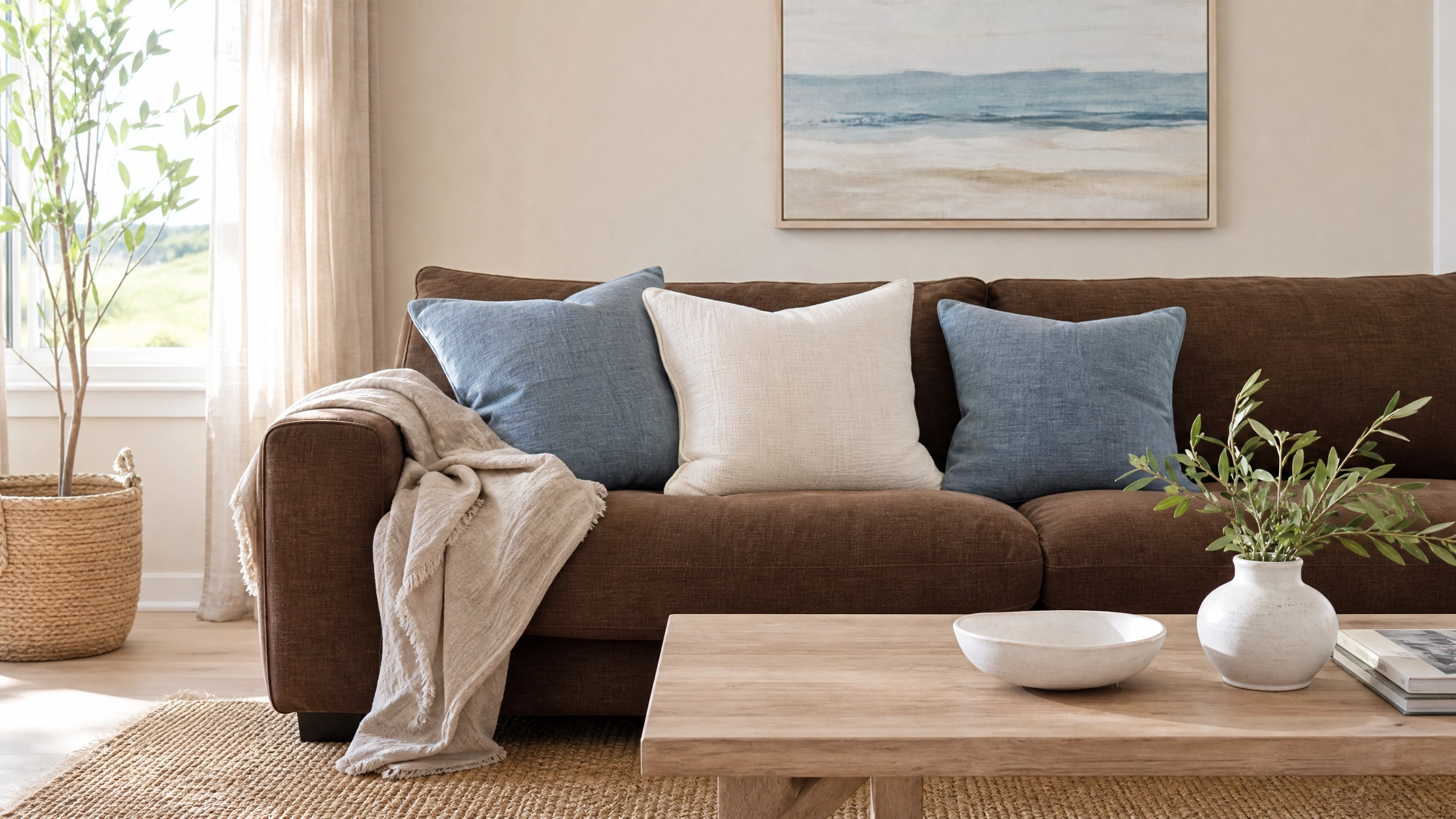
Dusty blue and white on a chocolate brown sofa creates a look that feels unexpectedly fresh and airy — precisely because the soft coolness of the blue-white contrast opens the room visually without clashing against the sofa’s natural warmth. The key is staying in the muted, dusty register of blue rather than reaching for bright teal or saturated royal blue, both of which will fight the warmth of brown rather than balance it. Dusty slate, French blue, or soft washed denim tones all read beautifully alongside chocolate brown upholstery.
Choose pillows in stonewashed or enzyme-washed linen for the most effective coastal texture effect: two dusty blue linen covers, one white or cream textured cover, and a light linen or cotton throw draped loosely alongside. Pair the look with a natural fiber rug — jute or sea grass — and keep wall decor minimal: a few white ceramic wall pieces or a simple coastal-toned abstract print above the sofa. This combination also works especially well as a spring and summer refresh for a sofa setup that felt heavy and enclosed throughout the colder months.
18. Moroccan Patterned Rug in Rust and Cream
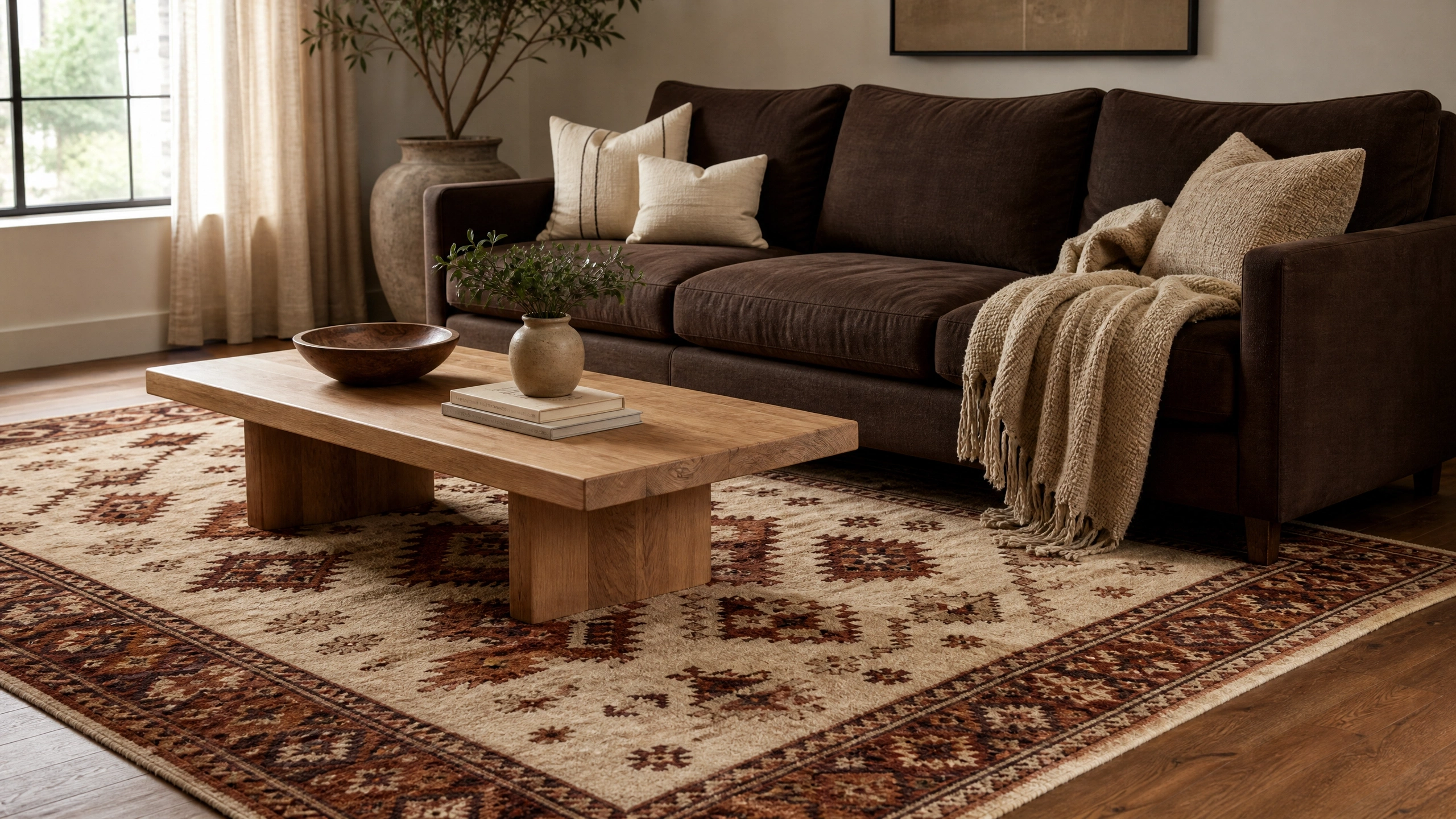
A Moroccan-patterned area rug in rust, cream, and deep burgundy tones laid under a chocolate brown sofa is one of those combinations that looks far more intentional and expensive than the actual effort or cost involved. The pattern introduces visual movement and complexity to the lower portion of the room, taking the eye’s focus off the solid mass of the sofa and distributing interest more evenly across the space. The rust tones in the rug connect to the brown sofa by color temperature, while the cream ground prevents the seating area from reading as uniformly heavy.
Look for Moroccan-style rugs at HomeGoods, Rugs USA, or on Etsy, where both handmade and machine-made versions are available across a wide price range — and where browsing actual product photos helps you gauge how a specific pattern reads at real scale rather than guessing from a small digital thumbnail. Position the rug with at least the sofa’s front legs resting on it, and leave a few inches of visible floor around the perimeter so the rug’s detailed border pattern can be appreciated rather than disappearing entirely under furniture legs and losing its visual impact.
19. Faux Fur Throw for a Winter Glam Moment
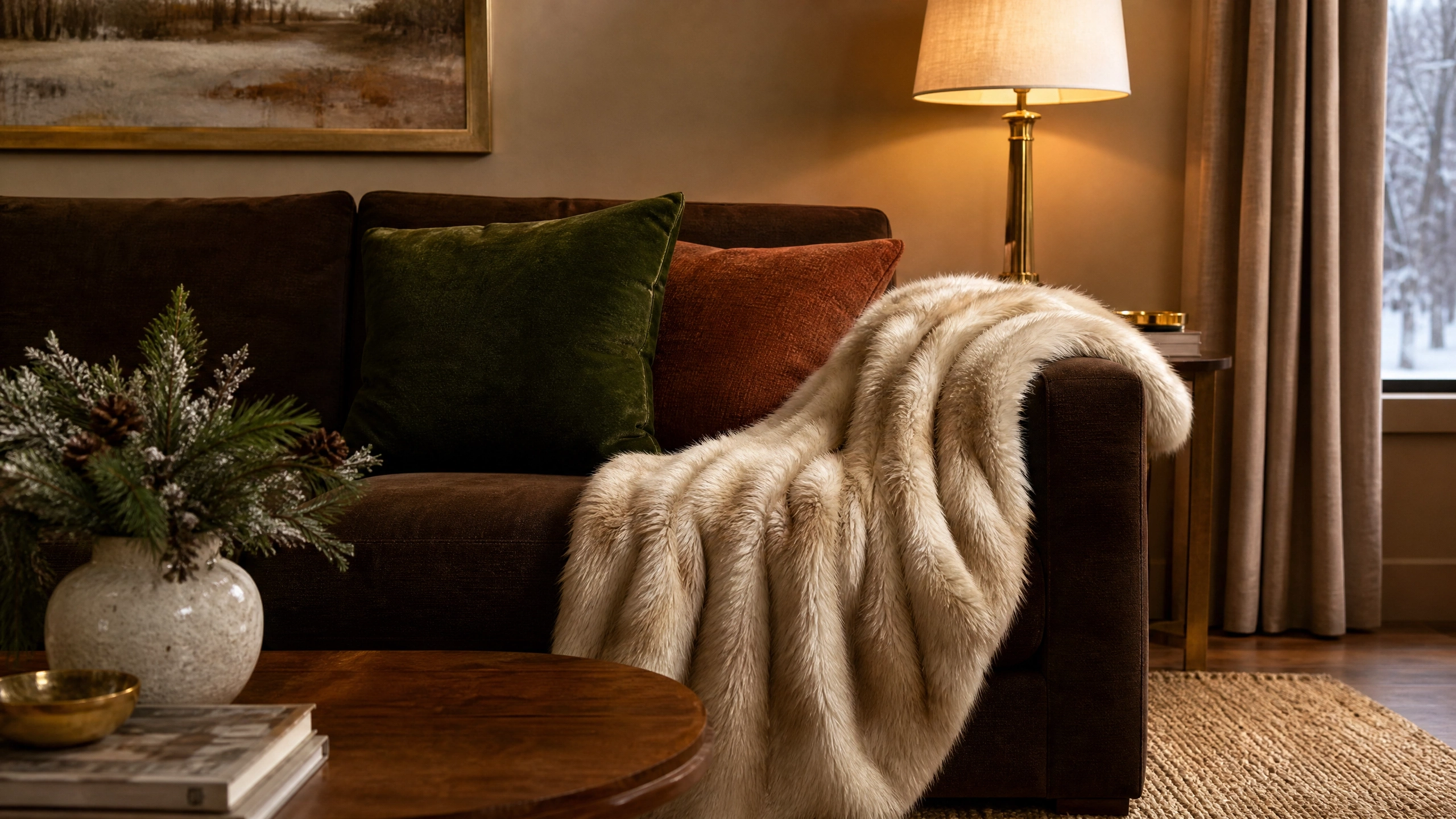
A faux fur throw in ivory, cream, or oatmeal draped over the arm of a chocolate brown sofa introduces an undeniable winter glamour to a living room — the kind of cozy-luxurious visual that looks pulled from a high-end interior shoot and takes roughly thirty seconds to pull together. The textural contrast between the silky softness of the faux fur and the solid fabric or leather of the sofa is dramatic in the best way, and in warm evening lamp light, the pale fur makes the brown underneath look noticeably richer and more dimensional than it does bare.
Treat this idea as intentionally seasonal rather than leaving the faux fur throw out year-round, where it can start to feel heavy and dated outside of autumn and winter. Layer it with deep green velvet or rust-toned pillow covers rather than cream-on-cream, which risks washing out the sofa’s warmth in a pile of undifferentiated pale tones. Target and HomeGoods both carry affordable faux fur throws in their seasonal sections — look for dense, tightly constructed versions rather than loose-pile ones that shed across sofa upholstery excessively after just a few uses.
20. Mixed Texture Pillow Stack — Velvet, Linen, and Chunky Knit
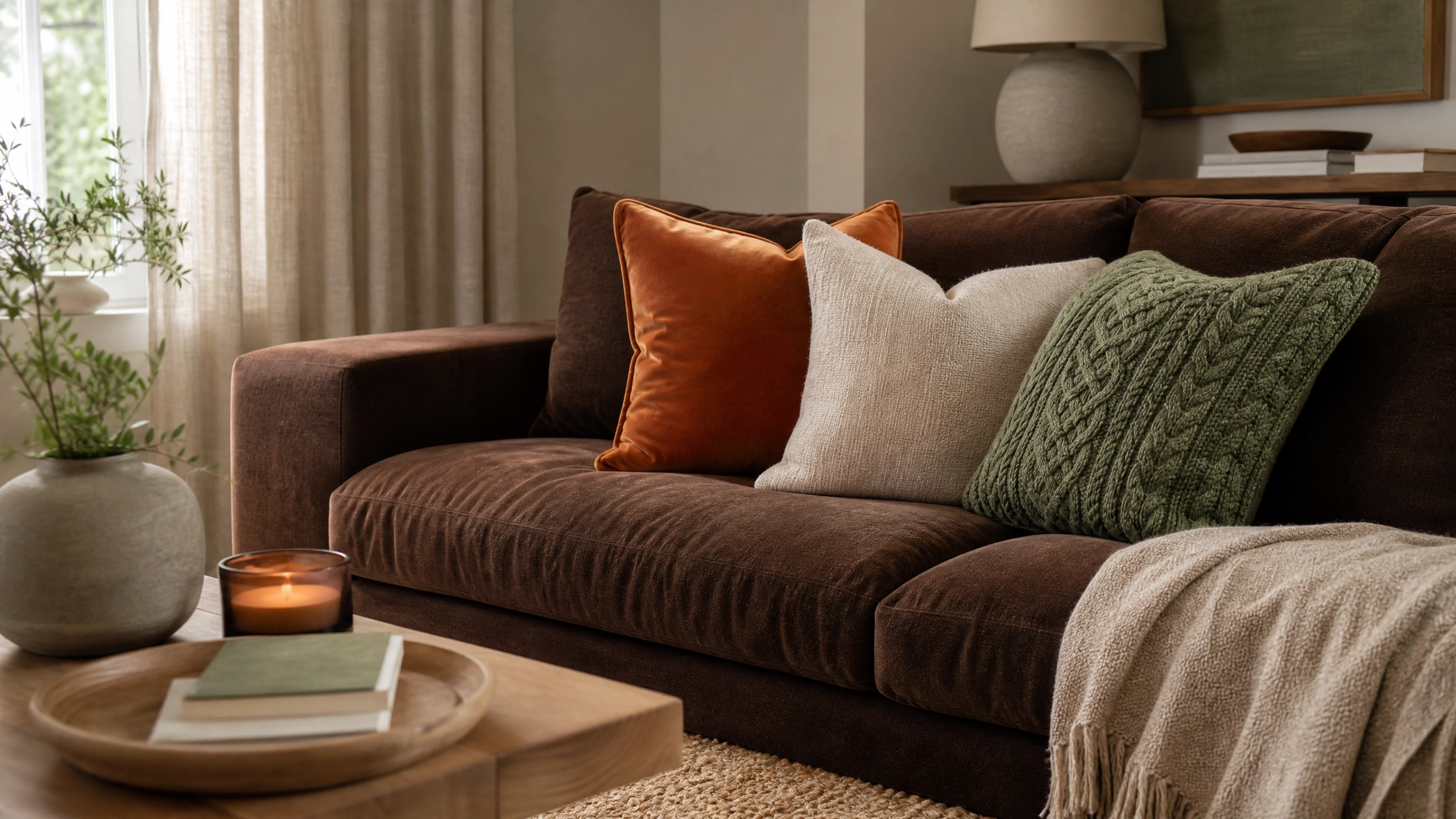
The single most effective pillow strategy for a chocolate brown couch is mixing fabrics rather than just colors — and a three-texture combination of velvet, linen, and chunky knit is the pairing that most consistently reads as styled rather than simply assembled. The visual variety created by a smooth velvet pillow beside a loosely woven linen cover beside a cable-knit texture creates richness that a single-fabric grouping in multiple colors can never quite achieve, regardless of how well-coordinated the shades are. Texture is what genuinely transforms a sofa from comfortable to designed.
Keep the color palette within a tight range of two or three tones — cream, sage green, and burnt orange work beautifully here, or cream, dusty blue, and ivory for a cooler and more airy register — and let the fabric differences carry the visual complexity. One velvet, one linen, and one knit in the same color family reads more considered than five pillows in five different fabrics and five competing colors all demanding attention simultaneously. Budget-wise, mixing affordable IKEA linen covers with one statement velvet pillow and one Target cable-knit cover keeps the total spend well under forty dollars while achieving a genuinely layered result.
21. Clean Minimalist Reset With White Walls and Warm Beige Accents
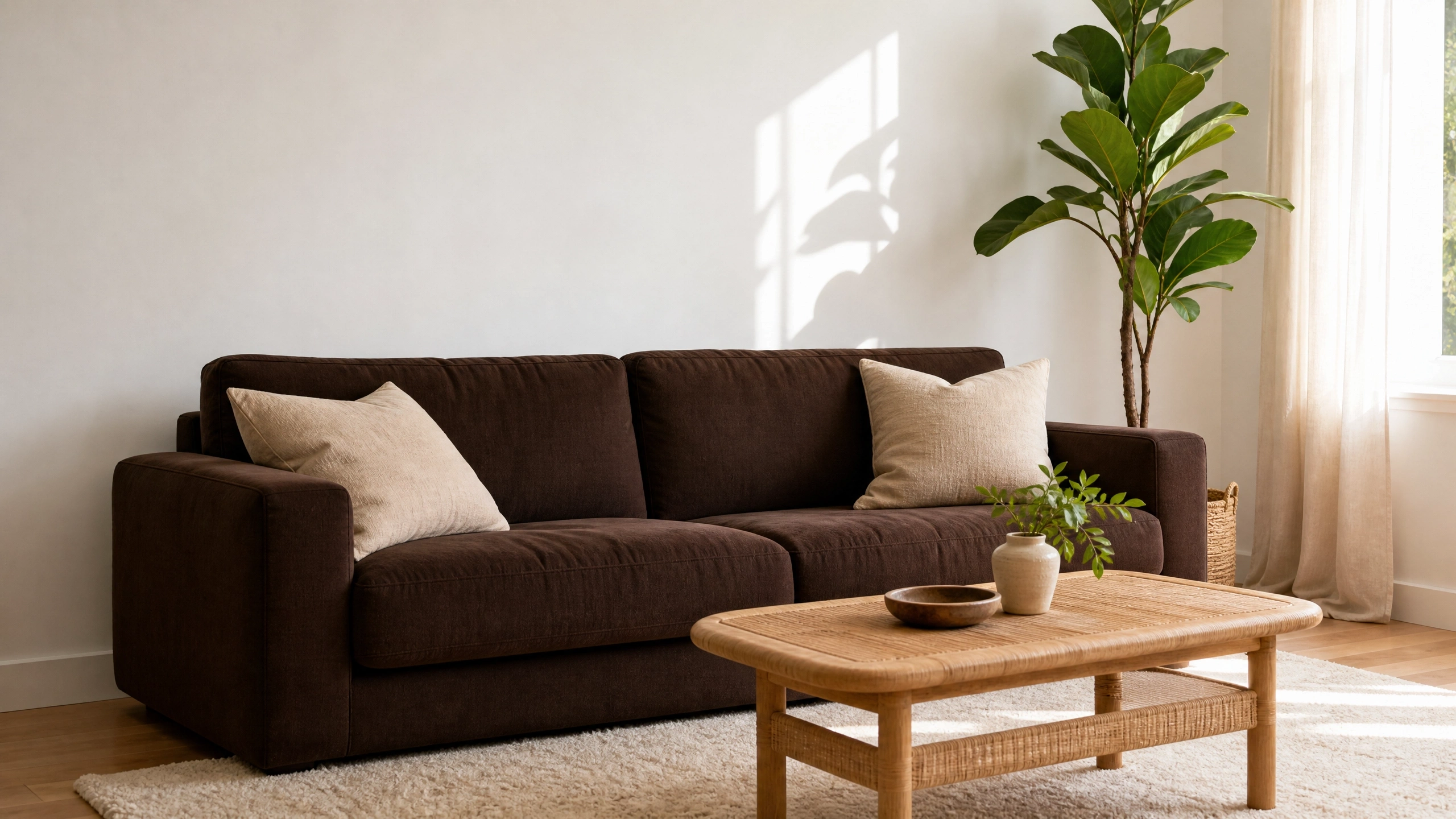
A chocolate brown sofa against crisp white walls with warm beige accents — a cream rug, a simple wooden coffee table, one or two ivory or beige linen pillows — creates a clean, modern setup that feels more intentional than the sofa-plus-nothing aesthetic that makes brown furniture look dated and heavy. The white wall puts the sofa into sharp, clear focus without making the room feel oppressive: the contrast reads deliberate rather than accidental, the way a well-matted frame makes a print look sharper and more finished than the same image without a border.
This combination works best in rooms with good natural light, where white walls stay genuinely bright and prevent the brown from absorbing too much visual weight. Choose warm beige or cream as the bridge neutral between the white walls and the dark sofa rather than cool gray — gray pulls the palette slightly cold and disconnects the brown from its surroundings rather than integrating it into a cohesive whole. One cream cotton rug, two warm beige linen pillows, a wooden or rattan coffee table, and a single architectural plant in the corner complete this look efficiently. The restraint is entirely the point.
22. Boho Macramé Wall Hanging and Dried Pampas Grass Vase
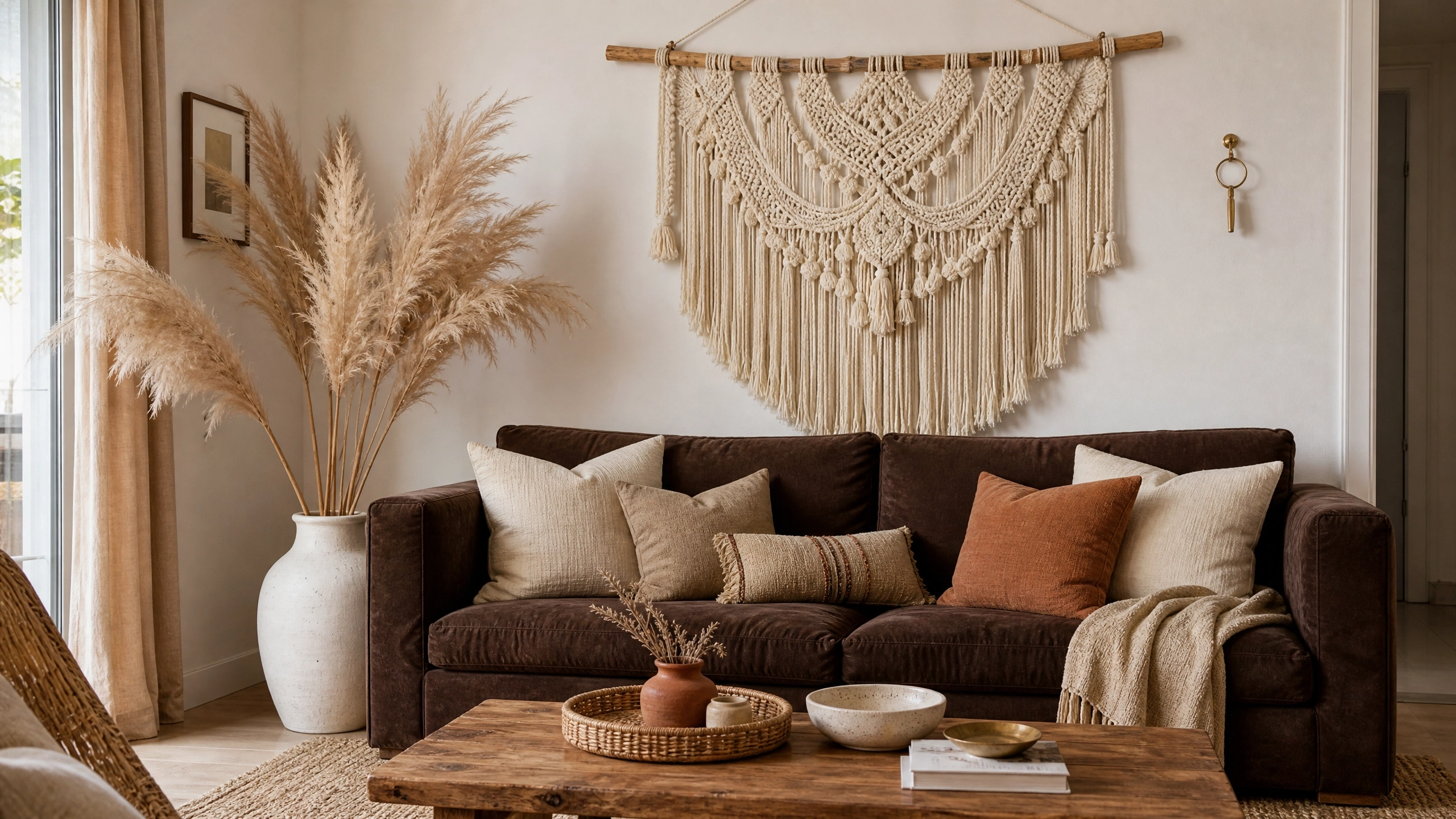
A large macramé wall hanging above a chocolate brown sofa paired with a tall vase of dried pampas grass in the adjacent corner creates a boho-naturalist aesthetic that feels warm, textural, and unmistakably current. The cream or ivory tones of the macramé connect naturally to the warmth of the brown sofa while the wispy, organic silhouette of pampas grass introduces movement and visual airiness that prevents the brown from reading as static or overly settled in the room. Together, they suggest a space with a clear aesthetic point of view.
For apartment dwellers, large macramé pieces can be hung from a simple wall hook, a ceiling hook with a brass ring, or even a tension rod fitted inside a door frame — all low-commitment approaches that still achieve the full visual effect. Dried pampas grass in a tall terracotta pot, a wicker basket, or a simple white ceramic vase each create a slightly different character depending on whether your room direction is earthy, modern, or coastal. This idea photographs exceptionally well and is one of the strongest candidates on this list for building into a Pinterest mood board during a living room refresh you are actively planning.
FAQs
Can a chocolate brown couch work in a small living room?
Yes — pair it with a light-colored rug and keep walls in a soft cream or white to prevent the space from feeling compressed. Let the sofa be the darkest element and build everything around it in lighter, airier tones. Avoid adding dark accessories in multiple directions simultaneously, as that amplifies heaviness rather than balancing it.
What is the best throw pillow color combination for a brown sofa?
Cream and sage green is one of the most reliably successful combinations — cream warms and lightens while sage adds earthy freshness. Burnt orange and ivory, or dusty blue and cream, are two strong alternatives depending on whether you prefer a warmer or slightly cooler overall direction for the room’s palette.
Does gray go with a chocolate brown couch, or does it make the room feel cold?
Cool gray tends to make a brown sofa feel visually disconnected and slightly colder than intended. Warm greige or taupe reads significantly better alongside chocolate brown. If you want a neutral background, warm cream or beige harmonizes far more naturally than anything carrying cool blue or silver undertones through its base.
Is a brown sofa still in style in 2025?
Yes — warm, earthy interiors have seen a strong design revival across Pinterest, design media, and home décor retail over the past several years. A chocolate brown sofa styled with sage green, terracotta accents, and natural textures fits directly within the warm minimalism and earthy maximalism aesthetics that are most prominent in current living room design.
How can I update my brown couch look on a tight budget without replacing any furniture?
Start with three targeted changes: swap your current pillows for a cream and sage green mix, add a jute or Moroccan-patterned rug if you do not already have one, and bring in one or two terracotta ceramic accessories. These three shifts together can completely transform how the sofa reads — typical total spend at IKEA or HomeGoods is under one hundred dollars.




No Comment! Be the first one.