




How to Keep Your House Clean When You Have Pets (Even With Fur Everywhere)
If you have ever vacuumed a room, turned around, and found a fresh layer of fur waiting for you, you already know the struggle. Loving your pet and loving a clean house can feel like two things that...

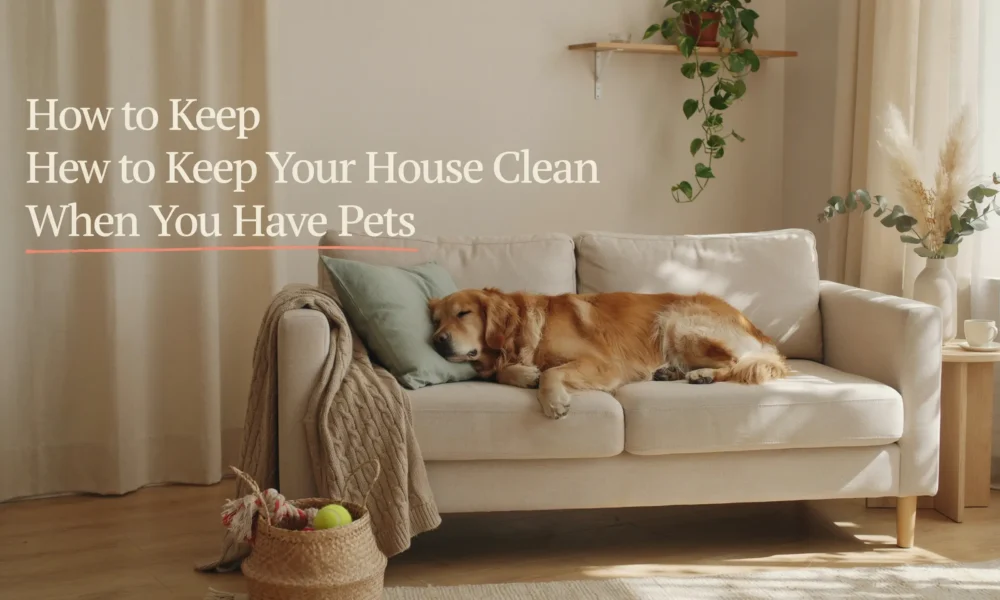
If you have ever vacuumed a room, turned around, and found a fresh layer of fur waiting for you, you already know the struggle. Loving your pet and loving a clean house can feel like two things that are not allowed to happen at the same time.
Here is the good news. You do not need a spotless showroom home to feel like your house is clean. You need a system. Once you know which habits actually move the needle, keeping your house clean when you have pets stops feeling like a losing battle and starts feeling like something you can maintain in twenty minutes a day.
This guide walks through the exact routines, tools, and small changes that make the biggest difference, plus the mistakes that quietly undo all your hard work.
1. Start With a Pet Cleaning Station by the Door
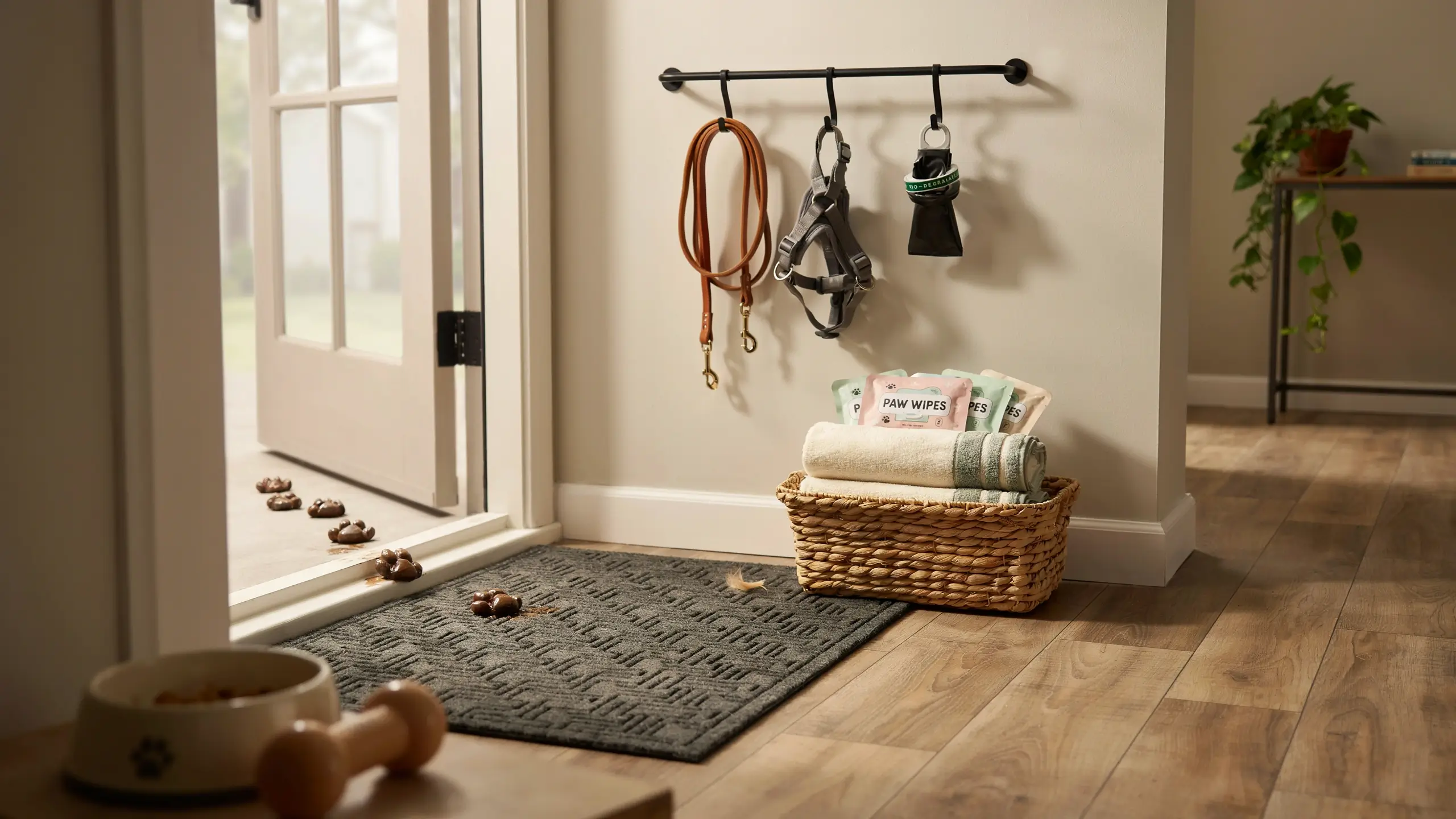
Most of the mess in a pet owner’s home starts at one spot, the entry your pet uses most. If you stop it there, you stop most of the problem before it spreads.
Set up a small station near that door with:
- A washable rug or mat, both outside and inside the door
- A basket of old towels for wiping down wet or muddy paws
- Paw wipes for quick cleanups when you are in a hurry
- Hooks for leashes, harnesses, and poop bags so they are not tossed on the floor
If your entry is tiny, even a single over-the-door hook and a rubber-backed mat makes a visible difference. The goal is to give mess a place to stop before it reaches your carpet or hardwood.
2. Groom Your Pet Before the Fur Hits the Floor
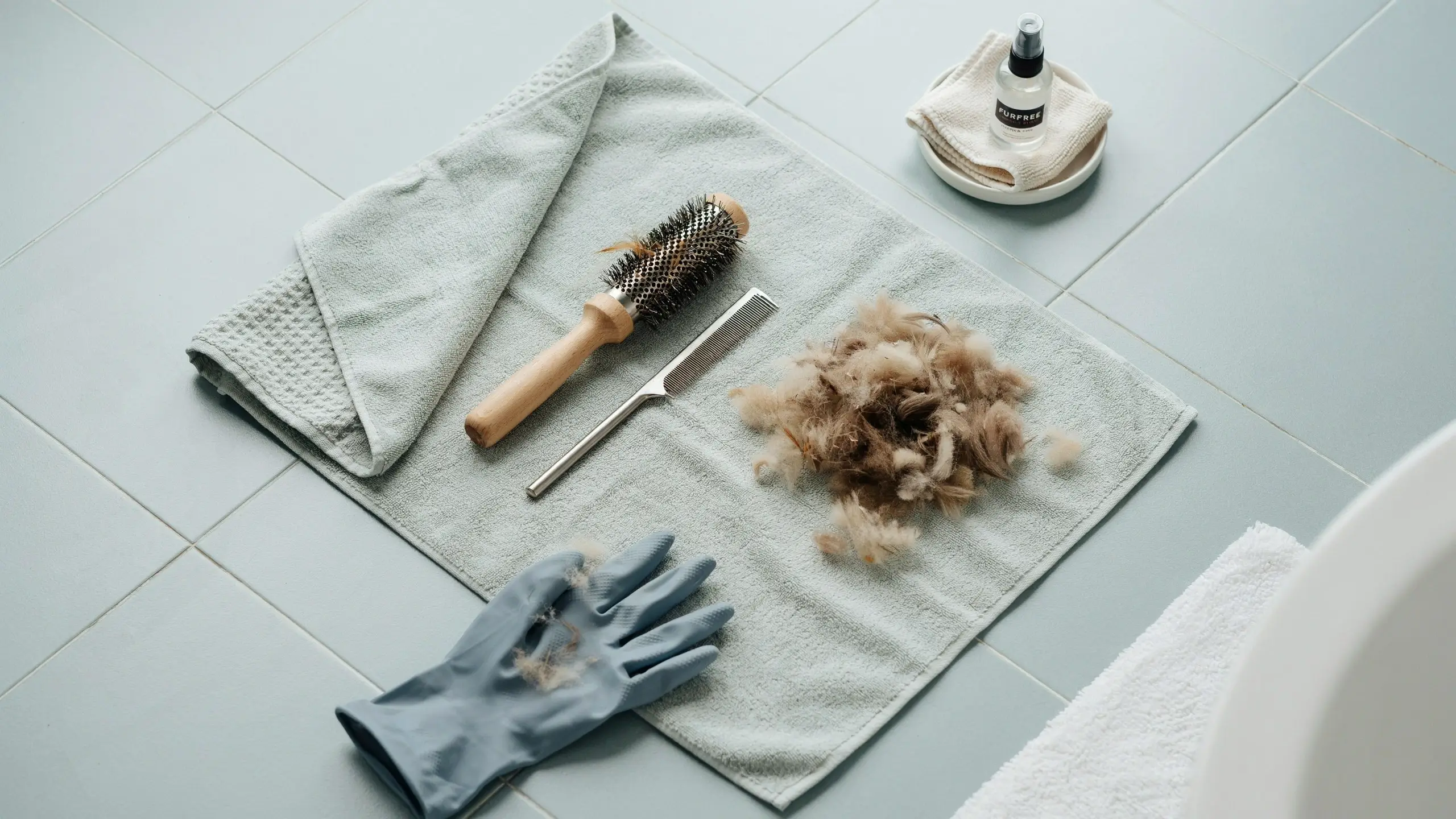
Every bit of fur you catch on a brush is fur you will never have to vacuum, sweep, or pick off your couch. This is the step people skip, and it is the one that saves the most cleaning time later.
A quick nightly brushing session, even five minutes, keeps loose hair from building up around furniture legs and floor vents. For dogs and cats with heavy coats, a slicker brush pulls out the loose undercoat instead of just smoothing the top layer. A steel comb works well for finishing touches around the ears and legs where mats tend to form.
Bathe your pet on a regular schedule too, not just when they smell. Regular bathing cuts down on the dander that settles into carpet fibers and fabric, which is a big part of what makes a home smell like pets even when it looks clean.
Mistake to Avoid
Mistake to avoid: brushing your pet right next to their bed or a rug. Do it outside, in a bathroom, or over a towel you can shake out, or you are just relocating the fur.
3. Pick Furniture and Fabrics That Actually Fight Mess
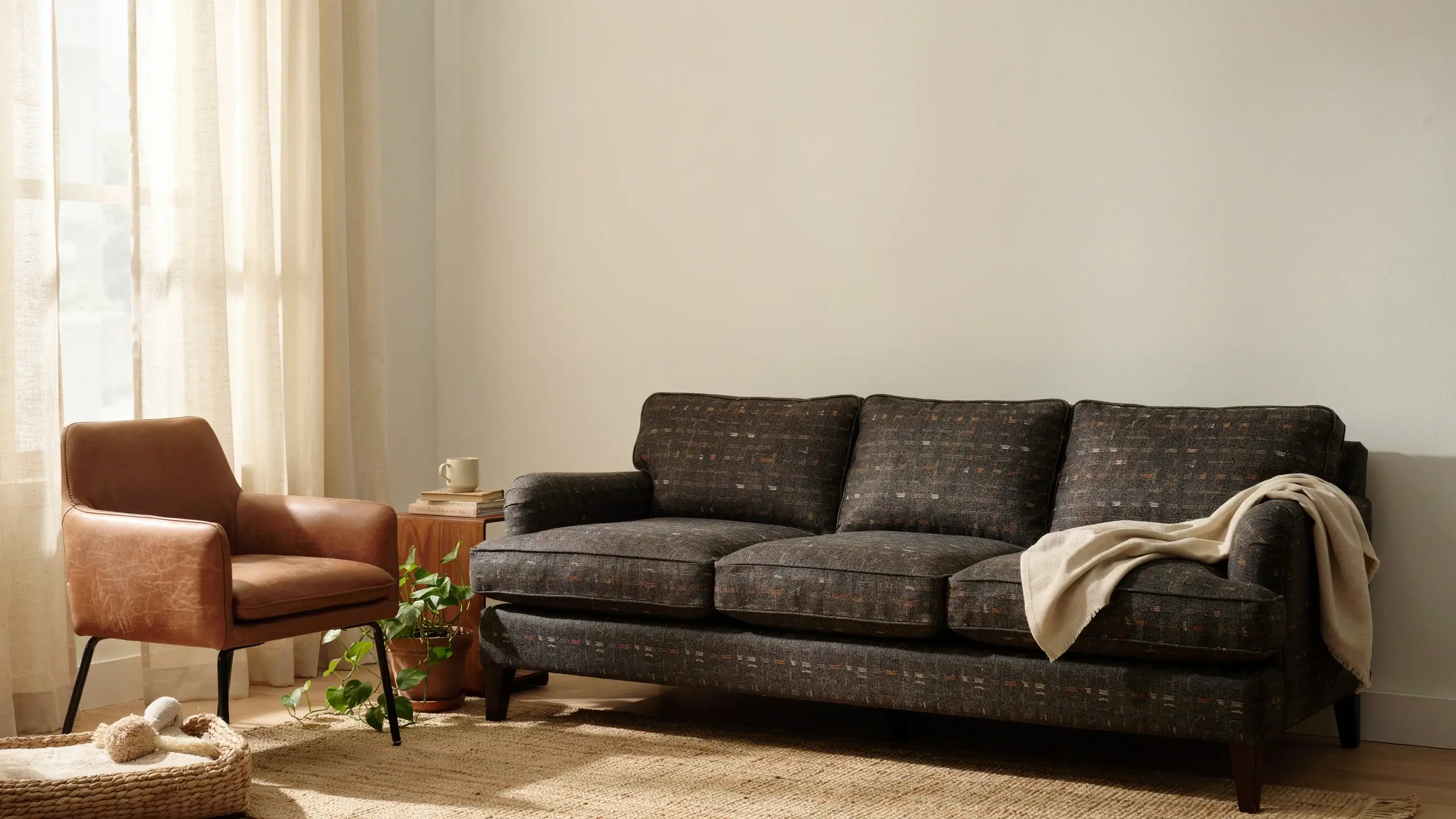
This is the part most cleaning guides skip, but it matters more than almost anything else on this list. The fabric you choose decides how much work your future self has to do.
Look for:
- Tightly woven or performance fabrics instead of loose weaves that trap hair
- Leather or faux leather, which wipes clean instead of holding onto fur
- Washable slipcovers on sofas and chairs, especially in homes with light-colored furniture
- Darker or patterned upholstery in the rooms your pet spends the most time in
If replacing furniture is not realistic right now, a simple throw blanket over your pet’s favorite spot on the couch gives you something you can toss in the wash instead of deep cleaning the whole cushion.
4. Vacuum With a Plan, Not Just When You Notice Fur
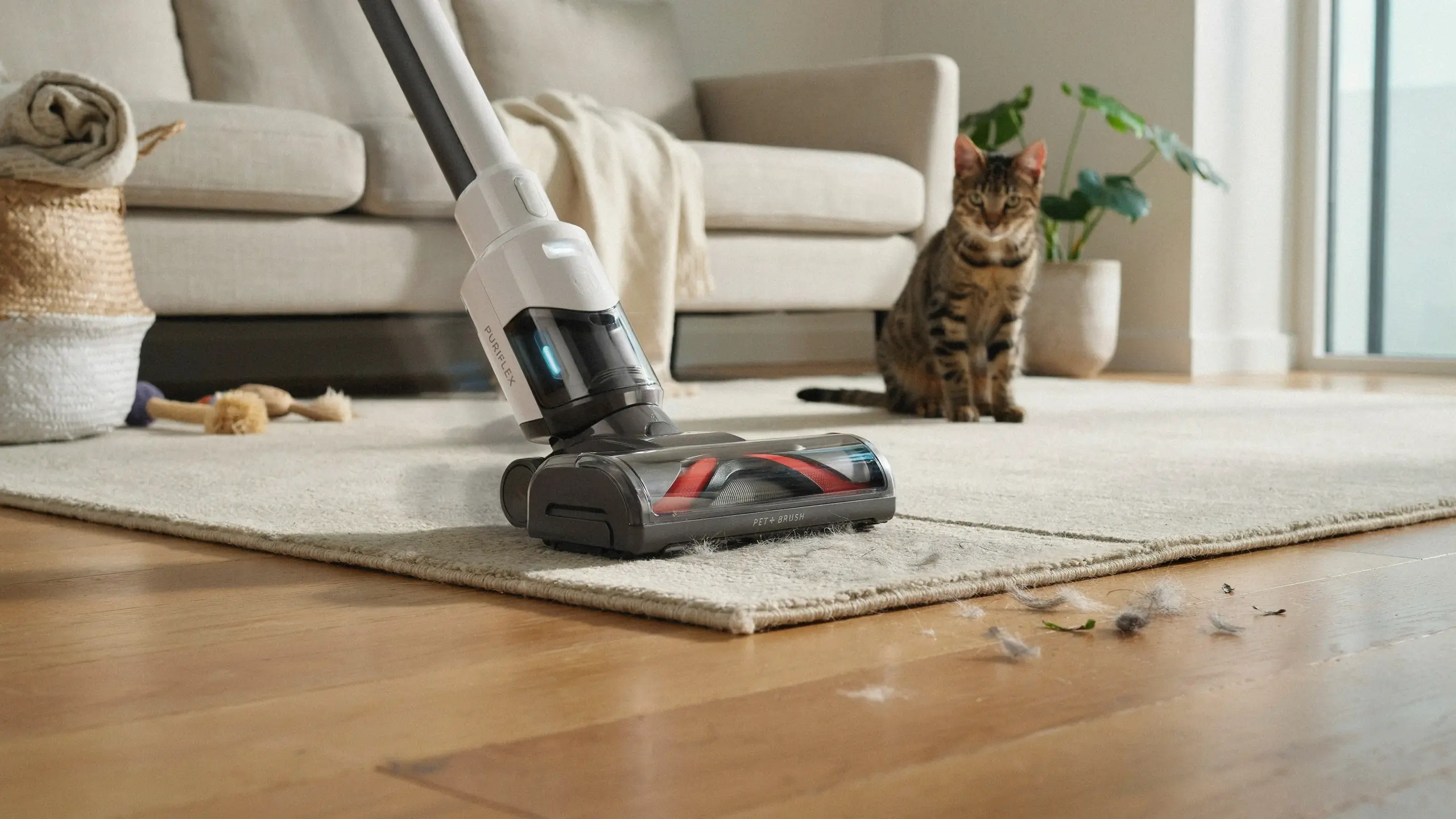
Vacuuming reactively, only when the fur becomes obvious, means you are always a step behind. A light routine beats an occasional deep clean.
Run a vacuum with strong suction and a pet hair attachment over high traffic areas daily, even if it only takes five minutes. Save the full house vacuum, including furniture, stairs, and baseboards, for two to three times a week.
If you have hard floors, a microfiber dust mop used daily picks up hair and dander that a broom tends to push around instead of collect.
A few things worth checking on your vacuum itself:
- Empty the canister or bag often, a full one loses suction fast
- Clean hair out of the brush roller weekly, tangled hair reduces pickup power
- Look for a model with HEPA filtration if anyone in the house deals with allergies
5. Grab These Tools for the Hair Vacuums Miss
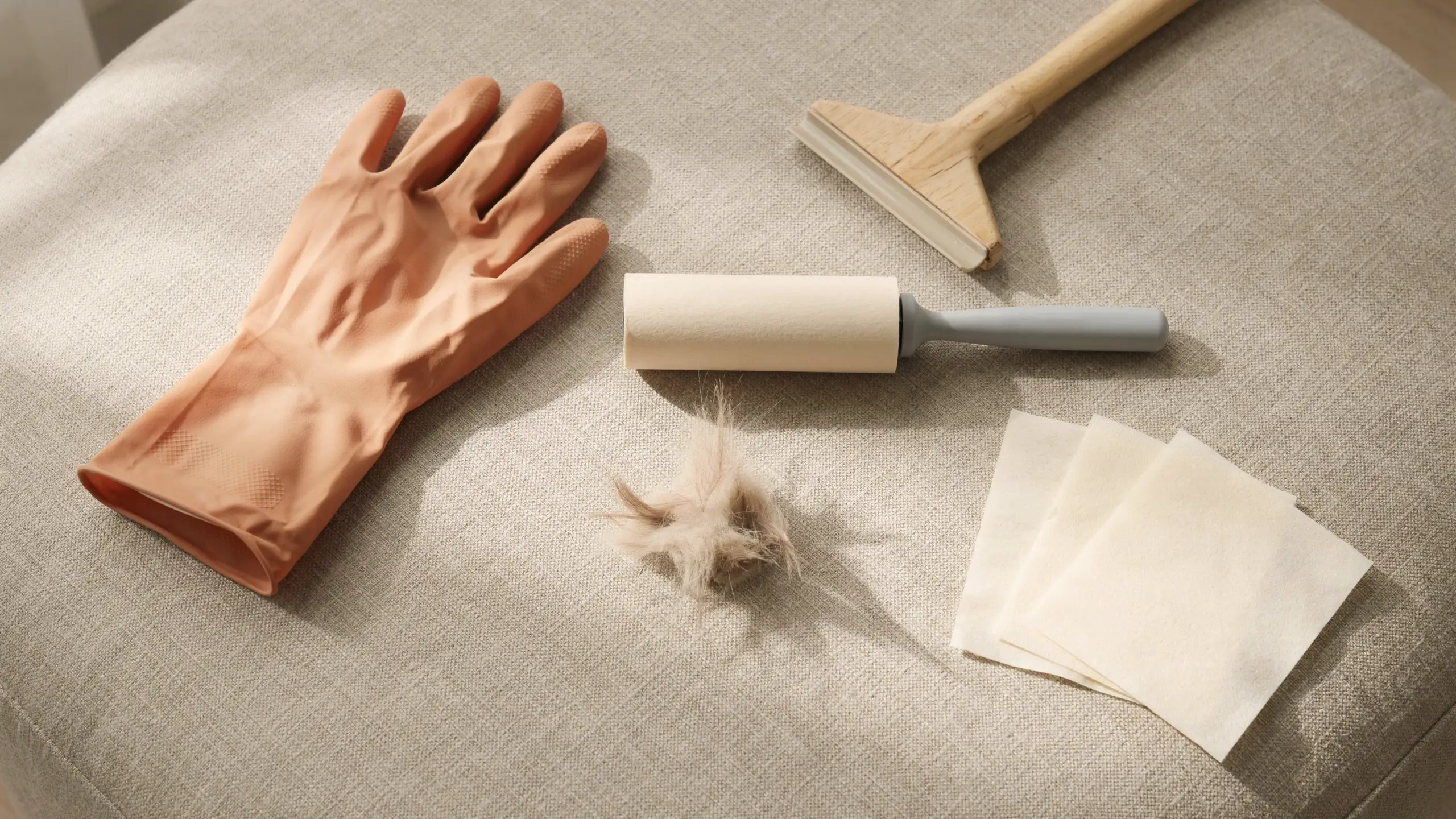
Even a great vacuum leaves some hair behind, especially on upholstery, stairs, and anything with texture. A few inexpensive tools handle what the vacuum cannot.
- A rubber dish glove, run lightly over carpet or a couch cushion in one direction, pulls up embedded hair that gathers into little clumps you can just pick up.
- A squeegee works the same way on carpet and rugs.
- Keep a lint roller by the door and another near your favorite seat, since a thirty second roll before guests arrive solves a lot of last minute stress.
Dryer sheets rubbed over fabric surfaces also help, since they cut down on the static that makes hair cling to everything in the first place.
6. Keep Litter Boxes and Crates From Taking Over the Room
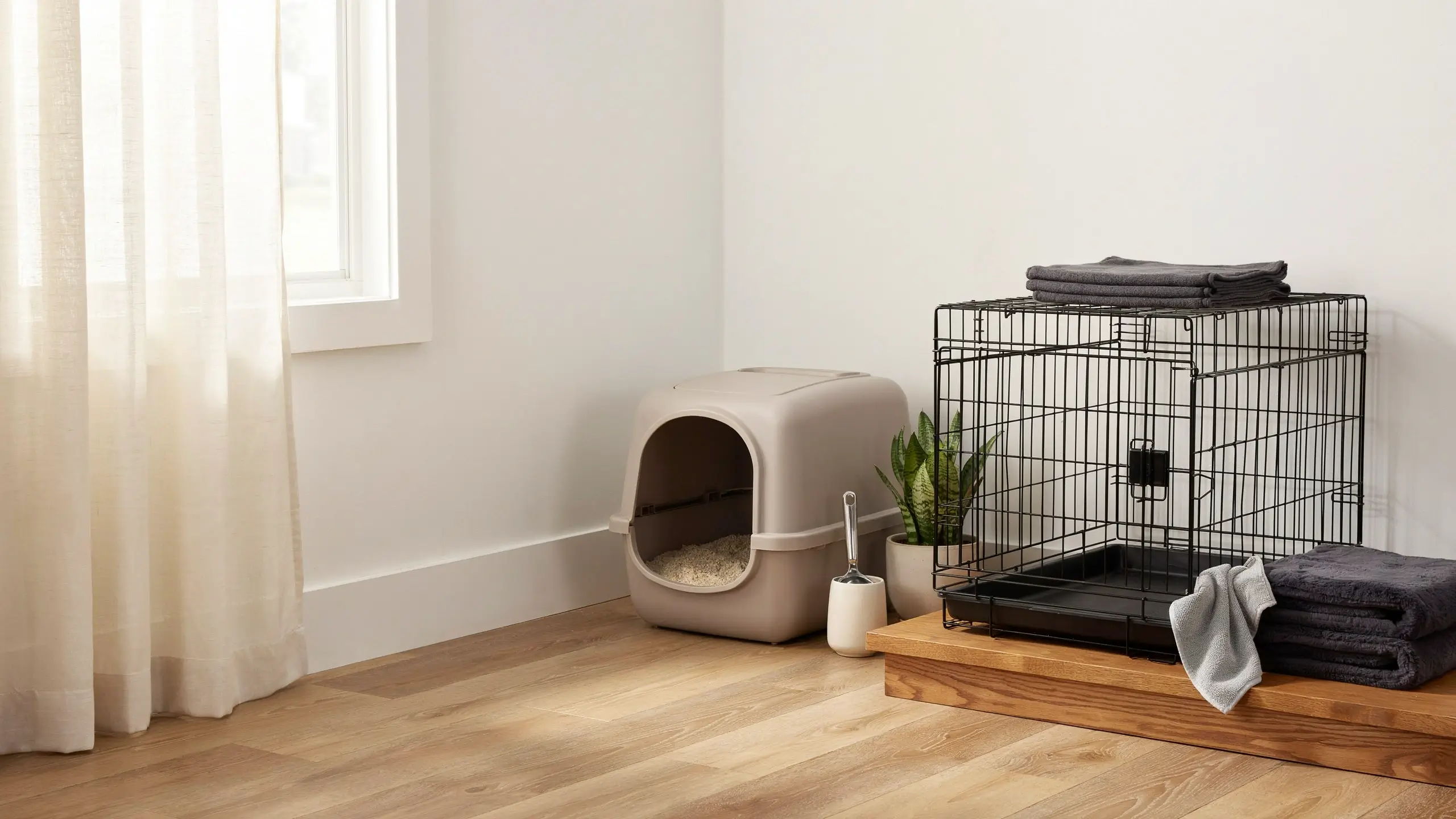
For cat owners, the litter box is usually the biggest source of lingering smell in the house, even when everything else is spotless.
Scoop it daily, not every few days. Fully dump and wash the box with mild soap weekly, then let it air dry completely before adding fresh litter. Skipping the drying step is a common mistake, since trapped moisture holds onto odor even after a wash.
Place the box somewhere with airflow rather than tucked into a closed closet, and consider a litter with better odor control if smell keeps returning even with regular scooping.
For dog crates, wash the bedding weekly and wipe down the frame itself, since dander and drool build up on the bars and tray more than people expect.
7. Wash Bedding, Toys, and Bowls on an Actual Schedule
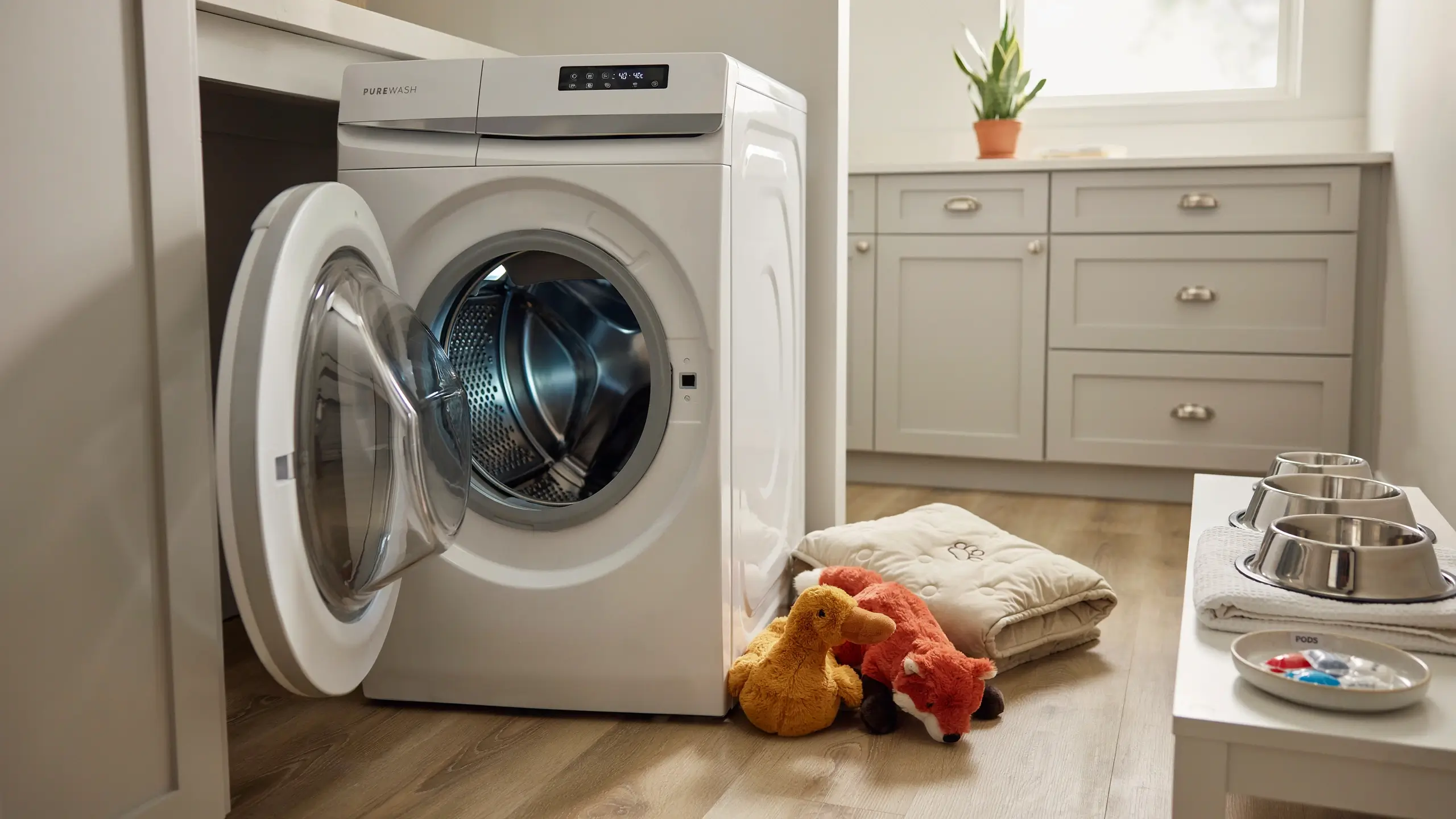
Pet bedding holds onto dander, drool, and outdoor dirt the same way a couch cushion does, just faster. Wash it weekly on a hot cycle if the fabric allows, and shake it out outside first to knock off loose hair before it goes anywhere near your washing machine.
Toys need attention too, especially soft ones and anything that goes in your pet’s mouth daily. Rotate a few through the wash each week rather than trying to do them all at once.
Food and water bowls should be washed daily, the same as your own dishes. A bowl that only gets rinsed builds up a film that holds onto bacteria and odor over time.
8. Clean Accidents the Right Way (So the Smell Doesn’t Come Back)
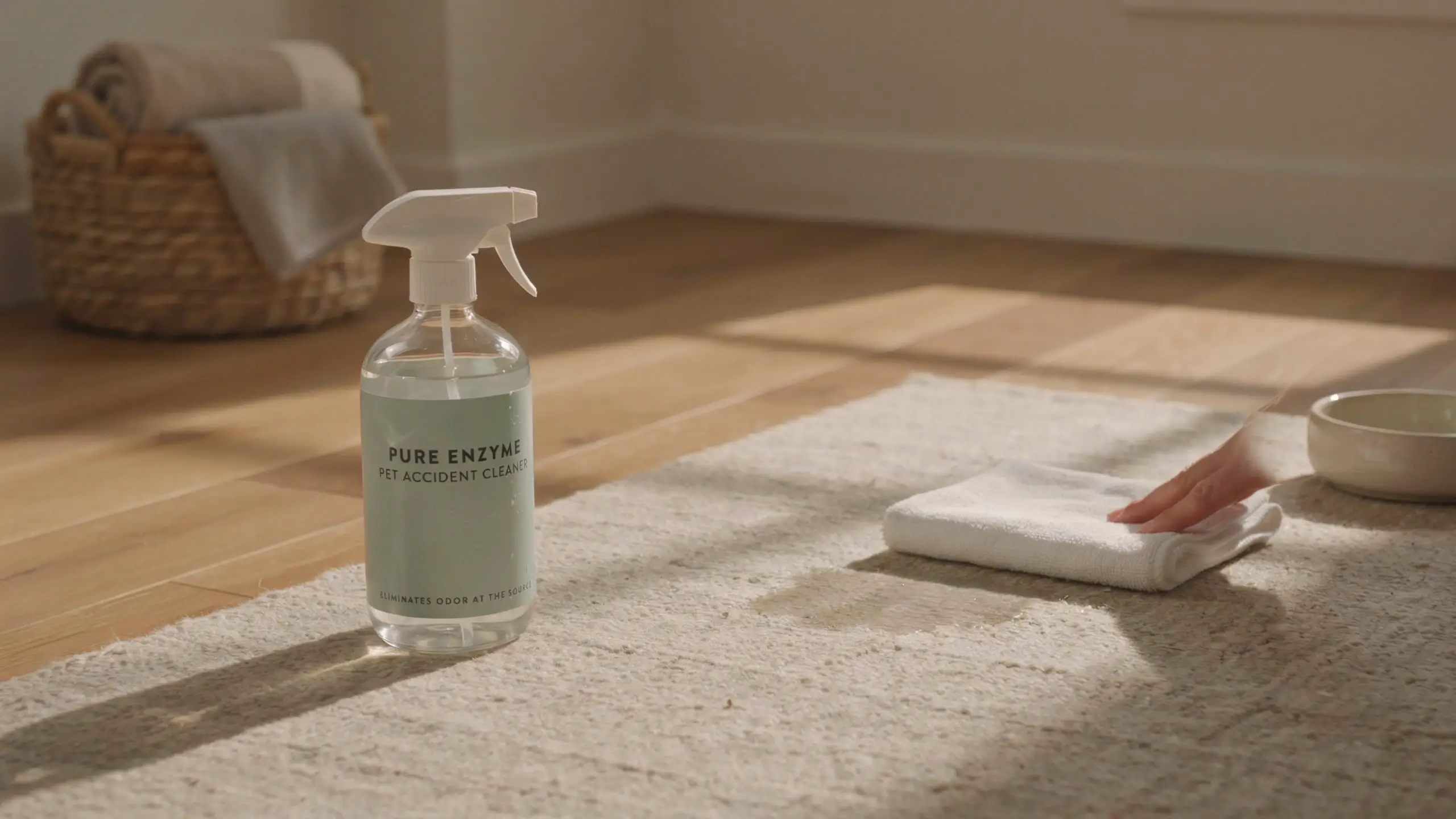
Every pet owner deals with an accident eventually, and how you clean it in the first few minutes decides whether the smell comes back later.
Blot, do not rub, to lift as much moisture as possible first. Then use an enzyme cleaner made specifically for pet stains rather than a general all-purpose cleaner. Enzyme cleaners break down the proteins in urine that cause both the stain and the smell, while regular cleaners often just mask it temporarily.
Let the enzyme cleaner sit for the amount of time listed on the bottle, this dwell time matters more than people realize. Rushing it is why the smell seems to disappear and then returns a week later.
9. Layer Your Odor Control Instead of Masking It

A candle or air freshener covers a smell for an hour. It does not remove it. Real odor control means treating the problem at three levels at once, the source, the surface, and the air.
Start at the source with an enzyme cleaner on any known problem spots. For the air, a small HEPA air purifier in the room your pet spends the most time in makes a noticeable difference within a few days. A bowl of baking soda or a charcoal odor bag tucked near a pet bed or litter box helps absorb smells between deeper cleanings.
Open windows for even ten minutes on a nice day too. Fresh airflow does more for a home’s smell than most sprays ever will.
10. Protect Floors and Walls From Nose Prints and Scratches
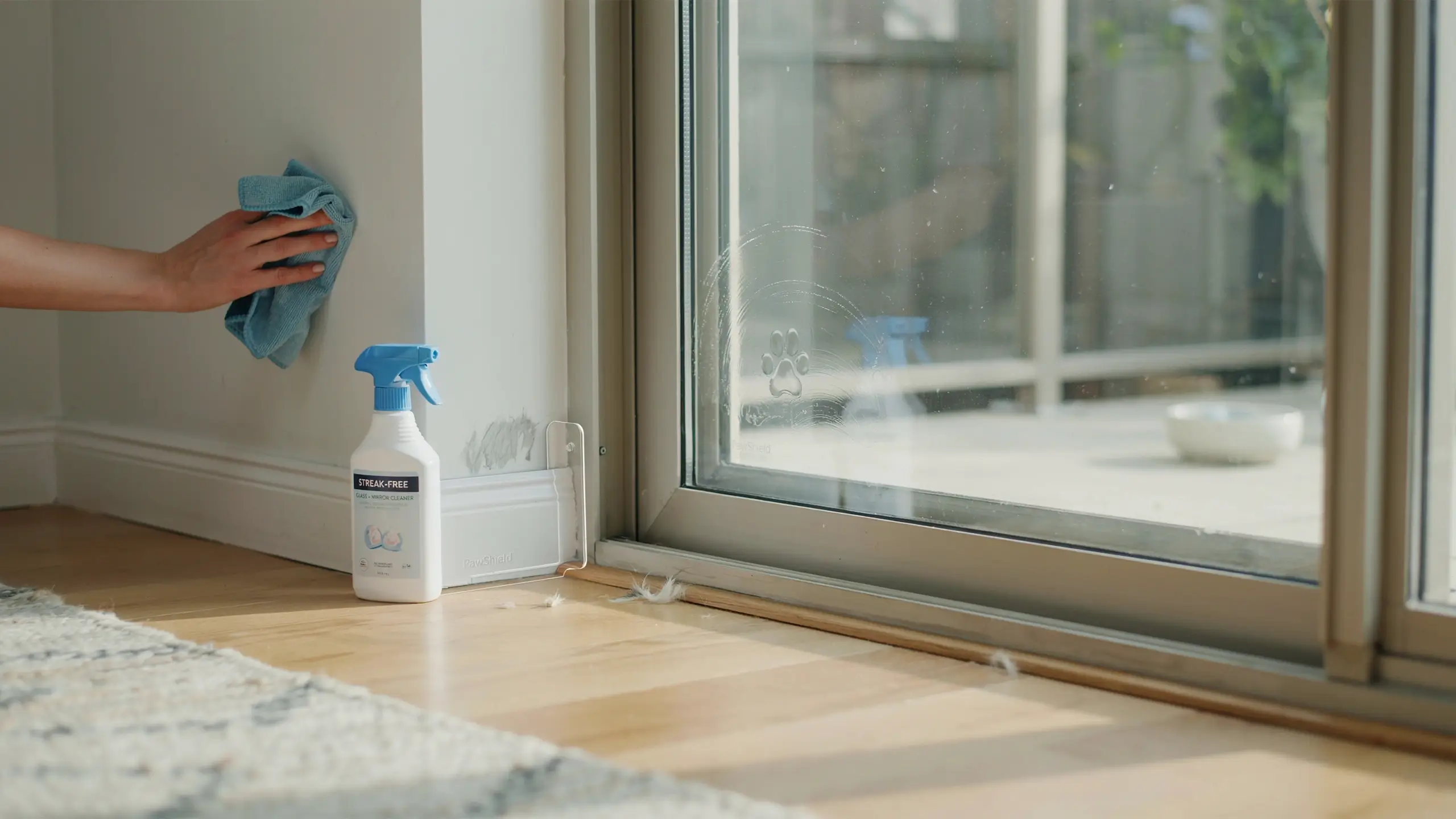
Nose smudges on glass doors, scratch marks near baseboards, and paw prints on light colored walls are easy to overlook until they build up.
Wipe glass doors and low windows weekly with a streak-free cleaner, since this is where nose prints collect fastest in homes with dogs who like to watch the yard. In high traffic areas, a durable, slightly glossy paint finish wipes clean far more easily than flat paint, which tends to absorb marks into the surface.
If your pet scratches near doors or corners, clear corner guards or a strip of durable trim protects the finish without changing the look of the room much.
11. Keep the Food and Water Station From Becoming a Mess
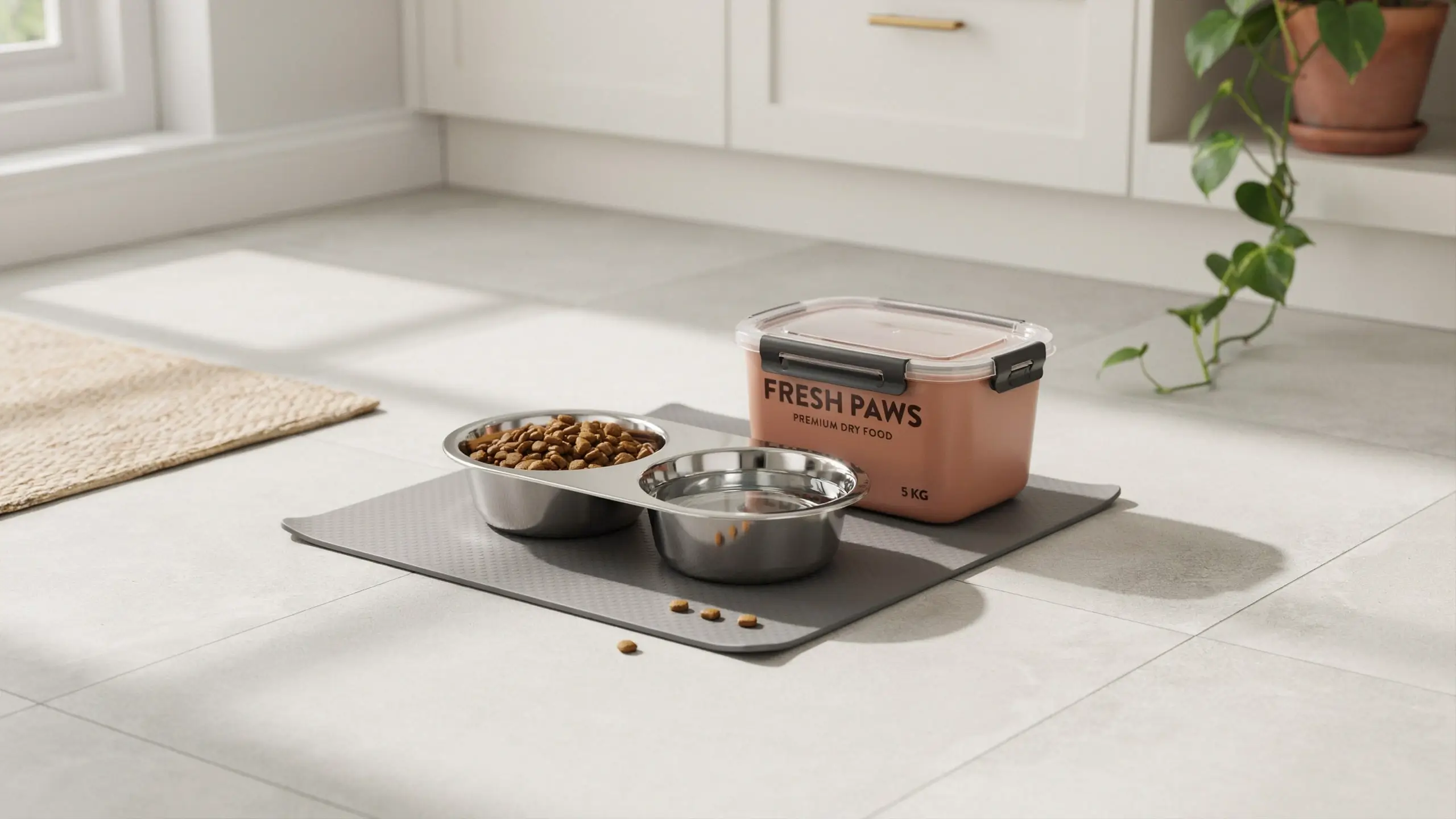
A pet’s eating area gets messy fast, and it is one of the first places people notice when they walk into a home.
A raised bowl stand keeps water from pooling around the base and cuts down on spills from sloppy eaters. A silicone mat underneath the bowls catches drips and kibble crumbs so you can just rinse it off instead of scrubbing the floor daily. Keep pet food in a sealed container rather than the original bag, since this keeps pests away and stops spills from scattering everywhere.
Mistakes to Avoid When Cleaning With Pets
- Only cleaning when company is coming, instead of maintaining small habits daily
- Using scented sprays to cover odor instead of treating the source with an enzyme cleaner
- Skipping the drying step after washing a litter box or pet bed
- Vacuuming without emptying the canister first, which cuts suction dramatically
- Using ammonia-based cleaners near accident spots
- Letting toys and bedding go weeks without a wash because they “don’t look dirty”
- Choosing light colored furniture or rugs in the areas your pet uses most
A Simple Weekly Routine You Can Actually Stick To
| Frequency | Tasks |
|---|---|
| Daily (5 to 10 minutes) | Quick brush session, wipe down the entry mat, scoop the litter box, wash food and water bowls, vacuum high traffic spots. |
| Every other day | Run the vacuum over furniture and stairs, roller-brush the couch, mop hard floors. |
| Weekly | Wash pet bedding and a few toys, deep clean the litter box or crate, wipe glass doors and baseboards, empty and rinse the vacuum canister. |
| Monthly | Wash all toys and leashes, check the vacuum filter, deep clean upholstery with a fabric-safe cleaner, wipe down walls near pet zones. |
The Bottom Line
Keeping your house clean when you have pets is not about eliminating mess completely. It is about building small habits that stop mess from piling up faster than you can handle it. A cleaning station by the door, a real grooming routine, the right fabrics, and layered odor control will get you further than any single product ever could.
Start with just one or two of these changes this week. Once they feel automatic, add another. Before long, the fur, the smell, and the mess stop running the show, and you get to enjoy your pet without dreading what your living room looks like.
What is your biggest pet mess struggle? Drop a comment below, I would love to hear what you are working on and help you troubleshoot it.




No Comment! Be the first one.