




18 Garden Screening Ideas for Privacy That Actually Look Good
There’s a particular kind of frustration that comes with stepping outside to relax and realizing your neighbor has a clear view of your chair, your book, your afternoon. Or worse, the whole...

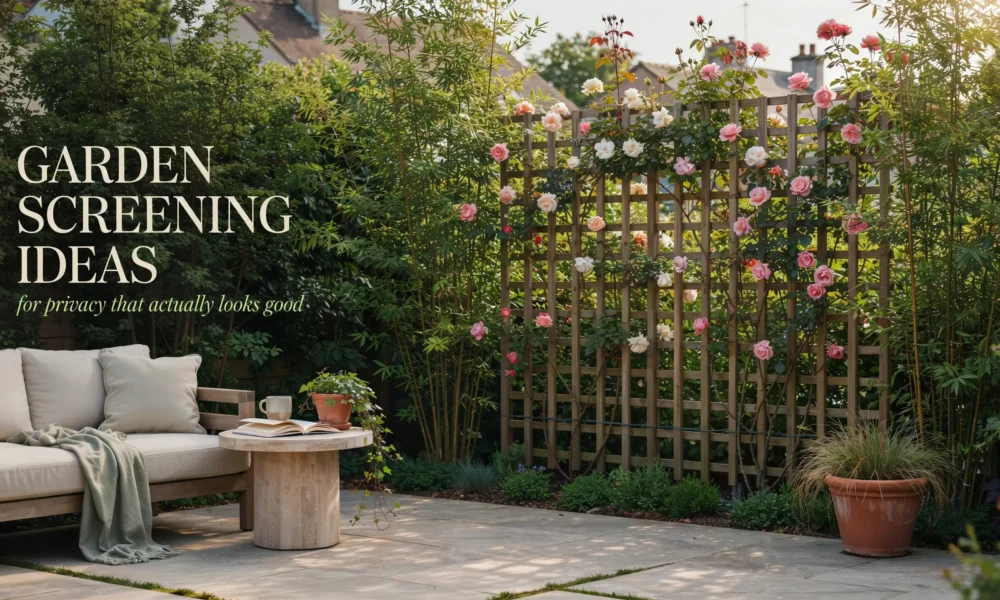
There’s a particular kind of frustration that comes with stepping outside to relax and realizing your neighbor has a clear view of your chair, your book, your afternoon. Or worse, the whole street does. You planned a private little sanctuary. What you got was a fishbowl.
The good news is that garden screening doesn’t have to mean ugly panel fencing or a row of boring shrubs that takes a decade to grow. The best garden screening ideas do two things at once: they block the view and make your outdoor space more beautiful in the process. Some of the most gorgeous garden corners you’ll ever see on Pinterest are that way because of smart, intentional screening.
Whether you’re renting, starting from scratch, working with a tiny patio, or just tired of feeling on display, there are more options here than you probably realize. Let’s go through the ones worth your time and money.
Before You Pick Your Screen, Answer These Three Questions
Jumping straight to a solution without thinking through your situation first is how you end up with a six-foot bamboo fence that falls over in a stiff breeze, or a gorgeous hedge planted in soil that gets two hours of sun a day.
Ask yourself:
How permanent does this need to be? If you’re renting or just testing the space, portable and freestanding options are your best friends. If you own and plan to stay, investing in something that grows or weathers beautifully makes long-term sense.
How quickly do you need privacy? Living solutions like hedges and climbing plants take time. A bamboo roll fence or a freestanding screen panel gives you privacy this weekend.
What’s blocking the view, specifically? A neighbor’s upstairs window needs different coverage than a street-level sightline. A hot tub or dining area needs targeted spot-screening, not a full perimeter.
With those answers in mind, find your match below.
1. Horizontal Slatted Timber Panels
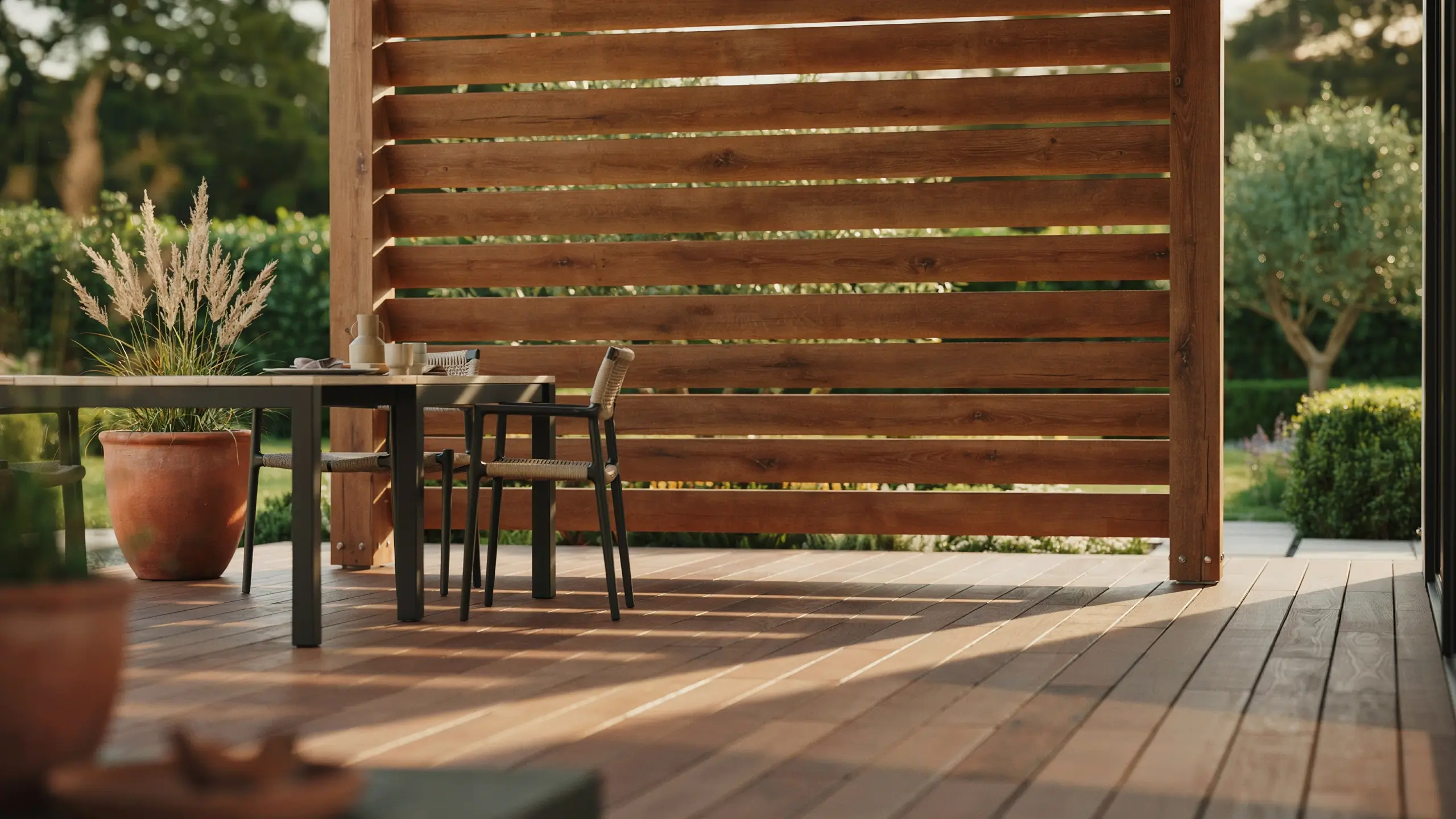
If you want something that looks like it came from a luxury garden and still costs far less than a landscaper, horizontal cedar or larch slatted panels are the answer. The clean lines look contemporary against almost any backdrop, and the narrow gaps between slats let light filter through without letting neighbors see in clearly.
You can set them between posts on either side of a patio, use them to top an existing fence for extra height, or run a short section as a screen behind a dining table. Natural cedar ages to a warm silver-grey if you leave it untreated, or you can oil it to keep that honey-toned warmth. Thermally treated ash is another option that resists rot without chemical treatment. Prices range widely, from around $80 for a basic 6×6 panel to $300+ for premium hardwood, but the look they deliver is hard to match.
2. Bamboo Roll Fencing (The Underrated Budget Fix)
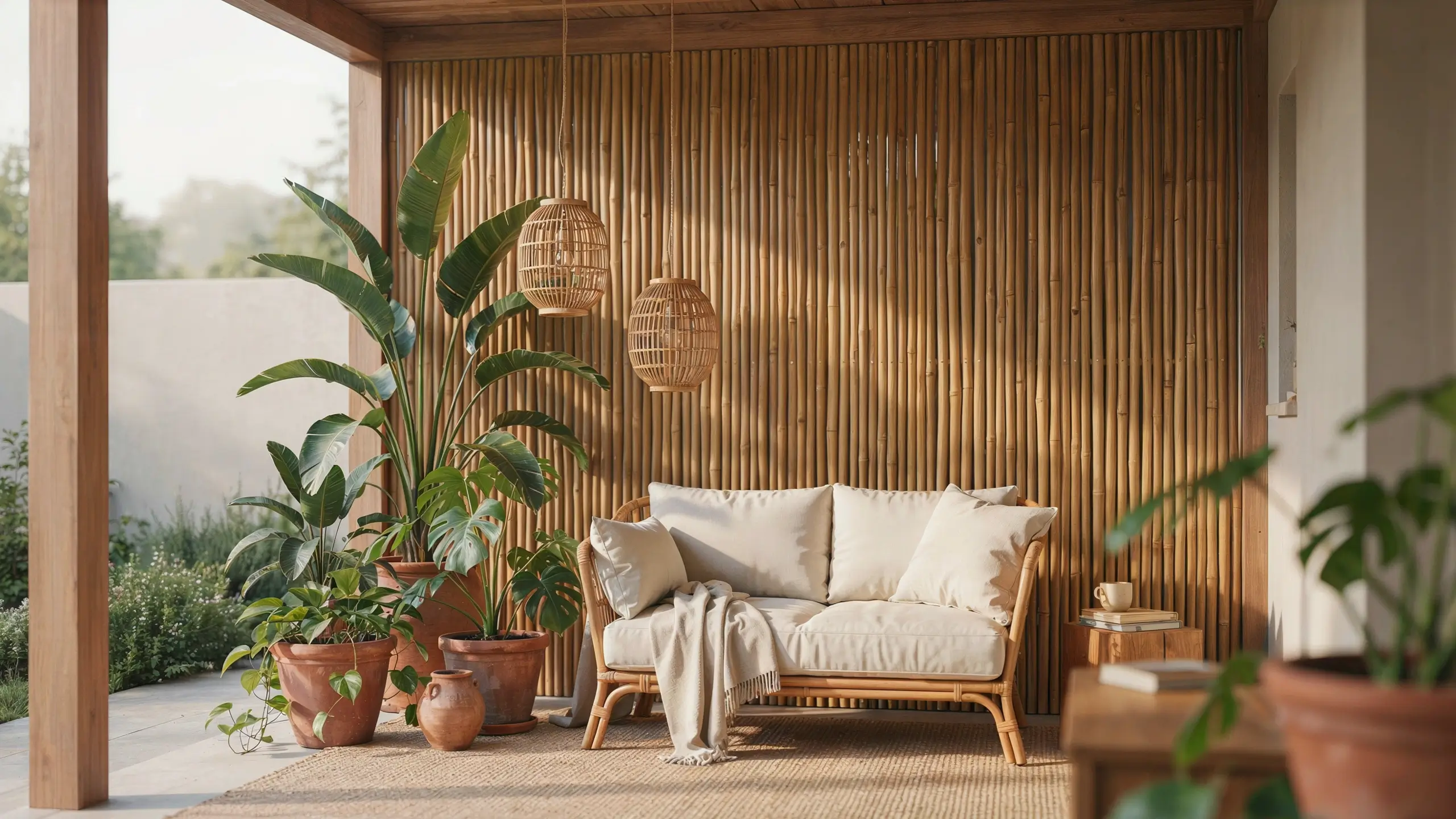
Bamboo roll fencing gets overlooked because it sounds cheap and temporary. But done right, it’s genuinely attractive and it installs in an afternoon without tools or special skills. You buy it in rolls, typically sold in 6-foot or 8-foot lengths, and you can zip-tie or wire it to an existing fence, string it between posts, or attach it to a simple timber frame.
The natural texture has a relaxed, almost tropical feel that pairs beautifully with lush planting, terracotta pots, and hanging lanterns. For renters, this is a particularly good option because it attaches to what’s already there without damage, and you can take it down and roll it back up when you move.
Look for split bamboo reed fencing rather than whole-cane versions. It lies flat, looks more polished, and is more weather resistant. A 6×16 foot roll costs roughly $25 to $40 at most garden centers.
3. Trellis Panels With Climbing Plants
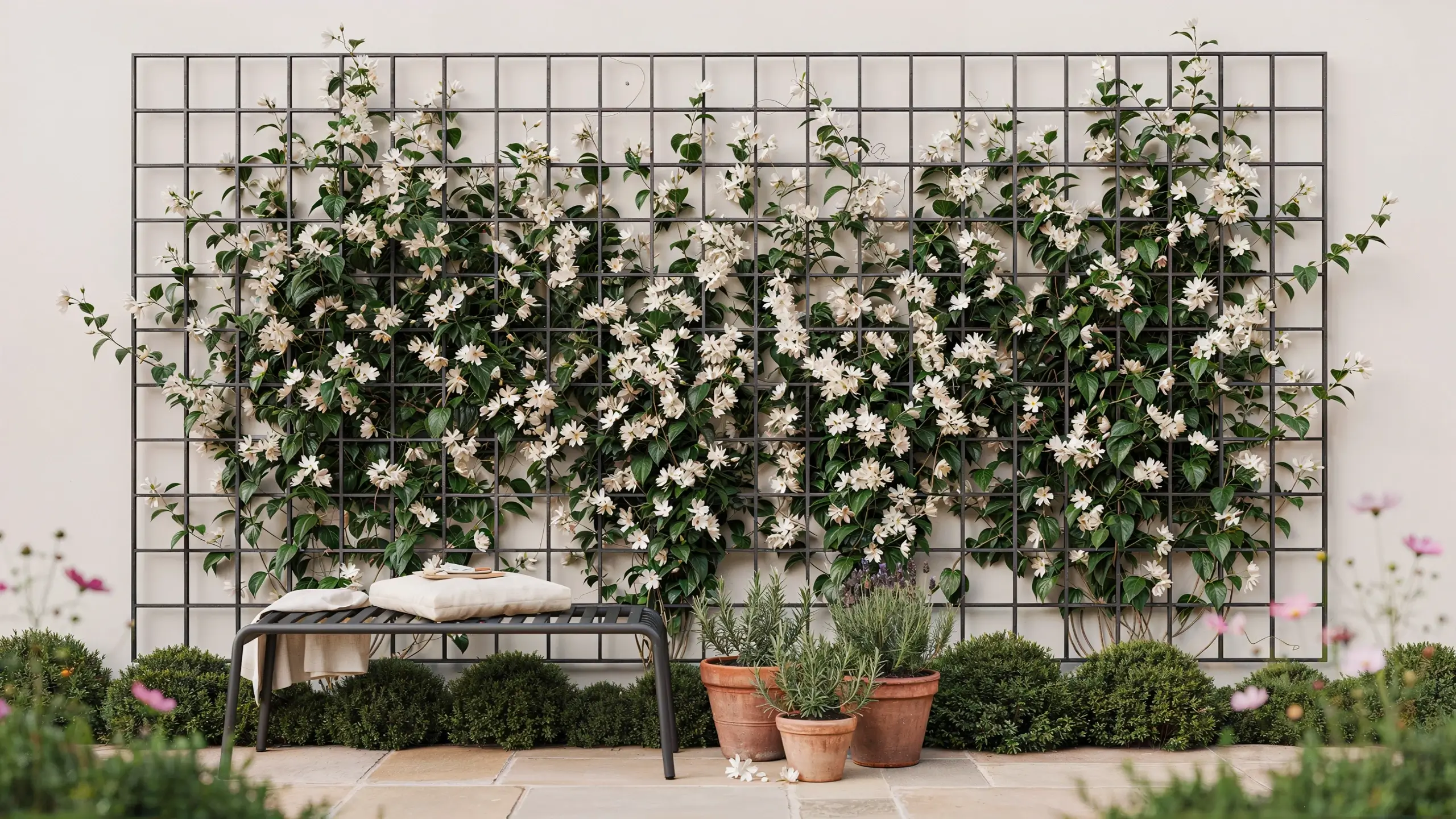
A trellis on its own gives you privacy immediately. A trellis covered in climbing plants gives you privacy that looks like a garden feature rather than a screen. The combination is one of the most popular garden screening ideas for a reason: it works.
For year-round coverage, choose an evergreen climber. Star jasmine (Trachelospermum jasminoides) is fragrant, evergreen, and manageable. Clematis armandii is another evergreen option with white spring flowers. For fast cover in a hurry, Virginia creeper can travel 20 feet in a single season, though it goes bare in winter.
Training matters more than people realize. In the first year or two, spend a little time each month weaving stems through the trellis and tying loose shoots. The plants that grow into dense, beautiful screens are the ones that were guided early. Neglect them and you get a tangled, sparse mess.
Trellis panels come in wood, vinyl, and powder-coated metal. Metal grid trellises tend to outlast wooden ones by years and look sharper against modern outdoor furniture.
4. Tall Planters Filled With Evergreen Shrubs
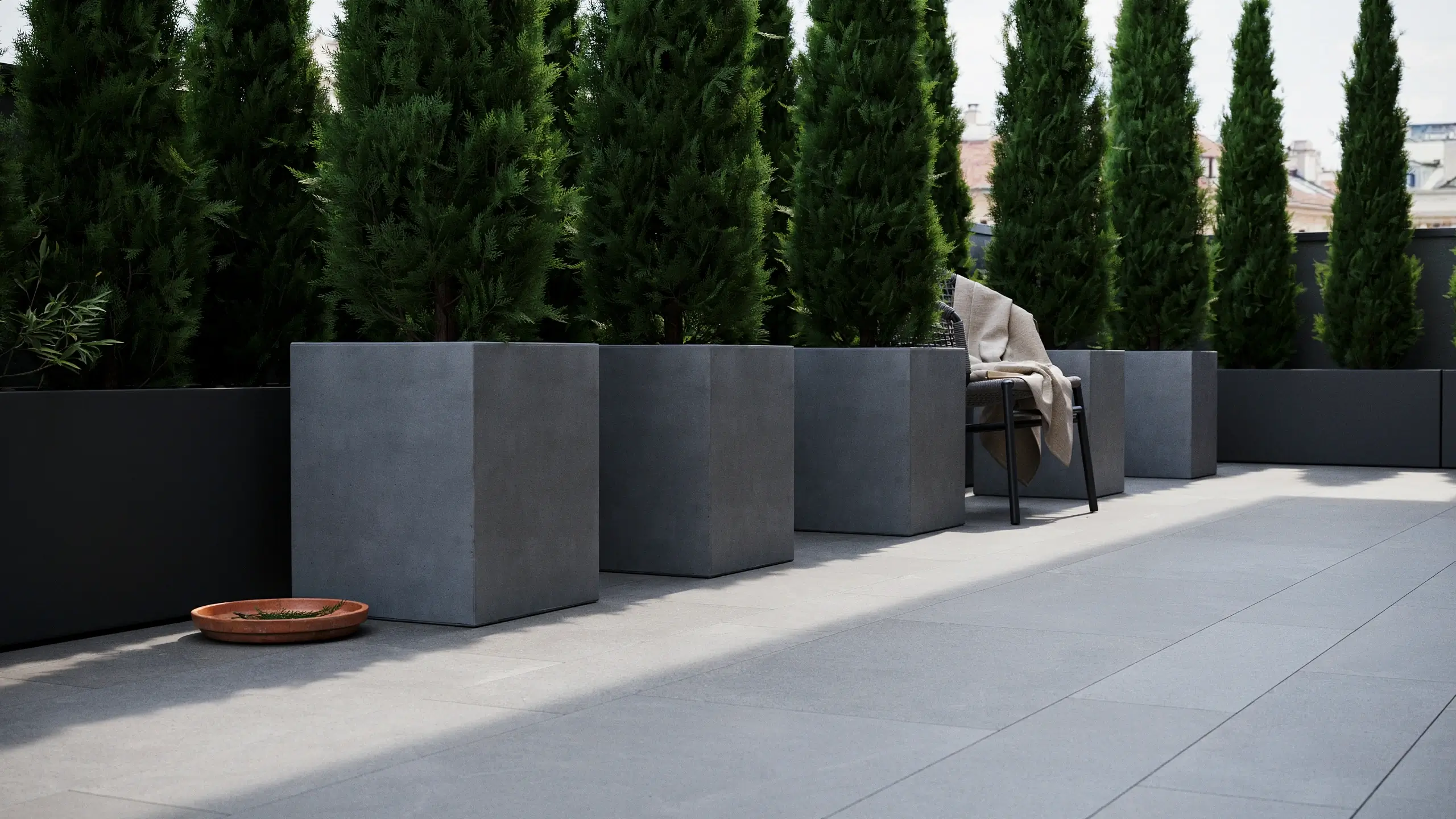
This is the renter’s best friend and one of the most underestimated garden screening ideas on this list. Large planters, think 24 inches tall and wide or bigger, filled with columnar evergreens like Italian cypress, arborvitae, or bay laurel create an instant living wall that can be repositioned, taken with you when you move, and styled to look genuinely intentional.
Line them along a fence, group them behind a seating area, or stagger them at varying heights for a layered effect. Box-shaped clipped shrubs give a formal garden feel. Left to grow naturally, bay or laurel gives a more relaxed cottage feel.
The key is pot size. Too-small containers mean plants dry out fast, tip over in wind, and look skimpy. Go bigger than you think you need, add gravel to the bottom for drainage and weight, and choose a slow-release fertilizer to keep growth consistent through the season.
5. Outdoor Fabric Curtains on a Freestanding Frame
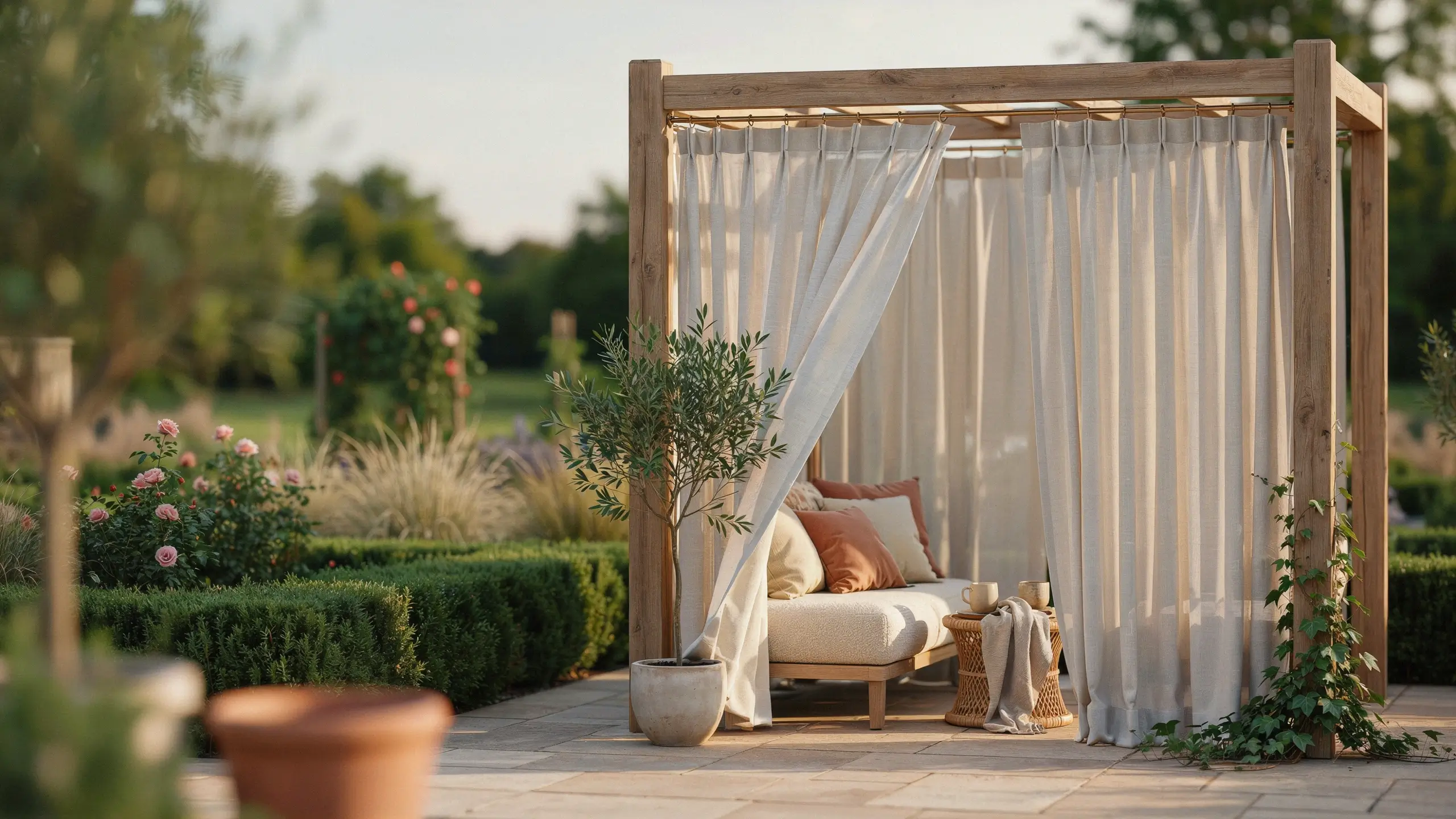
If you’ve ever seen a garden photo with flowing curtains billowing between posts and thought it looked impossibly dreamy, you’re right that it’s gorgeous, and it’s more practical than it looks. Outdoor curtains on a freestanding frame create a screen that can be drawn open during morning coffee and closed for afternoon privacy. They also add a softness and sense of enclosure that hard materials can’t replicate.
Use weatherproof, UV-resistant outdoor fabric. Sunbrella is the gold standard and is widely available in neutral linens, cool blues, and warm terracottas. Sheer versions filter light and soften sightlines without blocking them completely. Blackout or heavier panels give full coverage.
For renters or patio situations, tension rods between two existing posts work without drilling. For more permanent setups, stainless cable and ring systems look modern and clean. Add curtain weights in the hem to keep fabric from blowing out of place on windy days.
6. A Living Hedge (Done With a Plan)
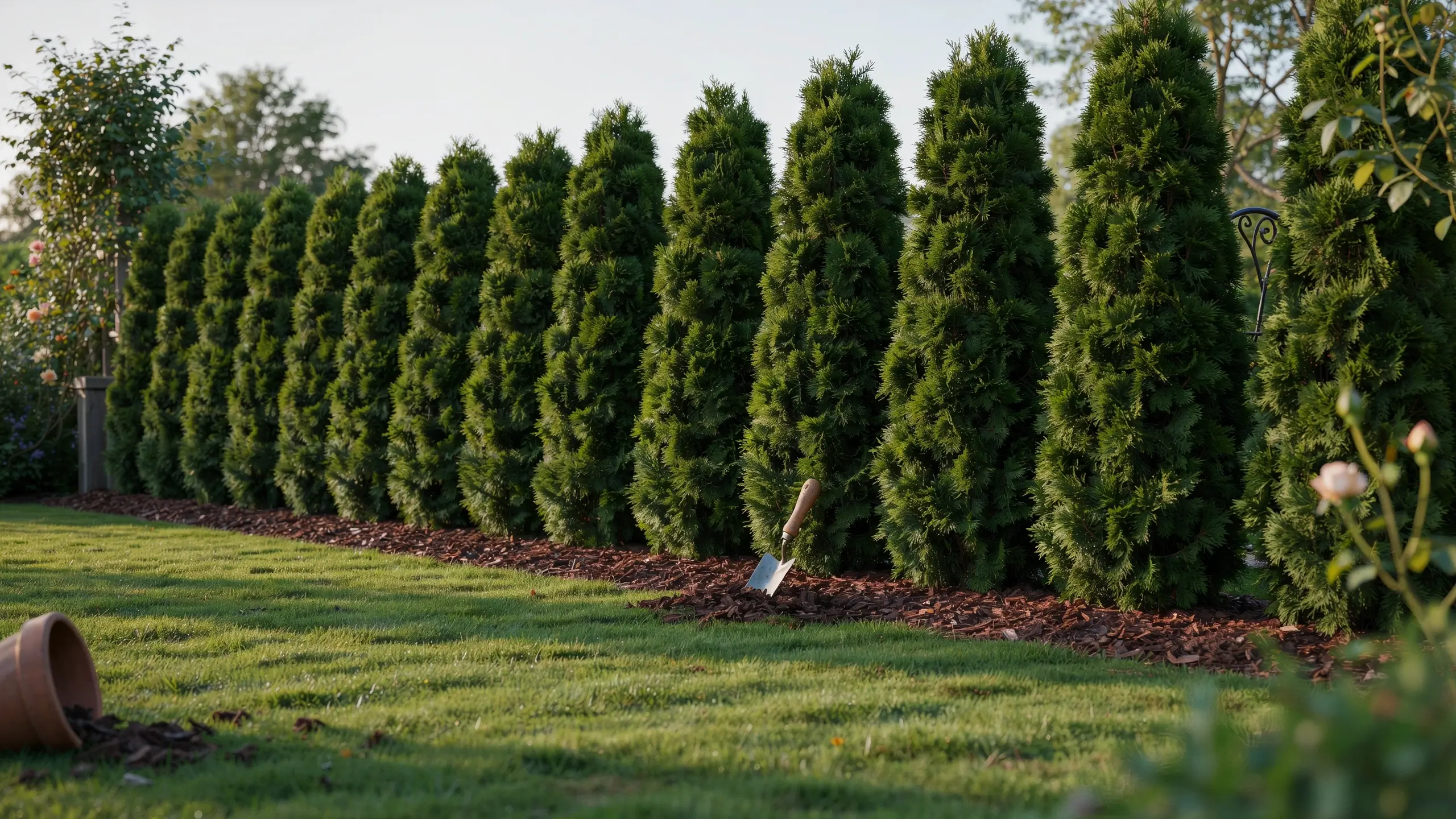
The classic answer to garden privacy is the hedge, and it works. Where it goes wrong is when people choose the wrong plant, plant it in a straight line (slower to fill in), or don’t account for how wide the root systems eventually spread.
For fast coverage, Leyland cypress is the traditional choice in the UK, while arborvitae Emerald Green is extremely popular in North America. Both can add 2-3 feet of growth per year when established. For a more beautiful hedge that also feeds you, consider a mixed fruiting hedge: highbush blueberries at 4-6 feet, elderberry at 8-12 feet, and hazelnut to fill in thick. You get screening, birds, and harvests from the same plants.
Plant in a staggered zig-zag pattern rather than a straight line. This creates a denser barrier faster because plants fill the gaps between each other. Space them 3-4 feet apart, water deeply twice a week through the first summer, and add mulch to retain moisture and suppress weeds.
One honest note: hedges are a multi-year investment. If you need privacy in the next three months, pair newly planted shrubs with temporary freestanding screening while you wait for growth.
7. Ornamental Grasses in Large Containers
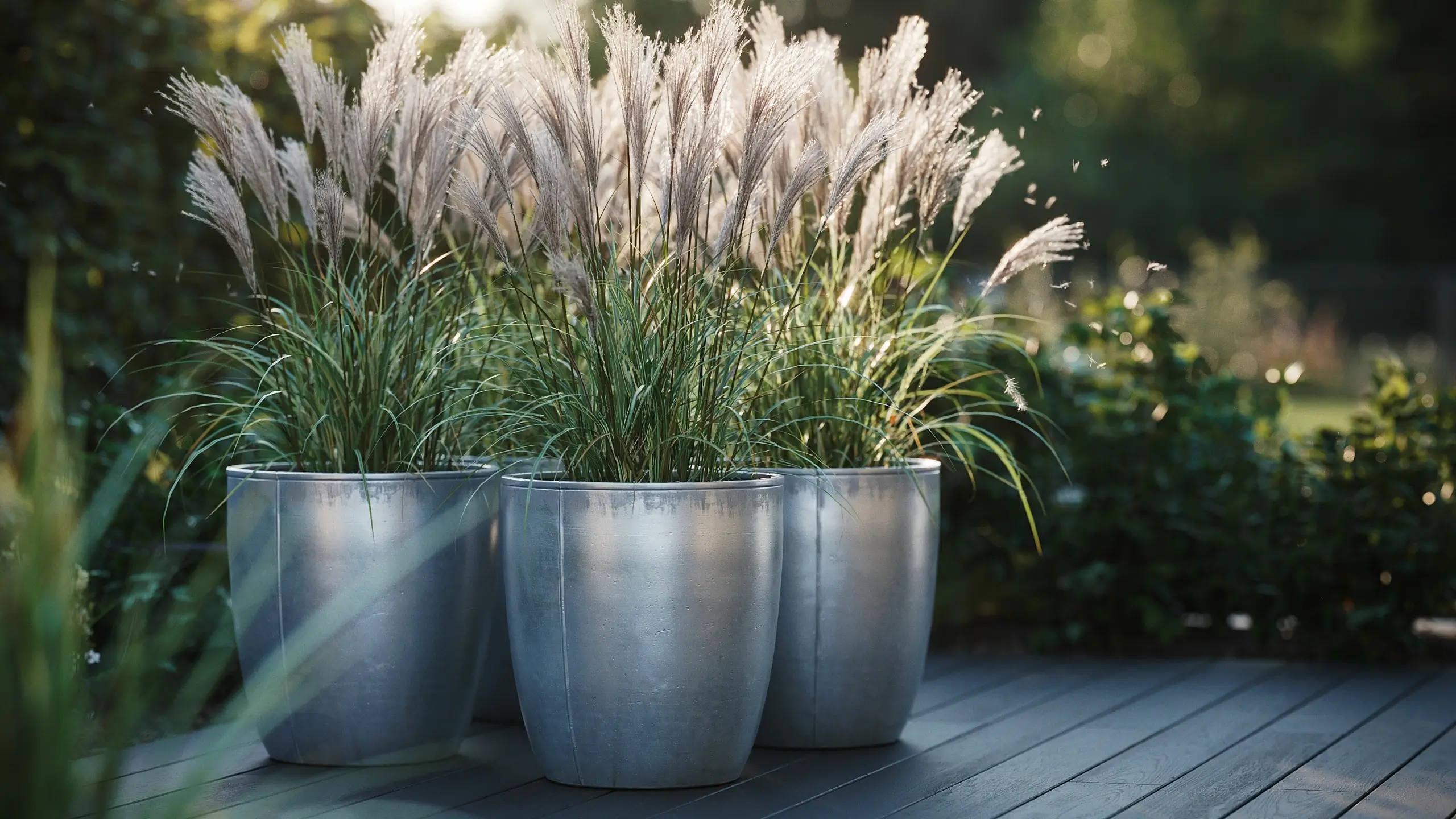
Ornamental grasses are genuinely underused as a screening material, and they bring something that solid panels and hedges can’t: movement. Miscanthus, pampas grass, and feather reed grass sway gently with every breeze, creating a living, shifting screen that feels more like a garden and less like a barrier.
Miscanthus sinensis ‘Morning Light’ reaches 5-6 feet and has fine, silvery foliage with feathery plumes in late summer. Karl Foerster feather reed grass is a narrower, more upright option at 4-6 feet, ideal for tight spaces. Both look stunning in oversized ceramic or galvanized metal containers.
Container-grown grasses give you total flexibility. Roll them to follow the sun, reposition them around seasonal furniture arrangements, or move them to a new rental. In spring, cut them back hard and they’ll fill in by midsummer.
8. A Pergola as an Outdoor Room
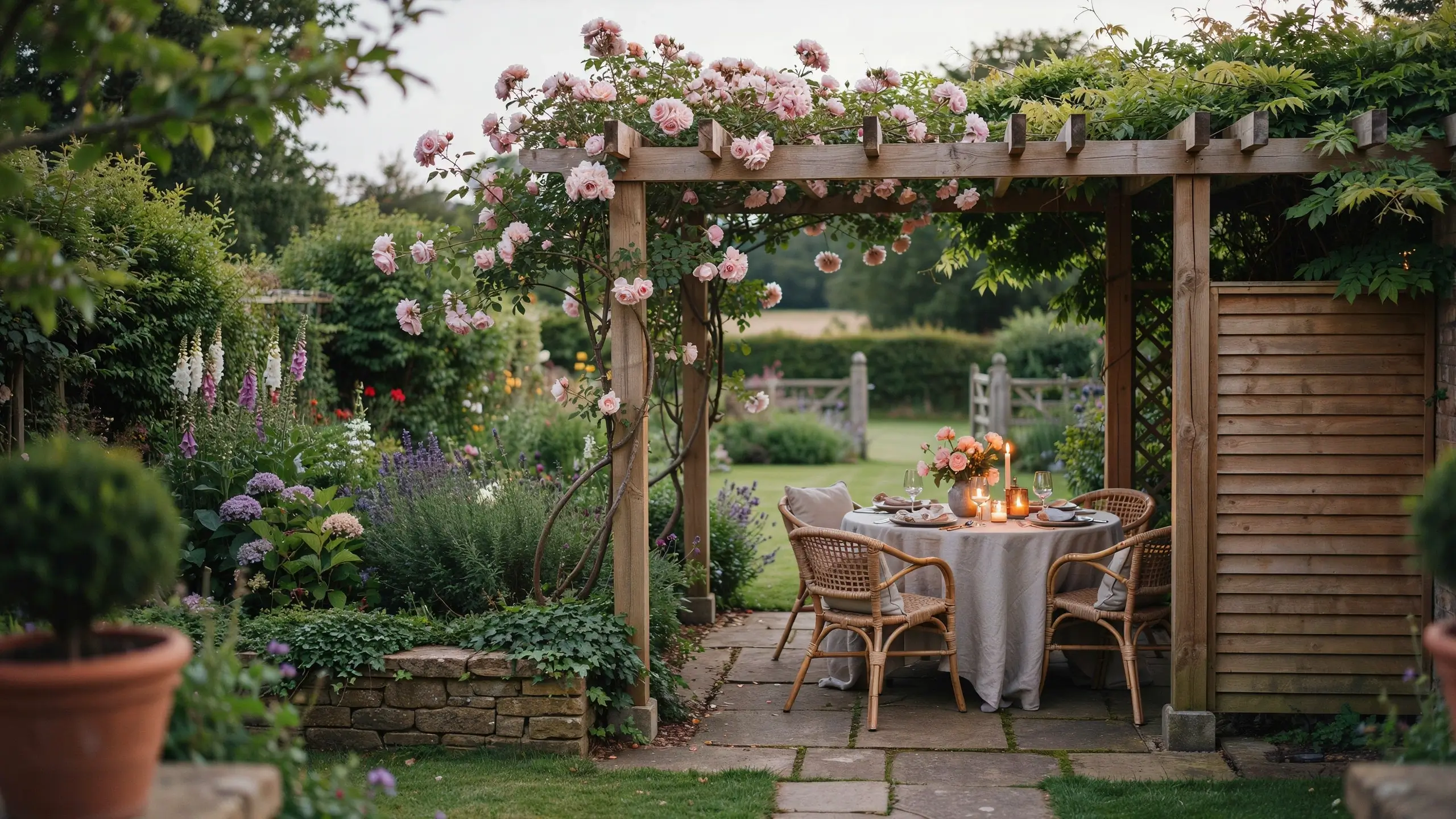
A pergola stops being just a shade structure the moment you treat its sides as screening opportunities. Climbing plants, attached lattice panels, hanging curtains, or slatted timber on the sides can turn a basic pergola into a fully enclosed outdoor room with a sense of privacy that’s rare and genuinely luxurious.
Climbing roses trained up the pergola posts and along the beams give you a screening solution that’s also breathtaking in June. Fragrant jasmine works in warmer climates and makes the space smell extraordinary on summer evenings. For faster results, install a slatted timber section on the street-facing side and let plants fill in over it gradually.
The pergola approach is particularly good for screening a hot tub, dining area, or reading corner because it addresses both overhead cover and side sightlines at once. It turns a privacy problem into a design feature.
9. Decorative Laser-Cut Metal Screens
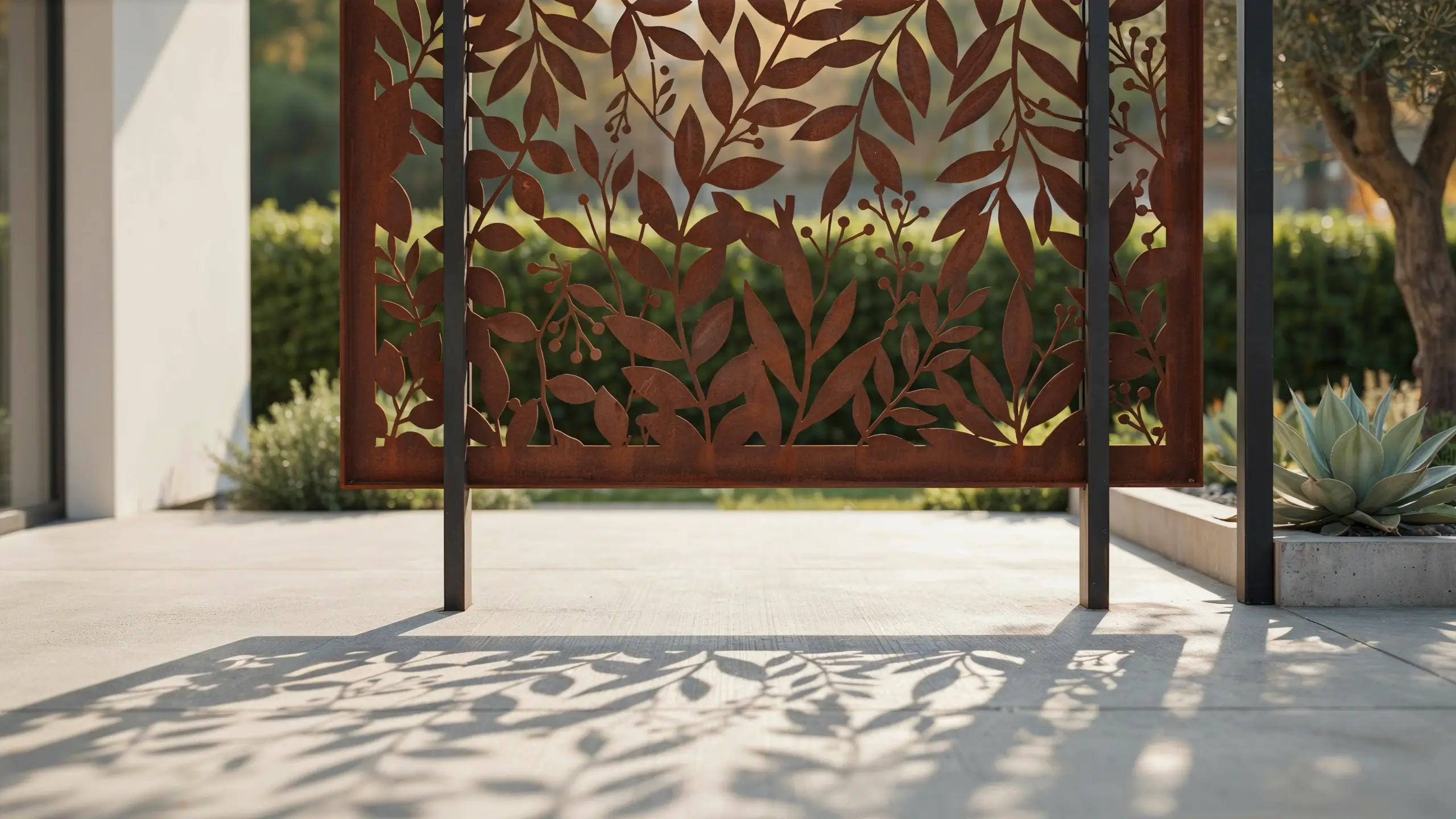
Laser-cut metal screens are where garden screening meets art. Intricate botanical motifs, geometric patterns, and abstract designs cast shadow patterns across your patio as the sun moves, and they look completely different in the morning light compared to the evening.
These screens come in powder-coated steel, Corten steel (which develops a beautiful rust-like patina over time), and aluminum. They can be freestanding on posts, mounted between two uprights, or bolted to an existing fence. Because the patterns have gaps, they don’t create a completely solid screen, but they obscure sightlines effectively while still allowing airflow.
For a small patio with a specific view you want to block (a neighbor’s window, a utility box, a busy fence panel) a single decorative metal screen makes an immediate and dramatic improvement. Pair it with a light behind it at night and the effect is genuinely stunning.
10. Pole Bean or Annual Vine Teepees
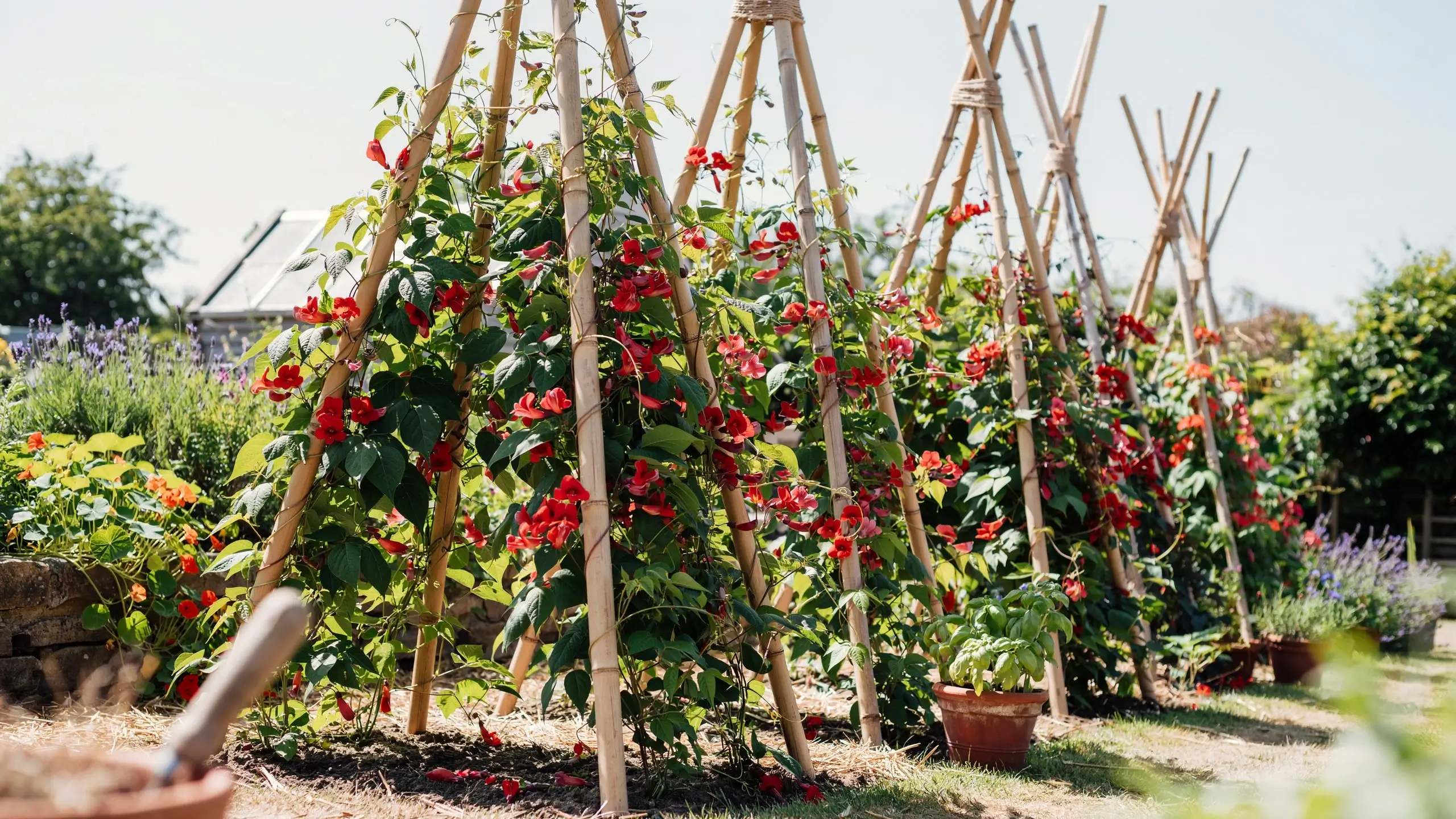
This is the most Pinterest-worthy budget option on this list and it costs less than $20. Sink three or four bamboo poles 18 inches into the ground, angle them in and tie them at the top to form teepees, then plant scarlet runner beans, hyacinth bean vine, or morning glory at the base.
In 6 to 8 weeks from planting, you have a dense living privacy screen. Line up three or four teepees along the edge of a patio and you have a seasonal green wall that also produces edible flowers and beans. Scarlet runner bean in particular is stunning, with bright red flowers against lush, deep green leaves.
This solution is seasonal, bare from late autumn through spring. But the materials cost almost nothing and you can replant every year without a second thought. It’s a particularly good option for renters who need a quick growing season screen without any permanent installation.
11. Reed or Willow Roll Fence in Weighted Pots (The Renter Setup)
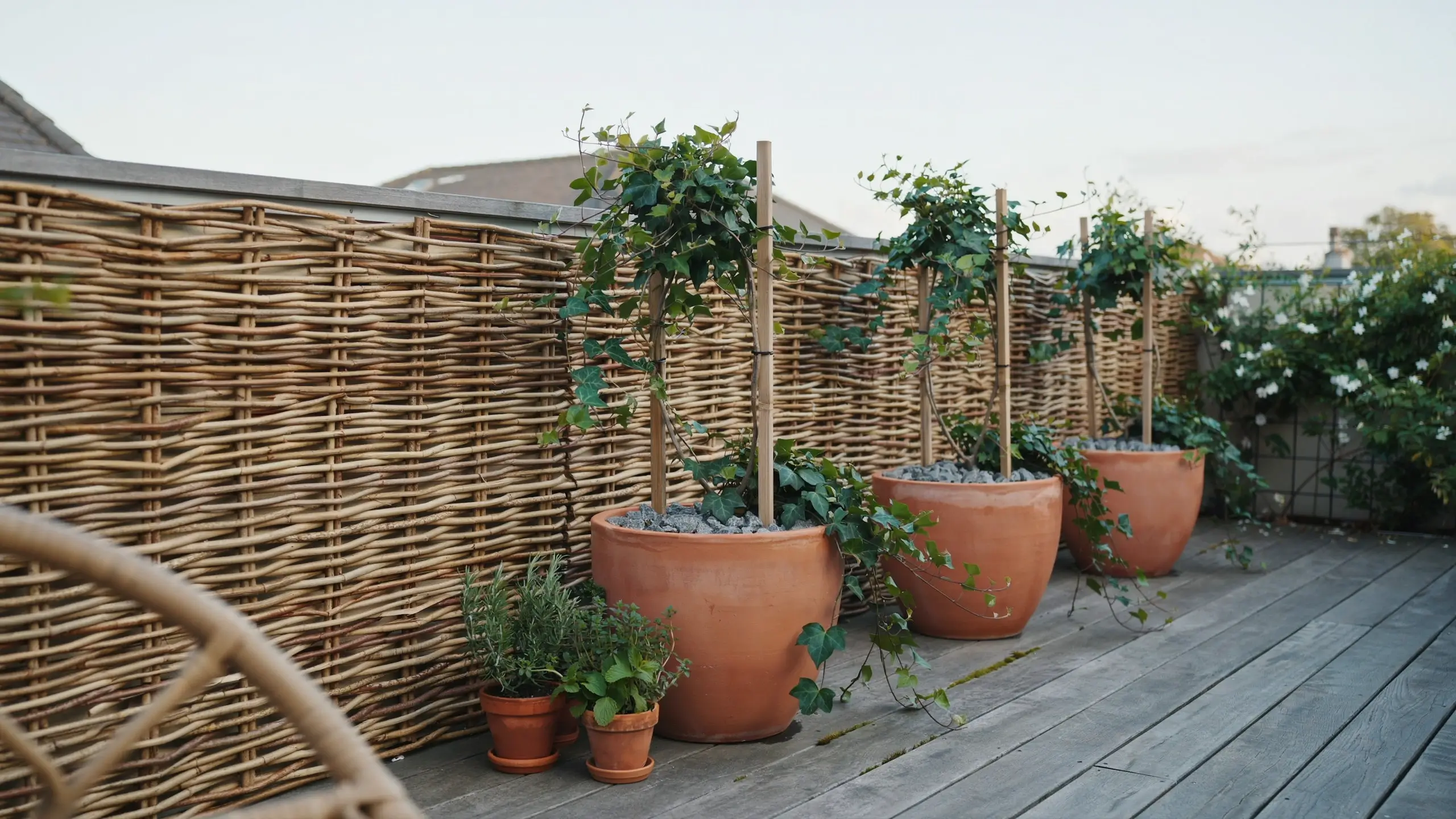
This is the portable screen setup that actually works. Take several 5-gallon buckets or large planters and fill them with gravel. Sink bamboo stakes or wooden posts into each one. Then unroll reed or willow fencing (sold at garden centers in 6-foot rolls) and attach it between the stakes with zip ties or garden wire.
You end up with a freestanding, no-drill, completely removable screen that you can take with you when you move. The willow or reed texture looks natural and organic rather than improvised. Position the planters strategically and you can adjust the screen to follow the sun or close off a specific view.
For extra stability on windy sites, fill the pots with more gravel and place a heavy brick in the bottom before adding more gravel on top. The weight matters more than the container material.
12. Freestanding Accordion or Folding Screens
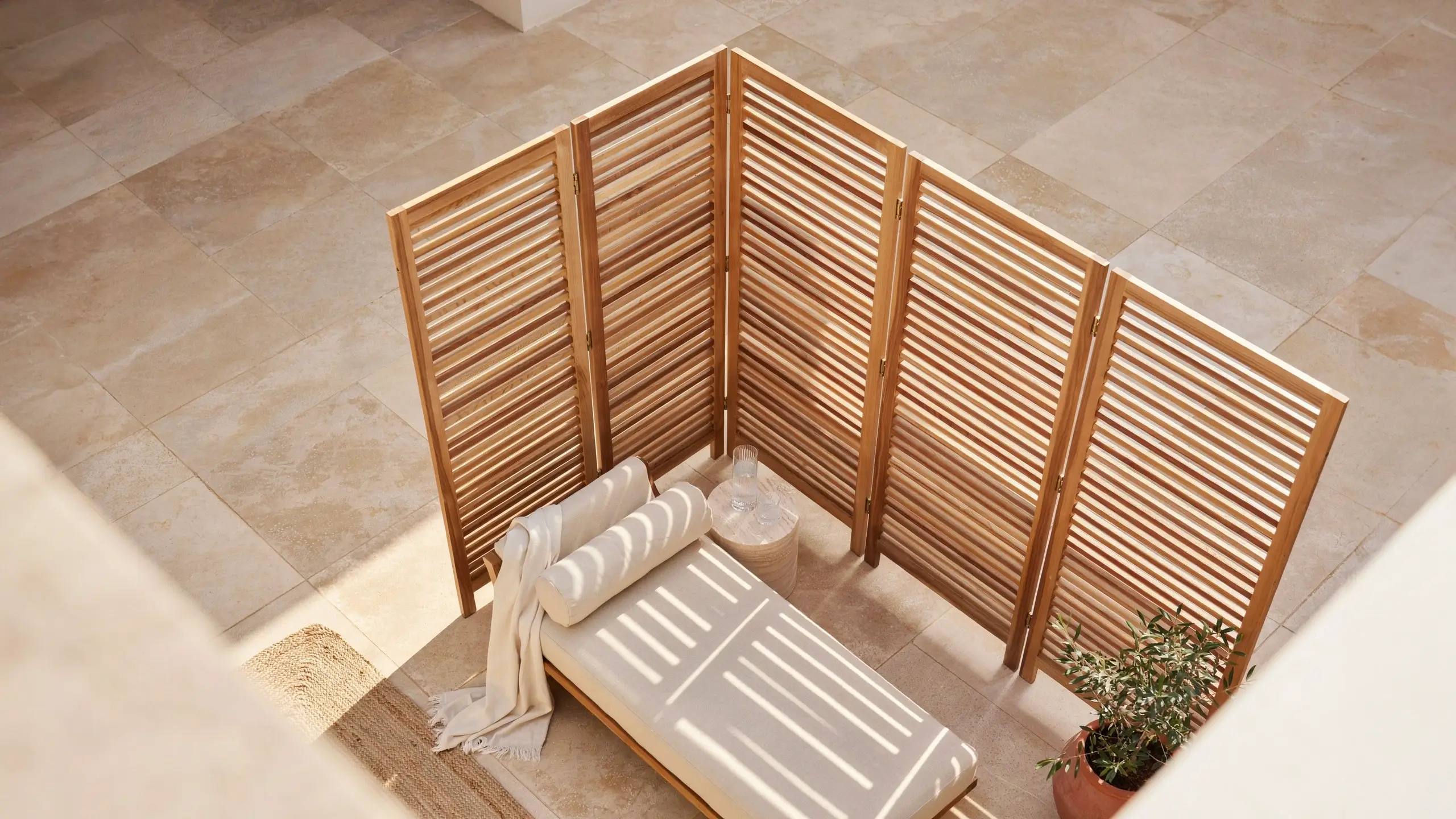
Accordion-style outdoor screens fold flat for storage and open out to create an instant privacy zone wherever you need it. Quality options in weatherproofed acacia, black powder-coated steel, or synthetic wicker are widely available at garden centers and home stores. They’re genuinely flexible in a way fixed screening can’t be.
Use one behind a chaise longue on a sunny afternoon, unfold two panels around a dining table for an outdoor dinner party with a sense of enclosure, or position a single panel to block a specific sightline without interrupting the rest of the view. Stakes at the bottom slide into lawn or planter soil to keep them stable.
These are excellent for renters not just because they’re portable, but because good-looking ones genuinely improve a patio aesthetic rather than looking like a temporary fix. Treat or seal wooden versions every couple of seasons to extend their life.
13. Espaliered Fruit Trees (Unusual and Space-Efficient)
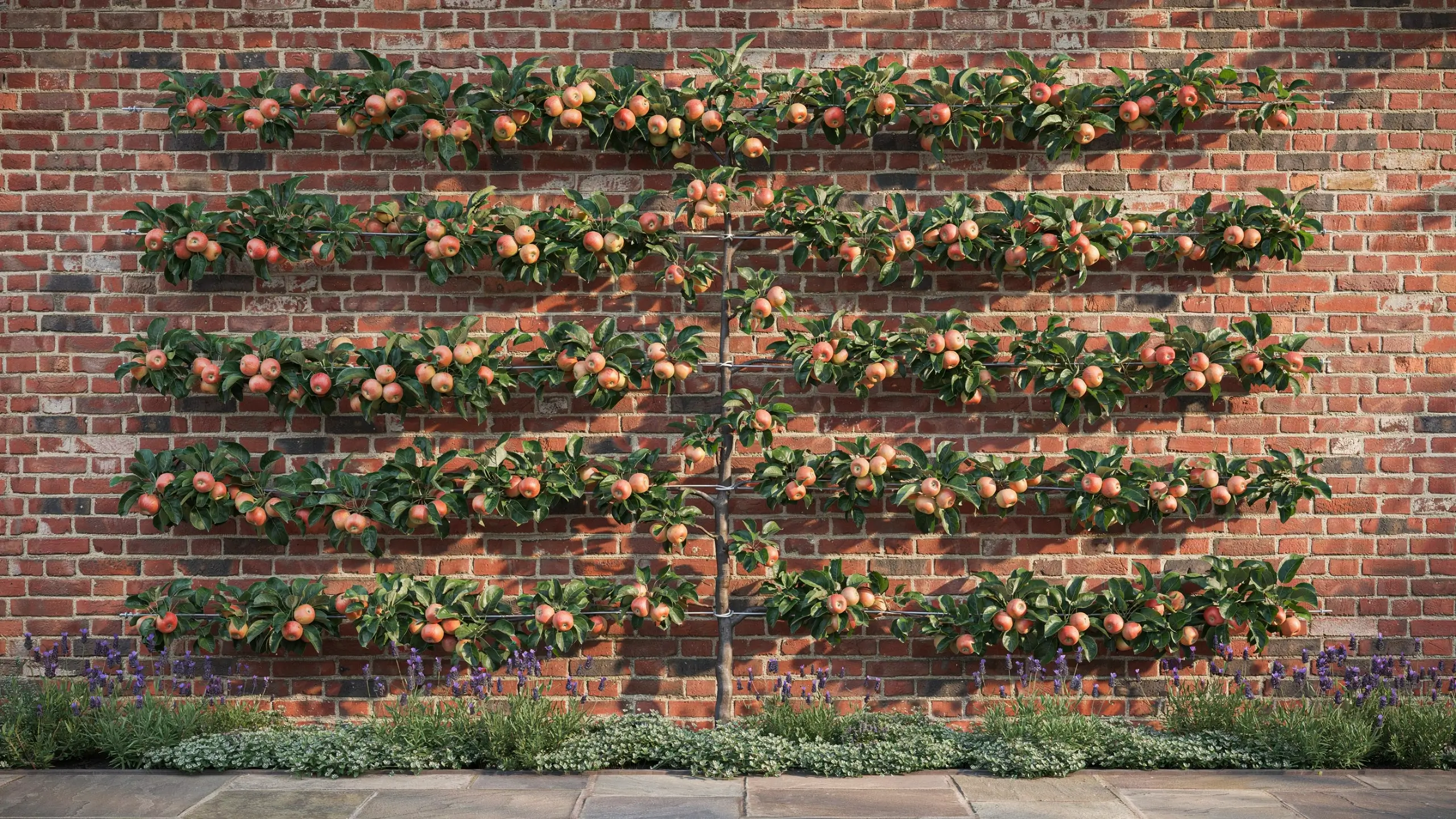
Espalliering, the practice of training a tree flat against a wall or along wires, produces a living screen that is only 12 to 18 inches deep but can stretch 8 to 12 feet wide and 6 to 8 feet tall. Apple and pear trees respond best to this technique. The result is a flat panel of branches, leaves, blossoms in spring, and fruit in autumn, all growing in an organized, almost architectural pattern.
This is a longer-term investment, taking 3 to 5 years to reach a good screen size, but the visual payoff is extraordinary and completely unlike anything a panel or hedge can offer. Espaliered apple trees have appeared on Pinterest garden boards for years precisely because they look like something from an English country garden.
Use horizontal wires set 18 inches apart and attached to posts or an existing wall. In the early years, tie young branches along the wires each spring and summer. Once established, they need only light annual pruning.
14. Vertical Garden Panels and Living Walls
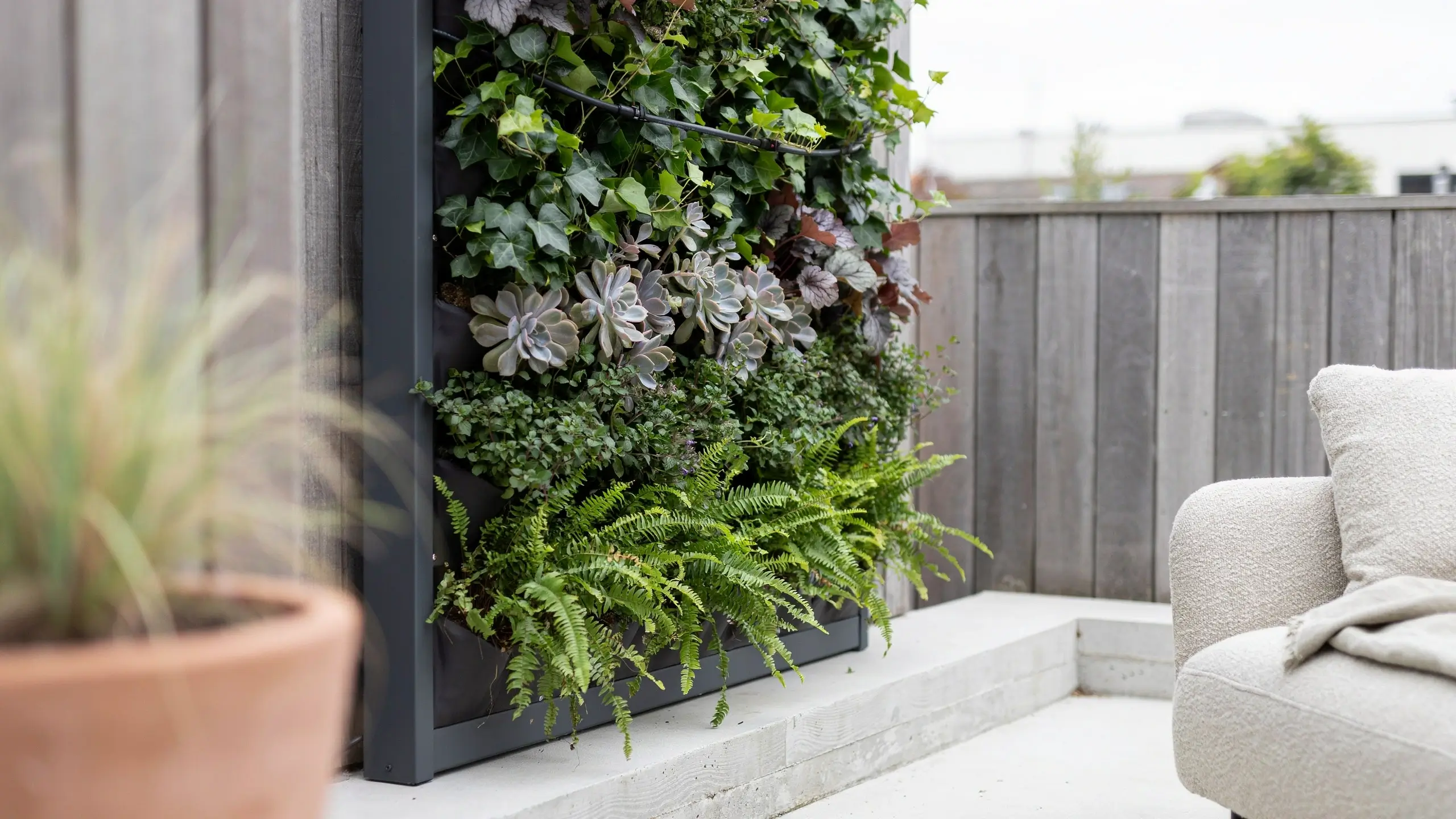
A vertical garden panel is a growing medium attached to a backing frame that allows plants to grow outward and upward in a dense, wall-like formation. They’re available as freestanding units or wall-mounted systems, and a well-planted one looks absolutely spectacular on a patio, particularly up close where you can see the texture of different plants layered together.
Succulents, ferns, and ivy all work in living wall panels. For a more cottage-garden feel, combine trailing plants with small flowering annuals and herbs. Mint, basil, and trailing thyme all grow well in vertical planters and add fragrance to your seating area.
Living wall panels need regular watering. Many serious options come with built-in drip irrigation, which is worth the investment if you’re covering a large area. For smaller sections, a hand-held watering can every couple of days in summer is sufficient.
15. Mixed Material Screens: Wood, Metal, and Plants Together
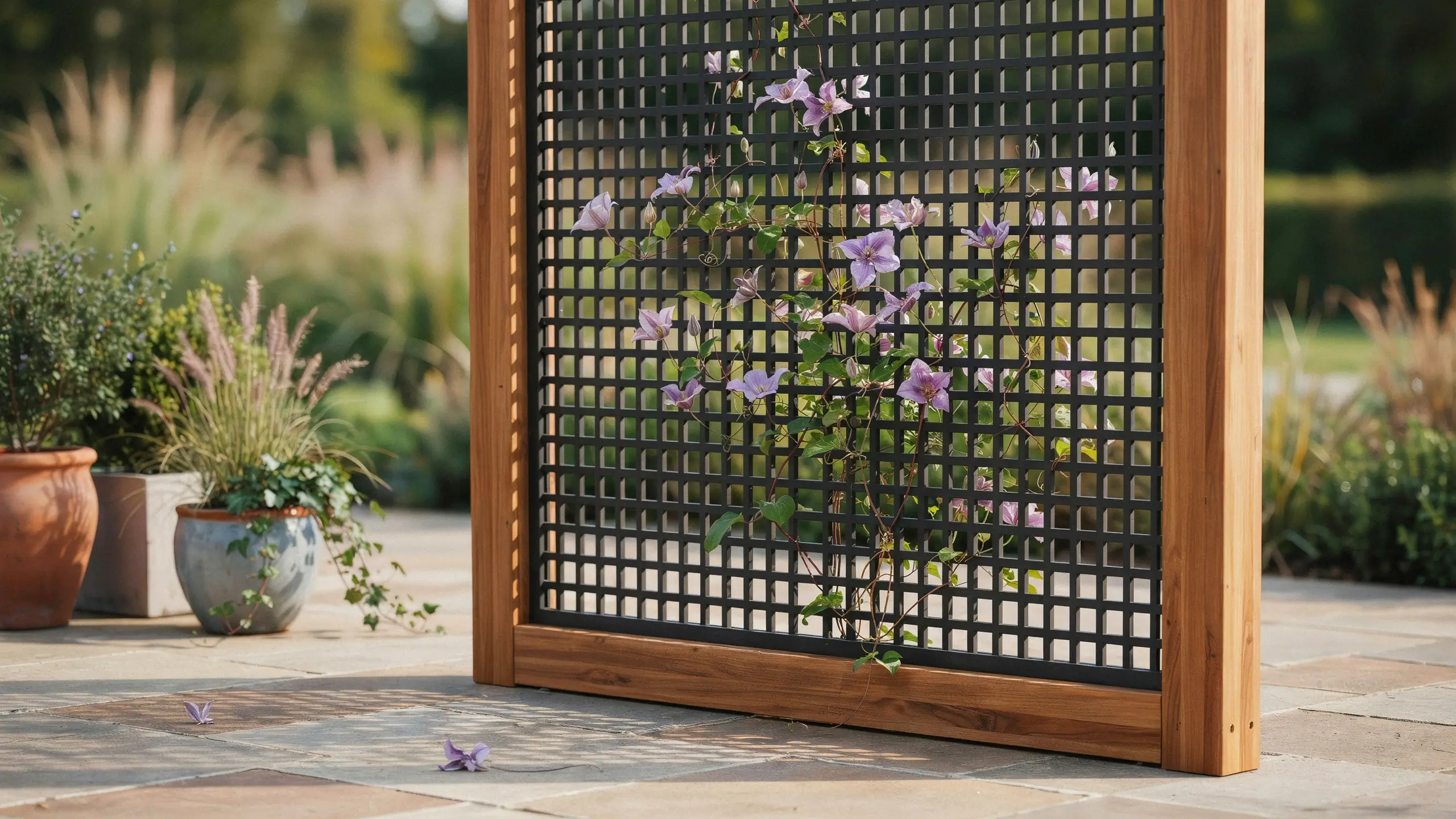
Some of the most beautiful garden privacy screens on Pinterest work because they combine materials rather than relying on a single one. A timber frame with a section of powder-coated metal grid in the center, then climbing plants threading through the metal over time, creates a layered, textural screen that looks genuinely designed.
Stone pillars or block columns with timber slats spanning between them have a slightly Mediterranean feel. Weathered steel planters built into timber panels bring structure and plant softness together. The principle is to pair a hard material that provides immediate privacy with a soft, living element that adds beauty and evolves with the seasons.
These mixed-material approaches also let you match your home’s existing architecture more closely. Contemporary homes with steel and concrete suit metal-framed screens. Older brick properties tend to look best with timber and stone.
16. Raised Planter Beds With Integrated Trellis
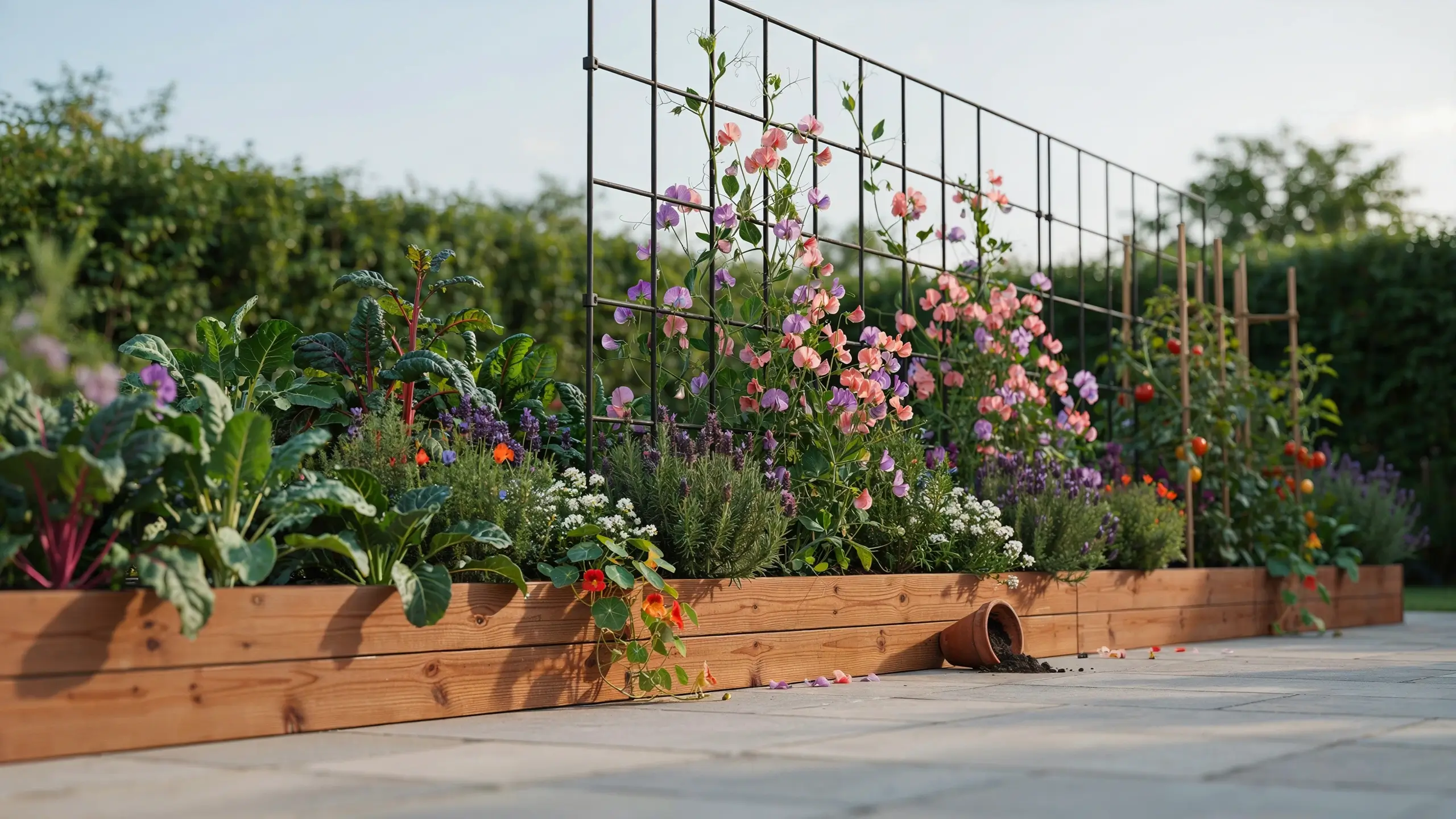
A deep raised planter bed, roughly 16 to 18 inches tall, topped with a trellis section creates a planting, growing, and screening solution in one unit. Fill the bed with vegetables, herbs, or cottage-garden flowers below, and train climbing plants up the trellis above. The combination can reach 6 to 8 feet high while occupying only the footprint of the planter.
Integrated planter-and-trellis units are sold as single pieces at many garden retailers, or you can build your own from cedar planks and metal grid panels for around $100 to $150 in materials. They’re particularly good for framing a seating area or defining the boundary between a dining space and a lawn without using a fence.
Grow sweet peas, nasturtiums, or climbing courgettes up the trellis in summer for a productive, beautiful screen that changes weekly through the growing season.
17. Outdoor Curtains on Freestanding Post Kits
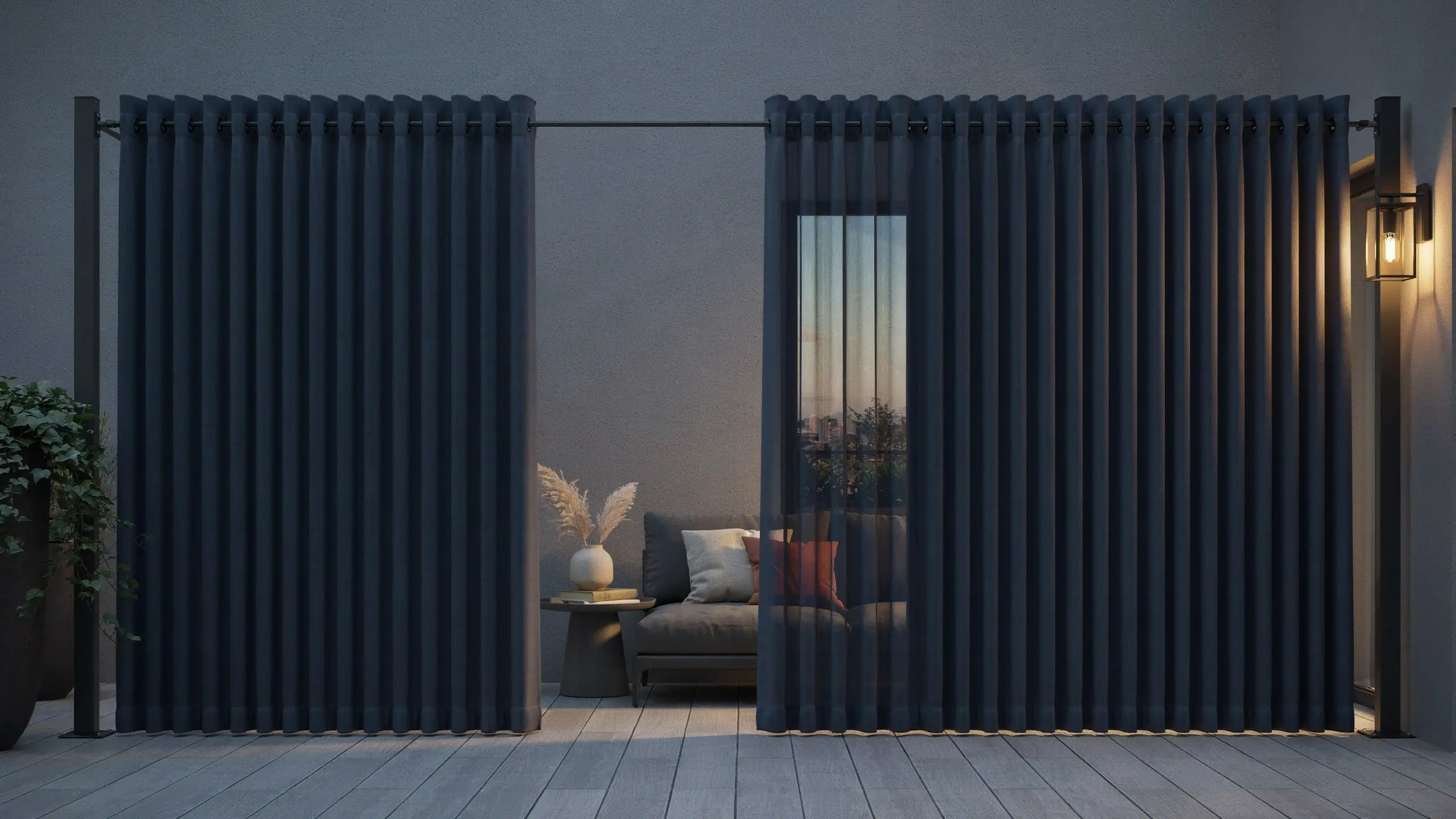
For renters or anyone who wants dramatic, adjustable privacy without permanent installation, a freestanding post kit with outdoor curtain rods threaded between them is one of the most underestimated solutions in this whole list.
Post kits, which you can find at home improvement stores, stand on their own base and support a horizontal rod at the top. Hang floor-length outdoor curtains from the rod and you have a screen that opens and closes with a pull. It requires no drilling, no digging, and no permission from a landlord. Two panels flanking a seating area, with the curtains drawn closed in the afternoon, creates a genuinely intimate outdoor space.
Ivory linen-look fabric is the most popular choice for its soft, elegant feel. Navy or forest green makes a stronger design statement. Whatever color you choose, hem the curtains about an inch from the ground rather than letting them puddle on patio surfaces, which causes mildew over time.
18. Repurposed Materials: Old Doors, Pallets, and Shutters
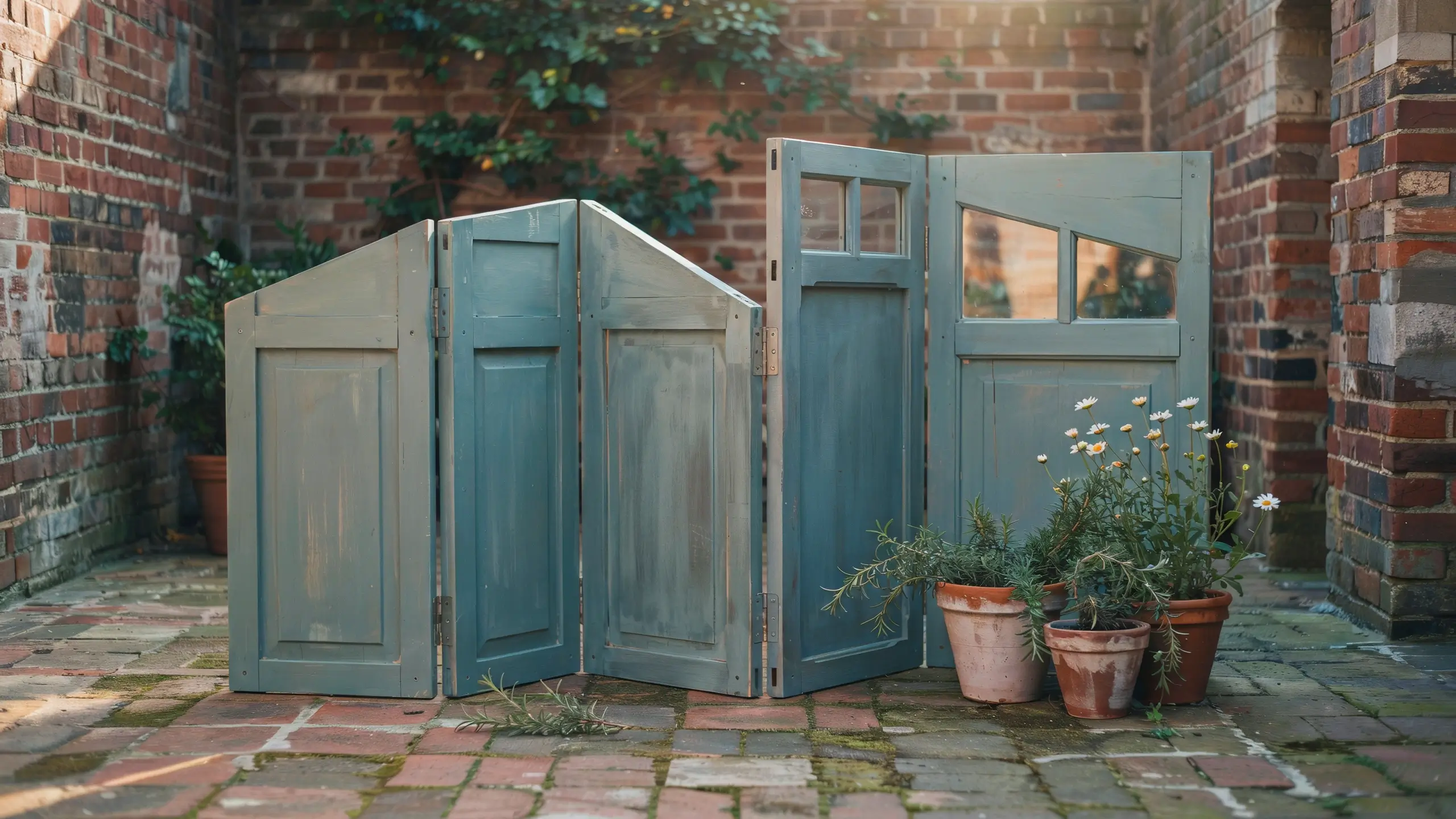
Old doors hinged together in a row, painted in a single bold color, make a privacy screen with genuine character that you genuinely cannot buy from a garden center. Vintage shutters mounted on a simple timber frame bring architectural interest and a holiday-home feel to a basic backyard. Pallet wood assembled into a slatted panel costs next to nothing and can look surprisingly polished with a coat of exterior paint.
The secret to making repurposed materials look intentional rather than improvised is consistency of finish. Choose one color, apply it evenly, and treat the wood before use to extend its life. Old doors in sage green or dusty terracotta, hinged together to create an accordion-style screen, have been doing very well on Pinterest for years because they look curated, not patched together.
Mistakes to Avoid With Garden Screening
- Going too solid too fast. A completely solid screen in a small garden can make the space feel like a box. A few strategic semi-transparent elements, grasses, slatted panels with narrow gaps, or trellis with climbing plants, give privacy without claustrophobia.
- Planting running bamboo without a root barrier. Running bamboo is extraordinarily invasive. If you use it, install a root barrier 2 feet deep around the entire planting area. Clumping bamboo is the safer choice for most gardens.
- Ignoring the wind. Tall solid screens catch wind like a sail. In exposed positions, slatted or semi-open screens that let air through will last much longer and cause fewer problems. Freestanding screens need weighting or anchoring on any site that gets regular wind.
- Underestimating planter weight. Large planters filled with soil and gravel are extremely heavy. Plan your final position before filling, or use lightweight potting mix combined with perlite to reduce weight without compromising drainage.
- Buying the cheapest outdoor fabric. Untreated fabric, or fabric not designed for outdoor use, will fade, mildew, and deteriorate within a single season. Outdoor-rated fabric from brands like Sunbrella is more expensive upfront but lasts many years.
Your Private Garden Starts with One Good Idea
The right garden screening idea is the one that solves your specific problem without creating new ones. A renter doesn’t need a hedge. Someone with a beautiful view on three sides just needs a targeted screen behind their chair. A homeowner with a large overlooked terrace might want to layer two or three of these ideas together.
The truth is that the most beautiful private gardens aren’t the ones with the highest fences. They’re the ones where screening was treated as a design decision rather than an afterthought, where someone chose a slatted cedar panel instead of a blank concrete wall, or let jasmine take over a trellis instead of leaving bare timber. The privacy came from the same place the beauty did.
Start with one section, one seating area, one view you want to close off. Get that right, and the rest of the garden will follow.
Which of these garden screening ideas are you planning to try? Leave a comment below and let me know what you’re working with. Renting, owning, tiny patio or sprawling backyard — I’d love to hear what your privacy challenge looks like.



No Comment! Be the first one.