




Why Japandi Decor Isn’t Working in Your Home (10 Real Reasons and How to Fix Them)
You bought the neutral linen throw. You found the low wooden coffee table. You even hunted down that one ceramic vase everyone has on Pinterest. And your room still doesn’t look like the...


You bought the neutral linen throw. You found the low wooden coffee table. You even hunted down that one ceramic vase everyone has on Pinterest. And your room still doesn’t look like the Japandi spaces you keep saving.
It looks a little stiff. Or a little cold. Or somehow both cluttered and empty at the same time, which shouldn’t even be possible.
If that sounds familiar, you’re not doing Japandi wrong because you lack taste. You’re running into a handful of specific, fixable problems that almost nobody talks about outright. Most articles list the same five things: too many colors, too much stuff, not enough plants. True, but not the whole story.
Here’s what’s actually stopping your Japandi decor from working, and what to do about each one.
What Japandi Is Actually Supposed to Feel Like
Before you can fix it, it helps to know what you’re aiming for. Japandi blends Japanese restraint with Scandinavian warmth. The goal isn’t an empty room. It’s a room with fewer things in it, where every single item earns its spot through function, material, or meaning. Calm, not cold. Simple, not sparse. If your space feels like a hospital waiting room or a furniture showroom, something in the mix is off.
1. You Bought the Look, Not the Material
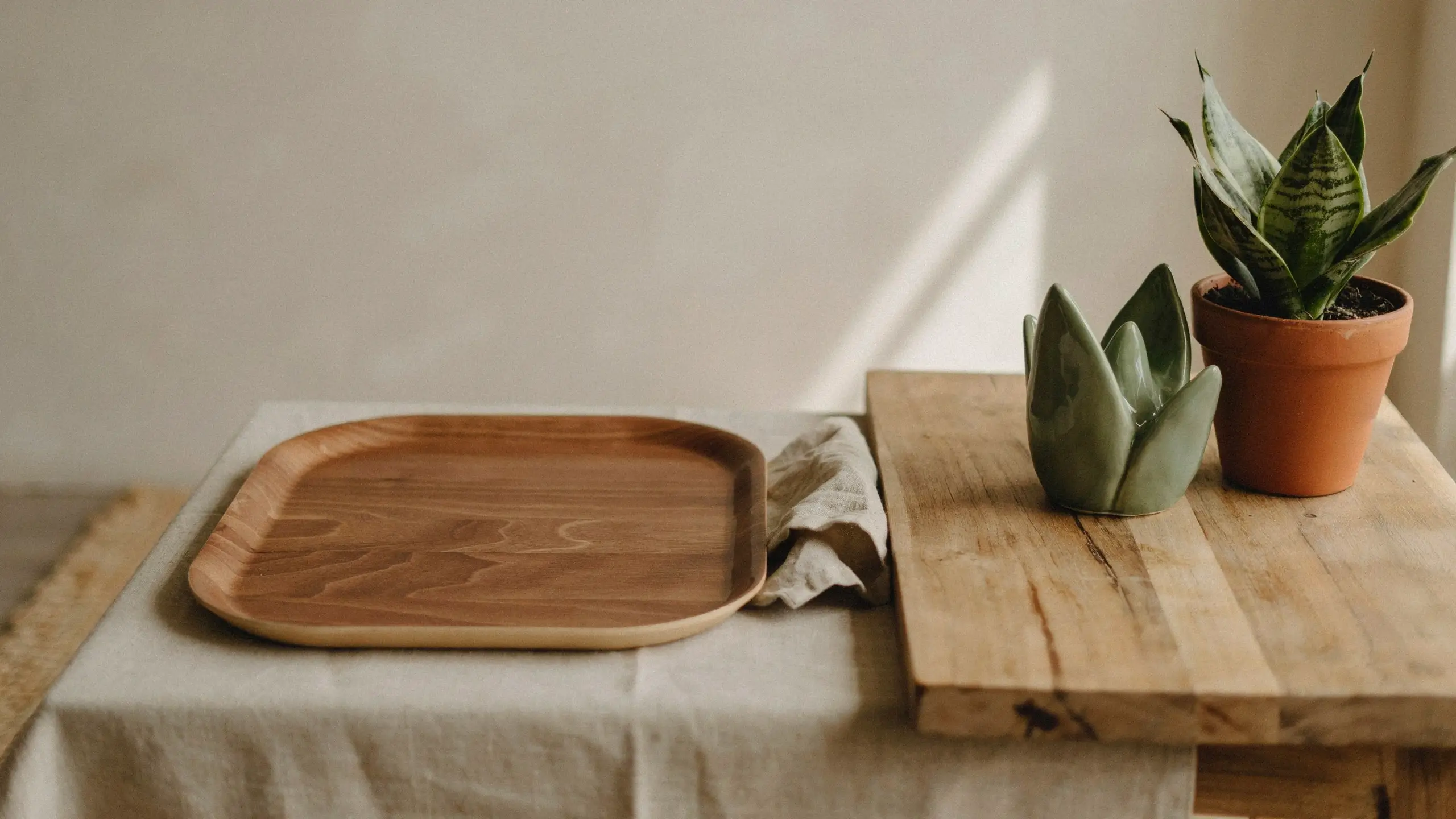
This is the one nobody wants to hear, but it’s usually the first domino. A lot of budget Japandi shopping ends up full of pressed wood with a printed grain, glossy laminate that catches light the wrong way, and plastic “wood-look” trays. In photos it reads fine. In your living room, under real light, it looks like exactly what it is.
What to Do Instead
- Prioritize a few real-material pieces over many fake ones. One solid wood side table beats three laminate ones.
- Check secondhand marketplaces and estate sales for solid wood furniture you can refinish. This is where a lot of authentic Japandi pieces actually come from.
- Swap faux plants for one real, low-maintenance one like a snake plant or ZZ plant if you’re worried about killing greenery.
- Choose unbleached cotton or linen bedding over polyester blends. The texture difference alone changes how a room reads.
Mistake to avoid: buying a full room of “Japandi style” items from a fast furniture site in one order. You’ll end up with a matched set that looks assembled instead of collected.
2. Everything Is the Same Shade of Beige
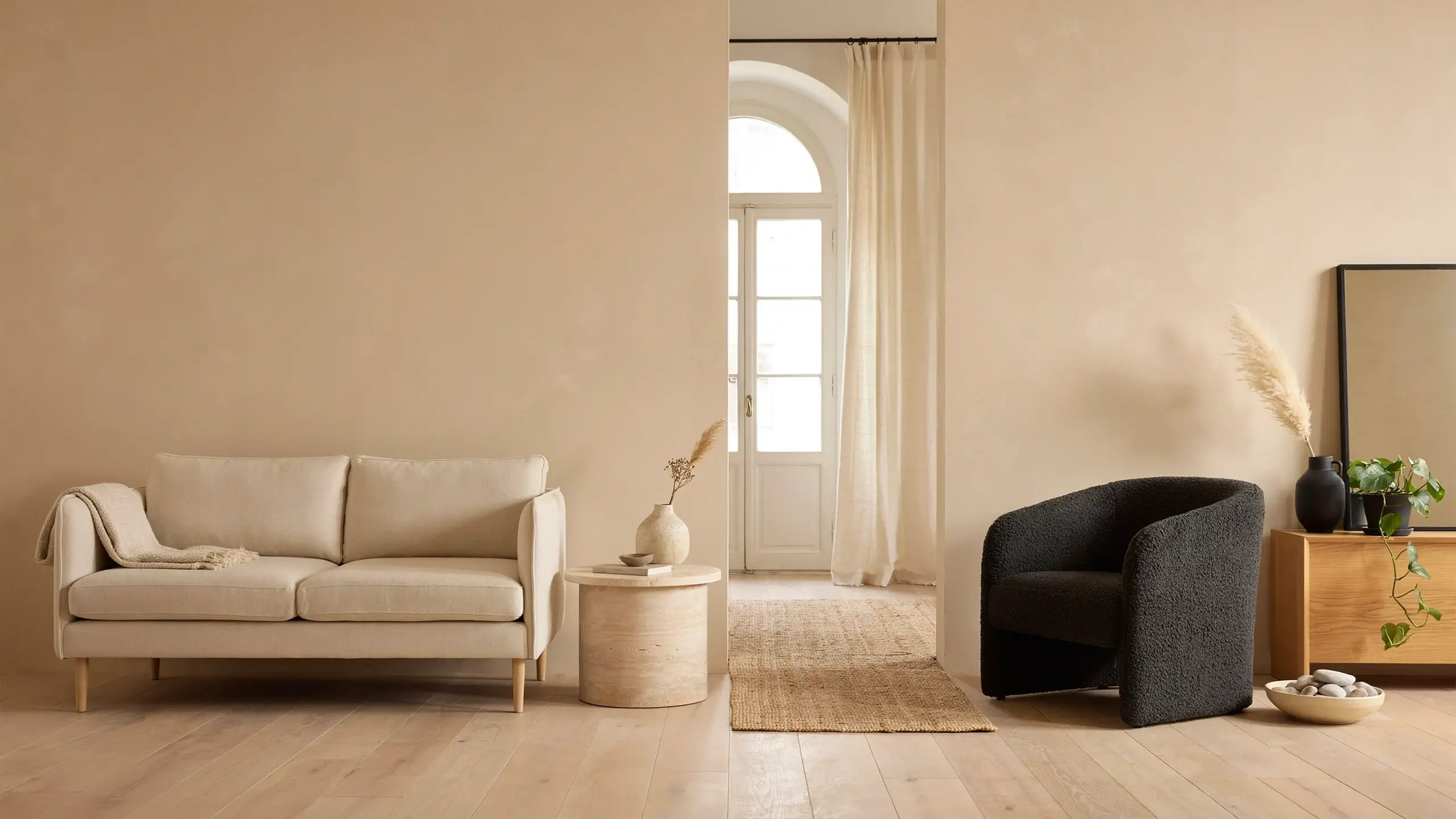
Japandi gets misread as “put everything in one neutral tone” a lot. The result is a room where nothing has a focal point, because nothing contrasts with anything else. That flatness is often what makes a space feel boring instead of serene.
What to Do Instead
- Use a simple ratio: around 70% warm neutrals (oatmeal, sand, off-white), 20% a deeper grounding tone like charcoal, walnut, or espresso, and 10% one considered accent like rust, deep terracotta, or matte black.
- Let your darkest element do the work of a focal point. A black-framed mirror, a charcoal boucle chair, or a dark wood console will anchor a room full of light tones.
- Vary your neutrals on purpose. Warm white walls, a slightly greyer linen sofa, and a golden-toned wood floor still count as “neutral” but they’re not identical, and that’s what gives the room depth.
3. Your Room Is 90% Scandinavian and 0% Japanese
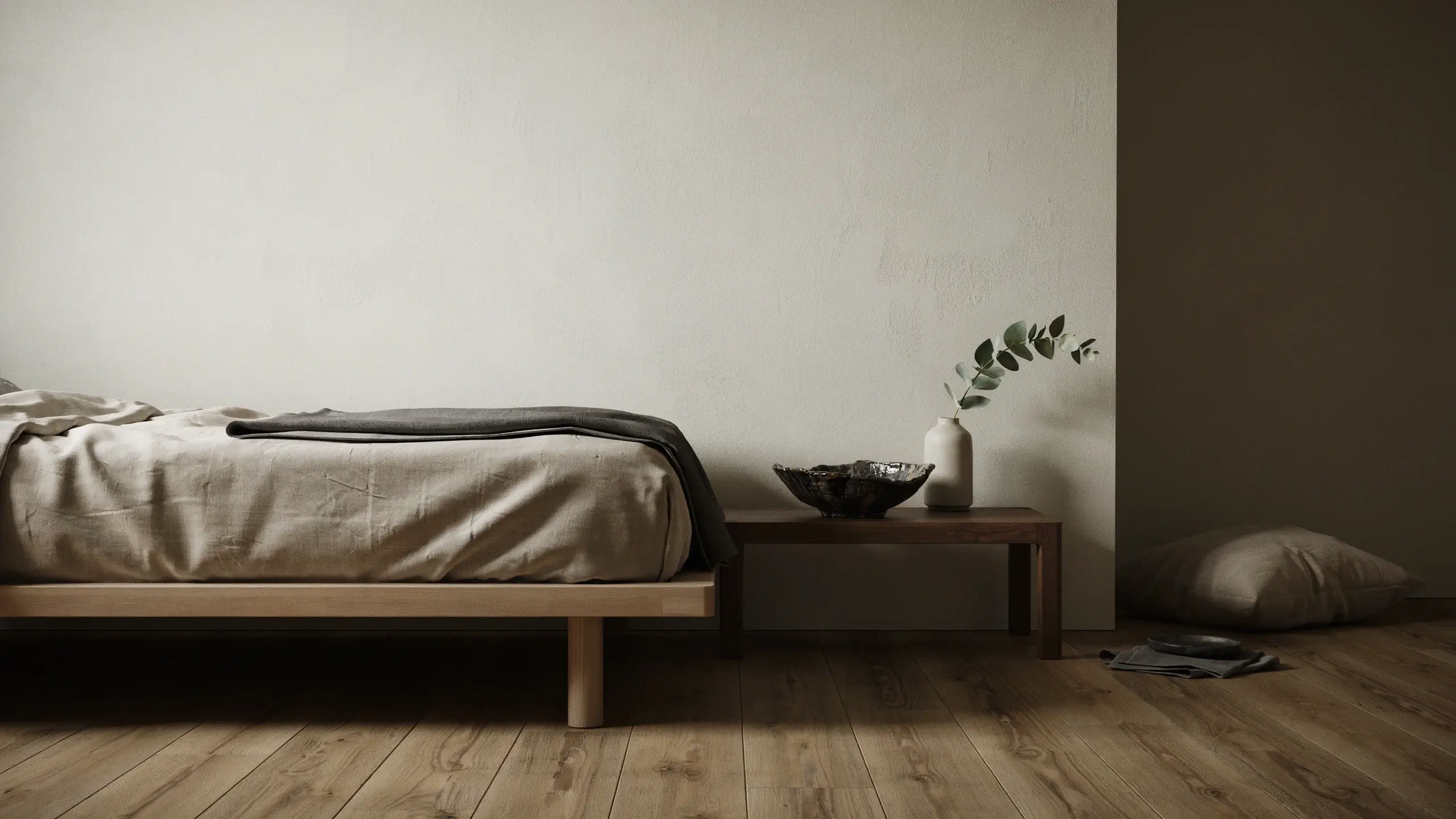
This is the most common imbalance, and it’s the one competing articles mention but rarely explain how to actually fix. Light wood, clean lines, and cozy textiles are the Scandi half. Without the Japanese half, you just have Scandinavian minimalism with a new name on it.
What to Do Instead
- Bring in low furniture. A platform bed frame or a low coffee table changes the whole feel of a room compared to standard-height pieces.
- Add one asymmetrical or handmade object, like a raku-fired bowl or a slightly irregular vase. Perfectly matched, machine-made sets read as Scandi. A little imperfection reads as Japanese.
- Try a single-stem arrangement instead of a full bouquet. One eucalyptus branch in a narrow vase does more for the mood than a dozen flowers.
- Layer a floor cushion or a low seating nook if you have the space. It doesn’t need to be literal tatami, just low and grounded.
4. The Clutter Didn’t Disappear, It Just Moved to a Drawer
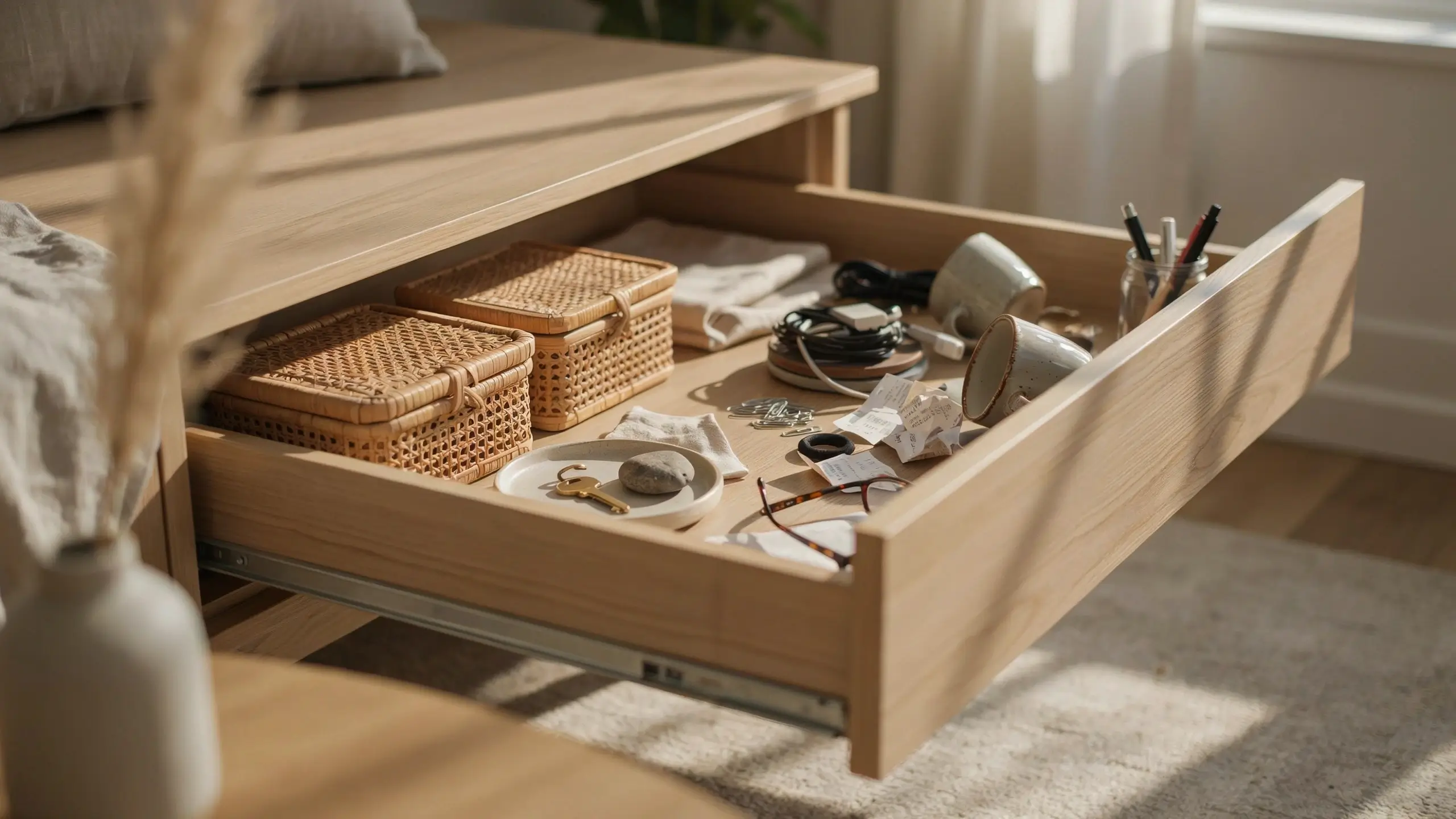
Surfaces look clear, but open a cabinet or a closet and it’s chaos. That mismatch matters more than people realize, because Japandi calm isn’t just about what’s visible. It’s about the room actually functioning without a daily battle against mess.
What to Do Instead
- Add closed storage before you add more open shelving. A simple wood credenza or a set of woven baskets with lids hides the daily stuff without breaking the look.
- Do a real edit, not a rearrange. If a drawer is stuffed, something needs to leave the house, not just move to a bin.
- Use trays to corral small items on counters and desks. Grouped items read as intentional. Scattered items read as clutter, even if there are only three of them.
Mistake to avoid: treating “hidden” as the same thing as “organized.” A stuffed drawer that won’t close is still clutter, it’s just clutter with a door on it.
5. Your Lighting Is Working Against the Mood
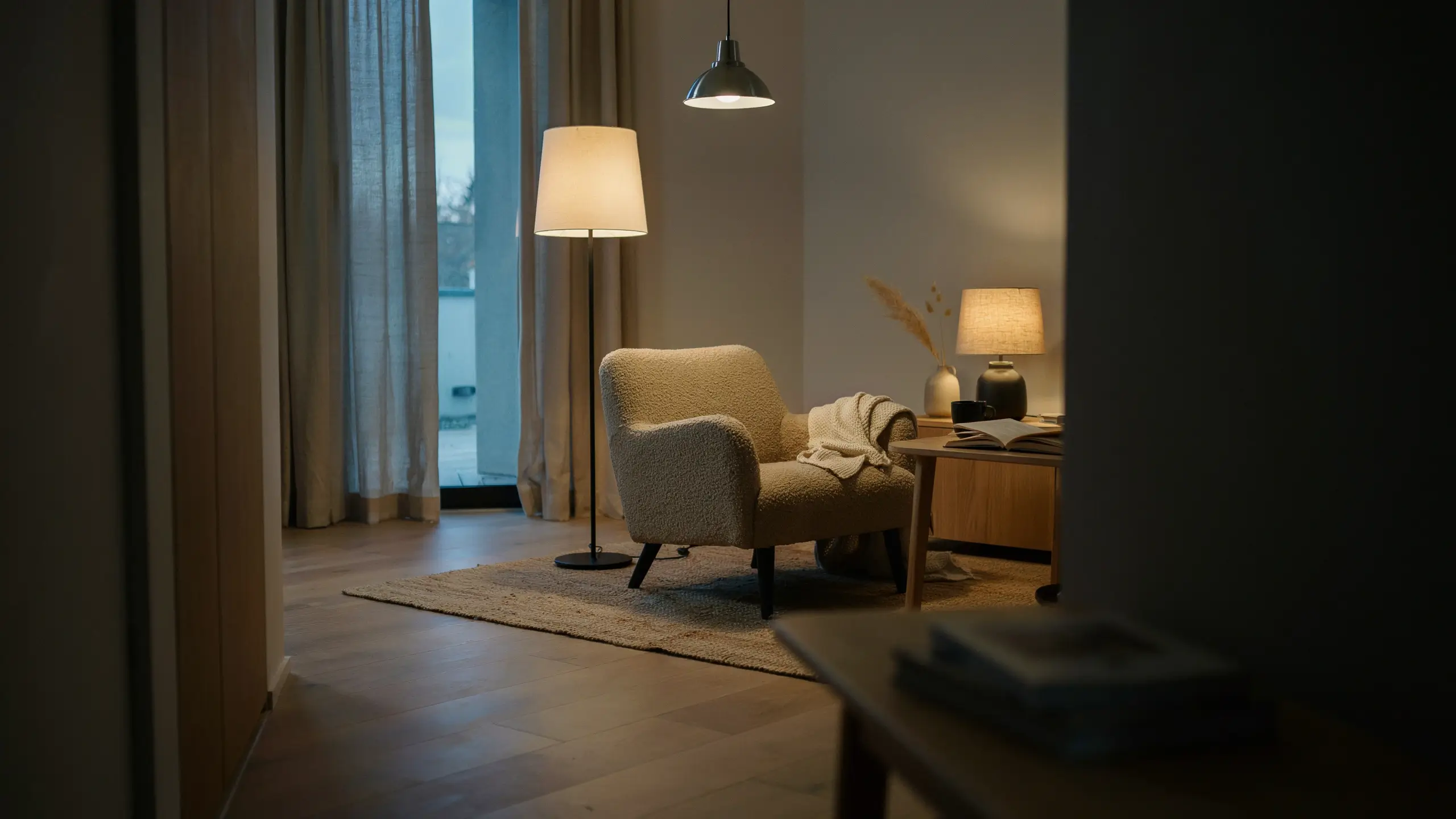
This one gets skipped constantly, and it’s a big one. A single cool-white overhead bulb can undo every other decor choice in the room. Japandi depends on warm, soft, layered light, not one harsh source from above.
What to Do Instead
- Swap bulbs to a warm white in the 2700K to 3000K range. Anything higher will read as clinical no matter what furniture you have.
- Add at least two light sources per room: an overhead or ceiling fixture plus a floor lamp, table lamp, or paper lantern-style shade.
- Use dimmers where you can. Evening light should be softer than daytime light.
- Let a rice paper or linen shade diffuse the light instead of an exposed bulb.
Safety note: if you’re adding lamps in a room with kids or pets, look for cordless or battery-powered options, or use cord clips to keep cords off the floor and away from little hands and paws.
6. The Room Looks Staged Instead of Lived In
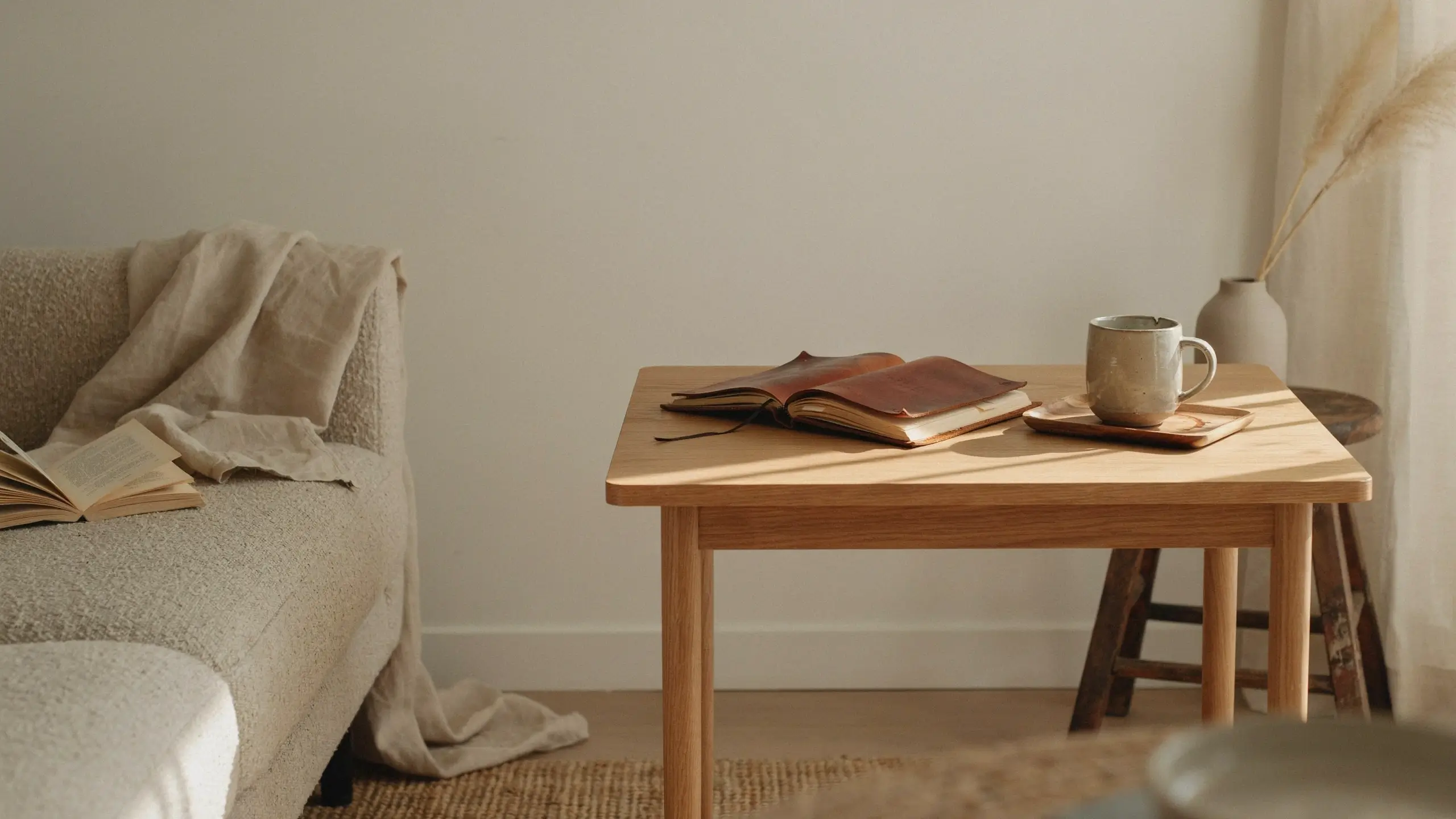
A space that’s too perfect stops feeling calm and starts feeling like a hotel lobby. Real Japandi rooms have a small amount of visible life in them. Zero personality is its own kind of mistake.
What to Do Instead
- Keep one item that’s clearly used, not just displayed. A well-worn journal on the side table, a favorite mug on a tray, a throw blanket that’s actually been unfolded.
- Choose one piece with a story instead of everything being brand new. A vintage stool, an inherited bowl, a hand-thrown mug from a local potter.
- Resist matching every single element perfectly. A slightly different wood tone between two pieces is fine. It’s what keeps a room from looking like a catalog page.
7. You Designed for the Photo, Not for Your Actual Room
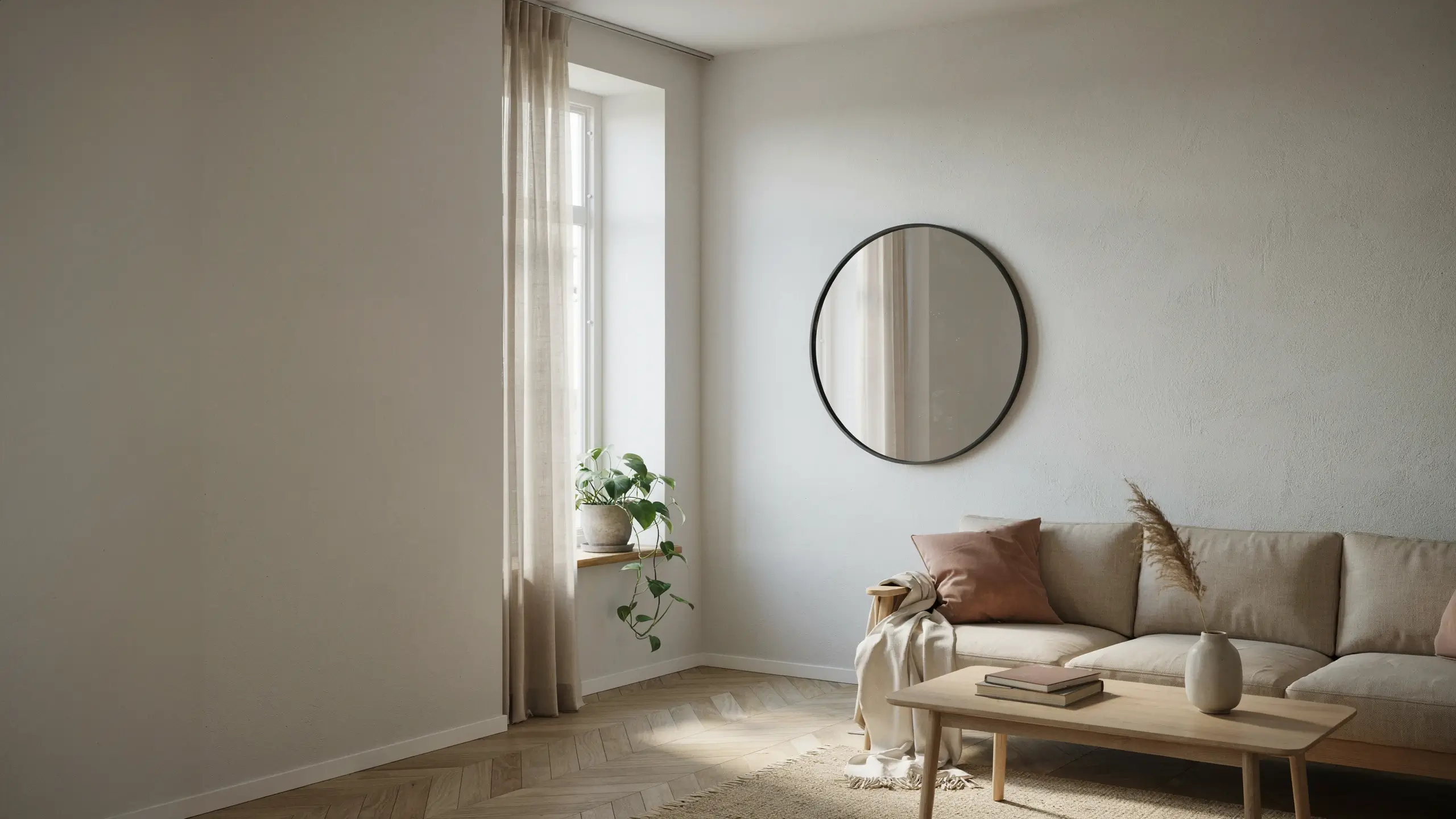
This is the gap most articles never mention. The Pinterest image you saved was likely shot in a large, south-facing room with high ceilings and floor-to-ceiling windows. If your room is small, north-facing, or has low natural light, copying that exact palette can leave your space feeling dim and flat instead of calm.
What to Do Instead
- In rooms with little natural light, lean warmer and lighter than the inspiration photo. Swap deep walnut for a lighter oak, and keep your accent color soft rather than dark.
- Use a large mirror opposite your main window to bounce whatever light you do get around the room.
- In small rooms, keep the color palette tighter rather than trying to fit in every Japandi element at once. Pick your three or four materials and repeat them, instead of introducing something new in every corner.
8. You’re Renting and Fighting the Walls
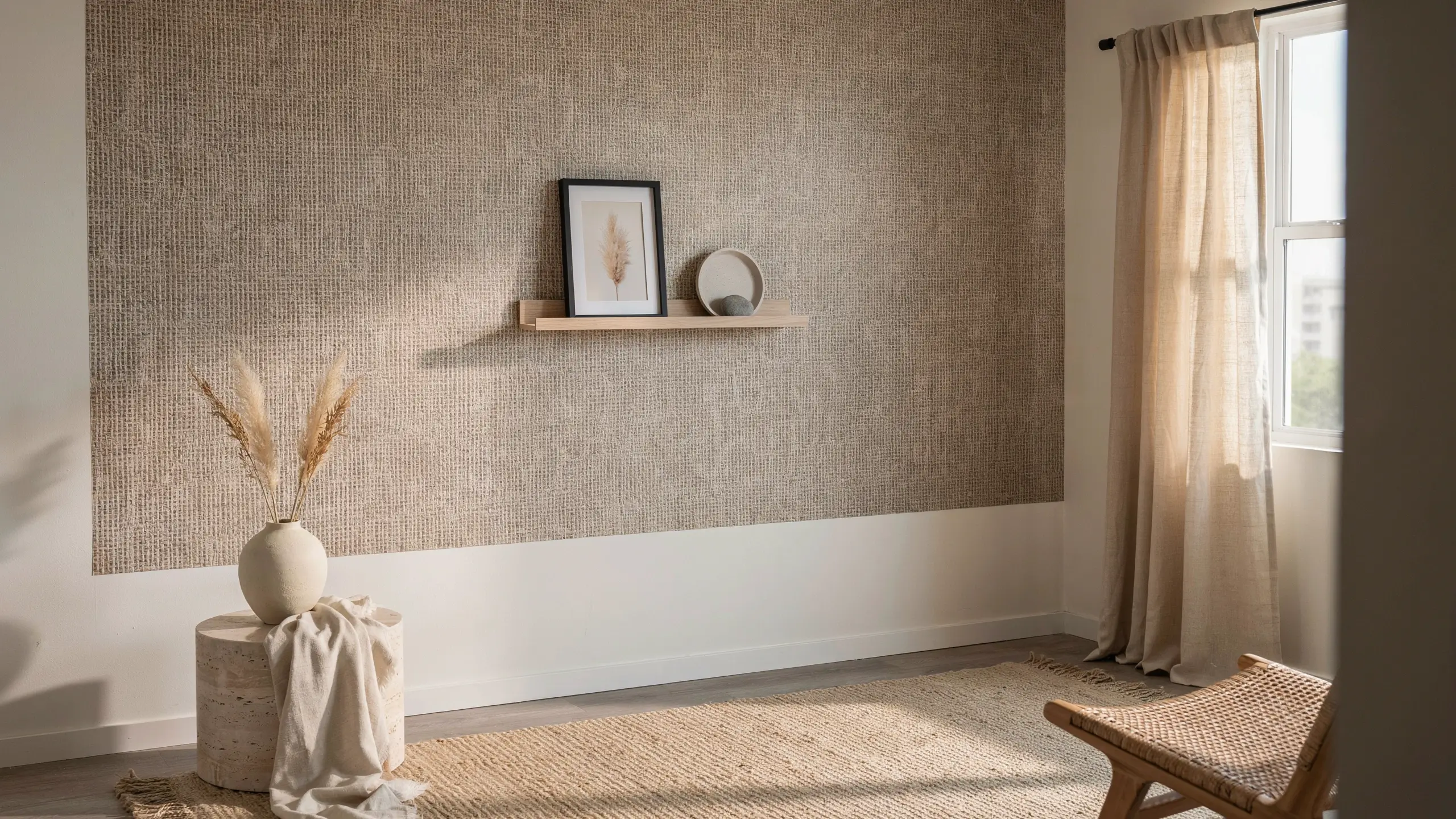
If you’re in an apartment with white walls, popcorn ceilings, and a no-drill lease, a lot of standard Japandi advice just doesn’t apply to you. Trying to force it usually ends in frustration or a lost security deposit.
What to Do Instead
- Use removable, paintable wallpaper or grasscloth-look peel-and-stick panels for texture without a paint job.
- Rely on furniture and textiles to carry the natural-material look instead of built-ins. A jute rug, linen curtains on a tension rod, and a wood-and-rattan shelving unit go a long way with zero permanent changes.
- Try Command strip picture ledges or hooks for low-profile wall styling instead of drilled shelving.
- Layer a large area rug over existing flooring you can’t change. It resets the base tone of the whole room for the cost of one item.
Mistake to avoid: assuming Japandi requires structural changes like shiplap, built-in cabinetry, or repainted walls. Almost all of it can be done with furniture, textiles, and lighting alone.
9. Kids or Pets Keep Undoing the Calm
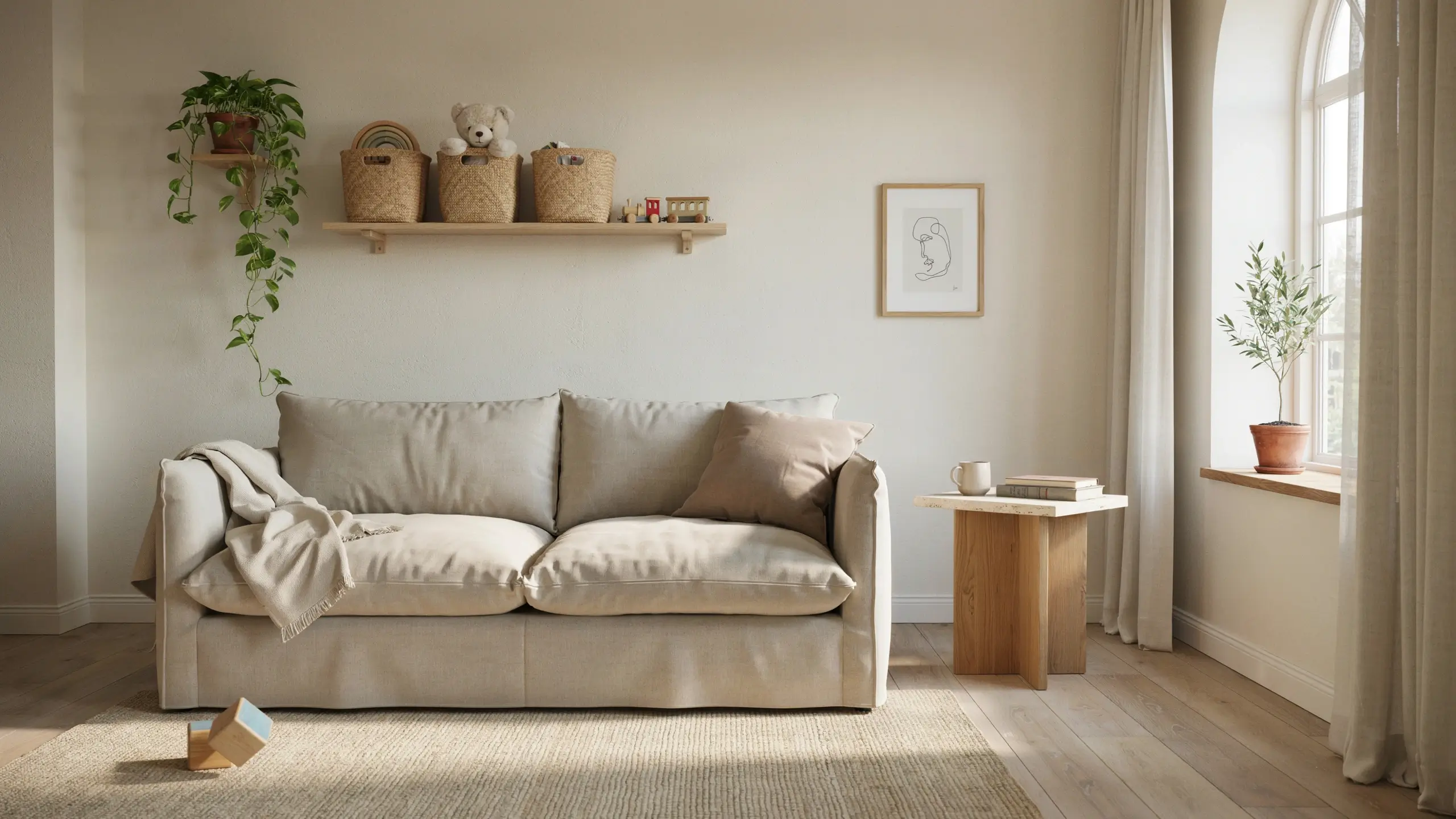
Nobody puts this in the mistakes list, but it’s one of the biggest reasons Japandi “fails” in real homes. Low furniture gets climbed on. Light linen shows every stain. Open shelving becomes a toy shelf within a week. If this is you, the problem isn’t your effort, it’s picking the wrong materials for your actual household.
What to Do Instead
- Choose performance fabric or washable slipcovers (like a removable-cover sofa) over raw linen upholstery if you have young kids.
- Swap glass and ceramic accents on low tables for wood or stone versions in high-traffic homes with toddlers.
- Use closed, low-set storage bins in natural materials like woven seagrass so toys have a home that still fits the aesthetic.
- Pick sturdier, low-maintenance plants like pothos or snake plants instead of delicate ones that won’t survive curious pets.
10. You’re Trying to Finish It in One Weekend
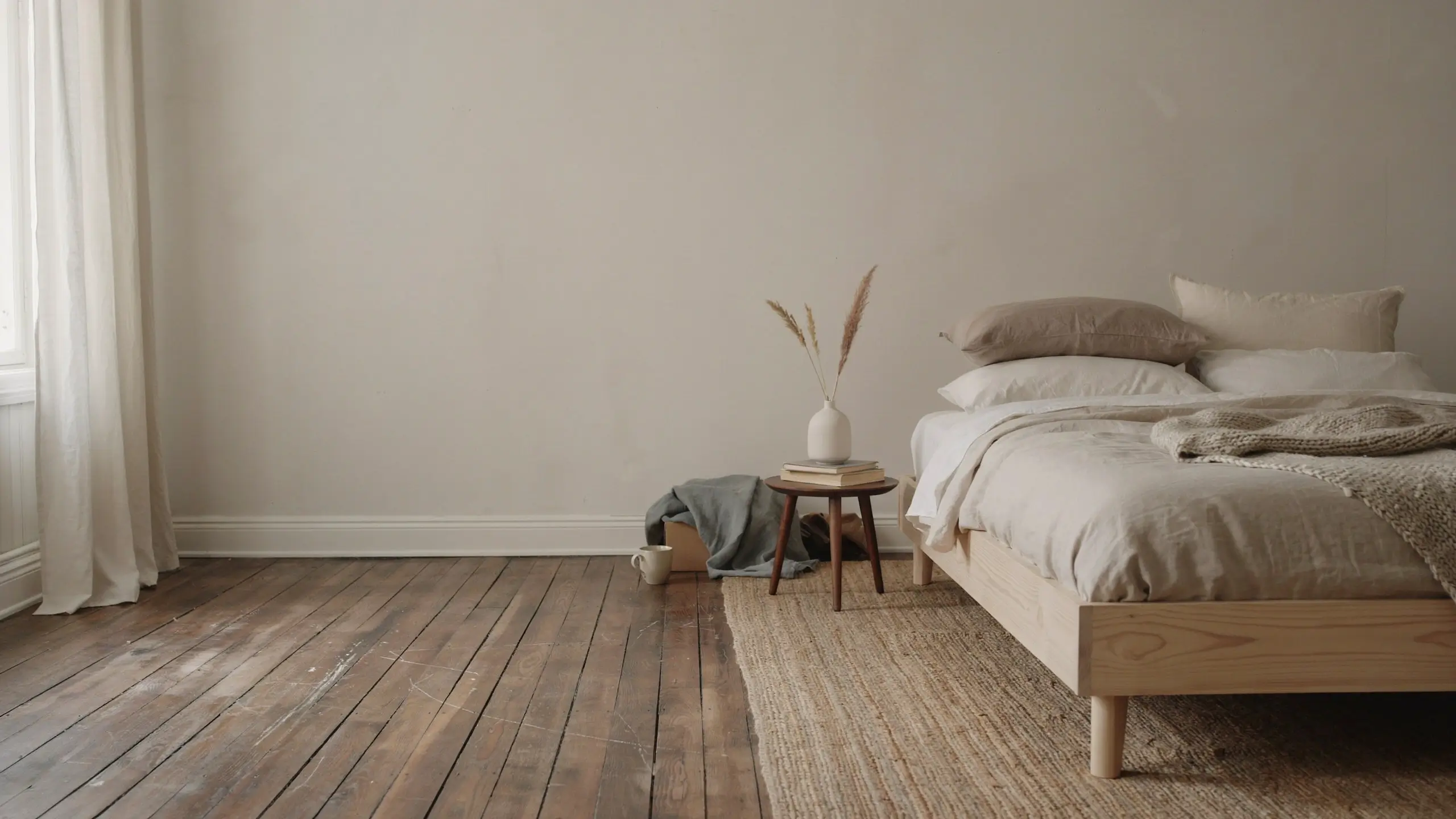
Japandi rooms that actually work were rarely bought all at once. They were built slowly, piece by piece, over months. Rushing it usually means overspending on a full matched set that doesn’t actually reflect how you live.
What to Do Instead
- Pick your foundation pieces first (sofa, bed frame, rug) and live with them before adding smaller decor.
- Add one or two new pieces a month instead of filling every surface immediately.
- Let the room stay a little unfinished for a while. An empty corner isn’t a problem to solve on day one, it’s breathing room.
Quick Self-Check
Not sure which of these is your actual issue? Walk through your main room and ask:
- Does anything in here look shiny, glossy, or printed instead of textured?
- If I open the nearest drawer or closet, is it calm in there too?
- Is there anything dark or grounding in the room, or is it all one shade?
- Does this room have Japanese elements, or is it just Scandinavian minimalism?
- Would a stranger know a person actually lives here?
Wherever you hesitate is usually your starting point.
The Bottom Line
Japandi decor isn’t working in your space because of one small, specific gap, not a total lack of style sense. Maybe it’s the lighting temperature, maybe it’s the missing Japanese half, maybe it’s just that your room and your Pinterest inspiration were never going to match without some adjusting. Fix one thing at a time, live with it, and let the room come together slowly. That patience is honestly the most Japandi part of the whole process.
Which one of these is your Japandi room actually struggling with? Tell me in the comments, I’d love to help you figure out the fix.




No Comment! Be the first one.