




18 Antique Kitchen Island Ideas That Feel Like a French Countryside Dream
Every antique dresser roundup online seems to show the same three staged photos, painted the same milky white, styled with the same fake florals. None of it tells you what actually works when a real...

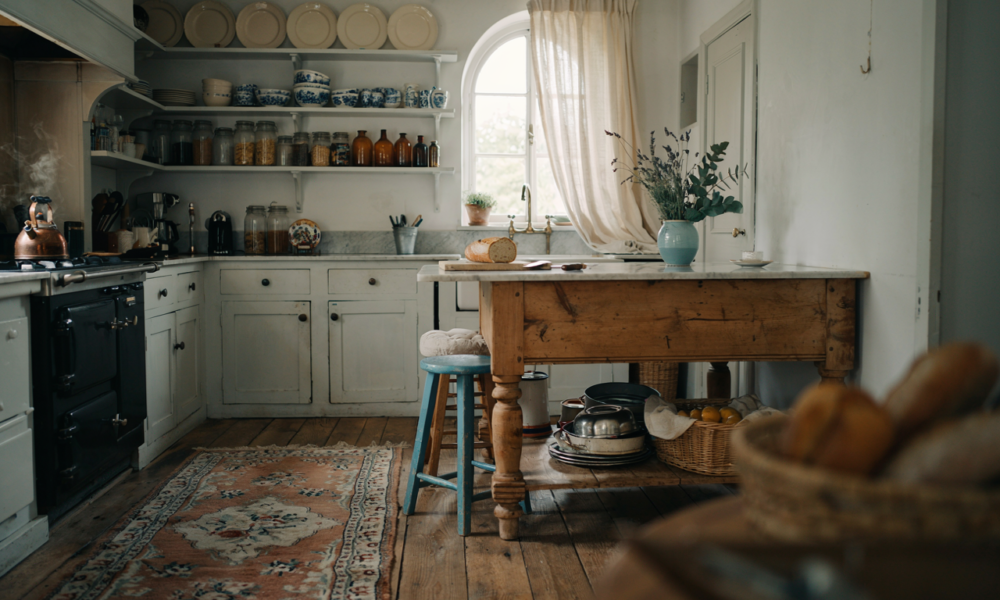
Every antique dresser roundup online seems to show the same three staged photos, painted the same milky white, styled with the same fake florals. None of it tells you what actually works when a real piece has to hold real weight, survive real spills, and fit a real footprint. This list skips the fantasy and gets specific: which antique pieces convert well, what to look for at an estate sale or on Chairish, and how to style each one with a French countryside hand instead of a generic farmhouse one.
This works best for homeowners who already have a workable kitchen footprint and some patience for finishing a secondhand piece themselves. It won’t help if your kitchen needs a built-in cooktop, a sink, or anything requiring new plumbing lines run through the island base.
Antique kitchen island ideas refer to reusing a piece of vintage furniture — a dresser, buffet, farm table, or shop counter — as the island itself rather than building one from scratch. The furniture keeps its original bones; only the top and hardware usually change.
What Makes an Antique Piece Actually Work as a Kitchen Island
Not every pretty piece survives daily prep work. Height matters most — most antique furniture sits between 28 and 32 inches, a few inches shorter than a standard 36-inch island, which is actually a gift if you want a lower prep surface or a piece that reads as furniture rather than cabinetry. Weight-bearing legs matter next. A dresser with solid dovetailed joints will outlast one held together with glue and staples, so it’s worth checking joinery before checking paint color.
The mood matters too. According to the NKBA 2025 Kitchen Trends Report, which surveyed 523 industry professionals, 71% of design pros say homeowners now prefer colorful, personality-driven kitchens over plain white ones, and more than half expect vintage-inspired design elements to keep rising in popularity. That shift is exactly why a single stripped-and-whitewashed dresser reads as trendy but forgettable, while a piece with its worn paint, brass, and marble intact reads as collected — which is the whole French countryside point.
18 Antique Kitchen Island Ideas With a French Countryside Soul
1. Top a Chalky Blue French Dresser With a Honed Marble Slab for an Instant Collected Look
A plain dresser top scuffs and stains within a month of real cooking. Swap it for a honed marble slab cut to the dresser’s exact footprint, and the piece suddenly does double duty as a pastry station and a display surface. Leave the original chalky blue paint slightly worn at the corners instead of repainting it fresh.
My read is that the drawers underneath are the real win — deep enough for table linens, rolling pins, and cookie cutters, so nothing new needs building. A small chip in the paint near a drawer pull just makes it feel like it’s always belonged there.
2. Fit an Antique Buffet With a Hidden Pull-Out Board So Prep Space Doubles in Seconds
A buffet looks stately but its solid top rarely gives you enough room to actually chop anything. Add a slim pull-out cutting board on hidden runners just below the countertop line, so the prep surface expands only when you need it and disappears when you don’t.
This works because a buffet’s original charm — carved panel doors, aged brass hardware — stays untouched. Nobody has to know a hardware store runner is hiding behind that door. Stack a few market baskets on top for grab-and-go produce, and it starts to look like it walked out of a Provençal dining room.
3. Anchor a Reclaimed Farm Table With Three Mismatched Rattan Stools for Real Seating
A farm table solves the biggest complaint about furniture-turned-islands: no seating. Because the legs sit open on all sides, three low rattan stools can tuck under one long edge without any custom overhang or corbels needed.
The trick is picking stools that don’t match exactly — two woven rattan, one turned-wood — so the whole setup feels gathered over time rather than bought as a set. This is the clearest route to an actual farmhouse kitchen island with seating without touching the table’s structure at all.
4. Roll a Vintage Butcher Block Cart on Iron Casters So a Small Kitchen Gets a Flexible Island
A fixed island is a hard sell in a small kitchen, but a rolling one solves the problem without a remodel. An antique butcher block cart on its original iron casters can slide against a wall for cooking and roll to the center for guests.
The thick end-grain top already handles knife work better than most modern islands, so the only real job is checking the wheel locks still catch. Style the open shelf below with stacked cutting boards instead of clutter, and it reads intentional, not improvised.
5. Fill an Old Apothecary Counter’s Tiny Drawers With Spices Instead of Building New Cabinets
An apothecary or general-store counter comes with a wall of tiny drawers that most people gut and paint over. Leave them as they are and let each one hold a single spice or dried herb — the small scale is actually the correct scale for that job.
Skip labeling every drawer; half the charm is that it takes a small guessing game to find the cumin. A worn brass numbered tag left on one drawer front, original to the piece, does more for the French village-shop feeling than any new hardware could.
6. Line a Vintage Dry Sink’s Basin With a Galvanized Tub for a No-Plumbing Ice Station
A dry sink already has a built-in basin, which is exactly the kind of detail that gets ignored when people just top it with wood and call it done. Drop a galvanized tub liner into that basin instead, and it becomes an ice bin or drink station with zero plumbing work.
I’d only skip this idea if the basin depth is too shallow for a standard liner — measure first. Otherwise it solves the party-prep problem every open kitchen has, without a single new pipe.
7. Repurpose a Glass-Front Bakery Counter So Bread and Stone Crocks Sit in Full View
A bakery display counter’s glass front is usually the first thing people remove, but it’s the whole point. Keep it, and load the case with actual loaves, stone crocks, and jars instead of empty decor, so the island itself becomes the pantry display.
This works because the glass does the organizing for you — nothing inside needs to be perfectly folded or hidden. A single chipped enamel sign leaned against the glass, left over from its shop days, sells the brocante feeling instantly.
8. Slide a Slim Marble-Top Wash Stand Into a Galley Kitchen Where a Full Island Won’t Fit
Most galley kitchens get told to skip an island entirely, but a narrow wash stand only needs about 18 inches of clearance. Its original marble top was built for water and soap, which means it already resists the water rings a real kitchen will throw at it.
I’d only recommend this in a kitchen with at least three feet of aisle space on either side once it’s in place. Style it with a single crock of wooden spoons rather than anything wide, so the narrow footprint stays usable.
9. Cap One End of the Island With a Punched-Tin Pie Safe for Ventilated Pantry Storage
Pantry space is the complaint every small kitchen shares, and a punched-tin pie safe answers it without a single new cabinet built. Set it at one end of a longer island run so its ventilated tin doors handle bread and root vegetables that need airflow, not a sealed cupboard.
The punched pattern itself is doing the styling work, so resist adding anything decorative to the doors. A single dish towel hung from the pie safe’s original wood pull is the only extra touch this needs.
10. Leave a Country Sideboard’s Doors Off So Baskets and Copper Pots Stack in Open View
A sideboard’s closed doors hide storage that would actually look better shown. Remove the doors entirely, or simply leave them open, and stack woven baskets and a few copper pots on the open shelves instead of dishes that need to stay perfectly aligned.
This solves the “over-styled” problem a lot of open shelving falls into, because baskets and pots forgive uneven stacking in a way plates never do. A dusty blue paint left slightly chipped at the shelf edges keeps the whole thing from feeling too finished.
11. Reinforce an Old Potting Bench’s Legs So It Handles Real Daily Kitchen Prep
A potting bench looks perfectly rustic until it wobbles under a stand mixer. Add a simple cross-brace between the back legs before it ever enters the kitchen, so the piece can actually take daily weight instead of just posing for a photo.
Once it’s sturdy, the bench’s open slatted shelf becomes the natural home for terracotta pots repurposed as utensil holders. This is the idea to reach for if the goal is a cottage-garden feeling indoors rather than a strictly formal French look.
12. Stretch a Long Tailor’s Cutting Table Down the Kitchen for Family-Size Prep Room
Most antique pieces are too small for a family that actually cooks together, which is where a tailor’s cutting table wins. Built to be long, sturdy, and low, it gives multiple people real elbow room on both sides at once.
The scale itself is the visual — it needs almost no styling beyond a single runner and a bowl of lemons at one end. This is the piece to search for specifically if seating for four or more is the whole reason for the island.
13. Add an Overhang to an Old Hardware Counter So Stools Slide Underneath for Casual Seating
A hardware store counter’s original top usually sits flush with its base, leaving nowhere for a stool to tuck. A single reclaimed board bolted to extend one edge by ten inches solves it, creating an overhang without touching the counter’s original drawers.
This is the fix for anyone who found a great antique counter but assumed it couldn’t seat anyone. Two woven stools underneath finish the look without hiding the counter’s original iron drawer pulls.
14. Turn a Library Card Catalog Into the Island’s Prettiest Utensil Drawer Wall
A card catalog is an unexpected find for a kitchen, but its dozens of small drawers are already sized for exactly the small tools that clutter a drawer everywhere else — measuring spoons, twine, cheese markers. Set it at one end of a longer island as a dedicated utensil wall.
Leave the original brass card-holder frames on each drawer front instead of removing them; they’re doing more styling work than any new label could. This idea reads as collected in a way almost no other piece manages.
15. Use an Antique Marble Dairy Table as a Built-In Cold Surface for Rolling Pastry
A dairy or cheese-making table was built with a marble top specifically to stay cool, which happens to be exactly what pastry dough needs. Instead of adding a marble insert to another piece, this one already does the job with its original slab intact.
The iron or wood trestle base underneath usually needs nothing more than a light wax. Dust the surface with flour mid-use for the photo, since a clean marble slab reads as staged rather than working.
16. Pair Two Salvaged Wine Casks With a Reclaimed Door Top for a Vigneron-Style Island
This is the one splurge on the list, and it earns its place. Two matching wine casks set as a base, topped with a single reclaimed French door laid flat, create an island with real story and real weight — the kind deVOL Kitchens often references in French-farmhouse styling work.
I’d only splurge here if the casks are structurally sound enough to bear the door’s weight without bracing added later. It’s a striking centerpiece, not a piece to rush into without checking the joinery first.
17. Keep the Old Cash Drawer in a General-Store Counter Island for Hidden Cutlery Storage
A general-store counter almost always comes with its original cash drawer still intact, and most people remove it for being “impractical.” Keep it instead — the compartment slots built for coins and bills are the right size for forks, corkscrews, and small serving tools.
This solves the small-drawer-organization problem better than any insert bought new. A worn brass pull and a faint shop stamp left on the drawer front are the details that make the whole counter feel found, not staged.
18. Push a Weathered Church Pew Against the Island’s Long Side for Renter-Friendly Bench Seating
Built-in seating usually means cutting into a base or adding brackets, which is a hard no for renters. A weathered church pew solves it by simply pushing against one long side of a farm table or buffet island — no attachment, no tools, fully reversible on move-out day.
The pew’s high back also does something stools can’t: it visually anchors the whole island as a real dining spot rather than a prep counter with chairs pulled up. A single linen cushion softens the seat without covering the worn wood.
Quick Comparison: Which Antique Piece Fits Your Kitchen
| Option | Best For | Key Benefit | Limitation |
|---|---|---|---|
| Antique Dresser | Small to mid-size kitchens | Built-in drawer storage, easy topper swap | Top usually needs a new surface added |
| Farm Table | Kitchens needing real seating | Open legs fit stools on any side | No enclosed storage |
| Butcher Block Cart | Small or rented kitchens | Mobile, thick prep-ready top | Limited storage, wheels need checking |
| Apothecary Counter | Kitchens short on spice storage | Dozens of small drawers already built in | Drawers too small for bulky cookware |
| Buffet or Sideboard | Kitchens wanting a formal look | Doors and shelving both usable | Heavier, harder to move once placed |
How to Source and Convert an Antique Piece Safely
To convert an antique piece into a working kitchen island, follow these steps:
- Check joinery and leg strength before buying, in person when possible or through detailed photos on Chairish or an Etsy vintage seller.
- Measure the piece against your kitchen’s clearance, allowing at least 36 inches of walking space on every open side.
- Add only what function is missing — a cutting surface, a liner, an overhang — without stripping the finish that makes it feel original.
Antique Dresser vs Farm Table
Antique Dresser vs Farm Table: an antique dresser is better for a kitchen that needs enclosed storage and a defined footprint, because its drawers do double duty as cabinets. A farm table works better when seating is the priority, since open legs on every side welcome stools without any modification. The key difference is storage versus seating — few pieces do both equally well.
Common Questions About Antique Kitchen Islands
What antique furniture works best as a kitchen island?
Dressers, farm tables, buffets, and butcher block carts work best, since they already sit near counter height and have sturdy, solid-wood legs.
Can an antique dresser handle daily kitchen use?
Yes, if the joinery is solid and a durable top like marble or butcher block is added over the original surface to protect it.
Do antique kitchen islands need plumbing?
No. Most conversions, including dry sinks and wash stands, work as prep or display surfaces without adding any water lines.
How do I get a French country look instead of generic farmhouse?
Favor worn paint over fresh white, brass over black iron, and marble or reclaimed wood over painted plywood tops.
Where can I find real antique pieces for a kitchen island?
Estate sales, antique malls, Chairish, and Etsy vintage sellers are the most reliable sources for pieces with intact original hardware.



No Comment! Be the first one.