




22 Stylish L Shaped Kitchen with Island Layout Inspirations to Steal for Your Next Reno
You’ve probably scrolled a hundred kitchen islands by now and you’re still not sure yours will fit. Every article either explains layout mechanics like a textbook or repeats the same five...

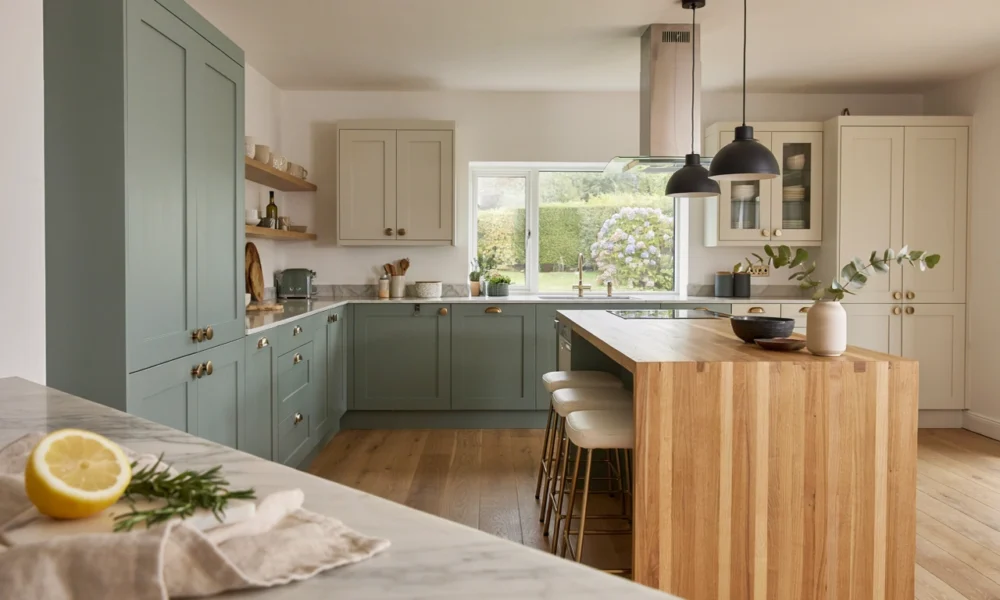
You’ve probably scrolled a hundred kitchen islands by now and you’re still not sure yours will fit. Every article either explains layout mechanics like a textbook or repeats the same five staged photos, and neither one tells you if an island belongs in your actual L-shaped kitchen. This list is built around real scenarios — small footprints, narrow galleys, open-concept great rooms, moody color palettes, tight budgets — so you can find the version that matches your space instead of just your mood board.
This works best for anyone who already has a rough L-shaped layout in mind and wants to know how to size, style, or budget an island around it. It won’t help if you’re starting from a completely blank slate with no walls or plumbing decided yet — that’s a floor plan conversation first, styling second.
L shaped kitchen with island layout refers to a kitchen built from two perpendicular counter runs, with a separate island placed in the open floor space between them. The island can be fixed, freestanding, or on wheels, depending on how much clearance the L leaves behind.
Islands themselves have quietly changed jobs. NKBA | KBIS 2026 Kitchen Trends Report proves islands function as multi-use workstations, not just extra counter found that 98% of surveyed designers now treat kitchen islands as true multi-use zones — 76% for food prep, 74% for dining. That’s worth knowing before you plan one, because it changes what “the right size” even means: an island in an L-shaped kitchen isn’t just decoration, it’s expected to do real work.
Small-Space and Narrow L-Shaped Kitchen Island Ideas
1. Swap the Full-Size Island for a Slim 24-Inch Prep Island in a Small L-Shaped Kitchen
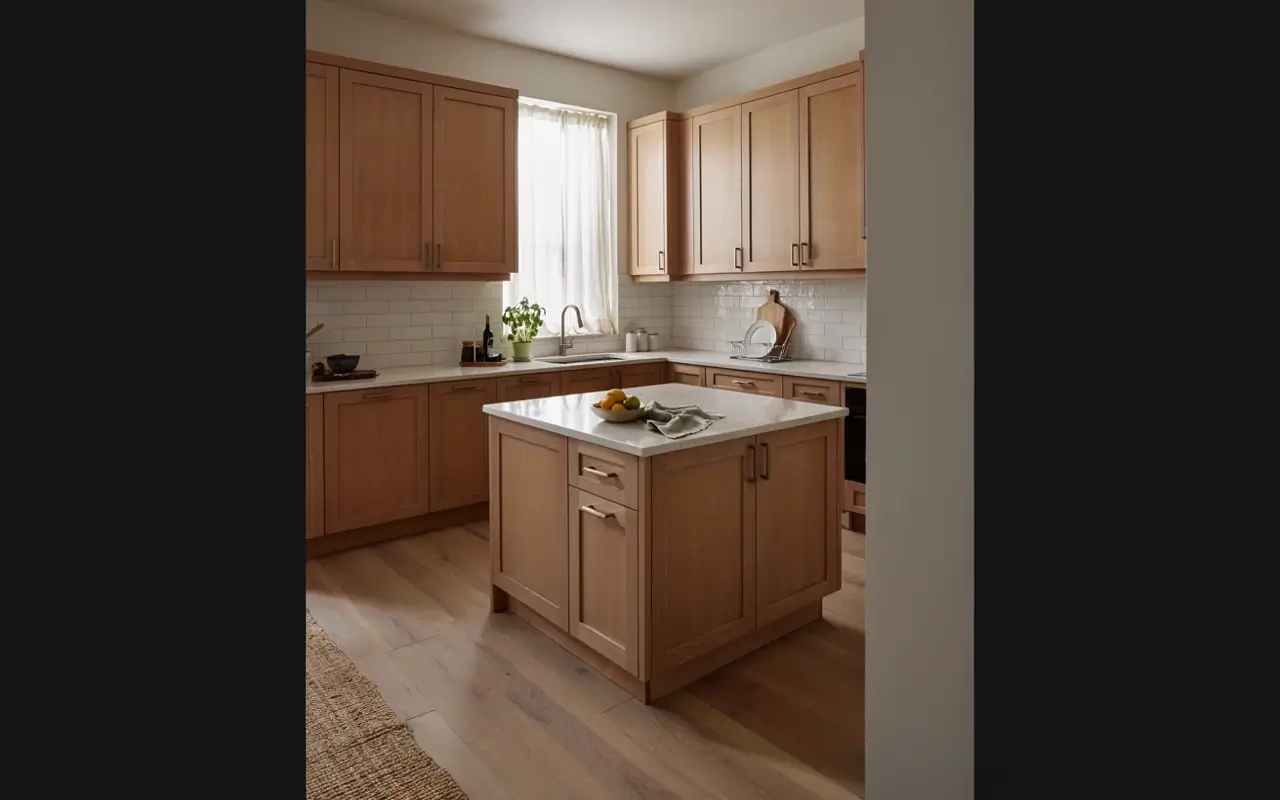
A lot of small L-shaped kitchens get talked out of having an island at all, because every photo shows a giant furniture-style block sitting in the middle of the room. You don’t need that. A slim 24-inch-deep island still gives you a real prep surface and a visual anchor without eating into the walkway on either side. My read is this is the single most useful swap for anyone measuring a tight kitchen and assuming an island is off the table. Keep the countertop simple and let the extra clearance do the work.
2. Check the 42-Inch Walkway Rule Before You Fall for a Waterfall-Edge Island
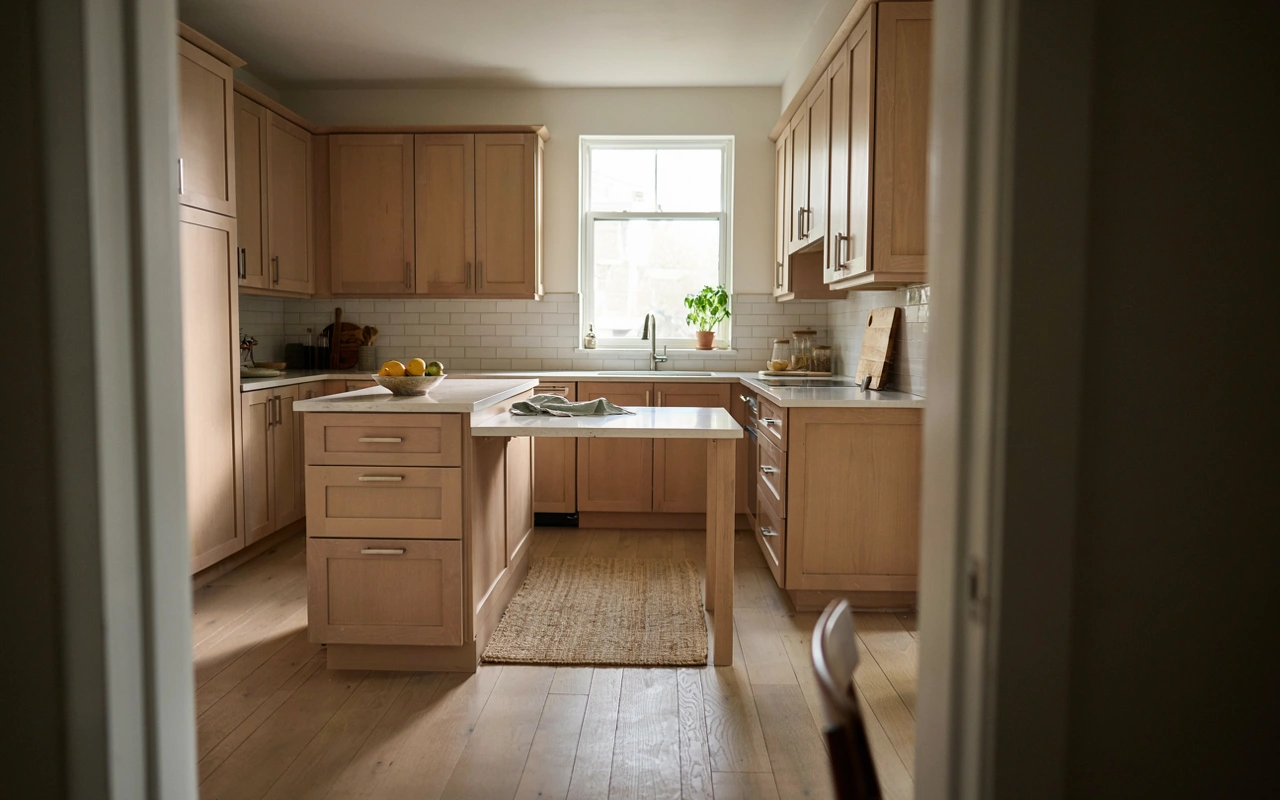
Waterfall-edge islands are everywhere on Pinterest, and it’s easy to assume they’ll work in any kitchen. They won’t. A waterfall edge adds visual bulk on both sides, so it needs at least 42 inches of clearance to read as elegant instead of cramped — closer to 48 if that walkway doubles as a main path through the room. I’d skip the waterfall look entirely if your clearance sits under 36 inches; a straight-edge island will look and function better in that footprint. Measure first, fall in love with the finish second.
3. Roll In a Butcher-Block Cart Instead of a Built-In Island for a Narrow Galley-Style L
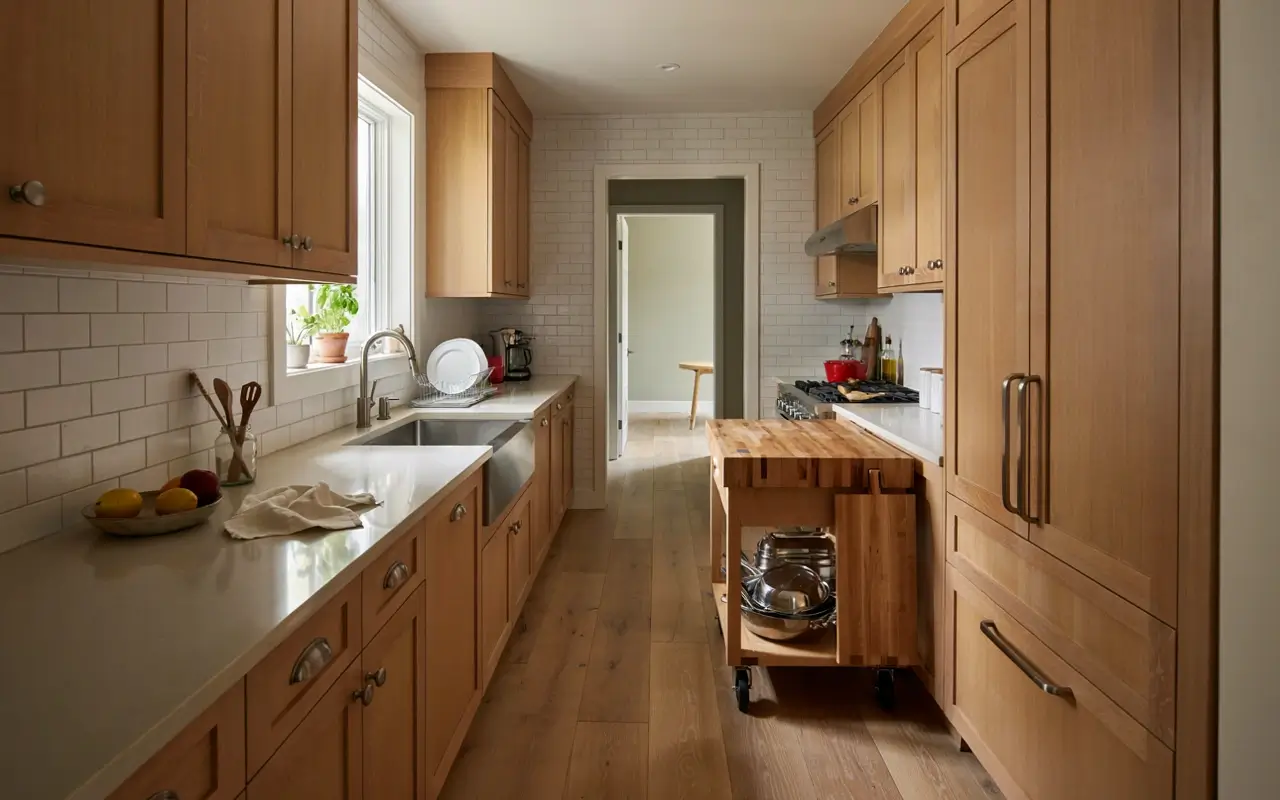
Narrow galley-style L kitchens genuinely can’t fit a fixed island without blocking the aisle, no matter how nicely it photographs. A rolling butcher-block cart solves this honestly: push it against a wall for daily traffic, pull it out only when you’re actually cooking. It’s renter-friendly too, since nothing gets installed. This is the answer people don’t always want to hear, but it’s the one that keeps you from clipping your hip on a countertop every morning.
4. Choose a Round Island Over a Rectangular One to Ease Tight Turns in a Small L-Shape
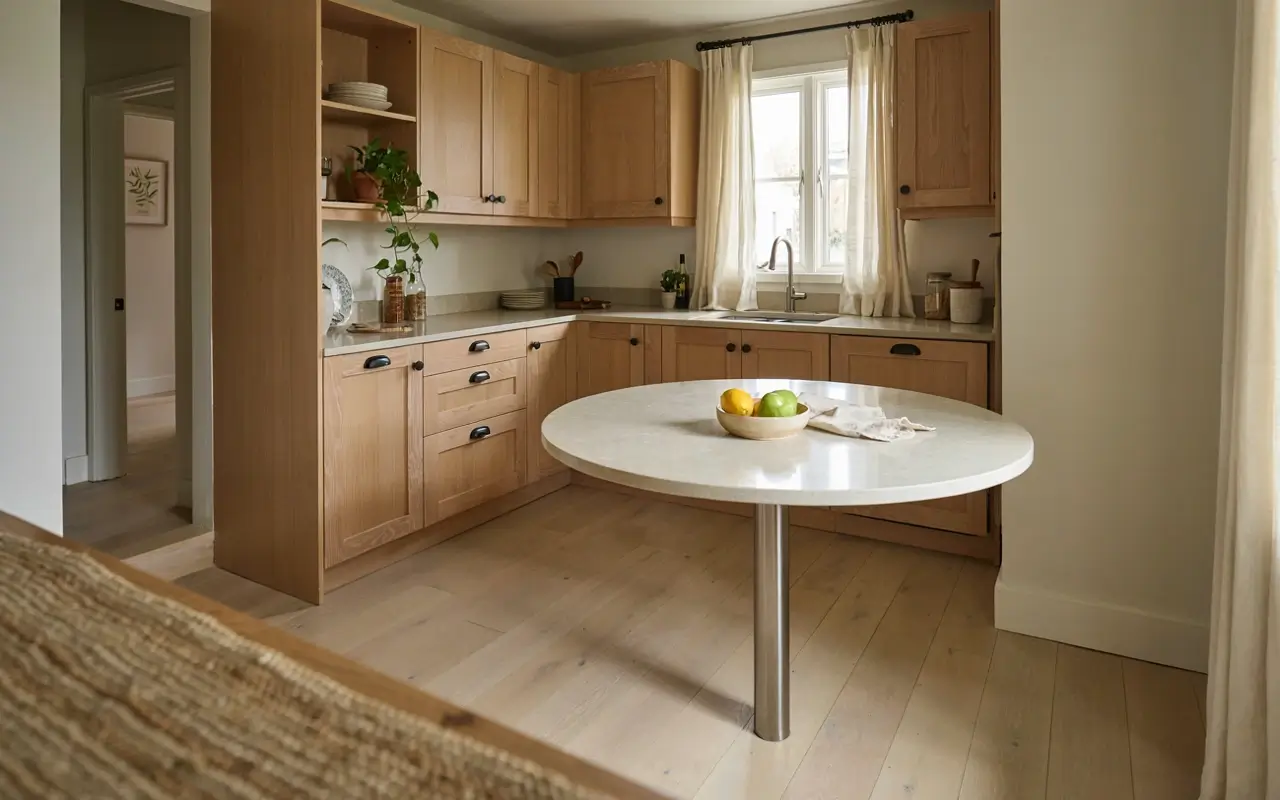
Rectangular island corners are exactly what people bump into when turning the corner of an L. Swapping for a round or oval island shaves off that collision point without shrinking usable surface area much. Pair it with a pedestal base so the footprint stays visually light instead of heavy. It’s a small swap that solves a very specific, very real annoyance — the hip-bruising corner catch — without asking you to give up counter space.
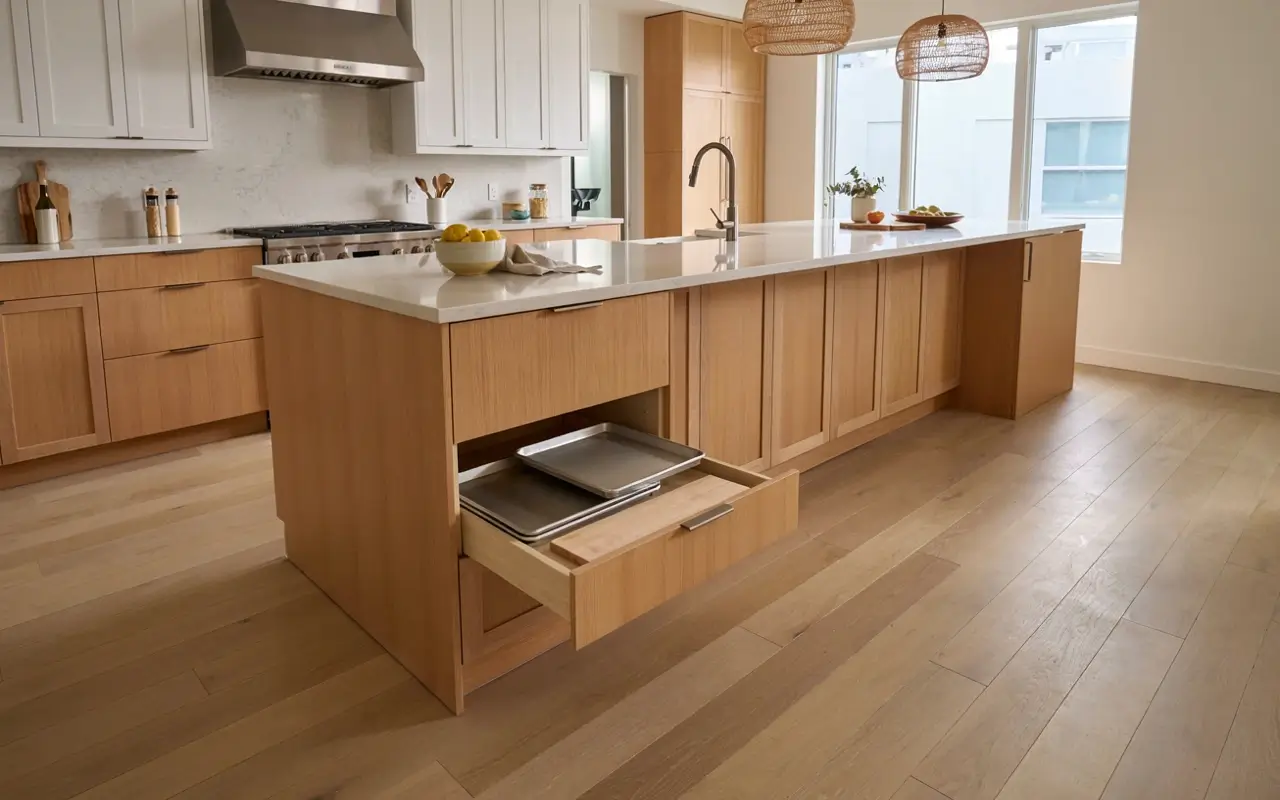
5. Add a Toe-Kick Drawer Under the Island for Baking Sheets and Trays
 v
v
Islands eat floor space, and small kitchens can’t afford to add furniture without gaining storage back. A shallow toe-kick drawer built into the base of the island holds flat items like baking sheets, cutting boards, and trays in space that’s normally just a kick panel. A simple pull-tab keeps the drawer face flush with the rest of the cabinetry. It’s one of those details you never notice in photos but immediately appreciate once you’ve used it.
6. Tuck Stools Fully Under the Island Overhang So the Walkway Reads Clear
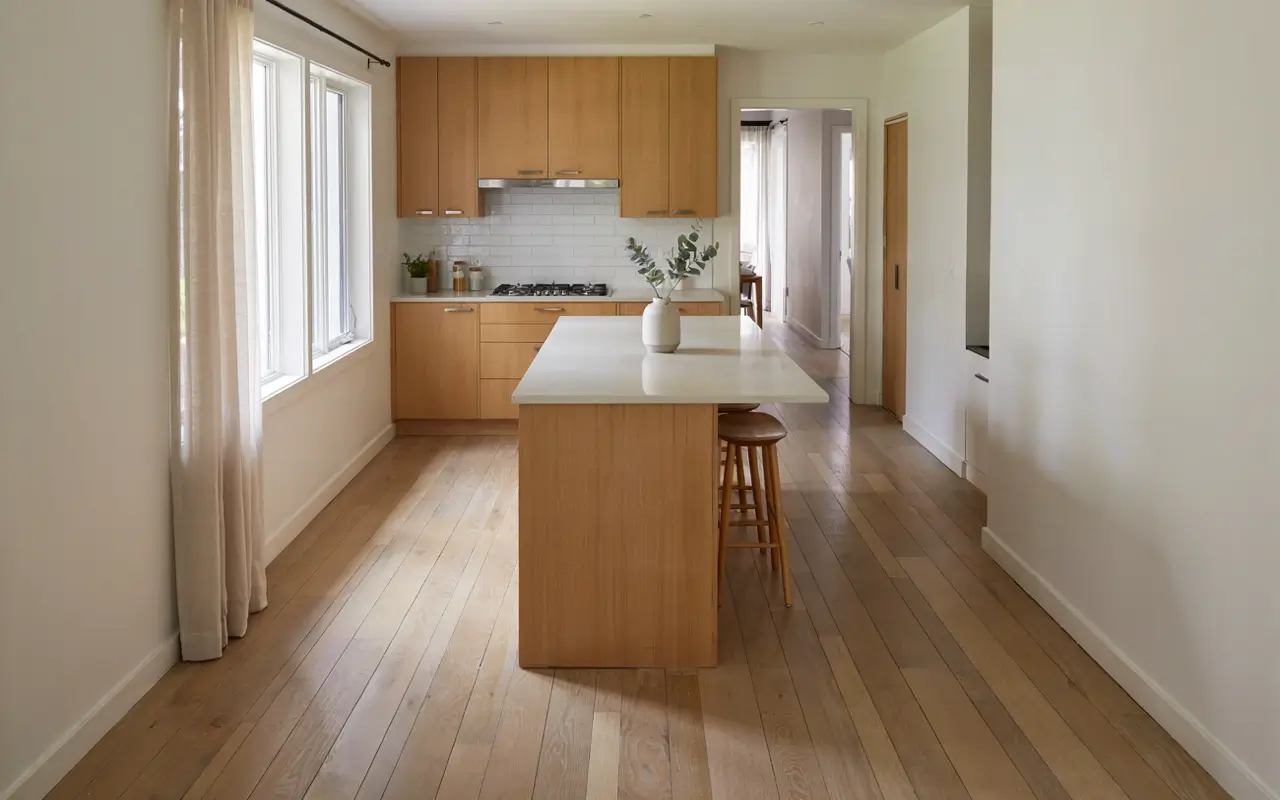
Stools left pulled out are the number one thing making a small L-shaped kitchen photograph — and feel — cluttered. Choose an overhang deep enough, around 12 to 15 inches, that stools slide completely underneath instead of sitting halfway out. Backless stools tuck the flattest of all. It’s a five-minute fix that makes more visual difference than most people expect, in real life and in photos.
7. Add a Glass-Front Upper Cabinet at the End of the L to Bounce Light Into a Small Kitchen
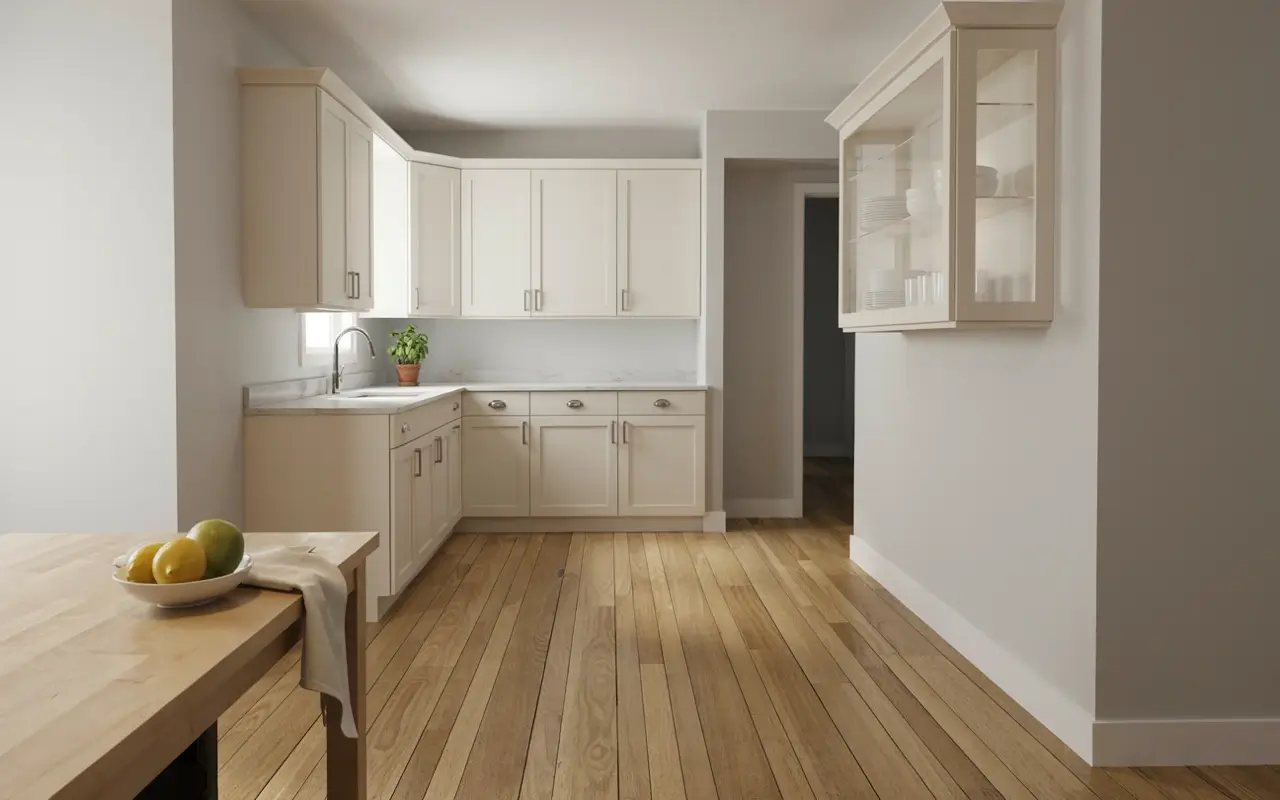
Small L-shaped kitchens, especially ones with an island competing for floor space, can start to feel visually heavy. Swapping one solid upper cabinet door at the end of the L run for glass breaks up the wall of cabinetry and bounces window light instead of absorbing it. Keep what’s inside simple — a few plain dishes, not a packed shelf. It’s a small change, but it keeps the whole wall from reading as one solid block.
Budget-Friendly and Storage-Smart L-Shaped Kitchen Island Ideas
8. Slide a Narrow Pull-Out Spice Cabinet Beside the Range in the L Corner
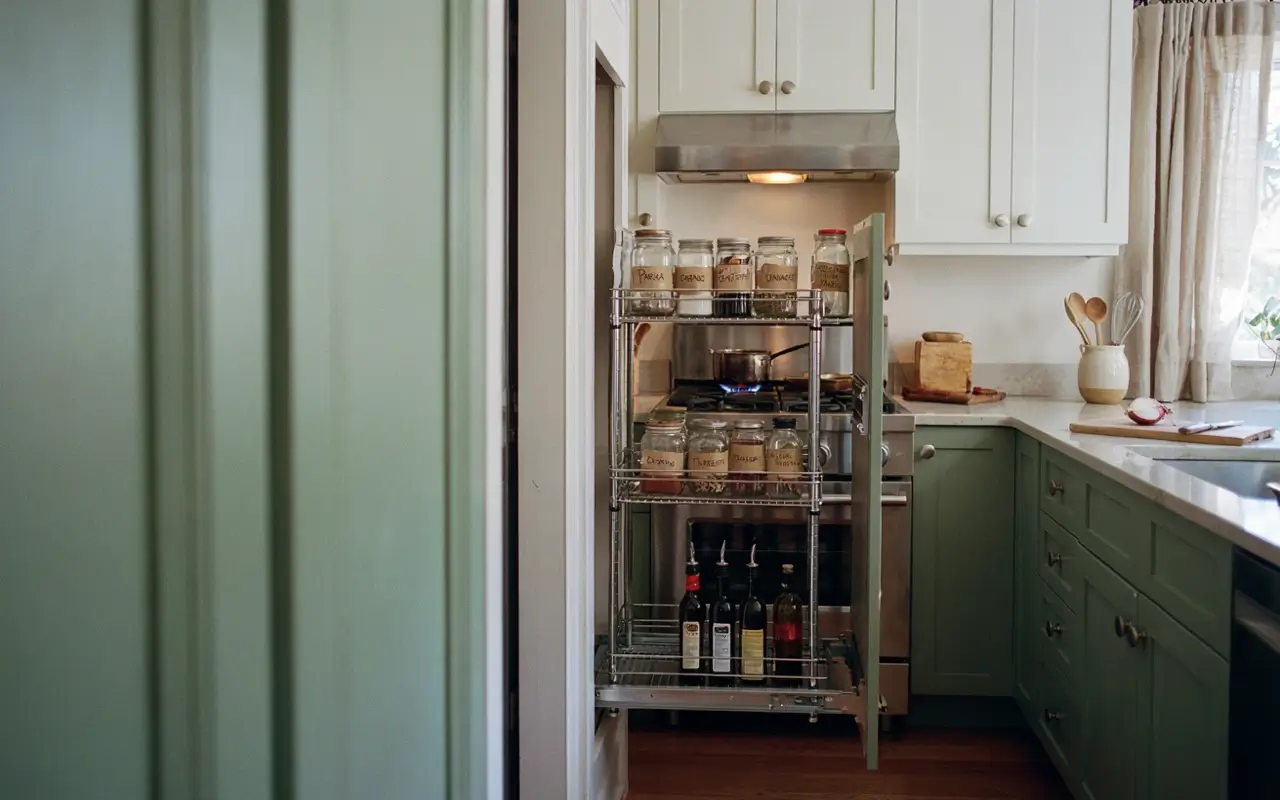
The inside corner of an L-shape often wastes space or turns into a dead cabinet nobody reaches. A 6-inch pull-out cabinet beside the range keeps oils, spices, and small jars within arm’s reach of the burner without taking a full cabinet bay. Skip the labeled-jar display look — plain containers keep it functional, not staged. It’s a small footprint with an outsized amount of usefulness, the kind of storage you actually use every single day.
9. Run a Vintage-Style Runner Down the Long Galley Leg to Define the Walkway
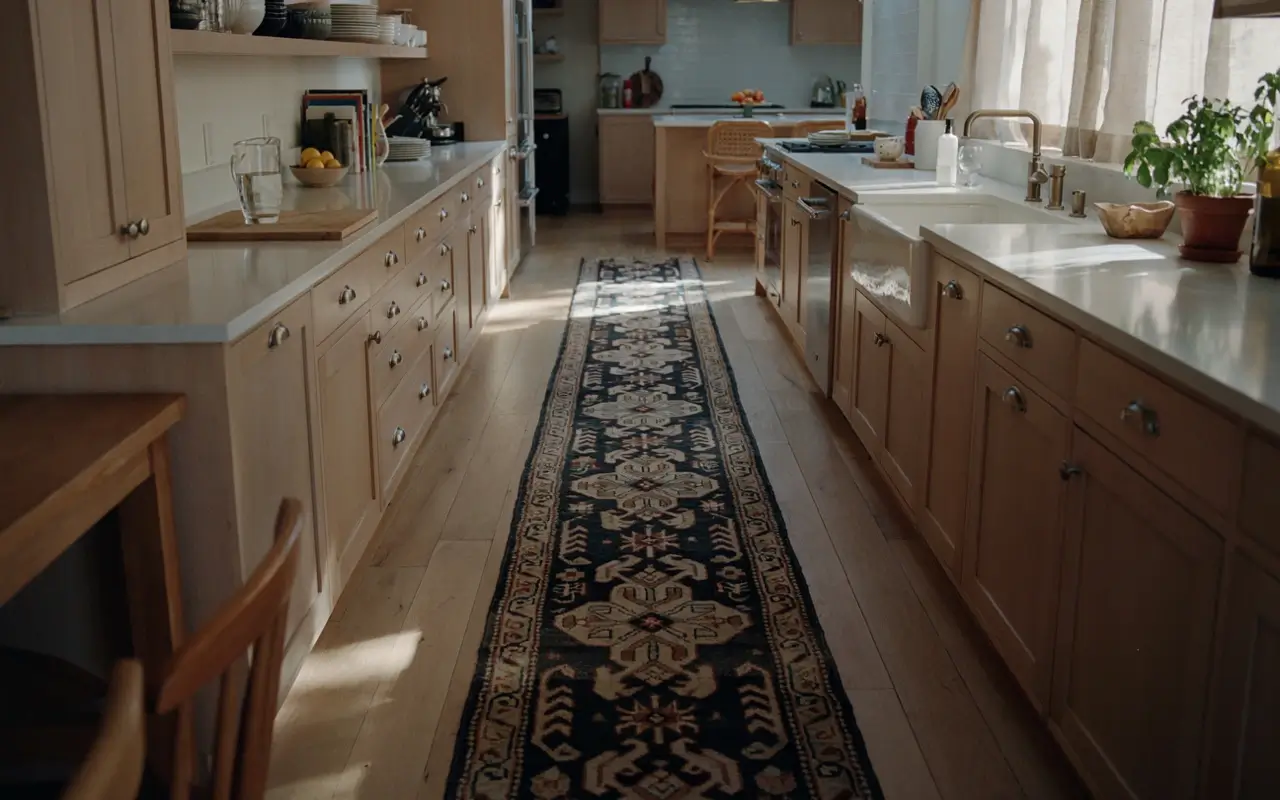
The long leg of an L-shaped kitchen can feel like a plain hallway instead of a designed room. Laying a vintage-pattern runner down that stretch visually breaks the floor into a defined path and adds warmth underfoot for one of the cheapest style upgrades in the whole kitchen. Choose a low-pile runner so it doesn’t catch on stools or cart wheels. It’s a rug, but it’s doing the job of an architectural feature for a fraction of the cost.
10. Mix Brushed Brass Pulls on the Island with Matte Black Hardware on the Perimeter
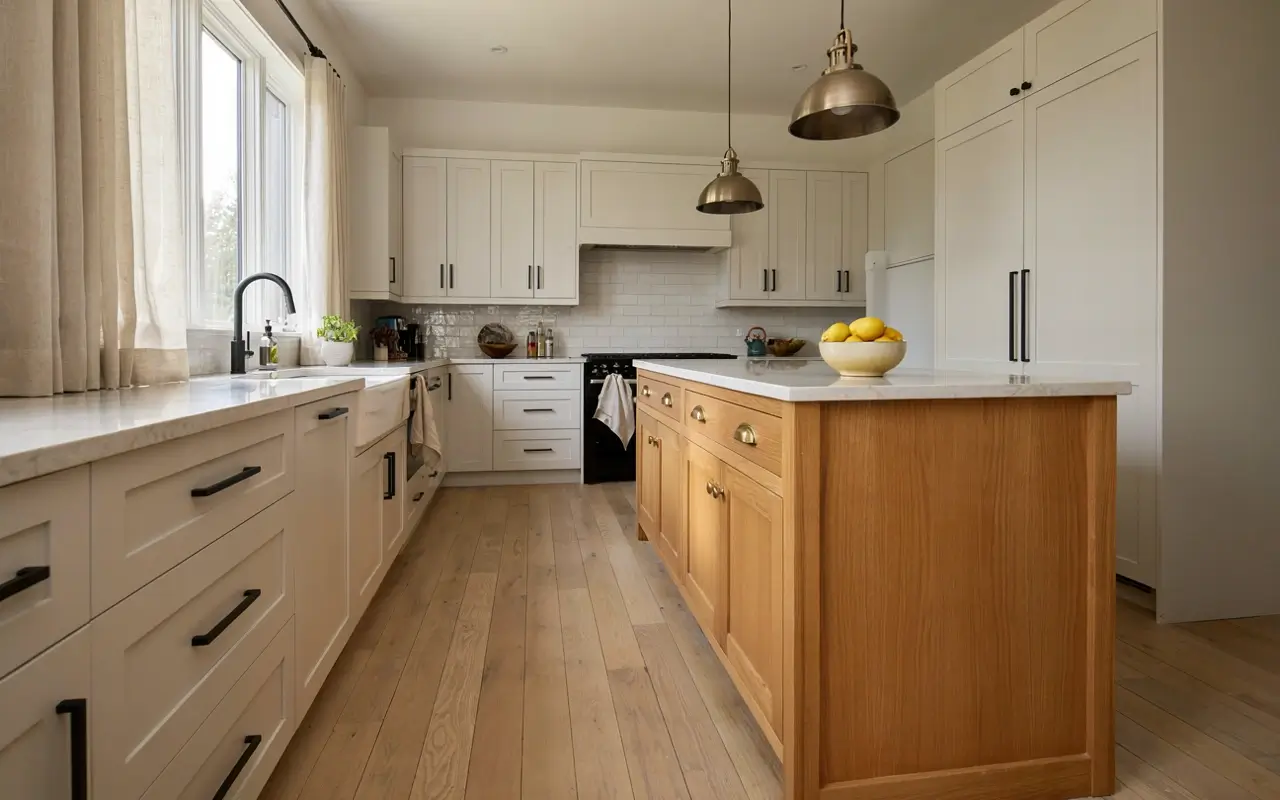
A full hardware swap across an entire L-shaped kitchen gets expensive fast. Keeping matte black pulls on the perimeter and upgrading only the island to brushed brass makes the island read as a separate, considered piece of furniture rather than matching cabinetry — for the cost of one hardware set instead of two kitchens’ worth. Stick to one brass finish so nothing looks mismatched. It’s the cheapest way to make an island look custom-built instead of ordered off a shelf.
11. Repaint Only the Island and Keep the Perimeter Cabinets for a Budget-Friendly Two-Tone Look
A full two-tone cabinet repaint is one of the priciest updates in a kitchen reno. Repainting or refacing just the island in a contrast color, and leaving the perimeter as-is, gets the two-tone look currently dominating Pinterest boards for the cost and labor of one piece of furniture, not a whole kitchen. Sage green, navy, or warm terracotta all read well against existing wood or white perimeter cabinets. This is the move for anyone who wants the look but isn’t ready to touch the rest of the kitchen yet.
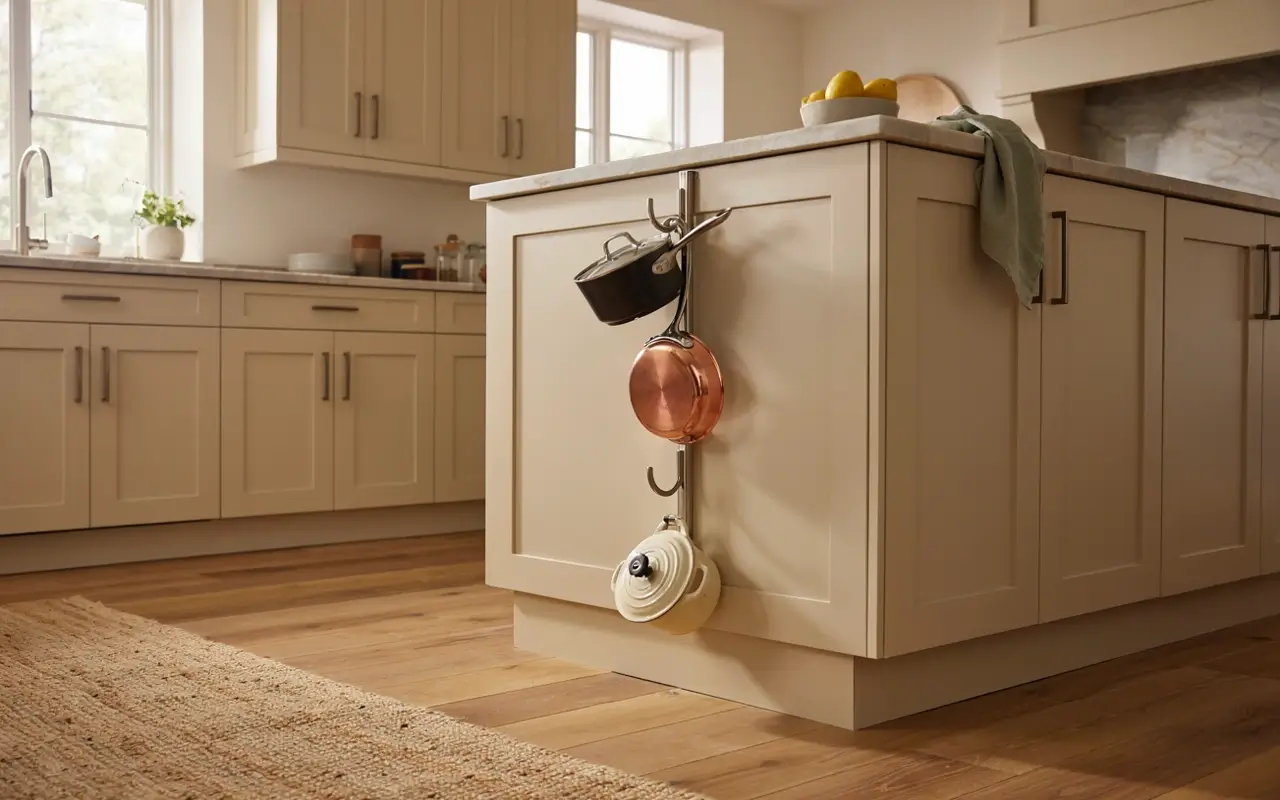
12. Mount a Vertical Pot Rail on the Island’s End Panel to Free Up Drawer Space
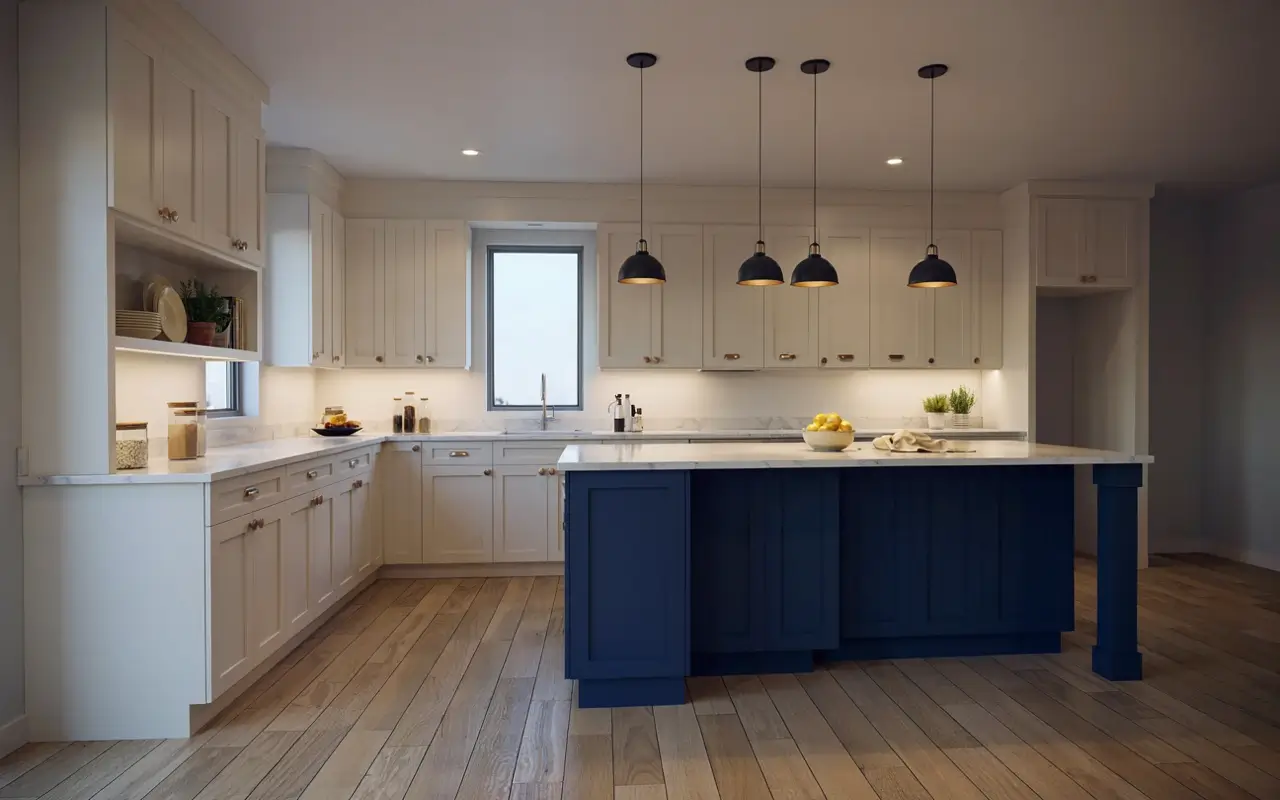
Pots and pans take up more drawer space than almost anything else in the kitchen. A simple vertical rail with S-hooks on the blank end panel of the island moves bulky cookware out of drawers and turns an unused side panel into working storage. Hang no more than three or four pieces so it doesn’t look cluttered. My read is this only works if the end panel actually faces a walkway, not a wall — otherwise it’s just in the way.
Color, Cabinet, and Mood Ideas for L-Shaped Kitchens with Islands
13. Pair Warm White Oak Perimeter Cabinets with a Sage Green Island for Instant Color Contrast
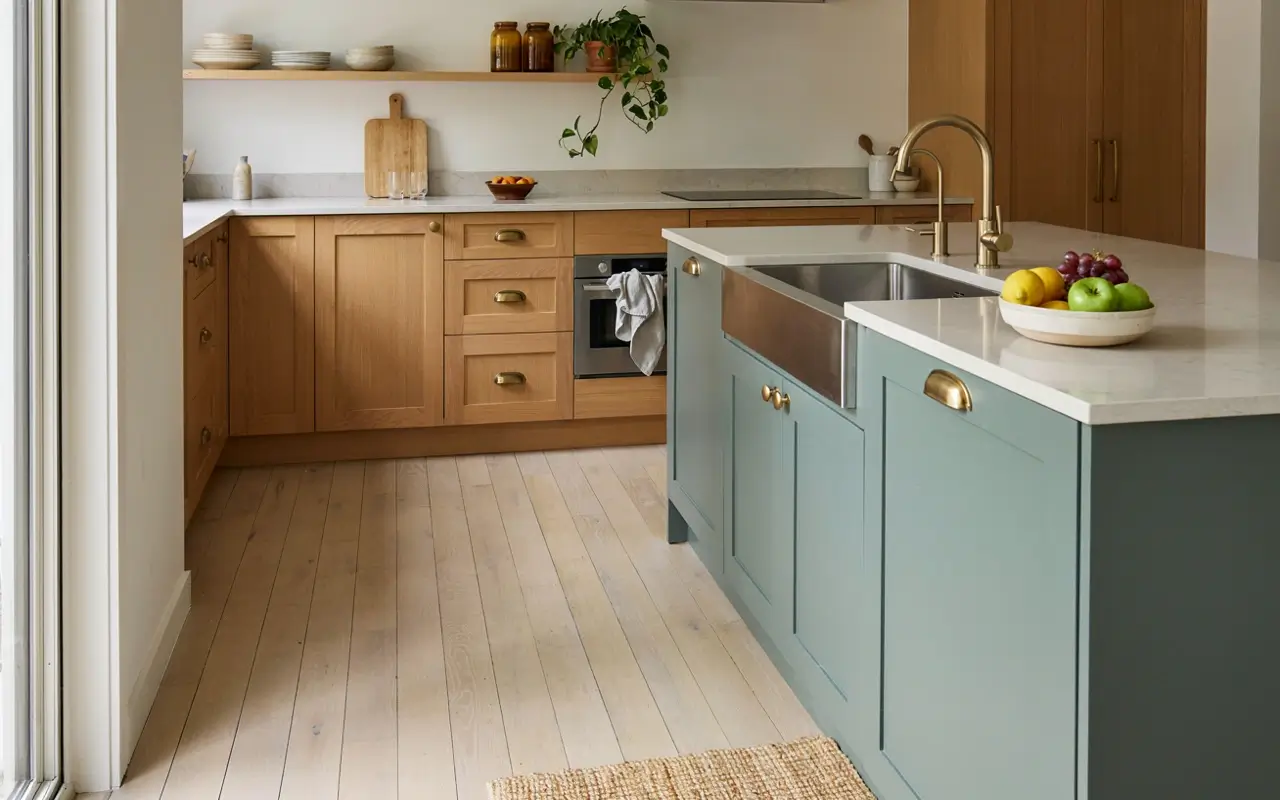
All-white kitchens don’t photograph as distinctly as they used to. Keeping the perimeter in warm white oak and letting the island carry a soft sage green is one of the most saved color pairings on Pinterest right now, because it feels warm and current instead of stark. Pair with brushed brass or unlacquered hardware to keep the palette soft. It’s a combination that photographs beautifully in almost any light, morning or evening.
14. Anchor the L-Corner with a Navy Blue Island Under a Trio of Black Pendants
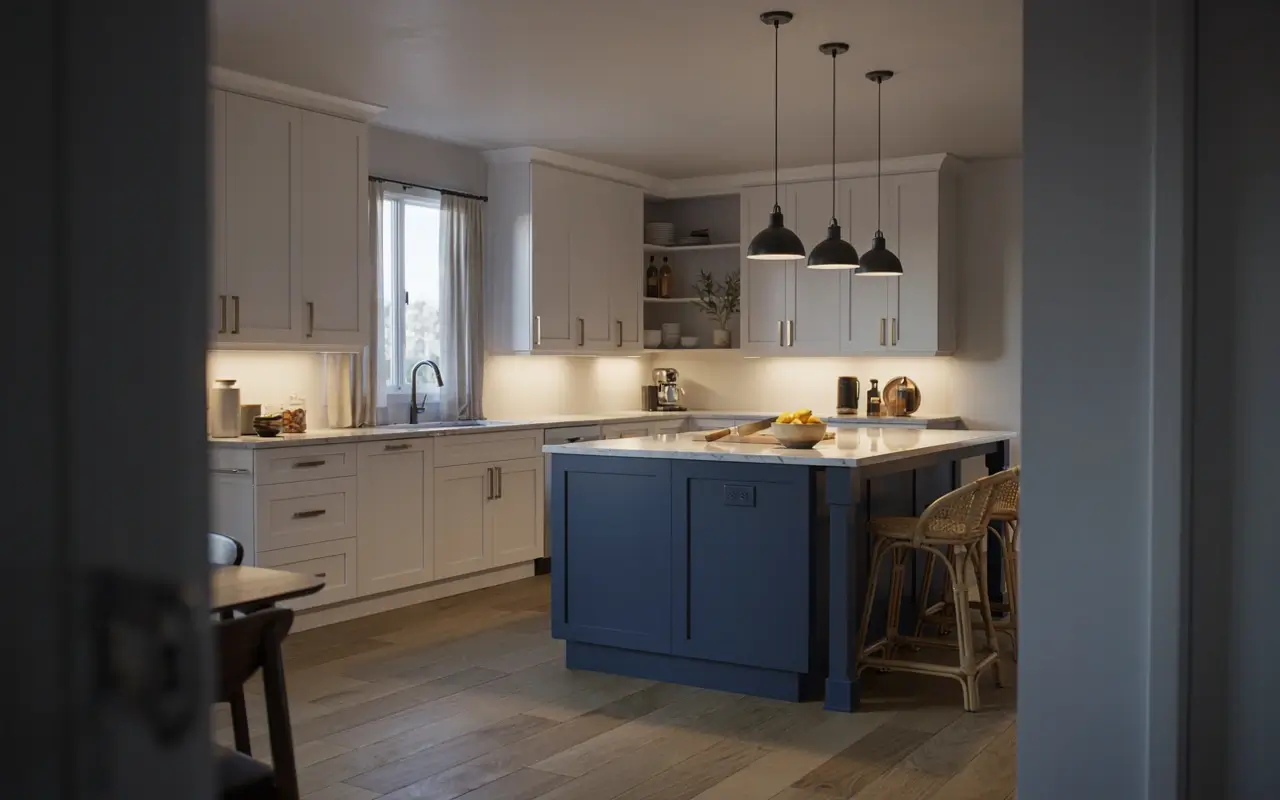
A single center pendant over an island in an L-shaped kitchen can look like an afterthought. Clustering three smaller black pendant fixtures over a navy blue island instead draws the eye straight down to the island as the clear focal point, while the navy grounds the space so it doesn’t float visually. Space the pendants evenly at a consistent height above the counter. This combination makes an island feel like the main event instead of extra counter space.
15. Frame the Apron Sink Under a Window on the Long Run for All-Day Natural Light
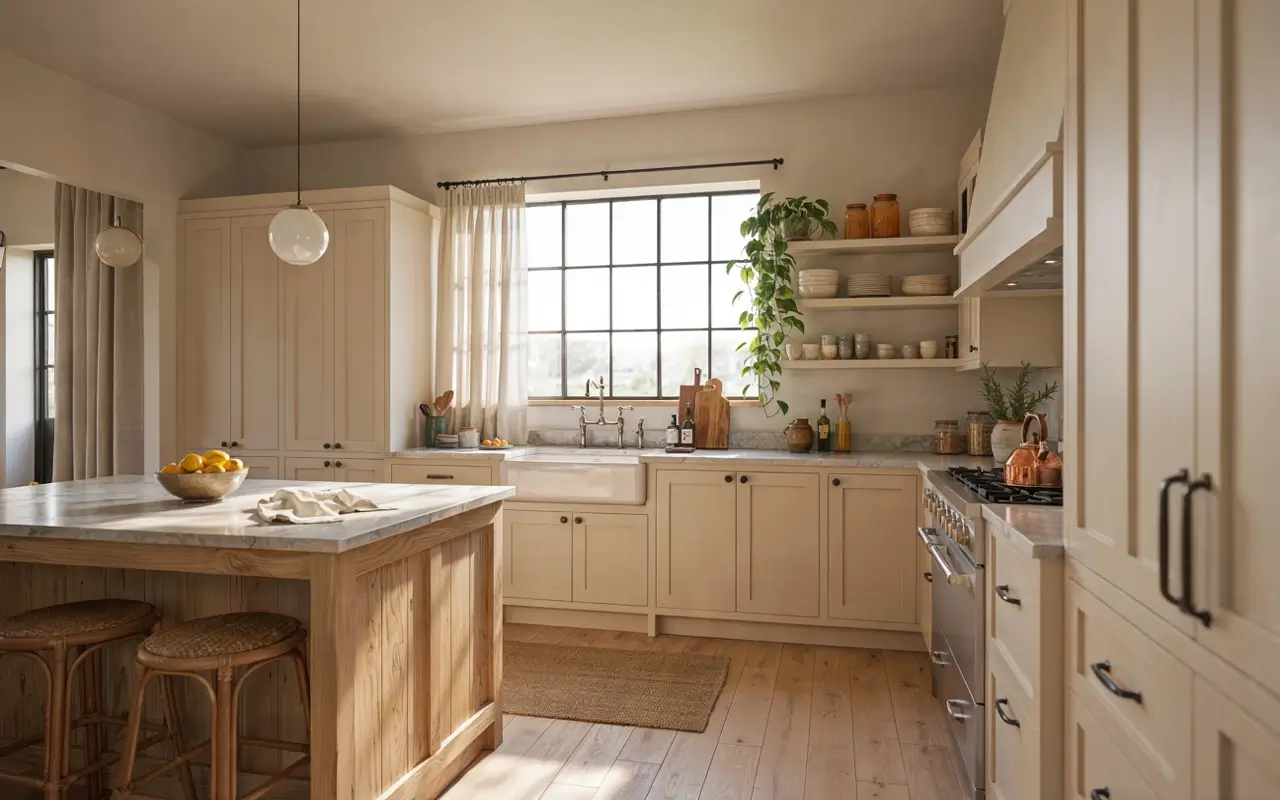
Islands often steal the best spot in the room, leaving the sink stuck against a dark wall. Keeping the farmhouse apron-front sink on the long perimeter run, positioned under the window, keeps daylight on the task you do most often — dishes — while the island still gets to be the visual star. A Kohler apron sink in classic white or fireclay keeps the look timeless rather than trendy. It’s easy to overlook when you’re focused on the island, but it’s the spot you’ll actually stand in front of every day.
16. Hide a Warm LED Strip Under the Open Shelf Above the Coffee Station for a Café Glow at Night
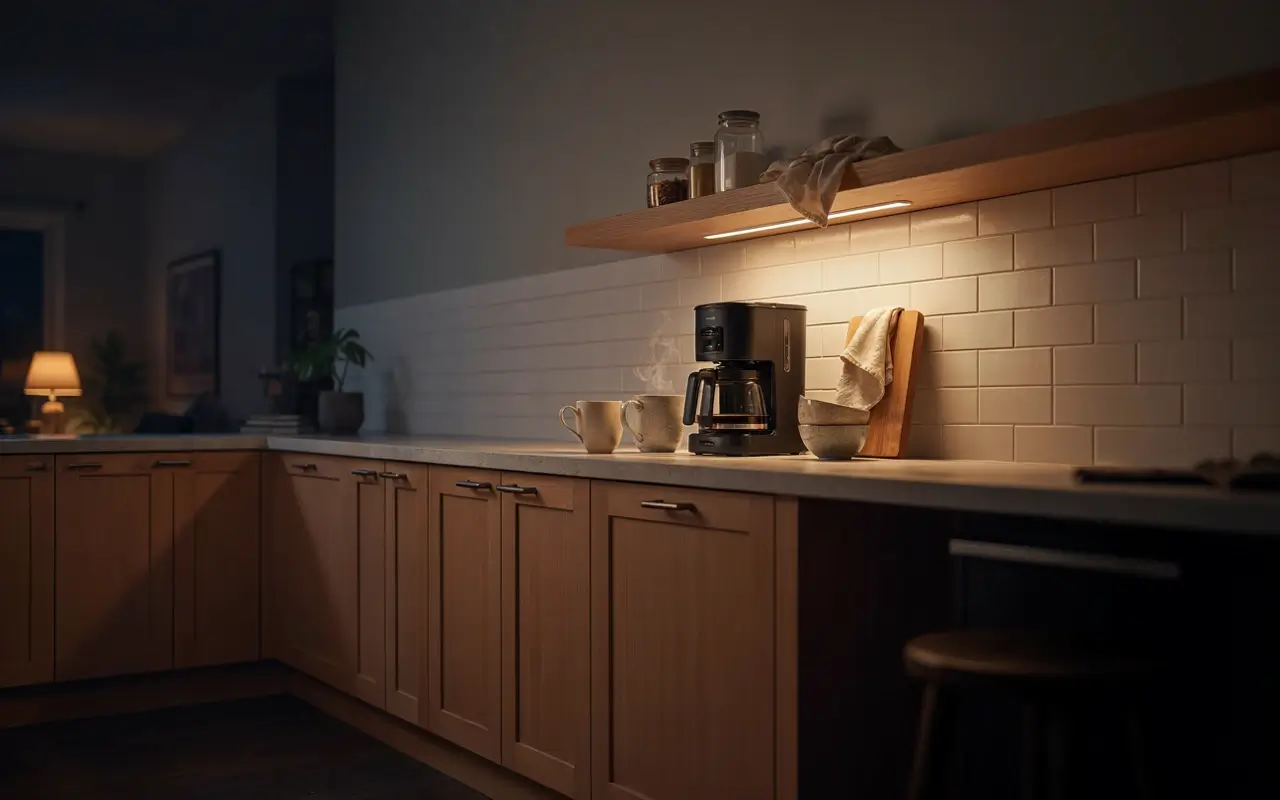
Overhead kitchen lighting is often too harsh for a quick evening coffee or a late-night glass of water. Running a warm, dimmable LED strip underneath one open shelf near the coffee station, tucked out of sight, creates soft, low-level light exactly where it’s needed without switching on the main fixtures. Choose a warm 2700K bulb temperature so it reads cozy, not clinical. It’s a detail that costs very little and does more to set the mood than almost anything else on this list.
17. Balance a Moody Charcoal L-Shape with a Warm Wood-Tone Island]
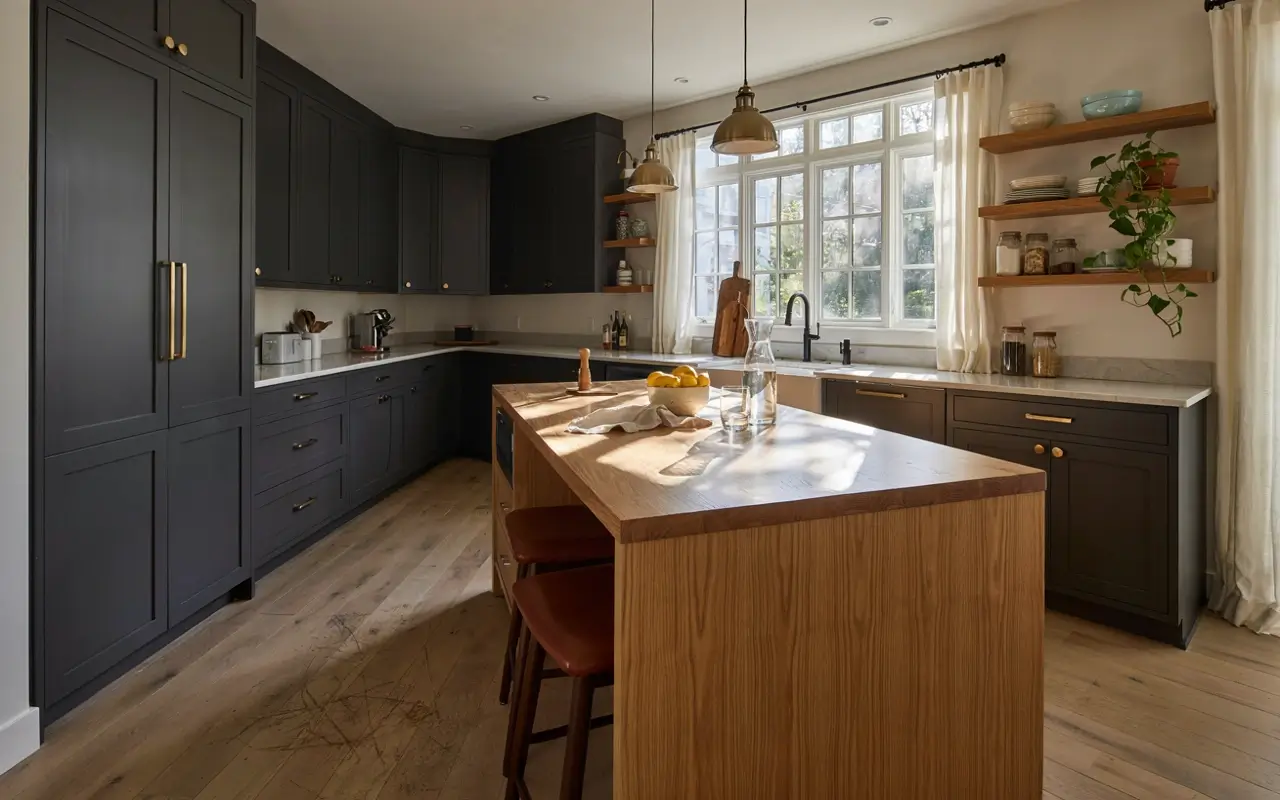
All-dark kitchens can feel heavy or cave-like, especially in an L-shape with less wall space for light to bounce around. Keeping the perimeter cabinets in moody charcoal or deep green, then letting the island be warm wood tone instead of matching dark, gives the eye a place to land so the room reads moody-cozy instead of moody-dim. Pair with brass or warm brushed nickel hardware to keep metals consistent. I’d only go full dark on the perimeter if there’s a real window bringing in daylight somewhere in the room.
18. Style a Corner Coffee Station on the Short Leg of the L with a Tray and Two Mugs
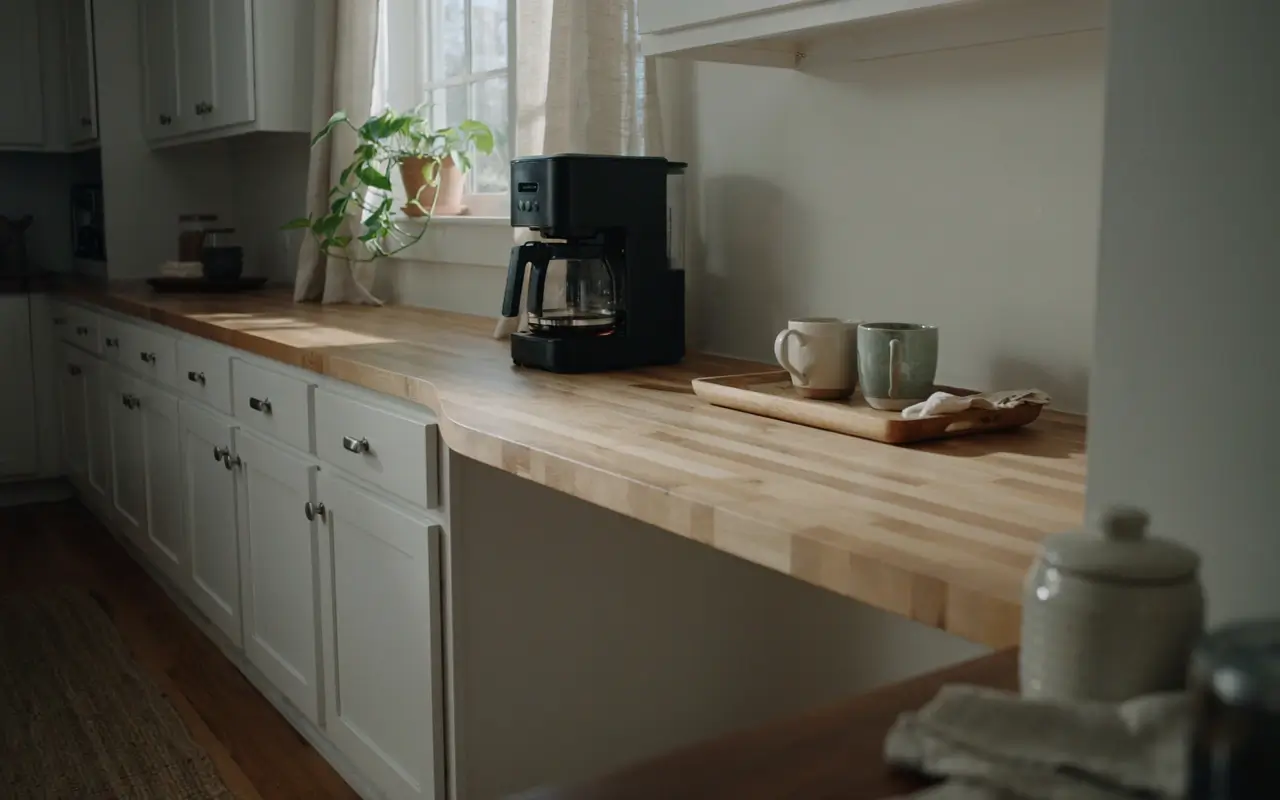
The short leg of an L-shaped kitchen often becomes dead counter space that collects mail and keys instead of being used. Dedicating that stretch to a small coffee station — a simple tray, two mugs, a coffee maker — gives that awkward run an actual job, which keeps clutter from creeping in by default. Keep it to three or four objects max so it reads styled, not staged. Giving it one clear purpose is what keeps it from turning into a landing strip for random stuff.
19. Make the Vent Hood a Design Moment Over the Range Leg with a Tiled Surround
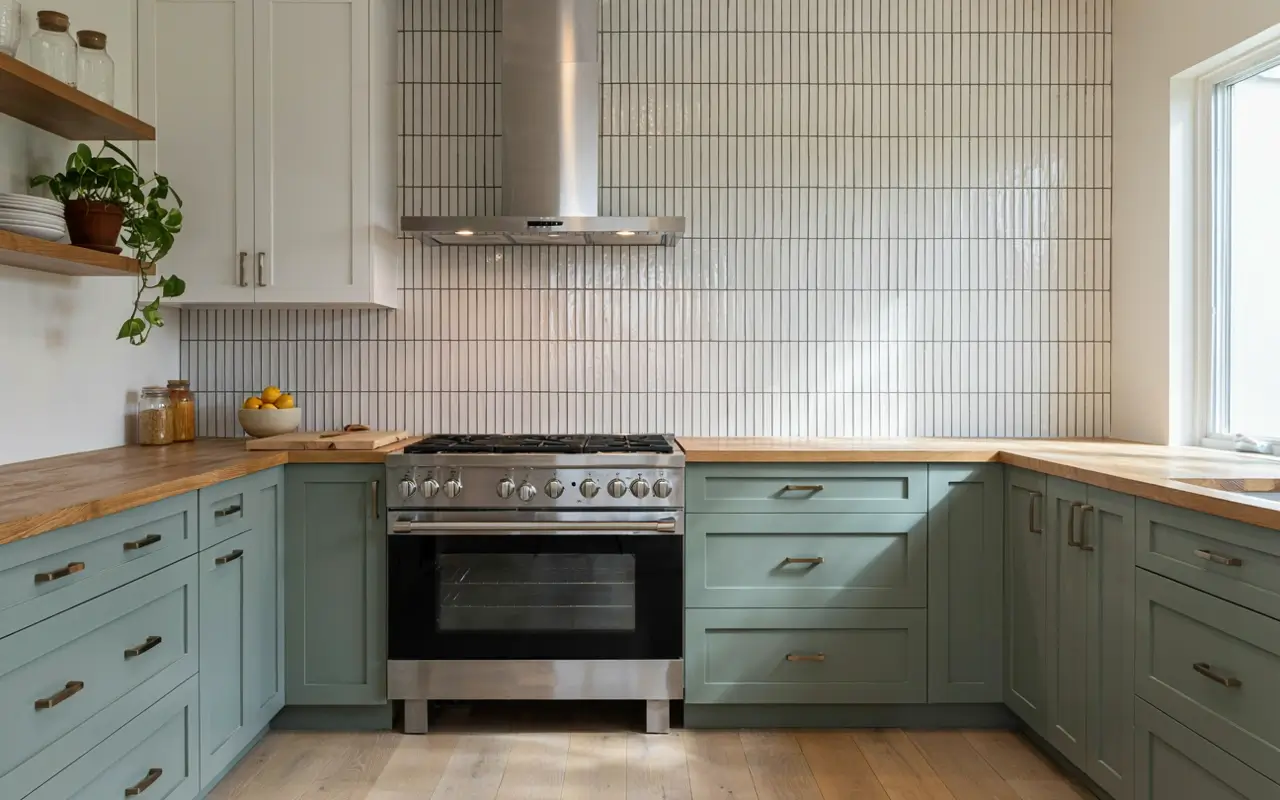
Vent hoods are often the most overlooked piece of a kitchen, even though they sit right at eye level over the range. Surrounding the hood with a vertical or herringbone tile pattern, instead of leaving it as plain drywall or matching cabinetry, turns a purely functional appliance into a visual anchor for that leg of the L, balancing out the island’s pull on the eye. A KitchenAid range paired with a tiled hood surround keeps the whole wall feeling intentional. It’s one wall that gets skipped constantly and is an easy place to add character.
Open-Concept and Splurge-Worthy L-Shaped Kitchen Island Ideas
20. Style a Corner Open-Shelf Nook Where the L Bends with Stoneware and a Cutting Board
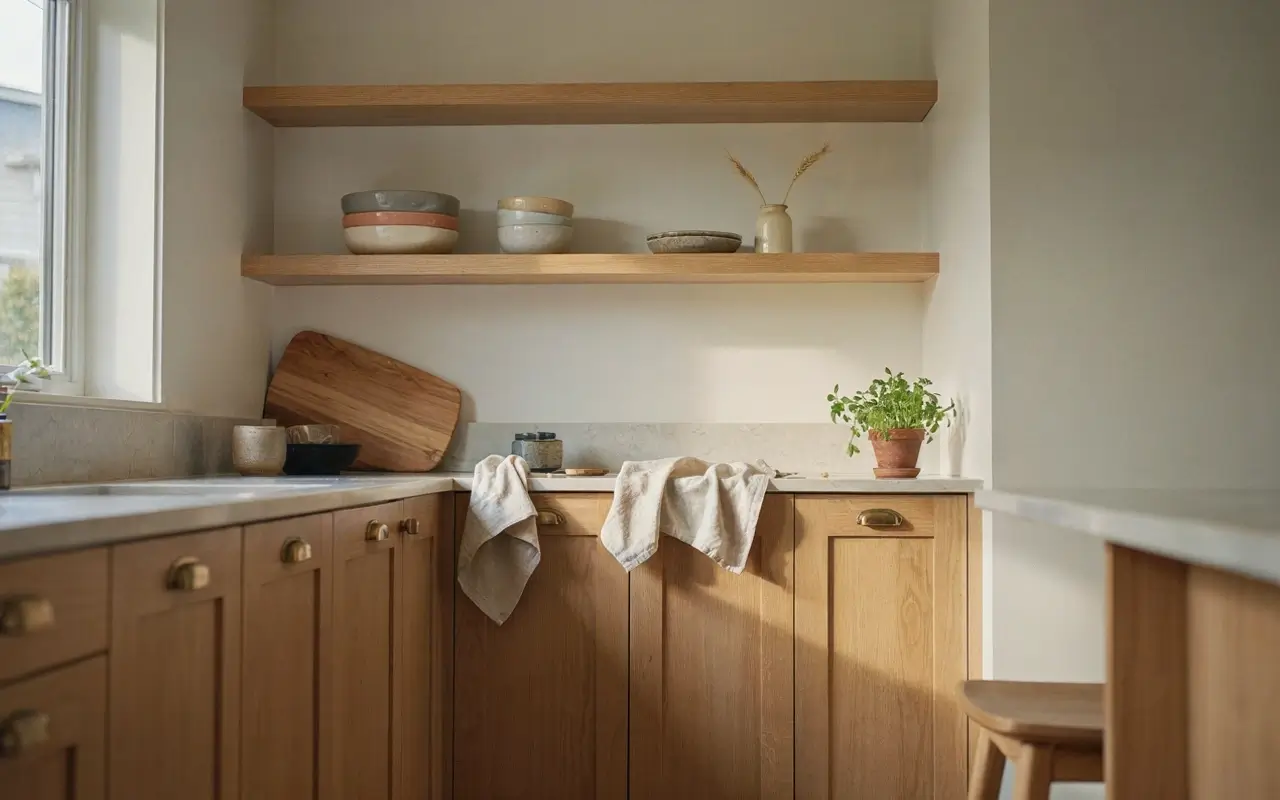
The inside corner where the two legs of the L meet is often the most awkward cabinet space in the whole kitchen. Skipping the upper cabinet at that exact corner in favor of two or three open shelves breaks up what would otherwise be a heavy wall of cabinetry right at the visual pivot point of the room. Style it with a small stack of stoneware bowls and one leaning cutting board, not a full collection. This corner gets photographed constantly for a reason — it’s where your eye naturally lands first.
21. Let the Island Divide an Open-Concept Great Room Without Walls or a Half-Wall
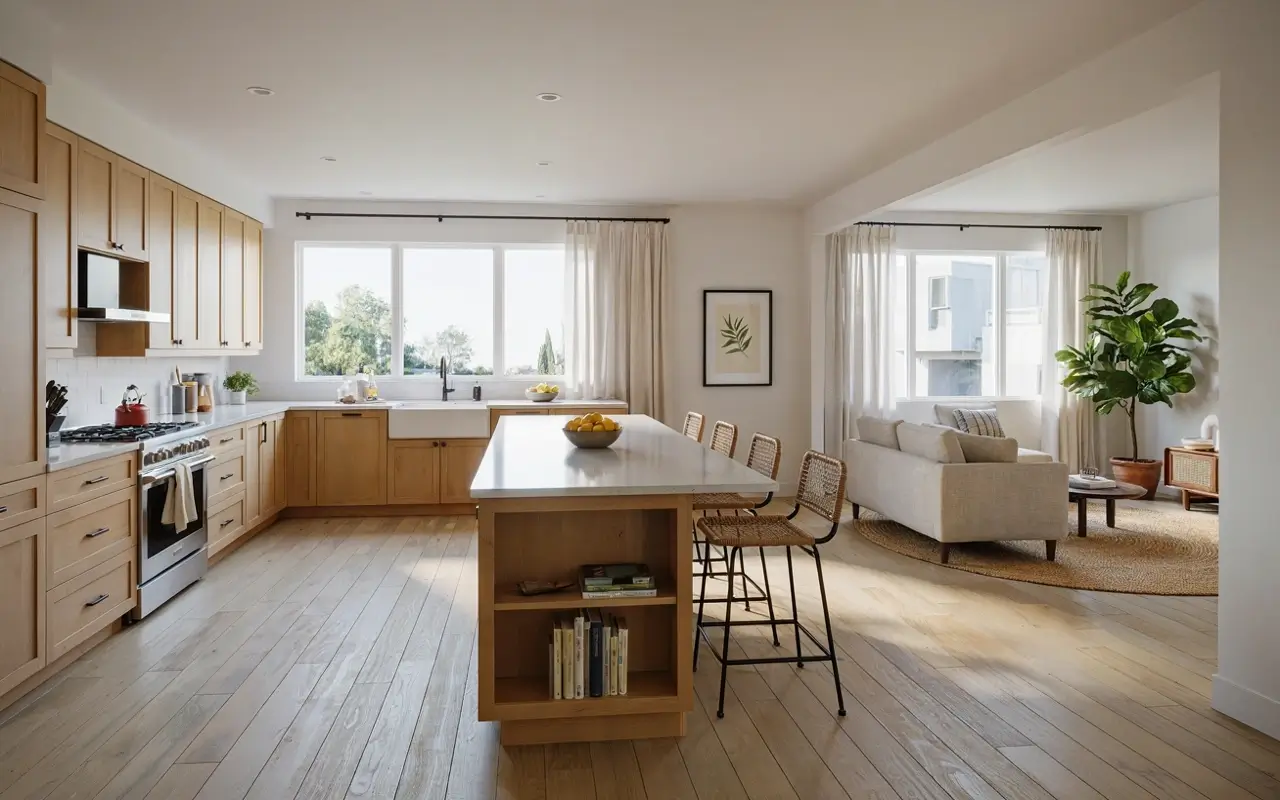
Open-concept L-shaped kitchens often feel like they blend into the living room with no sense of where the kitchen ends. Using the island itself, positioned at the open end of the L, as the only divider between kitchen and living space keeps the sightline open across the whole great room while still giving the kitchen a defined edge. Add seating on the living-room-facing side so it does double duty as a casual dining spot. It only works if the rest of the room is genuinely open — in a closed-off kitchen, this idea doesn’t apply.
22. Set a Waterfall Quartz Island as the One Splurge Worth Making in a Mid-Size L-Shape
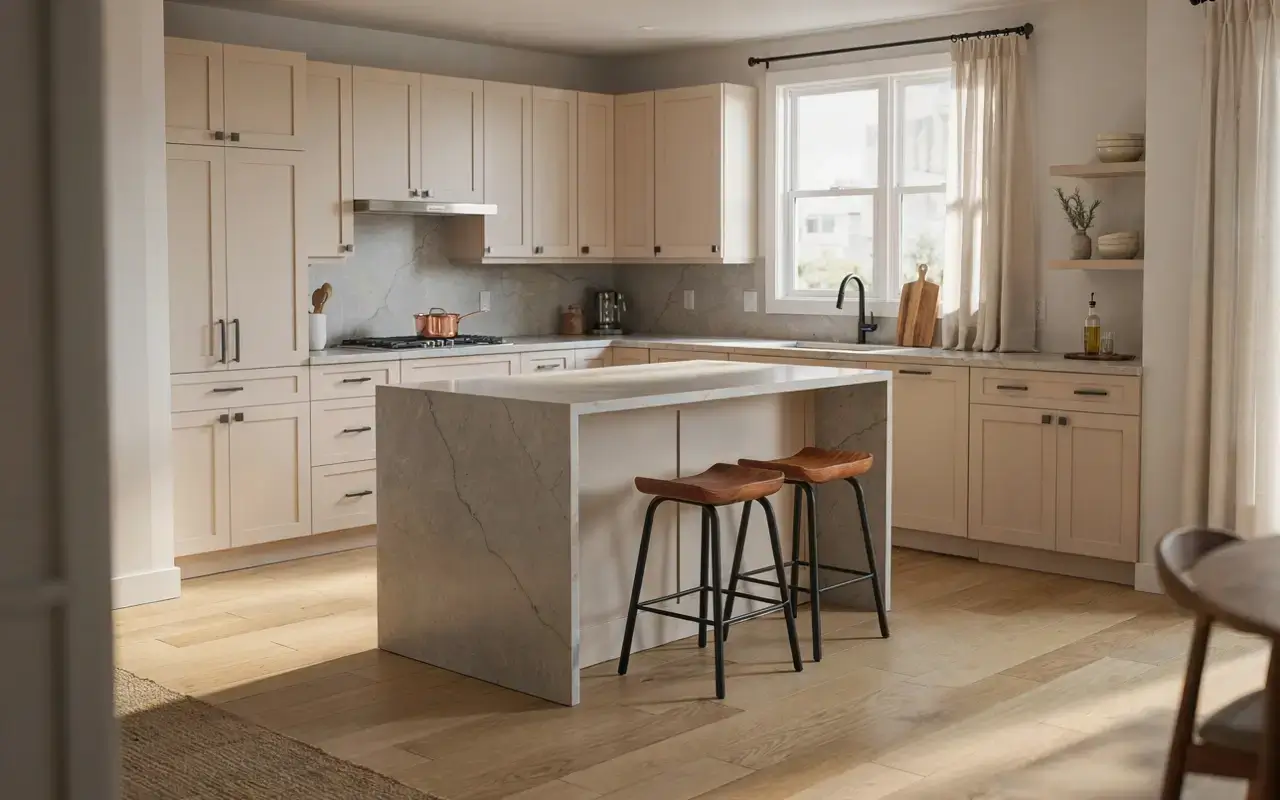
There’s a temptation to splurge on every surface in a reno, which stretches most budgets thin. Putting the bulk of the budget into one waterfall-edge island in a durable quartz like Cambria, and keeping the rest of the kitchen simple, works because the island is the single surface guests and family actually touch, lean on, and gather around daily. A quiet, low-veining quartz ages better in real use than a busy, high-contrast pattern. I’d only splurge here if the rest of the kitchen can stay simple around it — one statement piece reads intentional, five reads busy.
How to Tell If Your L-Shaped Kitchen Can Actually Fit an Island
This is where most articles either get too technical or skip the math entirely. The honest answer sits between: you don’t need an engineering degree, but you do need real measurements before you commit to an l shaped kitchen island layout dimensions on Pinterest.
To check whether your L-shaped kitchen can fit an island, follow these steps:
- Measure the open floor space inside the L.
- Subtract at least 42 inches of clearance on every side that will see walkway traffic.
- Compare what’s left to a minimum island footprint of roughly 24 by 48 inches before committing to a size.
| Option | Best For | Key Benefit | Limitation |
|---|---|---|---|
| Fixed Island | Kitchens with 42+ inches clearance on all sides | Permanent prep and storage space | Needs real floor space, plus plumbing or electrical if wired |
| Rolling Cart | Narrow galley-style L kitchens | Flexible, renter-friendly, no installation | Less stable, smaller work surface |
| Round or Oval Island | Small L-shapes with tight turn corners | Eases corner clearance without losing much surface | Less linear storage than a rectangular island |
Waterfall Island vs Standard Overhang Island: a waterfall island works better in open-concept L-shaped kitchens with generous clearance, because the continuous stone edge reads as a design statement from every angle. A standard overhang island works better in tighter L-shapes because it takes up less visual and physical space. The key difference is how much clearance the extra stone panel demands on each side.
Here’s the part that surprises people: a smaller island in a genuinely tight L-shape usually gets used more than an oversized one, simply because there’s still room to move around it every day. Some designers push for a full peninsula-style island in every L-shaped kitchen to maximize counter space — that logic holds up only when clearance is generous. In footprints under roughly 120 square feet, it works against the same clearance math that makes tight kitchens feel cramped in the first place.
Quick Answers About L-Shaped Kitchens with Islands
Can a small L-shaped kitchen actually fit an island?
Yes, if there’s at least 42 inches of clearance on every walkway side. Under that, a rolling cart or narrow prep island works better than a fixed, full-size one.
What is the minimum size for an L-shaped kitchen with an island?
Most designers look for roughly 120 to 150 square feet of open floor space to fit even a small island comfortably with proper clearance on all sides.
Should the island match the perimeter cabinets?
Not necessarily. Two-tone kitchens, where the island contrasts the perimeter in color or material, are one of the most saved styles on Pinterest right now.
Is a waterfall-edge island worth it in a small kitchen?
Only with generous clearance. In tighter L-shapes, a standard overhang island looks and functions better without the extra visual bulk on each side.
What’s the biggest mistake people make with L-shaped kitchen islands?
Choosing island size based on photos instead of actual clearance measurements, which leads to a cramped walkway no amount of styling can fix.
An L-shaped kitchen with an island can work in almost any size home, but the right version depends on your actual clearance, not what’s trending this month. Start with the measurements, then let color, hardware, and lighting do the styling work once you know what fits. This list leans toward single-island layouts in typical L-shaped footprints; if you’re working with an unusual angle, a sloped ceiling, or a genuinely tiny galley-style L, a quick on-site measurement from a contractor will tell you more than any list can. Save what matches your actual space, and build from there.



No Comment! Be the first one.