






Ho Chi Minh City’s Best Places to Visit: Organized by District So You Can Actually Plan
The problem isn’t that you can’t find a list of places to go in Vietnam’s Ho Chi Minh City. It’s that every list looks identical: War Remnants Museum, Ben Thanh Market, Cu Chi...

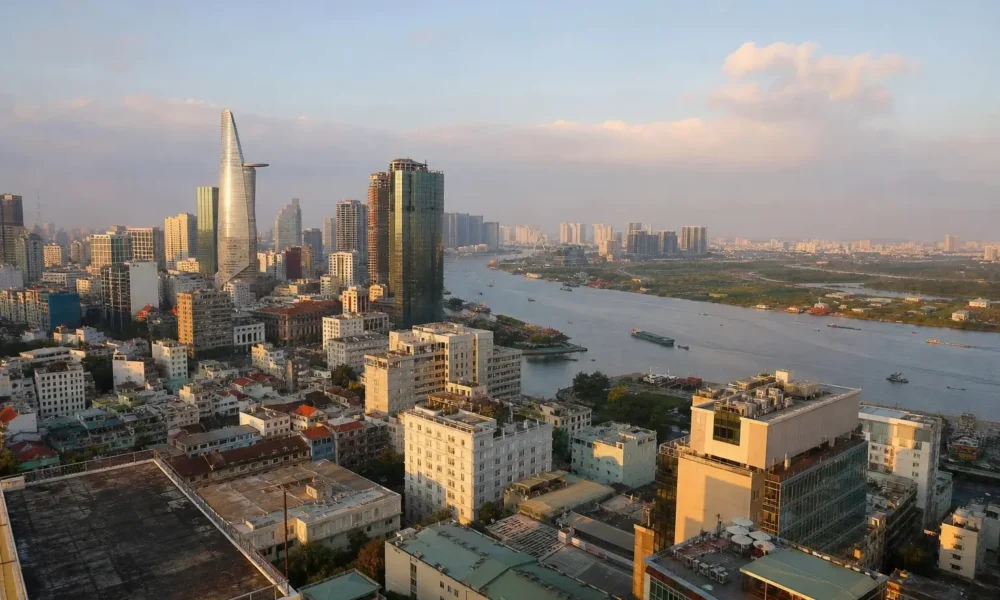
The problem isn’t that you can’t find a list of places to go in Vietnam’s Ho Chi Minh City. It’s that every list looks identical: War Remnants Museum, Ben Thanh Market, Cu Chi Tunnels. Same fifteen places. No map logic. No time estimates. No explanation of which spots are five minutes apart and which ones will eat 45 minutes of Grab time between them.
This guide fixes that. Places are organized by district, sequenced to minimize dead travel time, and paired with honest time budgets — because a day in HCMC that ends with you exhausted and half your list untouched is a planning failure, not a destination failure.
The best places to go in Ho Chi Minh City fall across three central districts: District 1 (War Remnants Museum, Independence Palace, Ben Thanh Market), District 3 (Jade Emperor Pagoda), and District 5 Chinatown (Thien Hau Temple, Binh Tay Market). Two major day trips — Cu Chi Tunnels and the Mekong Delta — operate from District 1. Most first-timers can cover the essentials in three focused days.
Why HCMC Rewards First-Timers Who Stop Trying to See All of It
According to the Ho Chi Minh City Department of Tourism (December 2025), the city welcomed over 8.5 million international visitors in 2025 — a 40% increase from 2024 — making it Vietnam’s largest single international visitor hub. That growth has produced an avalanche of travel content. Most of it repeats the same places in the same order, stripped of any geographic logic.
Travelers who’ve built their HCMC itinerary from a TripAdvisor “Top Attractions” list often describe the same experience: crossing the city twice in one afternoon because nobody told them the Jade Emperor Pagoda is in District 3, not District 1.
Here’s the thing: the single biggest planning mistake isn’t choosing the wrong places. It’s choosing great places that are 40 minutes apart by Grab, stacking them on the same day, and arriving at the last site too tired to care. District 1 alone holds enough content for two full days. Understanding that one fact reshapes every itinerary decision that follows.
The city rewards slowness. HCMC’s street life — the roadside coffee stools, the motorbike streams, the block-level food vendors who’ve been in the same spot for thirty years — disappears the moment you’re rushing between GPS pins.
District 1: Where Every First-Timer Should Start
District 1 is the most navigable, most tourist-ready, and most content-dense area in the city. That’s not a knock — it’s a practical fact. If you have limited time and have never been to HCMC, start here.
What Are the Top Tourist Spots in Ho Chi Minh City?
The top tourist spots in Ho Chi Minh City are concentrated in and near District 1. The War Remnants Museum, Independence Palace, and Ben Thanh Market are the three most internationally recognized sites. According to the HCMC Department of Tourism (2025), these three consistently rank as the city’s highest-visited attractions among international travelers. All three can be combined in a single well-structured morning and early afternoon.
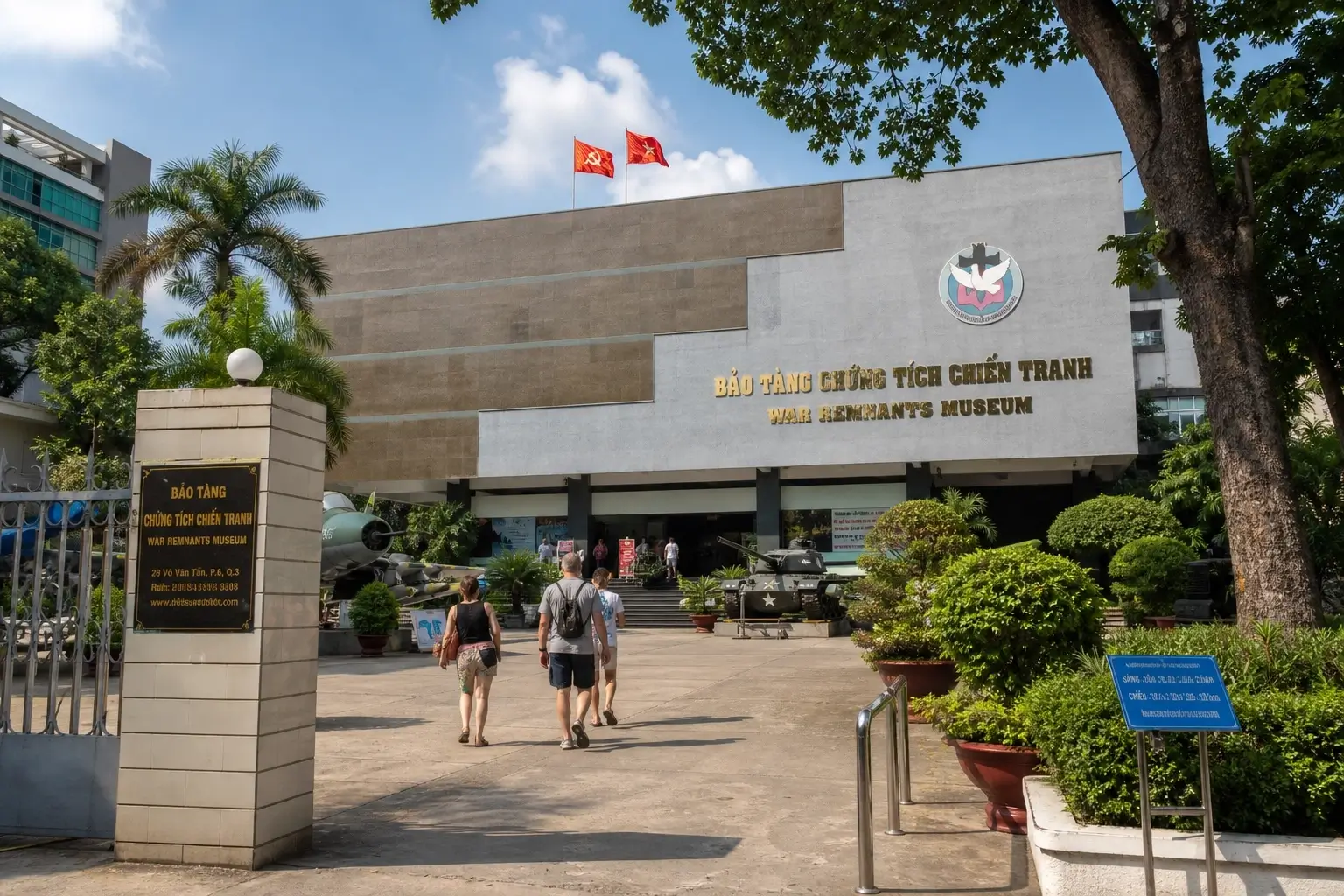
War Remnants Museum — Allow 2 Hours Minimum
Most visitors underestimate this one. The museum documents the American War through photographs, preserved military equipment, and first-person accounts across three floors. It’s not a light experience.
Go first thing in the morning. Cooler temperatures, thinner crowds. Admission is 40,000 VND (approximately $1.60 USD). The name in Vietnamese — Bảo tàng Chứng tích Chiến tranh — is worth saving in your phone; any Grab driver will find it in seconds.
What most guides skip: the Agent Orange exhibit on the ground floor is the section that hits hardest and stays longest. Budget the full two hours, not ninety minutes.
Independence Palace — Worth It If History Is Your Lens
This one divides opinion, and I’ll say it plainly: some travelers walk through in 45 minutes and feel mildly bored. Others spend two hours absorbed in the Cold War-era bunker level, the 1970s cabinet room, and the preserved presidential offices that look frozen mid-evacuation.
Some argue the palace is overrated compared to the War Remnants Museum. That’s valid for travelers focused on emotional impact. But if you’re interested in Vietnamese political history, the architecture of power, or the specific moment of April 30, 1975 — when tanks rolled through these gates — it earns every minute.
Admission: 40,000 VND. It’s a 10-minute walk from the War Remnants Museum. Combine them in one morning — don’t treat them as separate half-days.
Ben Thanh Market — Go Knowing What It Is
Ben Thanh is a tourist market. Prices are negotiated. You will pay more than locals do. That’s fine — but go in with clear expectations rather than discovering it mid-haggle and feeling cheated.
The real value isn’t shopping. It’s the density: the smell of fresh herbs and roasting meat, the narrow corridors stacked floor-to-ceiling with lacquerware and silk, the fact that this market has anchored the city’s commercial identity since the French colonial era.
The night market surrounding Ben Thanh — active after 6pm in the adjacent streets — is more relaxed, more local in feel, and honestly a better place to eat.
District 3, District 5, and the Places Most First-Timers Miss
What Are the Ho Chi Minh City Hidden Gems?
The most overlooked places to visit in Ho Chi Minh City include the Jade Emperor Pagoda in District 3 and the Thien Hau Temple in District 5 (Cholon Chinatown). Neither appears on standard top-10 listicles, yet both offer a depth of local religious and cultural life that the main District 1 sites don’t replicate. A Grab ride from District 1 to either site takes under 20 minutes.
Jade Emperor Pagoda — District 3
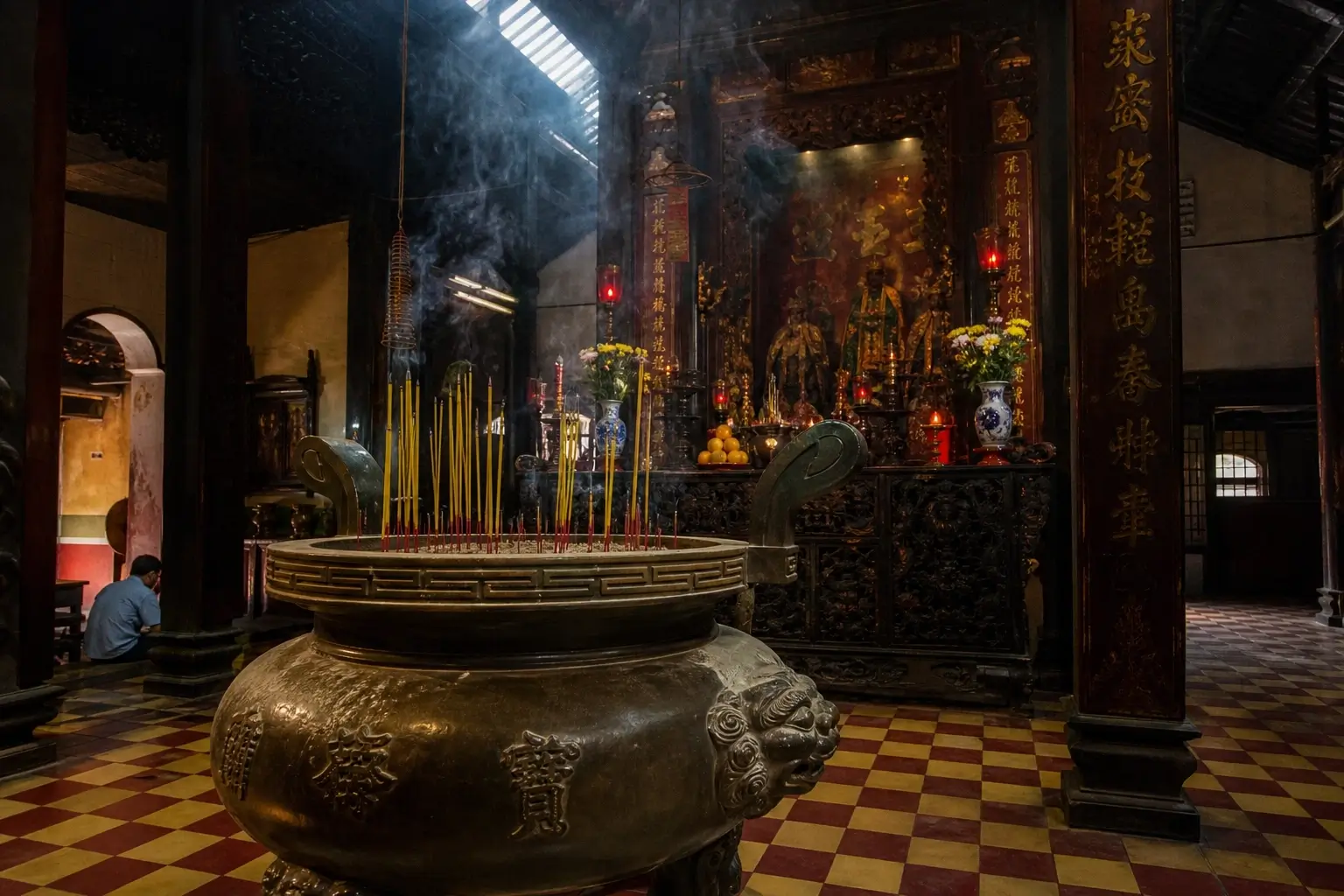
Or maybe I should say it this way: this is the single place in the city that feels genuinely unaffected by the tourist circuit.
It’s small. It’s smoky with incense. Locals are actively praying — not performing for cameras. The interior is layered with woodcarved deities, offerings, and decades of accumulated atmosphere. Free to enter. Twenty minutes by Grab from Ben Thanh.
It doesn’t appear on most top-10 lists.
It should be in most people’s top five.
Cholon — District 5 Chinatown
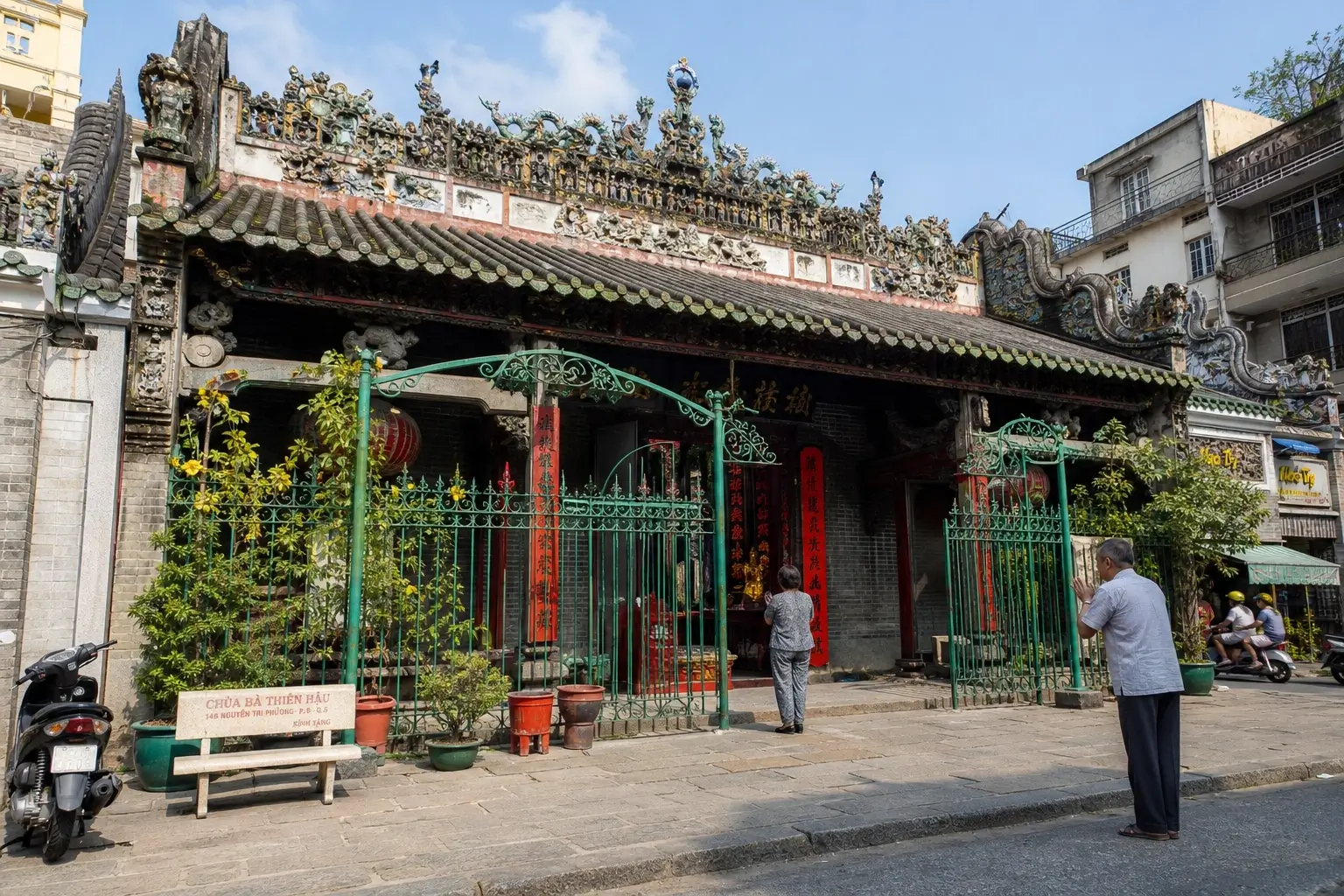
Cholon is the city’s oldest neighborhood. Loud, layered, and nothing like District 1. The Thien Hau Temple — dedicated to the Taoist goddess of the sea — is the anchor point, surrounded by streets of traditional medicine shops, roast duck vendors, and wholesale markets that have operated continuously for generations.
Budget 2–3 hours here. Get a bowl of hu tieu (Teochew noodle soup) from any stall near Binh Tay Market — it’s not pho, but it’s what people in Cholon actually eat for breakfast. The broth is lighter, the toppings more eclectic.
Travelers who’ve spent time in Cholon often report it as the neighborhood where HCMC finally clicked for them — where the city felt less like a checklist and more like an actual place people live in.
Quick Comparison: District 1 vs. District 5 for First-Timers
| District 1 | District 5 (Cholon) | |
|---|---|---|
| Best For | First 1–2 days, historical sites | Day 3+, local culture, texture |
| Key Benefit | Tourist infrastructure, easy navigation | Authentic neighborhood life, far fewer tour groups |
| Limitation | Can feel sanitized after a while | Less English signage, requires more initiative |
| Transport | Walking + Grab | Grab recommended |
District 1 is better for visitors with limited time because it clusters the most recognized sites with the easiest navigation. District 5 rewards travelers who’ve already covered the basics and want something that feels less curated.
Day Trips: Cu Chi Tunnels vs. Mekong Delta
Both are worth doing. They’re completely different experiences. If you only have one day for a trip outside the city, the choice should be deliberate — not defaulted to whichever one appears first in search results.
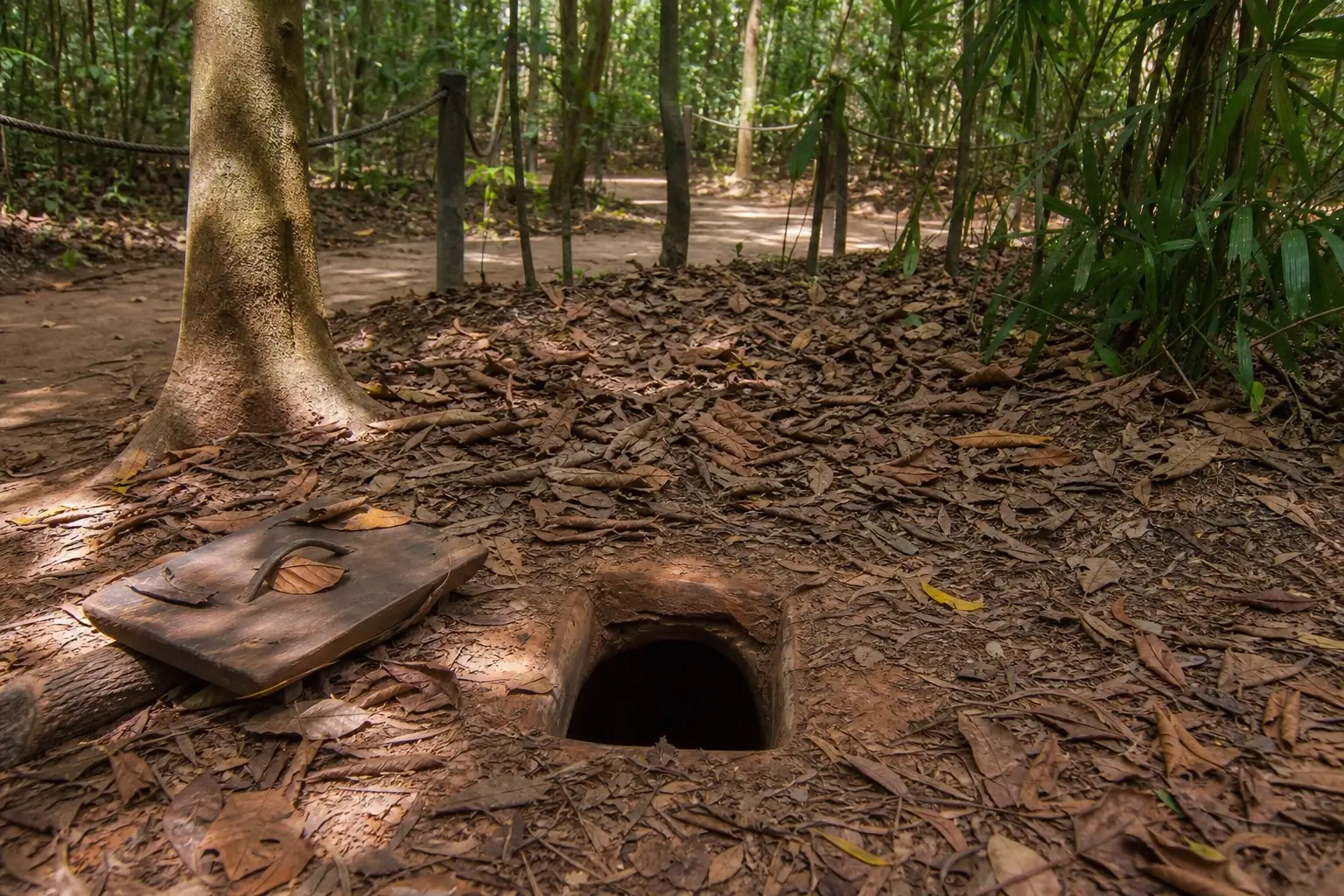
Cu Chi Tunnels
Cu Chi Tunnels — 70km northwest of District 1. An underground network used by Viet Cong fighters during the American War. Some tunnels have been widened for tourists, but they’re still tight enough to induce real claustrophobia. You’ll fire replica weapons, handle period equipment, and crawl through roughly 100 meters of tunnel. It’s physically demanding, historically dense, and unlike most things in Southeast Asia.
Half-day tours through GetYourGuide start around $15–20 USD, including transport from District 1. Book at least 48 hours ahead during high season (November–April). These sell out.
Mekong Delta
Mekong Delta — Full day, slower pace. River channels, floating markets, fresh coconut candy, grilled fish wrapped in rice paper. It’s scenic and sensory rather than intense. Better choice if you want to decompress, not add more historical weight to an already history-heavy trip.
How to Book a Cu Chi Tunnels Day Trip from Ho Chi Minh City
- Go to GetYourGuide and search “Cu Chi Tunnels half day HCMC”
- Filter for morning departure — cooler underground, better light for photos
- Choose a tour that includes hotel pickup in District 1
- Book at least 48 hours before your visit during Nov–Apr peak season
- Bring water, closed-toed shoes, and clothes you don’t mind getting dusty
How to Get Around HCMC Without Losing Half Your Day to Traffic
This is the section most saigon travel guide itineraries skip. It’s also the section that determines whether your itinerary actually works.
Grab is the non-negotiable first step. Download it before your flight lands. It works identically to Uber — fixed price confirmed before you accept, rated drivers, cashless payment optional. A typical in-city Grab car ride runs 30,000–80,000 VND ($1.20–$3.20 USD). From Tan Son Nhat Airport to District 1, expect 120,000–180,000 VND.
Look, if you’re choosing between Grab and a metered taxi at the airport, here’s what actually works: go to the official Grab pickup zone inside the terminal (signposted), book through the app, and pay the fixed price. The negotiated taxi queue outside is not a scam per se, but the pricing is opaque in a way that Grab isn’t.
Metro Line 1 launched in December 2024 — and almost no travel article has updated to mention it. The Ben Thanh–Suoi Tien line runs east from District 1 to Suoi Tien Park, is fully air-conditioned, and costs a fraction of a Grab fare for eastern-bound trips. Most first-timers don’t know it exists. It’s clean, efficient, and genuinely useful.
Before you land, buy a Vietnam eSIM through Airalo. Activates on arrival, costs $5–8 USD for a week of data, and takes 10 minutes to set up. Without data, Grab doesn’t work. Without Grab, you’re relying on street-hailing, which is where the overcharging actually happens.
Quick Comparison: Ways to Get Around Ho Chi Minh City
| Option | Best For | Key Benefit | Limitation |
|---|---|---|---|
| Grab (car) | Cross-district travel, rain, luggage | Fixed price, AC, trackable | Surge pricing during downpours |
| Grab (motorbike) | Short in-district hops | Faster through traffic jams | No luggage, weather exposure |
| Metro Line 1 | Ben Thanh east to Suoi Tien | Cheapest, fastest, air-conditioned | One line only — limited coverage |
| Walking | Within District 1 core | Free, best for street-level experience | Heat, aggressive sidewalk conditions |
| Cyclo tour | Scenic sightseeing, not transport | Atmospheric, slow, great for photos | Tourist pricing, impractical for real transit |
I’ve seen conflicting data on standard airport taxi fares — some sources cite 150,000 VND, others as high as 300,000 VND depending on district and driver. My read: the variance is real, the Grab fixed price is not. Use Grab from the airport zone every time, and the question disappears.
Common Questions About Places to Visit in Ho Chi Minh City
What’s the best starting point for a first-timer in Ho Chi Minh City?
District 1. The War Remnants Museum, Independence Palace, and Ben Thanh Market cluster within 15 minutes of each other. Stay here your first night, orient yourself, then branch into Districts 3 and 5 from day two.
How do I get between districts without getting overcharged?
Download Grab before you land. Fares are fixed before you confirm the ride, drivers are rated, and the app works anywhere in the city. A cross-district ride rarely exceeds $3 USD.
Should I do Cu Chi Tunnels or the Mekong Delta if I only have one day for a trip?
Cu Chi Tunnels for history, physical experience, and something intense. Mekong Delta for scenery, slower pace, and better food. Both depart from District 1 and take a half-day to full day.
What are the less-touristy places to go in Ho Chi Minh City?
The Jade Emperor Pagoda in District 3, Thien Hau Temple in District 5, and the alley café culture in Cholon. None require a guide, all are under 25 minutes from District 1 by Grab, and none are overrun with tour groups.
When’s the best time to visit Ho Chi Minh City?
November through April — dry season, lower humidity, more comfortable for walking. May through October brings heavy afternoon downpours (usually clearing within an hour), which isn’t a dealbreaker but will reshape afternoon plans.



No Comment! Be the first one.