






Ho Chi Minh City Timing: What No One Tells You About Choosing When to Go
The best time of year to visit Ho Chi Minh City is the dry season, from December through April, when rainfall drops to near zero and outdoor sightseeing is genuinely comfortable. But that single...

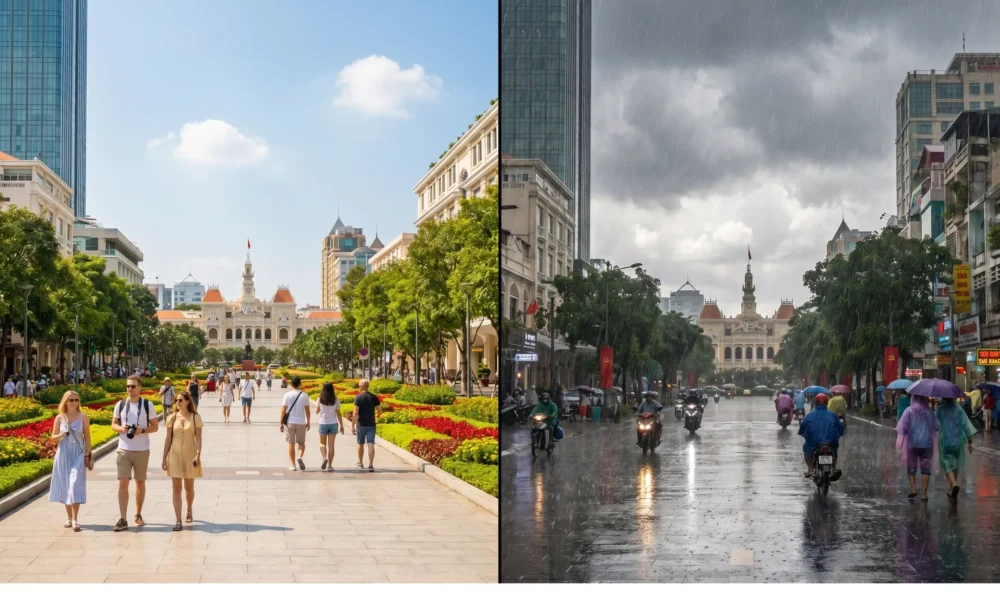
The best time of year to visit Ho Chi Minh City is the dry season, from December through April, when rainfall drops to near zero and outdoor sightseeing is genuinely comfortable. But that single sentence has cost more than a few travelers a frustrating trip — because “best” depends entirely on what you’re optimizing for, and the dry season contains at least one trap nobody in the generic articles mentions.
This guide gives you the real breakdown.
Why Ho Chi Minh City Doesn’t Work Like Other Destinations
Ho Chi Minh City sits at roughly 10.8°N latitude, just north of the equator. That means one thing above everything else: it’s always warm. Temperatures hover between 27°C and 30°C (80°F–86°F) year-round regardless of month. There’s no “cool season” the way Bangkok or Hanoi has one. What changes between seasons isn’t the temperature — it’s humidity and rainfall.
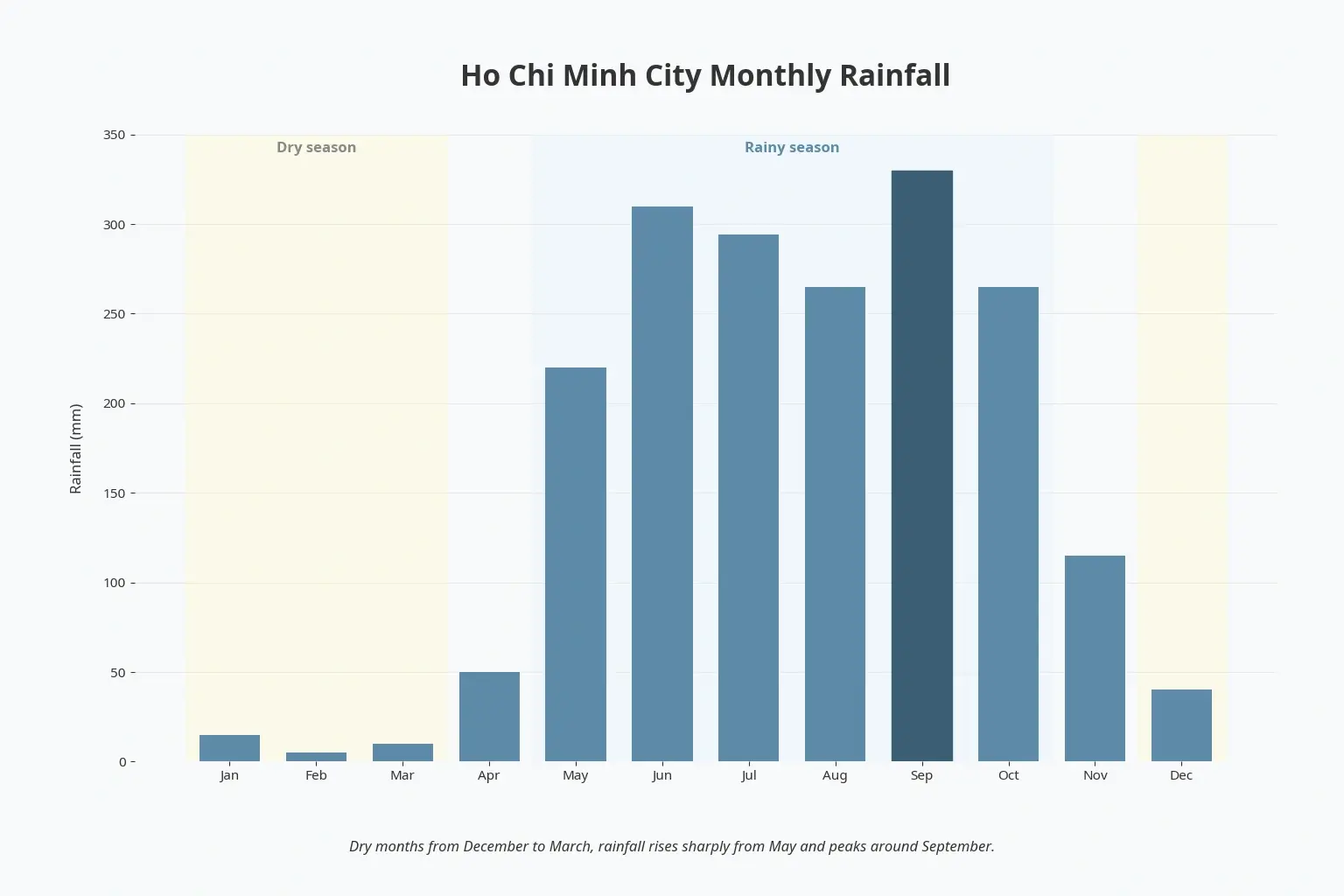
The city runs on two seasons, full stop. The dry season runs December through April. The rainy season runs May through November. No spring, no autumn, no transitional stretch of mild weather. Just a sharp split between sunny-and-hot and hot-and-wet.
Or maybe I should say it this way: the real decision isn’t which season has better weather. It’s which trade-offs you can live with.
According to the Ho Chi Minh City Department of Tourism, the city welcomed 6 million international visitors in 2024 — a 20% year-on-year increase — with the majority of those arrivals concentrated in the December-to-April peak window. The city has set a target of 8.5 million international arrivals for 2025, signaling that peak-season crowds will only intensify.
This works best for travelers with 5+ days in the city. If you have only 2 days, weather matters less — you’ll find things to do regardless of season.
Ho Chi Minh City Weather Month by Month
Here’s the honest breakdown, without the filler.
December, January, February — The “Best” Months
December and January are as good as it gets. Humidity drops to around 65%, temperatures sit in the 27–29°C range, and the chance of rain on any given day is low. January, in particular, is the month most local travel experts point to as the single best time to visit — comfortable for walking the city, manageable for the Cu Chi Tunnels, ideal for Mekong Delta day trips.
February is more complicated.
Tet — the Vietnamese Lunar New Year — typically falls in late January or early February. In 2025, Tet ran January 28 to February 2. In 2026, it falls on February 17. During Tet week and the days surrounding it, a significant portion of local restaurants close, markets go quiet, domestic transport gets heavily booked, and mid-range hotel rates on Agoda and Booking.com spike by 30–50% above normal dry-season pricing.
Travelers who booked a February flight thinking they’d locked in the best dry-season weather often land to find the city operating in celebration mode — spectacular if you planned for it, disorienting if you didn’t.
More on this in the dedicated Tet section below.
March and April — Dry, Hot, and Increasingly Demanding
March is still excellent. Dry, warm, and crowds are slightly thinner than January. A solid month for first-time visitors who couldn’t make December or January work.
April is where it gets demanding. Temperatures regularly reach 35–38°C by midday, and the UV index climbs into extreme territory. Anyone planning the Cu Chi Tunnels should avoid April afternoon visits specifically — the heat inside the tunnel chambers and across the exposed grounds is genuinely punishing. Book morning slots if April is unavoidable.
April’s saving grace: it’s still dry. If you schedule outdoor activities before 10am and treat the midday hours as museum and café time, you’ll manage fine.
May Through November — The Wet Season Reality Check
Here’s the thing: the rainy season is far more livable than most guides let on.
Rainfall in Ho Chi Minh City during these months almost never means all-day gray skies and cancelled plans. It arrives in fast, heavy bursts — typically in the afternoon between 2pm and 5pm — then clears within an hour or two. Mornings are usually fully dry and usable for outdoor sightseeing. Most first-time visitors who travel in June or July are surprised by how manageable it actually is.
September and October are the genuine exceptions. These are the difficult months: average rainfall exceeds 300mm in September, and localized flooding occasionally affects low-lying districts near the river. The Cu Chi Tunnels area can flood. The Mekong Delta becomes harder to access. If outdoor day trips are central to your itinerary, September and October are months worth avoiding.
The financial case for wet-season travel is real. Accommodation rates on Booking.com and Agoda run approximately 20–25% lower than peak dry-season pricing across mid-range properties in District 1. Vietnam Airlines and regional carriers show consistent fare drops of 15–25% for June, July, and August departures compared to December through February. If you’re flexible on timing and your priorities are budget and avoiding tourist crowds rather than guaranteed sunshine, May, June, or November are legitimate choices.
I’ve seen conflicting data on the exact savings figure — some sources cite 20%, others push closer to 35% for budget properties. My read: 20–25% is a realistic baseline for mid-range hotels; budget guesthouses may swing higher, luxury properties less so.
November — The Underrated Month
November deserves its own mention. Rain tapers off sharply compared to September and October. The weather approaches dry-season quality by mid-November. Prices haven’t yet climbed to peak-season levels. Crowds are thinner than December or January.
It’s the closest thing HCMC has to a shoulder season. Don’t overlook it.
Quick Comparison: Ho Chi Minh City by Month
| Season Window | Best For | Key Benefit | Main Limitation |
|---|---|---|---|
| Dec–Jan (Peak Dry) | First-time visitors, outdoor day trips | Lowest humidity, stable weather | Highest prices; book 6–8 weeks ahead |
| Feb (Late Dry / Tet) | Experienced travelers who plan for Tet | Festive atmosphere, peak weather | Hotel spikes 30–50%; some closures |
| Mar–Apr (Late Dry) | Budget-conscious dry-season visitors | Slightly cheaper than Dec–Jan | April heat intense; UV extreme midday |
| May–Jun (Early Wet) | Budget travelers, repeat visitors | 20–25% cheaper hotels; mornings dry | Reliable afternoon rain from May |
| Jul–Aug (Mid Wet) | Flexible budget travelers | Lowest prices of the year | Heaviest sustained rainfall |
| Sep–Oct (Peak Wet) | Avoid if outdoor activities matter | Cheapest rates | 300mm+ monthly rain; flood risk |
| Nov (Shoulder) | Best overall value month | Decent weather + lower prices | Early November still sees some rain |
Dry Season vs Rainy Season: The Trade-Off in Plain Terms
Dry season (December to April) suits outdoor-focused itineraries, first-time visitors, and travelers who want predictable daily planning. The Cu Chi Tunnels, Mekong Delta day trips, and long rooftop evenings are all at their best. The trade-off is cost and crowds — this is peak tourism season.
Rainy season (May to November) suits budget travelers, repeat visitors, and anyone who can structure their days around morning activity and afternoon flexibility. The city itself — its streets, its coffee shops, its markets — doesn’t close when it rains. The trade-off is that afternoon outdoor plans become unreliable, and September through October carry real disruption risk.
The key difference is this: dry season costs more and delivers certainty; wet season costs less and requires flexibility.
According to Vietnam Airlines’ published seasonal pricing patterns, flights into Tan Son Nhat International Airport are consistently 15–25% cheaper during the May–September window versus the December–February peak. The trade-off in predictable sightseeing hours is real but often overstated — HCMC’s mornings remain dry even in peak wet season.
Some travel writers argue the rainy season actually delivers a better experience — fewer tour groups, lower prices, and the city feeling more like itself rather than a backdrop for international tourism. That’s a valid position, particularly for return visitors who’ve already hit the headline attractions. For a first visit with limited time, though, the dry season gives you more reliable hours per day of actual exploration.
The Tet Warning Every Travel Guide Skips
Tet is the single biggest blind spot in almost every “best time to visit” article online.
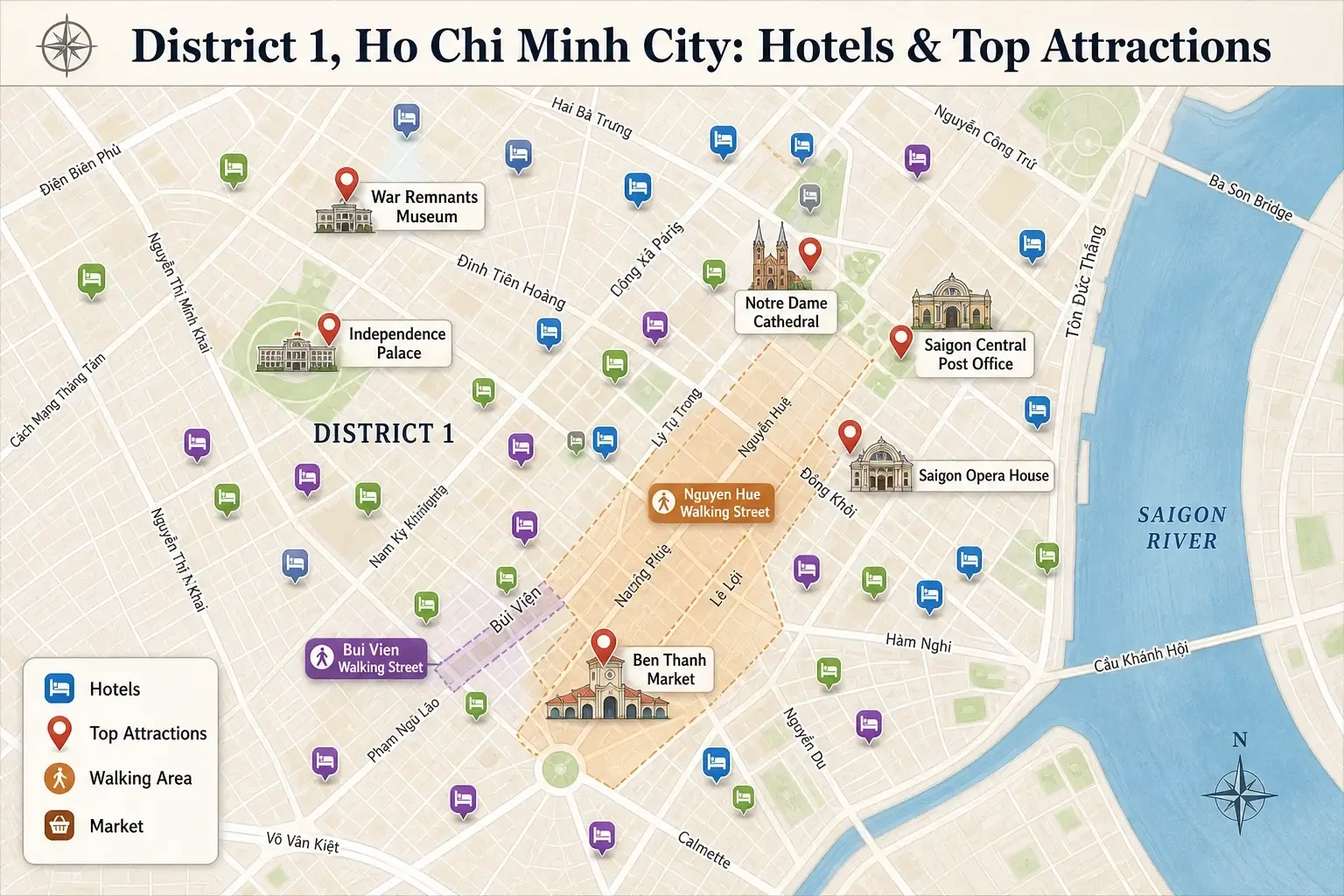
Most articles tell you December through April is peak season and leave it there. What they don’t explain is that Tet week — and the 3–4 days surrounding it — transforms the city in ways that directly affect tourist experience. Local restaurants (not the tourist-facing ones on Bui Vien Street, but the real neighborhood spots) close for 5–10 days. Some markets go quiet. Domestic travel demand spikes, making buses and tours to Cu Chi Tunnels and the Mekong Delta harder to book. And hotel prices in District 1 jump sharply even compared to the already-elevated dry-season rates.
Quick note: Tet dates change every year because the holiday follows the lunar calendar. Always check the specific dates before booking any January or February trip.
Look — if you’re a first-time visitor who locked in a February departure because you read “dry season is best,” here’s what actually works: aim for the week before Tet, or the week immediately after. That window gives you peak dry-season weather with none of the logistical complications.
Tet itself is worth experiencing intentionally. The city decorates heavily — public flower markets along Nguyen Hue boulevard, elaborate light installations, family celebrations that spill into the streets. But you need to plan for it: book accommodation months in advance, accept that your restaurant options will be narrower, and build flexibility into your daily itinerary. Stumbling into Tet expecting a normal tourist week is where the frustration comes from.
Tet 2026 falls on February 17. Tet 2027 will fall on February 6.
How to Choose the Best Month for Your Travel Style
To find your specific best time to visit Ho Chi Minh City, work through these five steps:
- Identify your top priority. If budget is the constraint, target May, June, or November — accommodation drops 20–25% vs peak. If weather certainty matters most, target December or January.
- Check Tet dates for your travel year. If your window includes late January or mid-February, confirm whether Tet falls mid-trip before booking non-refundable flights.
- Map your must-do activities. Cu Chi Tunnels and Mekong Delta day trips are weather-sensitive — plan these for dry-season mornings or avoid the September–October window entirely.
- Book 6–8 weeks ahead for December through February. Mid-range properties in District 1 fill early on Agoda and Booking.com; waiting until 2–3 weeks out limits your options and increases cost.
- If traveling May through August, schedule afternoon downtime indoors. Build museum visits, indoor markets like Ben Thanh, or café time into your 2pm–5pm window — that’s when rain arrives most reliably.
Questions Travelers Actually Ask
What’s the best month to visit Ho Chi Minh City?
January is the safest single-month answer — low humidity, minimal rain, and stable weather throughout. Avoid late January if Tet falls then. December is a close second and avoids the Tet overlap risk entirely.
Should I visit Ho Chi Minh City during the rainy season?
Yes, if budget is a priority or you’re a repeat visitor. Rain hits in afternoon bursts, not all day — mornings stay dry and usable. Avoid September and October specifically; those months carry real flood risk for outdoor activities.
How do I avoid crowds in Ho Chi Minh City?
Travel in May, June, or November. International tourist numbers drop significantly in these months, prices fall, and major sites like the War Remnants Museum and Reunification Palace feel noticeably less packed than in January or February.
What is the rainiest month in Ho Chi Minh City?
September, with average monthly rainfall exceeding 300mm. October is close behind. Both months carry an elevated risk of localized flooding in low-lying districts, particularly areas near the Saigon River.
When should I avoid visiting Ho Chi Minh City?
September and October if outdoor activities are central to your plans. Also avoid Tet week if you haven’t specifically planned for it — that applies even within the dry season window, where it’s the most common source of tourist disappointment.




No Comment! Be the first one.