




37 Whimsical Kitchen Ideas That Actually Work in Real Homes
Your kitchen doesn’t have to look like a catalog. It doesn’t need marble countertops, custom cabinetry, or a professional renovation to feel like a space you actually want to spend time...

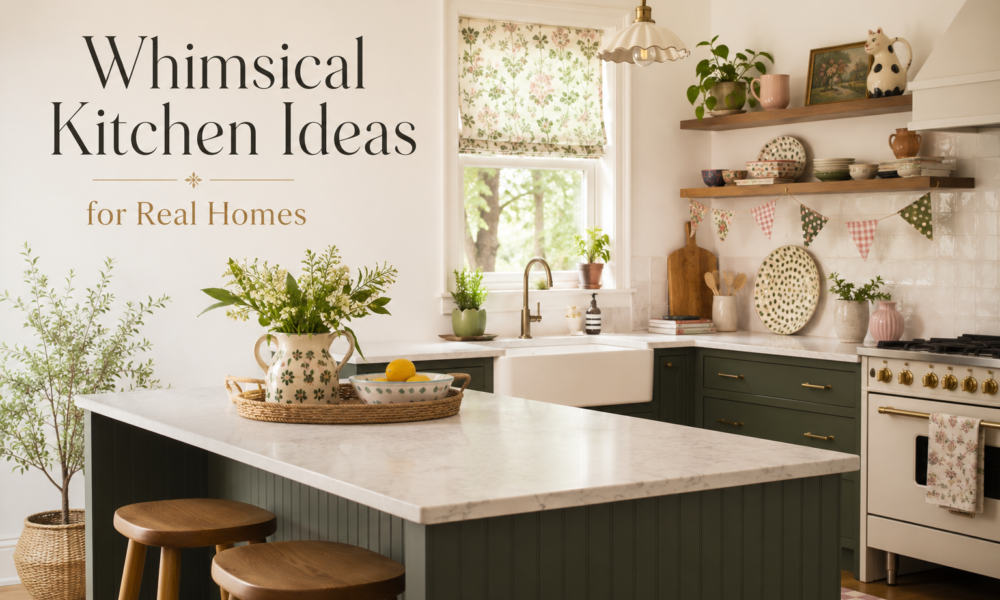
Your kitchen doesn’t have to look like a catalog. It doesn’t need marble countertops, custom cabinetry, or a professional renovation to feel like a space you actually want to spend time in. The whimsical kitchens you keep saving on Pinterest — the ones with hanging dried herbs, mismatched sage green shelves, and mushroom canisters glowing on a wooden counter — are built from layers, not budgets.
According to the NKBA 2025 Kitchen Trends Report, 71% of design professionals say their clients now prefer colorful, personality-driven kitchens over white or neutral ones. The shift is real.
This guide covers 37 specific, visually clear ideas for building a whimsical kitchen — whether you’re starting from scratch or transforming what you already have. Most are renter-friendly. Many cost under $30. None require gutting a room to see a real result.
This guide works best for kitchens with existing cabinetry and countertops. It does not address kitchens that need structural repair or appliance replacement first.
What a Whimsical Kitchen Actually Looks Like
Whimsical kitchen ideas are design choices that layer personality, texture, and story into a cooking space through color, motif, and curated objects — without requiring a full renovation. The goal is a kitchen that feels lived-in, imaginative, and visually surprising rather than showroom-perfect.
A whimsical kitchen is recognizable not by one defining feature but by the sum of its small decisions. According to the NKBA 2025 Kitchen Trends Report, 92% of surveyed design professionals agree that the kitchen is a direct reflection of the homeowner’s personality — and the most personality-driven kitchens right now are layered, not minimalist.
The micro-aesthetics driving this category in 2025–2026 are more specific than “eclectic.” Cottagecore is floral, green, and pastoral. Grandmacore pulls in checkered patterns, vintage dishware, and warm kitchen clutter. Mushroom core is earthy and textural — browns, creams, fungi motifs everywhere. Fairycore glows with lights, iridescent glass, and plants in unexpected places. Hobbitcore goes darker: warm amber tones, aged wood, deliberate coziness.
You don’t have to choose just one.
37 Whimsical Kitchen Ideas to Try in Your Space
The most-pinned whimsical kitchen ideas right now center on specific micro-aesthetics rather than a unified genre. Readers in this category already know what visual world they want to live in — they’re looking for the exact objects that close the gap between their Pinterest boards and their actual kitchen. Every idea below is real, renter-considered, and specific enough to act on today.
1. Paint Your Cabinets Sage Green for an Instant Cottagecore Transformation
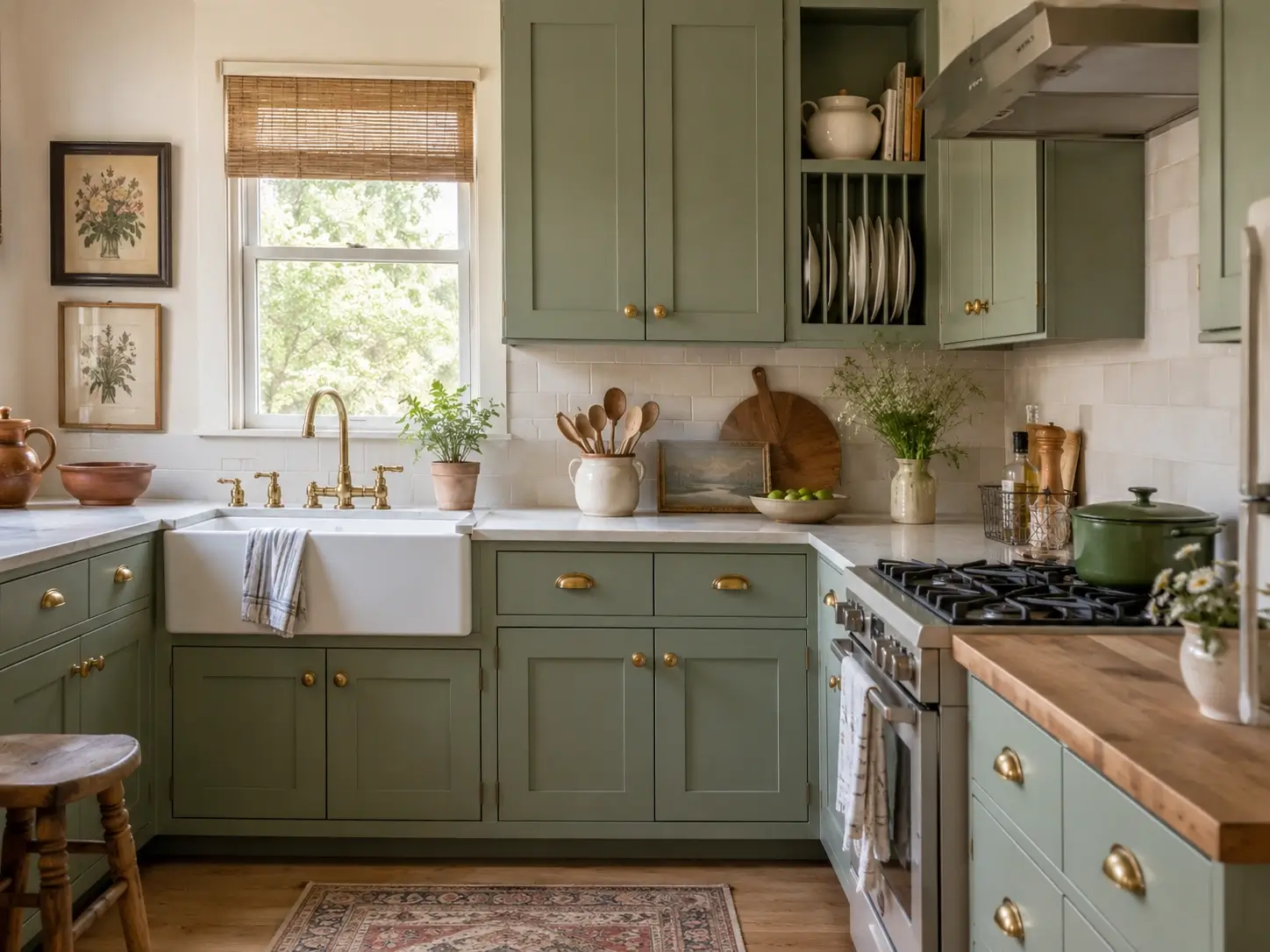
Sage green is the most-pinned cabinet color in the cottagecore kitchen category — warm without being yellow, earthy without being dull. Chalk-finish paints like Annie Sloan Chalk Paint or Rust-Oleum Cabinet Transformations both work on laminate without sanding. Pair with unlacquered brass hardware for the most impact. If you rent, test on the inside face of a cabinet door first and confirm permission in writing before committing.
2. Swap Your Cabinet Hardware for Vintage Brass Mushroom or Acorn Knobs
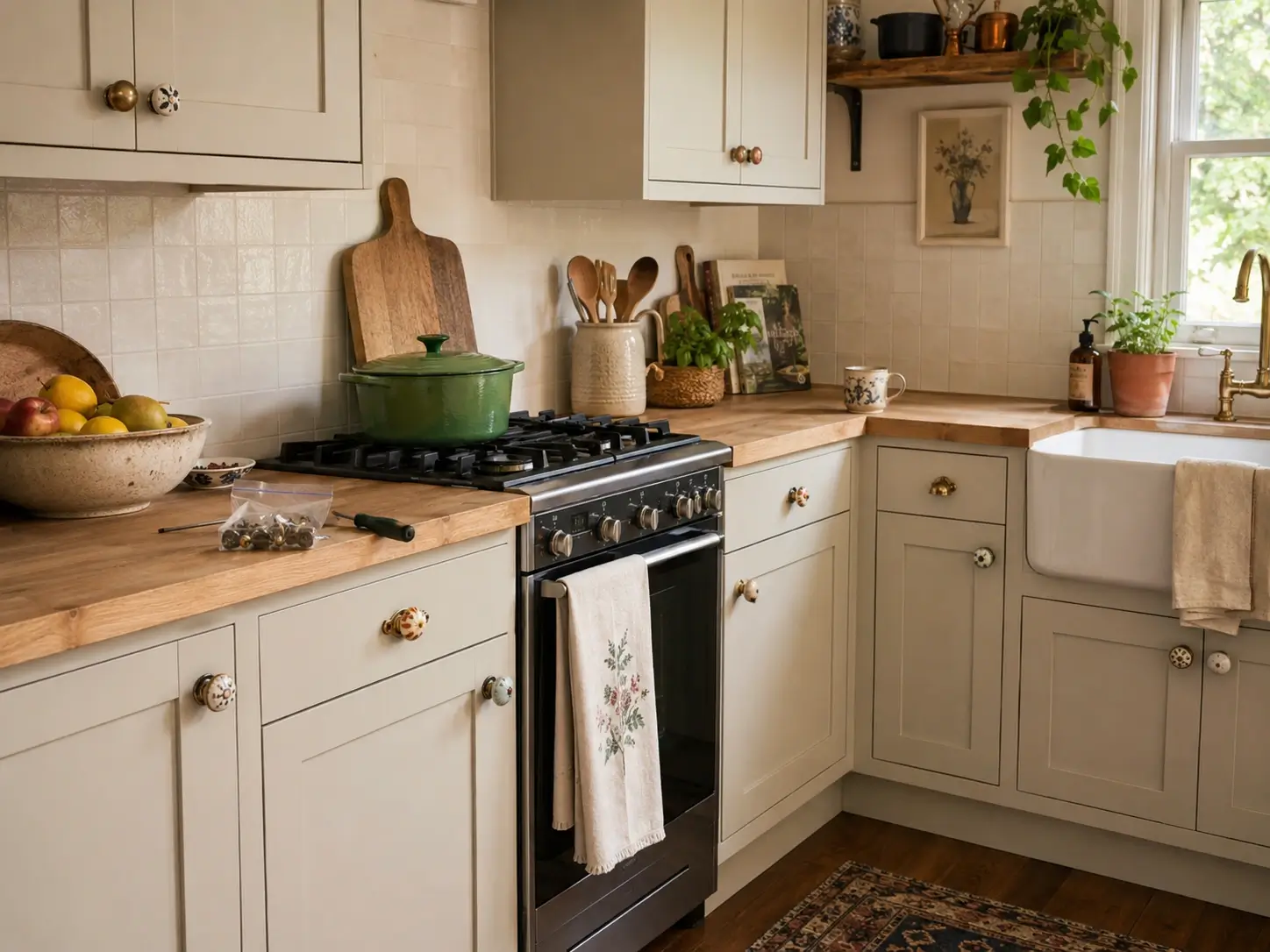
This is the cheapest, most reversible change on this list. One set of mismatched knobs — mushroom-cap ceramics, aged brass domes, ceramic acorn pulls — transforms flat cabinet faces into something that reads as curated rather than stock. Etsy sellers including BrassKnobShop and various ceramic studios carry full whimsical lines. Budget $2–$6 per knob. Store your original hardware in a labeled bag so you can swap back before moving out.
3. Line Your Open Shelves with Mushroom Motif Canisters
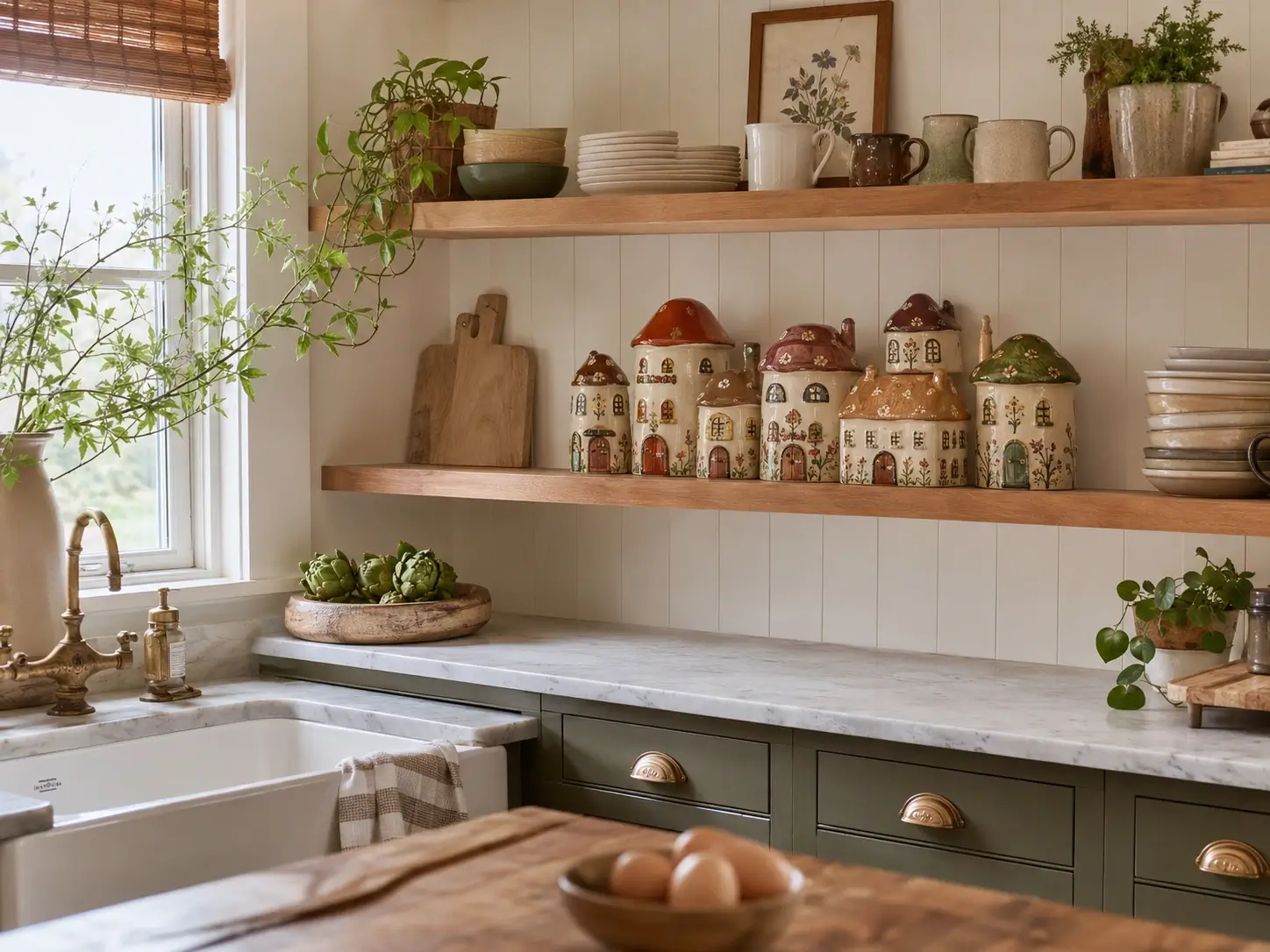
The Lenox Spice Village canister set — ceramic, shaped like miniature illustrated cottages with mushroom rooftops — went viral on TikTok because it solved a storage problem while becoming a display centerpiece. If that price point is out of range, look for similarly illustrated ceramic canisters on Amazon or in Anthropologie’s seasonal kitchen collection. The key is clustering them together in one spot rather than distributing them across the entire kitchen.
4. Hang Peel-and-Stick Backsplash Tile for a Rental-Safe Statement Wall
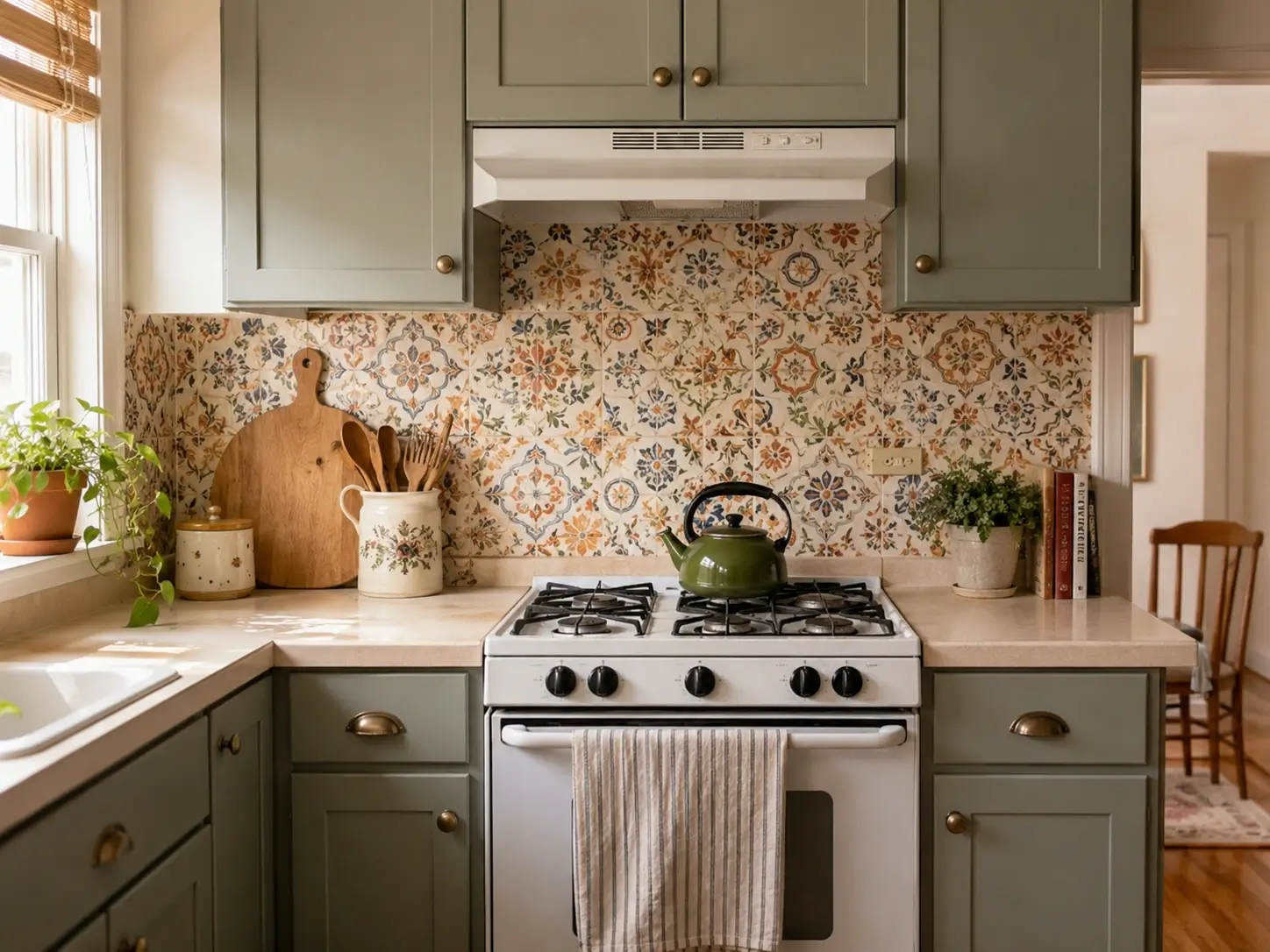
Rocky Mountain Decals makes peel-and-stick backsplash panels designed specifically for renters — no grout, no adhesive damage, removable with a hair dryer. Their Moroccan, vintage floral, and checkered tile patterns appear regularly in whimsical kitchen TikTok content. Apply behind your stove or sink for the highest visual return per square foot. One kit runs $40–$80 depending on coverage size, and removal leaves no trace on the wall underneath.
5. Build a Display on Open Shelves Using Mismatched Vintage Ceramics
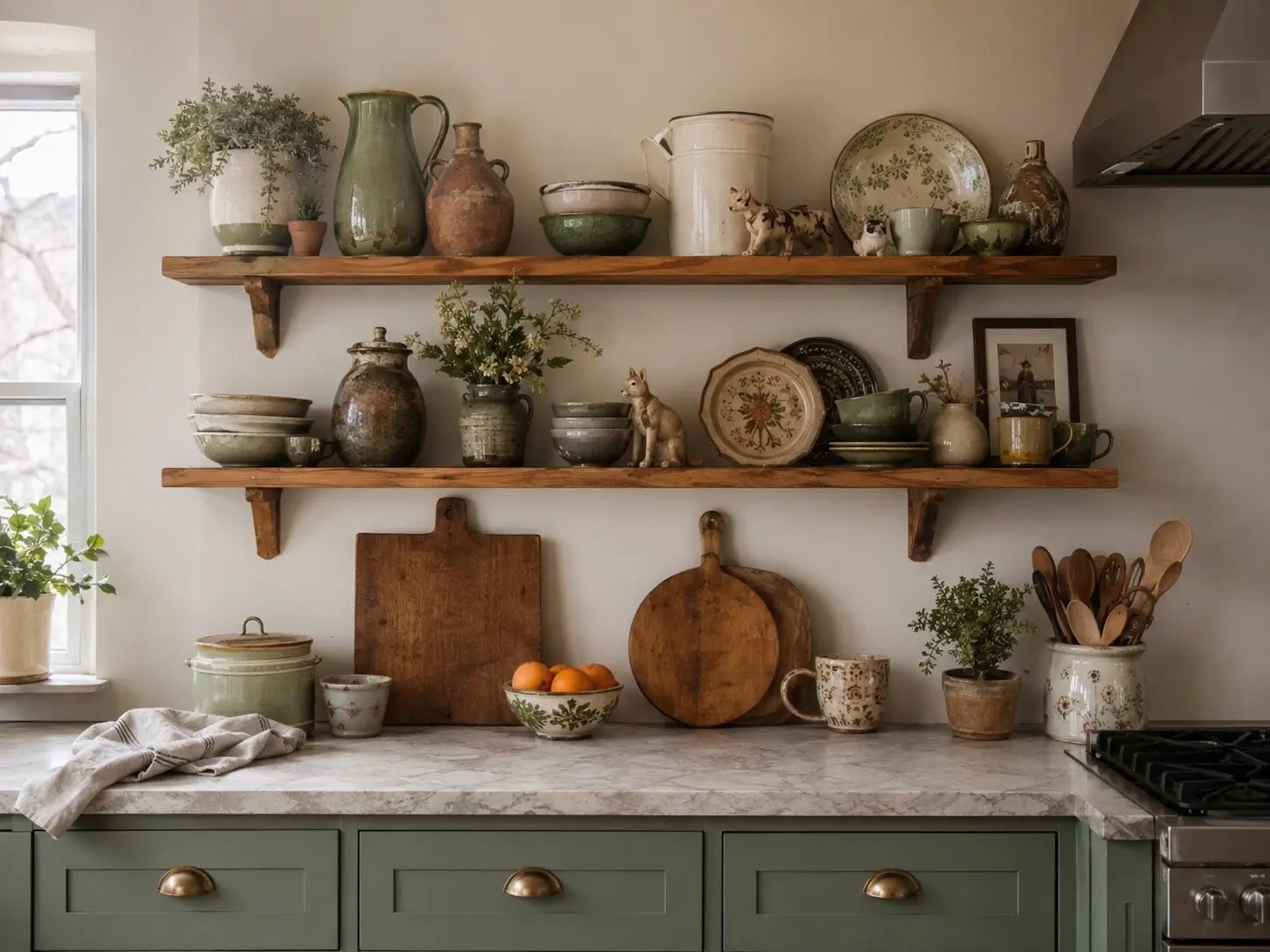
Open shelves that look sterile usually have one problem: everything matches. Whimsical shelves mix height, era, and texture deliberately. Set a tall ceramic pitcher beside a squat round pot, tuck a small figurine between bowls, and let pieces slightly overlap. Shop thrift stores for ceramics in your chosen palette — sage, cream, earthy brown, or terracotta. The mismatched-but-curated effect is intentional; every piece should earn its shelf space.
6. Drape Fairy Lights Under Your Upper Cabinets for Evening Magic
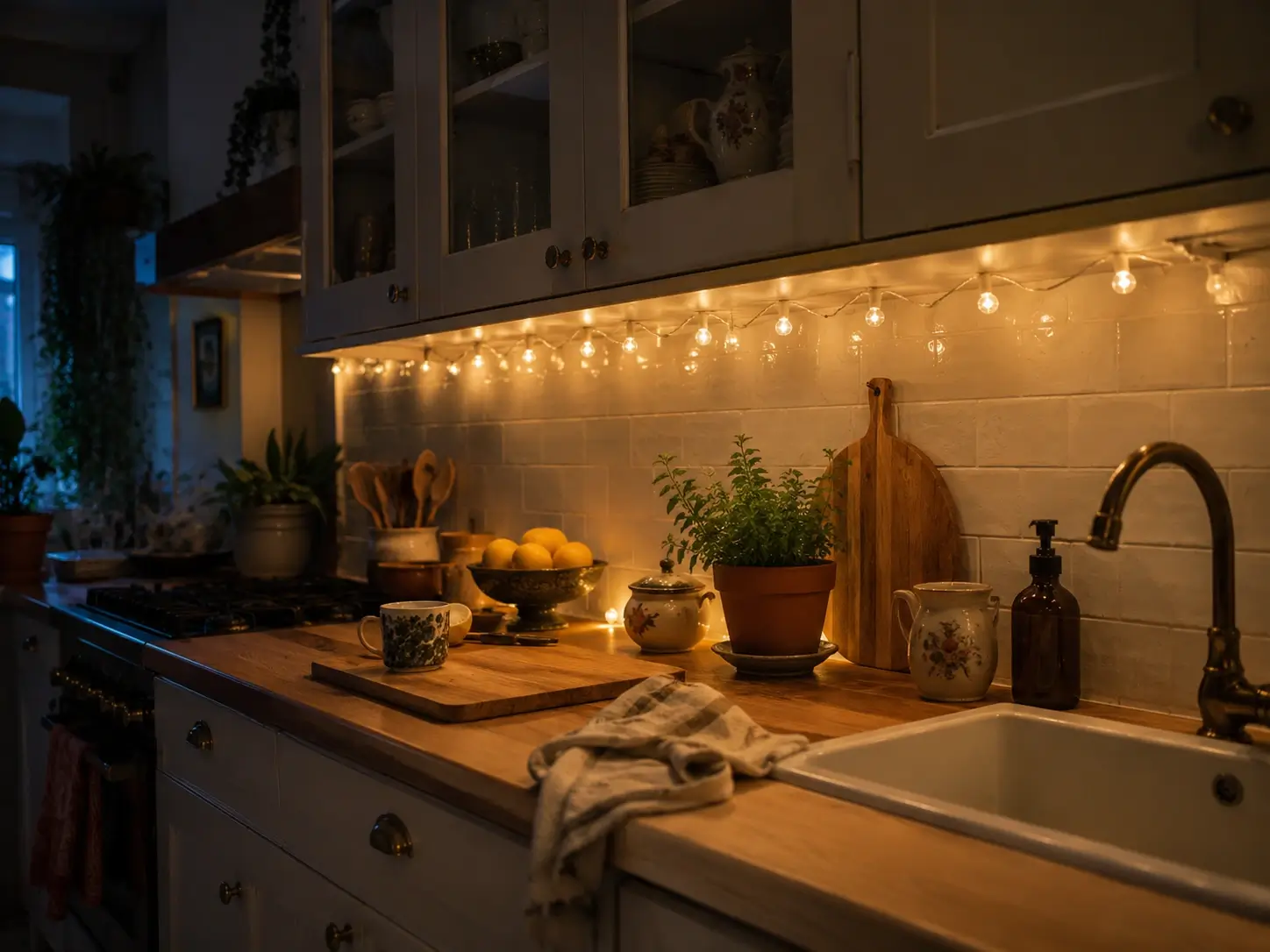
Battery-operated fairy lights with warm white or amber bulbs create more atmosphere than almost any other single kitchen change. Tuck the wire along the underside of your upper cabinets using small removable adhesive clips. Use them in the evening instead of your overhead light and the room will feel like somewhere completely different. Globe-style bulbs — rather than flat LED strips — cast a softer, more diffused, more flattering glow.
7. Grow a Windowsill Herb Garden in Labeled Terracotta Pots
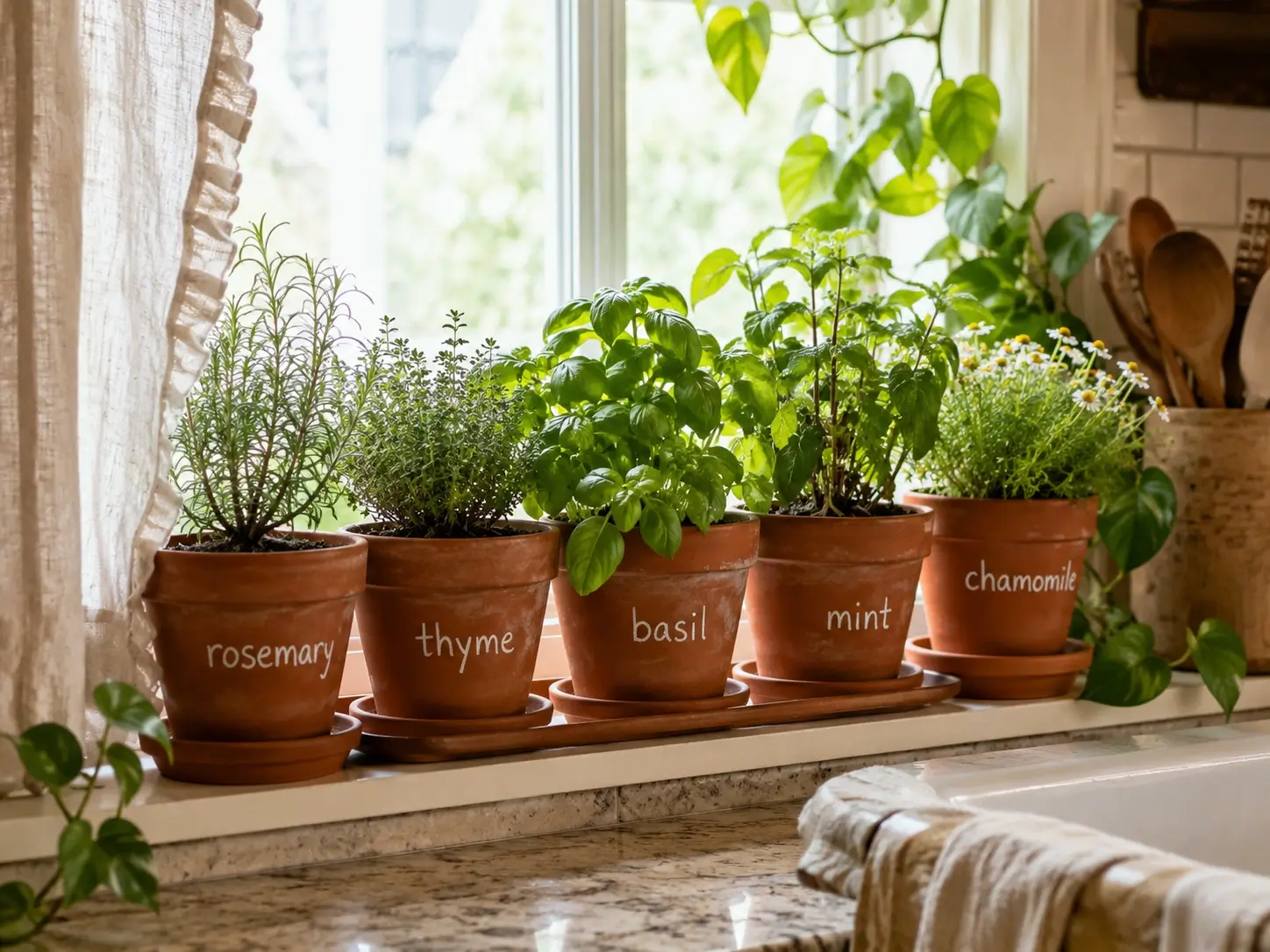
Three to five terracotta pots on your windowsill — rosemary, thyme, basil, mint, chamomile — look good in every light, smell incredible, and pay off directly in the kitchen. Write herb names on each pot in chalk marker. The imperfect handwriting is part of the charm. Use pots with drainage holes and set a small tray underneath. Nothing signals “someone with a specific inner life lives here” more clearly than a functional, lived-in herb garden.
8. Display Your Most Beautiful Cookware on Open Hooks or a Pot Rack
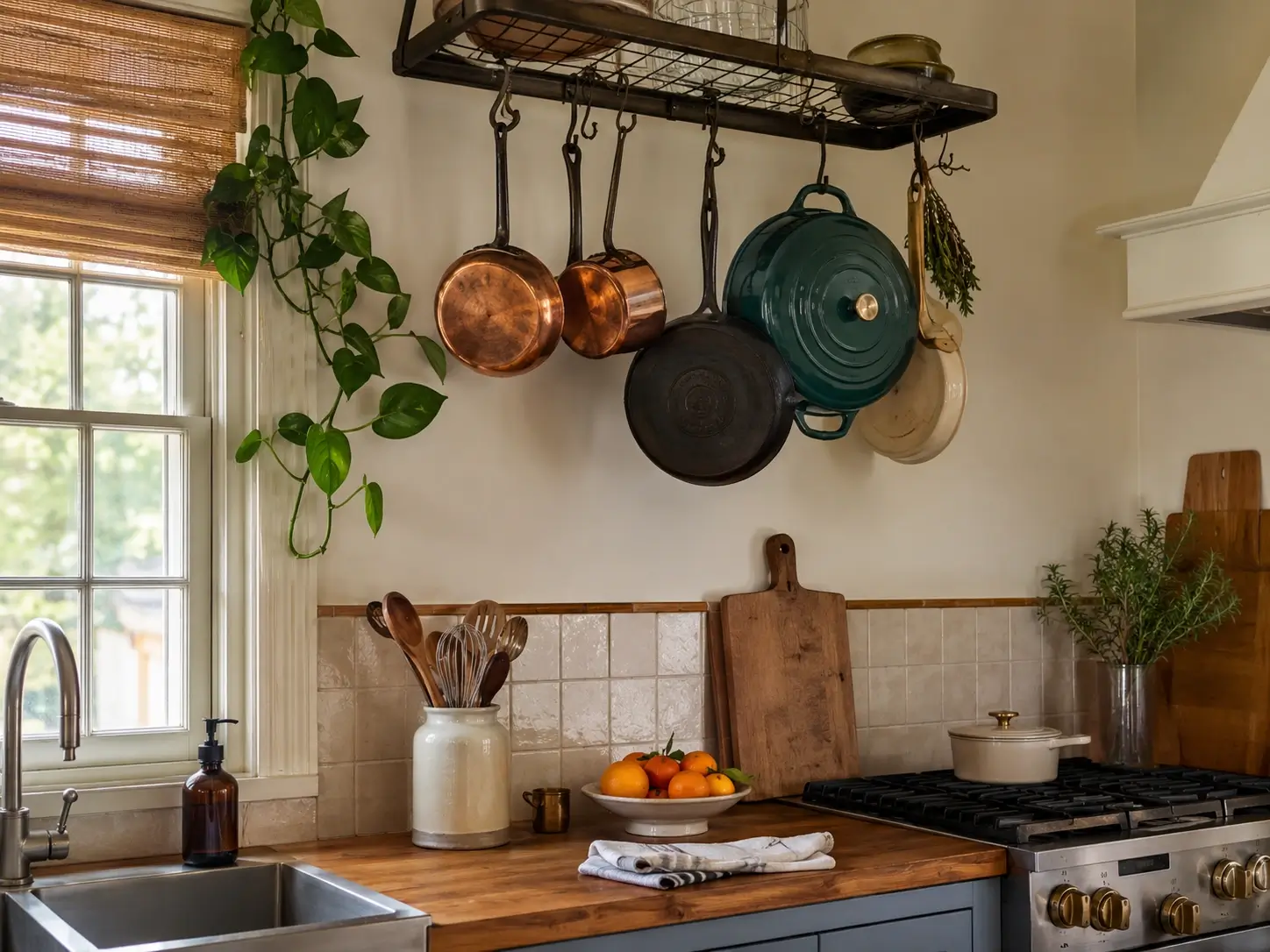
A copper saucepan, a glazed Dutch oven, a cast-iron skillet — hung deliberately on a wall-mounted pegboard or ceiling rack — doubles as wall art. For renters, a pegboard anchored into studs causes minimal damage and patches easily before move-out. Le Creuset’s brambly green, deep teal, or fig colorways work especially well in whimsical kitchens. Display only the pieces you find genuinely beautiful; the rest stays in the cabinet.
9. Add a Checkered Floor Runner to Channel Grandmacore Energy
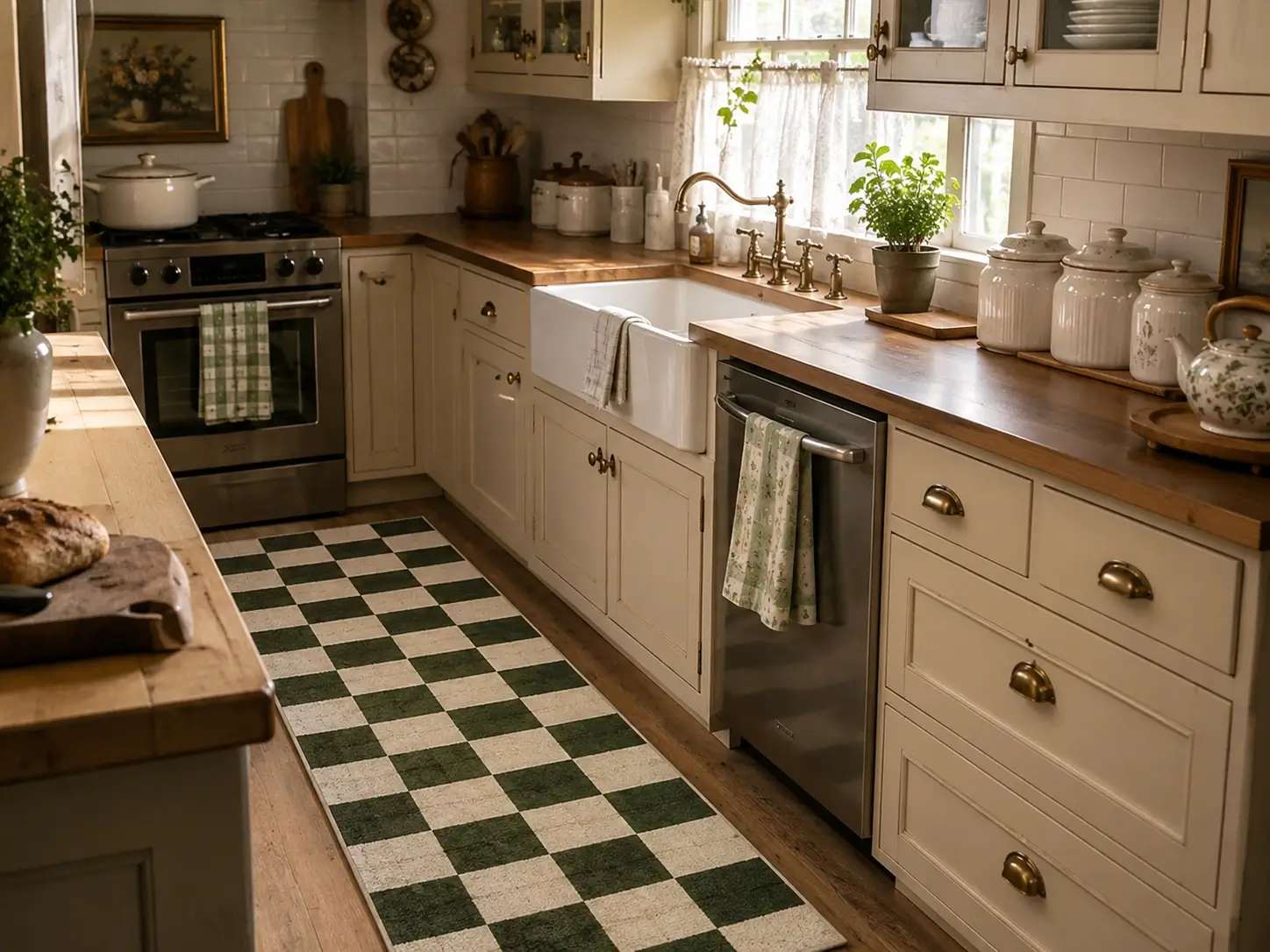
Black-and-white or forest green checkered rugs are among the fastest-selling kitchen accessories in the grandmacore category. A runner placed in front of your sink or stove changes the floor energy without touching any tile. Look for washable options — Ruggable’s removable cover system is particularly practical in a kitchen. Anti-fatigue padding underneath adds comfort and stops the rug from sliding on smooth surfaces during daily use.
10. Install a Rattan or Wicker Pendant Light Above Your Table or Island
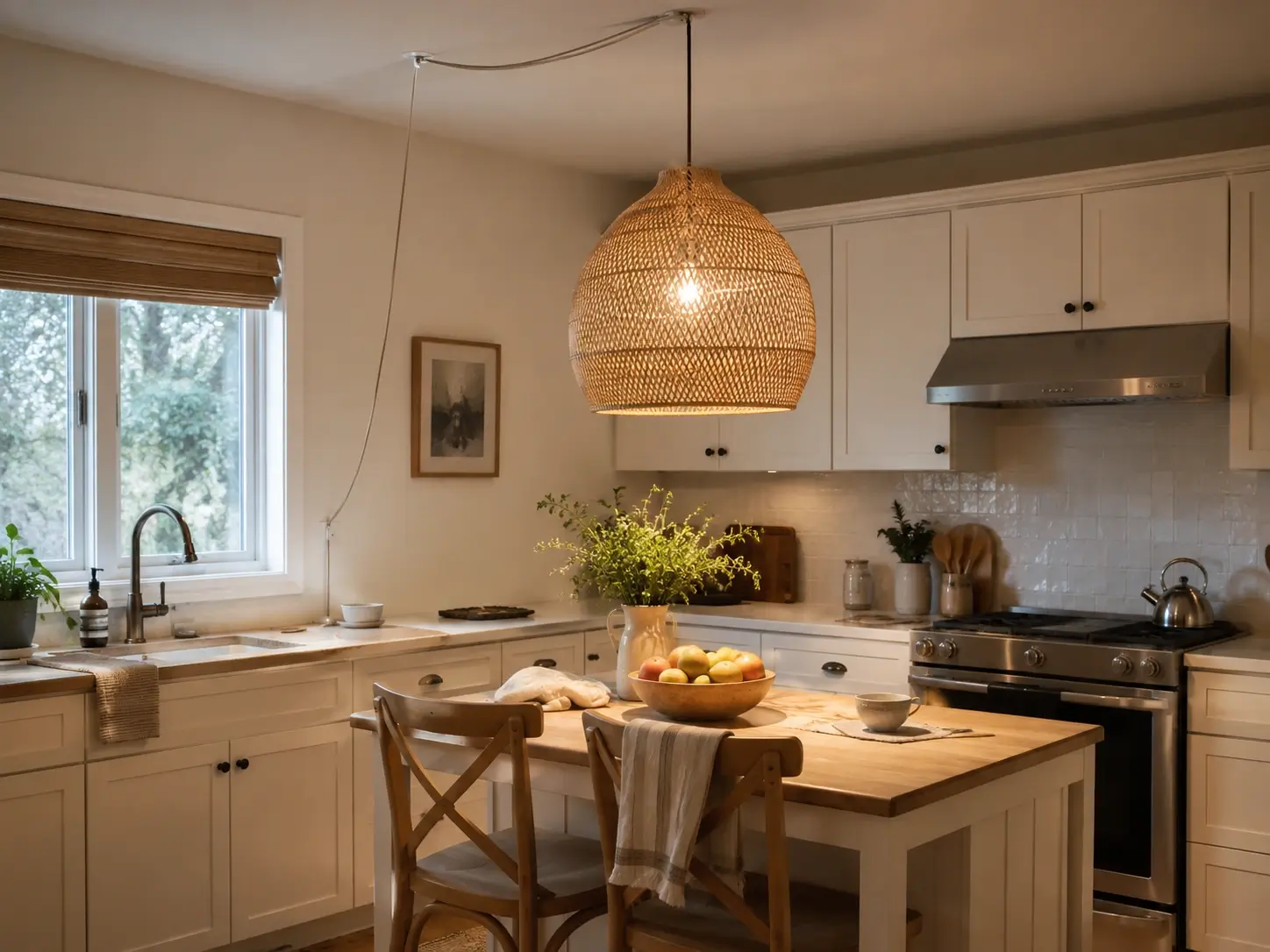
Swapping a flat ceiling fixture for a woven rattan pendant does more visual work than most other changes on this list. Rattan filters warm light and introduces natural texture into a room that otherwise reads as hard and manufactured. Plug-in pendant versions with a fabric-covered cord require no electrician and no landlord approval. Hang approximately 30 inches above a table or island surface. This single change reads immediately — both in person and in photos.
11. Create a Coffee and Tea Station with a Vintage Aesthetic
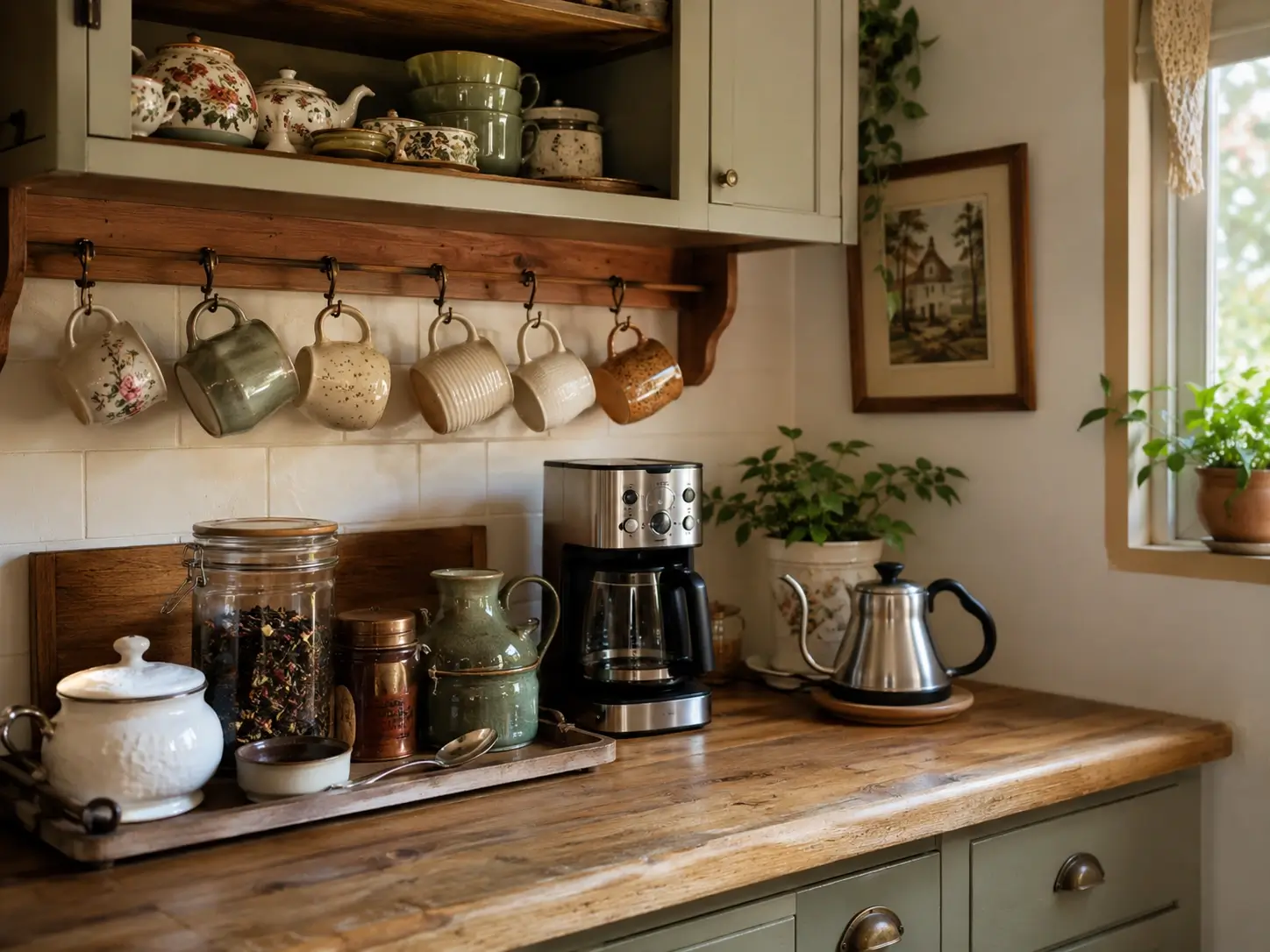
Dedicate one counter section entirely to your coffee and tea setup, then style it with intention. A small vintage tray corrals everything: a ceramic sugar bowl, a few mismatched mugs hung on small hooks, a glass jar of loose-leaf teas, one small plant tucked into the corner. This converts a daily routine into something that feels deliberate. It’s one of the most consistently saved “kitchen corner” setups across Pinterest and TikTok both.
12. Apply Contact Paper in a Checkered Pattern Over a Dated Kitchen Floor
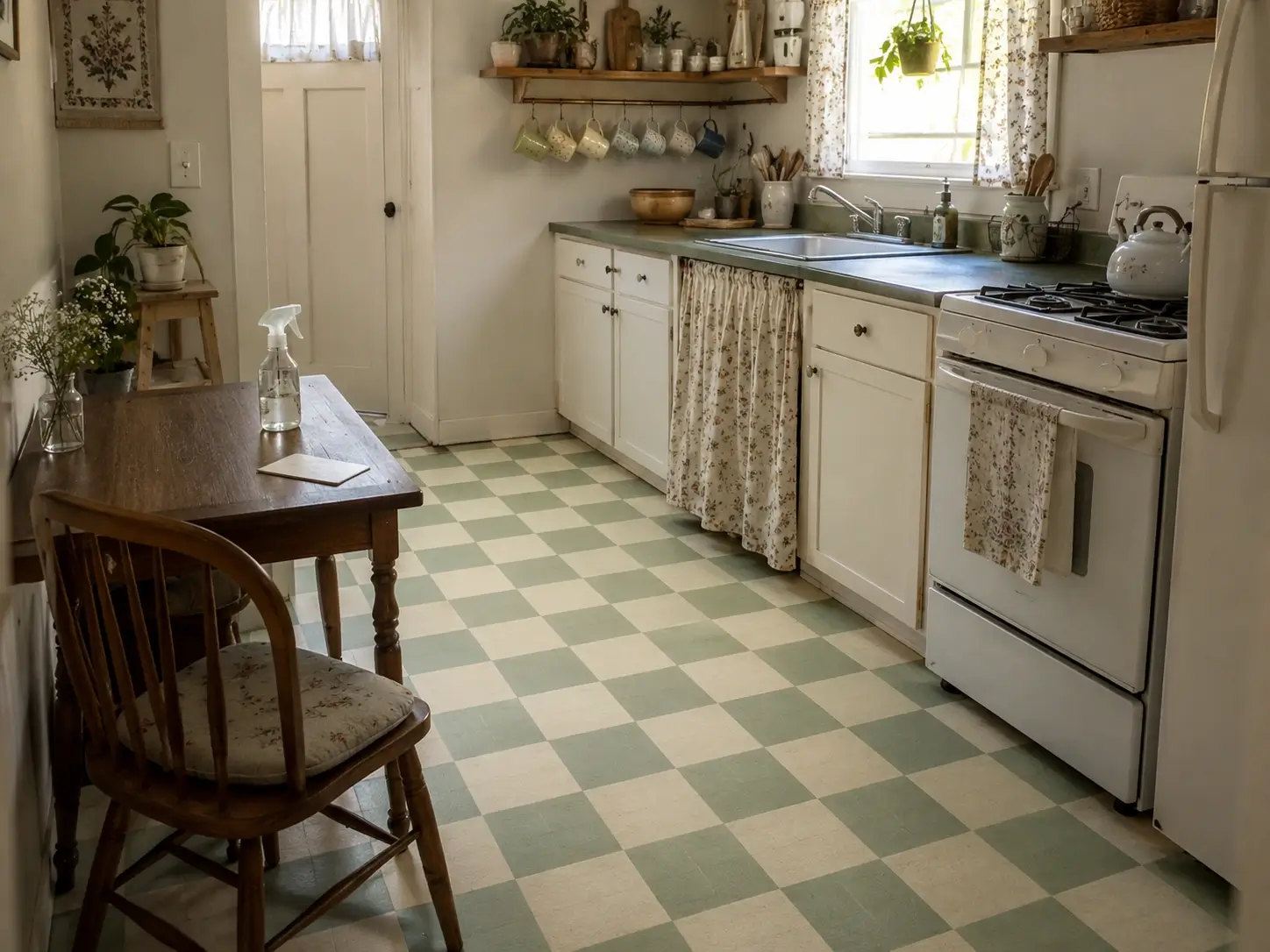
For renters with worn or generic linoleum, self-adhesive contact paper in a black-and-white or sage-and-cream checkered pattern is the most popular quick-fix floor solution in the grandmacore and fairycore kitchen communities. Surface prep is everything: clean the floor with isopropyl alcohol first, then smooth each section with a credit card as you apply. Floorpops and Chic-Wal both carry highly-rated options that remove cleanly when your lease ends.
13. Frame Botanical or Vintage Food Prints for a Mini Gallery Wall
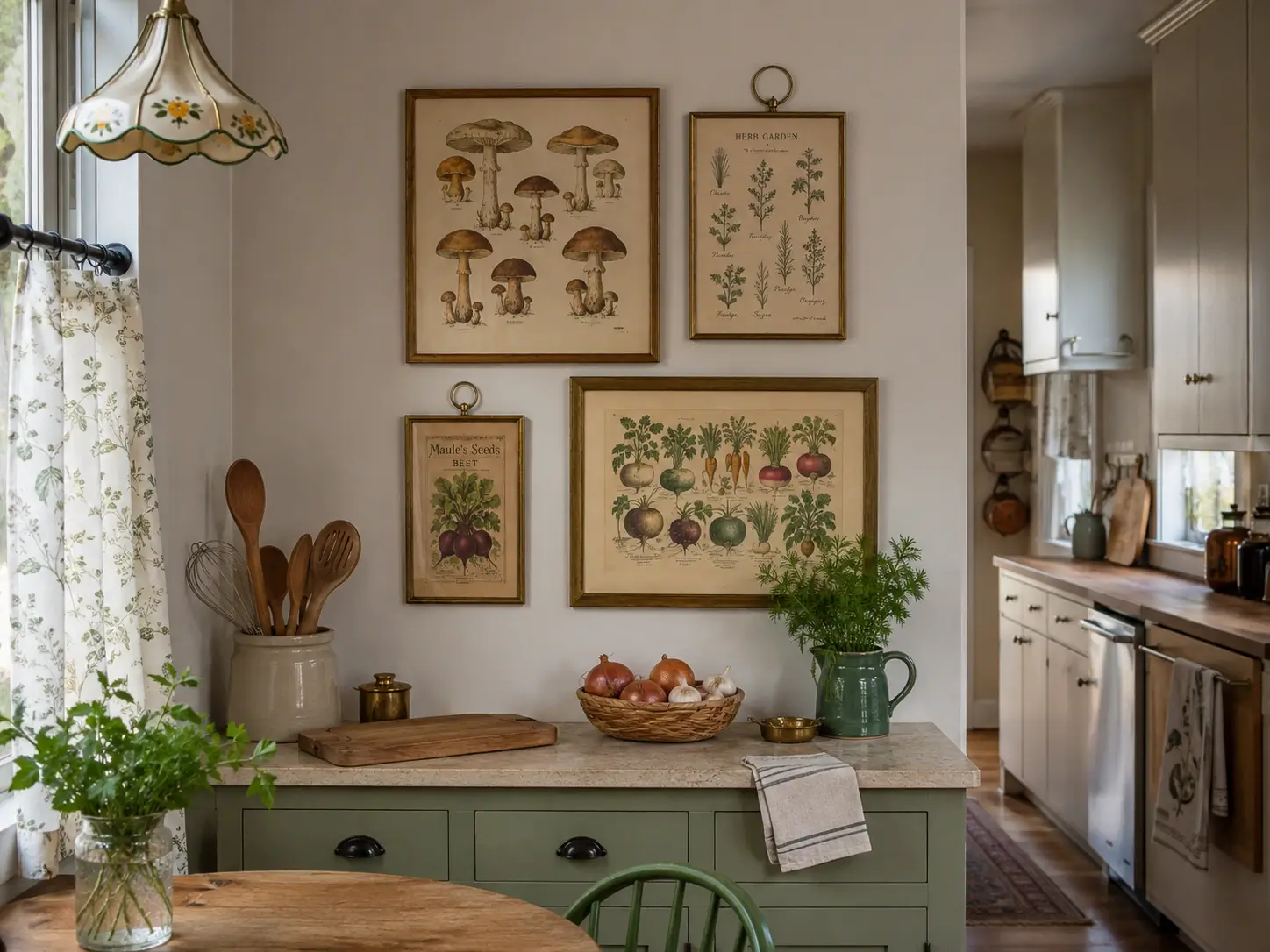
Hang three to five prints in mismatched frames — a vintage mushroom illustration, a hand-painted herb chart, an antique seed packet reproduction. Public domain botanical illustrations from the Biodiversity Heritage Library can be printed locally for almost nothing. Use frames within the same metal family — all brass, all black, or all raw wood — to unify a collection that doesn’t otherwise match into something that reads as deliberately curated.
14. Trail Pothos or Ivy Along the Tops of Your Upper Cabinets
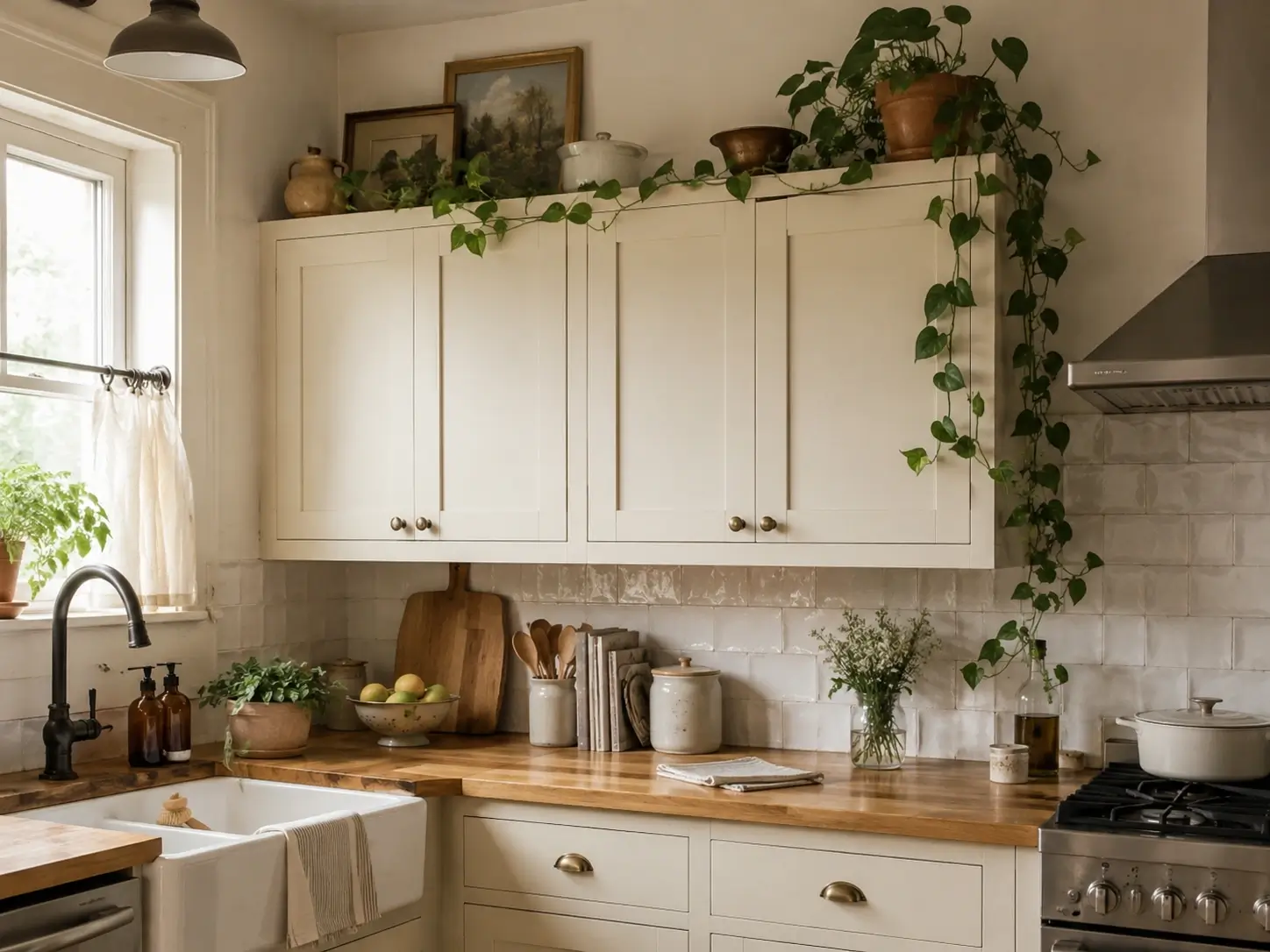
A single golden pothos placed on top of a cabinet and left to trail downward over several months creates the most dramatic whimsical kitchen effect available from any plant option. It needs almost no care. It grows in low light. It turns a blank cabinet zone into something that reads like a garden cottage. Quick note: keep trailing vines clear of cabinet gaps where accumulated moisture could cause damage over time.
15. Layer a Linen or Floral Runner on Any Counter Space That Stays Dry
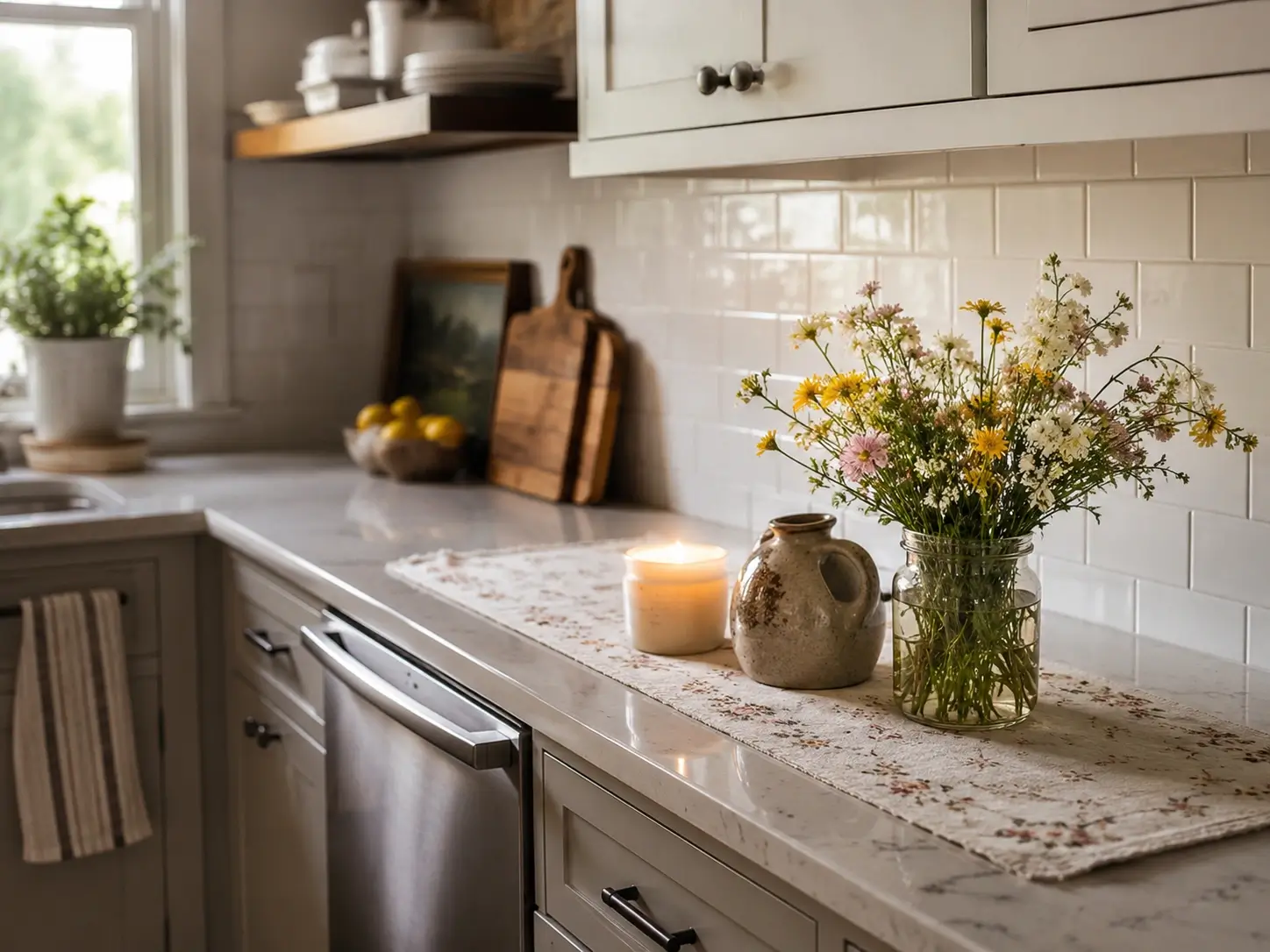
In any counter section that doesn’t get wet regularly, a small linen or printed runner creates a styled surface for display objects. A candle, a ceramic piece, and a seasonal element — dried orange slices in winter, a small vase of wildflowers in spring — sit on top. The runner signals that this counter belongs to a story, not a showroom. It takes about forty-five seconds to set up.
16. Replace Plastic Dish Soap Bottles with a Glass Dispenser and a Handwritten Label
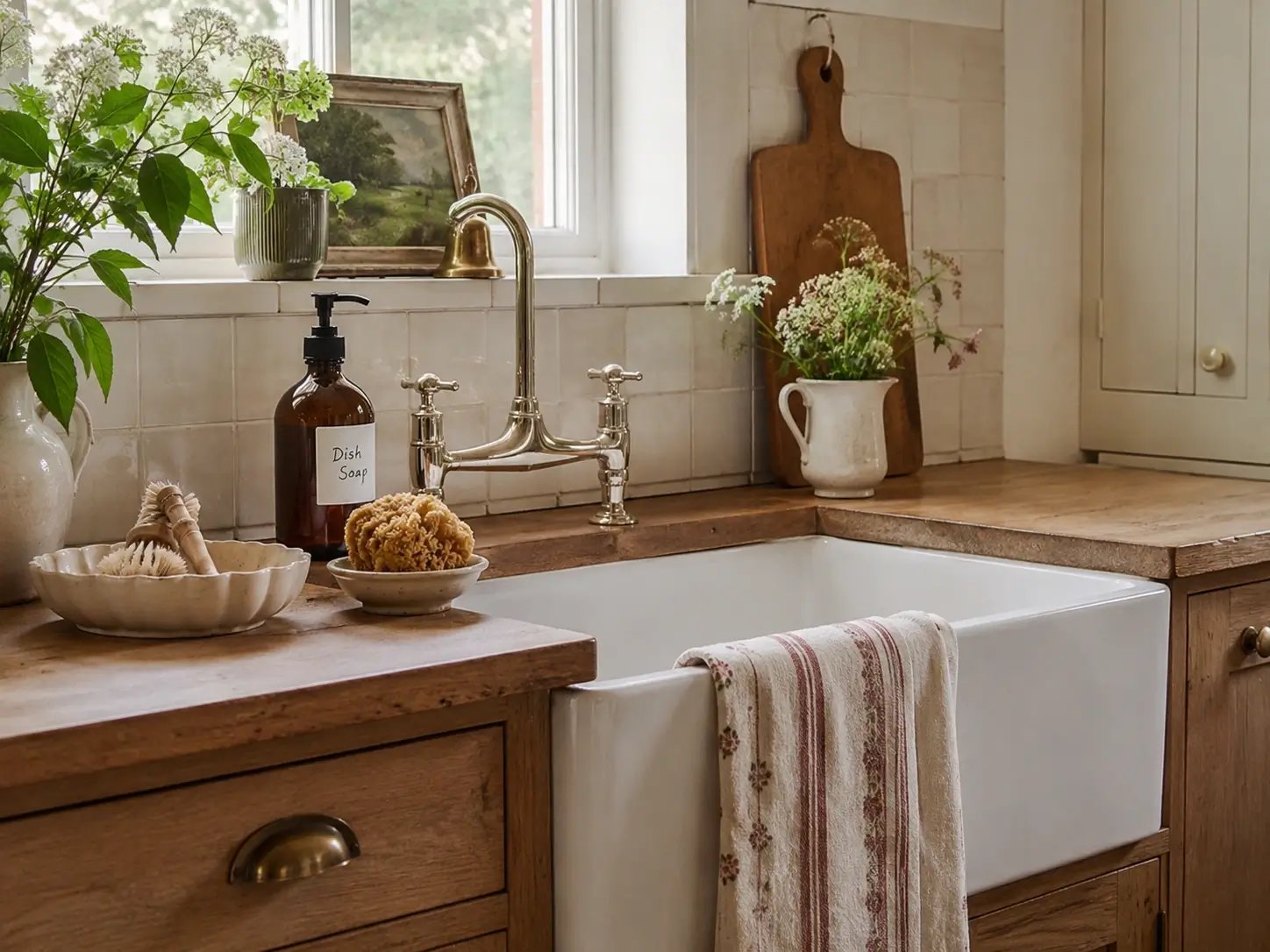
Decant your dish soap into a clear or amber glass pump bottle and add a handwritten or printed label. This swap costs under $10 and eliminates the visual noise of colorful plastic bottles near your sink. A small ceramic dish beside it for the sponge completes the vignette. Together — the dispenser and the dish — these two objects are the most-saved “sink corner” combo in whimsical kitchen content, and the reason becomes obvious once you try it.
17. Hang a Vintage-Style Clock with Roman Numerals or Ornate Detailing
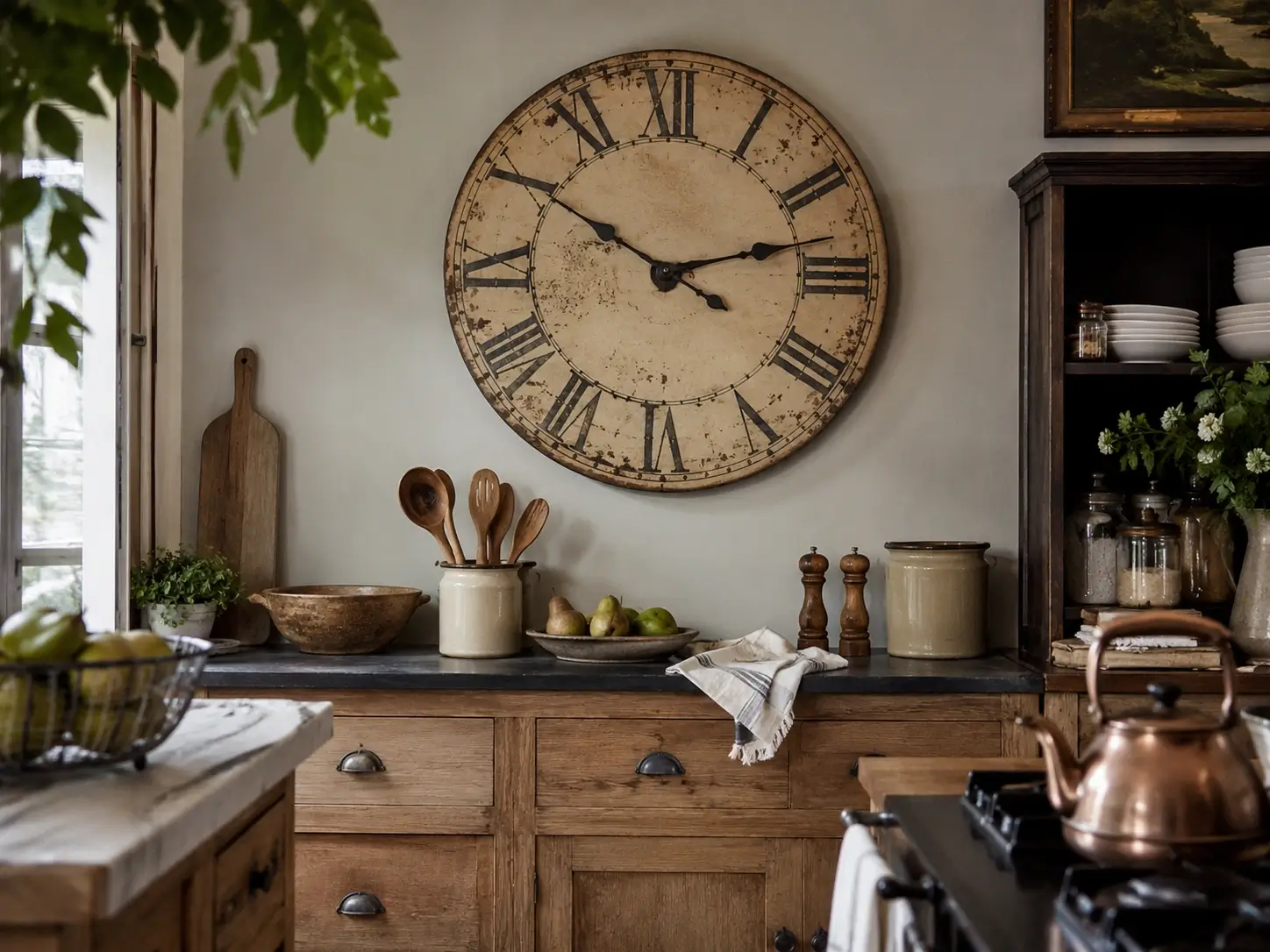
A large vintage clock with a ceramic frame, wrought iron hands, or Roman numerals grounds a kitchen wall without requiring a full gallery setup around it. Look for antique-style clocks at thrift stores, HomeGoods, or Wayfair’s farmhouse and vintage categories. Choose one with a worn patina rather than a brand-new finish. A clock that looks found reads as character. One that looks factory-fresh reads as mass-market. The difference is immediately visible.
18. Collect and Display Mismatched Antique Glassware on Open Shelves
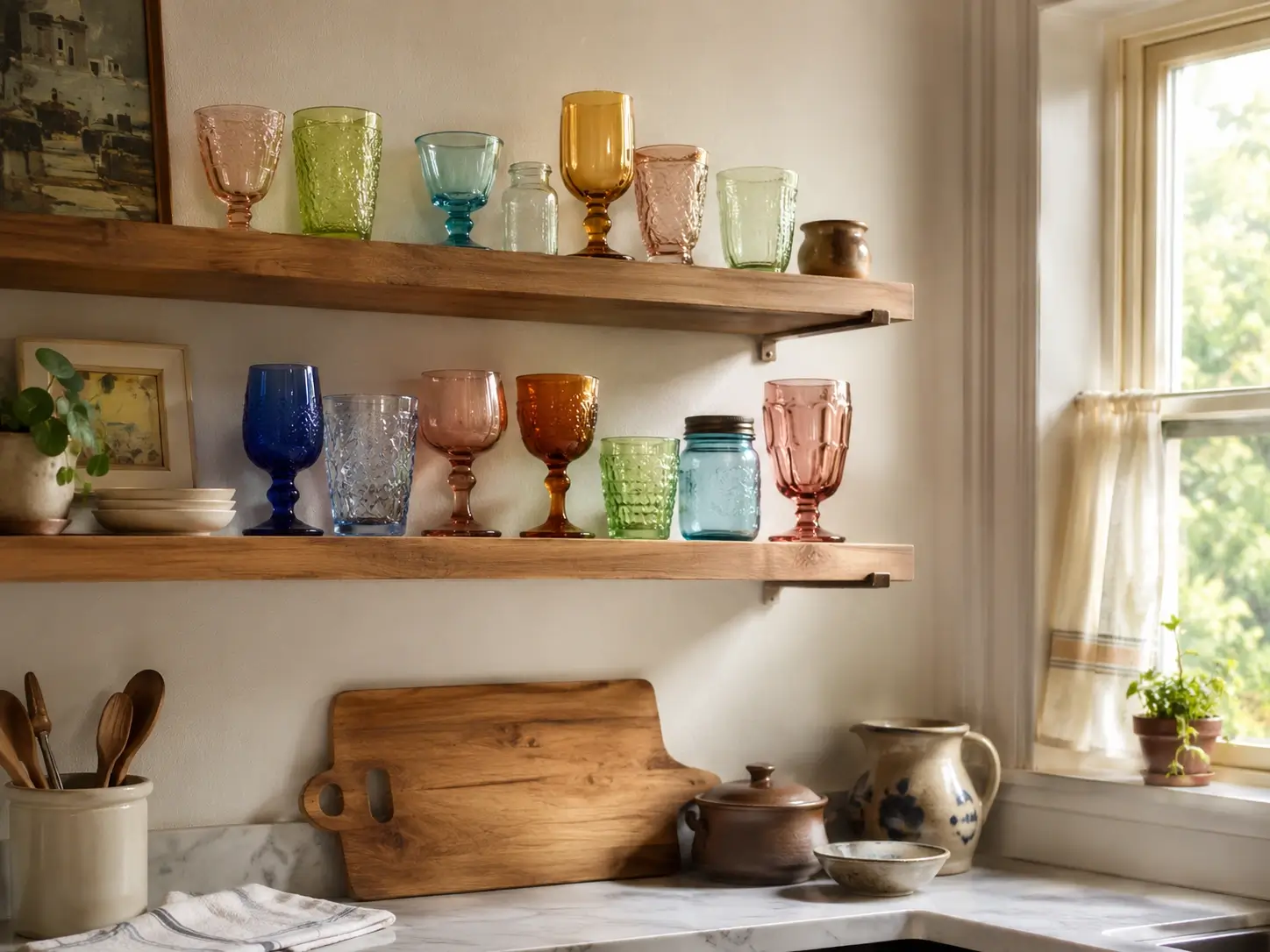
Depression glass, colored goblets, pressed glass tumblers, vintage jam jars — any translucent glassware that catches light and comes in unexpected tones (pink, amber, cobalt, soft green) adds real visual magic to open shelving. Five to eight pieces arranged at different heights create a still-life effect near a window. Thrift stores and estate sales are the best sources; individual pieces rarely cost more than $2–$4.
19. Add a Small Wooden Step Stool as Both Functional and Decorative Detail
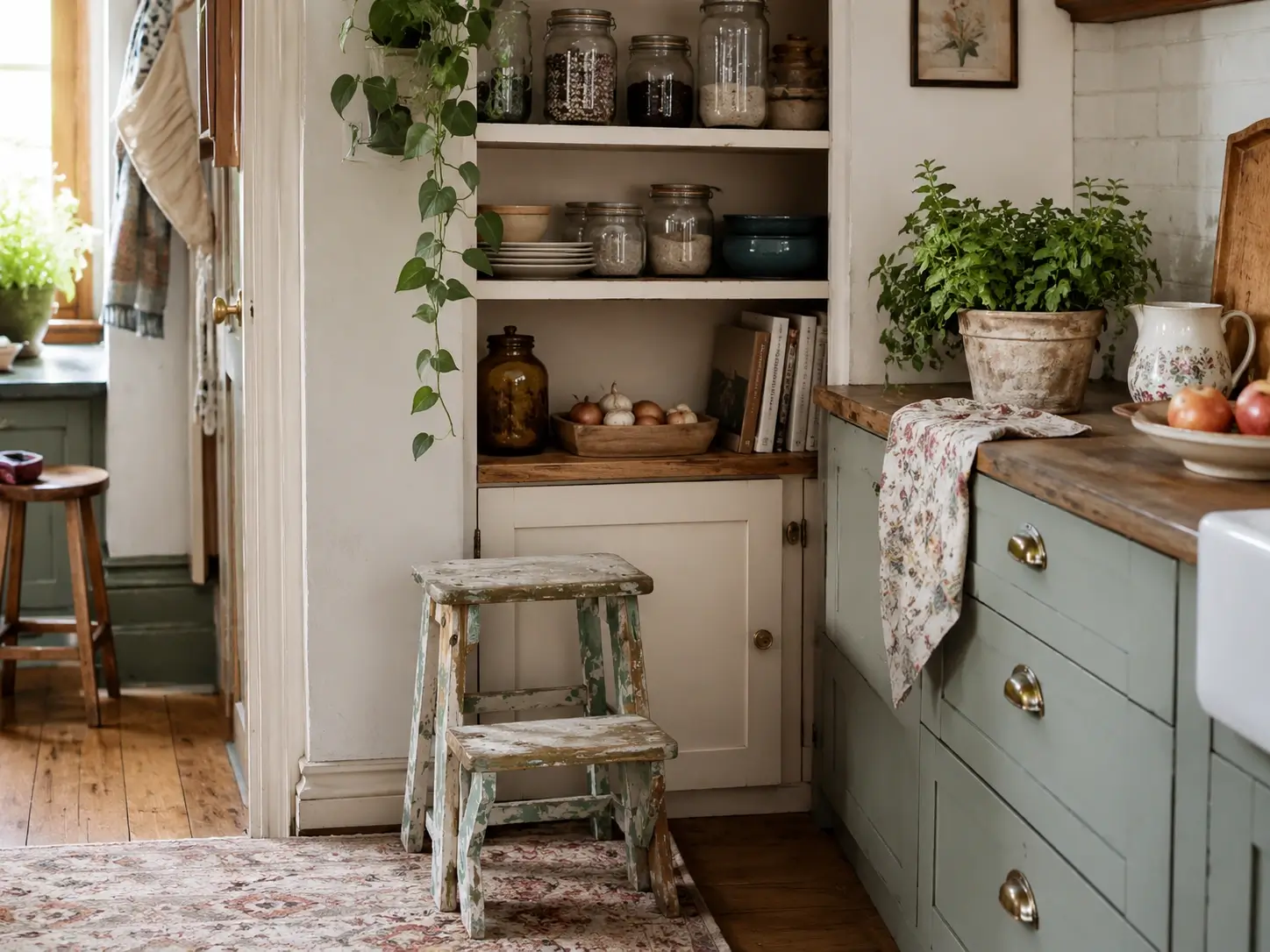
A vintage wooden step stool — painted in an accent color, whitewashed, or left in natural wood — placed near your pantry or counter is both practical and visually charming. In well-styled whimsical kitchens, they appear near shelving, beside the refrigerator, or underneath a hanging plant. Look for old library step stools, milking stools, or painted farmhouse versions at flea markets. The worn finish matters more than the precise shape.
20. Style Your Fruit Bowl Like a Still Life Painting
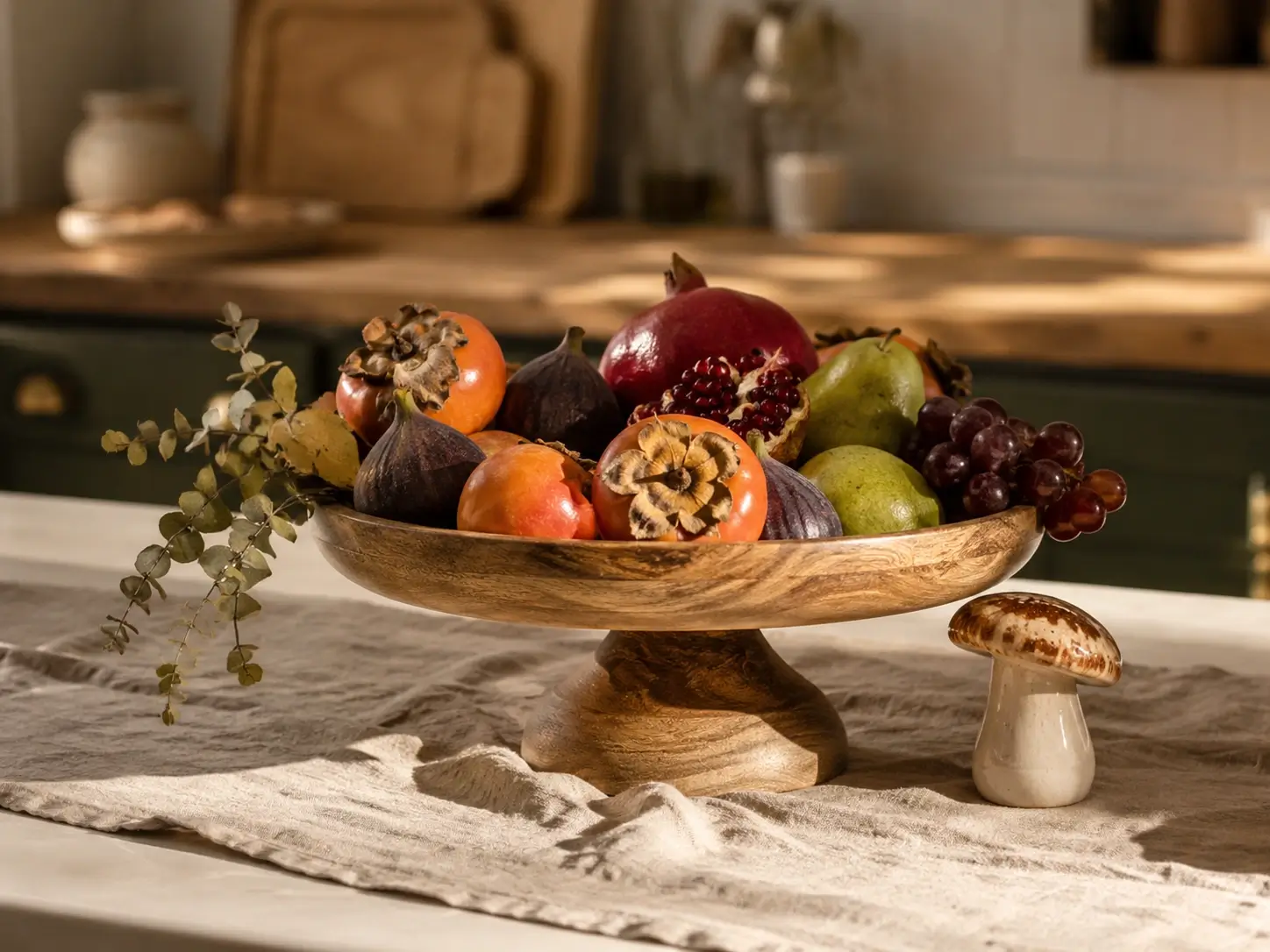
The container matters as much as what goes inside. A shallow ceramic bowl or a wooden footed bowl filled with seasonal produce — figs, pomegranates, and persimmons in autumn; lemons and green apples in spring — reads as art on your counter. Tuck a sprig of eucalyptus or dried lavender between the fruit. This costs nothing extra if you already buy produce. It only requires choosing your bowl deliberately instead of using whatever’s nearest.
21. Hang Linen or Lace Café Curtains Across Your Kitchen Window
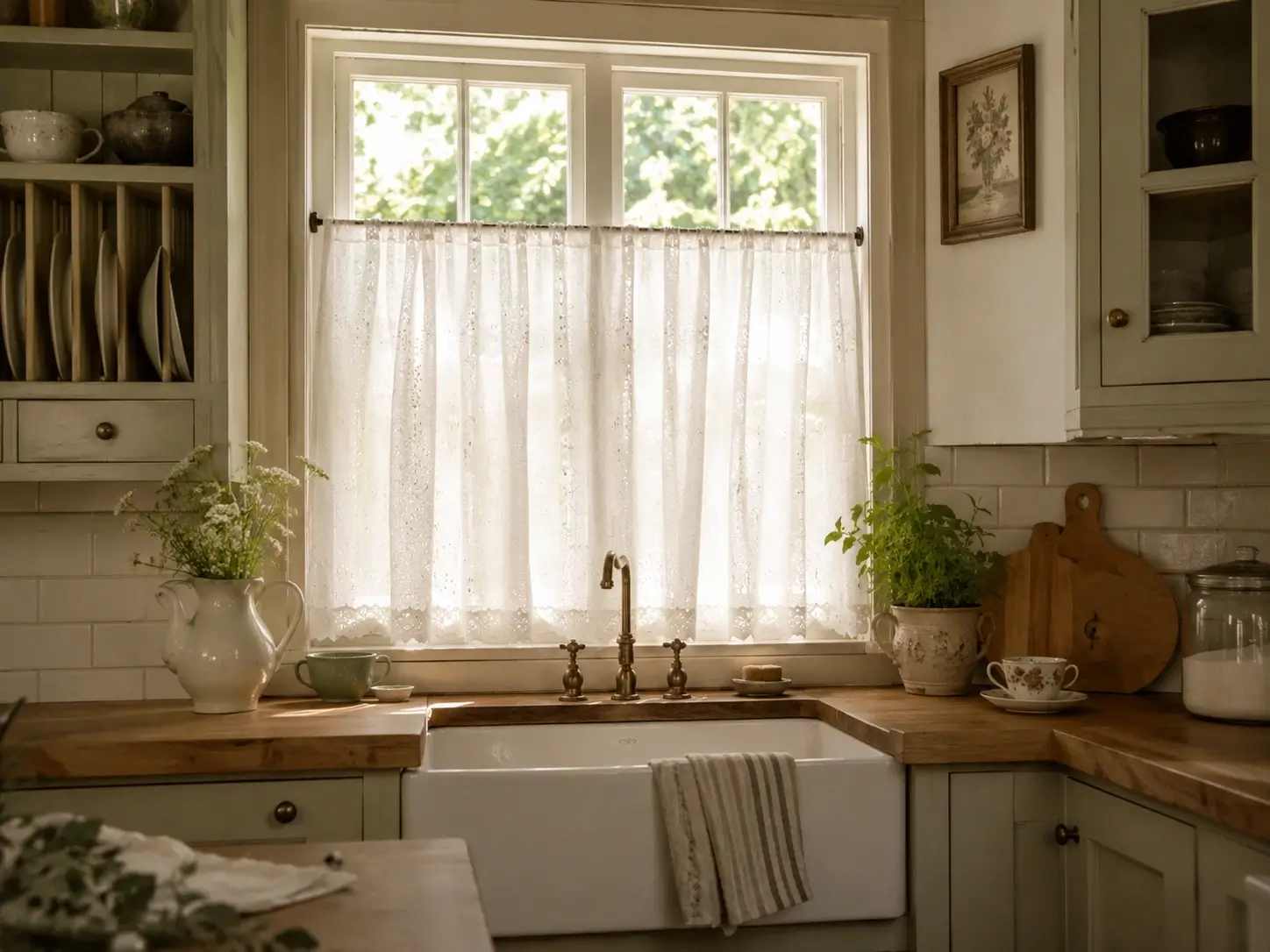
A white linen or cream lace curtain on a tension rod — no drilling required — softens a kitchen window immediately. The light that filters through linen is warm and diffused in a way that overhead fixtures can’t replicate. For cottagecore and grandmacore kitchens, look for curtains with a scalloped hem or eyelet detailing. For fairycore, choose something sheer enough that the light shows through the fabric itself. Swap seasonally if the mood calls for it.
22. Stack Cookbooks Horizontally and Tuck Dried Lavender Between the Volumes
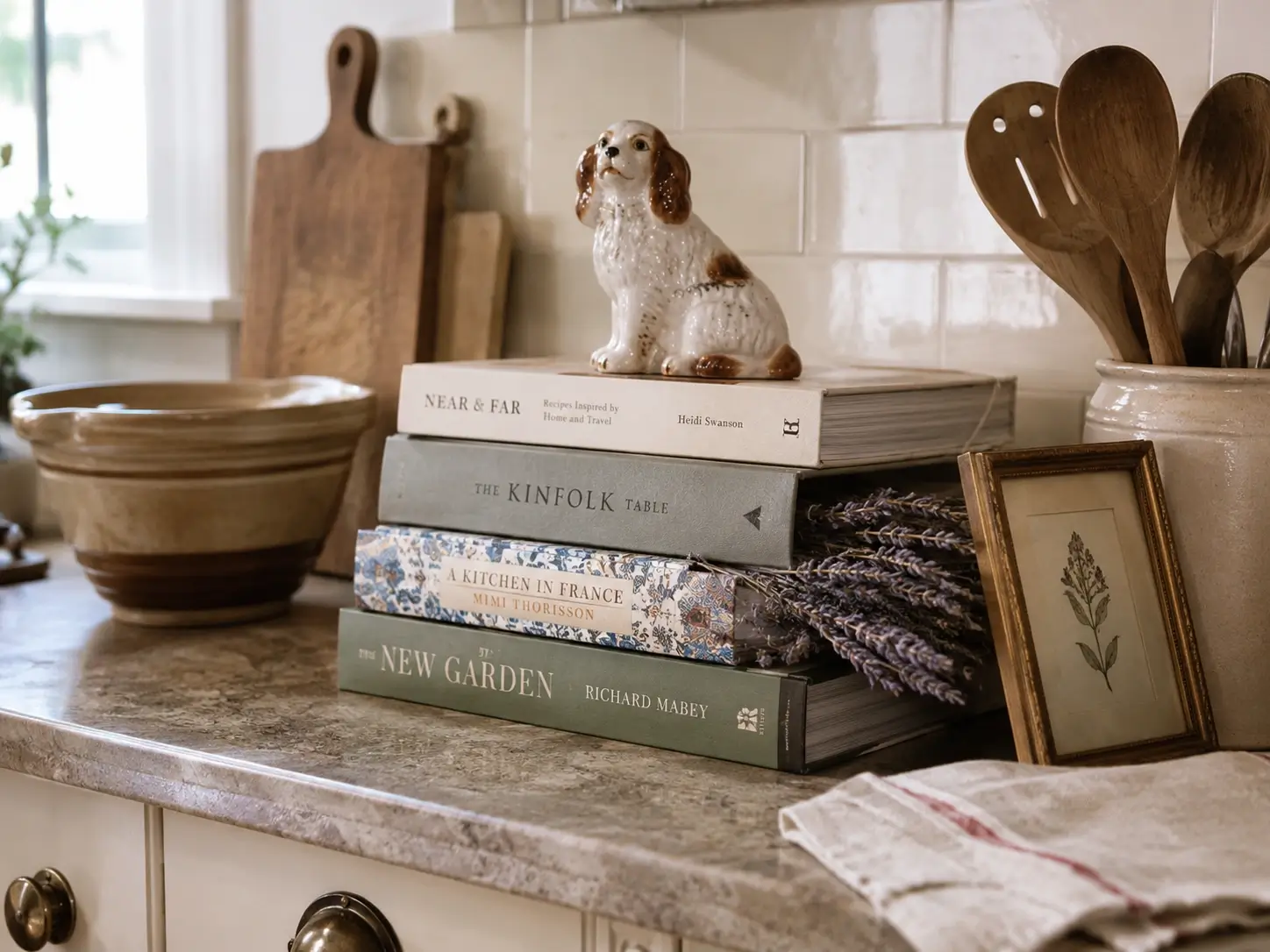
Horizontal cookbook stacks work as both a display surface and an object platform. Place a small ceramic figurine on top, lean a framed print against the spine, or tuck a bundle of dried lavender between volumes. Choose books with attractive covers — illustrated spines, cloth bindings, vintage hardbacks. A stack of three to five in a cohesive color palette reads as intentional rather than simply forgotten on a counter.
23. Lean Framed Pressed Flower Art Against Your Backsplash
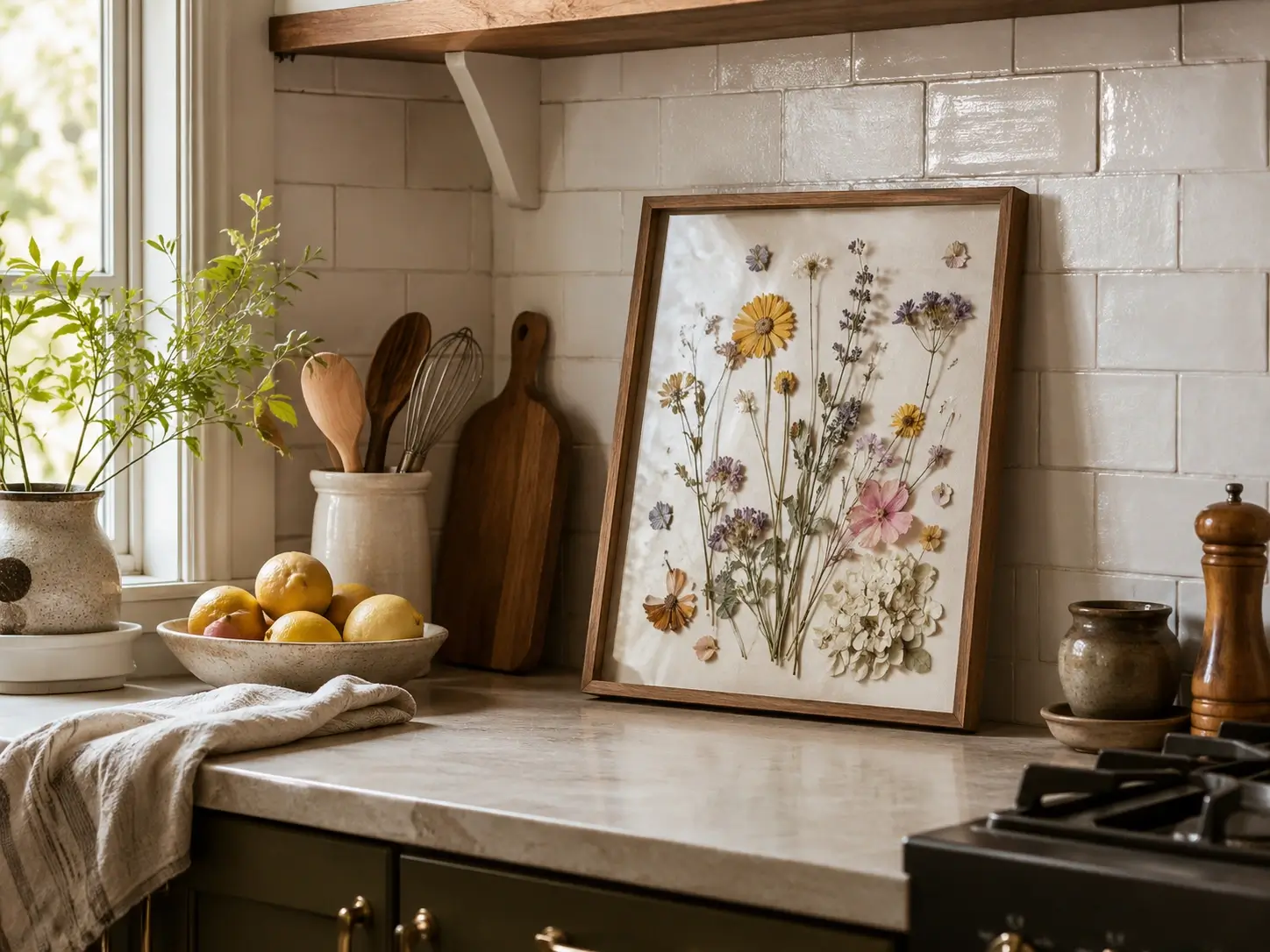
Instead of hanging art on the kitchen wall, lean a framed botanical piece against your backsplash on the counter. This is more casual than a hung piece, easier for renters, and creates a layered depth effect that flat wall-hung art can’t. Make your own by pressing flowers from a supermarket bouquet between heavy books for two weeks, then framing behind glass. The imperfection in homemade pressed flower art is precisely what gives it character.
24. Replace Plastic Containers with a Painted or Vintage Wooden Bread Box
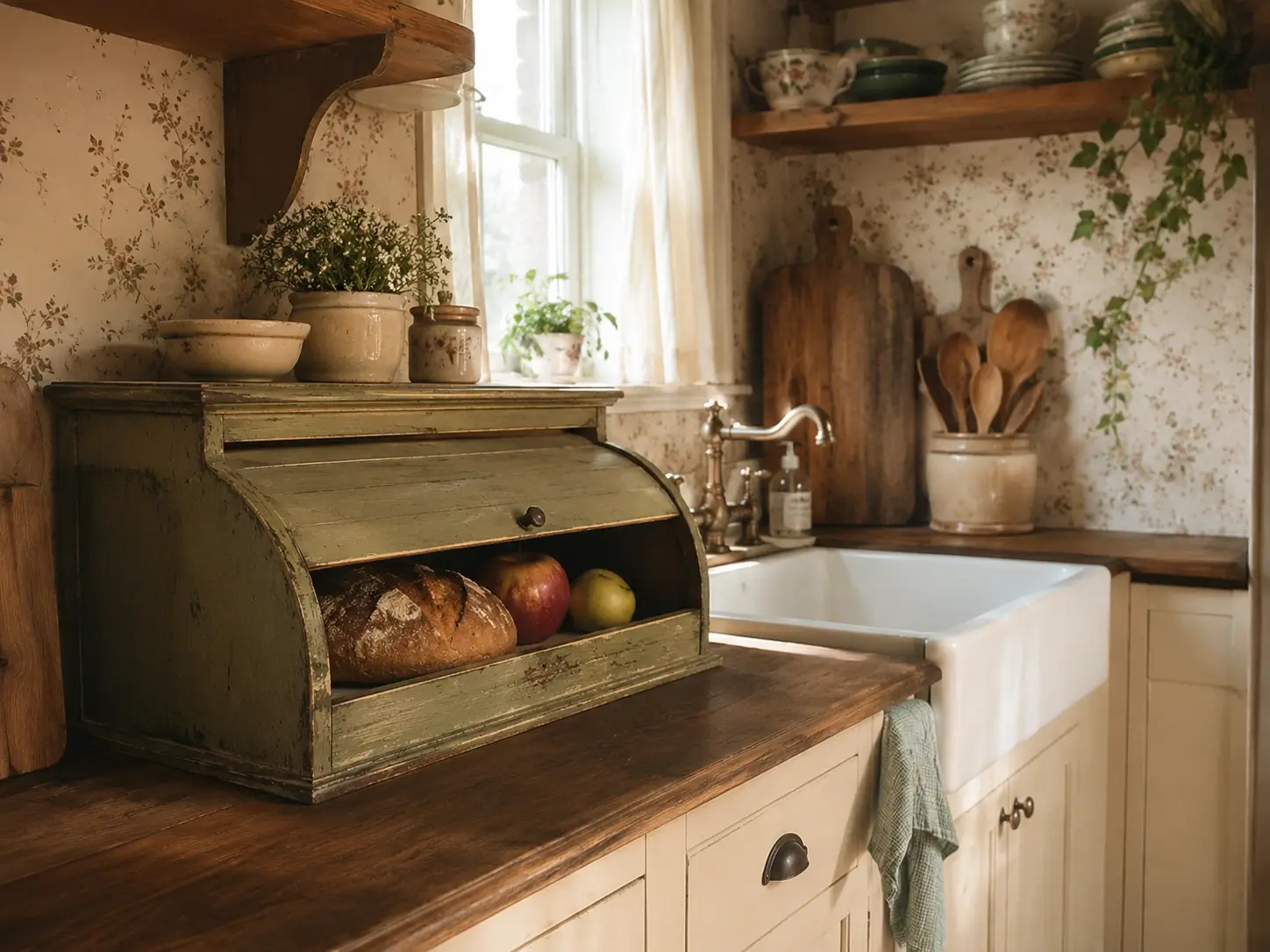
A wooden bread box — especially in forest green, cream, or natural wood — replaces a cluster of visual clutter with one object that looks deliberately chosen. Store bread, seasonal fruit, or small pantry items inside. The bread box appears in grandmacore kitchen content so frequently it’s become almost a genre shorthand. Choose one that could have belonged to someone’s grandmother. The worn finish isn’t the flaw in this case — it’s the whole point.
25. Hang Dried Herbs and Florals from a Ceiling Rod or Tension Bar
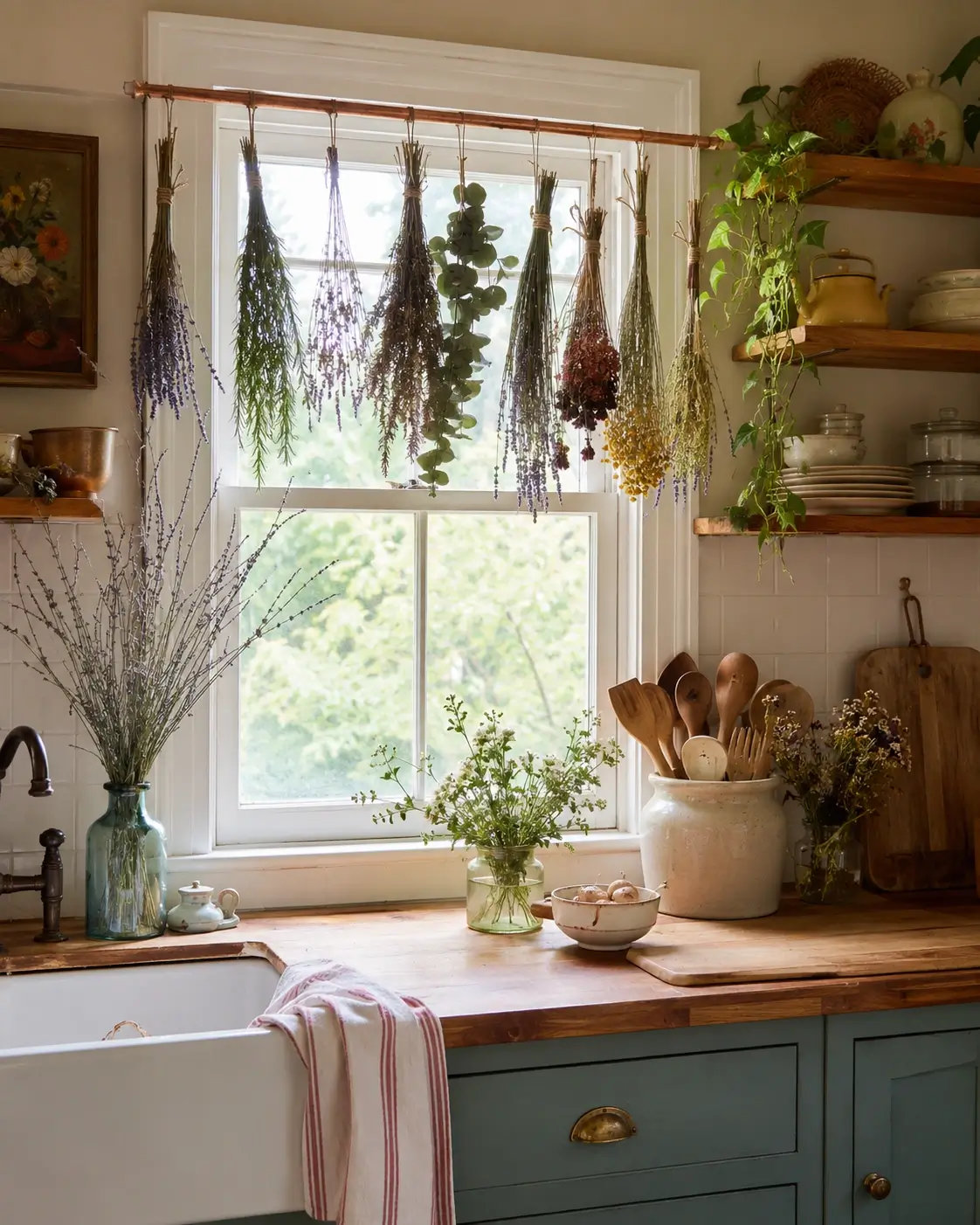
A small wooden dowel or copper tension rod suspended near a window, hung with bundles of dried lavender, rosemary, chamomile, and eucalyptus tied with kitchen twine, is one of the most visually impactful things you can do in a whimsical kitchen for under $20. It creates verticality in a room that usually relies only on horizontal surfaces. The scent is real. The texture is real. And the herbs dry beautifully in place over two to three weeks.
26. Add a Whimsical Kitchen Rug in Floral, Checkered, or Hand-Knotted Wool
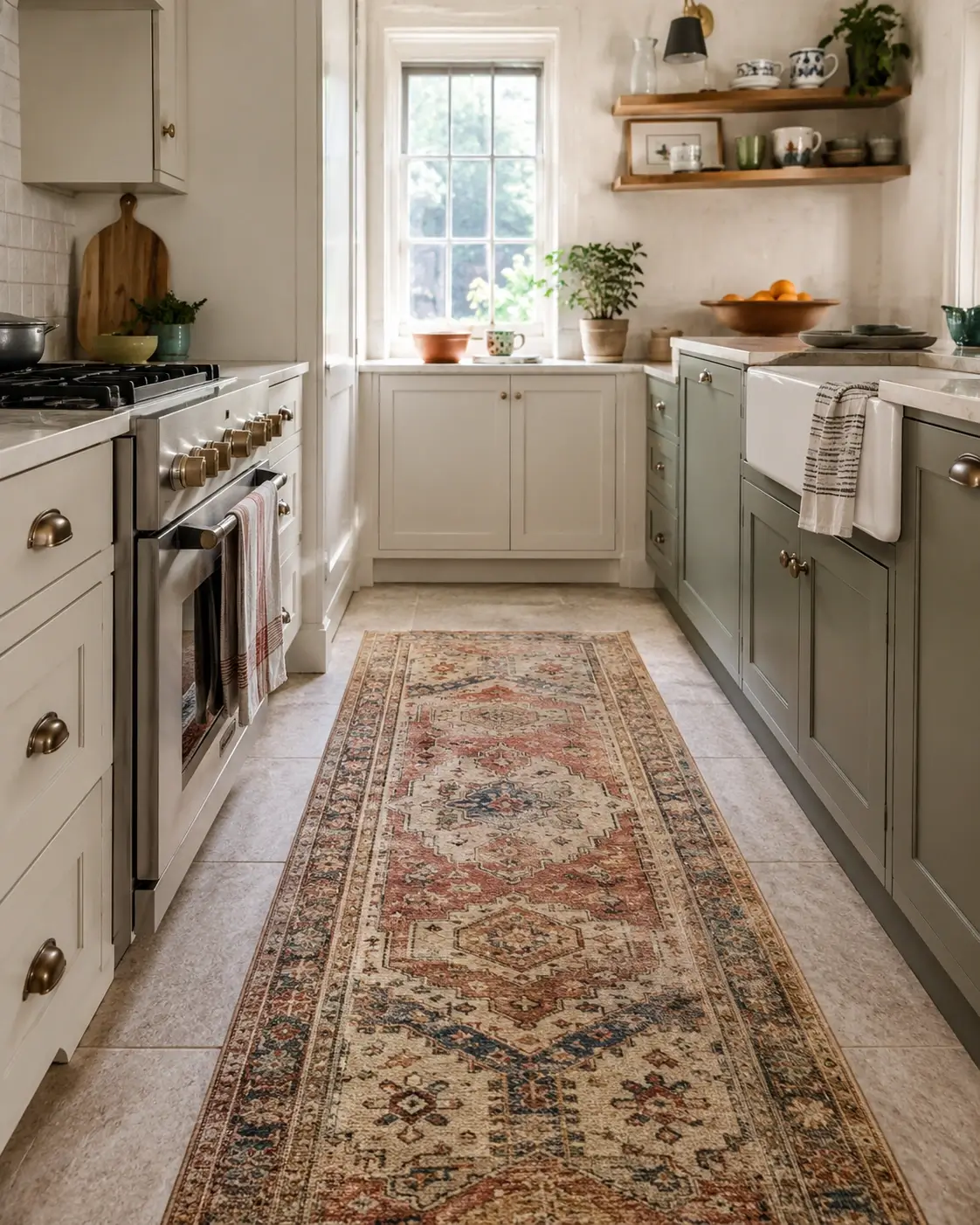
A kitchen rug does two things at once: softens the acoustic hardness of tile or laminate flooring and introduces color and pattern at floor level — a zone most kitchen decor entirely ignores. Choose something that wouldn’t look out of place in a storybook: a faded Oushak floral, a Turkish kilim in terracotta and cream, a textured wool piece. Washable options from Ruggable or Tumble are the most practical for kitchen use. Avoid rubber-backed rugs on heated floors.
27. Decant Pantry Staples into Forest-Toned or Clear Glass Jars
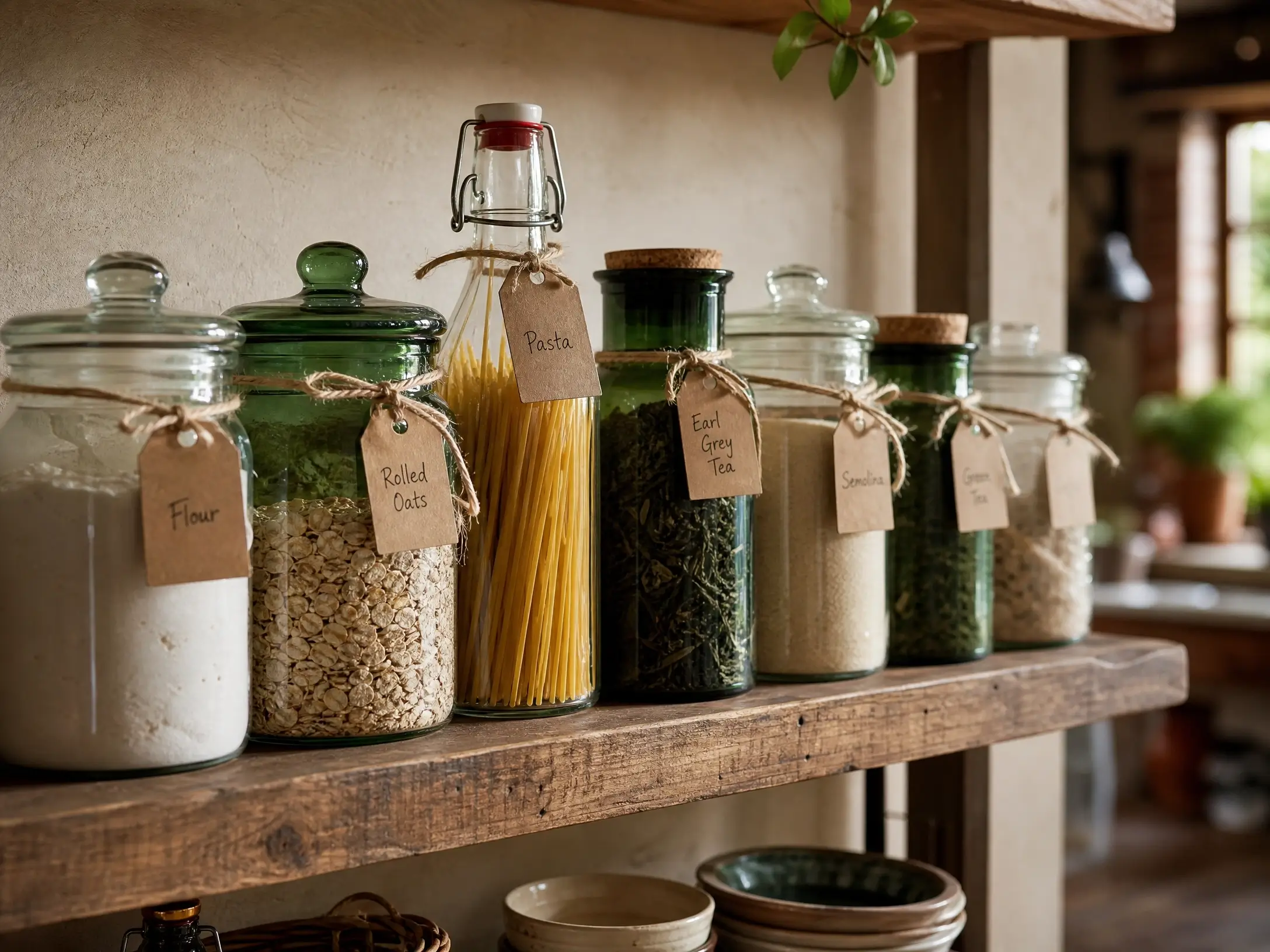
Transfer flour, oats, pasta, dried tea, and spices into glass jars with cork or wooden lids. Line them on a wooden tray or open shelf. Label each one with a chalk tag or handwritten kraft paper label tied with twine. The overall effect is apothecary-meets-cottage-pantry. Weck jars, Le Parfait swing-top bottles, and IKEA’s KORKEN range are consistently among the most-used options in whimsical kitchen jar content for good, inexpensive reason.
28. Apply Removable Wallpaper Inside a Cabinet for a Hidden Pattern Layer
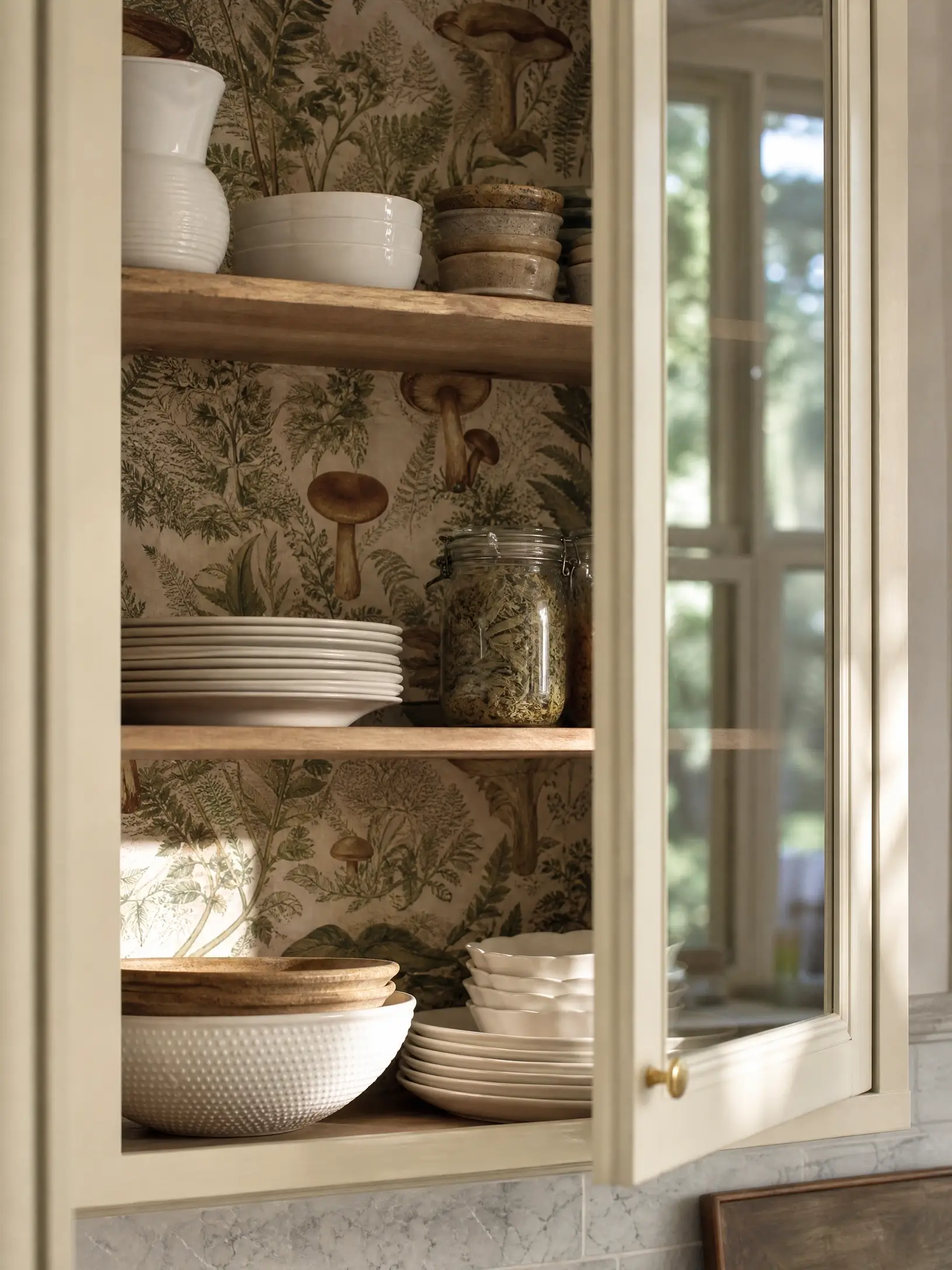
Cabinet interiors are a fully legal canvas for renters who cannot touch walls. Remove the shelves temporarily, apply peel-and-stick wallpaper in a botanical, toile, or mushroom print — Rocky Mountain Decals has several options designed for interiors — then reinstall. With glass-front cabinet doors, the pattern is visible from outside the kitchen. With solid doors, it becomes a private detail. Either way, it peels off cleanly with no surface damage when you leave.
29. Build a Mug Collection Using Anthropologie-Style Mismatched Ceramics
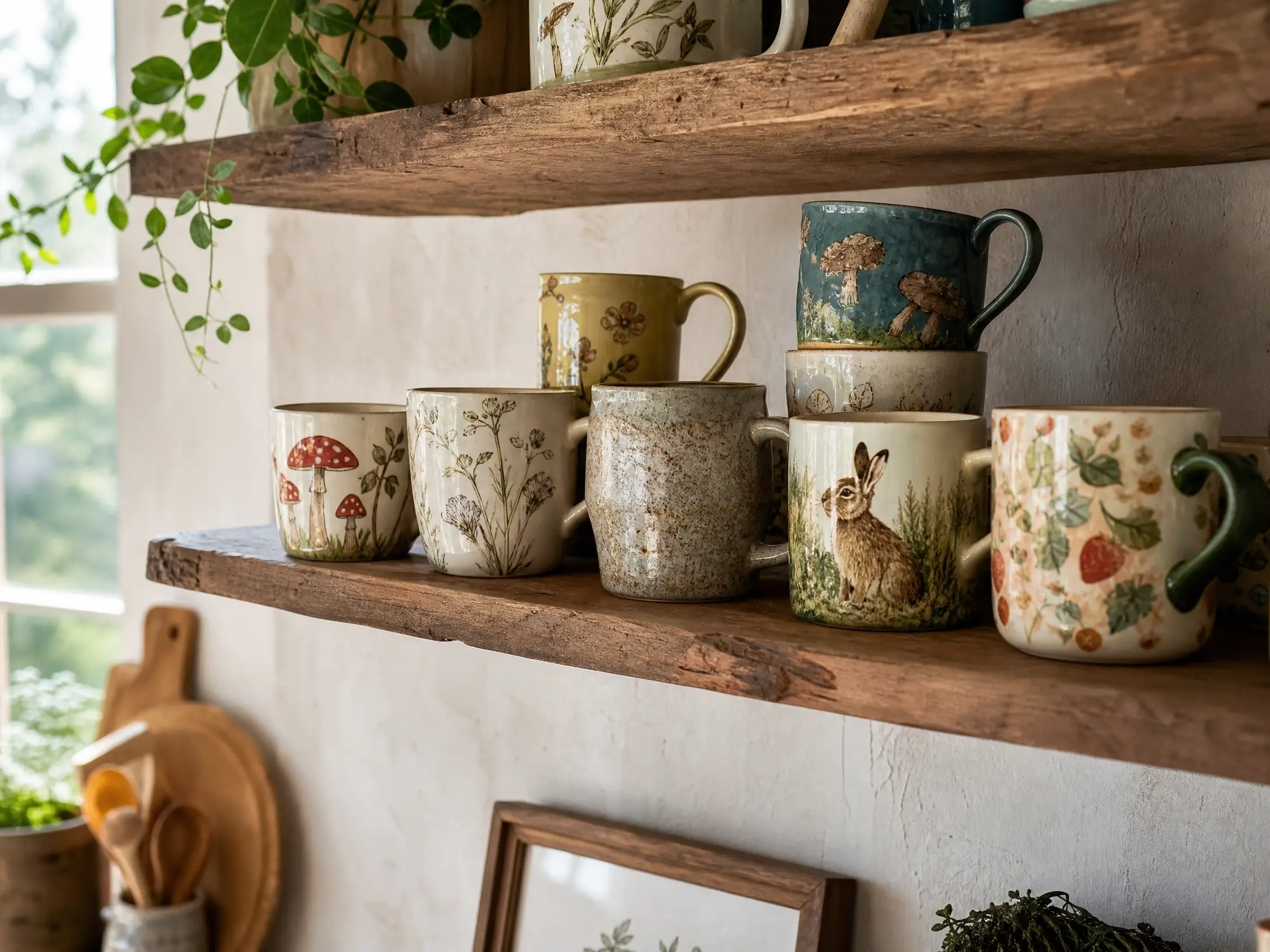
Anthropologie’s seasonal ceramic mug lines — mushrooms, hand-painted botanicals, illustrated wildlife — are among the most-purchased items in the whimsical kitchen category on a per-item basis. You don’t need a matching set. Pull individual mugs from different collections, or mix Anthropologie pieces with thrift finds and handmade ceramics. Display on a wall-mounted mug rack with handles facing out, or arrange on open shelves in a loose cluster. Imperfection here reads as curation, not accident.
30. Create a Potion Corner — Display Your Oils, Vinegars, and Syrups Artfully
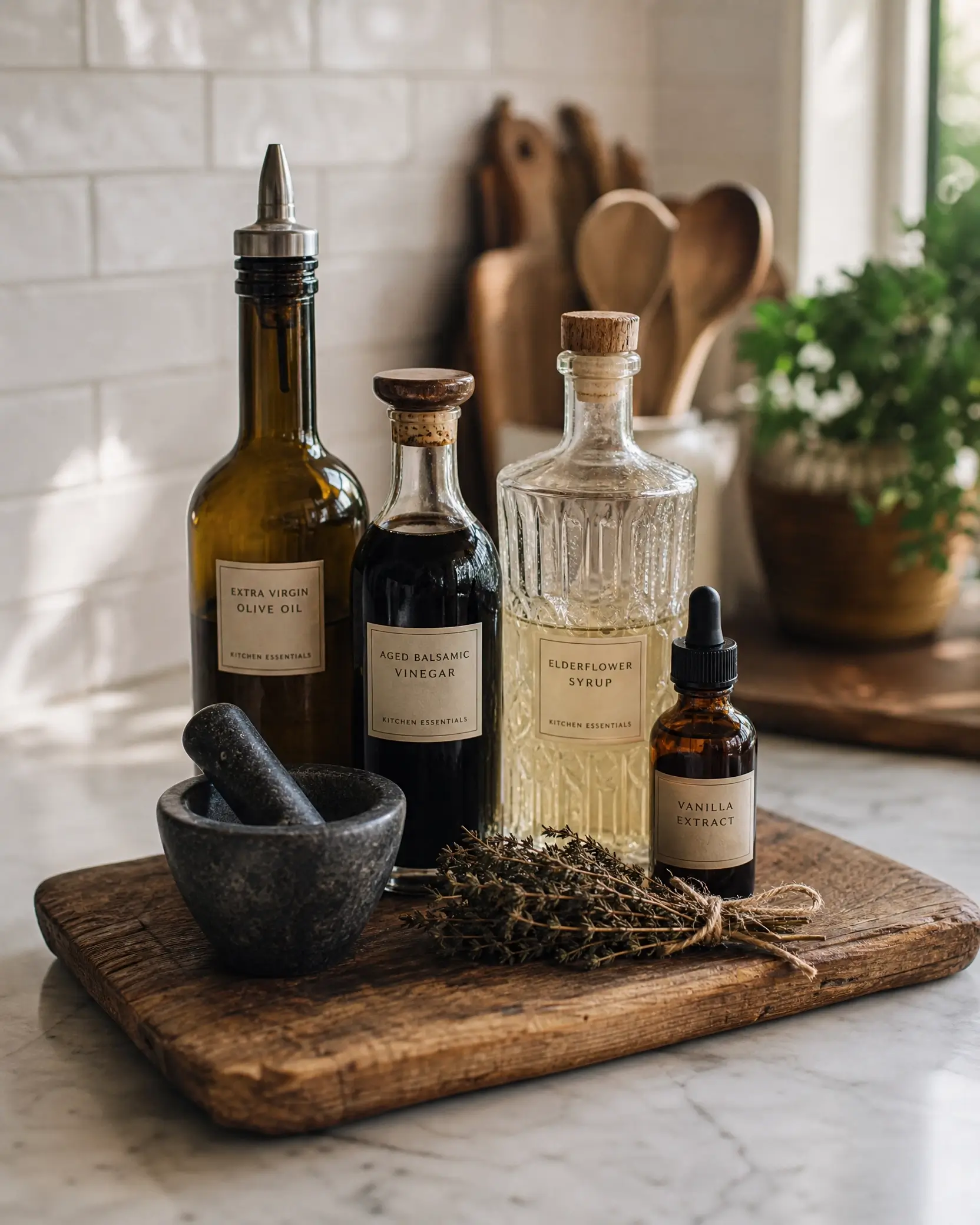
Or maybe I should call it an apothecary counter. Line up your most beautiful bottles — an amber olive oil bottle, a dark aged vinegar, elderflower syrup in pressed glass — on a small wooden cutting board or marble slab. Add a dropper bottle of vanilla extract, a sprig of dried thyme tied with twine, a small mortar and pestle. This is functional and visual at once. Every object earns its place by doing both things simultaneously.
31. Add a Freestanding Wooden Ladder Shelf for Vertical Display Space
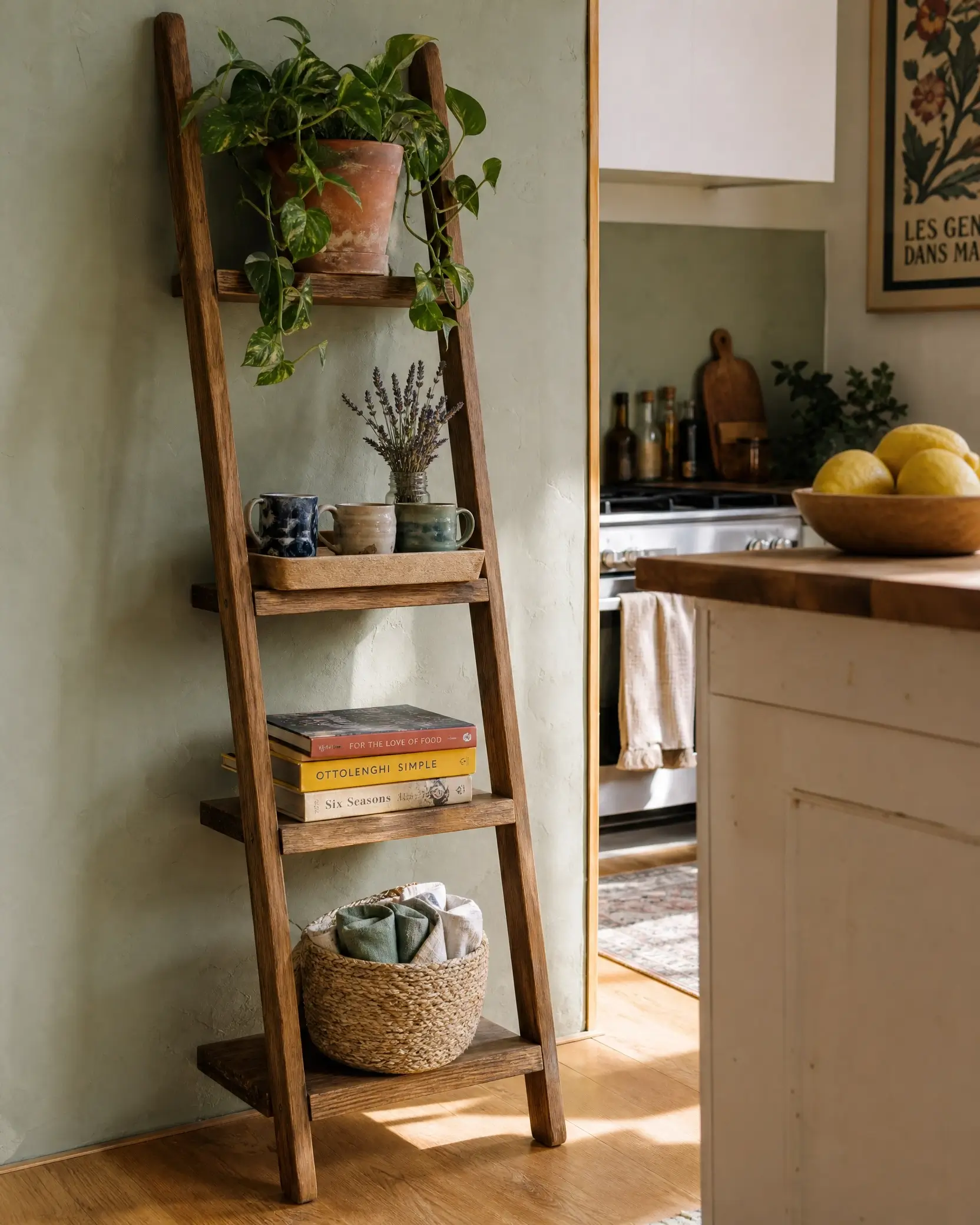
A wooden ladder shelf leans against a wall without mounting and creates display space in kitchens that have no extra room on counters or walls. Style each rung differently: one with plants, one with a small tray of ceramics, one with stacked cookbooks, one with a hanging basket. The visual variety across heights creates the layered, lived-in effect that defines the best whimsical kitchens. Teak, pine, and bamboo all work well for this.
32. Hang Mushroom or Forest-Motif Tea Towels from Your Oven Handle or Hooks
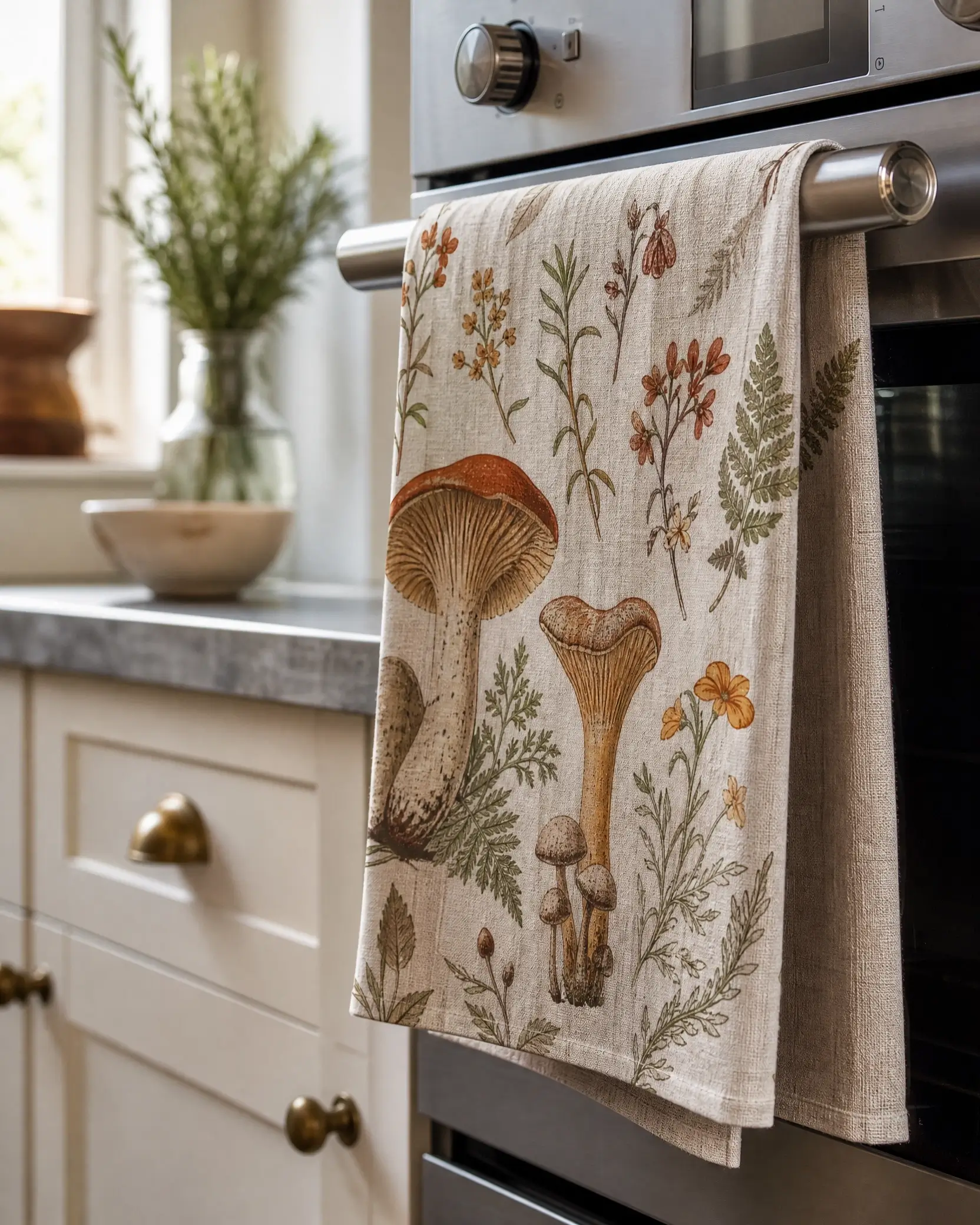
Tea towels are the most underrated textile in kitchen decor. A linen towel printed with illustrated mushrooms, wildflowers, or a vintage botanical scene — folded and draped over an oven handle or hung on a small hook — adds pattern without any commitment. Look for illustrated options from Rifle Paper Co., Ulster Weavers, or Danica Studio, or browse independent illustrators on Etsy. Buy two to three and rotate them through the seasons as a low-cost refresh.
33. Build a Beeswax Candle Vignette on Your Counter or Kitchen Table
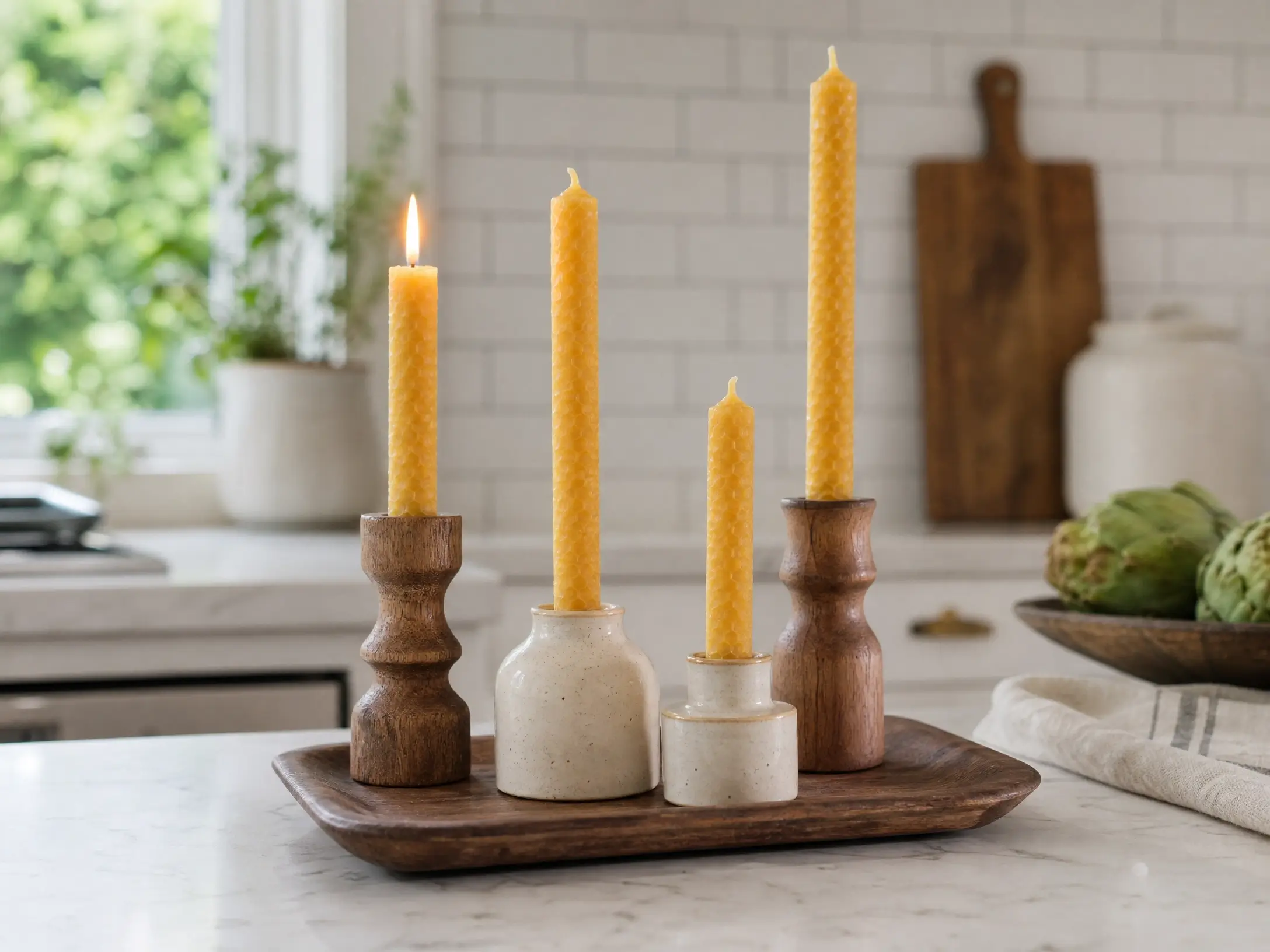
A cluster of three to five beeswax taper candles in a mix of wooden and ceramic holders creates a warm, firelit effect without any actual fire risk when placed carefully away from cabinets and textiles. Beeswax candles carry a faint honey scent that fits the whimsical aesthetic far better than synthetic fragrances. Vary the taper heights. Use a small tray to contain any drips. This works as both a daytime display and an evening ritual.
34. String a Fabric Bunting or Garland Above Your Window or Sink
A fabric bunting — triangular pennants in linen, floral cotton, or botanical print — hung above a kitchen window on jute twine is one of the most consistently pinned whimsical kitchen details across Pinterest boards in this aesthetic. Make your own from fabric scraps or buy seasonal garlands from Etsy shops. Keep the palette tight — two to three tones maximum. For fairycore kitchens specifically, organza pennants that catch and diffuse window light are especially effective.
35. Replace Plastic Utensil Holders with Ceramic Crocks in Earth Tones
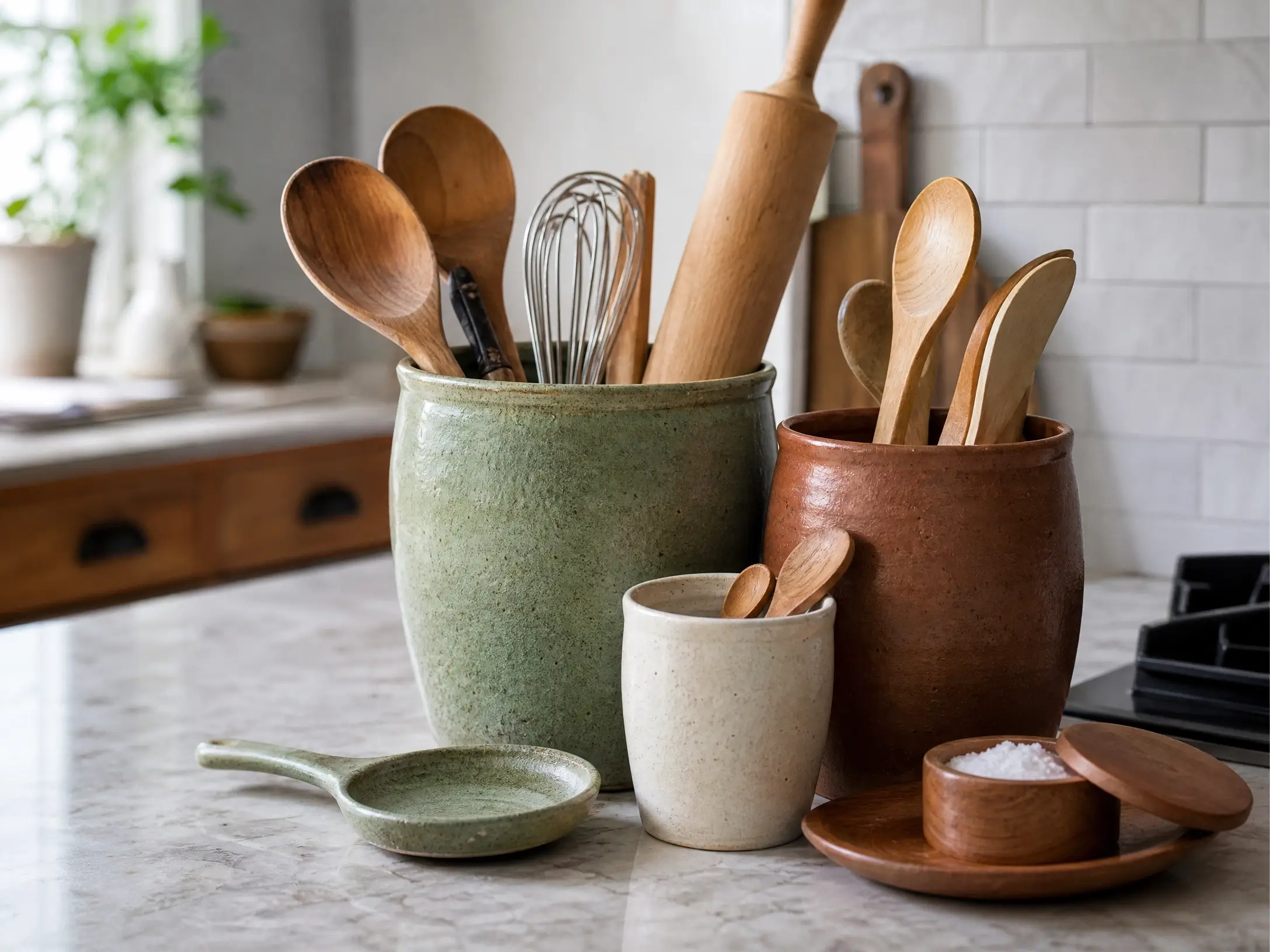
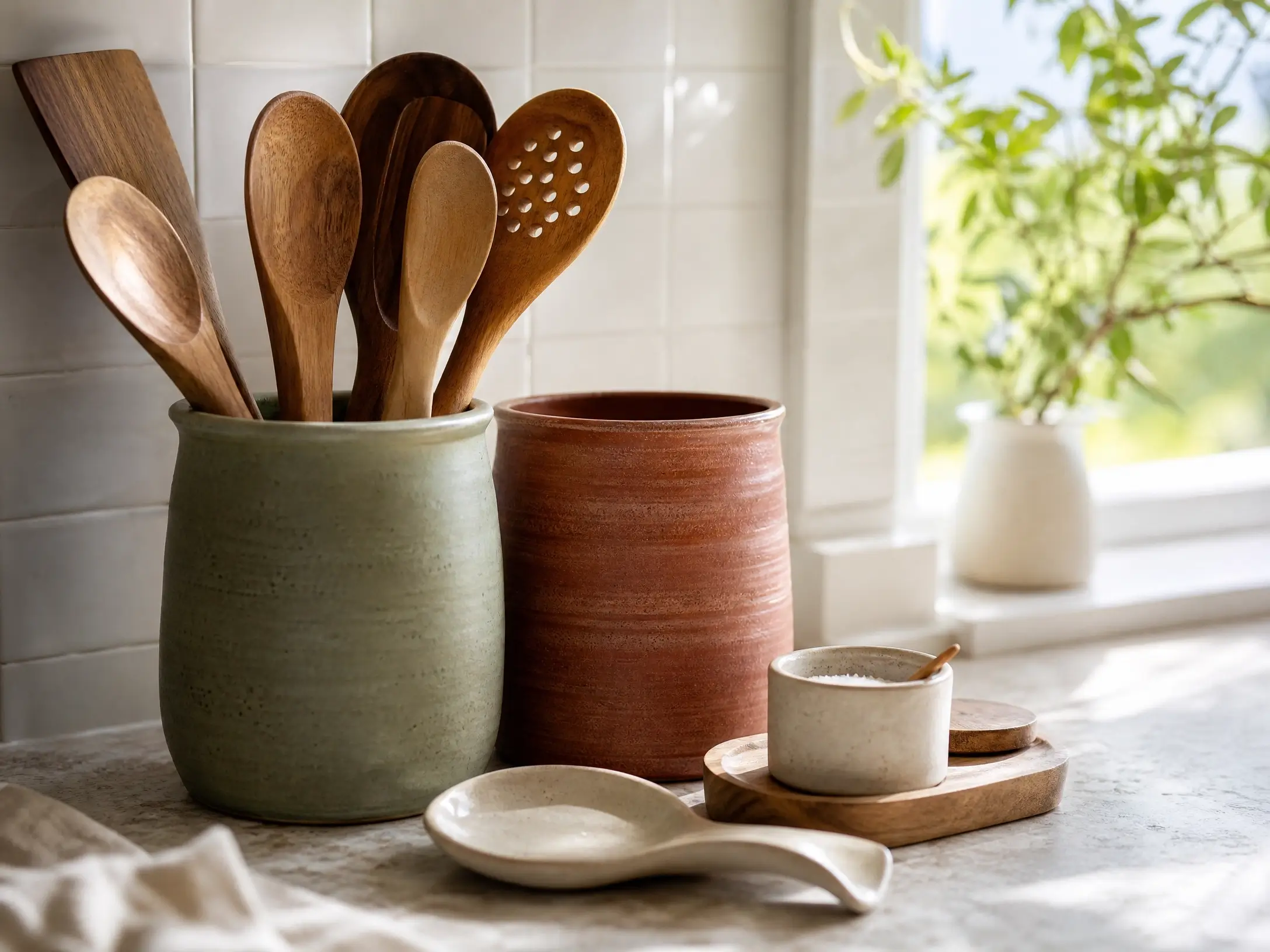
Stoneware utensil crocks in sage, terracotta, cream, or forest green immediately replace plastic visual clutter with objects that look handcrafted and chosen. A ceramic spoon rest, a small tray for a salt cellar, a hand-thrown crock for wooden spoons — these swap the necessary-but-ugly for the necessary-and-beautiful. Look for handmade options on Etsy or at local pottery markets. Target’s Hearth & Hand line and World Market both carry affordable versions for this swap.
36. Display a Single Thrifted Apothecary Bottle or Unusual Object as Kitchen Art
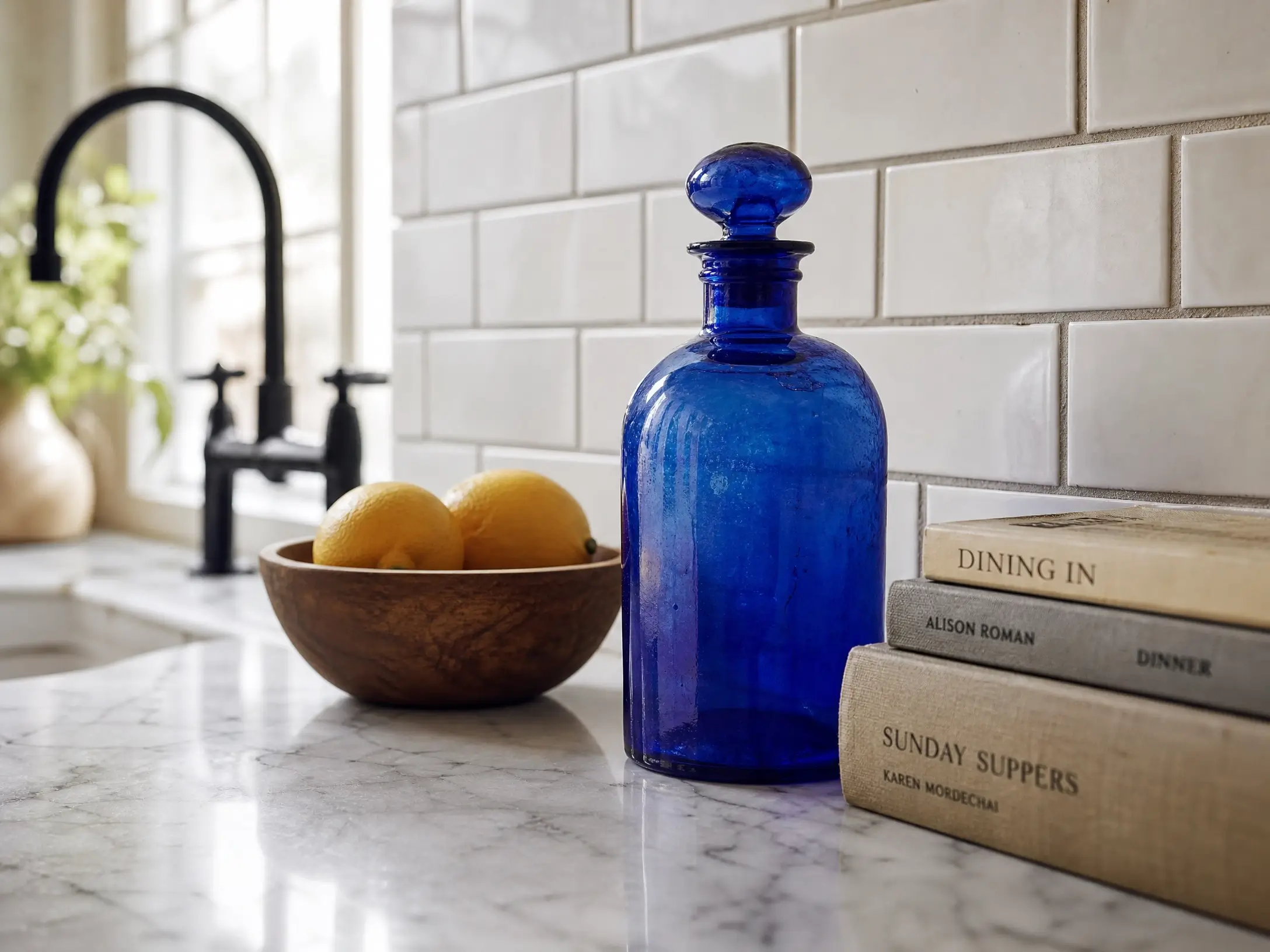
This is the “one weird object per room” principle used by interior stylists: a cobalt blue apothecary bottle, a mercury glass cake dome, a ceramic owl, a crystal inkwell, a small hourglass — placed with intention in a kitchen corner becomes a conversation piece. It doesn’t need to make functional sense in a kitchen. It only needs to feel like it belongs to someone with a specific, developed inner world. Thrift stores are the right source for this kind of object.
37. Schedule a Seasonal Refresh to Keep the Whimsical Energy Alive
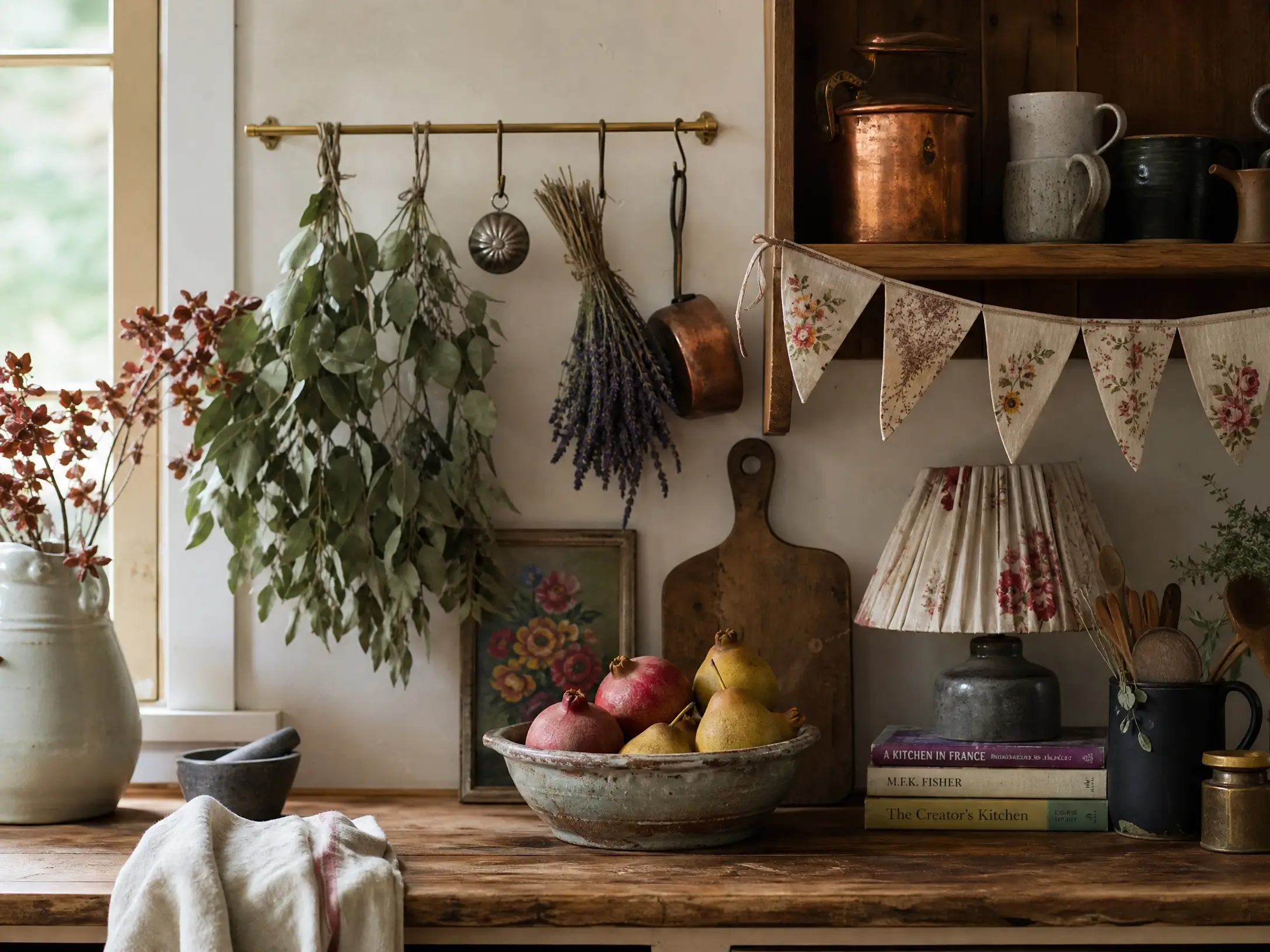
Whimsical kitchens lose their vitality when nothing ever changes. The most compelling versions update every three months — the fruit bowl shifts to reflect the season, the hanging herbs rotate from lavender in summer to eucalyptus in winter, the bunting swaps out, a new thrift find replaces one object that no longer fits. This is an ongoing practice, not a one-time project. You’re building a living space that tells an evolving story. Let it keep moving.
How to Layer These Ideas Without Making It Feel Cluttered
The most common failure in a whimsical kitchen isn’t too much stuff. It’s stuff that doesn’t speak the same visual language. A mushroom canister beside a minimalist white French press beside a chrome toaster creates noise, not charm.
Some interior designers argue you should get the bones right first — fix the cabinetry, sort the layout, then add personality. That’s valid during a full renovation. But if you’re in a rental with white walls and oak-look laminate, you don’t have bones to start with. What you do have is objects, textiles, and light — and those three categories, layered with intention, do more work than most people expect.
Here’s the thing: choose your anchor objects first. These are the three to five items with the strongest visual identity — your canister set, your pendant light, your cabinet color. Everything else should support them, not compete.
I’ve seen conflicting advice on this across styling guides — some argue you should never mix more than two whimsical micro-aesthetics in one room, while others actively showcase four or five overlapping. My read is that the number of aesthetics matters far less than whether they share a color palette. A mushroom core canister in a fairycore kitchen works perfectly — both pull from natural, earthy, organic visual worlds.
To build a cohesive whimsical kitchen, follow these steps:
- Choose one dominant color — sage green, terracotta, or cream — and repeat it in at least three spots.
- Pick one motif (mushrooms, botanicals, checks) and let it appear in two or three objects.
- Add a second lighting layer: fairy lights, a warm pendant, or a candle cluster.
- Introduce one living plant to anchor the organic, non-manufactured feeling.
- Edit ruthlessly: anything that doesn’t share a color or material with the rest gets stored, not displayed.
What most whimsical kitchen guides skip is the editing pass — the part where you look at everything you’ve added and remove what doesn’t fit. A whimsical kitchen that actually works is slightly more restrained than it appears. The magic is partly in knowing when to stop.
Renter-Friendly vs. Renovation-Ready: What’s the Real Difference?
Look — if you’re renting an apartment and you’re not sure what you can or can’t do, and you don’t want to lose your deposit, here’s what actually works: focus every change on reversible, non-adhesive, or fully contained swaps. Hardware (store your originals in a labeled bag), peel-and-stick surfaces, freestanding furniture, plug-in lighting, textiles, and tabletop objects are all yours to use without any landlord conversation.
The renovation-level ideas — painted cabinetry, permanent backsplash tile, hardwired pendant lighting — are worth saving for a space you own, or approaching with explicit written permission from your landlord first.
Quick Comparison
| Approach | Best For | Key Benefit | Limitation |
|---|---|---|---|
| Peel-and-stick backsplash tile | Renters | Fully removable, no grout or damage | Heat-sensitive; may not adhere near an active stove |
| Cabinet paint | Homeowners | Most dramatic, lasting transformation | Permanent without full repainting |
| Hardware swaps | Renters and owners | Fast, cheap, completely reversible | Limited impact without other changes layered in |
| Freestanding ladder shelf | Renters | Major display space, no mounting required | Takes floor space; needs carefully edited styling |
| Removable wallpaper (cabinet interiors) | Renters | Adds pattern and color with zero wall damage | Only visible through glass-front doors or when open |
Peel-and-stick tile versus permanent backsplash tile: peel-and-stick is better suited for renters and anyone still experimenting with their aesthetic because it’s fully reversible and damage-free. Permanent tile is the right choice when you’ve committed to a long-term look and own the space. The key difference is commitment — one is a test, the other is a decision.
Frequently Asked Questions About Whimsical Kitchen Ideas
What’s the best first step toward a more whimsical kitchen without spending much money?
Hardware swaps and textiles. New cabinet knobs, a mushroom-print tea towel, and one small potted herb together cost under $30 and create an immediate visible shift — more than one larger purchase usually does.
How do I make a whimsical kitchen look cohesive instead of cluttered?
Repeat one color at least three times, pick one motif, and remove anything that doesn’t share a material or palette with your anchor pieces. Cohesion comes from deliberate repetition, not from matching everything.
Should I commit to one micro-aesthetic like cottagecore or mushroom core, or can I mix them?
Most successful whimsical kitchens borrow from two or three micro-aesthetics. The limit isn’t how many you use — it’s whether they share a color palette. If they do, mixing feels layered and intentional. If they don’t, it reads as cluttered.
Why does my kitchen still feel boring even after I’ve added several new accessories?
Single accessories rarely move a room. Whimsical kitchens work through clustering — a plant beside a textile beside a light source beside a ceramic group reads entirely differently than any one of those elements placed alone. Add changes in groups, not one at a time.
When should I use peel-and-stick wallpaper instead of painting my kitchen walls?
Use peel-and-stick if you rent, want a low-commitment pattern trial, or want to add interest to a cabinet interior without touching a wall. Painting is the better long-term option when you own the space and want a full-room color transformation.


No Comment! Be the first one.