




28 Small Outdoor Living Room Ideas That Work on Any Patio (Even Tiny Ones)
If your patio still looks like a forgotten corner with a sad plastic chair, you’re not alone — and it’s easier to fix than you think. Landscape architects surveyed across the country...

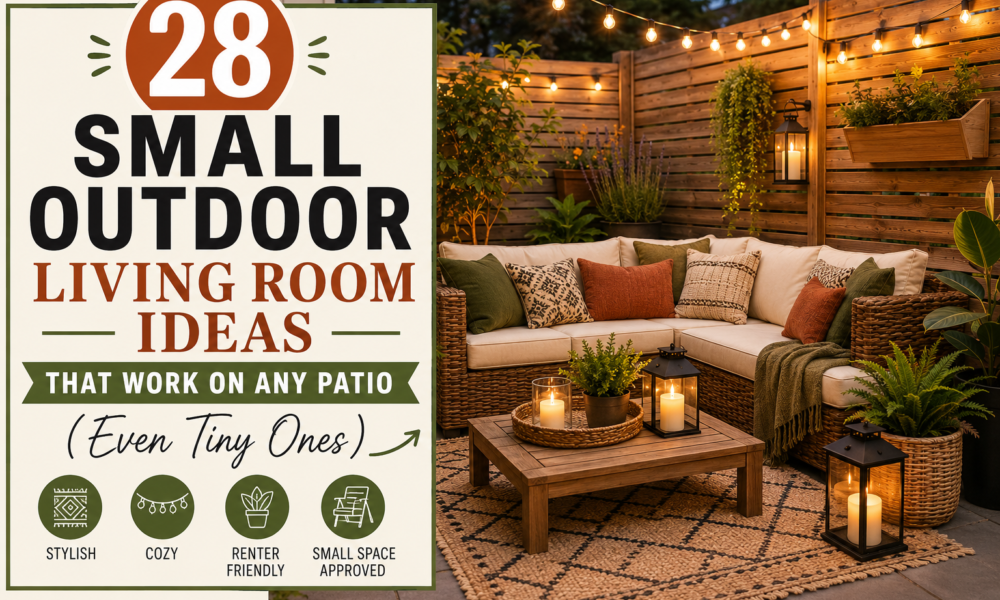
If your patio still looks like a forgotten corner with a sad plastic chair, you’re not alone — and it’s easier to fix than you think. Landscape architects surveyed across the country report that outdoor living spaces consistently rank as the single most requested residential design feature for multiple consecutive years running. That demand has driven a real expansion in affordable, well-scaled outdoor furniture and decor — meaning the styled patio you’ve been saving on Pinterest is genuinely more within reach than it has ever been.
These 28 outdoor living room ideas cover apartment balconies, narrow wood decks, and basic concrete slabs under 150 square feet. Whether you’re renting and can’t permanently modify a single surface, or you’re a first-time homeowner trying to make your first outdoor space feel like more than a spot for a folding chair, the ideas here are renter-safe, visually specific, and practical at real budgets — from under $50 all the way to a few hundred dollars, depending on how far you want to take it.
What Makes a Small Patio Feel Like an Outdoor Living Room?
Lay an outdoor rug to define your seating zone, choose furniture scaled to your space — nothing wider than 54 inches for patios under 8 feet across — and add overhead lighting at or above eye level. Those three moves alone shift any bare patio from neglected corner to intentional outdoor room, with no permanent modifications or professional installation required.
1. The Loveseat + String Lights Setup
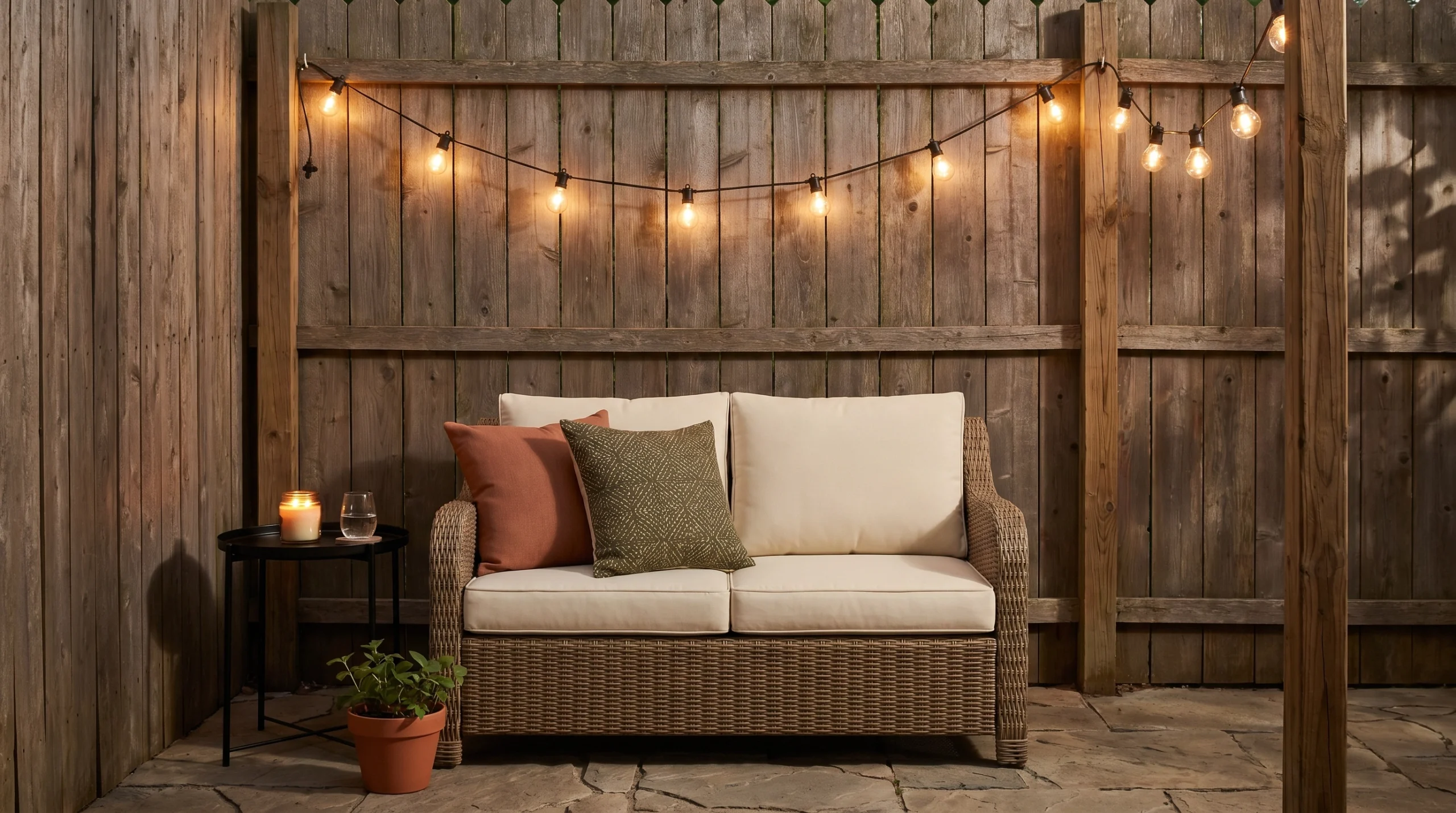
A loveseat-and-string-lights combination works in spaces as tight as 8×8 feet. Choose an all-weather wicker or metal-frame loveseat in the 52–58-inch range — small enough to leave comfortable walking room on both sides — and hang a strand of globe string lights above at roughly 8 feet high, draping them loosely from a fence hook to a nearby post or awning edge. The entire patio reads as a deliberately designed space the moment those lights come on after sunset.
Pair the loveseat with two accent pillows in an earth tone — terracotta, warm sand, or deep olive — and a lightweight side table around 16 inches wide to hold a candle and a drink. This setup runs mid-range when you shop Target’s Threshold line or IKEA’s KUNGSHOLMEN collection, both of which offer loveseat frames for under $250. Mix one solid pillow with one patterned one to avoid the stiff “catalog showroom” look that makes even nice patio furniture feel impersonal.
2. Bistro Corner With Climbing Vines
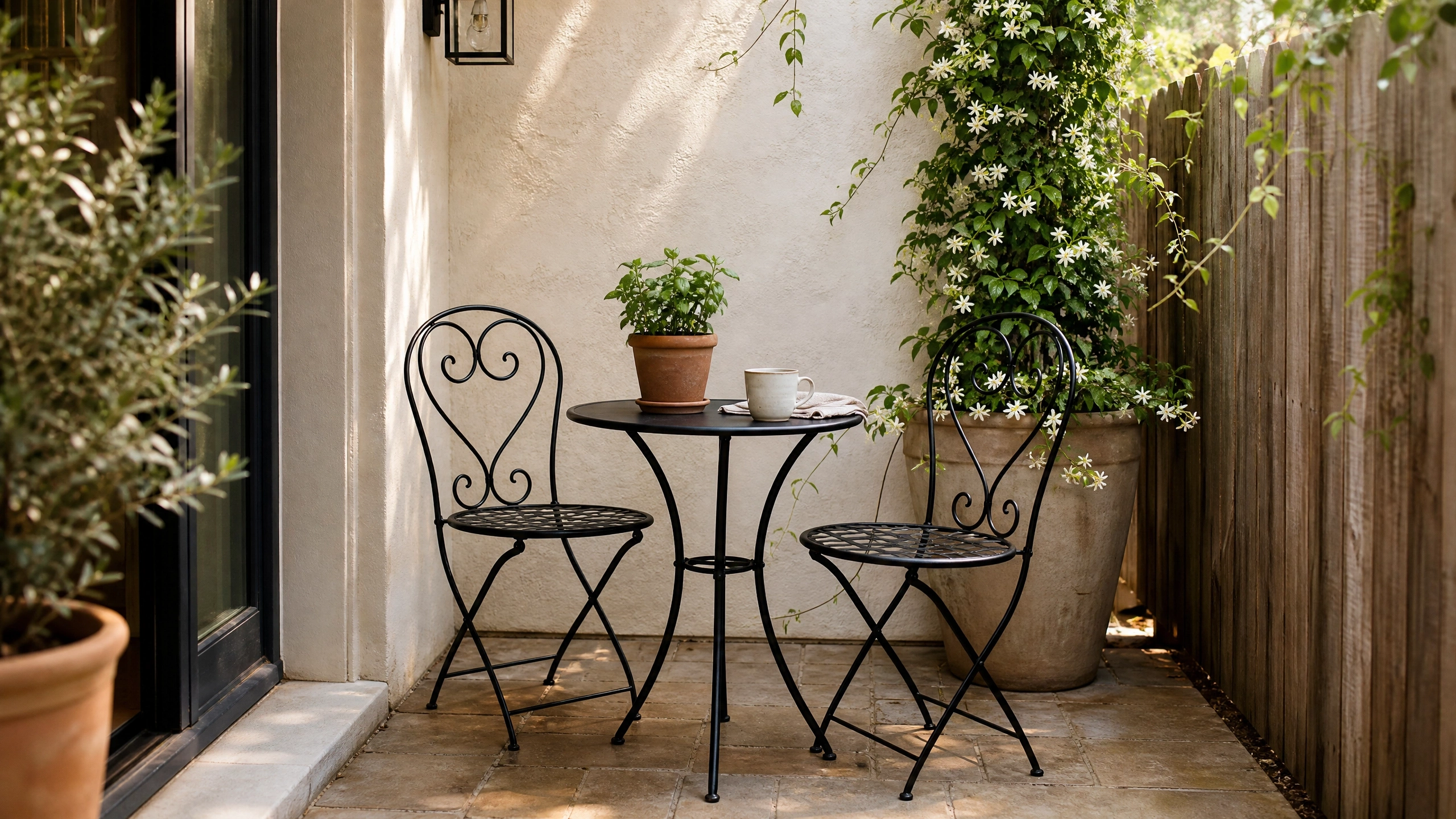
If you have a corner of your patio — even a narrow 4×4-foot one — a small bistro table and two chairs can transform it into a charming outdoor breakfast nook. Choose a round bistro table no wider than 24 inches so it leaves a comfortable walkway on both sides. A wrought-iron or powder-coated steel set in matte black or warm white gives the corner a French café quality that feels relaxed and curated in equal measure, without requiring any structural change to the space.
The “climbing vines” part doesn’t need a permanent trellis. A tall potted plant like jasmine, sweet potato vine, or climbing nasturtium in a heavyweight outdoor planter near the corner adds height and softness without touching the wall or fence. For around $80–$120, you can find a classic bistro set at IKEA or Amazon that holds up to rain without rusting. Add a small potted herb — basil or rosemary — to the table and the whole vignette smells as good as it looks.
3. Outdoor Sectional That Defines the Space
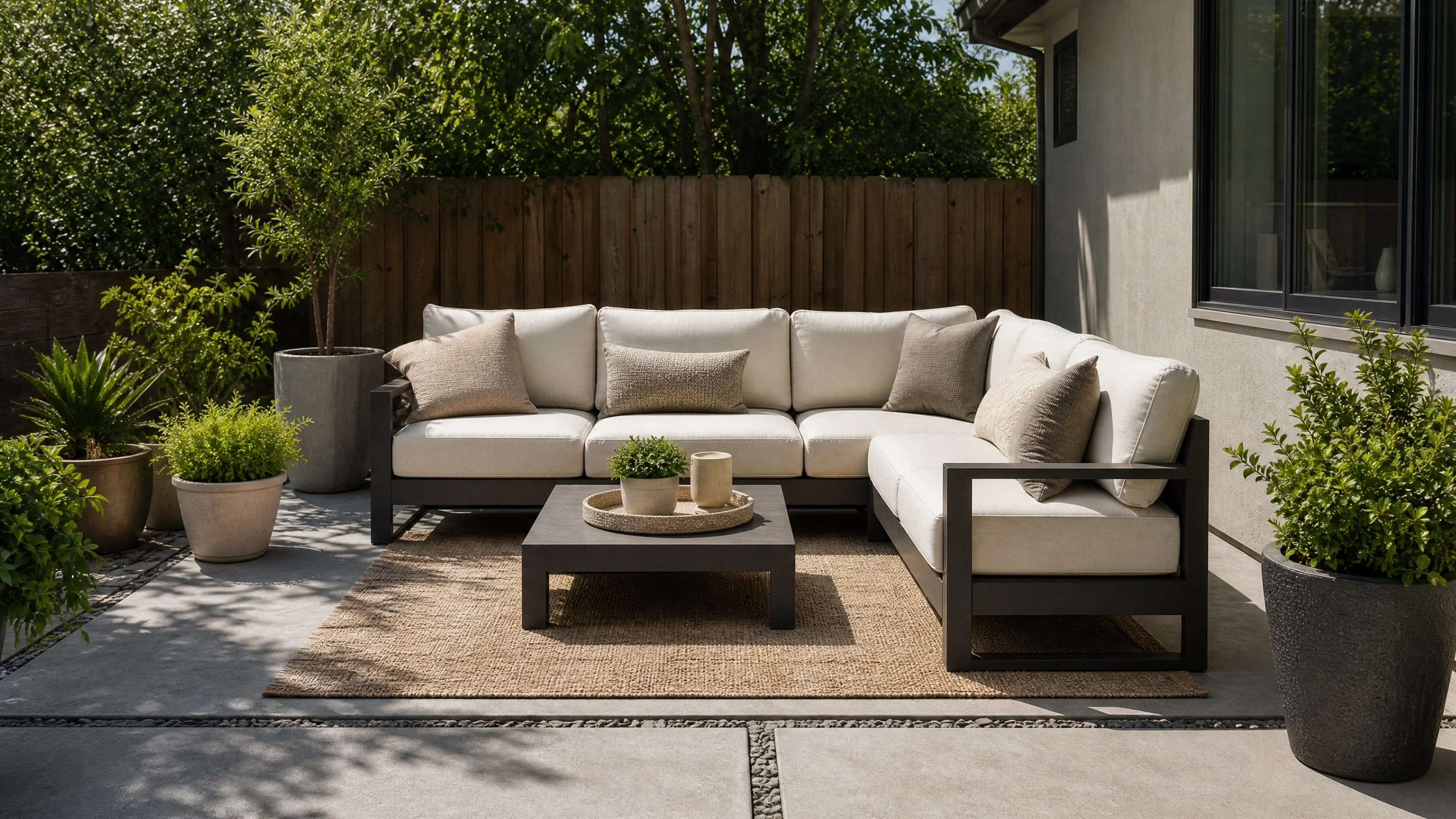
An L-shaped outdoor sectional is the most room-like furniture you can bring to a small patio, and modular versions now come in sizes that work for spaces as compact as 10×10 feet. Look for a two-piece setup — one sofa and one chaise or corner piece — with a combined footprint around 100 inches by 60 inches. That configuration fits comfortably on a mid-sized concrete slab and still leaves floor space for a small coffee table centered in front of it.
The trick is choosing deep-seat cushions in a performance fabric — solution-dyed acrylic or a Sunbrella-style material — so they hold up to sun and rain without fading in a single season. A dark charcoal or warm taupe sectional with cream cushion covers reads as high-end even on a plain concrete patio. This is a mid-range to splurge investment at roughly $350–$700 for quality modular pieces, but it’s the single furniture change that most dramatically shifts a bare patio into a real outdoor living room.
4. Hanging Daybed as the Star Focal Point
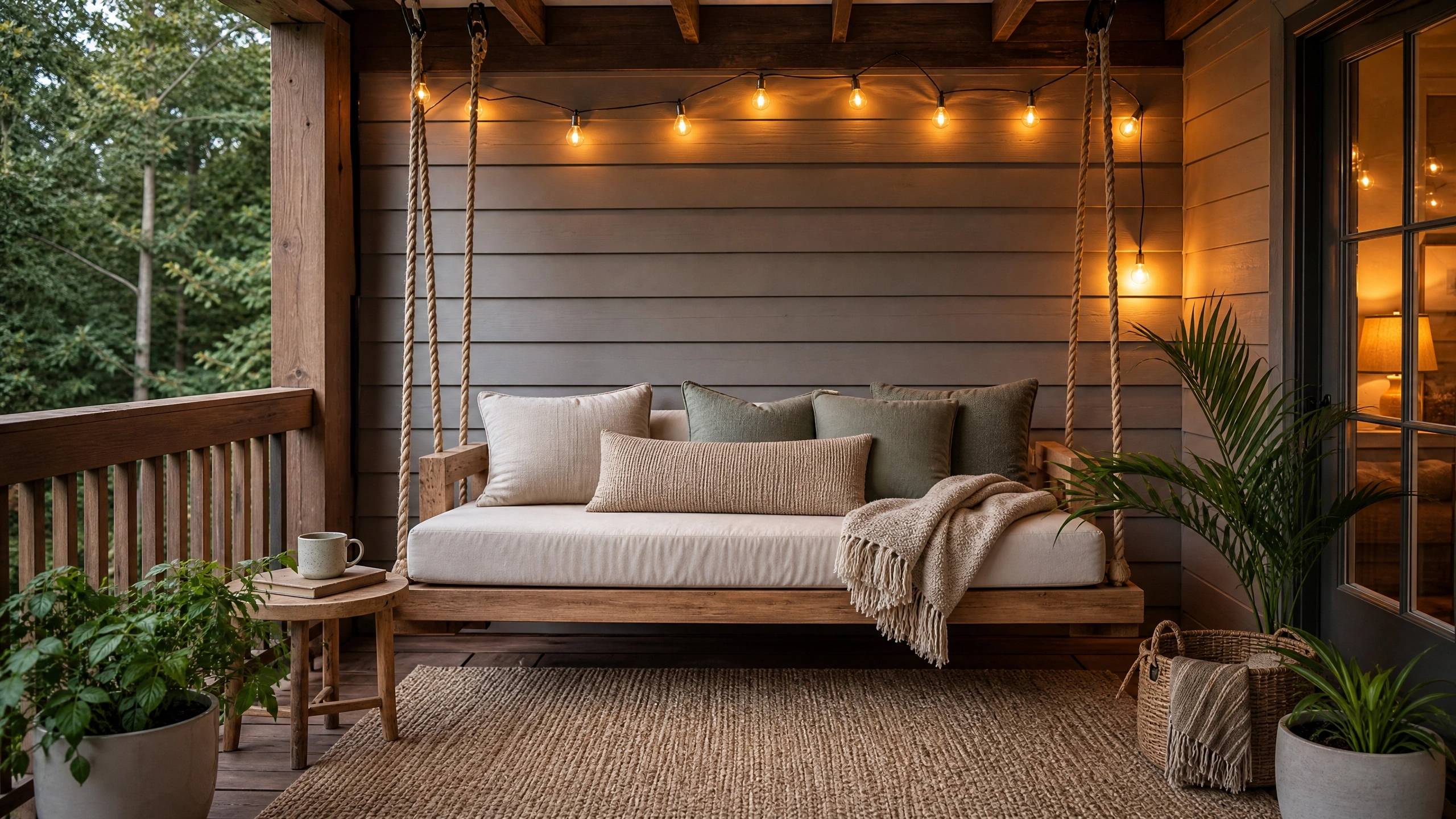
A hanging daybed — also called a swing bed or porch swing bed — is the kind of piece that makes guests stop and ask where you found it, even when it arrived flat-packed for under $300. This works best on a covered patio or wood deck with overhead beams, since the hardware anchors above and takes zero floor space beyond the swing’s own footprint. Position it against the back wall with two or three lumbar pillows stacked behind it and a lightweight throw folded across one side.
The swinging motion and the visual height a hanging daybed creates make even a compact patio feel resort-like. For renters, freestanding hanging chair frames that don’t require ceiling installation are widely available at Target and Amazon for $150–$250 and assemble in about 20 minutes. Drape a small string light strand over the frame or lay a knit throw across one arm — either detail creates the cozy, curated look that gets saved and reshared on Pinterest without any structural commitment to the space.
5. Floor Cushion Lounge With a Low Teak Table
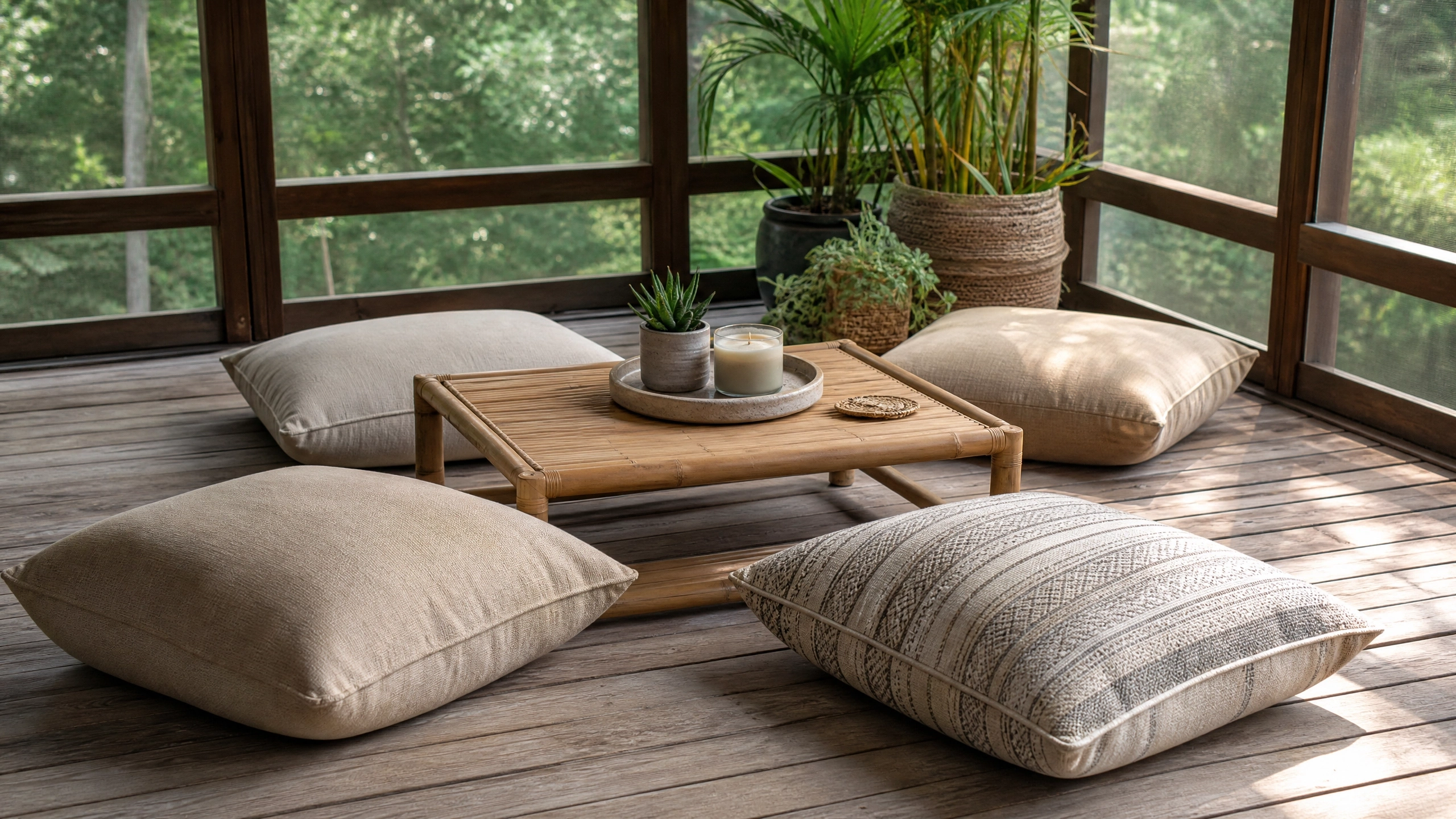
Floor cushions change the energy of a patio entirely — they signal relaxation in a way that upright chairs simply can’t replicate. A cluster of three or four large floor cushions arranged around a low teak or bamboo table (aim for one that sits 12–16 inches off the ground) creates a lounge area that feels intentional and a little bohemian without requiring large-scale furniture. This setup works especially well on a small deck or screened porch where a casual, lived-in feel suits the space better than a formal arrangement.
Choose water-resistant floor cushions with removable, washable covers — IKEA’s HÅLLÖ outdoor cushion range sits around $25–$35 each and layers well in natural neutrals. Mix two solid covers with one subtle pattern for texture without visual chaos. Keep the table surface clear except for a small tray holding a candle, one small succulent, and a coaster — that’s the styled version, and it takes five minutes to arrange but photographs like it was planned and propped for hours.
6. Pergola Nook With Linen Side Curtains
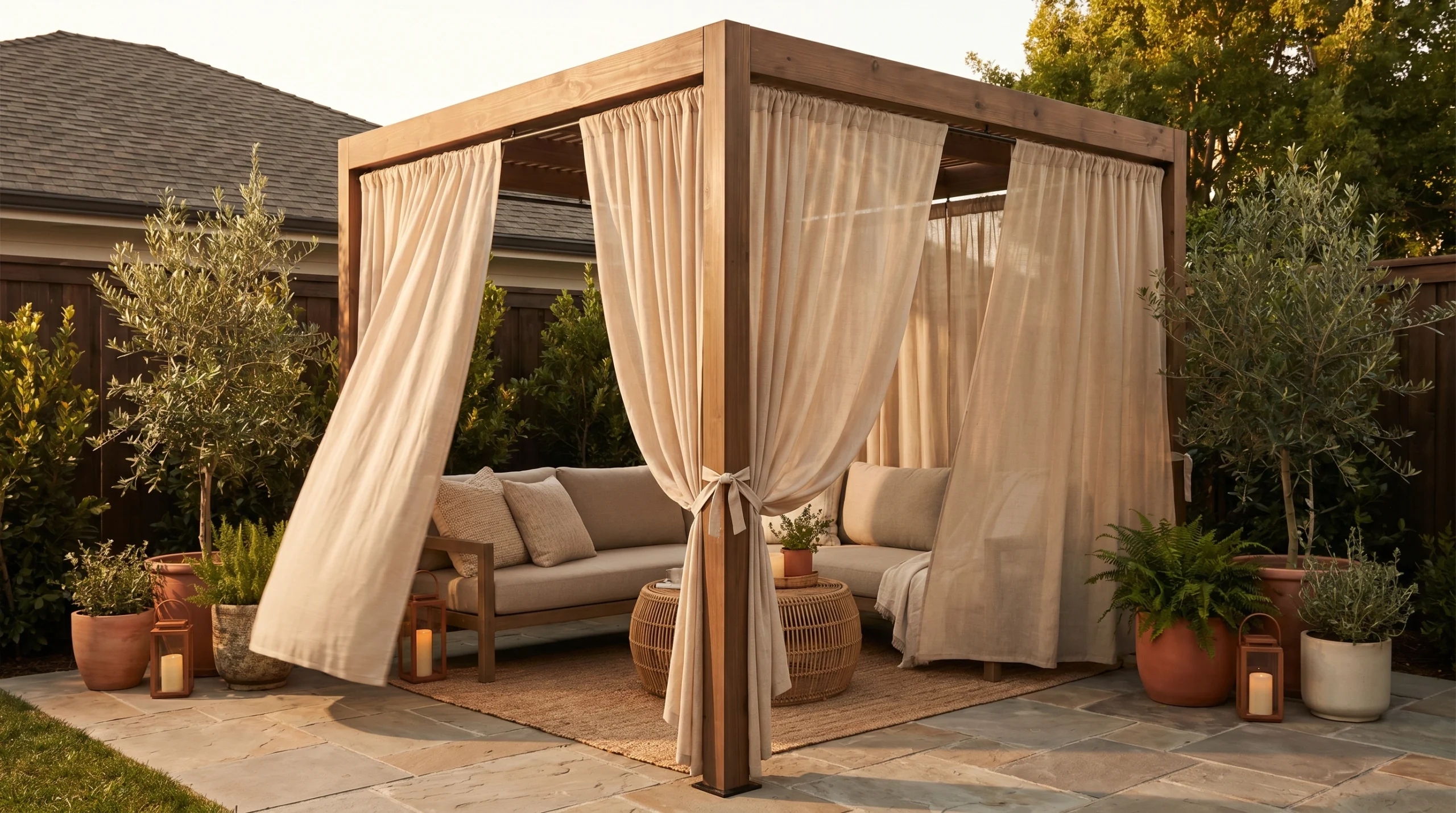
A pergola nook with linen curtains looks expensive in photos but is genuinely achievable for renters and homeowners alike. Freestanding pergola kits — the kind that need no digging or permanent installation — are available at Home Depot and Wayfair starting around $250–$400 for a 10×10-foot footprint. Add two panels of sheer, UV-resistant outdoor linen curtains (about $25–$40 per panel on Amazon) and suddenly the patio has walls, height, and a room-like enclosure that feels both private and deliberately styled.
The curtains do two things at once: they create visual softness and privacy without blocking airflow, and they frame the seating area underneath like a room inside a room. Tie them loosely to the pergola posts with ribbon or curtain clips rather than a rod, so they push aside during the day and pull closed in the evening. Stick to neutral linen tones — off-white, warm oat, or natural ecru — so they complement any furniture color underneath rather than competing with it.
7. Privacy Screen Wall With Built-In Planters
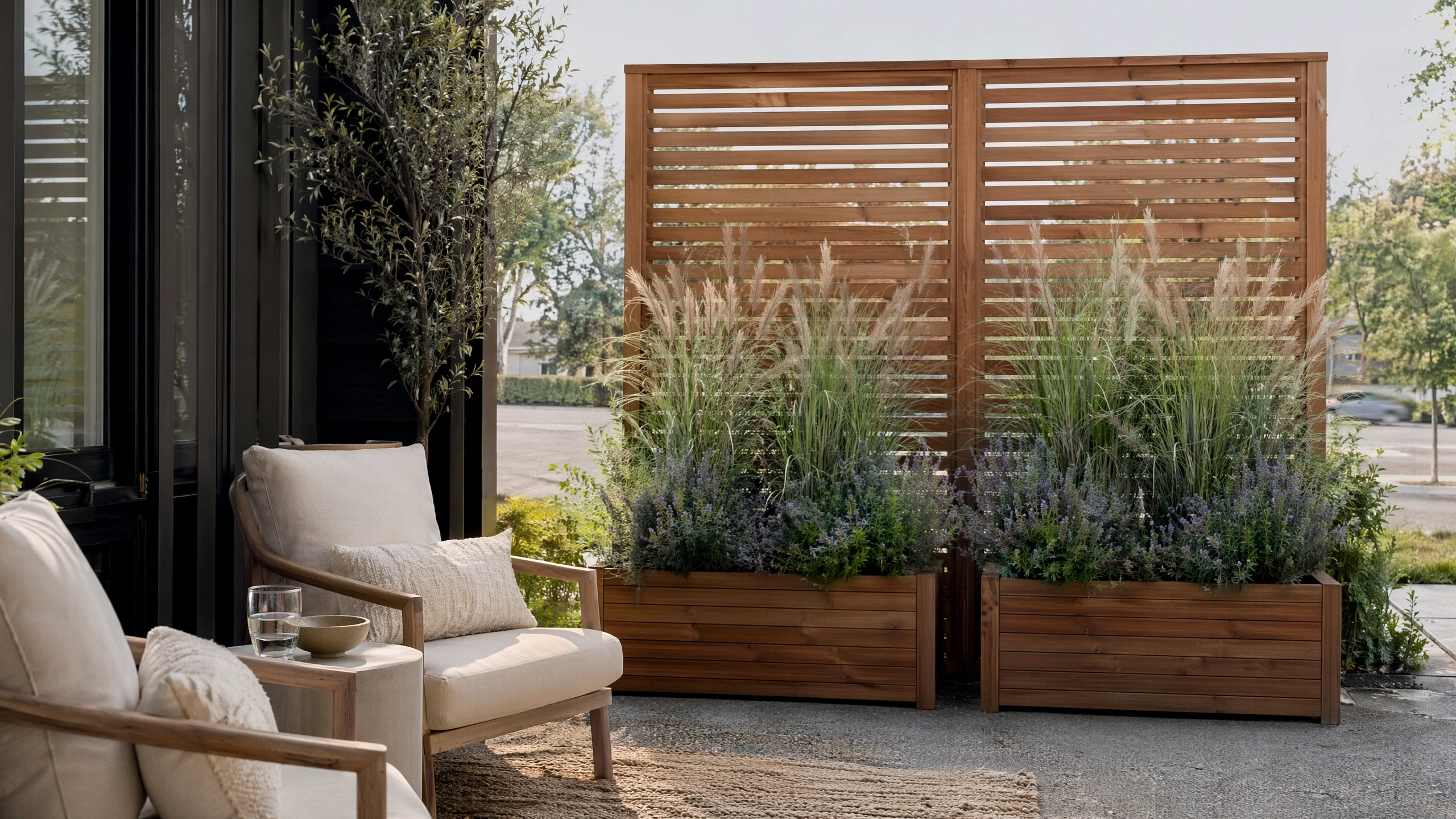
If your biggest patio issue is feeling exposed — neighbors on both sides, a sidewalk uncomfortably close, or a direct sightline to the parking lot — a privacy screen wall is the most impactful single change you can make. A modular privacy screen system with built-in planter boxes along the top or base gives you visual blocking, live greenery, and a structured backdrop all in one piece. Systems from IKEA and Wayfair are freestanding, require no tools to assemble, and move with you when you leave — genuinely renter-safe.
Tall grasses like ornamental bamboo, clumping lavender, or feather reed grass planted in the built-in boxes add 12–18 additional inches of screening height above the panel without consuming any floor space. For a roughly 6-foot-wide privacy screen with two built-in planter boxes, budget around $150–$220 total. Once it’s in place with plants filling out the boxes, the screen reads less like a temporary fix and more like an intentional garden wall — which is the distinction that separates a well-designed patio from one that just looks improvised.
8. Folding Furniture for a Space That Does Double Duty
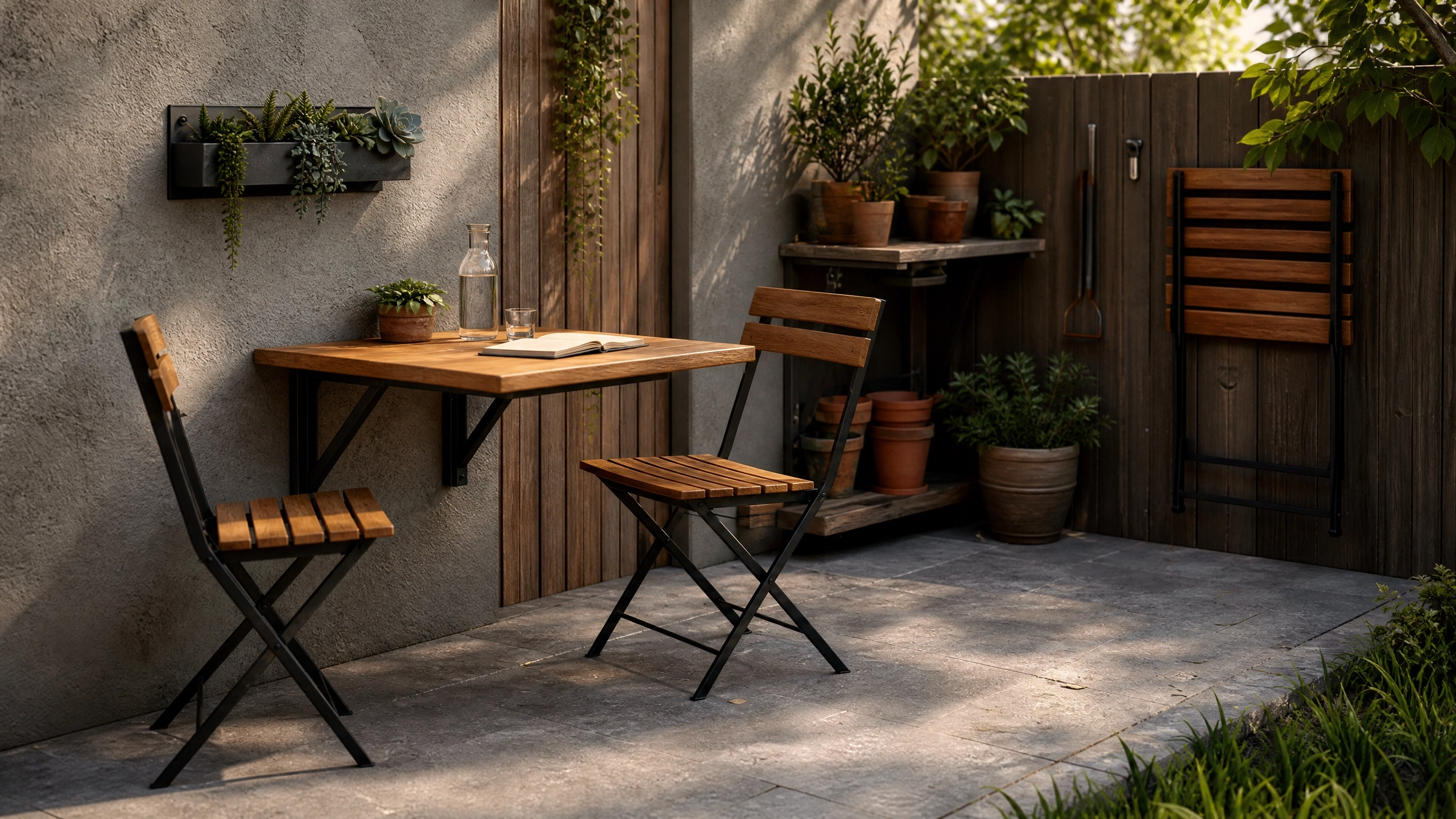
Not every patio can be just a lounge — some spaces need to function as a dining area, container garden workspace, and storage zone simultaneously. Folding furniture earns its place here. A wall-mounted folding table that drops flat when not in use, paired with two chairs that hang on a fence hook or lean flat against the wall, means you can shift from “dinner outside” to “open floor space” in about four minutes. No crowding, no stubbed toes, no furniture rearranging required.
Look for folding chairs in powder-coated steel or teak rather than thin plastic — the material reads as intentional outdoor furniture rather than temporary lawn seating. IKEA’s TÄRNÖ outdoor folding chair set hits that balance at a genuinely budget-friendly price point, usually under $50 for a pair. When the table is flat against the wall, hang a small succulent planter nearby so the “empty wall” moment still looks styled rather than just bare and waiting for furniture to arrive.
9. Dark Wicker Sofa Set With Neutral Linen Cushions
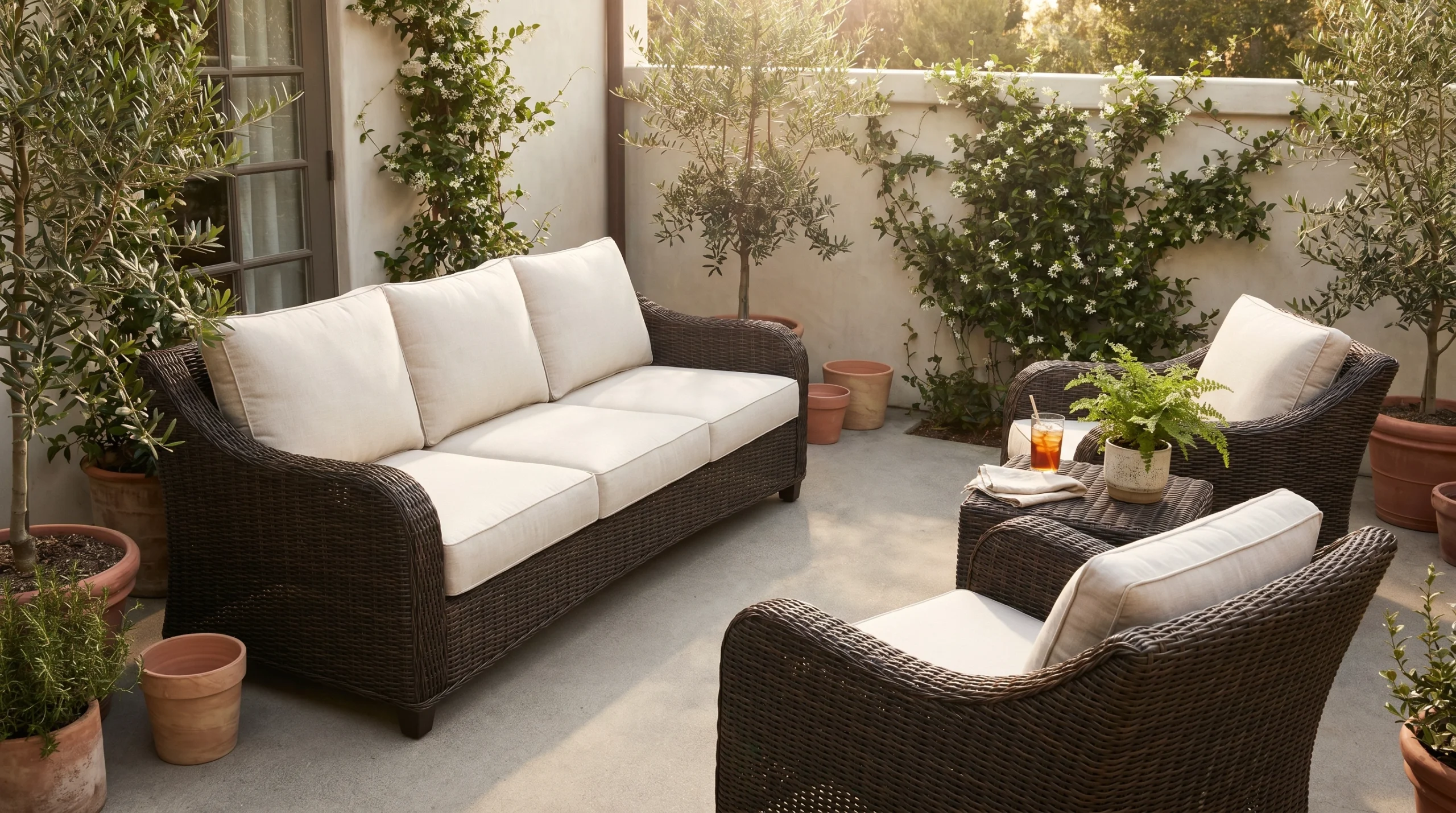
There’s a reason the dark wicker sofa set remains one of the most pinned patio looks year after year — it’s warm, timeless, and photographs beautifully against almost any outdoor backdrop. A two-piece set in mocha, espresso, or dark brown — sofa plus armchair, or sofa plus loveseat — gives a small patio visual weight without feeling heavy, especially when paired with light cushion covers in cream, ivory, or warm white linen. The contrast between dark frames and light textiles is what makes the combination feel considered rather than accidental.
For patios under 10 feet wide, keep the sofa frame at 60 inches or less to maintain at least 18 inches of clearance on each side. Angle two small chairs toward it to create a U-shaped conversation corner, and add a woven side table between the chairs. This mid-range setup — around $300–$500 for a complete sofa, chairs, and side table grouping — is one of the most complete outdoor room looks you can create without a designer.
10. Hammock Corner With a Bamboo Side Table
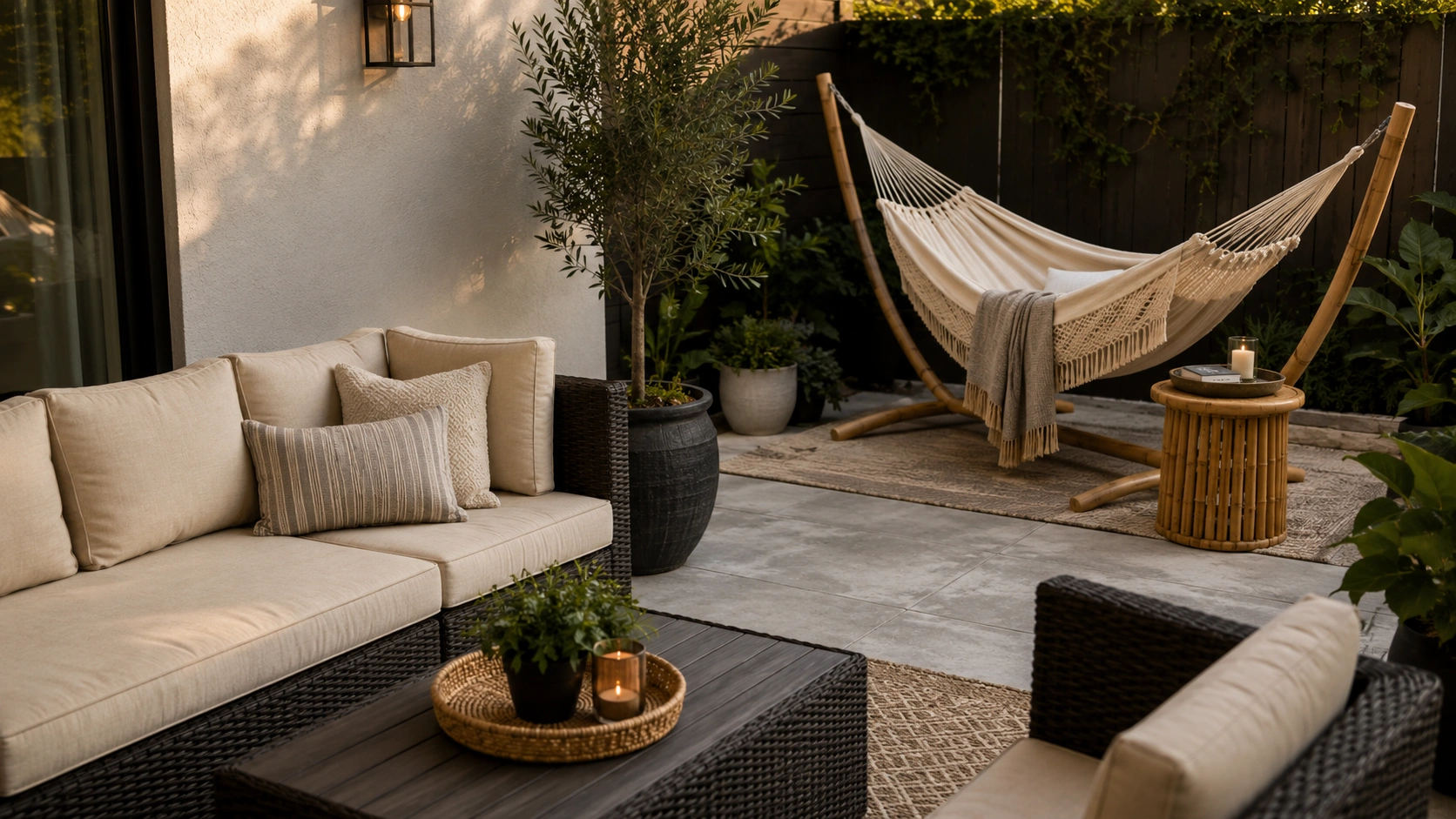
A hammock doesn’t need a yard with two evenly spaced trees — it needs a freestanding frame. C-frame and arc designs now fit into corners as compact as 7×4 feet. Set a woven cotton or recycled polyester hammock into a curved bamboo or powder-coated steel stand, tuck it into the back corner of the patio behind the main seating area, and it reads as a deliberate lounge nook immediately — not an afterthought or a camping setup that someone forgot to put away before the season changed.
Place a round bamboo side table — 14 to 16 inches in diameter and about 20 inches tall — next to the hammock frame, within arm’s reach from a lying position. Add a small tray on top with a candle and a paperback. The complete setup stays well under $250: a C-frame stand runs $80–$150 and a woven cotton hammock is $40–$80, making this one of the most affordable full lounge corners on this list and one of the most personal-feeling to actually spend time in.
11. Rattan Chairs + Oversized Earth-Tone Throw Pillows
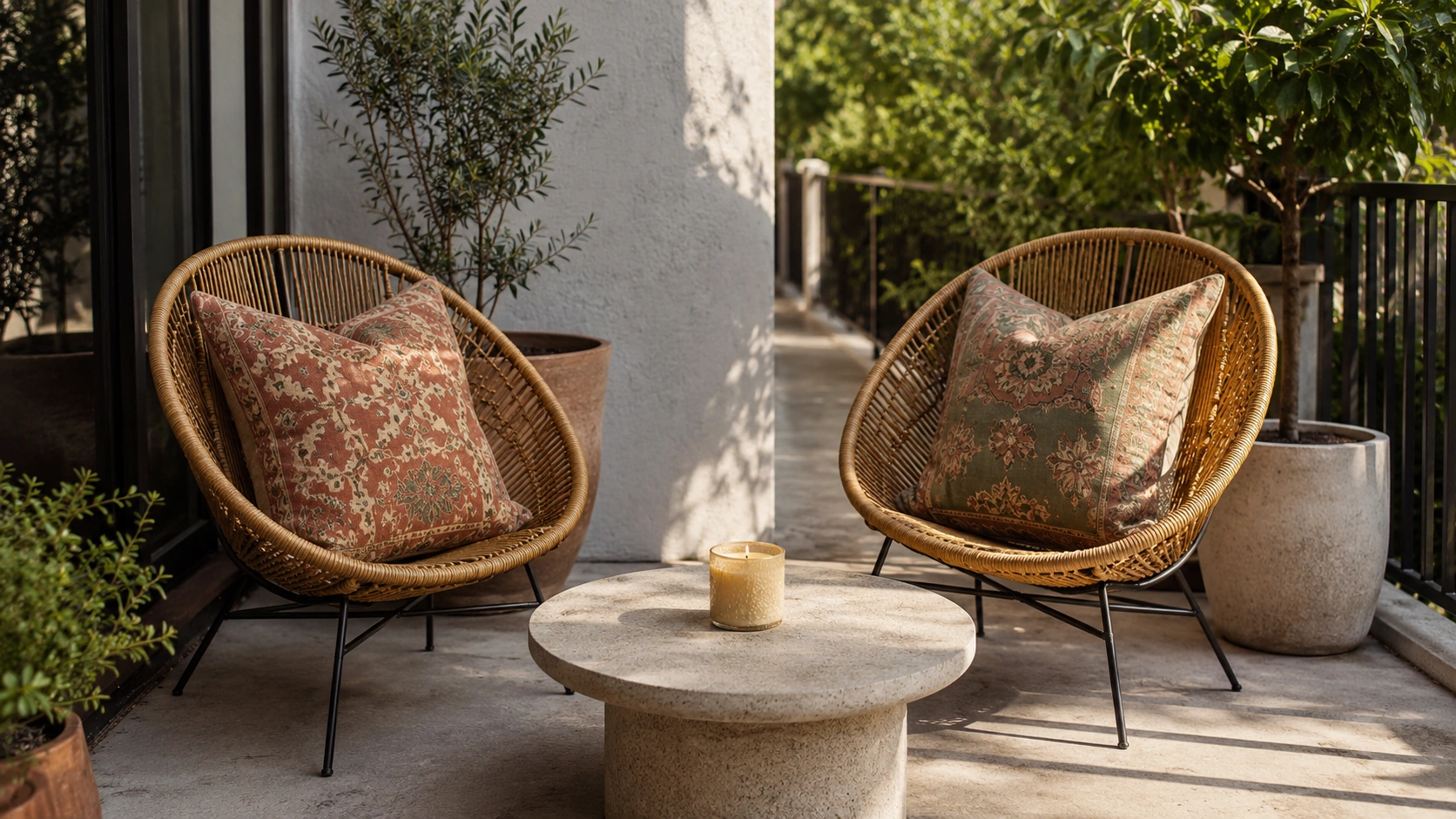
Two rattan bucket chairs facing each other across a small outdoor coffee table photographs like it was professionally styled — but it’s really just good furniture scale and one strong pillow choice doing most of the work. Choose chair frames no wider than 28 inches so they both fit on a 6-foot patio without blocking the walkway. A curved or egg-shaped rattan silhouette creates visual interest in a tight space without requiring additional pieces to fill the room around it.
The real styling move here is the throw pillows — go oversized, 20×20 inches or larger, in earth-toned patterns: warm rust, terracotta, dusty sage, or a classic block print. The scale should feel almost too generous for the chair, which is exactly what makes it read as intentional. This full setup runs under $200 on Amazon or from IKEA’s seasonal outdoor range. Add one citronella candle to the coffee table and the space feels thought through rather than thrown together.
12. Built-In Bench Seating Along the Fence Line
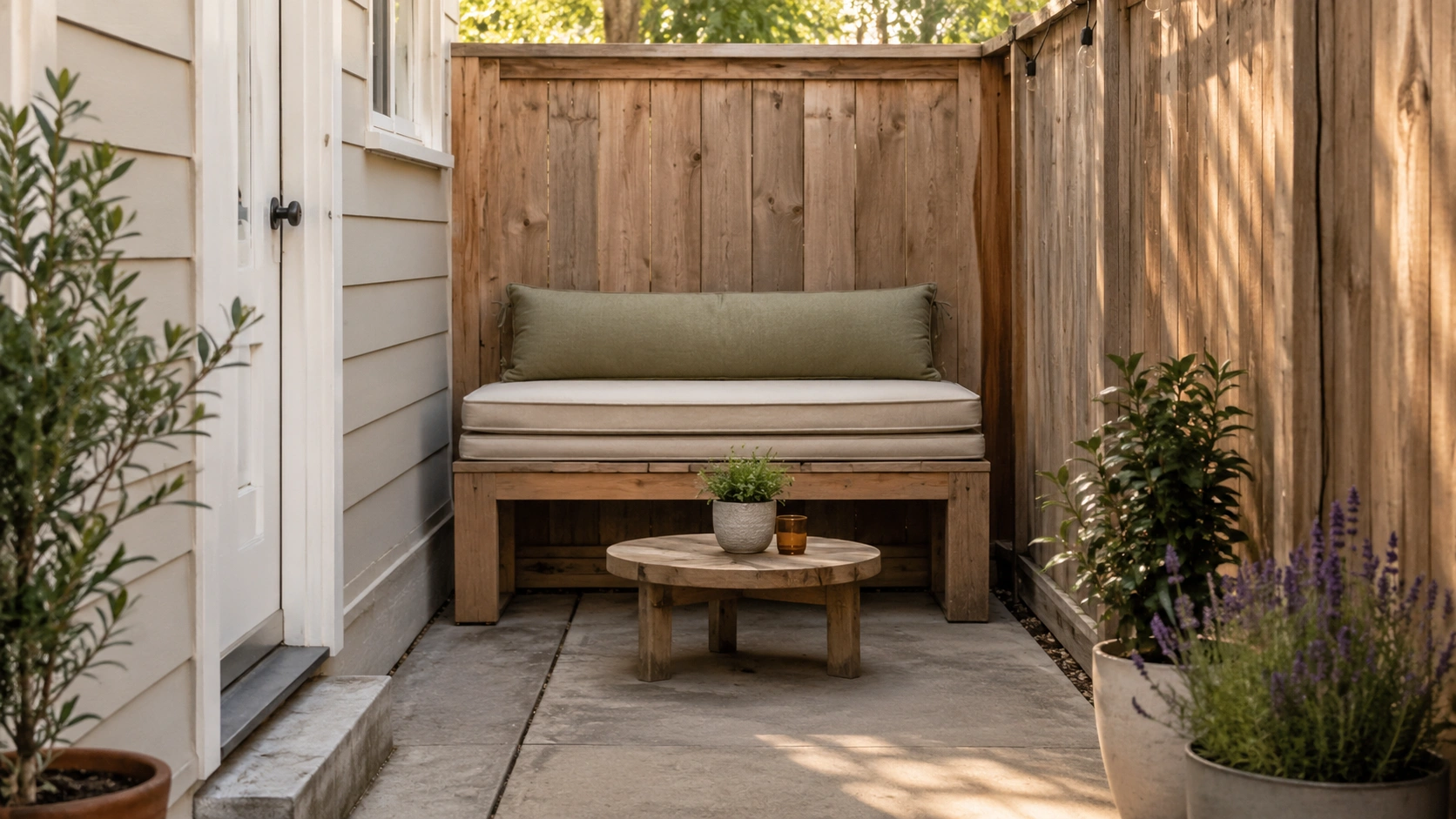
A long bench placed flush against one fence or wall is the right move when your patio is narrow — five feet wide or less — and standard chairs would eat up every inch of walkable space. A simple wooden bench, 48–72 inches long, placed against the back fence frees up the rest of the floor for a small table or low coffee surface in front. Add a long bolster cushion or two stacked outdoor seat pads and it stops looking utilitarian right away.
This idea works for renters too — a freestanding wooden bench requires no wall attachment, bolts, or fence modification. For homeowners with basic DIY comfort, a simple cedar bench can be built for under $80 in materials, and the weathered finish suits an outdoor setting naturally. For non-builders, IKEA’s ÄPPLARÖ outdoor bench is a straightforward flat-pack option that fits this exact purpose and holds up well across multiple seasons without needing more than an annual wipe-down.
13. All-White and Cream Patio for a Clean, Airy Look
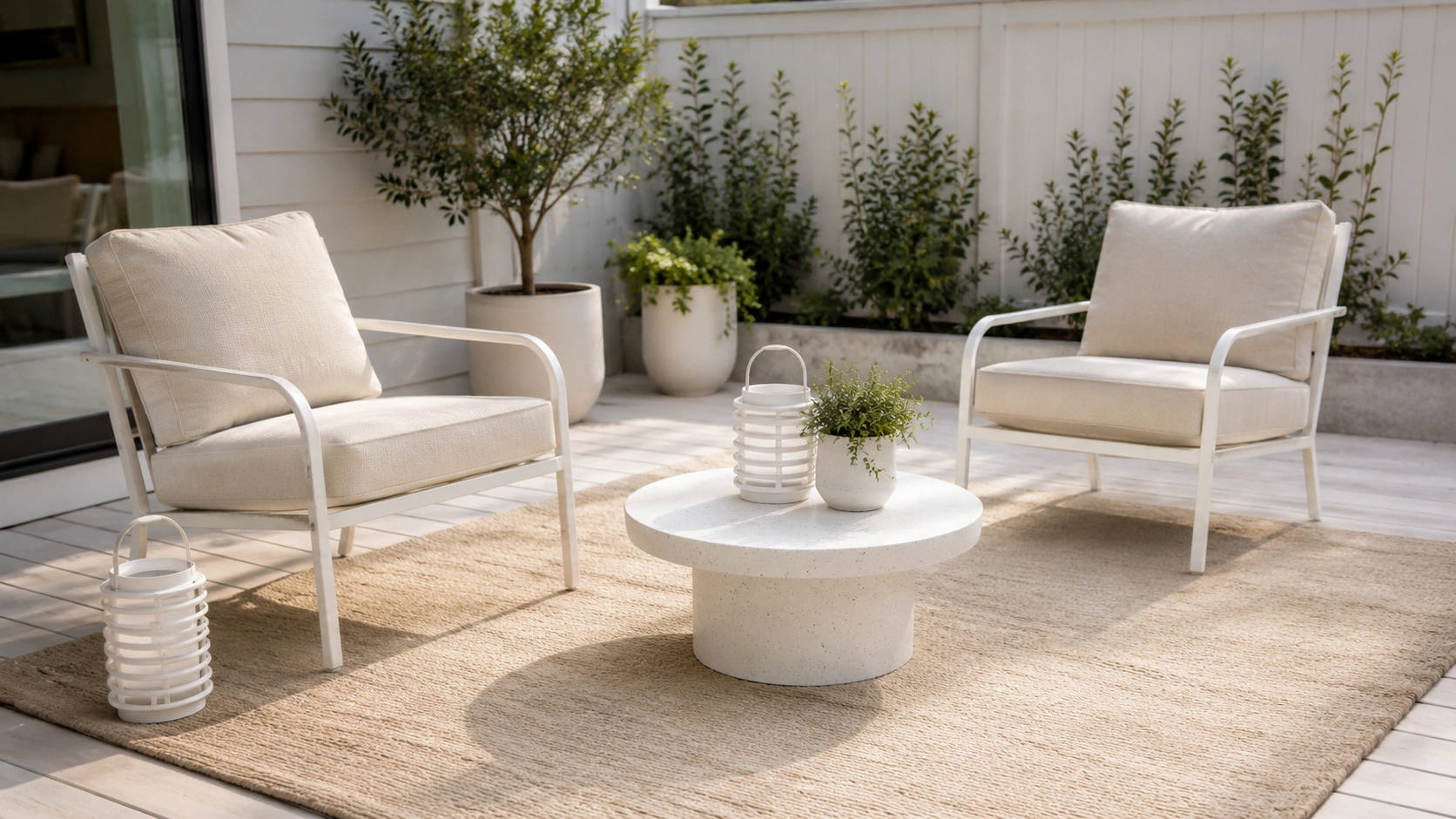
All-white outdoor furniture gets a bad reputation for being high-maintenance, but done right — white powder-coated metal chairs, cream linen cushions, white lanterns, and a natural jute or cream outdoor rug — the effect is genuinely beautiful and far easier to care for than it looks. The brightness visually expands a small patio, making 80 or 100 square feet feel significantly more open and spacious than the actual dimensions suggest. It’s also one of the cleanest-photographing patio palettes, which is part of why it stays consistently popular year after year.
The maintenance secret is treating cushion covers with a water-repellent spray (about $10 at any hardware store) so rain beads off rather than soaking through. Wipe down white metal frames with a damp cloth at the start and end of each season. For a budget version, Target’s Threshold outdoor collection offers white powder-coated chairs from around $30–$40 each. Add cream cushions and two white solar lanterns and the full look comes together comfortably under $150.
14. Industrial Patio With Metal Chairs and Edison Bulb Strands
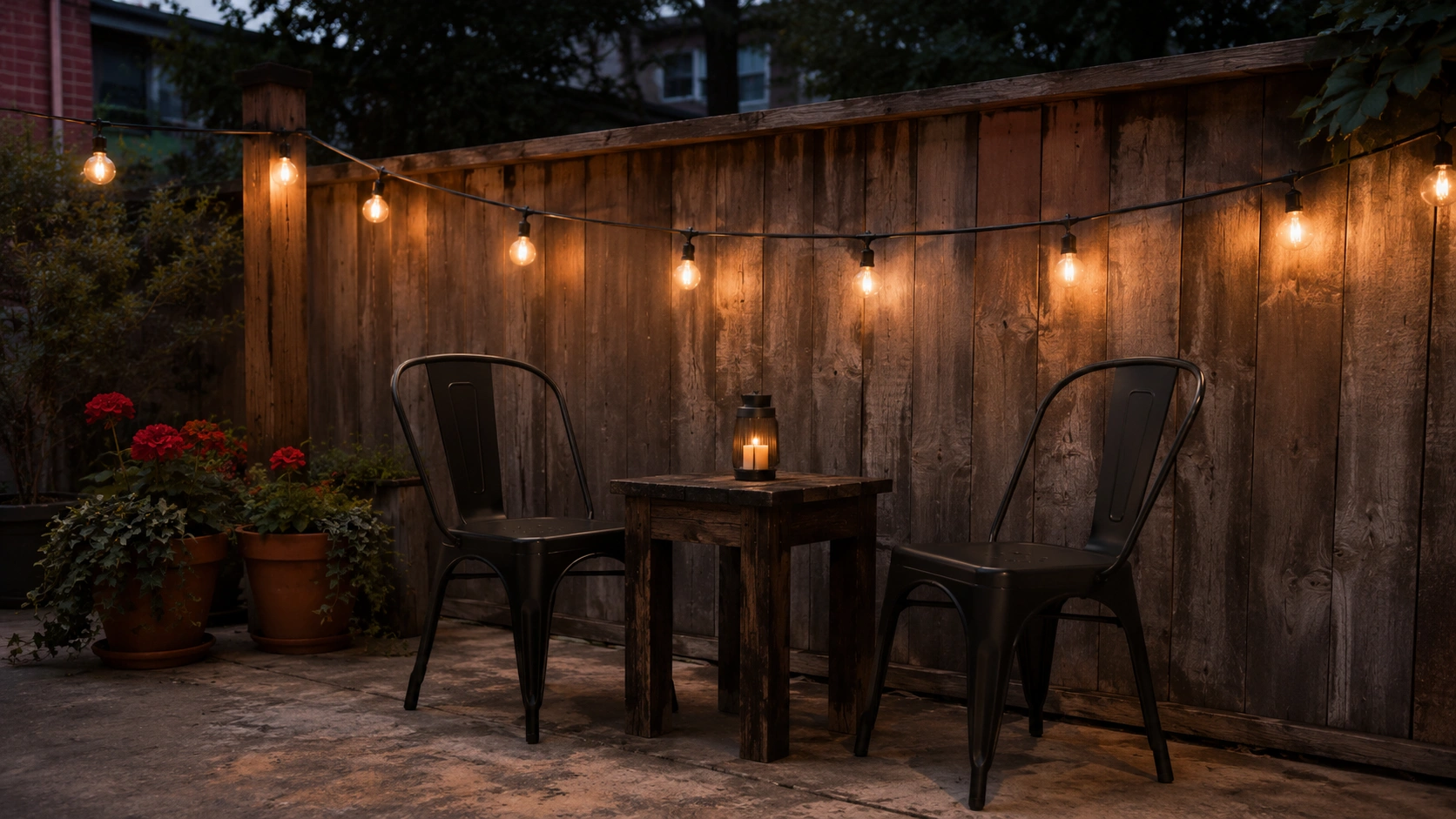
Industrial outdoor style leans into the materials most small patios already have — concrete, metal, exposed wood grain — and builds on them rather than covering them up. The key pieces are matte black café-style chairs, roughly 22–24 inches wide, a reclaimed wood or dark-stained side table, and a strand of Edison bulb string lights draped overhead in a loose, organic line. Together they turn a basic concrete slab into something that reads as deliberately styled — less “backyard,” more “back patio of a good independent coffee shop.”
Edison bulb strings are almost entirely solar-powered now, which means no extension cords, no outlet hunting, no landlord negotiations — just clip one end to a fence post and let it charge through the day. A strand of 25–50 globe bulbs typically costs $15–$30 on Amazon and casts a warm amber glow that makes every outdoor space feel more inviting after dark. Add one or two terracotta pots with trailing ivy or geraniums to soften the metal-and-concrete combination without losing the industrial mood entirely.
15. Bohemian Patio With Macramé, Layers, and Warm Accents
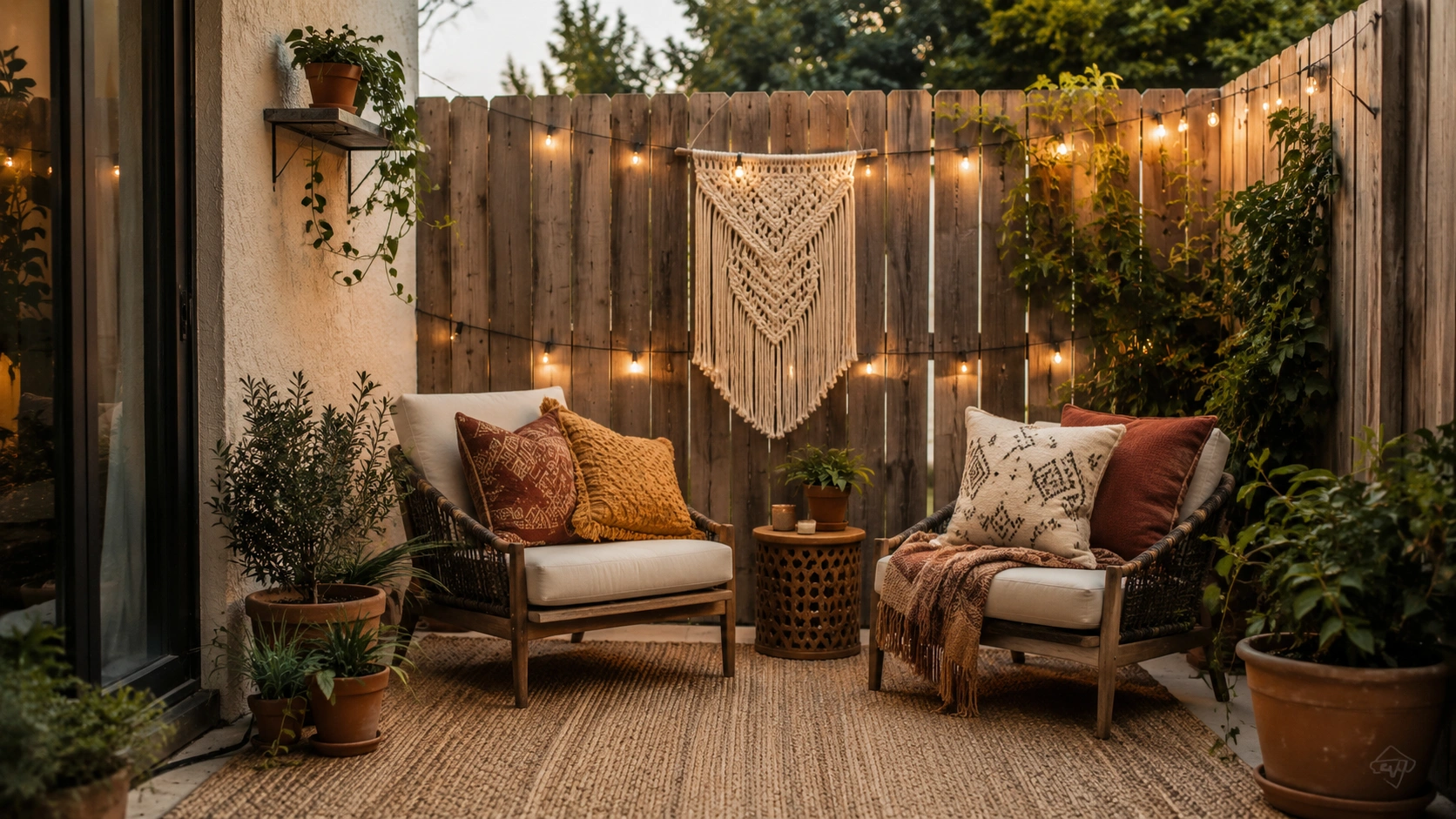
Bohemian style is one of the most forgiving aesthetics for small outdoor spaces because it’s built on layers rather than scale — a 6×8-foot balcony can look just as complete as a larger patio if the layering is done right. Start with a jute or natural-fiber outdoor rug, add two low chairs or a small loveseat with mismatched throw pillows in terracotta, mustard, and rust, then hang one macramé panel on the fence or wall behind the seating area to create a textured, styled backdrop.
The macramé piece is what most people skip, and it’s actually the easiest detail to add. A single 18×36-inch macramé wall hanging — available on Etsy or Amazon for $25–$60 — hung at eye level on a fence hook transforms a blank fence into a pinnable backdrop in about five minutes. Add two string light strands at different heights and a few mismatched terra cotta pots with trailing plants, and the space feels genuinely collected rather than just decorated — which is the key difference between a boho patio that looks right and one that just looks busy.
16. Japandi-Inspired Outdoor Room With Bamboo and Clean Lines
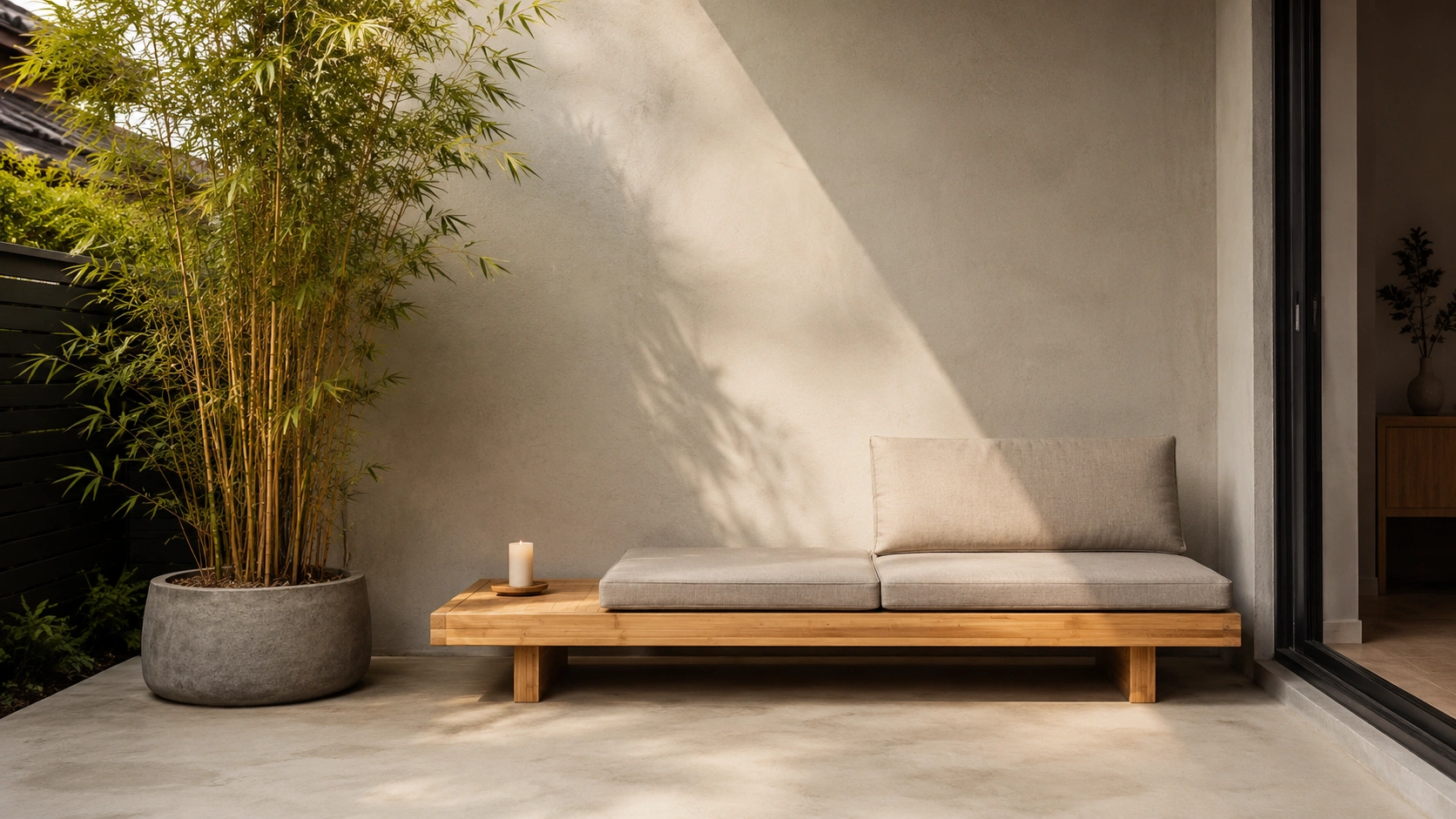
Japandi — the design crossover between Japanese minimalism and Scandinavian warmth — translates well to outdoor spaces precisely because it’s built on natural materials, clean silhouettes, and intentional simplicity. All of those principles work better in small spaces than large ones. The foundation is a low bamboo or light teak platform bench or sofa with thin, firm cushions in stone grey, warm sand, or deep charcoal. Keep the furniture arrangement tight against the walls with nothing floating in the center of the patio.
The visual language of Japandi is restraint: one plant, not five; one candle, not a cluster; one textile, not layered throws. On a small patio, that restraint reads as confidence rather than incompleteness. Choose a single architectural plant — a snake plant in a matte black ceramic pot, a sculptural ficus, or a clumping bamboo in a round concrete planter — and let it serve as the primary decorative element beside the furniture. The overall effect is calm, sophisticated, and genuinely unlike any other aesthetic on this list.
17. Compact Rooftop Deck Turned Cozy Viewing Nook
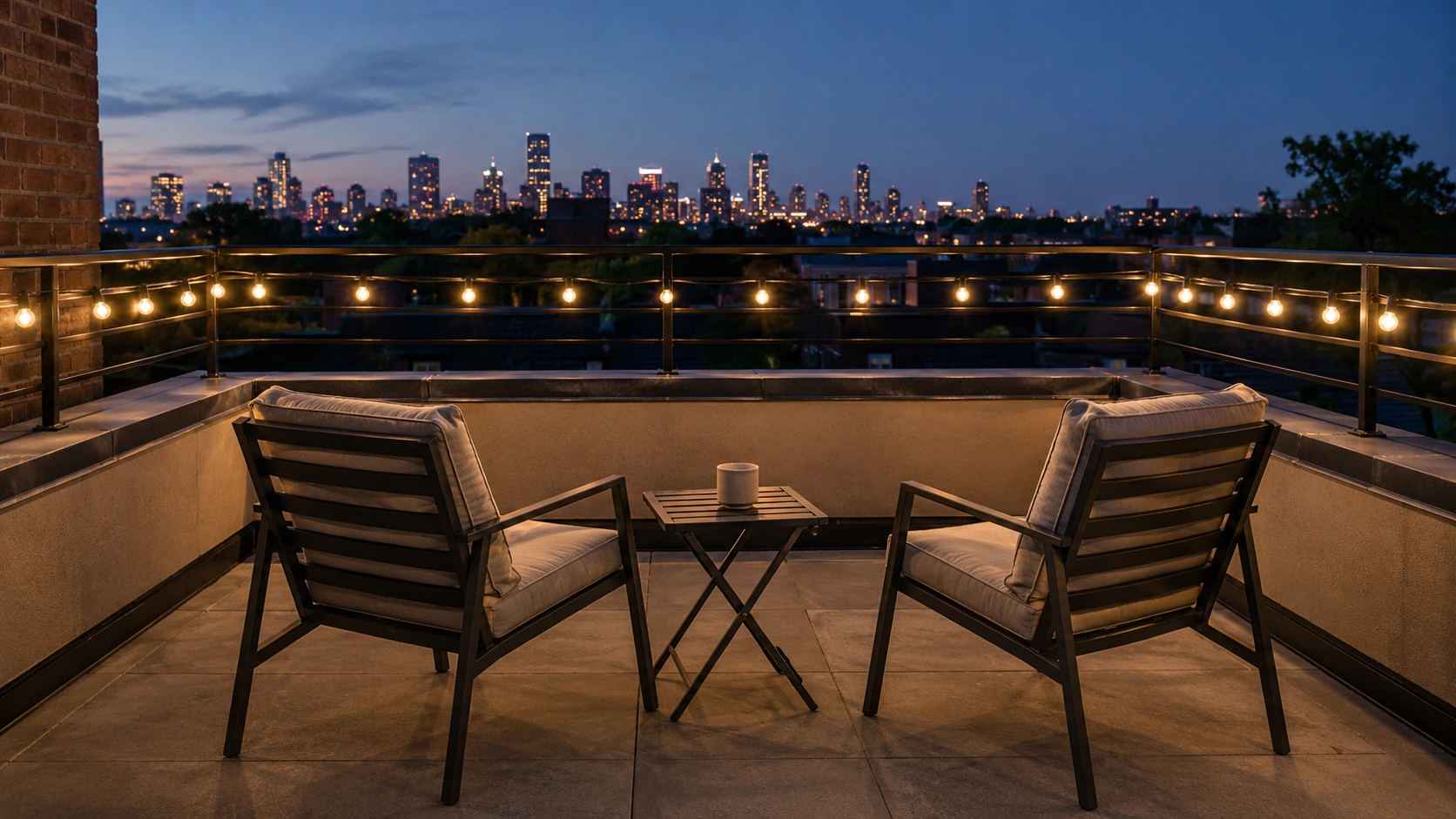
Rooftop decks offer open sky and often excellent views, but they also face full sun exposure, strong wind, and strict building weight limits that make permanent or heavy furniture genuinely problematic. The right approach is weatherproof, lightweight furniture — powder-coated aluminum rather than heavy cast iron or solid teak — arranged to face the best available view, whether that’s a city skyline, a tree canopy, or just a quiet open sky at night. Lightweight doesn’t mean flimsy; aluminum patio furniture has improved dramatically in both quality and design.
For a compact rooftop setup, two low chairs with UV-resistant cushions, a folding side table, and a strand of weatherproof globe lights clipped along the perimeter railing creates a functional viewing nook without adding unnecessary structural load. Skip anything heavy — cast iron planters, concrete pots, large portable fire pits — unless you’ve confirmed your building’s weight specifications with the property manager first. Rooftop decorating can be genuinely beautiful, but it’s the one idea on this list where renter-safe planning has to come before aesthetics.
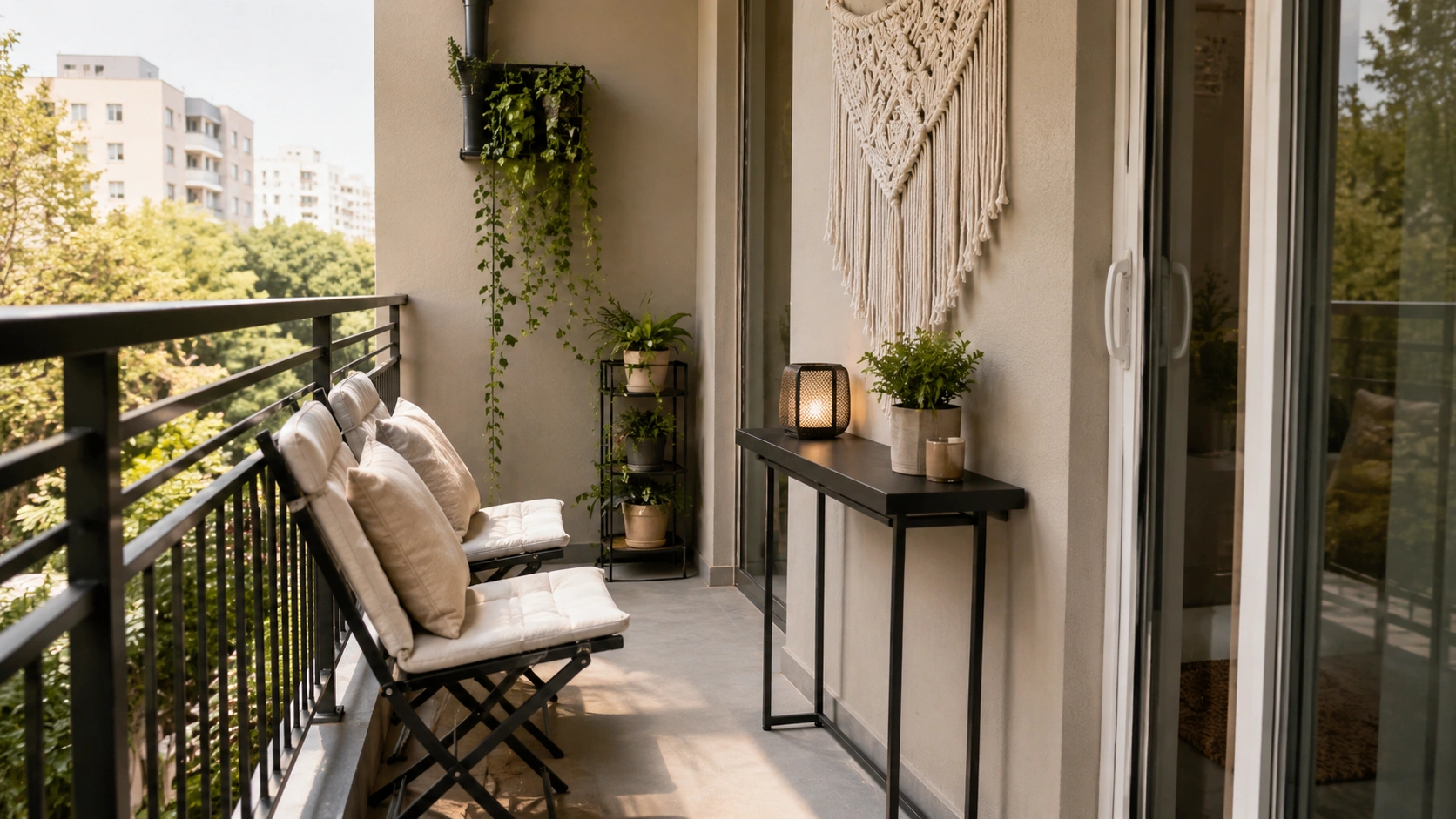
Most apartment balconies run 4 to 6 feet deep and 8 to 10 feet wide, which means standard patio furniture either overhangs the railing or blocks the sliding door. Treat the balcony like a galley kitchen: place furniture along the longest wall and keep the walking aisle — however narrow — clear. Two folding chairs side by side along the railing edge, facing a small console or side table against the building wall, creates a genuinely functional sitting zone in a very tight footprint.
The mini living room effect comes from treating the balcony wall like an interior wall — hang a weather-resistant macramé piece, a metal art panel, or a waterproof mirror at eye level and suddenly the space has a focal point and visual depth beyond the railing. Keep plants vertical rather than floor-level: a wall-mounted planter or a small tiered plant stand in the corner takes up almost no floor space while adding the layered green look that makes a balcony feel finished rather than improvised.
19. A Cozy Reading Corner With One Statement Lounge Chair
You don’t need a full seating arrangement to make a corner of your patio feel like a room. One well-chosen statement lounge chair — a large wicker egg chair, a mid-century outdoor rocker, or a plush all-weather club chair — placed in a corner with a side table and a good light source creates a reading nook that feels genuinely personal and deliberately designed. The single-chair setup is often the right choice for solo renters, small balconies, or awkward corners that can’t comfortably fit a full furniture grouping.
Choose a chair with a seat depth of at least 22 inches so it’s genuinely comfortable to sit in for more than 20 minutes, not just upright-functional. Pair it with a 14–18-inch round side table for a book, a drink, and a candle. For lighting, a solar-powered stake light or a clip-on LED book light attached to the chair means zero wiring and zero landlord negotiations. Source the chair from Facebook Marketplace and the side table from IKEA and this whole corner comes together well under $150.
20. Fire Pit Circle With Low Seating All Around
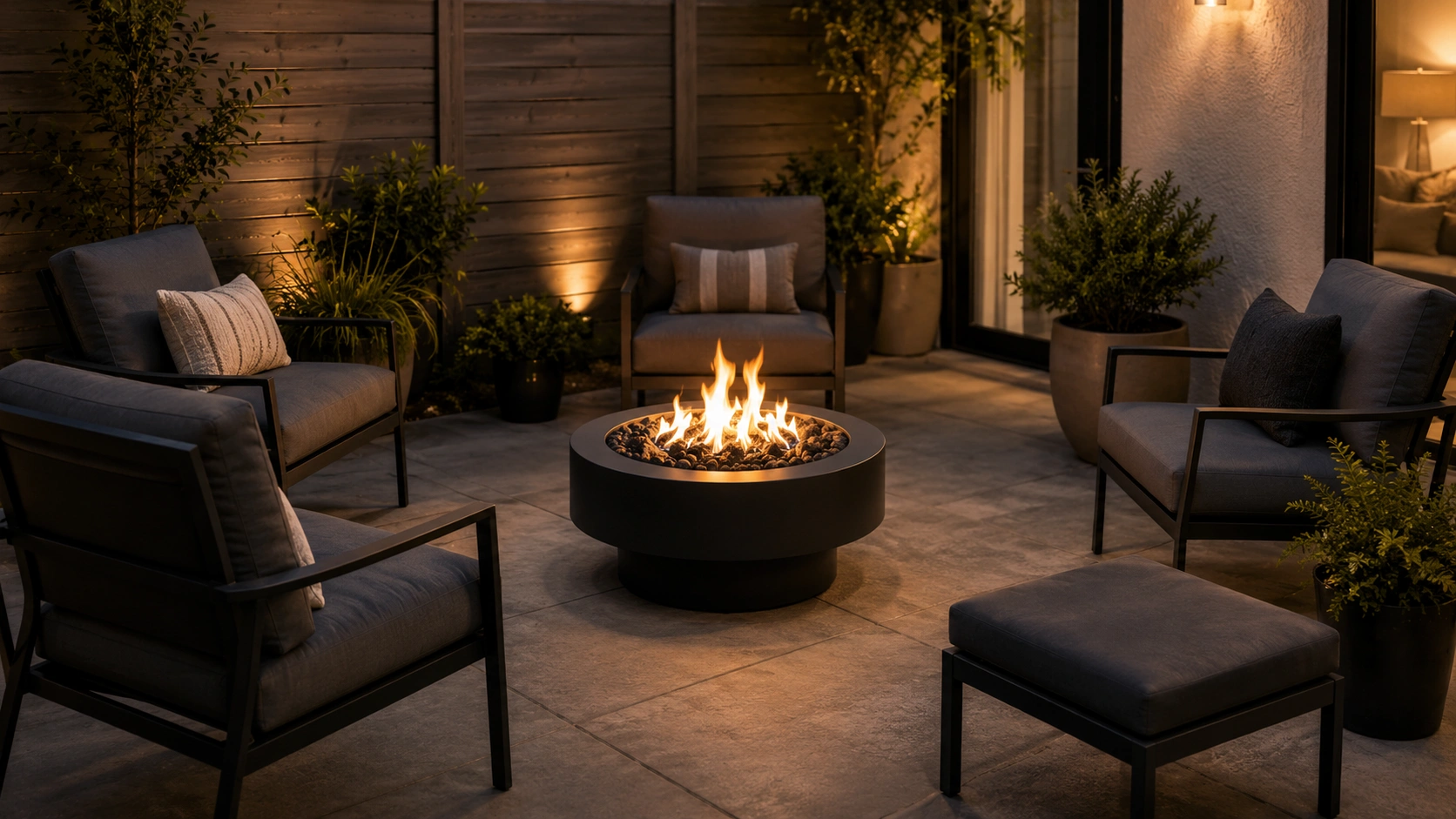
A portable propane or ethanol fire pit immediately elevates a patio from outdoor space to outdoor room. The flickering center point creates a natural gathering circle, and the seating arranged around it — four low chairs, two small loveseats, or a mix of ottomans and a bench — defines the space better than any rug or overhead lighting could on its own. For patios under 12 feet wide, keep the fire pit at 24–28 inches in diameter with at least 36 inches of clearance maintained all the way around it.
Propane tabletop fire bowls are the most renter-friendly option — they sit on a side table or directly on the ground with no installation required, run on small propane canisters, and store away completely between uses. Prices range from $80 to $200 depending on bowl size and flame output. Before setting one up, always check your lease and local fire codes — some buildings prohibit open-flame devices on covered patios and apartment balconies entirely, even portable versions, and it’s worth confirming before you buy.
21. Outdoor Dining-Lounge Hybrid With an Adjustable Table
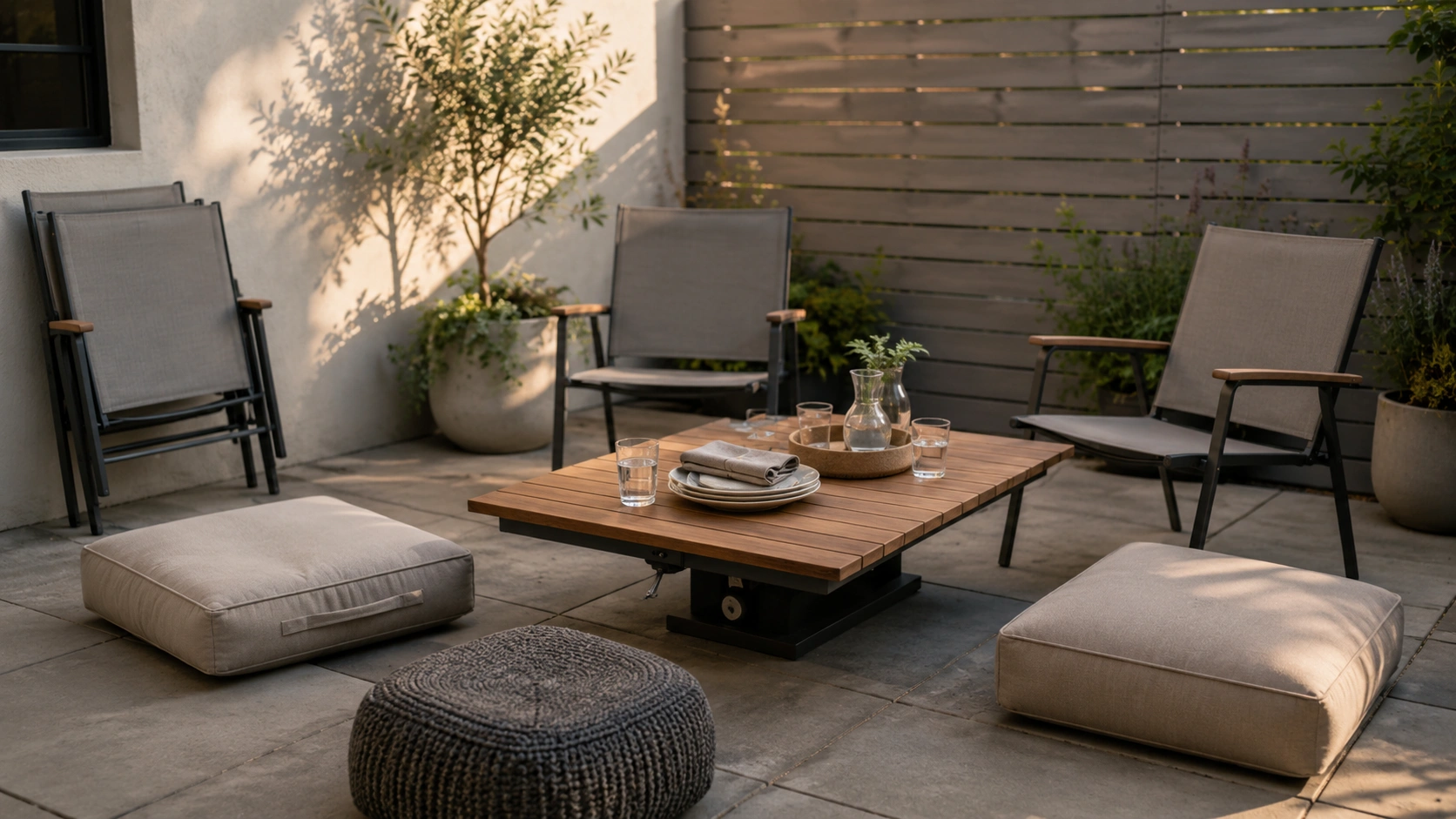
When the patio needs to serve as both a dining space and a lounge, an adjustable-height table does the heavy lifting without doubling your furniture budget. These tables shift between dining height (28–30 inches) for meals and coffee table height (16–18 inches) for lounging, using a simple locking mechanism that takes about five seconds to operate. One table, two moods, zero additional furniture required. For a patio under 100 square feet, this kind of multifunctional piece — typically $150–$300 — is one of the smartest investments on the list.
Pair the adjustable table with four lightweight stackable chairs. When the table drops into lounge mode, move two chairs aside and replace them with floor cushions or a low ottoman — the visual shift from “dining patio” to “lounge patio” is complete and dramatic without requiring two separate furniture setups. Outdoor markets and Amazon both carry adjustable-height patio tables, and the selection has expanded considerably over the past couple of years, with options in aluminum, teak, and powder-coated steel at a range of price points.
22. Vertical Plant Wall as a Living Green Backdrop
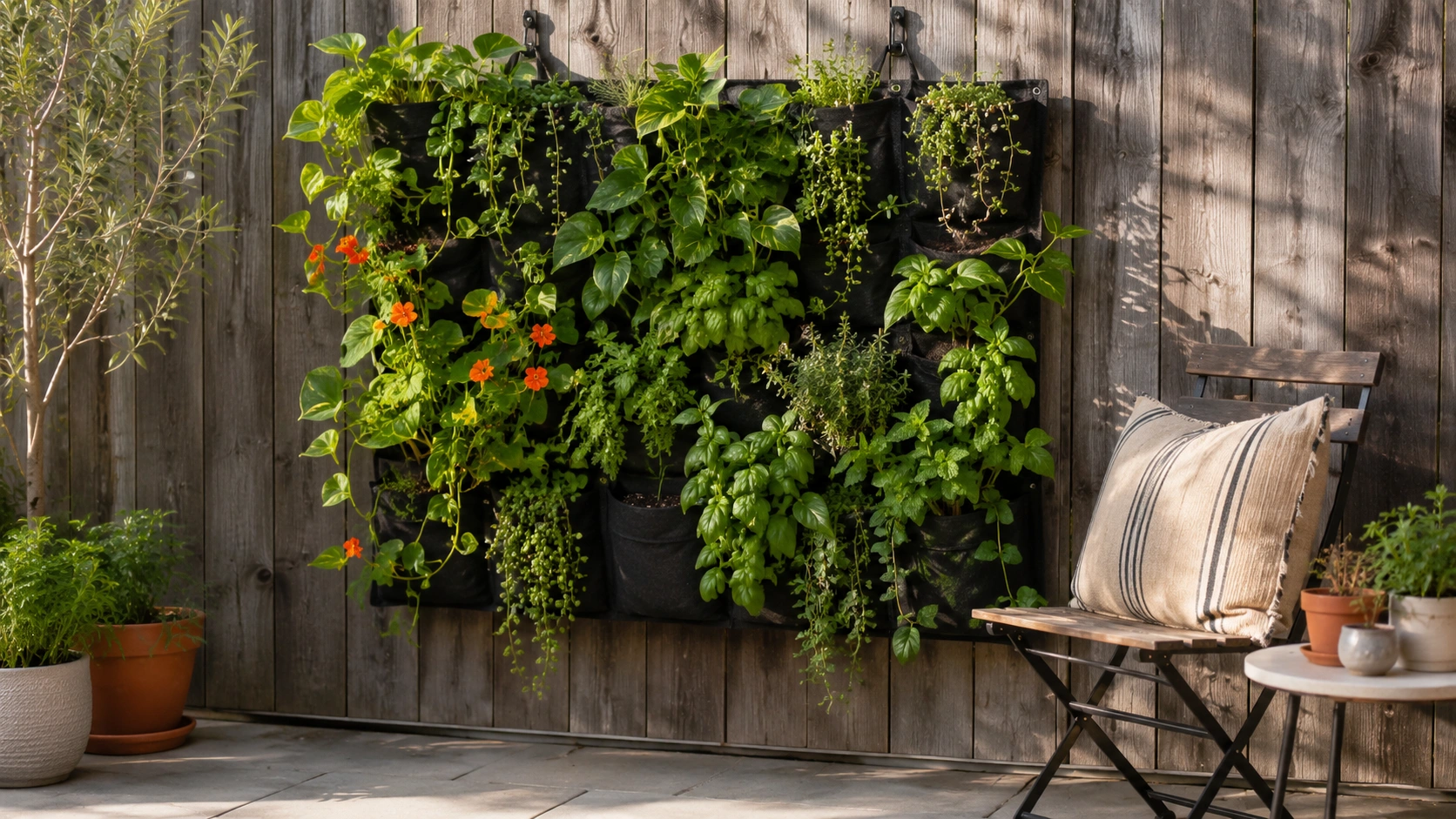
If floor space is maxed out but walls and fence panels are bare, a vertical plant wall solves both problems at once. A modular wall planter system — individual fabric pockets or hanging tiers that mount with standard fence hooks — turns 4 to 6 feet of vertical surface into a living green backdrop without consuming a single square foot of floor space. Choose plants with trailing habits, like pothos, string of pearls, or trailing nasturtiums, for the most visual fullness across the panel.
The green-wall effect doesn’t need every pocket to be filled — even 70% coverage looks lush and intentional. A vertical planter panel with six to eight pockets runs $25–$40 on Amazon, and planting it with a mix of herbs (basil, mint, thyme) and trailing ornamentals costs under $30 at any garden center. That puts the total under $70 for a wall feature that becomes the most photographed corner of your patio.
23. A Bold Outdoor Rug as the Room’s Visual Anchor
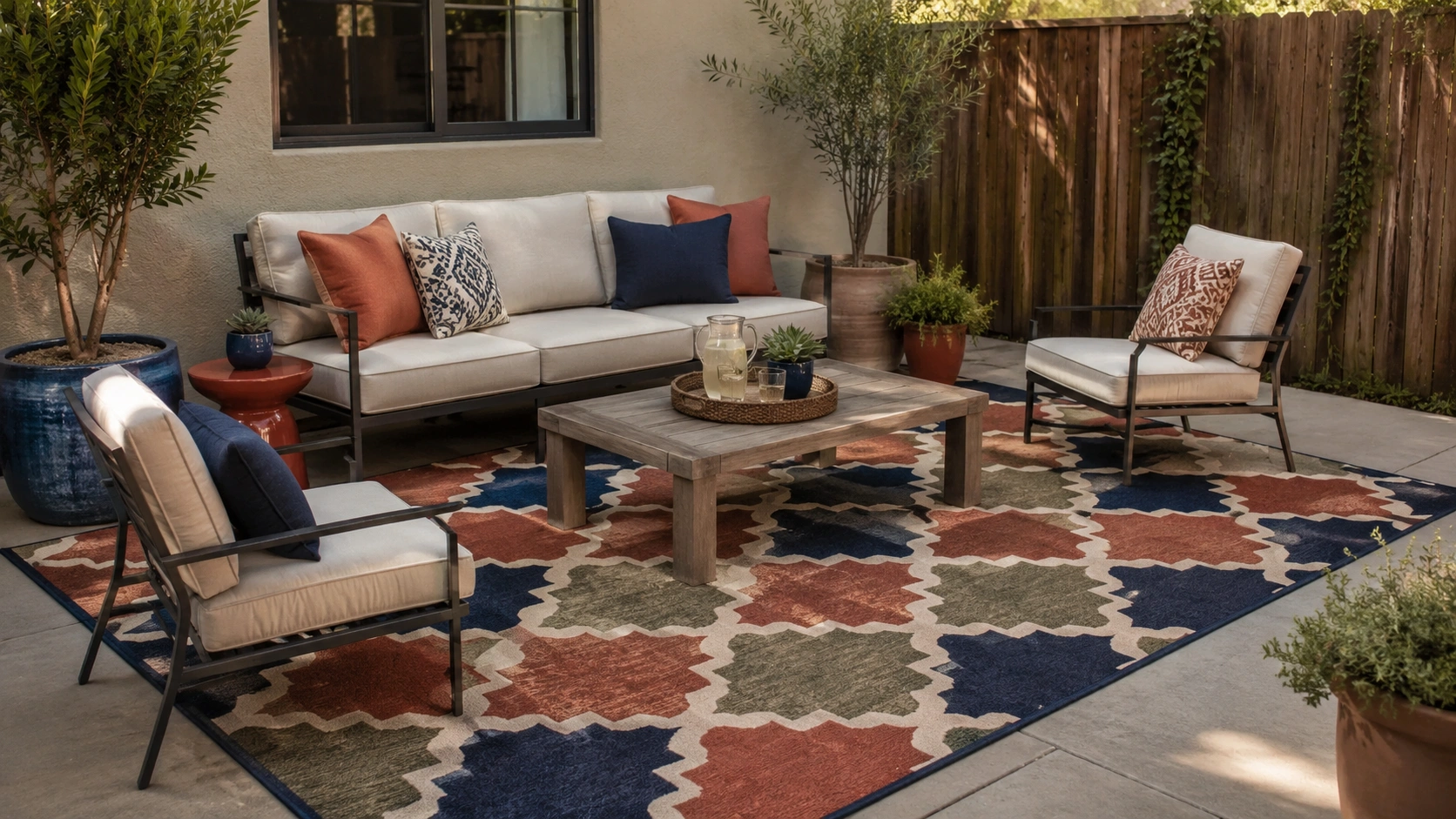
The most common mistake on small patios is skipping the rug — or choosing one that’s too small to do its actual job. An outdoor rug isn’t just decorative; it’s structural. It tells your eye and your brain where the “room” begins and ends, and that’s the exact signal that turns a bare concrete slab or wood deck into a defined living space. For a two-chair setup, the minimum rug size is 5×7 feet. For a small sofa and coffee table, go to at least 6×9 feet with all furniture legs resting on the rug.
Safavieh and Unique Loom both make UV-resistant, weather-durable outdoor rugs starting at $35–$60 for a 5×7, available on Amazon and Wayfair. Go bold with the pattern — a graphic stripe, a classic trellis print, or a saturated block of color — because the rug anchors the patio’s entire palette and gives you a color to pull from when choosing cushions, planters, and throw pillows. A bold rug on a plain concrete surface is often the single change that takes a patio from bare to designed.
24. Wall-Mounted Shelves to Keep the Floor Space Open
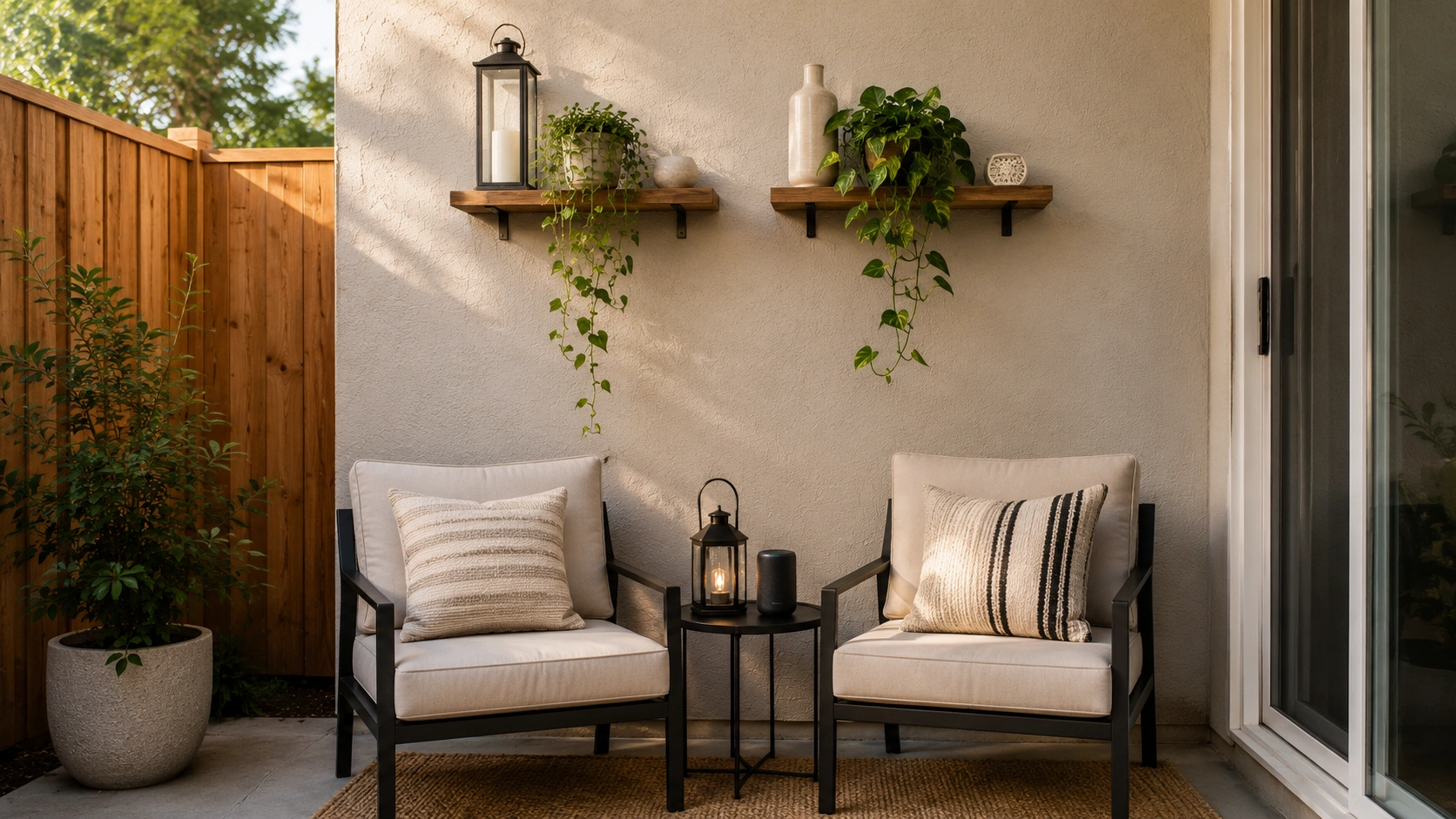
On a small patio where every floor square foot matters, moving storage and display vertically is one of the smartest design decisions you can make. A simple pair of wall-mounted outdoor shelves — powder-coated metal or sealed wood, 24–36 inches wide and 8–10 inches deep — frees up the floor entirely while providing a surface for plants, lanterns, a small speaker, or a styled tray. Mount them at or slightly above eye level so they’re visible above the furniture without being awkward to reach from the seating area.
For renters, outdoor-rated adhesive mounting strips (like Gorilla Brand’s outdoor line) can support lighter shelving without leaving permanent marks on stucco, vinyl siding, or fence panels. Heavier shelves need anchor screws, so check your lease before drilling. When styling, use odd-numbered groupings — three items rather than two or four — with at least one tall element, one trailing plant, and one small decorative object. That three-part combination photographs consistently well and keeps the shelf from reading as cluttered or random.
25. Color-Blocked Decor for a High-Impact Patio Statement
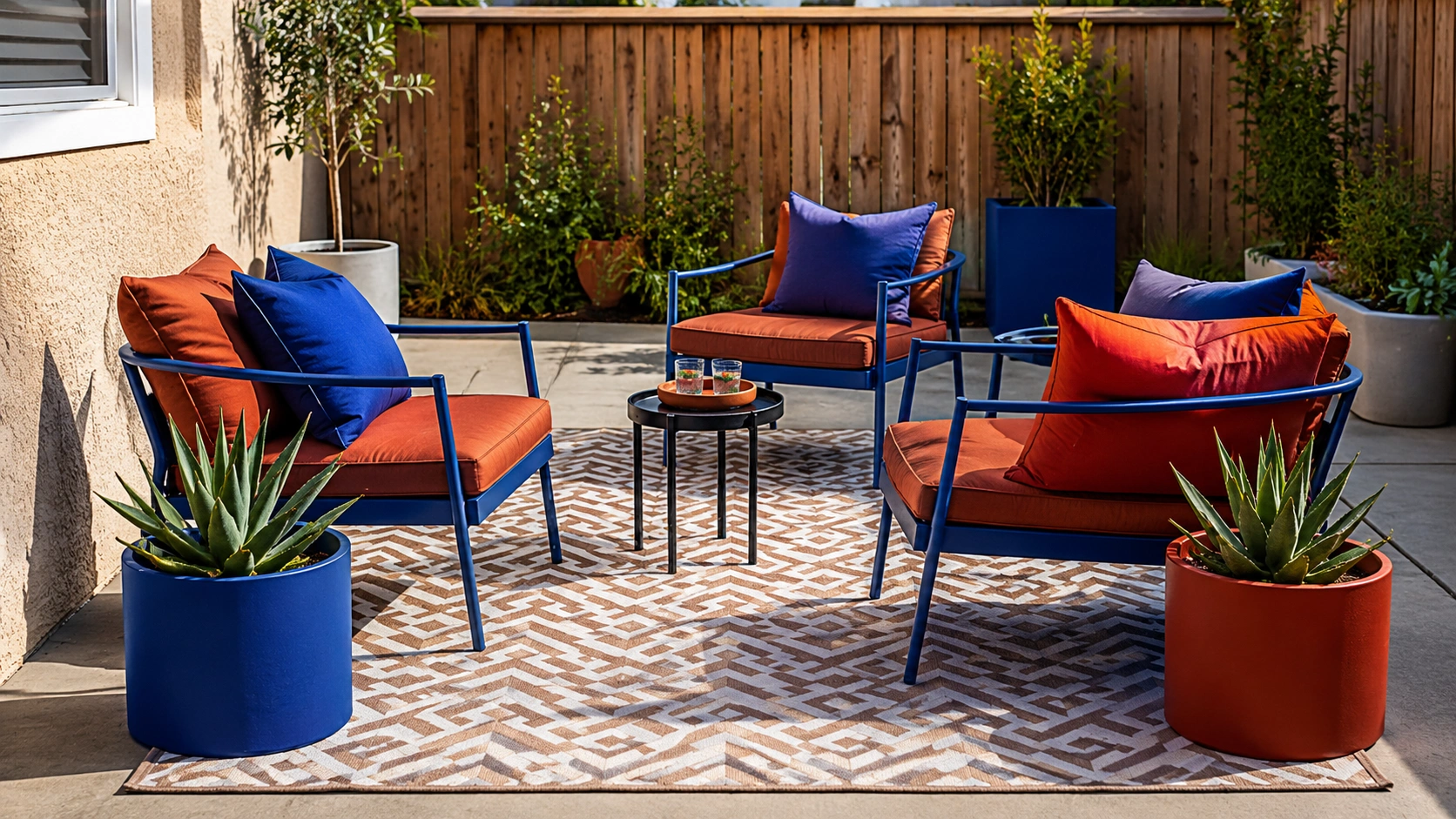
Color blocking means choosing two or three bold, contrasting colors and committing to them rather than softening everything with neutrals as a safety net. For a small patio, this looks like: cobalt blue chairs with terracotta cushions and a white rug, or sage green furniture with burnt orange pillows and matte black accents. The contrast makes a small space look deliberate rather than accidental — and it photographs dramatically, which is part of why color-blocked patio images consistently stop the scroll on Pinterest boards and get reshared widely.
The most budget-friendly way to try color blocking is through accessories first: swap existing neutral pillows for two or three covers in a bold combination, add a matching outdoor rug, then spray-paint any side tables or plant pots in the accent color. Outdoor spray paint runs $5–$12 a can and comes in an enormous range of colors now. If you don’t love the result, painting again costs almost nothing and takes under an hour — making this one of the most reversible and risk-free experiments on this entire list.
26. Thrifted and Spray-Painted Furniture Makeover
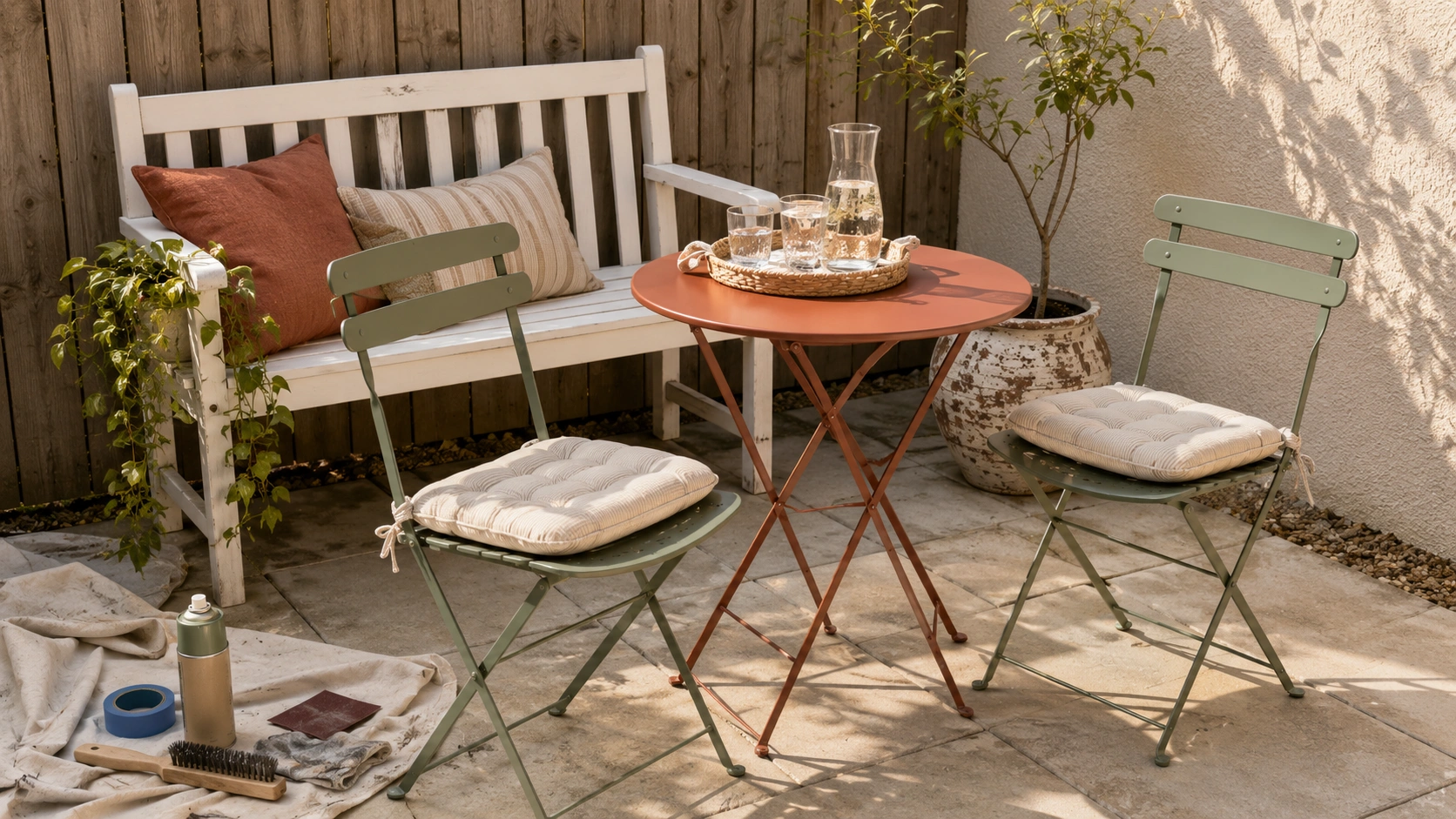
One of the best-kept secrets of outdoor decorating is that thrift stores, Facebook Marketplace, and end-of-season clearance racks are full of structurally sound patio furniture that just needs a cleaning and a coat of paint to become something you’d actually want to sit in every evening. Metal bistro chairs, wooden benches, and basic folding tables all respond beautifully to outdoor spray paint — and the full transformation takes a Saturday afternoon and under $40 in supplies, making this firmly the most budget-friendly approach on the list.
Strip loose paint with a wire brush, sand rough spots, wipe with a damp cloth, let dry completely, then apply two thin coats of Rust-Oleum or Krylon outdoor spray paint in gloss or satin finish. Matte black, warm white, sage green, and terracotta clay all perform well against plain concrete or wood patio backgrounds and stay popular on Pinterest year after year. The best budget patio on this list doesn’t come from a store — it comes from thrift-store patience and a few well-chosen spray cans.
27. Updated Concrete Paver Floor for a Modern Base
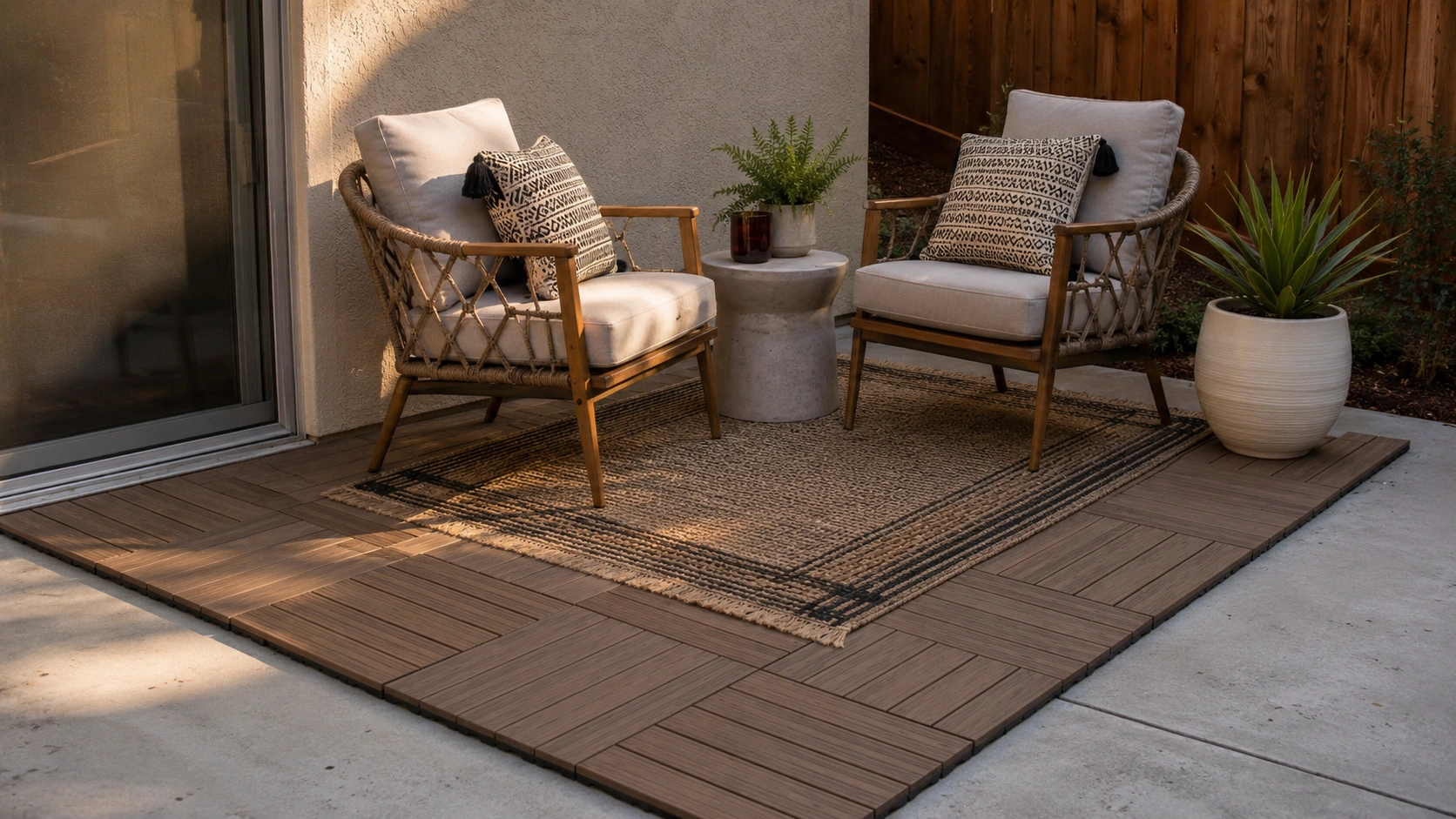
The floor is the most overlooked surface on a small patio — and updating it doesn’t require pouring new concrete. Interlocking composite deck tiles sit directly on top of the existing surface, click together without tools, and can be pulled up and taken with you when you move. For renters, this is one of the few permanent-looking improvements that are completely non-permanent. A 6×8-foot area needs roughly 12–15 tiles depending on their individual size, at a total cost between $80 and $200.
Choose a natural teak or grey composite tile for a base that makes any furniture placed on it look more polished and intentional. When the floor reads as designed, everything sitting on top gets elevated with it. Once the tiles are down, layer an outdoor rug on top for warmth and texture — the combination of clean tile underneath and a layered rug on top follows the same design logic used in interior rooms, applied outdoors, and the result looks intentional in a way that bare concrete simply never does.
28. Layered Seasonal Patio With Throw Blankets and Lanterns
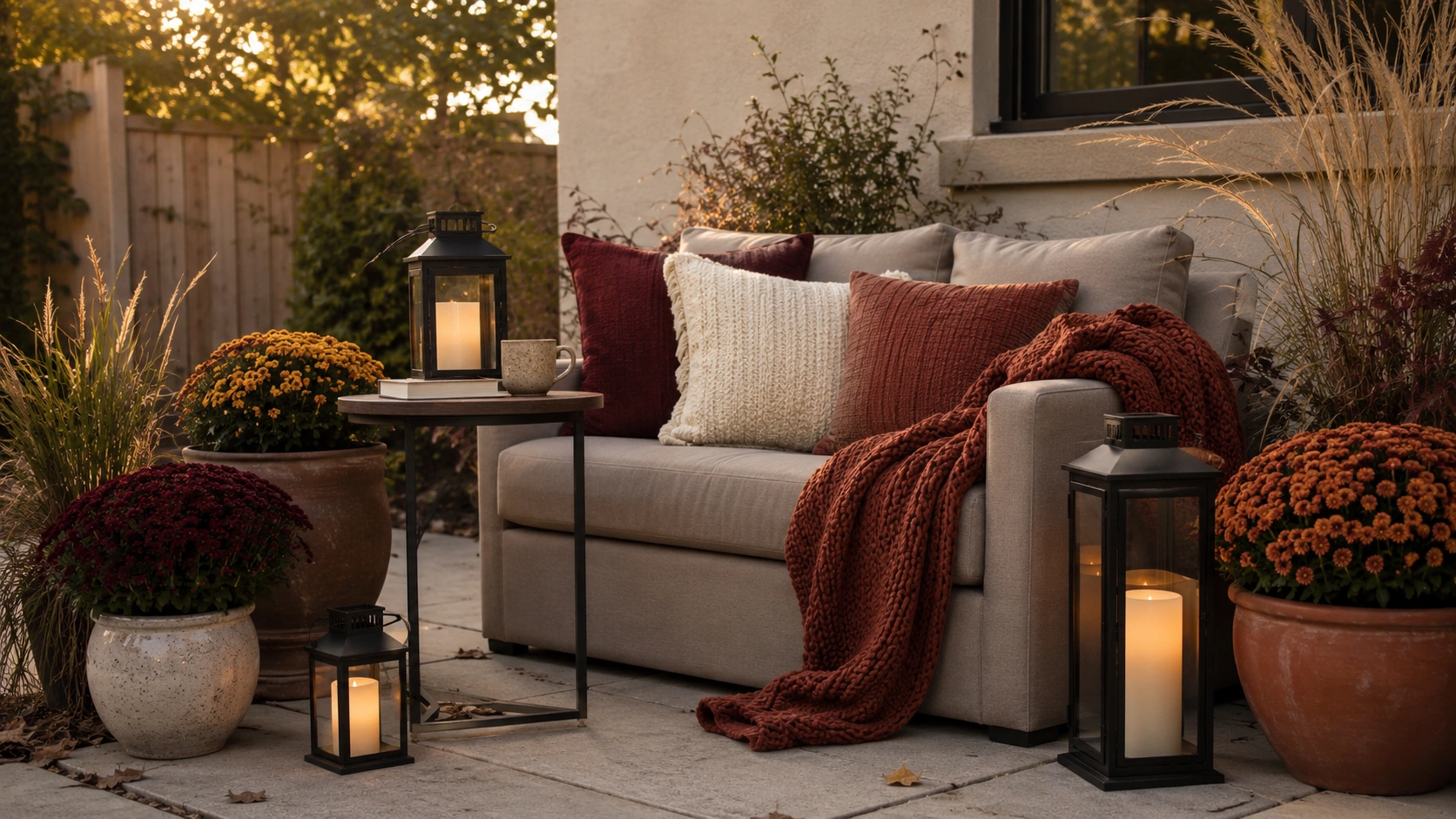
The same patio furniture you set up in May can feel completely different in September with a few intentional additions. Moving from summer to fall outdoors means layering in warmth: a chunky knit throw in burnt orange or deep burgundy draped across the sofa arm, two or three lanterns at varying heights placed on the ground and side table, and a few potted mums or ornamental grasses swapped in for fading summer annuals. The furniture stays exactly where it is; the mood shifts entirely.
Lanterns are one of the most underused outdoor styling tools on this list. A cluster of three at different heights — one tall floor lantern at 18–24 inches, one medium on the side table, one small near the ground — fills the visual gap that throw pillows alone can’t address. Solar-powered lanterns from Target’s Threshold line run $15–$35 each and carry beautifully through multiple seasons. Transitioning the patio from summer to fall costs almost nothing beyond a $25 throw blanket and a few seasonal plants from the garden center.
FAQs
Do outdoor rugs really help make a patio feel more like a room?
Yes — significantly. A rug defines the seating zone visually, telling your eye where the “room” begins and ends, exactly the way it does indoors. For a two-chair setup, use at least a 5×7 foot rug. Smaller rugs float between furniture legs and lose the effect entirely.
What is the best furniture material for a small covered patio?
Powder-coated aluminum is the best all-around pick — lightweight, rust-resistant, and holds paint well. All-weather resin wicker is a close second for aesthetics. Avoid raw, unsealed wood on an open or semi-covered patio unless you’re committed to sealing it at the start of every season.
Can I create an outdoor living room on a rented apartment balcony without losing my deposit?
Yes. Use freestanding furniture, removable deck tiles, outdoor-rated adhesive hooks, and string lights that clip to railings. Avoid drilling holes, using adhesives on painted surfaces, or adding any permanent fixture. Document the balcony’s condition before decorating and again at the end of each season.
How do I protect outdoor cushions and furniture when it rains?
Choose performance fabric cushions — solution-dyed acrylic or Sunbrella-style — that dry quickly and resist mildew naturally. Treat cushion covers with a water-repellent spray annually. For furniture frames, waterproof covers or indoor storage during heavy rain seasons extends their life significantly over multiple years.
What potted plants work best on a small shaded or partially sunny patio?
Ferns, pothos, snake plants, hostas, and trailing impatiens all thrive in partial shade. For partial sun (4–6 hours daily), try lavender, geraniums, or ornamental grasses. Avoid full-sun plants like succulents and petunias if your patio gets fewer than four consistent hours of direct sunlight each day.


No Comment! Be the first one.