







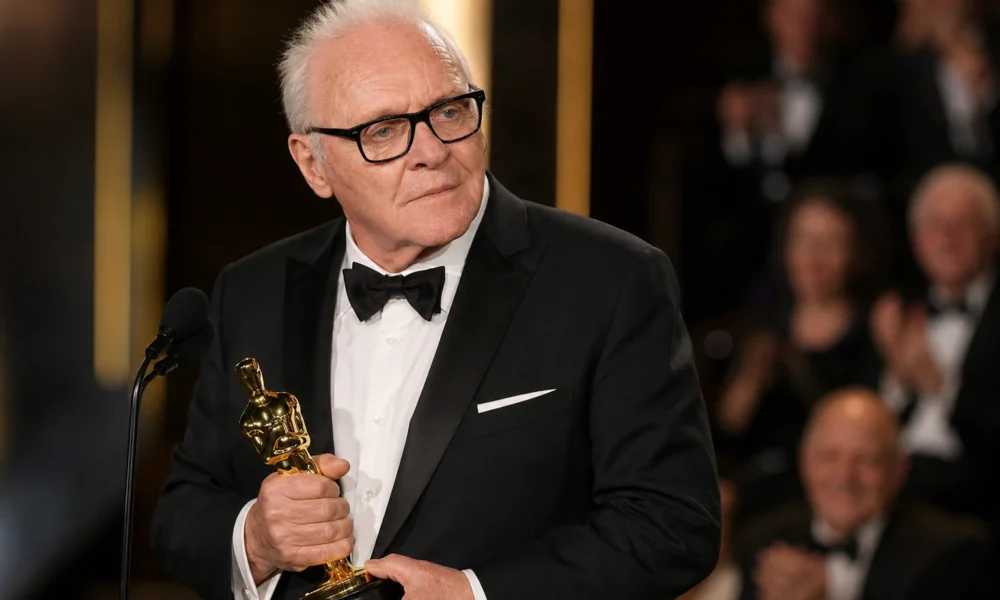
Anthony Hopkins’ net worth in 2025 is estimated at approximately $160 million. That figure holds up under scrutiny better than the alternatives. The $120 million often cited by older sources hasn’t been updated to reflect his continued work in major franchises. The $190 million figure that circulates on several sites offers no methodology at all.
Here’s the breakdown that actually makes sense — and why one real-world event in January 2025 changes the calculation in ways no other article has addressed.
Anthony Hopkins’ Net Worth in 2025
Anthony Hopkins’ net worth refers to the estimated total value of his assets minus liabilities, currently approximated at $160 million as of 2025. This figure reflects six decades of major film roles, real estate holdings, backend production income, art sales, and an adjustment for property losses sustained during the January 2025 Palisades Fire.
What Anthony Hopkins Earns Per Movie
This is where the foundation was built, and the timeline surprises most people.
Hopkins didn’t hit financial peak earnings in his 30s or 40s the way many stars do. His career was interrupted by a serious struggle with alcoholism; he’s spoken publicly about getting sober in 1975, and the years surrounding that period cost him professional momentum. A lesser person doesn’t come back from that.
He did. And what followed was a second career that outpaced the first.
His Academy Award win for The Silence of the Lambs in 1992 — at age 54 — transformed his negotiating leverage almost overnight. But the real salary surge came a decade after that. According to publicly documented film salary records cited by entertainment finance sources, Hopkins commanded $15 million for Hannibal in 2001 and $20 million for Red Dragon in 2002. At an age when most of his generational peers had either slowed down or settled for character-actor fees, he was pulling rates that put him alongside the highest-earning actors in Hollywood.
That’s the insight most articles miss entirely. Hopkins hit his peak earning years between age 63 and 65.
The MCU chapter added another significant layer. His appearances as Odin across the Thor franchise — Thor (2011), Thor: The Dark World (2013), and Thor: Ragnarok (2017) — brought him into a global franchise with the kind of promotional reach and backend structures that multiplied the upfront fee. And then The Father in 2021 made him the oldest Best Actor winner in Academy Award history at 83, reminding studios he still pulls at the highest level.
Quick note: the $15 million and $20 million salary figures for Hannibal and Red Dragon come from industry finance reporting, not verified payroll disclosures. They’re well-sourced estimates, not certified numbers. That’s worth knowing before citing them.
Real Estate And the January 2025 Fire That Changes the Math
Here’s where the 2025 net worth conversation gets genuinely complicated, and where every competitor article is working with outdated information.
Hopkins owned a primary residence in Pacific Palisades, purchased for approximately $7 million, that had appreciated substantially in one of the most desirable coastal neighborhoods in Los Angeles. He also acquired multiple neighboring properties in the area, with total reported holdings around $13 million.
In January 2025, the Palisades Fire devastated significant portions of the neighborhood. Multiple properties connected to Hopkins were affected.
The insurance picture matters enormously here, and it’s unresolved. High-value California coastal properties have faced a genuine insurance crisis over the past several years, with major carriers exiting the state and long-standing policyholders losing coverage or finding it dramatically underpriced relative to rebuild costs. Whether Hopkins was fully covered, partially covered, or facing a meaningful gap is not publicly confirmed.
Real talk: the real estate portion of his 2025 net worth is the most uncertain line item in any estimate.
What we do know is that he has held property outside California — UK-based holdings that likely provided some geographic diversification. The $160 million figure used throughout this piece factors in a meaningful reduction to pre-fire property values. It’s an educated downward adjustment, not a verified accounting.
Anthony Hopkins as a Painter
The Wealth Stream Everyone Ignores
Most articles treat Hopkins as an actor who happens to paint. That framing understates what’s actually happening.
Hopkins has painted seriously since the 1990s. His work — bold, expressionist canvases with clear influences from Van Gogh — has been exhibited internationally, with pieces connected to Sotheby’s, the global auction house that also serves as a de facto credibility signal for any visual artist seeking serious market placement. Individual works have sold in ranges from several thousand to tens of thousands of dollars.
Is painting his primary income driver? Not remotely. But dismissing it misses something real about how secondary income streams accumulate over decades.
At his level of celebrity, the combination of genuine output and auction-house association creates a compounding revenue loop. Gallery commissions, limited edition prints, licensing of his visual art catalog, and appearance fees for gallery events generate income that’s modest relative to a Marvel film fee but meaningful relative to what most people earn across an entire career.
Or maybe I should say it this way: it’s less about the dollar figure painting generates and more about what it signals. Hopkins isn’t coasting on past credits. He’s still producing across multiple disciplines — still building. That mindset is part of why the wealth has held rather than eroded.
He’s also released piano compositions and original music. The albums haven’t charted commercially, but they contribute to a profile of someone who treats creative output as a career-long practice rather than a retirement activity.
Hopkins Entertainment and Production Income
Anthony Hopkins founded Hopkins Entertainment, his production company, which serves two financial functions simultaneously: creative control over his projects, and participation in backend profit structures that individual actors without production entities simply can’t access.
Backend deals — where an actor takes a percentage of net profits beyond the upfront fee — can dwarf the initial salary on commercially successful films. On a global franchise like Thor, even a modest backend participation translates into meaningful additional income in the years after release, as home video, streaming licensing, and international distribution continue to generate revenue.
The production company also creates a structure for development partnerships, licensing deals, and intellectual property arrangements. It’s a wealth vehicle that compounds quietly in the background of his more visible career.
How the $160 Million Figure Compares
I’ve seen conflicting data across sources — some say $120 million, others push toward $165 million, a few outliers reach $190 million without citing any methodology. My read: $160 million is the most defensible current estimate once you account for six decades of accumulated film income, adjusted real estate value post-January 2025, art and music revenues, production company value, and backend participations.
Quick Comparison: Anthony Hopkins Wealth Sources 2025 Estimate
| Income Source | Est. Contribution | Key Driver | Confidence Level |
|---|---|---|---|
| Film salaries (career total) | $100M+ | Peak 2001–2010 + MCU | High |
| Real estate (post-fire adj.) | ~$20–30M | Reduced Jan 2025 | Moderate |
| Production co. / backend | ~$10–15M | Thor franchise, others | Moderate |
| Art — paintings, licensing | ~$2–5M | Sotheby’s exhibitions | Low–moderate |
| Music / compositions | ~$1–2M | Multiple album releases | Low |
This is an approximate model, not audited financials. Film is the engine — but the other lines matter more than most coverage suggests, and the fire impact is the biggest variable hanging over the 2025 number.
How to Evaluate a Celebrity Net Worth Claim
To assess whether a celebrity net worth figure is credible, follow these steps:
- Identify whether the source cites specific salary records with film titles and years.
- Check whether real estate values reference actual transaction records or are estimated.
- Look for evidence the figure has been updated after major financial events (fires, divorces, settlements).
- Cross-reference at least three independent sources and use the middle figure.
- Treat any figure without sourced methodology as a placeholder, not a fact.
What Most People Get Wrong About How Hopkins Built This
The standard assumption is that acting fame automatically converts to massive, sustained wealth. Hopkins’ story is more specific than that — and more interesting.
He compounded. Every decade, a new commercial breakthrough arrived: Silence of the Lambs in his 50s, Hannibal and Red Dragon in his 60s, Thor in his 70s, The Father in his 80s. That kind of sustained commercial relevance across six decades is genuinely unusual.
Look, if you’re trying to understand how someone reaches $160 million without a tech exit or an inheritance, Hopkins is a useful case study in what compounding income looks like across a long creative career. The key isn’t one enormous deal. It’s decades of significant deals with no extended breaks.
What most guides skip is the role of staying commercially relevant, as distinct from simply being acclaimed. Hopkins has been both, simultaneously, deep into his 80s. That’s not common. That’s the actual story.
Some experts argue that his wealth should be estimated higher — closer to $190 million — when you factor in total career gross receipts and the appreciated value of his catalog rights. That’s valid if you’re working from gross income rather than net retained wealth. But taxes, two divorces, and management fees are real deductions. The $160 million figure reflects what’s more likely held, not what passed through.
This article covers:
- Hopkins’ career earnings
- Real estate holdings
- Art income
- Business structures
It does not address:
- Granular tax treatment
- Exact divorce settlement terms
- Confirmed insurance outcomes from the 2025 fire — none of those are publicly on record
Frequently Asked Questions
What is Anthony Hopkins’ net worth in 2025?
His net worth is estimated at approximately $160 million in 2025. This figure accounts for lifetime film earnings, real estate value adjusted post-January 2025 Palisades Fire, backend production income, and art sales.
How much does Anthony Hopkins earn per movie?
At his peak, Hopkins earned $15 million for Hannibal (2001) and $20 million for Red Dragon (2002), per publicly cited industry salary records. Recent franchise and prestige roles likely continue at rates in the $10–20 million range.
Did the 2025 Palisades Fire affect Anthony Hopkins’ net worth?
Yes. Hopkins owned multiple Pacific Palisades and Malibu properties with a combined reported value around $13 million. The January 2025 fire destroyed significant portions of the neighborhood. Insurance outcomes have not been publicly confirmed.
Does Anthony Hopkins sell his paintings?
Hopkins has exhibited paintings internationally with Sotheby’s-connected events, with individual pieces selling in the thousands-to-tens-of-thousands range. It’s a secondary income stream, not his primary one, but it’s been active for over two decades.
Why do different sites list such different net worth figures for Anthony Hopkins?
Celebrity net worth figures are estimates, not verified accounting. Sources use different salary records, different real estate valuations, and different update cycles — and most haven’t adjusted for the January 2025 fire. The range ($120M to $190M) reflects different methodologies, not different facts.





No Comment! Be the first one.