






Mac McAnally’s $20 Million Net Worth: The Real Story Behind the Music
Mac McAnally’s net worth is estimated at $20 million. That figure comes from nearly five decades of work across four distinct revenue streams — songwriter royalties, session musicianship,...

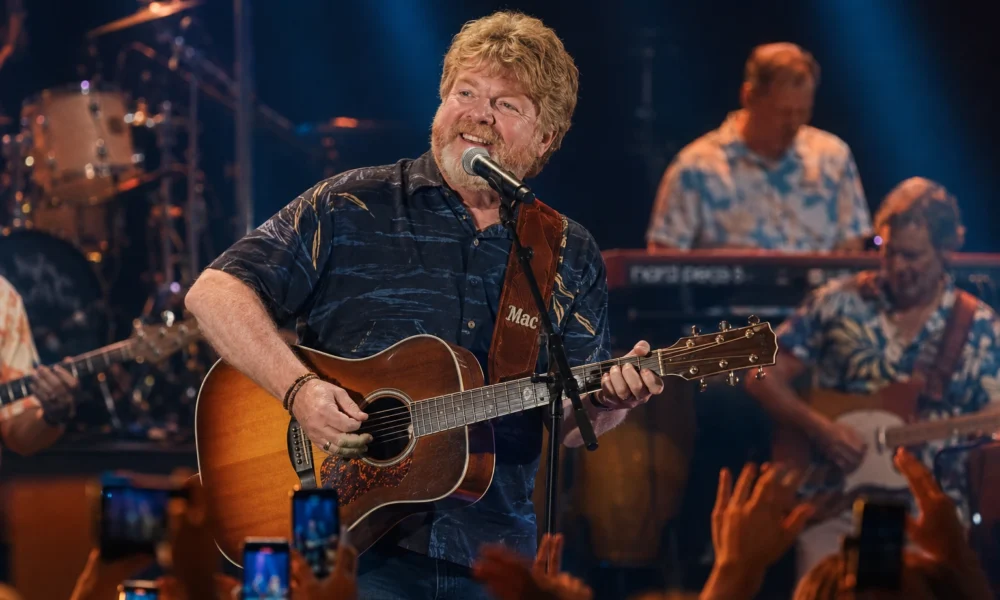
Mac McAnally’s net worth is estimated at $20 million. That figure comes from nearly five decades of work across four distinct revenue streams — songwriter royalties, session musicianship, record production, and touring. Most articles stop at the number. This one doesn’t.
This article covers McAnally’s publicly documented earnings as a musician, songwriter, producer, and touring artist. It does not address personal investments or real estate. Net worth figures are industry estimates, not audited financials.
What Is Mac McAnally’s Net Worth in 2025?
Mac McAnally net worth is estimated at approximately $20 million as of 2025, according to Celebrity Net Worth. Other outlets place it closer to $10 million. I’ve seen conflicting data — some sources cite $10M, others $20M. My read is that the $20M figure more accurately reflects the compounding value of a royalty catalog built across 45+ years, but neither estimate comes with audited numbers behind it.
Mac McAnally net worth refers to the total estimated value of financial assets accumulated through songwriter royalties, session musician fees, record production work, and touring income over a career spanning 1977 to present. Most credible estimates place the figure between $10 million and $20 million.
Born Lyman Corbitt McAnally Jr. on July 15, 1957, in Red Bay, Alabama, he spent decades deliberately avoiding the spotlight while quietly earning from it. That’s not a contradiction — it’s a business model.
Here’s the thing: McAnally is what the industry calls a “behind-the-board” earner. His name rarely appears on marquees. His bank account doesn’t care.
According to his official website, McAnally received his 10th CMA Musician of the Year trophy at the 52nd CMA Awards in 2018, breaking a tie with the legendary Chet Atkins to set the category’s all-time record. Ten wins — spread across multiple decades — isn’t just an honor. It’s a direct proxy for how consistently Nashville’s elite producers and artists called him into the studio, and session musicians get paid every single time.
According to Wikipedia’s documented career timeline, McAnally was already an active session musician in Muscle Shoals before being signed to Ariola Records in 1977. He never really left the session ecosystem. He just added more revenue layers on top of it.
How Songwriter Royalties Built the Foundation of His Wealth
This is where the money really lives.
McAnally didn’t just record his own albums — he wrote songs for artists who sold millions of records. Alabama’s “Old Flame” hit #1 on the country charts in 1981. Kenny Chesney recorded McAnally’s “Back Where I Come From” for his 1996 album Me and You — a song that still gets radio play and streaming activity today. Sawyer Brown’s “Thank God for You,” which McAnally co-wrote, reached #1 in 1994.
Each of those songs generates performance royalties every time it plays on radio, streaming, or television. Essentially forever, as long as the copyright stands.
Songwriting royalties in country music operate through two main channels: mechanical royalties (paid when a song is reproduced, streamed, downloaded, or pressed to physical media) and performance royalties (paid when the song is broadcast or publicly performed, collected through PROs like ASCAP or BMI). A songwriter who co-writes a #1 country single can earn six figures in the first year of release alone.
McAnally has multiple #1s across four decades.
Or maybe I should say it this way: one hit song isn’t a windfall. It’s an annuity.
Most people assume the real country music money is in being the performing artist. The data says otherwise. Songwriters with durable catalogs — especially those with crossover appeal and consistent radio play — often outlast the commercial careers of the artists who recorded their work. McAnally’s songs are still being licensed, covered, and streamed. That income doesn’t stop.
His induction into the Nashville Songwriters Hall of Fame is the clearest institutional signal of catalog depth. That recognition isn’t awarded for one hit — it’s awarded for a body of work the industry considers foundational.
What most guides skip: McAnally also produced for Sawyer Brown starting with The Dirt Road in 1992, continuing through nearly all of their subsequent albums into the late 1990s, and for Restless Heart and Jimmy Buffett’s Mailboat Records releases. Record producers typically earn “points” — a negotiated percentage of album sales — on every record they produce. Multiply that across a prolific act’s full album cycle and the backend royalties compound meaningfully.
30 Years With the Coral Reefer Band: What That’s Actually Worth
Jimmy Buffett wasn’t just a concert draw. He was a touring institution.
Buffett’s annual summer tours consistently grossed tens of millions of dollars, placing him among the highest-earning touring acts in American music for three consecutive decades. His Parrothead fanbase wasn’t a cult following — it was a reliable, large-spending audience that filled amphitheaters year after year.
McAnally spent approximately 30 years as guitarist in Buffett’s Coral Reefer Band. Band members on tours of that scale earn a combination of a weekly touring salary and a per-show fee. For a senior, named member — not a hired hand for one leg, but a fixture — those figures are substantially above scale.
Session musician income vs. touring band income: Session work pays a flat fee per session (AFM minimum scale rates, with top Nashville players earning well above that). Touring band income pays a weekly salary plus per diems across a full tour cycle. Senior members of top-grossing touring acts earn significantly more than the minimum. McAnally benefited from both income types simultaneously for most of his career. The key difference: session income stops when the session ends; touring income continues across an entire tour run.
Some argue that Buffett’s Parrothead platform kept McAnally visible in a way his solo work alone never could — that the relationship was as much brand-building as it was employment. That’s valid as a visibility argument. Financially, though, the touring income stands on its own. You don’t need public name recognition to cash a touring check.
Look, if you’re trying to understand how a session guitarist and songwriter reaches a $20 million net worth, it’s this: three decades of touring-band income layered on top of concurrent royalty streams doesn’t leave many lean years. It compounds.
Session Work, Production Credits, and the Studio Economy
McAnally’s Muscle Shoals roots gave him early access to one of the most productive session ecosystems in American music history. By the time he was an established Nashville guitarist, his session rate was well above scale.
How Session Musicians Build Long-Term Wealth
To understand how a career session musician like McAnally accumulates net worth over decades, the model works like this:
- Record with multiple major-label artists annually, earning above-scale session fees.
- Earn production “points” — royalty percentages — on albums you produce.
- Collect ongoing songwriter royalties from co-written catalog songs each year.
- Layer touring income on top during active road periods, rather than instead of the above.
Nashville’s A-list session players work three to five sessions per week during peak demand. Quick note: these aren’t casual studio visits — they’re tight, professional two-to-three-hour blocks where a guitarist might track parts for multiple songs in a single sitting. At top-tier rates, a working session guitarist with consistent A-list demand can gross $150,000–$300,000 annually from session work alone, before any royalties or touring.
That’s the floor, not the ceiling, for someone with McAnally’s track record.
His production credits add another dimension. Producing a commercially successful album generates both an upfront production fee and a backend royalty. His decade-long production relationship with Sawyer Brown, combined with his work for Mailboat Records, represents a production income stream running in parallel to everything else — not instead of it.
Quick Comparison: Mac McAnally’s Income Streams
| Income Stream | Typical Trigger | Ongoing? | McAnally’s Scale |
|---|---|---|---|
| Songwriter royalties | Each play, stream, or license | Yes — perpetual | High (multiple #1s, 45-year catalog) |
| Session musician fees | Per recording session booked | No — one-time per session | High (decades of A-list demand) |
| Production points | Per album produced | Yes — per sales cycle | Medium-High |
| Touring income | Per show / full tour run | During active touring | High (Buffett tours, ~30 years) |
| Solo album sales | Per unit sold | Diminishing over time | Lower (dedicated niche audience) |
Post-Buffett: Leading the Coral Reefer Band and What Comes Next
Jimmy Buffett died on September 1, 2023. McAnally has since taken on a leadership role with the Coral Reefer Band — a transition that no competing article has addressed, and one that carries real financial implications.
Leading a band, rather than being a member of one, changes the compensation structure entirely. It also raised McAnally’s public profile in a way that 30 years of deliberate behind-the-scenes work never did.
He’s been active. New solo singles — “Oysters and Pearls” and “All The Way Around” — landed in 2024. He contributed to the revamped Country Bear Musical Jamboree at Walt Disney World, which premiered in summer 2024, a licensing arrangement with its own income stream. His 2024 national tour included stops at the Lexington Opera House, the Caverns in Pelham, Tennessee, Boston, New York, and a year-closing performance with the Shoals Symphony in Florence, Alabama.
That’s not a retirement farewell lap.
For fans who discovered McAnally through Buffett, the post-2023 chapter is the one being written right now and it’s the chapter most net worth articles haven’t touched yet.
Your Top Questions About Mac McAnally’s Career and Earnings
What is Mac McAnally’s net worth in 2025?
Estimates range from $10 million to $20 million. Celebrity Net Worth cites $20 million, accumulated through songwriter royalties, session musician fees, record production work, and roughly 30 years touring with Jimmy Buffett’s Coral Reefer Band.
How did Mac McAnally make his money?
Through four primary streams — songwriting royalties from hits recorded by Alabama, Kenny Chesney, and Sawyer Brown; A-list session musician fees; record production credits with acts like Sawyer Brown and Restless Heart; and long-term touring income as a core Coral Reefer Band member.
How many times did Mac McAnally win CMA Musician of the Year?
Ten times — the all-time record, surpassing Chet Atkins. He won eight consecutive years from 2008 to 2015 and received his record-breaking 10th win at the 52nd CMA Awards in 2018, according to his official website.
What songs did Mac McAnally write for other artists?
His best-known songwriter credits include Alabama’s “Old Flame” (#1, 1981), Kenny Chesney’s “Back Where I Come From,” Sawyer Brown’s “Thank God for You” (#1, 1994), and Steve Wariner’s “Precious Thing” (Top 10, 1990), among dozens of others across four decades.
Is Mac McAnally still performing after Jimmy Buffett’s death?
Yes, Since Buffett’s death in September 2023, McAnally has led the Coral Reefer Band, released new solo music, contributed to the Walt Disney World Country Bear Musical Jamboree, and completed a full national tour in 2024 with dates running into 2025.



No Comment! Be the first one.