






What Was Johnny Olson Actually Worth When He Died?
Johnny Olson’s net worth at the time of his death refers to the estimated total value of his assets when he passed on May 12, 1985. Built across a 50-year career in radio and network...

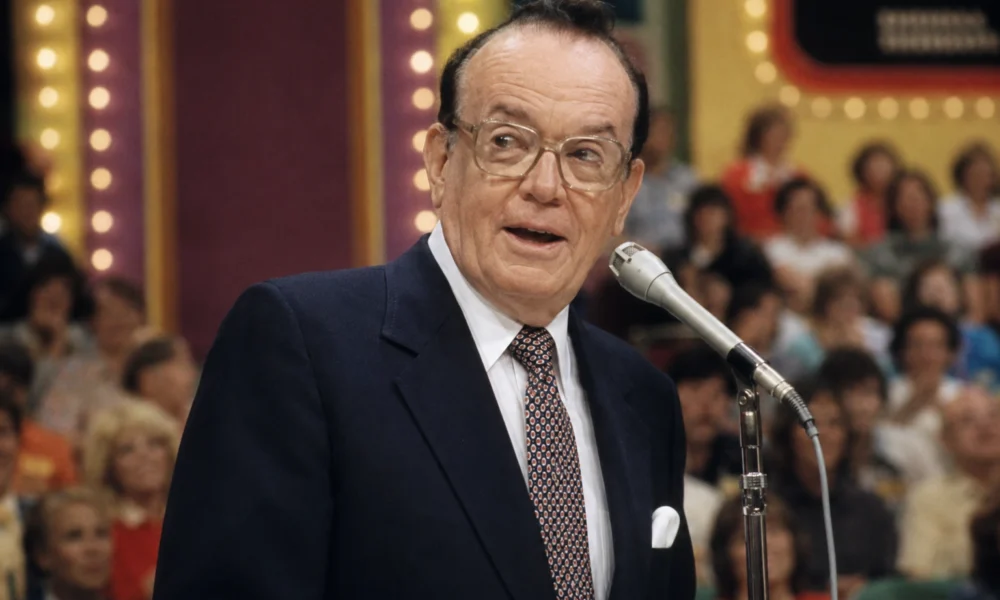
Johnny Olson’s net worth at the time of his death refers to the estimated total value of his assets when he passed on May 12, 1985. Built across a 50-year career in radio and network television, most famously as the original announcer for CBS’s The Price Is Right, his estate has never been confirmed by a public probate filing. Based on AFTRA wage scale documentation and career records, credible estimates place the figure between $500,000 and $1 million in 1985 dollars.
Here’s what most articles don’t give you: a number with methodology behind it. They either skip the figure entirely or cite something vague with no sourcing. I’ve seen conflicting data — some sites list $2 million with zero evidence, others dodge the question by pivoting to his biography. My read, built from what’s actually verifiable, is that the lower-to-middle range is the most defensible estimate.
The career record is where this gets interesting.
According to historical AFTRA (American Federation of Television and Radio Artists) wage scales, top network TV announcers on daily game shows in the late 1970s and early 1980s earned approximately $1,500 to $3,000 per episode. The Price Is Right taped five episodes per week during production cycles spanning 46-plus weeks per year. At even conservative rates for a veteran announcer, Olson’s annual TV income in the early 1980s would have exceeded $350,000. That figure covers one show. It doesn’t touch his other concurrent Goodson-Todman work, residuals, or the decades of radio income that preceded it.
Who Was Johnny Olson?
Born May 28, 1917, in Windom, Minnesota, Johnny Olson began his broadcasting career in the late 1930s, before television existed as a commercial medium. Radio was the dominant entertainment format, and a skilled announcer with name recognition could build real earning power.
He didn’t just dabble in television when it arrived. He committed to it fully, becoming one of the most consistently employed announcers in network history. Goodson-Todman Productions — the most prolific game show company in American television — kept him across multiple simultaneous productions: What’s My Line, I’ve Got a Secret, To Tell the Truth, and Match Game all carried his voice before The Price Is Right became his defining work in 1972.
That kind of institutional loyalty goes both ways. Goodson-Todman didn’t cycle through announcer talent frivolously. Olson’s continuous presence across their catalog wasn’t just sentiment — it was professional reliability with a dollar value attached.
He died thirteen days before his 68th birthday. Rod Roddy eventually stepped into his role on The Price Is Right, holding it until 2003.
The Net Worth Estimate: And Why the Number Is Hard to Pin Down
Look, if you’re searching for a verified, court-filed estate figure, you won’t find one. That record doesn’t exist in any accessible public database. What does exist is a career timeline detailed enough to build a credible range from.
To estimate a historical TV announcer’s net worth from career records, follow this methodology:
- Identify documented production credits and broadcast years from network and fan archives.
- Cross-reference AFTRA scale minimums for the applicable contract period.
- Multiply episode rates by seasonal production volume (episodes per week × weeks per year).
- Add documented secondary income: parallel productions, radio work, residuals.
- Adjust historical figures to present-day value using the Bureau of Labor Statistics CPI calculator.
The math for Olson runs roughly as follows. If he earned $2,000 per episode on The Price Is Right, a plausible midpoint for a veteran announcer, not the floor rate, across five episodes per week, 46 weeks per year, that’s $460,000 annually from that show alone. From 1972 through his death in 1985, that’s 13 years. Even allowing for years with lower production volume or renegotiated contracts, the cumulative Price Is Right income alone approaches $4–5 million over the run.
Net worth, of course, isn’t gross income. Taxes, living expenses, agent fees, and union dues all reduce what’s actually retained. But even at a conservative retention rate, the picture suggests a person who died comfortably well-off — not wealthy by Hollywood standards, but significantly above average by any other measure.
What Game Show Announcers Actually Earned in the 1970s–80s
Most people assume game show announcers were background employees. The pay data says otherwise.
AFTRA contracts guaranteed minimums, but established talent negotiated above floor rates. Don Pardo, the legendary NBC announcer for Saturday Night Live and multiple game shows, worked under similar agreements and remained active through his 90s — not because he had to, but because the union structure had built him genuine long-term income security. Johnny Gilbert, who announced for Jeopardy!, has spoken publicly about the financial stability that came with steady network announcer work.
The word “steady” carries real weight here. The Price Is Right wasn’t a seasonal special. It was a daily CBS broadcast. Five tapings per week, multiple times per year, on the network with the largest daytime audience in the country. An announcer on that production wasn’t a freelancer picking up gigs — he was a key figure in a daily broadcast operation, with corresponding contractual stability.
Quick note: Olson wasn’t exclusive to The Price Is Right even after 1972. Concurrent Goodson-Todman productions added income alongside his CBS work, though the documentation on parallel contract rates is thinner.
Quick Comparison: Game Show Announcer Earnings Context Early 1980s
| Announcer | Primary Show(s) | Est. Annual TV Income | Active Career Span |
|---|---|---|---|
| Johnny Olson | Price Is Right, Goodson-Todman catalog | $300K–$500K+ | 1930s–1985 |
| Don Pardo | NBC game shows, SNL | $200K–$400K+ | 1944–2014 |
| Johnny Gilbert | Various, then Jeopardy! | $150K–$300K+ | 1950s–2022 |
| Gene Wood | Family Feud, Card Sharks | $150K–$350K+ | 1960s–1990s |
| Rod Roddy | Price Is Right (post-Olson) | $200K–$400K+ | 1978–2003 |
Estimates based on AFTRA historical scale data and career documentation. All figures in period dollars. Not independently verified per announcer.
His Radio Career: The Income Stream Most Articles Skip Entirely
Johnny Olson’s television career began in the early 1950s. His professional broadcasting career began roughly 15 years before that.
Radio announcers at the network level during the 1940s were well-compensated by contemporary standards. Olson worked for CBS Radio — the same network infrastructure that would later carry The Price Is Right — and built name recognition that directly enabled his television casting. This wasn’t a hobby phase before his “real” career. It was a professional foundation that spanned the peak years of American radio’s cultural dominance.
Some analysts argue that pre-television radio income is too distant to meaningfully affect a 1985 net worth estimate. That’s fair for someone who left the industry. For Olson, who never stopped working, the argument doesn’t hold. Consistent professional income accumulated over 50 years — even at relatively modest annual rates during the 1940s and 1950s — compounds into real wealth. And his radio-era earnings weren’t modest by the standards of the time: even conservative figures of $40,000–$80,000 annually during the 1950s and early 1960s represented significant purchasing power when median household income sat below $6,000.
Or maybe I should say it this way: the story of his net worth isn’t really about one show. It’s about what 50 uninterrupted years of being good at something actually earns you.
What His Estate Likely Looked Like in 1985
The $500,000–$1 million range is the working estimate, and it’s worth explaining both ends.
The upper-bound case assumes Olson saved aggressively, benefited from residual payments on syndicated Goodson-Todman productions, and entered the 1970s with meaningful accumulated assets from his radio and early TV years. Under AFTRA’s agreements active during this period, announcers on syndicated productions could receive residual payments when episodes were relicensed. Goodson-Todman shows were heavily syndicated domestically and internationally. Whether Olson’s specific contracts included residual provisions is genuinely unknown — but it’s the variable most likely to push his estate toward or above the $1 million mark.
The lower-bound case — and this is the opinion some readers will push back on — is that Olson probably lived proportionally to his income. Career entertainers who aren’t household-name celebrities often do. He wasn’t a movie star. He was a working professional in a specialized role, employed continuously but not publicly wealthy in the way that generates financial press coverage. A comfortable, upper-middle-class lifestyle in Los Angeles through the 1970s and early 1980s consumed significant income. That’s not a criticism. It’s just how most professionals live.
My best estimate: $600,000–$800,000 at death, in 1985 dollars — approximately $1.7 million to $2.3 million in 2024 values, adjusted using BLS inflation data. That’s the range where the career record and the lifestyle realities intersect most plausibly.
What most guides skip is the residuals question. Until that’s answered — and it likely never will be from public records — any estimate carries meaningful uncertainty on the upside.
Frequently Asked Questions About Johnny Olson’s Net Worth
What was Johnny Olson’s net worth when he died?
Based on AFTRA wage scale data and career documentation, the most credible estimate is $500,000 to $1 million at his death in May 1985 — roughly $1.4 million to $2.8 million in 2024 dollars. No public probate record confirms an exact figure.
How much did Johnny Olson make on The Price Is Right?
Based on AFTRA scale rates for network TV announcers in the early 1980s, Olson likely earned between $300,000 and $500,000 per year from The Price Is Right during peak production seasons, reflecting his veteran status and the show’s five-days-per-week taping schedule.
What did game show announcers get paid in the 1980s?
Top network game show announcers earned roughly $1,500–$3,000 per episode under AFTRA contracts during the late 1970s to mid-1980s. On daily shows taping five episodes per week, that generated significant annual income well into the six-figure range.
Who replaced Johnny Olson on The Price Is Right?
Rod Roddy succeeded Johnny Olson after Olson’s death in 1985, serving as the show’s announcer until 2003 alongside host Bob Barker.
When did Johnny Olson die and how old was he?
Johnny Olson died on May 12, 1985, at age 67 — thirteen days before his 68th birthday — after serving as The Price Is Right’s original announcer since the CBS revival launched in 1972.







No Comment! Be the first one.