




Black Kitchen Ideas That Work in Small, Dark, and Average-Sized Homes (24 Real Examples)
What Counts as a Modern Black Kitchen (and Will It Work in Yours)? Will black cabinets work in a small kitchen? Usually yes, but the strategy matters more than the color itself. According to a recent...

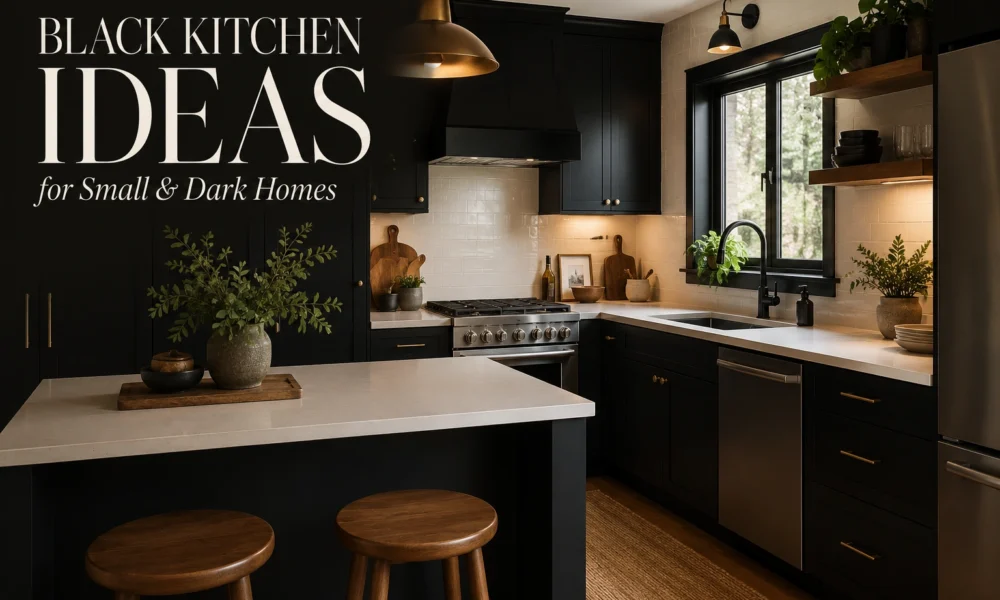
What Counts as a Modern Black Kitchen (and Will It Work in Yours)?
Will black cabinets work in a small kitchen? Usually yes, but the strategy matters more than the color itself. According to a recent industry analysis citing NKBA data, dark cabinetry finishes including black, navy, and charcoal rank among the fastest-growing color choices in new kitchen installations, and that demand is strongest in semi-custom and high-end lines where finish quality shows. So this isn’t a fringe trend you’re risking your kitchen on.
Here’s the thing: most guides assume you’ve got a big, bright room to work with. What most guides skip is what happens in a real north-facing kitchen with one window over the sink. Some designers argue black cabinets should be reserved for spaces with nine-foot ceilings and abundant natural light. That’s fair advice for an all-black, floor-to-ceiling room. But if you’re dealing with a compact, average-height kitchen, the math changes; you’re not doing an all-black room, you’re doing a two-tone or black-lower strategy, and that’s a different design problem entirely.
Or maybe I should say it this way: it’s not the color that makes a kitchen feel small. It’s the lack of contrast.
Matte black cabinets vs. high-gloss black cabinets: matte is better suited for most home kitchens because it hides fingerprints less than gloss but reads as more current and doesn’t bounce harsh light around a small room. Gloss works better in larger, brighter kitchens where you want maximum light reflection. The key difference is finish durability and how forgiving each is to clean day to day.
To stop a black kitchen from reading as a cave, follow these steps:
- Keep upper cabinets or open shelving light.
- Add a light-colored floor, even just light wood.
- Layer warm-toned lighting in three places: overhead, under-cabinet, and a pendant.
- Use one reflective surface, like a glossy tile or marble counter.
Look, if you’re working with one small window and eight-foot ceilings, here’s what actually works: black on the lower cabinets only, light on top, and warm light doing the rest of the job. That combination shows up constantly in real Pinterest saves for exactly this reason, not because it photographs well in a showroom.
A quick disclaimer: cabinet color won’t fix a kitchen with genuinely poor daylight or no task lighting at all. This guide covers cabinet, layout, and lighting strategy; it does not address moving windows, adding skylights structurally, or rewiring a panel, which need a licensed contractor’s eyes on your actual space.
Cabinet & Color Combinations That Work
1. Two-Tone Tuxedo: Black Lower Cabinets With Light Upper Cabinets
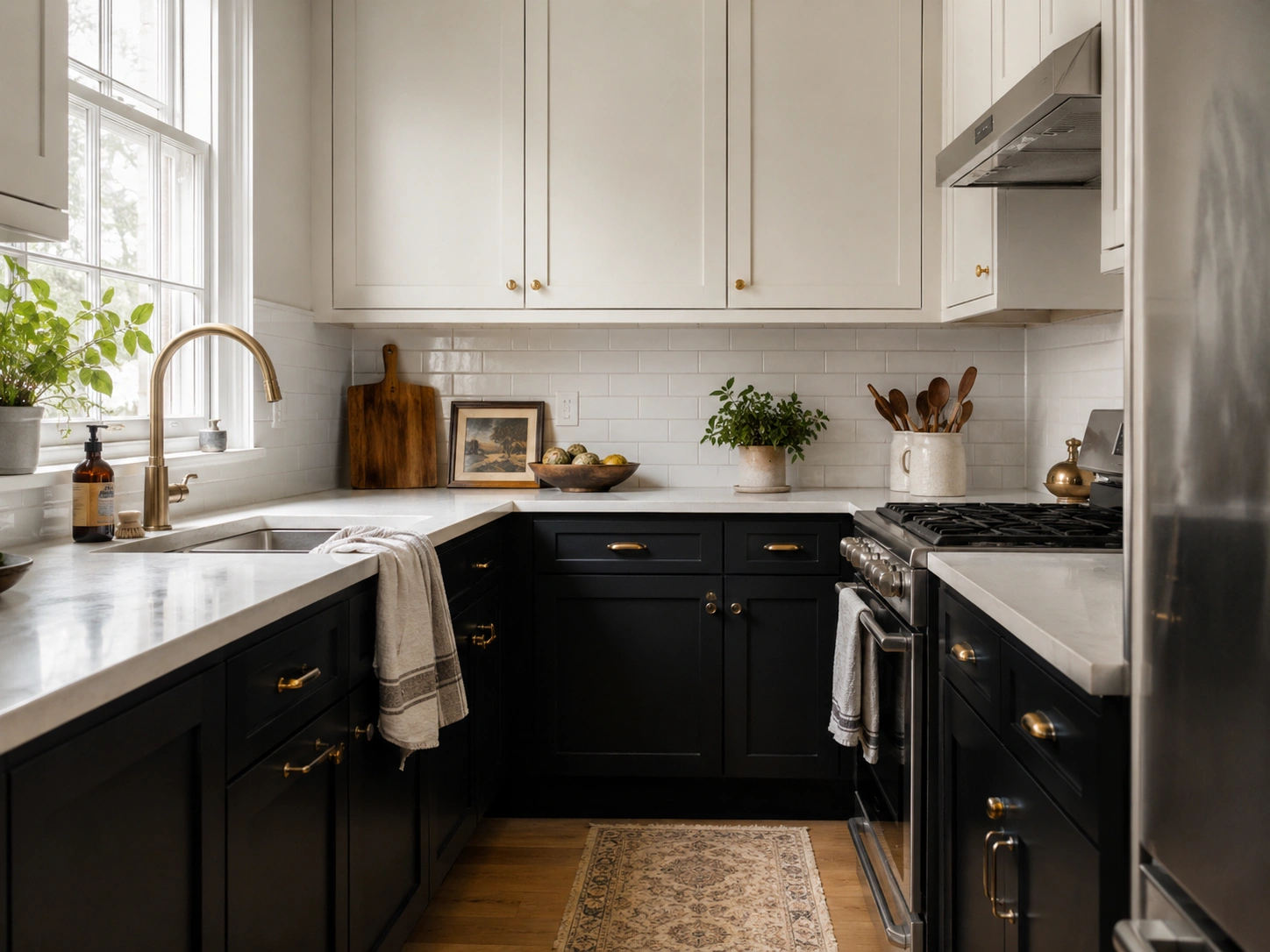
The single most reliable entry point for a smaller or dimmer kitchen. Keeping the lowers black and the uppers white, cream, or pale oak adds drama at eye level while letting light bounce off the upper half of the room. Pair it with brass or unlacquered brass pulls for warmth, and keep the upper cabinet interiors light too.
2. Matte Black Perimeter Cabinets With a Natural Wood Island
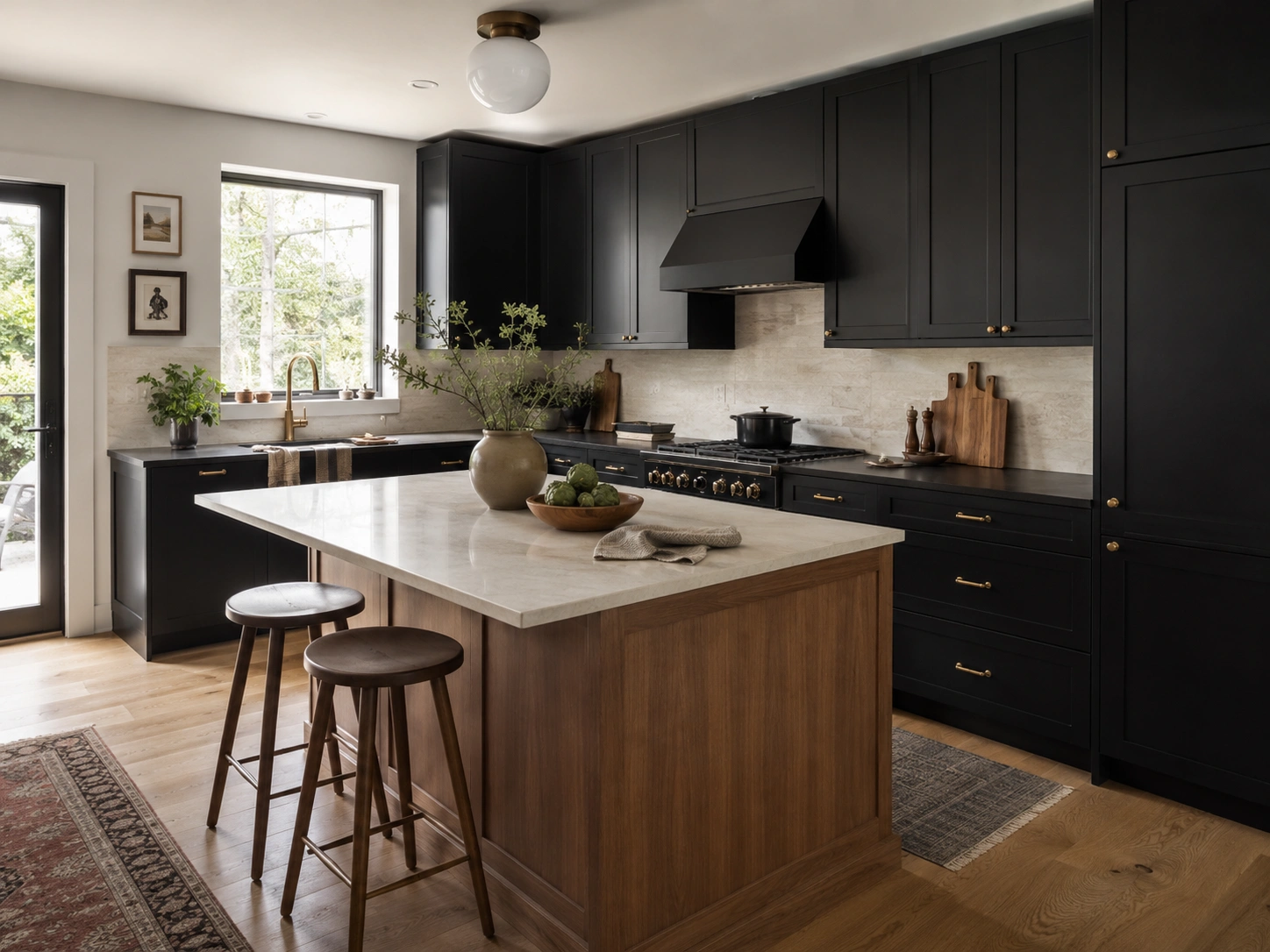
This combination is one of the most repeated patterns in current kitchen photos: black walls of cabinetry framing a warm wood island as the centerpiece. The wood breaks up the black visually and adds a textural, lived-in feel that pure black-and-white can’t. Choose a white oak or walnut island with a contrasting butcher block or stone top.
3. Black Shaker Cabinets for a Timeless Base
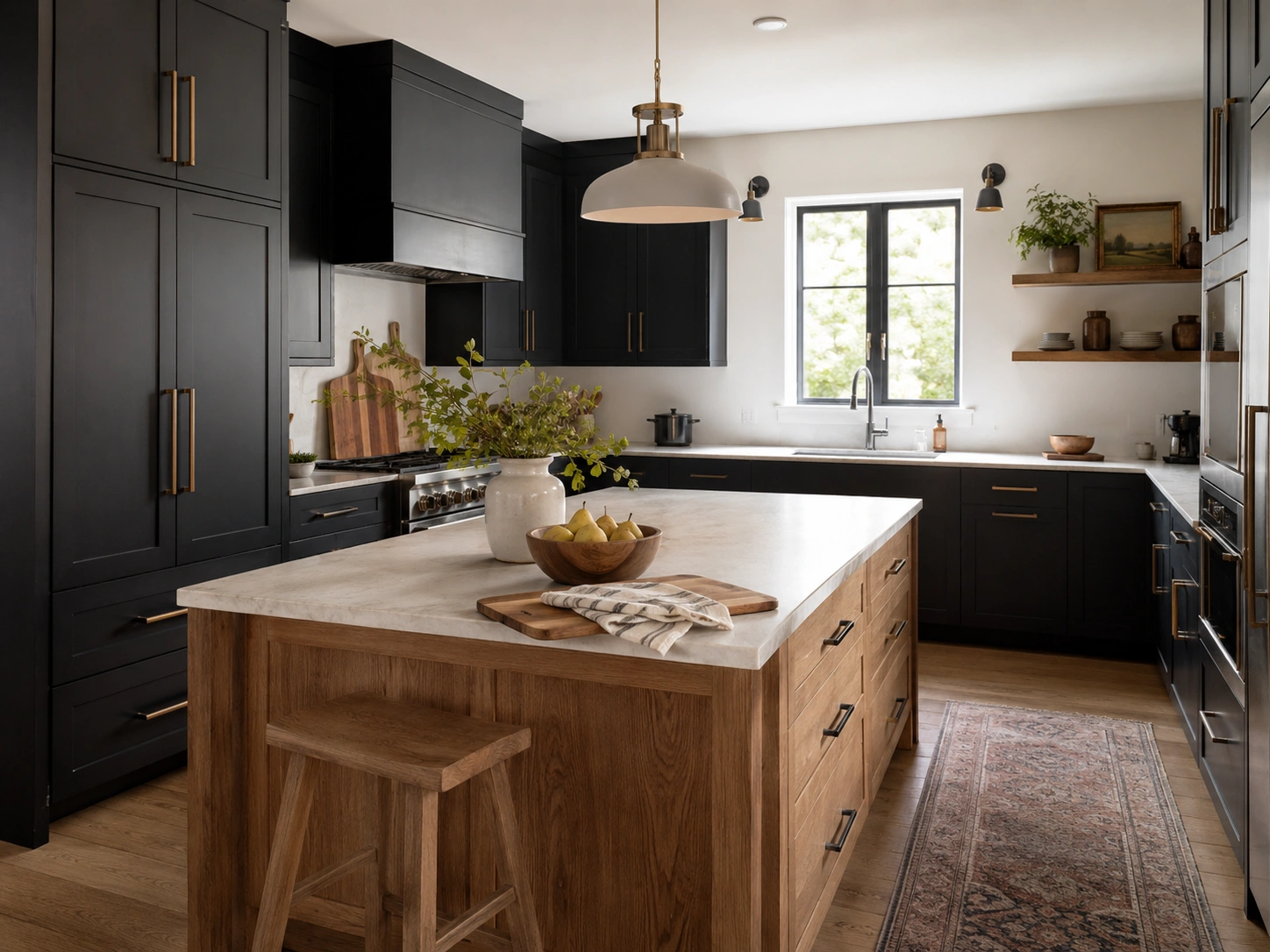
Shaker doors are the safest long-term bet for black cabinetry because the simple recessed panel reads as classic, not trendy, even a decade from now. It works in farmhouse, transitional, and contemporary kitchens equally well. Stick with a quality painted finish, not a vinyl wrap, so the black doesn’t fade or chip at the edges.
4. Glass-Front Black Upper Cabinets to Cut Visual Weight
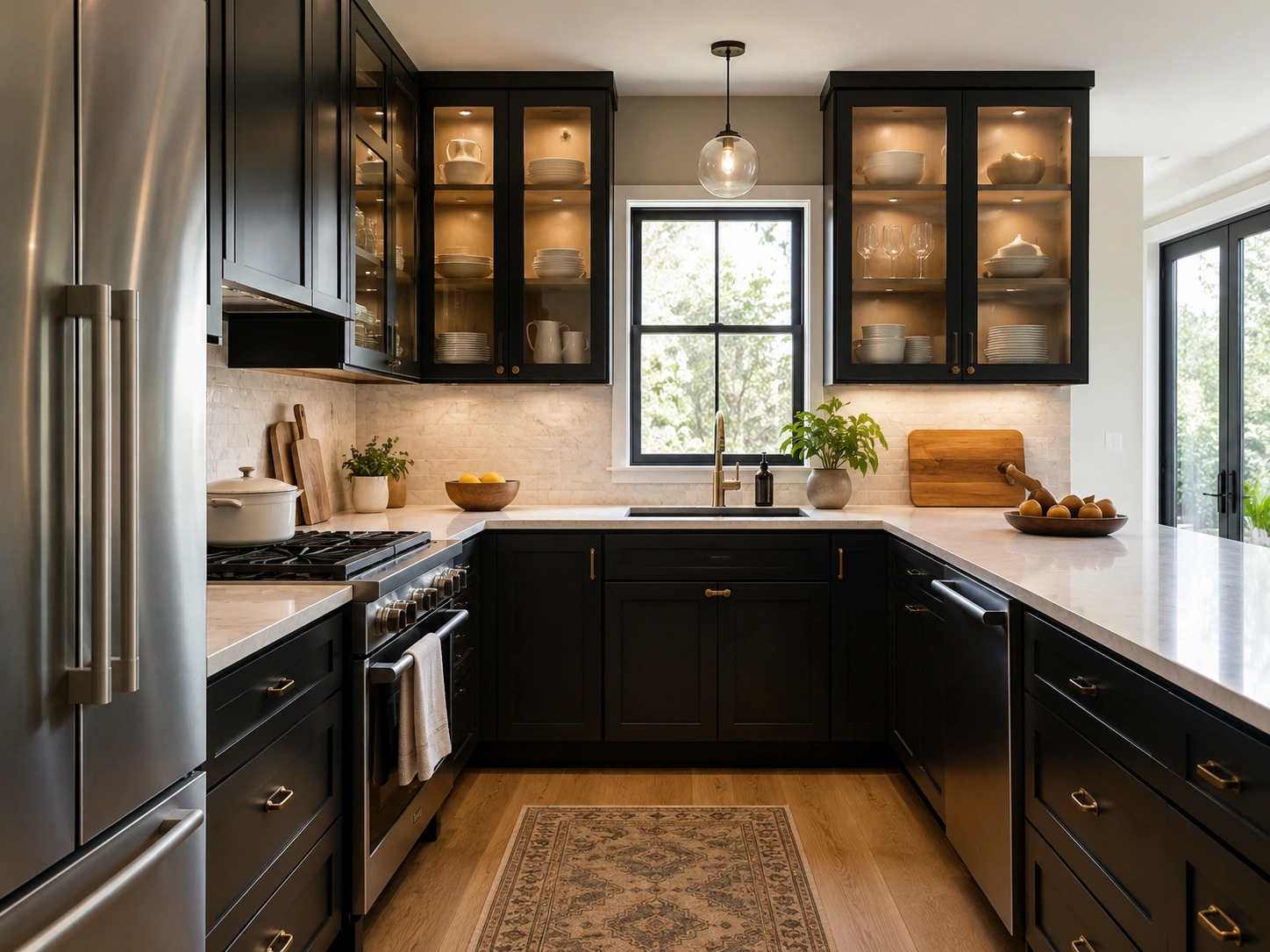
Swapping solid doors for glass on just the upper cabinets lets light pass through instead of stopping at a solid black wall. It’s especially useful in a smaller kitchen where every upper cabinet otherwise reads as a dark block. Add interior LED strip lighting and keep the dishware inside neutral and tidy, since it’s on display.
5. Black Lower Cabinets With Open Wood Shelving Up Top
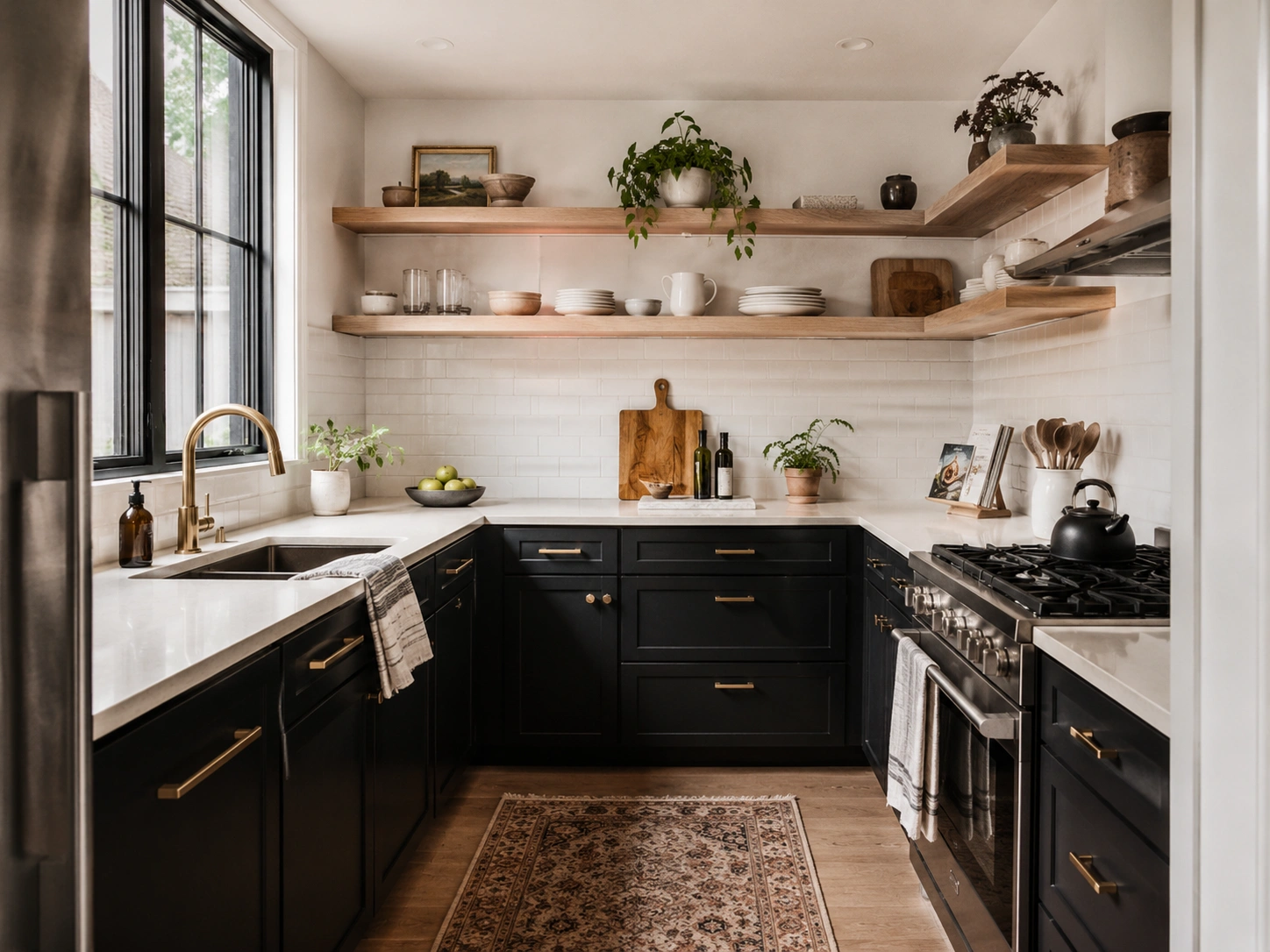
Skipping upper cabinets entirely and replacing them with floating wood shelves keeps the top half of the kitchen open and breathable. This is one of the best fixes for a low-ceiling or narrow kitchen, since it removes visual mass at eye level. It does require keeping the shelf styling intentional, since everything on it is visible.
6. Streamlined Matte Black Slab-Front Cabinets
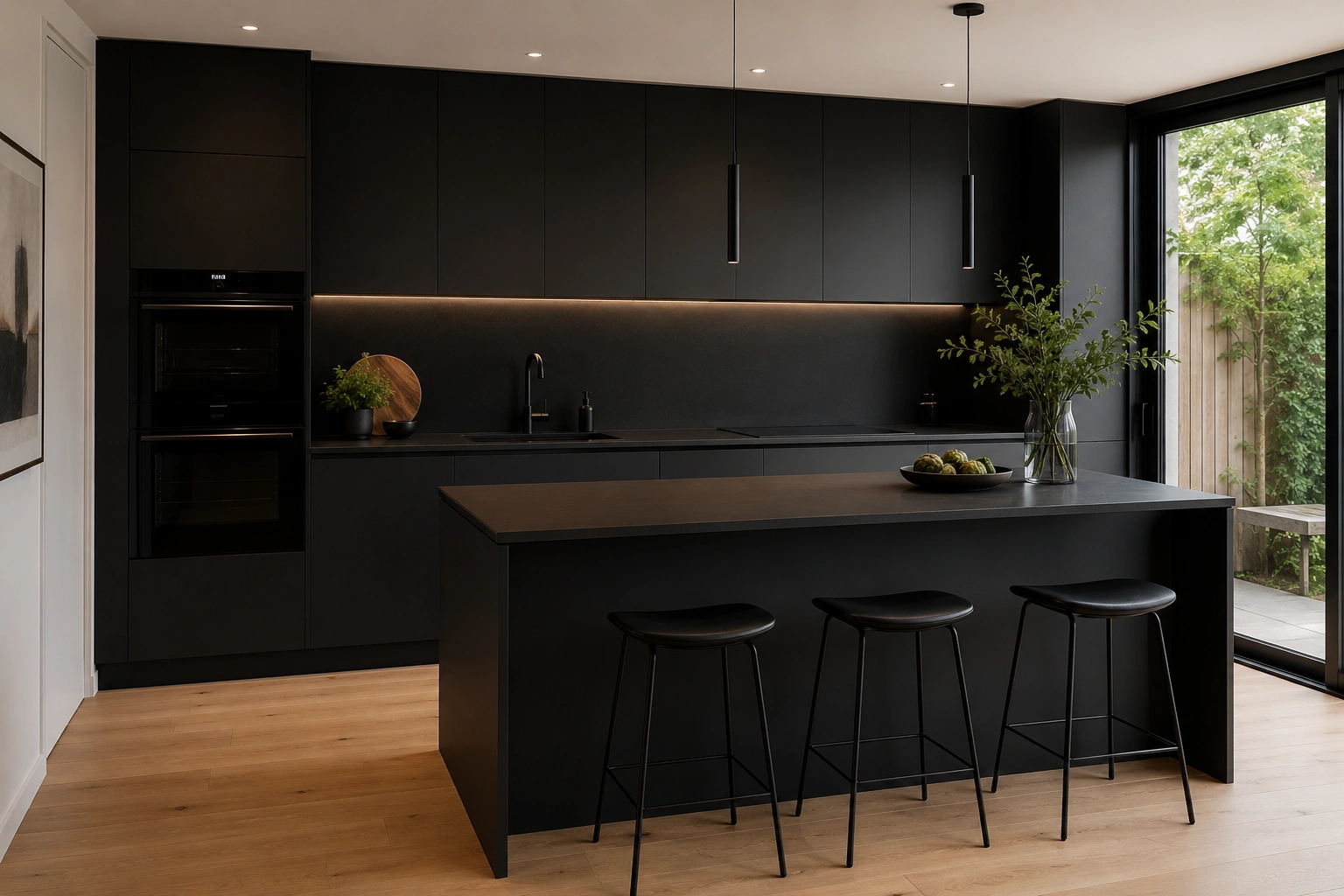
For a sleeker, more minimal aesthetic than shaker, flat slab doors in matte black create a clean, almost monolithic look. It suits contemporary and modern-minimalist kitchens best. Pair slab fronts with integrated or recessed pulls so the surface stays as uninterrupted as possible.
Smart Layout, Materials, and Budget-Friendly Choices
A minor kitchen update is also one of the best-performing home projects financially. According to the 2025 Cost vs. Value Report, a minor kitchen remodel delivers the highest ROI of any interior project at 113% nationally, and 21 states return 100% or more on that kind of project. I’ve seen conflicting numbers on this, one regional source puts minor remodel ROI closer to 90.7%, while the national Zonda/Fixr figure lands at 113%. My read: treat 113% as the strong national average and 90% as a reasonable floor depending on your local market, not a guarantee for your specific street.
7. Black Cabinets With a White Marble or Quartz Waterfall Island
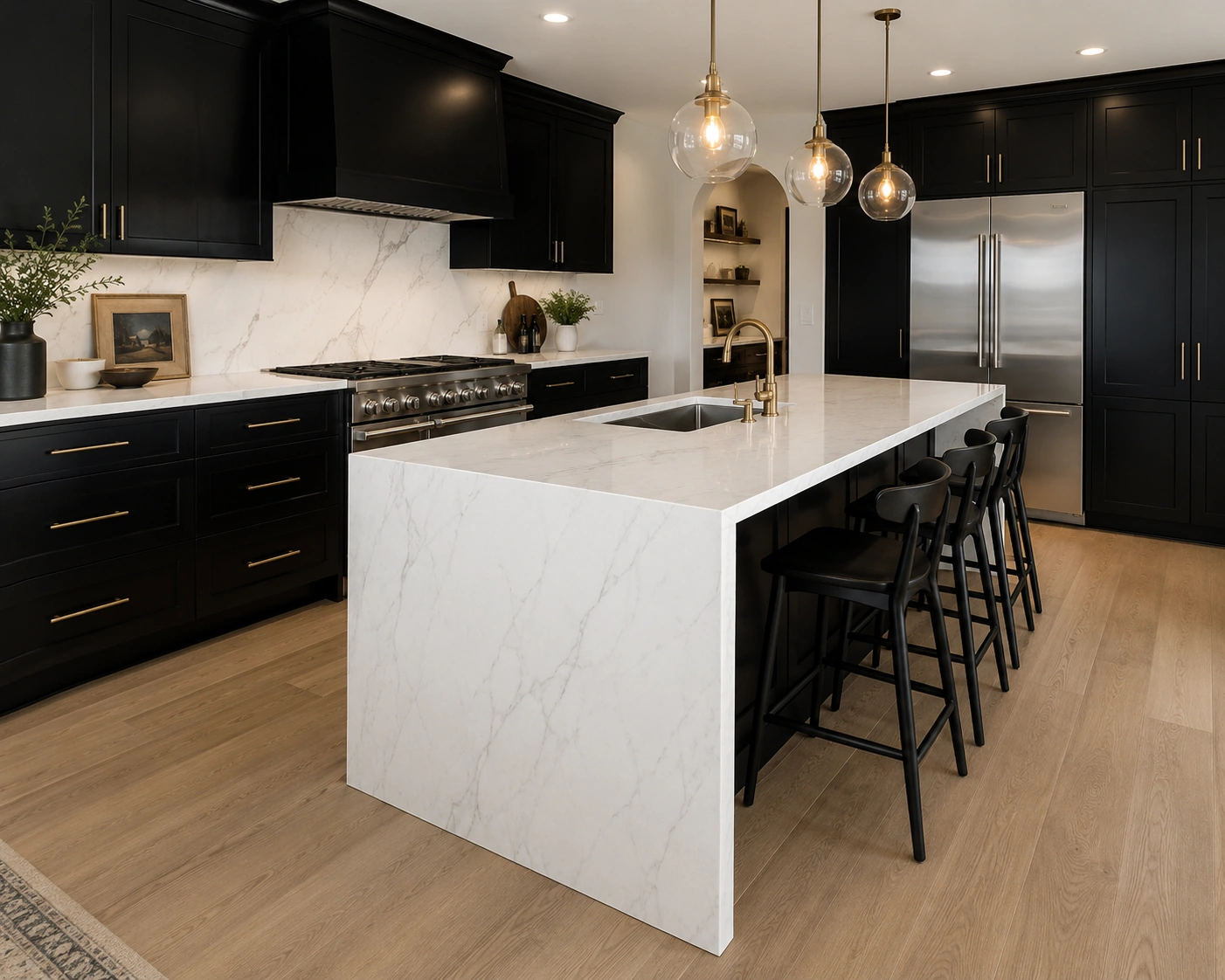
A waterfall-edge island in white marble or quartz against black perimeter cabinets is one of the highest-contrast, most photographed combinations in black and white kitchen design right now. It works because the white surface does double duty: countertop and visual relief from the black.
8. Brushed Brass Hardware on Black Cabinet Fronts
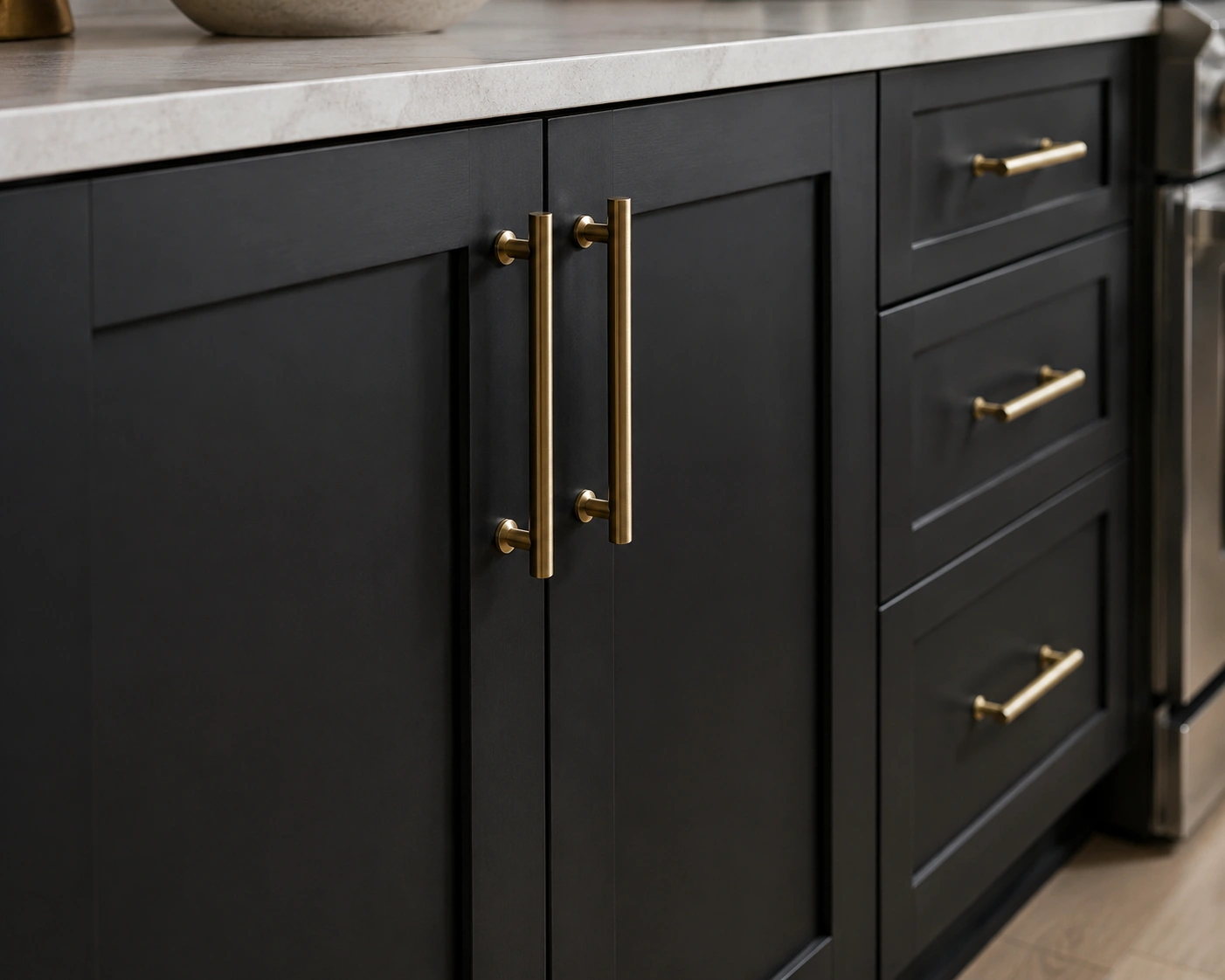
Warm brass or unlacquered brass pulls are currently the most popular hardware finish paired with black cabinetry, replacing cooler chrome and nickel. The warmth keeps an all-black or two-tone kitchen from feeling cold or industrial. Choose elongated bar pulls on doors and smaller bar or cup pulls on drawers.
9. Budget-Friendly Black Kitchen With IKEA SEKTION + Nickebo Fronts
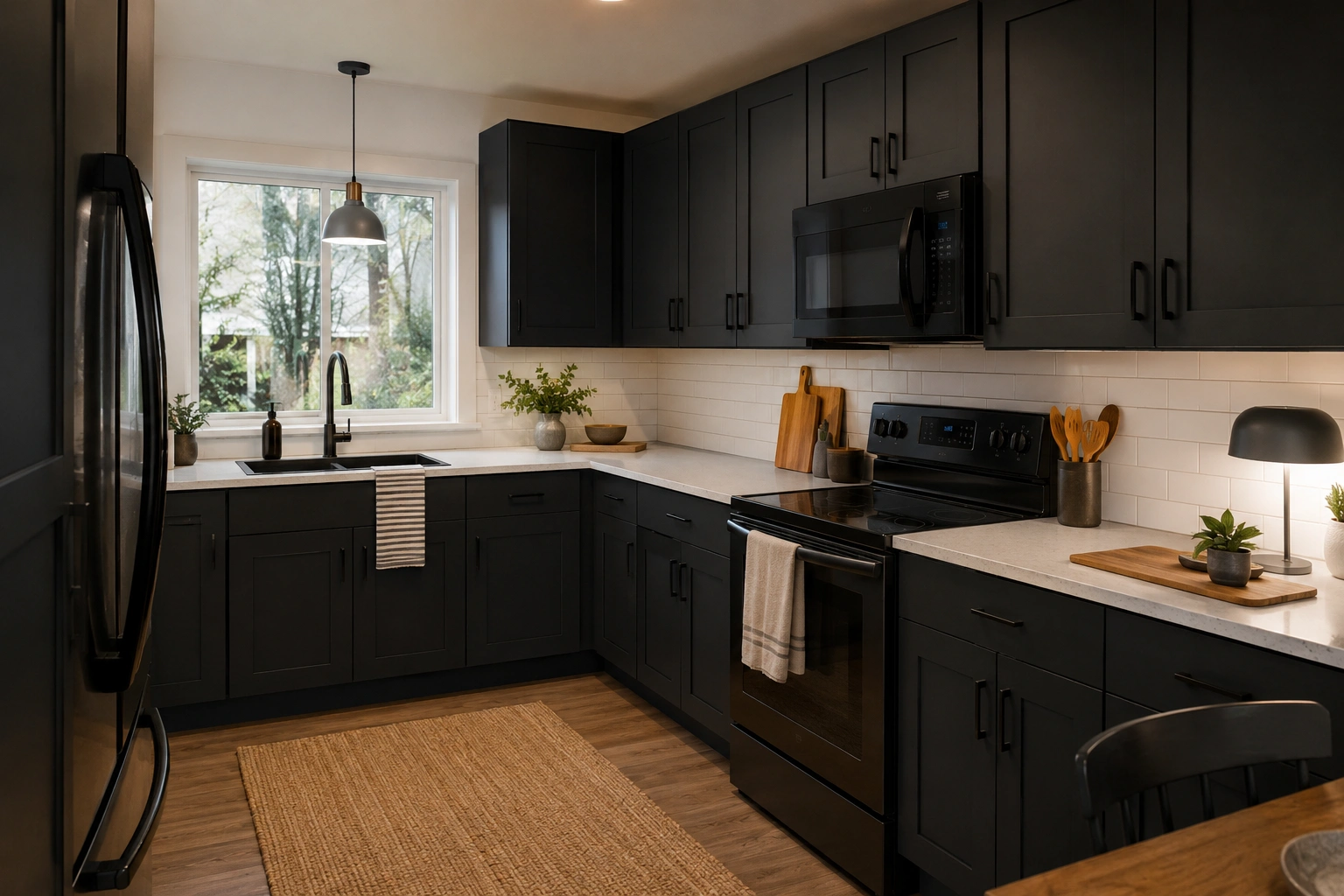
For a DIY-friendly entry point under most other budgets, IKEA’s SEKTION cabinet boxes with Nickebo matte anthracite fronts (or the black-stained Lerhyttan line) ship fast and install without a contractor for many homeowners. It’s not semi-custom flexibility, but it’s a real, current product line, not a discontinued or fictional one.
Quick Comparison: Black Kitchen Brand Tiers
| Option | Best For | Key Benefit | Limitation |
|---|---|---|---|
| IKEA SEKTION (Nickebo / Lerhyttan) | DIY budgets, fast timelines | Ships quickly, widely stocked, lowest entry cost | Limited custom sizing; foil finish needs gentle cleaning |
| KraftMaid (Carbon-style black paint) | Customization without full-custom pricing | Semi-custom sizing, dozens of paint and stain finishes | Longer lead time than stock cabinets; pricing varies by dealer |
| Vipp (V1 modular kitchen) | A splurge, design-forward statement | Editorial-grade steel construction, fully modular | Premium pricing well above standard cabinetry; limited dealer access |
10. Black Island, Light Perimeter Cabinets (Reverse Two-Tone)
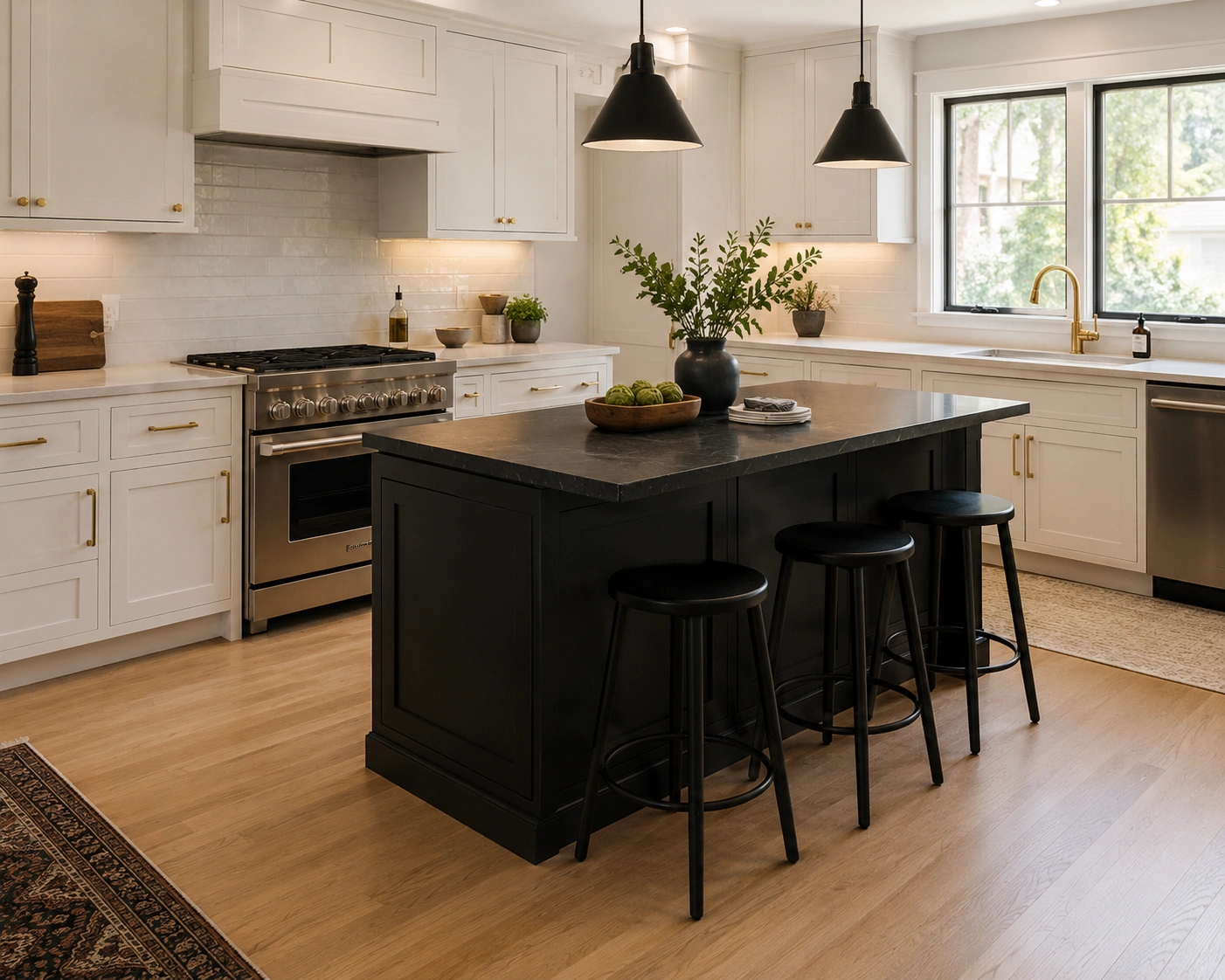
Flip the usual tuxedo formula: keep the perimeter cabinets light and make the island the one black statement piece. This works particularly well in a smaller galley or L-shaped kitchen, since most of the walls stay bright while the island still delivers the bold look people are after.
11. Light Wood Flooring to Balance Black Cabinetry
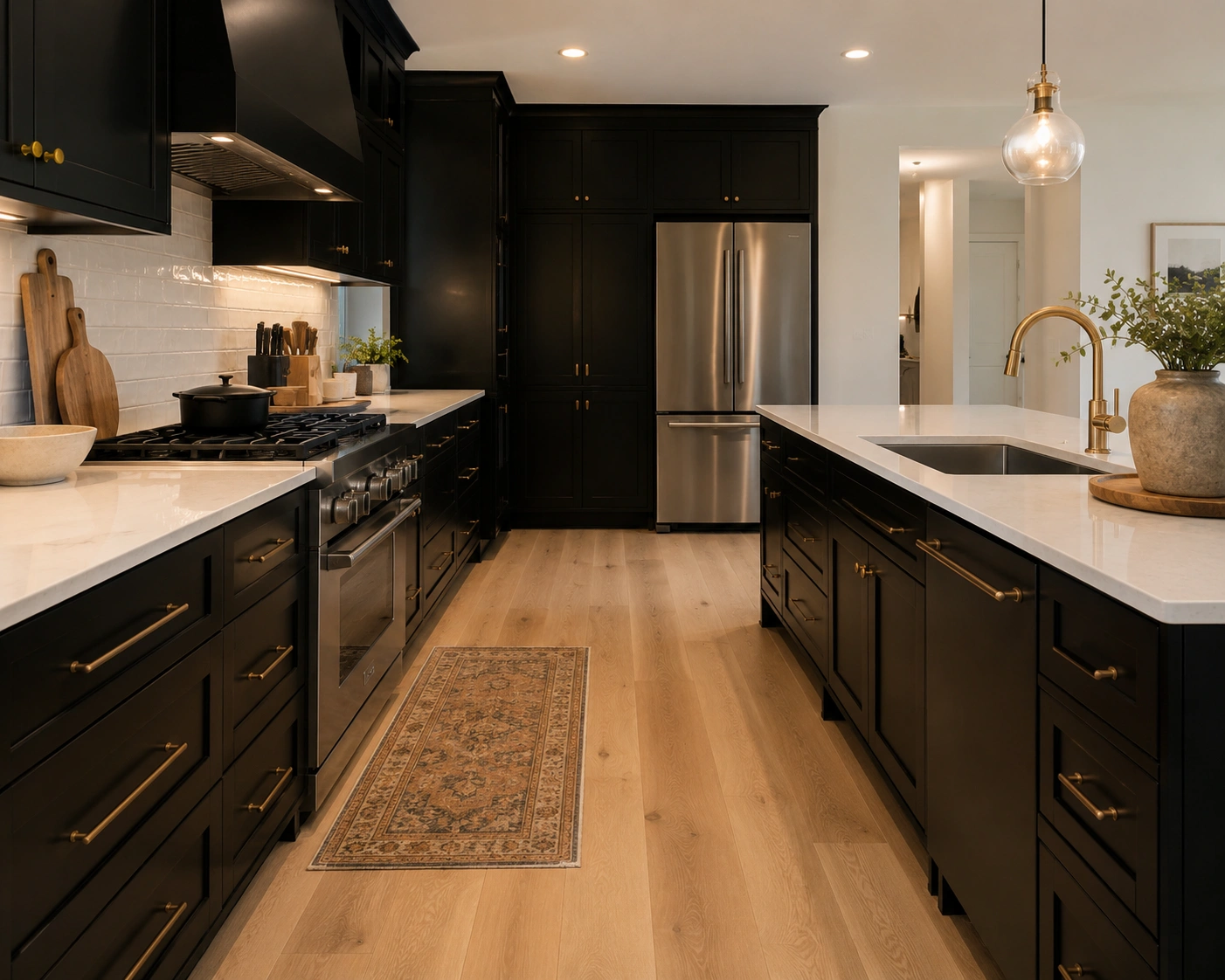
Natural oak, maple, or light walnut flooring bounces light back up into the room in a way dark flooring simply can’t. If you’re worried about a black kitchen reading as heavy, this single swap does more work than almost any other single design decision on this list.
12. Floating Black Wall Cabinets With Underside Lighting
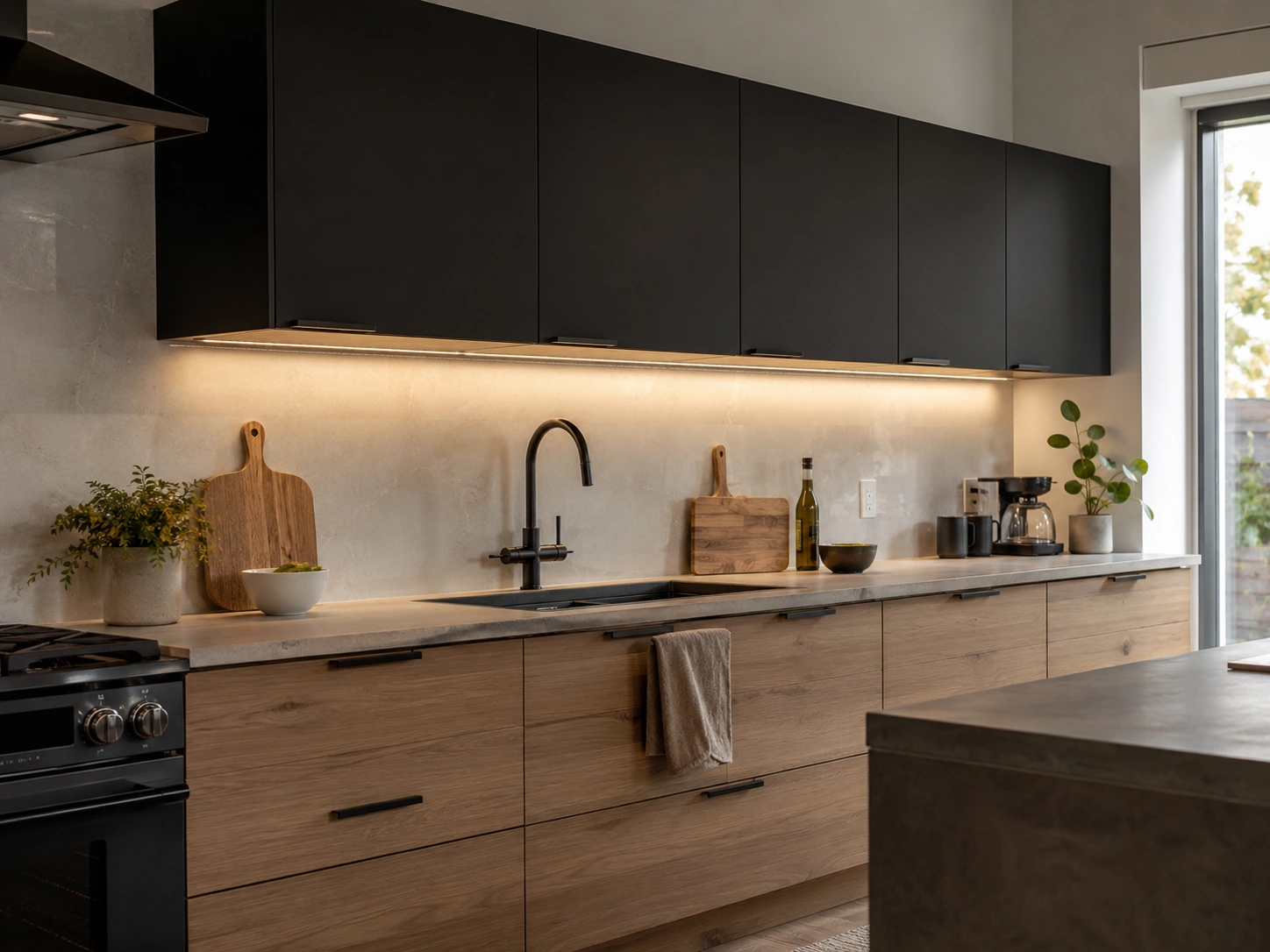
Mounting black upper cabinets a few inches off the counter, with a thin LED strip underneath, visually lifts the cabinetry off the wall and adds a soft glow along the backsplash. It reads as more architectural than a standard flush-mounted upper cabinet run.
13. Full-Height Light Tile Backsplash Behind Black Cabinets
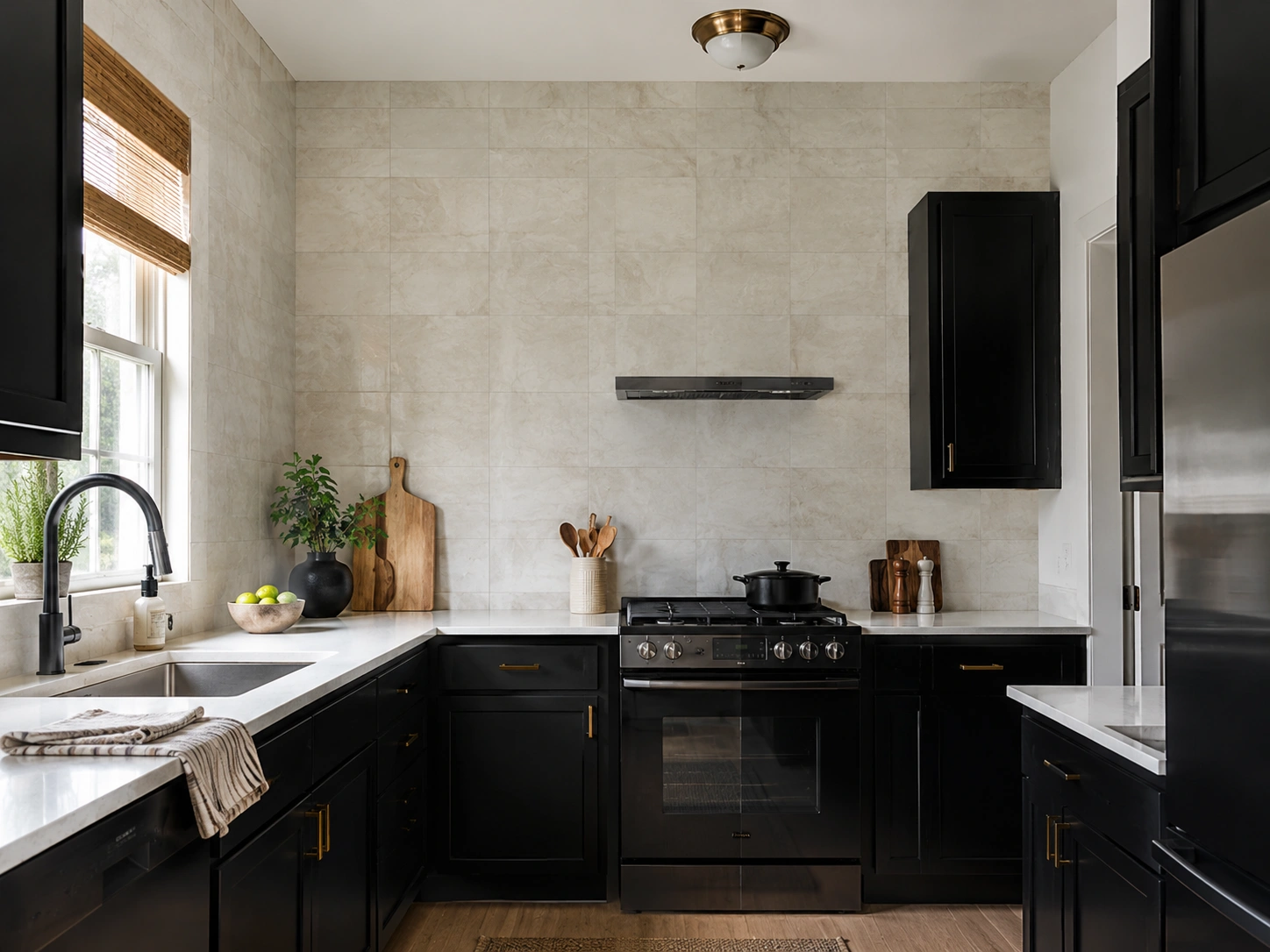
Running a large-format light tile from counter to ceiling, instead of stopping at 18 inches, adds height and brightness behind black cabinetry. It’s a small layout decision that makes a real difference in how tall and open a small kitchen feels.
Finishing Touches That Make Black Cabinets Feel Custom
14. Panel-Front Appliances for a Seamless Black Kitchen
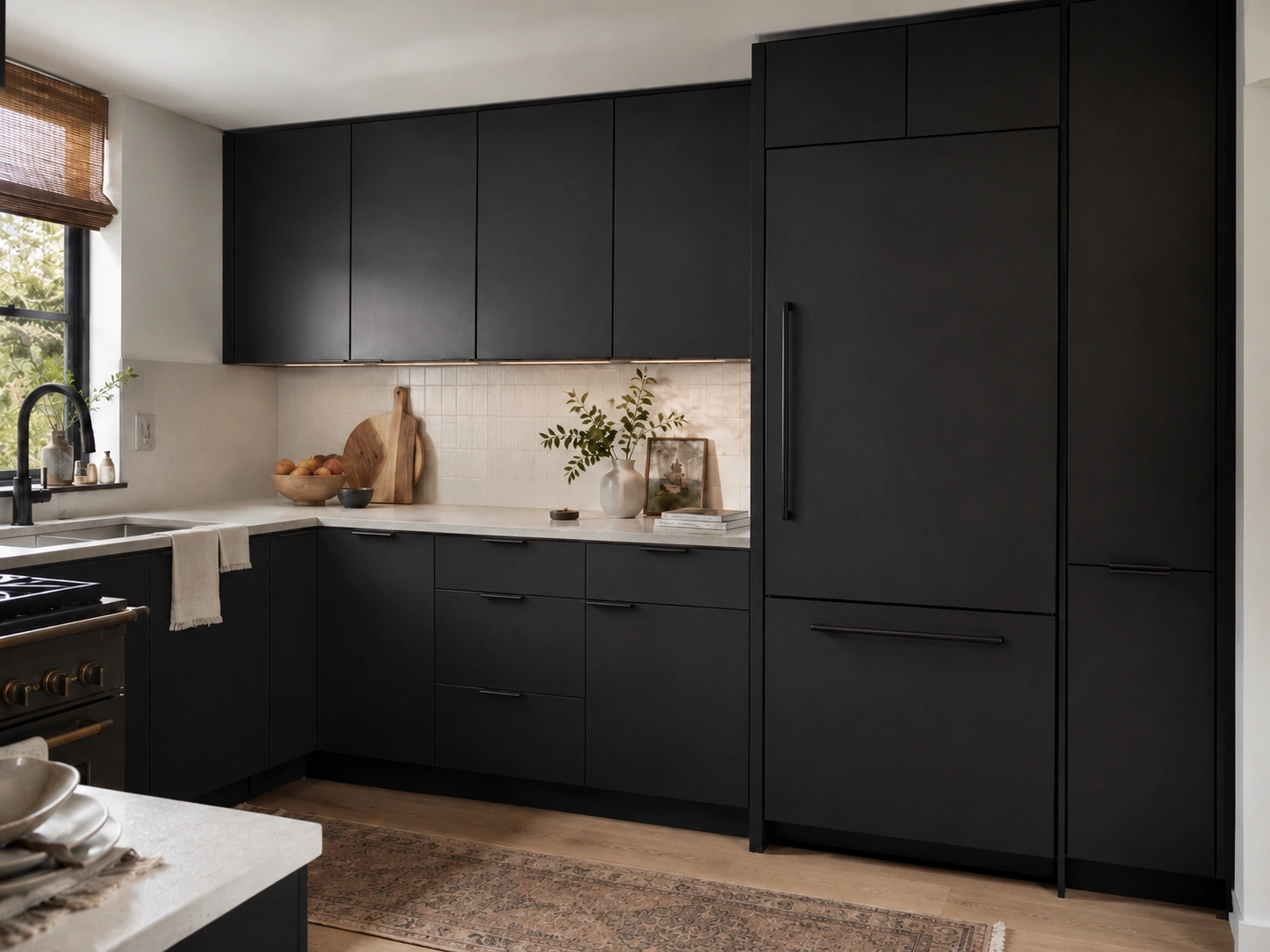
Covering the fridge and dishwasher in matching cabinet panels removes the visual break of stainless steel boxes interrupting a black cabinet run. In a small kitchen especially, fewer competing materials means the space reads as more intentional, not cluttered.
15. Black and White Checkerboard or Graphic Floor Tile
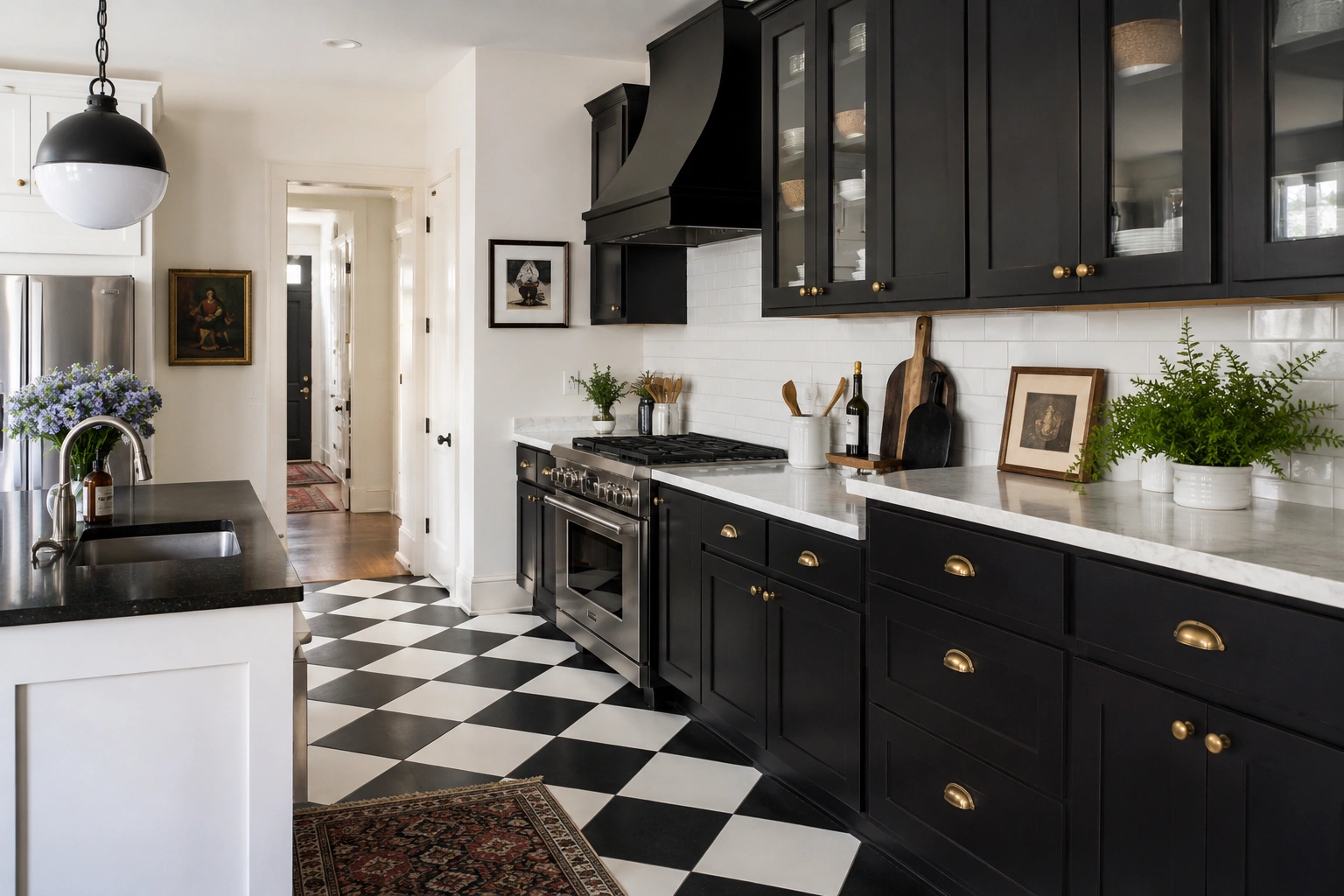
A black-and-white checkerboard or graphic patterned floor tile gives a black and white kitchen a bold, retro-modern anchor without touching the cabinetry at all. It’s a lower-cost way to commit to the look if you’re not ready to paint cabinets yet.
16. A Single Wood Accent Wall or Beam to Warm Up Black
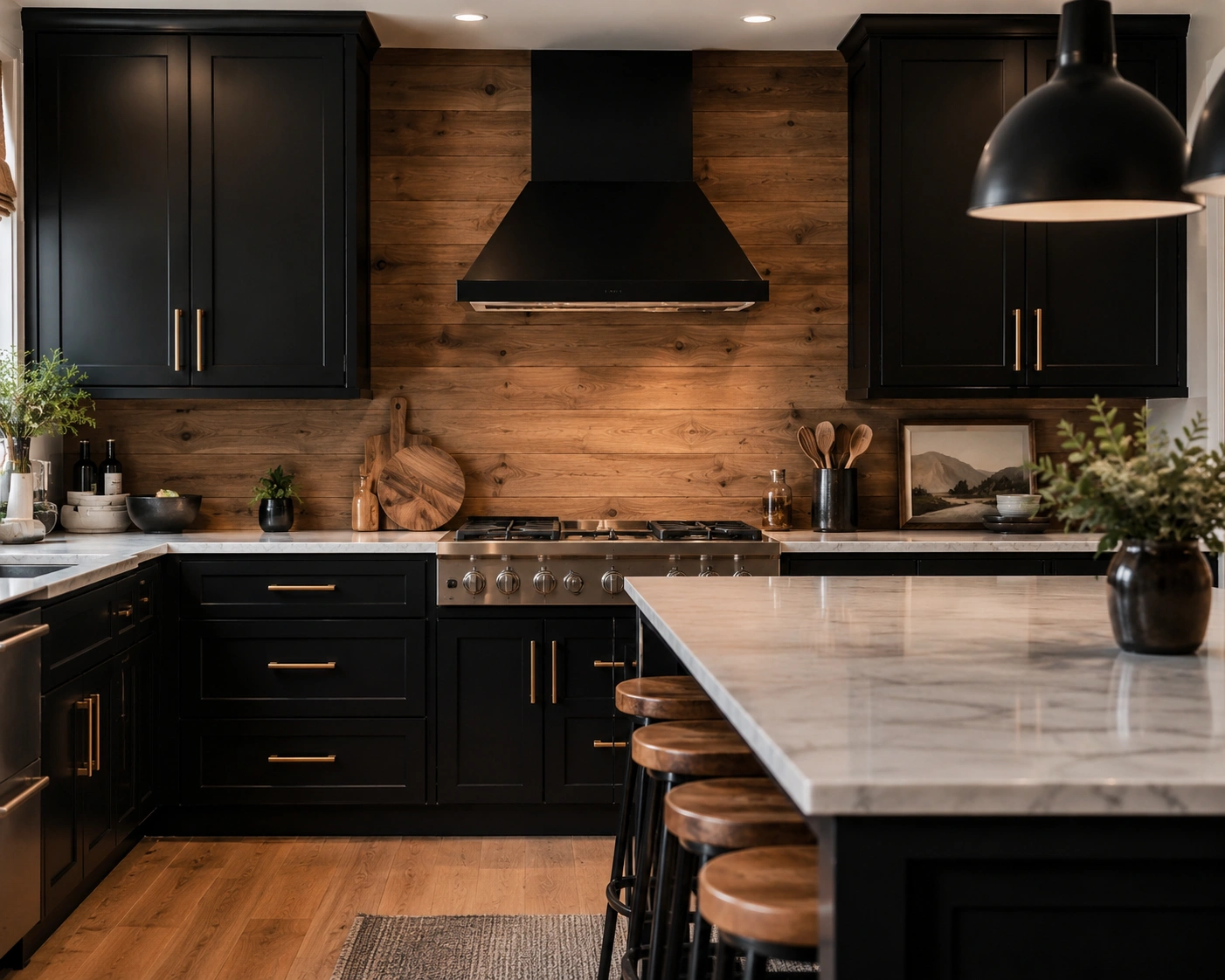
One section of wood paneling, a wood range hood surround, or an exposed wood beam against black cabinetry adds the warmth that pure black-and-white sometimes lacks. Keep it to one wood element so it stays an accent, not a competing material.
17. A Statement Black Range Hood as the Focal Point
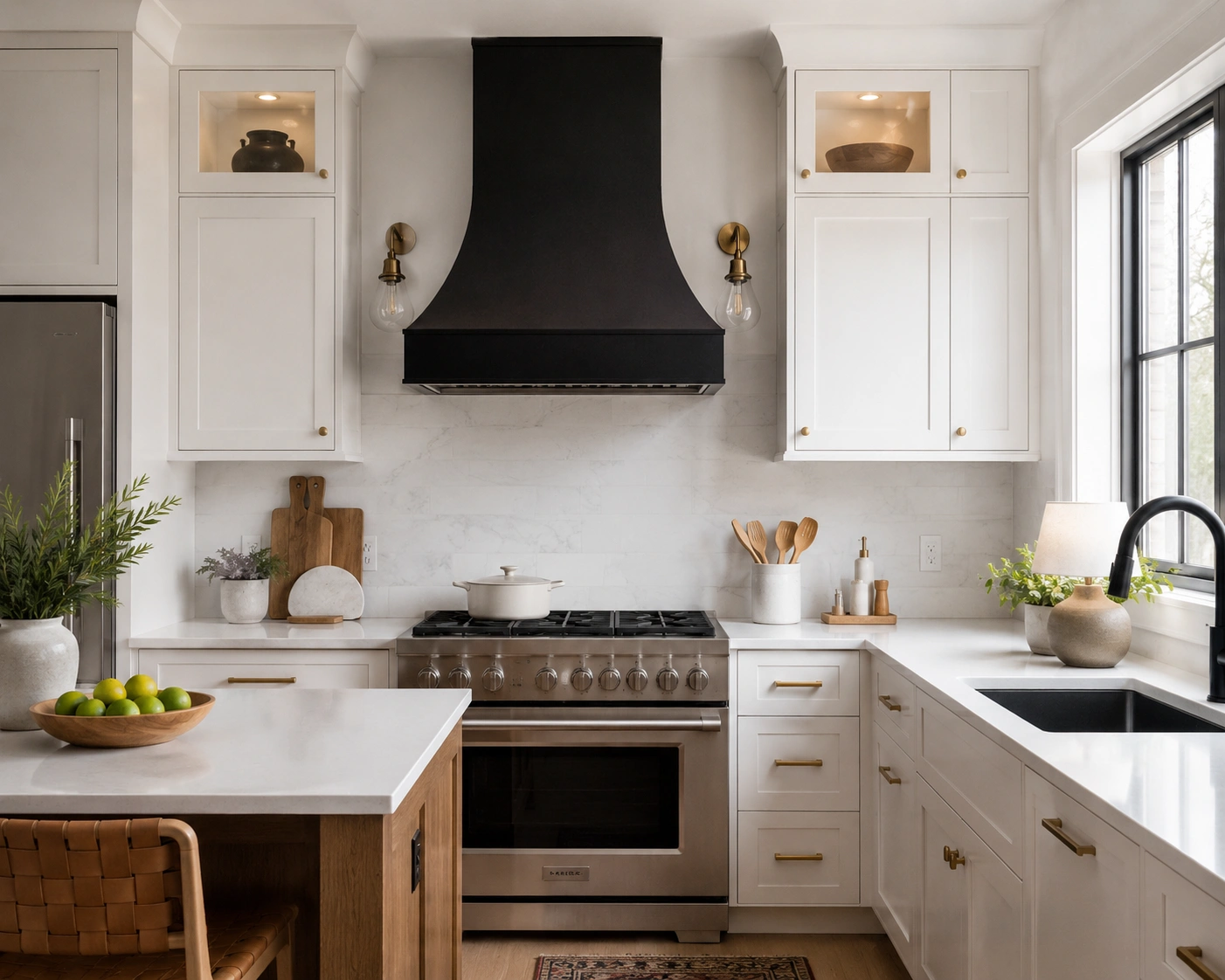
If you’re not ready to commit to full black cabinetry, a black range hood against white or wood cabinets gives you the bold focal point without the full commitment. It’s a popular, lower-risk way to test the look before a full renovation.
18. Semi-Custom Painted Black Cabinets (KraftMaid Carbon-Style Finish)
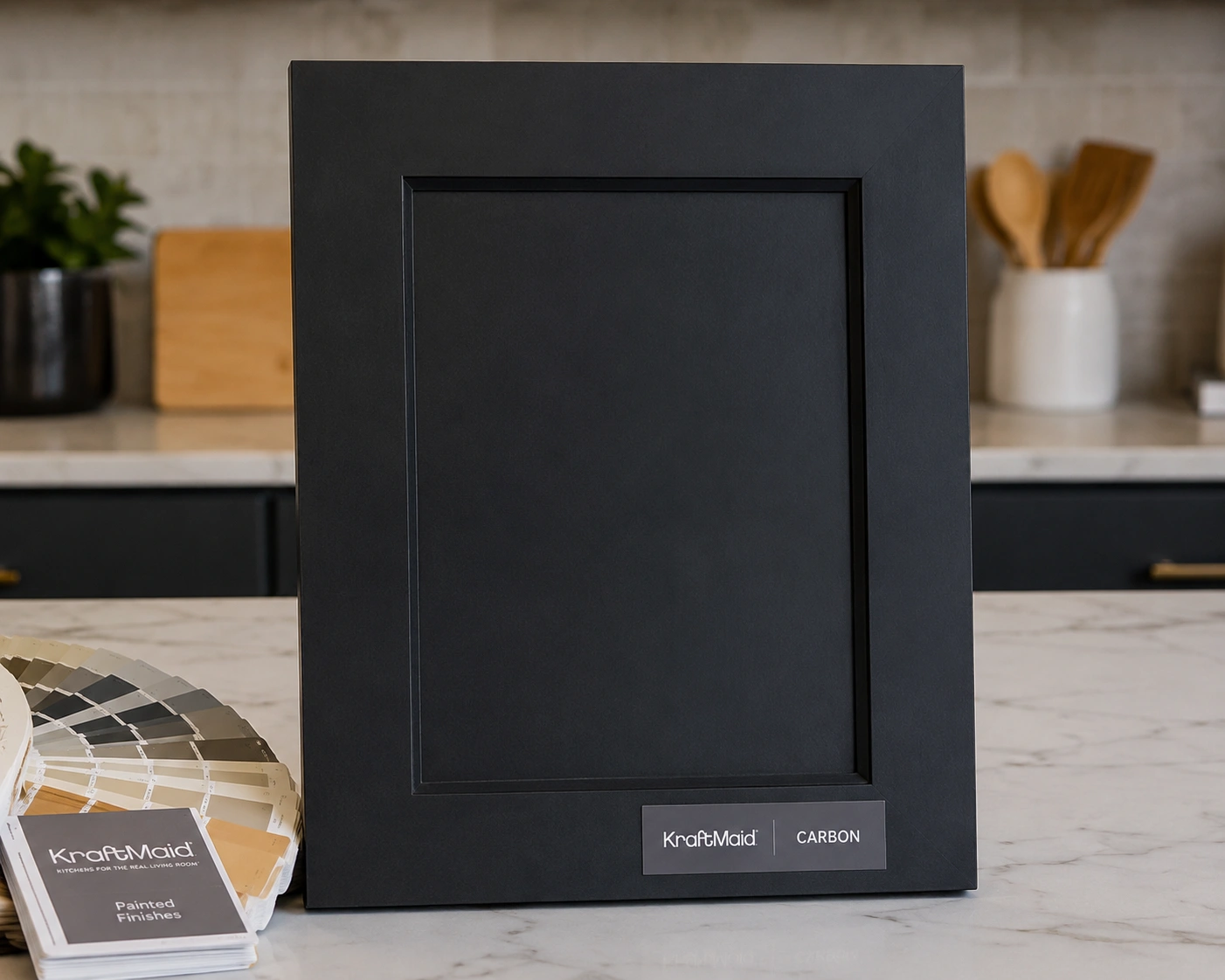
For homeowners who want more sizing flexibility than a stock box but aren’t ready for full-custom pricing, semi-custom lines like KraftMaid offer a deep black-grey painted finish (marketed as Carbon) across more than 40 total finish options. It’s the realistic middle tier between IKEA and a custom cabinet shop.
19. The Splurge: An All-Black Modular Steel Kitchen
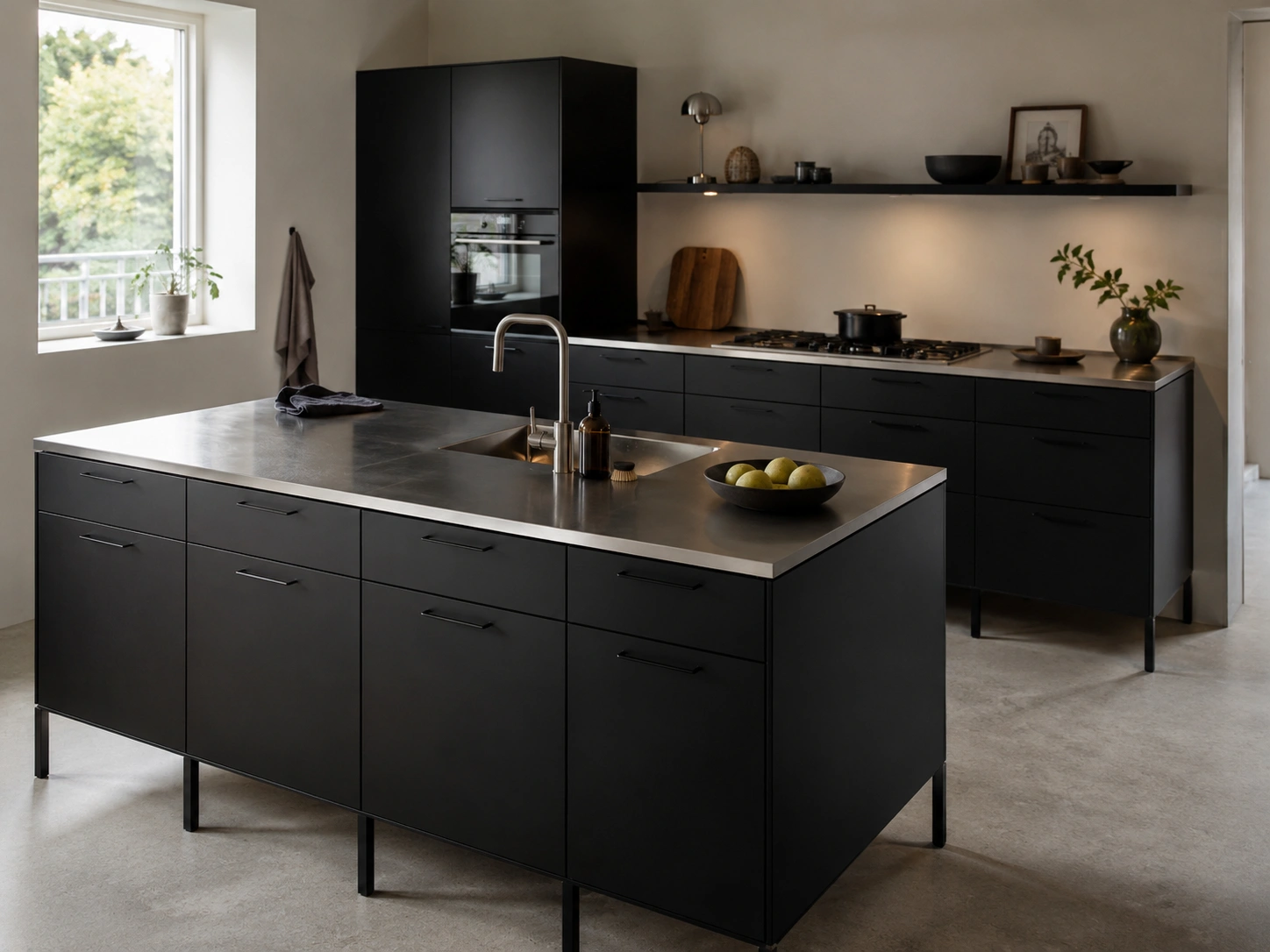
If budget genuinely isn’t the constraint, Vipp’s modular steel kitchen system is the editorial reference point most black-kitchen inspiration photos are quietly borrowing from: black powder-coated steel fronts, a stainless worktop, and furniture-style legs. It’s not a realistic comparison for most renovation budgets, but it’s worth knowing what the “real” version of the aesthetic looks like.
Lighting Solutions That Actually Work
20. A Layered Lighting Plan: Recessed, Under-Cabinet, and Pendant
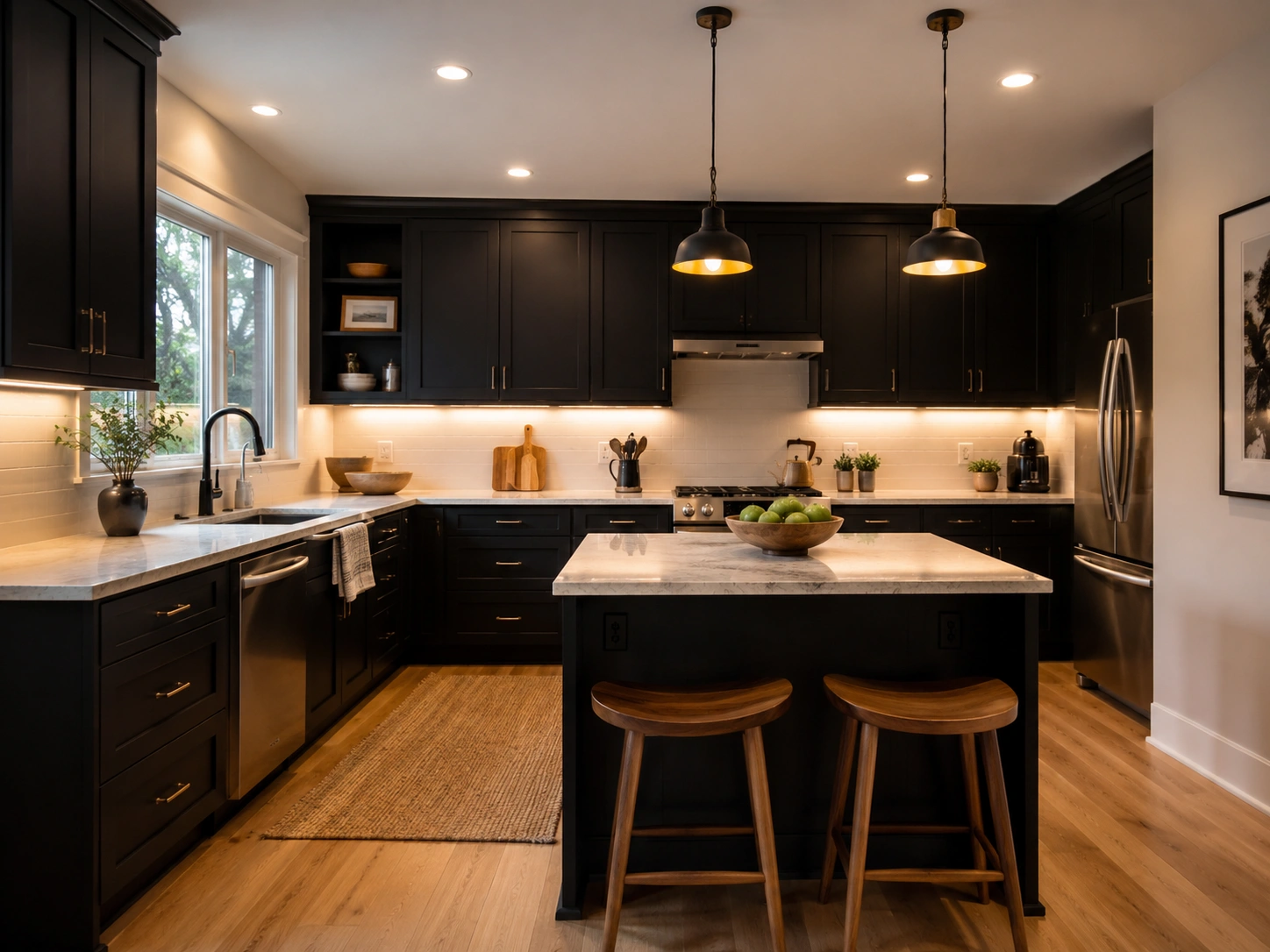
A single overhead fixture is the most common reason a black kitchen feels dark. Combining recessed ceiling lights, under-cabinet task lighting, and at least one pendant fixture covers ambient, task, and accent light separately, so no part of the room is left in shadow.
21. Warm 2700K–3000K LED Strips to Fight the “Cave” Effect
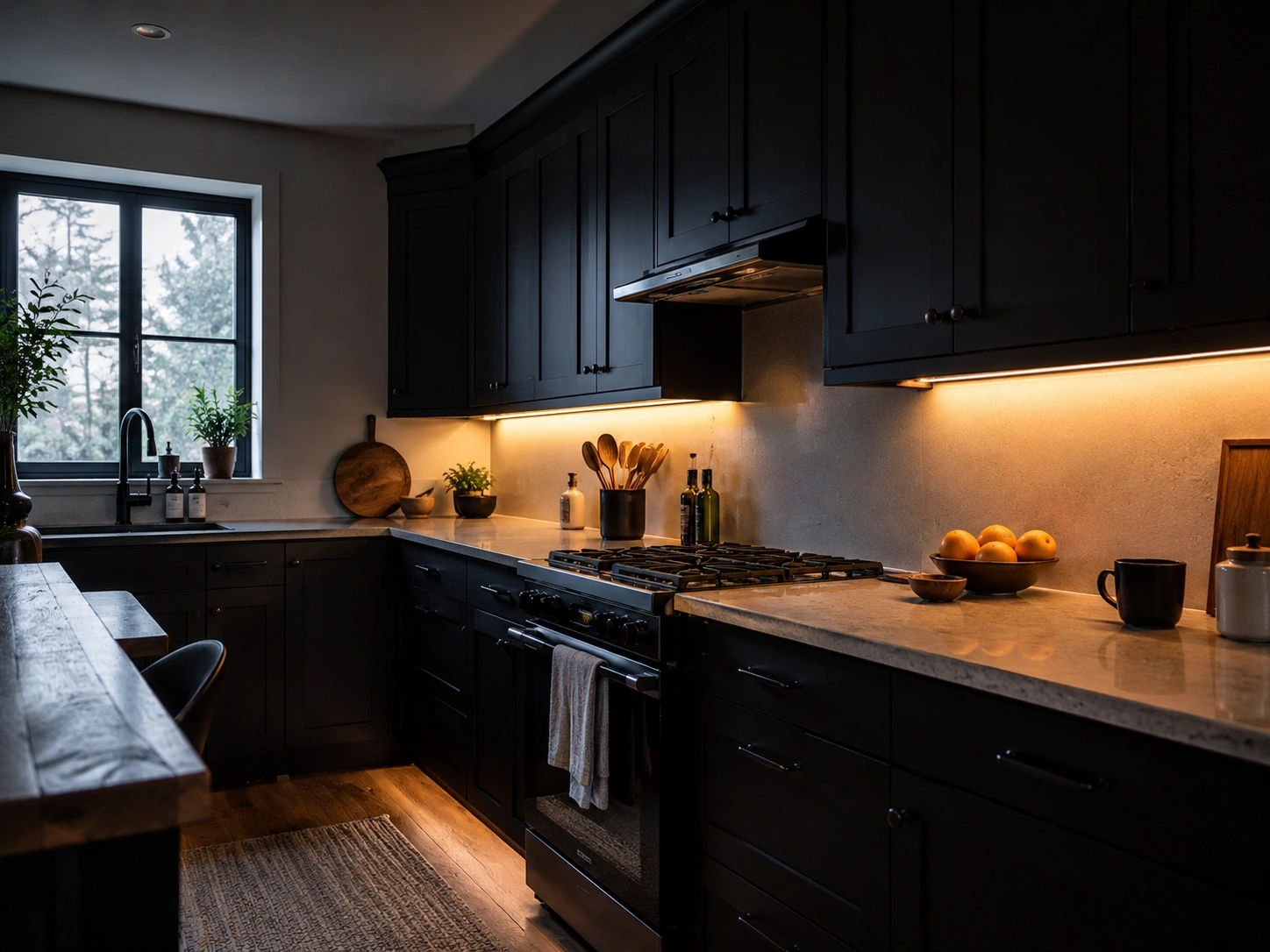
This is the single biggest lighting fix for a north-facing black kitchen. Cool white light (4000K+) makes matte black absorb even more of the available light; warm 2700K–3000K LED strips under cabinets counteract that and make black surfaces feel grounded instead of dim.
22. Statement Brass-and-Glass Pendants Over a Black Island
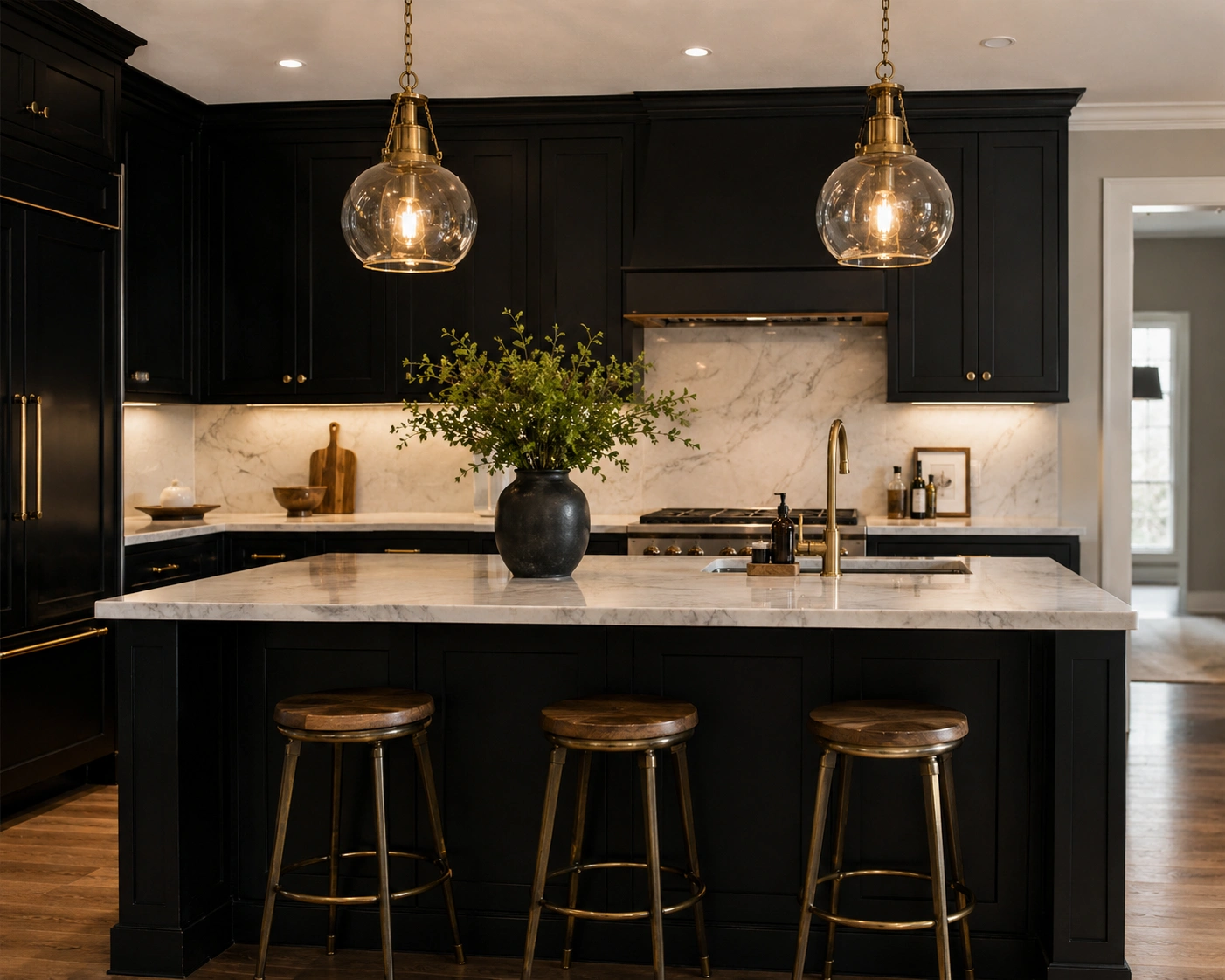
Pendant lighting over an island isn’t just decorative in a black kitchen, it’s functional task lighting where you need it most. Brass or warm-toned glass pendants echo the hardware finish and add a second light source at counter height, where overhead light alone usually falls short.
23. Mirrored or Glass Backsplash to Bounce Light in a Small Kitchen
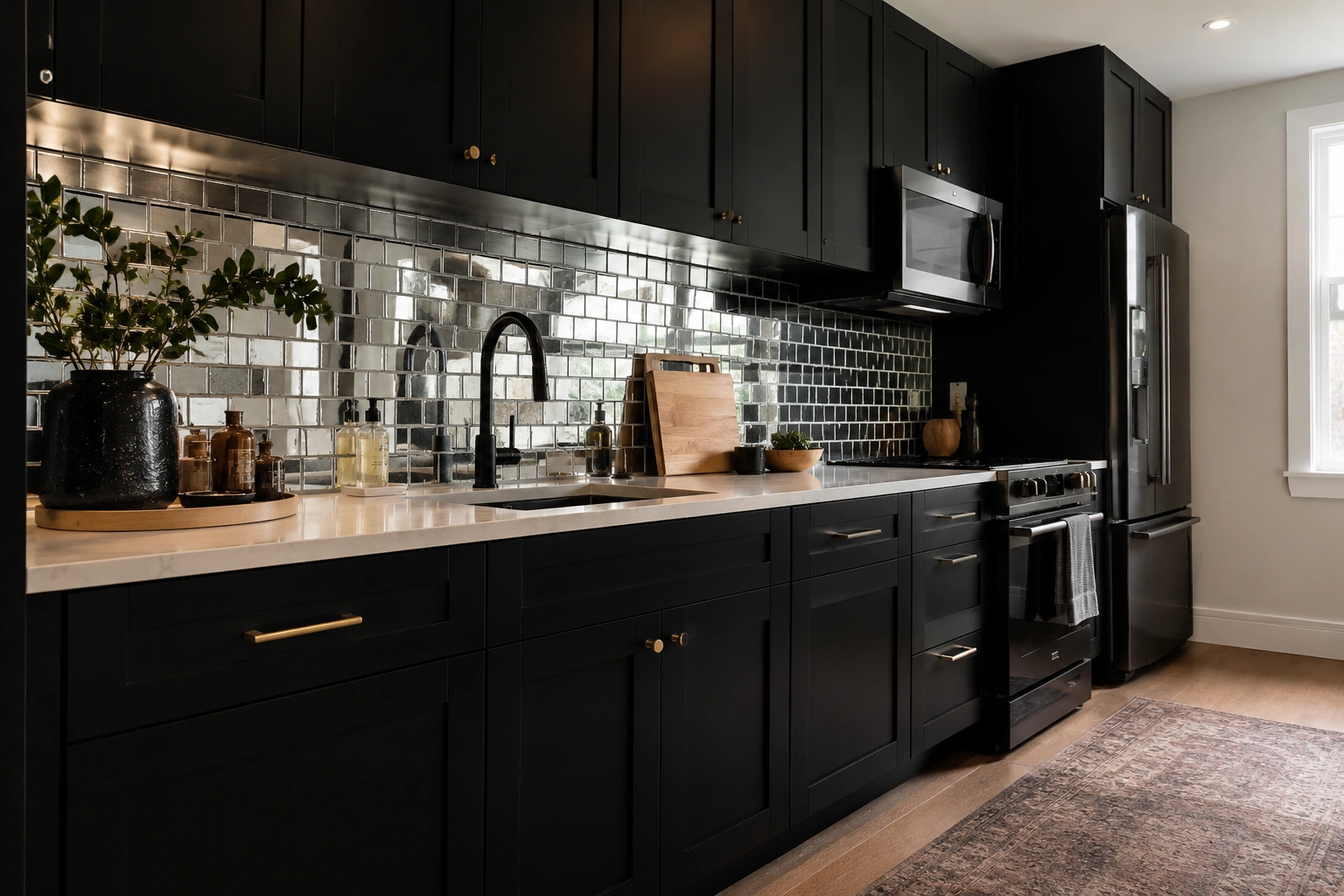
A mirrored or high-gloss glass tile backsplash reflects whatever light a small kitchen does get, working alongside your fixtures rather than competing with the matte cabinetry. It’s a subtle trick, but it noticeably brightens a galley or one-wall black kitchen.
24. Solar Tube or Skylight Retrofit for a North-Facing Black Kitchen
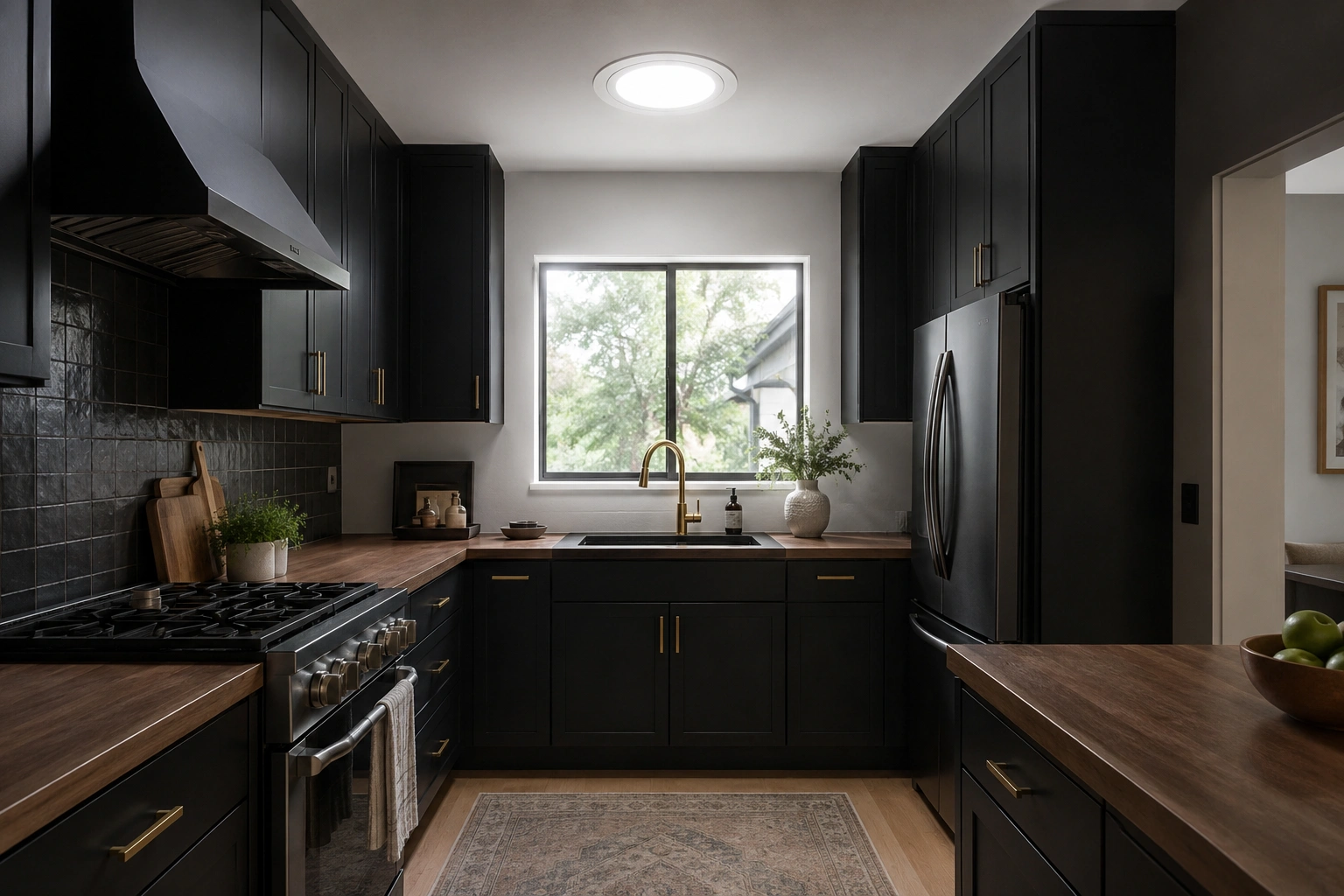
For a genuinely dim, north-facing kitchen, a solar tube retrofit, a smaller, less invasive option than a full skylight, can add real daylight without major structural work. It’s a bigger investment than anything else on this list, so it’s worth a contractor consult before committing, but it directly solves the problem most black-kitchen articles never mention.
A quick opinion, and you’re welcome to disagree: skip the fully black kitchen, walls, ceiling, and all, unless your kitchen genuinely gets strong direct light most of the day. It’s stunning in editorial photos. In a normally lit, lived-in kitchen, it’s a much harder room to spend an hour in every evening.
Quick Answers About Black Kitchens
What’s the best black for kitchen cabinets that won’t feel too dark?
Matte black on lower cabinets only, paired with light upper cabinets or open shelving, keeps the room from feeling closed in while still delivering the bold look.
How do I make a small black kitchen feel bigger?
Keep upper cabinets light, choose a light wood or light tile floor, and layer warm 2700K lighting so the black recedes instead of closing the room in.
Should I repaint my cabinets black, or buy new ones?
Refacing or repainting existing boxes costs less and keeps the minor-remodel ROI advantage; buy new only if your layout or cabinet condition won’t support a quality black finish.
Why does my north-facing kitchen feel like a cave with dark cabinets?
North light is cool and indirect, so dark matte finishes absorb more of it than they would in a south-facing room; counter it with warm LED lighting and reflective surfaces.
When should I avoid an all-black kitchen?
Skip all-black walls, ceiling, and cabinets together if your kitchen gets limited direct sun most of the day, save full saturation for rooms with strong natural light.
The Bottom Line
A black kitchen doesn’t require an open-plan loft with skylights. It requires a deliberate strategy: where the black goes, what balances it, and how the room is lit. Start small if you’re not sure: black lowers, light uppers, warm light in three places, and scale up from there. Whether you go the IKEA route, a semi-custom line, or save for something closer to a Vipp-level splurge, the same rules apply: contrast, warmth, and light, layered on purpose, not left to a single overhead fixture.




No Comment! Be the first one.