




How to Keep Your House Clean With Small Kids (Without Losing Your Mind)
If you’ve googled this at 9pm while standing on a stray Lego, welcome. You are not doing it wrong. A house with small kids in it is never going to look like a magazine spread all day long, and...

If you’ve googled this at 9pm while standing on a stray Lego, welcome. You are not doing it wrong. A house with small kids in it is never going to look like a magazine spread all day long, and honestly, it’s not supposed to.
But there is a real difference between a home that’s lived-in and a home that’s spiraling. This post is about how to keep your house clean with small kids using systems that actually survive contact with a toddler, not just a list of vague “declutter more” advice.
Everything here is stuff you can start today, most of it costs nothing, and none of it requires your kids to magically become tidy on their own.
Why the Usual Cleaning Advice Doesn’t Work With Little Kids
Most cleaning schedules are built for adults living alone or for households without a small person actively working against your efforts in real time. That’s the gap. A color-coded chore chart from Pinterest looks great pinned to the fridge, but it falls apart the second a 2 year old dumps a full bin of crayons on the floor five minutes after you finished.
What actually works is smaller, faster, and built around the chaos instead of pretending the chaos isn’t happening. So instead of one big cleaning day, think in terms of quick resets, contained messes, and systems your kids can actually participate in.
1. Do a 10 Minute Reset Instead of a Deep Clean
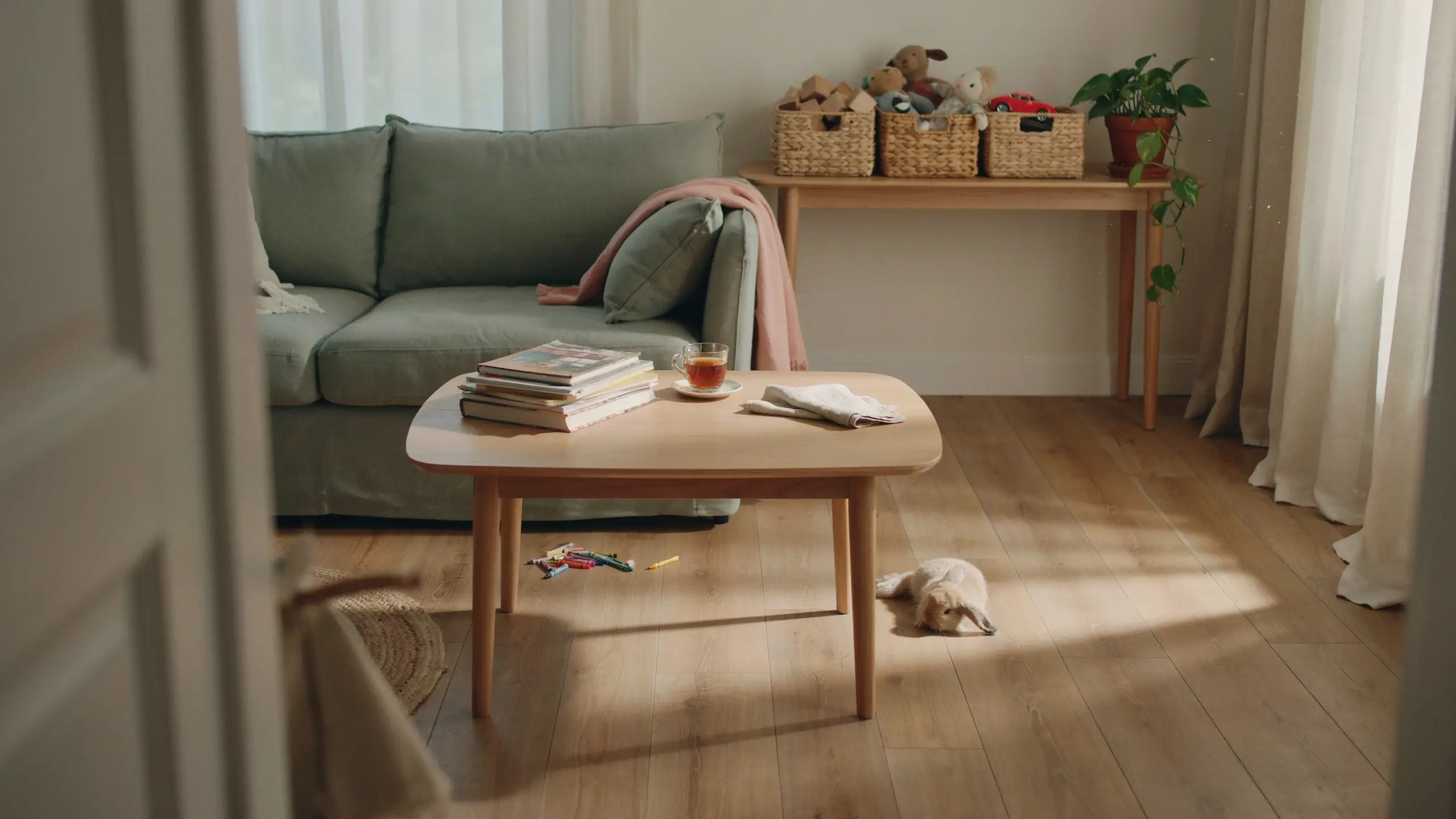
Skip the idea of a spotless house and aim for a reset instead. Set a timer for 10 minutes, twice a day, once mid-morning and once right before bed. During that window, everyone puts away what they pulled out. Toys go back in bins, shoes go by the door, cups go to the sink.
This is different from deep cleaning. You’re not scrubbing anything, you’re just resetting the surfaces so tomorrow doesn’t start buried. A 10 minute reset before bed is the single habit that makes the biggest difference in how a house with small kids feels in the morning.
2. Use the One Room Rule for Toys
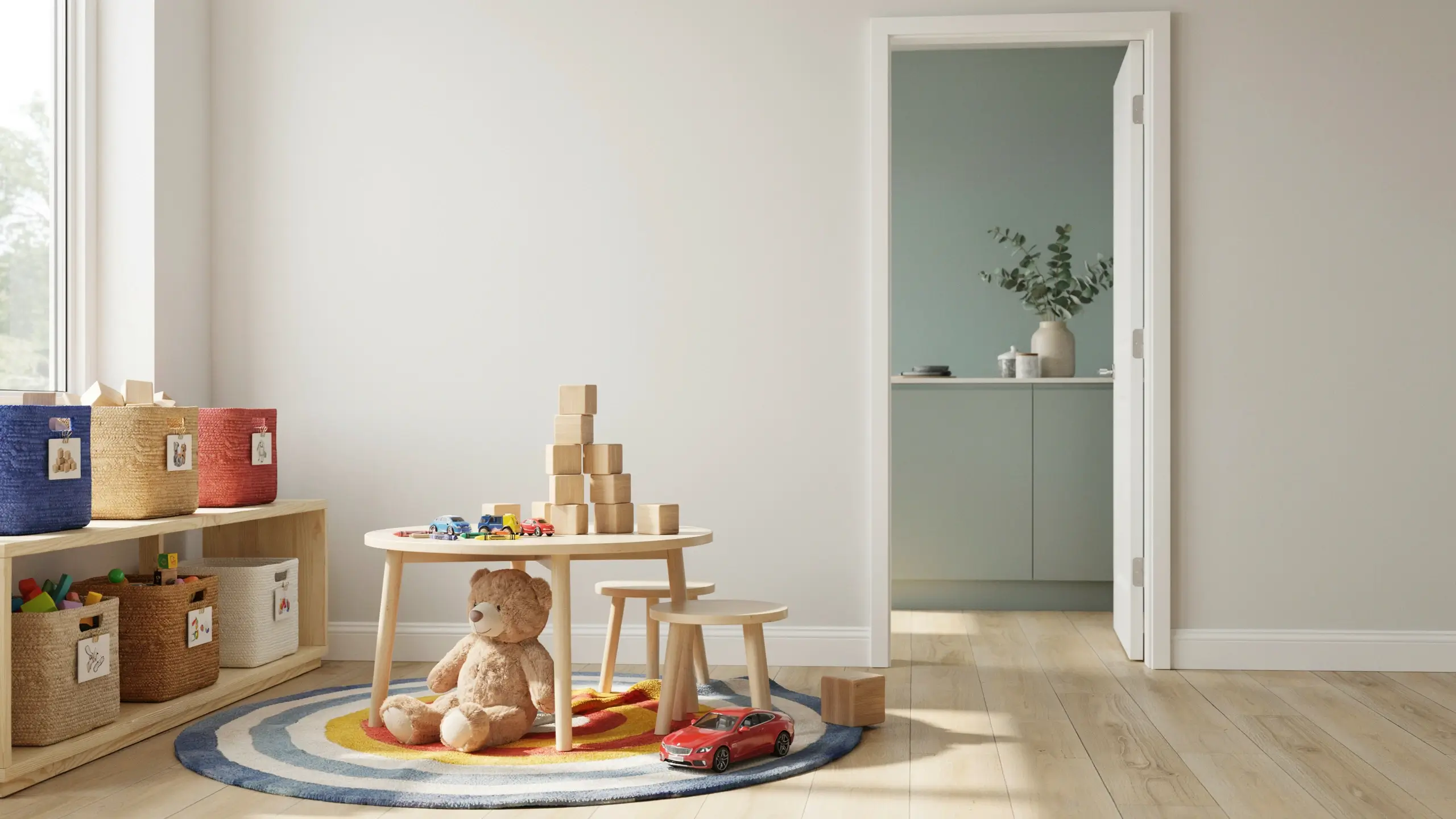
Pick one room, usually the living room or a playroom, and make it the only space toys are allowed to fully spread out in. Bedrooms stay for sleeping and quiet play, kitchens and bathrooms stay toy-free.
This one boundary alone cuts down cleanup time dramatically, because instead of collecting toys from six rooms, you’re collecting from one. Use a few open bins in that room, labeled with pictures for kids who can’t read yet, like a picture of blocks taped to the front of the bin.
3. Cut the Toy Volume Before You Try to Organize It
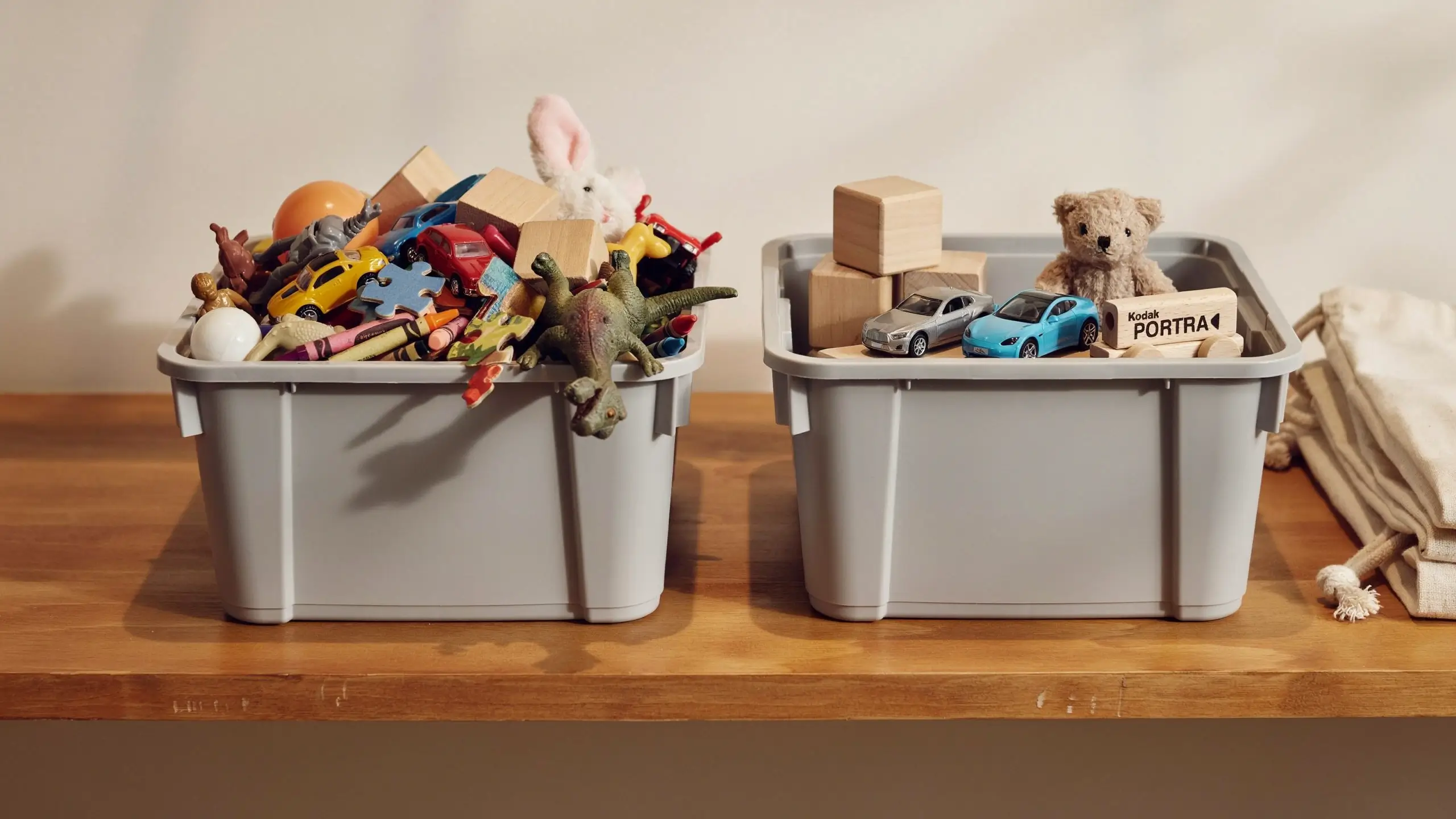
You cannot organize your way out of too many toys. If bins are overflowing no matter how you sort them, the real fix is fewer toys, not better bins.
Try a rotation system. Keep about a third of the toys out and store the rest in a closet or under-bed bin. Swap them every few weeks. Kids get excited about “new” toys that were just put away, and you get a smaller mess to manage at any given time.
4. Set Up a Kid Height Cleanup Station
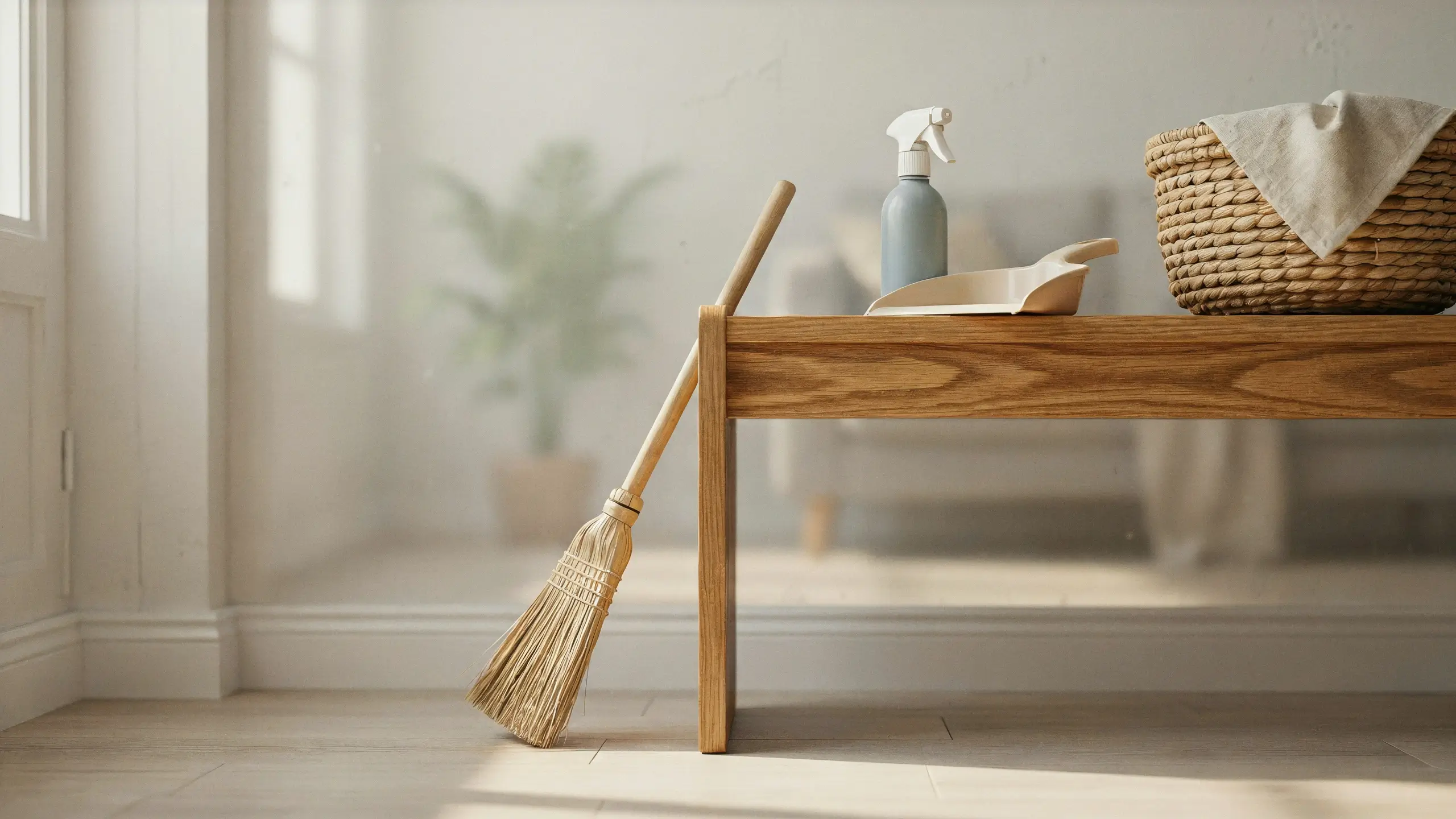
Small kids clean up more when the tools are actually built for their size. A low shelf or a small caddy with a kid sized broom, a spray bottle of water with a few drops of vinegar, and a soft cloth turns cleanup into something they can genuinely do, not just watch you do.
Keep it near the mess zone, not tucked away in a closet upstairs. If the supplies are three rooms away, they won’t get used.
5. Build a Simple Toy Timer Habit
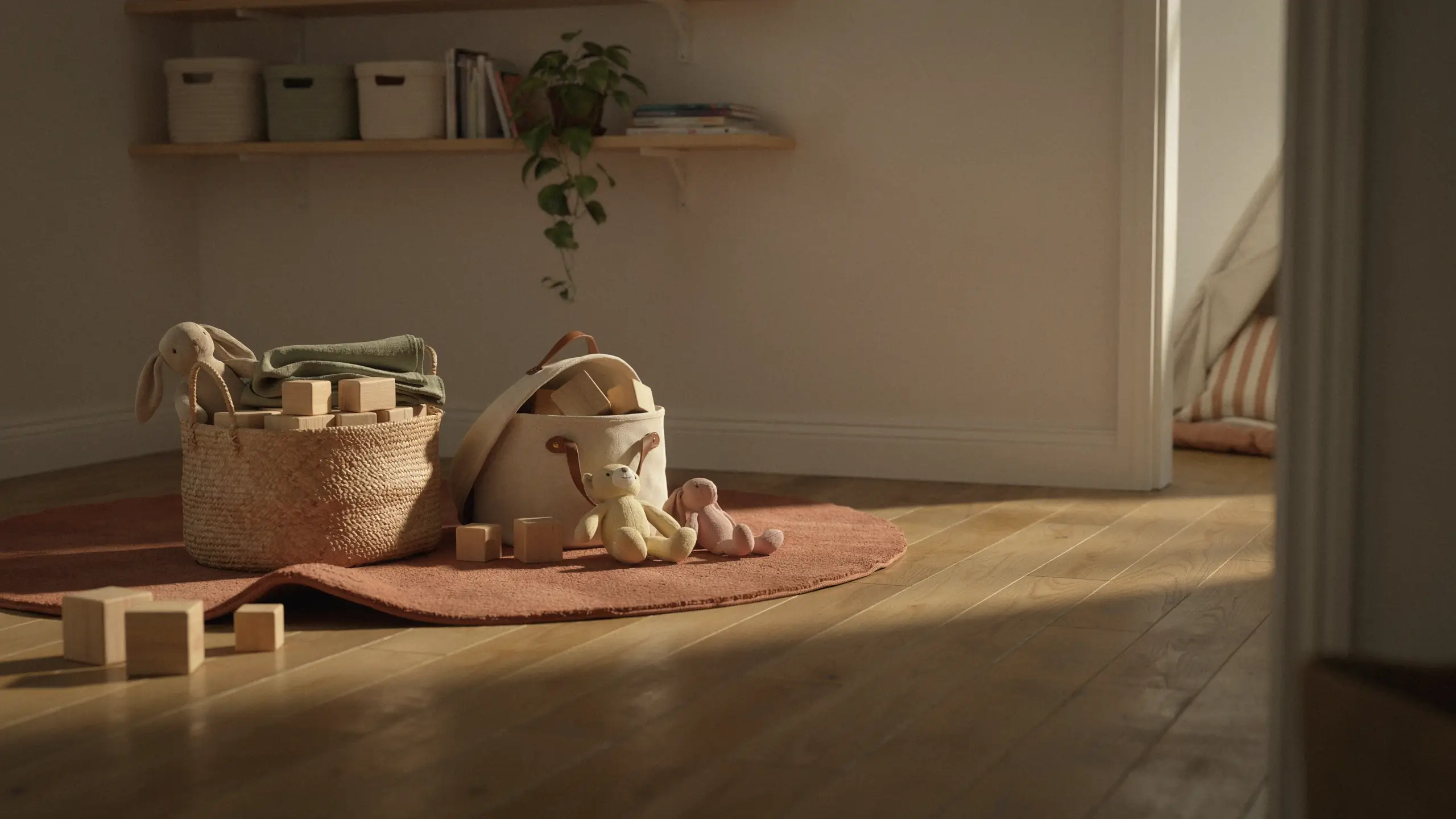
Before pulling out a new activity or toy bin, ask your child to put away what they were using first. This takes repetition, it won’t click after one try, but by around age 3 most kids can handle a “one thing away before the next thing out” rule with reminders.
This single habit prevents the classic scenario where every toy in the house ends up on the floor at the same time by 10am.
6. Give Every Kid Age-Appropriate Jobs
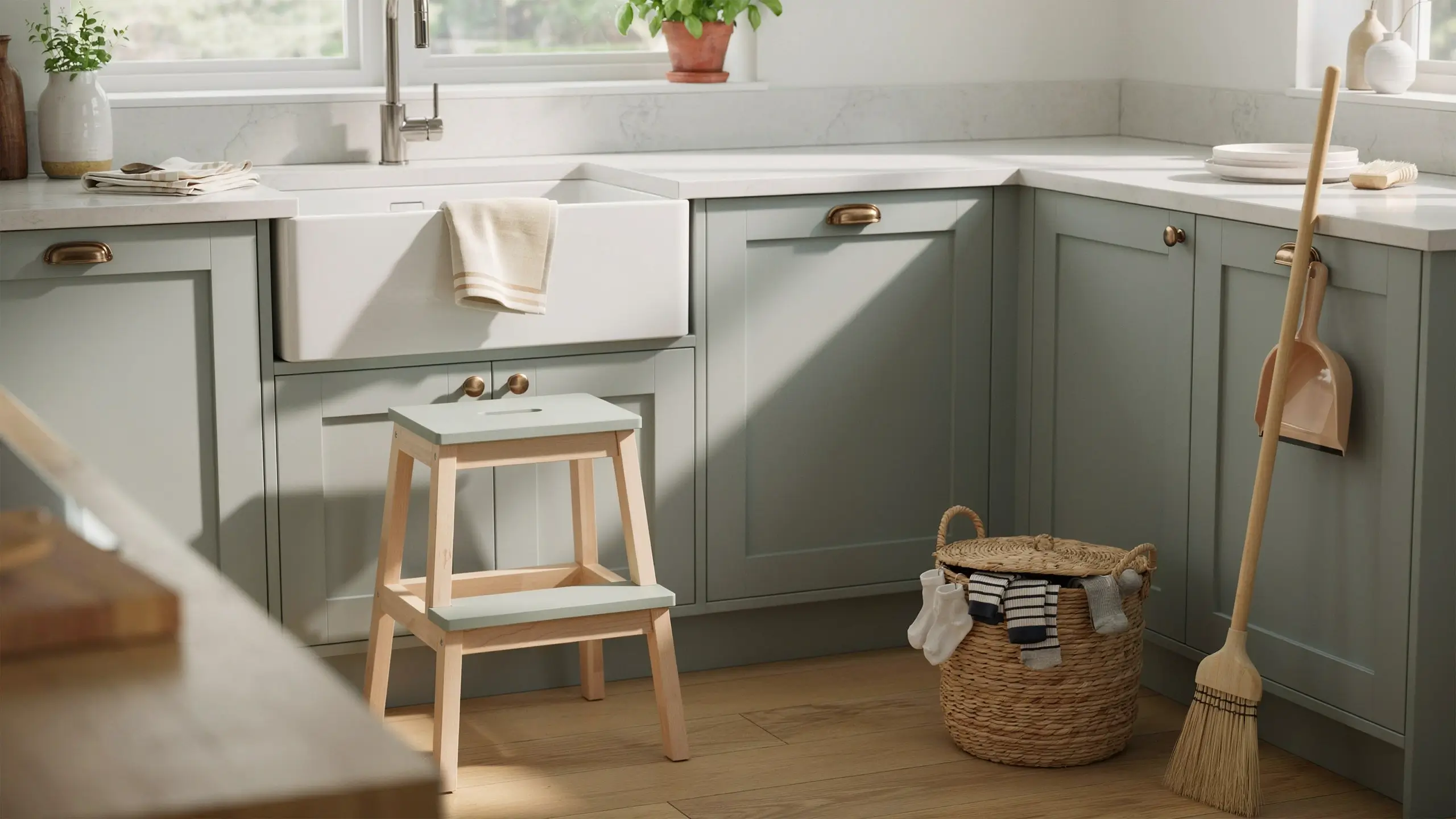
Involving kids in cleaning isn’t about getting free labor, it’s about building the habit early so it’s normal by the time they’re old enough to actually help in a meaningful way. Match the task to what they can realistically do.
- Ages 2 to 3: put toys in a bin, carry napkins to the trash, wipe a table with a damp cloth
- Ages 4 to 5: make their bed loosely, match socks, put books on a shelf, feed a pet with supervision
- Ages 6 to 8: set the table, sort laundry by color, sweep a small area, wipe down bathroom counters
- Ages 9 and up: load the dishwasher, vacuum a room, take out trash, fold laundry
Expect it to take longer than doing it yourself. That’s the trade you’re making for a kid who eventually does it without being asked.
7. Keep a Landing Zone by the Door
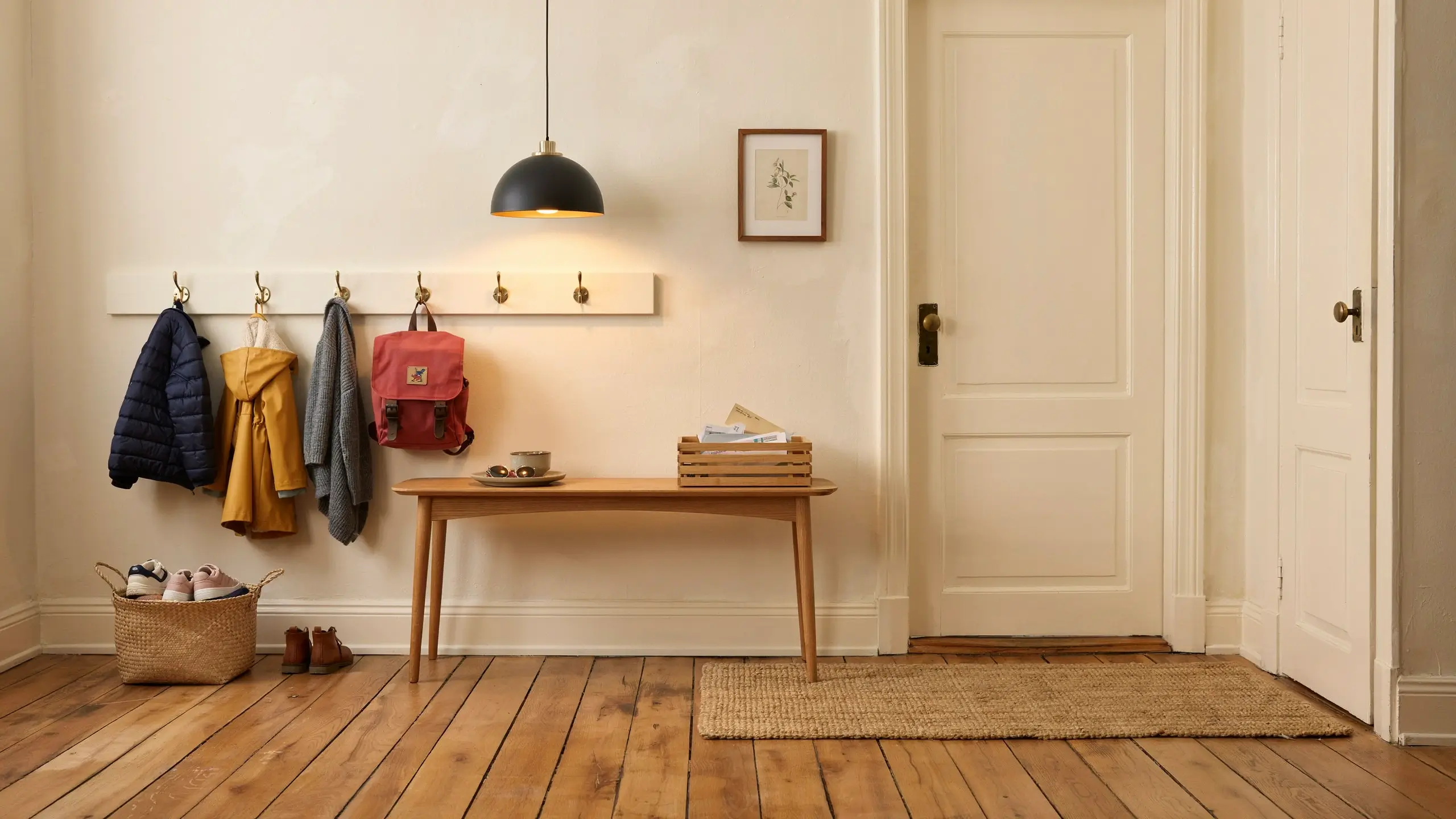
Shoes, backpacks, coats, and mail pile up right at the entry because that’s where everyone drops things the second they walk in. Instead of fighting that instinct, work with it.
Set up hooks at kid height, a shoe basket, and one small bin for mail or paperwork right by the door. It won’t stop the pile completely, but it keeps it contained to one spot instead of scattered through the hallway and kitchen table.
8. Do Laundry in Small, Frequent Loads
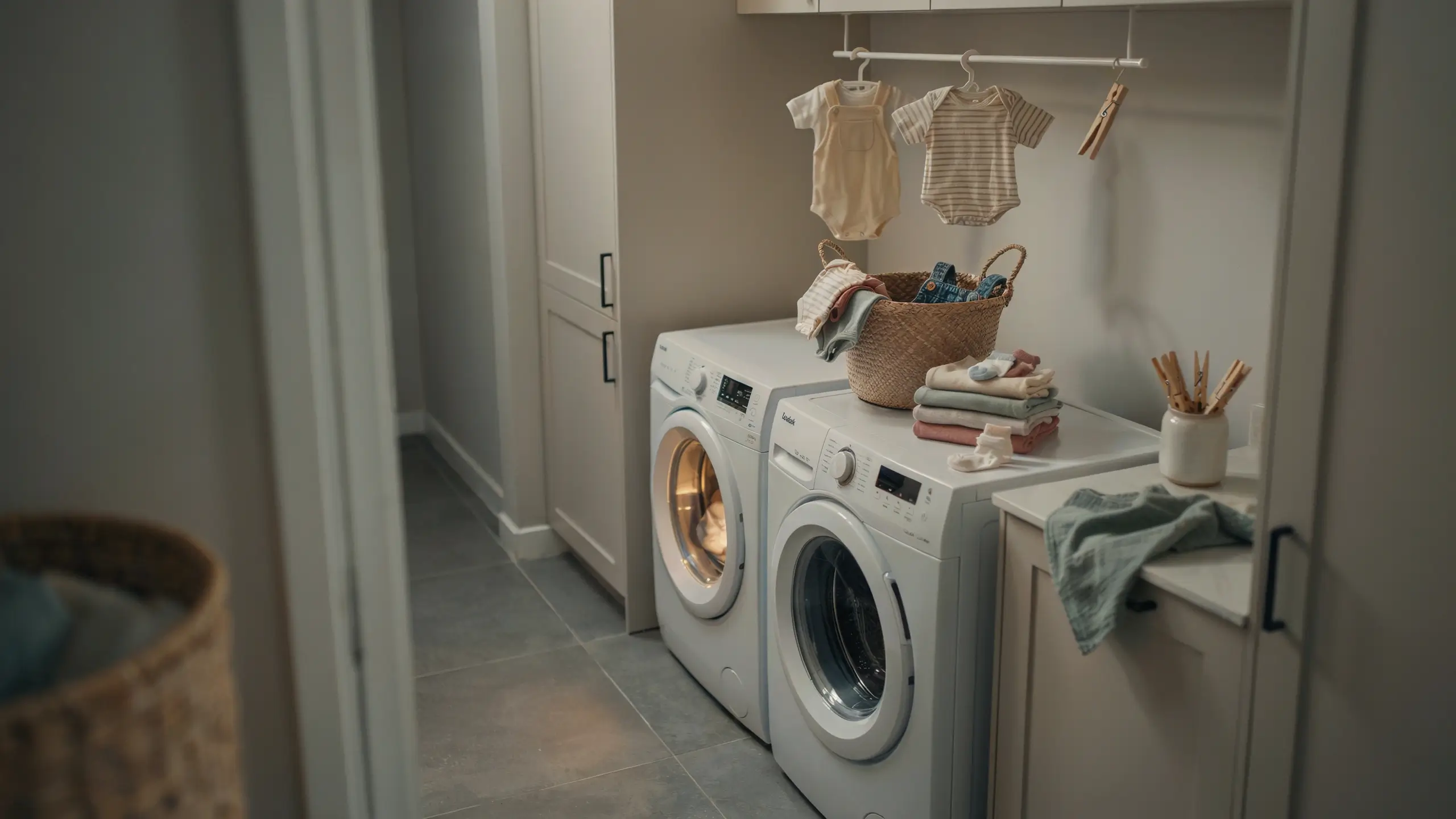
One giant laundry day sounds efficient but rarely works with small kids, since something always needs washing sooner than planned: a stained onesie, a leaky sippy cup incident, a bed-wetting accident overnight. Instead, run one load almost every day, even if it’s not full.
Fold and put it away the same day it’s dry if you can. Baskets of clean laundry sitting around for a week tend to just get messed up again before they’re ever folded.
9. Keep Cleaning Supplies Where the Mess Actually Happens
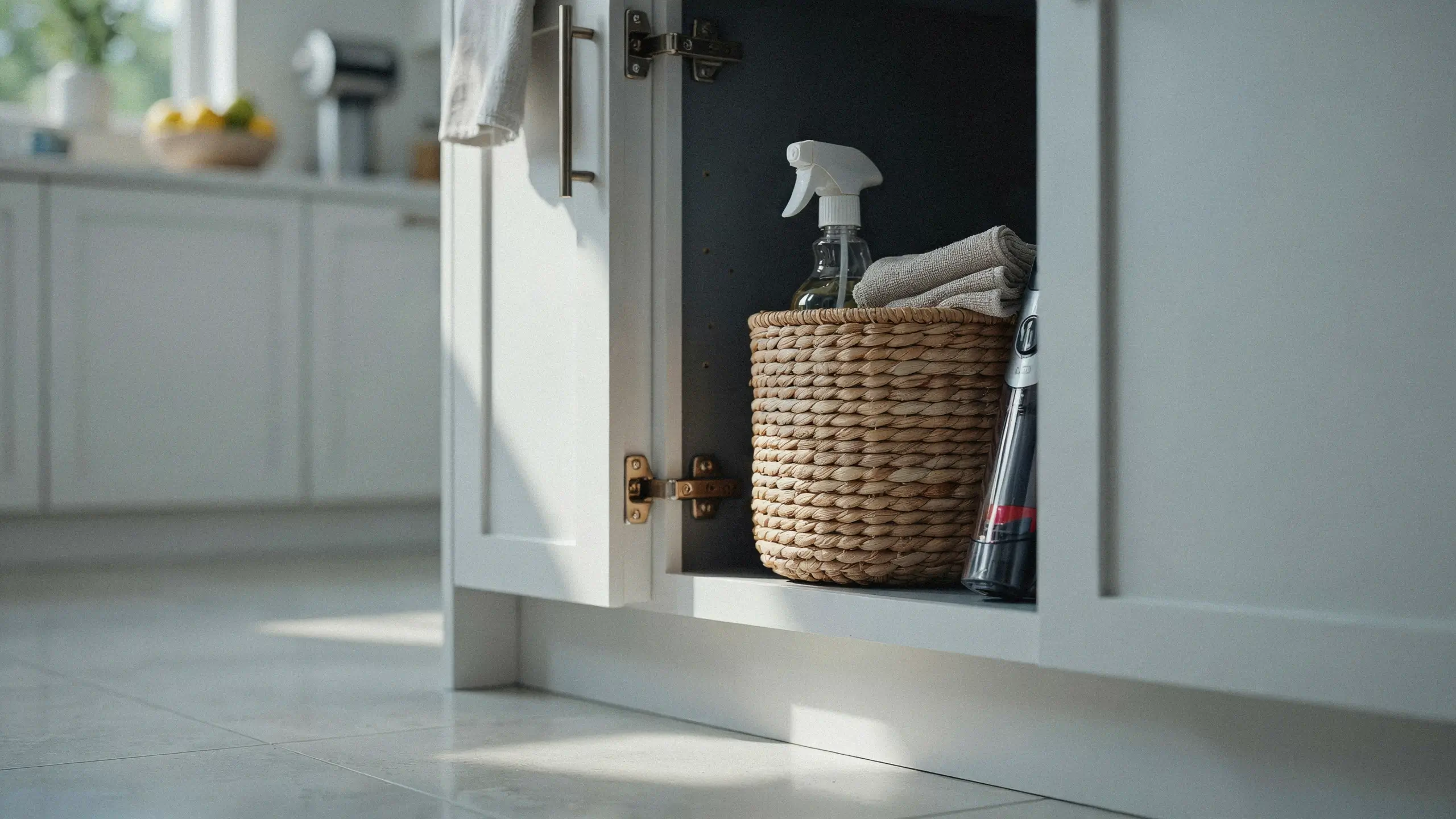
Store a small caddy of wipes and spray under the kitchen sink, another in the bathroom, and a lint roller or handheld vacuum near the dining area. When supplies are already where the mess is, you clean it in ten seconds. When you have to go find something, the spill sits there and gets tracked through the house.
Tools worth having on hand:
- Microfiber cloths
- A handheld vacuum for crumbs and cereal
- A squeegee for bathtub walls
- All-purpose spray
- A small mop for quick floor swipes
10. Use the “One In, One Out” Rule for New Toys
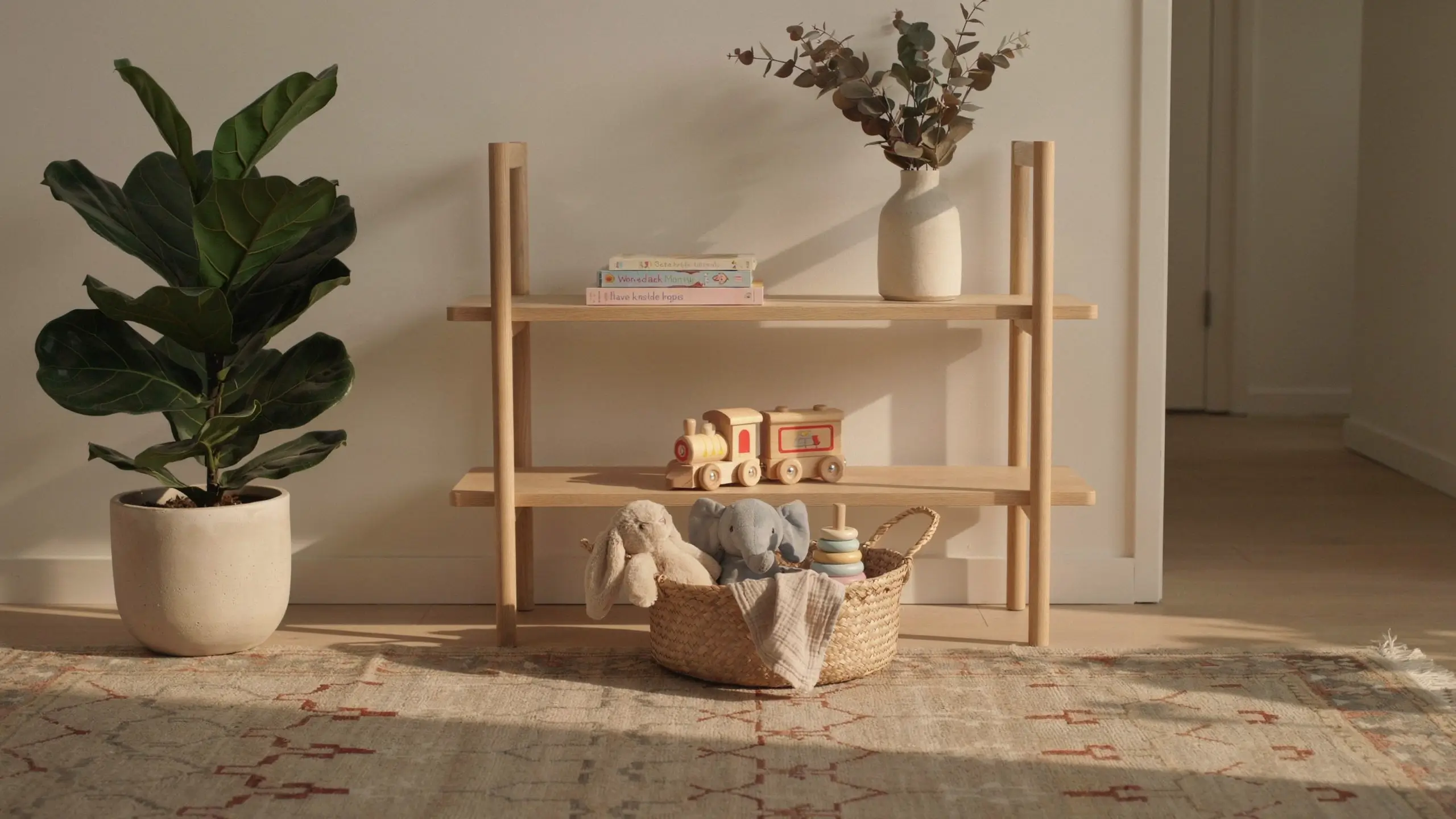
Every time a new toy comes in, whether it’s a birthday gift or something from the store, one existing toy goes into the donate bin. This keeps the total volume from creeping up over time, which is usually the real reason toy storage stops working six months after you organized it.
Keep the donate bin somewhere visible, not hidden in a closet where it’s easy to forget about and never actually leave the house.
11. Clean the Kitchen Before Bed, Every Night
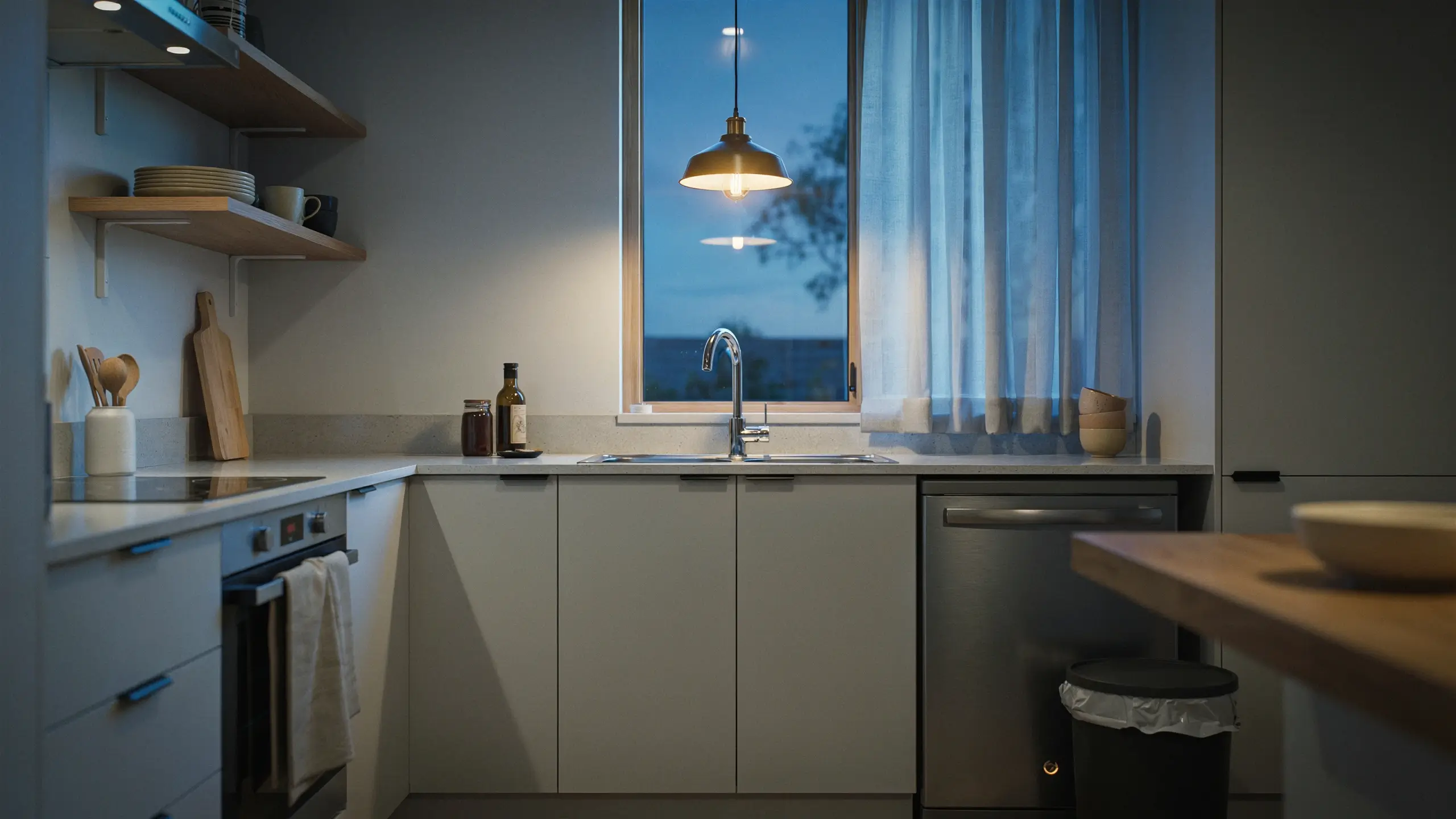
The kitchen is the one room that sets the tone for the whole house. Waking up to a clean counter and empty sink makes the entire home feel manageable, even if toys are still scattered in the living room.
Wipe counters, load or run the dishwasher, and take out any trash before bed. It takes ten minutes and it changes how the whole house feels in the morning.
12. Keep a “Grab and Go” Bin for Toy Chaos
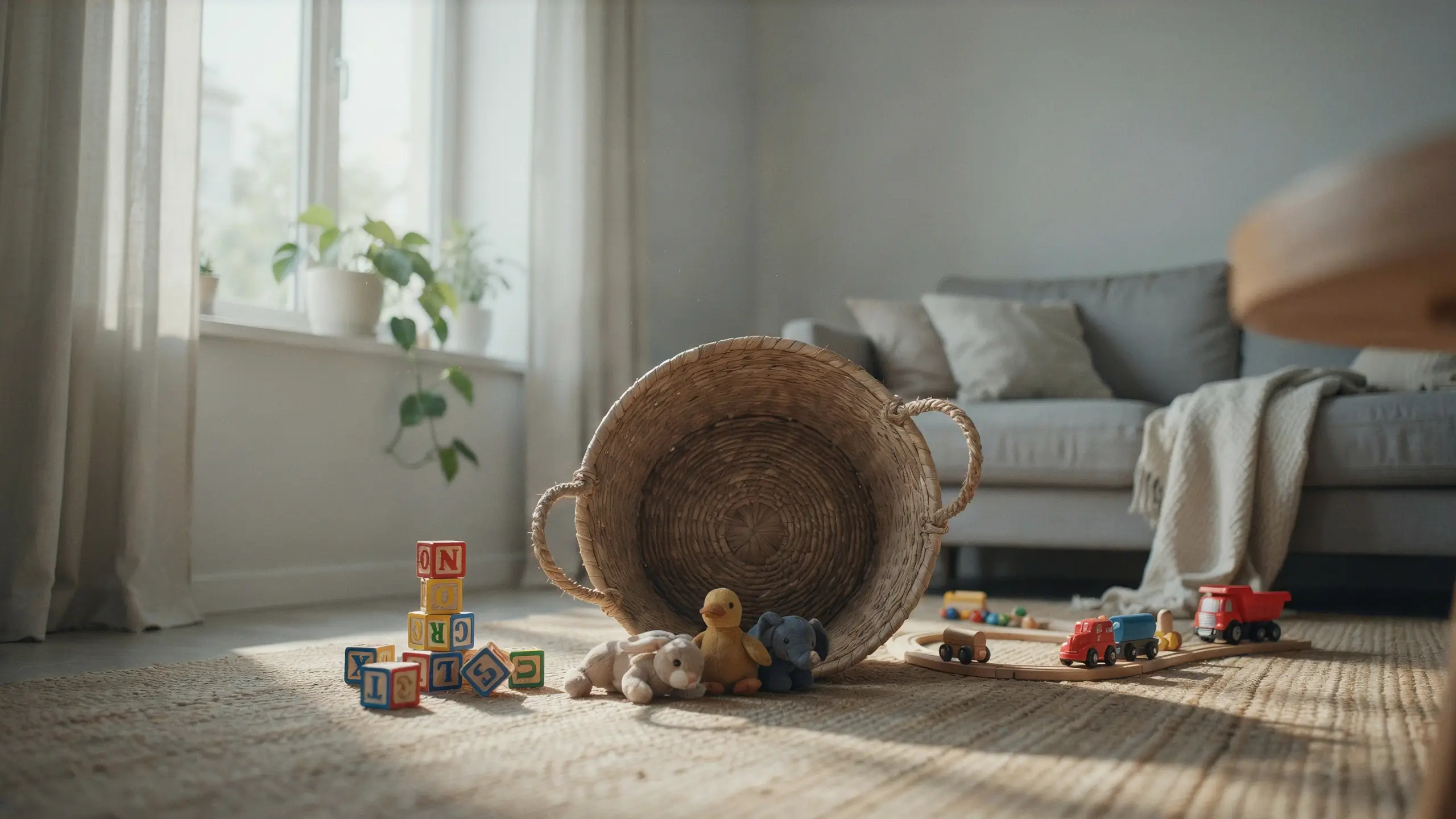
Keep an empty basket somewhere central. When you’re short on time and need the floor cleared fast, everything goes into the basket, no sorting required. Sort it properly later, during nap time or after bedtime.
This is the trick most cleaning articles skip. Not everything needs a perfect home in the moment. Sometimes you just need the floor visible again before someone steps on something in the dark.
13. Lower Your Bathroom Standards, Raise Your Wipe Frequency
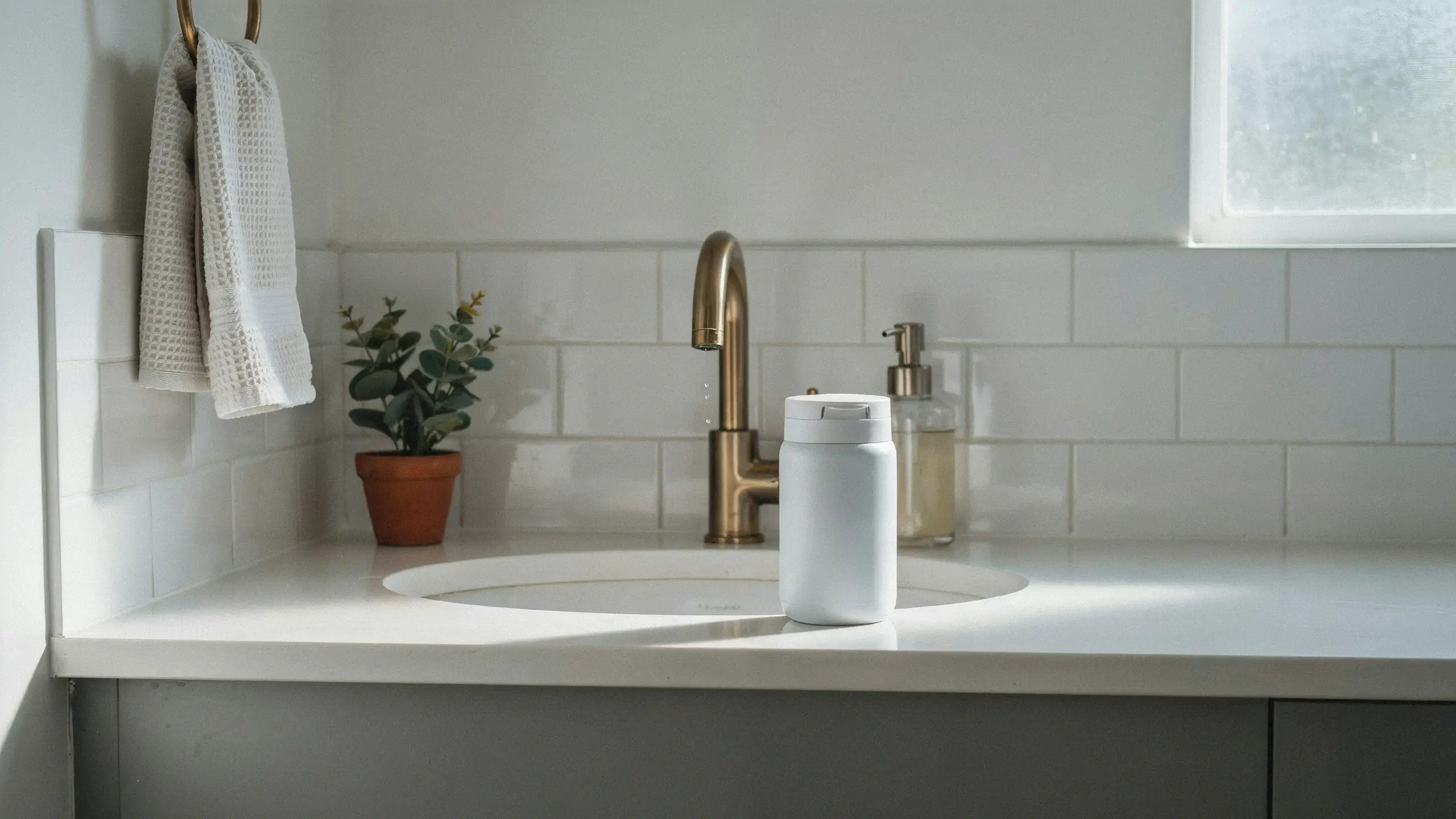
Deep cleaning the bathroom once a week is realistic. Wiping the sink, counter, and toilet seat daily with a quick spray is what actually keeps it from feeling gross in between. Keep flushable or reusable wipes right at counter height so a 30 second wipe-down doesn’t require pulling out full supplies.
14. Accept the Zone Cleaning Method Over a Full House Clean
Instead of cleaning the whole house in one day, split your home into zones and tackle one zone a day.
- Kitchen on Monday
- Bathrooms on Tuesday
- Bedrooms on Wednesday
- Living areas on Thursday
- A catch-up or rest day on Friday
This spreads the workload so no single day feels overwhelming, and it fits much better around nap schedules, school pickup, and the general unpredictability of life with small kids.
15. Let Go of the Tasks That Don’t Actually Matter Right Now
Not every cleaning task deserves your energy during this season. Baseboards, inside the oven, organizing the garage, these can wait. Focus your limited time on what actually affects daily life: kitchen, bathroom, entryway, and the main living space where your family spends the most time together.
A clean house with small kids is not the same thing as a spotless house. Give yourself permission to let the low-priority stuff sit for now.
Mistakes That Make Cleaning With Kids Harder Than It Needs to Be
- Buying too many organizing bins before cutting down toy volume
- Doing one long cleaning day instead of small daily resets
- Storing supplies far from where messes actually happen
- Expecting toddlers to clean up independently without a routine built first
- Trying to keep every room toy-friendly instead of containing play to one space
- Skipping the nightly kitchen reset, which affects how the whole house feels the next day
Final Thoughts
Keeping your house clean with small kids isn’t about doing more, it’s about doing less at a time, more often, with systems that fit how your family actually lives. Start with just one or two of these, the 10 minute reset and the kid-height cleanup station are a great place to begin. Give it two weeks before adding anything else.
Your house doesn’t need to be perfect. It just needs to work for the people living in it right now, mess and all.
What’s your biggest struggle with keeping your house clean with small kids around? Drop it in the comments, I’d love to hear what you’re working through and share more specific tips if you need them.





No Comment! Be the first one.