




Must-Have Kitchen Cleaning Supplies for a Kitchen That Actually Stays Clean
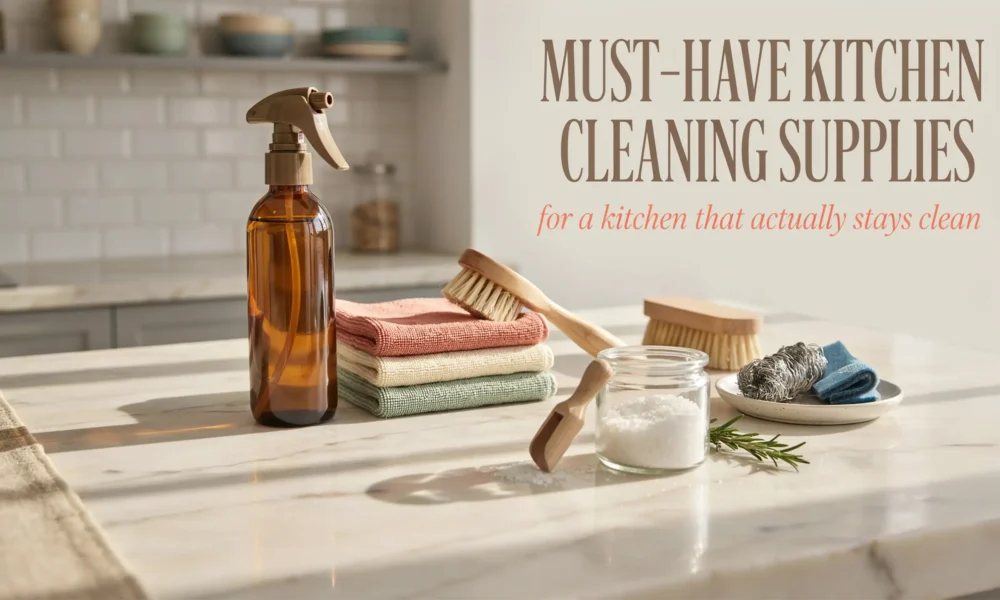
You don’t need a cabinet stuffed with forty bottles to keep your kitchen clean. You need the right dozen or so things, used the right way, stored somewhere you can actually reach them....

You don’t need a cabinet stuffed with forty bottles to keep your kitchen clean. You need the right dozen or so things, used the right way, stored somewhere you can actually reach them.
That’s the part most lists skip. They hand you a giant shopping list and call it a day. No mention of what to skip, what’s a waste of money, or how to keep it all from turning into a chaotic mess under your sink.
This list is different. It’s built around what you’ll genuinely reach for on a Tuesday night after dinner, plus the deep-clean supplies that save you when things get greasy, sticky, or stained. Grab a pen, or just save this to your cleaning board, because you’ll want to come back to it.
What Actually Makes a Cleaning Supply “Must-Have”
Before we get into the list, here’s a quick gut check. A supply earns a spot in your kitchen if it does one of three things: it handles a mess you deal with weekly, it works on more than one surface, or it prevents a bigger problem down the road (think grease buildup or grout stains).
Everything else is optional. You don’t need six specialty sprays for six different countertop materials. You need a handful of workhorses and a plan for the occasional deep clean.
The Everyday Kitchen Cleaning Essentials You’ll Reach for Constantly
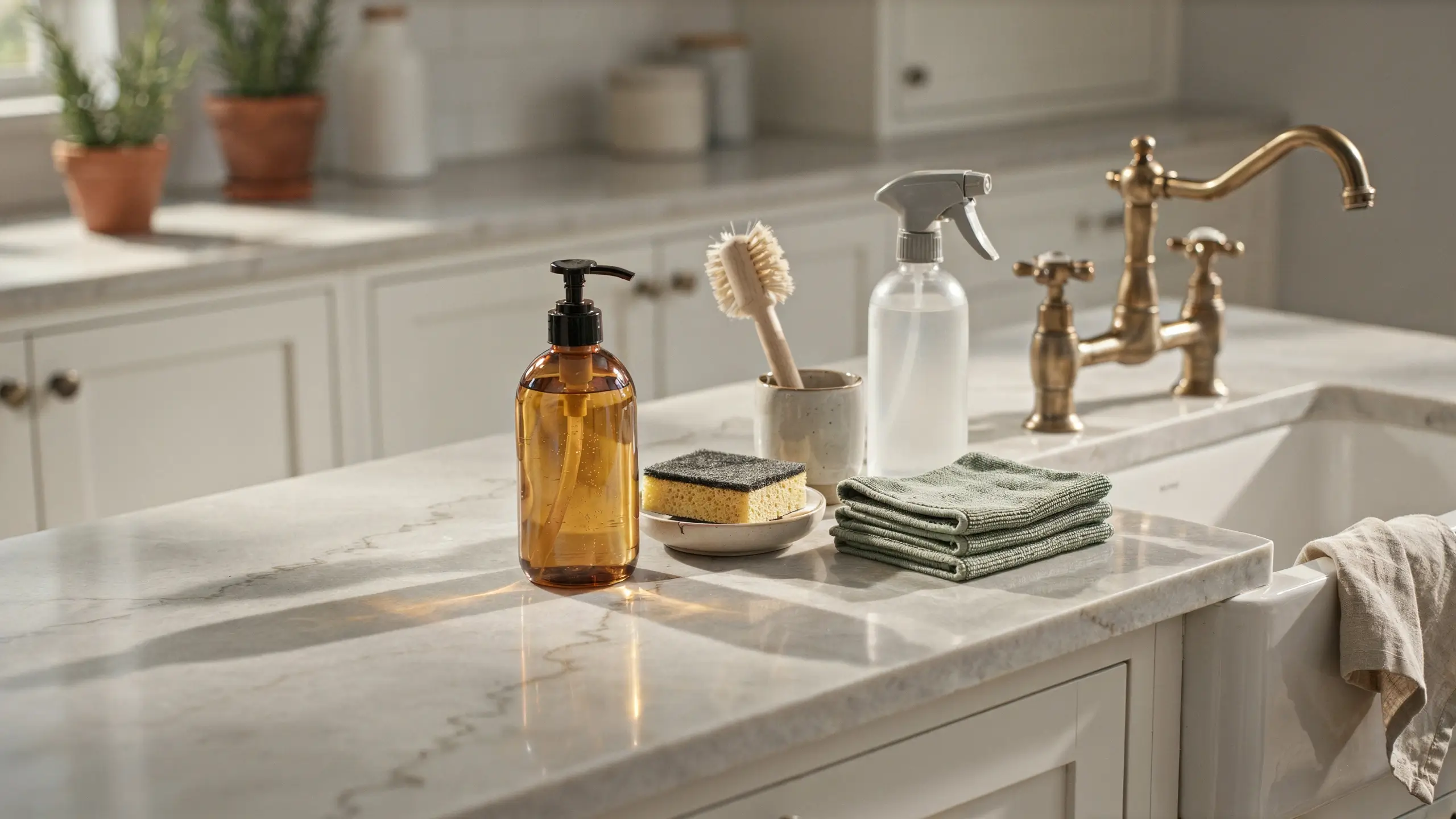
These are the supplies that live on your counter or under your sink because you’re using them almost daily.
- Dish soap. A concentrated, grease-cutting dish soap is non-negotiable. Keep a bottle by the sink and a backup in the pantry so you’re never caught without it mid-wash.
- A good sponge (and a backup pack). Not the flat kind that falls apart in a week. Look for a scrubber-style sponge that holds up to grease and doesn’t scratch nonstick pans. Swap it out every one to two weeks, since sponges hold onto bacteria fast.
- A dish brush. For pots with stuck-on food, a stiff-bristled brush works faster than a sponge and lasts longer. It’s also more sanitary since you can rinse it clean between uses.
- Microfiber cloths, at least six. These pull double duty on counters, cabinets, appliances, and windows. Buy a bundle in one color for kitchen-only use so you’re not accidentally grabbing the bathroom rag.
- An all-purpose or multi-surface cleaner. This is your everyday spray for counters, the outside of the fridge, and the stovetop. Pick one safe for your counter material, since granite and quartz need different formulas than laminate.
- A degreaser. Regular all-purpose cleaner won’t touch splatter on the stovetop or the grime that builds up around the range hood. A dedicated degreaser handles that in one pass instead of five.
- Rubber or nitrile gloves. Anyone who’s dealt with dry, cracked hands after a night of dishes knows why these matter. They also protect your skin from stronger cleaners.
- A spray bottle or two. Handy for diluting cleaners, applying vinegar solutions, or making your own gentle glass cleaner. Label them so nobody mixes something they shouldn’t.
- Paper towels or a reusable towel stack. For grease spills and anything you don’t want to put back in the wash pile.
Deep-Clean Supplies for the Grime Everyday Cleaners Miss
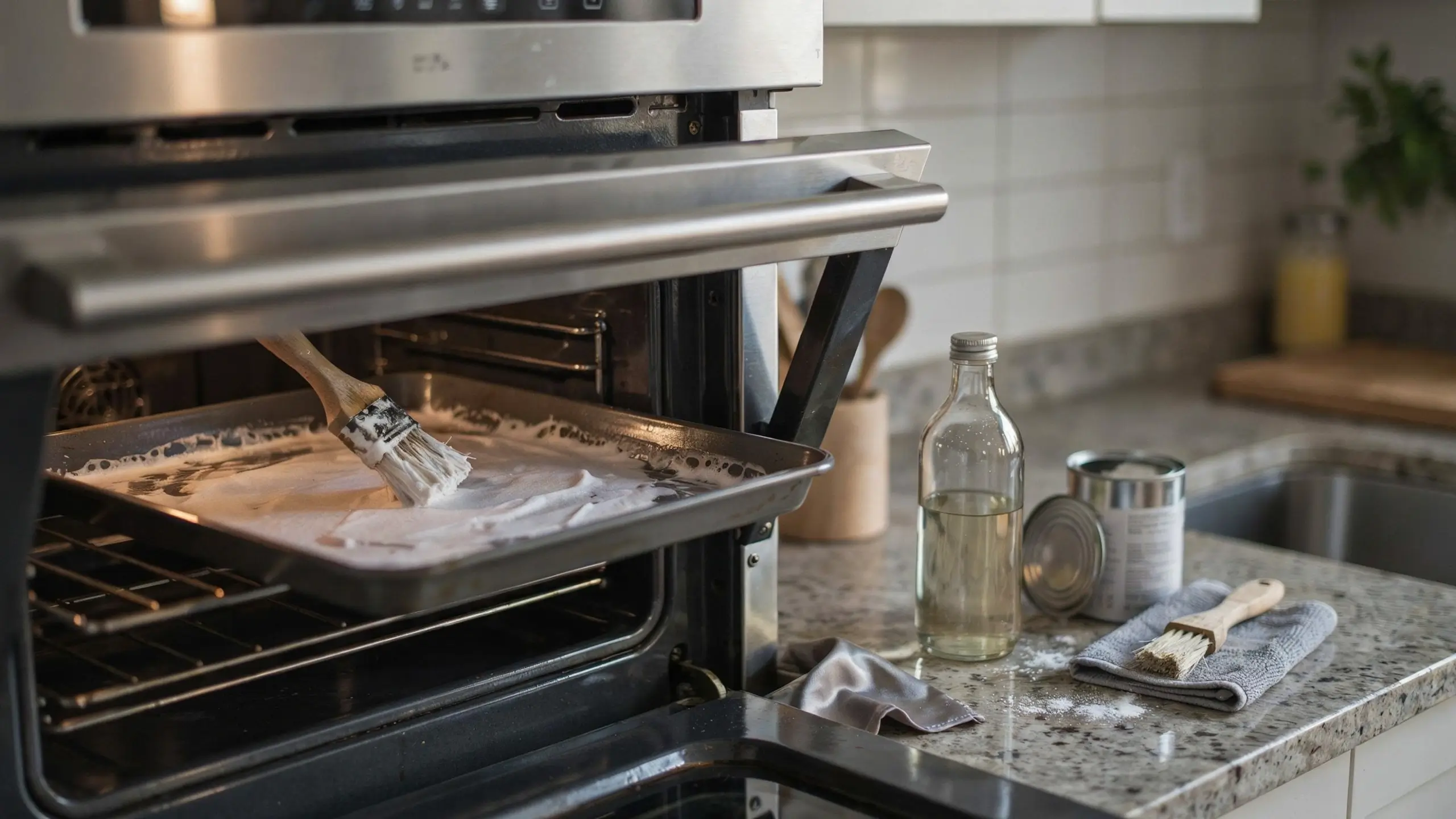
This is the section most lists leave out, and it’s the one that actually solves the messes people search for help with.
- Baking soda. Makes a paste that lifts baked-on grime from stovetops, sheet pans, and the inside of the oven without scratching. It’s cheap, it’s already in your pantry, and it works better than a lot of specialty sprays.
- White vinegar. Cuts through hard water spots on the faucet, breaks down grease, and deodorizes the garbage disposal when you run it through with ice. Skip it on natural stone counters, though, since the acid can etch the surface.
- A stainless steel cleaner and polish. If you’ve got stainless appliances, a dedicated polish keeps fingerprints and water spots from building up and helps you avoid streaky smears that plain glass cleaner leaves behind.
- A melamine sponge (the “magic eraser” type). Excellent for scuff marks on cabinets, stuck grime on stovetop knobs, and stains inside the microwave. Use it dry or barely damp, and skip it on glossy or painted surfaces, since it can dull the finish.
- An oven cleaner or a baking soda and dish soap paste. Store-bought oven cleaner works fast but needs ventilation and gloves. If you’d rather skip the fumes, a thick paste of baking soda and a little dish soap left overnight does a surprisingly good job on light to moderate buildup.
- A grout brush. Small, stiff-bristled, and built for tile lines. If your kitchen floor or backsplash has grout, this tool alone will change how clean it looks.
The Tools That Do the Heavy Lifting
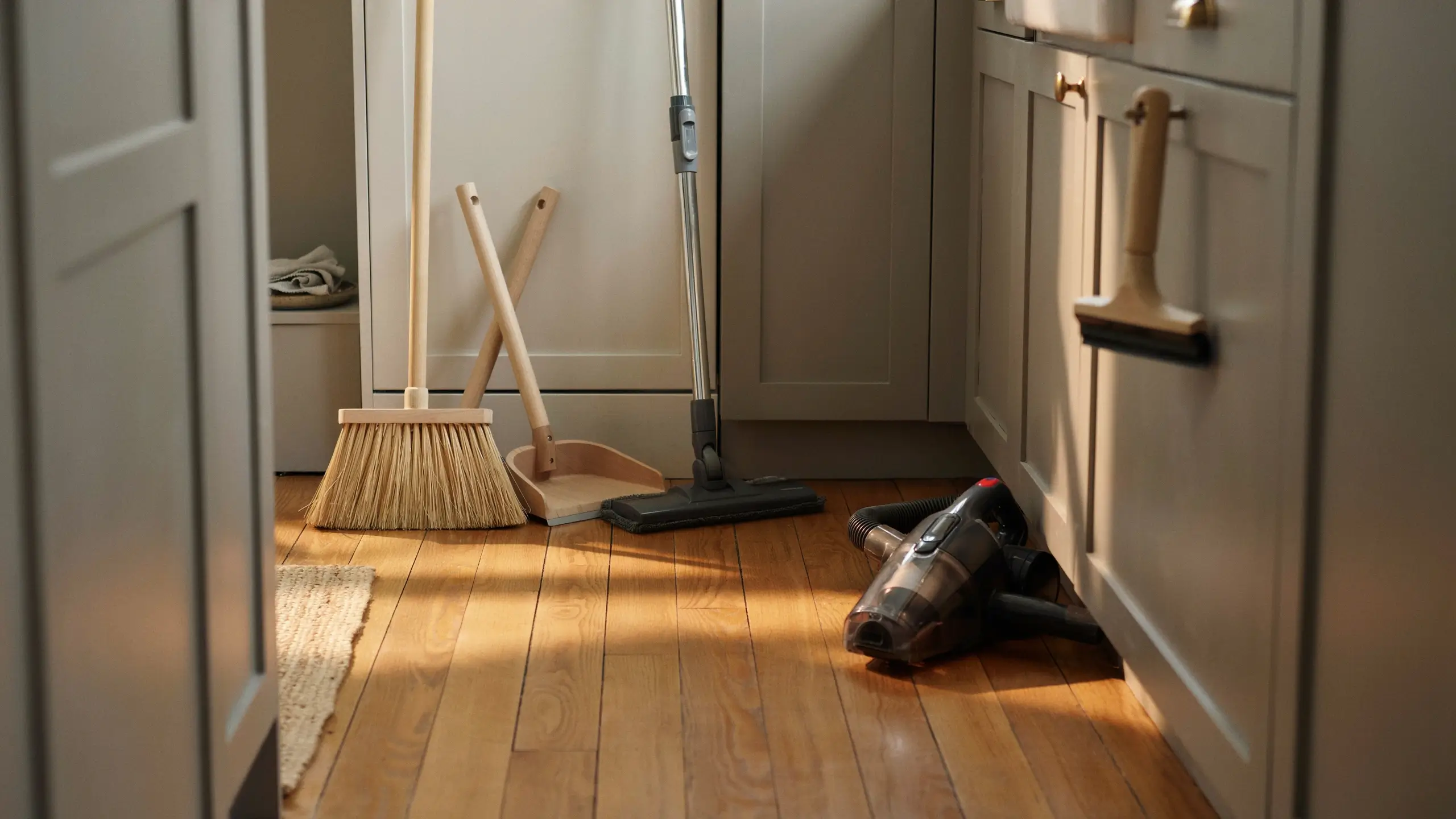
Sprays and sponges handle surfaces. These handle the floor and the bigger jobs.
- A broom and dustpan. Kitchens collect crumbs fast, especially with kids or pets around. A broom you can grab in ten seconds gets used a lot more than one buried in a closet.
- A mop, spray mop, or steam mop. Pick based on your floor type. Spray mops are great for quick daily touch-ups, while a traditional mop and bucket handles a real deep clean.
- A handheld vacuum or a vacuum with a crevice attachment. For the corners a broom can’t reach and the crumbs that hide under the toe kick of your cabinets.
- A squeegee. Not just for showers. It works fast on stovetops after cooking and keeps your sink basin streak-free after washing dishes.
Non-Toxic Swaps for Kitchens With Kids or Pets
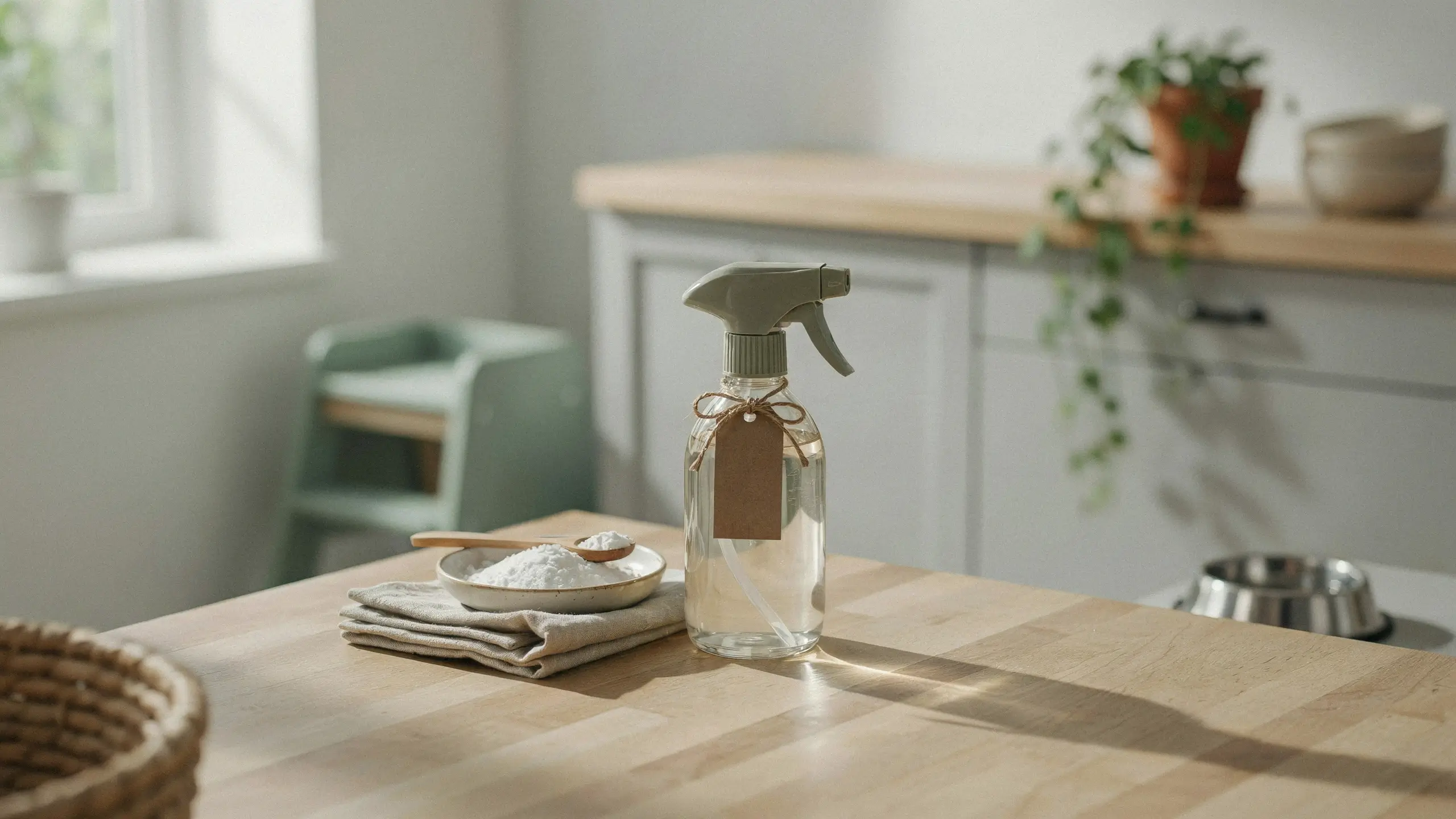
If you’re cooking in the same space your toddler crawls through or your dog eats from, it’s worth building a version of this list around gentler ingredients.
- Swap your multi-surface spray for a castile soap and water solution, or a plant-based cleaner labeled fragrance-free.
- Use vinegar and water for glass and mirrors instead of ammonia-based cleaners.
- Keep baking soda as your go-to scrub for pans and sinks instead of anything abrasive with added dyes or fragrance.
- Store any stronger chemical cleaners on a high shelf, not under the sink where little hands or paws can reach.
This swap doesn’t mean sacrificing a clean kitchen. It just shifts where the cleaning power comes from.
Kitchen Cleaning Mistakes That Waste Your Supplies (and Your Time)
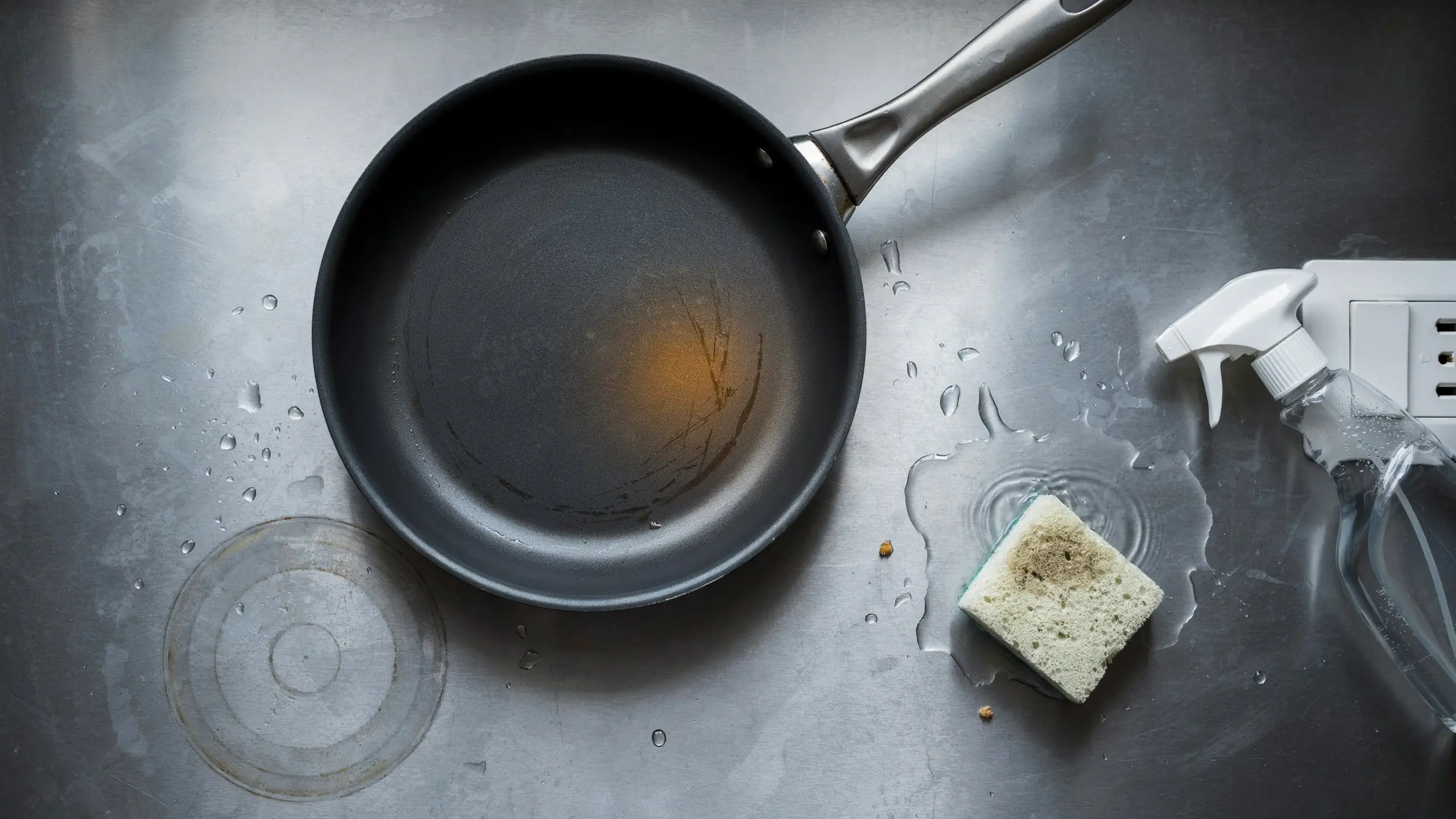
A few habits quietly undo all the good these supplies can do.
- Mixing bleach and ammonia-based cleaners. This combination creates toxic fumes. Never combine cleaning products unless the label specifically says it’s safe.
- Using the scratchy side of a sponge on nonstick pans. It wears down the coating fast. Stick to the soft side or a silicone scrubber for nonstick cookware.
- Letting a sponge sit wet for days. That’s exactly how bacteria builds up. Wring it out and let it dry between uses, or toss it in the dishwasher on a hot cycle overnight.
- Spraying cleaner directly onto electronics or outlets. Spray your cloth instead, then wipe. It keeps liquid from getting where it shouldn’t.
- Skipping ventilation with oven cleaner or strong degreasers. Crack a window or turn on the range hood, and always wear gloves.
- Forgetting to replace, not just refill. Sponges, mop heads, and scrub brushes all wear out. If it looks worn or smells off no matter how many times you rinse it, it’s time for a new one.
How to Store Kitchen Cleaning Supplies So You Actually Use Them
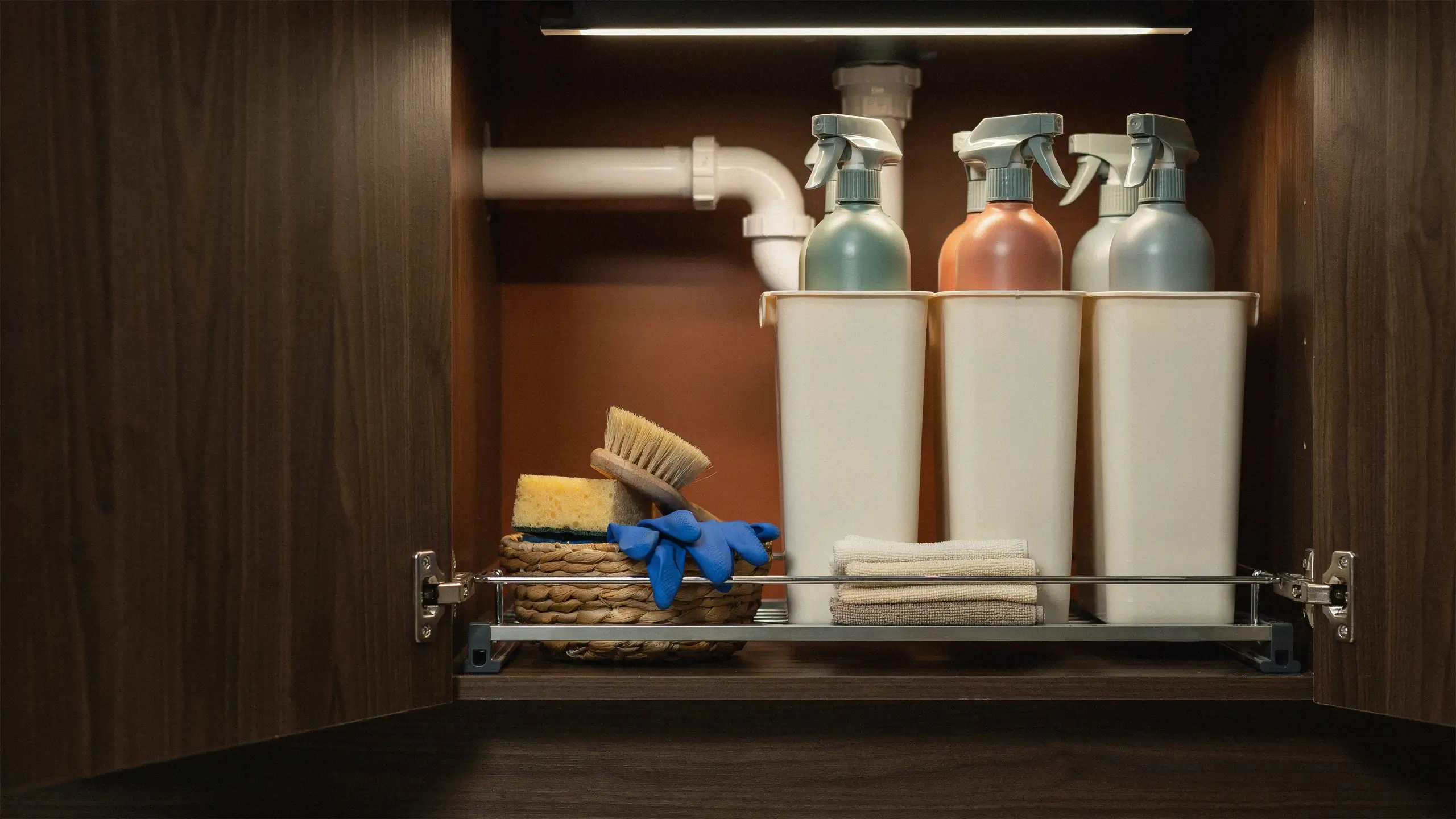
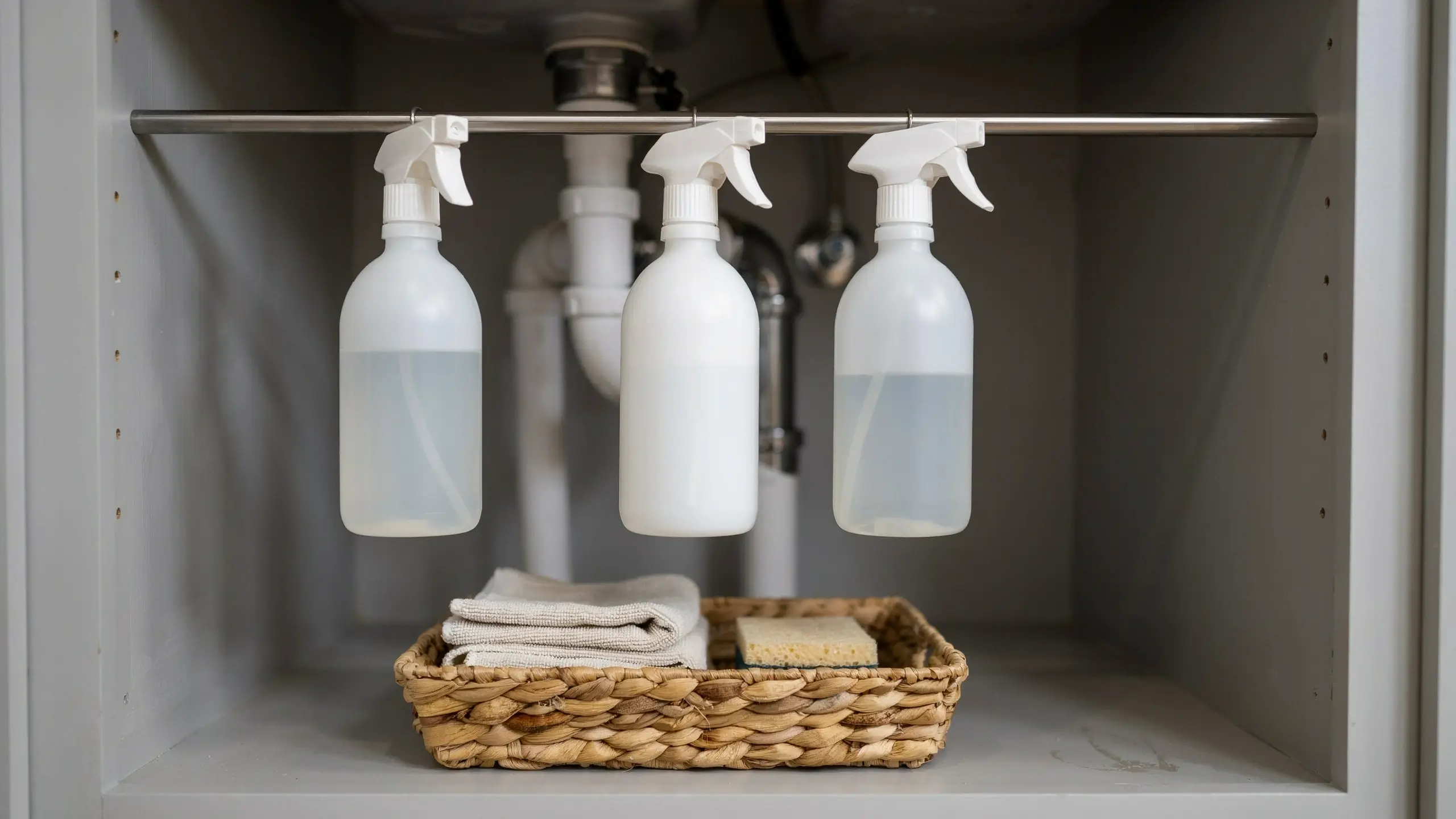
Buying the right supplies only works if you can find them fast. A caddy or bin under the sink keeps your everyday essentials in one spot instead of scattered across three cabinets.
A few setups that work well in small kitchens:
- A tension rod under the sink to hang spray bottles by their trigger, freeing up the floor of the cabinet for bins.
- A slim rolling cart tucked beside the fridge for kitchens with no extra cabinet space, which also makes it easy to pull the whole thing out for a deep clean day.
- A small caddy with a handle for your everyday sponge, gloves, and spray, so you can carry it straight to whatever needs attention.
- Command hooks inside a cabinet door for rubber gloves and extra cloths, which works well for renters who can’t drill into cabinetry.
Keep your deep-clean supplies (oven cleaner, grout brush, stainless polish) in a separate bin so your everyday grab-and-go items don’t get buried.
Budget-Friendly Ways to Build This List Without Overspending
You don’t need to buy everything at once. Start with dish soap, a sponge, microfiber cloths, an all-purpose cleaner, and gloves. That covers about 80 percent of what you’ll clean on a normal week.
Baking soda and white vinegar are the cheapest deep-clean supplies you can own, and they replace several specialty sprays at once. Add the rest, like the melamine sponge and stainless polish, as you actually run into a mess that calls for them. There’s no reason to stock a cleaner for a problem your kitchen doesn’t have yet.
Final Thoughts
A clean kitchen isn’t about owning every product on the shelf. It’s about having a small, reliable lineup that handles spills, grease, and grime without you having to think twice about which bottle to grab.
Start with the everyday essentials, add the deep-clean supplies as you need them, and give everything a home it’s easy to reach. That’s really the whole trick.
What’s the one kitchen cleaning supply you can’t live without? Drop it in the comments, I’m always looking for the next one to try.






No Comment! Be the first one.