




28 Kitchen Table Decor Centerpiece Ideas That Look Designer-Made
The Styling Logic Real Pinterest Tables Use (Before You Buy Anything) Every kitchen table that reads as “designer-made” on Pinterest is quietly following the same four rules: an odd...

The Styling Logic Real Pinterest Tables Use (Before You Buy Anything)
Every kitchen table that reads as “designer-made” on Pinterest is quietly following the same four rules: an odd number of objects, at least one clear height difference between them, one tray or runner acting as the anchor, and one repeated texture or color pulling the whole thing together. That’s it. There’s no secret product — there’s a formula, and it works with items you probably already own.
This matters more than it used to. 2025 U.S. Houzz Kitchen Trends Study proves kitchens are absorbing dining room square footage found that in a meaningful share of expanding kitchen renovations, homeowners are pulling square footage directly from the dining room, which means the kitchen table has quietly become the primary everyday eating and gathering surface in more American homes. Styling it well isn’t a side project anymore — for a lot of households, it’s the only table getting styled at all.
Here’s the part most guides skip: a centerpiece that looks too matched — same finish, same store, same three-piece set — actually reads as more store-bought, not less. The groupings that photograph as “designer-made” almost always mix pieces from different sources, unified only by one shared color or texture. Some stylists will tell you a single oversized vase makes the boldest statement, and on a rarely-used dining table, that’s true. At a kitchen table you eat at daily, oversized pieces block sightlines across from you and get moved every single meal, which is why smaller, grouped displays tend to survive longer in real homes.
One honest caveat: none of this matters if the finished grouping takes two hands and three trips to clear. If it can’t be lifted in one motion, it ends up shoved on the counter within a week, tray or no tray.
To build a centerpiece that reads as designer-made, follow these steps:
- Pick one tray or runner as your base.
- Group your items in odd numbers with at least one clear height difference.
- Repeat one texture or color across every piece so it reads as a set, even if nothing matches.
Simple Everyday Ideas Using What Your Kitchen Already Has
1. Anchor a Low Wood Tray Under Your Fruit Bowl So the Whole Table Reads as One Vignette
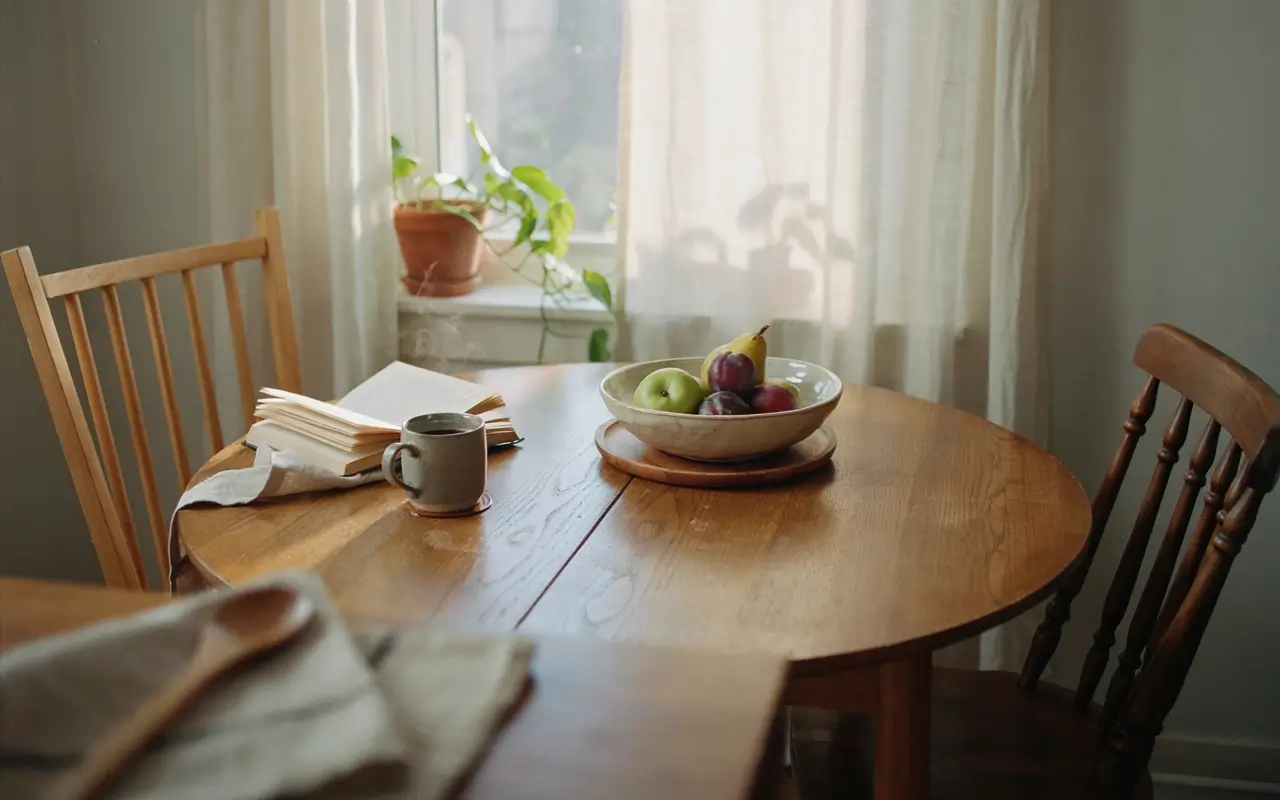
A bare fruit bowl sitting alone on wood always looks slightly unfinished, like it wandered off from a bigger display. Sliding a low wood tray underneath it fixes that instantly, because the tray gives the eye a clear boundary and turns one object into a grouping.
The trick is picking a tray with a slight lip so nothing rolls off during a quick wipe-down. My read is this works on almost any table shape, and it’s the single easiest upgrade on this list — it costs you a tray you may already own and about ninety seconds.
2. Line Up Three Bud Vases at Different Heights So One Grocery-Store Stem Looks Florist-Arranged
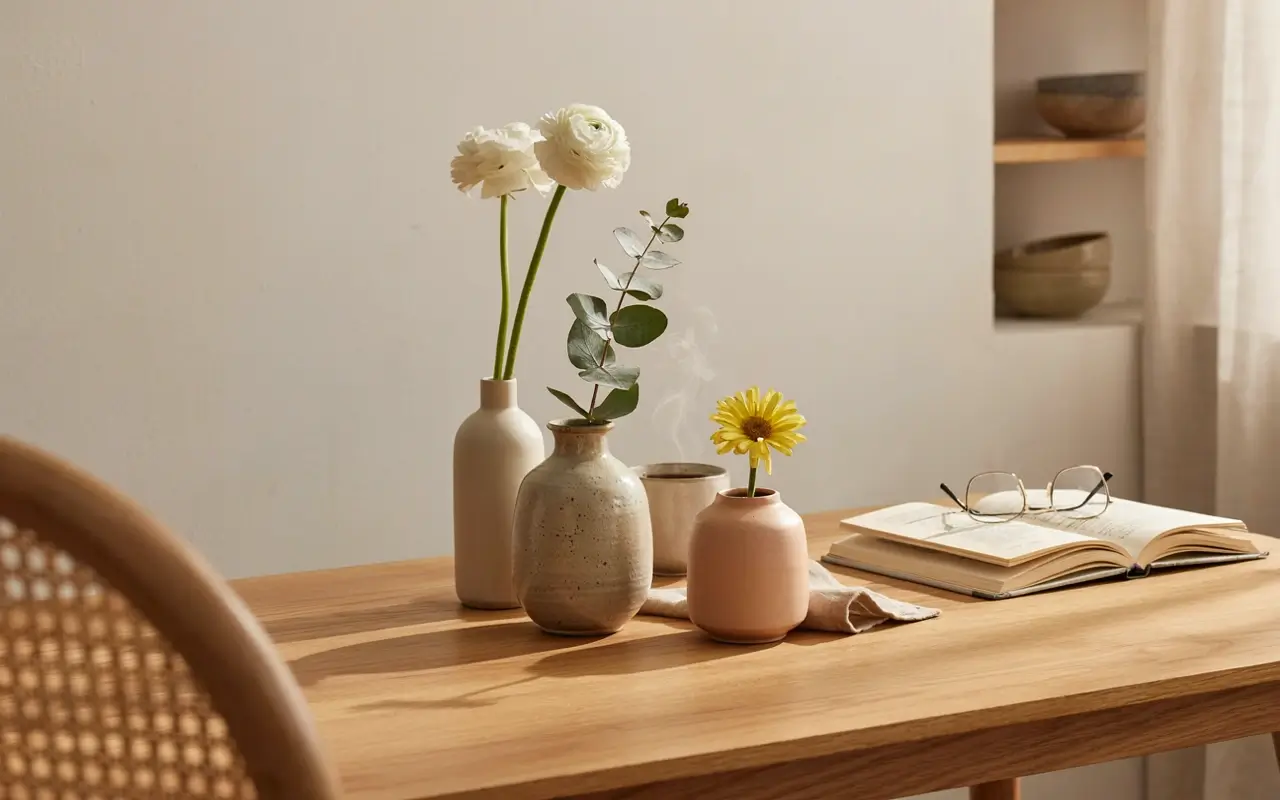
The problem isn’t the flowers — it’s usually one vase, one height, one stem, which reads flat no matter how fresh the bloom is. Splitting a single grocery bunch across three small bud vases of different heights does more visual work than a bigger bouquet ever could.
Set the tallest vase slightly off-center, not dead middle, so sightlines stay open across the table. That small adjustment is the difference between “florist did this” and “I panic-bought flowers.” It’s an easy weekly reset, and it never asks you to spend more than one bunch of grocery-store stems.
3. Turn a Vintage Crock Into an Everyday Utensil-and-Stem Holder So It Earns Its Spot at Every Meal
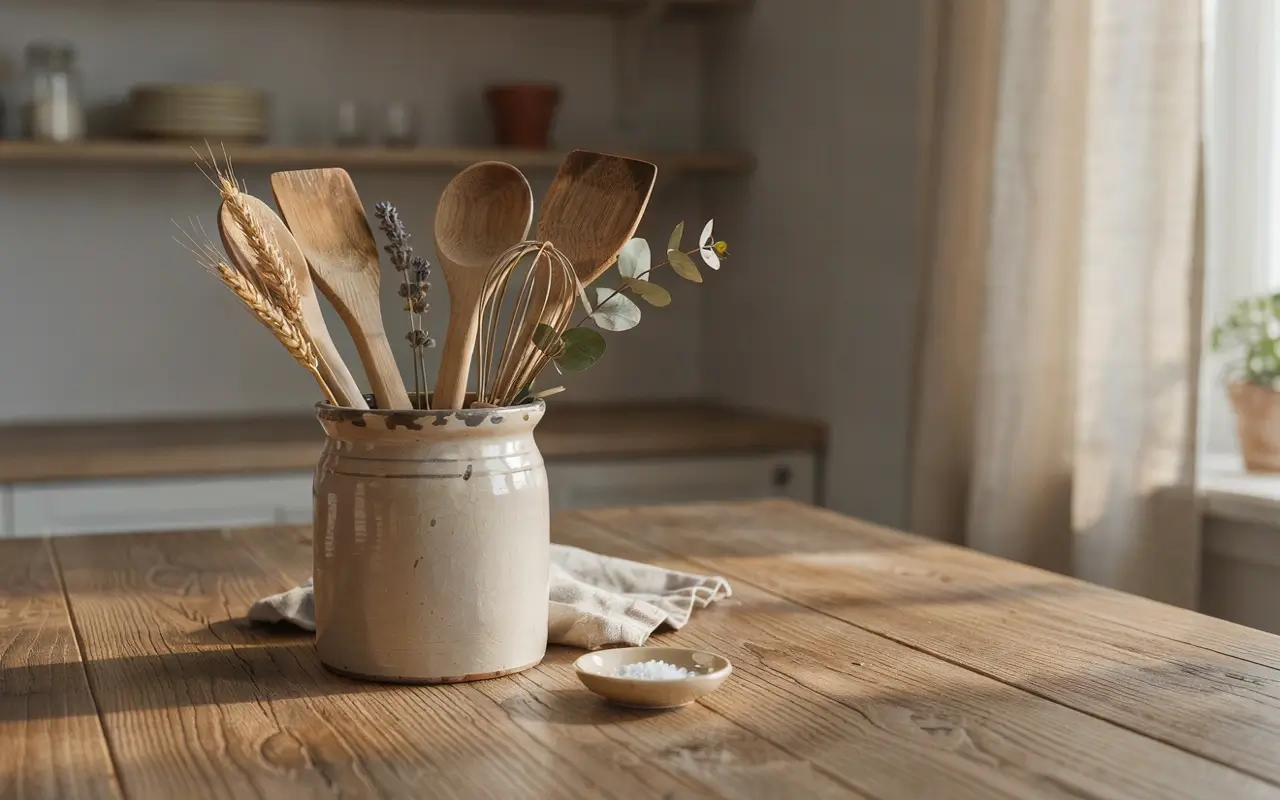
A vintage crock that only holds flowers gets swapped for a fruit bowl the second the flowers die, which is why so many sit empty in a cabinet. Filling it instead with everyday utensils — wooden spoons, a whisk, a few dried stems tucked in the back — gives it a permanent job.
This is the rare centerpiece that’s also storage, so it never feels purely decorative. I’d only bother thrifting a crock specifically for this if it’s wide enough to hold both utensils and a few stems without tipping.
4. Group Three Nesting Ceramic Bowls in Descending Sizes So Repetition Alone Reads as Designer Styling
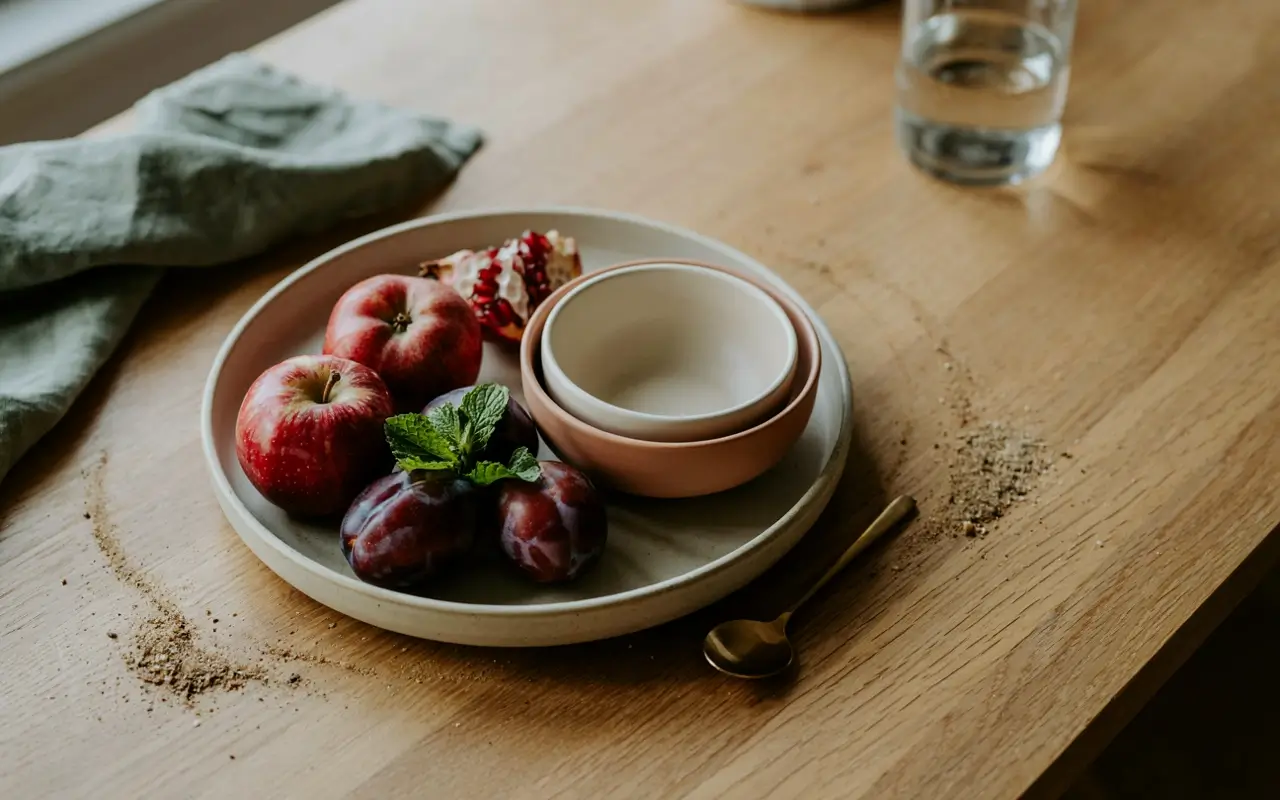
Mismatched bowls scattered across a table look cluttered, not curated, because there’s no visual logic tying them together. Nesting three ceramic bowls in descending sizes — largest holding fruit, middle empty or holding lemons, smallest holding a few nuts or a candle — solves that with pure repetition.
Repetition is doing almost all the styling work here, which is why this reads as intentional even with plain, inexpensive bowls. The warm human line: it’s genuinely satisfying to watch three boring bowls suddenly look like they were bought as a set.
5. Corral Salt, Pepper, and a Small Plant on One Mini Tray So Everyday Function Looks Intentional
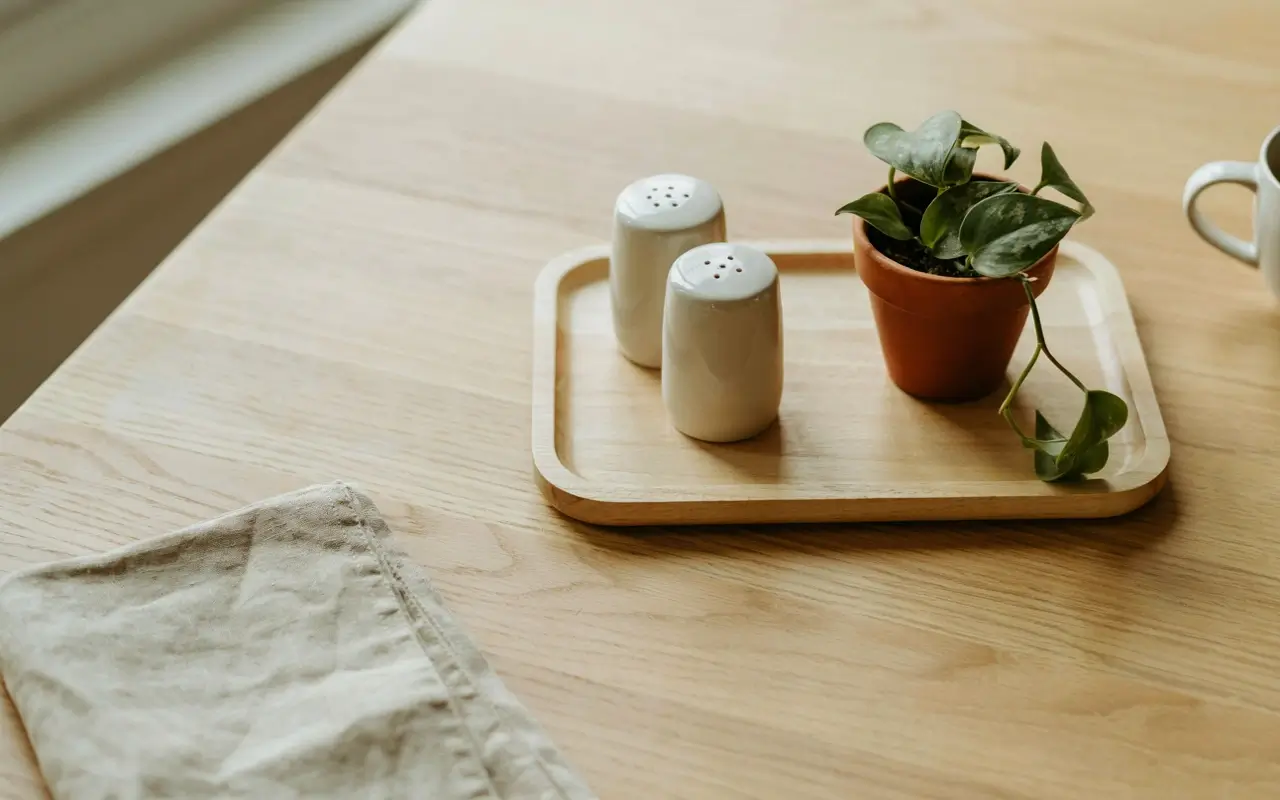
Salt and pepper shakers sitting loose on a table read as utility, not decor, no matter how nice they are. Putting them on a small tray alongside one tiny potted plant reframes the whole grouping as styled rather than functional clutter.
This is the idea to reach for when you genuinely don’t have five extra minutes — it uses objects that are already living on your table. My read is the tray is doing the heavy lifting here; without it, the same three objects just look like leftovers from dinner.
6. Set a Low Basket of Bread and Citrus in the Center So the Table Feels Lived-In Instead of Staged
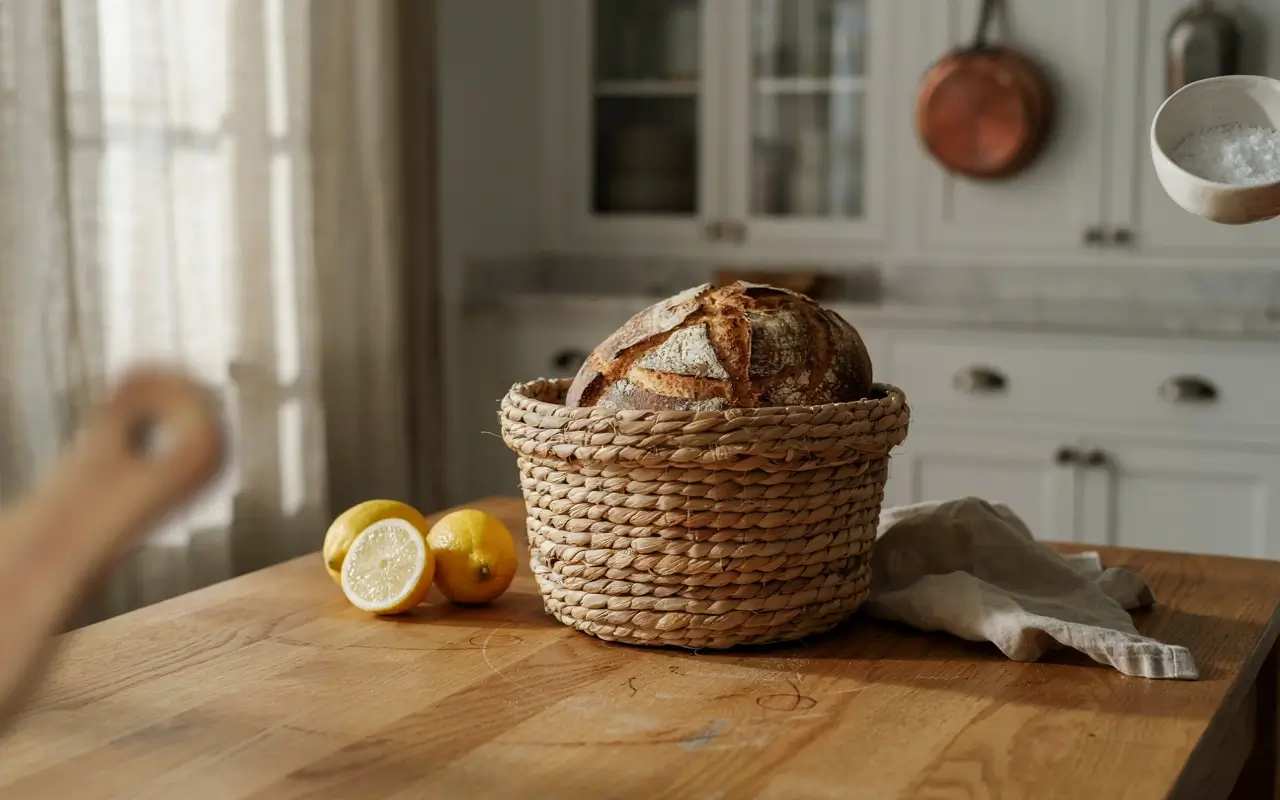
A perfectly empty table can look sadder than a slightly messy one, because it signals no one actually eats there. A low, wide basket holding a loaf of bread and a few loose lemons keeps the table looking used and warm without looking cluttered.
Line the basket so crumbs don’t drop straight onto the wood, and keep the citrus loose rather than stacked in a pyramid. It’s the closest thing on this list to a centerpiece that styles itself — the bread just needs to actually get eaten and replaced.
7. Stack a Short Pile of Books Under a Small Bowl So Height Feels Purposeful, Not Random
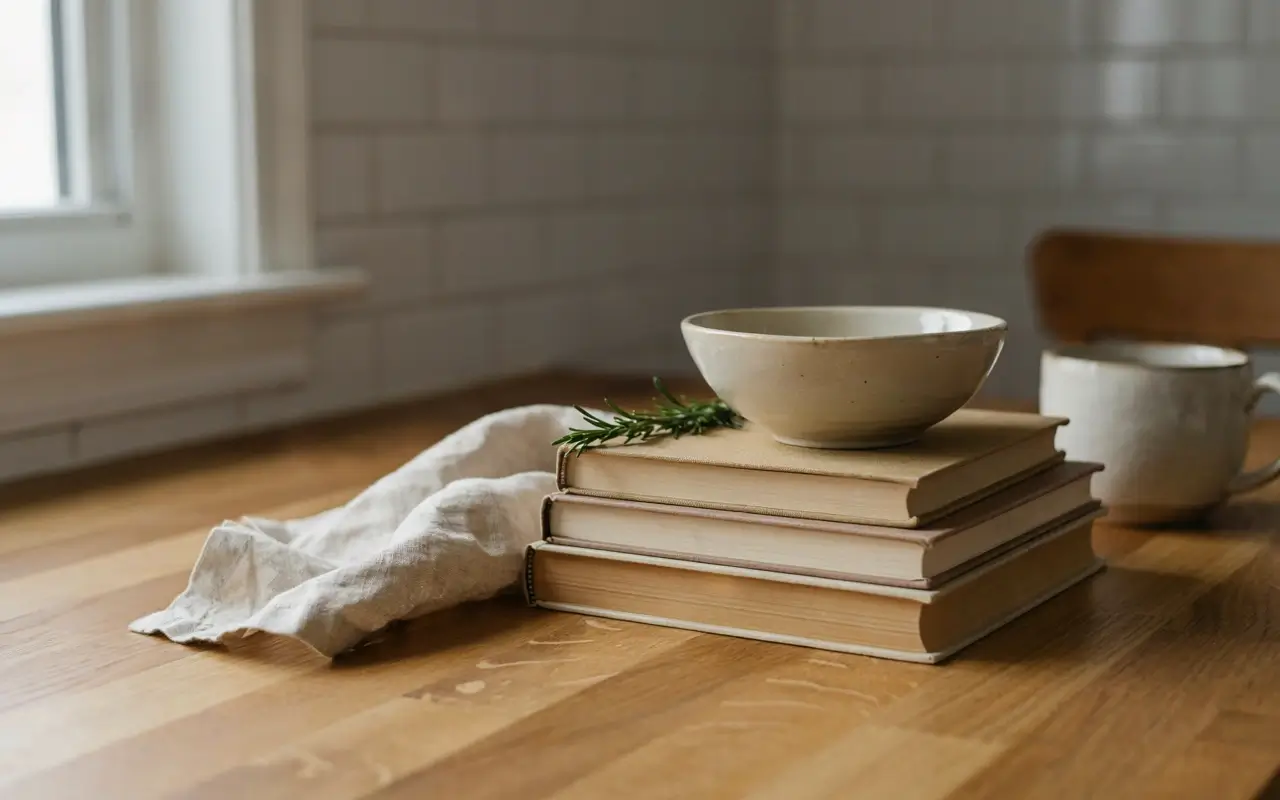
A single bowl sitting flat on the table can look lonely no matter what’s inside it, because there’s nothing giving it visual weight. Stacking two or three hardcover books underneath — spines facing out, in muted colors — instantly gives the bowl height and turns a flat object into a small architectural moment.
Choose books with plain or neutral covers so they read as a design element instead of clutter. I’d skip this if your only books have bright, busy spines, since that pulls focus away from the bowl itself.
Budget and Renter-Friendly Upgrades Under $30
8. Swap a Half-Used Fruit Bowl for a Rotating Trio of Lemons, Limes, and Green Apples
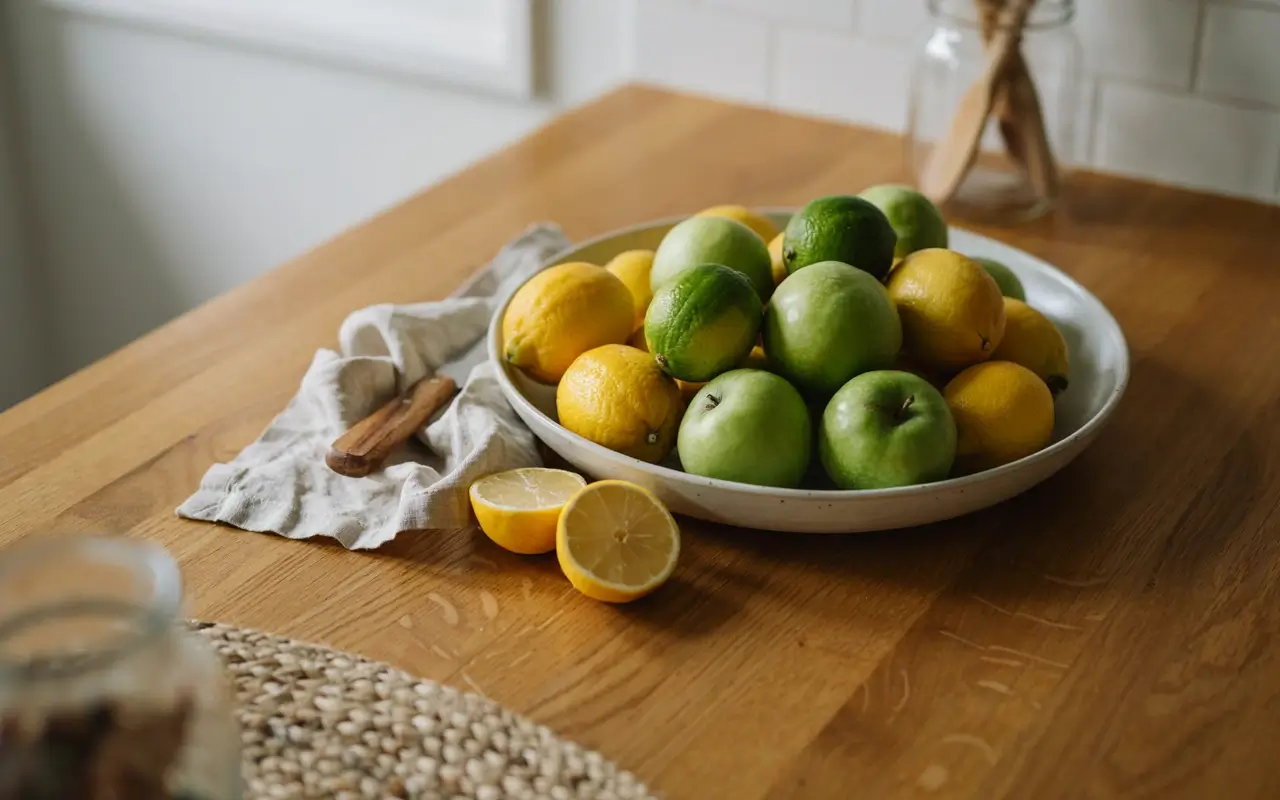
A fruit bowl that never gets refreshed turns brown and sad fast, which is exactly the complaint behind most abandoned centerpieces. Rotating three colors — lemons, limes, green apples — instead of one fruit type keeps the bowl visually interesting even between grocery runs, since you’re not waiting on all three to run out at once.
This costs whatever a normal produce trip costs, so it’s essentially free as decor. The human detail: the color contrast alone does more than a bigger bowl ever would.
9. Stack Two Thrifted Cutting Boards Under a Bowl So the Centerpiece Gets Instant Height for Under $10
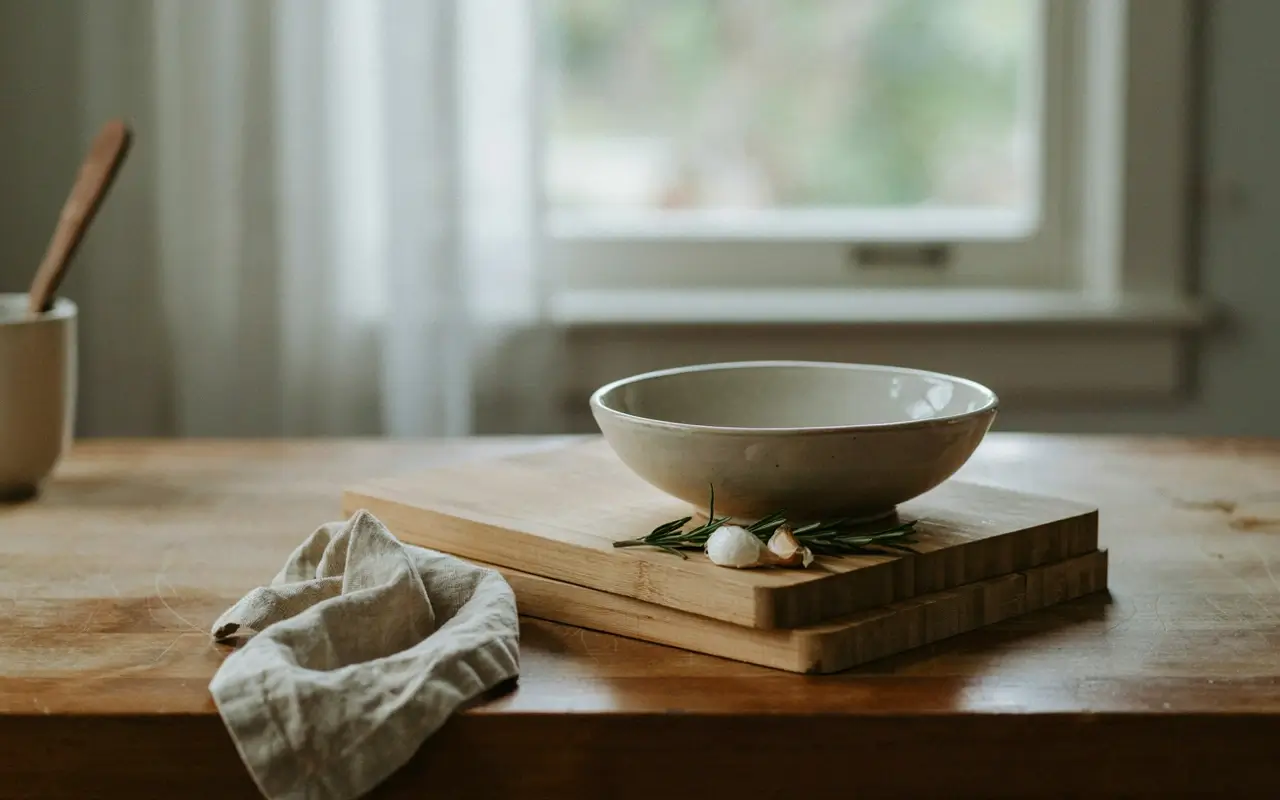
A flat centerpiece on a flat table has nowhere to go visually, and buying a proper riser can feel like an unnecessary expense for something this small. Two thrifted wood cutting boards, stacked at a slight offset angle under a bowl, create the same tiered effect a store-bought stand sells for far more.
This is a genuinely under-$10 fix if you’re thrifting the boards. I’d only spend more here if you find a board with a color that actually contrasts your table, since matching wood-on-wood can flatten the effect.
10. Group Three Mismatched Candle Holders on One Small Tray So They Finally Read as a Collection
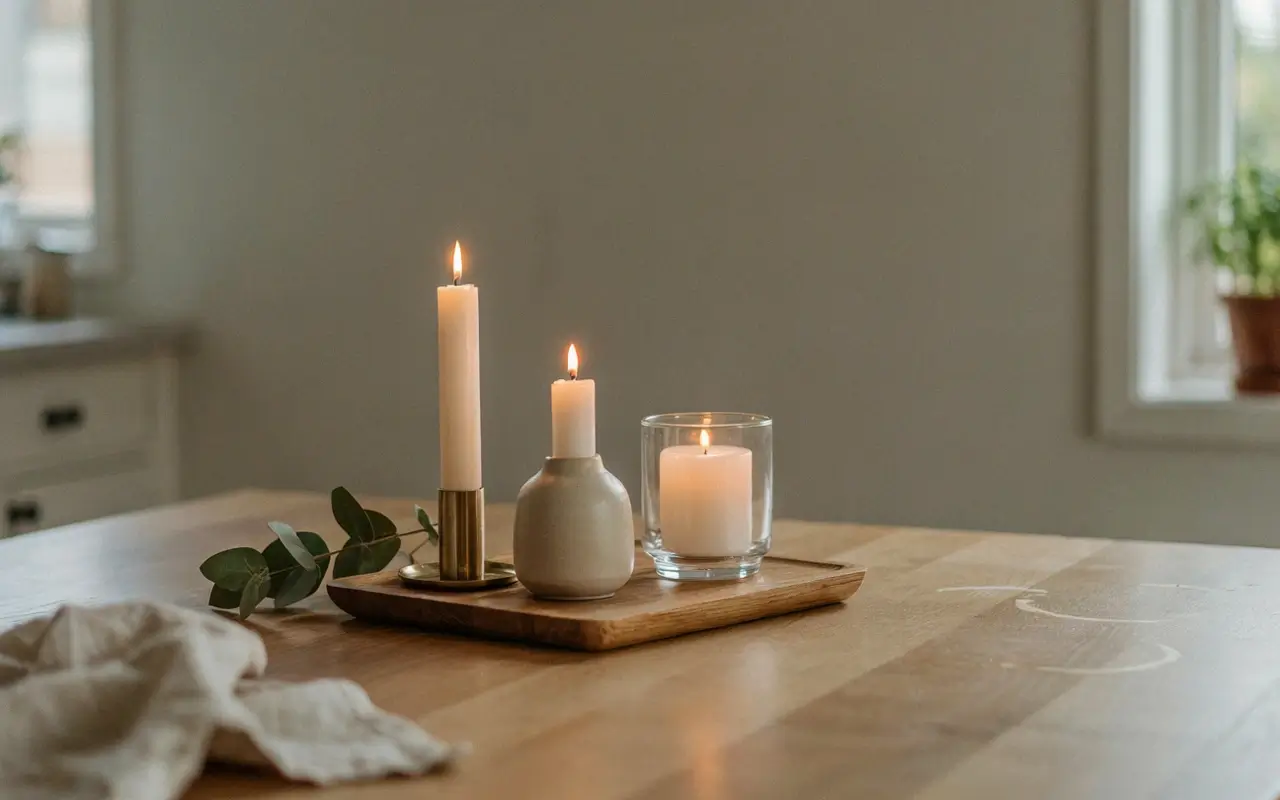
Loose candle holders picked up one at a time rarely match, so most people give up and use them one at a time instead of together. Grouping three different holders on one small tray, with a flameless candle in each, unifies them instantly through the tray alone, no matching required.
Vary the height slightly between the three so it doesn’t read as a straight line. This is the fix for anyone who’s bought “a candle or two” with zero plan for how to actually display them.
11. Line a Shallow Basket With a Tea Towel So Bread or Fruit Looks Styled Instead of Dumped
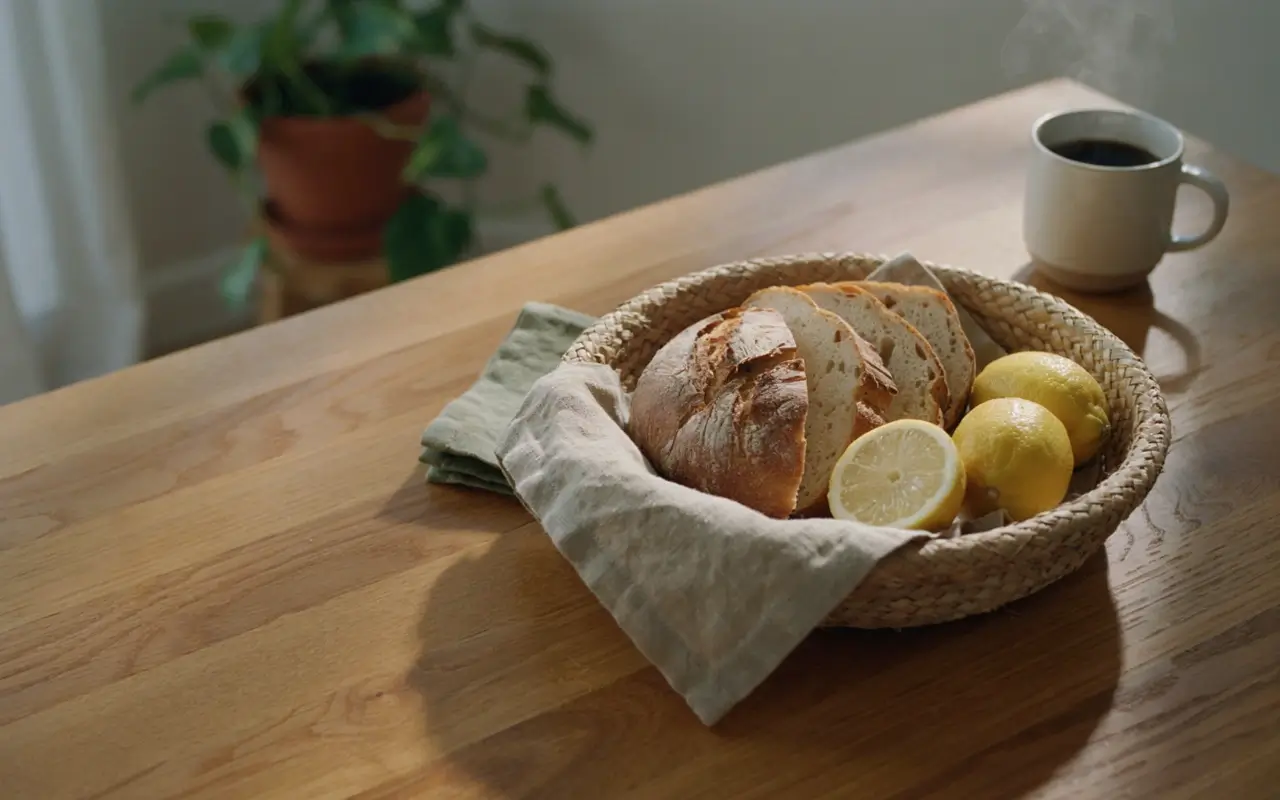
Food sitting loose in a basket can look more like storage than styling, especially once crumbs or stems start collecting. Lining the basket with a folded linen tea towel before adding bread or fruit adds texture and a soft edge, and it hides mess between quick shakes-out.
A plain linen towel in a neutral tone works better here than a printed one, since the goal is texture, not pattern. It’s a two-dollar fix that photographs like a much bigger styling decision.
12. Tuck a Folded Linen Runner Under Everything So Small Objects Get One Clean Landing Strip
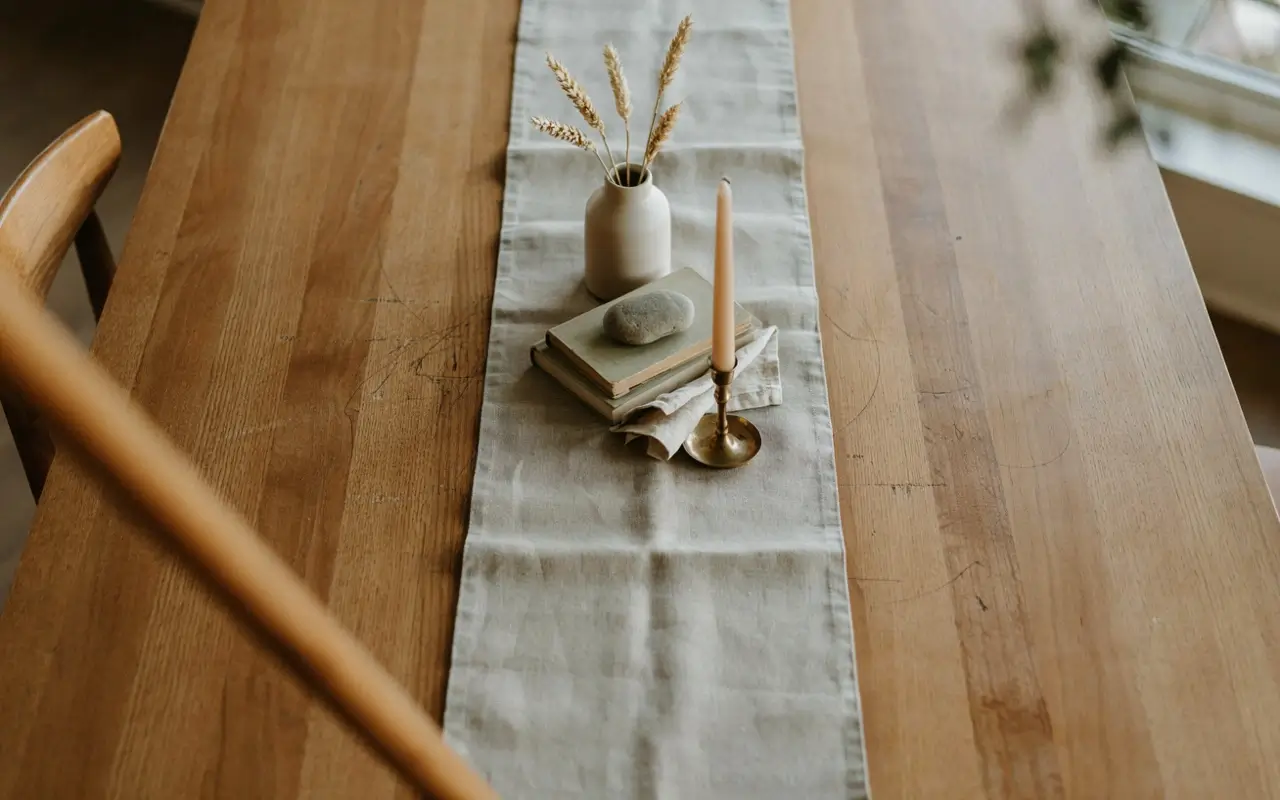
Small decor objects scattered directly on wood can look like they were set down at random, with no shape connecting them. A folded linen runner underneath — even a narrow one, just long enough for the grouping — gives every piece one shared landing strip, and renters can roll it up in seconds with zero commitment to the table.
This is a rare case where less fabric works better than more; a runner that’s too wide swallows a small table instead of anchoring it.
13. Rest Three Different-Height Bud Vases Along a Runner So a Long Table Reads Designer-Made
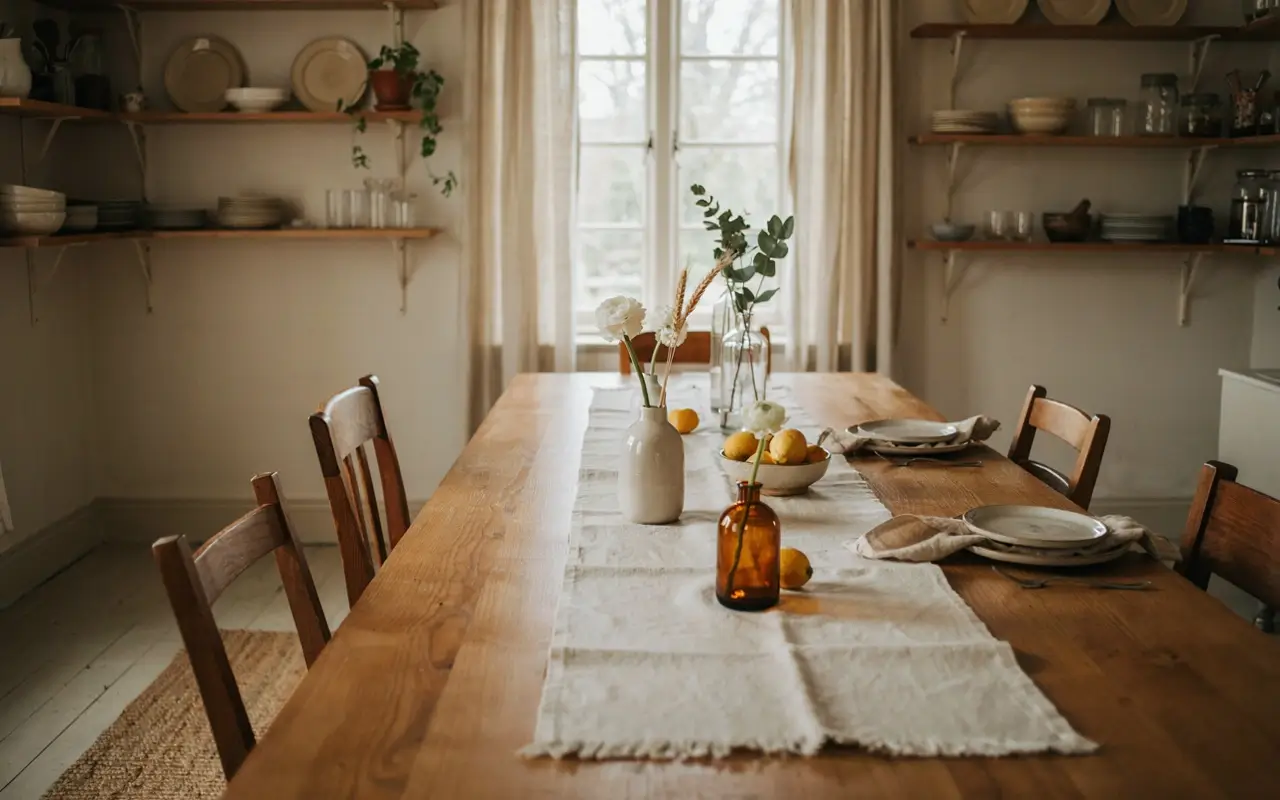
A long kitchen table can swallow a small centerpiece completely, leaving awkward bare wood on either side. Running a linen runner most of the table’s length and resting three bud vases of different heights along it stretches the styling without requiring bigger, more expensive pieces.
This is entirely renter-friendly since nothing touches the table itself. My read is this works better than one large centerpiece for long tables, because it keeps sightlines open at every seat.
14. Choose a Runner in a Deeper Tone Than Your Table So Light Wood Gets Instant Contrast and Depth
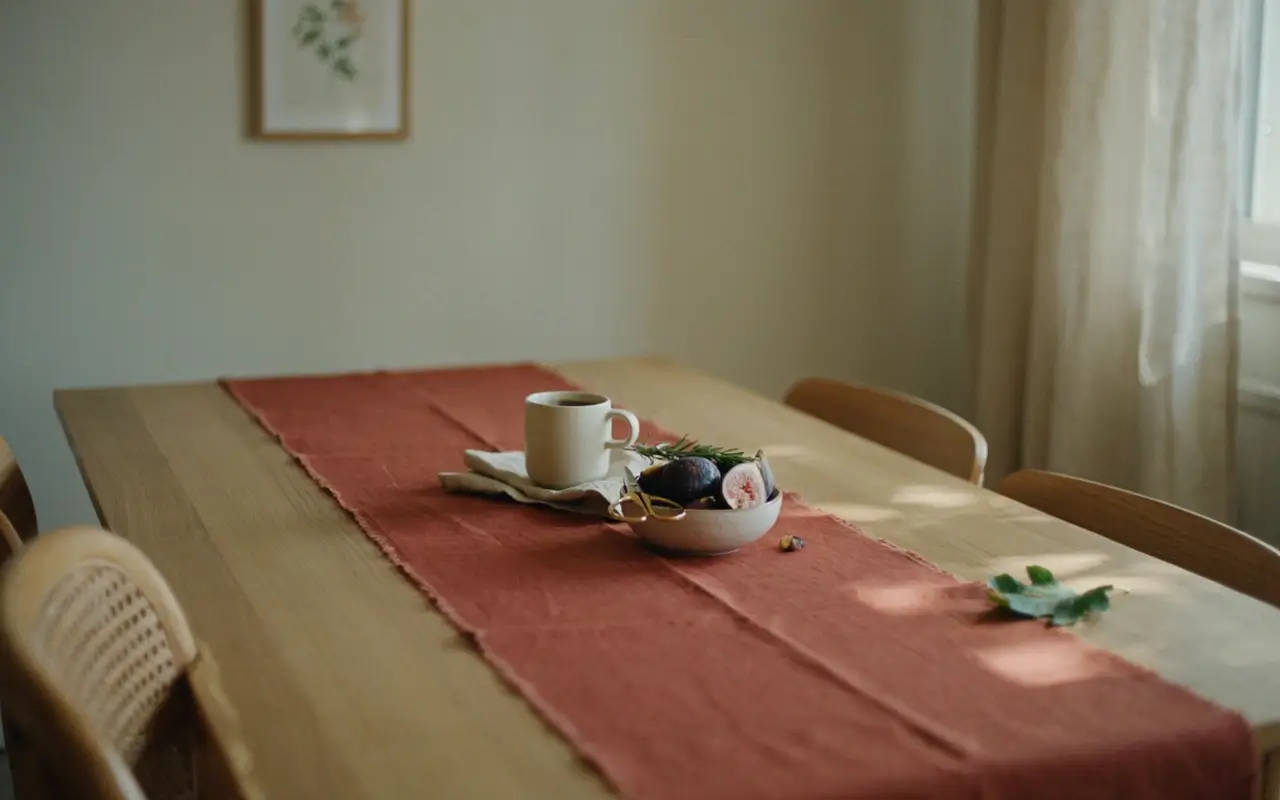
A light wood table paired with a light-toned centerpiece can blur together into one flat surface, especially in photos. Swapping in a runner one or two shades deeper than the tabletop — terracotta, olive, or rust — creates instant contrast that makes every object on top pop visually.
This is a five-minute swap that costs one inexpensive runner. I’d skip a busy patterned runner here, since the goal is one solid contrasting tone, not competing prints.
Small-Table Fixes and Visual Illusion Tricks
15. Rest a Woven Placemat Under a Simple Grouping So a Small Table Feels Anchored Instead of Bare
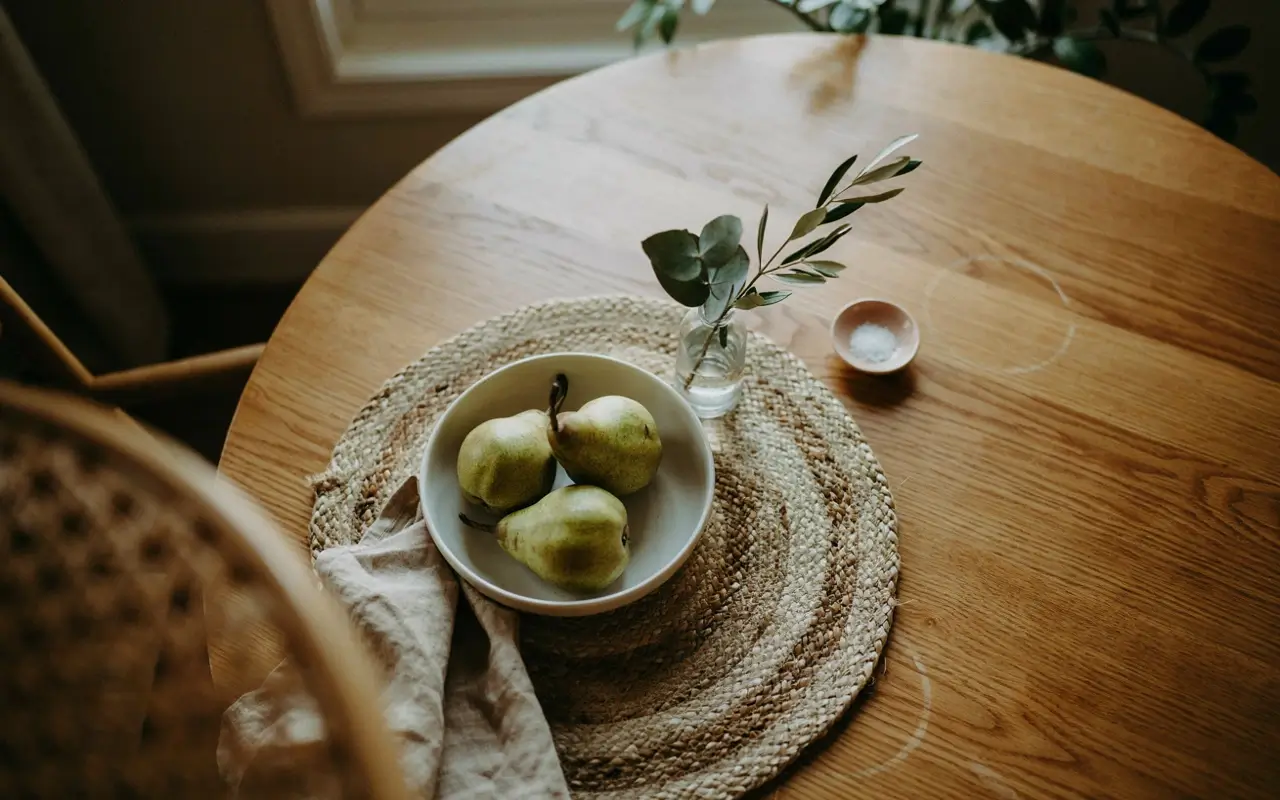
On a small kitchen table, even one small object can look like it’s floating in too much empty wood. A single round woven placemat underneath a small grouping gives it a defined edge, making the whole table feel intentionally filled rather than sparsely decorated.
Keep the placemat’s diameter close to the grouping’s footprint so it reads as a base, not a full table setting.
16. Set a Round Mirrored Tray Under a Grouping So Morning Light Bounces Across the Whole Table
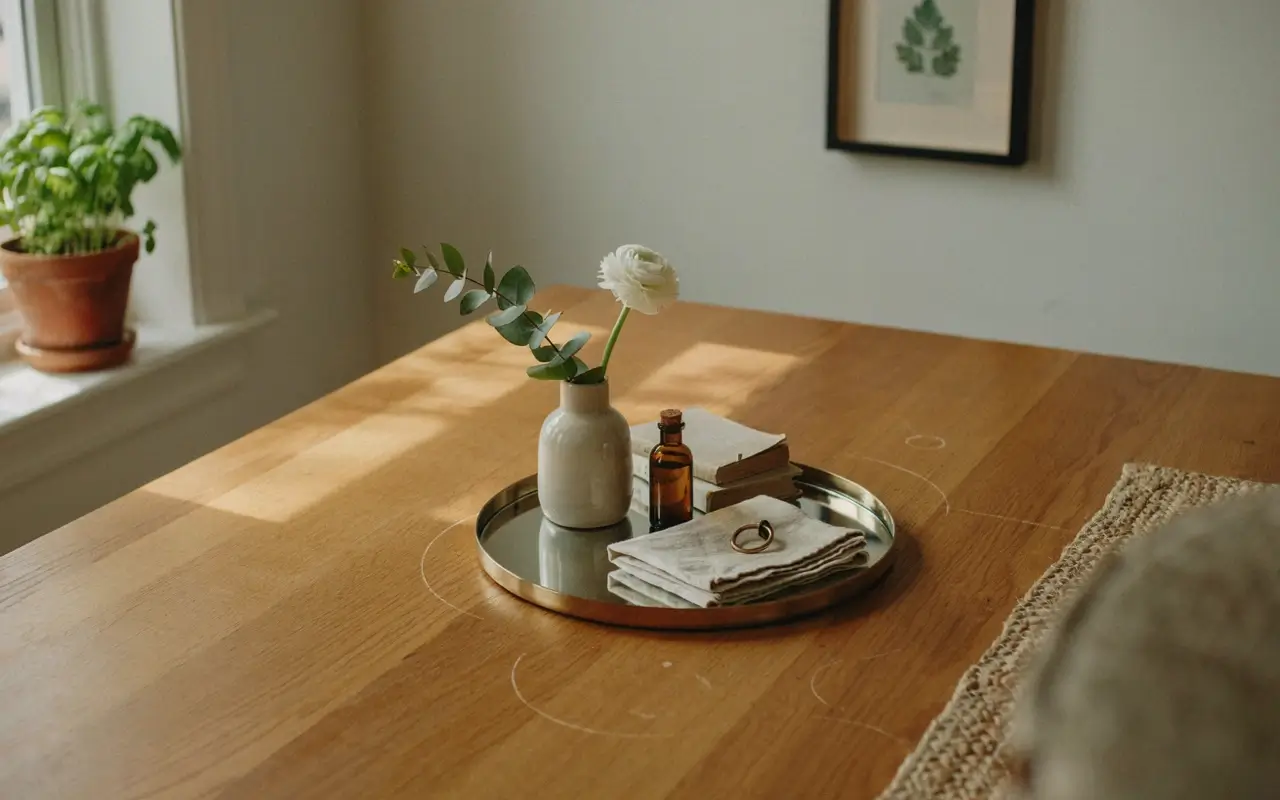
A dim or narrow kitchen table can feel visually heavy no matter what’s styled on top of it. A round mirrored tray under a small grouping catches whatever window light hits the table and bounces it back across the wood, making the whole surface feel brighter without adding a single lamp.
This works best near a window with real daylight; under artificial light alone, the effect flattens out and mostly just adds glare.
17. Layer a Cake Stand With Seasonal Produce So Height Does the Styling Work for You
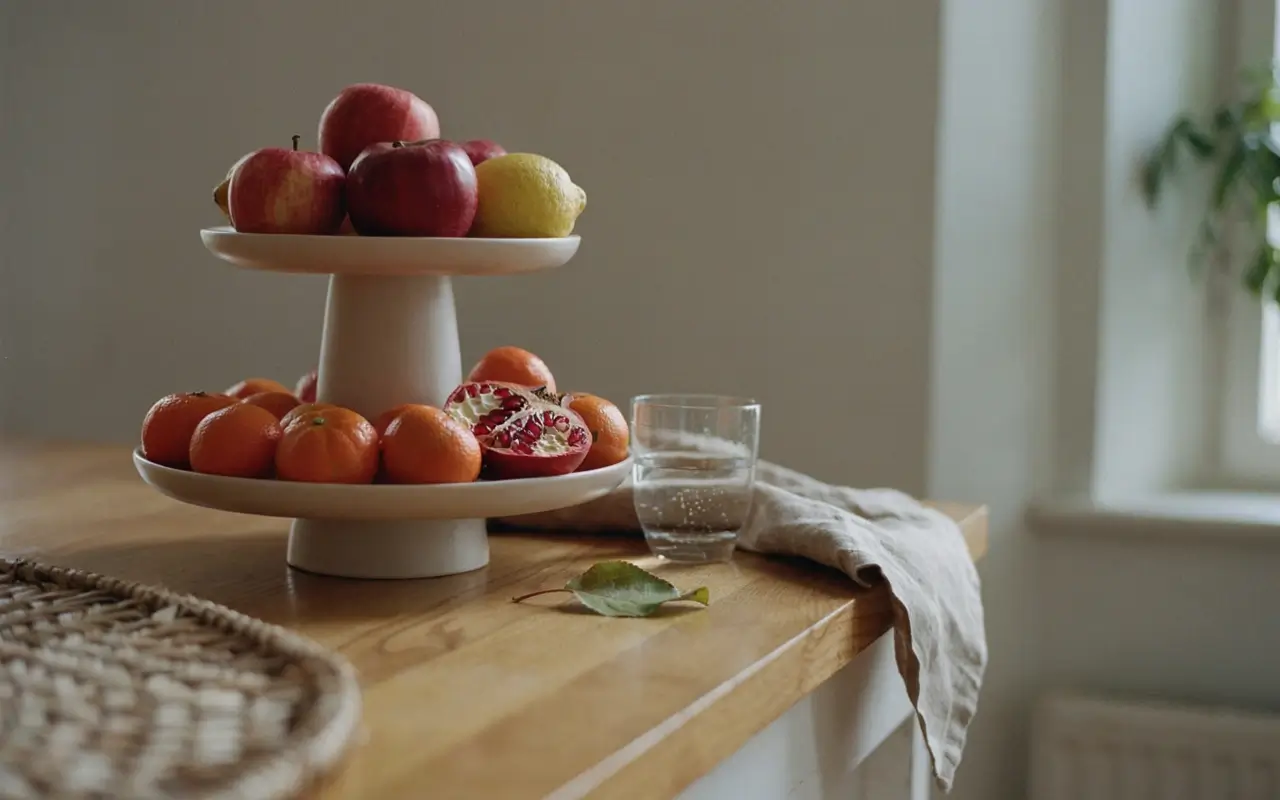
A small table has limited surface area, which makes horizontal groupings feel cramped fast. A single cake stand solves that by moving the styling vertically instead — stacked with apples, small gourds, or citrus depending on the season — so you get visual height without eating up extra table space.
The stand needs a wide, stable base; a narrow-footed one wobbles the moment the table gets bumped during dinner.
18. Hide a Lidded Basket at the Center So Mail and School Papers Finally Have a Home That Isn’t the Table
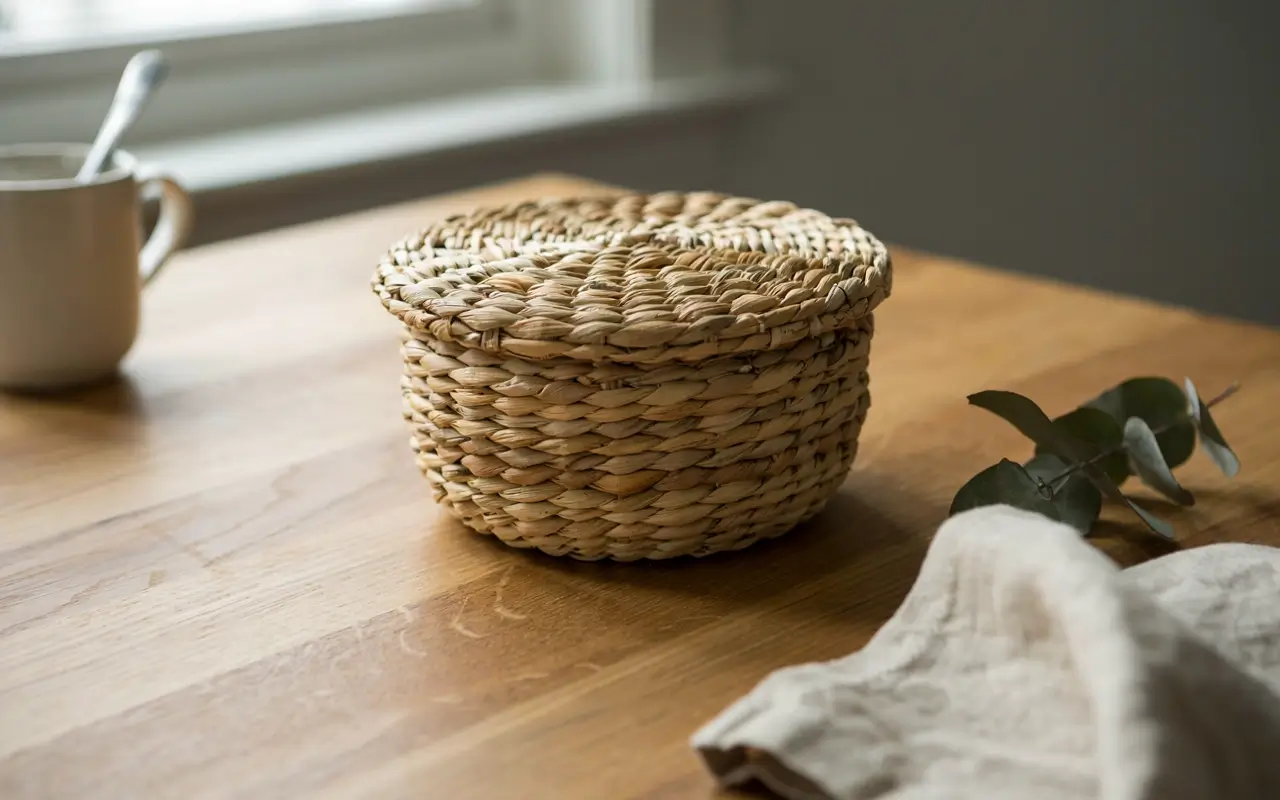
Here’s the idea most centerpiece articles never touch: the real reason your table looks cluttered probably isn’t a missing decor object, it’s the mail and school papers with nowhere else to land. A small lidded woven basket set at the center gives that clutter an actual home, closed away, while still functioning as a styled object on its own.
This single swap solves the exact frustration that undoes every other idea on this list — a centerpiece can’t look designer-made if it’s buried under yesterday’s mail. My read is this is the idea worth trying first, before any of the others.
19. Turn a Two-Tier Stand Into a Fruit-and-Bread Station So Vertical Space Does What a Bigger Table Can’t
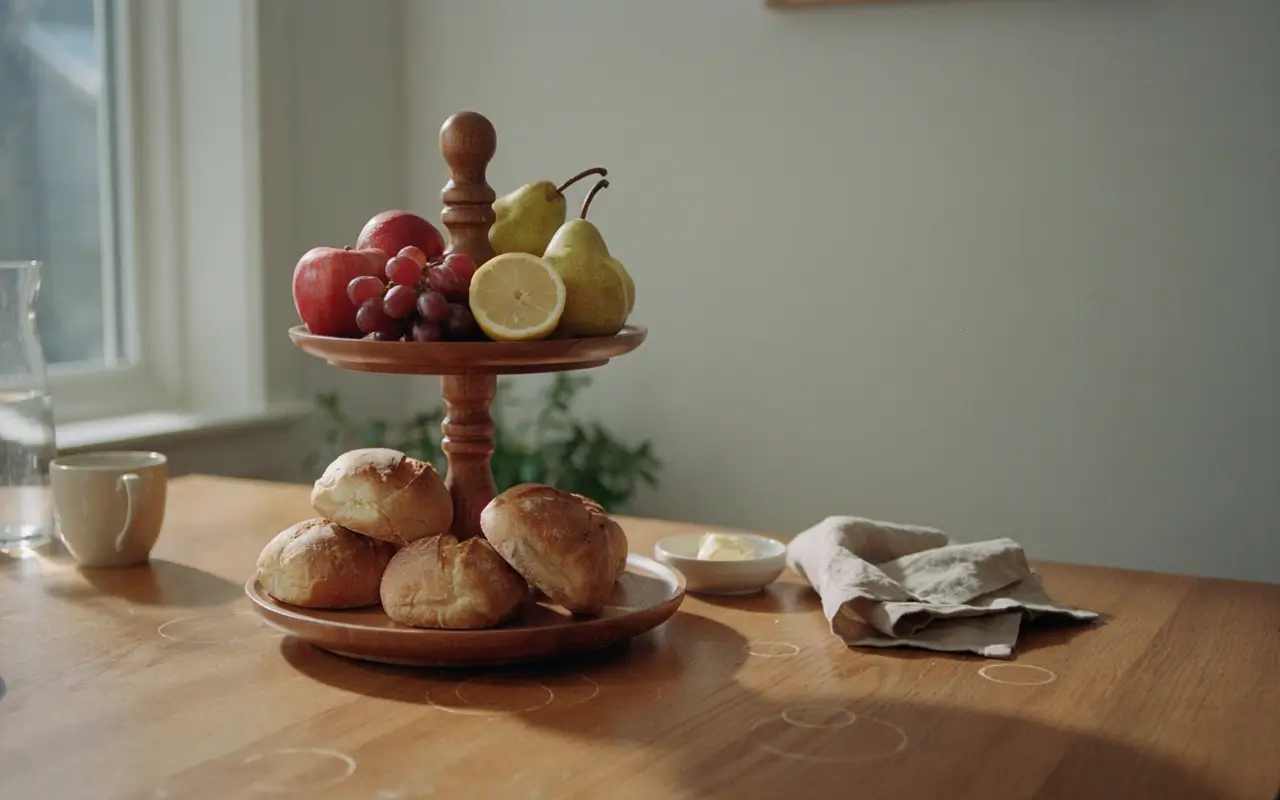
Small tables rarely have room for both a fruit bowl and a bread basket sitting side by side. Stacking a two-tier stand instead — fruit on top, a small loaf or rolls on the bottom — combines both functions into one footprint, so nothing feels crowded out.
This idea earns its keep because it’s genuinely used at almost every meal, not just admired between them. I’d only buy a stand for this if the tiers are wide enough to hold real food, not just decorative fruit.
20. Group a Trio of Terracotta Pots Without a Single Flower So the Color Alone Becomes the Centerpiece
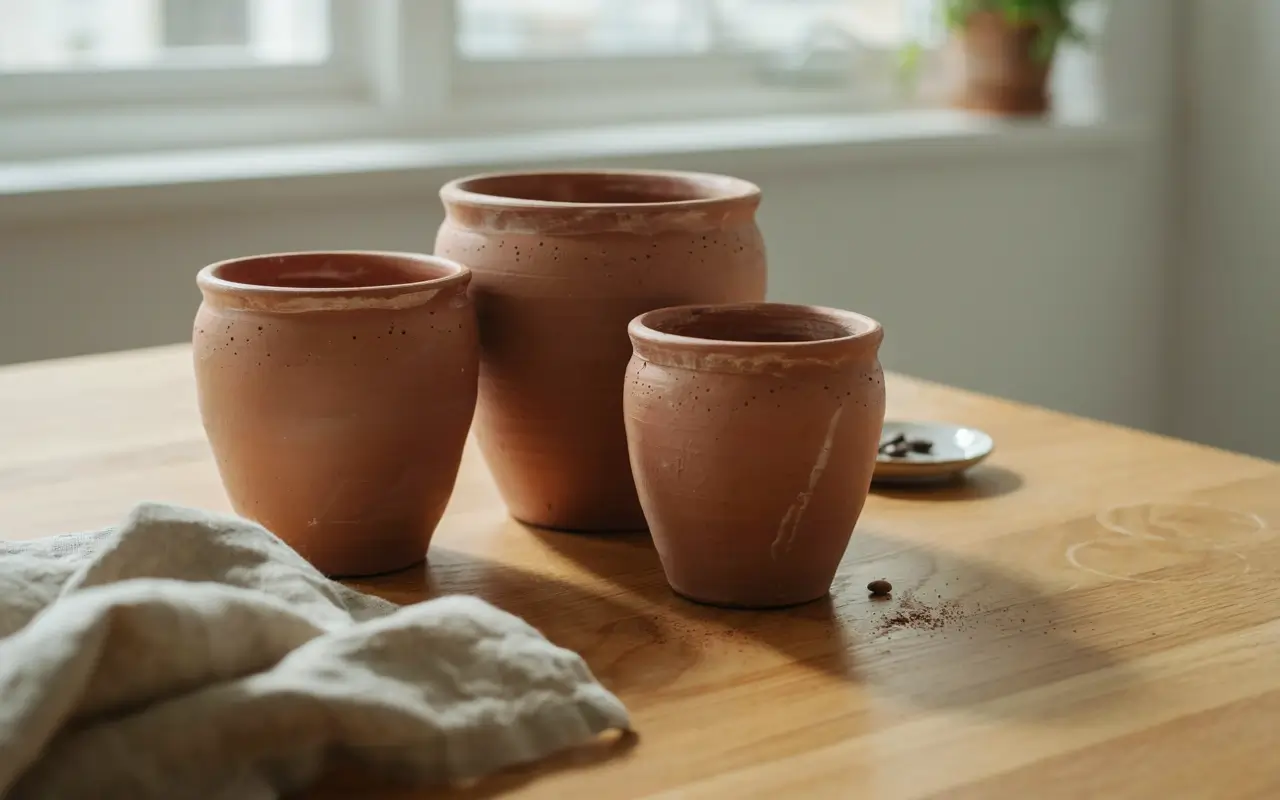
Empty terracotta pots usually sit around waiting for plants that never get bought. Grouping three of them together, in slightly different sizes and left completely empty or filled with a few dried beans or corks, turns the warm clay color itself into the entire centerpiece, with zero maintenance required.
This is the idea for anyone who’s killed every plant they’ve tried on this table. My read is it works especially well against a light wood or white table where the terracotta tone has room to stand out.
21. Fill a Low Bowl With Dried Pods or Pinecones in Odd Numbers So Off-Season Months Still Feel Styled
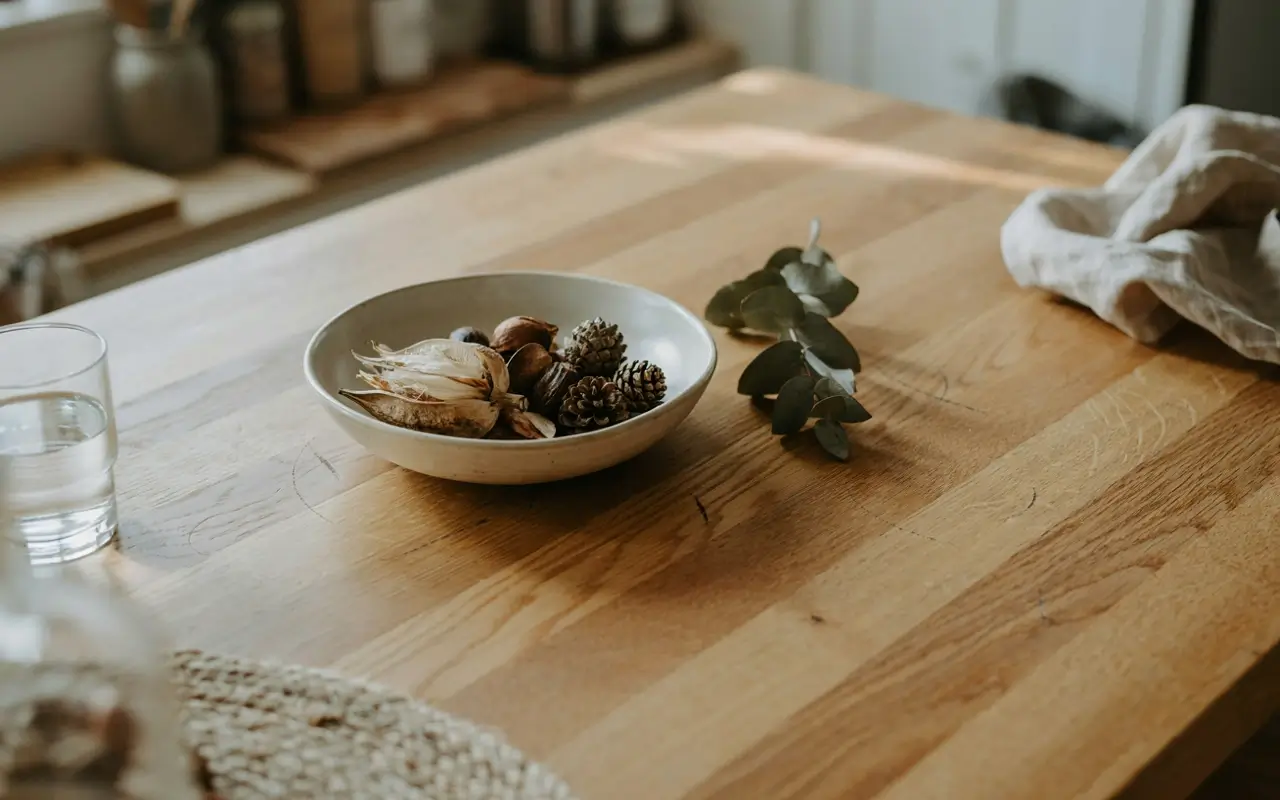
A lot of centerpiece ideas only work for one season, then leave the table bare for the other eleven months. A low bowl filled with dried seed pods, pinecones, or dried branches in an odd-numbered grouping holds its look year-round, since nothing here can wilt or go out of season.
Keep the grouping loose rather than tightly packed so individual pieces stay visible. This is a genuinely low-maintenance filler for the months between fresh flower seasons.
Safe, Family-Friendly, Low-Maintenance Ideas, and One Splurge
22. Swap Weekly Cut Flowers for a Potted Herb Trio So the Centerpiece Never Wilts or Needs Replacing
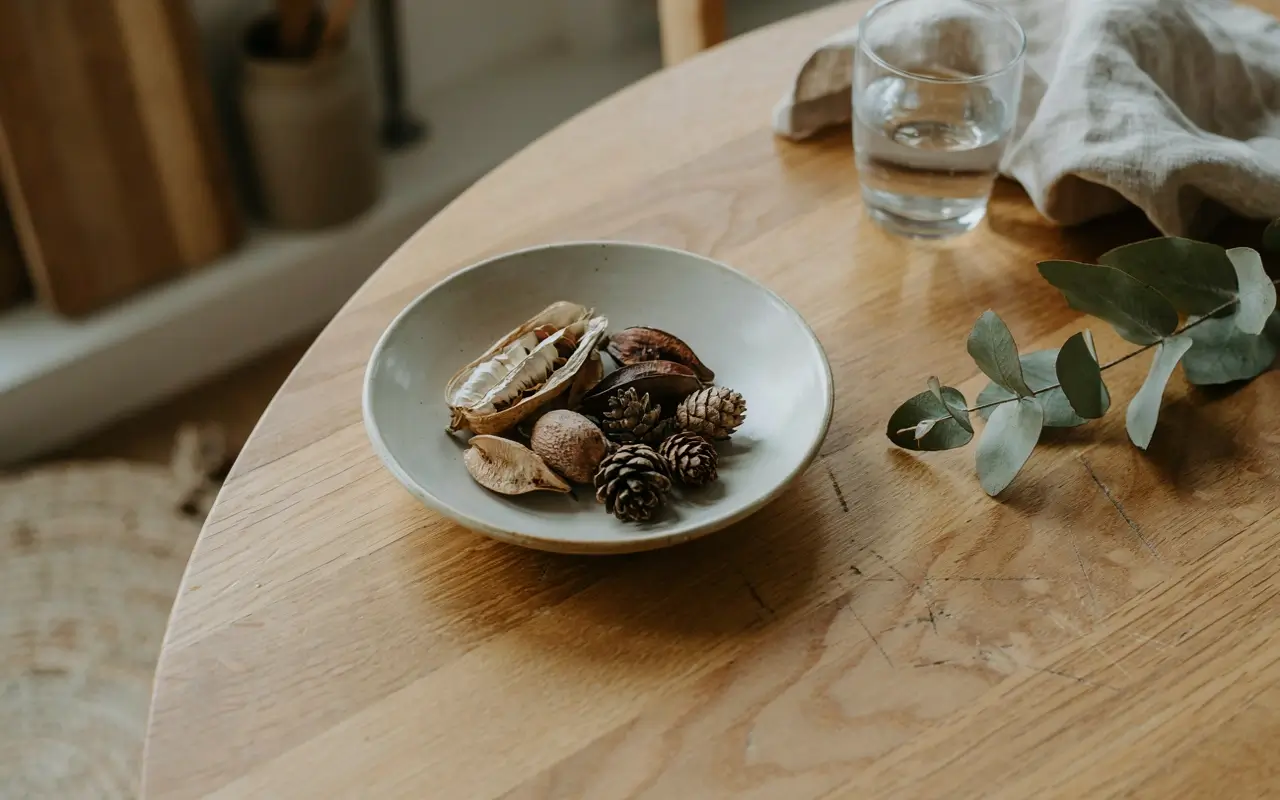
Buying fresh flowers every week for a table that gets used daily is expensive and easy to forget, which is exactly why so many centerpieces end up empty by Thursday. A trio of small potted herbs — basil, thyme, rosemary — in matching pots gives the same greenery effect without a single weekly trip to the store.
This one solves a real function problem too, since the herbs are actually useful at dinner. I’d only skip this in a kitchen with very little natural light, since herbs need a real window to survive past a few weeks.
23. Set a Flameless Candle Lantern Between Two Small Plants for Safe Everyday Ambiance With Kids Around
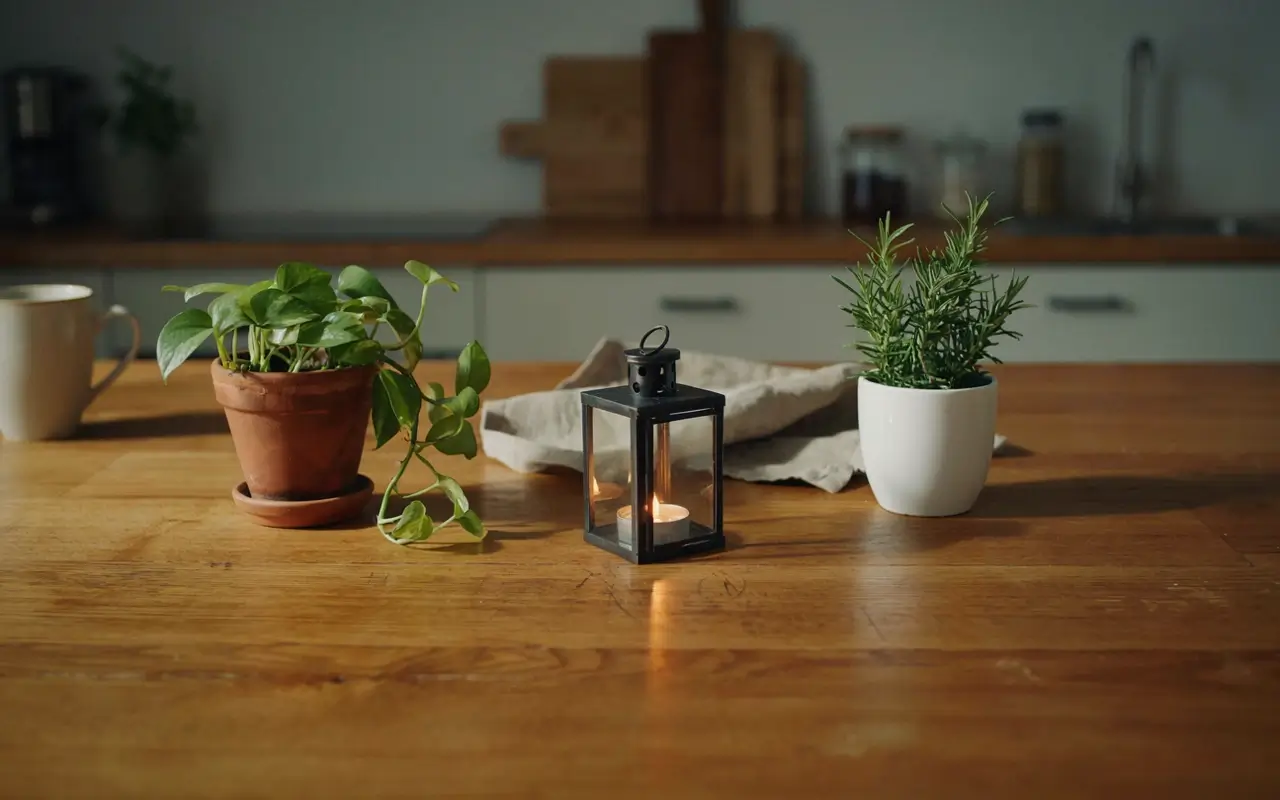
Open flame anywhere near a table with small kids or pets is one more thing to worry about mid-dinner. A small glass lantern with a flameless LED candle inside, flanked by two small potted plants, gives the same warm glow and grouping shape without any actual fire risk.
The enclosed glass also keeps curious hands from touching a hot surface, which matters more at a daily-use table than it does anywhere else in the house.
24. Cluster Three Flameless Pillar Candles at Different Heights on a Wood Tray for a Safe Nightly Glow
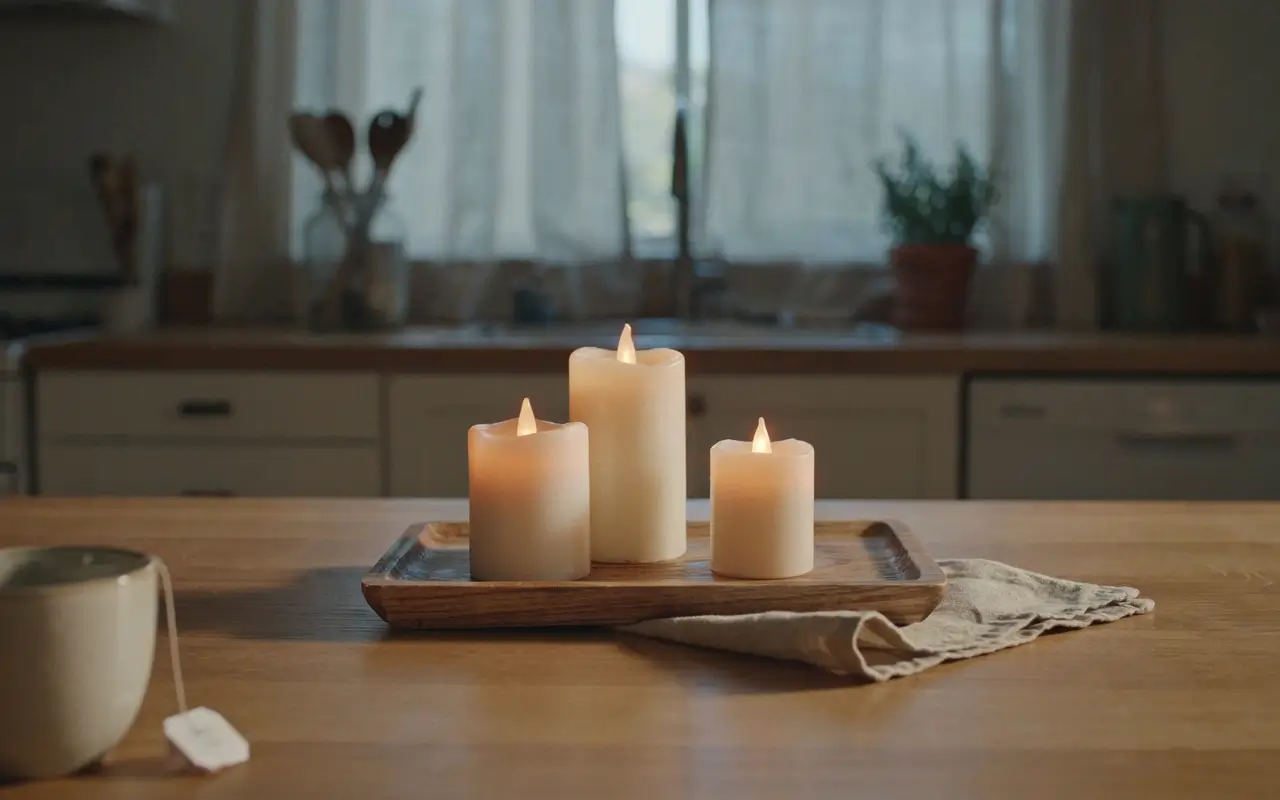
A single candle rarely creates enough visual weight to feel like a real centerpiece, but a row of real flame pillars is a genuine hazard on a table kids and pets pass by constantly. Three flameless LED pillars, different heights, grouped on a small wood tray, gives you the clustered glow look with none of the open-flame risk.
Turning them on for dinner takes the same five seconds as lighting a match, minus the follow-up worry.
25. Set a Brass Bowl of Green Apples Beside a Short Stack of Folded Napkins for Function and Color Together
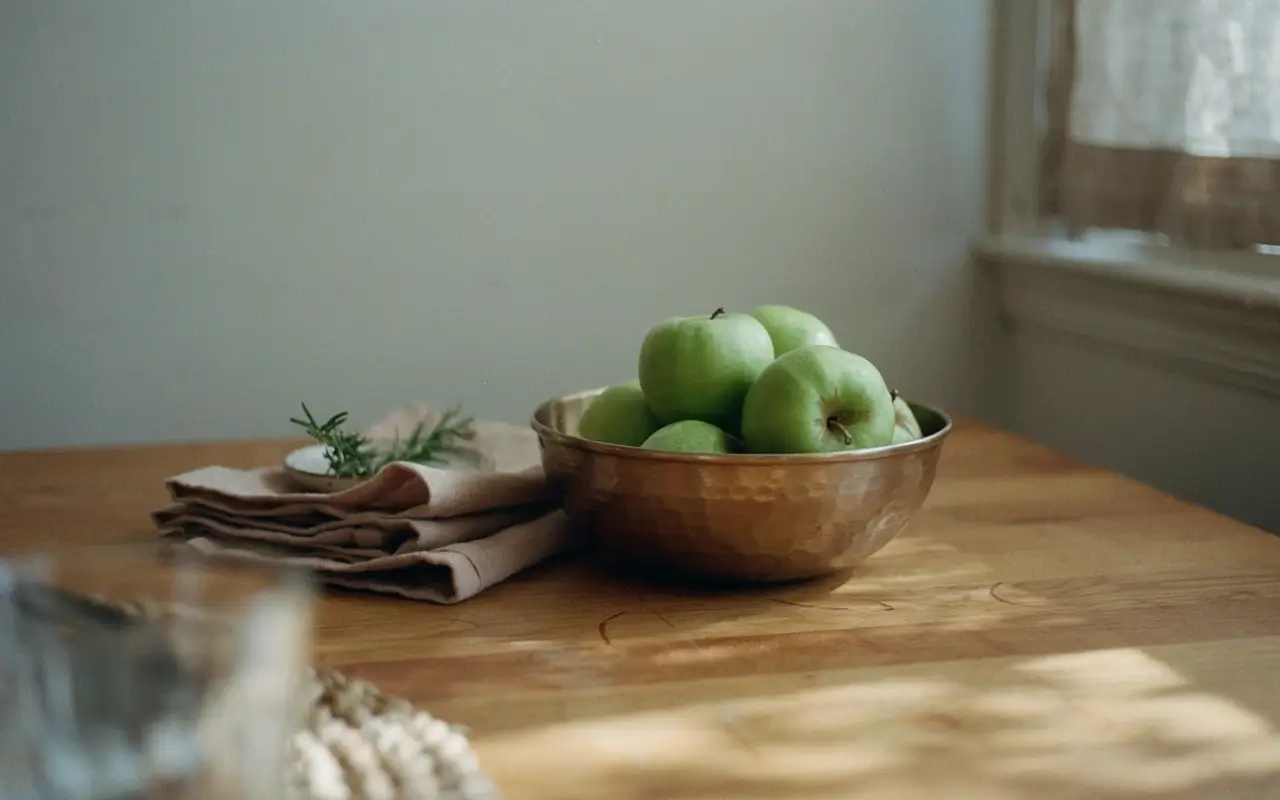
A centerpiece that only decorates and never helps at the table gets abandoned fastest, since there’s no reason to keep resetting it. Pairing a brass bowl of green apples with a short stack of folded cloth napkins right beside it gives the grouping an actual job at every meal, while the brass and green combination does the color work on its own.
This is an easy one to build from a HomeGoods bowl and napkins you likely already fold for dinner anyway.
26. Choose One Statement Vase With Faux Stems That Never Wilt So Busy Weeks Don’t Undo the Look
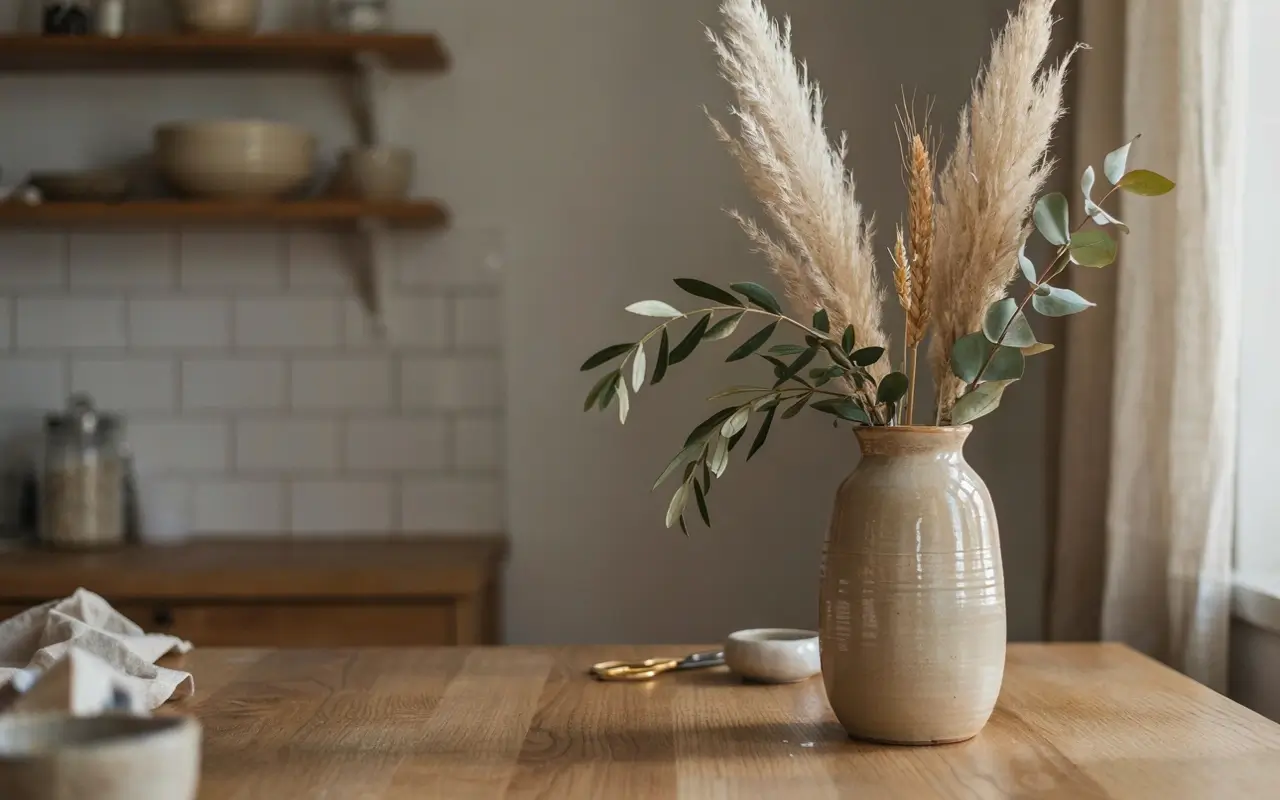
Real flowers are beautiful for about five days, then quietly ruin the whole centerpiece for the following two weeks until someone remembers to toss them. One well-made ceramic vase filled with quality faux stems keeps the same visual softness permanently, with zero maintenance during the weeks life gets too busy for fresh flowers.
The vase itself is doing the styling heavy lifting here, so it’s worth choosing one nice piece — something like a Magnolia ceramic vase — rather than the stems.
27. Add a Slim Tray With Salt, Pepper, and One Bud Vase So Daily Use Becomes the Centerpiece Itself
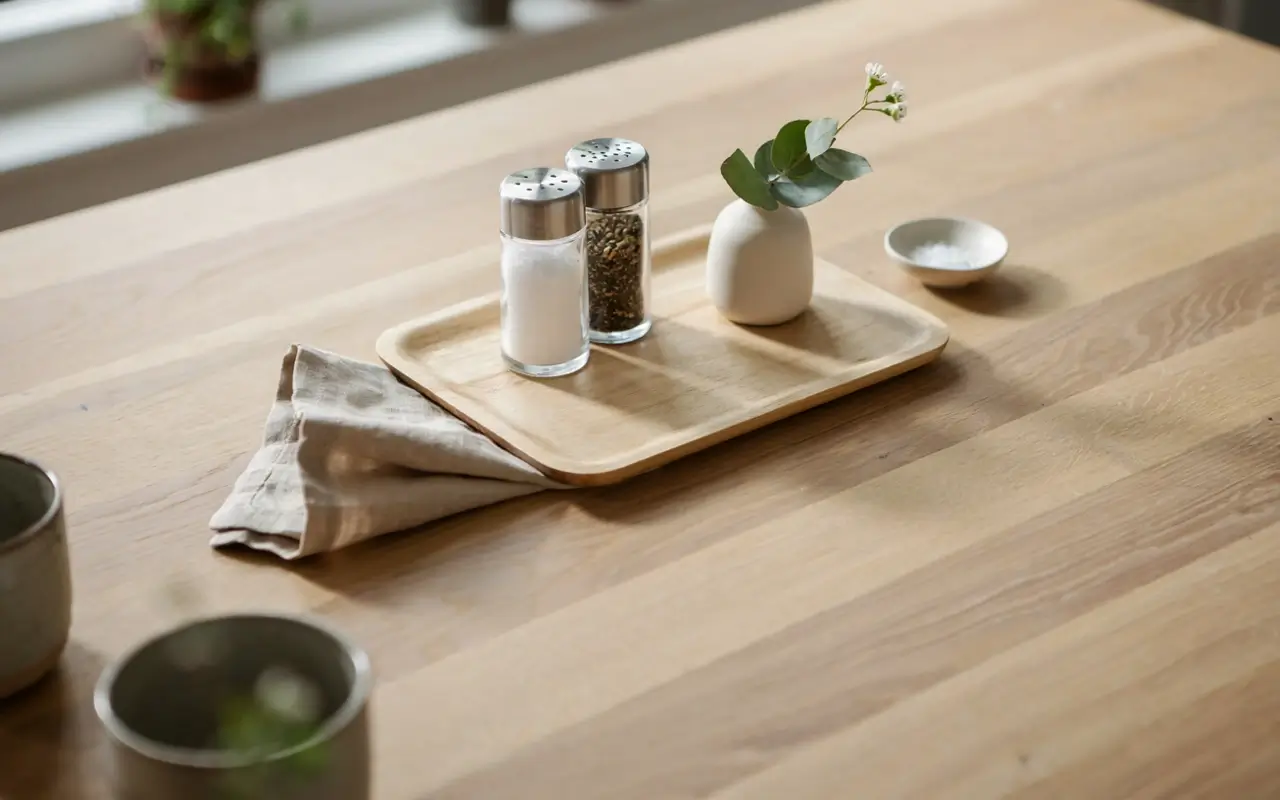
By the time you’ve tried a dozen centerpiece ideas, the simplest fix is often the one that never gets tried: build the centerpiece entirely out of things you use at every single meal. A slim tray holding salt, pepper, and one small bud vase means there’s nothing extra to move before dinner and nothing extra to reset after.
This is the idea to land on if every other version on this list has felt like one more thing to maintain — because this one maintains itself.
28. Pair One Tall Ceramic Vase With Two Short Flameless Votives So the Table Gets Instant Rule-of-Three Balance
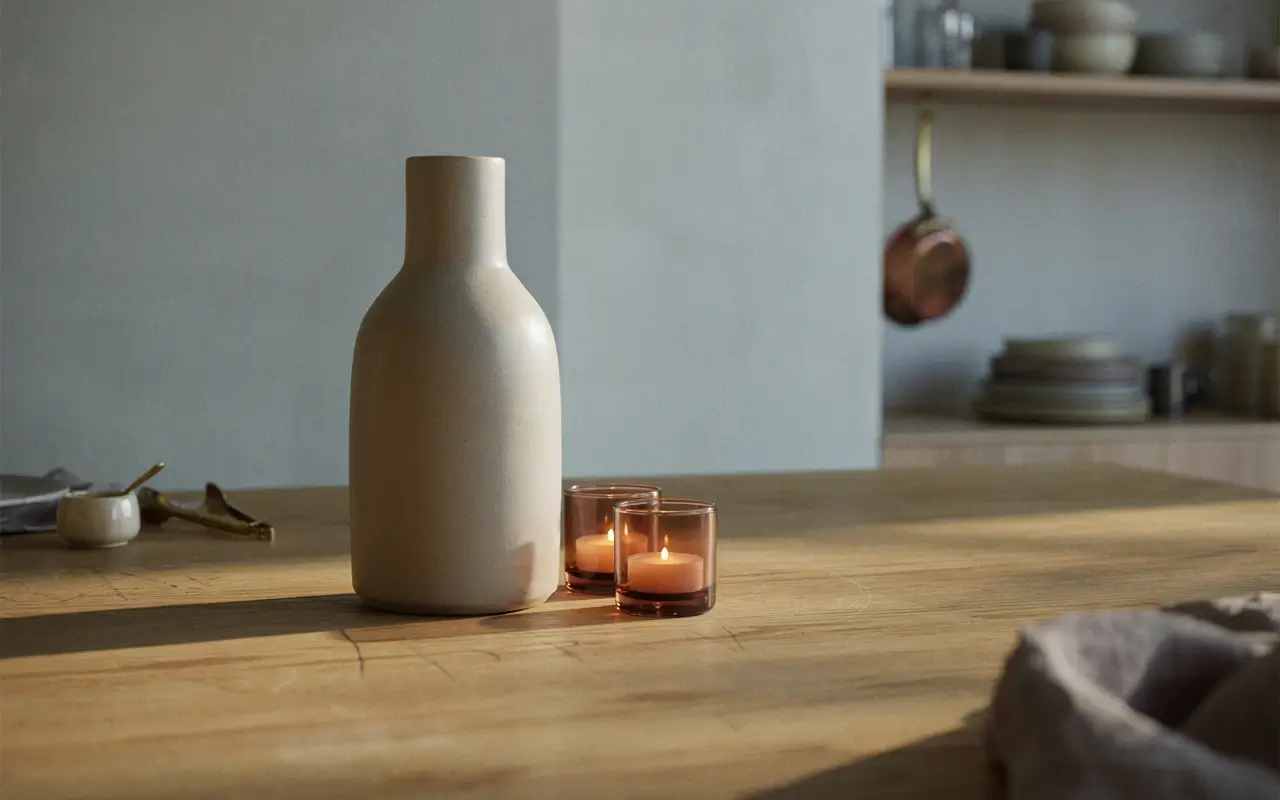
If there’s one piece on this list worth spending a little more on, it’s a single well-made ceramic vase — a Magnolia or Target design line piece works well here — paired with two small flameless votives at a noticeably shorter height. That height gap is the entire trick: it’s the clearest, fastest way to demonstrate rule-of-three balance with only three objects.
I’d only splurge here if the vase is genuinely well-shaped, since a mediocre one won’t earn its higher price sitting next to two simple votives.
Quick Comparison and Common Questions
Quick Comparison: Which Centerpiece Base Fits Your Table
| Option | Best For | Key Benefit | Limitation |
|---|---|---|---|
| Tray-anchored grouping | Small tables, daily use | Lifts off in one motion for meals | Needs a tray with a lip to prevent sliding |
| Runner-anchored grouping | Long or narrow tables | Stretches styling across more surface | Wrong width can overwhelm a small table |
| Tiered stand | Small tables needing height | Adds vertical interest without more footprint | Needs a wide, stable base to avoid wobbling |
| Basket grouping | Tables doubling as landing zones | Combines styling with real storage | Needs regular emptying to stay functional |
Tray-anchored groupings vs a single statement vase: tray groupings work better for small kitchen tables because they corral several small objects into one liftable unit at mealtime. A single statement vase works better when you want a fast, no-fuss centerpiece with zero daily reset. The key difference is how much daily handling each style can survive without starting to look messy.
Common Questions About Everyday Kitchen Table Centerpieces
What’s the easiest everyday centerpiece for a small kitchen table?
A single tray holding a bud vase, salt and pepper, and one short candle. It stays low enough to see across the table at every seat.
How do I keep a centerpiece from getting pushed aside at mealtime?
Build it on one tray or runner so the whole grouping lifts off in a single motion instead of several separate objects.
What makes a centerpiece look designer-made instead of store-bought?
Mixed heights, an odd number of pieces, and one repeated texture or color — not matching items straight from the same box set.
Do I need fresh flowers for a kitchen table centerpiece to look good?
No, Potted herbs, faux stems, or a rotating fruit bowl hold up daily without wilting or needing a weekly refresh.
Is it safe to use candles on a kitchen table with kids or pets around?
Flameless LED candles give the same warm, clustered look without the open-flame risk near curious hands or wagging tails.


No Comment! Be the first one.