






Dick Cheney’s Wealth Explained: From Government Pay to a $150 Million Estate
Dick Cheney’s net worth at the time of his death was $150 million. That figure appears in virtually every headline published since November 3, 2025. What those headlines skip — every single one...

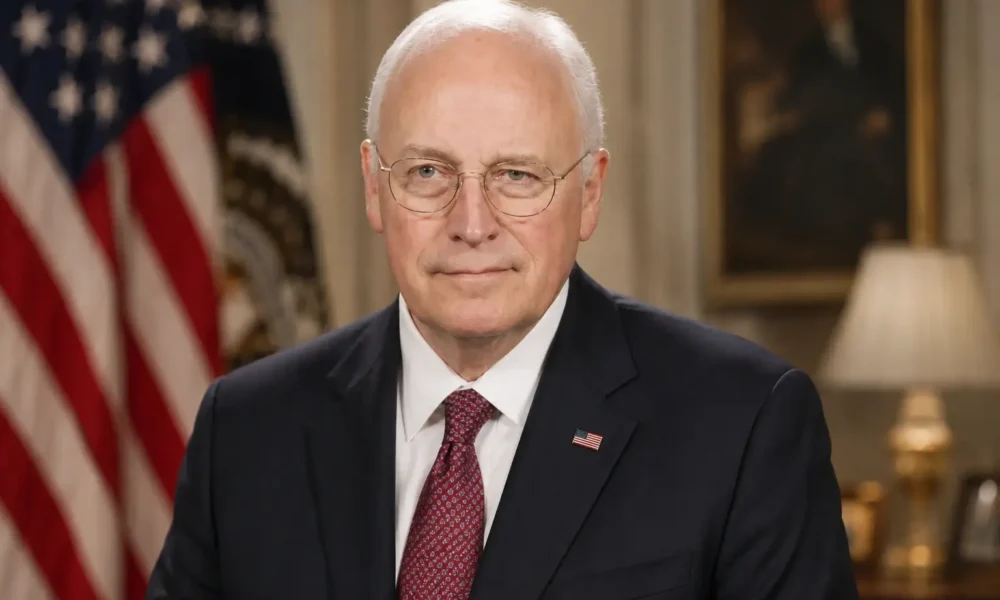
Dick Cheney’s net worth at the time of his death was $150 million. That figure appears in virtually every headline published since November 3, 2025. What those headlines skip — every single one — is the actual mechanism. How does a man who spent four decades inside government accumulate $150 million?
The answer fits in a single sentence: five years at Halliburton, and a $72.5 million compensation package that most Americans have no idea existed.
He didn’t inherit wealth. He drew a government salary for most of his career. Yet he died with more money than the president he served under for eight years. This piece breaks it all down, source by source, figure by figure.
What Was Dick Cheney’s Net Worth?
Dick Cheney’s net worth refers to the total estimated value of his assets minus liabilities at the time of his death. According to Celebrity Net Worth, that figure was approximately $150 million as of November 2025. His wealth came primarily from Halliburton corporate compensation, real estate holdings across three states, book royalties, speaking fees, and government pensions — ranked in that order of financial contribution.
According to OpenSecrets.org, which tracks mandatory congressional financial disclosures, Cheney’s official 2008 filing already placed his net worth between $20 million and $100 million — a range required by federal disclosure rules, not an imprecision on Cheney’s part. That number alone exceeded President George W. Bush’s disclosed wealth at the same point in time.
Most profiles don’t say that. Most readers don’t know it.
How Halliburton Made Dick Cheney a Multimillionaire
Here’s the thing: before 1995, Cheney wasn’t meaningfully wealthy. His years as a congressional intern, his six terms representing Wyoming in the House, his role as White House Chief of Staff under Gerald Ford, and his four years as Secretary of Defense under George H.W. Bush all paid government wages.
Functional. Not life-changing.
Then he took the CEO job at Halliburton. From 1995 to 2000 — just five years — he earned $72.5 million in total compensation, a figure drawn directly from financial disclosures released in 2000 and corroborated by SEC filings made at the time of his departure. The breakdown:
- Base salary: $12.5 million
- Retirement benefits: $20 million
- Stock options: $40 million
According to Forbes, his accumulated shares and vested options were worth approximately $47.4 million at the moment he resigned to join George W. Bush’s ticket. He didn’t sell it all at once, and he didn’t have to — the options weren’t going anywhere.
Or maybe I should say it this way: Cheney left Halliburton in 2000, but Halliburton didn’t quite leave him.
Per the terms of his departure agreement — disclosed publicly by Halliburton via SEC Form 8-K in August 2000 — unvested options continued vesting on a standard three-year schedule. Each grant carried a ten-year term, with exercise prices ranging from $21 to $54 per share. The money he’d built kept accumulating after he walked out the door.
What most guides skip is the deferred compensation piece. In 1998, Cheney had elected — through a formal Halliburton deferral form — to receive 50% of his 1999 salary and 90% of his 1999 bonus across five annual installments. This is a standard high-executive tax strategy, not unusual or improper. But it meant that even as Vice President of the United States, Halliburton continued cutting him checks. By 2004, he’d received $398,548 in deferred Halliburton salary while in office, a figure confirmed by both CBS News and FactCheck.org. He pledged after-tax proceeds from his remaining stock options to charity; the deferred salary stream was a separate matter.
What Government Actually Paid Him — And What It Didn’t
The Vice President’s official annual salary during Cheney’s tenure was $208,100. His congressional salaries in the 1980s ranged from roughly $57,000 to $89,500 annually across his six House terms. His four years as Secretary of Defense fell in a comparable executive-branch range.
Add it all up across four decades in government: you get a comfortable career income. Not a $150 million estate.
Some analysts argue that government compensation is undervalued when you factor in healthcare coverage, security details, travel allowances, and eventual pension payouts. That’s a fair point for someone whose career stayed entirely in the public sector. But if you’re dealing with Cheney’s specific situation — a man who walked out of Halliburton with $72.5 million, then returned to a $208K government salary — the contrast doesn’t require much framing.
Government service built his power. Halliburton built his wealth.
Look — if you’ve been reading other net worth profiles and wondering why none of them clearly explain the gap between “four-decade career politician” and “$150 million fortune,” this is the answer. It was one five-year window in the private sector, sandwiched between two long stretches of public service. The public service gave him the credibility to get the Halliburton job. The Halliburton job gave him the money.
Halliburton earnings vs. government salary: Halliburton was the dominant wealth source because five years of CEO compensation ($72.5M) dwarfed four decades of public-sector income. Government service gave Cheney career progression and pension income — material, but not a financial multiplier. Halliburton provided that. The key difference is timing: one concentrated private-sector stint generated more wealth than everything else combined.
Quick Comparison: Cheney’s Income Sources
| Source | Period | Estimated Total | Notes |
|---|---|---|---|
| Congressional salary | 1979–1989 | ~$700K–$800K | 6 terms, Wyoming |
| Secretary of Defense | 1989–1993 | ~$700K | Cabinet-level govt. pay |
| Halliburton (CEO) | 1995–2000 | $72.5 million | Base + retirement + options |
| Halliburton (stock/options) | 1995–2000 | ~$47.4M (at exit) | Per Forbes, 2000 |
| VP salary | 2001–2009 | ~$1.67 million | $208,100/year |
| Post-VP (books, speaking) | 2009–2025 | Unverified | No public disclosure |
Dick Cheney’s Real Estate Portfolio
Cheney’s property holdings across three states add meaningful — though secondary — value to his $150 million estate.
McLean, Virginia. His primary residence in later years was a large custom-built home in one of the most politically connected ZIP codes in America. He purchased the lot for approximately $1.35 million in 2000 and built on it. McLean sits just outside Washington, D.C., and has long been a default settlement zone for senior intelligence officials and former cabinet members.
St. Michaels, Maryland. A waterfront estate acquired for roughly $2.67 million and eventually sold in 2019 for approximately $2.1 million — a modest loss that reflects the rural waterfront market more than any distress. He held it as a private retreat for nearly two decades.
Wyoming. His home state holdings carry both personal history and financial value. These properties are harder to value precisely because Wyoming’s disclosure requirements are less stringent than Virginia’s. They’ve been part of his life far longer than the Virginia mansion.
Real estate was never the engine of this fortune — and I’d argue that’s the right read, even if some analysts weight property more heavily. The math doesn’t support it: $72.5 million in five years of corporate compensation versus slow-appreciating rural and suburban real estate held over decades. Real estate was where the Halliburton money landed, not where it was made.
The 2008 Financial Disclosure: Richer Than the President
Was Dick Cheney richer than George W. Bush? According to OpenSecrets.org, Cheney’s 2008 mandatory financial disclosure placed his net worth between $20 million and $100 million — already exceeding President George W. Bush’s disclosed wealth for the same year. The gap was driven almost entirely by Halliburton corporate compensation. This made Cheney one of the rare modern cases of a Vice President who was measurably wealthier than the sitting president he served.
How did Dick Cheney make his money? The majority came from Halliburton. As CEO from 1995 to 2000, Cheney earned $72.5 million in total compensation, including $12.5 million in base salary, $20 million in retirement benefits, and $40 million in stock options. According to Forbes, his shares and vested options at departure were worth approximately $47.4 million. That five-year window accounts for the overwhelming majority of his $150 million estate.
What was Dick Cheney’s net worth when he died? Dick Cheney died on November 3, 2025, at age 84. According to Celebrity Net Worth, his estate was valued at approximately $150 million at the time of death. His fortune was built through Halliburton compensation, real estate across Virginia, Maryland, and Wyoming, royalties from his 2011 memoir In My Time (co-authored with Liz Cheney), speaking fees, and government pensions from four decades of public service.
I’ve seen conflicting data on Cheney’s post-VP book and speaking income — some sources describe it as “significant,” others don’t quantify. My read is that it was meaningful but secondary: likely in the low-to-mid seven figures cumulatively over 15+ years, not enough to change the overall picture but not trivial either. No public disclosure covers this period in granular detail.
How to Find Any Public Official’s Financial Disclosure
To verify these figures yourself — or look up any U.S. official’s disclosed wealth — follow these steps:
- Go to OpenSecrets.org/personal-finances and search by name.
- Select the disclosure year from the dropdown.
- Click “Assets” or “Net Worth” to see the filed range.
- Cross-reference House or Senate source documents at disclosures.house.gov.
- For executive branch officials (VP, Cabinet), file original disclosures at oge.gov through the Office of Government Ethics.
Frequently Asked Questions
What was Dick Cheney’s net worth when he died?
Approximately $150 million, according to Celebrity Net Worth. He died November 3, 2025, at age 84. The bulk of his estate traced directly to Halliburton corporate compensation earned between 1995 and 2000.
How did Dick Cheney make his money?
Primarily through Halliburton. As CEO from 1995 to 2000, he earned $72.5 million in total compensation — base salary, retirement benefits, and stock options. Government salaries across his four-decade political career were comparatively modest.
Was Dick Cheney richer than George W. Bush?
Yes, Cheney’s 2008 financial disclosure, tracked by OpenSecrets.org, placed his net worth between $20 million and $100 million — exceeding Bush’s disclosed wealth in the same period.
Did Dick Cheney keep getting paid by Halliburton while he was VP?
Yes, through a deferred compensation arrangement set up in 1998. By 2004, he’d received $398,548 in deferred Halliburton salary while serving as Vice President, confirmed by FactCheck.org. He separately pledged after-tax stock option proceeds to charity.
What real estate did Dick Cheney own?
Properties in McLean, Virginia (primary residence, built on a $1.35M lot purchased in 2000); St. Michaels, Maryland (waterfront estate, sold in 2019 for ~$2.1 million); and Wyoming, where he maintained long-standing personal holdings.






No Comment! Be the first one.