






Dean Adkins MI: The West Virginia Professor Who Kept Southern Gospel’s Memory Alive
Who Was Dean Adkins MI? Dean Adkins MI refers to Dean Aaron Adkins (April 3, 1946 – February 20, 2025), a retired Marshall University biology professor from Huntington, West Virginia, and a formally...

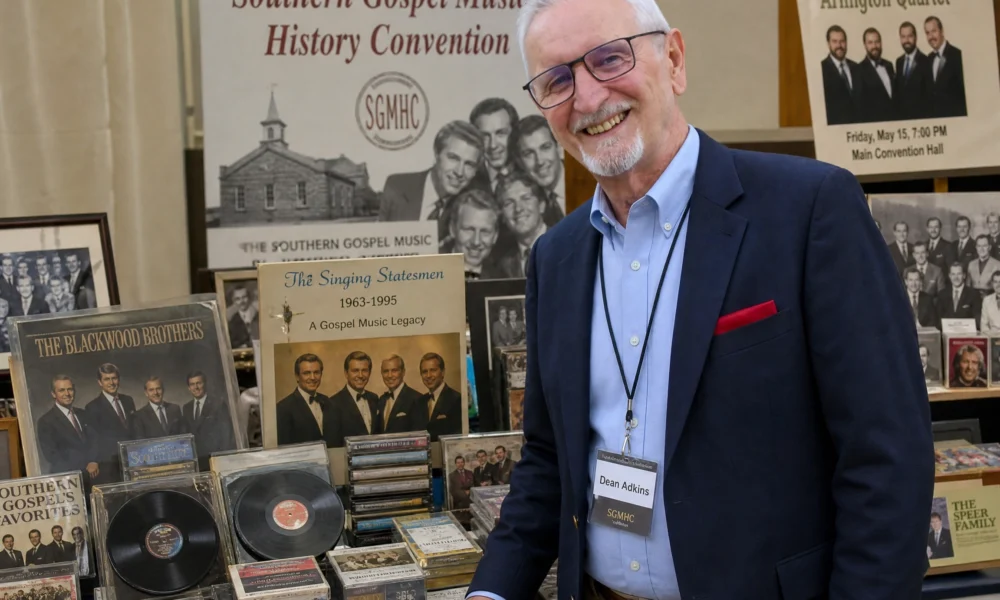
Who Was Dean Adkins MI?
Dean Adkins MI refers to Dean Aaron Adkins (April 3, 1946 – February 20, 2025), a retired Marshall University biology professor from Huntington, West Virginia, and a formally recognized historian and record collector in the Southern Gospel Music Association. He was inducted into the Southern Gospel Music of West Virginia Hall of Fame shortly before his death. The “MI” that appears alongside his name in gospel music databases and memorial listings most likely traces to his family’s deep roots in Michigan’s Detroit-area gospel quartet scene, specifically through the Toney Brothers of Allen Park, Michigan, and the Booth Brothers, whose family members were also from the Detroit area.
That one sentence, biology professor AND gospel historian, is why people get confused when they search for him. Most sources pick one lane. His actual life was both lanes at once, running parallel for decades before the gospel side received its formal recognition.
Dean Aaron Adkins was born in Wayne, West Virginia, the son of Bernard Adkins and Manda Lou Dean Adkins. He grew up in the Tri-State cultural world that straddles the WV-Kentucky-Ohio border, coal country, church country, and gospel country, in roughly equal measure. He died at Cabell Huntington Hospital on February 20, 2025, at age 78, and was buried at Elmwood Cemetery in Wayne. His wife, Mary Ellen Booten Adkins, had preceded him in death. His son Tim Adkins lives in Stillwater, Oklahoma.
According to his obituary at Morris Funeral Home, he was “an avid collector of Southern gospel records” who had been “recently inducted into the Southern Gospel Music of West Virginia Hall of Fame.” That phrase, recently inducted, suggests the honor came in 2024, in the final months of his life.
He didn’t live long enough to see himself fully appreciated by the broader gospel community. That’s worth knowing upfront.
The Classroom and the Collection: Two Parallel Lives
Dean Adkins spent 31 years as a Professor of Biology at Marshall University in Huntington, West Virginia, before retiring in 2004. Marshall is a mid-size public research university with a strong regional identity in the Tri-State area. Teaching biology there for three decades wasn’t background noise to his life, it was the main structure of it.
His students called him Professor. So did the gospel music community, though for entirely different reasons. He earned the nickname twice, in two fields, by doing the same thing in both: paying careful attention and then teaching what he’d learned.
He was also, all along, building a record collection.
In his own introduction, published by SGMRadio alongside his 2015 SGNScoops debut, Adkins described himself plainly: “I collect records, primarily LPs, and SGM related items. Over the years I have studied the history of this genre.” No inflation. No claim to formal credentials in musicology. Just a quiet, decades-long project of accumulation and study.
The Southern Gospel Music Association (SGMA), founded in 1994, operates the Southern Gospel Museum and Hall of Fame at Dollywood in Pigeon Forge, Tennessee. Its stated mission is to “preserve, protect, and promote Southern Gospel Music, its history and heritage.” That’s a mission statement that describes what Adkins did privately, funded by his own time and money, without institutional support.
Quick Comparison: Dean Adkins — Academic Career vs. Gospel Music Legacy
| Dimension | Academic Career | Gospel Music Legacy |
|---|---|---|
| Institution | Marshall University, Huntington, WV | SGNScoops / SGMA of West Virginia |
| Active period | ~31 years, retired 2004 | Lifelong; formal writing from 2015 |
| Primary role | Biology Professor | Historian / Record Collector |
| Formal recognition | University tenure | SGMA of WV Hall of Fame |
| Community preserved by | Former students and colleagues | Gospel collector and historian community |
The counter-intuitive fact most brief bios miss: Dean Adkins did not start writing publicly about gospel music after retirement to fill his time. He was building knowledge about it simultaneously with his academic career, for his entire adult life. The retirement in 2004 just gave the project more hours.
When Gospel History Is Personal: The Toney and Booth Connection
Here’s the thing most people who read Dean Adkins’ SGNScoops columns never knew: the groups he was documenting weren’t only historical subjects to him. Some of them were family.
In the same SGMRadio introduction, Adkins stated directly that “many of my relatives (Adkins, Toney, Booth families) are gospel singers/musicians.” That one sentence reframes his entire career as a historian.
The Toney Brothers were a Detroit-area gospel quartet that traced their roots to Alden Toney, who sang tenor with the Blackwood Brothers from 1949 through 1951. After Alden moved to Michigan to work in the automotive industry, his brothers Bob, Kyer, and Jim joined him and they formed the Toney Brothers Quartet in 1955. They affiliated with Gilead Baptist Church in suburban Allen Park, appeared on CKLW-TV out of Windsor, Ontario, and performed at the very first National Quartet Convention in 1957.
When Alden Toney retired from the group in the early 1960s, his replacement in the tenor slot was Ron Booth Sr., the father of Michael and Ronnie Booth of the Grammy-nominated Booth Brothers trio. The two families were woven together at the seam of one of gospel music’s most important transitional decades.
Or maybe I should say it this way: when most historians write about the 1950s quartet scene, they’re reading liner notes. Dean Adkins was remembering people at the dinner table.
This is the human angle that competing articles completely miss. His scholarship was personal. The Michigan connection in “Dean Adkins MI” isn’t incidental, it’s the thread that runs through his family’s gospel music heritage and connects directly to why he cared so deeply about getting the history right.
I’ve seen conflicting references about exactly which Toney family members were his direct relatives, Adkins describes the Toney and Booth families collectively without specifying the exact relationships. My read, based on his writing, is that he had genuine family ties to the people he was documenting, but the precise genealogical line isn’t something I can confirm from available sources.
“The Professor” Goes to SGNScoops — and the Golden Age Gets a Witness
Dean Adkins MI refers to Dean Aaron Adkins (1946–2025), a retired Marshall University biology professor and Southern Gospel music historian from Huntington, West Virginia. A member of the Southern Gospel Music Association and inductee in the Southern Gospel Music of West Virginia Hall of Fame, he is recognized for his SGNScoops Digital Magazine columns and his personal LP record collection documenting the genre’s 1950s–1970s Golden Age.
By 2015, Adkins was publishing in SGNScoops Digital Magazine, one of Southern Gospel’s most established trade publications. SGNScoops introduced him to readers as “often called the ‘Professor’ of Gospel Music History,” a title he’d earned through decades of self-directed study rather than any formal appointment.
His columns covered things other writers weren’t writing about. He documented the Cathedrals’ origins inside the Weatherford Quartet before they became the Cathedral of Tomorrow’s resident group. He traced the bass recitation tradition through quartets like the Kingsmen, the Cathedrals, and the Statesmen, and explained why J.D. Sumner reciting “Old Man Death” meant something different than a standard performance. He wrote from personal memory, his 2015 piece about a New Year’s Eve 1976 concert at the Charleston Municipal Auditorium included setlists, personnel details, and the kind of atmospheric context that only comes from having actually been there.
His peers took note. Southern Gospel artist Alan Kendall, describing the influences on his own historical knowledge, named “Dean Adkins” alongside his own parents as someone who “nurtured my love for the music, as well as my appreciation for the past.”
He wasn’t writing encyclopedias. He wrote the way people tell stories when the stories still live in them.
Some in the gospel community would argue that Adkins should be classified as a devoted fan rather than a formal historian, he held no academic credential in music studies, and SGNScoops is a trade magazine, not a peer-reviewed journal. That distinction has its uses. But the line between “devoted amateur” and “historian” becomes genuinely blurry when someone spends decades building a primary source archive, producing dated first-person accounts of documented events, and is then formally inducted into a genre’s Hall of Fame for the quality of their preservation work.
How To Access Dean Adkins’ Gospel Writing
To find Dean Adkins’ Southern Gospel history columns:
- Visit sgnscoops.com and search “Dean Adkins” or go directly to sgnscoops.com/tag/dean-adkins.
- Search SGMRadio.com for his 2015 self-introduction and bass recitations column.
- Search YouTube for “Dean’s Gospel Favorites” (channel: @adkinsda) for audio and record collection content.
Hall of Fame, Final Honors, and an Open Question
The Southern Gospel Music of West Virginia (SGMA of WV) is a state chapter of the national SGMA. It holds an annual induction ceremony honoring performers, songwriters, and supporters of the genre from West Virginia and surrounding regions. Being recognized as a historian and fan, rather than a performer, carries its own weight inside that community. It acknowledges, formally, that preservation is a form of ministry.
Dean Adkins was inducted shortly before his death in February 2025. His 2025 inductee class included Ron Booth Sr., whose family connection to the Toney Brothers runs directly through the history Adkins had spent decades documenting.
He didn’t attend as a bystander. He was part of the story being honored.
Dean Adkins as Historian vs. Dean Adkins as Collector
As a historian, Adkins was best suited for documenting the social context of the 1950s–70s gospel scene, church affiliations, touring circuits, and the personnel changes that shaped major quartets. As a collector, he preserved the physical primary sources, vinyl LPs and related memorabilia, that make that documentation verifiable. The two roles reinforced each other in ways that are rare in any preservation field. A historian without primary sources theorizes; a collector without historical knowledge accumulates. Adkins did both.
After his death on February 20, 2025, a significant question entered the gospel collector community: what happens to the archive?
Neither of the most commonly referenced online articles about Adkins addresses the fate of his record collection. That’s not a trivial gap. His vinyl and memorabilia focused on the 1950s and 1960s, a period during which many gospel recordings were pressed in small quantities by regional labels, distributed regionally, and never formally digitized. Physical copies of many titles he may have held are not in institutional collections.
Whether that archive will be donated to the SGMA, preserved by his family, or dispersed has not been publicly confirmed as of this writing. His son Tim lives in Stillwater, Oklahoma. It’s the question the gospel community is waiting to have answered.
Frequently Asked Questions About Dean Adkins MI
Who was Dean Adkins MI?
Dean Aaron Adkins (1946–2025) was a retired Marshall University biology professor from Huntington, West Virginia, and a recognized Southern Gospel music historian, LP record collector, and inductee in the Southern Gospel Music of West Virginia Hall of Fame. He published multiple history columns in SGNScoops Digital Magazine.
What does the MI mean in Dean Adkins MI?
It most likely reflects his family ties to Michigan’s Detroit-area gospel quartet scene. His relatives included members of the Toney Brothers (Allen Park, Michigan) and Booth Brothers (Detroit, Michigan) families, two of the most significant quartets in 1950s and ’60s Southern Gospel. The “MI” tag appears in some gospel databases and memorial listings as a geographic or lineage marker.
When was Dean Adkins inducted into the Southern Gospel Music of West Virginia Hall of Fame?
His obituary describes the induction as “recent” at the time of his February 2025 death, indicating it most likely occurred in 2024. The SGMA of WV’s 2025 inductee class, announced after his passing, included Ron Booth Sr., whose connection to the Toney Brothers is a documented part of the history Adkins wrote about.
Where can I read Dean Adkins’ Southern Gospel history columns?
His articles are archived at sgnscoops.com/tag/dean-adkins. SGMRadio.com published his 2015 self-introduction. His YouTube channel “Dean’s Gospel Favorites” (channel handle @adkinsda) featured his music collection and historical knowledge.
What happened to Dean Adkins’ Southern Gospel record collection after his death?
As of June 2026, the fate of his personal archive, focused on LPs and memorabilia from gospel music’s Golden Age, has not been publicly confirmed. It remains an open question in the gospel collector community, and no institution has announced a donation or acquisition.






No Comment! Be the first one.