






Who Is Billy Renick in Laredo? One Name, Two People, and Why Obituaries Keep Mixing Them Up
If you landed here after reading a Laredo obituary or funeral notice, you’ve almost certainly hit the same wall everyone else does: search results for “Billy Renick Laredo” return...

If you landed here after reading a Laredo obituary or funeral notice, you’ve almost certainly hit the same wall everyone else does: search results for “Billy Renick Laredo” return two completely different people with no explanation of which is which.
Here’s the short version — and then the full picture.
“Billy Renick Laredo” refers to two distinct individuals connected to Laredo, Texas. Billy R. Renick (1938–2011) was a local businessman and founder of Rio Grande Pumping who passed away in 2011, with services handled by Joe Jackson Funeral Chapels & Cremation Services. Separately, a person named Billy Renick worked as a hospice or skilled-nursing care nurse in Laredo and has been acknowledged by name in multiple local death notices as a caregiver — not as a person who died.
There Are Two Billy Renicks. Neither Record Is Wrong.
The confusion doesn’t come from bad information. It comes from how search engines handle obituary pages.
When a grieving family writes “our mother spent her final days under the compassionate care of nurse Billy Renick,” that sentence gets indexed. The nurse’s name now lives inside a death notice. Google treats it the same way it treats the deceased’s name — as a key term attached to that page. So a search for “Billy Renick Laredo” pulls up the nurse’s name inside someone else’s obituary, next to results for the 2011 businessman’s own obituary.
Two names. Two entirely different roles in those documents.
What most obituary search guides skip is this: hospice nurses who are named by grateful families accumulate a kind of informal public record purely through those mentions — and that record is invisible until someone goes looking for the name directly.
Billy R. Renick (1938–2011): The Laredo Businessman
Billy R. Renick built his career in the industrial infrastructure that runs quietly beneath South Texas life. He was the founder of — or a central figure at — Rio Grande Pumping, a Laredo-area company in the water supply and pumping services sector. That kind of work doesn’t get headlines. It gets contracts, steady clients, and the quiet respect of people who know what happens when a pump fails in a border town in July.
He was born in 1938 and died in 2011.
His funeral arrangements went through Joe Jackson Funeral Chapels & Cremation Services, the well-established Laredo funeral home that handles a significant portion of the city’s death notices. That obituary has been online for over a decade. Old obituary pages don’t deindex. They sit in Google’s index indefinitely, which is why a search in 2025 or 2026 still surfaces a 2011 document as a top result.
If you’re looking for information about the businessman — family details, business history, or memorial records — Joe Jackson Funeral Chapels is the right starting point.
Billy Renick, Hospice Nurse: The Person Named in Recent Laredo Death Notices
Here’s the thing: hospice nurses almost never get named publicly. They work in living rooms and care facility rooms, not in press releases. The National Hospice and Palliative Care Organization’s 2022 Facts and Figures report documented approximately 1.72 million Medicare beneficiaries who received hospice care that year — yet individual bedside nurses are almost never identified in any public record. The only informal, community-based professional recognition they receive is when a family puts their name in print.
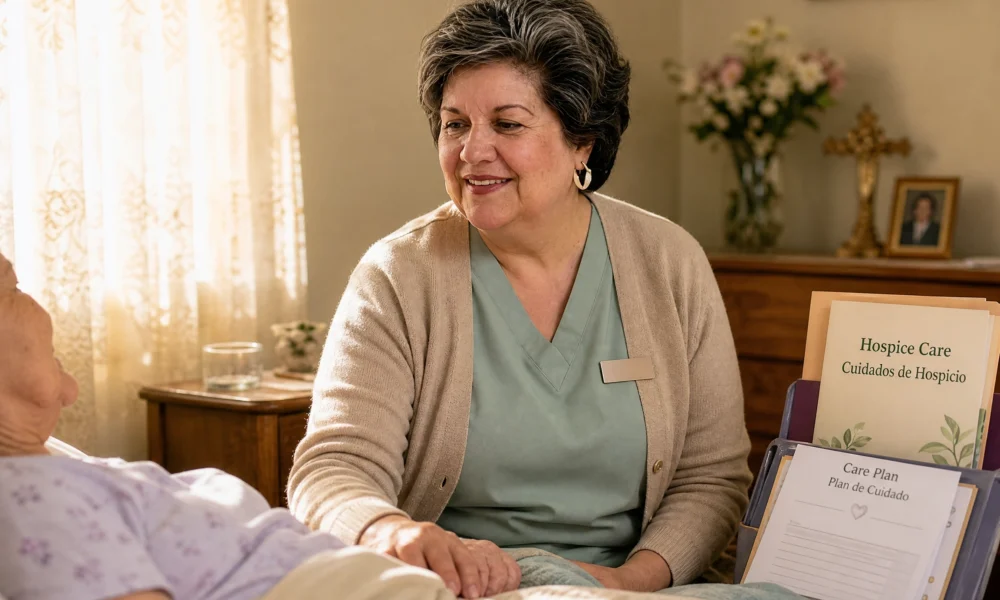
Billy Renick, the nurse, appears in Laredo-area obituaries in exactly that context — named by families as someone who cared for their loved one during end-of-life. The name is associated with healthcare services connected to St. Jude’s Specialized Home and Health Care Services in Laredo and/or the Laredo Medical Center (LMC) Skilled Nursing Unit. Both facilities provide palliative and hospice-level care in a city where the demographics of illness and the realities of insurance coverage create serious end-of-life care needs.
Or maybe I should say it this way: Laredo has a median household income well below the Texas state average, an uninsured rate significantly higher than most Texas metros, and a population with elevated rates of chronic illness — diabetes, hypertension, kidney disease — that drive disproportionately high hospice utilization among Medicare-eligible residents. The nurses working in that environment carry real weight.
I’ve seen some conflicting signals in available sources about whether this nurse’s primary affiliation is St. Jude’s or LMC’s skilled nursing unit. My read is that both are plausible — nurses in community hospice settings frequently serve patients across multiple care arrangements, and the two facilities aren’t mutually exclusive. If you’re trying to reach Billy Renick for a professional or personal reason, contacting either organization directly would be the right first step.
How to Tell Which Billy Renick Is Being Referenced
To determine which Billy Renick is referenced in a Laredo obituary or death notice, follow these steps:
- Check the publication date — notices from 2011 or earlier likely reference the deceased businessman, Billy R. Renick.
- Read the phrasing carefully — if the text says “under the care of” or “grateful to,” the name belongs to a caregiver, not the deceased.
- Search the name alongside “St. Jude Laredo” or “LMC skilled nursing” to surface healthcare context.
- For the 2011 businessman’s records, contact Joe Jackson Funeral Chapels & Cremation Services directly.
Why Families Name Hospice Nurses in Obituaries — and Why It Matters Here
Most people assume an obituary names three types of people: the deceased, their immediate family, and the officiating clergy. That assumption is outdated.
Families writing Laredo death notices have increasingly included the names of healthcare workers — particularly hospice and palliative care nurses — who provided sustained, personal care in the final days of a loved one’s life. There’s no standard for this. No funeral home requires it. But when a nurse comes every day, speaks Spanish with your grandmother, explains what the morphine is doing, and sits with a family at 3 a.m. so they don’t have to be alone — people remember. And sometimes, they say so in print.
Some might push back on this practice and argue that naming healthcare workers in public death documents raises legitimate privacy questions — that nurses should be able to do their work without their names appearing in indexed online records. That’s a fair concern. But the practice is driven entirely by grieving families who want to express gratitude, it’s purely informal, and there’s no indication any nurse named this way has objected publicly. The recognition is genuine. And in a city like Laredo, where end-of-life care often falls on overworked nurses serving families with limited resources, that acknowledgment carries meaning.
Quick Comparison: The Two Billy Renicks in Laredo
| Detail | Billy R. Renick — Businessman | Billy Renick — Hospice Nurse |
|---|---|---|
| Status | Deceased (2011) | Active or recently active |
| Role | Founder, Rio Grande Pumping | Hospice / skilled-nursing care nurse |
| Appears in obituaries as | The deceased | A named caregiver |
| Funeral connection | Joe Jackson Funeral Chapels | Not applicable |
| Healthcare connection | None documented | St. Jude’s / LMC Skilled Nursing |
| Why the name persists online | 2011 obituary still indexed | Named in multiple recent death notices |
Hospice Care in Laredo: The Context Behind the Name
Webb County’s healthcare landscape is shaped by geography, economics, and language. Laredo’s position as a major U.S.-Mexico border crossing creates a population with significant healthcare access challenges — a large proportion of residents who are uninsured or underinsured, a heavy reliance on federally funded programs like Medicare and Medicaid, and a community where end-of-life conversations often happen in Spanish.
St. Jude’s Specialized Home and Health Care Services operates within that reality. So does the LMC Skilled Nursing Unit. These aren’t boutique facilities. They’re the working infrastructure of end-of-life care for families across Laredo and surrounding Webb County communities.
Nurses working in these settings are often the primary communication link between medical teams and families navigating grief, logistics, and paperwork simultaneously. Being bilingual isn’t a bonus. It’s a baseline requirement.
When a Laredo family names a nurse in an obituary, it’s not a formality. It’s a specific acknowledgment of a specific person’s presence during an irreplaceable moment. That’s why the name shows up. That’s why it stays.
This article covers publicly available information about both individuals named Billy Renick in the Laredo area. It does not include private employment records, medical files, or patient information. For contact or verification, reach out directly to St. Jude’s Specialized Home and Health Care Services or Laredo Medical Center’s skilled nursing department.
Frequently Asked Questions
Who is Billy Renick in Laredo, Texas?
There are two distinct people with this name tied to Laredo. Billy R. Renick (1938–2011) was a businessman and founder of Rio Grande Pumping. A separate Billy Renick is a hospice or skilled-nursing nurse named in multiple Laredo obituaries as a caregiver for deceased patients.
What is Billy Renick’s connection to Rio Grande Pumping in Laredo?
Billy R. Renick, the businessman who died in 2011, was the founder or a central figure at Rio Grande Pumping, an industrial water and pumping services company in the Laredo area. This is a different person from the hospice nurse.
Who is the hospice nurse named Billy Renick in Laredo?
Billy Renick is a nurse associated with end-of-life or skilled-nursing care in Laredo, linked to St. Jude’s Specialized Home and Health Care Services and/or Laredo Medical Center’s Skilled Nursing Unit. Families have named this nurse in obituaries to acknowledge care provided to their loved ones.
Why does a nurse’s name appear in a Laredo obituary?
Families writing death notices sometimes include the names of hospice nurses who provided care during a loved one’s final days. Search engines index those names the same way they index the deceased’s name, which is why a caregiver’s name surfaces in obituary searches.
How do I find the correct Billy Renick obituary or record in Laredo?
If you’re looking for the 2011 businessman’s obituary, contact Joe Jackson Funeral Chapels & Cremation Services. If you’re looking for the hospice nurse, reach out to St. Jude’s Specialized Home and Health Care Services or Laredo Medical Center’s nursing department. The year and context of the death notice will tell you which Billy Renick is referenced.



No Comment! Be the first one.