






Cargo Pants at Work: The Honest Answer Nobody’s Giving You
Are Cargos Business Casual? Are cargos business casual? Cargo pants qualify as business casual when they feature a slim or tailored fit, neutral colors (charcoal, navy, olive, khaki), and flat or...

Are Cargos Business Casual?
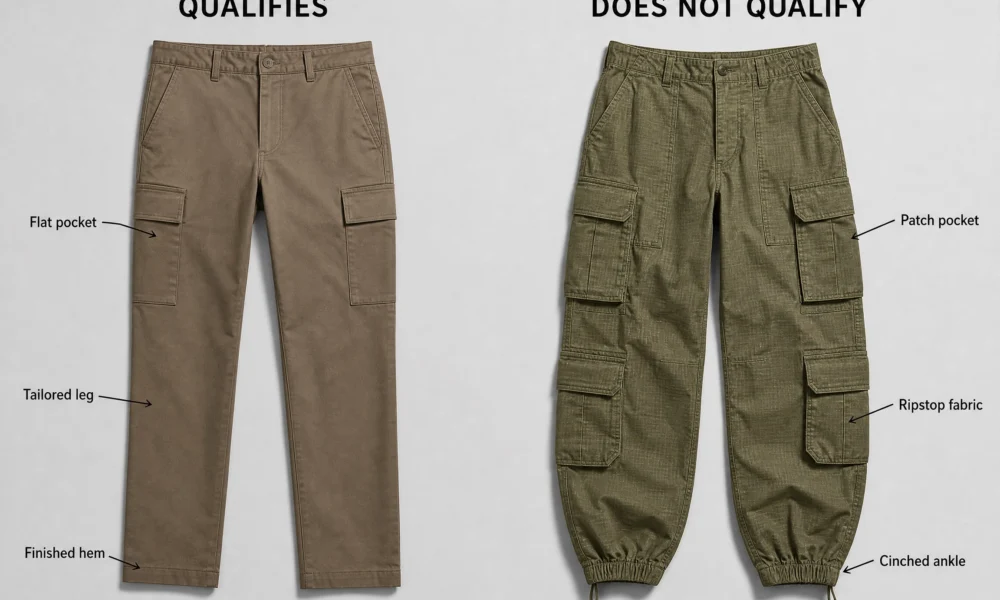
Are cargos business casual? Cargo pants qualify as business casual when they feature a slim or tailored fit, neutral colors (charcoal, navy, olive, khaki), and flat or low-profile cargo pockets. Bulky utility cargos with oversized patch pockets, drawstring hems, elastic ankles, or camo prints do not meet standard business casual requirements.
The Short Answer: By Office Type
Your dress code matters more than any universal style rule. So here’s the fast version.
Tech startups and creative agencies: yes, with the right cut. Mid-size corporate offices with vague “business casual” language: probably, if your cargos read like trousers from five feet away. Finance, law, or traditional client-facing roles: no — even slim fit. It’s not worth the risk.
According to the IWG Evolution of Work Fashion study (2024), 79% of 1,000 U.S.-based hybrid employees said they actively changed how they dress to fit flexible work environments. Business casual is being renegotiated by industry, by company culture, and by generation — which is exactly why guides that give a single blanket answer miss the point entirely.
Most people assume that styling cargo pants is mainly a question of what shirt to pair them with. The data suggests the real variable is industry context, not outfit assembly.
The Five-Point Design Check: Run This Before You Wear Them
This is what most cargo pants guides skip entirely, and it’s the most important section in this article.
No outfit can save a cargo pant that fails these design checks. Styling is the last step. Design is the first — and it happens before you even open your closet.
To determine whether your cargo pants are office-appropriate, check these five things:
- Fit: Slim, straight, or tapered — not relaxed, wide-leg, or baggy
- Pockets: Flat and low-profile, close to the body — not bulky patch pockets with flap closures
- Color: Charcoal, navy, olive, khaki, or tan — not camo, bright colors, or military prints
- Hem: Clean finished hem — not drawstring, elastic ankle, or cinch band
- Fabric: Structured twill or cotton blend — not nylon, ripstop, or technical material
All five clear? You’ve got a candidate. Fail even one and no blazer fixes it.
Here’s the thing: design outranks brand and price every time. A $38 Dickies slim straight cargo in khaki that clears all five checks reads more professionally in a mid-size office than a $160 tactical cargo with cinched ankles, oversized hardware, and ripstop nylon — regardless of what shirt you pair with either one.
That’s the counter-intuitive truth most style guides won’t say directly.
The Industry Ruling: Where Cargo Pants Work and Where They Don’t
This is the breakdown no competing guide provides with any specificity. The same pair of slim-fit cargos that’s unremarkable in a tech startup is a liability in a law firm. Industry context is everything.
Tech Startups and Product Companies — Yes
Smart casual is the operative dress code in most tech environments, even when the handbook uses the phrase “business casual.” Slim-fit cargo pants in olive or charcoal, worn with a clean Oxford and leather loafers, read as intentional and current. Cargo pants work outfit choices in tech succeed precisely because fit and color do all the heavy lifting — the cargo pocket becomes a detail, not a statement.
One caveat. Client meetings, investor presentations, and enterprise sales calls often shift the expectation upward even within the same company. Keep chinos accessible for those days.
Marketing, Creative, and Design Agencies — Yes, With Latitude
Creative environments reward personality in dress. It’s not just tolerated — it’s expected. COS tapered cargo trousers in structured cotton, for example, land comfortably between fashion-forward and polished; the kind of choice that reads as considered rather than casual. Slim fit cargo pants in the office work well here because the visual vocabulary of the environment supports it.
Keep the rest of the outfit clean. The cargo pockets earn their place when everything else stays simple.
Mid-Size Corporate, Non-Finance — Proceed Carefully
Look — if you’re in a mid-size office where the dress code says “neat and professional” and half your colleagues still wear button-down Oxfords every day, here’s what actually works: pick the most trouser-like cargo you own. Flat front, barely visible pockets, structured fabric, a neutral color that could pass for dress pants from the conference room doorway.
Or maybe I should put it this way: if someone walking past would pause and think “wait, are those cargo pants?” — they’re not right for this environment.
Finance, Law, and Traditional Corporate — No
Don’t. This isn’t about style rules being arbitrary. Client-facing professional environments use visual signals to communicate competence and authority, and cargo pockets — regardless of fit — communicate utility in a context that expects formality. The pocket placement alone breaks the visual logic the environment depends on. It’s a trust signal, and it works against you here.
Many popular guides for this keyword suggest cargo pants can be styled up for any business casual environment. That’s not accurate for finance, law, or traditional corporate roles. It’s a real gap in how this topic gets covered, and it’s the gap this article is trying to close.
Creative Fields — Architecture, Film, Design — Absolutely Yes
No restrictions apply. Wear them however you want.
How to Build a Cargo Pants Work Outfit That Actually Lands
The goal is visual balance. Cargo pockets add detail and weight at the hip and thigh. Everything else needs to counterbalance that.
Quick Comparison
| Option | Best For | Key Benefit | Limitation |
|---|---|---|---|
| Slim cargo trousers (Dickies, COS) | Tech, creative, startup offices | Reads as tailored from a distance | Fails in finance, law, traditional corporate |
| Standard chinos | All business casual environments | Near-universal dress code acceptance | No personality signal |
| Relaxed or utility cargo pants | Outdoor, trade, casual workplaces | Comfort and functional pocket volume | Does not meet business casual standard |
Slim cargo vs. chinos: Slim cargo trousers are better suited for tech and creative environments because they add visual personality while maintaining a tailored silhouette. Chinos work better in traditional corporate settings because their clean profile carries no disqualifying utility signals. The key difference is that chinos are a safe default; cargo pants are a calculated choice.
Men’s Cargo Pants Work Outfit
Men’s cargo pants work outfit — the working formula:
- Tops: Oxford shirt, fitted crewneck, OCBD, or structured polo — not graphic tees or hoodies
- Footwear: Leather loafers, white leather sneakers, or Chelsea boots — not hiking boots, chunky trainers, or work boots
- Outerwear: A blazer or structured overshirt does the formal conversion work — this single layer moves the outfit from casual to intentional
- Avoid: Distressed anything, oversized tops paired with slim cargos, tech accessories worn as fashion details
Cargo pants business casual women follows the same design logic: slim or straight leg, neutral color, low-profile pockets, structured fabric. Cropped cargo trousers paired with a fitted blazer and mules or ankle boots have become a genuinely polished combination in smart casual and creative-professional environments. The pocket has to lie flat. Everything else is outfit-building.
The Design Features That Quietly Disqualify Most Cargo Pants
I’ve seen conflicting takes on this — some style sources emphasize pocket volume as the main disqualifier, others point to fabric choice. My read is that it’s the accumulation of utility signals that tips a pair from acceptable to wrong. One flat cargo pocket on a tailored twill trouser is fine. That same pocket plus cinched ankles plus ripstop fabric is three utility signals stacked — and that combination doesn’t clear the bar in even casual office environments.
Here are the automatic disqualifiers, in order of how visually disruptive they are:
- Bulky patch pockets — any pocket that projects outward from the thigh, with visible flap closures, heavy stitching, or snap hardware
- Camo or military prints — even muted, olive-toned camo reads as utility wear in any professional context
- Drawstring or cinched hems — signals sportswear construction, not office construction
- Elastic ankle bands — same problem; the cinch at the ankle overrides everything else in the outfit
- Nylon, ripstop, or technical fabrics — these communicate function over form regardless of color or cut
- Excess hardware — D-rings, Velcro, carabiner loops, or tactical stitching in contrast thread
Pocket placement matters separately from pocket size. Lower thigh-level cargo pockets read as less visually intrusive than hip-level patch pockets. If you’re on the borderline for your office, lower placement reduces the visual impact without requiring you to find a different pair entirely.
What actually passes: Dickies slim straight cargo pants in khaki or charcoal clear every design check and cost under $40. COS cargo trousers in structured cotton go further — worn without context, most people wouldn’t identify them as cargo pants at all. That’s the target for anyone working in a mid-size office with an ambiguous dress code.
FAQs
What’s the best type of cargo pant for a business casual office?
A slim or tapered cut in a neutral color — charcoal, olive, or navy — with flat low-profile cargo pockets, structured twill or cotton fabric, and a clean finished hem. Dickies slim straight and COS tapered cargo trousers both clear this bar consistently.
How do I wear cargo pants professionally as a man?
Pair slim cargos with a fitted Oxford shirt or structured crewneck, leather loafers or clean leather sneakers, and a blazer when the occasion is more formal. Keep everything else simple — the cargo pockets create enough visual detail on their own and don’t need competition from the rest of the outfit.
Should I wear cargo pants to a job interview?
No, Even in casual industries, an interview isn’t the moment to test dress code limits. Default to chinos or tailored trousers for first impressions. Cargo pants earn their place once you’ve established your presence in the role — not on day one.
Why do cargo pants fail the business casual test in some offices?
The accumulated utility signals — bulky pockets, technical fabric, cinched hems — communicate that a garment is built for physical work or outdoor use. In office contexts, those signals conflict with the visual language of professionalism the environment expects. It’s not about the pocket itself. It’s about what the pocket signals.
When should I choose chinos over cargo pants for work?
Any time you’re in a client-facing role, working in finance, law, or traditional corporate environments, or presenting to leadership. Chinos carry near-universal business casual acceptance. Cargo pants require the right design and the right context, chinos don’t.






No Comment! Be the first one.