






What Every Buyer Needs to Know About the 2007 Airstream Bambi Safari 19
The 2007 Airstream Bambi Safari 19 is a single-axle aluminum travel trailer, 19 feet long, with a 3,178-pound dry weight and a 4,300-pound GVWR. It came in Safari and Safari Special Edition trims —...

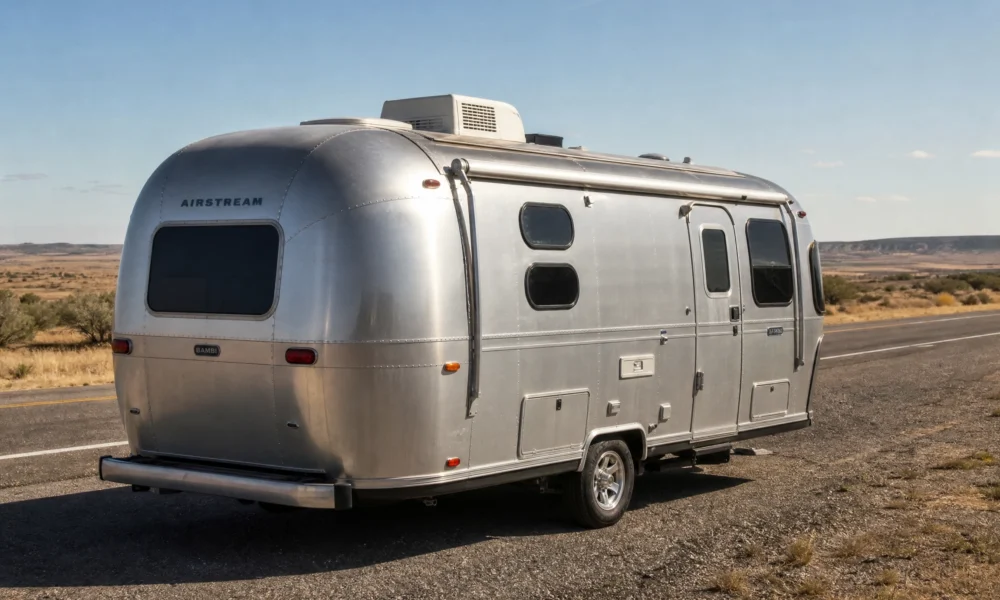
The 2007 Airstream Bambi Safari 19 is a single-axle aluminum travel trailer, 19 feet long, with a 3,178-pound dry weight and a 4,300-pound GVWR. It came in Safari and Safari Special Edition trims — both share the same aluminum shell but differ in interior finish and standard equipment.
That matters immediately, because if you’ve been comparing listings that use these names inconsistently — or finding specs that seem to conflict — you’re not looking at different trailers. You’re looking at different labels for the same unit.
This guide is built for one specific situation: you’ve found a listing at $23,000–$27,000 and need credible answers to three questions before you call. Is the price fair? Can your tow vehicle actually handle it — not just technically clear the spec sheet number? And what does a 17-year-old Bambi typically need when it arrives in your driveway?
Safari, Safari SE, or “Just a Bambi”: What Was Actually Sold in 2007
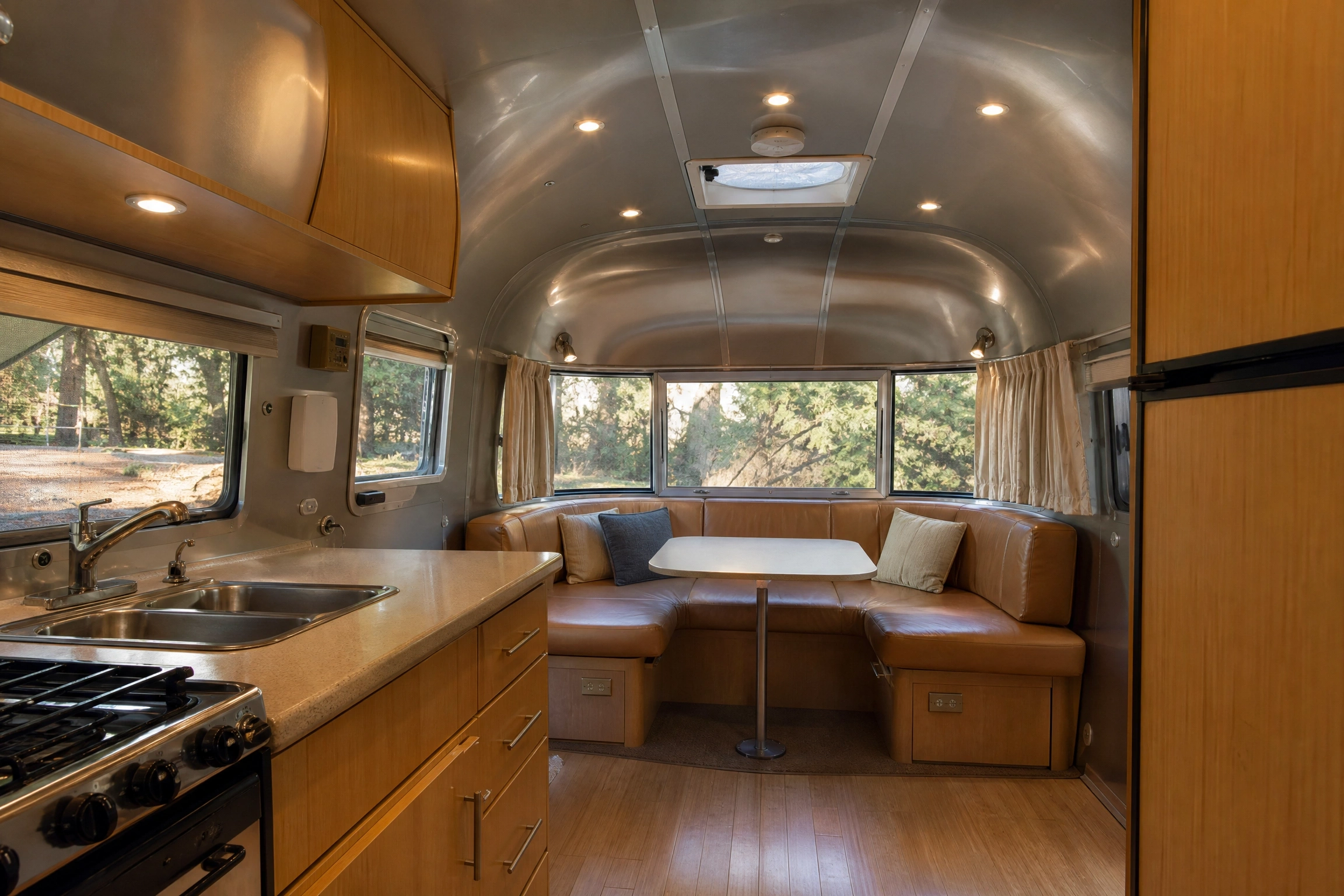
Most naming confusion on 2007 Bambi listings traces to how Airstream organized their lineup that year. The Bambi 19 was the shortest floor plan in the Safari series. Two interior trims were offered: the standard Safari and the Safari Special Edition (SE).
The SE included upgraded fabric, a different cabinetry finish, and in some units, additional standard equipment. The aluminum monocoque shell, frame, axle rating, GVWR, and all structural dimensions were identical across both trims. Mechanically and structurally, they’re the same trailer.
Safari Bambi vs. Safari Special Edition (2007)
Safari Bambi vs. Safari Special Edition (2007): Both trims use identical shells with the same GVWR, dry weight, and tow specs. The SE adds upgraded interior finishes and standard equipment. For towing calculations, inspection, and valuation purposes, treat them as the same trailer. Active listings show an SE carrying roughly $500–$1,500 in additional asking price.
Safari vs. Safari Special Edition: 2007 Model Year
| Option | Best For | Key Benefit | Limitation |
|---|---|---|---|
| Safari (standard) | Budget-conscious buyers | Same aluminum shell and specs at lower list price | Base interior finish and fabric only |
| Safari Special Edition | Buyers prioritizing interior quality | Higher-end upholstery and cabinetry detailing | $500–$1,500 premium in asking price vs. standard |
The only label to watch for separately is the Bambi Sport — a 17-foot floor plan with a meaningfully lower tow weight and a different interior layout. That name means a different trailer entirely.
The 2007 Airstream Bambi 19 was marketed under the Safari series in both standard and Special Edition interior configurations. According to owner documentation compiled on Air Forums (airforums.com), both trims share identical structural specs. Buyers encountering conflicting listings are almost always comparing the same physical unit sold under different trim labels. The SE carries minor interior upgrades only — no structural or mechanical differences exist between the two.
Full Specs and the Weight Number That Actually Matters When You’re Towing
Spec sheets give you the dry weight. That’s not what you’ll be towing.
Here’s the thing: when a buyer with an F-150 asks a dealer whether their truck can handle a Bambi 19, the dealer quotes the 3,178-pound dry weight against a 9,000-pound tow rating and says “you’re fine.” That math is technically correct. It’s also incomplete.
The GVWR on a 2007 Bambi 19 is 4,300 pounds — the maximum allowable loaded weight. A realistically packed trailer for a week-long trip (full fresh water tank at roughly 250 pounds, full propane at about 40 pounds, plus gear, food, clothing, bikes, and anything stored inside) runs 3,700–4,100 pounds in actual use. That’s 500 to nearly 900 pounds heavier than the figure most buyers quote when they ask about towing compatibility.
Tongue weight runs approximately 10–15% of total trailer weight. Loaded up, that puts 370–615 pounds pressing down on your hitch ball. The limiting factor isn’t usually your truck’s tow rating. It’s your truck’s payload rating — a separate number printed on the driver’s door sticker that accounts for passengers, cargo in the bed, and tongue weight all at once. Half-ton owners carrying a spouse, gear, and a loaded Bambi can approach or exceed payload limits before they’ve hit the interstate.
2007 Airstream Bambi 19: Full Specifications
| Specification | Figure |
|---|---|
| Overall length | 19’0″ (~22–23′ including hitch) |
| Interior length | ~16’0″ |
| Exterior width | 96 in (8’0″) |
| Height (with A/C unit) | ~9’5″ |
| Dry weight | ~3,178 lbs (verify against VIN plate) |
| GVWR | 4,300 lbs |
| Tongue weight (dry) | ~420–450 lbs |
| Tongue weight (loaded) | ~440–615 lbs |
| Fresh water capacity | ~30–31 gallons |
| Gray water capacity | ~27 gallons |
| Axle configuration | Single axle |
| Sleeping capacity | 2–4 (queen bed + dinette conversion) |
| OEM appliance supplier | Dometic (refrigerator, A/C, furnace) |
A weight-distribution hitch (WDH) is not required on trailers under 5,000 pounds GVWR. That said, single-axle trailers at the higher end of their tongue weight range can develop highway sway. Most experienced towers who’ve pulled a Bambi 19 recommend a WDH regardless of whether it’s technically mandated.
Quick Comparison: Tow Vehicle Fit for a 2007 Airstream Bambi 19
| Option | Best For | Key Benefit | Limitation |
|---|---|---|---|
| Ford F-150 (3.5L EcoBoost, 2007–present) | Half-ton buyers already on the Ford platform | 8,000–11,000 lb tow rating provides real margin | Payload — not tow rating — is the actual constraint; check door sticker |
| Chevy/GMC 1500 (5.3L) | GM platform owners | Strong tow ratings across most configurations | Payload with full passenger load can run tight |
| Chevy Tahoe / GMC Yukon | Families needing passenger space plus towing | 7,400–8,500 lb tow rating covers a loaded Bambi | Tongue weight approaches limit on fully loaded unit |
| Ford Expedition | Buyers prioritizing the most comfortable tow setup | Best payload margin in class for this trailer | Less fuel-efficient than half-ton alternatives |
The most common towing mistake with a 2007 Airstream Bambi 19 is comparing the 3,178-pound dry weight against a truck’s tow rating without checking payload capacity. According to the RV Industry Association’s 2023 specification benchmarks, buyers routinely underestimate loaded trailer weight by 400–700 pounds — which pushes half-ton trucks carrying passengers into payload exceedance before the first campsite. The number that matters is on your driver’s door sticker.
Most people assume dry weight is the towing number that matters. The data says otherwise.
Known Problems in 2007 Bambi Units: What 17 Years Does to an Airstream
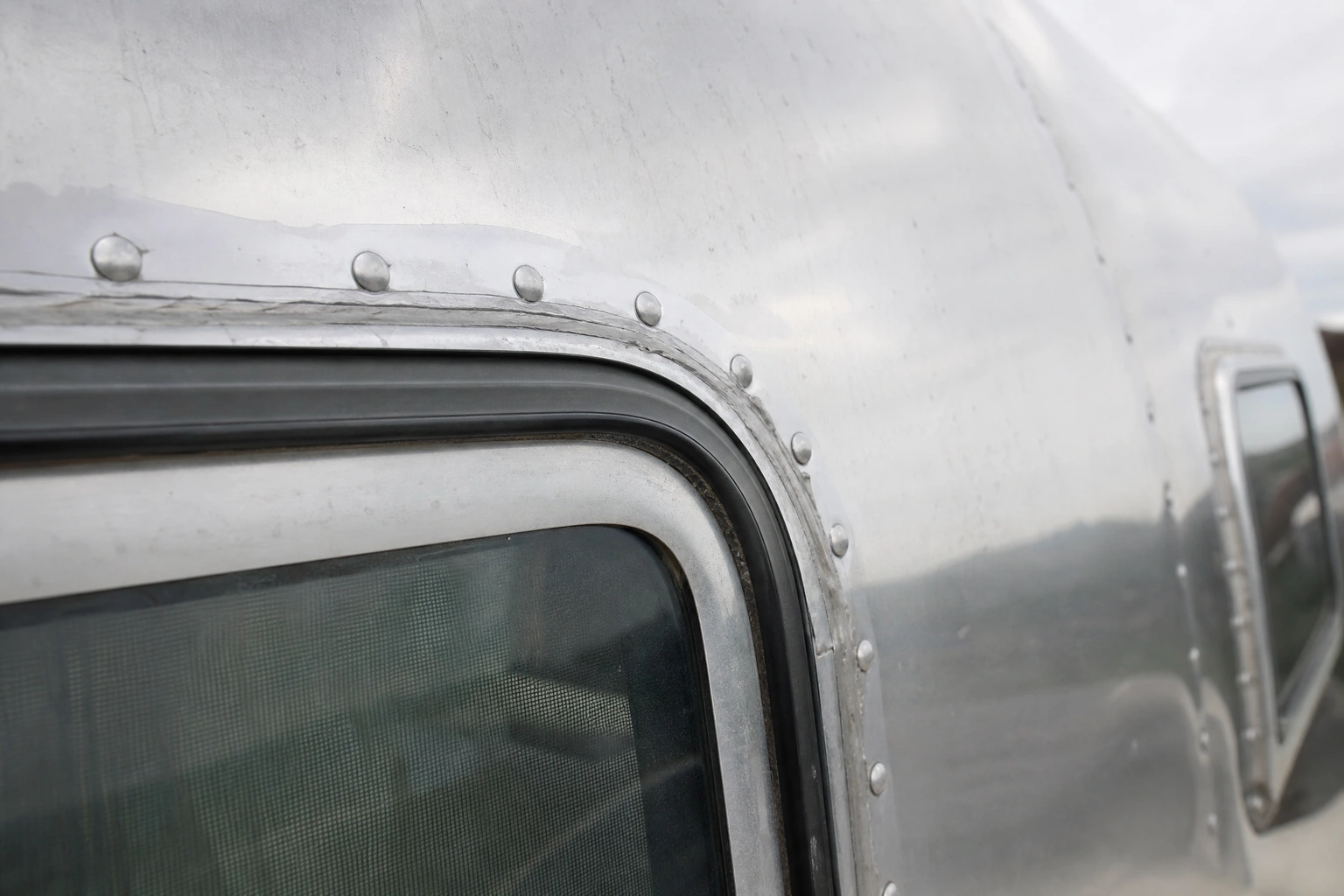
Not every 17-year-old Bambi arrives in the same condition. Certain failure patterns repeat consistently enough across 2007-era units, though, that you should enter any walk-through expecting to find at least one of them.
Rivet Seam Leaks
The aluminum monocoque shell is riveted at multiple structural seams — most critically around window frames, the rear cap junction, and along the roof transition joint. On a unit without regular sealant maintenance, expect cracking or separation at these points after 15+ years. This is a manageable repair — Airstream’s butyl tape and self-sealing rivet system is addressable without specialized equipment — but active water intrusion over multiple seasons leads directly to the next problem.
Belly Pan Moisture and Floor Soft Spots
The belly pan often looks intact from the outside, even when water has been sitting inside it for seasons. The aluminum exterior doesn’t visibly rot. You detect this by walking the interior carefully, especially in the wet bath quadrant, pressing the floor as you move. A soft spot near the toilet or shower is a yellow flag. Floor flex that compresses more than an inch under foot pressure is a red flag.
Repair involves opening the belly pan and replacing damaged plywood subfloor sections — from a $500 DIY job on a small section, to $1,500–$2,000 at a shop for more extensive damage. Any trailer that hasn’t had its belly pan re-sealed in the last five years is worth asking about directly before you schedule a viewing.
Window Seal and Frame Separation
The 2007 Bambi uses frameless slider windows sealed with butyl compound. After 17 years, those seals dry out. Failure shows as fogging between glass panes, or as watermarks on interior walls below the window frame. Replacement seals and reglazing are available — expect $200–$500 per window at a shop familiar with the frameless design.
Oxidation Staging
Aluminum oxidizes without regular polishing. On a 2007 unit, the visible exterior condition is a reliable proxy for overall maintenance history. Stage 1–2 oxidation (chalky surface haze, light dulling) is cosmetic and polishable. Stage 3 (surface pitting, texture that doesn’t smooth under polishing compound) requires professional restoration and possibly panel work. A full Airstream exterior restoration runs $1,500–$4,000. Factor that into any offer on a unit showing significant exterior deterioration.
A 17-year-old trailer that hasn’t been recently polished and doesn’t carry appliance service records isn’t worth the top of NADA’s retail range — regardless of how clean the interior presents.
Dometic Appliance Condition
The 2007 Bambi’s refrigerator, air conditioner, and furnace were all Dometic-supplied at the factory. Dometic continues to manufacture replacement components for units from this era — parts availability is not a concern. What ages is performance: refrigerator cooling unit seals (rebuild cost: $300–$600), furnace heat exchangers, and A/C fan motors. Always test the fridge on both LP mode and 110v shore power during a walk-through. A unit that cools on one but not both is signaling a cooling unit failure. Budget $800–$1,500 installed for a full Dometic refrigerator replacement if needed.
Wheel Bearings
Single-axle trailers concentrate all road load on one axle. On a 17-year-old unit with unknown service history, this is worth pressing the seller on directly. Bearing repacks every 10,000–15,000 miles is acceptable. No service history at all is not — and a bearing failure at highway speed is not a roadside repair.
Inspection Checklist
To inspect a 2007 Airstream Bambi 19 before making an offer, follow these steps:
- Walk the roof transition seam and rear cap edge — feel for sealant gaps or cracking.
- Press the floor near the wet bath for soft spots or flex under foot pressure.
- Check all window frames for interior watermarks below the seal line.
- Evaluate the exterior aluminum for surface pitting, not just dullness — pitting signals stage 3 oxidation.
- Test the Dometic refrigerator on both LP and 110v power; it must hold temp on both.
- Ask for wheel bearing service records, or inspect the dust cap and race visually.
Is the Asking Price Fair? NADA Data and What Actually Moves the Number
According to NADA Guides’ 2024 RV Valuations, the 2007 Airstream Bambi 19 carries an average retail value of $18,500–$28,000 depending on condition. That range reflects 50–75% of the unit’s original ~$37,000 MSRP — an unusual retention curve for a 17-year-old travel trailer. The RV Industry Association’s 2023 depreciation benchmarks show most trailers at this age hold only 15–25% of original value. Airstream’s aluminum construction and brand recognition explain the difference.
A $23,000–$27,000 asking price sits in the upper-mid portion of that NADA range. For a clean, well-maintained unit with documented service history, that’s fair. For a unit with deferred maintenance, second-stage oxidation, or an uninspected belly pan, it’s aggressive.
Some experts argue that any Airstream under $30,000 is a deal given the post-2020 resale surge and continued demand for aluminum-shell trailers. That’s a valid position for units in genuinely exceptional condition with clean service documentation. But if you’re dealing with a trailer that needs $2,000 in appliance work and $1,500 in exterior restoration, that argument breaks down — you’d be paying retail for a unit that needs pre-retail restoration work to reach retail condition.
I’ve seen conflicting data across valuation sources — some private-party listings price 2007 Bambi units at $29,000–$32,000 citing Airstream’s sustained secondary market appeal, while NADA’s condition-adjusted figures cap average retail around $28,000. My read is that anything above $28,500 for a 2007 unit requires specific justification: a recent professional restoration, documented appliance service within the last two to three years, and a clean pre-purchase inspection report from an Airstream-familiar technician.
Or maybe I should say it this way: the NADA top of range is a ceiling for the best-condition examples available — not a floor price guarantee on any Bambi that shows up in a listing.
What Actually Moves the Number on a 2007 Bambi 19
- Exterior condition: Recently polished and bright vs. stage-2 oxidation = a $3,000–$5,000 gap in market price
- Appliance functionality: Dometic fridge that fails on LP mode = deduct $400–$700 minimum
- Floor integrity: Any confirmed soft spot = deduct $500–$2,000 depending on assessed repair scope
- Belly pan history: Re-sealed within the last five years = legitimate positive for value
- Ownership and storage: One-owner with indoor storage and original title = justified premium; dealer-flipped with unknown history = negotiate down
According to NADA Guides’ 2024 RV Valuations, a 2007 Airstream Bambi 19 in average retail condition carries a value range of $18,500–$28,000. The RV Industry Association benchmarks most travel trailers at 15 years old at only 15–25% of original MSRP; the Bambi 19’s 50–75% retention rate reflects Airstream’s historically durable resale position. An asking price of $23,000–$27,000 sits in the upper-mid range — appropriate for a clean unit, aggressive for one with deferred maintenance.
What Most Buyers Miss on a First Walk-Through
Most first-time Airstream buyers spend the walk-through inside. The curved aluminum ceiling, the polished cabinetry, the build quality relative to anything else in the price range — it’s impressive. That distraction has a real cost.
The factor that defines actual value in a used Bambi is the condition of the belly pan and the subfloor directly above it. Everything else — appliances, upholstery, décor — is replaceable at known, predictable cost. Structural floor damage from unchecked water intrusion is unpredictable, slow to repair, and rarely inexpensive.
Here’s what catches people: the belly pan looks intact from underneath even when water has been sitting inside for seasons. The aluminum doesn’t visibly rot. You catch this by walking the interior carefully, pressing the floor as you move — and, if the seller allows it, by crawling under the trailer with a flashlight to probe the seam edges for softness or water staining.
A pre-purchase inspection from an RV tech familiar with aluminum-riveted trailers runs $150–$350 and is worth every dollar on a unit priced above $20,000. Ask specifically about their experience with Airstream units — a general inspector used to fiberglass rigs may not know what to look for at rivet seams or belly pan transitions.
Look — if you’re evaluating a $25,000 unit and the seller won’t allow a pre-purchase inspection, that itself is information. Every Bambi worth $25,000 can pass an honest inspection.
Five Questions Buyers Ask Out Loud
What’s the real tow weight of a 2007 Airstream Bambi 19 when packed for a trip?
Expect 3,700–4,100 pounds in real-world loaded use — significantly more than the 3,178-pound dry weight on spec sheets. Your truck’s payload rating, shown on the driver’s door sticker, determines safe limits — not just the tow package rating.
How do I tell a 2007 Safari apart from a Safari Special Edition when reviewing a listing?
From exterior photos, you can’t — the shells are identical. Interior differences include fabric grade and cabinetry finish. For towing specs, valuation, and inspection purposes, treat them as the same trailer.
Should I pay $25,000 for a 2007 Airstream Bambi 19?
That price sits within NADA’s average retail range ($18,500–$28,000) for a clean unit. It’s fair if the exterior shows minimal oxidation, the floor is solid throughout, and appliances function on both LP and shore power. Any of those issues warrants negotiation on the asking price.
Why does the Dometic refrigerator only cool on shore power and not on propane?
The LP burner igniter or cooling unit baffle has likely failed — documented on units this age. A cooling unit rebuild runs $300–$600. Full Dometic refrigerator replacement costs $800–$1,500 installed depending on model size.
When should I book a pre-purchase inspection on a used Airstream?
Before making a firm offer — or write the offer contingent on a clean inspection report. Request a tech with specific Airstream or aluminum-shell experience; general RV inspectors may miss rivet seam and belly pan issues. Cost: $150–$350.





No Comment! Be the first one.