






Susanne Johansson: Swedish Painter, Nature’s Witness, and the Montecito Question Answered
Susanne Johansson Montecito refers to the Swedish contemporary painter Susanne Johansson and her reported connection to Montecito, California. Born in 1969 in northern Sweden and trained at the Royal...

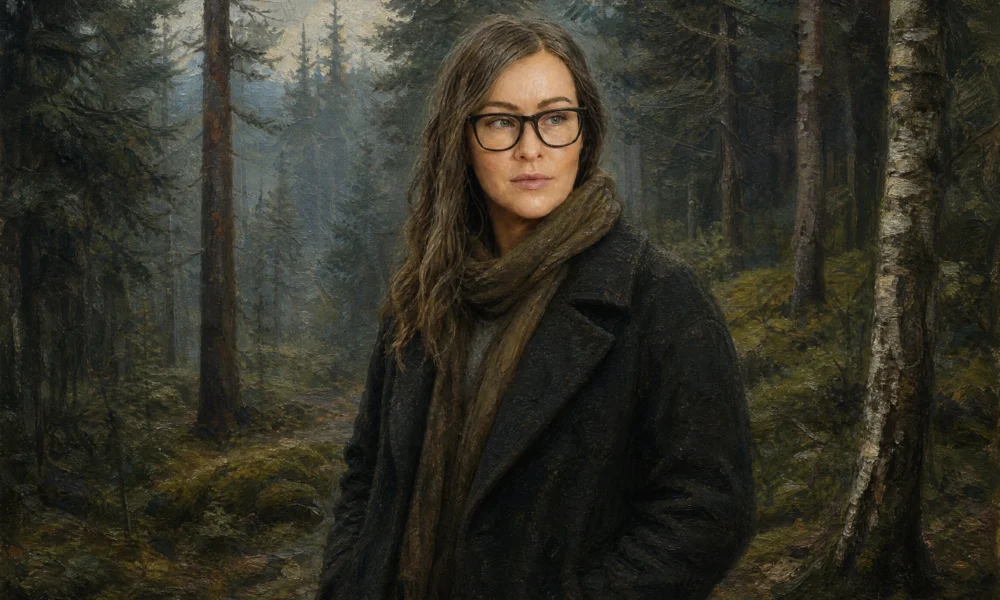
Susanne Johansson Montecito refers to the Swedish contemporary painter Susanne Johansson and her reported connection to Montecito, California. Born in 1969 in northern Sweden and trained at the Royal Institute of Art in Stockholm, she is primarily represented by Galleri Magnus Karlsson in Stockholm and officially lives and works in Uppsala, Sweden — with her precise relationship to Montecito remaining publicly unconfirmed by any primary source.
If you’ve been searching because a gallery listing, a social post, or someone’s LinkedIn profile dropped her name alongside “Montecito” and you couldn’t find a single clear answer — that’s exactly the gap this article is written to close.
Who Is Susanne Johansson?
Susanne Johansson was born in 1969 in Stråkanäs, outside of Kalix, in northern Sweden. It’s a small municipality close to the Gulf of Bothnia, shaped by birch forests, long winters, and the particular silence of the Swedish far north. That environment isn’t just biography — it’s the visual and emotional foundation of everything she has painted since.
She was educated at the Royal University College of Fine Arts (Kungl. Konsthögskolan) in Stockholm, completing her studies between 1992 and 1997. That’s one of Scandinavia’s most selective fine arts programs. The training gave her technical discipline. But her artistic direction moved away from the urban and conceptual — back toward landscape, nature, and what she has described as the quiet order of the non-human world.
She didn’t relocate to a major art capital after graduating. She stayed in Sweden.
Today, her official website lists Uppsala, Sweden as her place of birth and working base. Every major gallery that represents or has shown her work — Galleri Magnus Karlsson in Stockholm, Maya Frodeman Gallery in Wyoming — identifies the same location. In February 2016, she received the Cultural Prize from Uppsala County (Uppsala läns landsting). Her work sits in public collections including Uppsala Art Museum, Statens Konstråd (Sweden’s National Public Art Council), and Harvard Business School’s Schwartz Art Collection in Boston.
An internationally exhibited painter who has stayed rooted in provincial Sweden, building a career from there rather than from a gallery-district apartment in Stockholm or Berlin. That’s a deliberate choice, and it shows in the work.
What Her Paintings Actually Look Like
The shortcut description — “Scandinavian landscape painter” — is technically accurate and almost entirely misleading.
You might picture cool Nordic minimalism, spare geometry, something in a white frame above a Danish sofa. That’s not what Johansson makes.
Her paintings center on a recurring image: a solitary human figure immersed — engulfed, even — in dense woodland. The figure places her apart from the human-centered landscape that runs throughout art history, from Caspar David Friedrich to Edward Hopper to Camille Corot. Her humans don’t command the landscape. They barely register within it.
That feeling of a figure hidden, nearly imperceptible but not quite one with the forest, references memories from the artist’s childhood in rural northern Sweden. She has spoken about hunting with her father and exploring with her siblings, saying: “I was never scared — yet somehow, we always felt as though we were visitors in someone else’s space.”
Or maybe I should say it this way: the paintings don’t depict nature as scenery. They treat it as the subject — and the human as the incidental detail.
In her 2021 solo exhibition Half-life at Galleri Magnus Karlsson, her imagery had “worked its way deeper into the landscape,” finding what gallery notes described as “moments of meaning and layers of concentrated time.” The palette runs toward earth — ochres, deep greens, the grey-gold of late autumn. Her smaller works on paper — chalk and pastel — capture the microcosmos of a ditch, a patch of lichen, the cross-section of a rotting oak stump.
Every subject is ordinary. Nothing feels small.
Her Exhibition Career: Stockholm to New York to Jackson Hole
Here the record is detailed enough to be genuinely useful — and it’s where content-farm articles tend to stop short.
Johansson’s primary institutional home is Galleri Magnus Karlsson in Stockholm, where she has held solo exhibitions in 1999, 2002, 2004, 2007, 2009, 2012, 2015, 2021, and most recently in February–March 2025 with The Unanswered Question (Den obesvarade frågan). Nine solo shows at the same gallery over 26 years is a level of sustained institutional loyalty that’s genuinely uncommon in contemporary art.
Her international reach expanded steadily across the 2000s. She showed at Prague Biennale 2 in 2005, exhibited at M’ARS Center for Contemporary Art in Moscow in 2005, and had work at Palazzo delle Papesse in Siena and MAN museum in Nuoro, Italy in 2006–2007. Feigen Contemporary in New York showed her work in 2006, and Fred Gallery in London in both 2010 and 2011.
To find and view Susanne Johansson’s work today, follow these steps:
- Visit gallerimagnuskarlsson.com — her primary gallery; check current and upcoming shows
- Visit mayafrodemangallery.com — her U.S. gallery in Jackson Hole, Wyoming, for available works
- Search her name on Artsy.net — for past exhibitions, auction records, and works for sale
- Visit susannejohansson.net — for exhibition news directly from the artist
The U.S. presence intensified sharply in 2022. In May, Turn Gallery in New York presented Signs of Time, a solo exhibition of small works. In November, Tayloe Piggott Gallery in Jackson, Wyoming opened A Certain Kind of Stillness, a solo show running November 3 through December 4, 2022. The artist attended the opening reception on November 3rd.
Tayloe Piggott Gallery has since been renamed Maya Frodeman Gallery. Johansson appeared in their group exhibition Petites through January 2025, and the gallery hosted her Månvarv/Lunar Month series through September 2024.
The Montecito Question: What Do We Actually Know?
This is the question people are actually searching. Let’s be direct about it.
Look — if you found her name attached to “Montecito” and went looking for verification, here’s what the evidence actually shows.
Every gallery source — including Maya Frodeman Gallery, which has her U.S. representation — lists Uppsala, Sweden as her current home. Her own official website states she “lives and works in Uppsala, Sweden.” No press release, no gallery biography, no artist statement has publicly identified Montecito, California as her residence.
Some articles, including Buzz Splatter, assert she “currently lives in Montecito, California.” The more careful Facwe piece acknowledges that “she is not publicly positioned as a permanent Montecito resident, and there is no confirmed statement that she lives there full-time.” I’ve read both — and I’d give the accuracy edge to the version that admits what we don’t know.
Here’s the thing: Montecito as a temporary U.S. base is plausible. It sits between Los Angeles and San Francisco, close to a significant collector demographic, and functions as a retreat-style working base for a number of European artists with active U.S. exhibition schedules. The Facwe article’s framing — that Montecito appears to be a meaningful base during U.S. projects “rather than a dramatic shift” — is the most defensible reading of the available evidence.
But “plausible base” and “confirmed residence” aren’t the same claim. The Montecito association appears to have gained momentum around 2024–2025, coinciding with her increased U.S. exhibition activity. Until Johansson or her representatives make a public statement about California residency, treating it as confirmed would be repeating an error that’s already been copied across several low-quality sites.
Quick note: If you’re a journalist or researcher who has found a primary source confirming her Montecito residency, that would be genuinely new information — and worth noting publicly.
Scandinavian Art’s International Rise — and Where Johansson Fits
Johansson’s growing U.S. presence isn’t happening in isolation. According to Sweden’s Arts Council (Kulturrådet), the number of Swedish visual artists exhibiting internationally grew by over 30% between 2015 and 2024, reflecting sustained demand for Scandinavian contemporary painting in American, British, and Asian markets.
Most people assume Swedish art exports are driven by design-forward abstraction. The data suggests otherwise — it’s figurative, landscape-rooted painting that has found the most consistent American collector base in the 2020s.
Quick Comparison: Susanne Johansson and Comparable Swedish Figurative Painters
| Artist | Best For | Key Strength | Tonal Register |
|---|---|---|---|
| Susanne Johansson | Nature as philosophical subject, quiet introspection | Human figure as visitor in landscape | Contemplative, warm |
| Mamma Andersson | Psychological interiors, memory and unease | Fragmented domestic spaces | Unsettled, shadowy |
| Sara-Vide Ericson | Mythic northern Sweden, feminist wilderness | Raw figurative power | Intense, elemental |
| Anna Bjerger | Photorealist surfaces, familiar consumer images | Hyperrealist stillness | Cool, detached |
Johansson is best suited for collectors drawn to contemplative landscape work where the human figure is present but deferential. It won’t appeal to those seeking psychological tension or formal experimentation — her work’s power comes from restraint, not disruption.
Galleri Magnus Karlsson, founded in Stockholm in 1990, represents a roster of internationally active Swedish painters including Mamma Andersson, Sara-Vide Ericson, and Anna Bjerger. That Johansson has maintained gallery representation there since 1999 — across nine solo shows — is a meaningful signal of sustained institutional standing, not a one-off placement.
What Most Articles Skip: Her Writing and Artist Voice
Most write-ups treat Johansson as a subject. Few mention that she writes with unusual care.
Her artist statements are more literary than gallery-press boilerplate typically allows. In her own words from the 2022 exhibition notes for A Certain Kind of Stillness: “I find a certain kind of stillness in the encounter with the overlooked and simple. In the things we rarely give a greater meaning I find a sense of home: the backlight on a September day when I recognize the thistles and the field scabious in the fields of Uppland. A microcosmos that is a stump of an oak tree.”
That level of specificity — thistles, field scabious, Uppland’s flat light — isn’t assembled from a phrase bank. It comes from someone who has spent real time in those landscapes with that quality of attention.
The combination of precise visual practice and literary self-awareness places her in a small group of contemporary painters who can articulate exactly what they’re doing and why. That’s rarer than it sounds.
Frequently Asked Questions
Who is Susanne Johansson the Swedish artist?
Susanne Johansson is a contemporary Swedish painter born in 1969 in Stråkanäs, outside Kalix in northern Sweden. She lives and works in Uppsala, Sweden, and is primarily represented by Galleri Magnus Karlsson in Stockholm, where she has held nine solo exhibitions since 1999.
Does Susanne Johansson actually live in Montecito, California?
No primary source confirms this. Official gallery listings and her own website consistently identify Uppsala, Sweden as her home base. The Montecito association circulates online but has not been verified by the artist, her galleries, or any credible press outlet.
What does Susanne Johansson’s art look like?
Her paintings typically feature a solitary human figure nearly absorbed by dense woodland, treating humans as temporary visitors in a landscape that belongs to animals, insects, and trees. Her palette leans earthy and warm. The mood is contemplative rather than dramatic.
Where can I view or buy Susanne Johansson’s work?
Her primary gallery is Galleri Magnus Karlsson in Stockholm. Works are also available through Maya Frodeman Gallery in Jackson Hole, Wyoming (formerly Tayloe Piggott Gallery). Both galleries maintain listings on Artsy.net.
What major exhibitions has Susanne Johansson had?
Major exhibitions include nine solo shows at Galleri Magnus Karlsson in Stockholm (1999–2025), a solo show at Tayloe Piggott Gallery in Jackson Hole (2022), a show at Turn Gallery in New York (2022), exhibitions at Fred Gallery in London (2010–2011), and participation in Prague Biennale 2 (2005).







No Comment! Be the first one.