




Top 15 Sage Green Nursery Ideas for a Calm, Timeless Baby Room
There is a reason sage green nursery ideas keep showing up at the top of everyone’s Pinterest board right now. The color does something most nursery trends never manage. It looks soft enough...


There is a reason sage green nursery ideas keep showing up at the top of everyone’s Pinterest board right now. The color does something most nursery trends never manage. It looks soft enough for a newborn and grown-up enough that you will not be repainting the second your baby turns two.
If you are staring at paint chips at ten at night, wondering whether sage will still feel right in three years, or whether it works if you are renting and cannot touch the walls, this guide is for you. Below are 15 sage green nursery ideas that actually hold up in real rooms, not just in styled photos, plus the paint shades, pairings, and small details that make the difference between a nursery that looks flat and one that feels finished.
Why Sage Green Still Works in a Nursery
Sage sits in a strange, useful spot on the color wheel. It has enough gray in it to feel neutral, and enough green in it to feel alive. That combination is why it reads as calming rather than babyish, and why it works for a boy, a girl, or a nursery where you have no idea yet and do not want to guess.
It is worth being honest here. Some designers are calling sage the new millennial gray for 2026, and a few are pushing clients toward muddy pinks or deeper olives instead. That does not mean sage is going anywhere. It means the flat, pastel, all-over sage look is what is starting to feel a little safe. The fix is not avoiding the color. It is going deeper, mixing in more texture, and pairing it with something unexpected, which is exactly what the ideas below are built around.
How to Pick the Right Shade of Sage for Your Room’s Light
Before you buy a single sample pot, know this: sage green changes more with lighting than almost any other color. A shade that looks perfect on your phone screen can turn split-pea green by the second coat if your room faces north.
A few things to check first:
- North-facing rooms pull cooler and grayer. A lighter, warmer sage keeps the room from feeling flat or cold.
- South-facing rooms get strong, warm light that pulls green forward. A grayer, more muted sage keeps it from reading lime.
- LRV (Light Reflectance Value) tells you how light or dark a color reads once it is on the wall. Lower numbers (under 30) read deep and moody. Higher numbers (over 45) read soft and airy. If a paint brand lists the LRV on the sample card or website, use it, it is more reliable than the tiny chip.
Shades worth testing, across a few budgets and brands:
- Soft and airy: Sherwin-Williams Sea Salt, Benjamin Moore October Mist, Behr Back to Nature
- Classic sage: Sherwin-Williams Clary Sage, Benjamin Moore Saybrook Sage, Behr Muted Sage
- Deep and moody: Sherwin-Williams Evergreen Fog or Pewter Green, Behr Jungle Camouflage
Always buy a sample and paint a piece of poster board, not the wall directly. Move it around the room across a full day. Sage shifts so much with light that a swatch taped in one spot can lie to you.
One more note if the nursery doubles as a nap and play space: choose an eggshell or satin finish instead of flat matte. It costs a little more but wipes clean, which matters once you are dealing with handprints and crayon.
Top 15 Sage Green Nursery Ideas to Steal
1. Paint One Accent Wall Before You Commit to the Whole Room
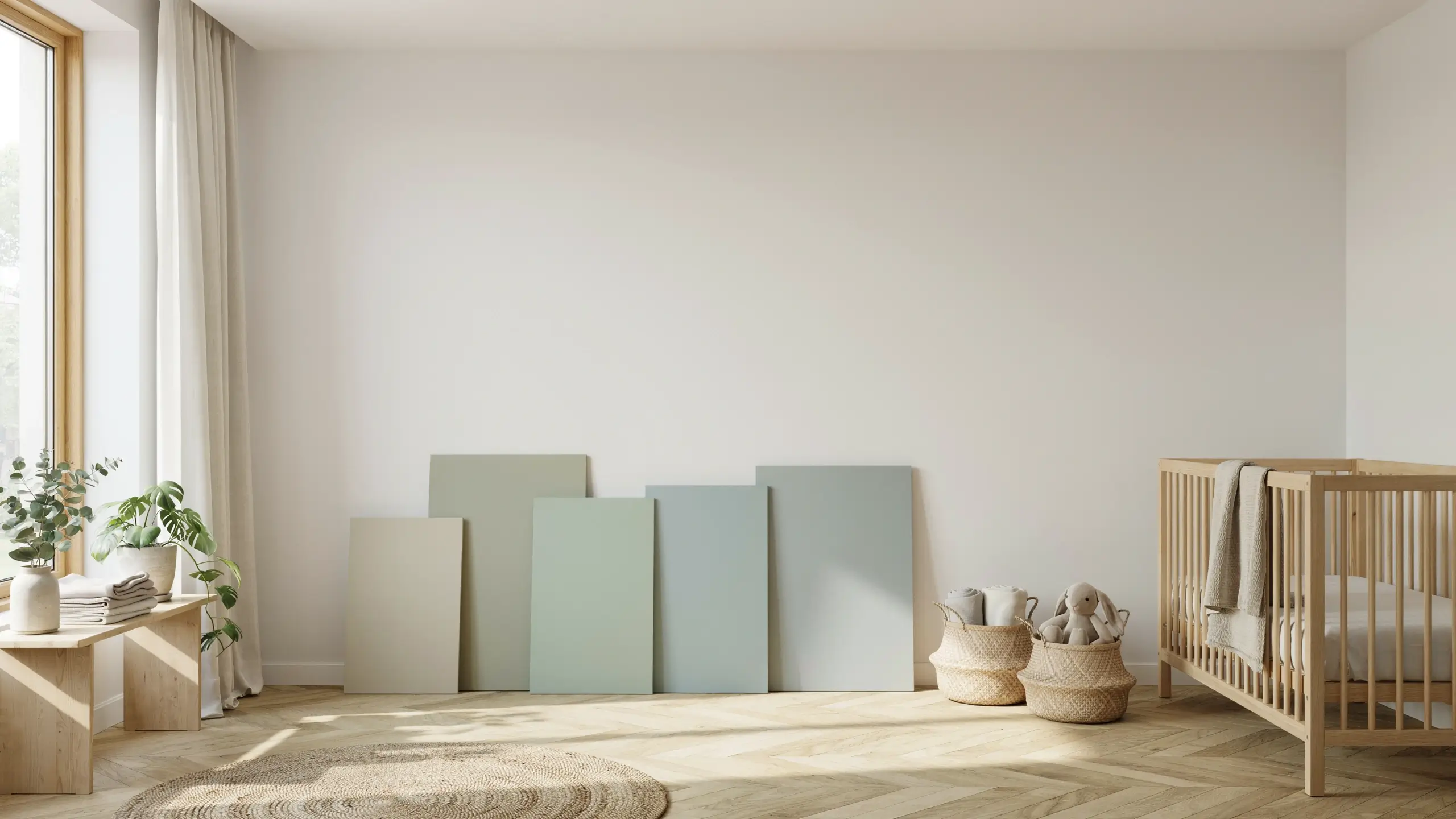
If you love sage but are not ready to commit to four walls of it, start with the wall behind the crib. It gives you the calming, grounding effect without overwhelming a small room, and it is a much smaller job if you decide to change it later. Pair it with warm white on the remaining walls so the accent wall reads intentional, not accidental.
2. Go Deeper and Moodier With a Smoky Sage
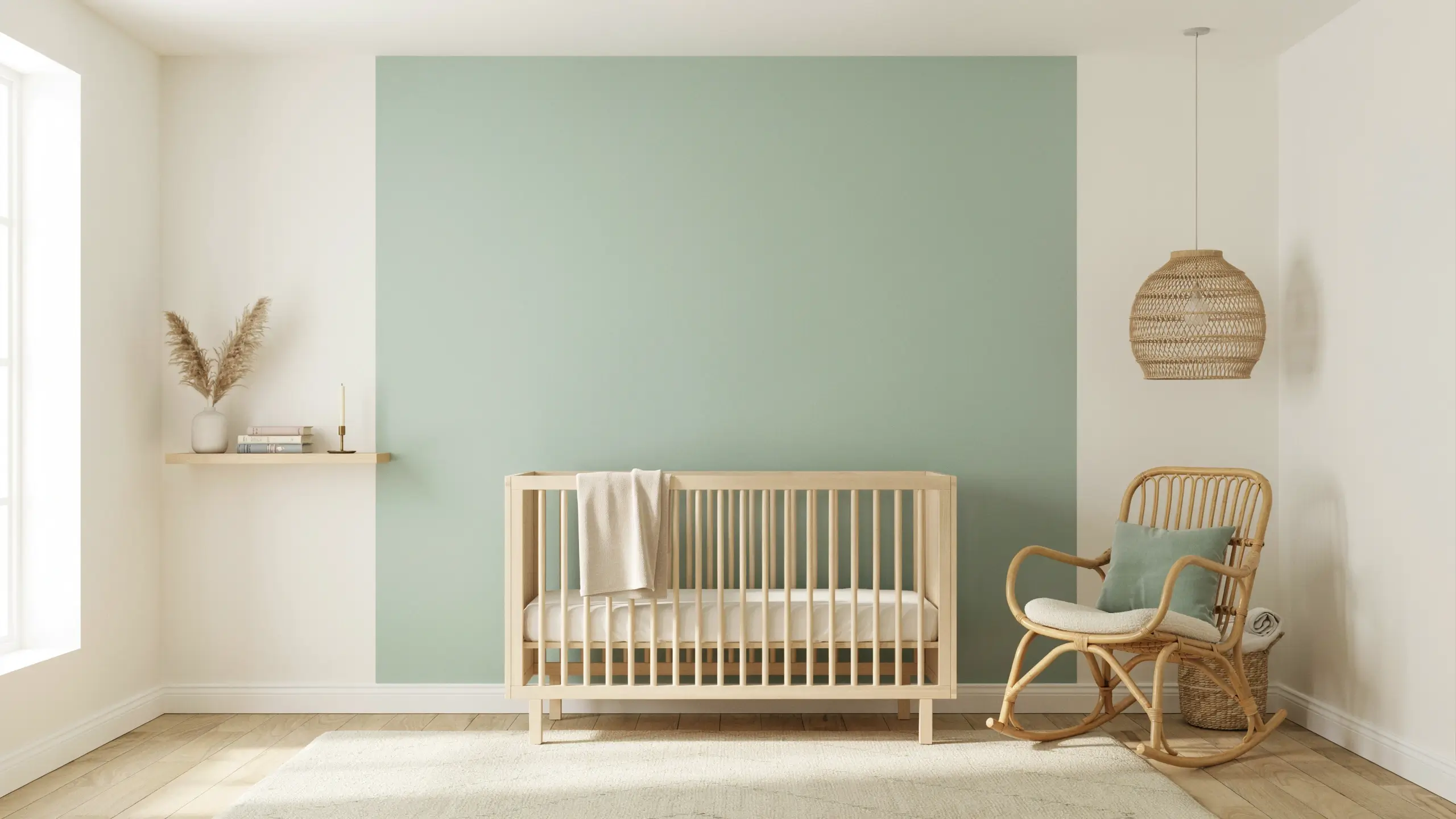
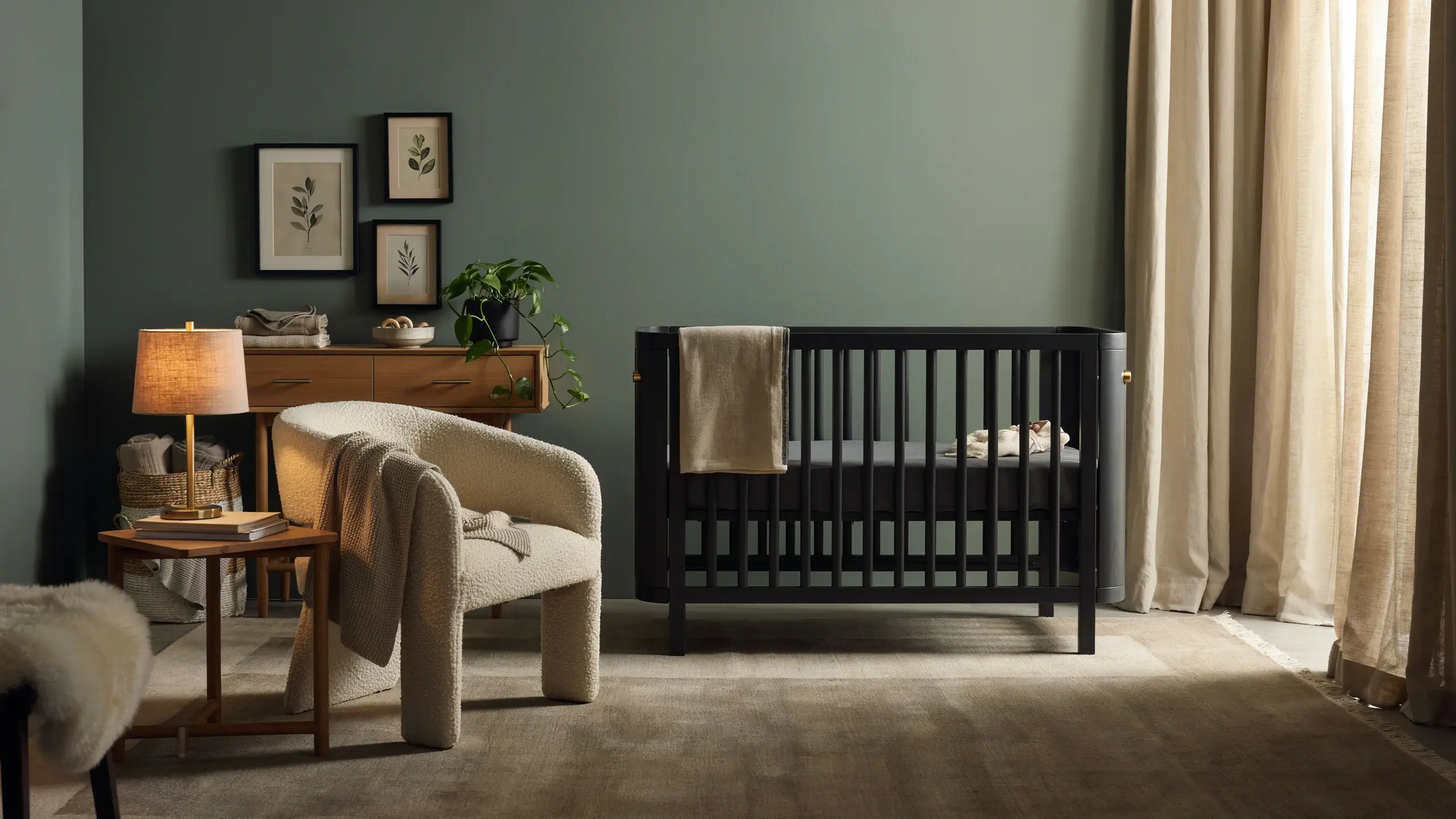
If pastel sage feels a little too expected to you, skip it and go darker. A smoky, gray-green like Evergreen Fog or Pewter Green paired with a black crib and brass hardware creates real contrast and looks far more current than the soft, airy version everyone has seen before. This combination photographs beautifully for milestone pictures because the deep wall color makes the crib and baby the focal point instead of competing with them.
3. Try Peel-and-Stick Wallpaper if You Are Renting
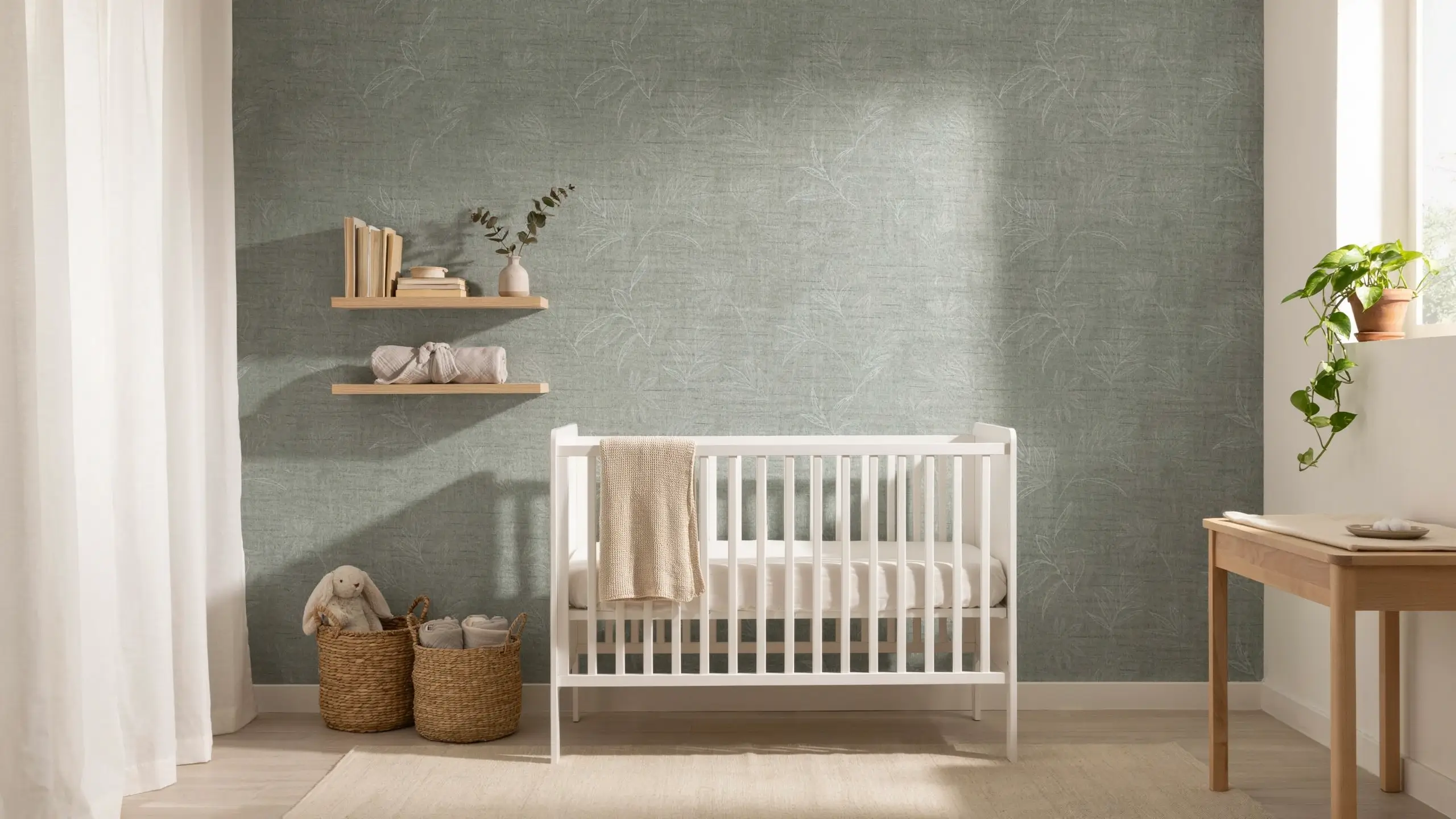
If painting is not an option, removable wallpaper is the closest thing to a full room transformation you can undo later. Sage green grasscloth-look textures, small leaf prints, and soft plaid patterns all work well in a nursery because they add depth without looking like a themed kid’s room. Most peel-and-stick options remove cleanly with no adhesive residue, but always test a small patch in a closet first, since older painted walls sometimes pull paint off with the paper.
4. Cluster Wall Decals Instead of Papering the Whole Wall
For an even lower commitment option, sage green decals, especially simple arch or scalloped shapes, give you a similar effect to a hand-painted mural for a fraction of the cost and effort. The trick is not placing them in a perfect grid. Cluster them closer together near the crib and let them spread out as they go up the wall. It reads far more natural and less like a sticker sheet.
5. Mix Warm and Cool Wood Tones Instead of Matching Everything
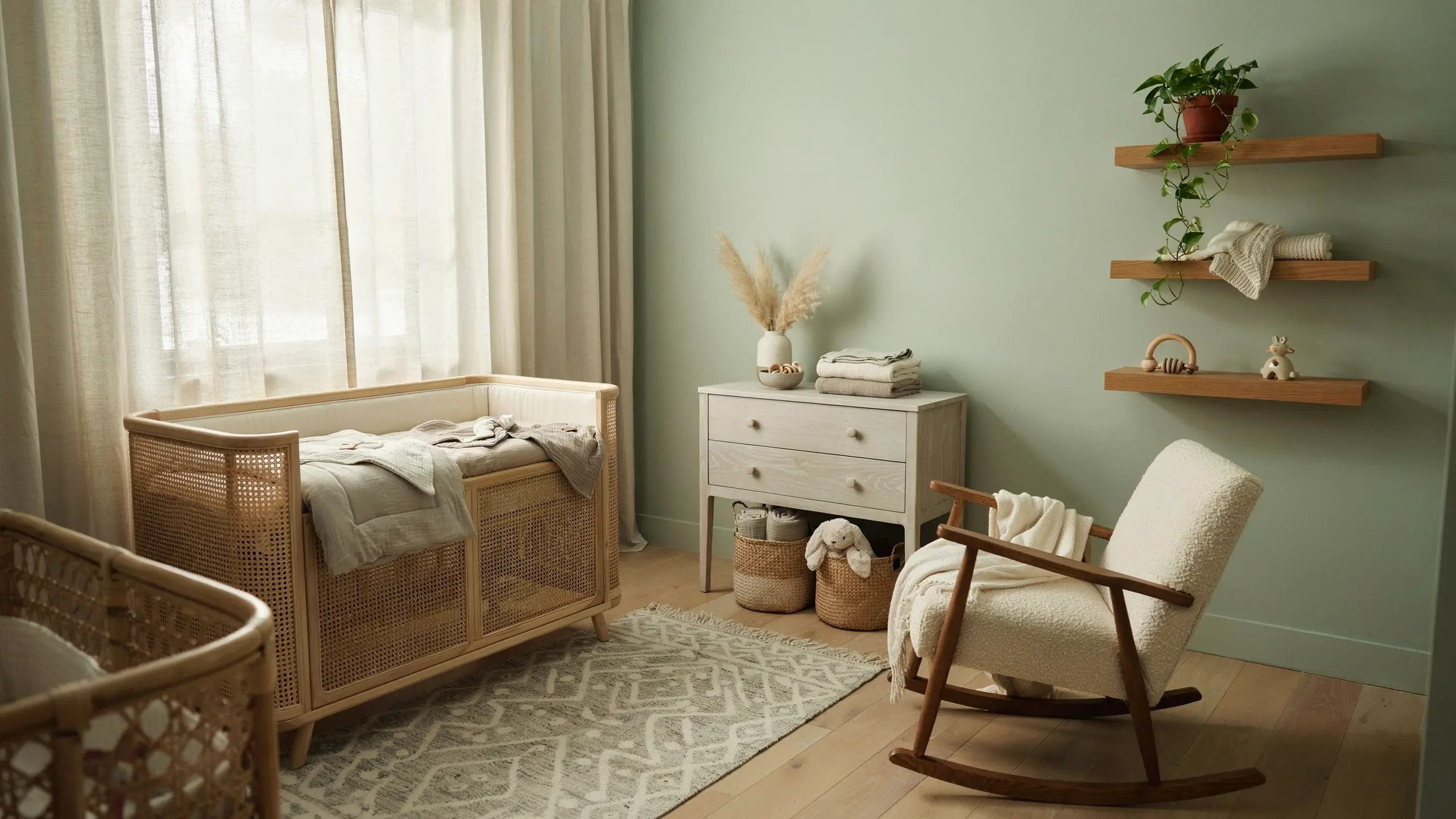
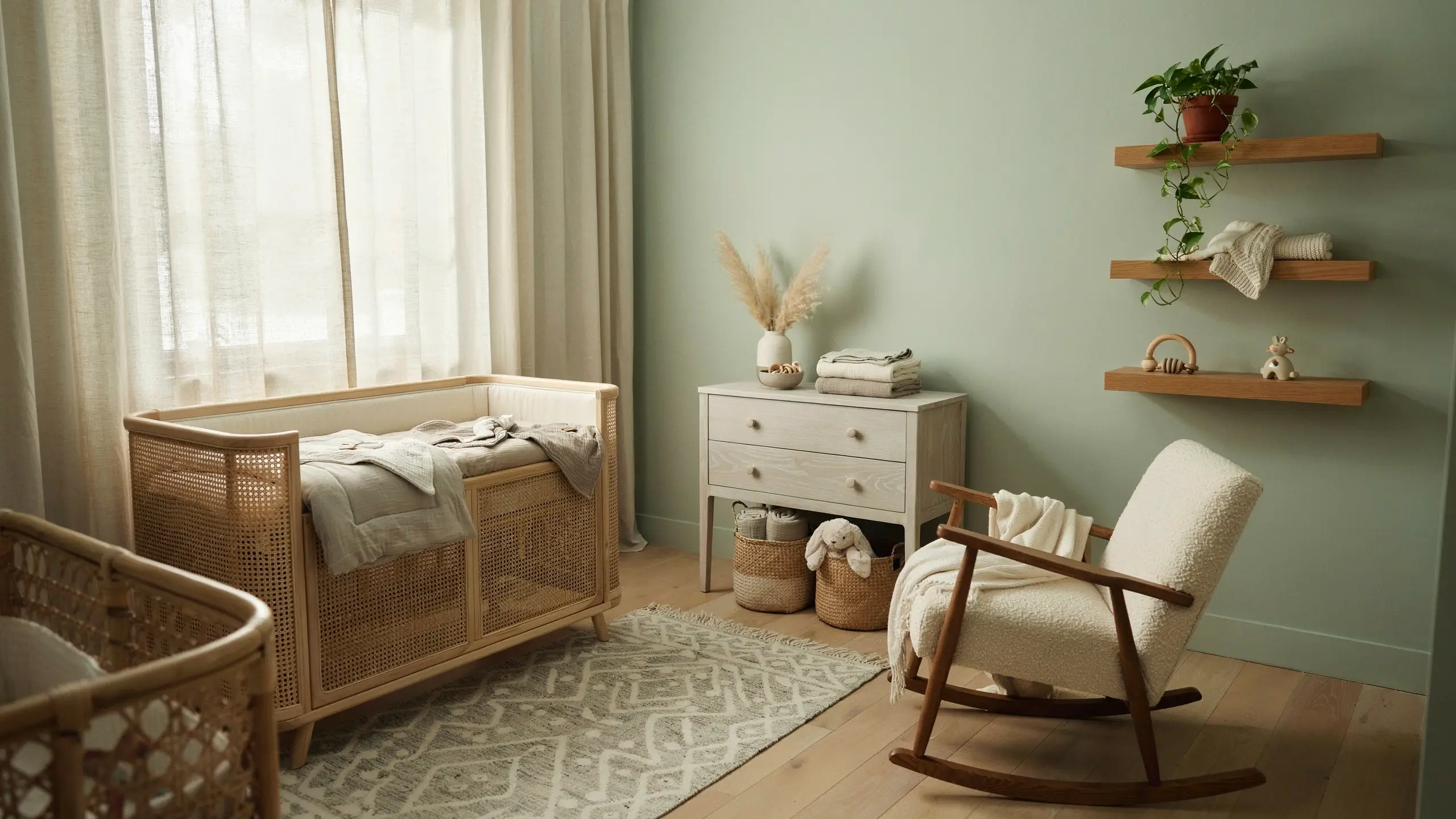
A common mistake is trying to match every wood tone in the room exactly. It actually looks more designed when you do not. Pair a honey-toned cane crib with a slightly cooler, whitewashed dresser, or a mid-tone oak shelf. The sage wall ties everything together, so the wood does not need to match, it just needs to feel like it belongs to the same family.
6. Layer a Washable Round Rug Over Rental Flooring
Skip natural jute or sisal rugs in a nursery. They look great in photos but they are rough on crawling knees and hard to clean once you are dealing with spit-up or blowouts. A soft, washable rug in a round or scalloped shape softens boring rental flooring, adds texture against the sage walls, and can go straight into the washing machine when it needs it.
7. Dress the Crib With Texture, Not Clutter
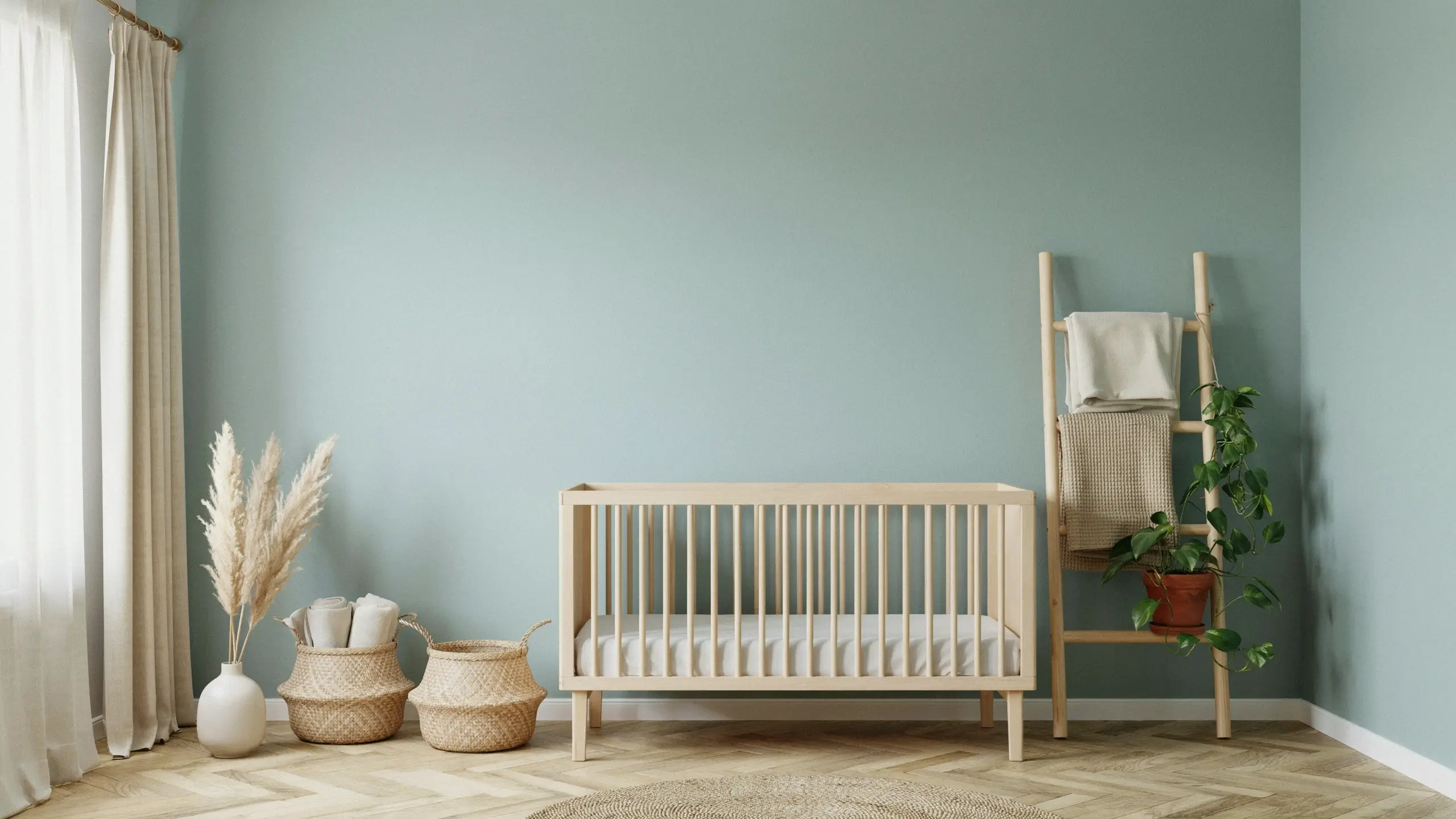
A textured muslin or waffle-knit quilt draped over the side of the crib or folded on a nearby shelf adds so much visual warmth against a sage wall. One safety note that matters here: keep the actual sleep surface bare. Quilts, bumpers, pillows, and stuffed animals should be for display, not for your baby’s sleep space. The safest setup for every nap and night is a fitted sheet on a firm mattress, nothing else, with baby placed on their back.
8. Choose Creamy White Over Stark White for Trim
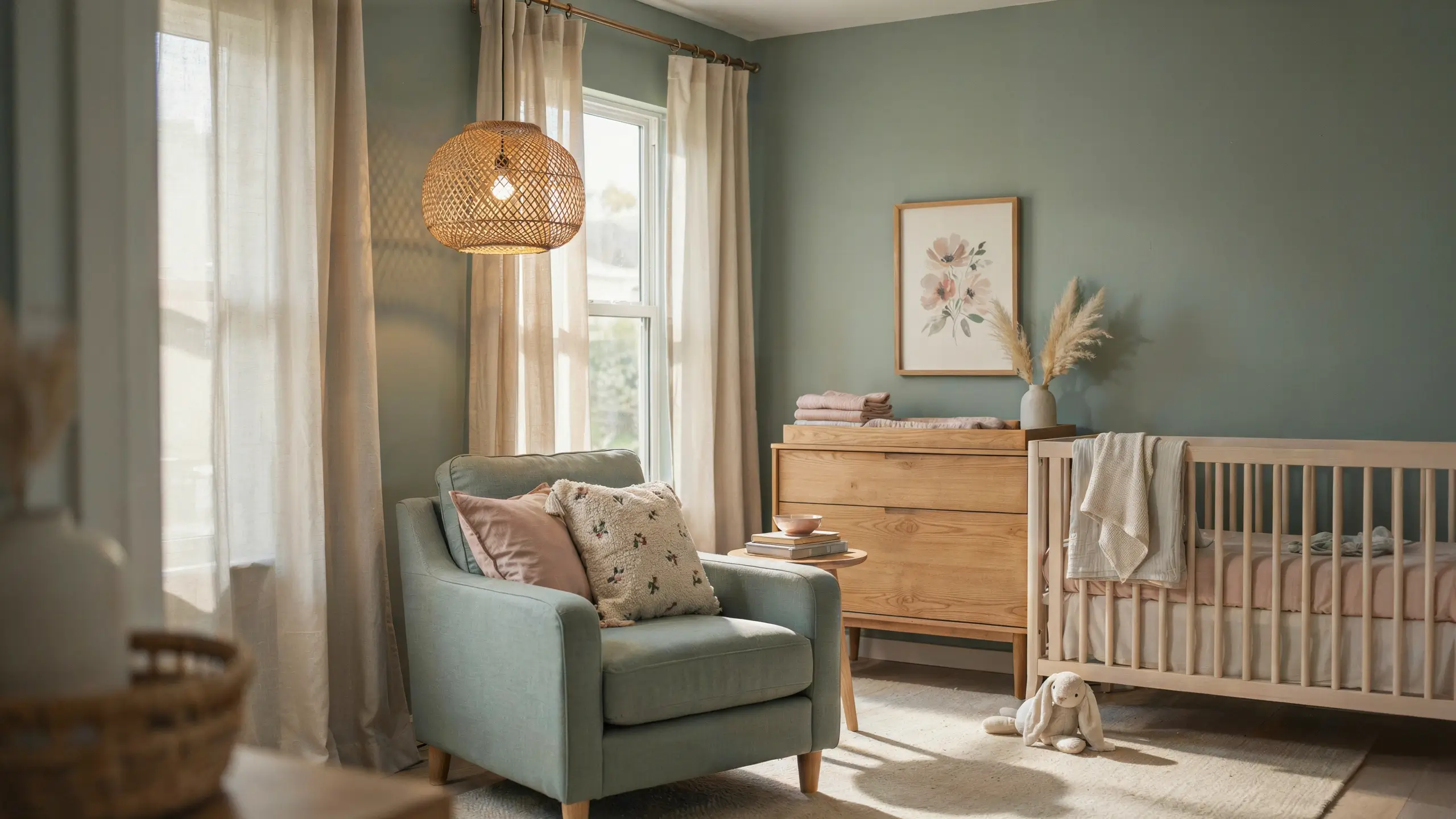
Bright white trim next to sage green can look a little clinical, almost like a hospital wall. A creamy, slightly warm white on trim, ceilings, and furniture softens the whole room and lets the sage feel cozy instead of cold. This is a small swap that makes a bigger visual difference than most people expect.
9. Pair Sage With Blush Pink for a Soft, Romantic Nursery
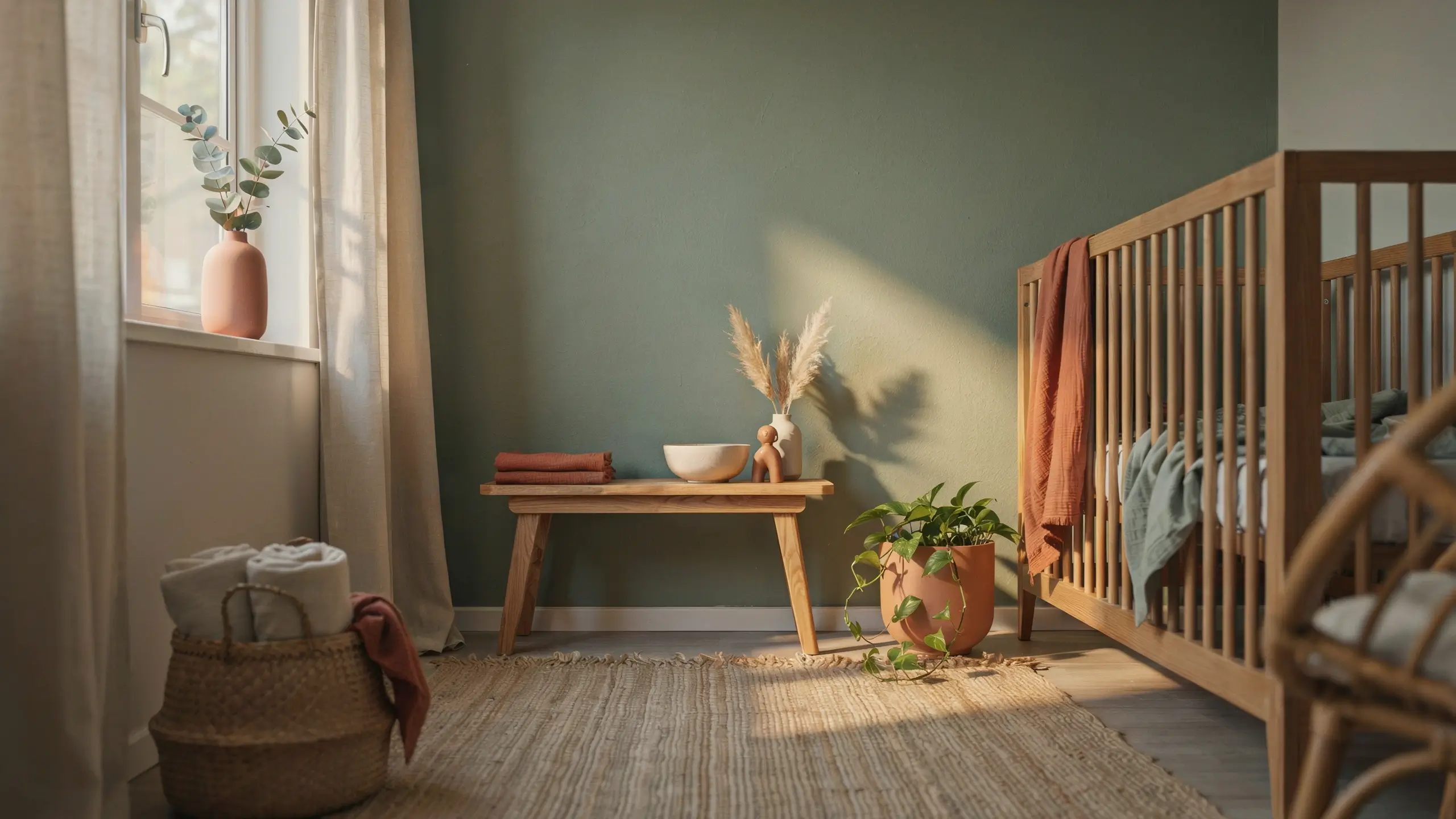
If you want something a little sweeter without going full pastel pink, layer in blush through a pillow on the glider, a floral print above the changing table, or blush curtains. The green keeps it from feeling too saccharine, and the blush keeps the sage from feeling too serious.
10. Pair Sage With Rust and Terracotta for an Earthy, Gender-Neutral Palette
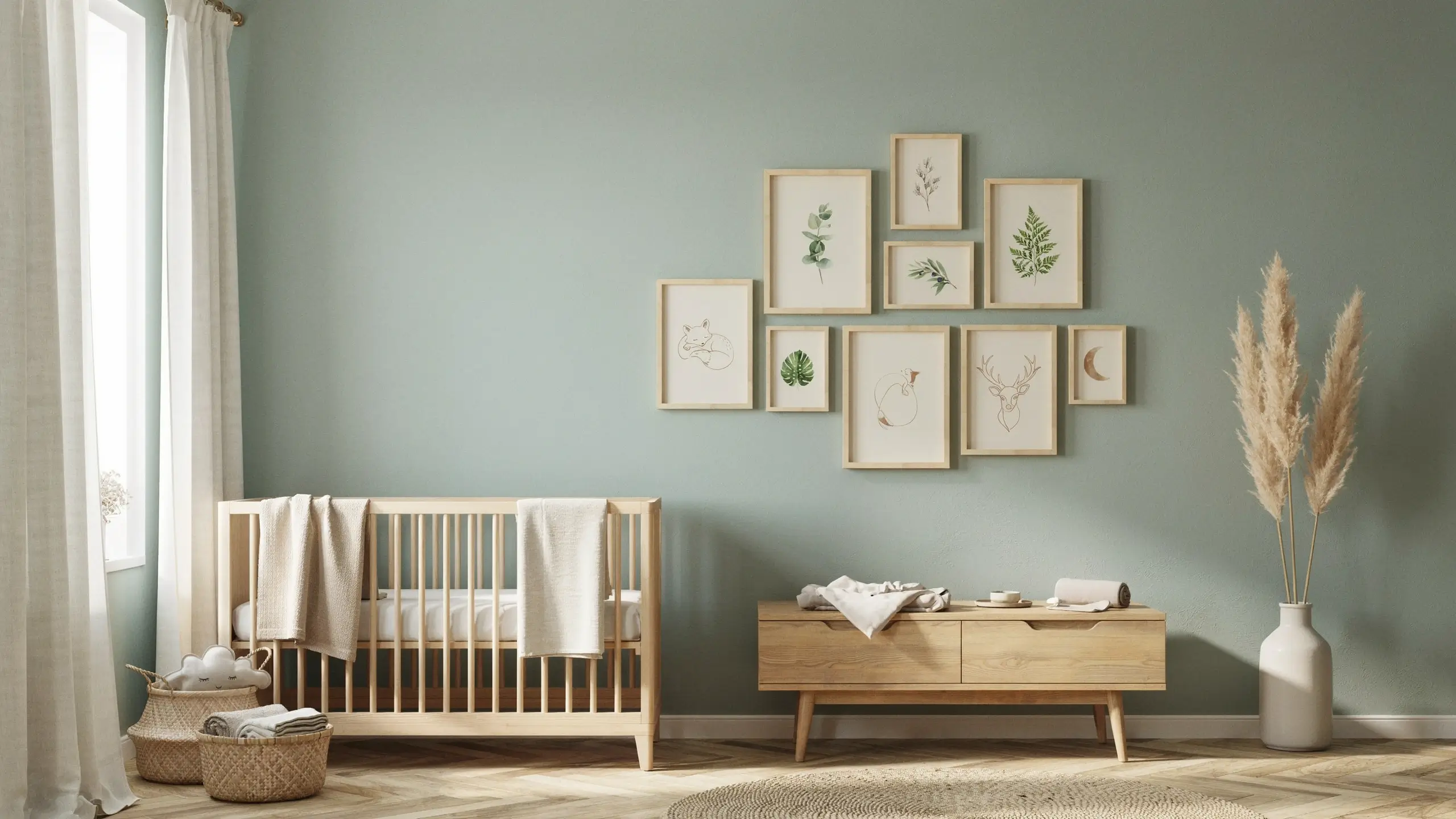
This combination has become one of the most requested looks for a reason. Add a rust throw blanket, a row of small terracotta pots on a windowsill, or a woven basket in a warm clay tone. It leans nature-inspired and works whether you know the baby’s gender or not.
11. Pair Sage With Navy or Black for a Deeper, More Grown-Up Look
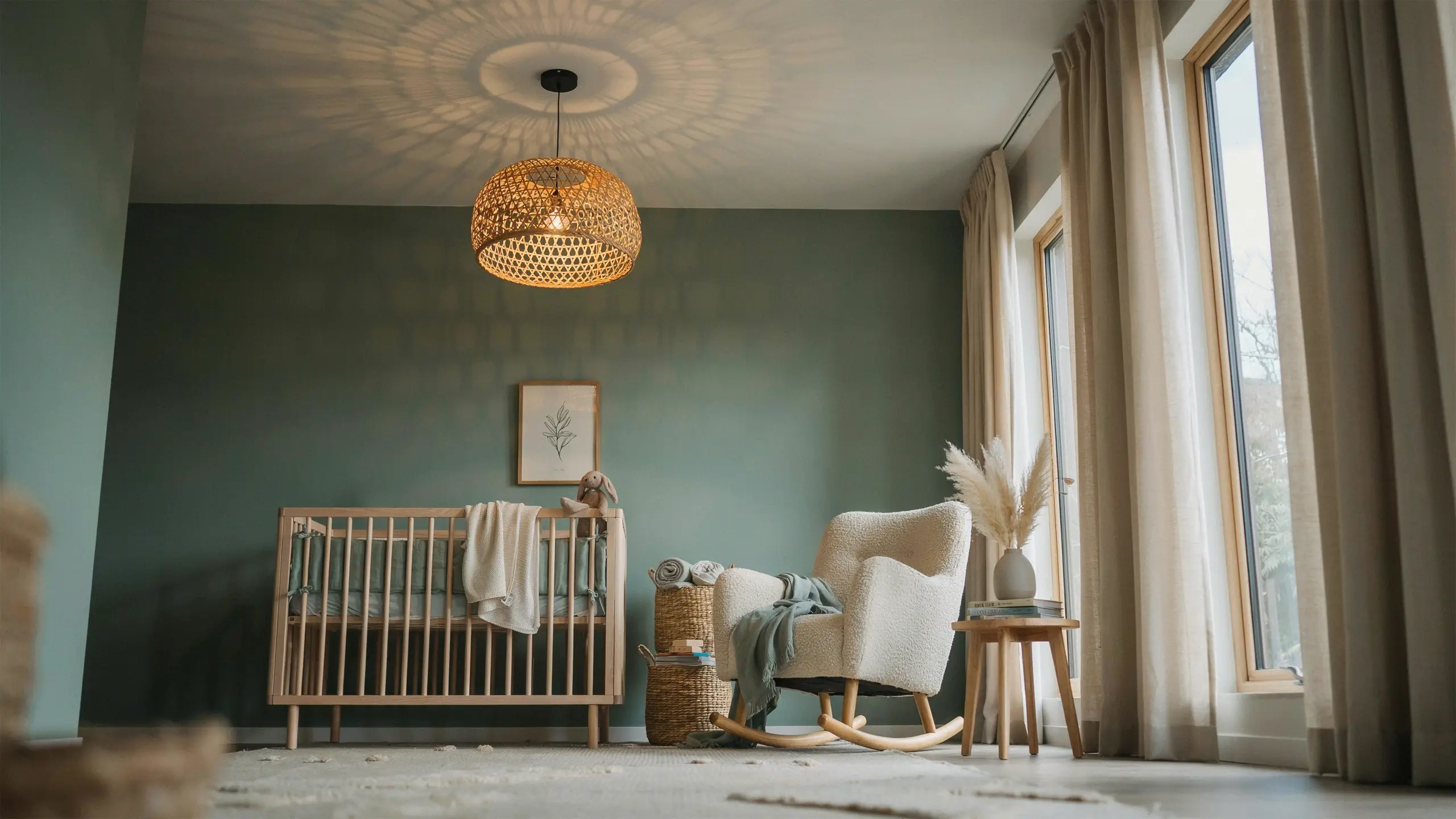
A light sage wall with one navy or black element, a crib, a reading chair, or curtains, adds depth without making the room feel heavy. Keep the darker color to one or two pieces rather than covering the whole room in it. This pairing also happens to grow well into a toddler room later, so you are not repainting again in a year.
12. Bring in Real or Faux Greenery to Echo the Wall Color
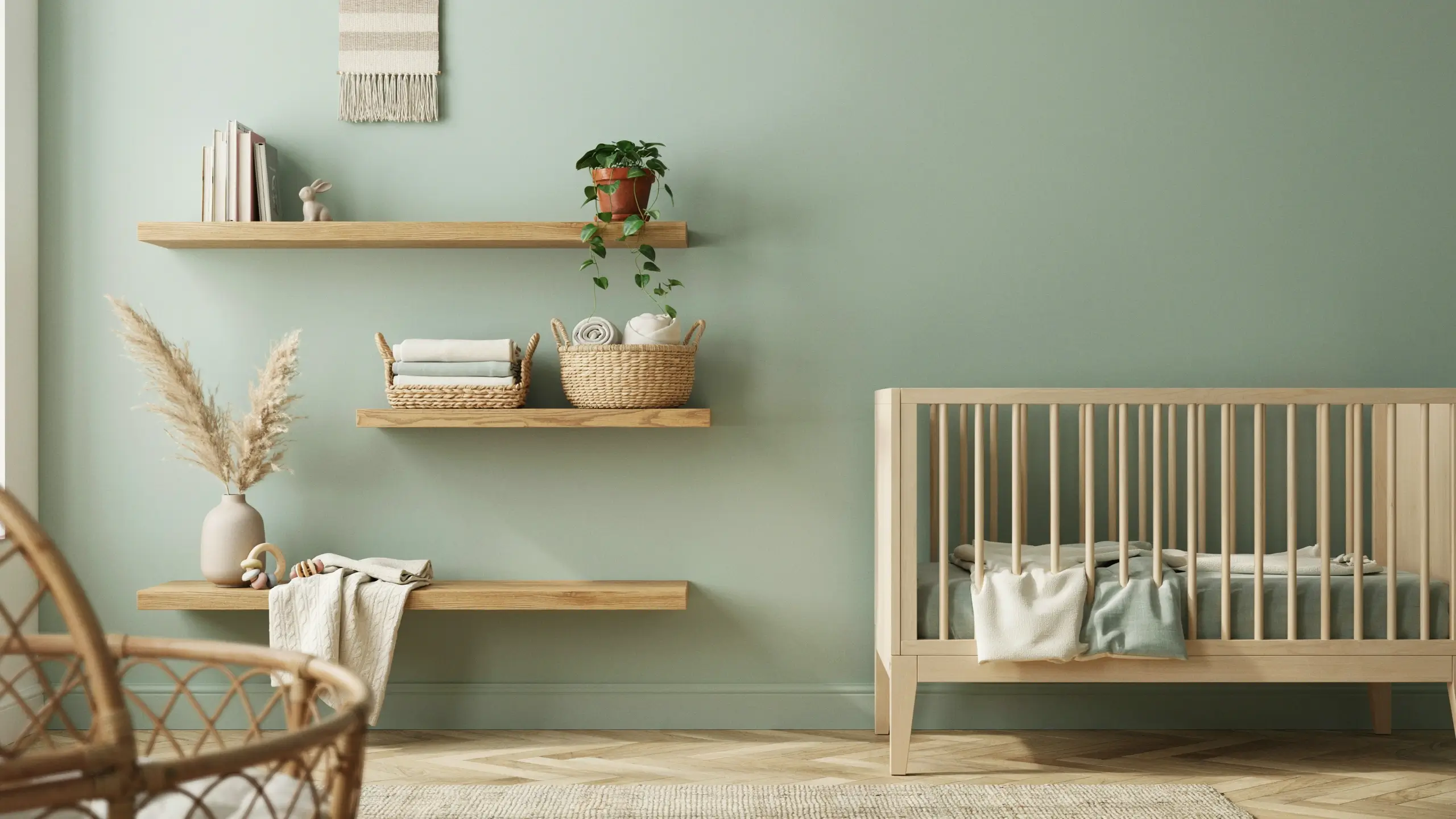
A trailing pothos on a high shelf or a faux fiddle leaf fig in the corner mirrors the wall color and brings the room to life. If you go with real plants, keep them out of reach of the crib and changing table, and double check that anything within arm’s reach as your baby grows is non-toxic. Faux is the lower-maintenance choice if you are already exhausted, and nobody will know the difference from a photo.
13. Build a Gallery Wall With Botanical or Line Art Prints
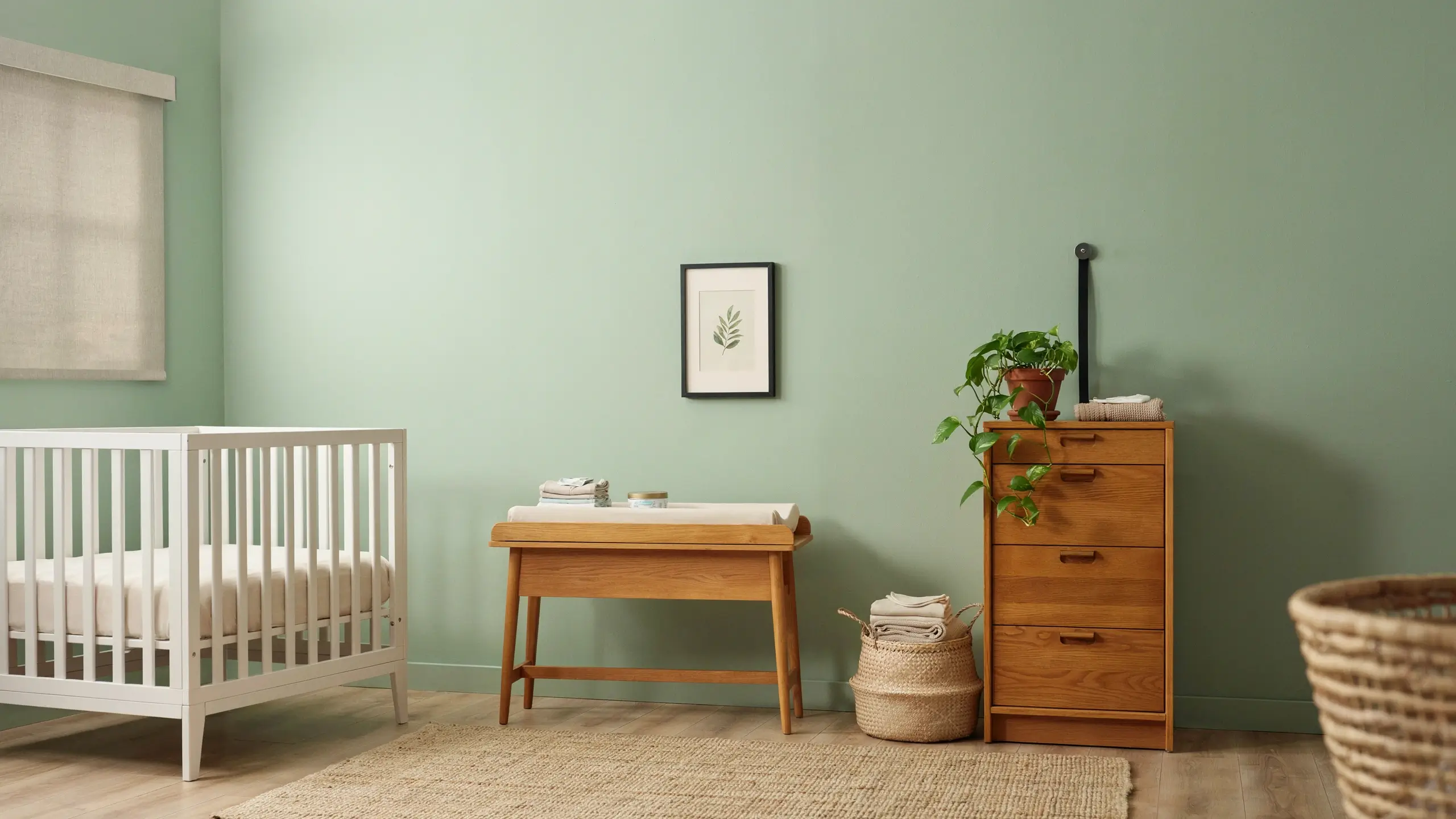
A cluster of simple botanical prints, line art, or a name sign in warm wood tones adds personality without competing with the wall color. If you are renting, use removable adhesive strips rated for the weight of your frames instead of nails. If you own the space, a slightly imperfect, organic cluster looks more collected than a rigid grid.
14. Swap in a Warm, Textured Light Fixture
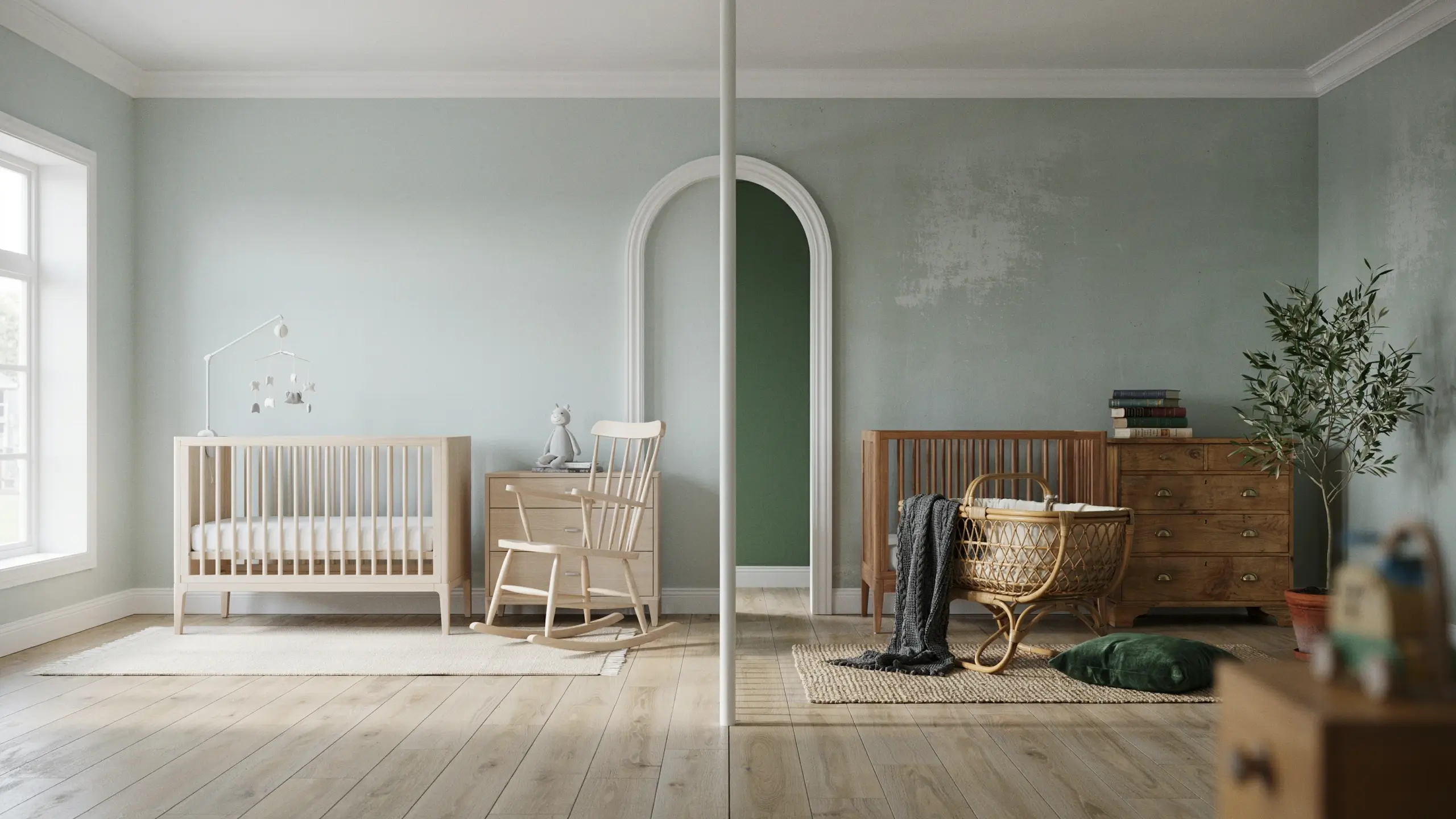
A woven rattan pendant or a small sculptural fixture changes the whole feel of the room for a relatively small cost. If you are renting, keep the original fixture in a labeled box and swap it back before you move out, most landlords do not mind as long as everything goes back to original condition. Choose a warm bulb, around 2700K, rather than a cool white one. It makes a huge difference in how cozy the room feels at 2 a.m.
15. Style Open Shelving Instead of a Bulky Closed Dresser
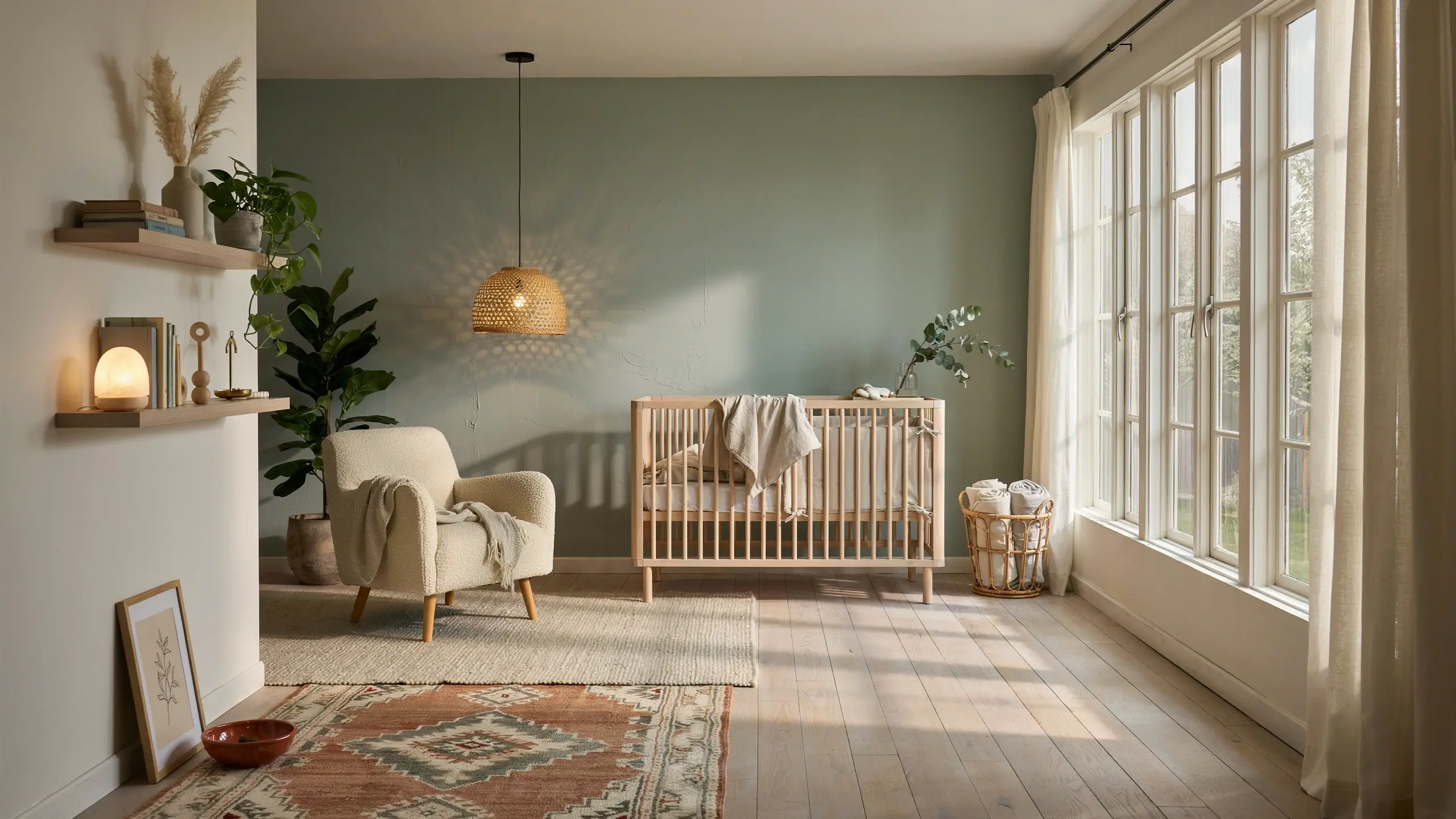
Open shelves let you display books, woven baskets, and small decor pieces against the sage wall, and they take up less visual weight than a large closed dresser in a small room. If your rental has ugly wire closet shelving, covering it with a simple adhesive shelf liner or wood-look contact paper is a weekend project that instantly elevates the space without needing landlord approval.
A Few Safety Notes Before You Decorate
A nursery has to look good and function safely, so a few things are worth knowing before you shop:
- Keep the crib bare. Padded bumpers are banned under federal safe sleep regulations. A fitted sheet on a firm mattress is the only thing that belongs in the actual sleep space.
- Skip corded blinds and curtains. Choose cordless cellular shades or a simple curtain rod instead. Dangling cords near a crib are a strangulation risk that is easy to avoid from the start.
- Anchor tall furniture to the wall. Dressers and bookshelves should be secured with anti-tip straps, especially once your baby starts pulling up on furniture.
- Skip mobiles directly over the crib once your baby can reach up, or remove them by the time they can push up on hands and knees.
None of this has to make the room feel less pretty. It just means the styling happens around the crib, not inside it.
Mistakes to Avoid in a Sage Green Nursery
- Skipping the sample step. Sage shifts more with lighting than almost any other color. Test it on poster board across a full day before committing to a wall.
- Matching every wood tone perfectly. It reads more staged than designed. A slight mix of warm and cool wood looks more natural.
- Going all pastel, all the time. A room that is entirely soft sage and cream can start to feel flat in photos. Add one deeper accent, whether it is navy, black, rust, or a smoky sage wall, to give the eye somewhere to land.
- Forgetting the room needs to grow up. Choose furniture and a palette that can shift from nursery to toddler room without a full redo. Convertible cribs and neutral-leaning accents save you money later.
Final Thoughts
Sage green earns its spot on every nursery mood board because it does something most colors cannot. It feels calm without being boring, neutral without being cold, and it looks just as good in a toddler room as it does the week you bring baby home. Whether you paint a full wall, add a few decals, or just layer in a terracotta throw and a wood crib, these sage green nursery ideas give you a starting point that will not feel dated in a year.
Pick two or three ideas that fit your space and your budget, start there, and let the room build slowly. A nursery does not need to be finished on day one to feel like home.
Which of these sage green nursery ideas are you trying first? Drop a comment below, I would love to see how your space turns out.




No Comment! Be the first one.