




How to Unclog Any Toilet With or Without a Plunger (What Actually Works)
You flush, the water rises instead of draining, and your stomach drops a little. It happens to everyone. Whether you’re standing in your own bathroom or you’re a guest at someone...

You flush, the water rises instead of draining, and your stomach drops a little. It happens to everyone. Whether you’re standing in your own bathroom or you’re a guest at someone else’s house digging through the closet for a plunger that doesn’t exist, a clogged toilet feels like an emergency even when it isn’t one.
The good news is that most clogs are simple. They’re usually just toilet paper or waste that’s built up faster than the water can push it through the trap. You don’t need special training to fix that, and you don’t always need a plunger either.
This guide walks through what actually works, in the order you should try it, whether you have a plunger on hand or not. It also covers the popular “hacks” that sound clever but mostly just waste your time.
Before You Do Anything, Stop the Overflow
If the water is rising toward the rim, your first move isn’t to grab a tool. It’s to stop more water from entering the bowl.
Take the lid off the tank and reach in. You’ll see a flapper at the bottom, the rubber piece that lifts when you flush and lets water drop into the bowl. Push it down and hold it closed, or lift the float arm attached to it. This stops the tank from refilling the bowl and buys you time to work without flooding the floor.
If you don’t want to mess with the tank, turn the shut-off valve behind the toilet clockwise. It’s usually a small oval or round knob low on the wall. Turn it by hand, not with a wrench, since too much force can snap it and turn a clog into a real plumbing emergency.
A few more things to do before you touch anything else:
- Put on rubber gloves. Toilet water carries bacteria you don’t want on your hands.
- Lay a towel or two around the base of the toilet in case of splashing.
- If the bowl is nearly full, scoop some water out into a bucket with a disposable cup. Working with a full bowl almost always ends in a mess.
- Do not flush again “just to see.” Repeat flushing is the number one reason small clogs turn into overflowing ones.
Once the water is under control, you can actually work on the clog.
If You Have a Plunger, Here’s the Method That Actually Works
Plunging seems foolproof, but most people do it wrong, which is why it sometimes feels useless even on a simple clog. The fix is almost always about the tool and the seal, not the amount of muscle you put into it.
Use the Right Plunger
A flat cup plunger is made for sinks and flat surfaces. For a toilet, you want a flange plunger, the kind with a smaller rubber flap that extends out from the cup. That flange fits into the toilet drain and creates an actual seal, which is the entire point.
Get Water Into the Cup
A plunger only works through water pressure, not air. If the bowl is low, add water until the cup is fully submerged. Plunging with the cup half full of air just pushes air around and does nothing to the clog.
Insert at an Angle, Then Straighten
Tilt the plunger slightly as you place it into the drain opening so air can escape, then straighten it once the flange is seated. This is the step most people skip, and it’s why their first few plunges just splash water everywhere instead of building pressure.
Push Gently First, Then Commit
Your first push should be slow, just enough to let out trapped air without breaking the seal. After that, plunge with firm, steady strokes for 15 to 20 seconds. You’re not trying to smash through the clog. You’re using water pressure to push and pull it until it breaks apart.
Don’t Break the Seal Mid-Stroke
Lifting the plunger too far or letting it tip loses your pressure and forces you to start over. Keep the flange sealed against the drain the whole time you’re working.
Test With One Flush
If the water drains normally, you’re done. If it’s still slow, rest for a minute and do another round. Two or three focused rounds of correct plunging beat ten minutes of frantic, sloppy plunging every time.
Common Plunging Mistakes to Avoid
- Using a sink-style flat plunger on a toilet
- Plunging with the cup mostly out of the water
- Plunging as hard and fast as possible instead of steady and controlled
- Flushing repeatedly between attempts instead of resting and reassessing
- Giving up after one try when two or three rounds is normal
No Plunger? Here’s What Actually Works, In Order
If there’s no plunger around, don’t panic. Most soft clogs, the kind caused by toilet paper or waste, will respond to one of these methods. Start from the top of this list since it goes from easiest and safest to more involved.
1. Hot Water and Dish Soap
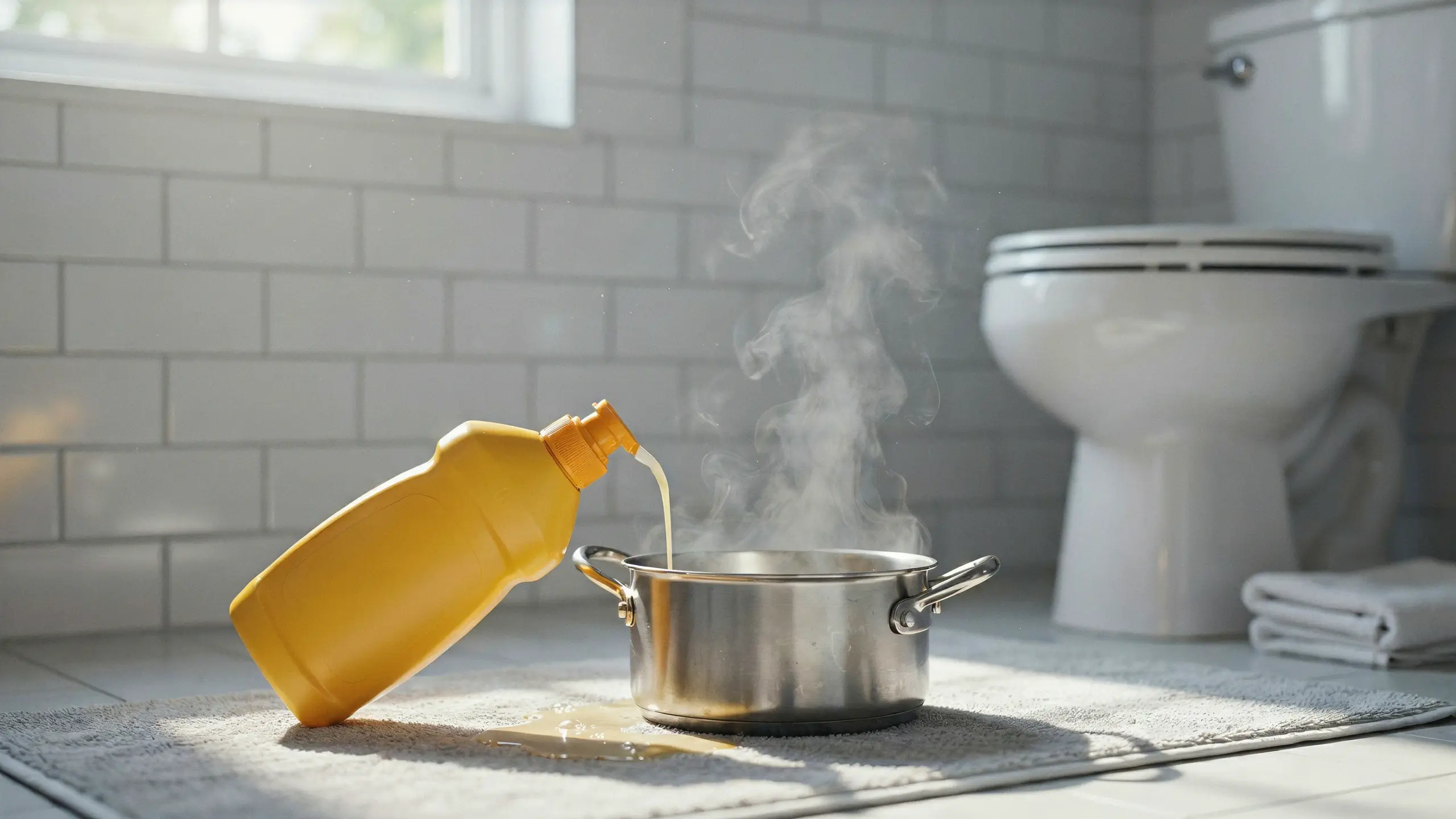
This is the classic for a reason. It works on soft, organic clogs almost as well as plunging does.
Squirt about a half cup of dish soap directly into the bowl, letting it drop down toward the drain rather than just sitting on top of the water. Dish soap is slippery and starts breaking down waste and paper almost immediately.
Heat a few cups of water on the stove or in the microwave until it’s hot but not boiling, then pour it in from waist height so it has some force behind it. Boiling water can crack porcelain, especially on older toilets, so stick to hot tap water or water that’s just short of boiling.
Let it all sit for 10 to 15 minutes. In a lot of cases, you’ll see the water level start to drop on its own. Once it does, flush once to confirm the clog is gone.
2. Baking Soda and Vinegar
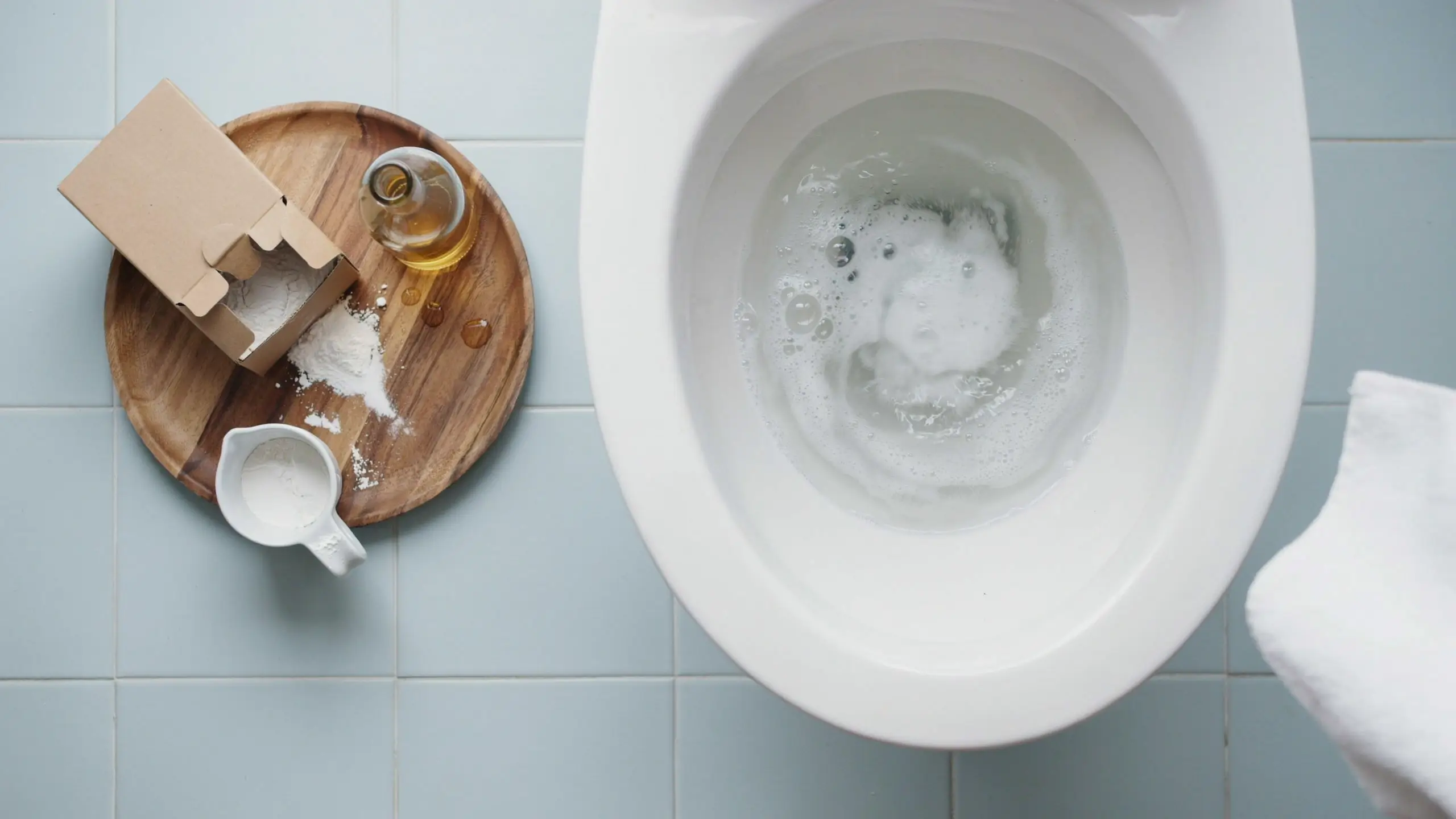
This one works through a fizzing reaction that helps loosen material stuck in the trap, and it’s a good next step if soap and hot water alone didn’t fully clear things.
Pour about a cup of baking soda into the bowl, followed by two cups of vinegar. It will fizz right away, so give it a minute. Let the mixture sit for about 20 to 30 minutes, then follow with a bucket of hot water poured from a height. Flush once to test.
This combination is gentle enough to use on septic systems and won’t damage your pipes, which makes it a safe one to reach for.
3. A Wire Coat Hanger
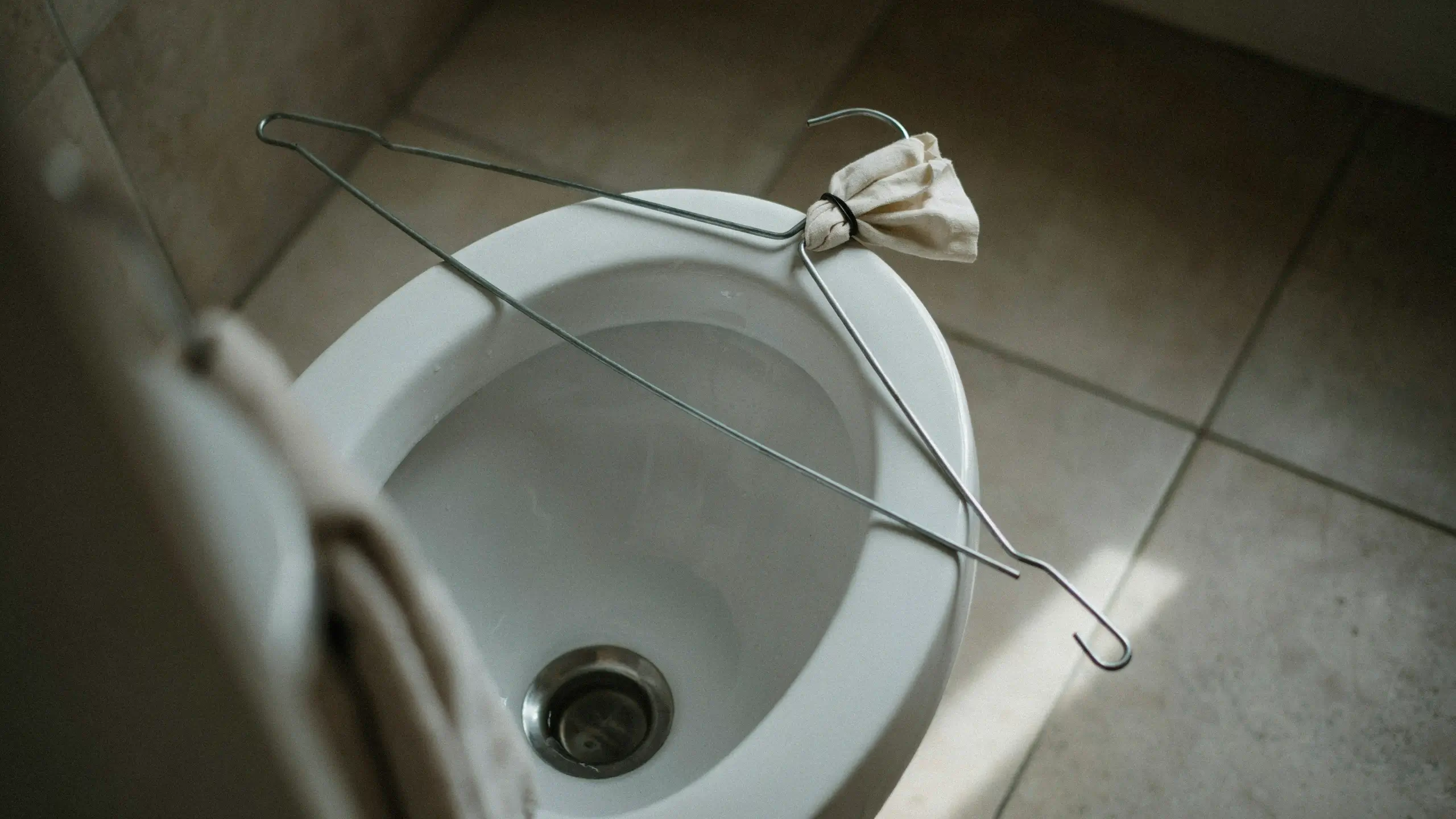
If soap and fizzing haven’t worked, a coat hanger can act as a makeshift auger for a clog that’s sitting close to the trap opening.
Straighten the hanger, then bend one end into a small hook. Wrap the hook in an old rag or a plastic bag secured with a rubber band so you’re not scratching the porcelain. Feed it gently into the drain and work it in a twisting motion to break up or snag the clog, then pull back slowly.
This method takes a light touch. Forcing a metal hanger too hard can scratch the bowl or push a clog in deeper instead of breaking it up, so go slow and stop if you feel real resistance.
4. A Plastic Water Bottle
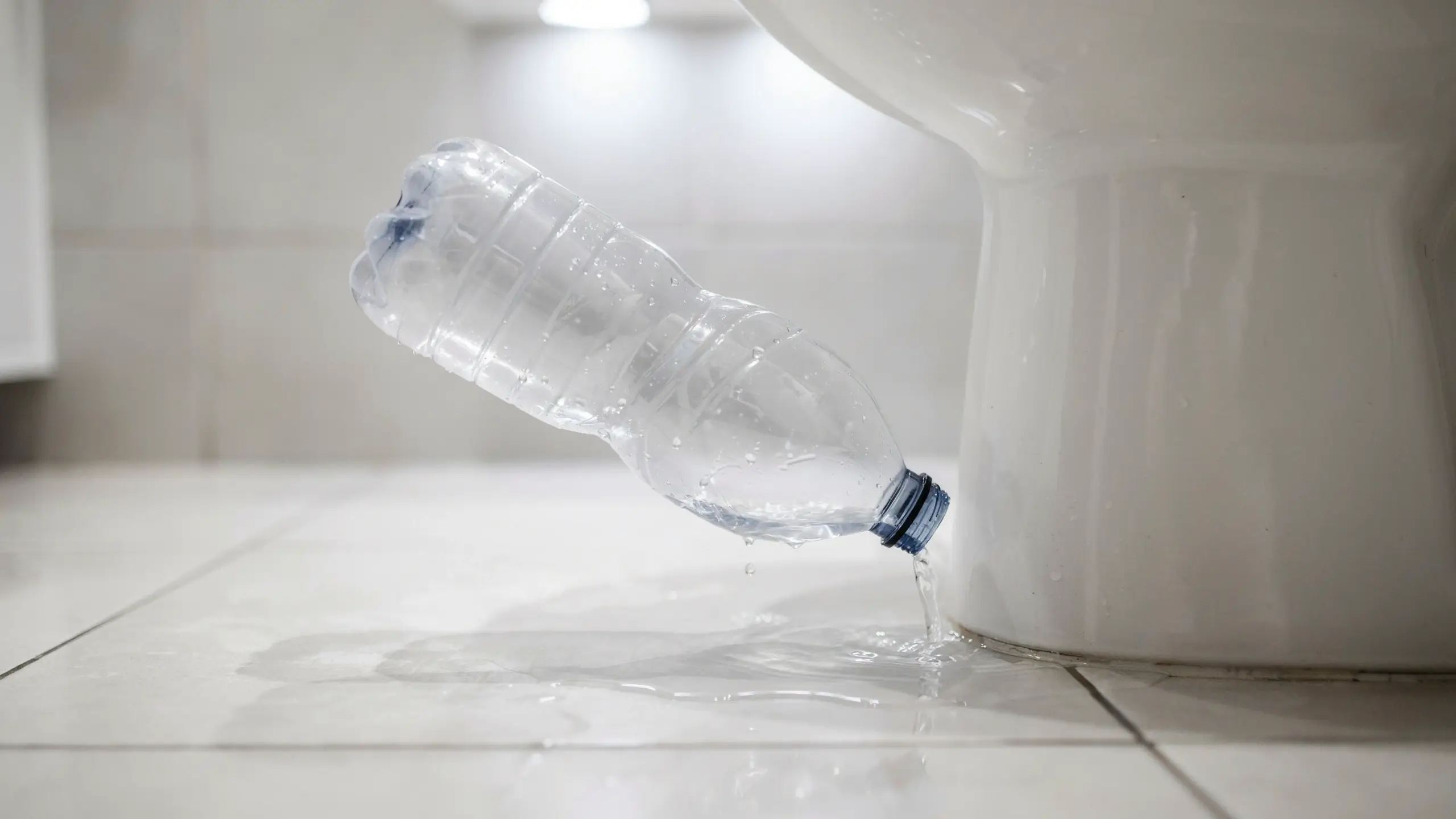
An empty water bottle, the kind with a rigid plastic body, can mimic some of what a plunger does through force rather than suction.
Cut the bottom off the bottle, then hold the bottle upside down with the cap removed so it acts like a funnel and a piston in one. Push it in and out of the drain opening a few times, similar to a plunging motion. It won’t create the same seal a real plunger does, but the water force it pushes through the drain can be enough for a mild clog.
5. A Wet/Dry Shop Vac
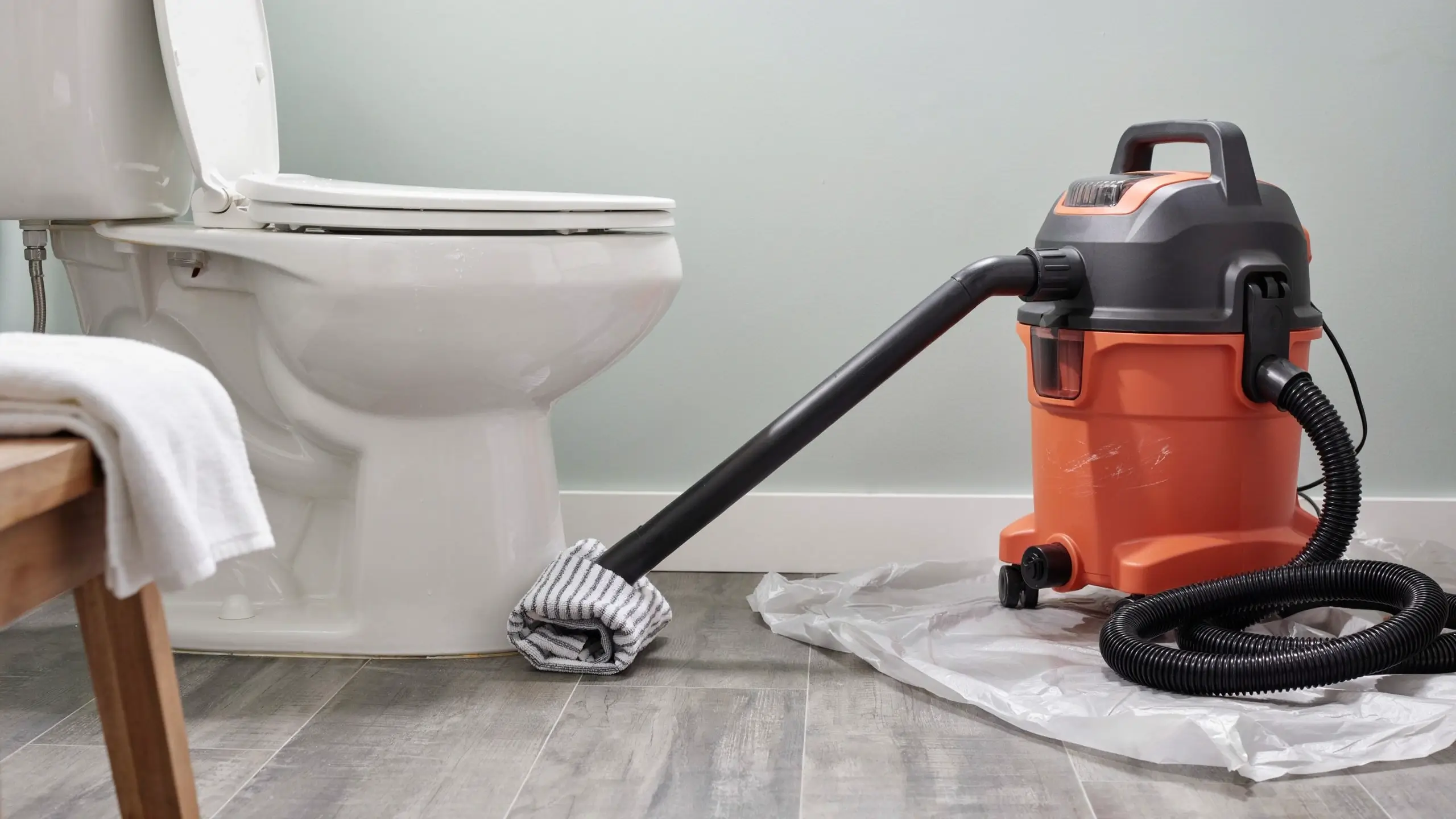
If you have a shop vac, this is one of the more effective plunger-free methods, especially for clogs that liquid alone won’t touch.
Set the vac to wet mode, never dry, since sucking up standing water with a dry-mode vac can damage the motor. Create a tight seal around the drain opening with an old towel or a plastic bag wrapped around the hose, then turn it on and let it pull the clog out into the vacuum instead of pushing it further down.
This is messier than the other methods and you’ll want to sanitize the vac hose and canister thoroughly afterward, but it’s genuinely effective on clogs that resist soap and hot water.
6. A Sturdy Toilet Brush
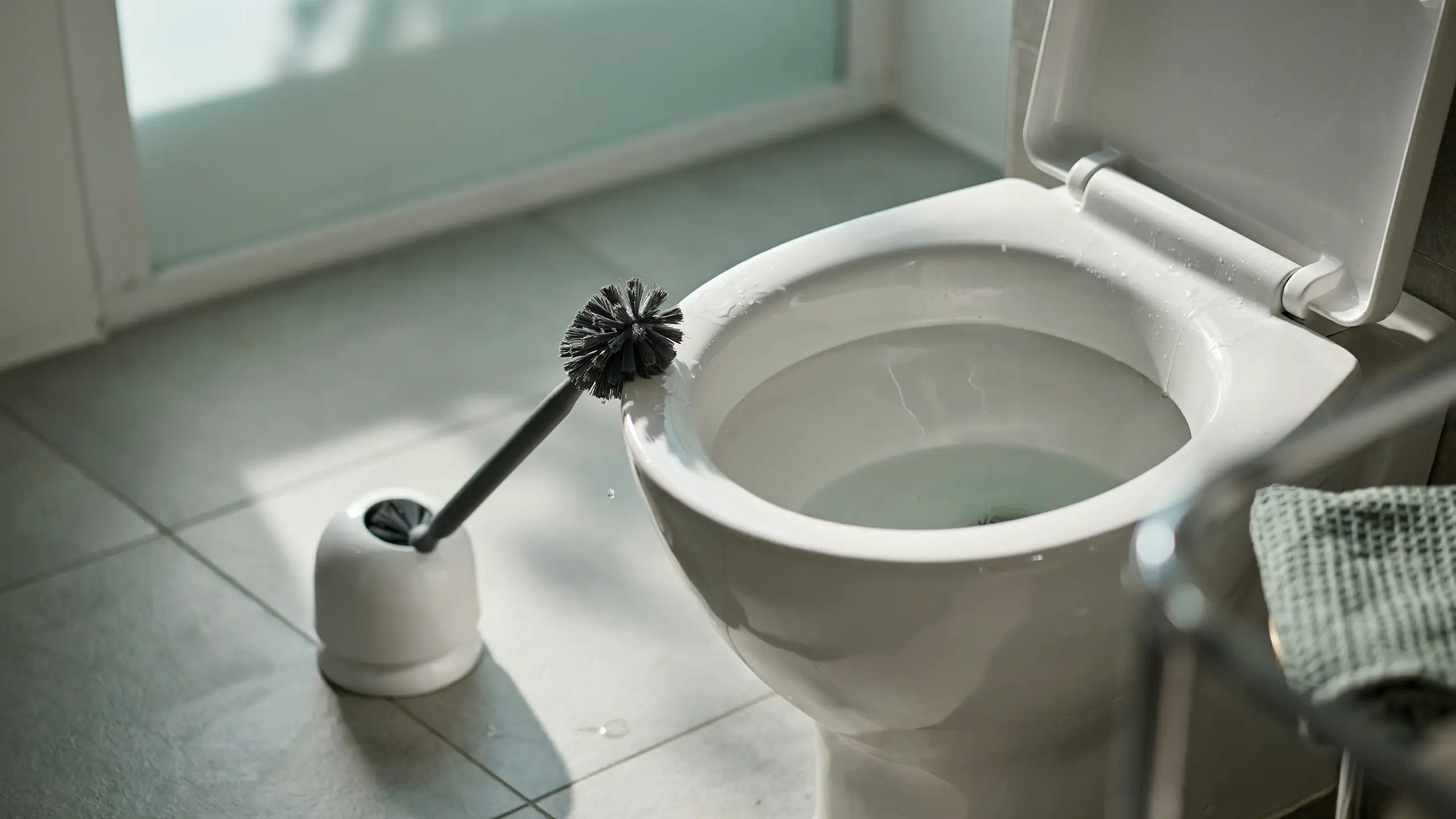
Not ideal, but it works in a pinch if it’s genuinely all you have. A stiff toilet brush can be used with a pushing and twisting motion similar to plunging, mostly to break up soft paper clogs.
It won’t create suction the way a real plunger does, so treat it as a last resort rather than your first move, and expect to follow up with hot water and soap afterward.
7. Just Give It Time
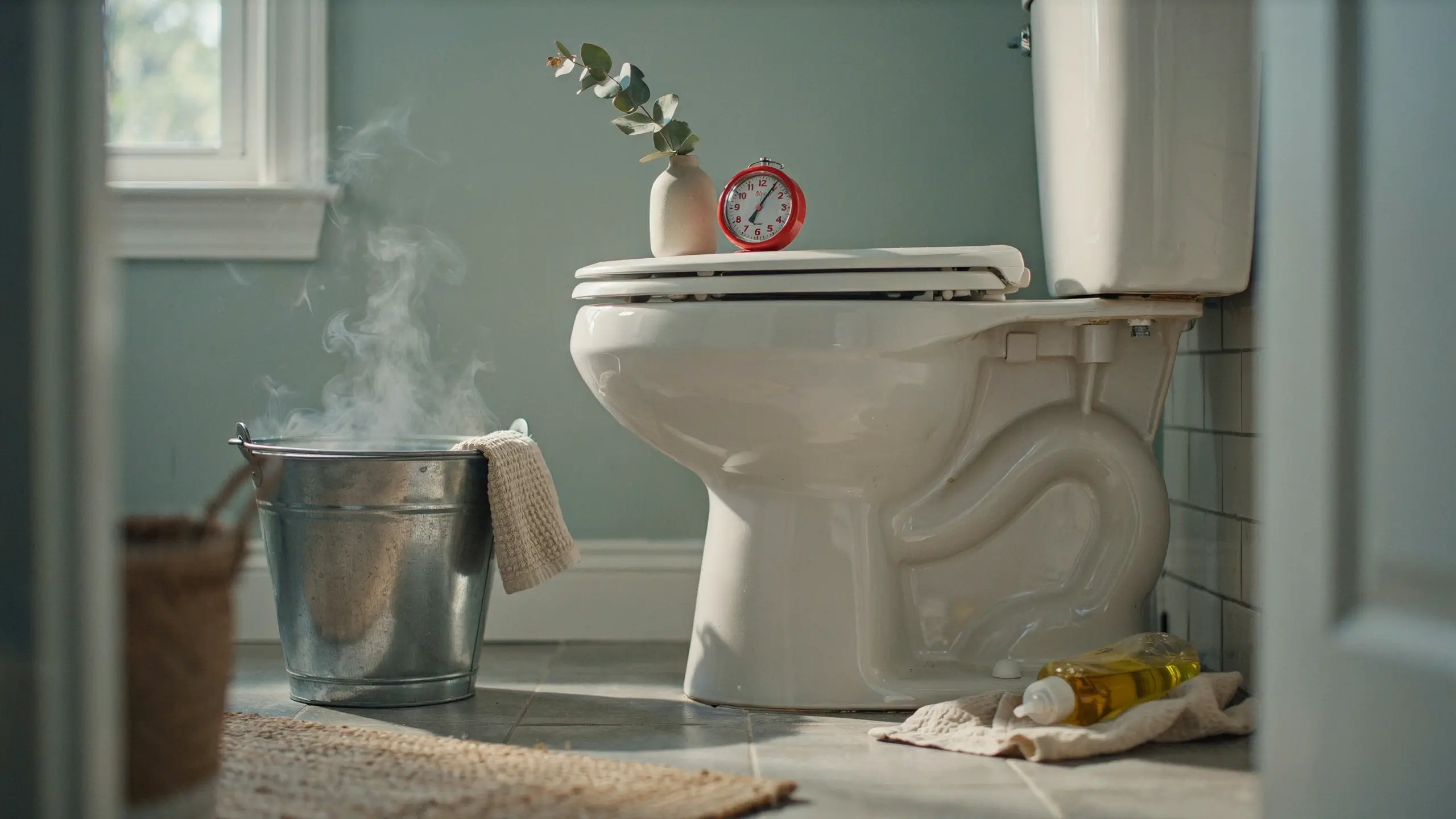
If the clog is purely toilet paper and the bowl isn’t close to overflowing, sometimes the simplest fix is patience. Toilet paper is designed to break down in water. Left alone for an hour or two, especially with hot water and dish soap already added, it often disintegrates enough to flush through on its own.
This only applies to paper clogs. If something solid went down, like a toy or a wipe, time won’t help and you’ll need mechanical removal instead.
Toilet Clog “Hacks” That Don’t Actually Work
Since the whole point here is figuring out what actually works, it’s worth calling out a few popular ideas that sound clever online but mostly waste time or cause new problems.
Coca-Cola
The idea is that the carbonation and acidity break down the clog the way it supposedly cleans rust. In reality, soda is mostly sugar and water by the time it reaches the clog, and it has nowhere near the concentration needed to do anything soap and hot water can’t already do better.
Alka-Seltzer or Bath Bombs
The fizzing looks promising, but it’s mostly just carbon dioxide bubbles with no real cleaning agent behind them. Baking soda and vinegar does the same fizzing action with actual grease-cutting and buffering properties.
Chemical Drain Cleaners
These are made for pipes, not standing toilet bowls, and pouring them into a bowl that’s already full of water dilutes them until they’re nearly useless. They can also damage older pipes and create a genuinely dangerous situation if a plumber later needs to open up the line while chemical residue is still present. Skip these for toilet clogs specifically.
Boiling Water Straight From the Kettle
Hot water helps, but water that’s actually boiling can crack porcelain, especially in colder bathrooms or older toilets. Stick to hot tap water instead.
Excessive Force With Any Tool
More pressure isn’t automatically better. Plunging or snaking too aggressively can shift the toilet’s seal at the base, crack the bowl, or push a clog further into the pipe where it’s much harder to reach.
Mistakes That Make a Clog Worse
- Flushing repeatedly. Every flush adds more water on top of a blockage that already can’t drain. This is the single most common cause of an overflow.
- Skipping the shut-off step. If the bowl is close to the rim, dealing with the water level first prevents a small clog from becoming a bathroom flood.
- Mixing chemical cleaners with home remedies. Never combine bleach with vinegar or with drain cleaners. The combination can create harmful fumes.
- Using the wrong plunger. A flat sink plunger simply can’t seal against a toilet drain the way a flange plunger can.
- Giving up too soon. Most home methods need 15 to 30 minutes of sitting time to actually work. Pulling the trigger on a plumber call after five minutes often means paying for a fix you could have done yourself.
When to Stop and Call a Plumber
Most clogs respond to the methods above within a round or two. Call a professional if:
- The toilet clogs repeatedly even after you’ve cleared it
- Multiple drains in the house are backing up at the same time
- You hear gurgling from other drains, like the tub or sink, when you flush
- Water backs up into the tub or shower instead of draining from the toilet
- None of the home methods have made any difference after a couple of honest attempts
- You suspect a solid object, like a toy or a large wad of wipes, is stuck in the line
At that point, more effort at home usually means more risk of cracking the bowl or damaging pipes, and a plumber with a proper auger can clear it faster and more safely than continued DIY attempts.
Final Thoughts
A clogged toilet feels like a crisis in the moment, but it’s rarely as serious as it seems. Whether you’ve got a plunger ready to go or you’re working with dish soap and a bucket of hot water, most clogs clear up faster than you’d expect once you know which methods actually pull their weight.
Keep this guide bookmarked for the next time it happens, because it always happens at the least convenient moment. Save it to your cleaning and home hacks board on Pinterest so it’s there when you need it.
Have a method that’s saved you in a pinch? Drop it in the comments. I’d love to hear what’s worked for you.






No Comment! Be the first one.