




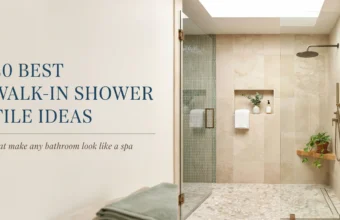
20 Best Walk In Shower Tile Ideas That Make Any Bathroom Look Like a Spa
There’s something about a beautiful walk-in shower that changes everything. You step into your bathroom and instead of just seeing a utility space, you see a room worth lingering in. The tile...

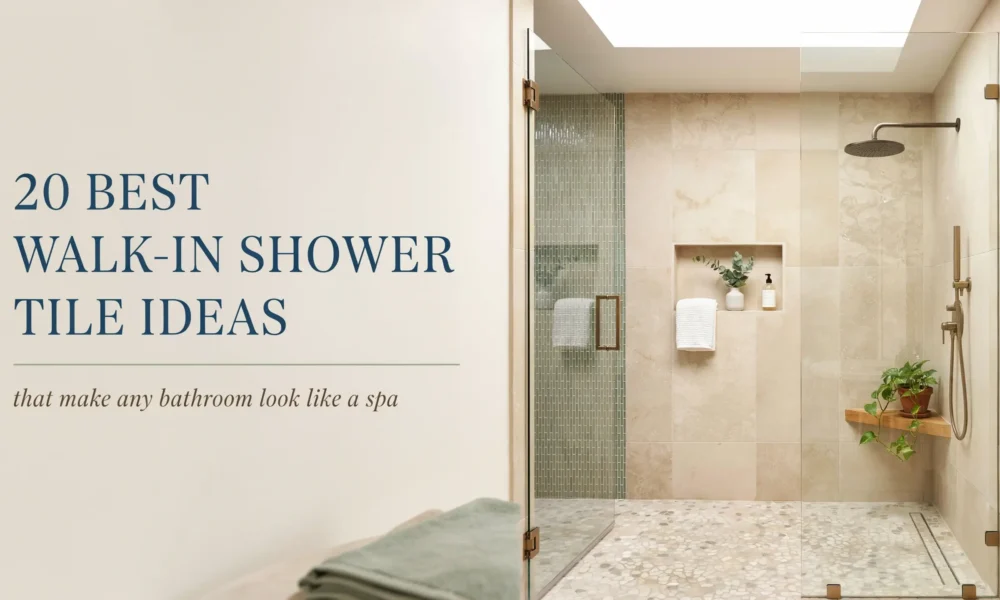
There’s something about a beautiful walk-in shower that changes everything. You step into your bathroom and instead of just seeing a utility space, you see a room worth lingering in. The tile is almost always the reason.
I’ve spent a lot of time studying bathroom renovations and scrolling through more shower tile photos than I care to admit, and I’m convinced that the tile choice is the single biggest lever you can pull to transform a shower from basic to breathtaking. Not the fixtures. Not the shower head. The tile.
Whether you’re planning a full remodel, updating a dated space, or just dreaming right now from your Pinterest board, this list has 20 of the best walk-in shower tile ideas that are working in real bathrooms in 2025 and 2026. Some are classic. Some are fresh. All of them are worth saving.
Before You Pick a Tile: Two Things That Change Everything
Grout color matters more than most people realize. A matching grout blends the tiles together for a seamless look. A contrasting grout highlights the pattern and shape. White grout looks crisp but stains more visibly over time. Dark grout hides soap buildup and suits bold designs. Whatever you choose, use epoxy grout in a shower. It resists moisture and staining far better than sanded grout.
Floor and wall tile don’t have to match, but they should relate. Your shower floor needs a matte or textured finish for traction. Glossy tile on wet floors is a slip hazard. Many designers use glossy or polished tile on the walls and matte tile underfoot. It creates contrast, it’s practical, and it works beautifully.
Now, on to the ideas.
The 20 Walk-In Shower Tile Ideas
1. Classic White Subway Tile With a Contrasting Grout Twist
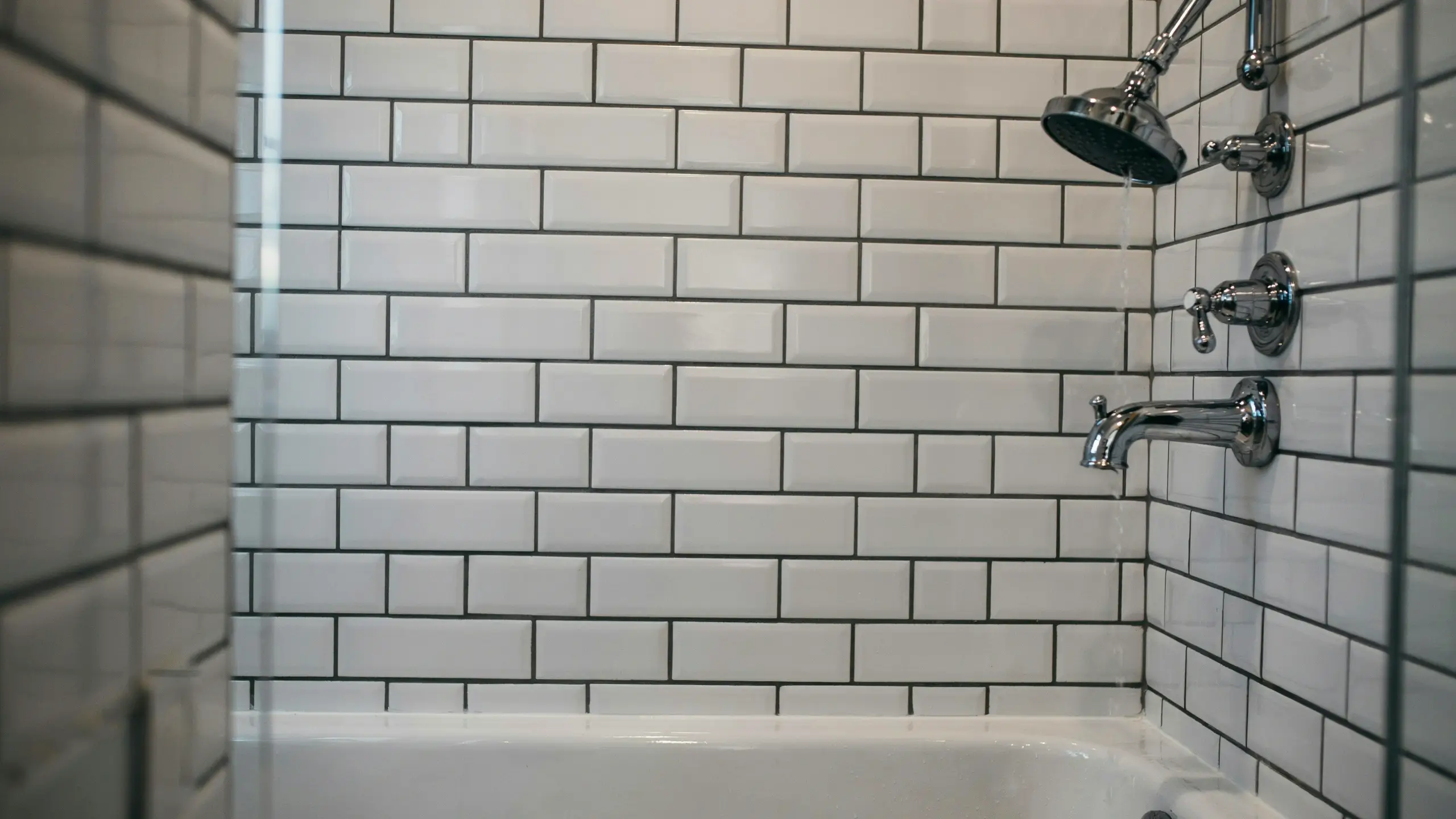
White subway tile is the one idea that never goes stale, and that’s not an accident. The 3×6 inch brick shape reflects light, reads clean, and plays well with every fixture finish from matte black to polished chrome.
What most people miss is the grout. A bright white subway tile with gray or charcoal grout suddenly looks entirely intentional and architectural instead of default. The pattern pops. The grid becomes a feature.
Go with a 1/3 offset (sometimes called a running bond or brick pattern) rather than a straight stack. It’s a subtle shift that adds movement and avoids the dated look of a stacked grid.
Budget note: Ceramic subway tile is often the most affordable option on the market, sometimes under $2 per square foot, making this a great choice for anyone renovating on a budget.
2. Large Format Floor-to-Ceiling Porcelain Slabs
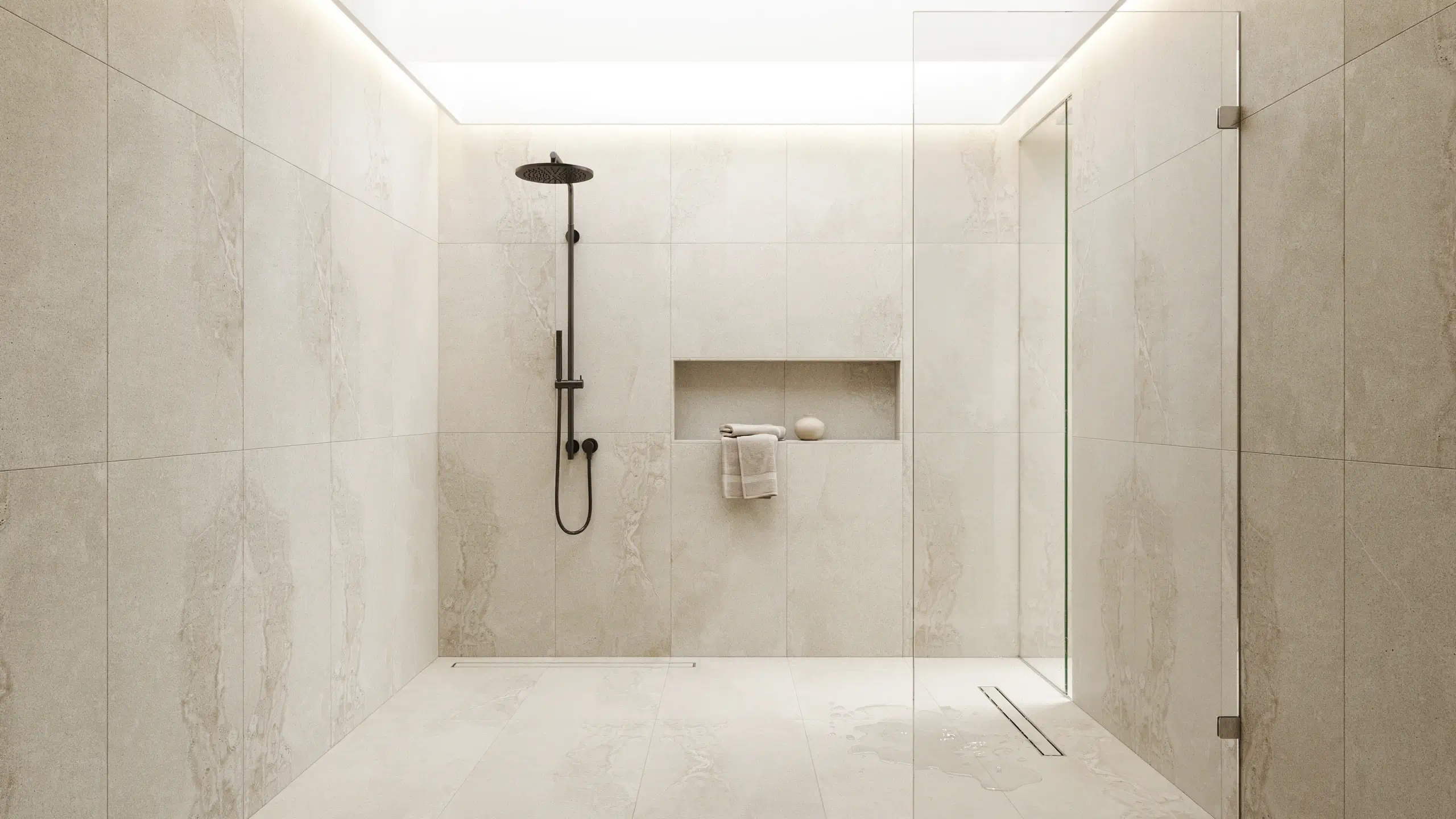
If there’s one tile trend that has completely taken over high-end bathroom design, it’s large format tile. We’re talking 24×48 inches or larger, installed vertically from the shower floor straight up to the ceiling with almost no visible grout lines.
The effect is extraordinary. The shower looks seamless. The space reads larger. Cleaning becomes dramatically easier because there’s far less grout to scrub. One source noted that large-format installation can reduce exposed grout area by up to 70 to 80 percent compared to standard subway tile. That’s a genuine quality-of-life improvement.
Use neutral tones here: soft white, warm cream, pale gray, or a gentle greige. The drama comes from the scale, not the color.
Important: Large format tiles require a perfectly flat substrate. Any unevenness in the backer board will show up as lippage, where adjacent tiles sit at slightly different heights. This is one of the few tile jobs worth hiring a professional for, especially in a shower where walls rarely start perfectly plumb.
3. Marble-Look Porcelain for Luxury on a Budget
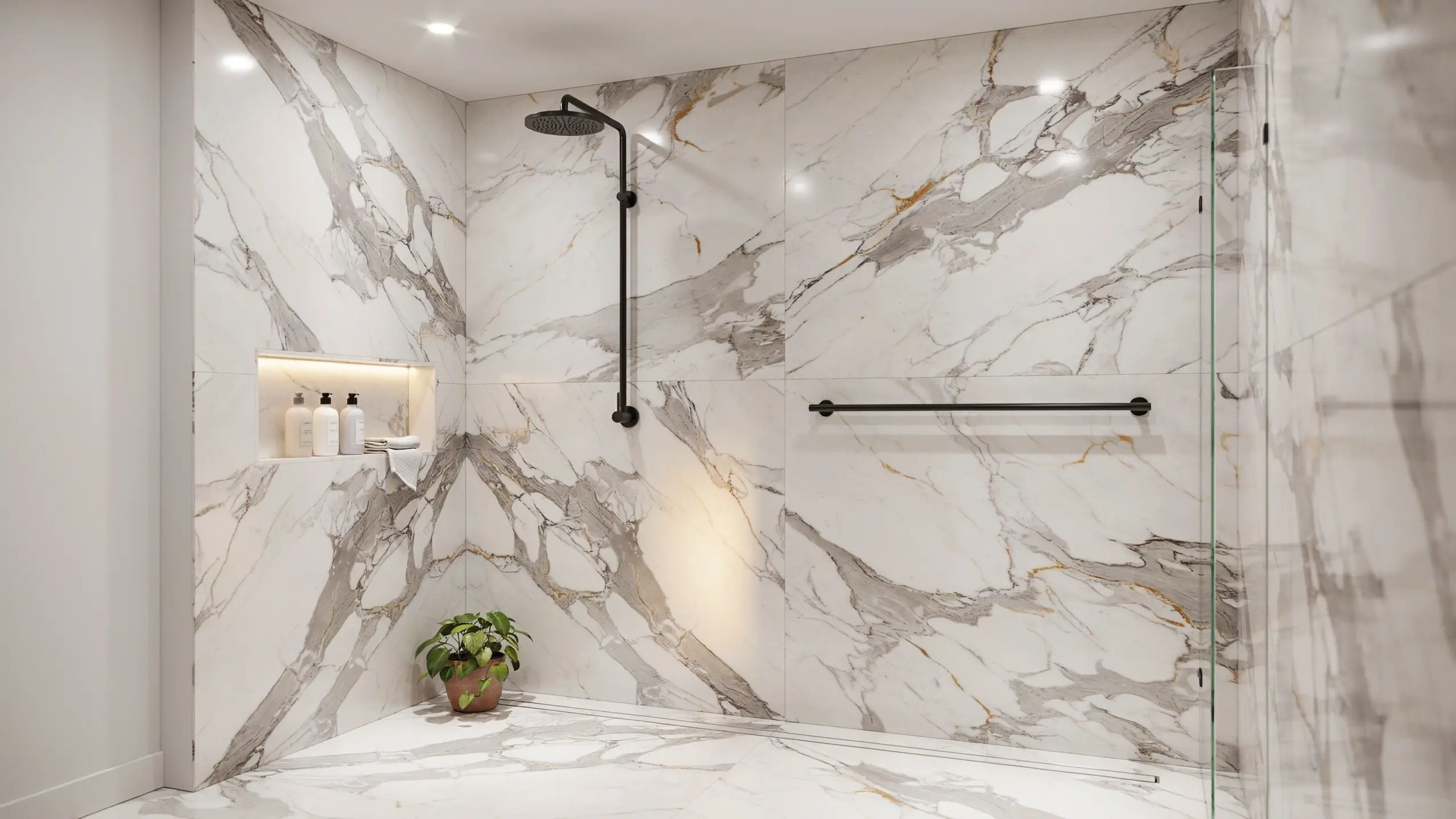
Actual marble in a shower is gorgeous and also genuinely high-maintenance. It requires sealing regularly, reacts to acidic products, and can stain. Marble-look porcelain solves all of that. The technology has gotten so good that from a normal viewing distance, it’s nearly impossible to tell the difference.
Look for patterns that include natural variation in the veining, not a repeating digital print. Good marble-look porcelain has slight tonal shifts from tile to tile that mimic how real stone actually looks. The Calacatta style (white with bold gray or gold veins) and the Carrara style (soft white with delicate gray veins) are both perennial favorites.
Pair with polished nickel or matte black fixtures. Both work beautifully against marble-look tile.
4. Herringbone Accent Wall Behind the Showerhead
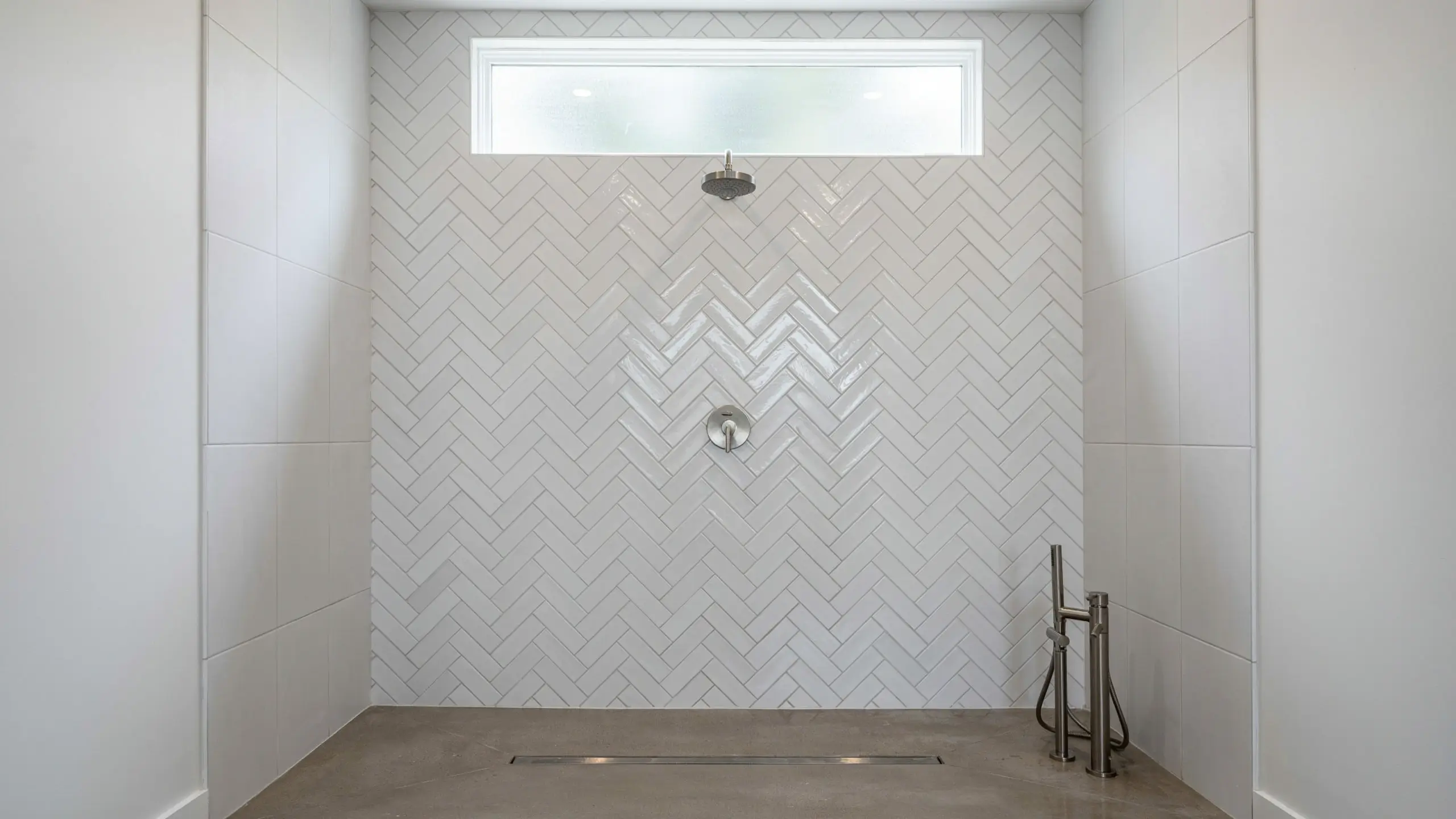
Instead of tiling your entire shower in a herringbone pattern, which can get expensive and visually busy, use it strategically on the single wall behind the showerhead or opposite the entrance.
That one wall becomes a focal point. The rest of the shower stays calm and simple, letting the herringbone wall do all the work.
Classic white subway tile in a herringbone layout is one of the most cost-effective ways to achieve a high-end look. You can also use marble mosaic or a stacked stone look in herringbone for something more textural and organic. The V-shaped zigzag pattern draws the eye and adds movement to what would otherwise be a flat surface.
Design tip: Run herringbone vertically rather than horizontally if you want the space to feel taller.
5. Zellige Tile for a Handmade, Textural Look
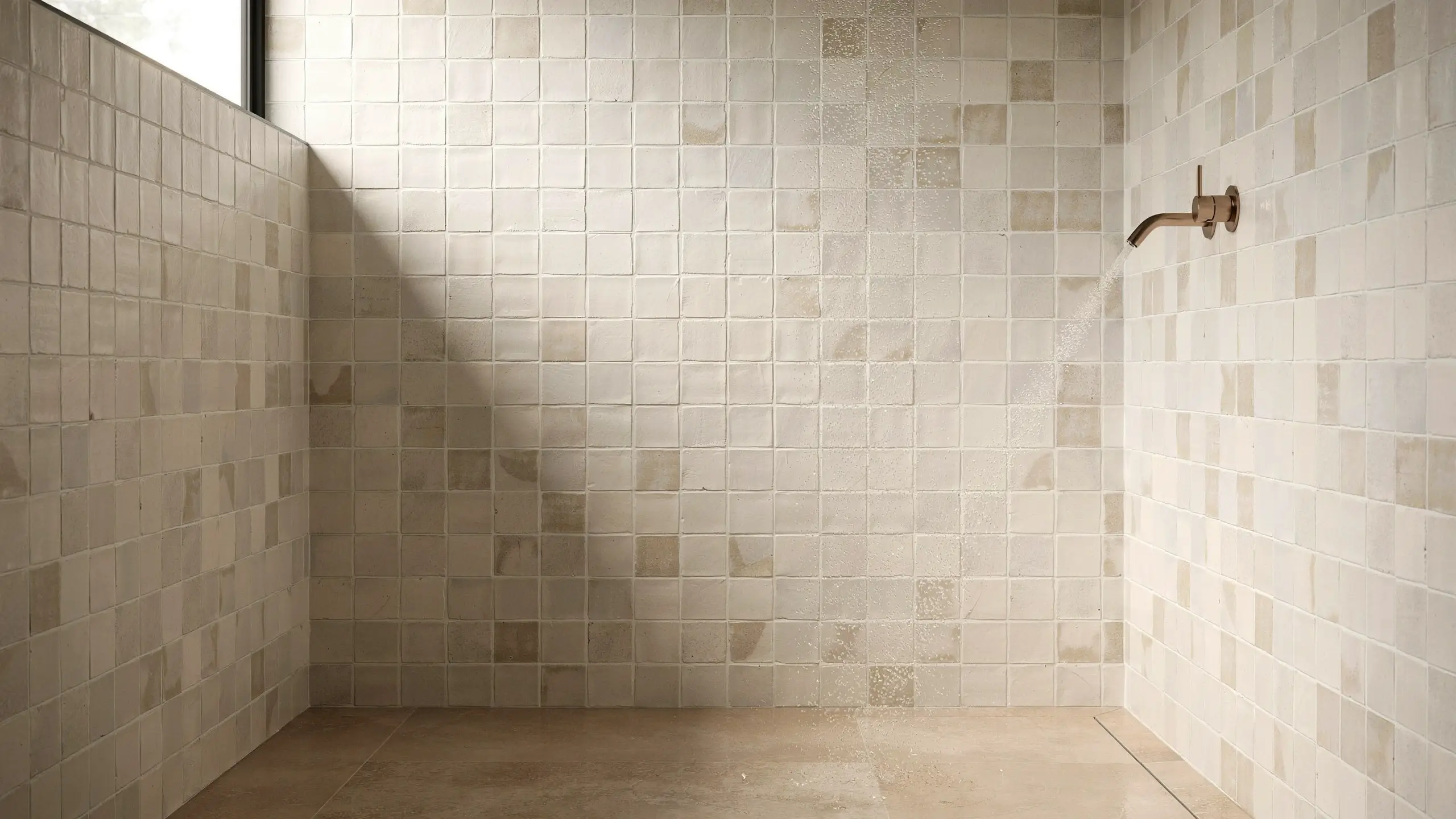
Zellige (pronounced zeh-LEEZH) is having a genuine moment right now, and for good reason. These are hand-glazed, handmade clay tiles from the Moroccan tile-making tradition. Every single tile is slightly different: the glaze pools differently, the edges vary, the surface catches light in unpredictable ways. That variation is the whole point.
In a shower, zellige creates a surface that looks alive. The light shifts across it depending on where you’re standing. An all-white zellige shower wall looks completely different at 7 in the morning with artificial light versus a sunny Saturday afternoon. It’s almost architectural rather than decorative.
If authentic zellige is outside the budget, look for zellige-look ceramic tiles. The visual effect is very similar, the price is significantly lower, and they’re easier to install since authentic zellige tiles can be irregular in thickness.
Color direction: White and off-white are the most popular, but sage green, terracotta, and deep teal zellige looks are gaining ground fast for 2025 and 2026.
6. Pebble Stone Floor for a Spa-at-Home Feel
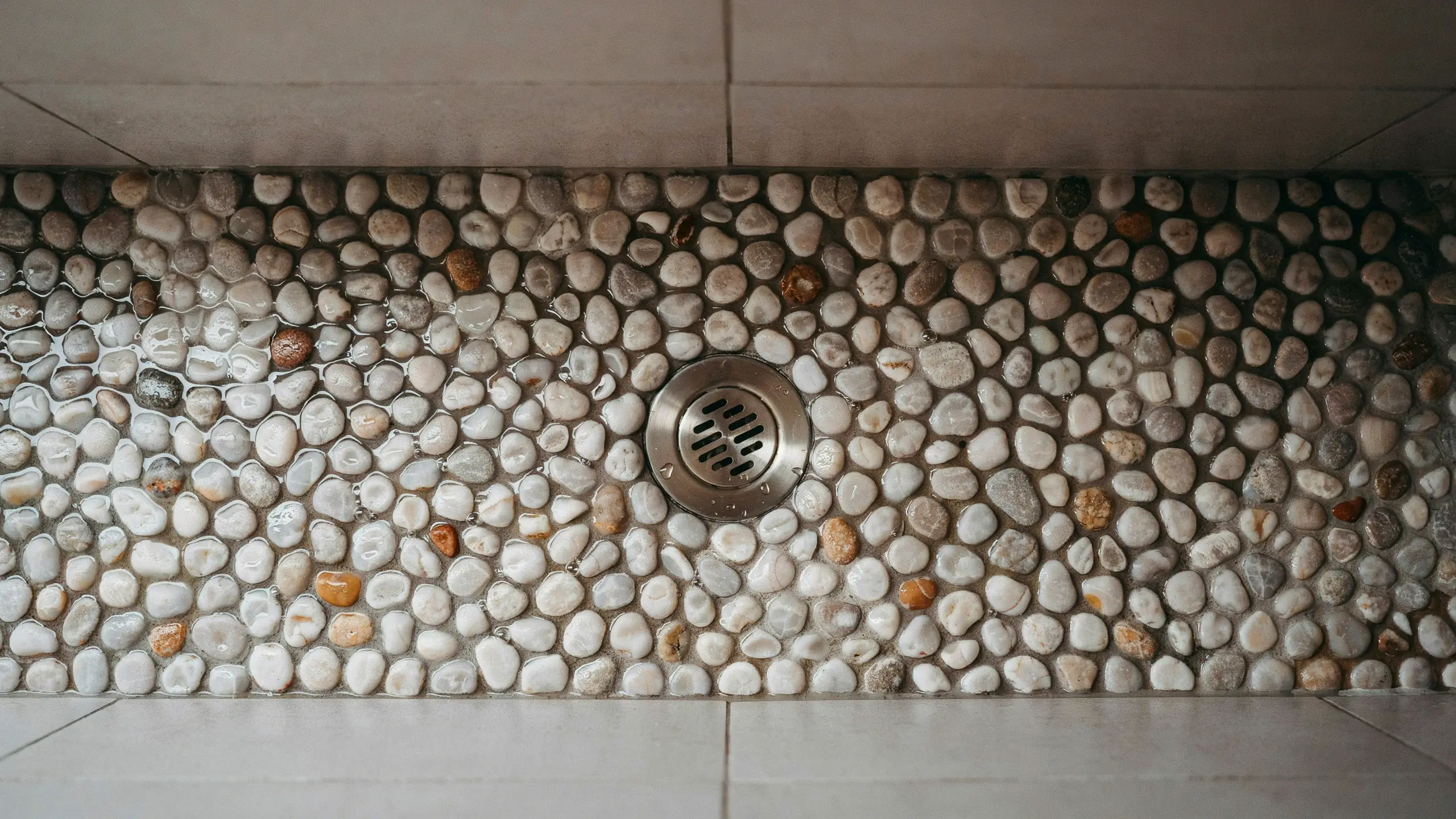
The pebble tile floor might be the most sensory of all the options on this list. Walking on smooth river stones underfoot while water runs over them is a full spa experience in your own home.
Pebble tile comes in mesh-backed sheets, so installation is more approachable than it looks. The many small stones create natural traction, which makes it inherently safe for a wet shower floor. The grout lines between the stones tend to accumulate soap and mineral buildup more than flat tile, so sealing is important and occasional scrubbing with a stiff brush is part of the maintenance routine.
Stick with neutral stone colors: ivory, light gray, tan, and brown all look organic and timeless. Pair the pebble floor with large, flat tiles on the walls so the design stays grounded.
7. Black and White Checkerboard
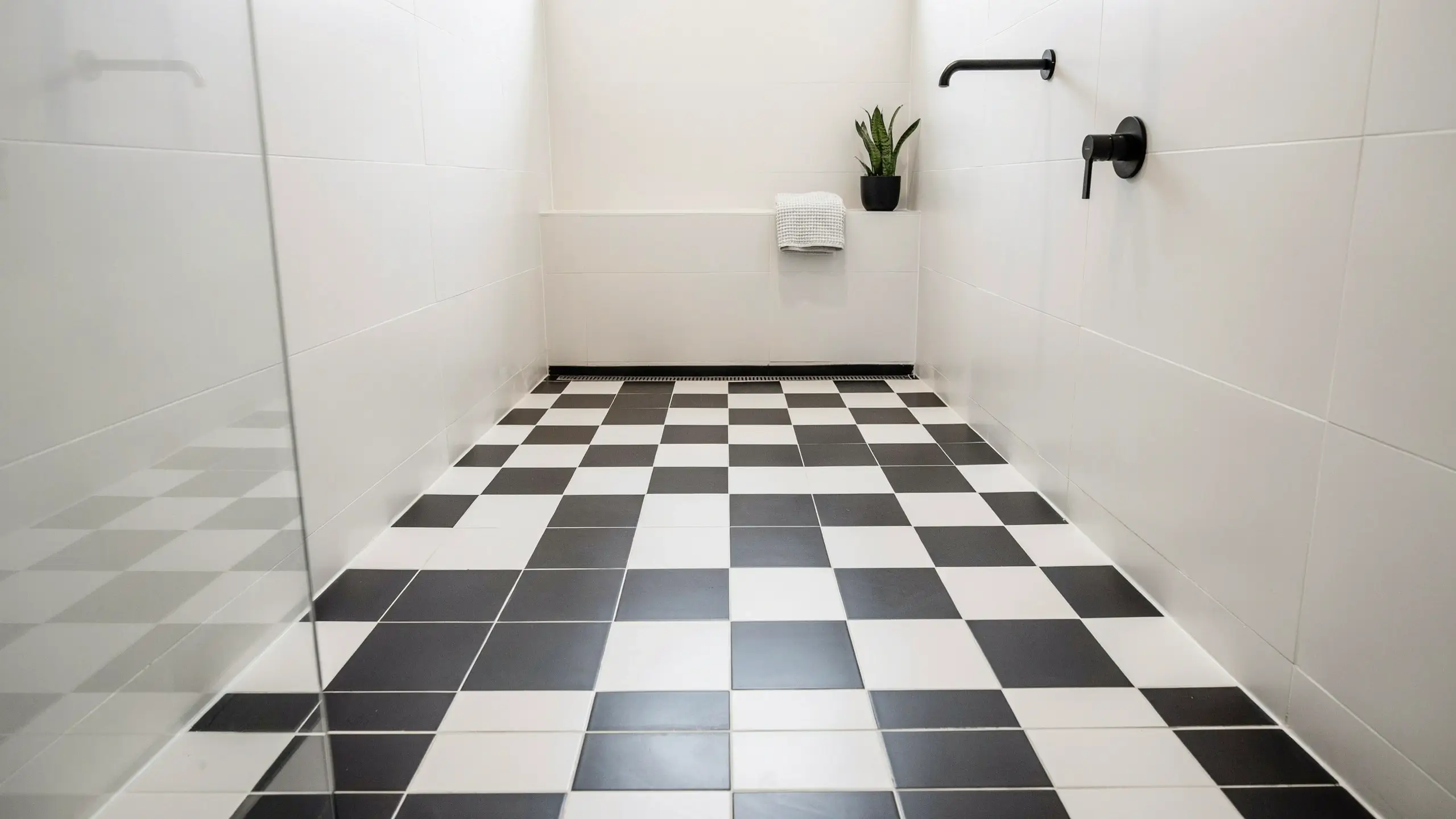
The checkerboard pattern lives at the exact crossroads of retro and modern. It’s been in bathrooms since the 1920s and it’s still being pinned, saved, and installed in new builds right now. That kind of longevity means something.
In a walk-in shower, a checkerboard accent wall or full-floor checkerboard layout makes a strong visual statement without requiring expensive materials. Standard 4×4 or 6×6 ceramic tile in black and white does the job beautifully.
The key is scale. A checkerboard in small 2×2 tiles reads very differently than one in large 12×12 tiles. Smaller tiles create a busier, more retro feel. Larger tiles read more modern and graphic.
Trending twist: The checkerboard look using two different tile materials, such as a matte zellige-look in one color and a glossy ceramic in another, adds texture to the contrast and looks particularly current.
8. Penny Round Mosaic for the Floor
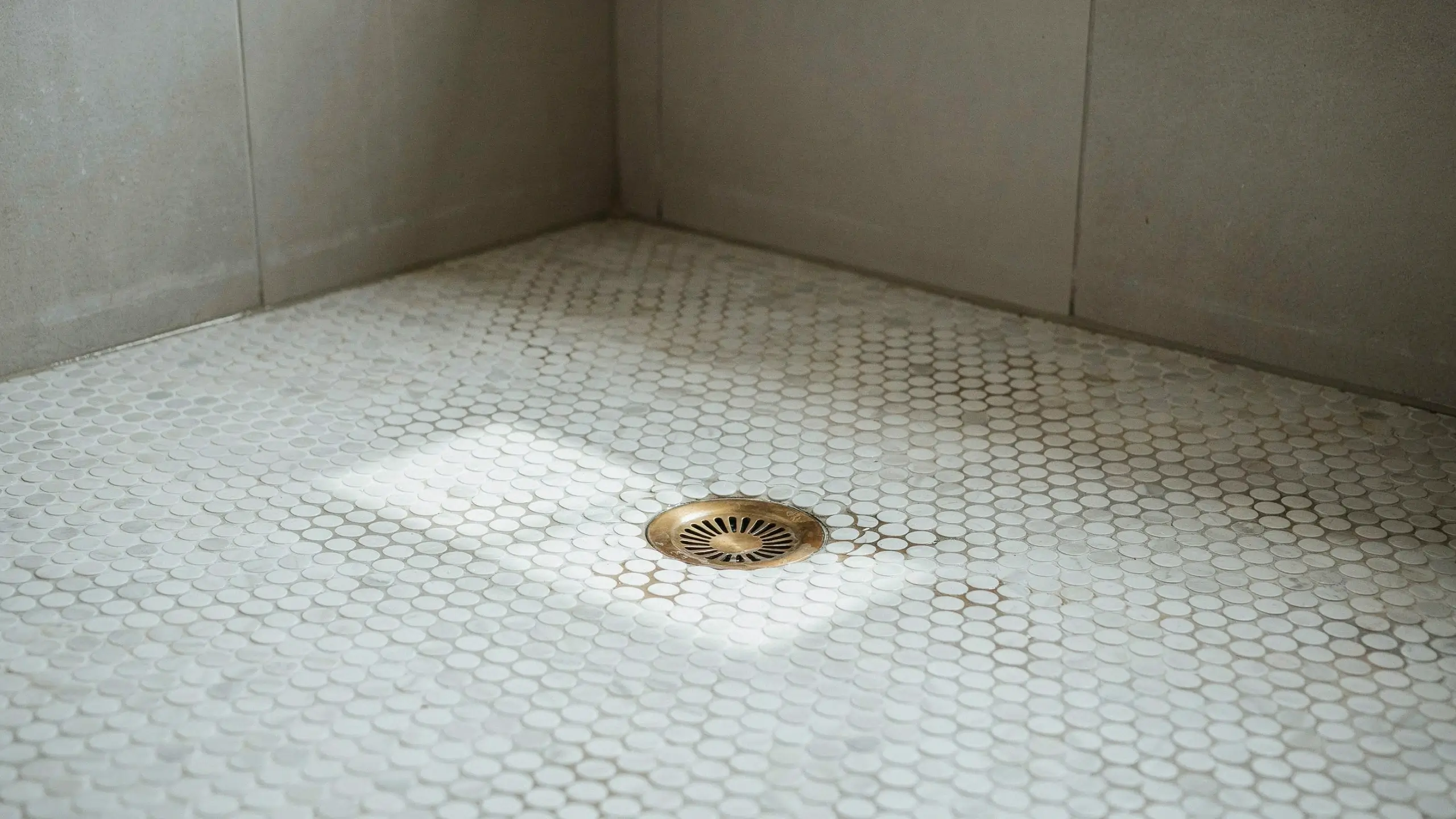
Penny rounds are small, circular tiles, usually 1 inch in diameter, arranged in a mosaic sheet. On a shower floor, they are both beautiful and practical. The circular shape creates natural curves that follow the floor slope toward the drain without the awkward cuts you’d need with square or rectangular tile.
The abundance of grout lines between the rounds provides excellent traction, which is a major safety advantage.
Copper or gold penny rounds create a vintage-luxe feel. White or light gray reads clean and spa-like. Black creates a bold, dramatic floor that contrasts beautifully with white or light-toned walls.
For the walls, use a larger, simpler tile so the penny floor has room to be the star.
9. Travertine-Look Tile for Warm, Earthy Beauty
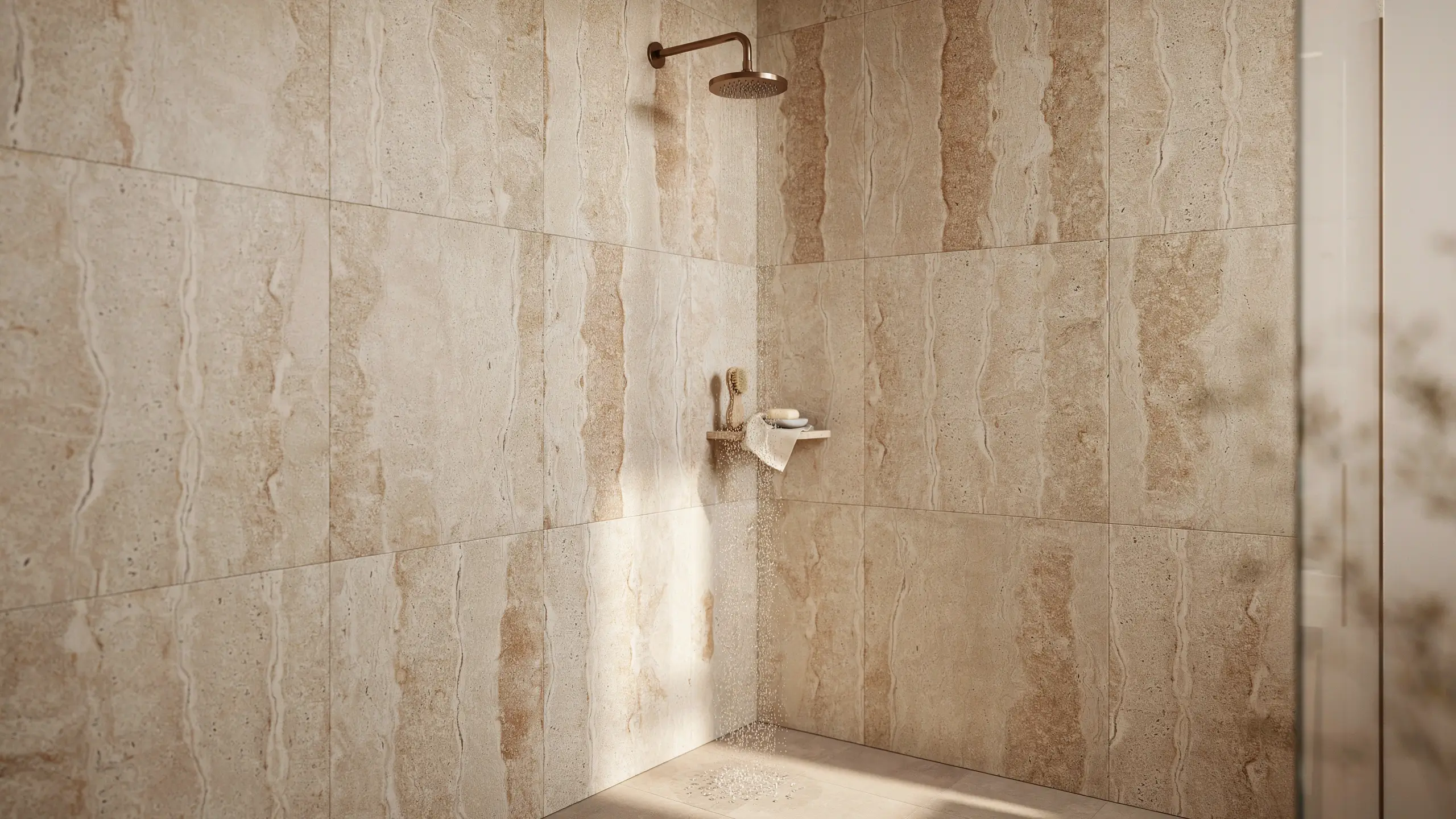
Natural travertine has been used in bathrooms for centuries. It’s that distinctive warm limestone look with subtle pitting and natural veining in shades of cream, tan, beige, and rust. The issue is that real travertine is porous, needs sealing, and can be tricky in a high-moisture shower environment.
Travertine-look porcelain gives you every bit of that warmth and texture without the maintenance demands. The earthy palette works exceptionally well in bathrooms with wood-toned vanities, warm bronze fixtures, and natural-material accents like rattan or wood shelving.
This is the tile to choose if you want your bathroom to feel like a luxury desert resort. Pair it with a warm off-white grout so the joints don’t interrupt the stone illusion.
10. Hexagon Tile on Walls and Floors
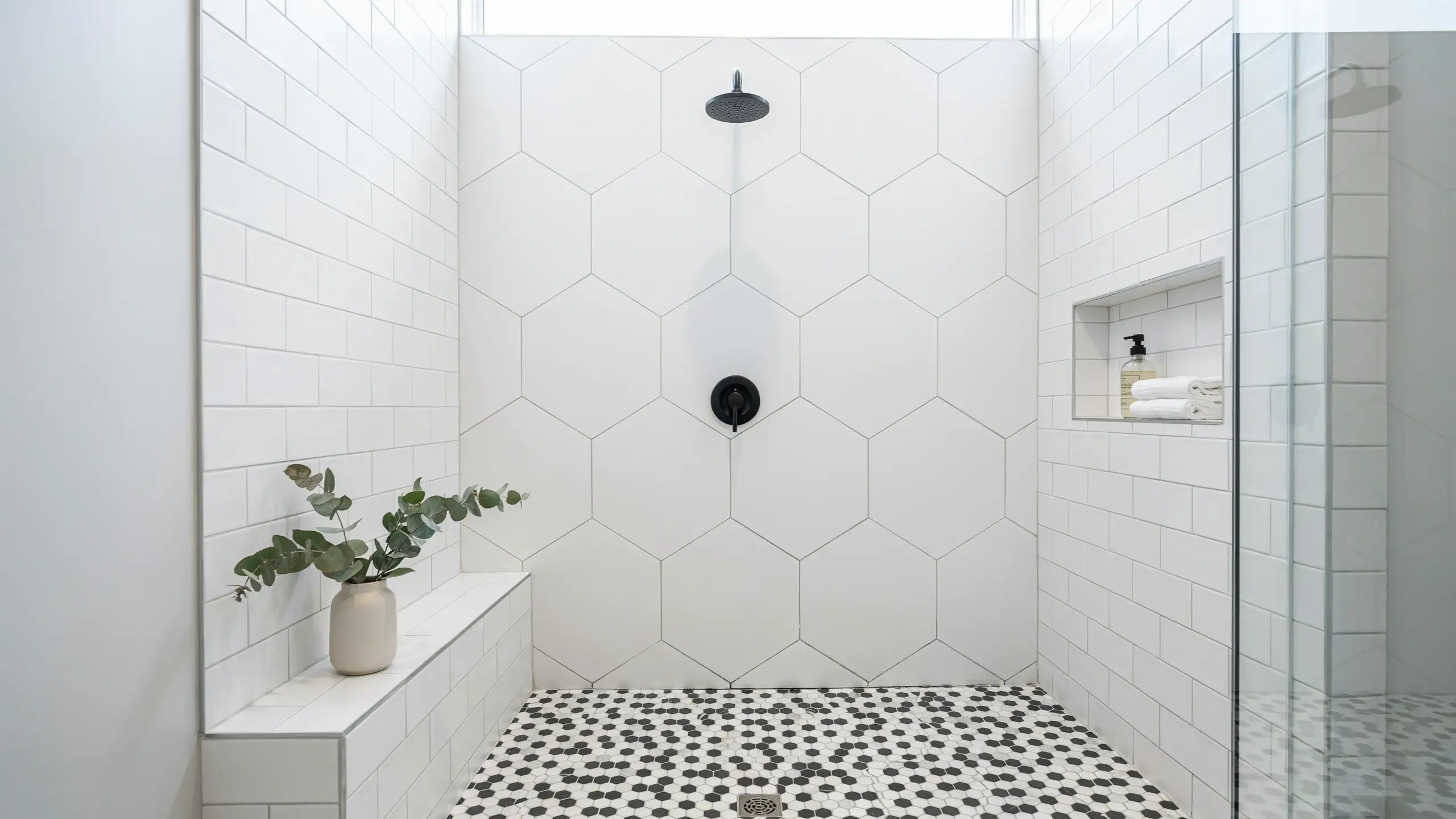
Hexagon tile has an interesting quality: it looks completely different depending on the size and color you choose. A large 6-inch white hex on a shower wall reads modern and geometric. A small 1-inch black hex on the floor reads vintage-inspired and intricate. Both work.
On shower walls, hexagons create a honeycomb pattern that adds structure and personality without requiring a bold color. On shower floors, small hexagons provide natural grip from the many grout lines and can follow the floor slope more gracefully than large tiles.
A two-tone hexagon floor using alternating black and white tiles is a classic design move that’s currently very popular on Pinterest. Keep the walls simple if you go this route.
11. Wood-Look Porcelain for Warmth Without the Worry
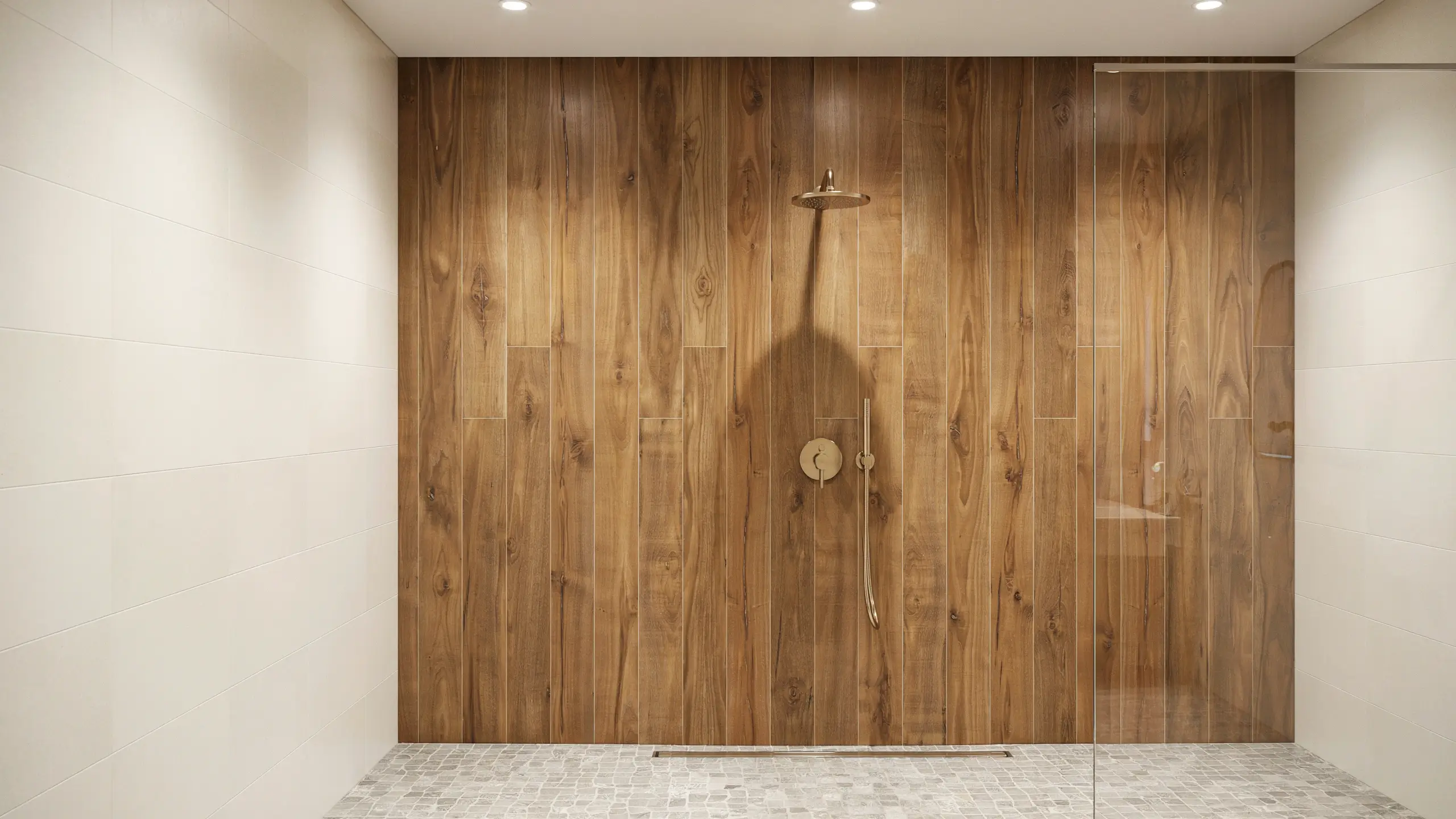
Real wood in a shower is a beautiful idea that rarely ends well. Moisture and wood are not friends. But wood-look porcelain gives you that warm, natural, planked aesthetic with absolutely none of the warping, rotting, or mold concerns.
Install wood-look planks vertically on one accent wall of the shower for a striking effect. The vertical lines draw the eye upward and make the ceiling feel higher. In earthy warm tones, brown-toned wood-look tile against white or cream walls feels like a Scandinavian spa. In a lighter driftwood tone, it leans coastal.
The fluted version of wood-look tile (which has raised ridges running along the length) adds a sculptural, tactile dimension that photographs beautifully and looks especially intentional as an accent wall.
12. Full Wrap-Around Color: One Bold, Saturated Tile
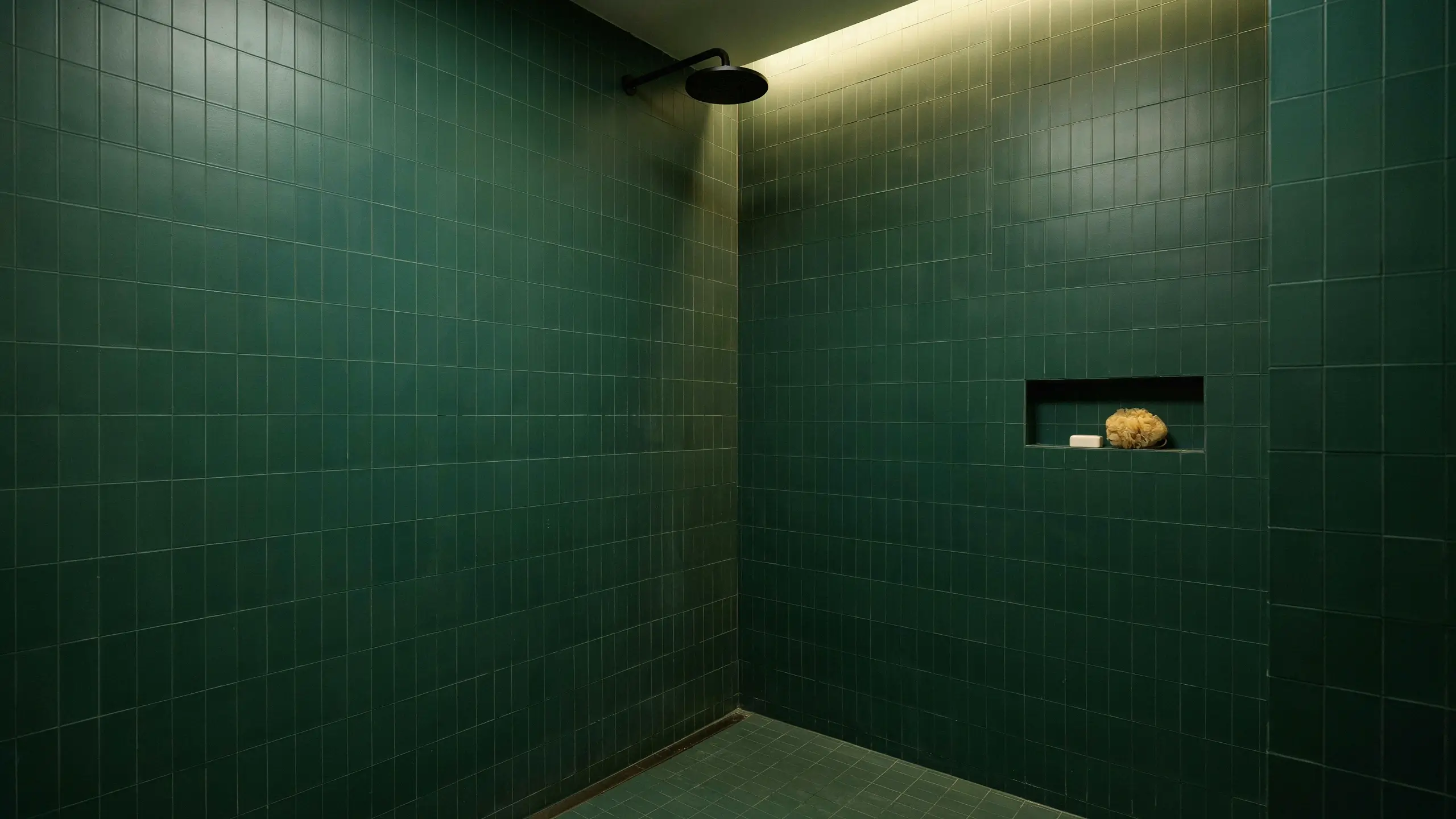
This is the idea for people who are done with neutral bathrooms. Choose one tile in a clear, saturated color and use it on every surface of the shower: floor, all four walls, ceiling. The result is an immersive color experience that’s completely unlike anything a neutral shower can offer.
Deep forest green, cobalt blue, warm terracotta, and rich burgundy are all colors that work beautifully this way. The key is keeping the tile itself simple in shape so the color does all the work. A matte square or rectangular tile in a rich hue is more effective than a patterned tile in the same color.
This approach reads bold in photos but surprisingly calming in person. When every surface is the same color, the space feels like a room rather than a box, even if it’s physically small.
13. Vertical Stack Layout to Make Any Shower Feel Taller
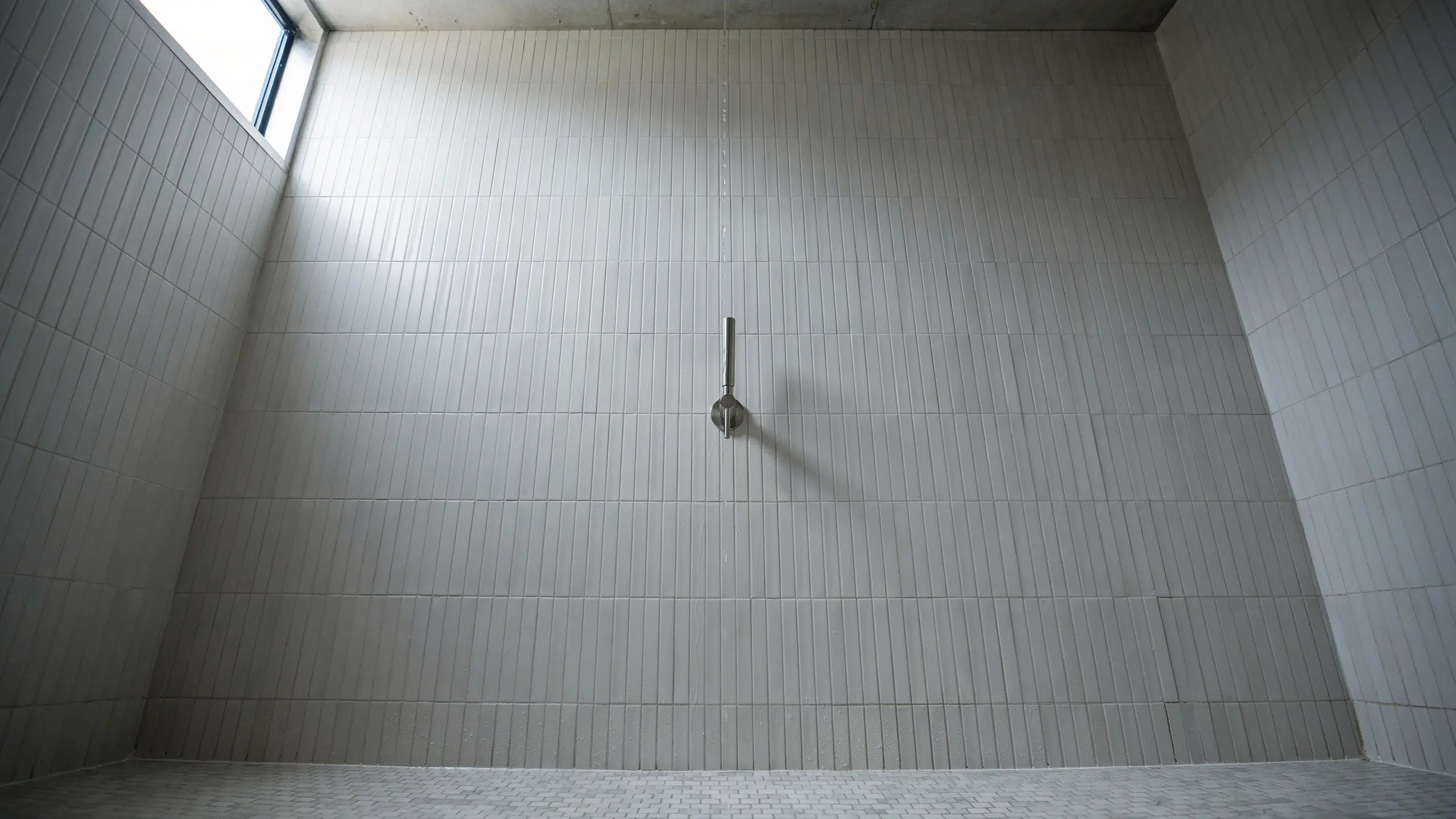
This isn’t about a specific tile material; it’s about the orientation. Taking any standard rectangular tile, subway, plank, or even a brick-shaped natural stone, and stacking them vertically instead of horizontally changes the feeling of the entire space.
Vertical lines draw the eye upward. The shower feels taller. In a bathroom with an average or low ceiling, this is one of the simplest and most effective visual tricks available.
Pair a vertical white tile wall with a mosaic floor in the same tonal family. The contrast in scale between the large, simple wall tiles and the small, detailed floor tile creates a sophisticated look without any additional cost or complexity.
14. Dark and Moody Slate or Charcoal Tile
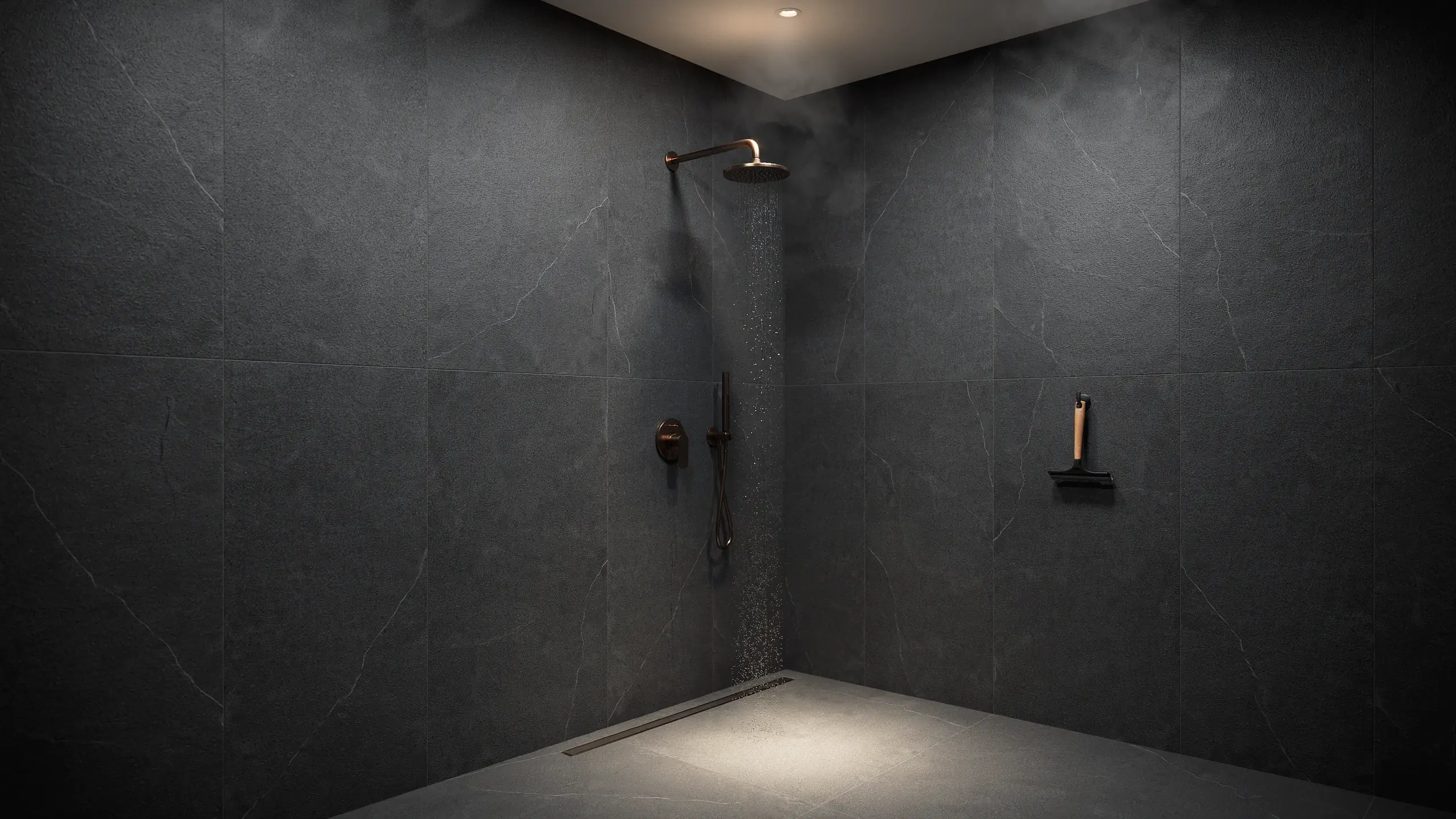
There’s a quiet confidence to a dark shower. Charcoal porcelain, slate-look tile, and deep gray textured surfaces create a bathroom that feels masculine, calm, and genuinely luxurious in a way that white tile simply can’t replicate.
Dark tile does require more wiping down to prevent water spot visibility, especially in areas with hard water. A squeegee kept in the shower is a non-negotiable with dark tile. But many people find this a small trade-off for the look they get.
Pair dark walls with lighter floor tile for safety (so you can see the floor surface clearly) and add matte black or brushed bronze fixtures to complete the look. Warm lighting, not cool white LED, makes a dark shower feel like a retreat rather than a cave.
15. Fluted and Textured Tile as an Accent Wall
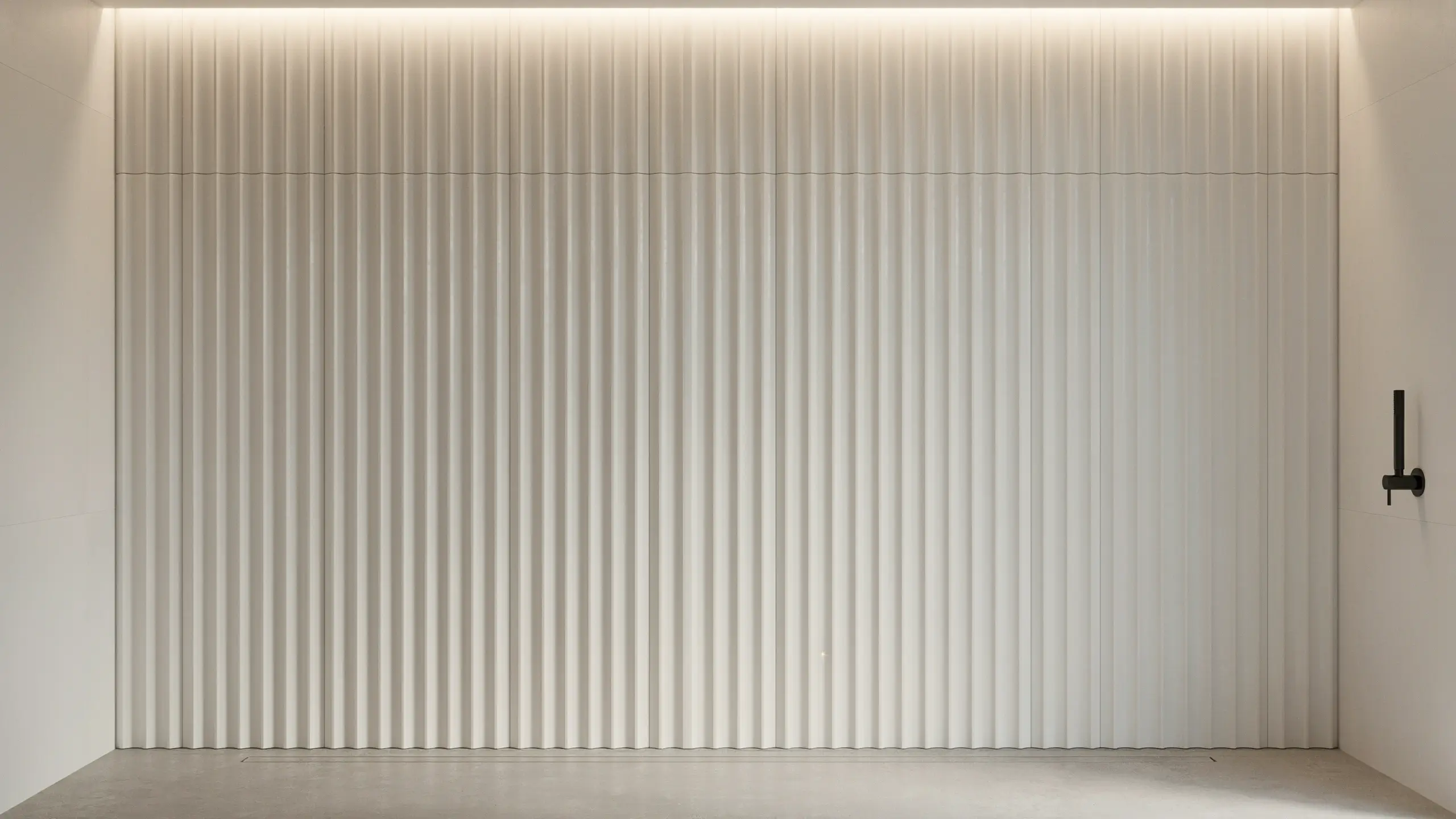
Fluted tile, which features a series of parallel vertical grooves or ridges pressed into the tile surface, is everywhere right now. It’s sculptural, it catches light in beautiful ways, and it adds a three-dimensional quality to the wall that flat tile cannot.
Use it as a single accent wall, usually the one directly opposite the shower entrance so it’s the first thing you see. Pair it with a simple, flat tile on the remaining walls.
Fluted tile in warm white, sage green, or dusty terracotta looks particularly current. The texture adds visual interest even in a monochromatic palette.
16. Geometric Moroccan-Inspired Pattern Tile,
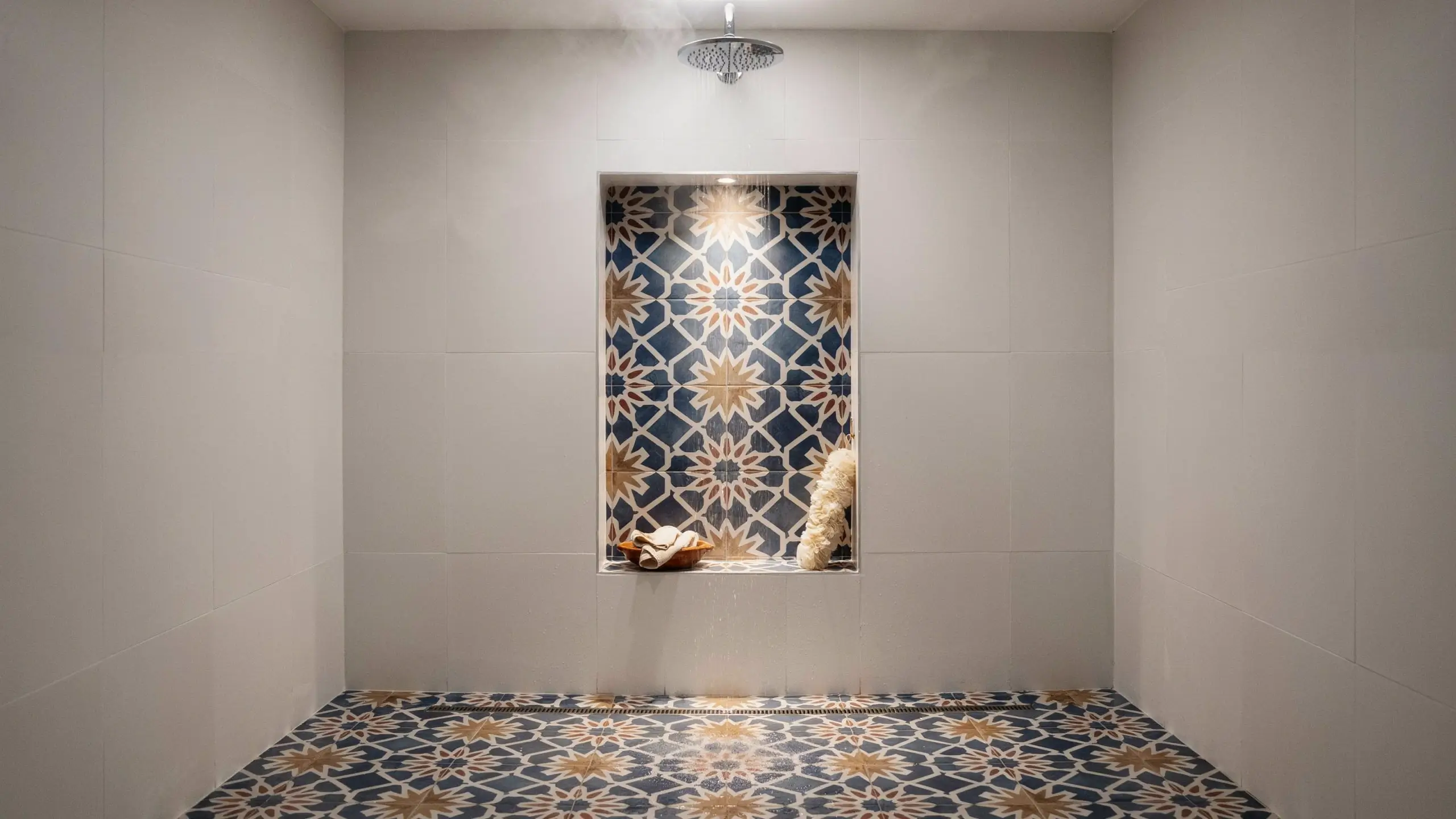
These are the tiles that stop the scroll on Pinterest. Decorative patterned tiles with geometric or floral motifs, often described as Moroccan, encaustic, or cement tile inspired, bring color and personality to a shower in a way nothing else does.
The important thing is using them as an accent rather than covering every surface. A niche lined in patterned tile, a single accent strip at eye height, or the shower floor in a decorative pattern while the walls stay plain: these are the placements that work.
Full walls of busy pattern can overwhelm a small space. Used selectively, the same tile becomes art.
17. Greige Tile for the Timeless Middle Ground
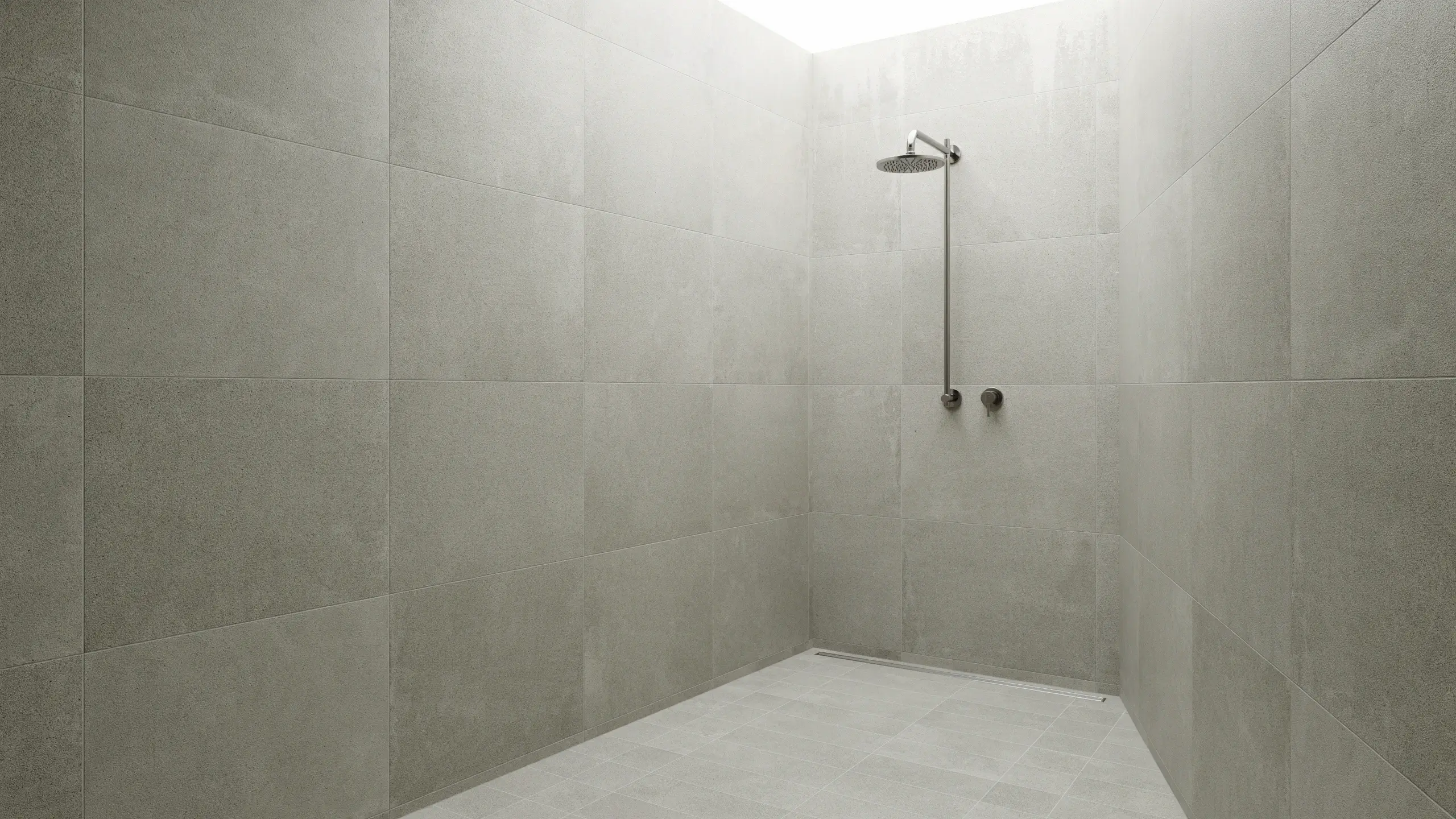
Greige sits between gray and beige, and it’s the tile color that works in every bathroom regardless of what the rest of the house looks like. It’s not cold like pure gray. It’s not dated like warm beige. It reads as refined, modern, and universally appealing.
A walk-in shower tiled entirely in greige, with tonal variation between floor and wall tiles, feels spa-like and serene. It photographs beautifully in any light. It won’t clash with any fixture color or vanity wood tone.
For a layered look, use a slightly darker greige on the floor, a mid-tone greige on the walls, and white or light cream grout to keep everything connected. The variation adds depth while the cohesion keeps it calm.
18. Glass Subway Tile for Light and Dimension
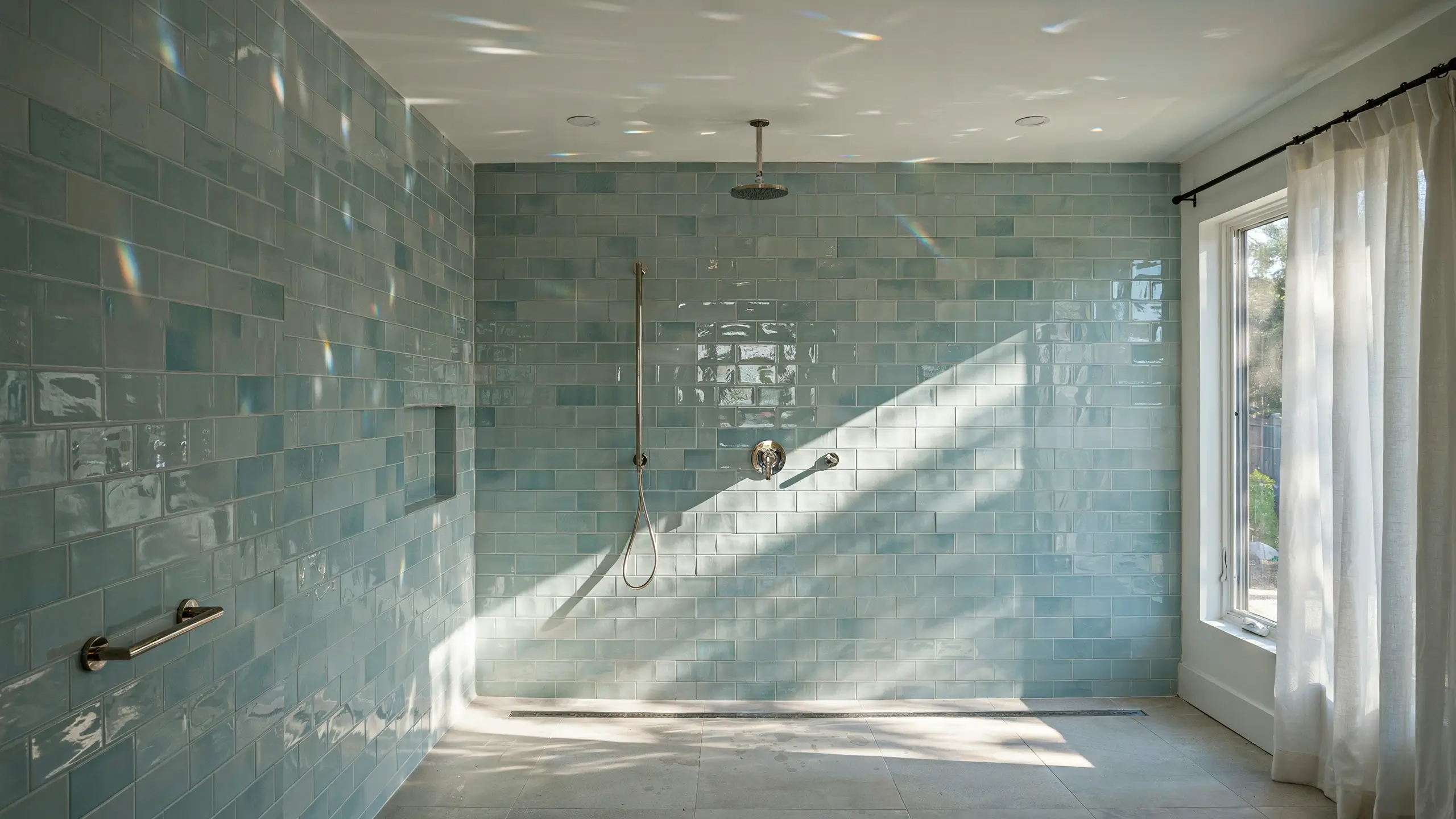
Glass tile has a quality that ceramic and porcelain can’t fully replicate: it’s translucent, which means light doesn’t just reflect off the surface, it passes through and bounces back from inside the tile. The result is a depth and shimmer that makes a shower feel almost jewel-like.
Glass subway tile in pale aqua, soft blue, sea green, or clear white creates a space that feels fresh and luminous even without natural light. It’s a particularly good choice for bathrooms without windows or with small windows.
Glass chips and scratches more easily than ceramic or porcelain, so it’s not the best choice for floors. On shower walls, though, it’s stunning and holds up well.
19. Concrete-Look Tile for Industrial-Modern Style
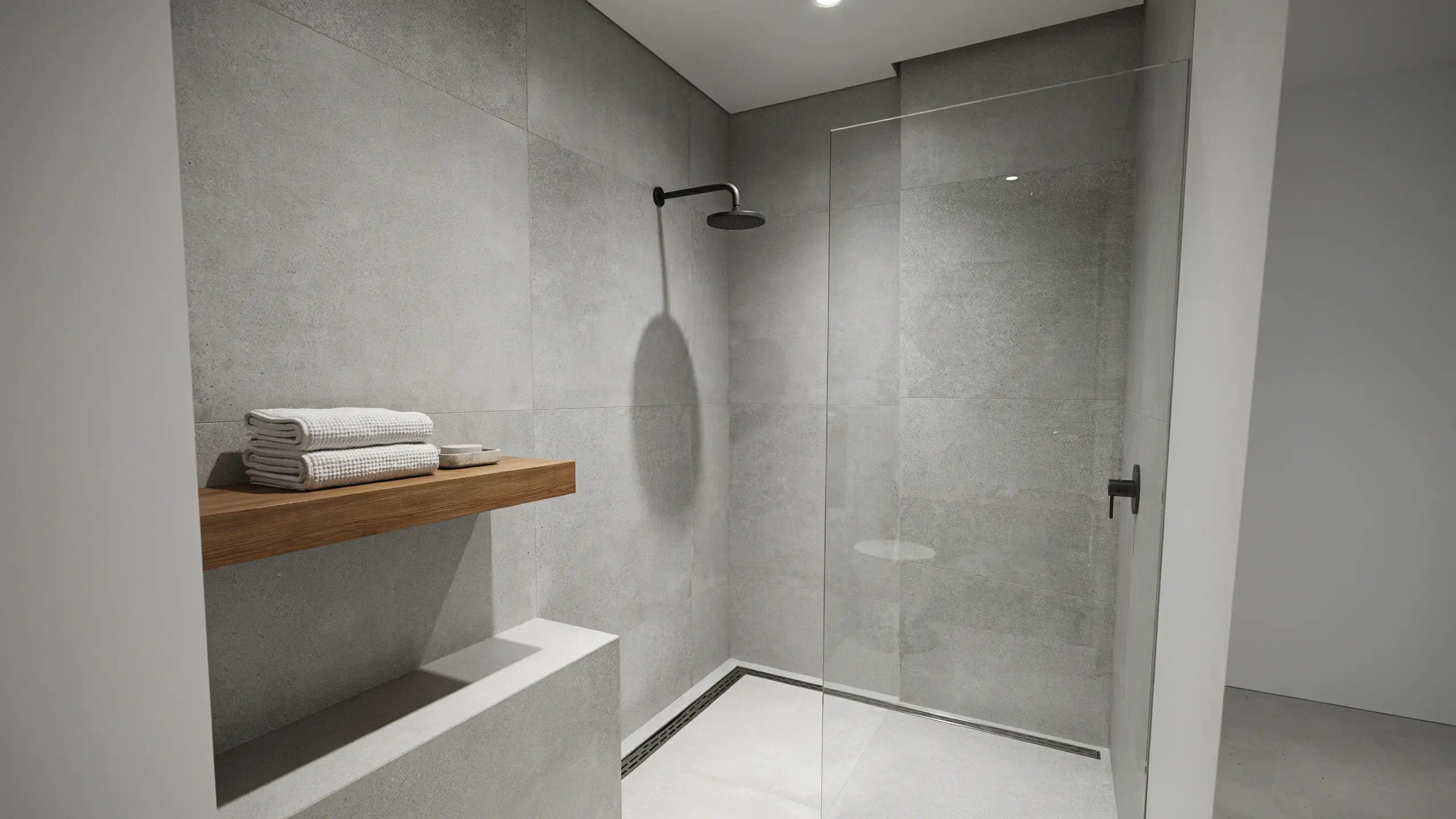
Concrete-look porcelain has a cool, muted, almost utilitarian beauty that works perfectly in a modern or industrial-style bathroom. The texture mimics poured or polished concrete, with subtle variation in tone and the occasional aggregate detail that makes it look genuinely tactile.
In a walk-in shower, concrete-look tile in large format (12×24 or larger) creates an architecturally serious space. It pairs well with matte black everything, warm wood accents for contrast, and simple open shelving instead of ornate fixtures.
The advantage over actual concrete is significant: porcelain doesn’t need sealing, doesn’t stain, and is completely impervious to water.
20. Two-Material Mix: Different Tile on the Floor and Feature Wall
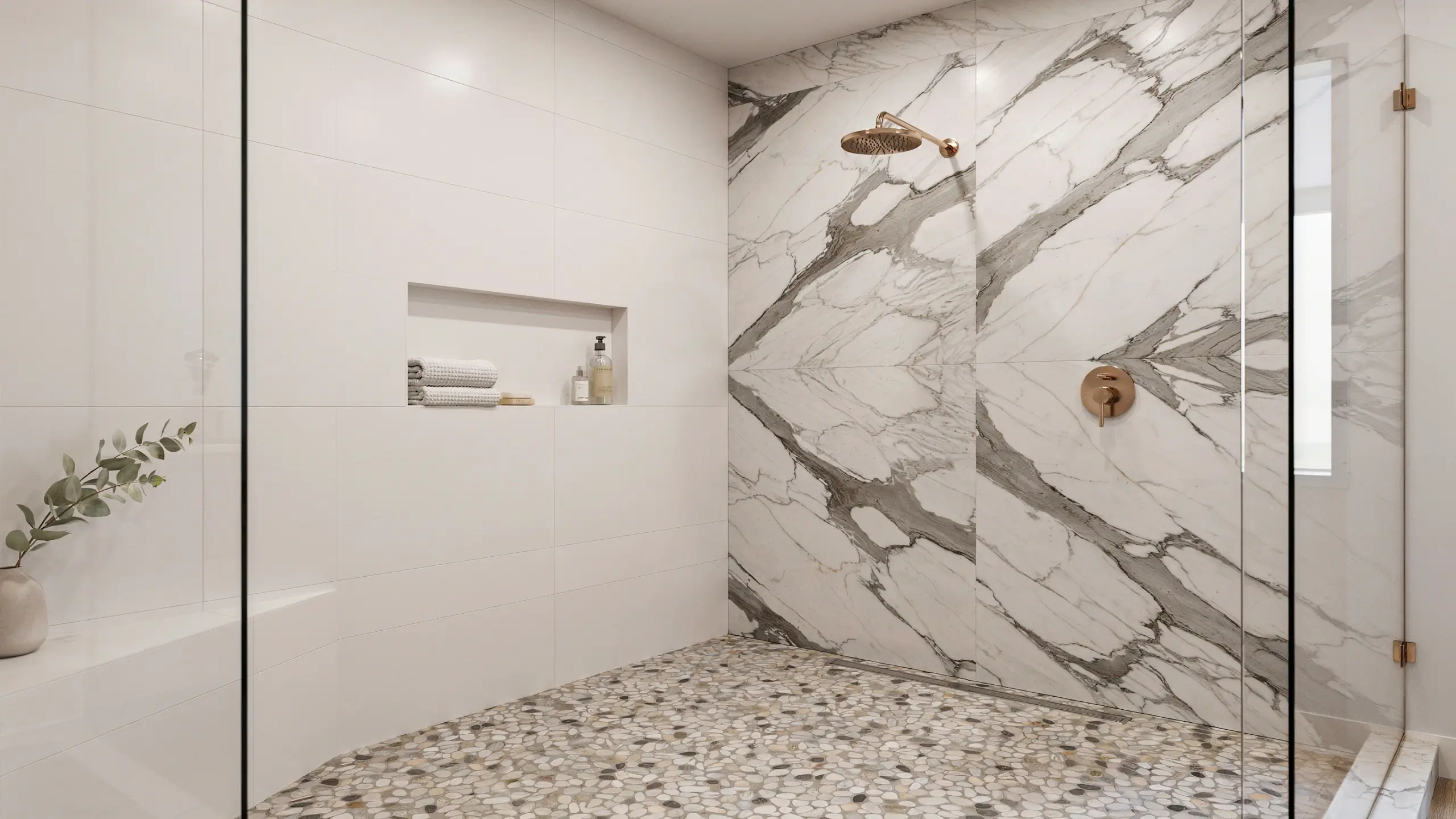
This is the approach that makes a shower look designed rather than simply tiled. Choose one material for the floor (pebble stone, mosaic, penny rounds, or small hexagons) and a completely different material for the feature wall behind the showerhead (zellige, large format marble-look, herringbone subway, or fluted tile). Keep the remaining three walls in a simple, neutral tile that bridges the two.
The mix creates a layered, textural bathroom that looks like the decisions were intentional and considered, because they were. It’s the approach interior designers use most often, and it works at virtually any budget.
The Most Common Walk-In Shower Tile Mistakes (And How to Avoid Them)
- Choosing beautiful tile without checking the finish on the floor. Glossy tile is stunning but slippery when wet. Always use matte or textured tile on the shower floor. Save the glossy finish for walls.
- Forgetting to account for grout lines in the overall design. Order your tile samples with grout samples and look at them together in the actual light of your bathroom before making any decisions.
- Not ordering enough tile. Always order 10 to 15 percent more tile than your square footage calculation. Cuts, waste, breakage, and future repairs all eat into your supply. Running out mid-project and finding the same tile on backorder is a genuinely painful situation.
- Using white grout in a high-use shower. White grout on shower floors shows soap scum, mold, and hard water stains within months. Choose a medium-toned or darker grout for floors, or commit to a rigorous cleaning routine if white is non-negotiable.
- Skipping the waterproofing membrane. The tile is not what waterproofs a shower. The membrane behind the tile is. Always ensure proper waterproofing membrane installation before tiling, particularly in walk-in showers where water exposure is higher.
- Rushing the grout timing. Grouting before the thinset has fully cured causes tiles to shift and grout to crack. Read the manufacturer’s cure time on your thinset and add a buffer.
Budget Tips Worth Knowing
- Porcelain and ceramic tile offer the widest range of looks at accessible price points. Many tile collections now include budget-friendly options under $3 to $5 per square foot that convincingly mimic marble, slate, concrete, and stone.
- Save your splurge for the feature wall. Use more affordable tile on the two side walls and the floor, then invest in something special for the wall that gets the most visual attention. You get the impact of an expensive tile without the cost of using it everywhere.
- Buy floor and wall tile from the same collection when possible. Manufacturers design their collections so the finishes coordinate, which removes a lot of guesswork.
- Check tile stores for discontinued lots and clearance. Tile is often discontinued when a manufacturer updates a collection, not because anything is wrong with it. Discontinued tile can sometimes be purchased at 40 to 60 percent off the original price
The Bottom Line on Walk-In Shower Tile Ideas
The tile in your walk-in shower shapes how the entire bathroom feels. Get it right, and you step into a space every morning that genuinely restores you. Get it wrong, and it’s just a shower.
The good news is that with so many beautiful options available now, from the timeless simplicity of white subway tile to the tactile beauty of zellige to the drama of full-wall dark slate, there’s a combination that works for your space, your style, and your budget.
Take your time with this decision. Get physical samples, not just photos. Hold the samples up against your vanity, your floor, and the fixtures you’re planning. Look at them in morning light and evening light. What photographs beautifully online doesn’t always translate to your specific bathroom’s light, size, and existing finishes.
But once you find the right tile? You’ll know. It’s the one you keep going back to look at. That’s the one.
Which of these walk-in shower tile ideas are you saving for your remodel? Drop a comment below and let me know what direction you’re leaning. Are you going bold and moody, clean and classic, or somewhere wonderfully unexpected in between? I’d love to hear your plans.
Photos and specific product links are always changing as collections update. Check your local tile showroom or large tile retailers for current availability and pricing on any tile styles mentioned here.

No Comment! Be the first one.