




How to Keep Your House Cool Without AC: 15 Tips That Actually Work
The summer sun is relentless, your house feels like the inside of a slow cooker, and you’re standing in front of the open refrigerator just to feel something. If this is you, keep reading....

The summer sun is relentless, your house feels like the inside of a slow cooker, and you’re standing in front of the open refrigerator just to feel something. If this is you, keep reading.
There’s a specific kind of misery that comes with a hot house you can’t cool down. Maybe your apartment doesn’t have AC. Maybe your window unit finally gave out on the hottest week of the year. Maybe you’re watching your energy bill climb and decided enough is enough.
Whatever brought you here, know this: you don’t need central air to have a comfortable home in summer. Generations of people lived without it, and with a few smart, low-cost strategies, your house can feel genuinely cooler, not just slightly less suffocating.
These tips work for renters, homeowners, apartment dwellers, and anyone who just wants to stop sweating through their sheets every night.
First, Understand the Game Plan
Before diving into specific tips, the single most important thing to understand is this: keeping your house cool without AC is all about timing. Your job is to let cool air in when it’s there, and lock it out once the heat builds.
In most climates, the air outside is coolest between midnight and 8am. Once the sun climbs, outdoor temperatures rise fast, and opening your windows at noon is just inviting more heat in. The basic rhythm looks like this:
- Evening through early morning: Open windows, run fans, flush out heat
- Before 9 or 10am: Close everything up, draw the curtains, trap the cool air inside
- During the heat of the day: Keep it sealed, shade everything, minimize heat sources inside
Once you have that timing system in your head, everything else makes more sense.
1. Block the Sun Before It Heats Your Home
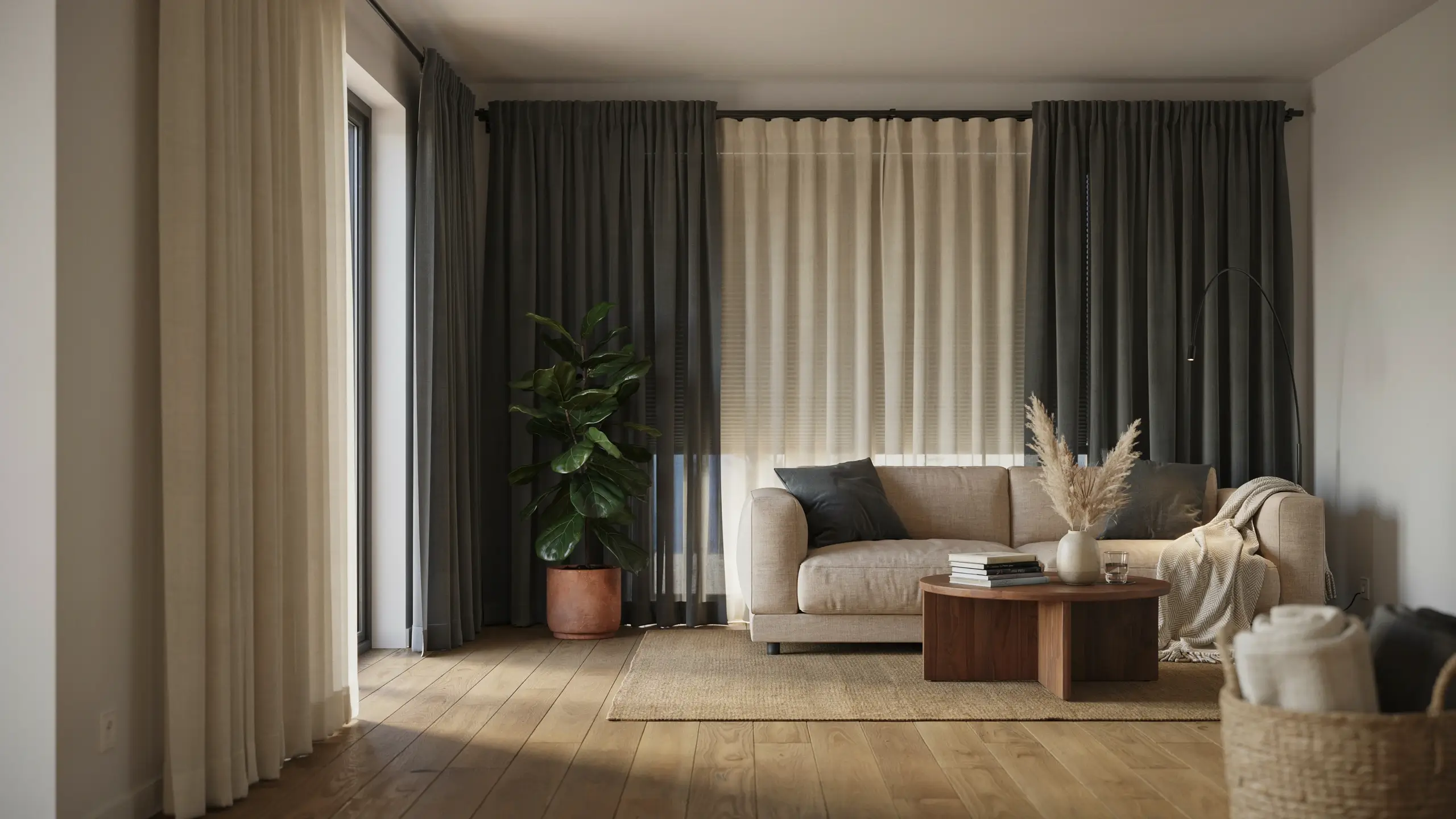
Up to 30 percent of your home’s heat gain comes directly through your windows, according to the U.S. Department of Energy. That means your windows are working against you on a hot day, even when they’re closed.
The fix is layered:
- Blackout or thermal curtains are the most effective. These thick, often foam-backed curtains block direct sunlight and add a layer of insulation between the hot glass and your living space. They’re not just for bedrooms. A set of blackout curtains in your west-facing living room can drop the temperature noticeably by mid-afternoon.
- Reflective window film is a game-changer for renters or anyone who doesn’t want to mess with curtains. Peel-and-stick window film (look for solar or UV-blocking varieties) applies directly to the glass, reflects heat back outside, and peels off cleanly when you leave. One layer of film on a south or west-facing window can reduce heat gain significantly without darkening the room the way blackout curtains do.
- Blinds alone usually aren’t enough. If you’re relying on thin horizontal blinds to block summer heat, they’ll help a little, but sun still passes through the gaps. Layer them with a curtain liner or cellular shade for better results.
One rule of thumb worth remembering: west-facing windows are your biggest problem in the afternoon. If you can only address one area of your home, start there.
2. Set Up Cross-Ventilation the Right Way
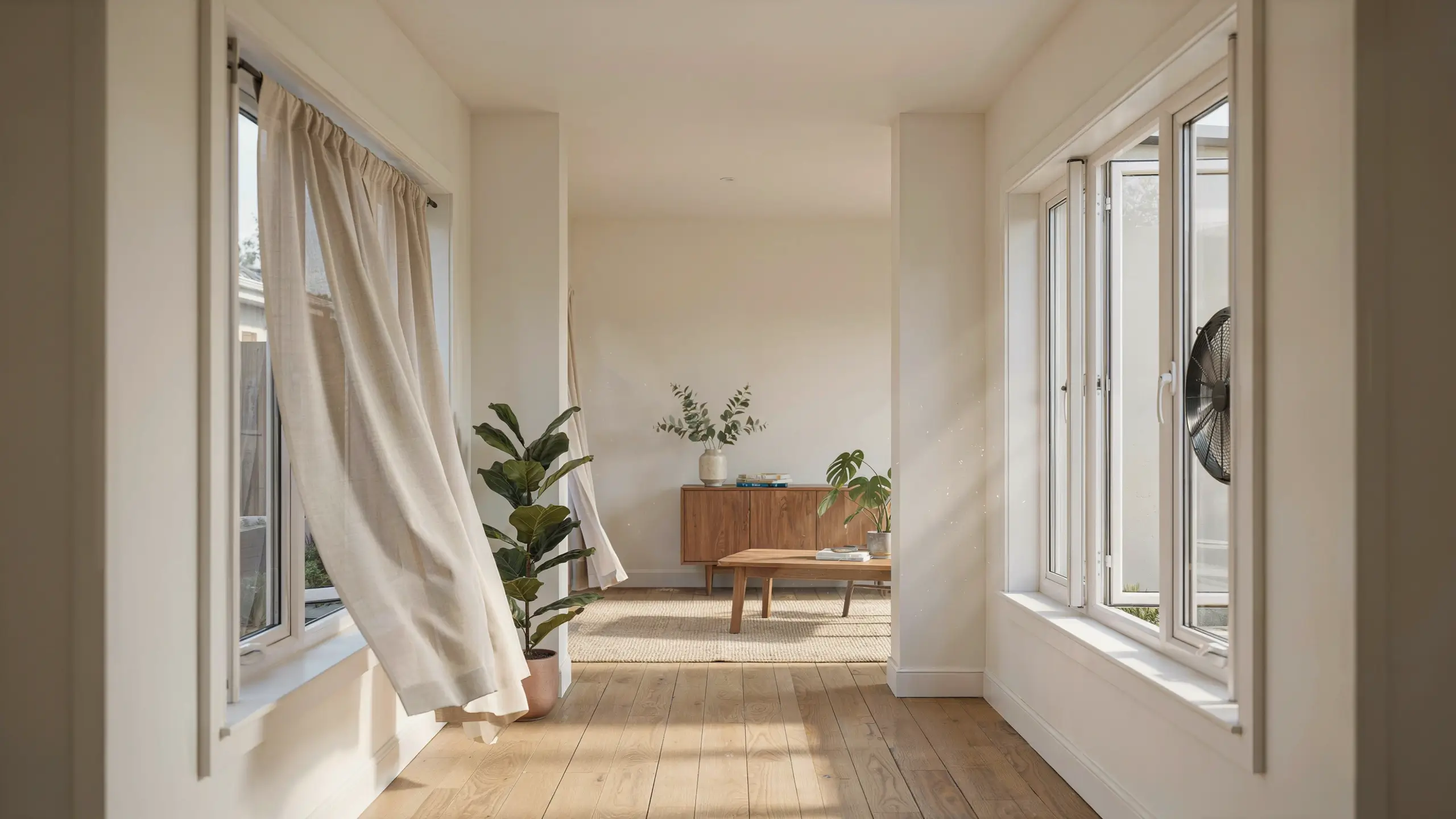
Opening windows sounds obvious, but most people don’t do it strategically. Random open windows don’t do much. Cross-ventilation does.
Find two windows on opposite sides of your home, or at least opposite sides of a room. Open the one on the side where the wind is blowing from (the upwind side) lower, and open the one on the other side fully. This creates a pressure difference that pulls air through the space.
To boost this effect, place a box fan facing outward in one window. It actively pushes hot air out, while the cooler air from the opposite window fills in behind it.
If you live in an apartment with windows on only one side, crack your front door (with a chain lock if you need security) and place a fan facing out through a window. This creates at least some airflow instead of none.
3. “Burp” Your House at Night
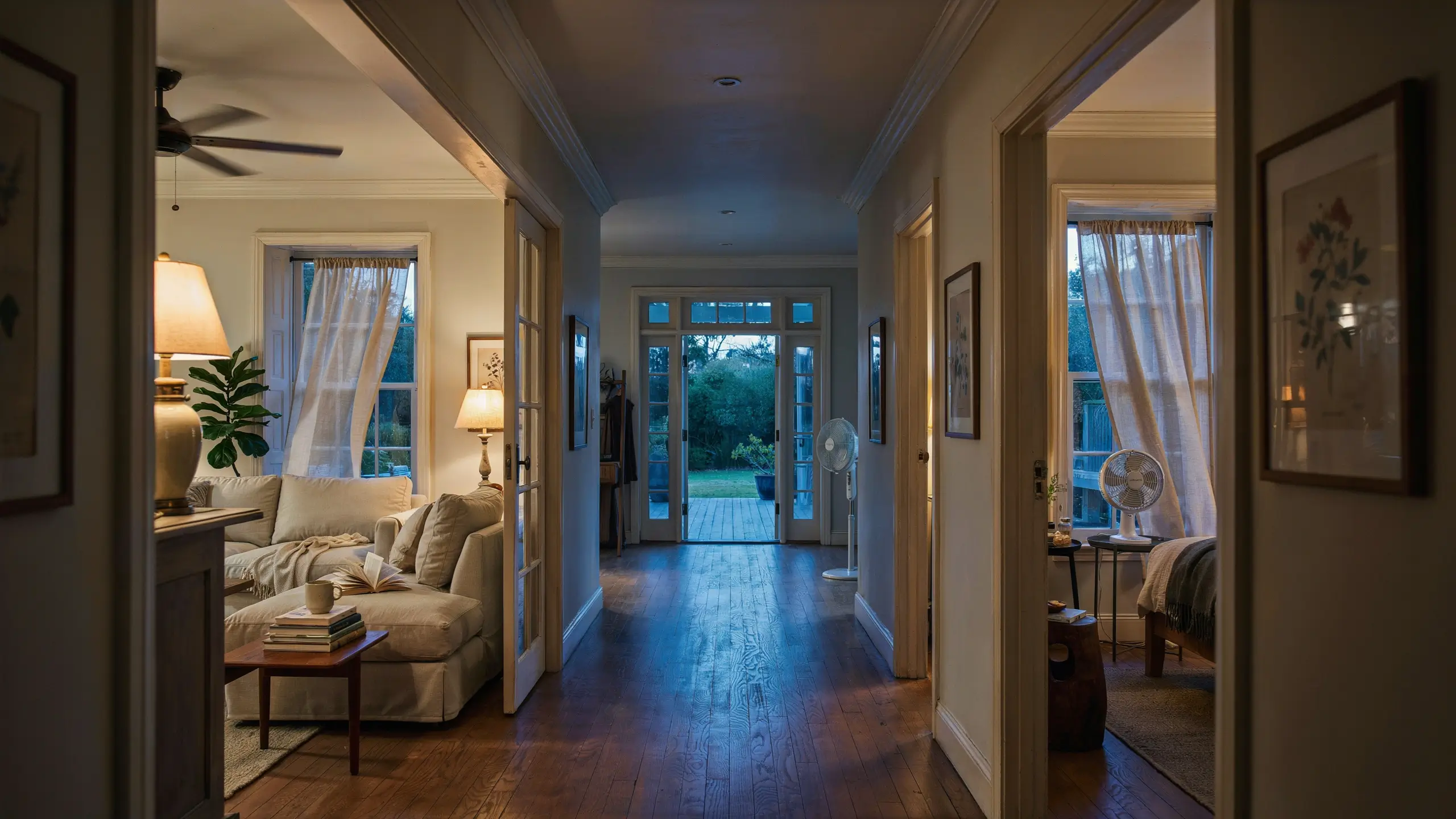
This is one of the most effective and underused tricks for keeping a home cool without AC, and most articles don’t even mention it by name.
The idea is simple: once the sun has fully set and the outdoor air has dropped below your indoor temperature, open every window and interior door in the house for an hour or two. Run fans to actively pull that cooler night air through every room. Then, before you go to bed (or first thing in the morning if you stay up late), close it all back up.
You’re essentially flushing the stored heat from the walls and furniture out of the house and replacing it with cooler air. Walls and furniture absorb heat during the day and release it slowly at night, so this trick breaks that cycle before the next hot day begins.
The difference between a house that’s been “burped” and one that hasn’t is genuinely noticeable by 2pm the following day.
4. Use Your Ceiling Fan the Right Way (It Matters More Than You Think)
Many people don’t know their ceiling fan has a summer and winter mode. Look for a small switch on the motor housing of the fan, or a setting in the app if it’s a smart fan.
In summer, the blades should spin counterclockwise when you look up at them. This pushes air straight down, creating a wind-chill effect that can make a room feel several degrees cooler. Running it clockwise does the opposite and is designed to push warm air down in winter.
If you don’t have a ceiling fan, a tower or oscillating fan set at floor level works better than you might expect. Hot air rises, which means the coolest air in any room is down near the floor. Positioning a fan low and angling it upward moves that cooler air around the room more effectively.
5. Build a DIY Ice Bowl Fan (It Sounds Silly, but It Works)
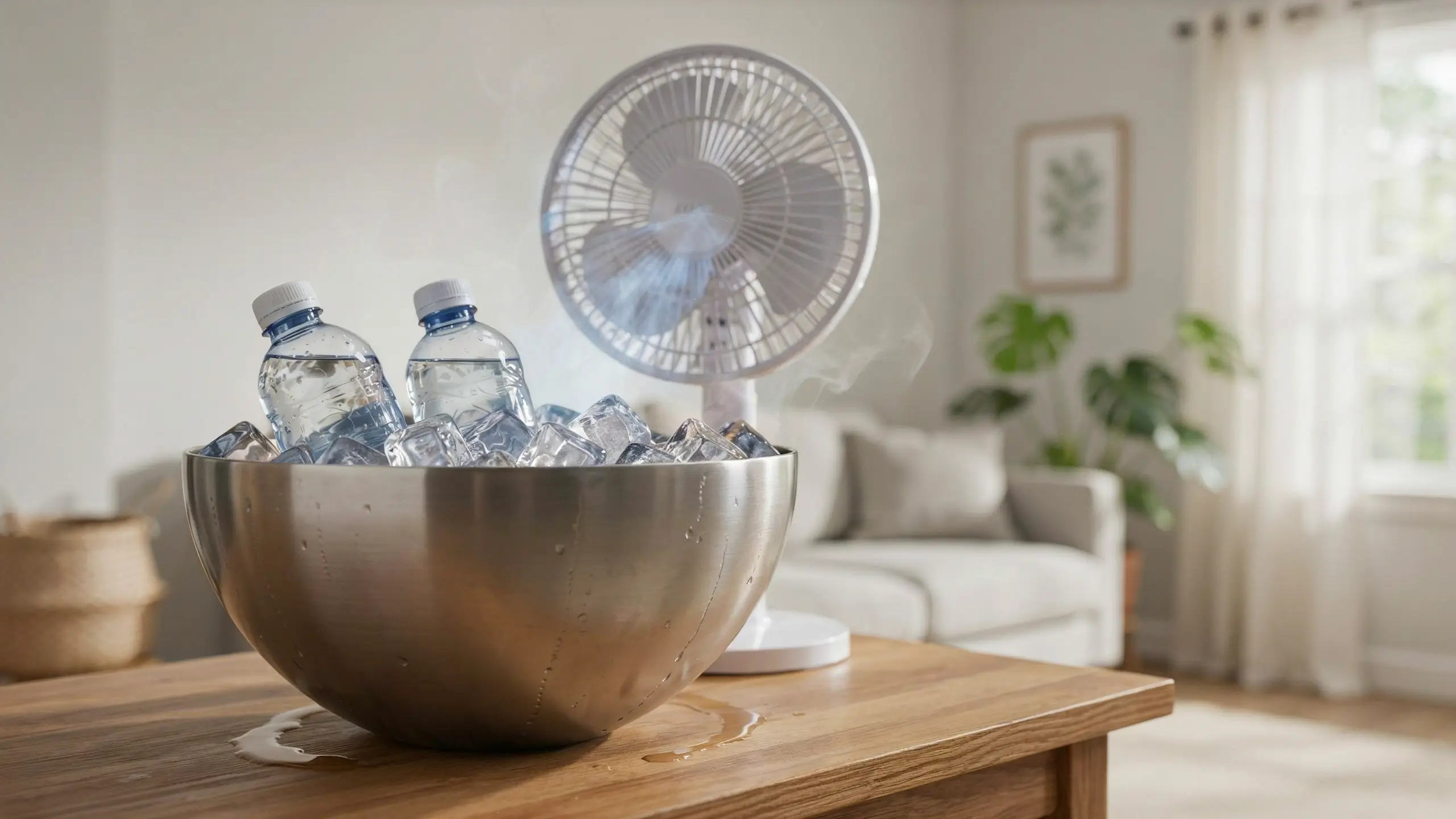
Take a large mixing bowl or a metal pan and fill it with ice. Place it at an angle directly in front of a box fan or table fan. The fan blows air over and through the ice, and the result is a noticeably chilled, slightly misted breeze that feels closer to a real ocean breeze than anything else you can create at home.
It doesn’t cool an entire room, but positioned near where you’re sitting or sleeping, it makes a real difference. Refresh the ice every few hours.
For an upgraded version, freeze water bottles and use those instead. They melt more slowly, and you can rotate them from the freezer as needed.
6. Stop Making Your Own House Hotter
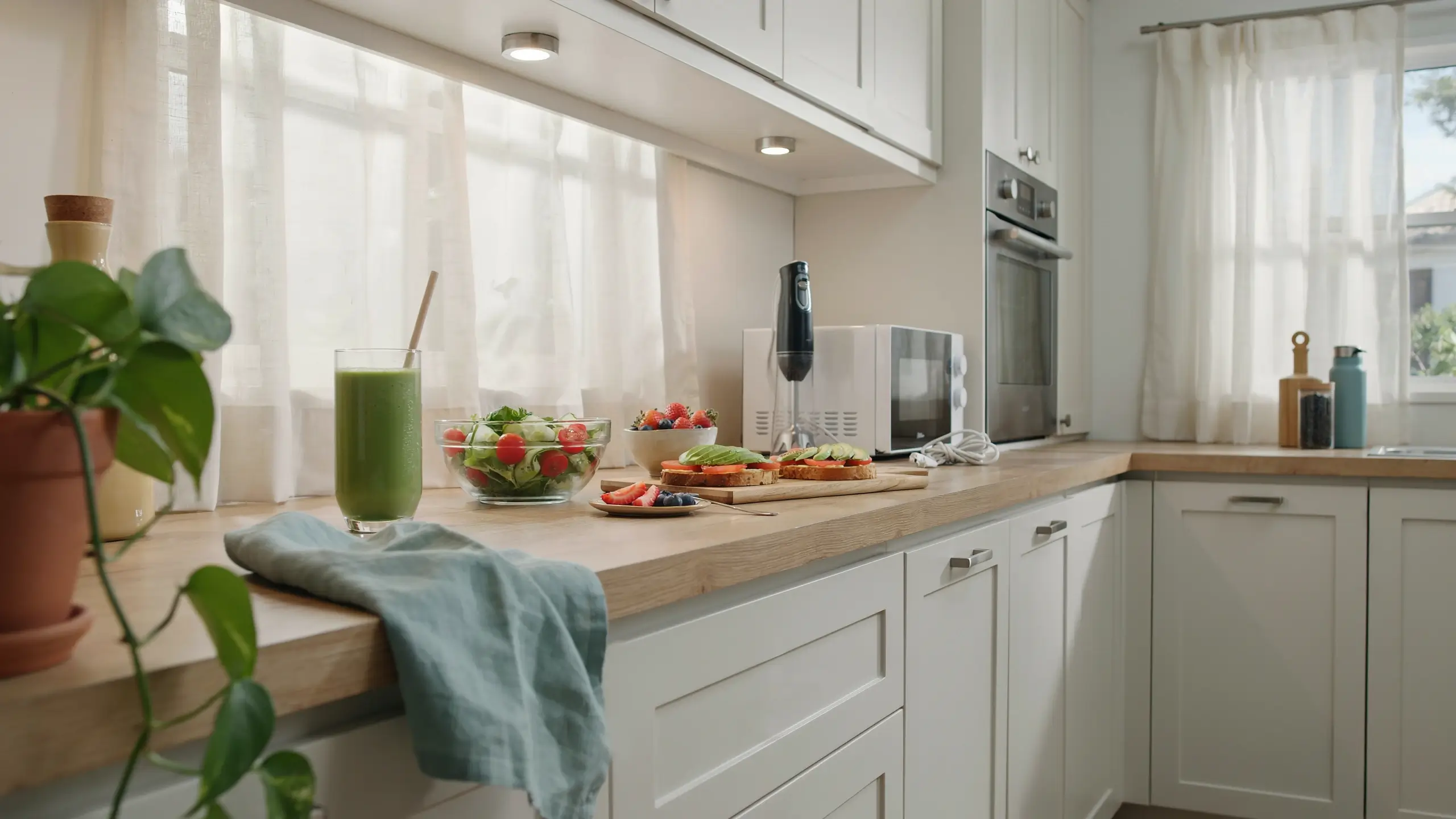
This one hurts to admit, but a lot of the heat in your home during summer comes from inside it, not outside. Every appliance that runs generates heat, and on a 90-degree day, every degree counts.
- The oven is the biggest offender. On the hottest days, commit to not using it. Grill outside, use a slow cooker (which runs at lower temperatures and keeps the heat contained), lean on the microwave, or just eat cold meals. Sandwiches, grain bowls, charcuterie, cold pasta salads, smoothies. Summer is the perfect time to eat like this anyway.
- Run heat-generating appliances at night. Your dishwasher, clothes washer, and dryer all produce heat. Run them after 9pm when the outdoor temperature has dropped and your house is going into its cool-down phase, not during the hottest part of the day.
- Switch to LED bulbs if you haven’t already. Incandescent bulbs waste roughly 90 percent of their energy as heat. Swap them out and you’ll notice the difference.
- Unplug things you’re not using. Chargers, gaming consoles, cable boxes, and other electronics produce what’s called “phantom load,” drawing power and releasing heat even when they’re not actively in use. It adds up in a small space.
7. Create Cool Zones and Seal Off Hot Ones
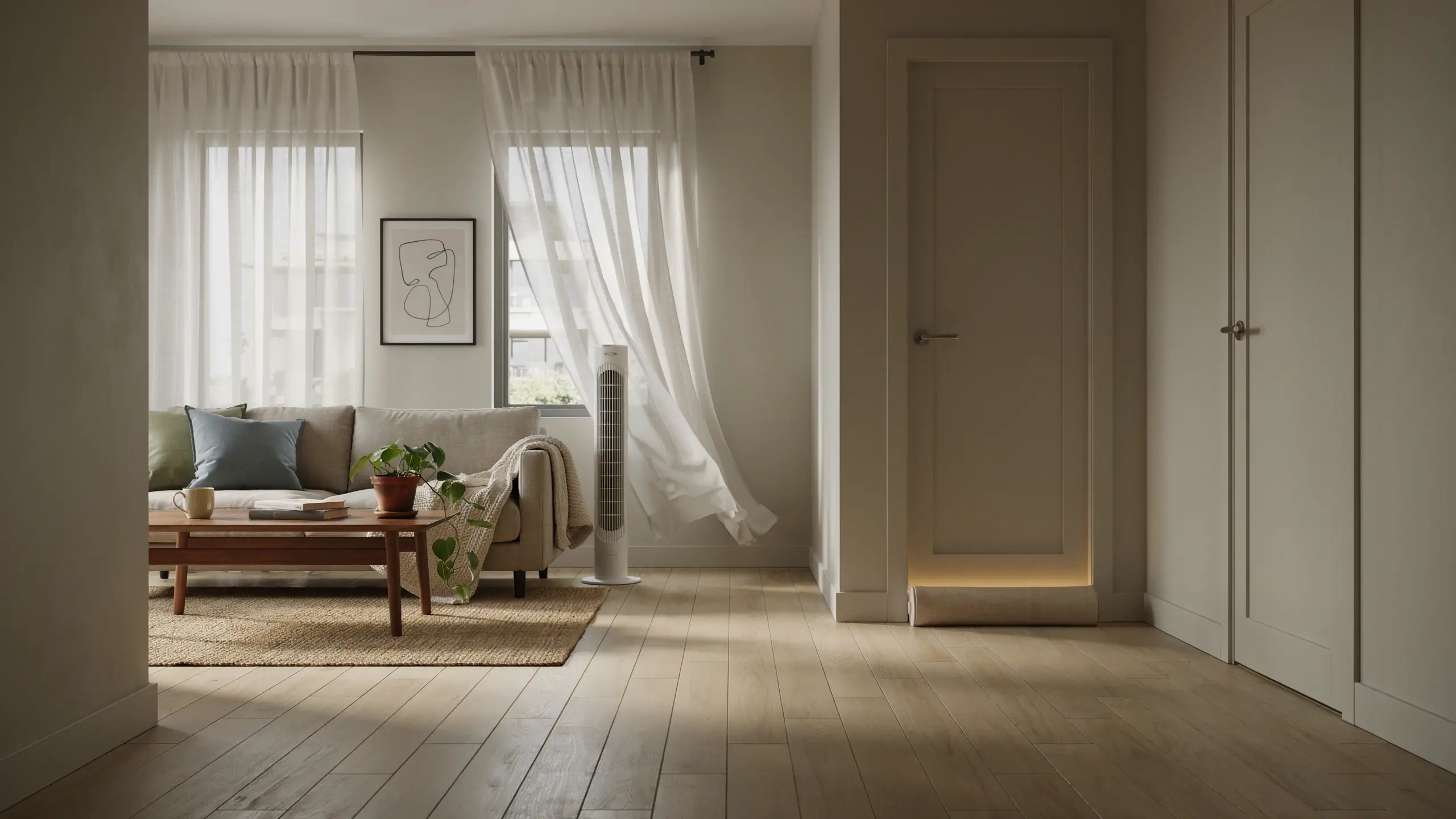
Your goal isn’t to cool your whole house. Your goal is to cool the rooms you’re actually using.
Close the doors to unused rooms. This keeps any cool air you’ve created concentrated in the spaces where it matters. Roll a small towel along the bottom of the door to stop cool air from seeping out under it.
If your home has multiple floors, spend the hottest hours on the lowest level. Heat rises, and a basement or ground-floor room can be dramatically cooler than an upstairs bedroom during the afternoon. Even a few hours of working or relaxing downstairs gives your sleeping space time to cool down before bedtime.
8. The Bedroom Is Where This Battle Gets Personal
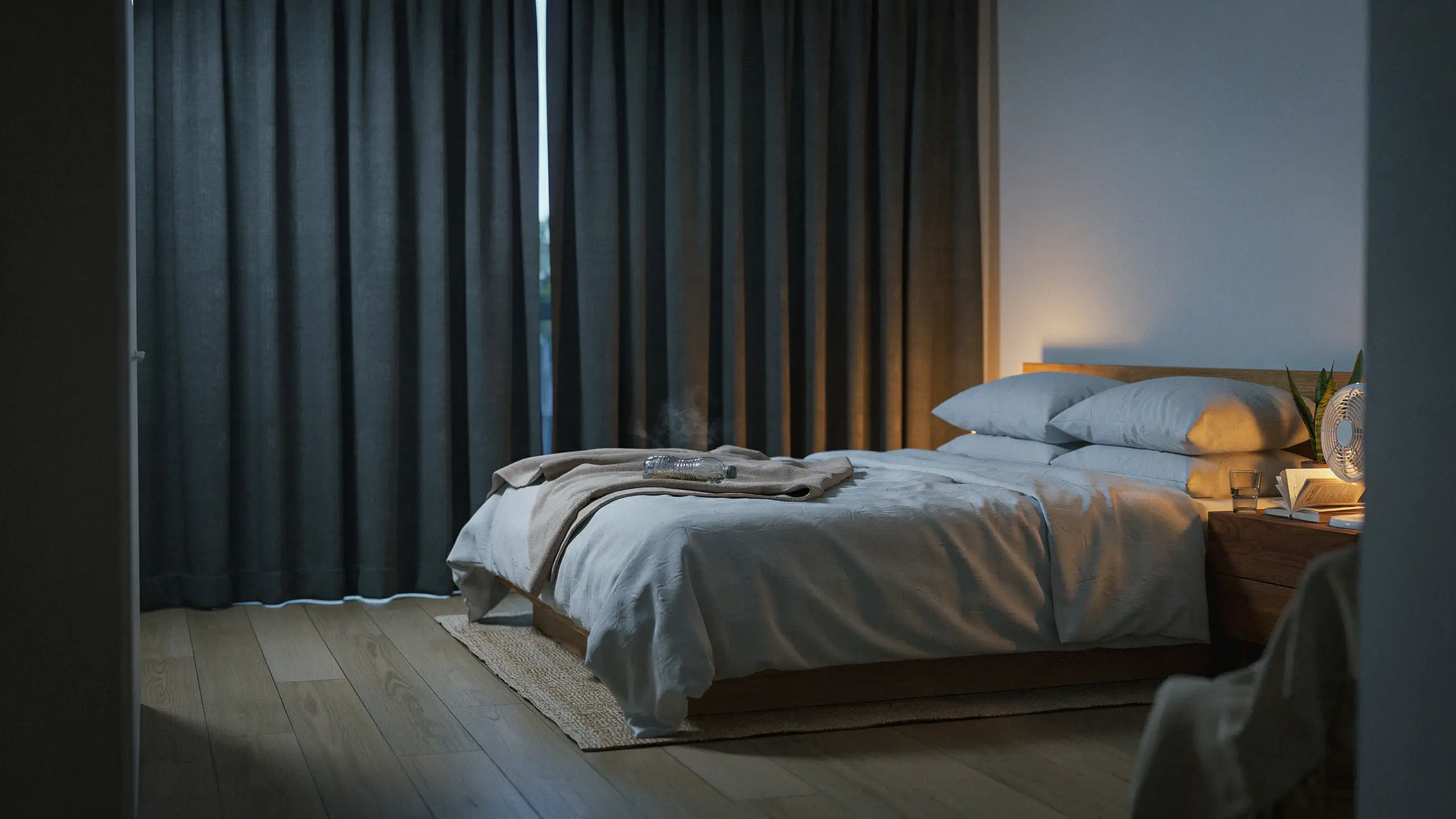
Getting through the night without AC is its own challenge. Sleeping hot is miserable, and it affects everything about how you feel the next day.
- Switch to linen or cotton sheets. If you’re sleeping on flannel, polyester blends, or microfiber, change them out for 100% cotton or linen. Both are breathable and don’t trap heat the way synthetic fabrics do. Percale cotton (which has a crisp, cool feel) is better than sateen for warm sleepers.
- Try the frozen sheet trick. A few hours before bed, fold your top sheet loosely into a bag and put it in the freezer. It won’t stay cold all night, but it’s cool enough to help you fall asleep quickly, which is often the hardest part.
- Place a frozen water bottle at the foot of your bed. Tuck it under the sheet near your feet. Your feet are one of the most heat-sensitive parts of your body, and keeping them cool has a surprisingly strong effect on how your whole body temperature feels.
- Sleep lower to the ground. If you have a high bed frame, consider moving your mattress directly to the floor on the hottest nights. Hot air accumulates near the ceiling, and even a foot or two lower can make a difference.
9. Cool Your Body, Not Just the Room
When the air temperature is unavoidable, cooling your body directly is faster and more effective than any fan trick.
Apply a cold, damp cloth to your pulse points: the inside of your wrists, your neck, your temples, and your ankles. These spots are where blood vessels run close to the surface of your skin, and cooling them drops your core body temperature quickly. It feels immediate and lasts longer than you’d expect.
Keep a spray bottle of water in the fridge and mist your arms and legs throughout the day. The evaporation pulls heat away from your skin.
Stay on top of hydration. This sounds obvious, but your body’s cooling system (sweating) requires water to work. Cold water, iced drinks, popsicles, and cold fruit like watermelon all help keep your internal temperature in check.
10. Use Your Exhaust Fans Strategically
Your kitchen exhaust fan and bathroom exhaust fan are heat-removal tools, not just odor-removal tools. Run the kitchen fan every time you cook, even if you’re just using the microwave. Run the bathroom fan during and after showers.
Hot, steamy air from showers is particularly sneaky. A 10-minute hot shower on a summer morning adds real moisture and heat to your home’s air. The exhaust fan captures it before it can spread through the rest of the house.
11. Add Plants That Help Cool the Air
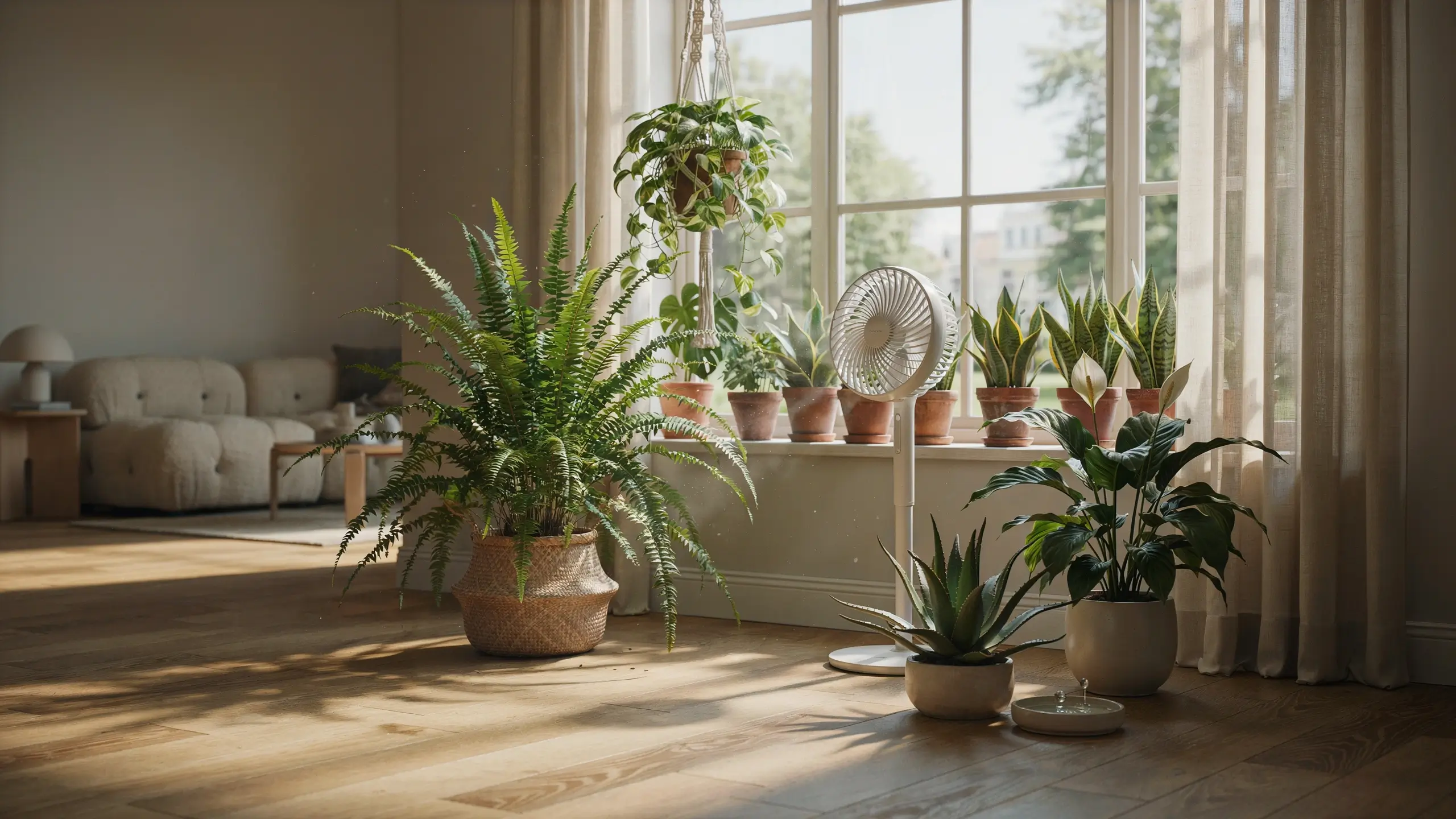
This one is a bonus, but it’s real. Some indoor plants release moisture through their leaves through a process called transpiration, which adds humidity and slightly lowers the surrounding air temperature. In a dry climate, this is helpful. In a humid climate, you’ll want to be selective.
- Boston ferns, peace lilies, snake plants, and aloe vera all have cooling and air-purifying properties. They won’t air-condition your home, but they add a natural freshness to a room and make the air feel more comfortable to breathe.
A large fern in a bright corner near your cooling fan setup? Practical and genuinely good-looking.
12. Seal the Gaps and Insulate What You Can
If hot air is sneaking in through gaps around your doors and windows, all the fans and curtains in the world won’t keep up. Weatherstripping is inexpensive, takes about 20 minutes to install, and makes a noticeable difference.
Check the gap under your exterior doors first. If you can see daylight, hot air is flowing in freely. A door sweep (the kind that attaches with adhesive or screws) seals this gap. For renters, a draft stopper you slide against the bottom of the door works almost as well without any installation.
Check around window frames too. A foam weatherstrip tape around the window frame is inexpensive, removable, and easy to install without damaging anything.
13. Shade the Outside of Your Home

Interior curtains stop heat after it’s already passed through the glass. Exterior shading stops it before. The difference is significant.
If you own your home, consider installing awnings over south and west-facing windows. Even a fabric shade sail installed over a patio or deck prevents direct sun from hitting the wall of your house for hours during the day.
Climbing vines trained up a trellis along a sun-facing wall work similarly, providing a natural insulating layer between the exterior wall and the sun. Ivy, clematis, and Virginia creeper all grow quickly and provide real shade.
Long-term, strategically planted deciduous trees on the west and south sides of your home will shade the house in summer and lose their leaves in winter to let sun through when you need warmth.
14. Address Humidity Too, Not Just Temperature
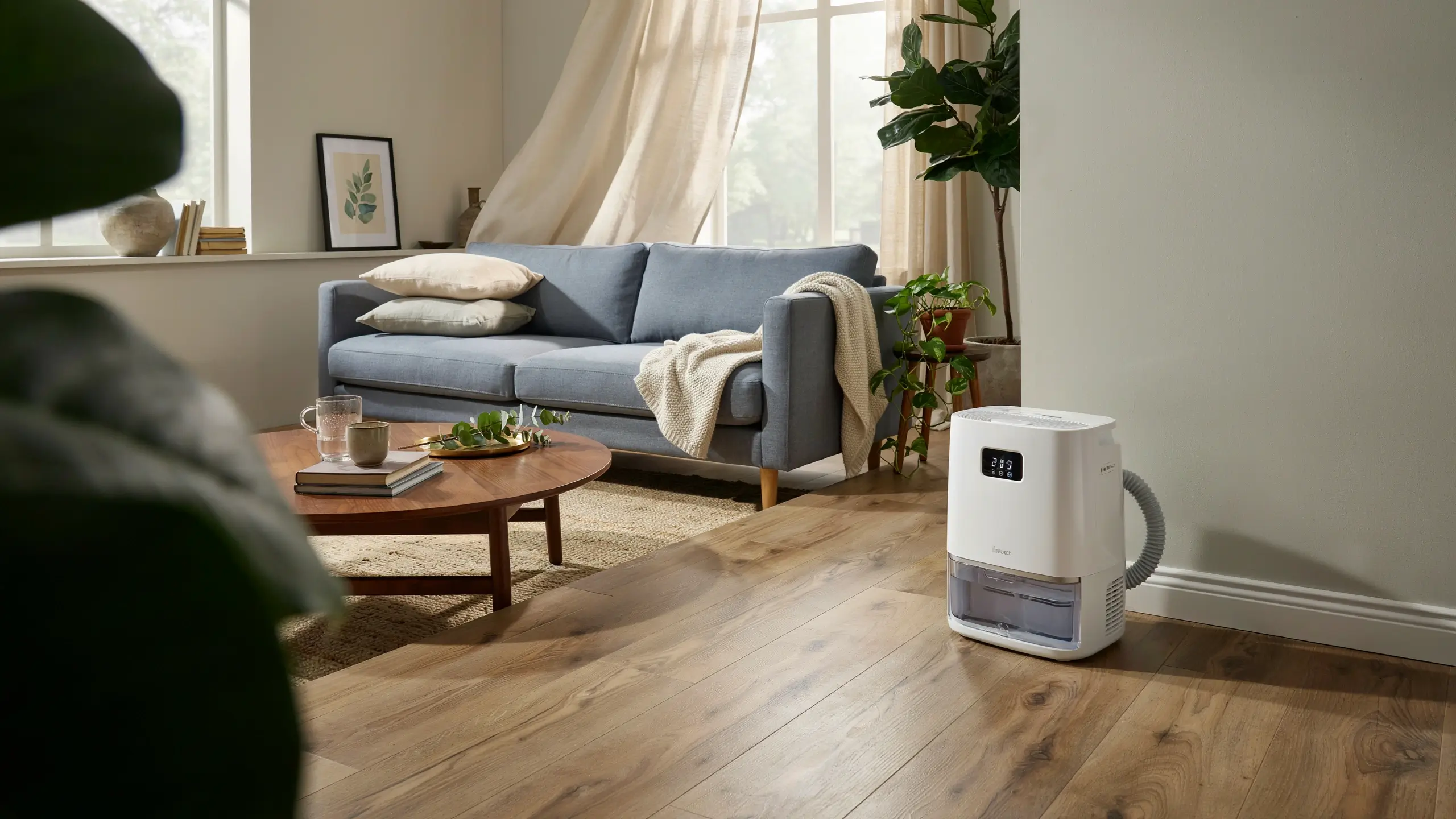
In humid climates, heat feels hotter because your sweat can’t evaporate properly. A room at 80 degrees with 80 percent humidity feels far more miserable than 80 degrees at 40 percent humidity.
A portable dehumidifier in the rooms you use most can make a meaningful difference in comfort without doing anything to lower the actual temperature. They’re especially useful in basements, ground-floor bedrooms, and rooms that don’t get good airflow.
Just remember: dehumidifiers generate some heat themselves as they work. Run them during the day when you’re actively cooling the space, and keep the room ventilated.
15. Renter-Specific Tip: Do All of This Without Losing Your Deposit
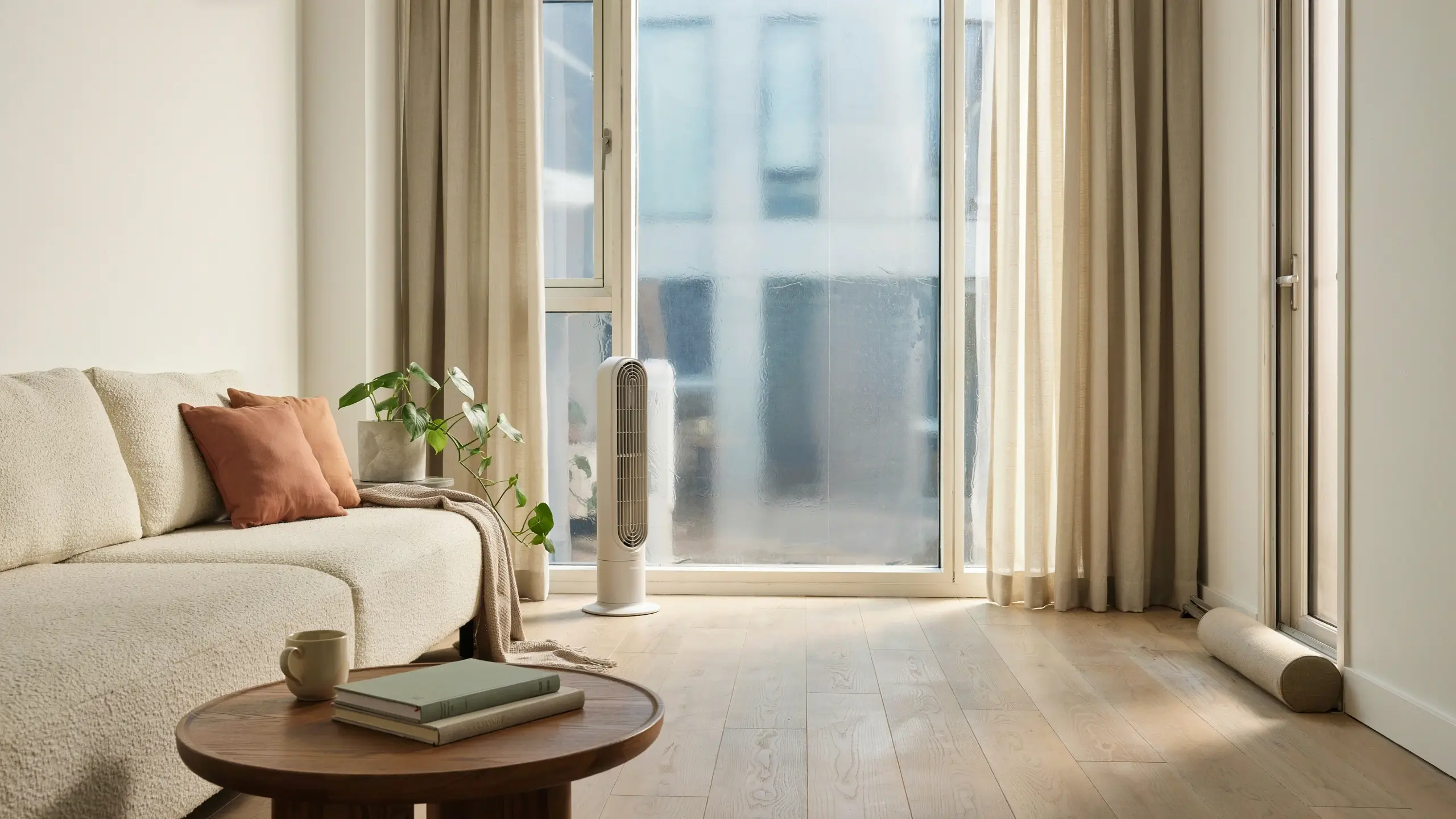
If you’re renting, almost everything in this article applies to you. A few things worth noting specifically:
- Peel-and-stick window film comes off cleanly and leaves no residue. It’s completely renter-safe.
- Tension rod curtain rods require zero drilling and hold full blackout curtains without a problem. Install them in under two minutes.
- Portable tower fans and box fans are your best friends. Don’t wait for your landlord to install a ceiling fan.
- Draft stoppers and adhesive weatherstripping are removable and non-damaging.
The only real limitation for renters is that whole-house attic fans and ceiling fans require installation. For those, it’s worth asking your landlord, especially if you’re signing a long lease. Many will agree since it also makes the unit more rentable.
Common Mistakes That Make Your House Hotter
A few things people do that actually work against them:
- Opening windows during the day when it’s hotter outside than inside. This just lets heat in. Only open windows when outdoor temps are lower than indoor temps.
- Pointing fans in the wrong direction. Fans pointed toward you in a hot room just blow hot air at you. Face box fans outward in windows to push hot air out, and use a floor fan to circulate cooler air from below.
- Running the dryer in the afternoon. Dryers run at around 130 degrees Fahrenheit. Running one at 3pm in a hot house is like adding a small oven to your home.
- Leaving electronics plugged in all day. Even standby mode generates heat. Unplug what you’re not using.
A Note on Heat Safety
No set of cooling tricks should replace common sense when temperatures get dangerously high. If you’re in an extreme heat event, especially with elderly family members, young children, or pets, know your limits. Libraries, community centers, and shopping malls are air-conditioned and open to the public. Many areas designate cooling centers during heat emergencies specifically for this reason. Staying cool is not just a comfort issue when temperatures are extreme. It’s a health one.
Conclusion
Learning how to keep your house cool without AC is really about learning to work with your home instead of against it. Seal it up when the heat is high. Open it up when the air cools down. Block the sun at the glass. Stop making heat from the inside. Focus your cooling on the people and rooms that need it most.
None of these tips cost much. Some cost nothing at all. And used together, they genuinely change how livable a home feels during a hot summer, even without a single window unit running.
Start with the timing system and the window coverings. Add the fan tricks. Set a reminder to run your appliances at night. And give yourself one good night with the frozen-water-bottle bedroom setup before you decide it doesn’t work.
Which of these tips are you trying first? Drop a comment below, I’d love to know what’s worked for you in your home.





No Comment! Be the first one.