






Who Is Dwayne Michael Turner: Lil Wayne’s Biological Father, Fully Explained
Dwayne Michael Turner is the biological father of rapper Lil Wayne, born Dwayne Michael Carter Jr. He and Lil Wayne’s mother, Jacida Carter, were briefly together in New Orleans in the early...

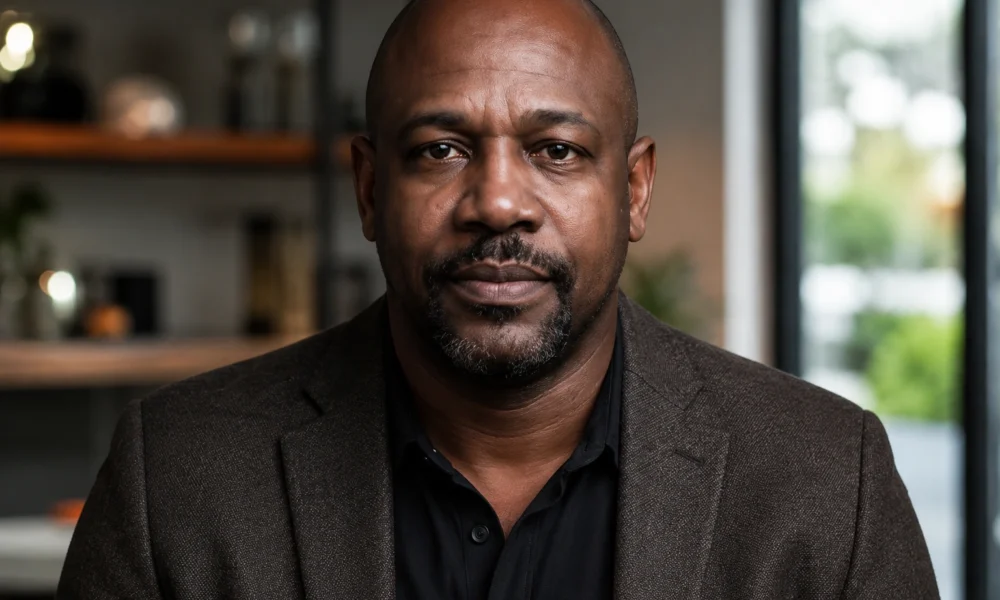
Dwayne Michael Turner is the biological father of rapper Lil Wayne, born Dwayne Michael Carter Jr. He and Lil Wayne’s mother, Jacida Carter, were briefly together in New Orleans in the early 1980s. Turner left the family when Wayne was approximately two years old and has had no documented public presence since.
That’s the answer. Most articles end there.
This one doesn’t.
Dwayne Michael Turner is the biological father of Grammy-winning rapper Lil Wayne (born Dwayne Michael Carter Jr.). Turner was briefly involved with Jacida Carter in New Orleans, Louisiana in the early 1980s, but left the family when Wayne was around two years old. He has maintained a near-total absence from public life ever since, with no confirmed interviews, photos, or statements on record.
The Basic Facts: What We Actually Know About Dwayne Michael Turner
Confirmed information about Dwayne Michael Turner is genuinely limited. That’s not a disclaimer — it’s a core fact about who he is. There are no verified photographs, no public interviews, no confirmed birth date, and no documented social media accounts under his name.
Here’s what multiple credible sources consistently agree on: Turner was born and raised in New Orleans, Louisiana. He was in a relationship with Jacida Carter in the early 1980s. Lil Wayne was born on September 27, 1982. Turner left the family when Wayne was roughly two years old. He has never publicly addressed his son’s career, his absence, or anything else.
Quick note on net worth claims: Several sites list Turner’s net worth at around $500,000. No credible financial record or verified source supports this figure. It appears to be a number that circulated and got repeated. Treat it as speculation.
Quick Comparison: Key Father Figures in Lil Wayne’s Life
| Figure | Role | Active Period | Key Contribution | Limitation |
|---|---|---|---|---|
| Dwayne Michael Turner | Biological father | Birth–age ~2 | Gave Wayne his name | Left family; no documented contact since |
| Reginald “Rabbit” McDonald | Stepfather | Childhood years | Daily stability, early music funding | Killed before Wayne became a star |
| Bryan “Birdman” Williams | Mentor / surrogate father | 1991–~2015 | Signed Wayne at 8; built Cash Money career | Relationship ended in bitter $51M lawsuit |
Why Turner Left — And What Lil Wayne Has Said About It
Turner has never explained his departure. Not once — no interview, no statement through an attorney, no media appearance. For someone connected to one of the most documented careers in music, that silence is almost architectural in how completely it holds.
What we have instead is Wayne’s perspective. And it’s been consistent across twenty years of interviews.
Lil Wayne hasn’t described his father’s absence as a wound he’s nursing. He’s described it as a fact he accepted and moved past. He was never there. Wayne didn’t feel connected to him. There was nothing to reconnect with. Wayne has said, in various interviews throughout the 2000s and 2010s, that his father never cared to be part of his life — and that Wayne eventually felt the same way about a relationship that never existed.
The name itself became part of this. Wayne was named Dwayne Michael Carter Jr. — inheriting the “Dwayne” from Turner. At some point, Wayne rejected the name. Reporting from Balzaro Magazine and other sources documents Wayne saying he didn’t want to be called Dwayne, signaling a deliberate emotional separation from the man who never raised him. Adopting “Wayne” wasn’t just a stage name. It was him rewriting his own starting point.
Or maybe I should say it this way: Turner gave him a name, and Wayne gave it back.
Look — if you’ve landed on this article after five others all said “not much is known,” here’s what actually matters: Turner wasn’t just absent for birthdays. He was gone during the years Wayne spent in New Orleans’ 17th Ward, one of the city’s toughest neighborhoods, with a 19-year-old mother raising him alone. The absence wasn’t symbolic. It was daily.
The Men Who Actually Raised Lil Wayne
Reginald “Rabbit” McDonald
McDonald is the most underreported figure in this story. He was Wayne’s stepfather — the man physically present during Wayne’s childhood, helping to fund early recording sessions and providing the kind of daily stability that Turner never did. He was also tragically killed before Wayne became famous, a loss that shaped Wayne in ways that get glossed over when articles jump straight to Birdman.
Rabbit deserves more than a footnote.
Bryan “Birdman” Williams
Birdman’s role is better documented, and significantly more complicated.
Co-founder of Cash Money Records, Birdman signed Wayne at approximately eight years old — a fact that still surprises people when they encounter it. The mentor relationship evolved over years into something both men publicly described as a father-son bond. Birdman reportedly legally adopted Wayne at some point, though the exact legal details remain disputed in public accounts. Wayne called him “Dad” in interviews for years without irony.
That relationship collapsed publicly around 2015. Wayne filed a lawsuit against Cash Money for $51 million in unpaid royalties. The legal battle was bitter and personal. For a man who had already lost one father to abandonment, losing a surrogate father to a contractual dispute carried a very particular weight.
Wayne eventually settled, and built out Young Money Entertainment — the label he’d launched in 2005 — into his primary creative home.
Here’s the thing: Young Money wasn’t just a business response to a bad contract. It became a chosen-family structure. Wayne signed and mentored Drake and Nicki Minaj when they were largely unknown, offering the same kind of early, unconditional belief that Birdman had once extended to him. The cycle of surrogate fatherhood is embedded directly into how he built his career.
How to Trace Turner’s Absence Through Lil Wayne’s Career Arc
- Age 2 — Turner departs; Jacida Carter raises Wayne alone in New Orleans’ 17th Ward
- Age 8 — Birdman signs Wayne to Cash Money; a surrogate father relationship begins forming
- Age 23 — Wayne launches Young Money Entertainment, constructing his own chosen-family structure
- Age 32 — Wayne sues Birdman for $51M; the surrogate father dynamic fractures in public
How Turner’s Absence Echoes Through Lil Wayne’s Music
This is the angle no other article on this topic actually develops. Most mention that Wayne references abandonment themes. None trace where those themes live in the work itself.
The Carter album series — spanning Tha Carter (2004) through Tha Carter V (2018) — is effectively a 14-year document of a man building an identity from scratch. The loyalty that runs through Wayne’s lyrics isn’t decorative. It reads like someone who understood early, at a very concrete level, what disloyalty looked like.
On Tha Carter III (2008), one of the best-selling rap albums in history, Wayne cycles through ideas of being self-made, of earning everything without inherited support, of owing nothing to people who weren’t there. Turner isn’t named. He doesn’t need to be. The emotional logic of the record operates in the space his absence created.
What most writers skip entirely is the structural implication. Wayne’s obsessive loyalty to his inner circle at Young Money — his fierce protection of Drake, Nicki, and others — mirrors the mentorship he himself received from Birdman. He replicated the father-figure dynamic because it was the one that worked for him, even when the original version eventually broke down.
When someone spends twenty years writing about loyalty, it usually means they learned early what disloyalty looks like.
The Broader Context: Fatherlessness in Black America
Some experts argue Turner’s story is simply a personal failure — an individual decision that requires no wider lens. That’s valid for a surface reading. But it doesn’t account for why Wayne’s story of absent-father resilience resonates so deeply across demographics, or why millions of fans describe it as something that feels personally familiar.
The numbers provide context that changes how you read the story.
According to the Institute for Family Studies (2022), the share of boys in America growing up without their biological father has nearly doubled since 1960 — rising from 17% to 32%. For Black children specifically, data aggregated from U.S. Census sources by Mission Possible Austin puts the figure at 57.6%. More than half of Black boys in America grow up without their biological father in the home.
That’s not background information. That’s the water Dwayne Michael Carter Jr. learned to swim in.
I’ve seen conflicting figures across different studies — some methodologies push the national average closer to 24%, others to 33% depending on how “absent” is defined. My read is that the gap between those estimates matters less than the agreed-upon scale: tens of millions of children navigating the same emotional geography Wayne navigated. His story isn’t exceptional in its circumstances. It’s exceptional in what he built from them.
Where Is Dwayne Michael Turner Now?
Unknown.
That’s the accurate answer, and it’s been accurate for decades. No confirmed social media presence. No documented address. No public appearances. No interviews tied to his son’s rise — not even at the height of Cash Money’s cultural dominance, not after five Grammy wins, not after 120 million records sold worldwide.
Turner has watched all of it from wherever he is and said nothing.
What that silence means is genuinely unknowable from the outside. Speculation about guilt, indifference, or regret isn’t something this article can responsibly offer. What it can offer is the documented record: a man who left, stayed gone, and whose absence became one of the quiet foundational facts beneath one of the loudest careers in the history of popular music.
Voice Search Q&A
Who is Dwayne Michael Turner?
Dwayne Michael Turner is the biological father of rapper Lil Wayne. He was briefly in a relationship with Jacida Carter in New Orleans in the early 1980s, then left the family when Wayne was around two years old and has maintained no public presence since.
Why did Dwayne Michael Turner leave Lil Wayne?
Turner has never publicly explained his departure. Lil Wayne has said in multiple interviews that his father was never present and offered no support — and no reconciliation between the two has ever been documented.
Did Lil Wayne ever reconnect with Dwayne Michael Turner?
No documented reconnection exists. Lil Wayne has consistently described his father’s absence with emotional distance, and Turner has never appeared publicly or given any statement about his son.
Who raised Lil Wayne after his biological father left?
Lil Wayne was raised primarily by his mother, Jacida Carter. Stepfather Reginald “Rabbit” McDonald provided early support. From age eight onward, Birdman of Cash Money Records became a significant surrogate father figure.
Is Dwayne Michael Turner still alive?
No confirmed information about Turner’s current status or whereabouts is publicly available. He has no verified interviews, photographs, or social media presence on record.





No Comment! Be the first one.