




How to Attract Hummingbirds to Your Garden (13 Simple Ideas That Actually Work)
The first time a hummingbird showed up at my kitchen window, I dropped what I was doing and just stood there watching it. There is something about those tiny, shimmery little birds that stops you in...

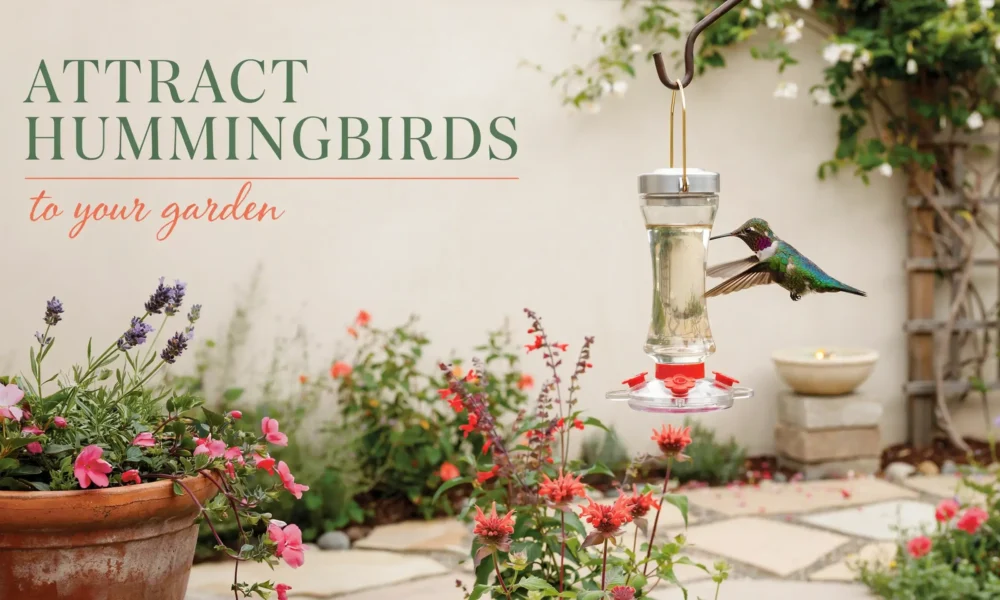
The first time a hummingbird showed up at my kitchen window, I dropped what I was doing and just stood there watching it. There is something about those tiny, shimmery little birds that stops you in your tracks. If you have ever wondered how to attract hummingbirds to your garden without turning your yard into a science project, you are in the right place.
The good news is that you do not need acres of land or a fancy setup. Hummingbirds are happy with a few containers on a porch, a small flower bed, or even a hanging basket outside an apartment window. What matters is giving them the right colors, the right shapes of flowers, a clean and reliable food source, and a safe place to rest. Get those basics right and the birds will find you.
Below are the ideas that actually move the needle, plus the small details most articles skip, like why your feeder might be getting ignored, which colors to avoid, and how to keep hummingbirds coming back year after year instead of just passing through once.
Why Hummingbirds Ignore Some Gardens (And Love Others)
Before we get into the list, it helps to understand how a hummingbird actually experiences your yard. They do not rely on smell like bees do. They are drawn in by sight, especially by the color red, and by the shape of tubular flowers their long beaks are built to reach into. They also burn through energy so fast that they need to feed every ten to fifteen minutes during daylight hours, which is why a garden with only one or two blooms will never hold their attention for long.
A hummingbird-friendly garden checks four boxes: color, shape, a steady food supply, and safety. Miss one of those and the birds may visit once and never come back. Nail all four and you will have regulars who return to the same spot year after year.
1. Plant Red and Orange Tubular Flowers First
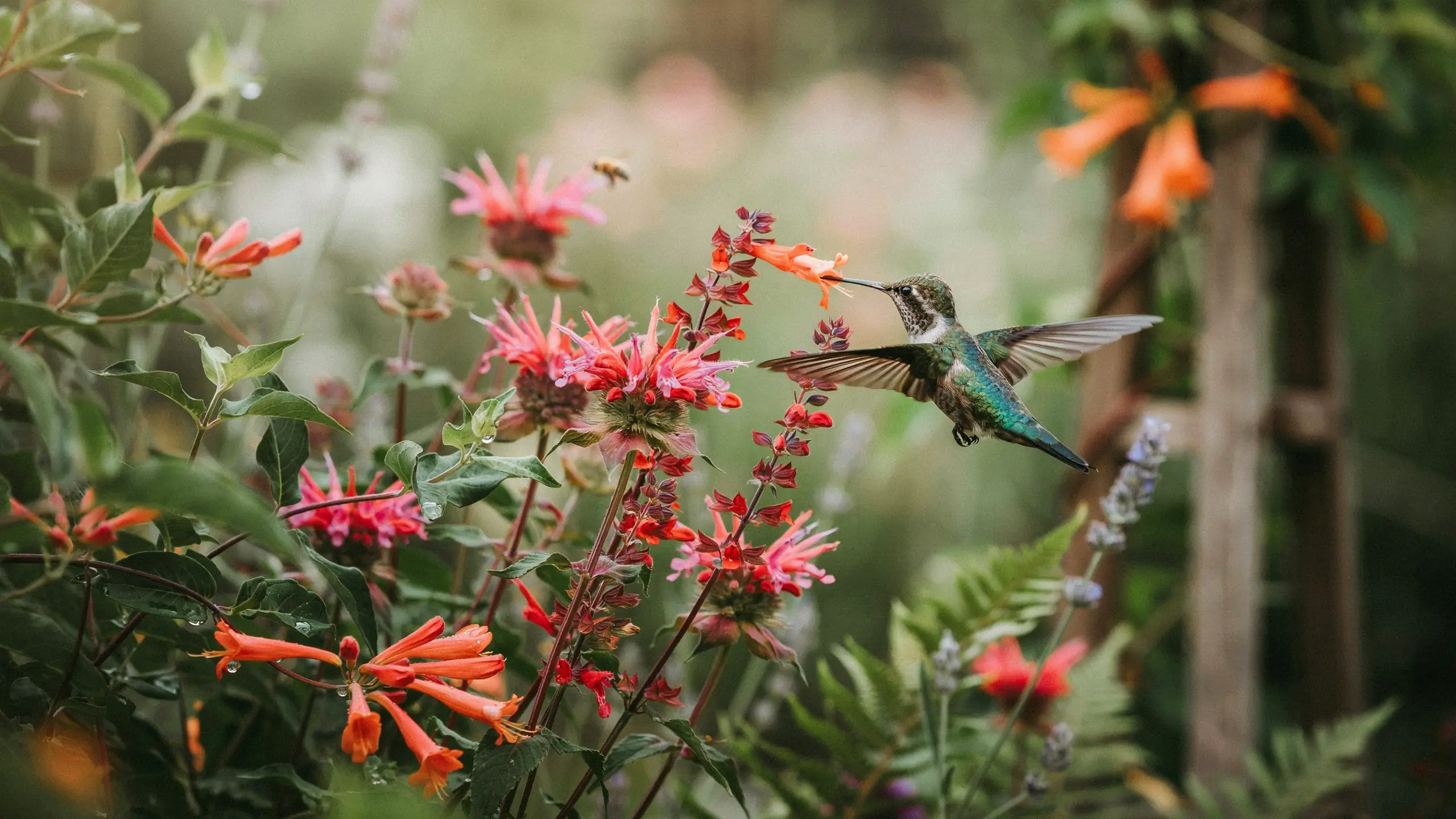
This is the single biggest lever you can pull. Hummingbirds are pulled in by red, orange, and hot pink blooms shaped like little trumpets, since that shape fits their long beak and tongue perfectly. Good starter options include bee balm, salvia, trumpet vine, cardinal flower, and coral honeysuckle.
Pinterest tip: plant these in a cluster near a window or patio you actually sit at, not tucked in the back corner of the yard. A drift of red salvia against a white fence photographs beautifully and gives you a front row seat.
2. Choose Plants With Staggered Bloom Times
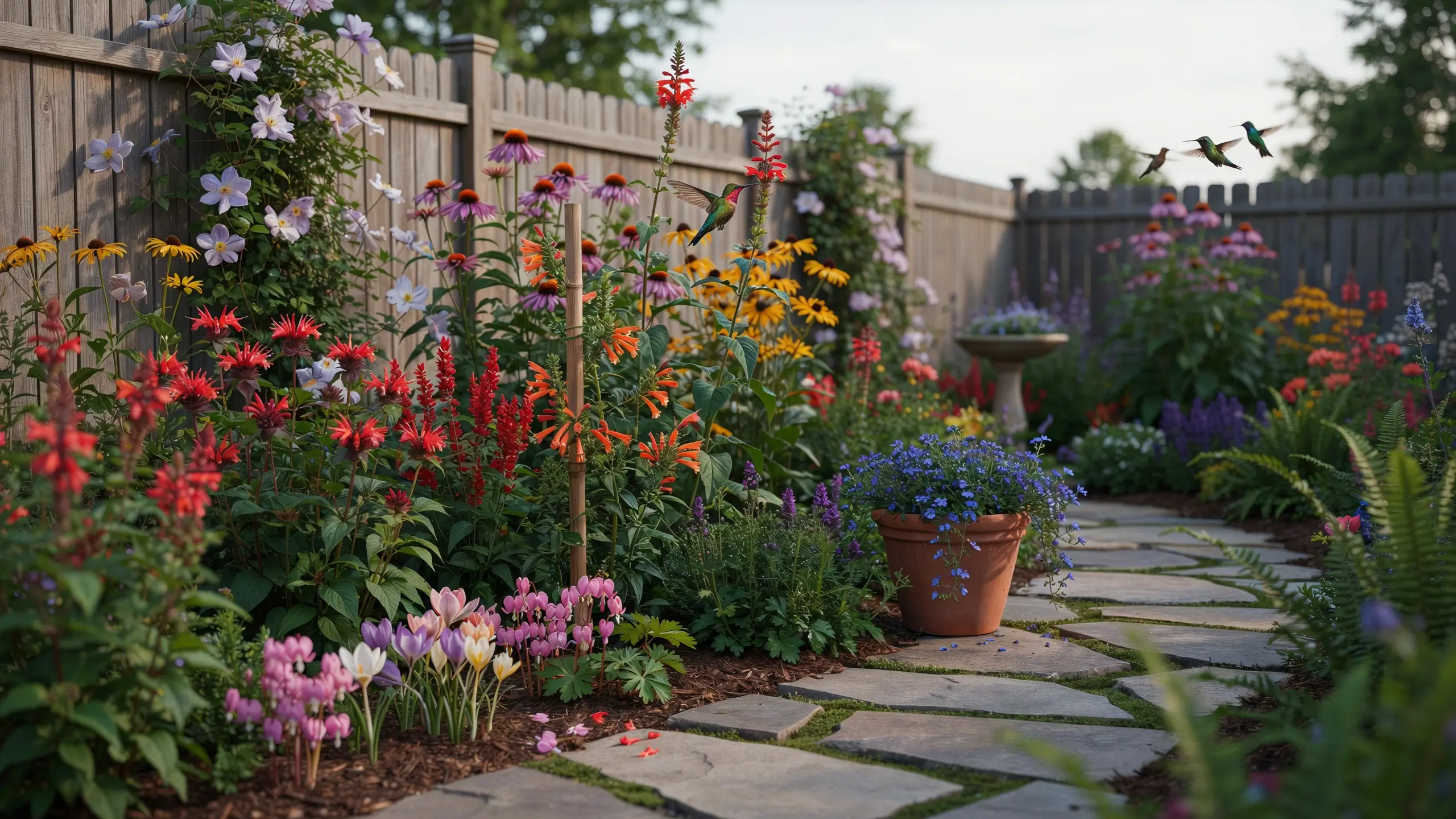
One flowering bush that blooms for three weeks in June will not keep a hummingbird around all summer. Mix early bloomers like flowering currant, mid-season favorites like bee balm and agastache, and late-season options like zinnias and salvia so something is always in flower from spring through the first frost.
Mistake to avoid: planting five varieties that all peak in July, then wondering why the hummingbirds disappear in August.
3. Group Flowers Instead of Scattering Them
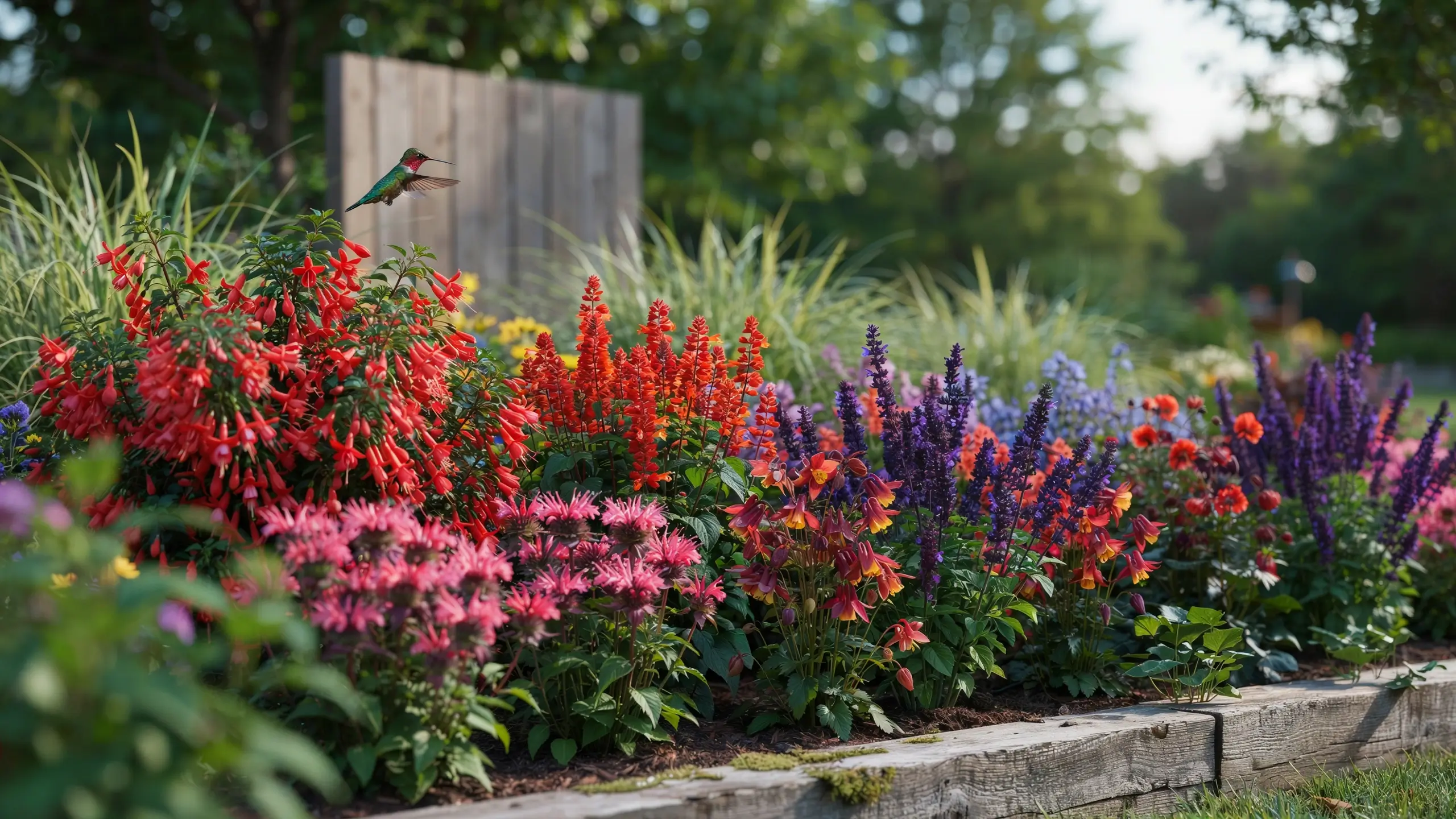
A single flower here and there is easy for a hummingbird to miss entirely. Planting the same variety in clusters of five or more creates a bigger, brighter target the birds can spot from a distance, and it gives you that lush, cottage-garden look that does so well as a Pinterest pin.
4. Do Not Skip Native Plants
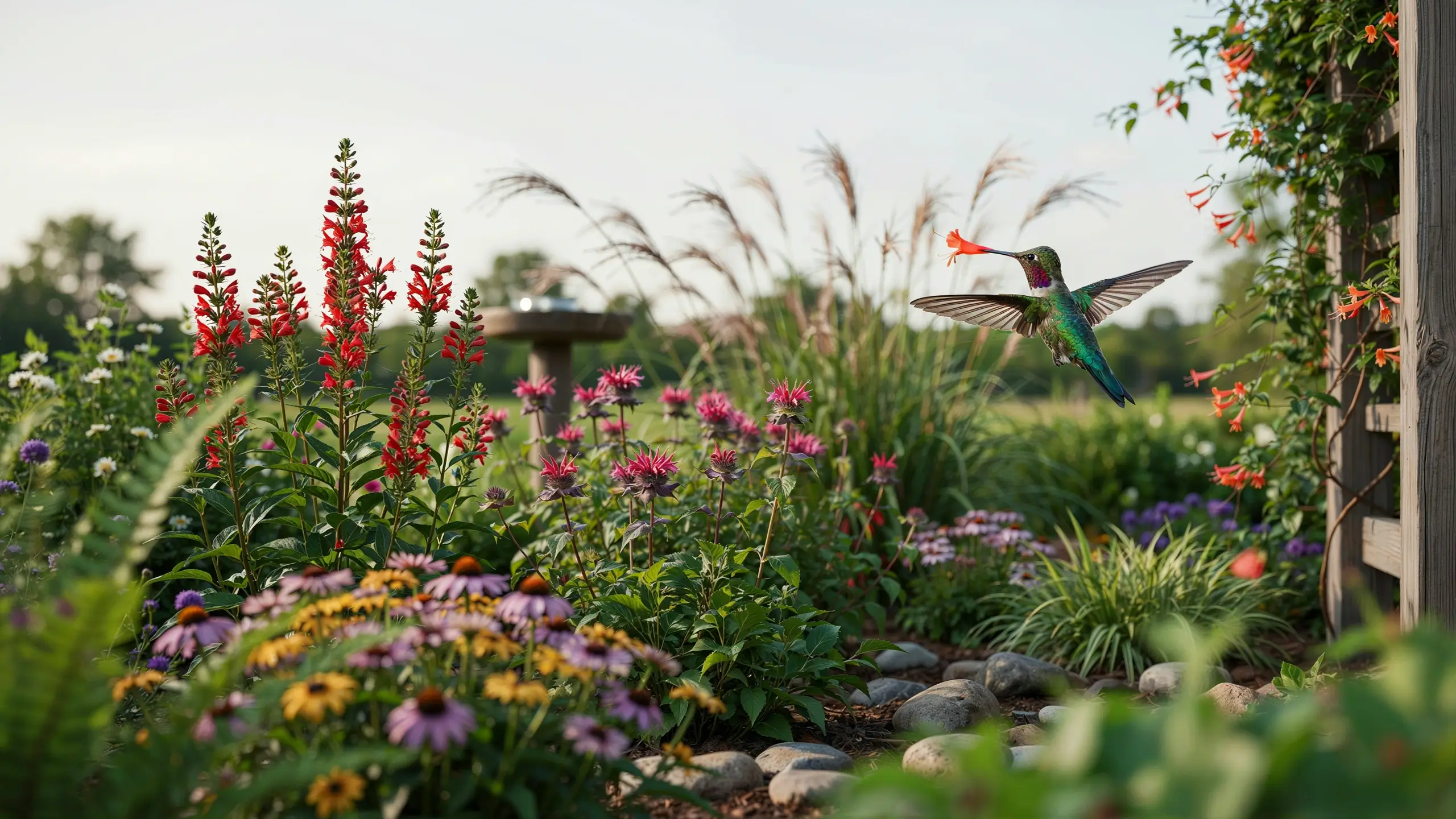
Non-native “flashy” cultivars can look gorgeous, but native plants tend to produce more nectar and support more of the tiny insects hummingbirds also eat (yes, about a third of their diet is actually insects and spiders, not just nectar). A mix of both gives you color plus a real food web. Search your state extension office or a native plant database for options suited to your zone.
5. Hang a Feeder, But Place It Correctly
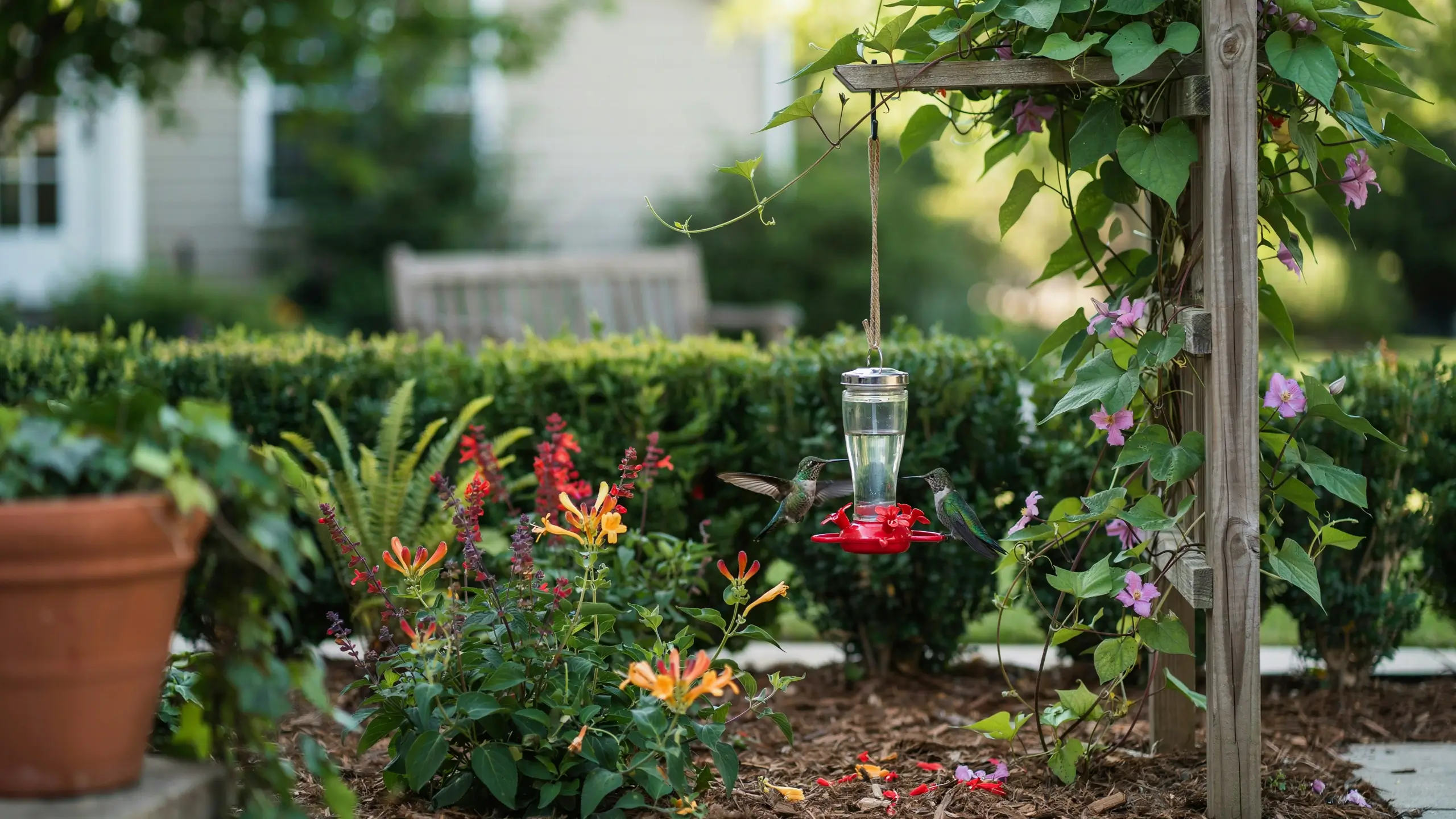
A feeder is often the fastest way to attract hummingbirds while your flowers are still filling in. Hang it somewhere with partial shade rather than full sun, since direct heat causes nectar to spoil faster. Keep it within view of a window so you actually get to enjoy the payoff, and place it near shelter like a tree or shrub so birds have somewhere to perch and watch it.
Materials needed:
- a hummingbird feeder (glass or plastic, red accents help)
- a sturdy hook or shepherd’s hook
- a spot roughly five to six feet off the ground
6. Make Your Own Nectar (Skip the Store-Bought Red Dye)
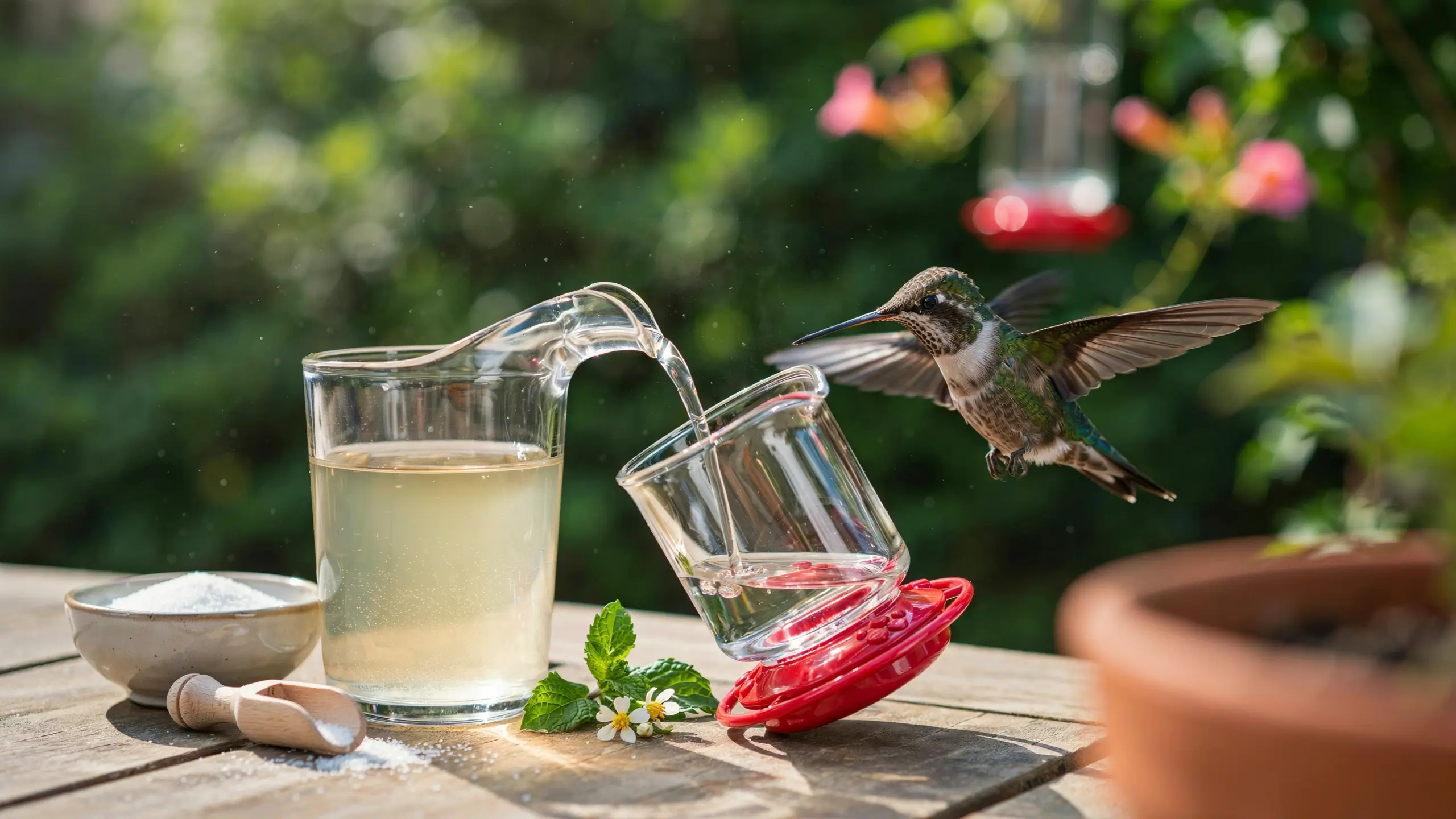
Homemade nectar is cheap, simple, and safer for the birds. Mix one part plain white sugar with four parts water, bring it to a gentle boil to help it dissolve and stay fresh longer, then let it cool completely before filling the feeder. Skip the red dye entirely. It adds no nutritional value and has been linked to health issues in hummingbirds. Never substitute honey, which ferments quickly and can grow harmful bacteria.
Safety note: throw out any nectar that looks cloudy right away, even if it has only been out a day or two.
7. Clean Your Feeder Every Few Days
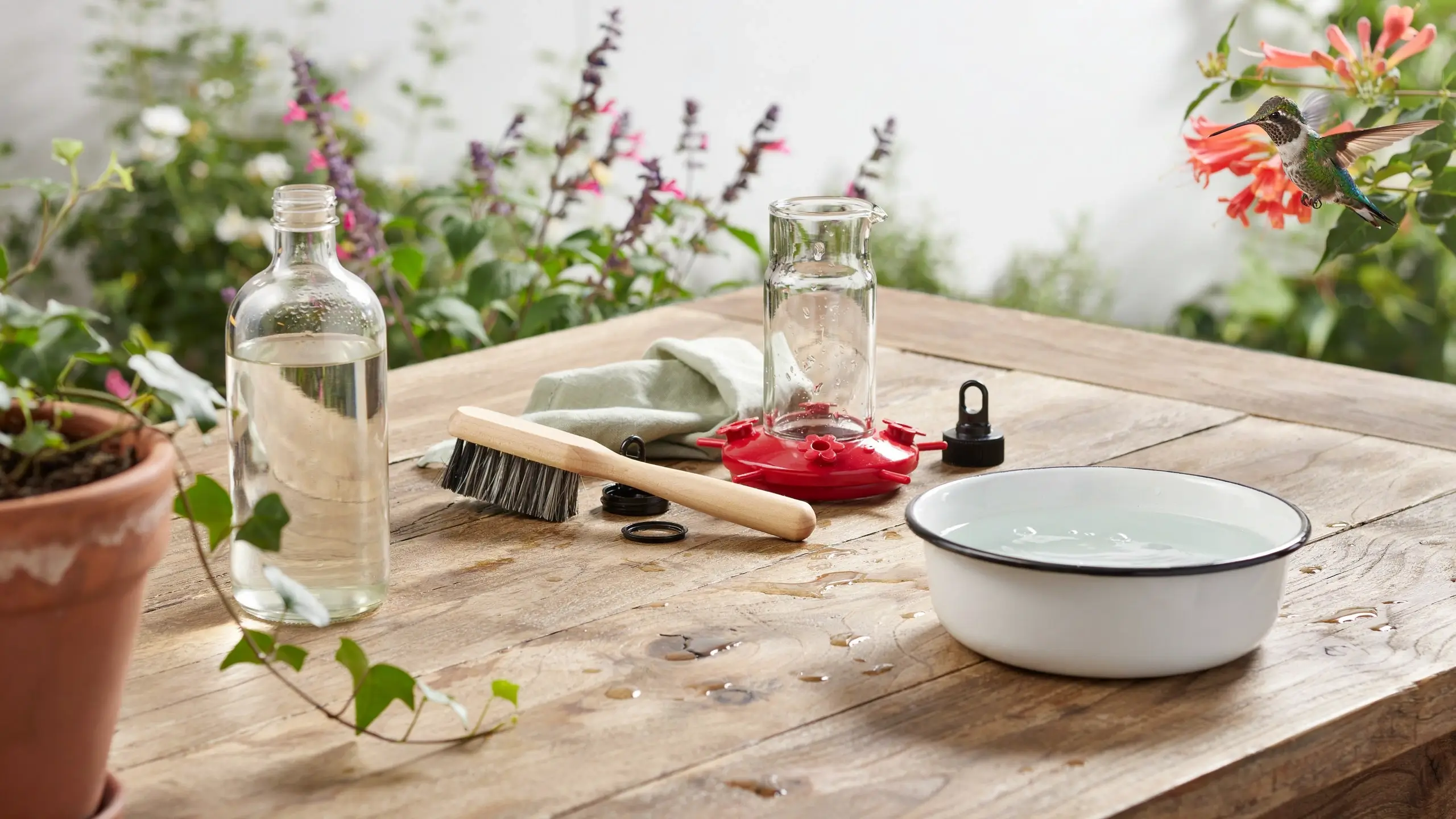
This is the step most people skip, and it is the one that keeps hummingbirds away the fastest. Nectar can start fermenting or growing mold within a few days, especially in hot weather. Clean your feeder every two to three days in summer heat, and at least weekly otherwise, using a solution of one part white vinegar to four parts water. A few grains of dry rice shaken in the solution work well for scrubbing out sticky residue in hard-to-reach spots. Rinse thoroughly with warm water before refilling.
8. Hang Multiple Feeders, Spaced Apart
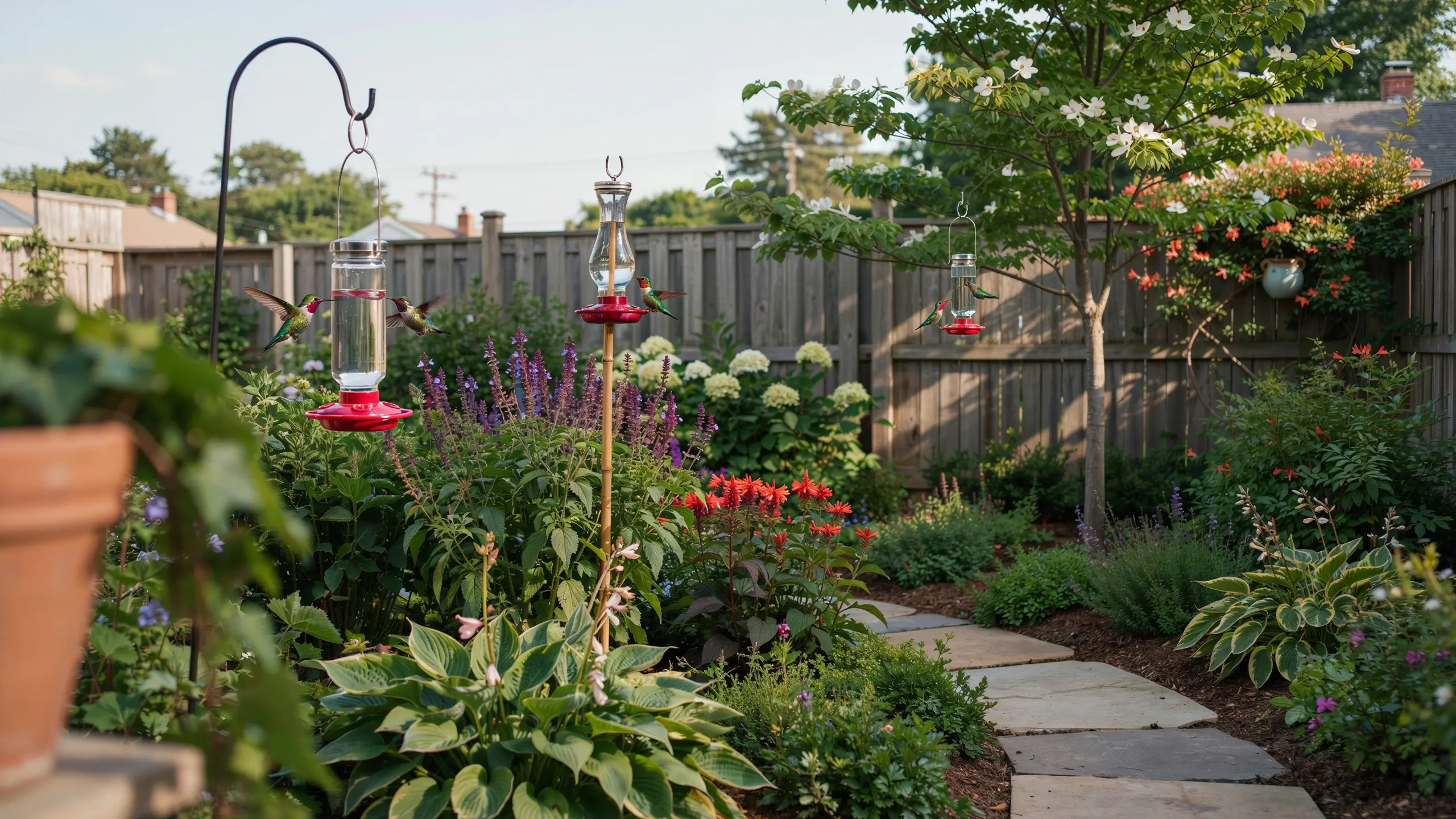
Hummingbirds are surprisingly territorial, and one dominant bird will chase every other visitor away from a single feeder. Hanging two or three feeders on opposite sides of your yard, out of each other’s sightline, lets more birds feed without constant squabbling. This is one of the easiest upgrades if you already have hummingbirds visiting but feel like you are only ever seeing one.
9. Add a Water Feature They Can Actually Use
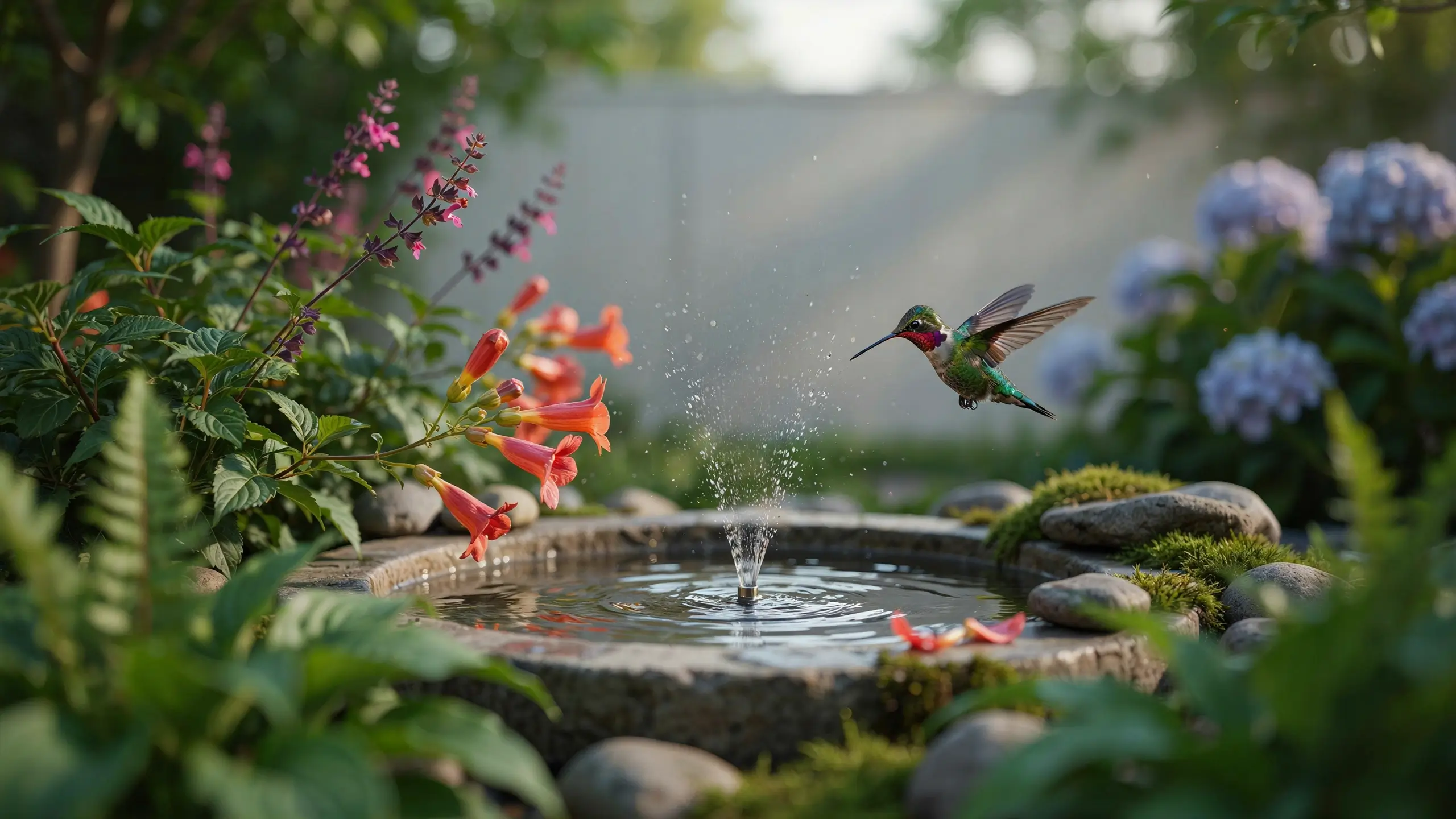
Hummingbirds love water, but a standard birdbath is usually too deep for them to use safely. They prefer a very shallow basin, misters, or fine sprays they can fly through and preen in. A shallow saucer with a few flat pebbles added for perching, or a small solar fountain with a gentle bubbler, works beautifully and adds a lovely focal point to a patio or garden bed.
Pinterest tip: a mini tabletop fountain with trailing plants around the base is one of the most saved styling ideas for small hummingbird gardens, and it works just as well on an apartment balcony as it does in a backyard.
10. Leave Some Bare Branches for Perching
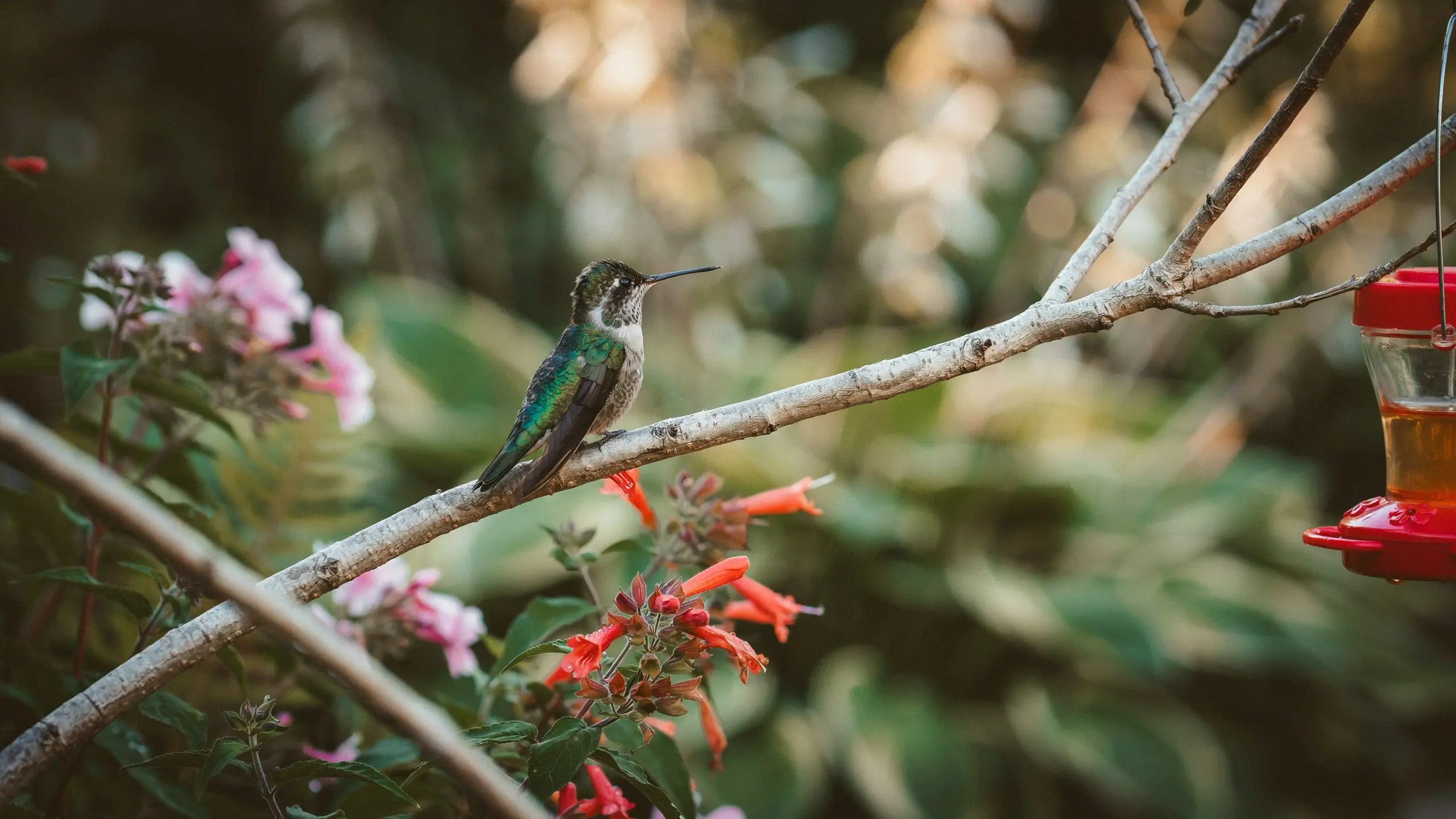
It is tempting to prune every stray twig, but hummingbirds need thin, exposed branches to rest on between feedings and to survey the garden for threats. Leaving a few small bare branches on a shrub or tree, especially near your feeders, gives them a place to land instead of just hovering the entire time they visit.
11. Keep Pesticides Out of the Picture
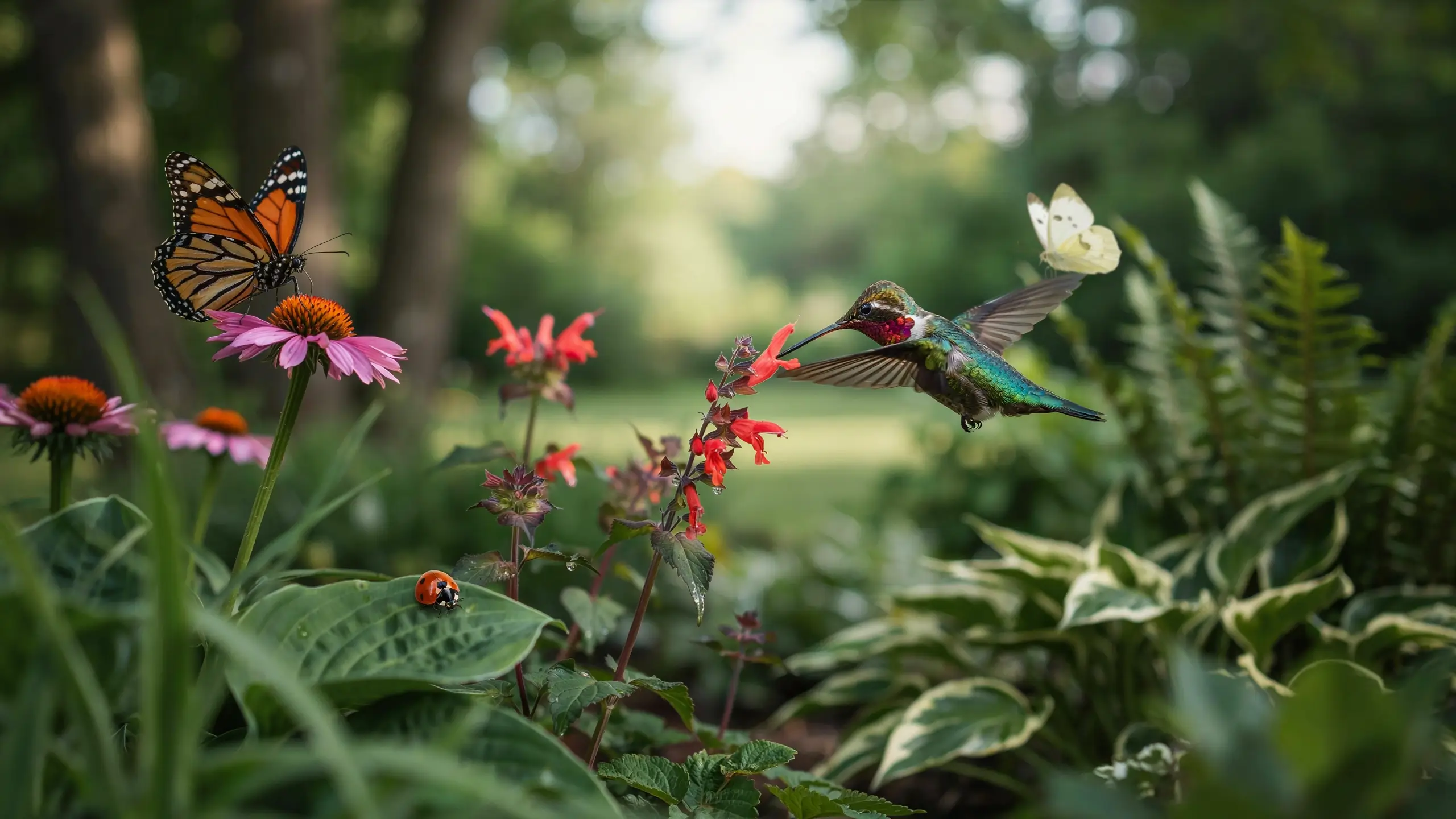
Roughly a third of a hummingbird’s diet is small insects and spiders, which they need for protein, especially when feeding their young. Spraying pesticides removes that food source and can poison the birds directly. If you are dealing with pests, look into targeted, less toxic options and avoid broad spraying anywhere near flowering plants.
12. Deadhead Wilting Blooms
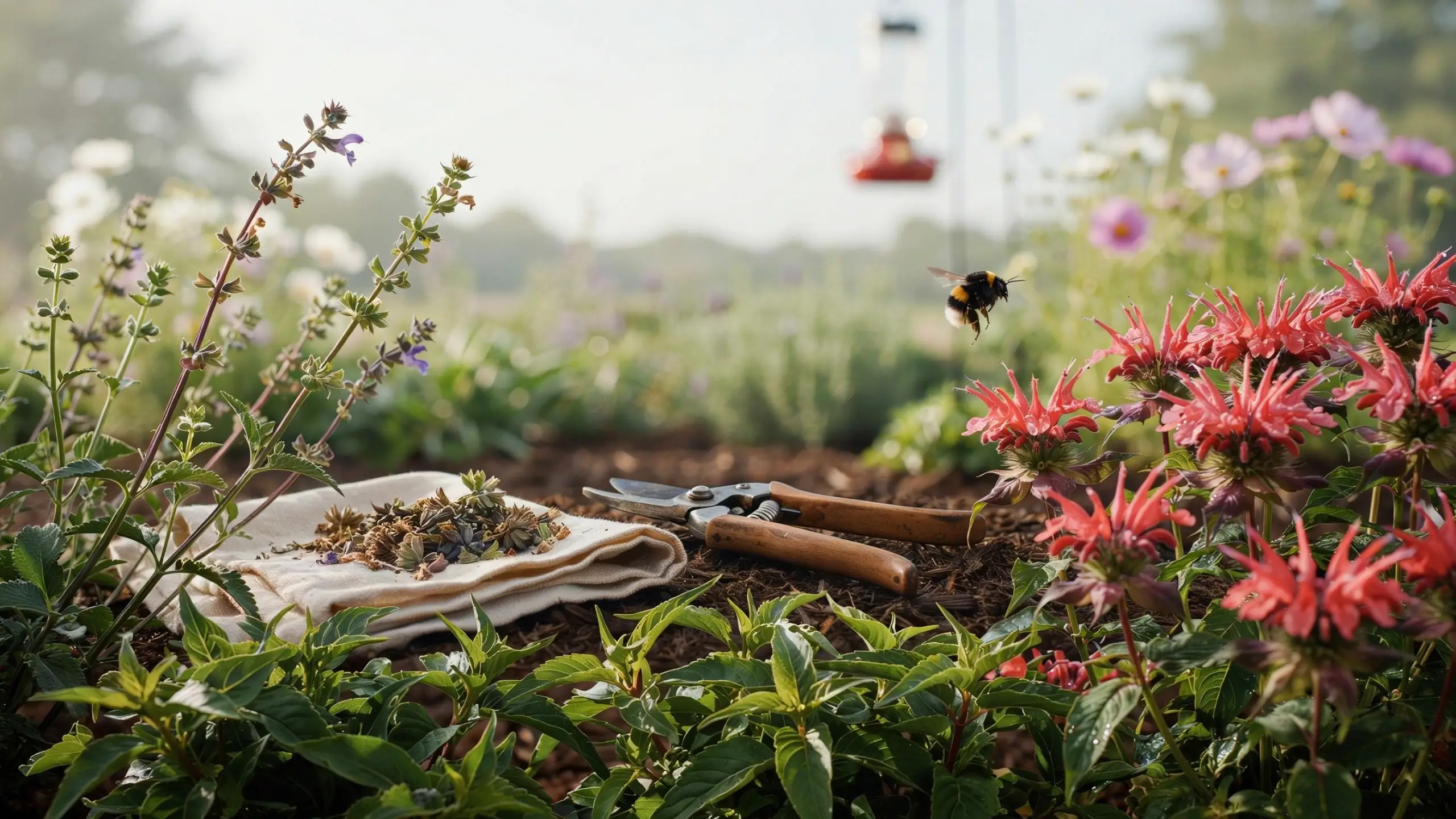
This one is easy to overlook, but it matters. Hummingbirds are not interested in flowers that are past their peak, and a plant covered in spent blooms will actually slow down new flower production. A quick walk through the garden every few days to pinch off fading flowers keeps the nectar supply fresh and encourages more blooms.
13. Time Your Setup to Their Migration
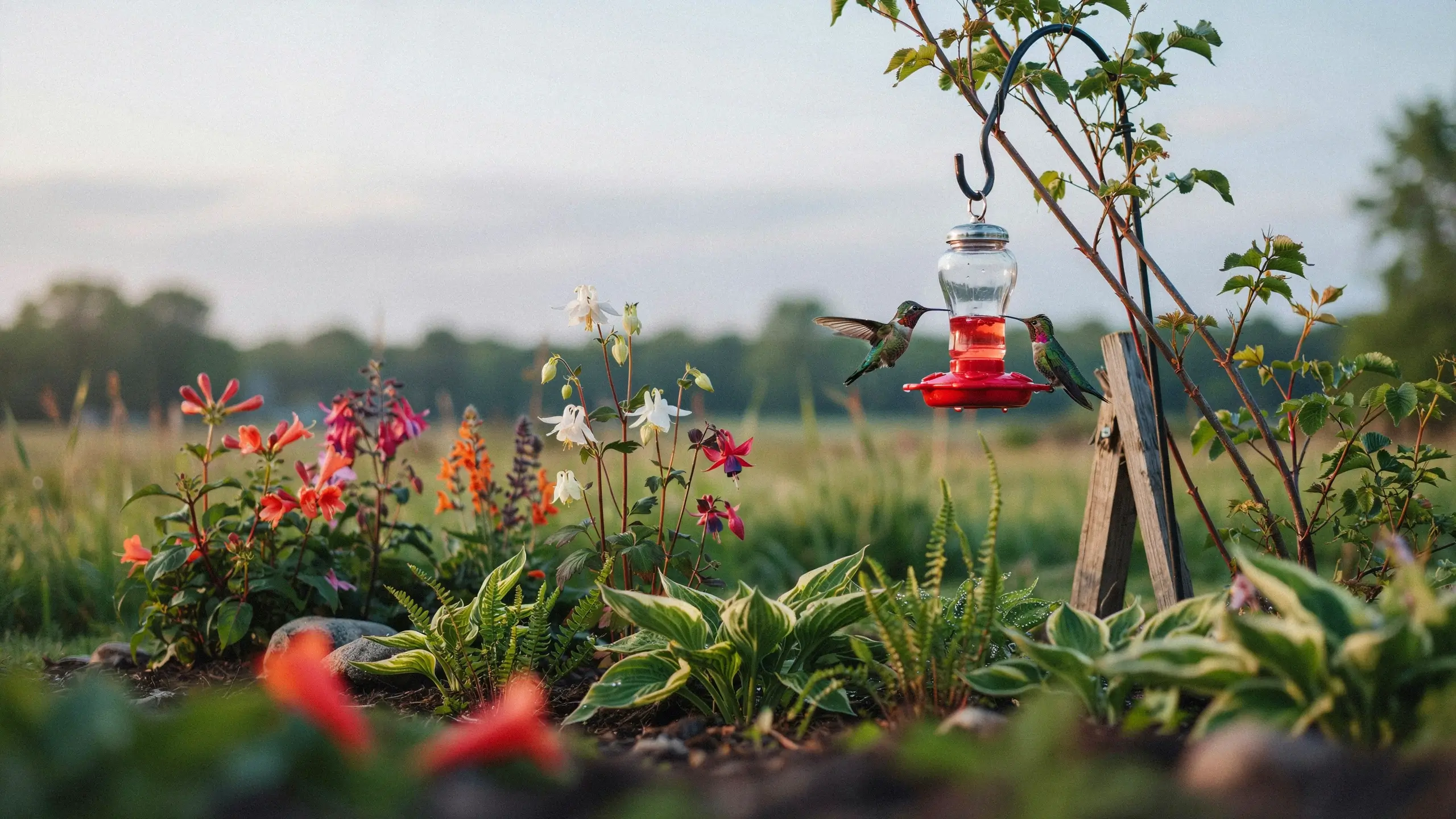
Hang your feeders about two weeks before hummingbirds are expected to arrive in your region in spring, since cooler temperatures keep the nectar from spoiling before they show up. In fall, keep feeders up for about two weeks after you last spot a hummingbird using them, since some birds migrate later than others and still need the fuel. Check a migration tracking map for your area so you are not guessing.
Small-Space and Renter-Friendly Options
You do not need a yard for any of this. A hanging basket with red fuchsia or a container of salvia on a balcony rail, combined with one feeder on a removable suction-cup hook or a freestanding shepherd’s hook, is enough to bring hummingbirds to an apartment or rental patio. Nothing here requires drilling into anything, which makes it completely landlord-safe and easy to take with you if you move.Bringing



No Comment! Be the first one.