




How to Style an Entryway: 10 Layers That Make Any Space Feel Welcoming
Your entryway does more talking than any other room in your house. It greets you first thing when you walk in tired from work, and it greets your guests before they even step past the doormat. Yet...

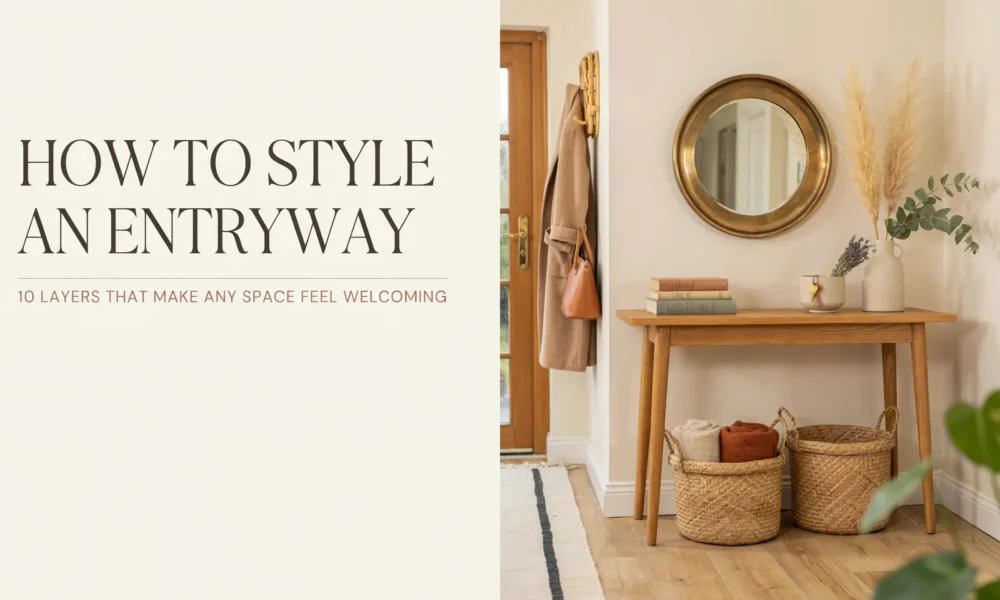
Your entryway does more talking than any other room in your house. It greets you first thing when you walk in tired from work, and it greets your guests before they even step past the doormat. Yet most of us treat it like an afterthought, a place to kick off shoes and drop the mail, not a space worth styling.
Learning how to style an entryway isn’t about buying a giant console table and calling it done. It’s about layering a few intentional pieces so the space feels finished, functions well, and still looks good on day 47 when the kids’ backpacks and your grocery bags are involved. Whether you have a grand foyer with a staircase or just a few feet of floor between your front door and your living room, these ten layers will get you there.
What It Actually Takes to Style an Entryway
Before you buy a single thing, know this: the best entryways balance function and looks in roughly equal parts. A gorgeous console table means nothing if there’s nowhere for the mail to land or the dog leash to hang. And a perfectly organized drop zone with zero personality just looks like a mudroom.
Think of your entryway in layers. You start with the big functional piece, then build up with texture, light, and small personal touches. Skip a layer and the space feels unfinished. Add too many and it feels cluttered. Here’s how to find the balance.
1. Start With a Landing Spot That Fits Your Space
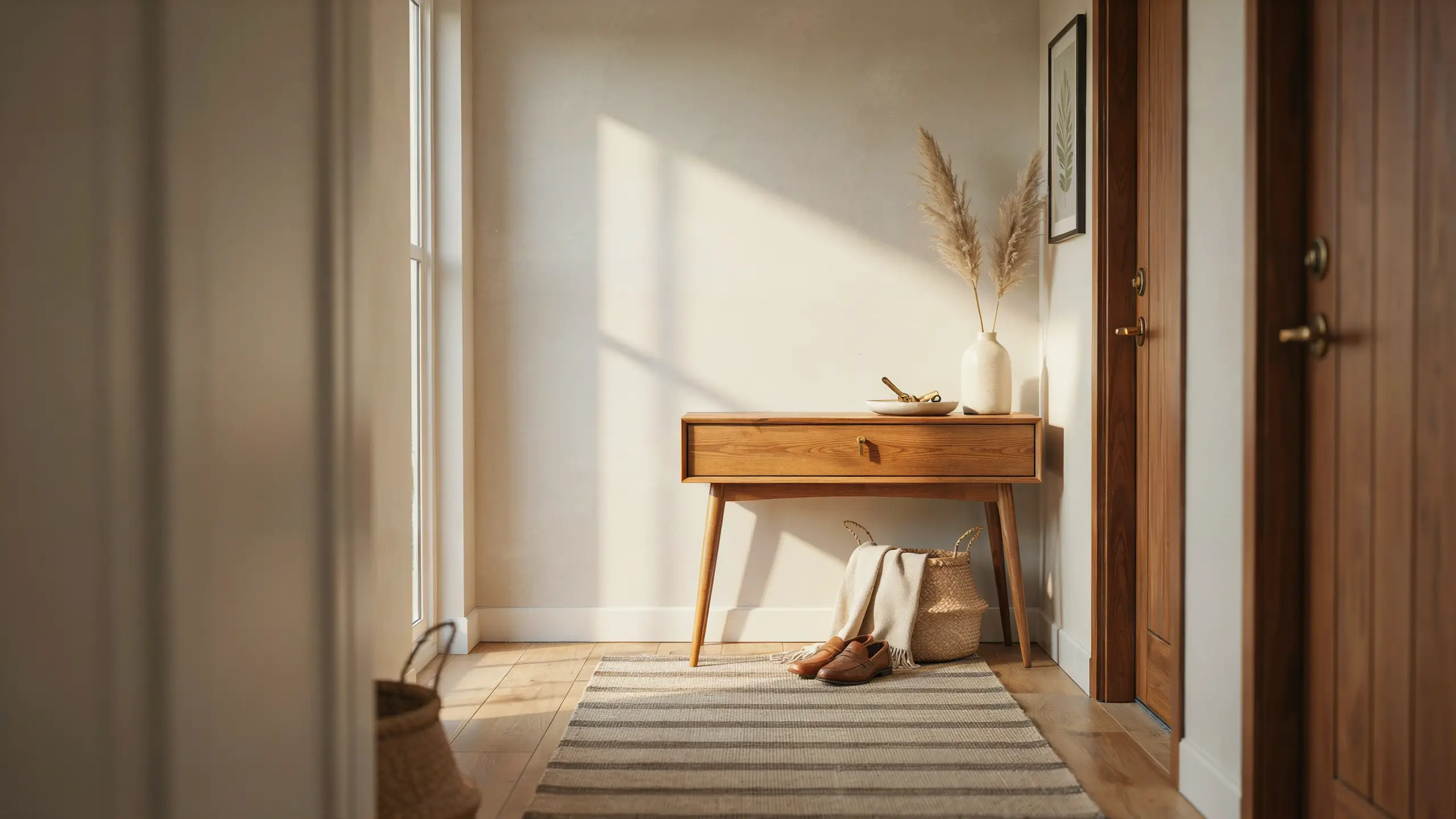
Every styled entryway starts with one anchor piece, something that gives your eye, and your keys, a place to land. The piece you choose depends entirely on how much room you’re working with.
If you have at least 3 feet of clearance, a console table works well. Look for one between 30 and 34 inches tall and no more than 14 to 16 inches deep so it doesn’t eat into your walkway. Tight on space? A slim demilune (half moon) console or a floating shelf does the same job without sticking out into the room.
Got kids, muddy shoes, or a household that takes coats off right at the door? A bench earns its keep here. Look for one with either open cubbies underneath or a hinged lid for hidden storage.
2. Anchor the Floor With a Rug or Runner That Can Take a Beating
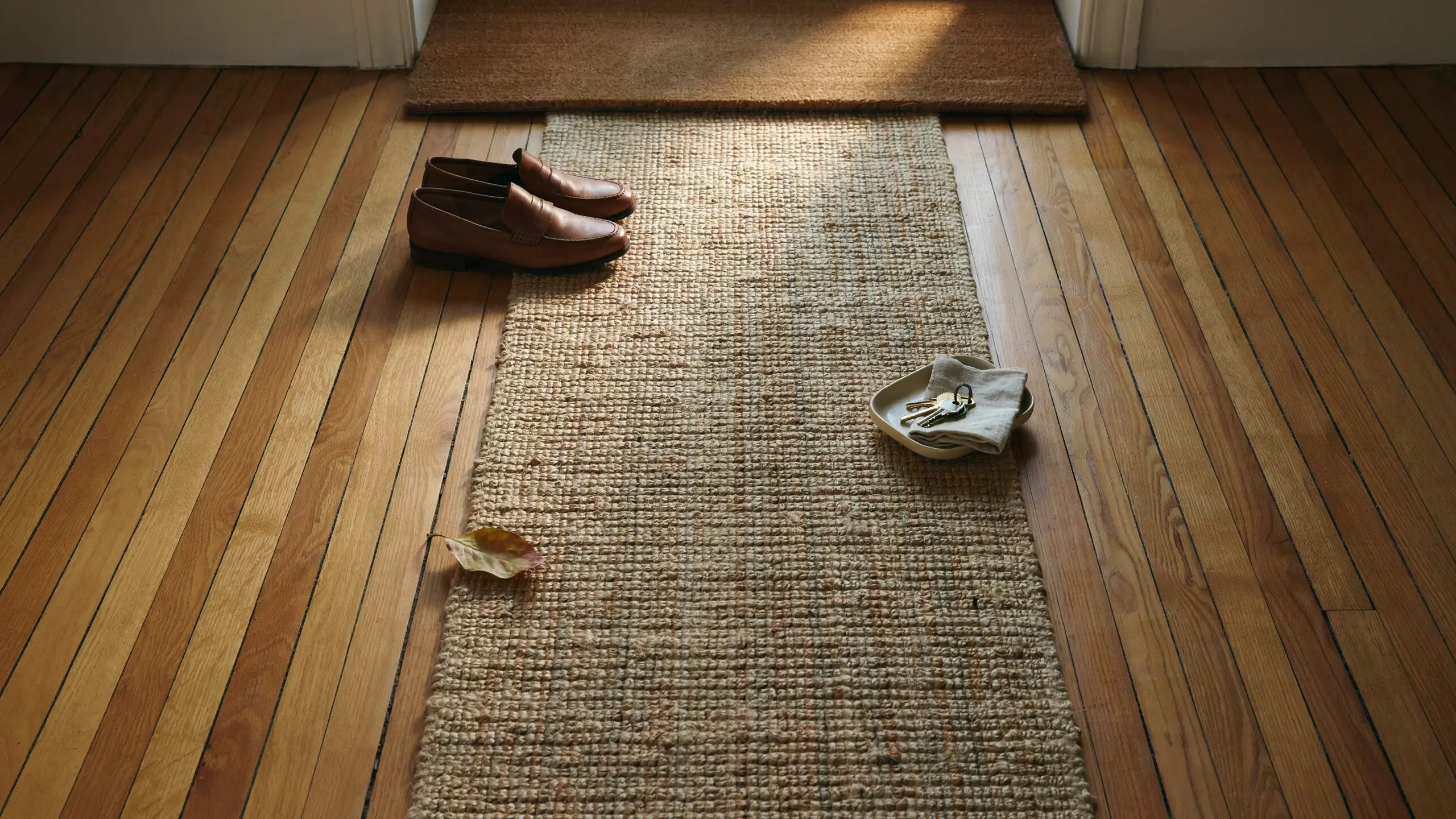
An entryway rug does two jobs. It defines the space so it doesn’t just blend into the hallway or living room, and it protects your floors from the dirt, salt, and water that walk in with you.
Choose something low pile and washable. Flatweave cotton, jute, or an indoor-outdoor polypropylene rug all hide dirt better than anything plush. If your entry is narrow, a runner elongates the space visually and gives you a clear “path” from the door inward.
Skip anything with a busy pattern if your walls or wallpaper are already doing a lot of visual work. One statement element per entryway keeps things from feeling chaotic.
3. Give the Wall a Focal Point
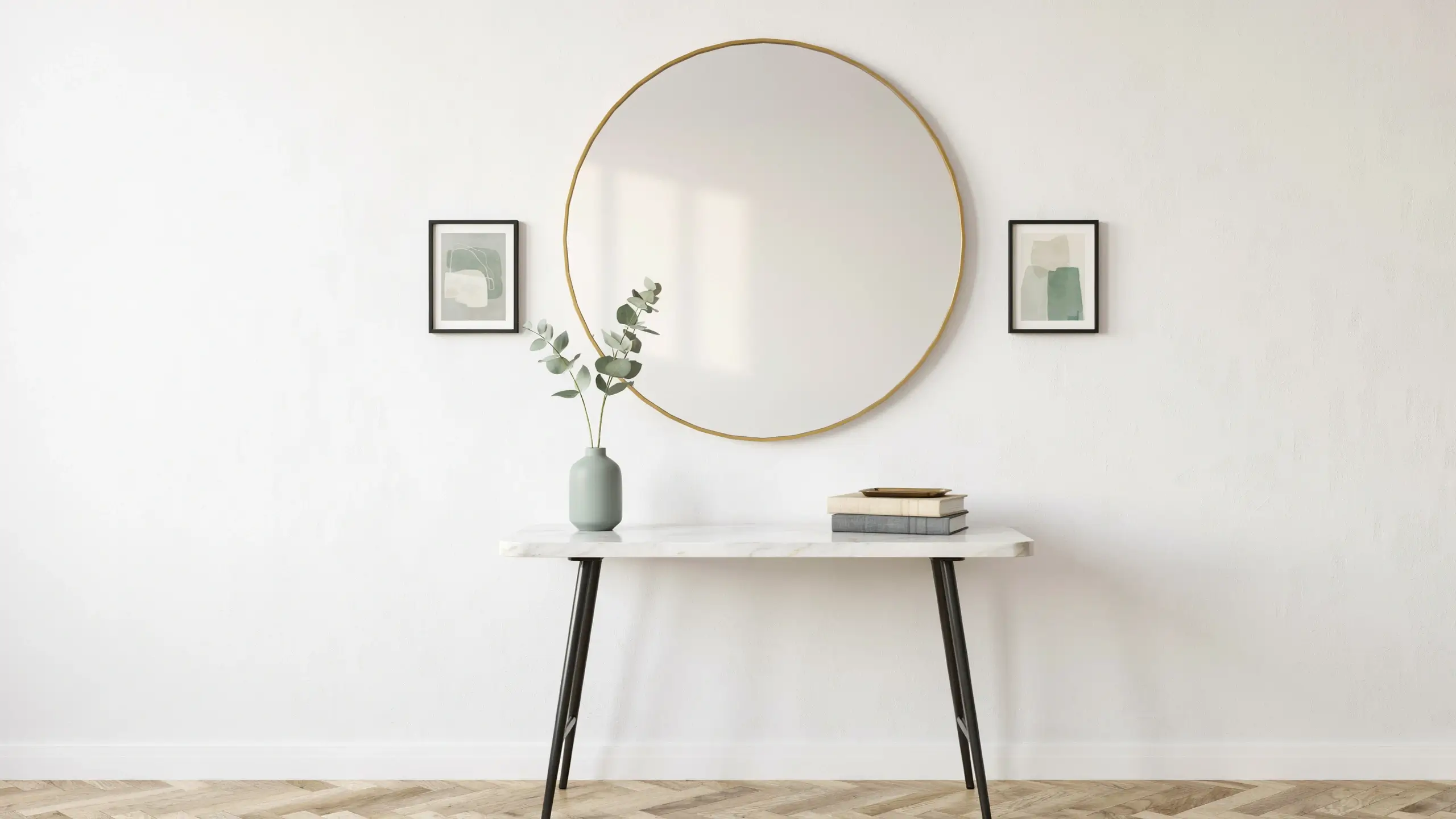
Every styled entry has one strong wall moment, usually a mirror or a piece of art. Both work. Pick based on what you actually need.
A mirror does double duty. It lets you check your outfit before you leave, and it bounces light around a space that often only gets a sliver of natural light from the front door. Hang it so the center sits about 5 to 6 inches above your console, or at eye level if there’s no table underneath.
No room for a mirror, or already have one somewhere else in the house? A single oversized art piece, a small gallery wall, or even a large woven hanging creates the same anchor. The key word is single. One confident piece beats five small frames fighting for attention in a tight space.
4. Layer In Storage You’ll Use
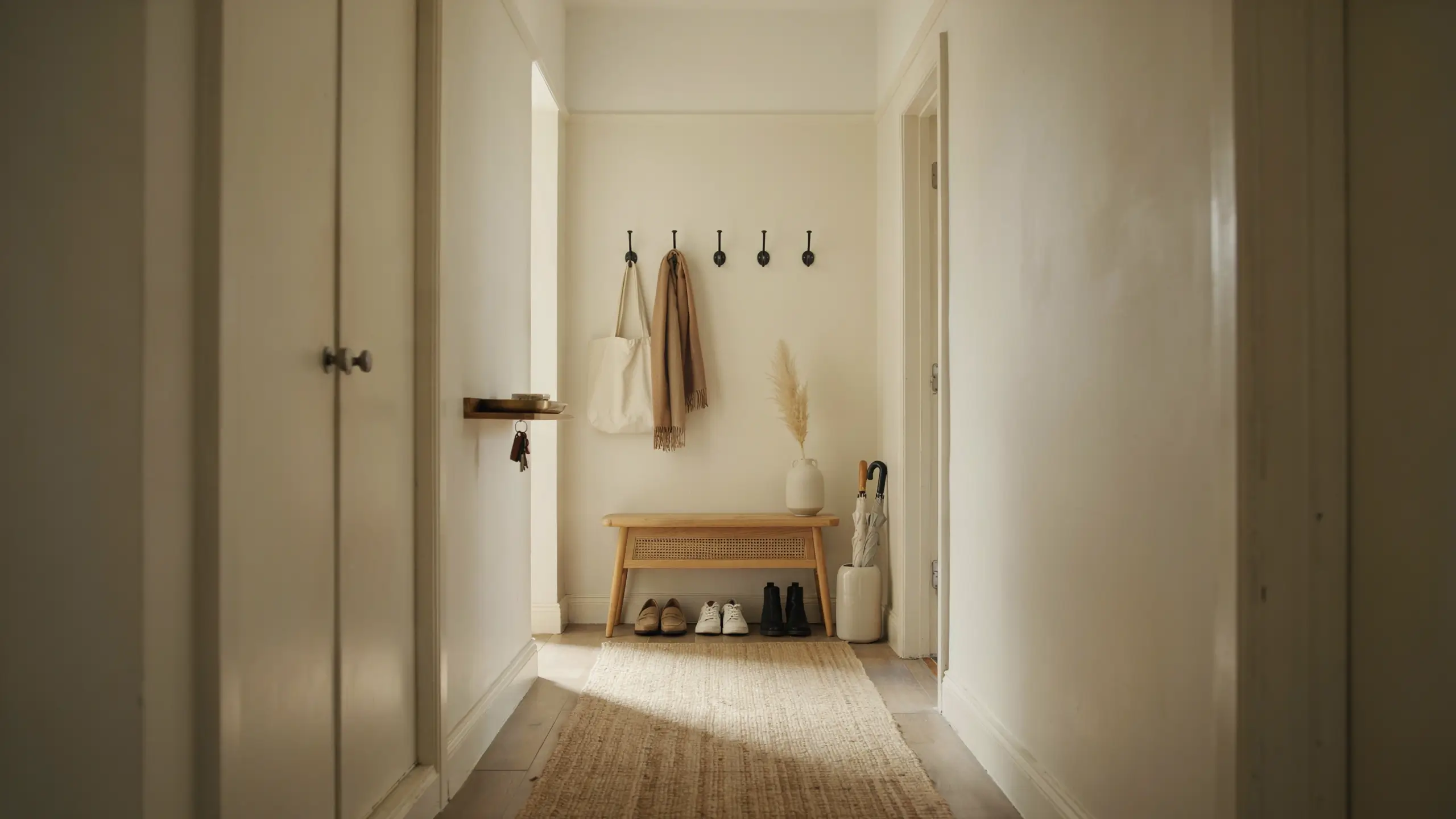
This is the layer most Pinterest boards skip, and it’s the one that keeps your entryway from turning into a pile of stuff within a week. Before you style anything pretty, map out where these things live:
- Keys and mail, a shallow tray or bowl on the console
- Shoes, a low basket, boot tray, or bench with cubbies
- Coats and bags, wall hooks or a coat rack
- Umbrellas, a tall ceramic stand or narrow basket tucked in a corner
Wall-mounted hooks are the hardest working, most Pinterest-friendly storage trick in a small entry because they take up zero floor space. Install them at two different heights if kids share the space, so little ones can hang their own bag without help.
Mistake to Avoid
Don’t hide all your storage behind closed doors just for the sake of a clean look. If it’s too inconvenient to use, you’ll end up with a pile of shoes next to the pretty basket instead of inside it.
5. Add a Light Source That Feels Intentional
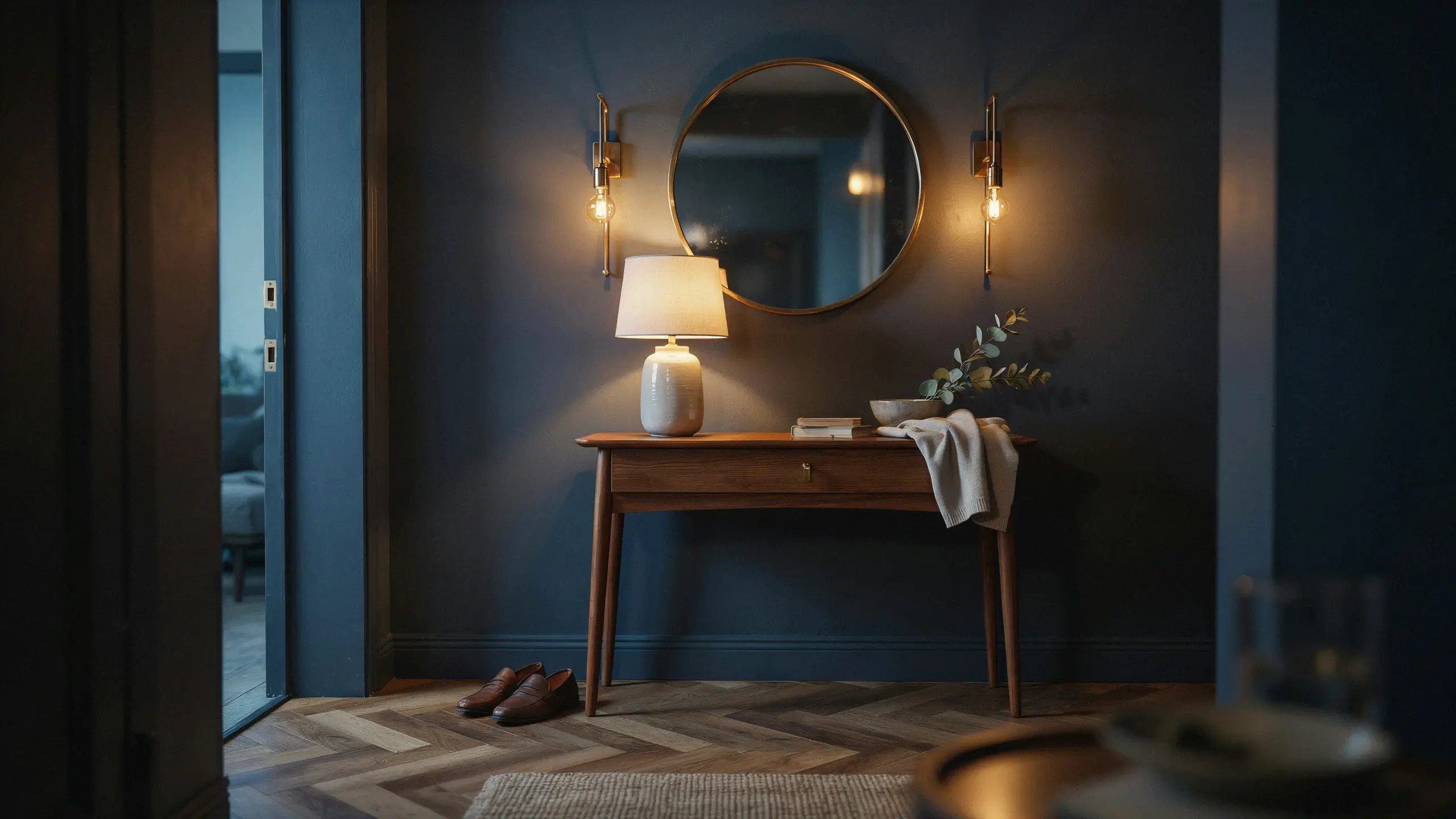
Overhead lighting alone tends to make an entryway feel flat and a little clinical. Layer in a second light source and the whole space instantly feels warmer and more designed.
A table lamp on your console is the easiest option if you have an outlet nearby. No outlet? A battery or rechargeable lamp solves that instantly, and they’ve come a long way in style. Wall sconces flanking a mirror look custom without any electrical work if you choose plug-in versions. For higher ceilings or a grand entry, a small pendant or two-tier chandelier over the space adds real drama.
Warm white bulbs, in the 2700K to 3000K range, make the space feel welcoming rather than office-bright. Keep any visible cords tucked flat against the wall or console leg. This is a walkway everyone uses, so a loose cord is a trip hazard you don’t want right by the front door.
6. Bring in Height and Life With a Plant or Branch
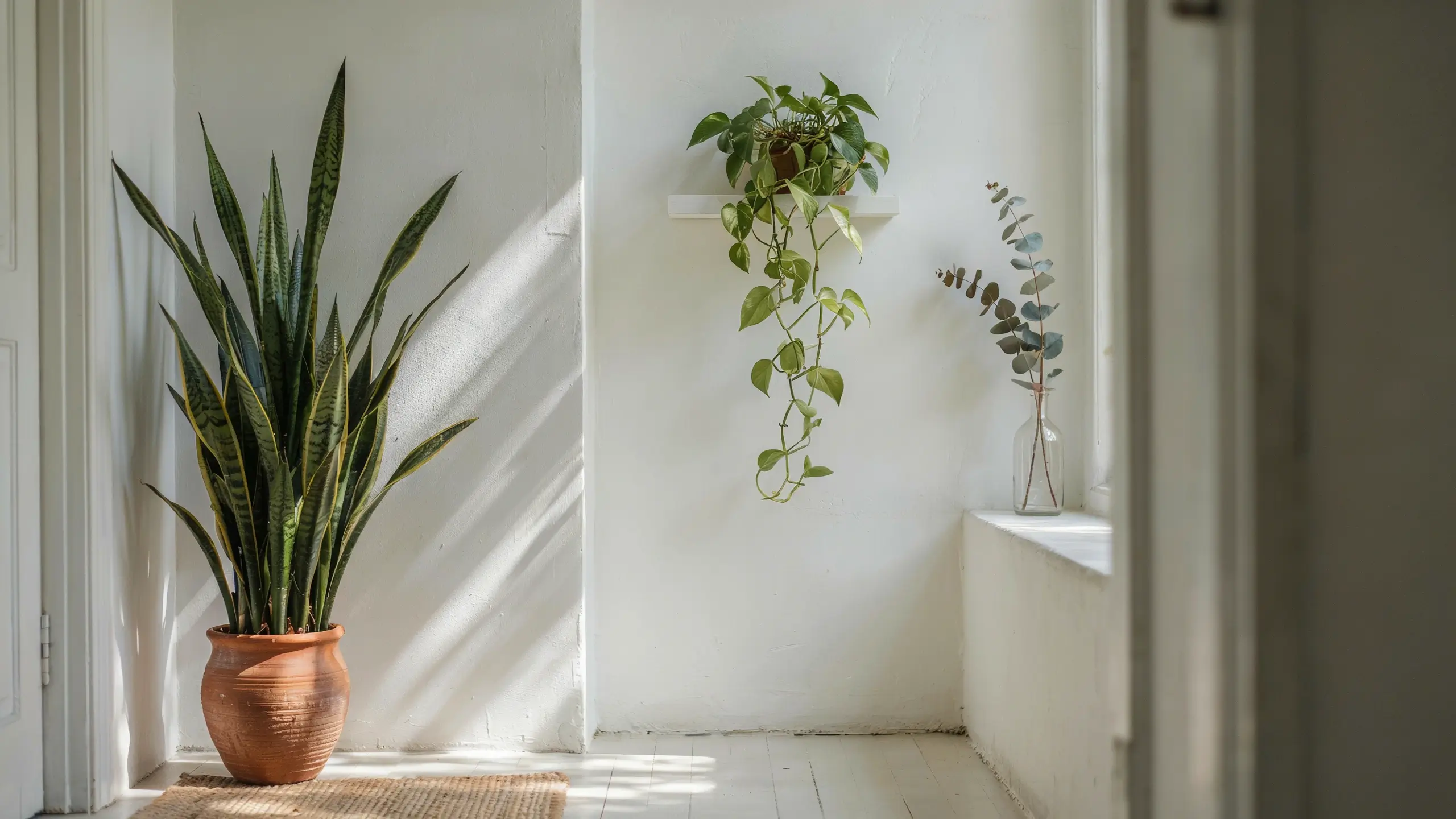
A tall plant is one of the simplest ways to make an entryway feel finished, because it adds height and softness that furniture alone can’t. If your entry gets little natural light, skip the finicky ferns and reach for a snake plant, a ZZ plant, or a well-made faux olive branch or eucalyptus stem in a floor vase instead.
No floor space for a planter? A trailing plant on a wall shelf or a single stem in a bud vase on your console gives you the same organic touch in almost no square footage.
7. Style the Surface Like a Designer Would
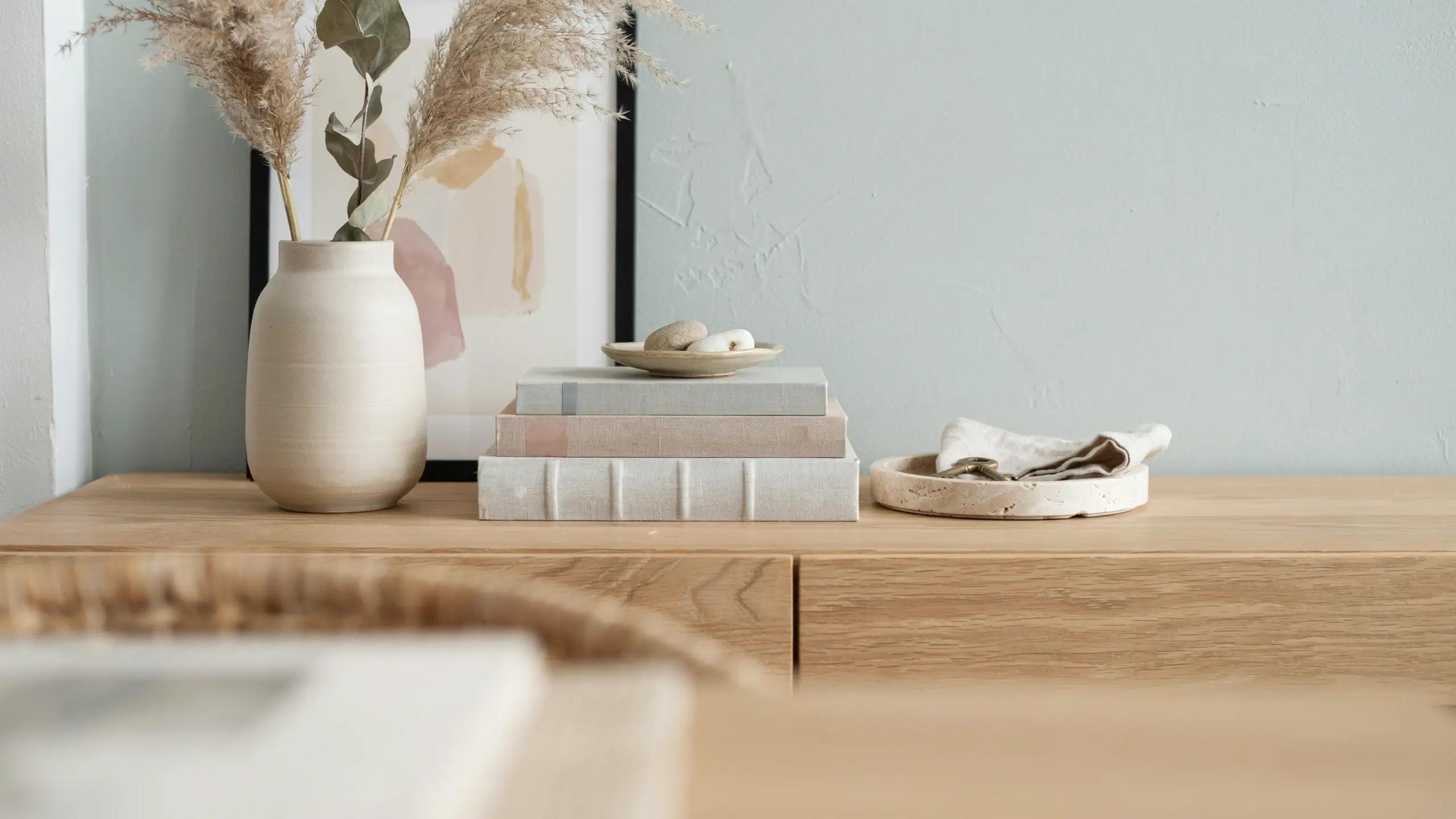
If you’ve got a console or shelf, this is where the Pinterest-worthy magic happens. The trick professional stylists use is varying height, so your eye moves around the surface instead of landing flat.
Try this simple formula:
- One tall item (a lamp, a vase with branches, or a framed piece leaning against the wall)
- One medium item (a bowl, a stack of books, or a small plant)
- One low, useful item (a tray for keys or a small dish)
Group items in odd numbers, and let one piece sit slightly off center rather than perfectly symmetrical. It reads as curated instead of staged.
Keep the surface at least a third empty. A completely full console feels cluttered no matter how nice each individual item is.
8. Add One Layer of Texture or Personality
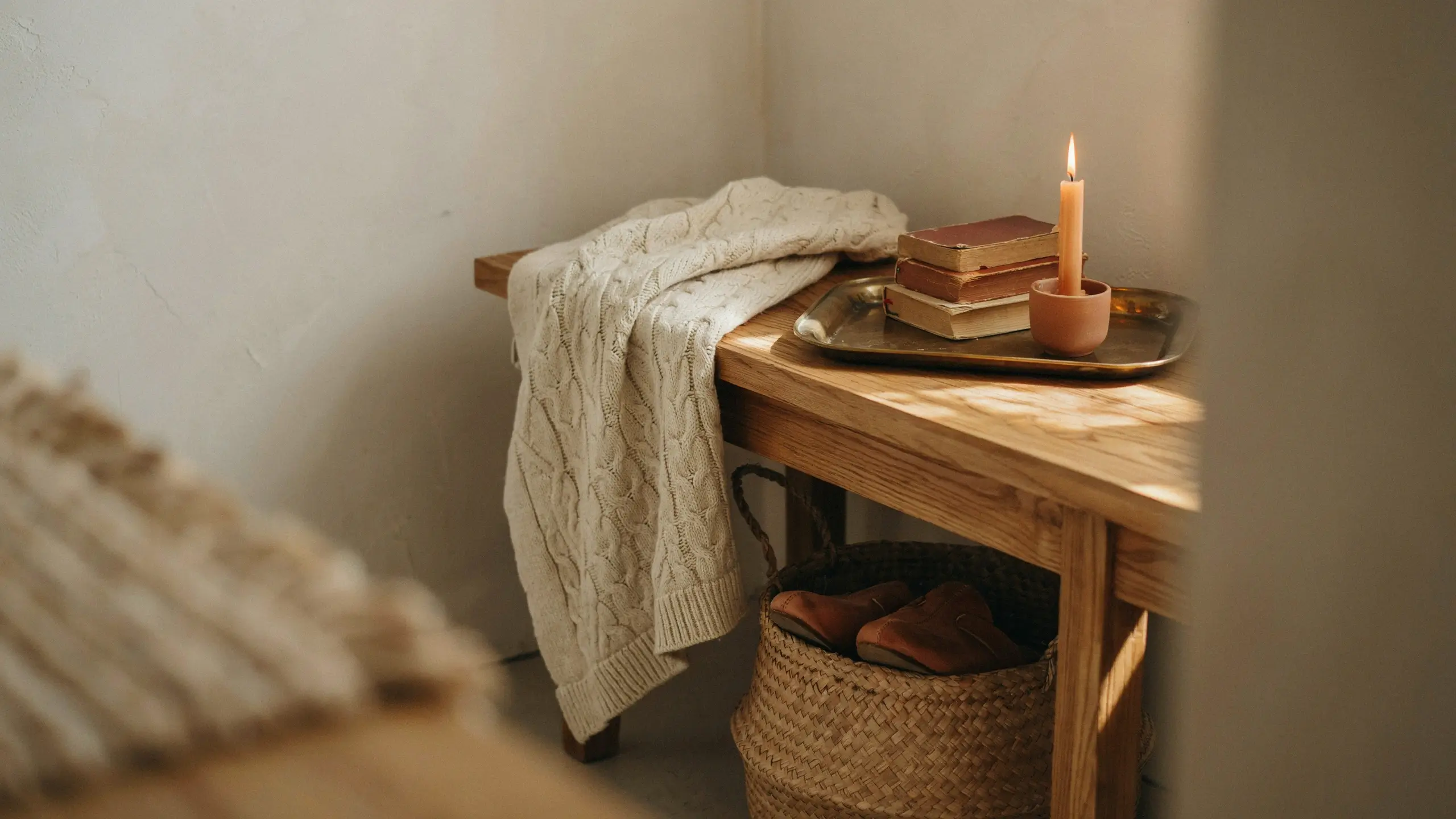
This is what separates a showroom entryway from a home. Pick one detail that feels like you, not like a catalog page. A woven basket, a chunky knit throw over a bench, a vintage brass tray passed down from your grandmother, or a small stack of your favorite coffee table books all work.
A family photo, a favorite piece of pottery, or even a candle in a color that ties the space together adds warmth without adding clutter. This is also the easiest layer to swap out seasonally, so use something you don’t mind changing every few months.
9. Don’t Forget Scent
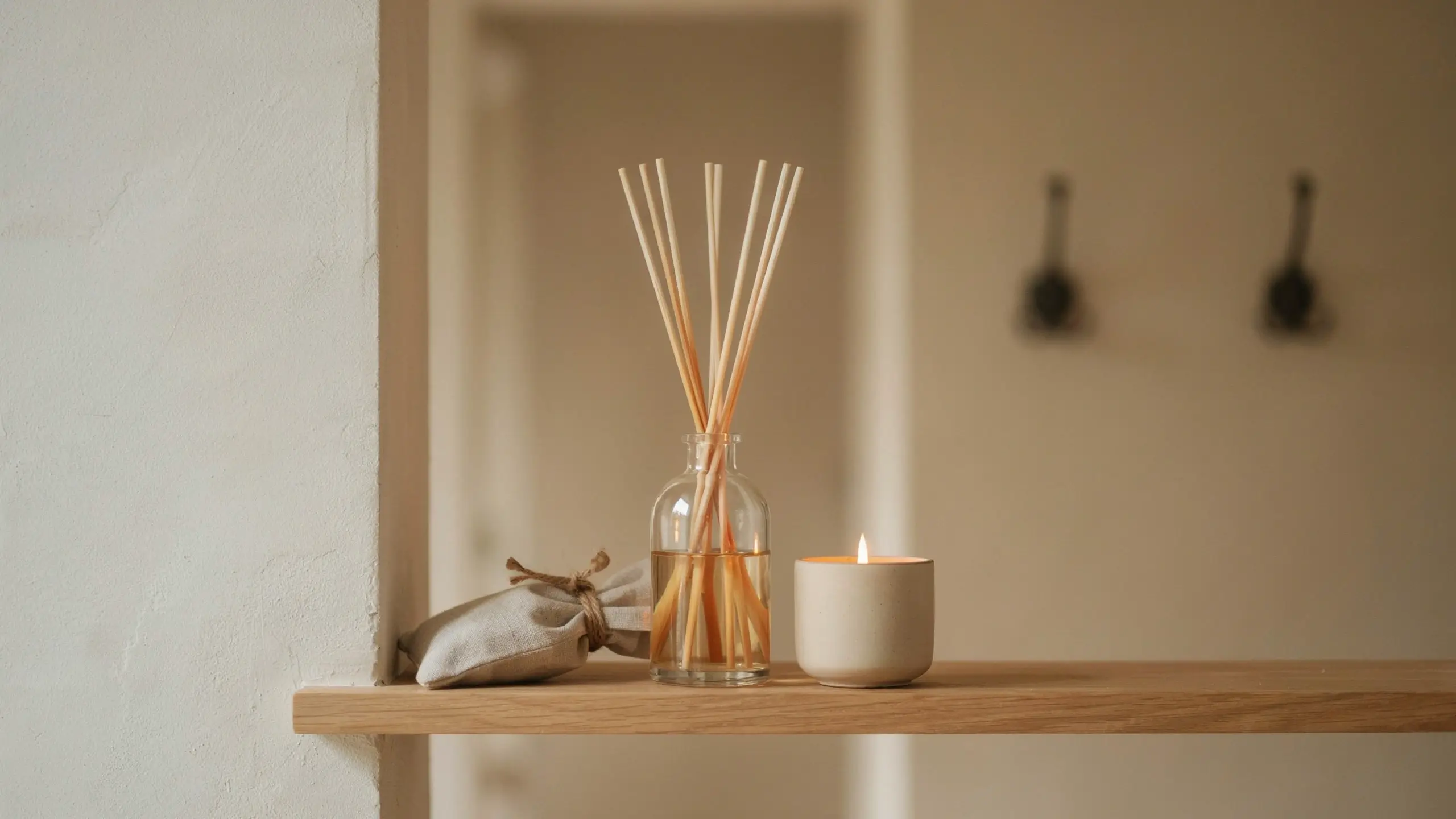
It’s easy to focus only on what an entryway looks like and forget that it’s also the first thing people smell when they walk in. A reed diffuser, a small candle on the console, or even a scented sachet tucked into a basket makes a bigger impression than you’d expect. Keep it subtle. You want guests to notice the space feels nice, not to be hit with a wall of fragrance the second the door opens.
10. Swap Small Details With the Season
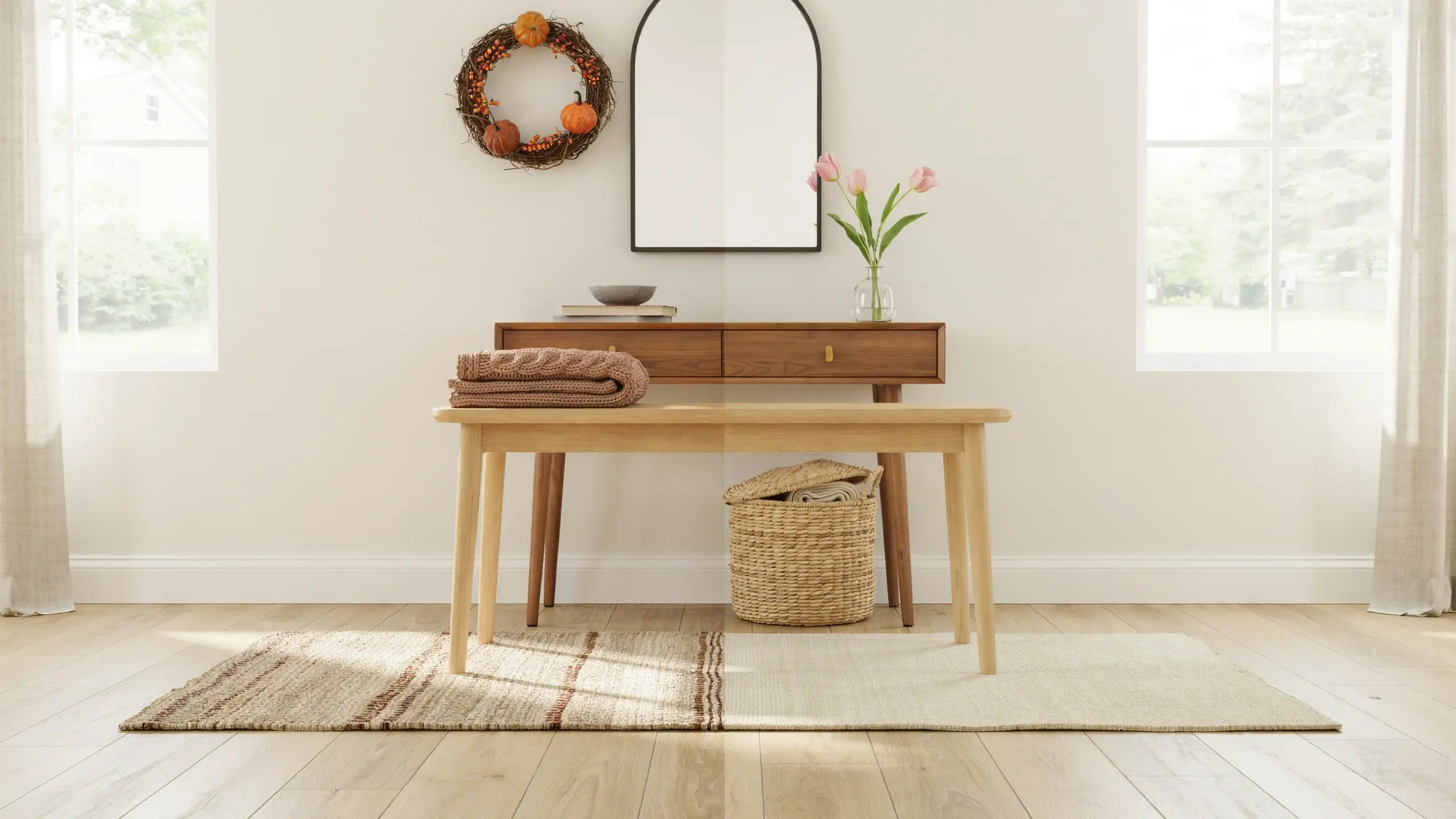
You don’t need to redecorate the whole entry every few months. Change two or three small things and the whole space feels refreshed:
- Swap the runner for a heavier texture in fall and winter, lighter cotton in spring and summer
- Rotate the console styling with seasonal stems, branches in fall, tulips in spring, eucalyptus in summer
- Add a seasonal wreath or a new doormat
- Layer a cozy throw on the bench in colder months and tuck it away by summer
Keeping the big pieces, console, mirror, rug base, lighting, the same year round and only rotating small accents is the easiest way to keep an entryway looking fresh without buying new furniture every season.
Entryway Styling Mistakes to Avoid
- Blocking the walkway. If anyone has to turn sideways to get past your furniture, it’s too big or placed wrong. Function beats a perfect symmetrical layout every time.
- Going matchy-matchy. A console, mirror, and lamp all from the exact same collection can look more like a showroom display than a home. Mix finishes and eras for a more collected feel.
- Overcrowding the surface. More decor doesn’t mean more style. A cluttered console reads as messy in photos and in person.
- Skipping a real doormat. A worn out or missing doormat undercuts an otherwise beautiful entry. Replace it before you touch anything else on this list. It’s the cheapest upgrade with the biggest first impression payoff.
- Ignoring how your family actually uses the space. A styled entry with no landing spot for keys or hook for backpacks just means the mess moves to your kitchen counter instead.
- Choosing decor before function. Figure out what needs to live in this space first, shoes, bags, mail, then style around it, not the other way around.
Small Entryway or No Entryway at All? Here’s How to Fake One
Not every home has a real foyer, and that’s fine. You can create the feeling of an entryway even if your front door opens straight into your living room.
- Use a rug to define the zone. Even without walls, a rug placed right inside the door visually separates “entry” from “living room.”
- Float a narrow console or slim shelf against the nearest wall, even if it’s a few feet from the actual door. Add hooks above it and you’ve built an entry zone from nothing.
- Try a room divider or an open bookshelf to create a soft boundary between the entry and the rest of the room without closing anything off.
- Go vertical. When floor space is nonexistent, wall-mounted hooks, a slim shelf, and a mirror do all the work a console table would in a larger space.
- Repurpose furniture you already have. A narrow dresser, a small bookshelf, or even a bar cart styled with a tray and hooks nearby can stand in for traditional entryway furniture.
Bringing It All Together
Learning how to style an entryway really comes down to layering, not spending. Start with one functional piece, add a rug, give the wall something to look at, and build from there. The best entryways aren’t the ones with the most stuff. They’re the ones where every piece earns its place, whether that’s holding your keys or just making you smile when you walk in the door.
Pick two or three layers from this list to start with this weekend. You’ll be surprised how much difference a rug, a hook, and a single good lamp can make.
What does your entryway need most right now, more storage, more style, or both? Tell me in the comments, I’d love to hear what you’re working with.




No Comment! Be the first one.