




21 Privacy Ideas for Your Backyard Hot Tub (That Actually Work)
There’s nothing that ruins a good soak faster than realizing your neighbor can see you from their kitchen window. Or worse, waving awkwardly at someone walking their dog while you’re...

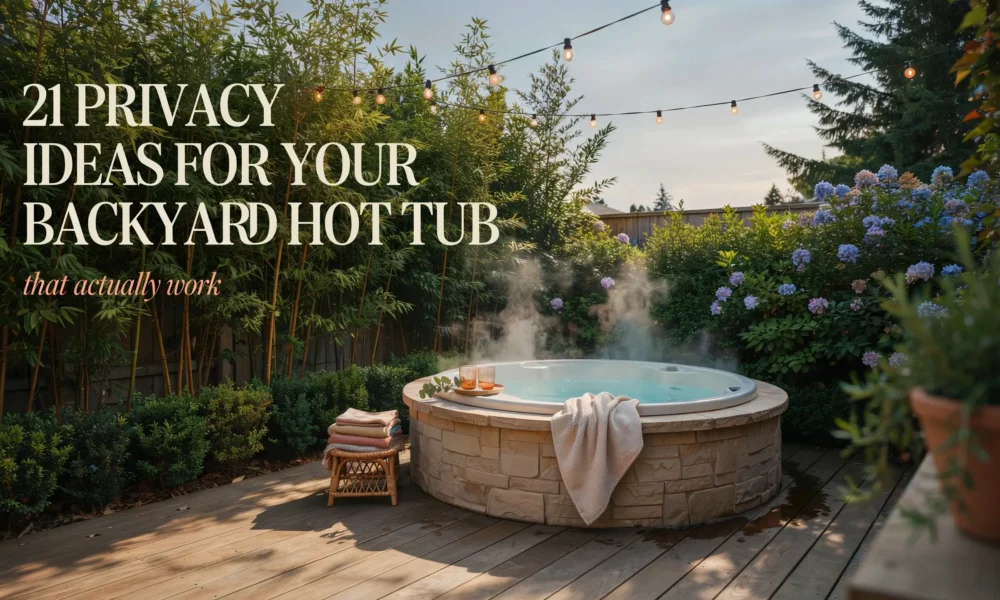
There’s nothing that ruins a good soak faster than realizing your neighbor can see you from their kitchen window. Or worse, waving awkwardly at someone walking their dog while you’re sitting in your swimsuit trying to relax.
If you’ve been searching for privacy ideas for your backyard hot tub, you already know the struggle. You want to unwind after a long day, not feel like you’re on display. And most advice out there just says “build a fence” and calls it a day, which doesn’t help much if you’re renting, working with a tight budget, or dealing with an odd-shaped yard.
This list is different. It’s a full mix of structural upgrades, budget fixes, plant-based screens, renter-friendly options, and small details most articles skip completely, like sound privacy, steam and airflow, and nighttime visibility. Whether you have a sprawling backyard or a tiny patio squeezed between two fences, there’s something here you can actually use.
Grab a notebook or just start pinning, because you’re going to want to save a few of these.
What to Think About Before You Start
Before you jump into building anything, walk around your hot tub at different times of day. Privacy needs change depending on whether it’s a second-story window peeking down, a next-door patio at eye level, or a sidewalk where people walk their dogs every evening.
A few quick questions to ask yourself:
- Is the exposure from the side, from above, or both?
- Do you need privacy during the day, at night, or all the time?
- Are you renting, or can you make permanent changes?
- What’s your realistic budget?
- How much airflow do you need so steam doesn’t get trapped?
Keep those answers in mind as you go through this list. Some ideas solve daytime privacy, some solve nighttime visibility, and a few solve both.
1. Install a Slatted Privacy Fence Around the Tub
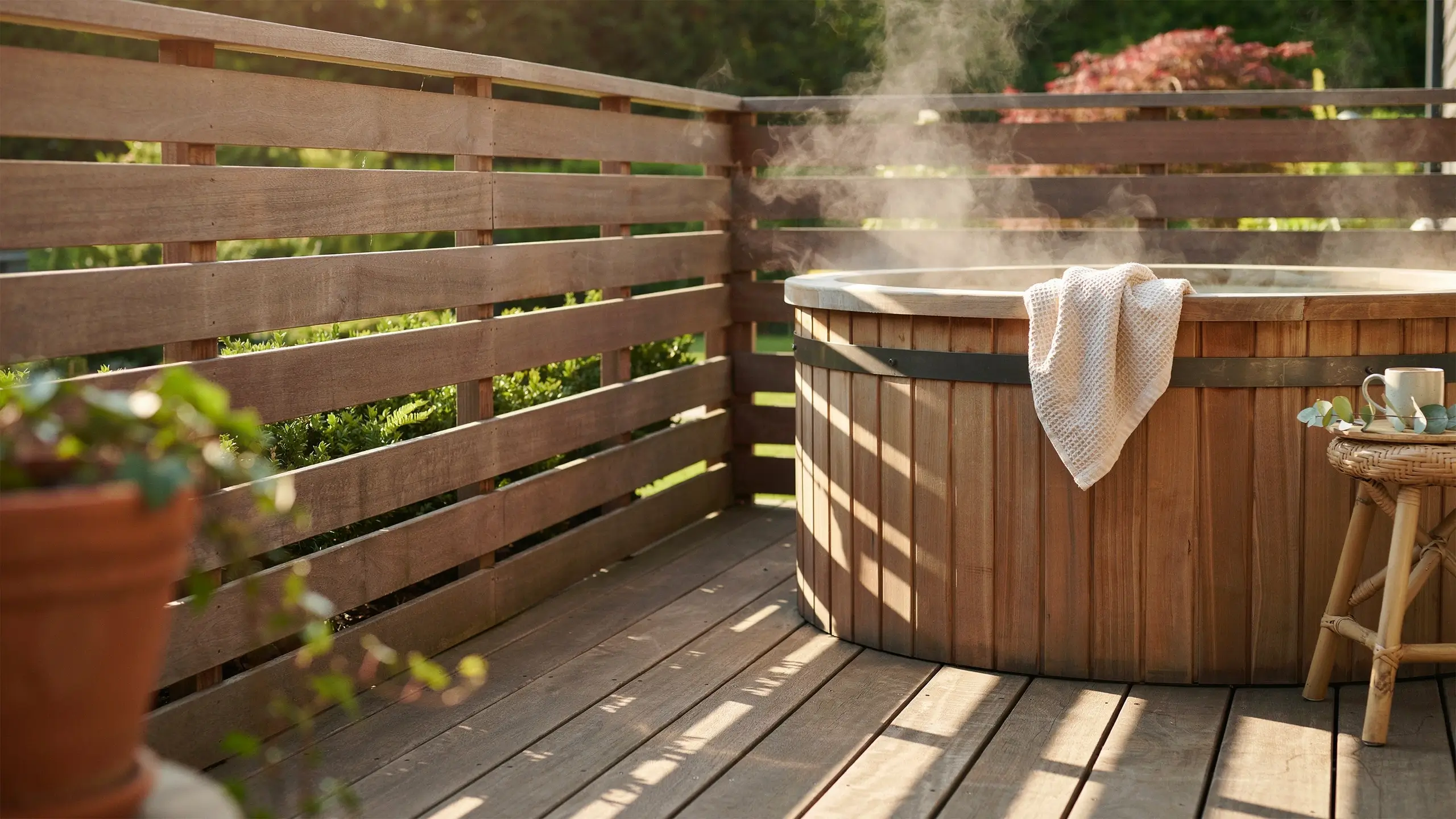
A slatted wood or vinyl fence is still one of the most reliable ways to block sightlines without making the space feel like a box. Horizontal slats spaced about half an inch apart let air move through while still blocking the view from neighboring yards.
Go with cedar or a composite material if you want something low maintenance. A fence height of 6 feet is usually enough to block a standing adult’s view from next door, but check with your HOA or city code first since fence height rules vary by area.
Mistake to avoid:
- Building the fence too close to the tub. Leave at least 3 feet of clearance so you can still access the service panel and cover lifter.
2. Use a Pergola to Frame the Whole Setup
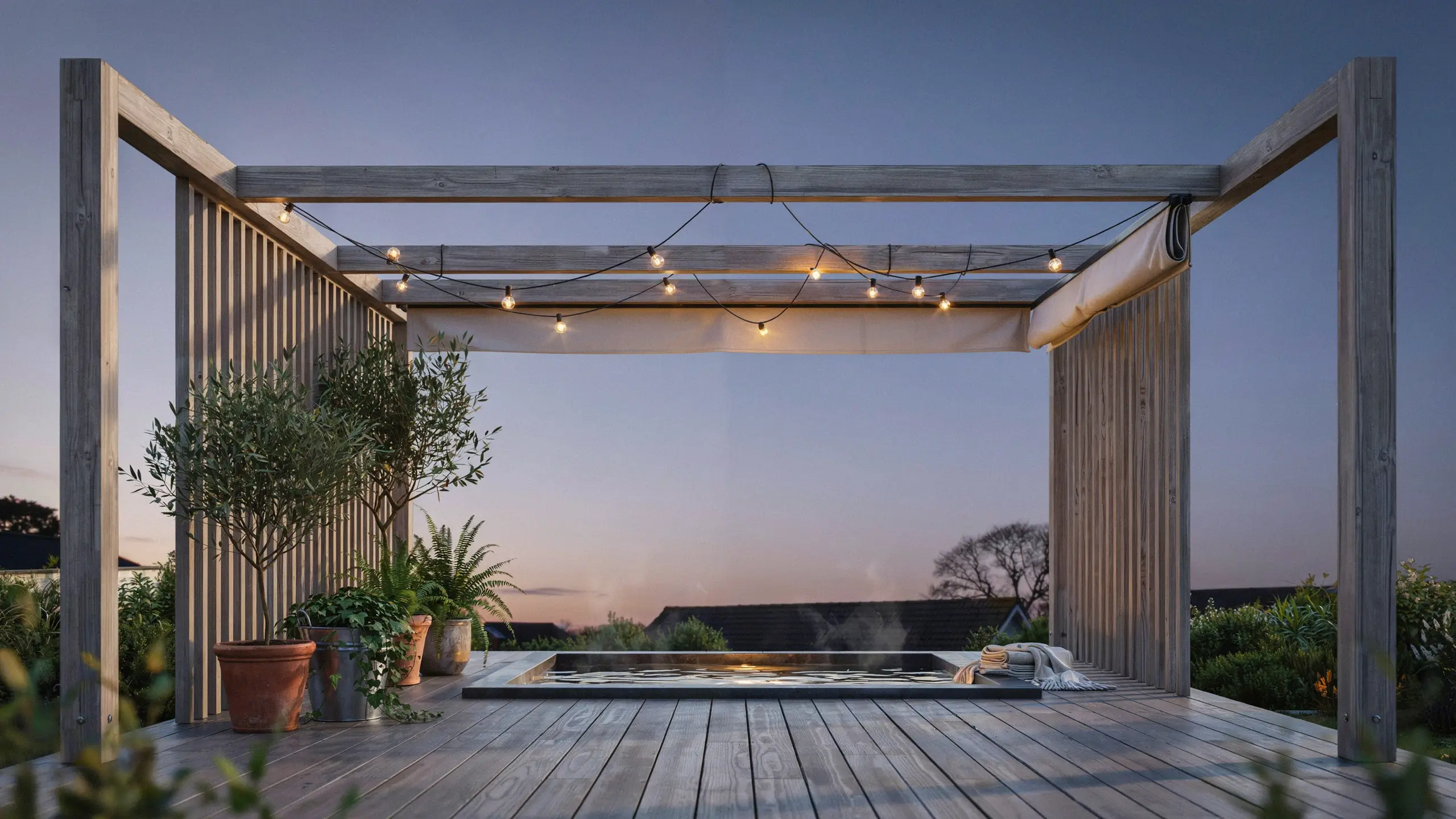
A pergola gives your hot tub a defined “room” without fully enclosing it. Add lattice panels or slim wood slats to the sides that face your neighbors, and leave the other sides open for airflow.
This is a favorite among Pinterest users because it photographs beautifully with string lights woven through the top beams. If you want extra coverage, a retractable canopy or shade cloth stretched across the top adds privacy from second-story windows too.
3. Hang Outdoor Curtains for a Soft, Resort-Style Look
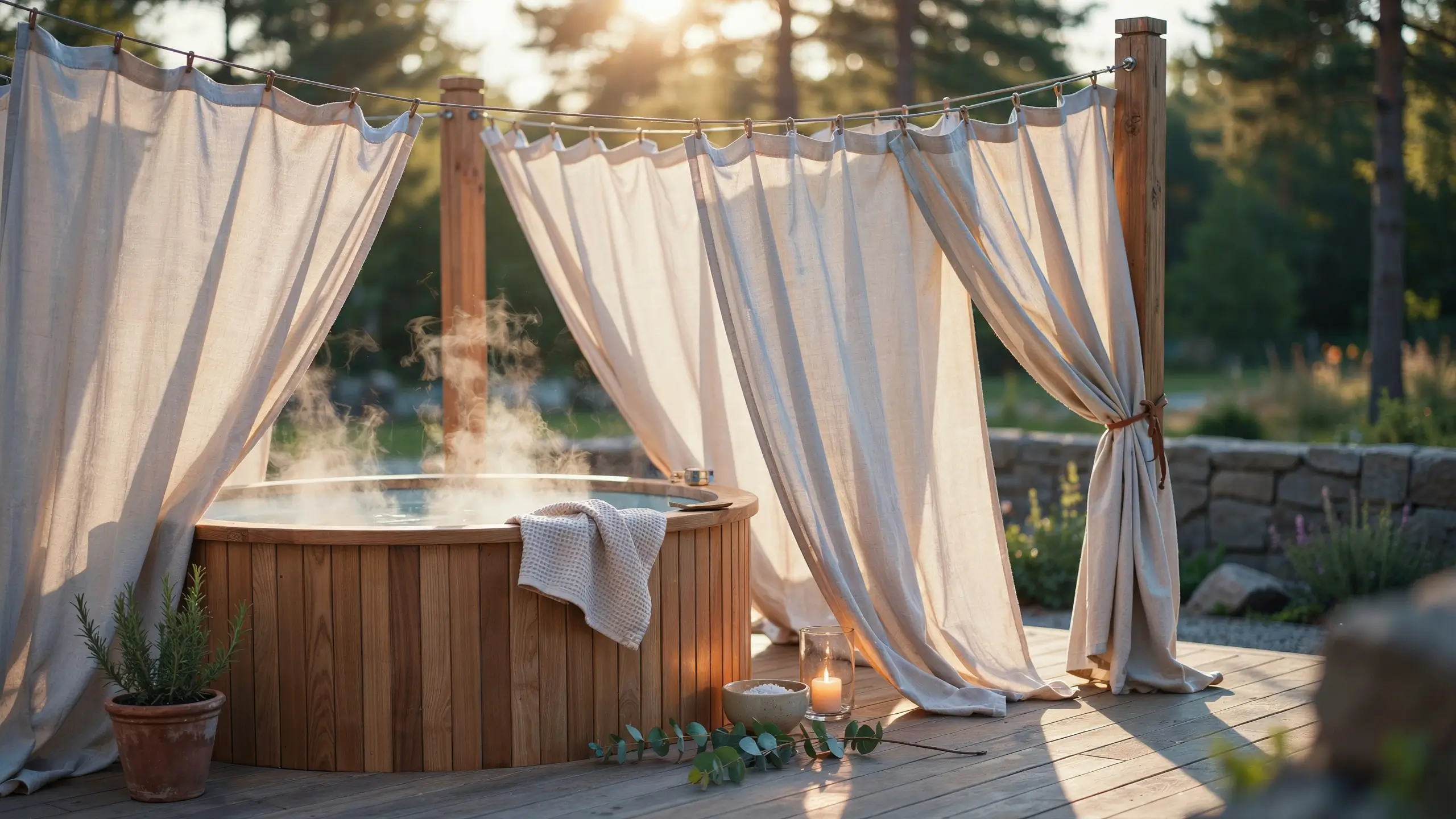
Outdoor curtains are one of the easiest upgrades if you want that dreamy, spa-hotel feel. Look for polyester or solution-dyed acrylic fabric that’s rated for outdoor use so it won’t mildew or fade from sun exposure.
Hang them from a pergola frame, a simple curtain rod between two posts, or a tension wire strung between fence posts. Sheer curtains soften the look during the day, while a heavier fabric works better if you need full coverage at night.
Budget tip:
- Shower curtain rings and a basic tension rod can turn any patio umbrella or pergola into a curtain frame for under $30.
4. Build a Living Privacy Wall With Fast-Growing Plants
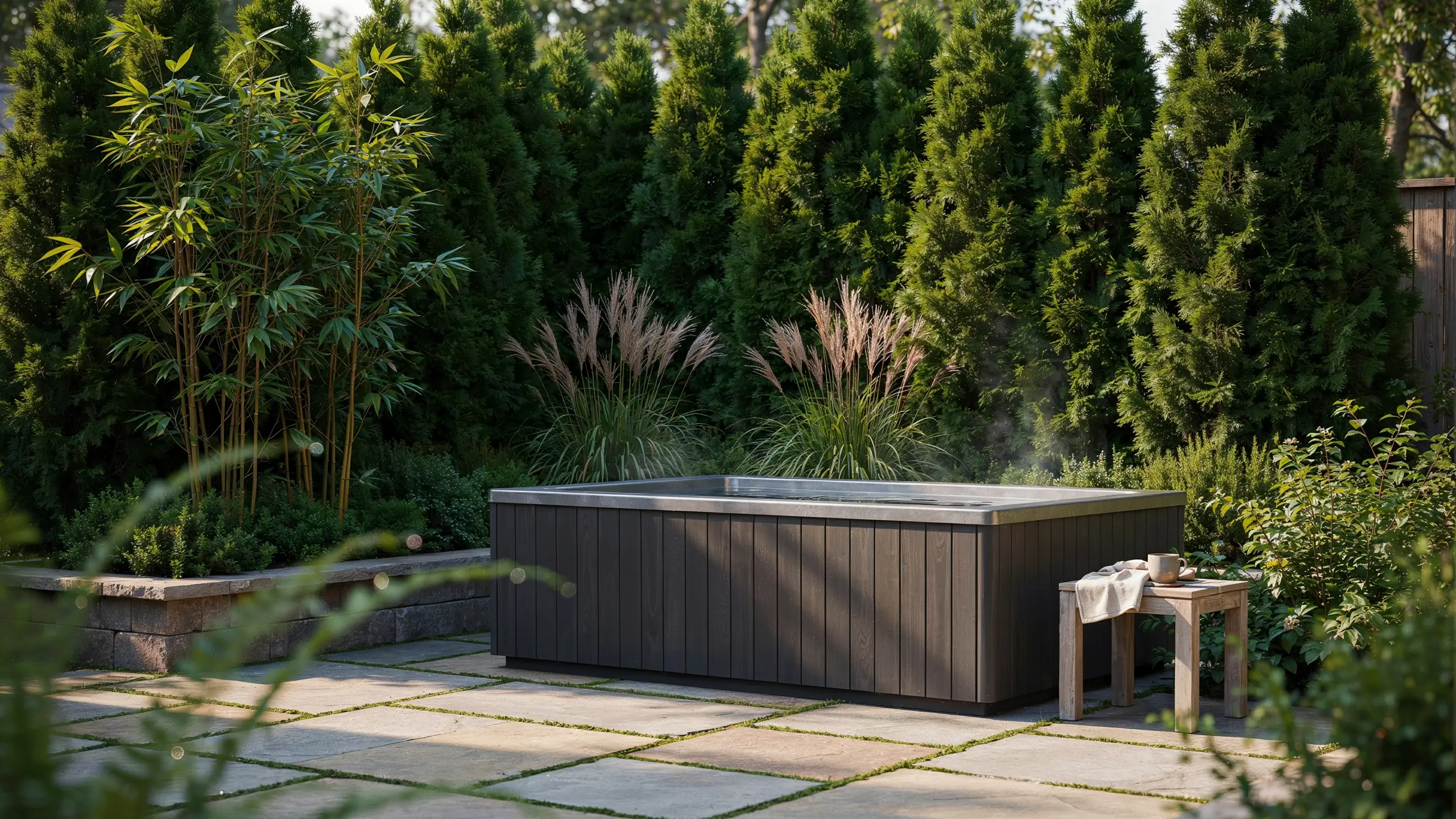
Plants are the most natural-looking privacy fix, and they soften every other structural element on this list. For fast coverage, look at:
- Arborvitae (evergreen, grows tall and narrow)
- Bamboo (fast growing, but plant in a container or with a root barrier so it doesn’t spread)
- Clumping ornamental grasses like pampas or maiden grass
- Skip laurel or boxwood for a more manicured look
Plant in a staggered row rather than a straight line for a fuller look faster. Most fast-growing screening plants take one to two full growing seasons to reach real privacy height, so this is a project to start early if you can.
5. Add a Trellis With Climbing Vines
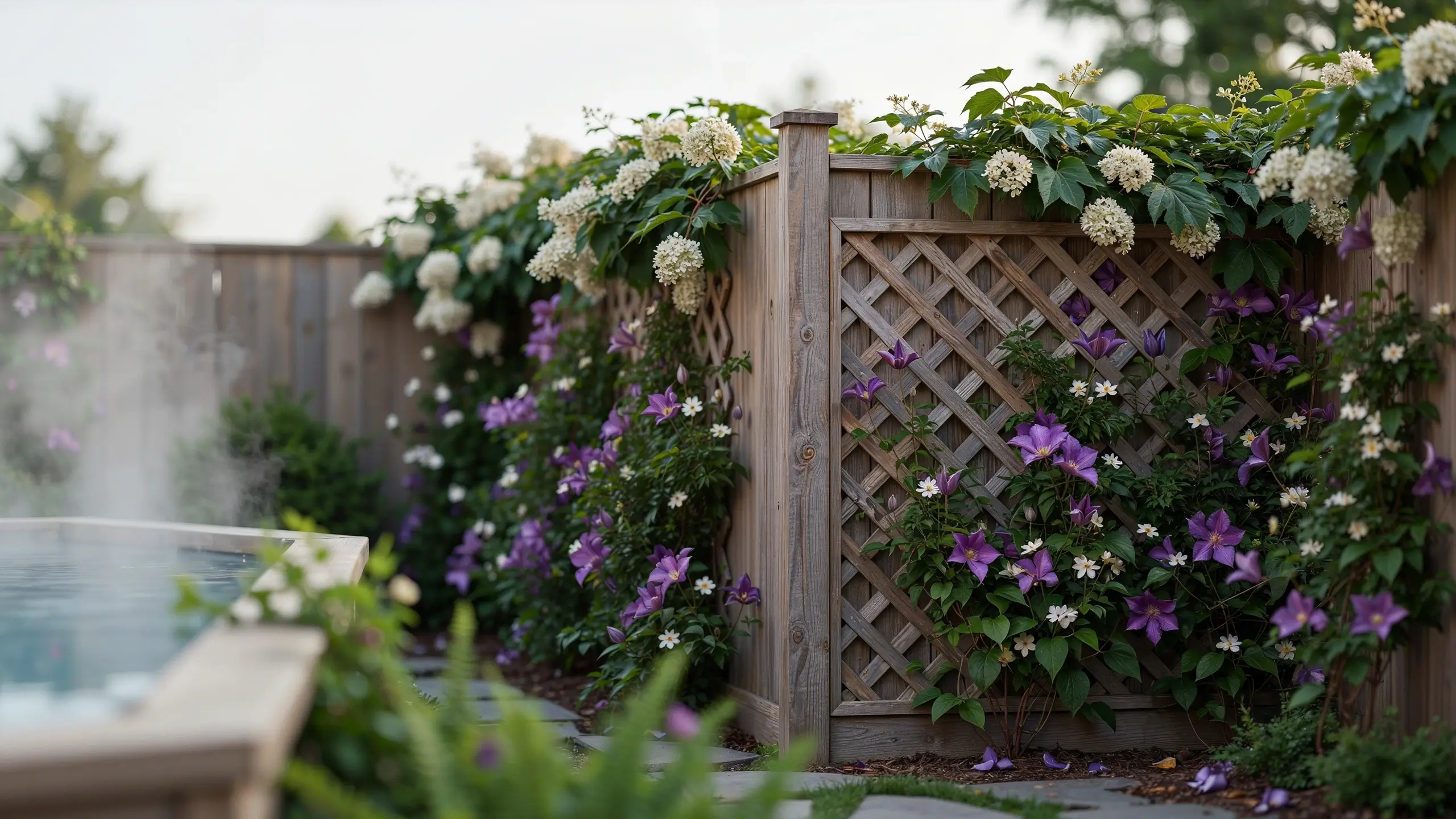
If a full hedge feels like too much commitment, a trellis with climbing vines gives you privacy with way less maintenance. Clematis, climbing hydrangea, or morning glory all work well and fill in within a single season.
Attach the trellis to the fence, a freestanding frame, or directly to your pergola posts. This is a great in-between option if you want something softer than wood panels but more structured than a plain hedge.
6. Use Large Planters as a Movable Privacy Screen
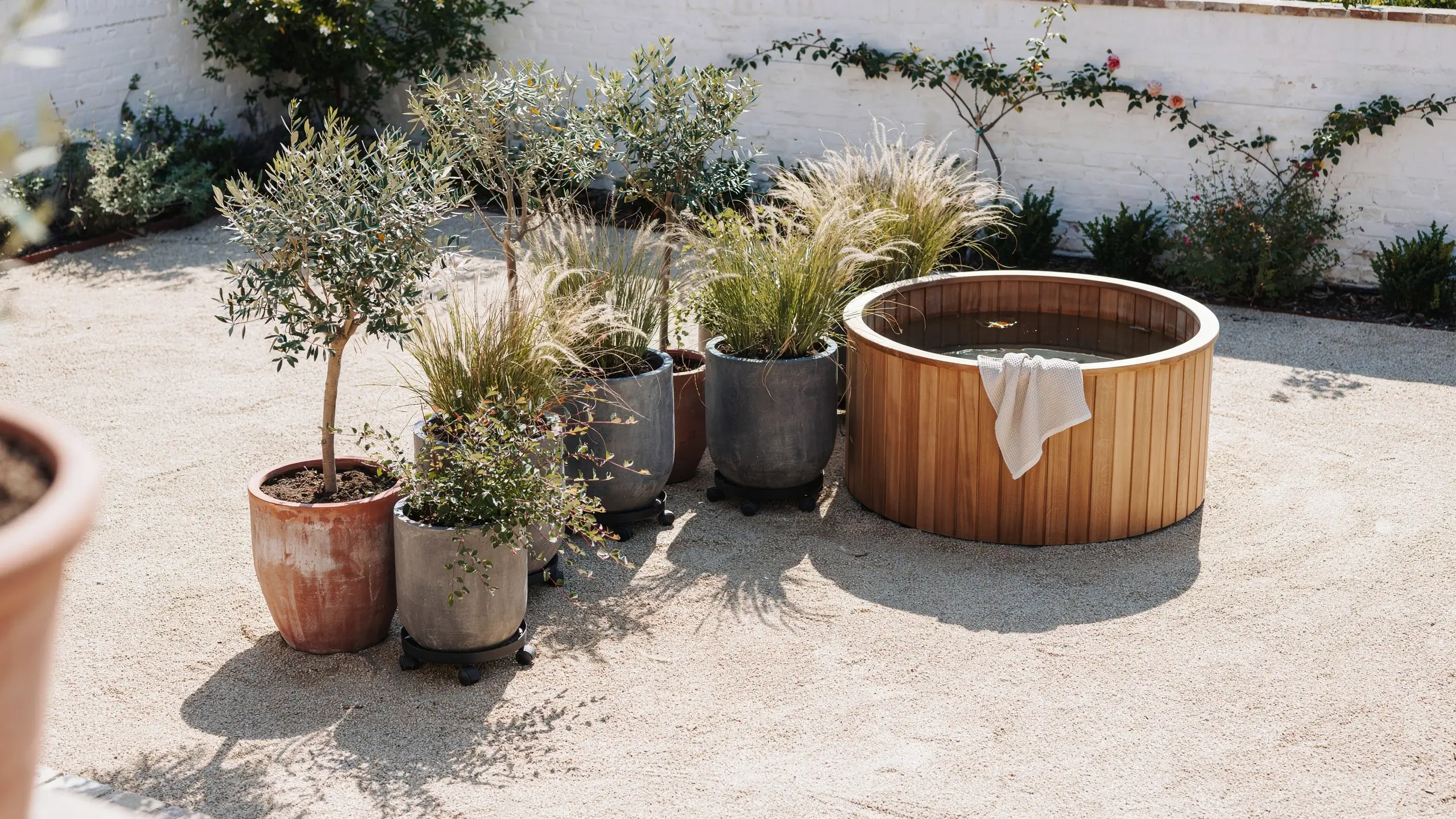
This one is perfect for renters or anyone who isn’t ready to commit to permanent landscaping. Large planters with tall grasses, dwarf trees, or shrubs can be arranged around the hot tub and rearranged anytime your privacy needs change.
Look for planters at least 18 to 24 inches deep so root systems have enough room. Wheeled plant caddies underneath make it easy to shift them for cleaning or when you’re accessing the equipment panel.
7. Install a Freestanding Privacy Screen
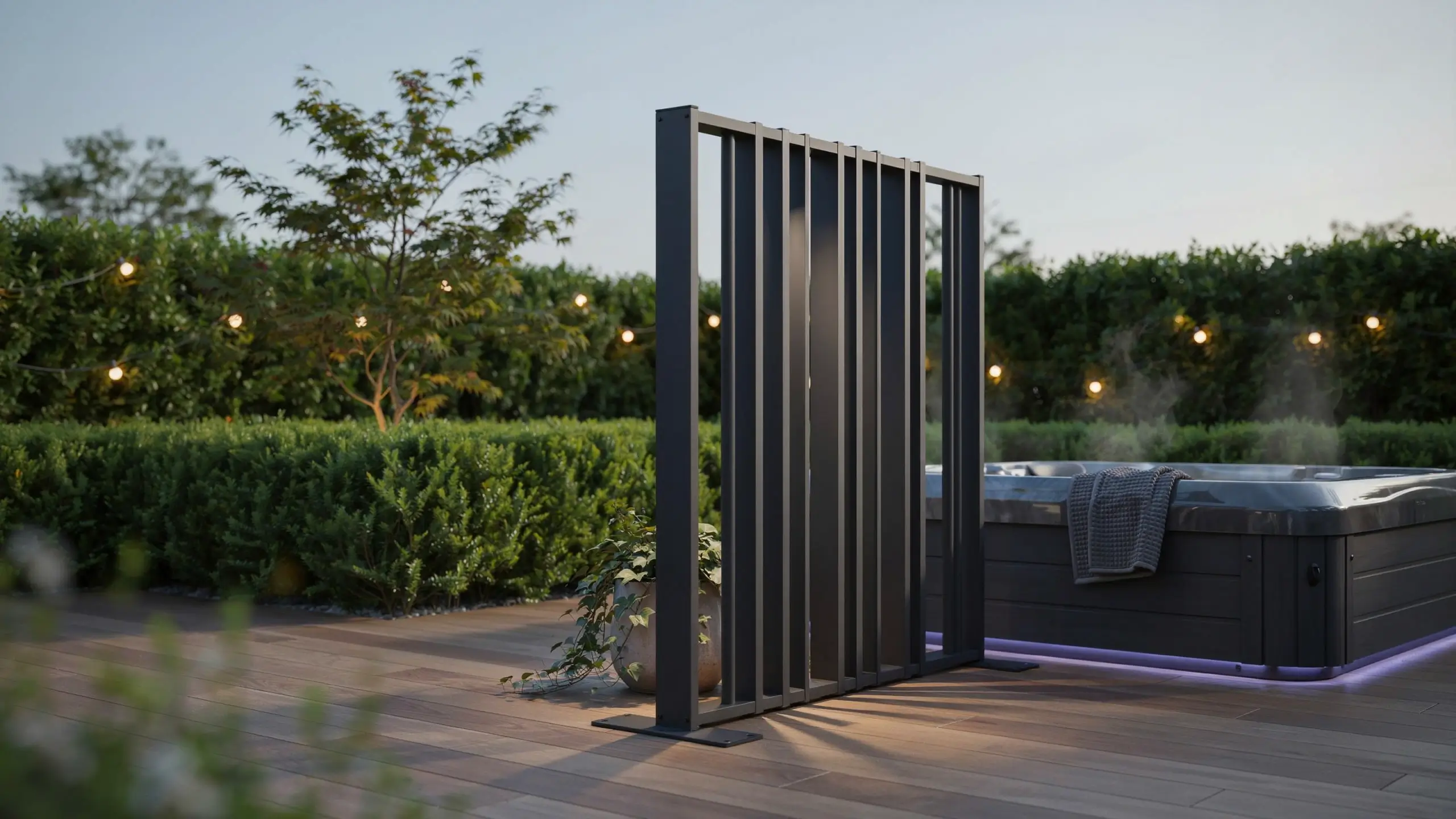
If digging, building, or planting isn’t an option, a freestanding privacy screen is the fastest fix. These come in powder-coated aluminum, bamboo, composite, or wood panel styles and just need to be anchored or weighted at the base.
They’re ideal for renters since most don’t require permanent installation, and you can angle them exactly where you need coverage instead of committing to a full perimeter.
Mistake to avoid:
- Skipping the anchoring step. Freestanding screens act like sails in wind and can tip over if they aren’t weighted or staked properly.
8. Build a Frosted Glass or Acrylic Partial Wall
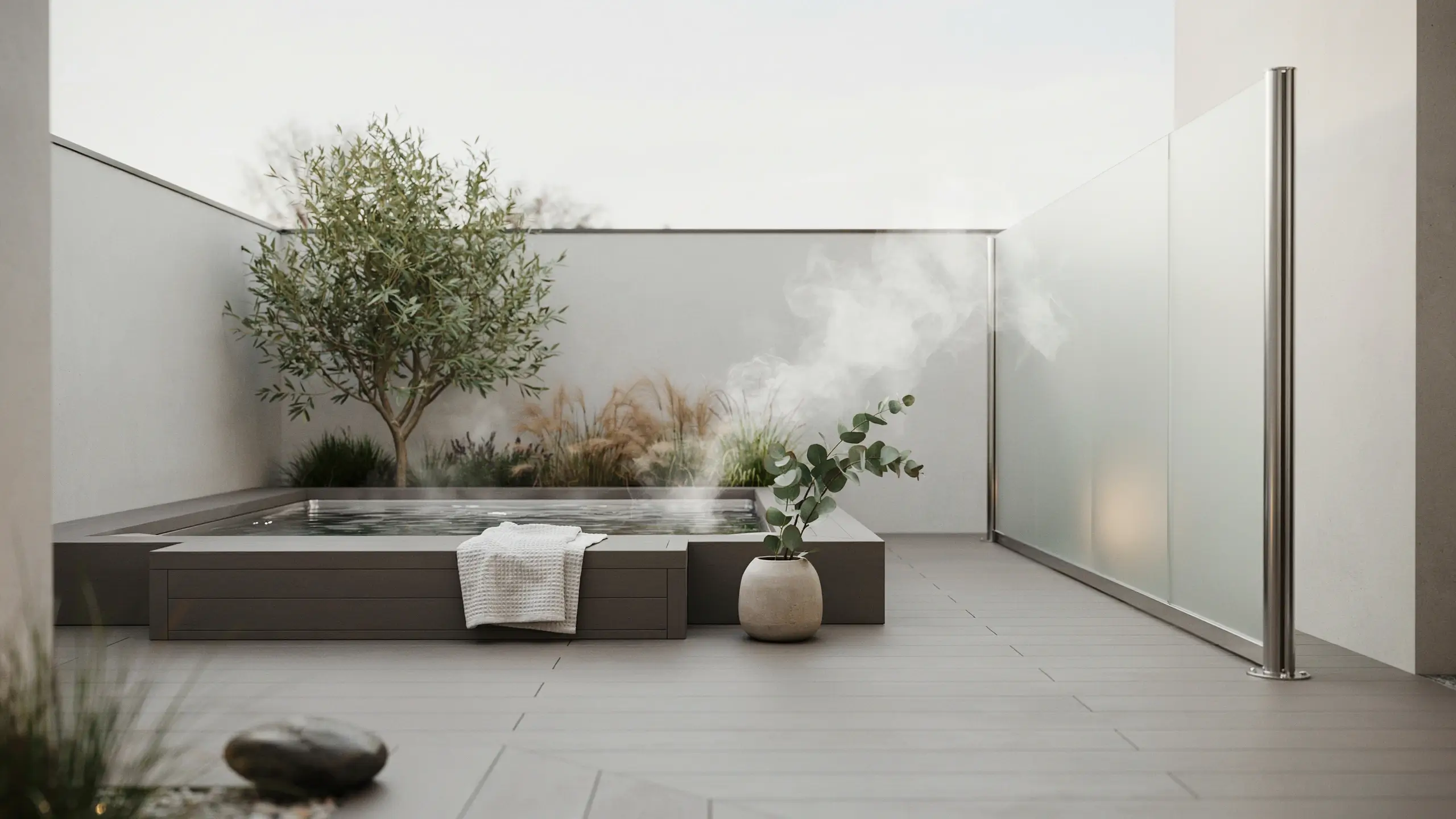
For a modern look that still lets light through, frosted glass or acrylic panels create privacy without making the space feel dark or closed in. This works especially well for contemporary decks and small yards where a solid wall would feel too heavy.
Frosted panels block direct views while letting in natural light, which also helps with airflow and steam buildup during a soak.
9. Position the Hot Tub in a Natural Nook
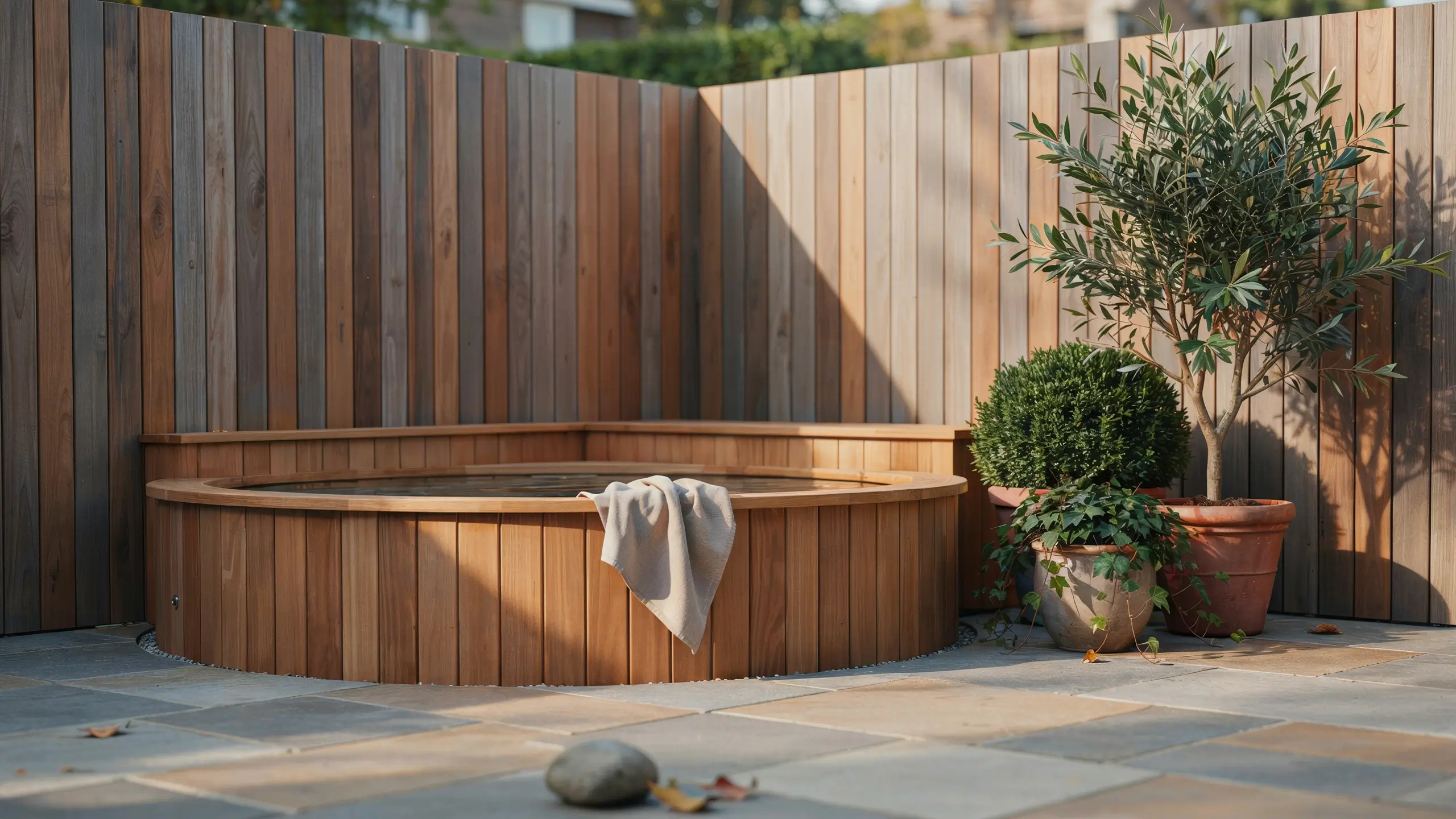
Before adding anything new, look at what your yard already offers. The corner where two fences meet, the side of the house, a garage wall, or an existing retaining wall can all provide free privacy on one or two sides.
Positioning your hot tub in a natural nook means you only need to solve for one or two exposed angles instead of building privacy from scratch on every side. This is the cheapest privacy idea on this entire list because it costs nothing but a little planning.
10. Add a Shade Sail Overhead
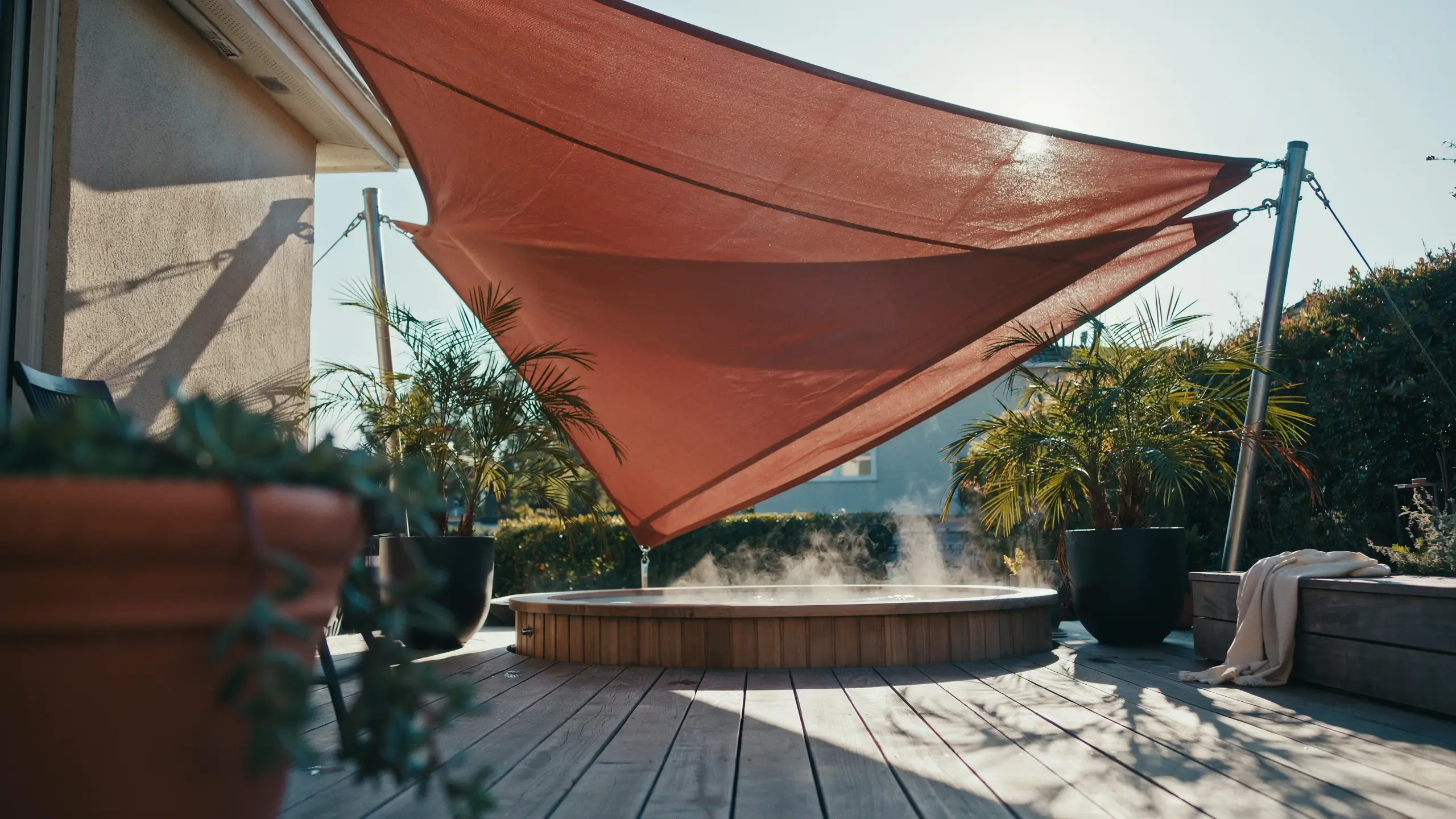
If your privacy problem is coming from above, like a neighbor’s second-story deck or window, a shade sail solves that instantly. These triangular or square fabric sails stretch between anchor points and block overhead views while also cutting glare and sun exposure during daytime soaks.
They’re budget-friendly, easy to install with basic hardware, and can be taken down seasonally if you live somewhere with heavy snow or high winds.
11. Build a Hot Tub Gazebo With Sliding Panels
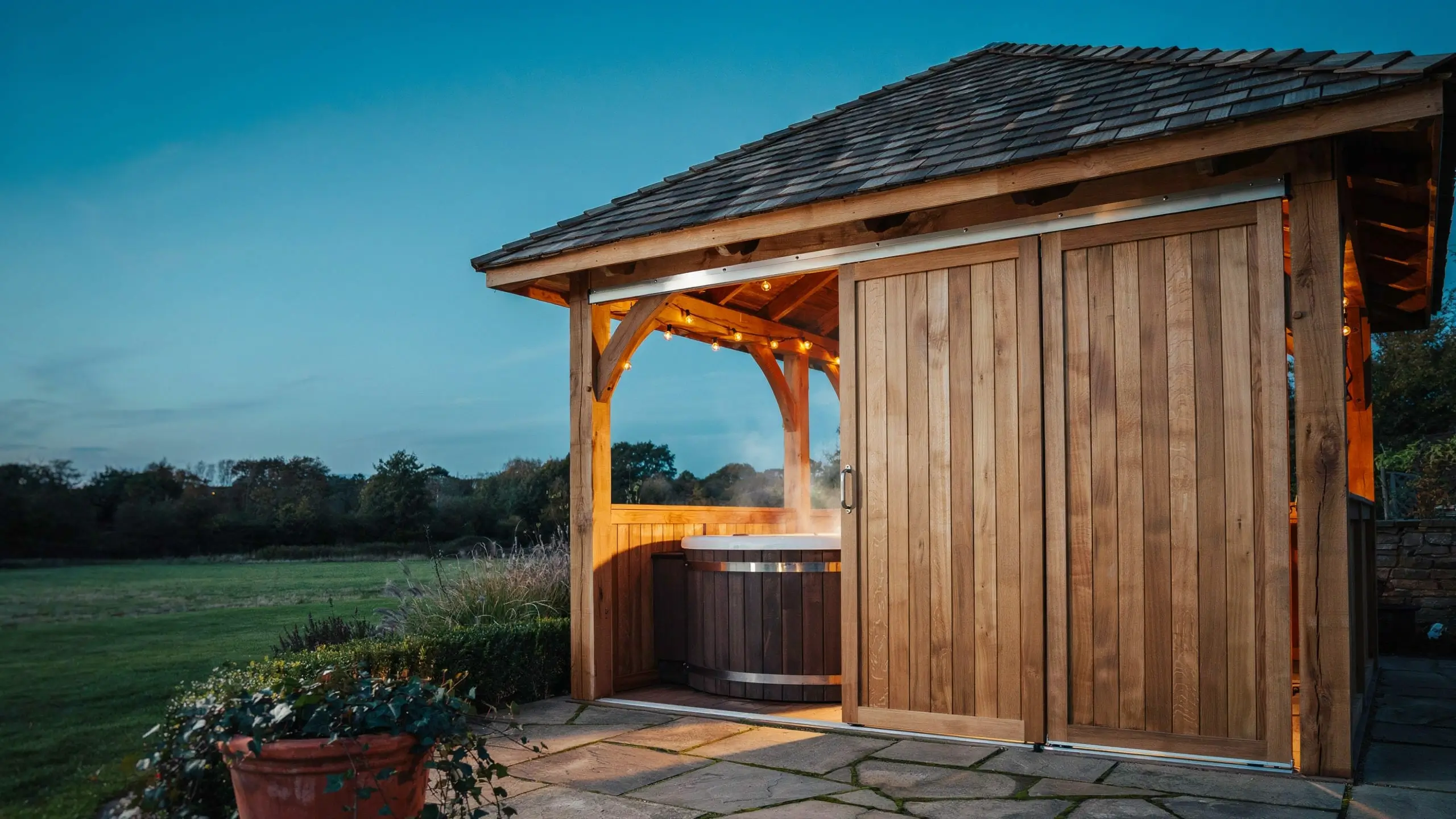
For a bigger investment that solves privacy completely, a gazebo with solid or sliding panel sides gives you full control. Slide panels closed for total privacy, or open them on nice days for airflow and a view of the yard.
This is a bigger project, but it also adds resale value and turns your hot tub into a true backyard feature rather than just an appliance sitting on a slab.
12. Try a Pop-Up Privacy Tent for a Temporary Fix
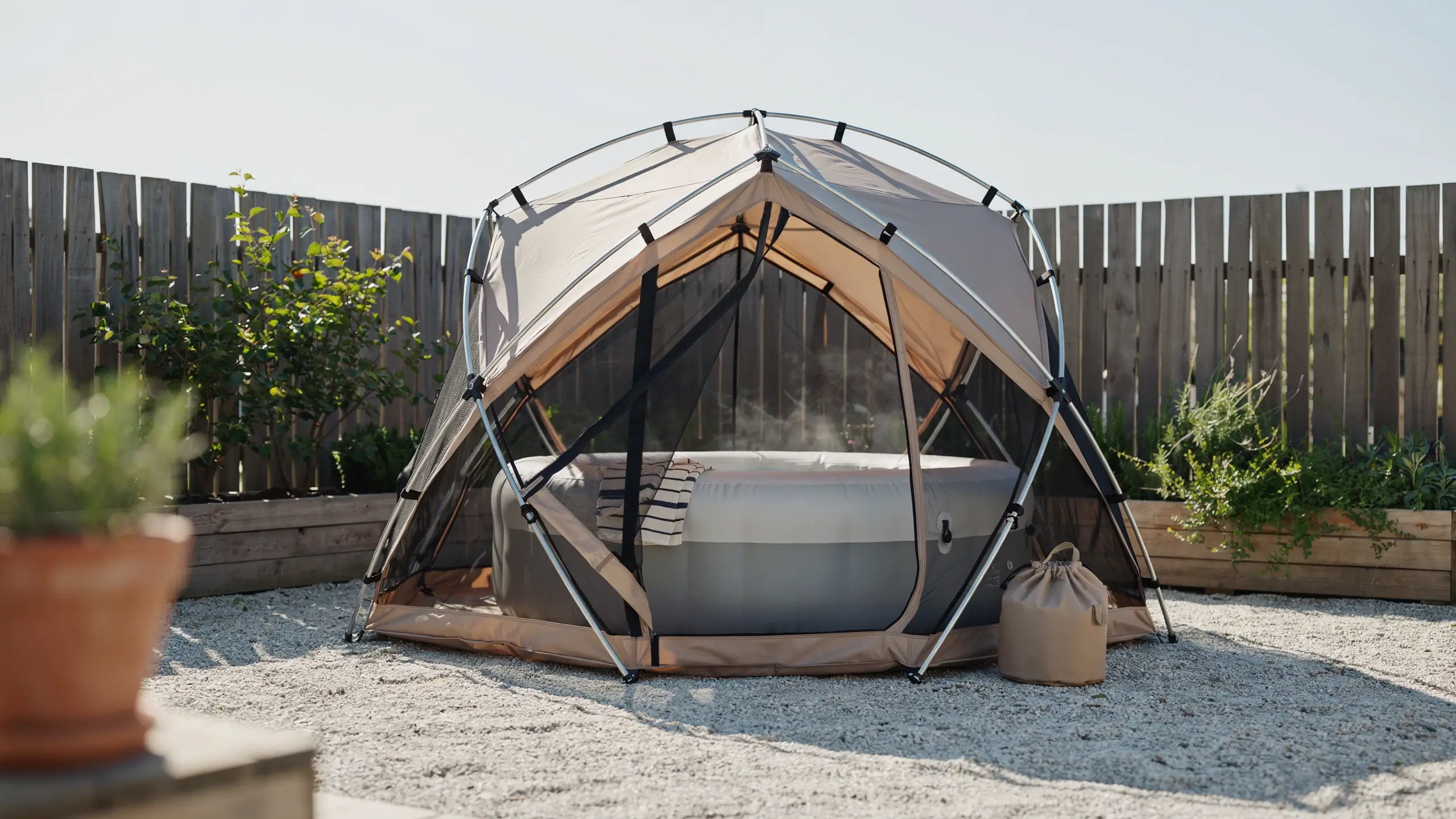
If you’re not ready to commit to anything permanent, a pop-up privacy tent or dome is worth considering. Some are designed specifically to fit over a hot tub, with mesh screen panels you can zip closed for bugs or privacy and open when you want the view back.
This is one of the most renter-friendly options on the list since it requires zero installation and can be packed away completely when it’s not in use.
13. Use a Retractable Awning for Flexible Coverage
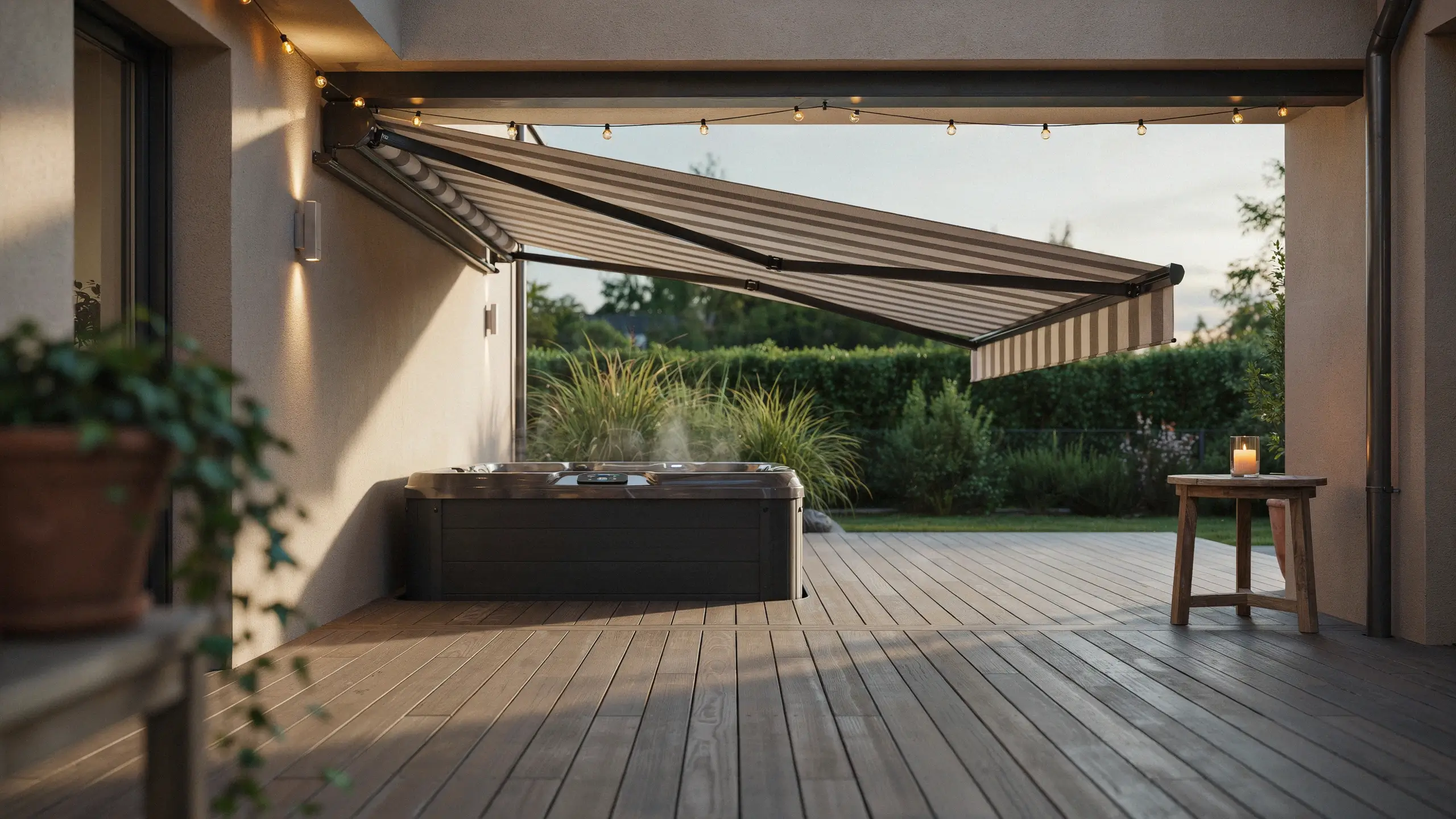
An awning mounted to your house or a nearby structure lets you adjust coverage depending on the time of day. Extend it fully for privacy from above and shade during a daytime soak, then retract it for stargazing at night.
Manual crank models are more budget-friendly, while motorized versions add convenience if you want to adjust coverage without getting out of the water.
14. Add a Living Fence With Espaliered Trees
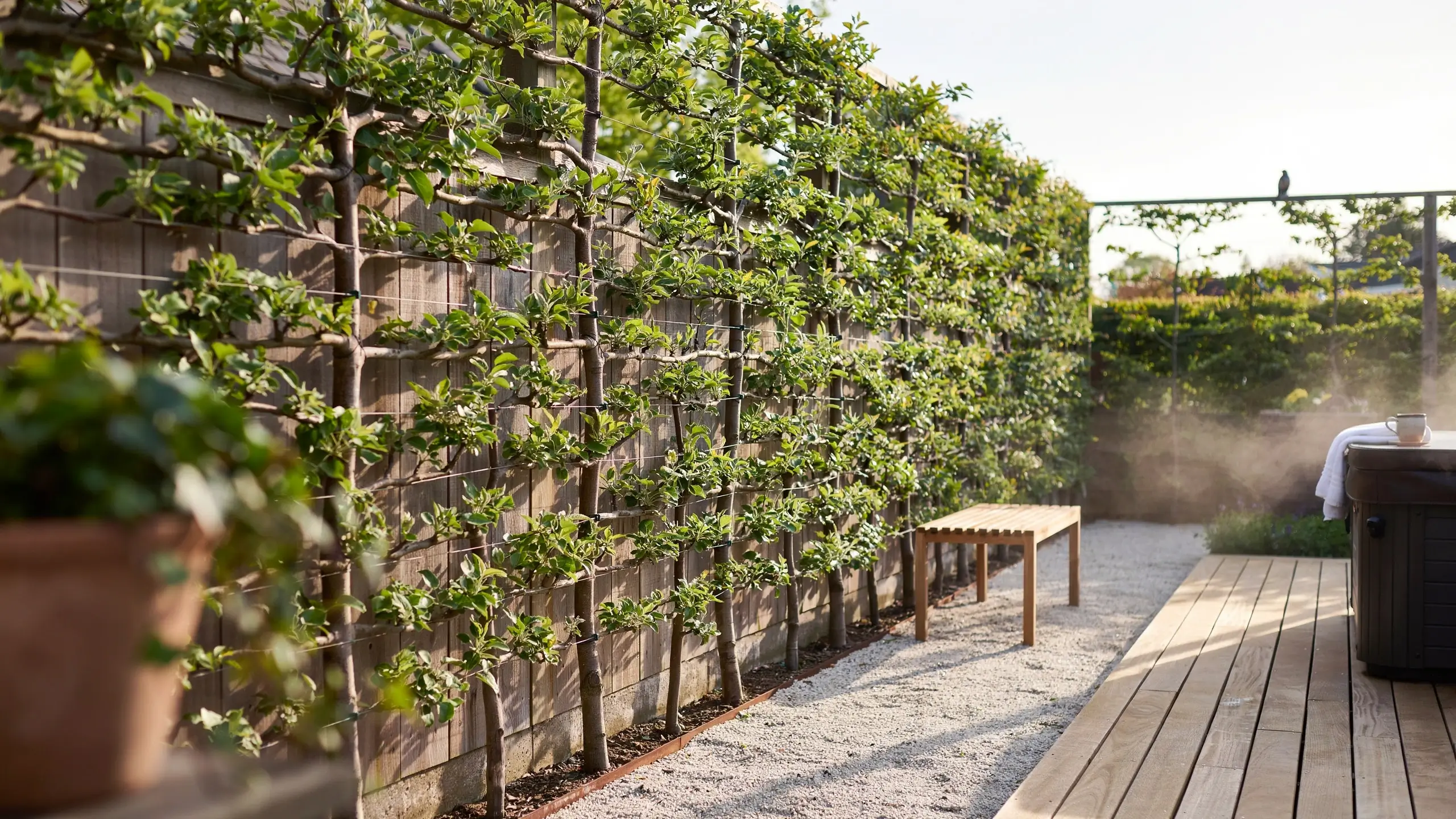
For a more polished, high-end look, espaliered trees (trees trained to grow flat against a support structure) create a living wall that’s thinner than a traditional hedge but still provides solid coverage. This works especially well for narrow side yards where a full hedge would eat up too much space.
It takes patience and some pruning knowledge, but the result looks intentional and elevated, which photographs beautifully for Pinterest.
15. Install Frosted Window Film on Nearby Windows
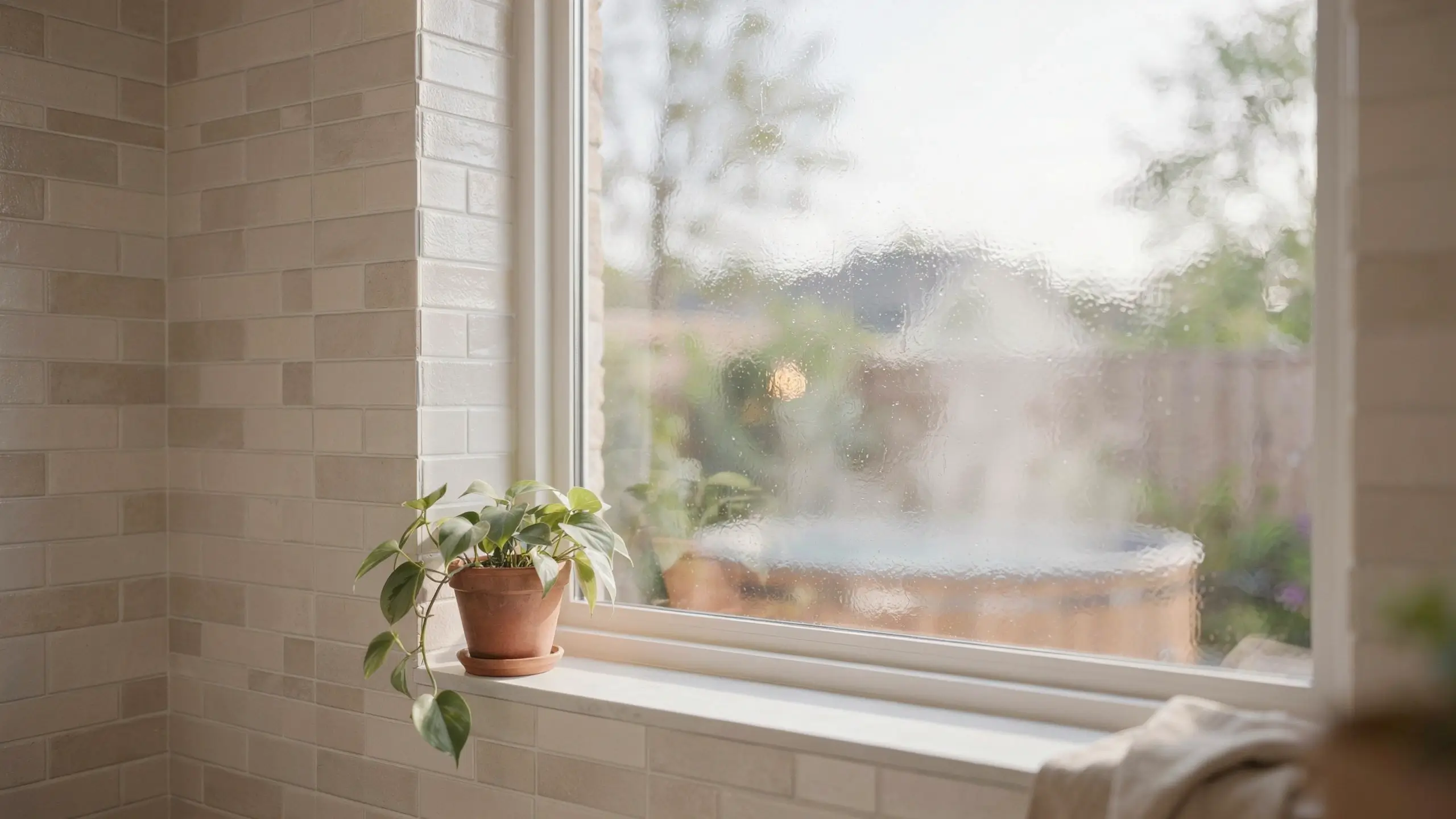
Sometimes the privacy problem isn’t your yard, it’s your own house. If a bathroom or kitchen window overlooks your hot tub area, frosted or decorative window film blocks the view both ways without losing natural light. It’s a renter-friendly, no-drill option that peels off cleanly when you move.
16. Add a Water Feature to Mask Sound
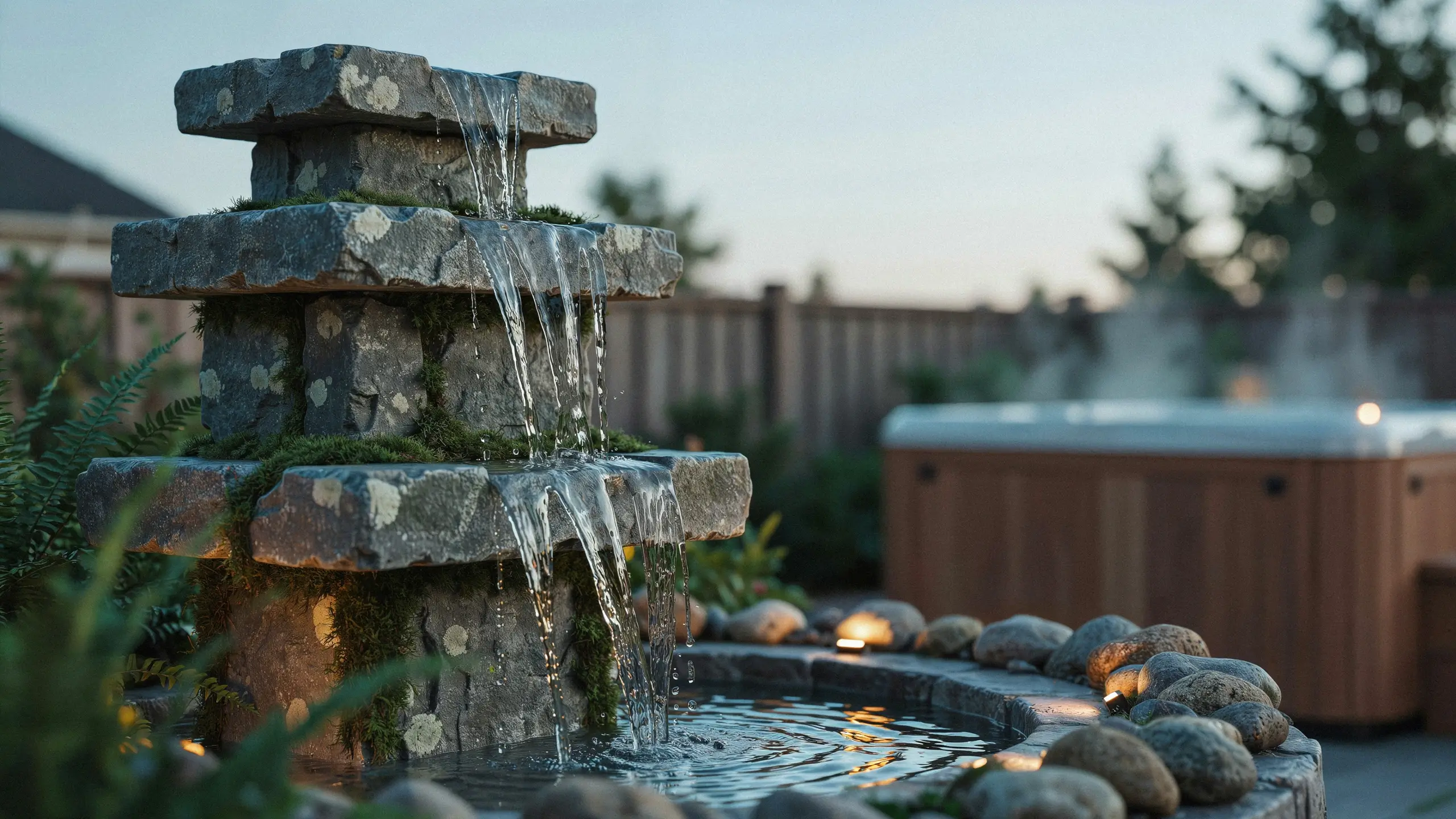
Privacy isn’t only about sightlines. A small fountain, cascading wall feature, or bubbling urn near the hot tub muffles conversation and street noise, which matters more than people expect. Even a soft trickle of water is often enough to keep quiet conversations from carrying to a neighbor’s patio.
This is one of the most overlooked ideas in most privacy guides, but it makes a real difference for anyone who lives close to neighbors or a busy street.
17. Use String Lights and Low, Warm Lighting Instead of Bright Fixtures
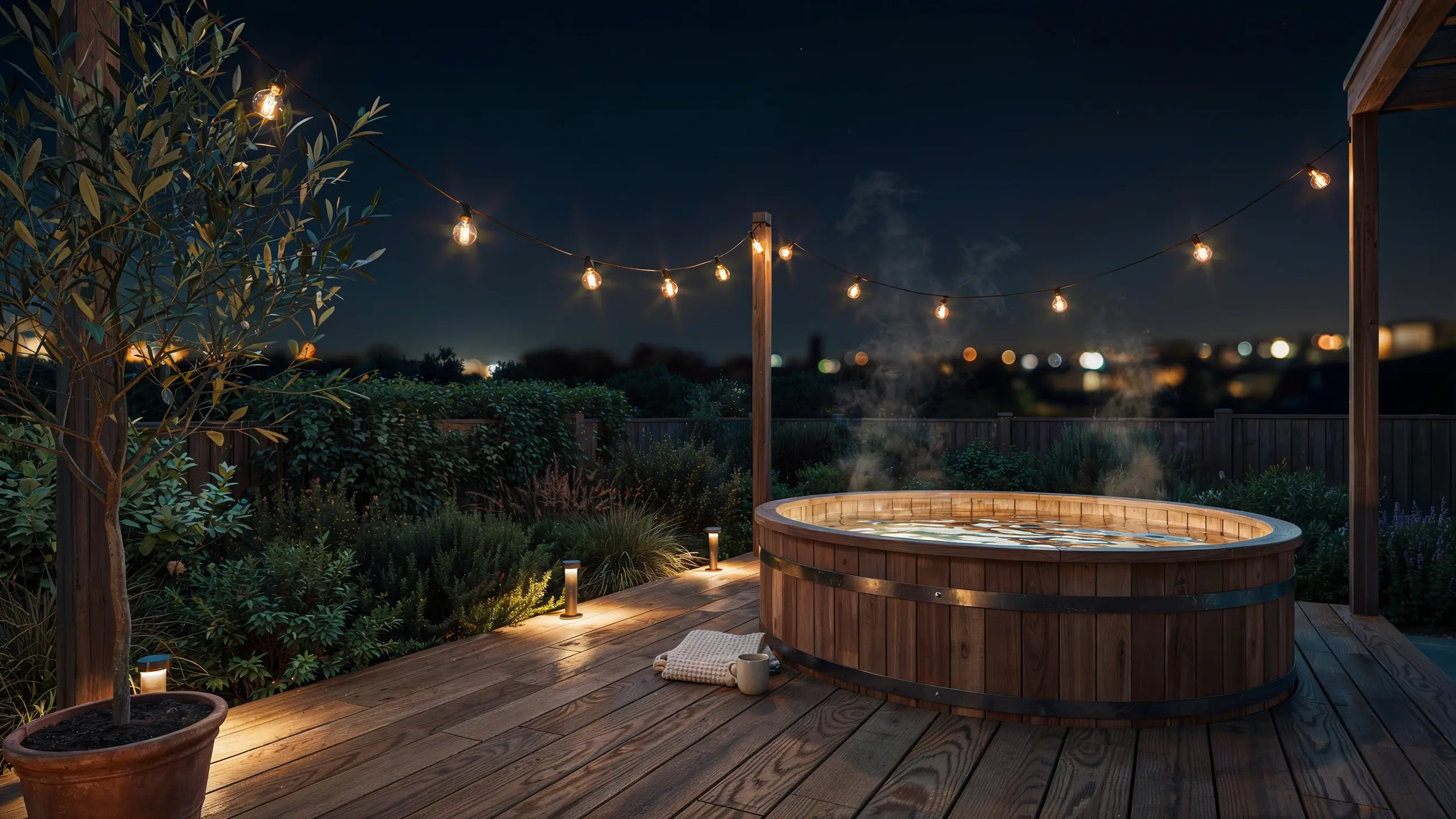
Bright overhead lighting can actually work against your privacy since it puts a spotlight on you at night. Swap harsh floodlights for warm string lights, lanterns, or low path lighting instead. It keeps the mood soft, sets the scene for photos, and avoids drawing extra attention to your hot tub area after dark.
Safety note:
- Keep all lighting rated for outdoor and wet-location use, and keep cords away from the water and walking paths.
18. Combine a Low Fence With Tall Potted Plants
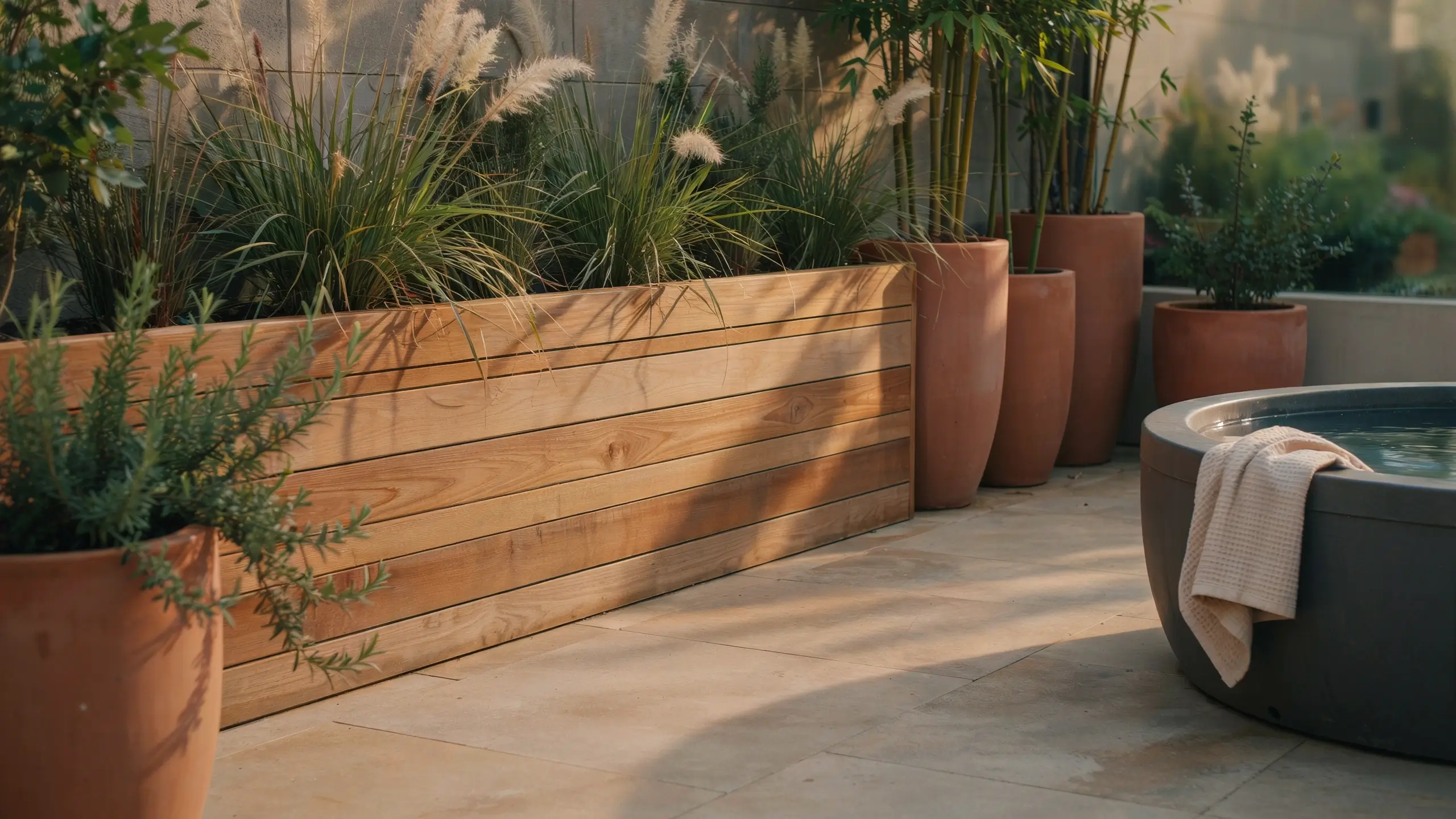
If a full-height fence feels like too much for your space or budget, layering a shorter fence with tall potted plants behind it adds height and privacy without the boxed-in feeling. This combo is popular because it looks intentional rather than like you’re hiding something, and it works well for small patios where a full privacy fence would feel overwhelming.
19. Build a Simple Reed or Bamboo Screen Panel
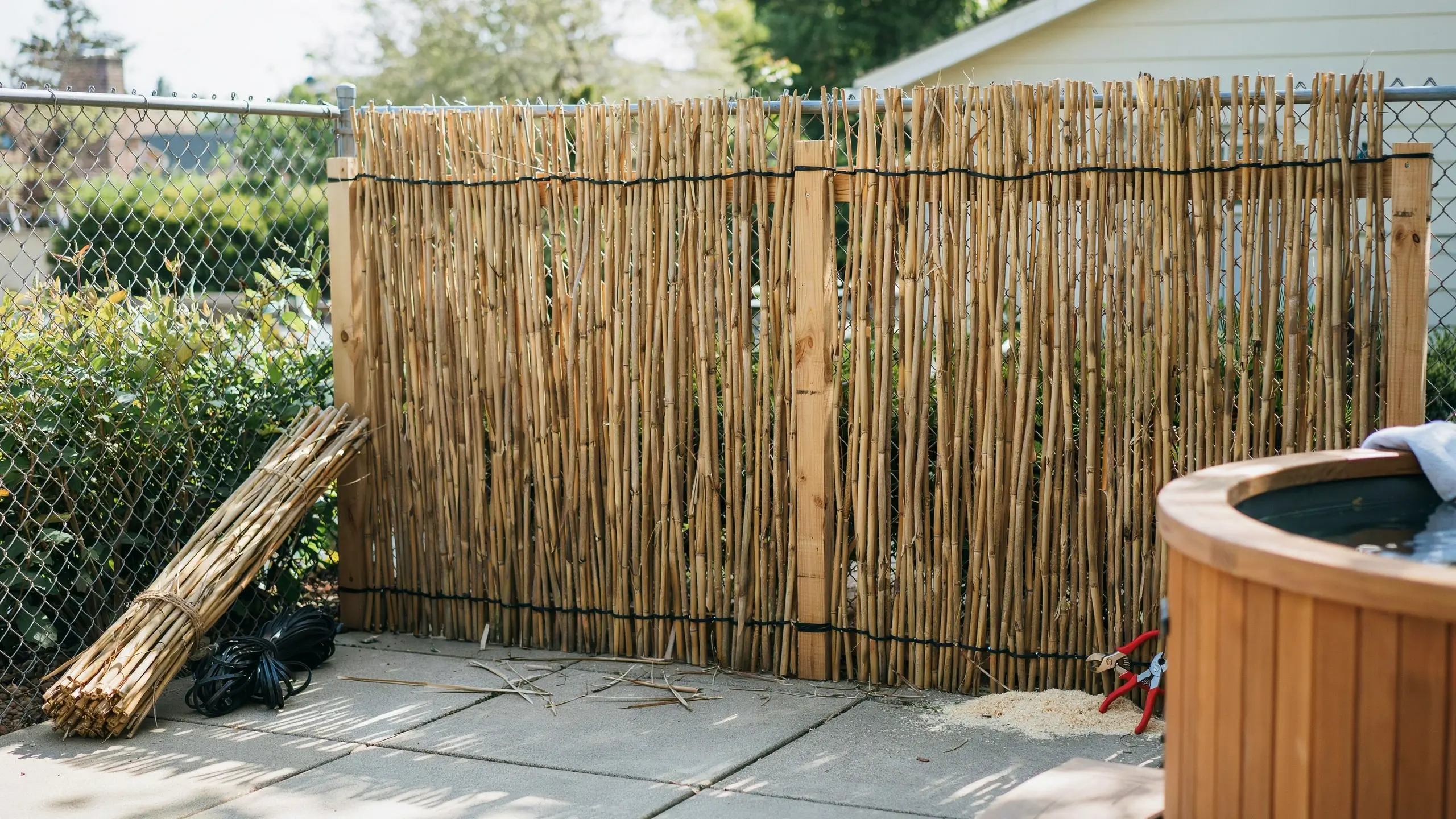
For one of the most budget-friendly options on this list, a roll of natural reed or bamboo fencing can be zip-tied directly to an existing chain-link fence or attached to a simple wood frame. A 6-foot by 16-foot roll typically runs under $60 and can be installed in an afternoon with no special tools.
Mistake to avoid:
- Skipping a wood frame if you’re using it as a standalone screen. Reed fencing on its own sags and curls over time without support behind it.
20. Add a Simple Privacy Wall to an RV or Camper Hot Tub Setup
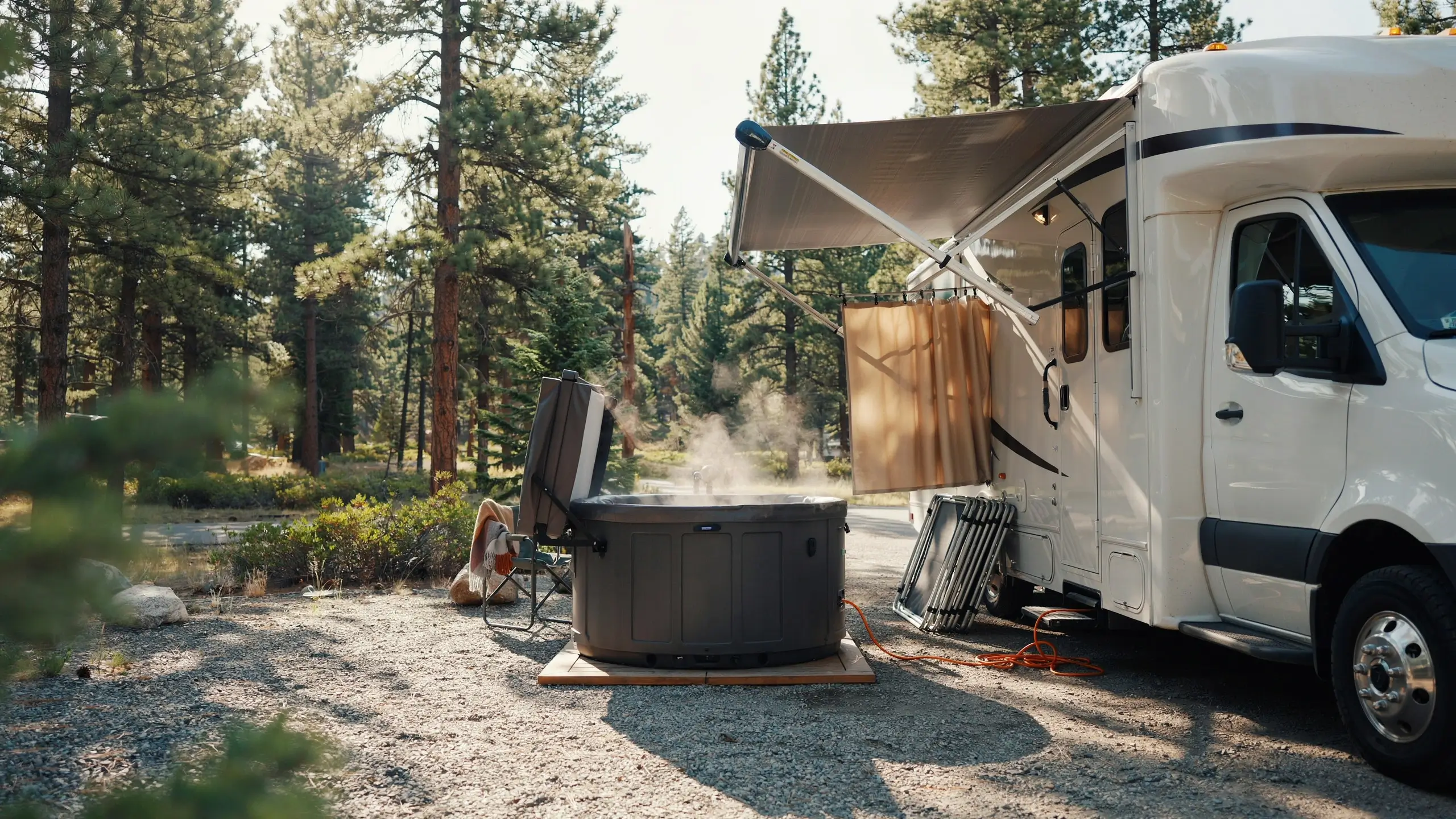
If your hot tub is set up at a campsite or alongside an RV, portable options matter more than permanent ones. A collapsible privacy screen, a tension-rod curtain attached to the RV awning frame, or a foldable windbreak panel gives you coverage that packs down small for travel. Look for lightweight aluminum or fabric options since weight and storage space are the biggest constraints in a camper setup.
21. Keep Access Points Open While Still Blocking Sightlines
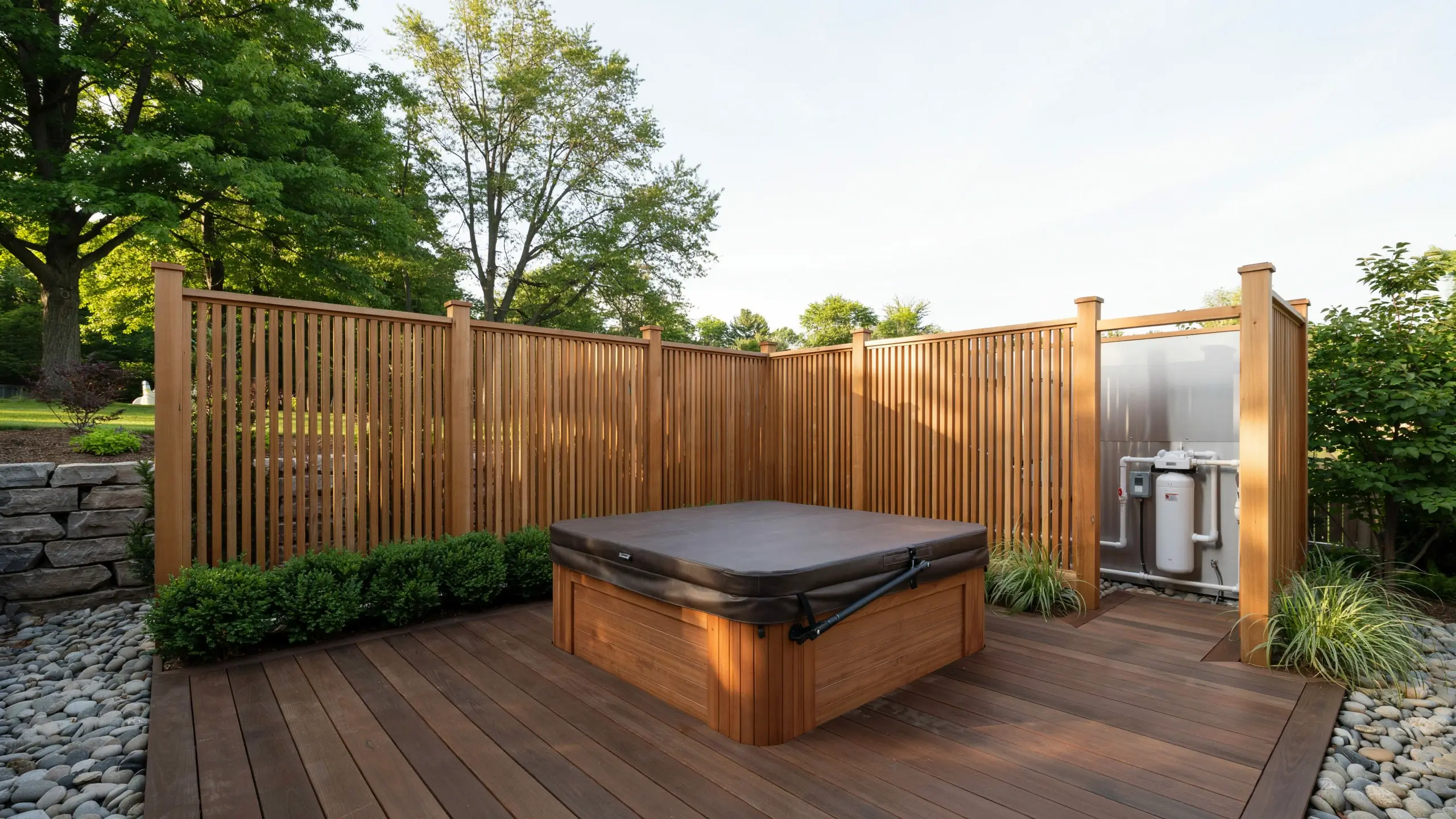
This last one is less of an “idea” and more of a rule that ties every other option together. Whatever privacy solution you choose, leave a clear, unobstructed path to the equipment panel, filter, and cover lifter. It’s tempting to box in every single angle, but trapped steam, blocked airflow, and hard-to-reach service panels cause more headaches (and repair bills) than an exposed sightline ever will.
Leave at least one side with a gap, vent, or gate so air can move and maintenance stays easy.
A Few Mistakes to Avoid Across the Board
- Skipping your HOA or city rules on fence height and permanent structures before building
- Choosing indoor curtain fabric that mildews or fades within a season
- Boxing in the tub completely and trapping steam, which can damage wood and encourage mold
- Forgetting nighttime visibility when you only planned for daytime privacy
- Planting fast-growing screening plants too close to the tub or deck, where roots can eventually cause damage
Final Thoughts
You don’t need a huge budget or a total backyard remodel to get real privacy around your hot tub. Sometimes it’s one fast-growing hedge and a string of lights. Sometimes it’s a full pergola with curtains and a water feature. The right combination depends on your space, your budget, and how exposed your setup really is.
Start with whichever idea solves your biggest exposed angle first, then layer in the smaller touches like lighting and sound as you go. Your future soak-in-peace self will thank you.
Which of these privacy ideas are you trying first? Drop a comment below, I’d love to hear what your backyard setup looks like and help troubleshoot if you’re stuck.





No Comment! Be the first one.