




How to Keep Bugs Off Your Plants Naturally (10 Methods That Actually Work)
You water your plants, you rotate them toward the sun, you talk to them like they can hear you. Then one morning there’s a cluster of aphids throwing a party on the new growth. Or gnats...

You water your plants, you rotate them toward the sun, you talk to them like they can hear you. Then one morning there’s a cluster of aphids throwing a party on the new growth. Or gnats dive-bombing your face every time you walk past the fiddle leaf fig.
If your instinct is to grab a spray bottle full of mystery chemicals, put it down. You don’t need it.
Once you know how to keep bugs off your plants naturally, you can protect everything from porch tomatoes to windowsill succulents using stuff that’s probably already in your kitchen. This guide covers the sprays, the companion plants, the traps, and the small daily habits that actually keep pests away, both indoors and out.
Why Bugs Go After Your Plants in the First Place
Bugs aren’t picking your plants at random. They’re going after the weak link.
A stressed, overwatered, or under-fertilized plant puts off signals that pests can practically smell. Dusty leaves are easier for spider mites to hide on. Soggy soil is basically a nursery for fungus gnats. And a new plant that came home from the nursery without a quick inspection can bring an infestation with it, hidden and ready to spread.
Fix the environment first, and half the battle is already won. The other half is what’s below.
1. Start With a Simple Soapy Water Spray
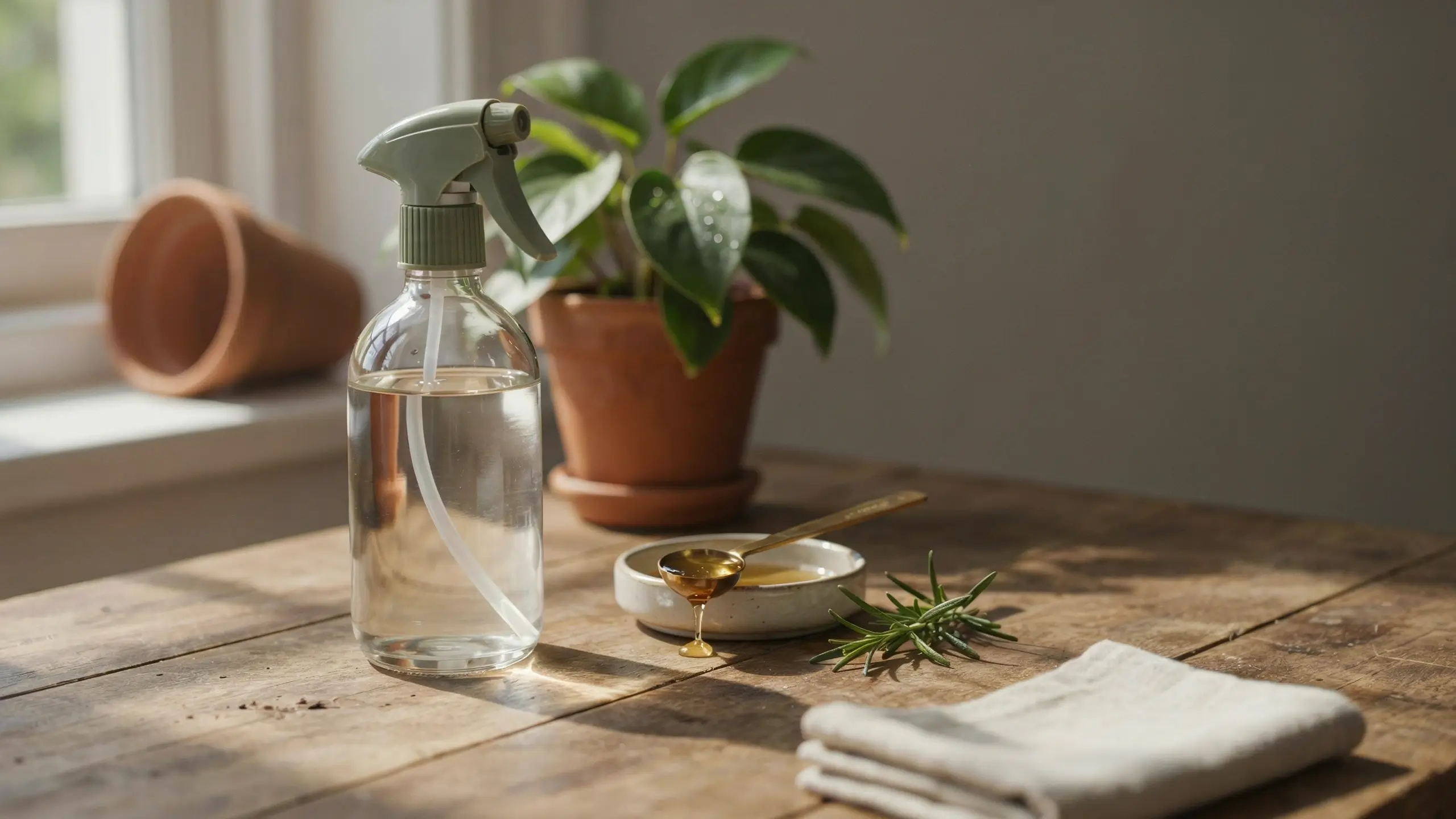
This is the fastest, cheapest fix, and it should be your first move for most soft-bodied pests.
What You Need
- 1 teaspoon mild liquid soap (unscented Castile soap works well)
- 1 quart water
- A clean spray bottle
Mix it, shake it, and spray it directly on the bugs, not just the leaves. This works on aphids, mealybugs, spider mites, and whiteflies because the soap breaks down their outer coating.
Mistake to Avoid
Skip anything with degreaser, citrus extract, or added moisturizers. Those can burn leaf tissue. Always test on one leaf and wait 24 hours before spraying the whole plant.
2. Step Up to a Neem Oil Spray for Bigger Problems
When soapy water isn’t cutting it, neem oil is the next move. It doesn’t just kill on contact, it disrupts the pest life cycle so eggs don’t hatch into another wave.
Recipe
- 2 teaspoons neem oil
- 1 teaspoon mild liquid soap (this helps the oil blend with water instead of floating on top)
- 1 quart water
Shake well before every use since the oil separates fast. Spray in the evening rather than midday. Neem breaks down quickly in direct sunlight, and spraying at dusk also protects bees and other pollinators that are done foraging for the day.
3. Try a Garlic and Pepper Spray for Serious Infestations
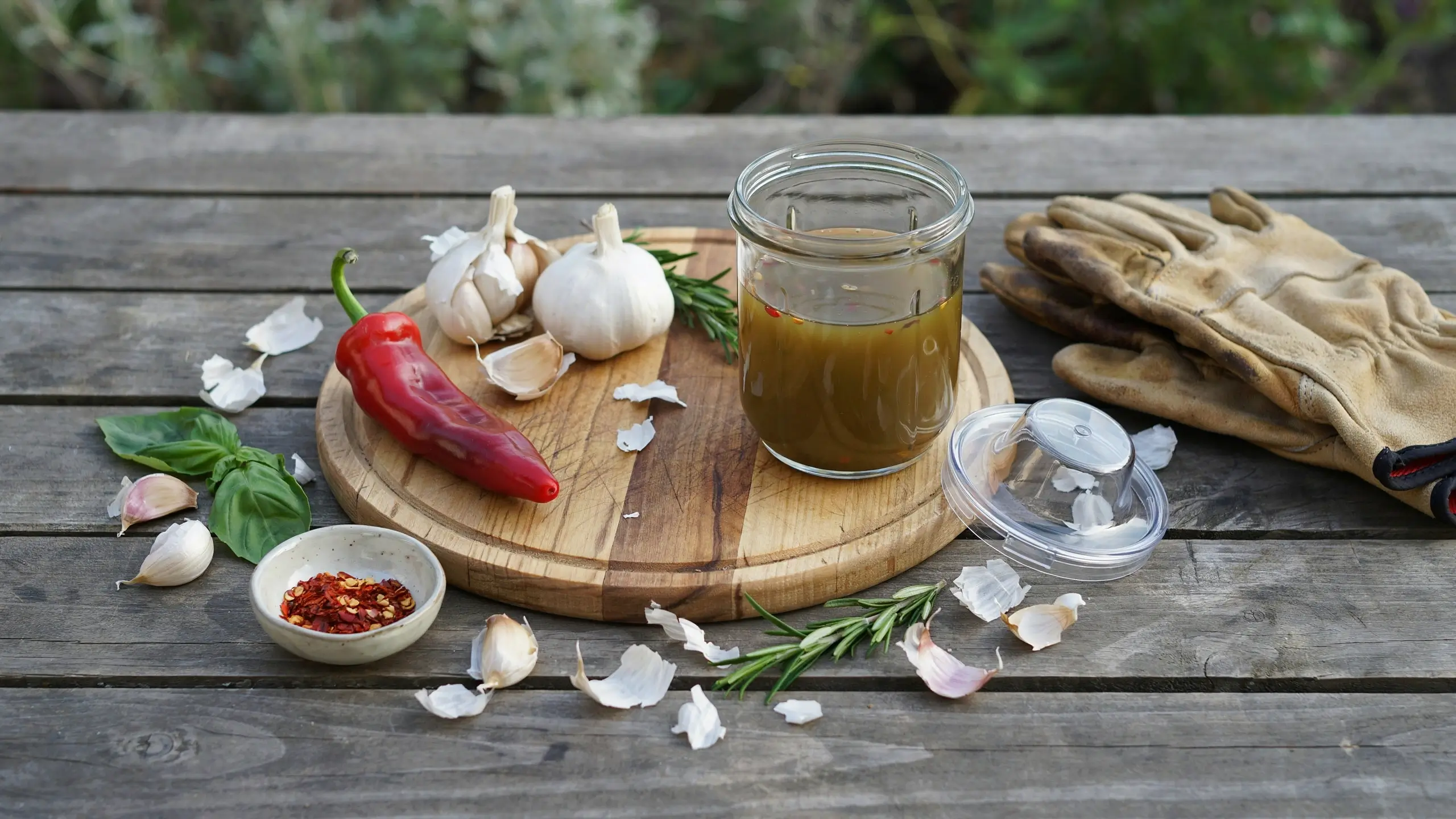
This one works more like a repellent than a killer. The smell alone sends most bugs looking for a less offensive plant to bother.
What You Need
- 3 to 4 garlic cloves
- 1 hot pepper or a teaspoon of cayenne
- 2 cups water
- A few drops of dish soap
Blend the garlic and pepper with the water, let it steep overnight, then strain it into a spray bottle with the soap added. Use gloves and mix it outdoors. The smell is strong and it can irritate eyes if you get too close while blending.
4. Plant Companion Plants That Bugs Naturally Avoid
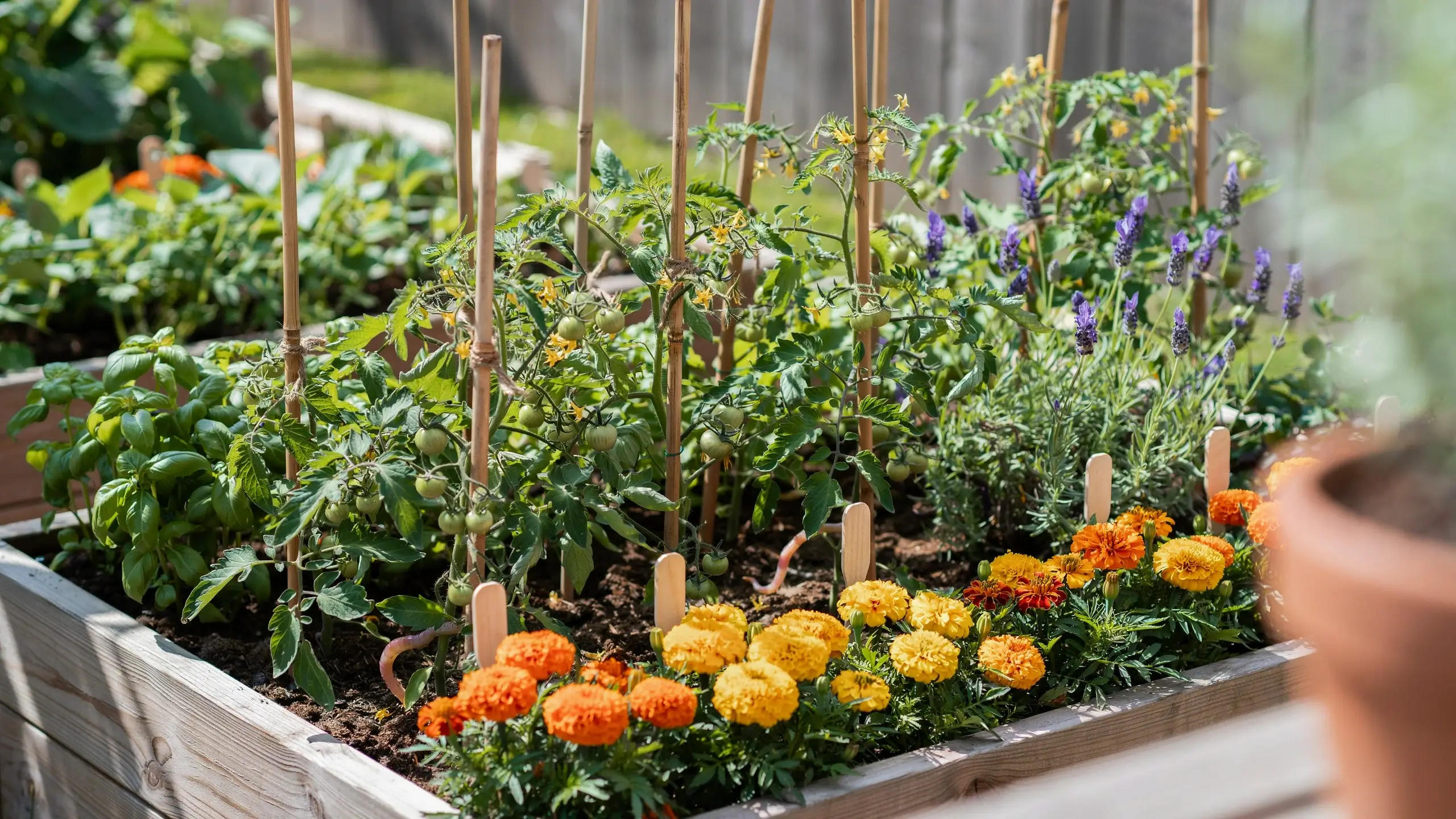
Companion planting does double duty. It repels pests and it looks gorgeous in a garden bed or porch container, which makes it one of the most Pinterest-friendly methods on this list.
A few reliable pairings:
- Marigolds deter aphids and nematodes and their bright orange and yellow blooms photograph beautifully against green foliage.
- Basil planted near tomatoes helps repel mosquitoes, flies, and tomato hornworms.
- Lavender keeps moths and fleas away while pulling in bees and butterflies for a pollinator-friendly garden.
- Chives and garlic tucked around roses help push aphids elsewhere.
- Mint repels ants and roaches, but plant it in its own pot. It spreads aggressively and will take over a bed if you let it.
- Nasturtiums work as a trap crop. Aphids prefer them over almost everything else, so planting a border of nasturtiums can pull pests away from your main plants entirely.
5. Invite Beneficial Insects to Do the Work for You
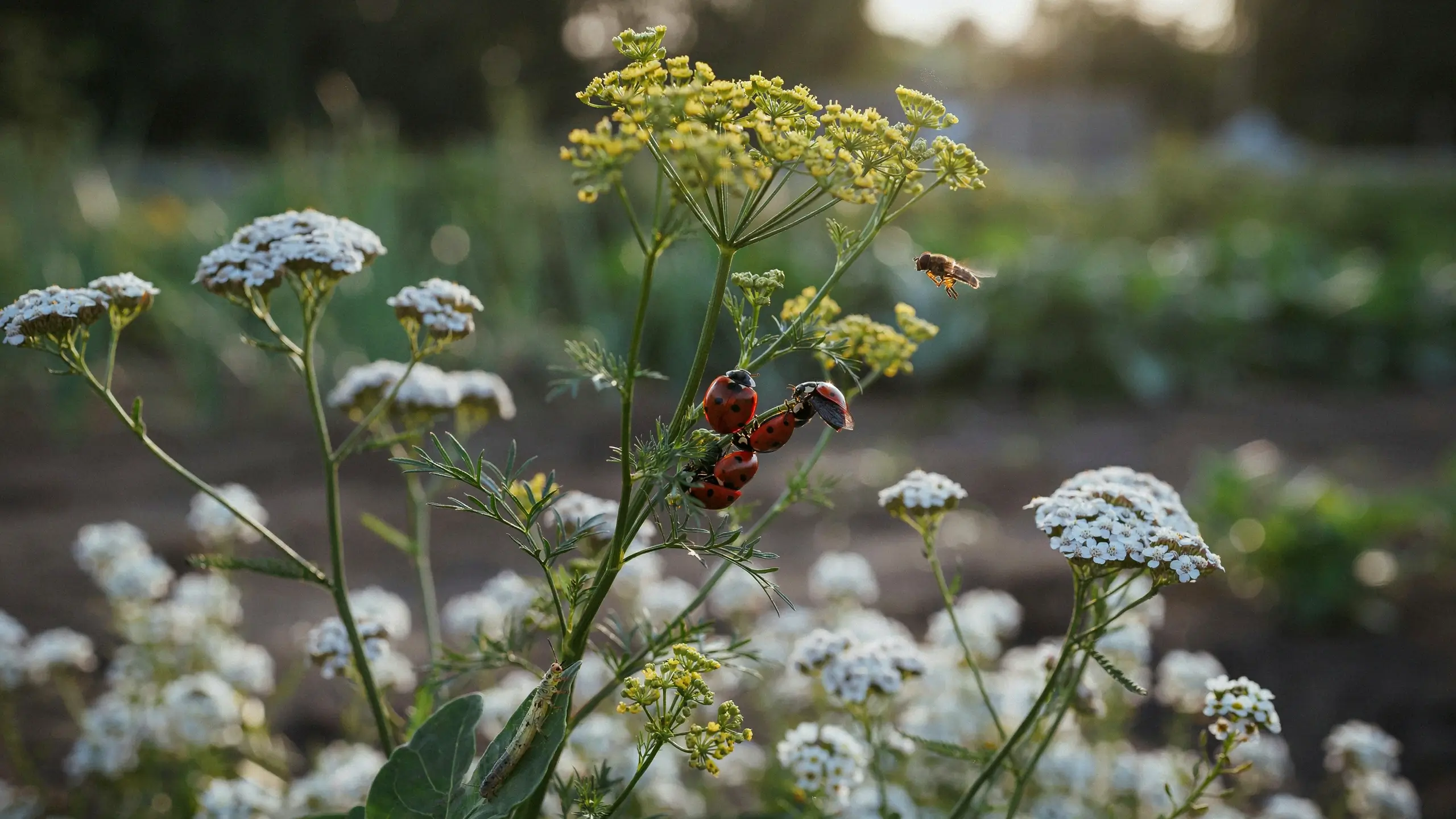
Not every bug is the enemy. Ladybugs, lacewings, and parasitic wasps eat aphids and other pests for a living, and getting them to stick around is one of the lowest-effort pest control strategies there is.
Plant nectar-rich flowers like dill, fennel, yarrow, and alyssum near your vegetable beds. These draw in beneficial insects and give them a reason to stay instead of just passing through.
If you buy ladybugs from a nursery, release them at dusk directly onto the infested plant. Releasing them during the day in bright sun usually just sends them flying off somewhere else.
6. Set Out Sticky Traps to Catch and Monitor Pests
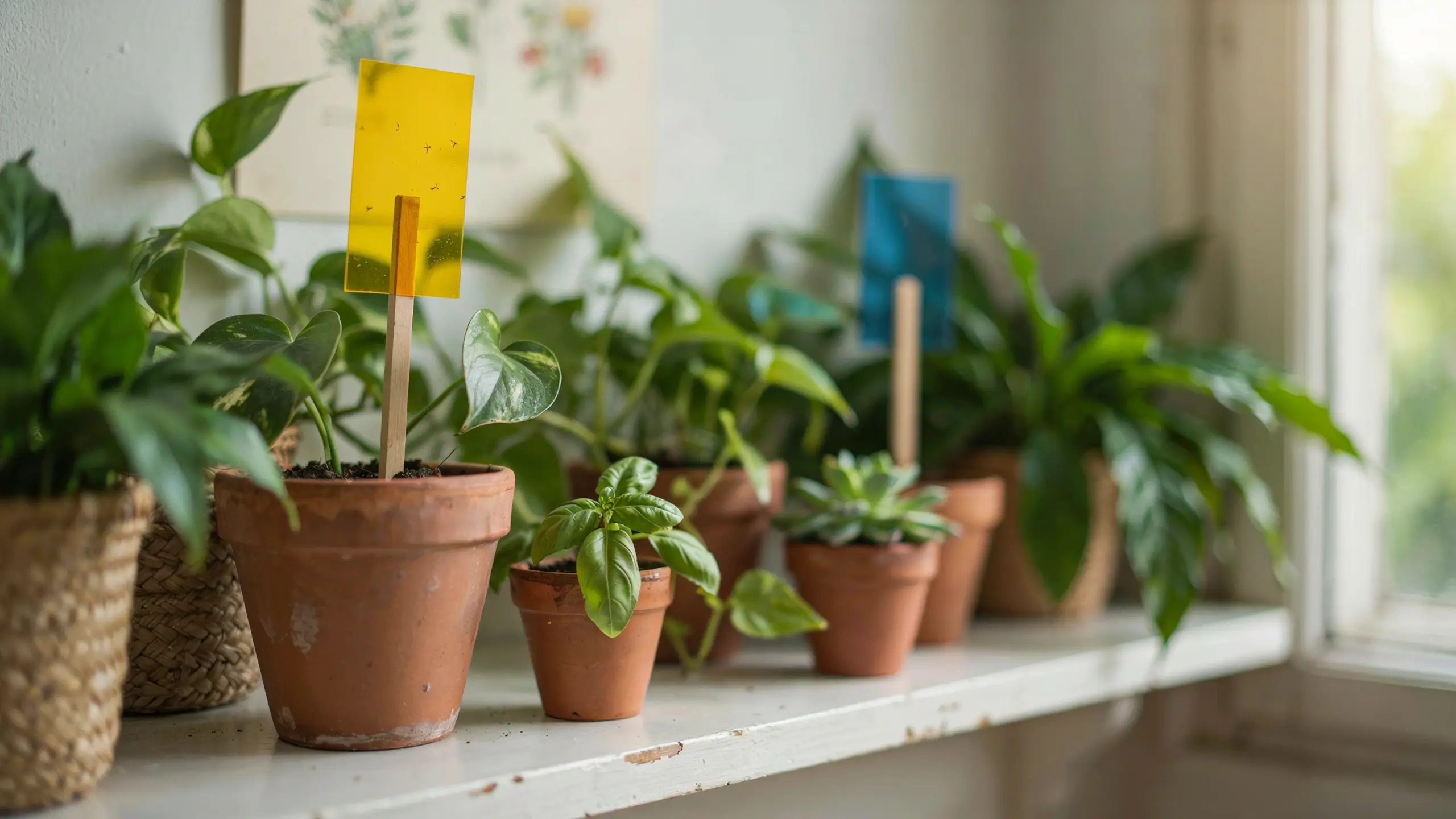
Sticky traps aren’t just for catching bugs, they’re for spotting a problem before it becomes an infestation.
Yellow sticky traps attract fungus gnats, whiteflies, and aphids. Blue traps work better for thrips. Place them near the soil line for gnats and closer to the foliage for flying pests.
You can buy these cheap at most garden centers, or make your own with a yellow index card coated in a thin layer of petroleum jelly or honey.
Even after you’ve treated an infestation, keep a trap or two out. It’s the easiest way to catch new arrivals early, before they’ve had time to lay eggs.
7. Use a Soil Barrier for Ground-Dwelling Pests
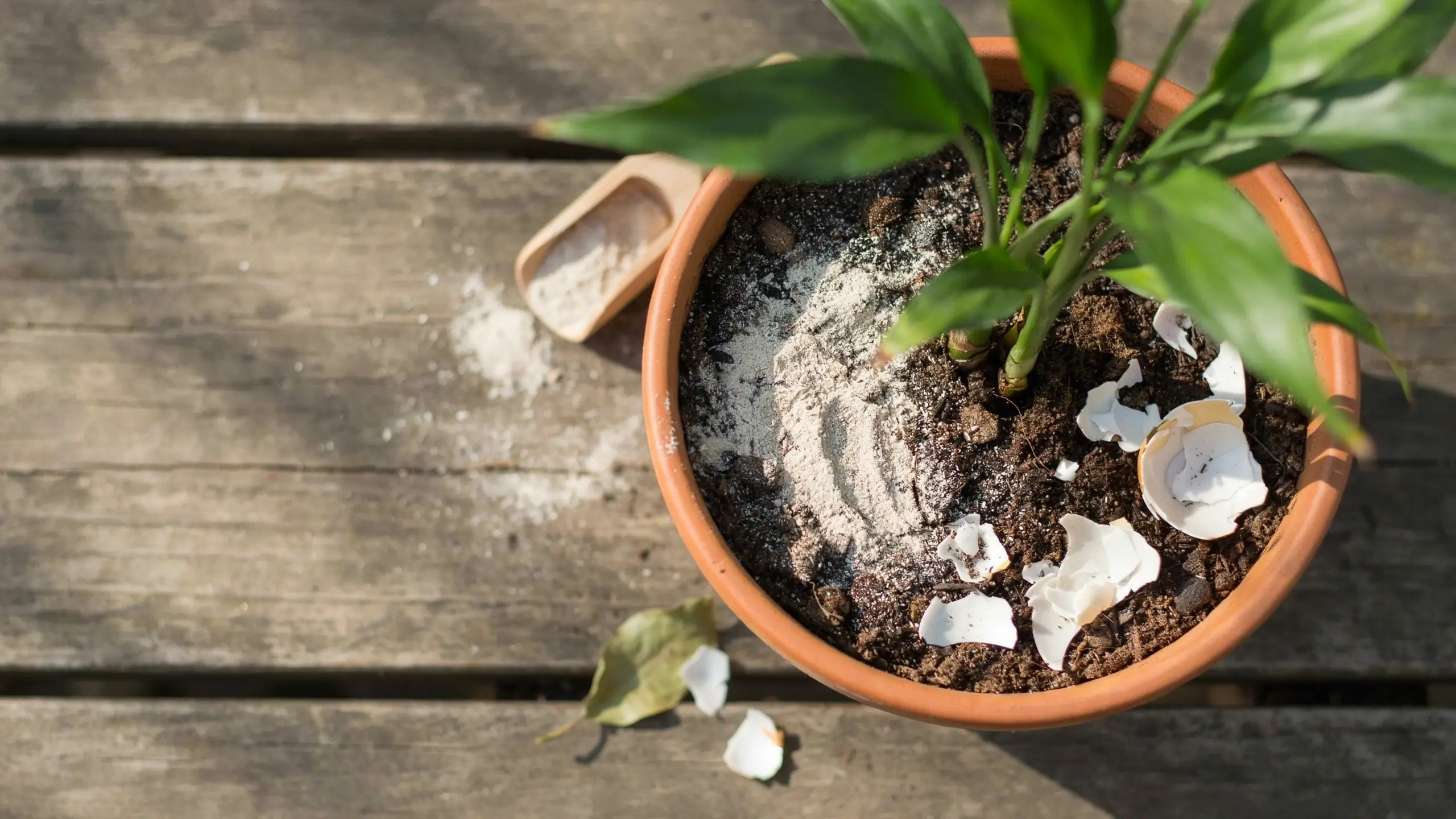
Some pests, like fungus gnat larvae, slugs, and cutworms, live and breed right in the top layer of soil. A physical barrier stops them before they ever reach the plant.
- Food-grade diatomaceous earth dusted lightly over the soil surface is sharp on a microscopic level to soft-bodied insects, but it’s harmless to touch for people and pets. Reapply after watering or rain since it loses effectiveness once wet.
- Crushed eggshells scattered around the base of a plant help deter slugs and snails from crawling across.
- Cinnamon sprinkled over the topsoil is a natural antifungal and is commonly used to disrupt fungus gnat larvae in potted plants.
8. Give Indoor Houseplants Their Own Pest-Proofing Routine
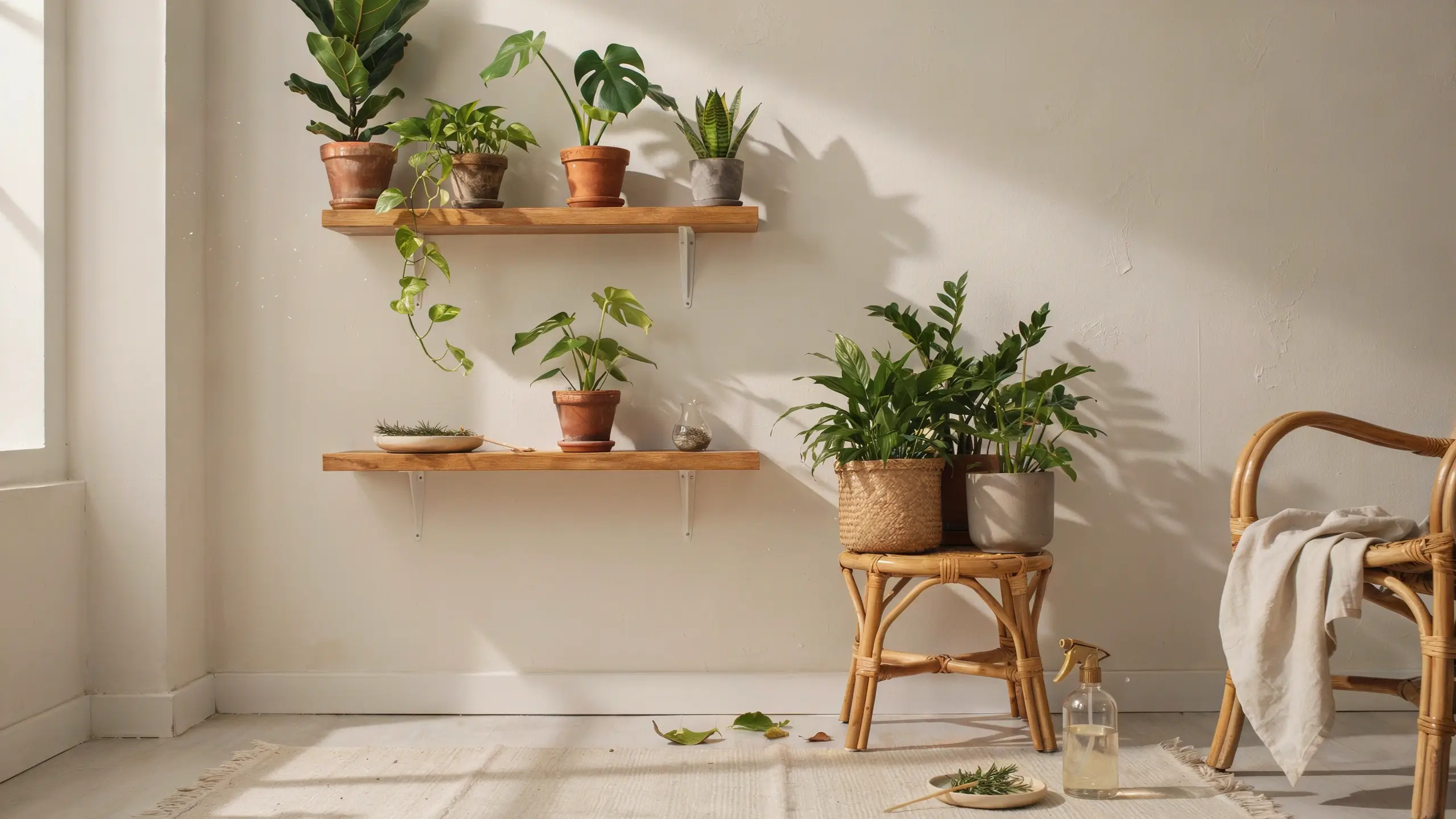
Houseplant pests behave a little differently than garden pests, mostly because there’s no wind, no rain, and no predators to keep populations in check indoors. A few habits make a real difference:
- Quarantine new plants for one to two weeks before setting them near your other houseplants. This is the single most skipped step, and it’s usually how an infestation starts in the first place.
- Wipe leaves down with a damp cloth every couple of weeks. This clears dust that spider mites love and gives you a chance to spot early signs of trouble.
- Let the top inch of soil dry out between waterings. Fungus gnats need consistently moist soil to breed, so adjusting your watering habit alone can solve a gnat problem.
- Top-dress the soil with sand or fine aquarium gravel to block adult gnats from laying eggs in the dirt.
- Isolate any plant showing pests immediately. Move it away from the rest of your collection the moment you spot something, even before you start treating it..
9. Build Prevention Habits Into Your Regular Plant Care
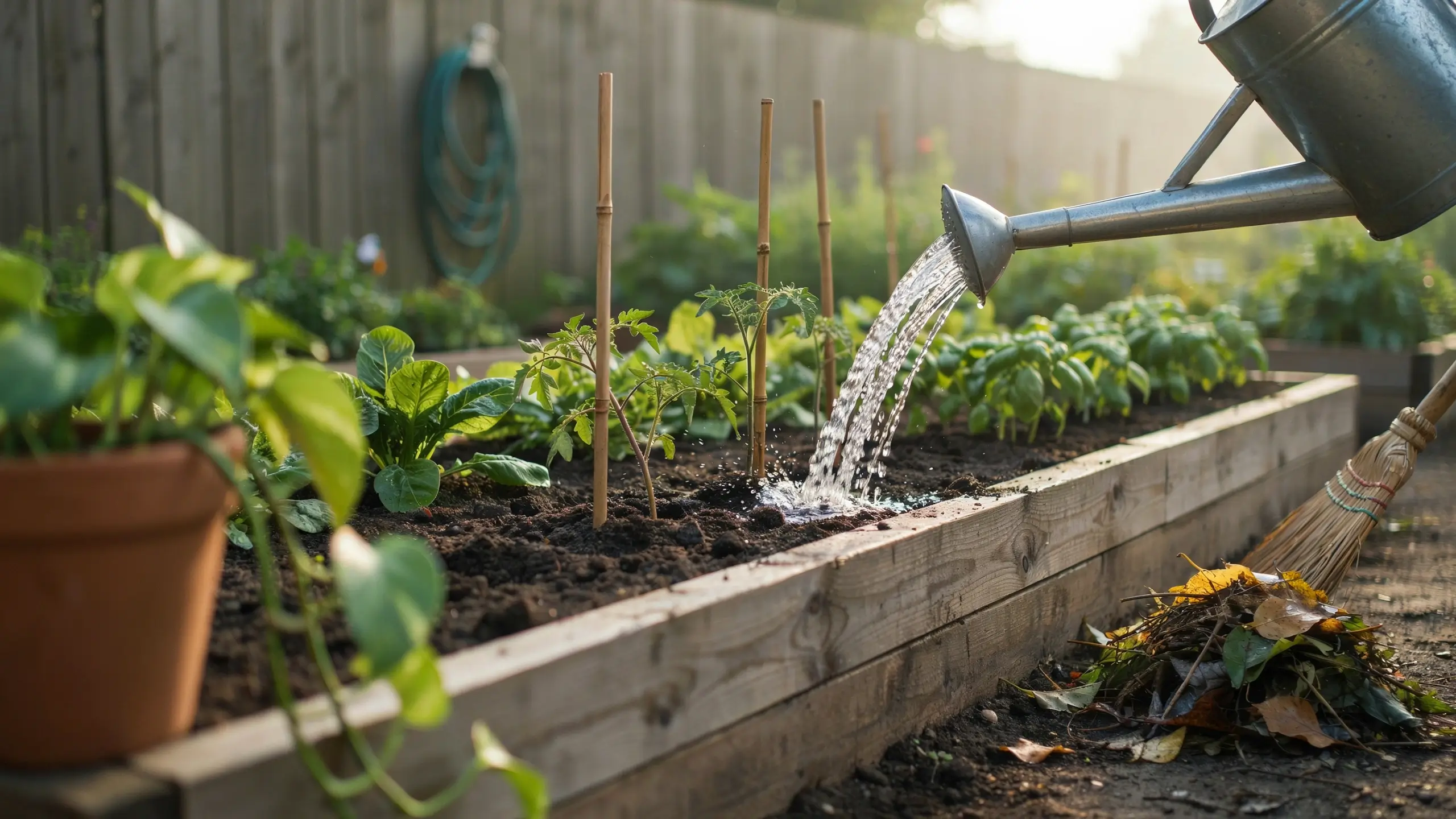
The plants that stay pest-free long term aren’t the ones getting sprayed constantly. They’re the ones being cared for consistently.
- Water at the soil level instead of on the leaves. Wet foliage invites fungal issues, and fungal issues invite bugs.
- Go easy on fertilizer. Too much nitrogen pushes out soft, tender new growth that pests find irresistible.
- Clean up fallen leaves and plant debris around garden beds. Pests overwinter in that leftover material.
- Rotate what you plant where each season outdoors, since the same crop in the same spot year after year keeps pest populations fed and comfortable.
- Make a habit of checking the undersides of leaves once a week. Most infestations start there, out of sight, long before you’d notice from the top.
10. Know the Mistakes That Bring Bugs Right Back
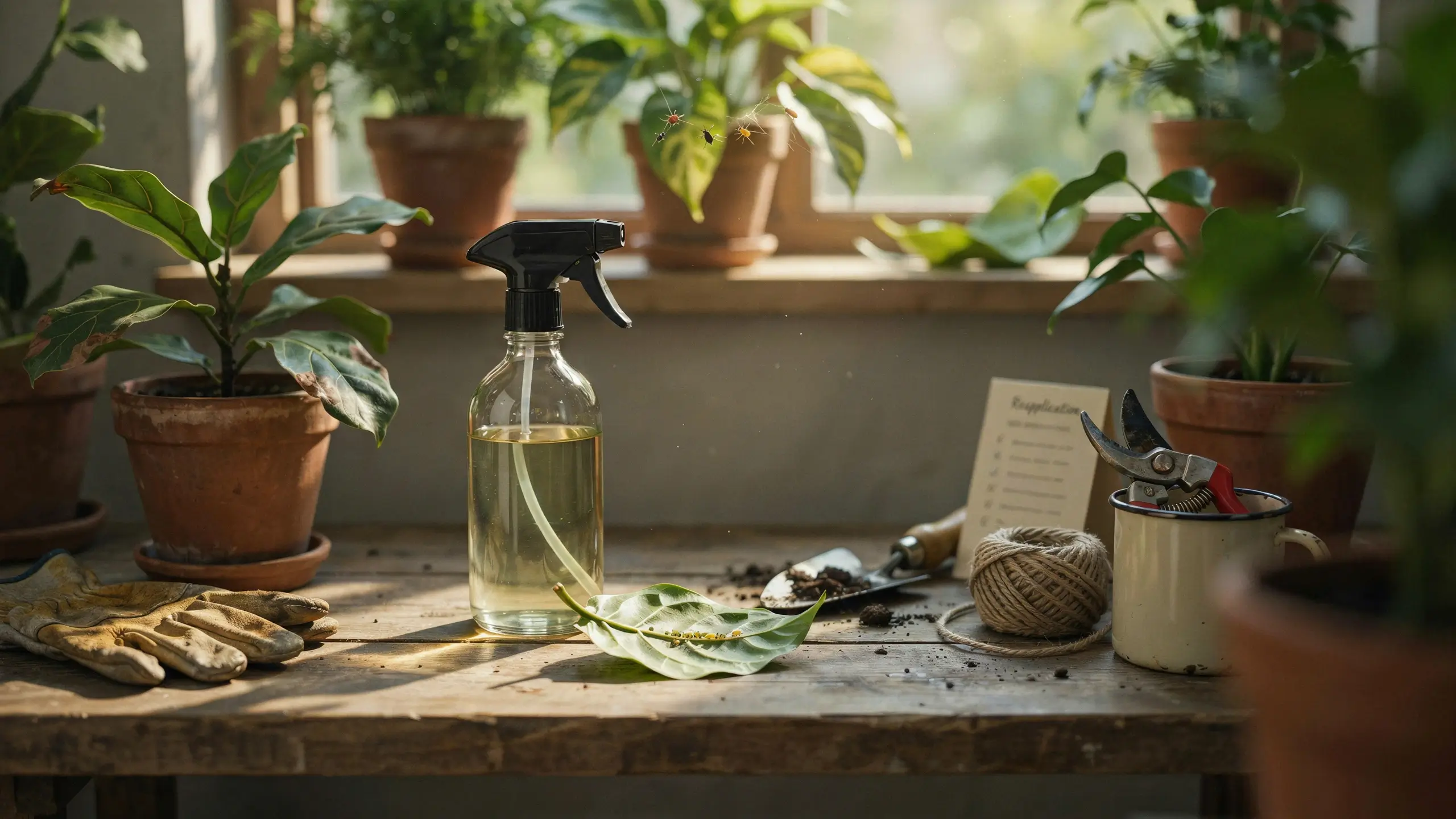
- Spraying in direct sunlight. Oils and soaps can scorch leaves when the sun hits them right after application. Spray early morning or evening.
- Skipping the undersides of leaves. That’s where most pests actually live and lay eggs.
- Treating once and stopping. Most natural sprays need to be reapplied every five to ten days to catch newly hatched pests, not just the adults you can see.
- Using strong essential oils near pets without checking first. Some oils that are perfectly fine for people are genuinely harmful to cats and dogs.
- Letting one infested plant sit next to healthy ones. Bugs move fast between plants that are touching or close together.
Final Thoughts
Keeping bugs off your plants naturally isn’t about one magic spray. It’s a combination of a few smart habits, the right companion plants, and catching problems early before they turn into an infestation you can’t ignore. Start with the soapy water spray, add in a sticky trap or two for monitoring, and build the small prevention habits into your routine. Your plants, your pets, and your lungs will all thank you for skipping the harsh chemicals.
Have a natural pest control trick that’s worked for you? Drop it in the comments, I’m always looking to add another one to the list.





No Comment! Be the first one.