




11 Ways to Make a Small Living Room Look Bigger (No Renovation Required)
If your living room feels like it’s closing in on you every time you add one more throw pillow, you’re not imagining it. Small living rooms are honest rooms. They show every misstep right...

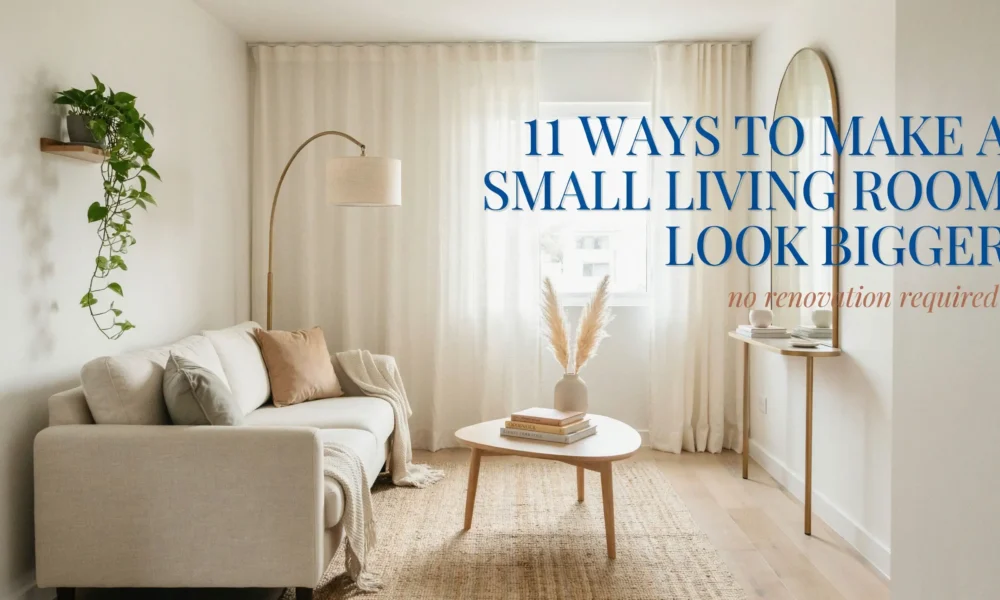
If your living room feels like it’s closing in on you every time you add one more throw pillow, you’re not imagining it. Small living rooms are honest rooms. They show every misstep right away, whether it’s a sofa that’s too deep, a rug that stops short, or a lamp that blocks the walkway between the couch and the TV stand.
Here’s the good part. Making a small living room look bigger has almost nothing to do with square footage. It comes down to a handful of smart choices about color, furniture, light, and layout that trick the eye into reading the room as more open than it actually is.
You don’t need a renovation, a knocked-down wall, or a big budget. Below are 11 ways to make a small living room look bigger, starting with the changes that make the biggest visual difference.
1. Paint Walls, Trim, and Ceiling One Continuous Color
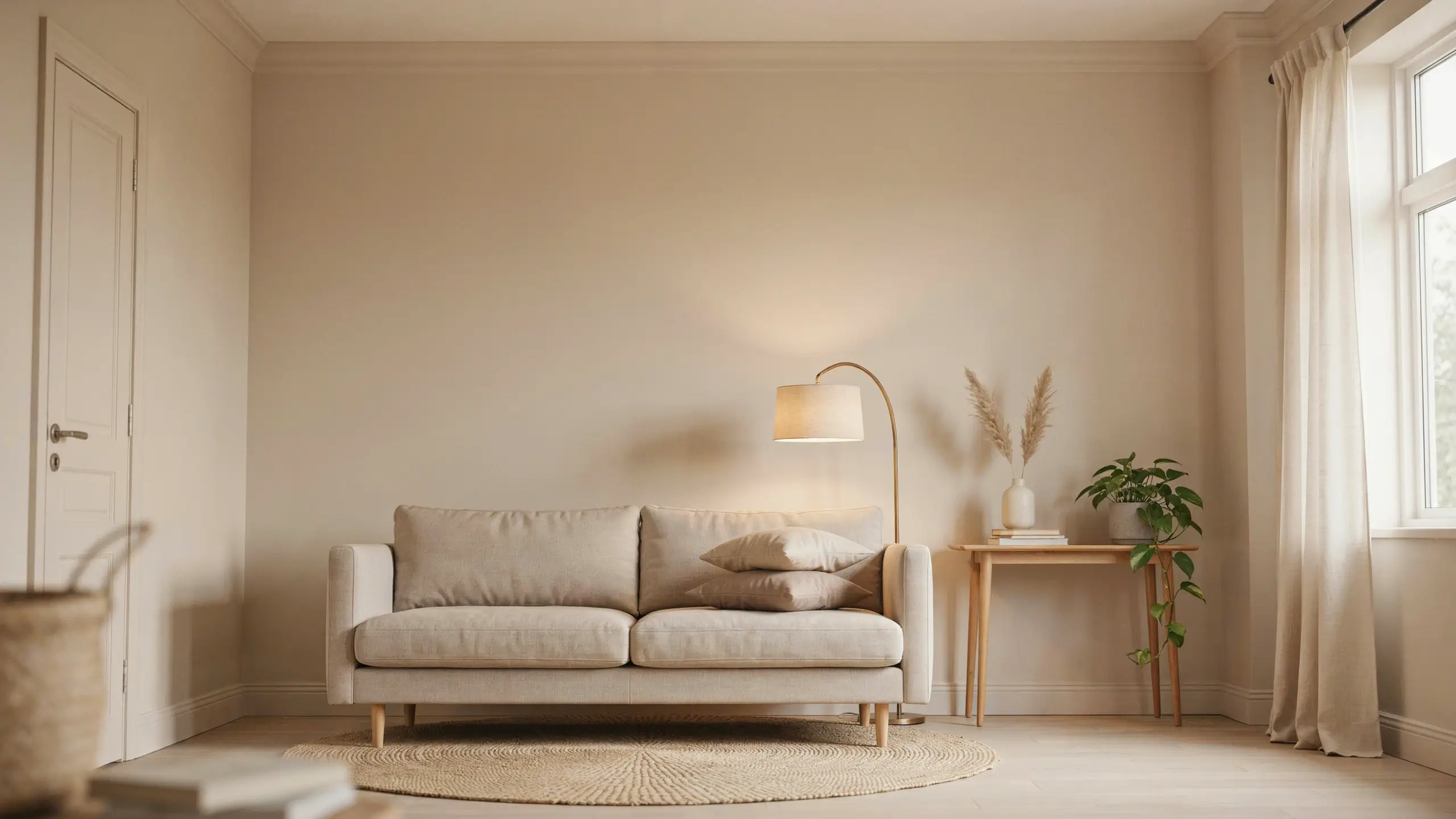
The fastest way to shrink a room visually is to break it into pieces with contrast. White trim against a colored wall, a white ceiling against a darker wall, a different shade on the closet door. Every one of those lines tells your eye “the room stops here.”
Painting the walls, trim, and ceiling one continuous color, in the same finish, removes those breaks. The eye reads the whole room as one open shape instead of several smaller chopped-up ones.
This doesn’t mean you’re stuck with stark white. Soft whites, warm greiges, pale sage, and dusty blue all work beautifully in a small living room, as long as the color carries onto the ceiling and trim too. If your room gets very little natural light, a true white can actually look flat and gray. A soft warm tone often reads brighter in person.
Mistake to avoid: Painting the trim bright white agaianst a colored wall. It feels crisp in photos, but in a small room it creates a hard stop that makes the walls feel closer together.
2. Hang Your Curtains High and Wide
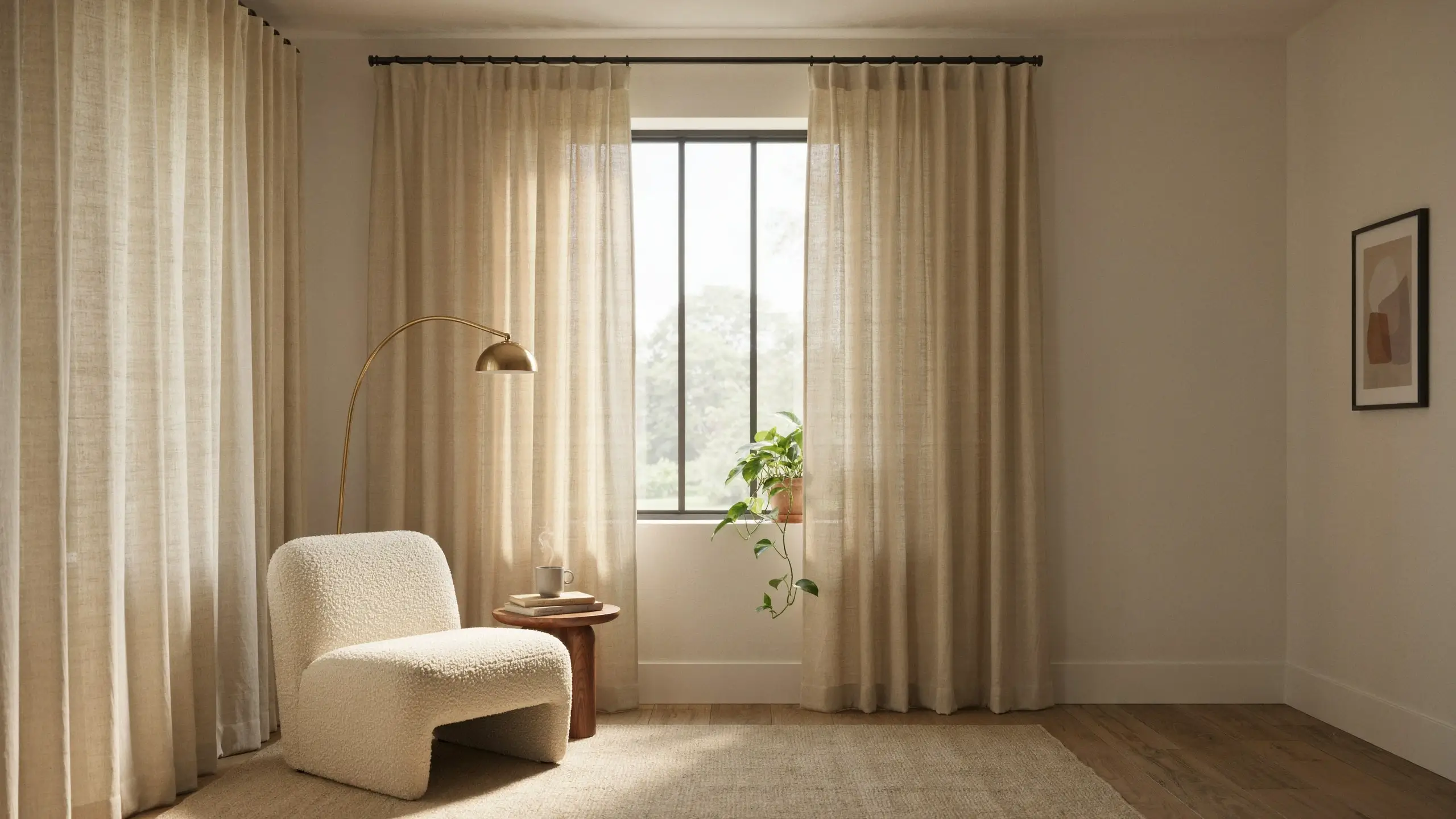
This is one of the cheapest changes on this list and one of the most overlooked. Most people hang curtain rods right above the window frame, which chops the wall and makes the ceiling look lower.
Instead, mount the rod 4 to 6 inches above the window frame, or as close to the ceiling as you can manage. Extend it 6 to 10 inches past each side of the window too, so the panels can be pulled fully open without covering the glass.
Choose curtains long enough to just skim the floor. Panels that stop several inches short cut the vertical line the whole trick depends on.
Mistake to avoid: Short curtains hung tight to the window frame. It’s one of the fastest ways to make a small living room look even smaller and more cramped than it is.
3. Choose Furniture With Visible Legs
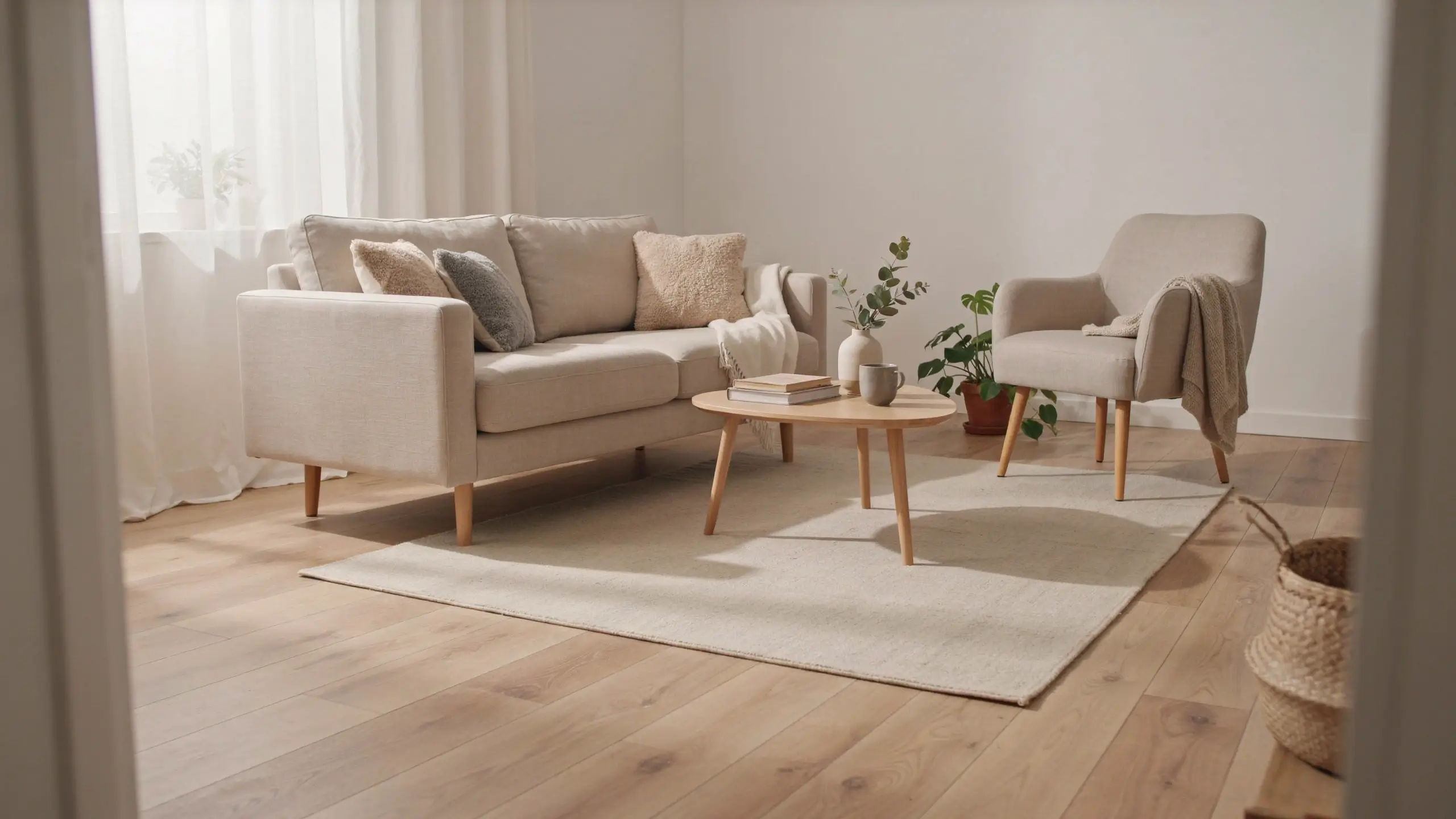
Furniture that sits flush to the floor, like a skirted sofa or a boxy upholstered ottoman with no legs, blocks your sightline and reads as heavier than it is. Furniture propped up on slim wood or metal legs lets you see the floor underneath, which visually extends the space.
Look for sofas, armchairs, and console tables with legs at least 4 to 6 inches tall. If you already own a skirted sofa you love, you can sometimes order slim wooden legs online and swap them in yourself for a fraction of the cost of new furniture.
4. Use One Large, Well-Placed Mirror
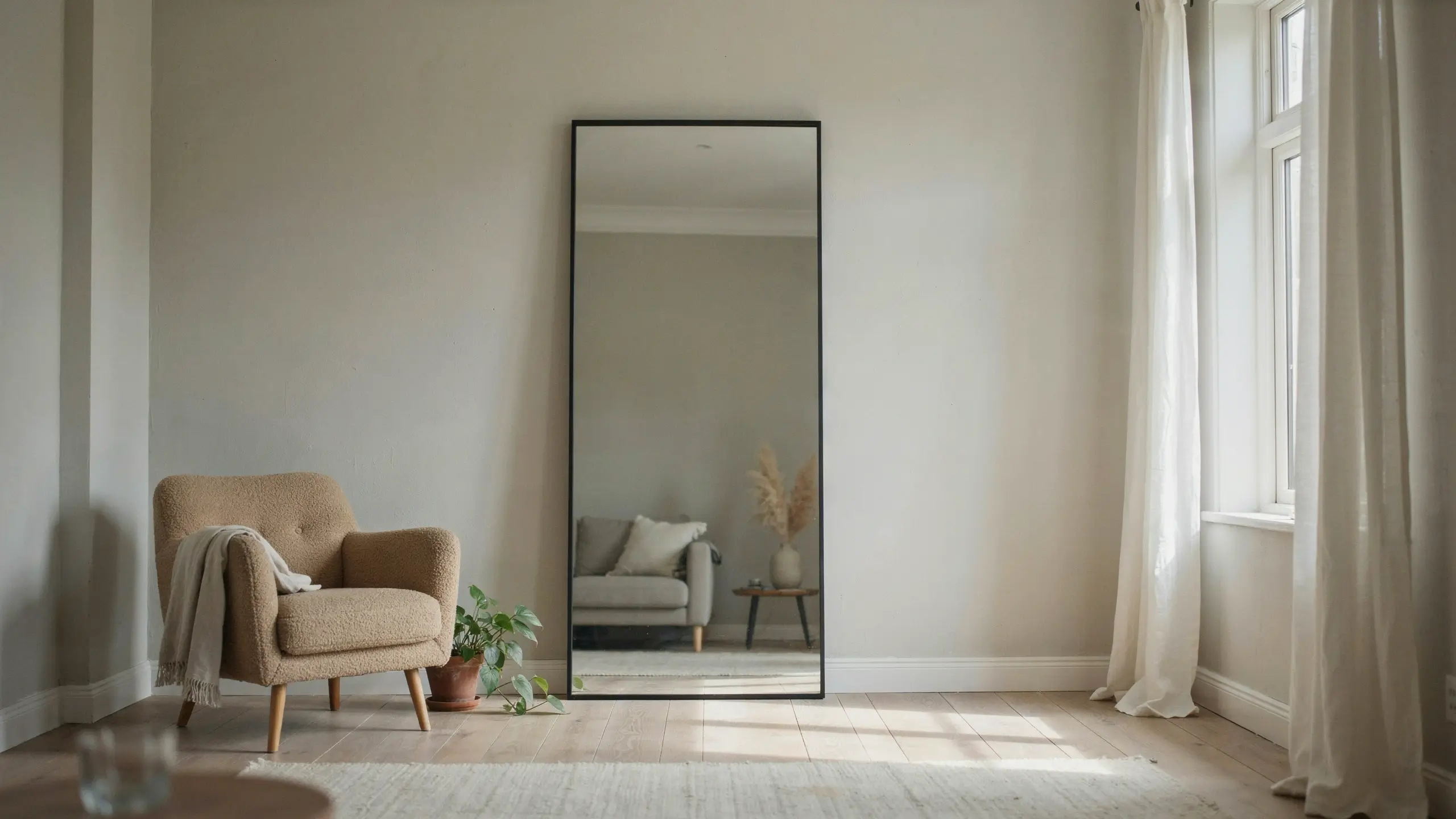
Skip the gallery of small decorative mirrors and invest in one substantial piece instead, at least 30 by 40 inches if you have the wall space. A single large mirror does far more visual work than several small ones scattered around the room.
Position it across from a window so it bounces daylight deeper into the room, or behind your main seating area so it reflects the depth of the space back at you. A floor mirror leaned against a wall adds height too, which helps a low-ceilinged room feel taller.
Mistake to avoid: Hanging the mirror somewhere it only reflects a blank wall or the ceiling. Position matters more than size here. Point it at something worth doubling, like a window, a lamp, or an interesting piece of art.
5. Swap the Bulky Sofa for a Lower-Profile Option
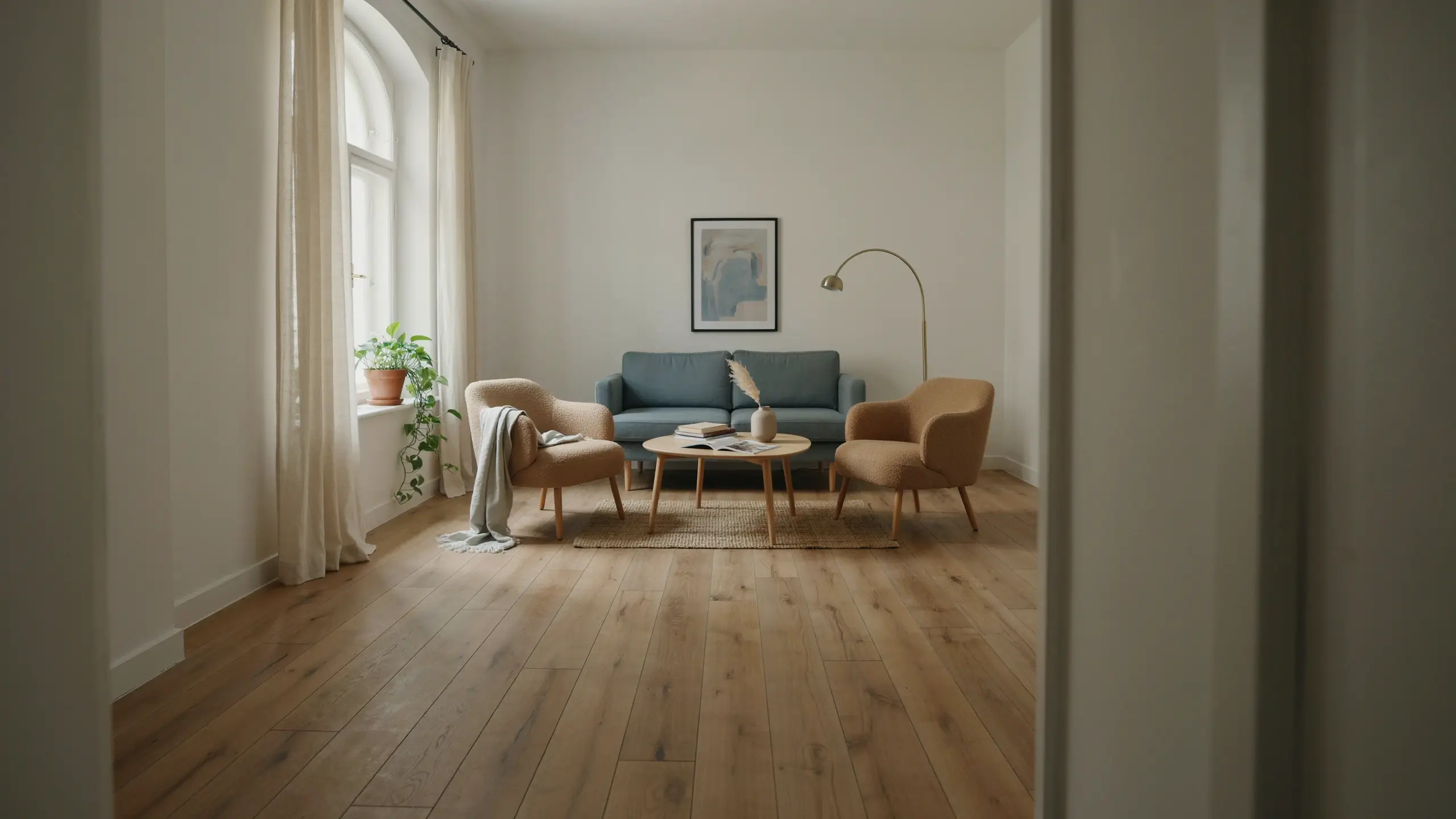
A deep, overstuffed sectional might be the comfiest thing you own, but in a small living room it can eat up half the floor by itself. If your current sofa has a seat depth over 38 inches or a back noticeably taller than your other furniture, it’s probably overwhelming the room.
A loveseat, an apartment-size sofa, or two armless slipper chairs give you real seating without the visual bulk. If you’re not ready to part with your sofa, start smaller. Swap your accent chairs for armless or slim-arm versions and see how much breathing room that alone creates.
6. Pull Furniture a Few Inches Off the Wall
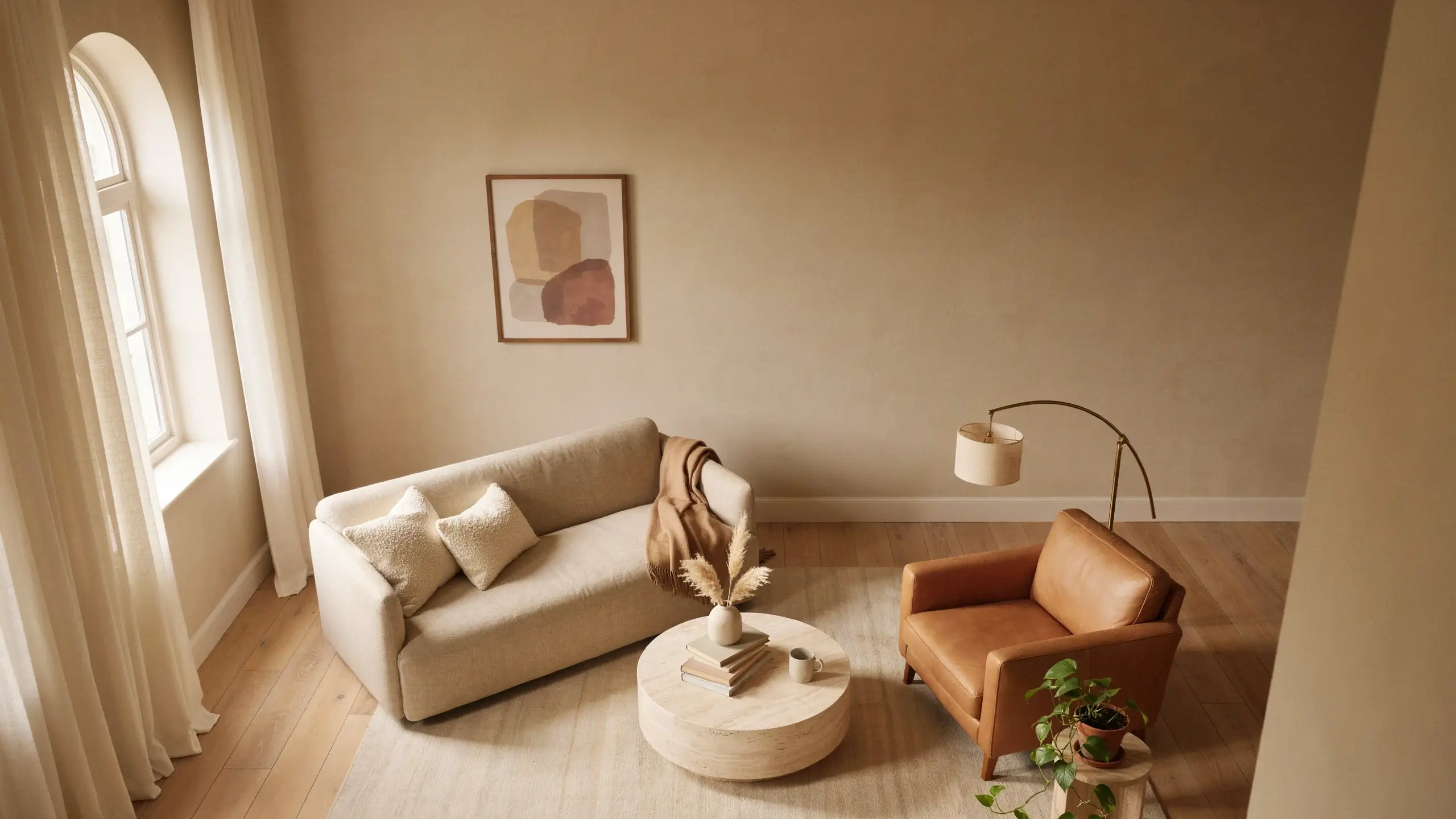
This one surprises people. The instinct in a small room is to push every piece flush against the walls to “save space,” but that often backfires. It creates a stiff ring of furniture around a dead, empty middle, which reads as awkward rather than spacious.
Try floating the sofa 3 to 6 inches off the wall and angling one chair slightly instead of squaring everything off. Before you move anything heavy, mark out a couple of layout options on the floor with painter’s tape so you can see how the traffic flow feels first.
7. Size Your Rug Correctly
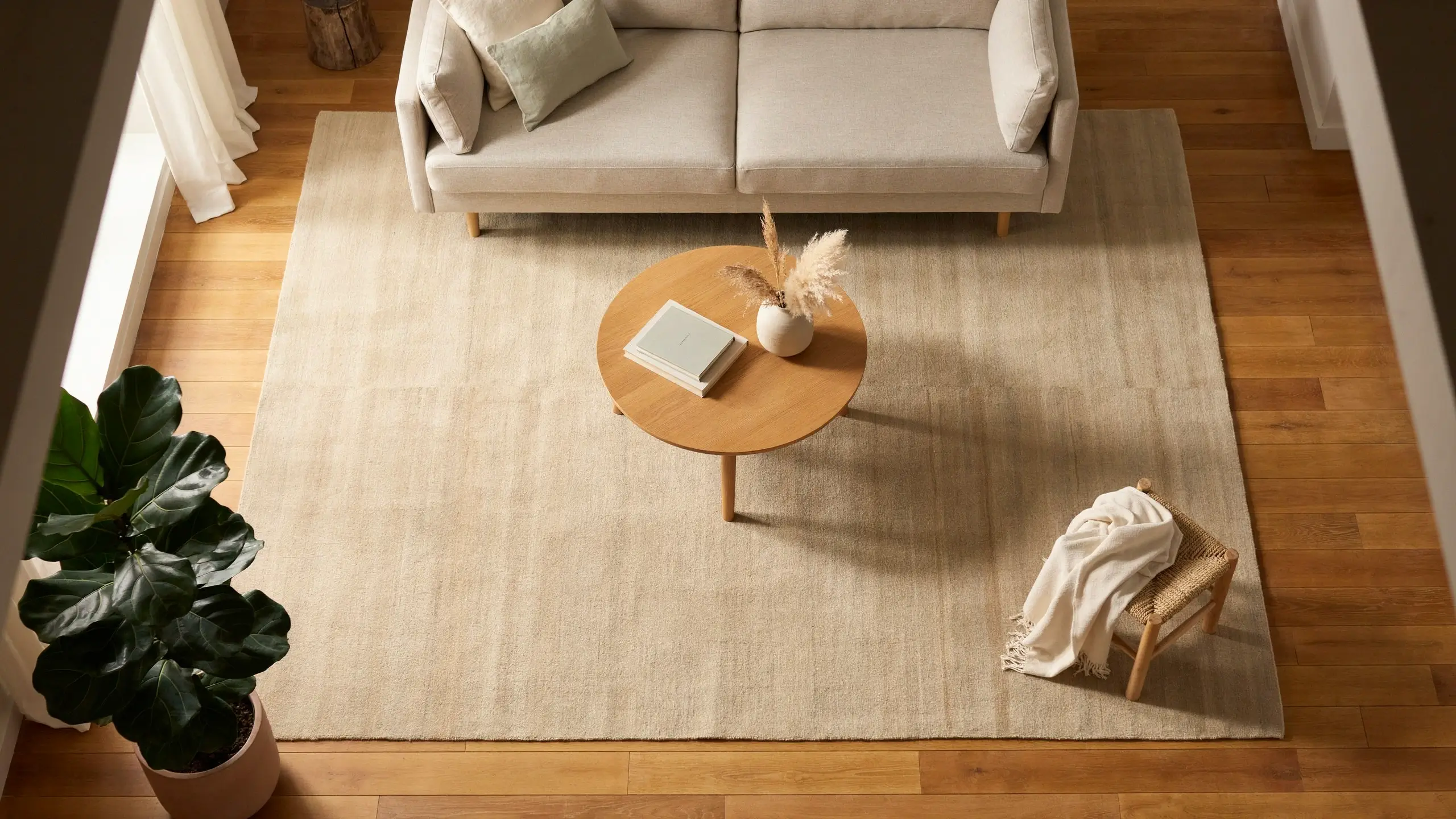
A too-small rug is one of the most common small living room mistakes, and it’s an easy one to fix. A rug that floats in the middle of the room like an oversized place mat chops the floor into pieces instead of unifying it, which makes the whole room look smaller.
The general rule: at least the front legs of your major furniture pieces, sofa included, should land on the rug. In a room 10 by 12 feet or smaller, an 8×10 rug is usually the largest size that will comfortably fit, though even a 5×8 works if it’s positioned so most of your seating touches it.
Mistake to avoid: Eyeballing the rug size in the store. Measure your actual room and mark the dimensions with painter’s tape before you buy, so you know exactly what will fit.
8. Add Vertical Storage Instead of Bulky Low Furniture
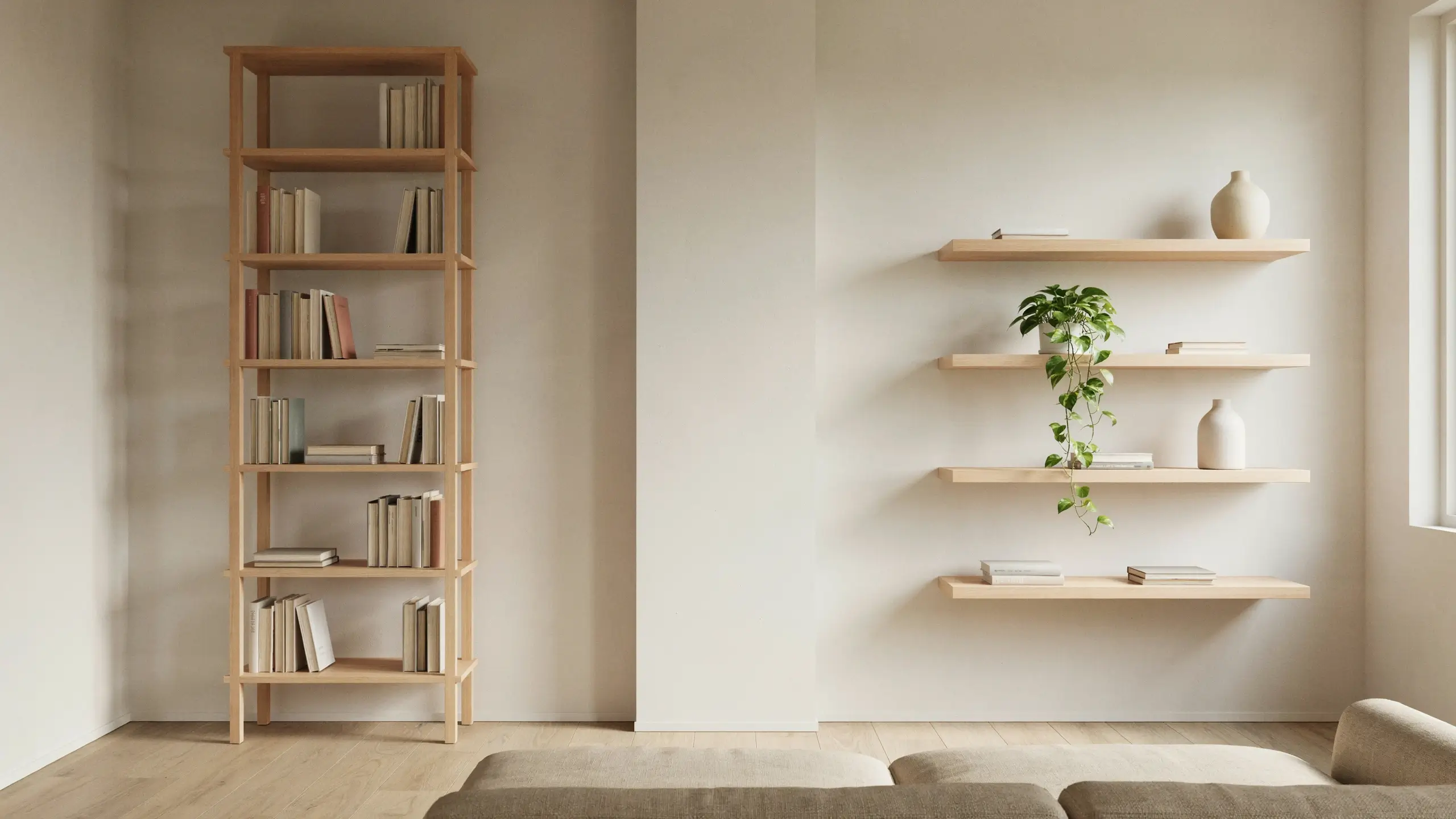
Floating shelves, a tall narrow bookcase, or a wall-mounted cabinet use your walls instead of your floor, which frees up visual real estate at eye level and draws attention upward toward the ceiling. That upward pull is what makes a room feel taller, not just less cluttered.
Keep the styling light. A few books, one plant, and some intentional negative space between items will always look bigger and calmer than a shelf packed edge to edge.
If you’re renting and can’t drill, look for shelving that mounts with heavy-duty adhesive strips or weight-rated hooks instead. You still get the vertical storage without putting holes in the wall.
9. Layer Three Light Sources Instead of One Overhead Light
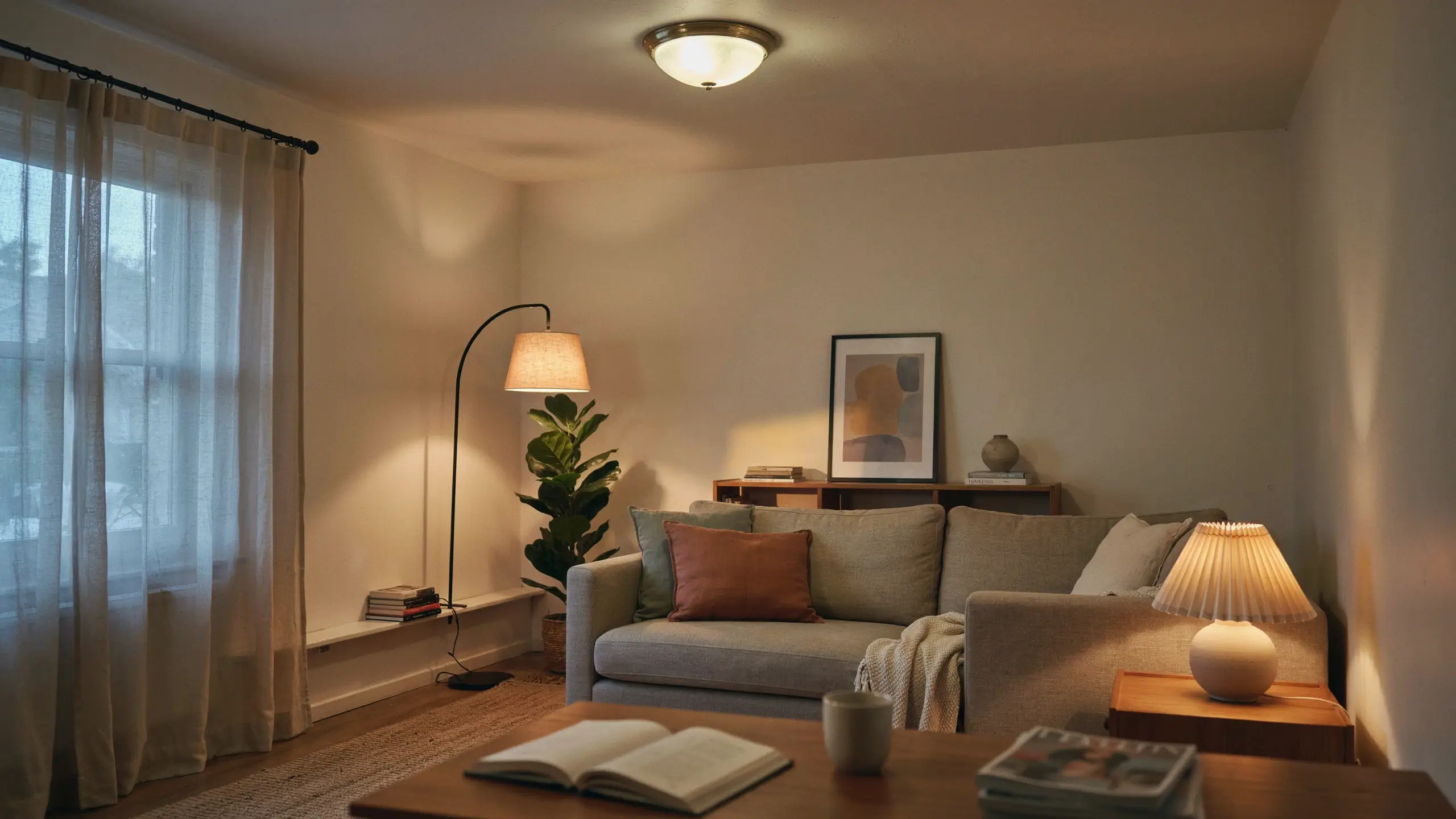
A single overhead fixture throws flat, even light across the whole room, and flat light tends to flatten the sense of depth right along with it. Small rooms lit by one bulb almost always feel more cramped than the same room with layered lighting.
Combine your overhead or flush-mount fixture with a floor lamp in one corner and a table lamp near your seating area. Stick to warm bulbs, around 2700K to 3000K, rather than cool white. The pools of light and shadow that layering creates give the room a sense of different zones, which reads as bigger than one evenly lit box.
10. Use Glass or Acrylic for One Furniture Piece
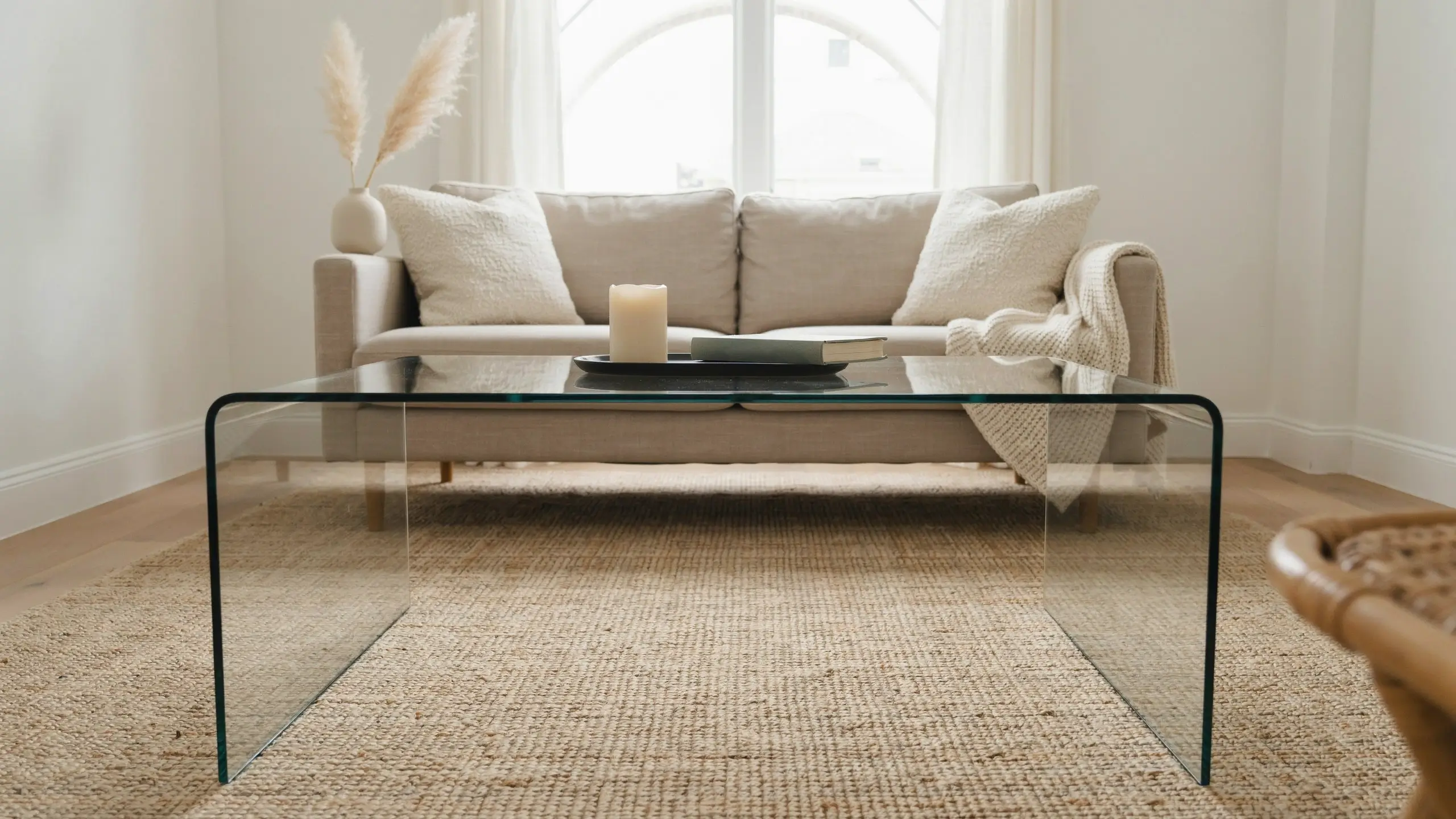
A glass-top coffee table, an acrylic side table, or a lucite accent chair does something clever: it visually disappears. You can see straight through it to the floor, so it doesn’t register as a solid object taking up space, even though it’s doing the same job as a wooden one.
The coffee table is the best place to start, since it’s usually the largest floor-level piece in a small living room. If glass feels risky with kids or pets around, a table on thin hairpin metal legs gives you a similar light, see-through effect.
11. Edit Your Decor Down to a Few Meaningful Pieces
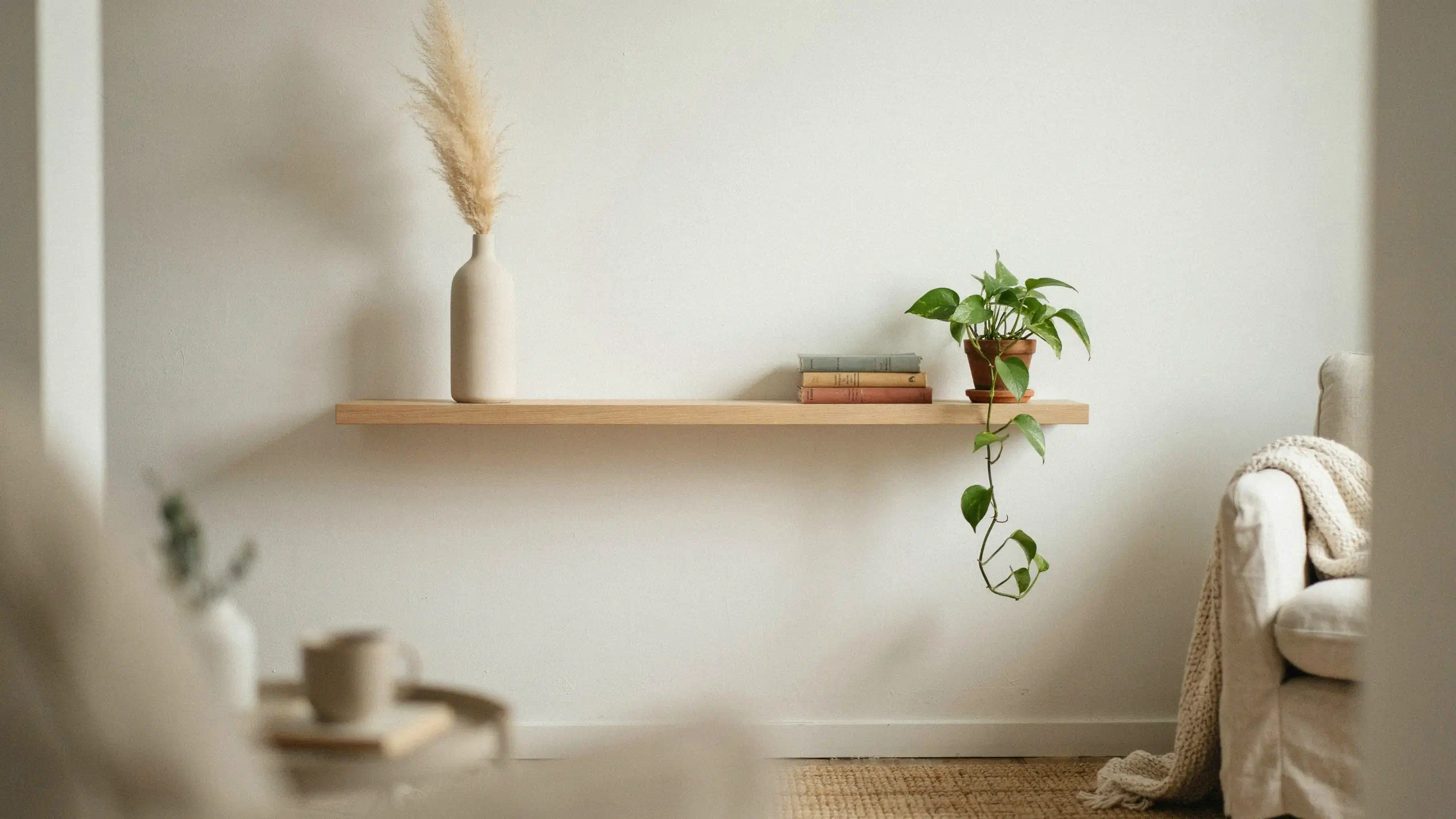
The instinct in a small room is to fill every surface so it feels finished, but empty space is doing real work here. A shelf with three carefully chosen items and visible space around them will always look calmer and larger than a shelf packed with a dozen small trinkets.
Pick a handful of pieces that actually matter to you, one plant, one small stack of books, one good piece of art, and let the rest of the surface stay empty. This isn’t about going bare or cold. A nubby wool throw, one woven basket, and a ceramic vase still bring warmth. They’re just not multiplied ten times over.
Mistakes That Keep a Small Living Room From Looking Bigger
Quick recap, since a few of these mistakes show up over and over:
- Trim painted a contrasting color against the walls
- Curtains hung short and tight to the window frame
- A rug that’s too small for the seating area
- Every piece of furniture pushed flush against the wall
- One flat overhead light with no layering
- Shelves and surfaces packed with too many small items
Fix even two or three of these and the room will already feel more open.
Final Thoughts
Which of these are you trying first? Let me know in the comments, or tell me what your small living room is struggling with most. I always love hearing what’s working in real homes.


No Comment! Be the first one.