




My Favorite Faux Stems for Spring (The Ones I Reach for Every Single Year)
Every year around the same time, I get restless. The house still feels like winter, the windows are still shut, and I just want one thing to feel like spring already. That’s when I pull out my...

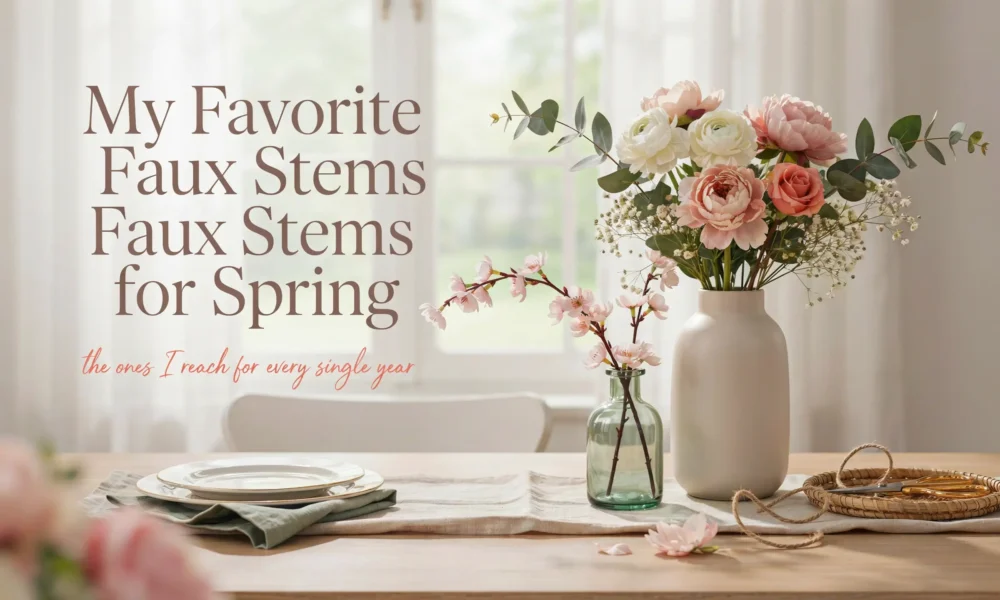
Every year around the same time, I get restless. The house still feels like winter, the windows are still shut, and I just want one thing to feel like spring already. That’s when I pull out my faux stems and swap out every vase in the house.
I’ve bought a lot of bad faux flowers over the years. Stiff petals, plastic-looking leaves, colors that read more Easter clearance aisle than spring garden. So at this point I know exactly what I’m looking for, and I’ve built a rotation of faux stems for spring that I trust every single time.
This isn’t a list of every pretty stem on the internet. It’s the ones I actually buy, actually use, and actually recommend to friends who ask what I put in that vase on my kitchen island. Thirteen stems, three categories, and everything I’ve learned about making them look like they came from an actual garden instead of a craft store shelf.
How I Choose Faux Stems That Actually Look Real
Before we get into the list, here’s what I’m checking for every time I shop, whether I’m at Target or scrolling Amazon at midnight.
- Stem flexibility. Real branches bend and curve. If a stem is stiff and straight out of the package, it’s going to look fake no matter how good the petals are.
- Petal or leaf texture. I run my thumb over the material. Good faux florals feel slightly matte and a little soft, not shiny or waxy.
- Color variation. One flat color reads plastic. The best stems have subtle shading, darker centers, lighter tips, a little imperfection.
- Realistic proportions. The stem length and the size of the blooms should match what that plant actually looks like in real life. Oversized blooms on a thin stem are an easy tell.
Keep those four things in mind and you’ll avoid most of the disappointing purchases I made in my early faux flower years.
My Favorite Faux Blossom Branches for Spring
Branches are where I always start. They add height, movement, and that airy, just-cut-from-the-yard feeling that small florals can’t give you on their own.
1. Real-Touch Cherry Blossom Branch
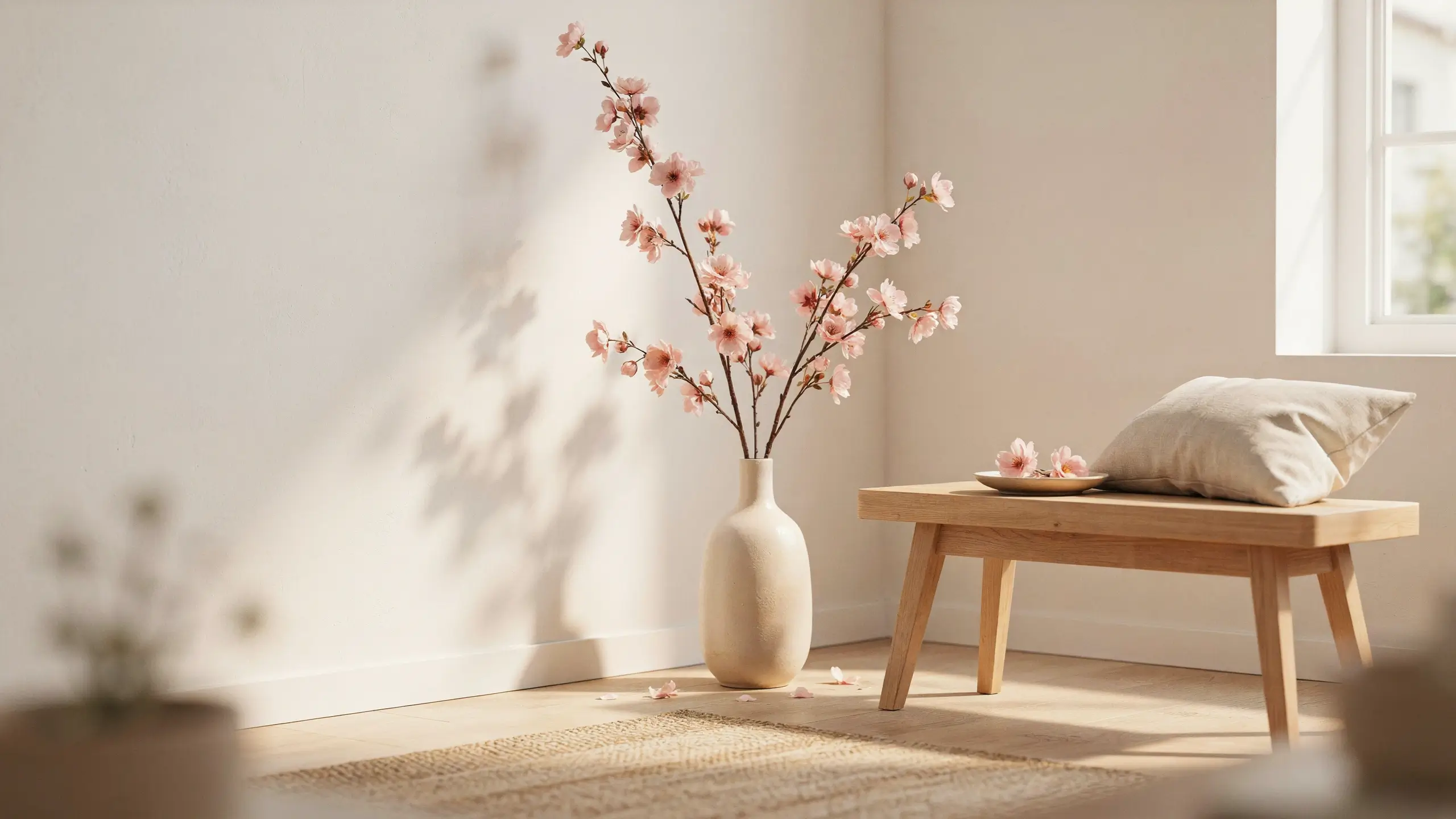
This is the one I buy every single year without fail. A tall cherry blossom branch in soft blush pink instantly makes a room feel like spring, even if there’s still frost on the ground outside. I like mine in a tall floor vase in an empty corner, or trimmed down to fit a vase on the dining table. Look for branches with a mix of open blooms and closed buds, since that mix is what makes it look picked instead of manufactured.
2. Faux Magnolia Branch
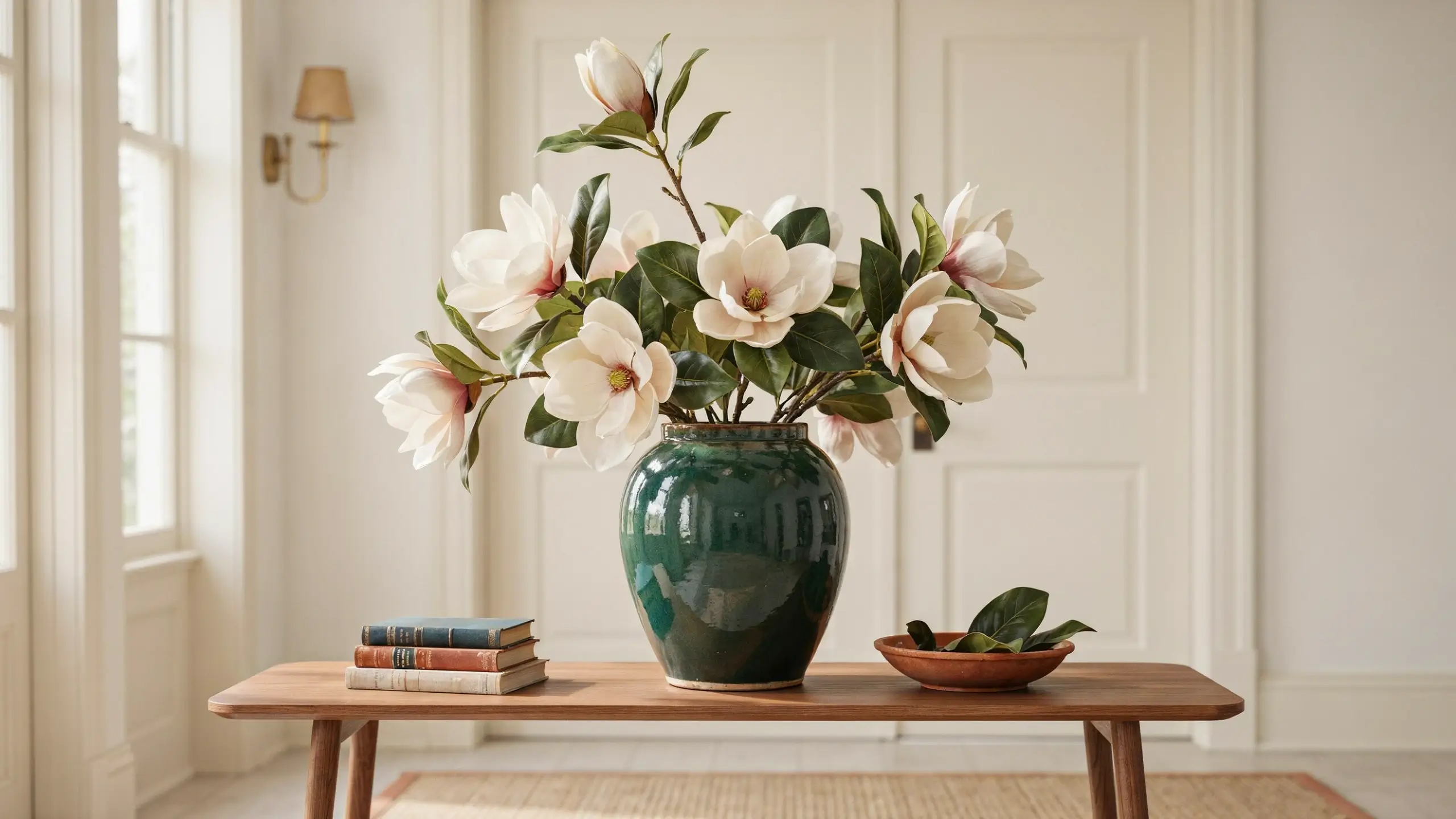
Magnolia branches have a completely different feel from cherry blossom. The blooms are bigger, the leaves are glossy and dark green, and the whole branch has more presence. I use one in a large ceramic urn by my front door for spring. If your space feels a little too matchy or soft, a magnolia branch adds contrast without clashing.
3. Flowering Quince Branch
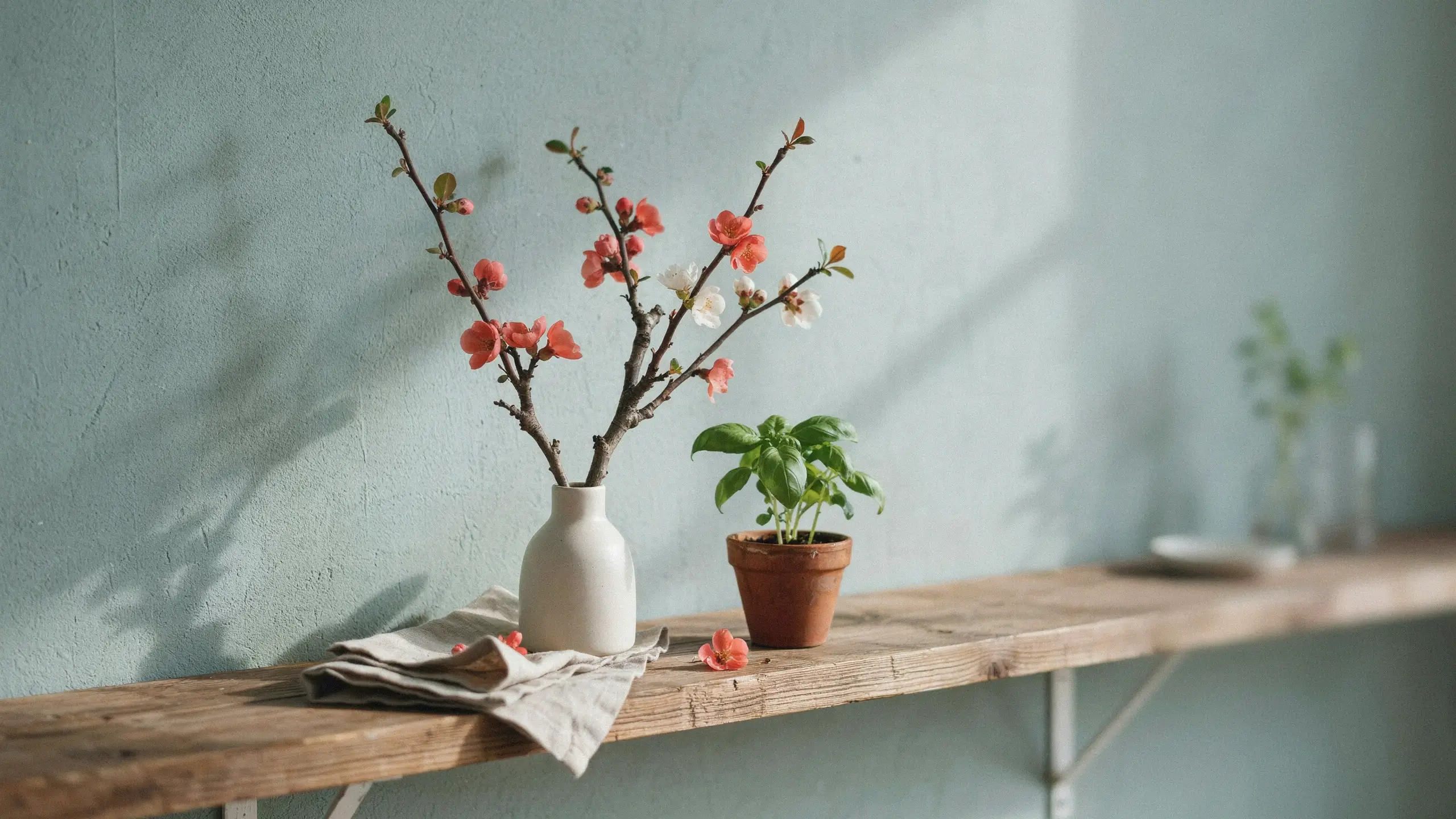
This one is a bit of a sleeper pick. Quince branches have small, delicate blossoms along a woody stem, usually in coral, pink, or white. They’re less common than cherry blossom, which is exactly why I love using them. If you want your spring decor to look a little different from everyone else’s Pinterest board, this is the stem to grab.
4. Forsythia Branch
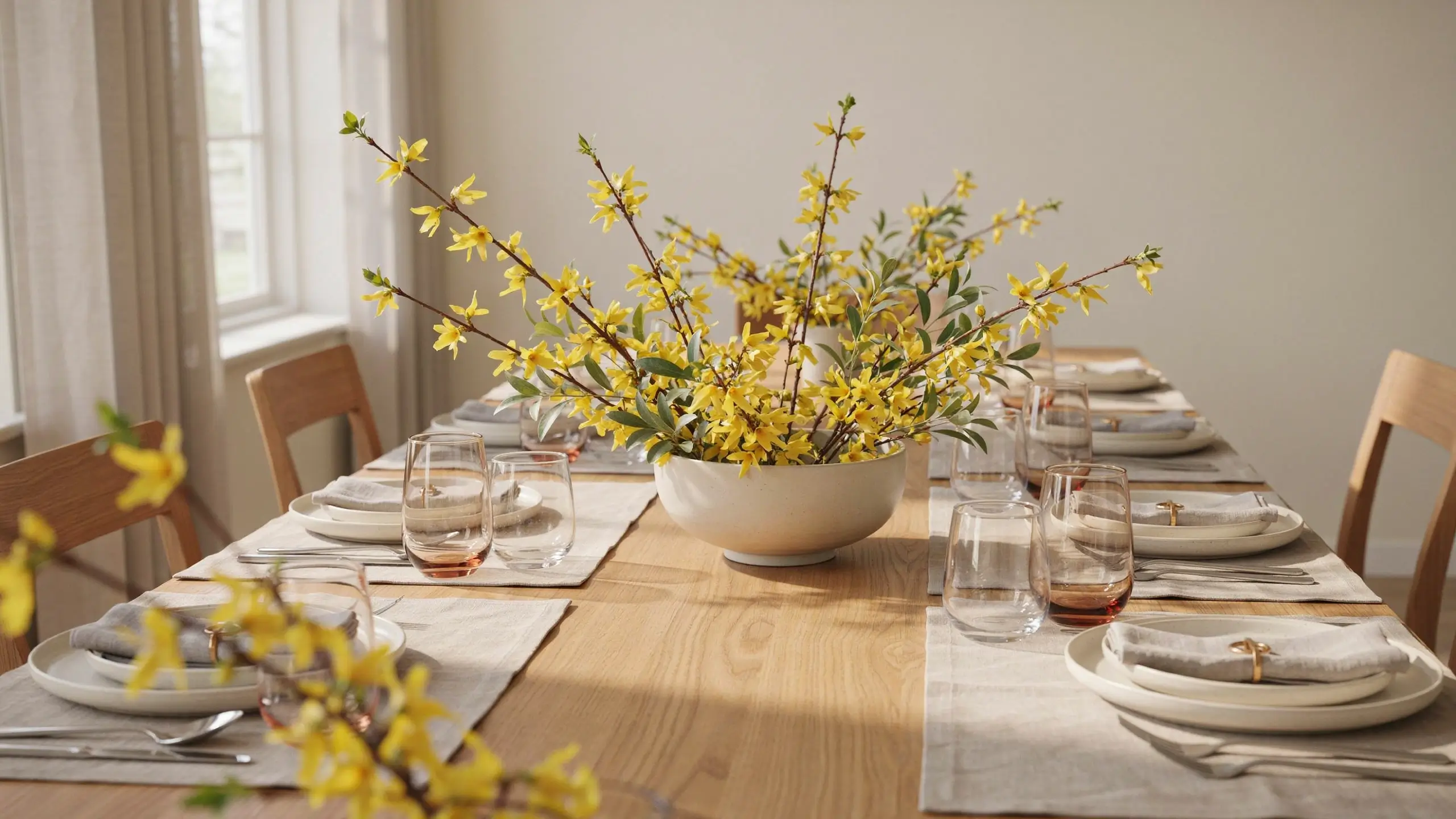
When I want a hit of color that isn’t pink or white, forsythia is my go-to. Those bright yellow blooms along bare branches feel like the first real sign of spring, almost like daffodils decided to grow on a tree. I love pairing a few forsythia stems with greenery in a low, wide bowl for a centerpiece that doesn’t block conversation across the table.
My Favorite Faux Spring Florals
Once the branches are in place, I layer in florals for softness and color. This is where most of the personality in an arrangement comes from.
5. Hydrangea Stems
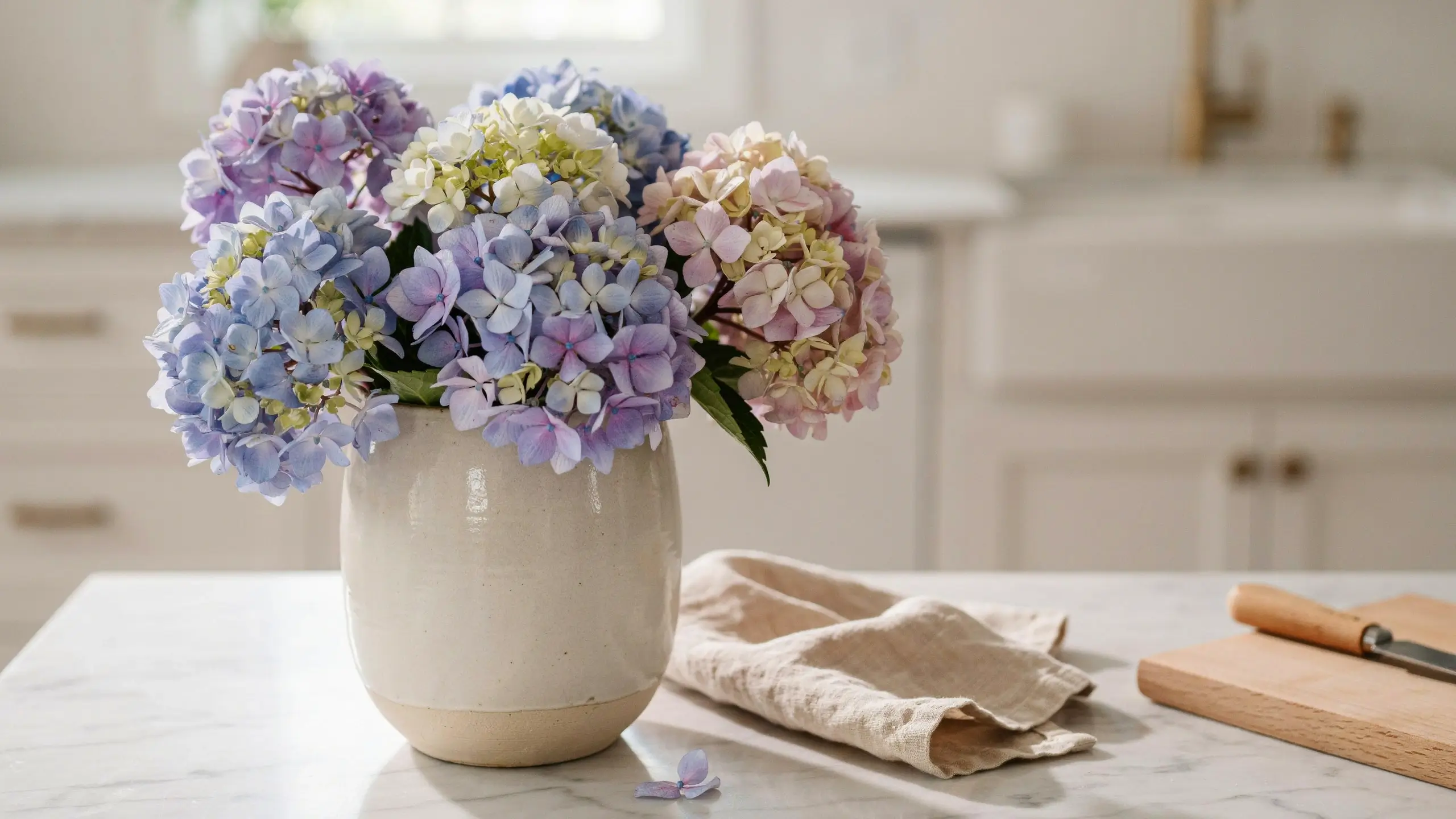
I always come back to hydrangeas. They’re full, they’re forgiving of a less-than-perfect arranging job, and a handful of stems can fill an entire vase on their own. My go-to combination is five to seven stems in a wide-mouth vase for that lush, garden-cut look. Look for hydrangeas with slightly uneven petal edges and a mix of colors within each bloom, since flat, uniform color is the biggest sign of a cheap stem.
6. Real-Touch Peony Stems
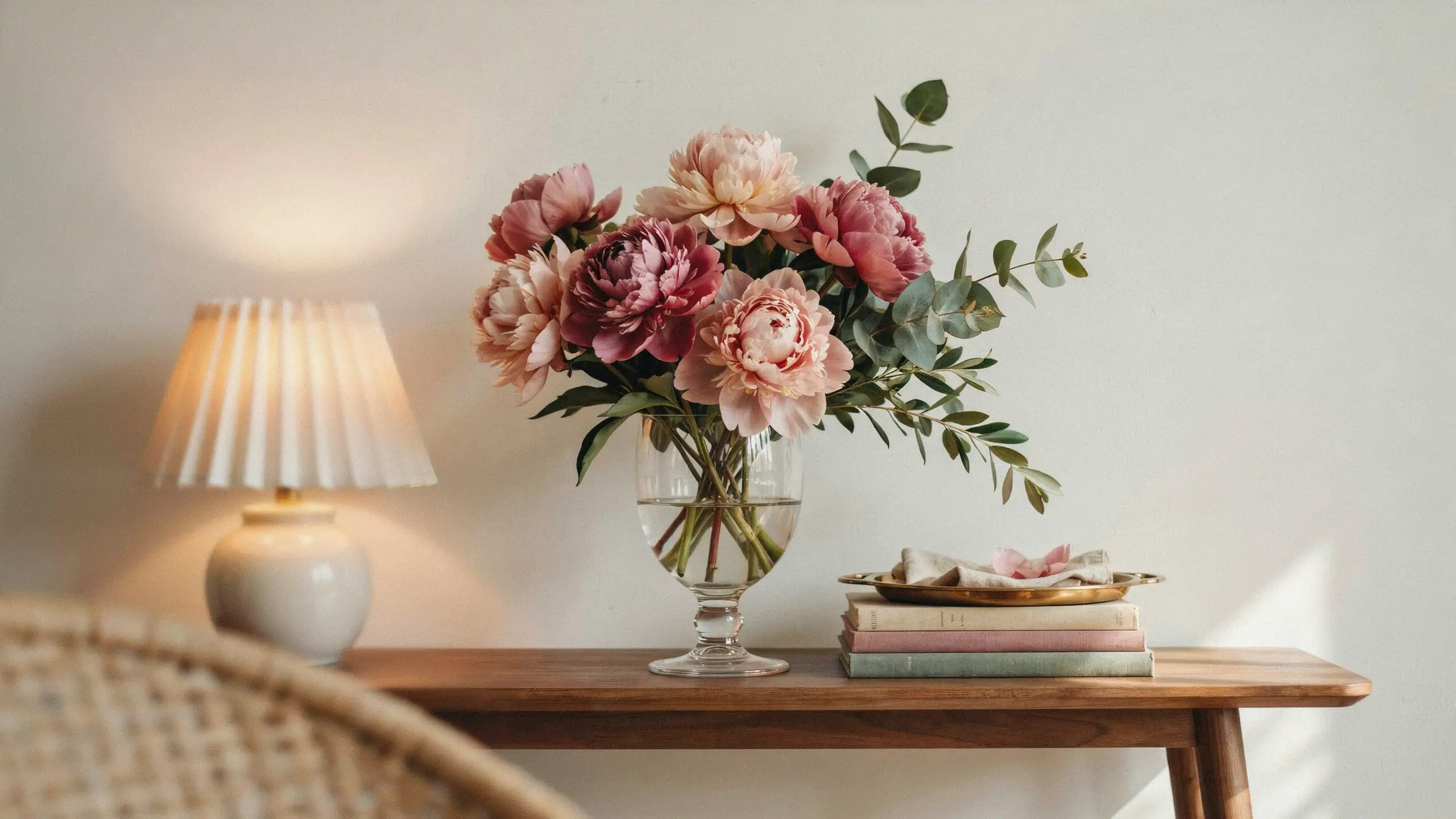
Peonies are the stem people always ask me about. The good ones have layers and layers of soft, slightly ruffled petals that catch light beautifully. I use three peony stems mixed with greenery for a bedside table arrangement, or a full bunch of six to eight for something more dramatic on a console table. This is one category where spending a little more genuinely shows.
7. Ranunculus Stems

If peonies feel too big for your space, ranunculus is the smaller, tighter version with the same romantic feel. The layered petals curl in on themselves in a way that photographs beautifully, which makes them one of the most save-worthy stems on this whole list. I like eight stems in a short cache pot for a compact centerpiece that doesn’t take up much counter space.
8. Real-Touch Tulips
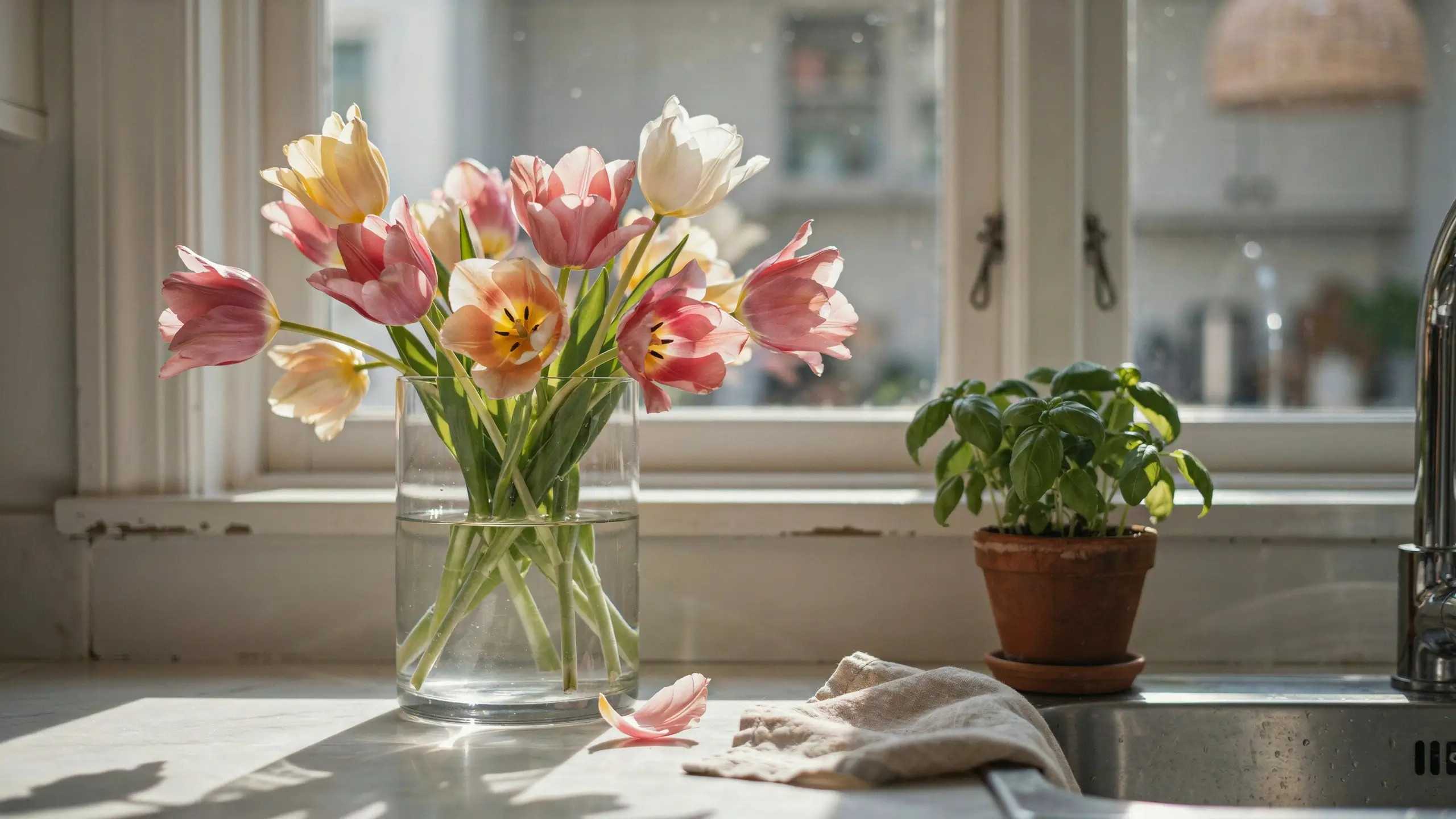
Tulips are the stem that convinces skeptics faux flowers have come a long way. The best ones have a slight curve to the stem and petals that feel almost waxy in a good way, mimicking the natural texture of a real tulip. I keep a bunch in a clear glass vase on my kitchen windowsill, since tulips read as fresh and casual in a way that feels perfect for spring mornings.
9. Faux Lilac Branch
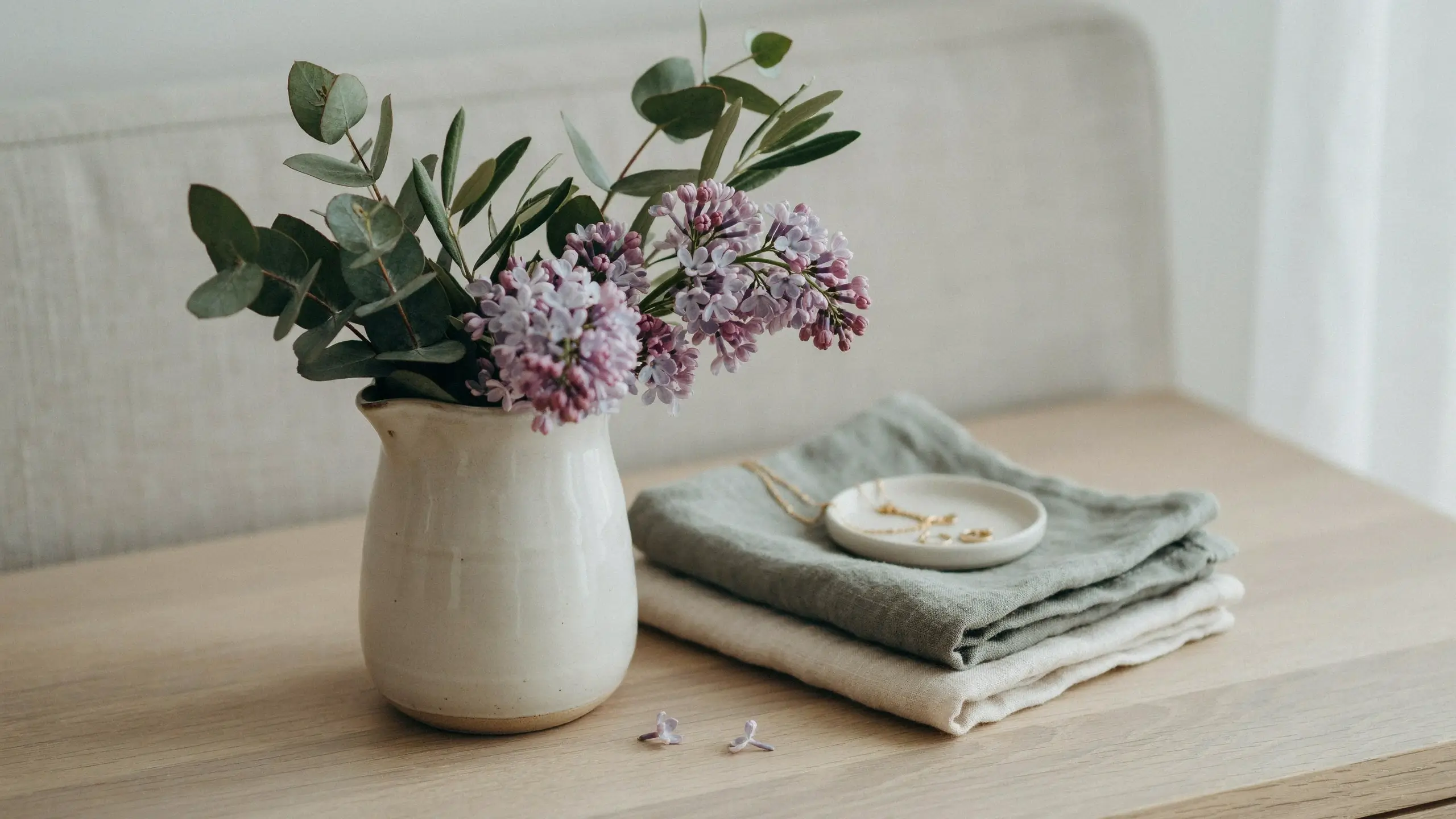
Lilac has a softness that’s hard to find anywhere else on this list. The small clustered blooms in lavender, white, or soft purple add texture without overwhelming an arrangement. I mix lilac branches into a mostly green arrangement when I want a hint of color without committing to a full floral moment.
My Favorite Faux Greenery for Filling Things Out
Greenery is what makes an arrangement feel finished. Skip it and even the prettiest florals can look a little sparse or awkward.
10. Olive Branch
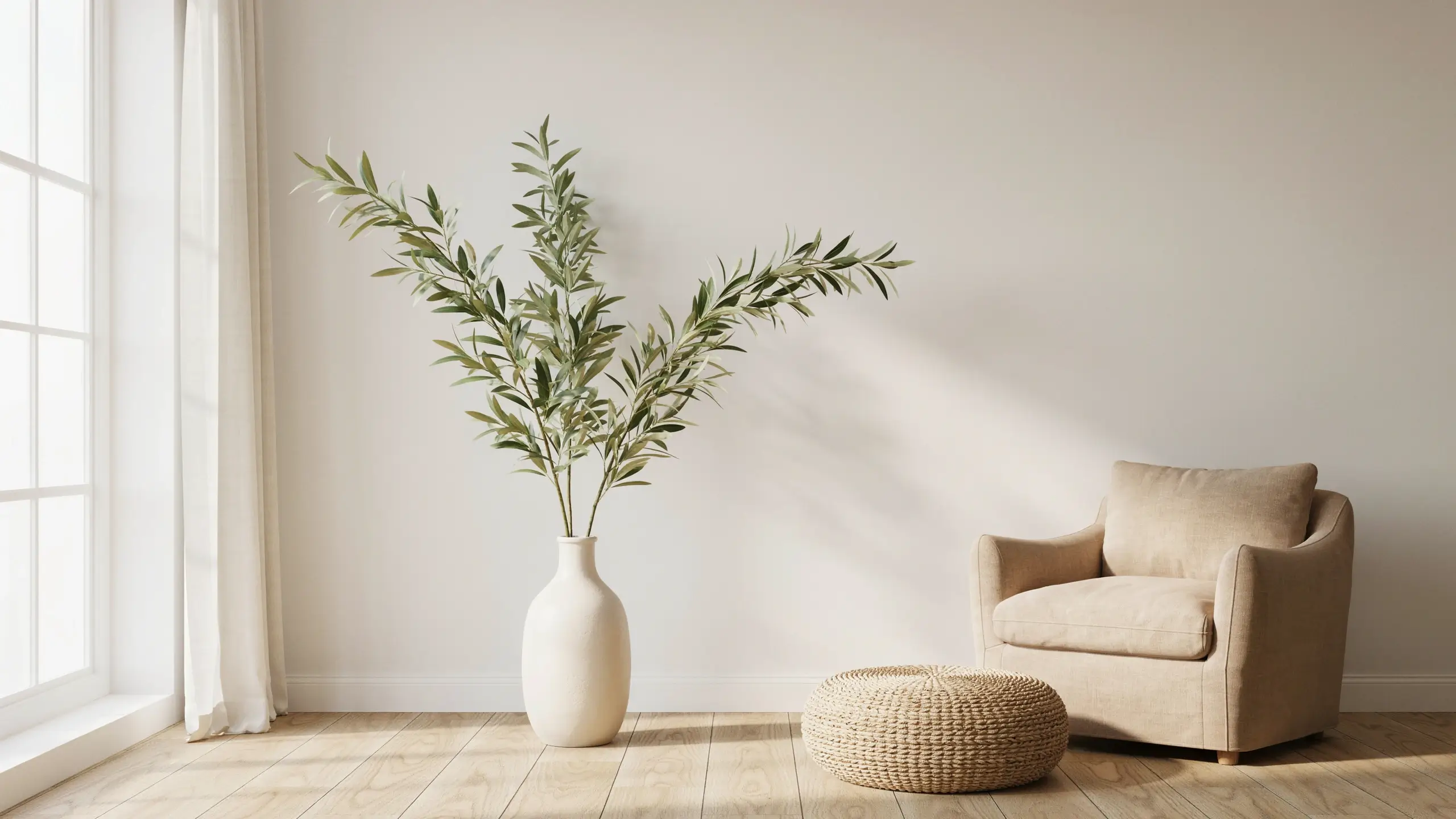
Olive branches are the one stem I never get tired of. The narrow silvery-green leaves work with literally every color palette, which makes them the easiest starting point if you’re not sure what else to buy. I use two or three long branches on their own in a floor vase for a simple, put-together look that doesn’t need anything else.
11. Seeded Eucalyptus
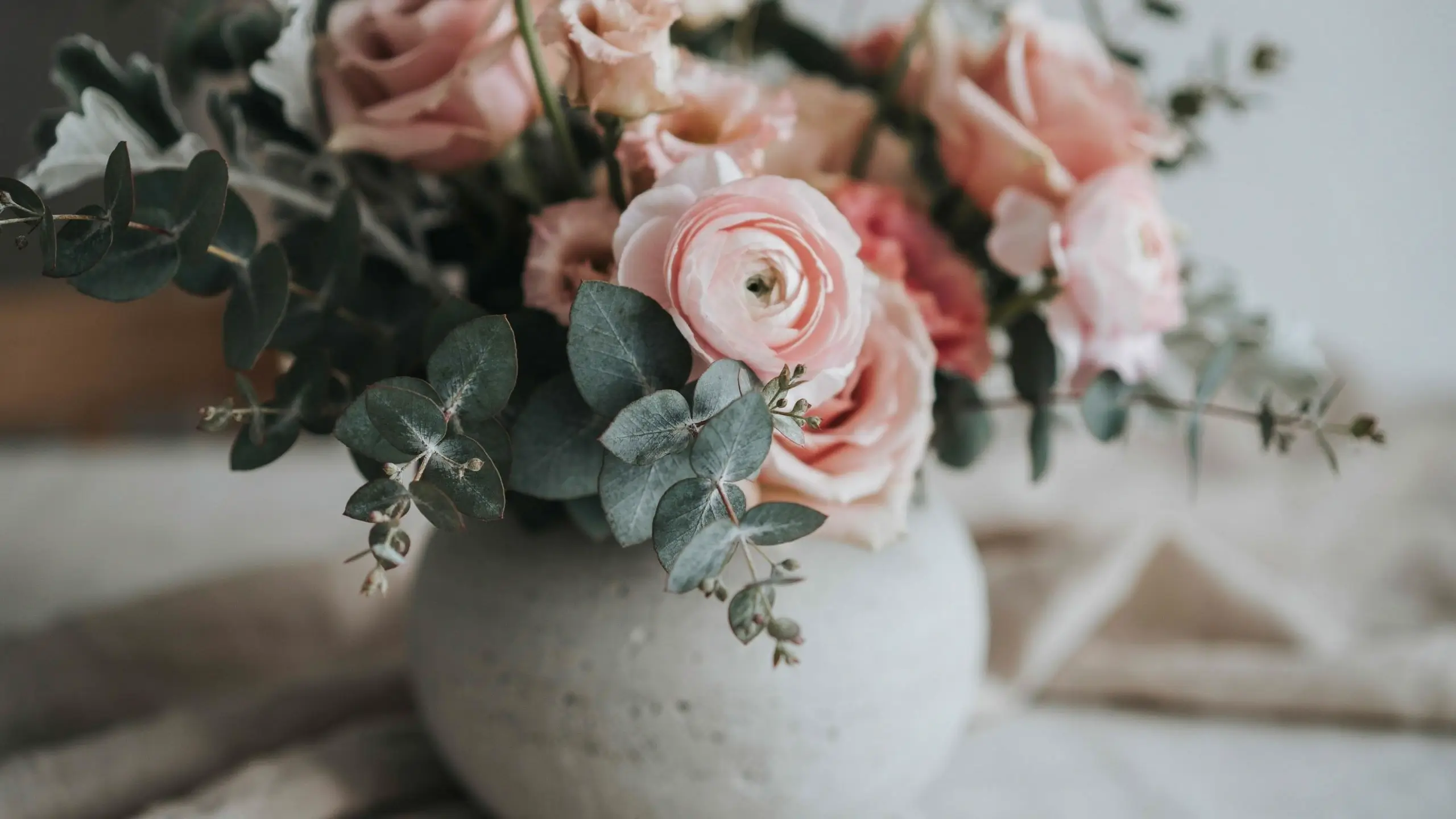
Eucalyptus is my filler of choice when I want something with a little more texture than a plain leaf. The small round leaves and slightly blue-green tone soften up florals that might otherwise feel too sweet. I tuck a few stems around the edges of an arrangement to hide the mechanics, meaning the foam or frog holding everything in place.
12. Trailing Wisteria Stems
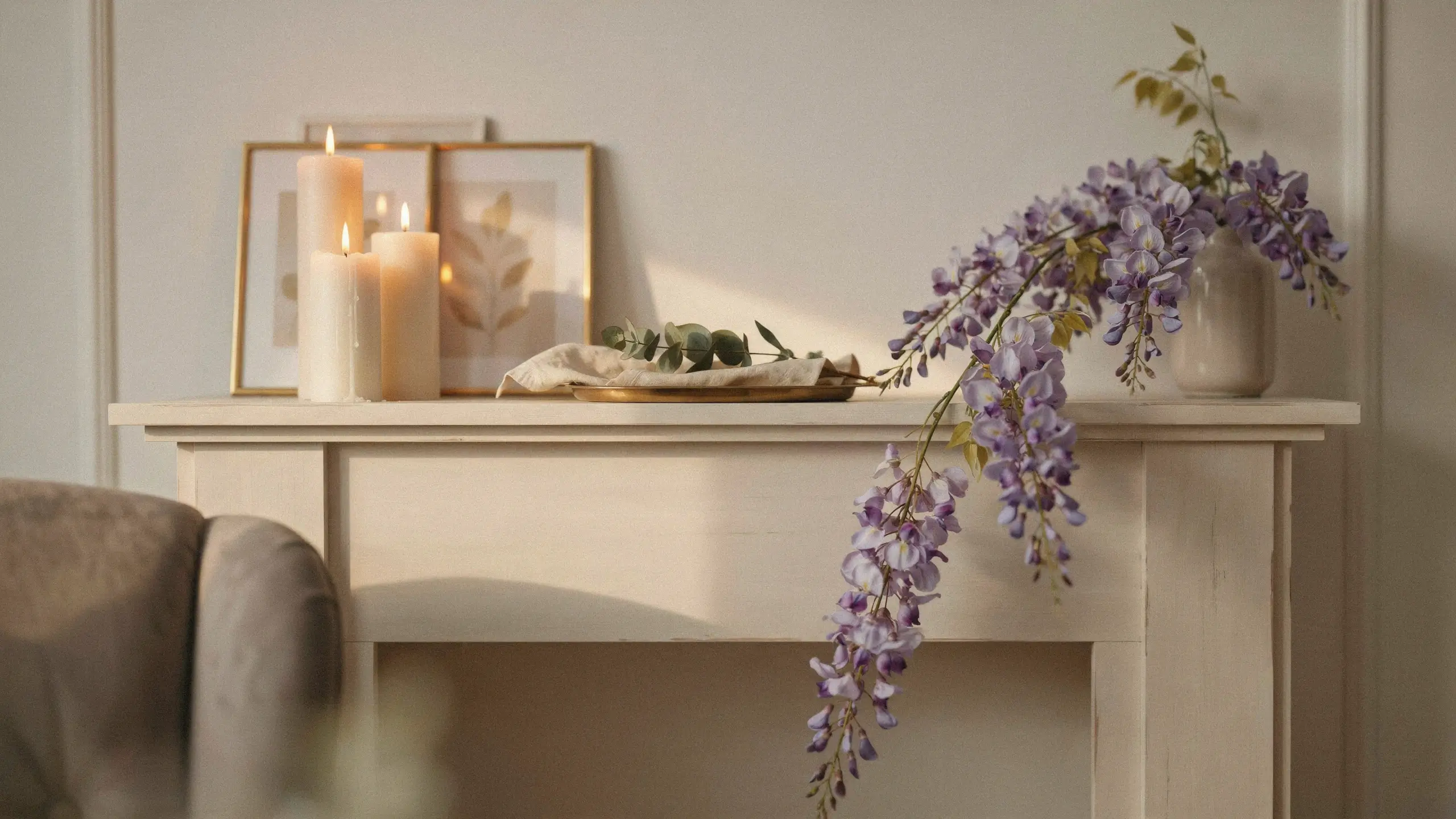
Wisteria is the stem I reach for when I want something a little unexpected. The long, drooping clusters of small blooms add movement that most upright stems can’t give you. I love draping a wisteria stem over the edge of a mantel arrangement or letting it spill out of a tall vase on a bookshelf.
13. Snowball Viburnum
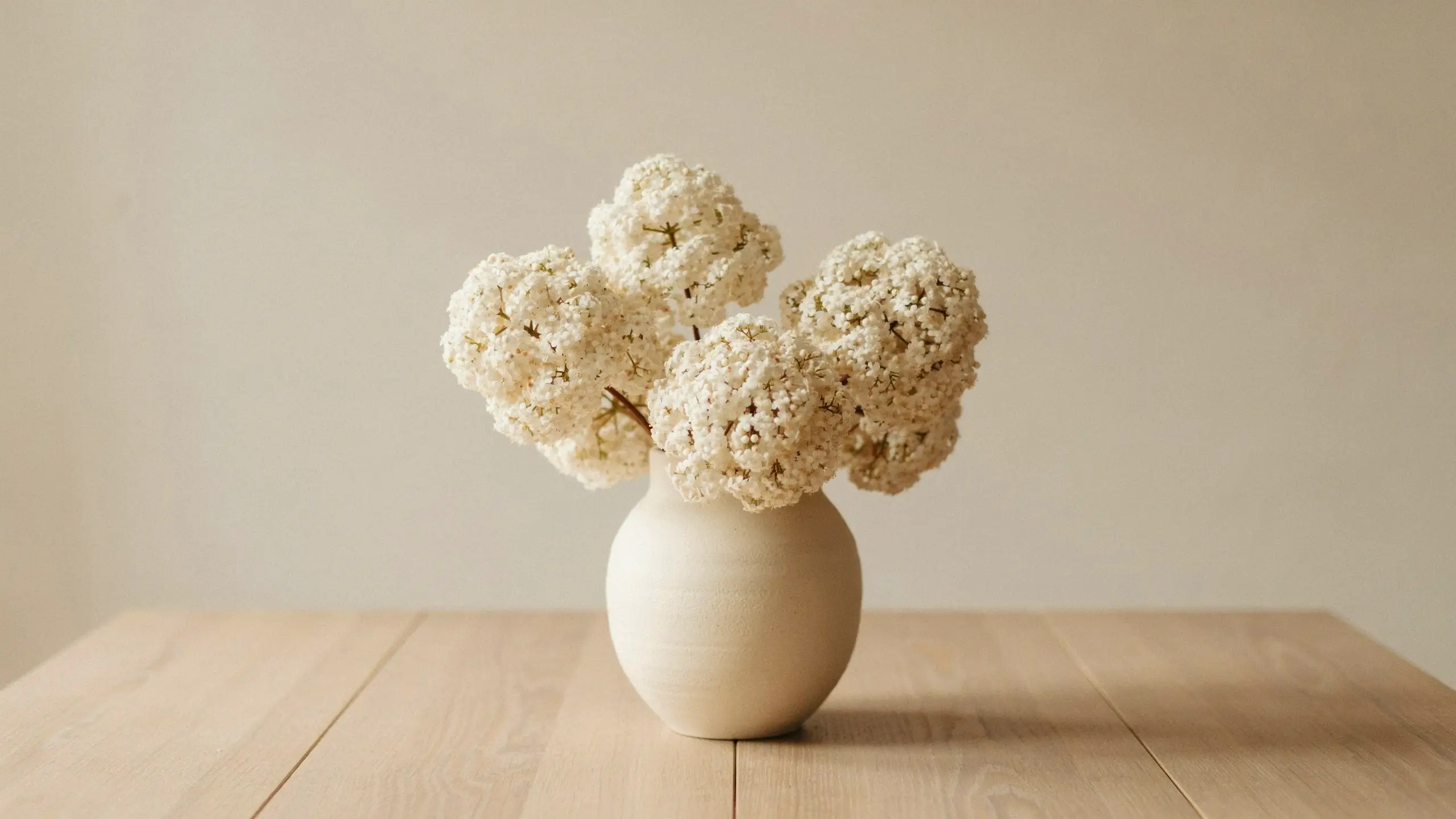
These round, cream-colored clusters look almost like oversized hydrangea blooms, but with a slightly wilder, more textural shape. I love using them as a neutral base that pairs with almost any other color on this list. A vase of just snowball viburnum on its own, with nothing else added, is one of the simplest arrangements I make and one of the ones I get asked about the most.
How I Style Faux Spring Stems So They Actually Look Good
Buying good stems is only half the job. Here’s how I actually put them together.
- Start with an odd number of stems. Three, five, or seven stems almost always look more natural than an even number. Even amounts tend to look stiff and symmetrical in a way that reads artificial.
- Match your stem height to your vase. A general rule I follow is the stems should be about one and a half times the height of the vase. Too short and everything looks stubby. Too tall and the arrangement feels top-heavy and unstable.
- Bend every stem before you use it. Real branches never grow perfectly straight. Gently curve each stem into a soft shape before placing it, and don’t be afraid to bend the wire inside the stem itself if it feels too stiff.
- Mix textures, not just colors. My favorite arrangements always combine one branch, one full floral, and one greenery filler. That combination mimics what an actual cut garden bouquet looks like, instead of a single type of flower bunched together.
- Think about where you’ll actually see it. An entryway console needs a taller, more dramatic stem. A nightstand needs something small enough not to knock over reaching for your phone. A kitchen island can handle a lower, wider arrangement that doesn’t block sightlines across the room.
Mistakes to Avoid When Buying Faux Spring Stems
- Buying too few stems. One lonely stem in a big vase almost never looks intentional. If you’re unsure, buy one more than you think you need.
- Skipping the shaping step. Stems straight out of the packaging often have a flat or bent shape from shipping. Take a few minutes to fluff petals and reshape branches before you call the arrangement done.
- Ignoring undertones. Not every white is the same white. If you’re mixing multiple florals, check whether they lean warm or cool before combining them, or the arrangement can end up looking mismatched.
- Placing stems in direct sunlight for months at a time. Faux stems can fade over time just like real ones lose their vibrancy in the sun. Rotating your arrangement out of a south-facing window every so often helps the color last longer.
- Forgetting about pets. If you have a cat or dog who likes to chew on things, keep faux stems out of reach or choose non-toxic materials, and skip anything with small detachable pieces that could become a choking hazard.
- Using a vase that’s too light for a tall arrangement. Top-heavy branches in a lightweight vase can tip over easily. A heavier ceramic or glass vase with a wide base keeps things stable, especially in a house with kids or pets running through.
Final Thoughts
Start with one or two stems from this list if you’re just testing the waters, or go all in and build a full rotation like I have. Either way, once you find your favorites, you’ll find yourself reaching for the same ones every spring, just like I do.
What are your favorite faux stems for spring? I’d love to hear what’s in your vases this year, drop a comment below and let me know.



No Comment! Be the first one.