




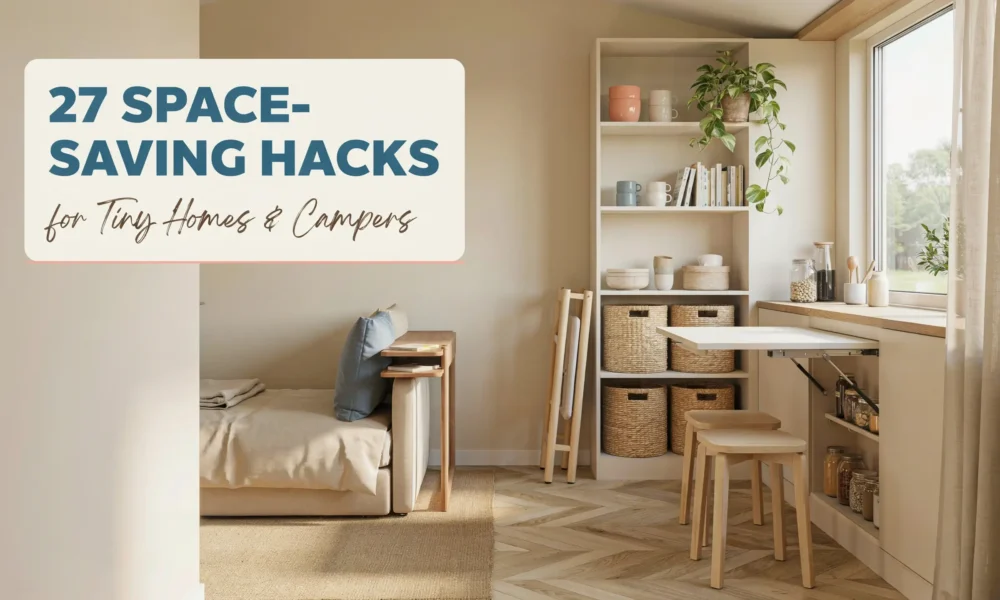
27 Space-Saving Hacks for Tiny Homes and Campers You’ll Actually Use
When you move into 200 square feet, or roll away in a camper that’s basically a shoebox on wheels, you learn fast that “out of sight” isn’t the same as “out of the...

When you move into 200 square feet, or roll away in a camper that’s basically a shoebox on wheels, you learn fast that “out of sight” isn’t the same as “out of the way.” Every drawer has to earn its spot. Every surface has to work double duty. And the stuff that looks fine in a normal-sized kitchen, looking at you, giant mixing bowl collection, suddenly feels like clutter you can’t breathe around.
I’ve spent way too many hours moving furniture six inches to the left just to see if it “felt” bigger, so I get it. Small space living isn’t about giving things up, it’s about being smarter with what you have. That’s exactly what these space saving hacks for tiny homes and campers are built for. Whether you’re full-timing it in an RV, living in a backyard tiny house, or just trying to make a studio apartment feel less cramped, these ideas are realistic, budget-friendly, and work once you actually put them into your space, not just on a moodboard.
Let’s get into it.
Why Space-Saving Hacks for Tiny Homes and Campers Aren’t One-Size-Fits-All
Tiny homes and campers get grouped together a lot, and for good reason. They both deal with limited square footage and vertical ceilings that beg to be used. But they’re not identical. A tiny home usually stays put, so you can build in permanent shelving or rearrange the whole layout if you want to. A camper moves. Things shift, rattle, and fly off shelves the second you hit a pothole.
So while a lot of these hacks work for both, I’ve flagged the ones that matter most if your home has wheels. Keep that in mind as you read through, because what works parked in your driveway might not survive a highway drive.
Kitchen Space-Saving Hacks
The kitchen is where clutter multiplies fastest, mostly because cookware, dishes, and pantry items are shaped nothing like the cabinets they’re supposed to live in.
1. Swap bulky cookware for collapsible kitchenware
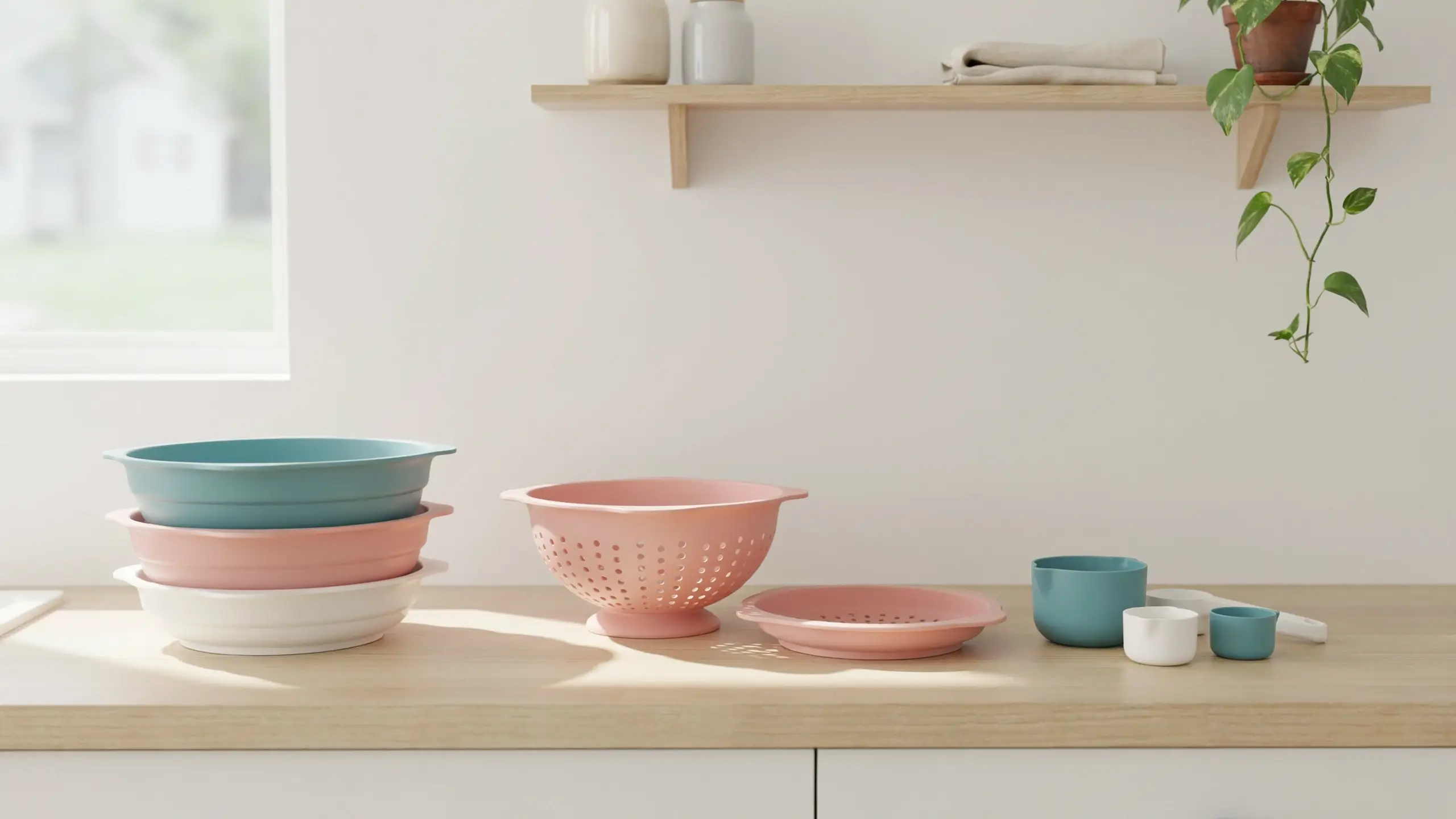
Silicone collapsible mixing bowls, colanders, and measuring cups flatten down to a couple inches when you’re done with them. A stack of three collapsible bowls takes up the same space as one regular bowl, and most come in colors nice enough to leave on open shelving.
2. Turn your stovetop into extra counter space
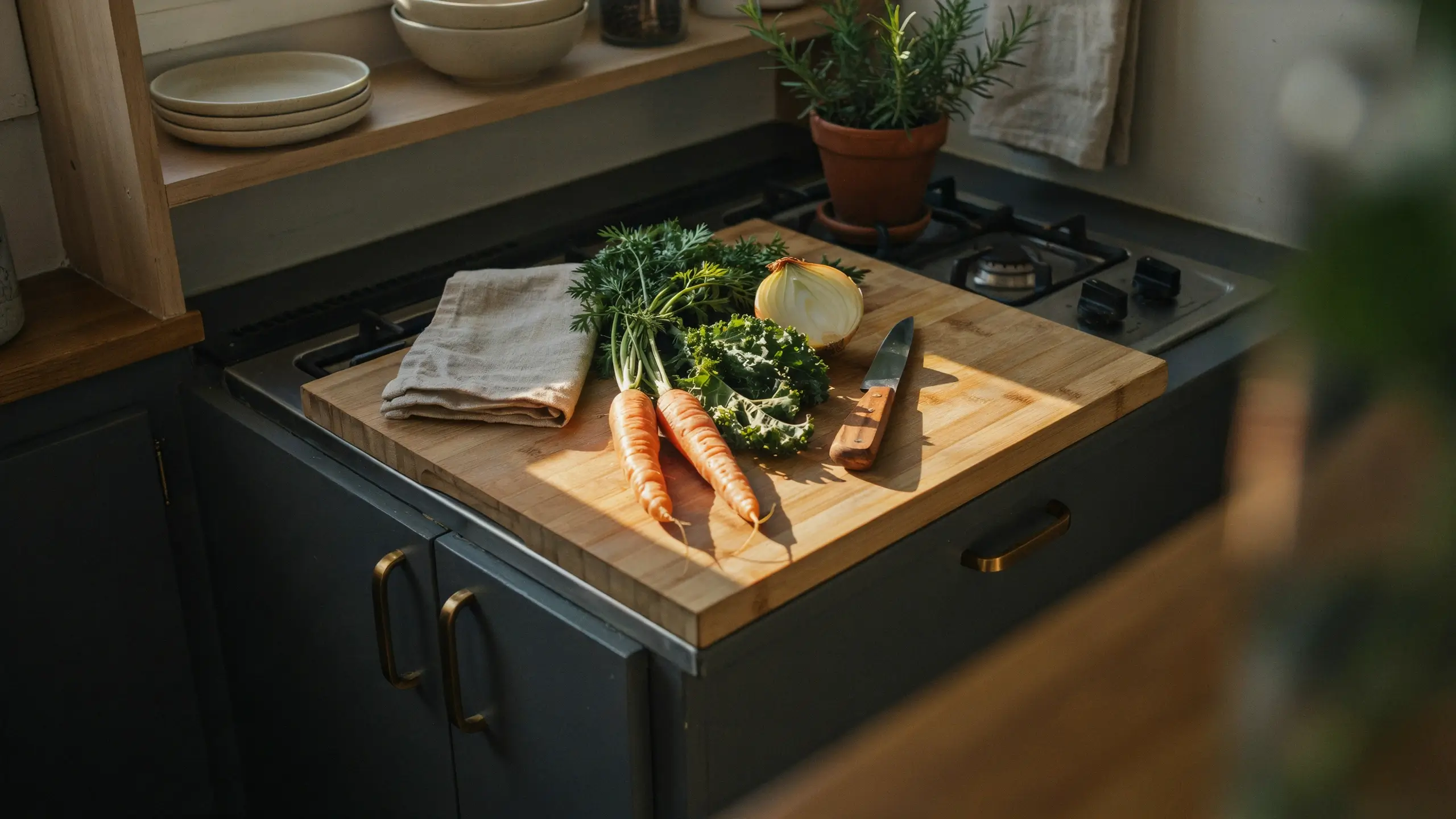
A custom-cut wood or bamboo cutting board sized to sit over your stove burners gives you instant prep space. Measure your stovetop dimensions before ordering one online. Most tiny kitchens have a nonstandard size, so a generic board might not sit flush.
3. Mount a magnetic knife strip and spice rack on the wall
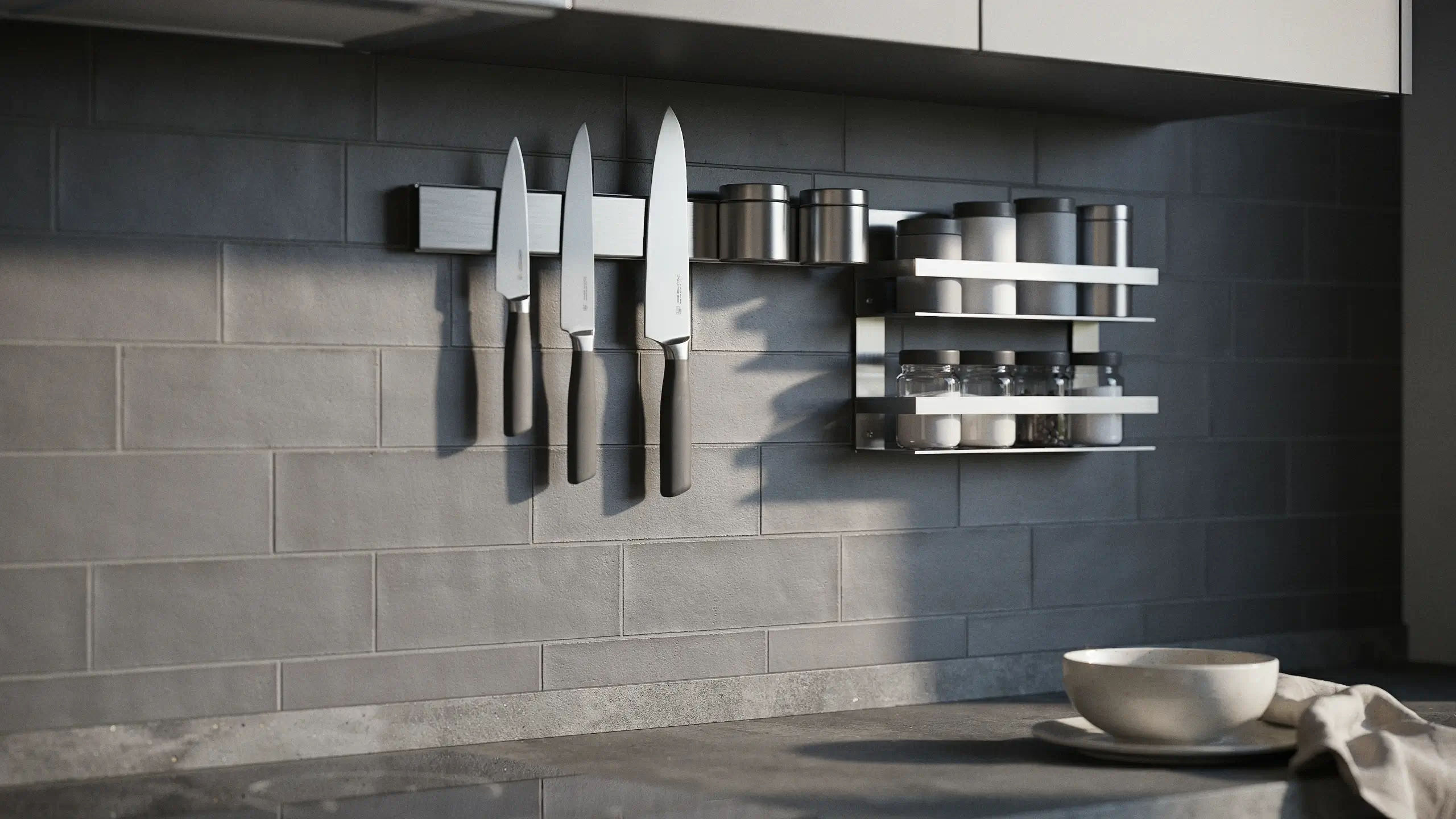
Skip the knife block and the spice drawer entirely. A magnetic strip mounted under an upper cabinet keeps knives visible and off the counter, and small magnetic spice tins or a wall-mounted spice rack free up drawer space you didn’t know you had.
4. Use the inside of cabinet doors
Adhesive-mounted organizers on the inside of cabinet doors are perfect for foil, plastic wrap, cutting boards, or pot lids. This is one of the most underused spots in a small kitchen, and it’s completely renter-friendly since most versions use Command strips instead of screws.
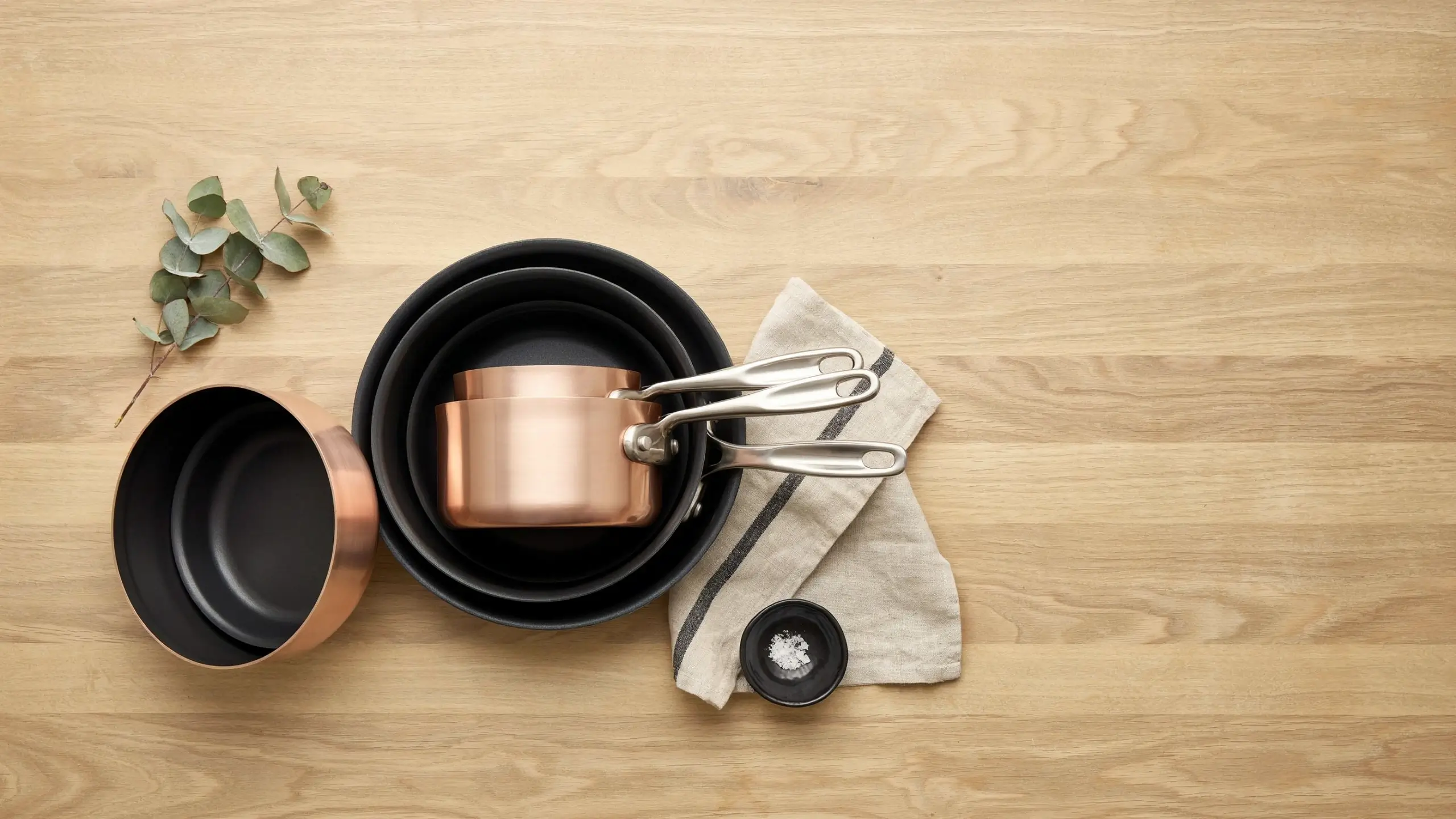
5. Choose nesting cookware over individual pots and pans
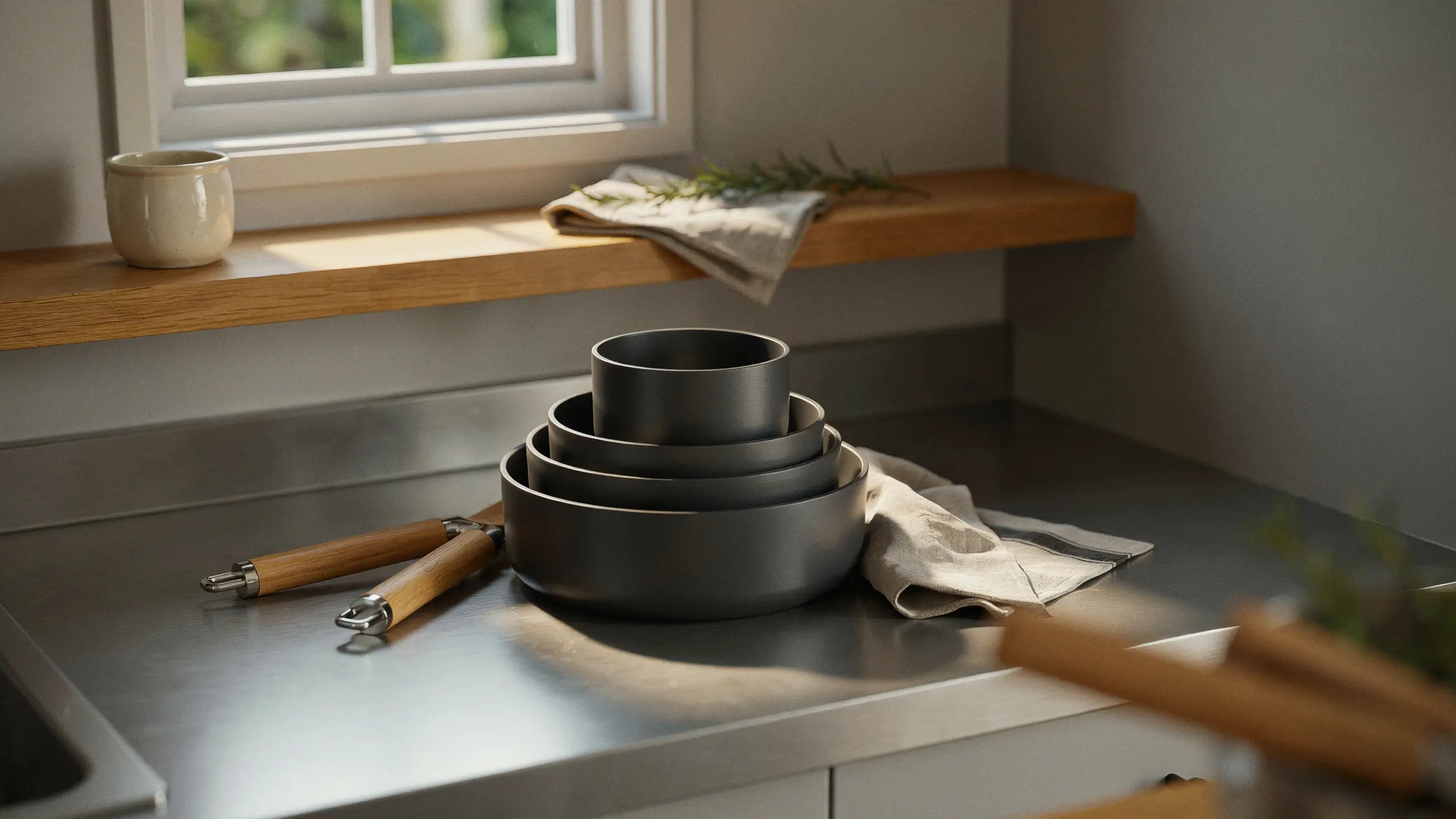
A nesting cookware set, pots and pans designed to stack inside each other, can replace five mismatched pieces with one compact stack. Look for sets with detachable handles for even less bulk.
6. Add a slide-out cutting board under the counter
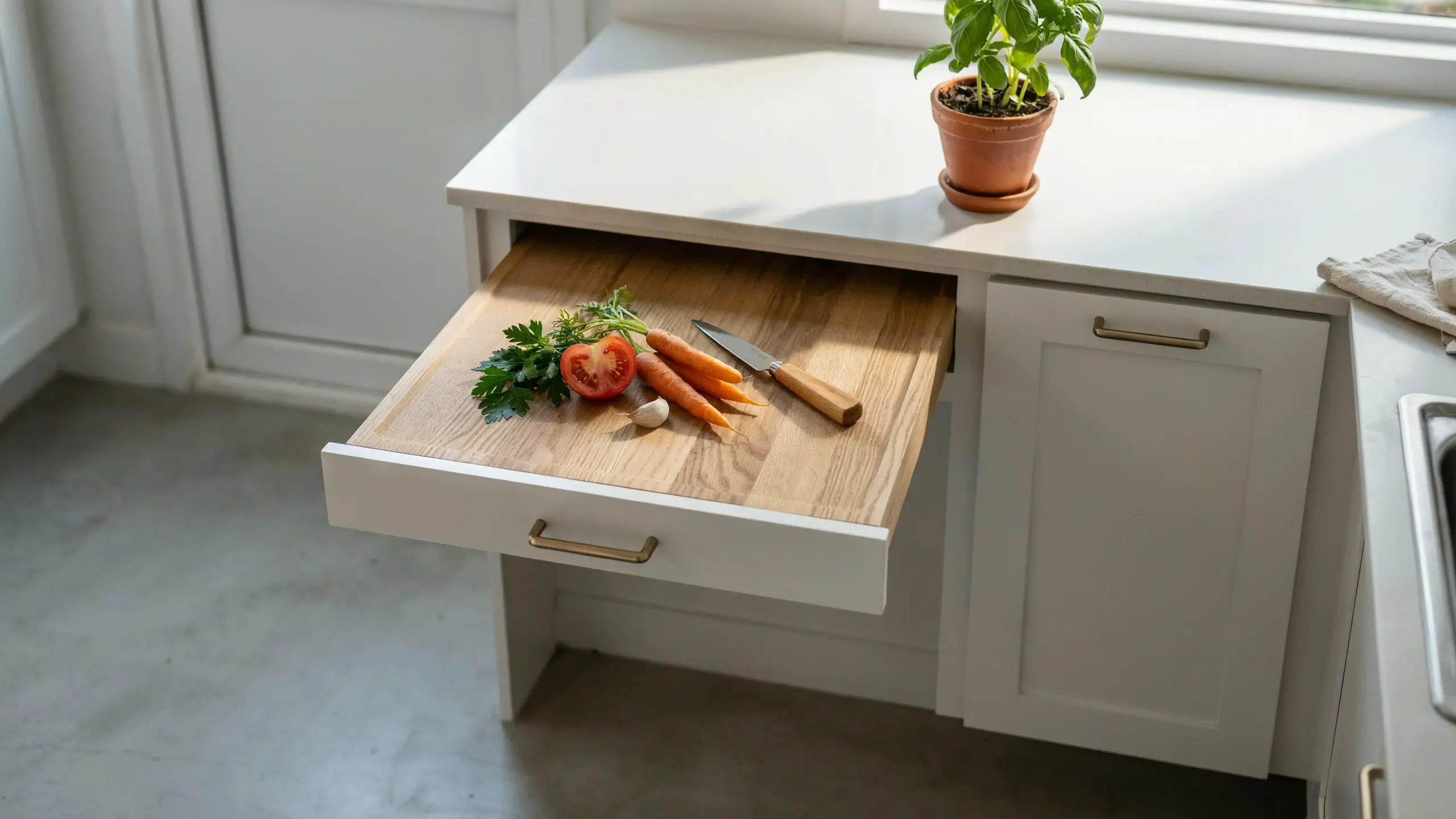
If you have even an inch of clearance under your countertop, a slide-out cutting board tray gives you extra prep space that disappears the second you’re done using it. It also works as a laptop stand if you work from your kitchen table.
Sleep and Bedroom Space-Saving Ideas
Your bed takes up more square footage than almost anything else in a tiny home or camper, so this is where smart choices matter most.
7. Install a Murphy bed or wall bed
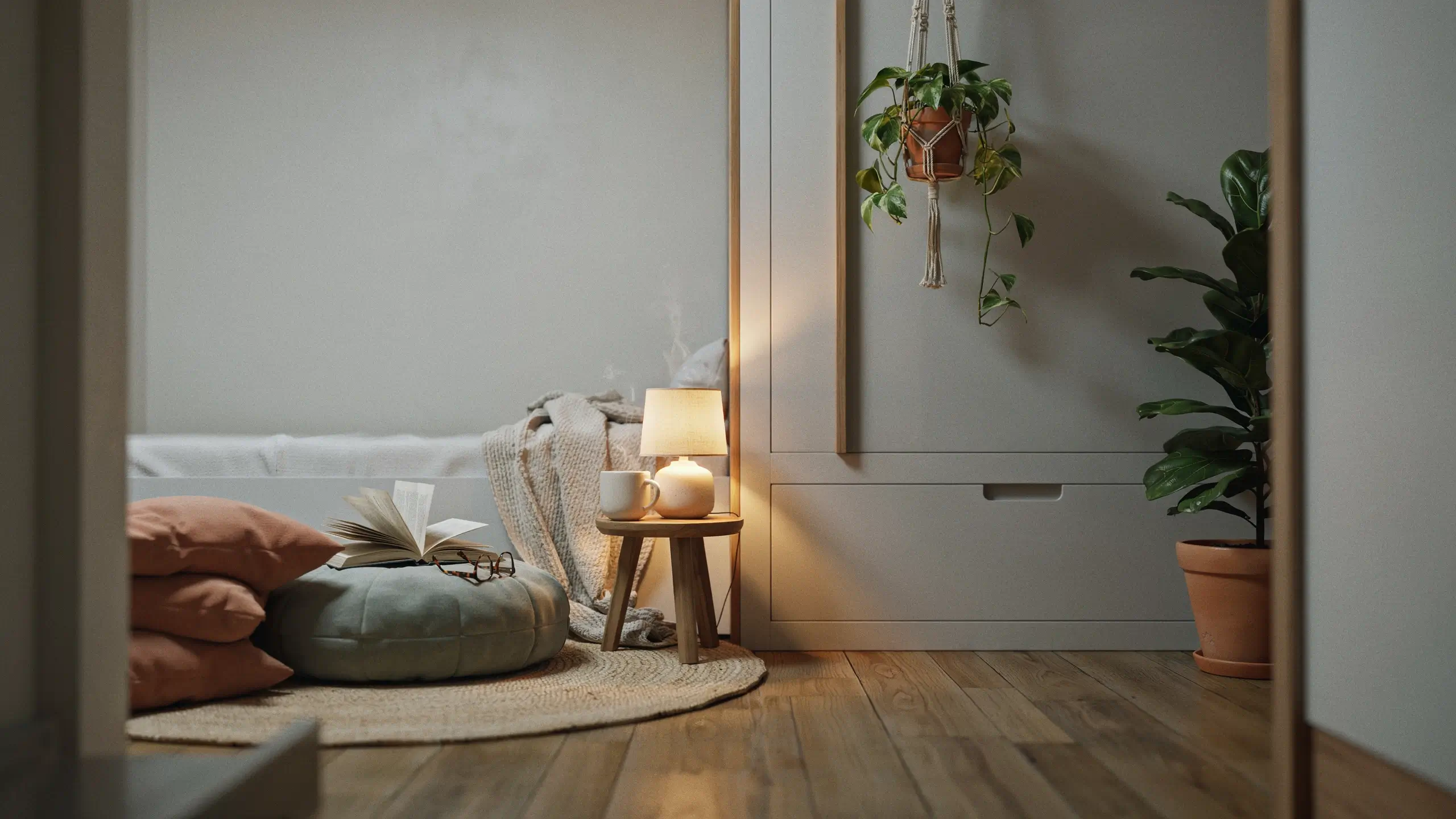
A Murphy bed folds up into a cabinet or against the wall during the day, giving you back your entire bedroom floor for a desk, yoga mat, or play space for kids. This is a bigger project, but it’s one of the highest-impact changes you can make in a stationary tiny home.
8. Raise your bed with risers and add rolling bins underneath
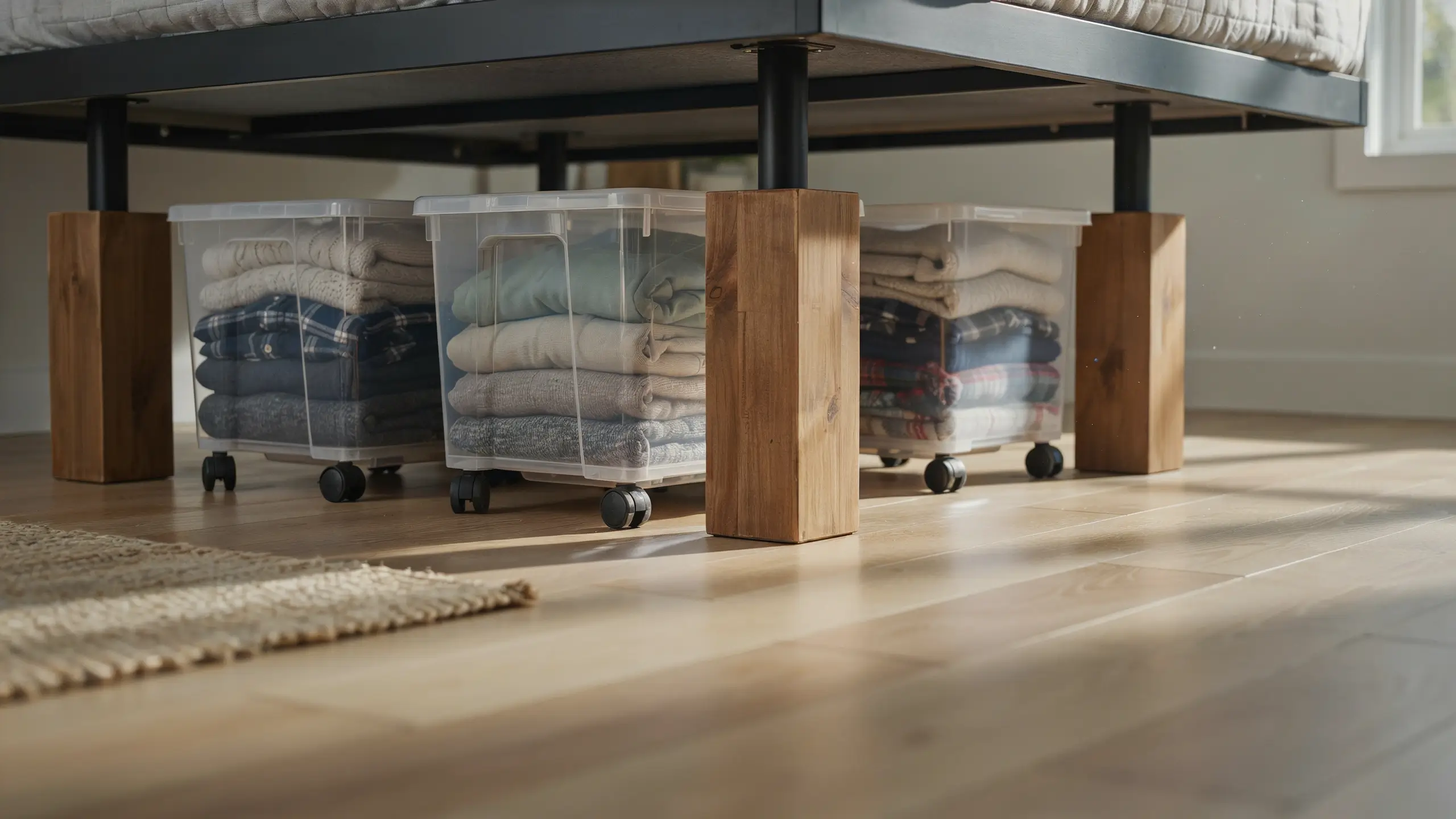
Four to six inch bed risers create just enough clearance for clear, wheeled storage bins. Use them for off-season clothes, extra bedding, or shoes. Clear bins matter here, you want to see what’s inside without pulling everything out.
9. Choose a platform bed with built-in drawers
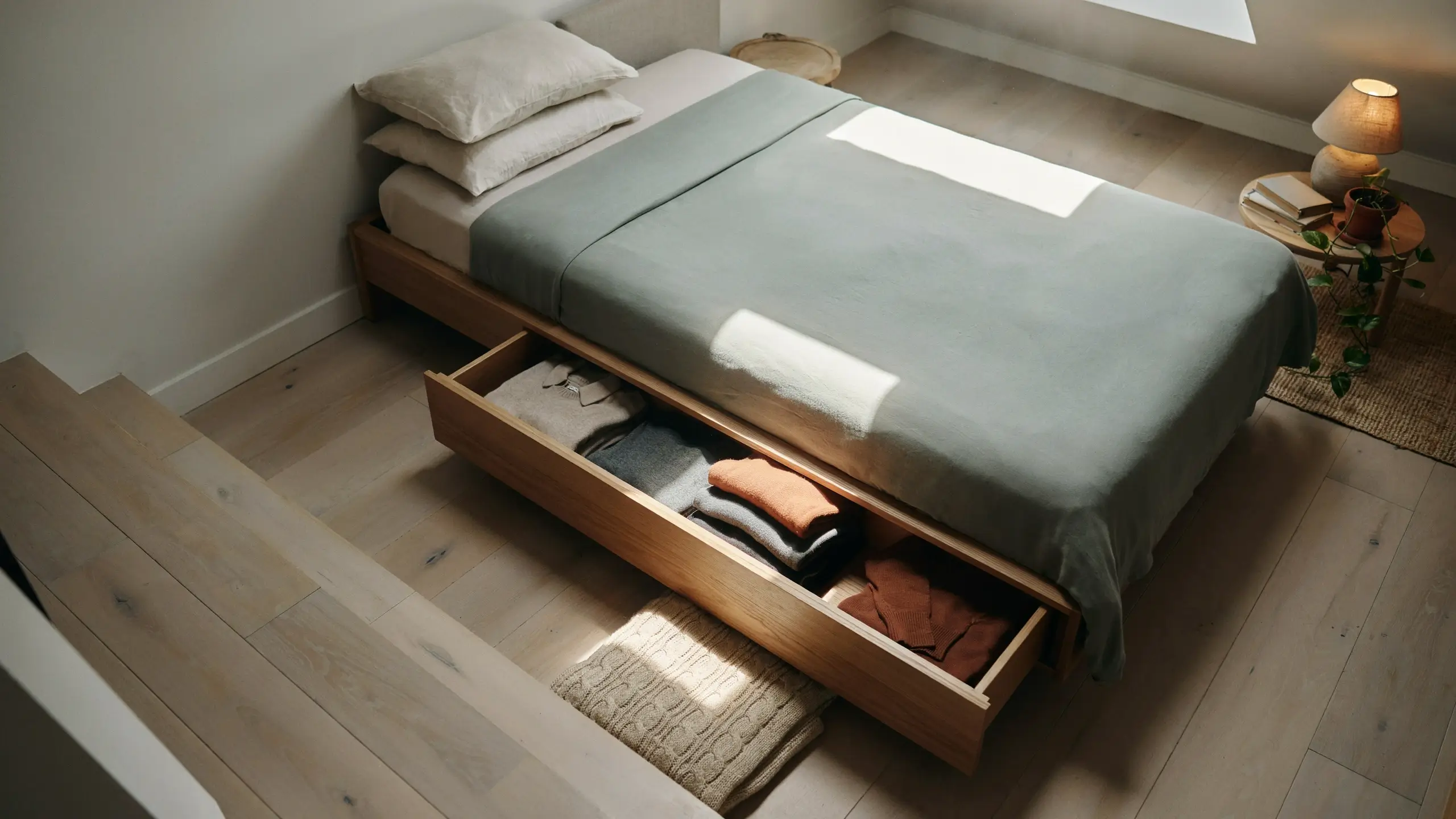
Instead of a bed frame with dead space underneath, look for a platform bed with drawers built into the base. It’s a one-time investment that replaces an entire dresser.
10. Use tension rods to divide hanging storage in a camper closet
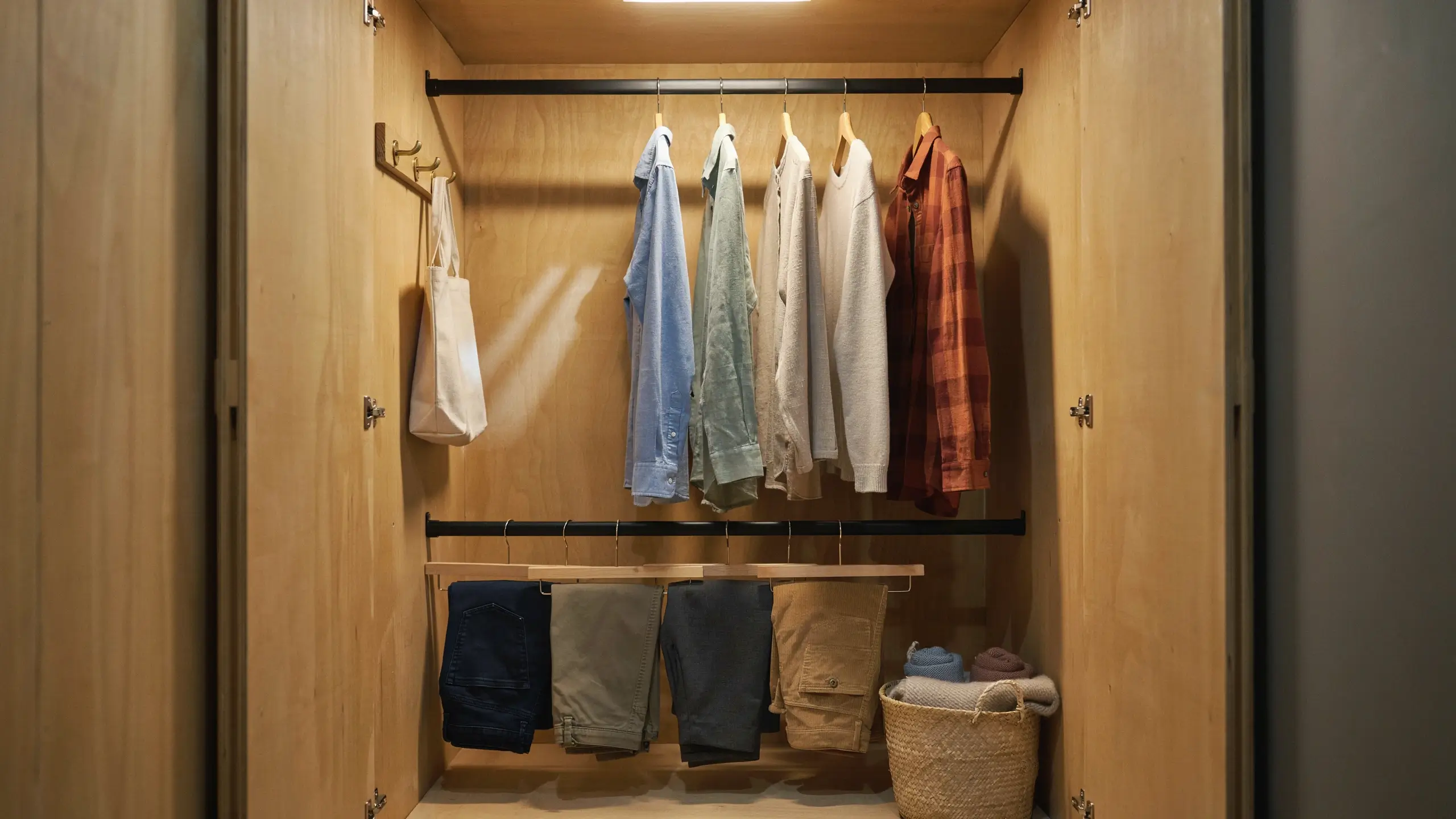
Camper closets are usually narrow and deep, which wastes a lot of vertical space. A tension rod installed halfway down the closet gives you a second hanging bar for shorter items like shirts and folded pants on hangers.
Small Bathroom Space-Saving Hacks
Bathrooms in tiny homes and campers are often the smallest room in the whole place, which means every shelf and hook counts.
11. Add an over-the-toilet ladder shelf
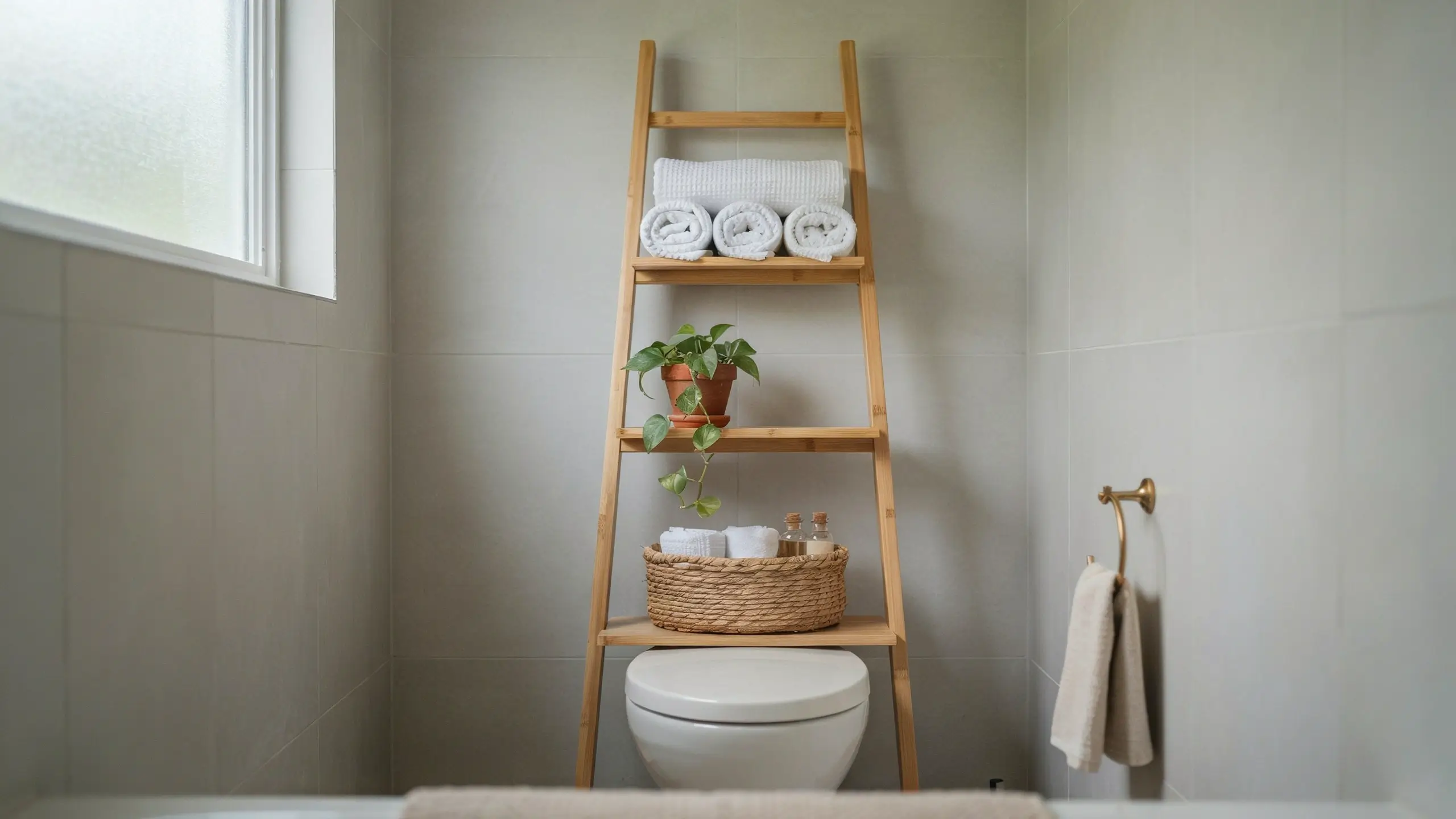
This is one of the easiest ways to add vertical storage without touching a wall. Use the shelves for towels, toiletries, or a basket of extra toilet paper for a look that feels intentional, not crammed.
12. Hang a shower caddy from the shower head or a tension rod
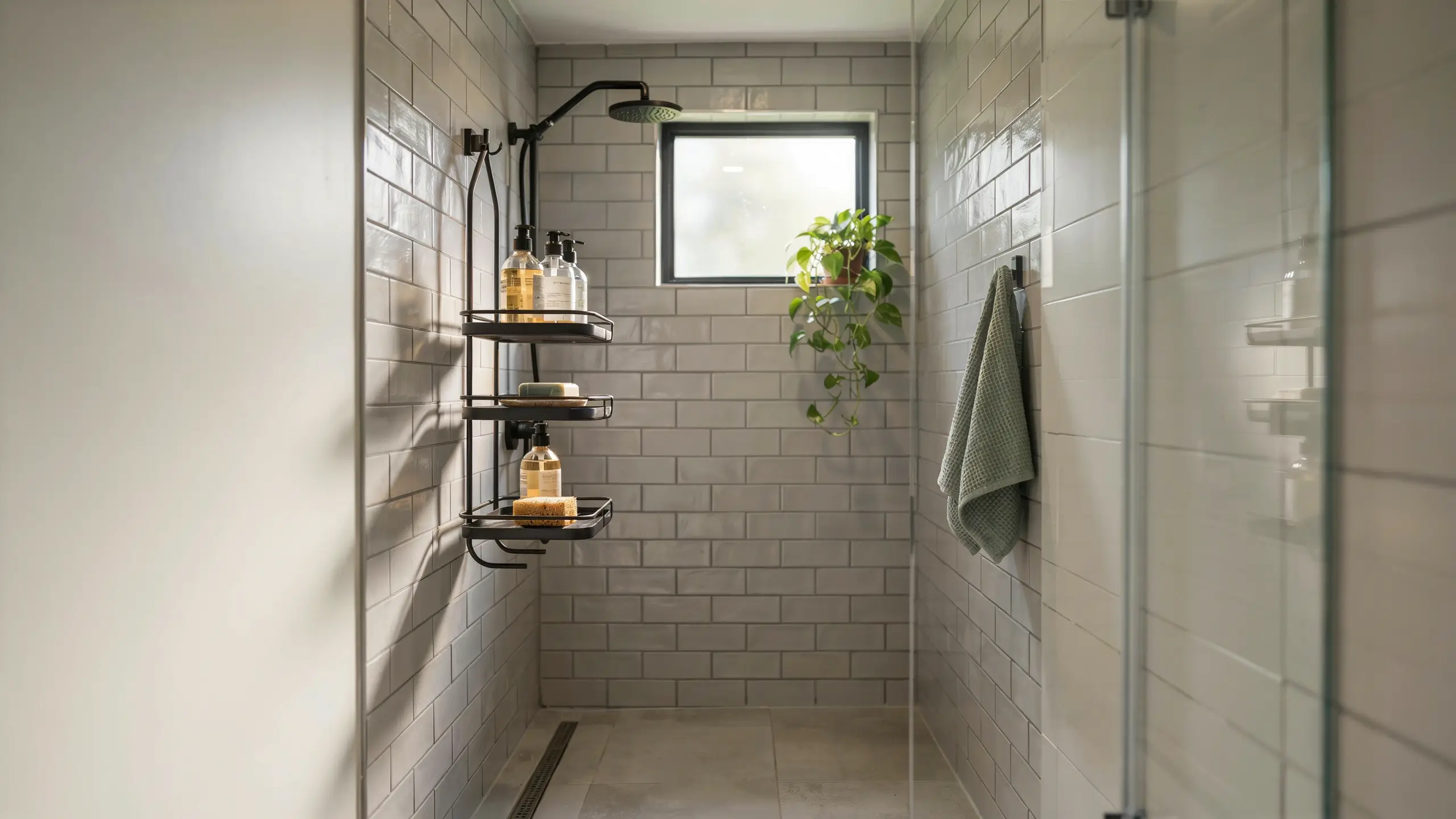
Skip suction cup caddies, they fall constantly in humid bathrooms. A caddy that hooks over the shower head or hangs from a tension rod stays put and doesn’t leave marks behind.
13. Use corner shelves to catch dead space
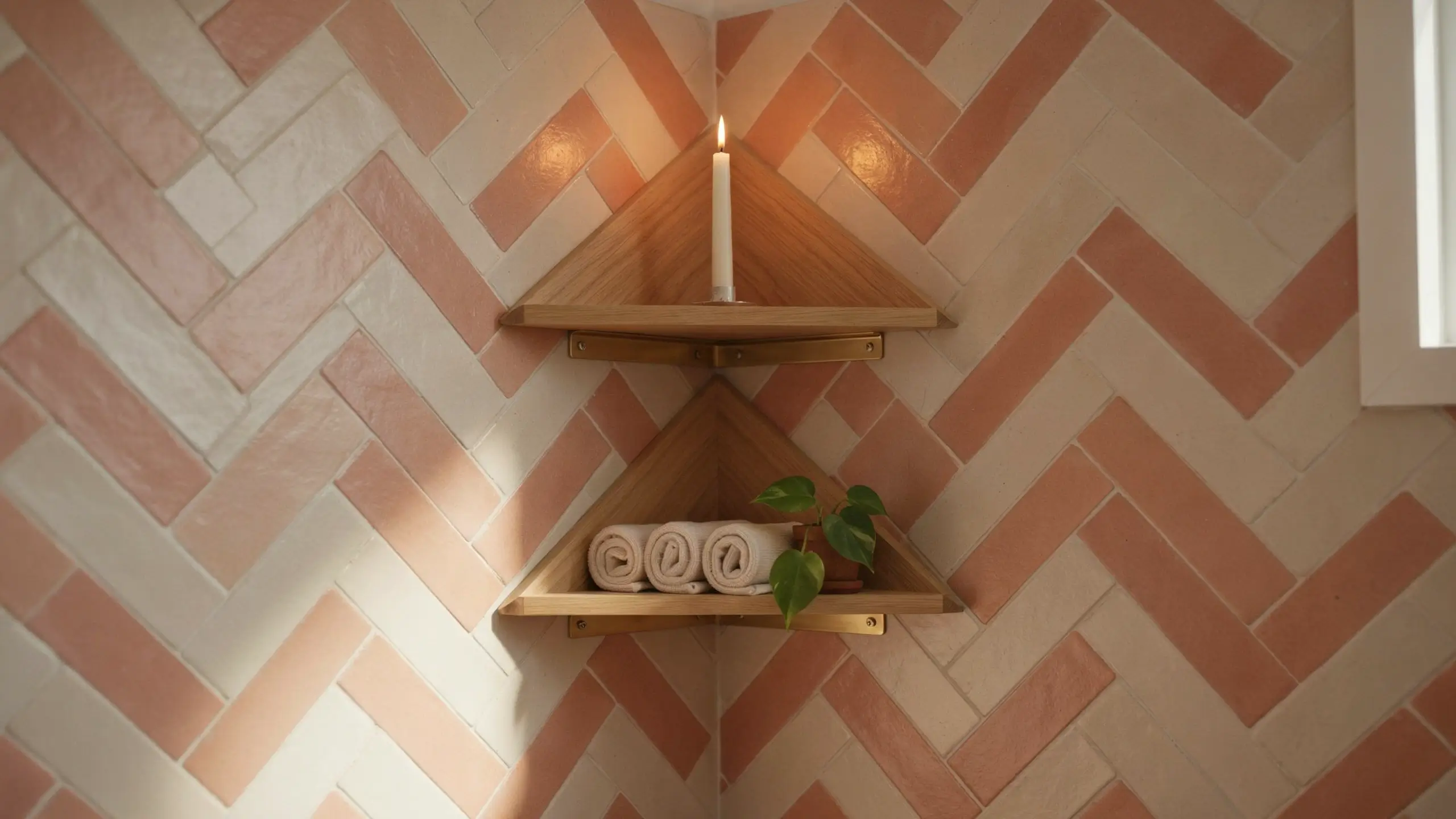
Tiny bathroom corners are almost always empty. A small corner shelf, tension mounted or adhesive, holds candles, extra soap, or rolled washcloths without eating into your walking space.
14. Store hair tools inside the cabinet door
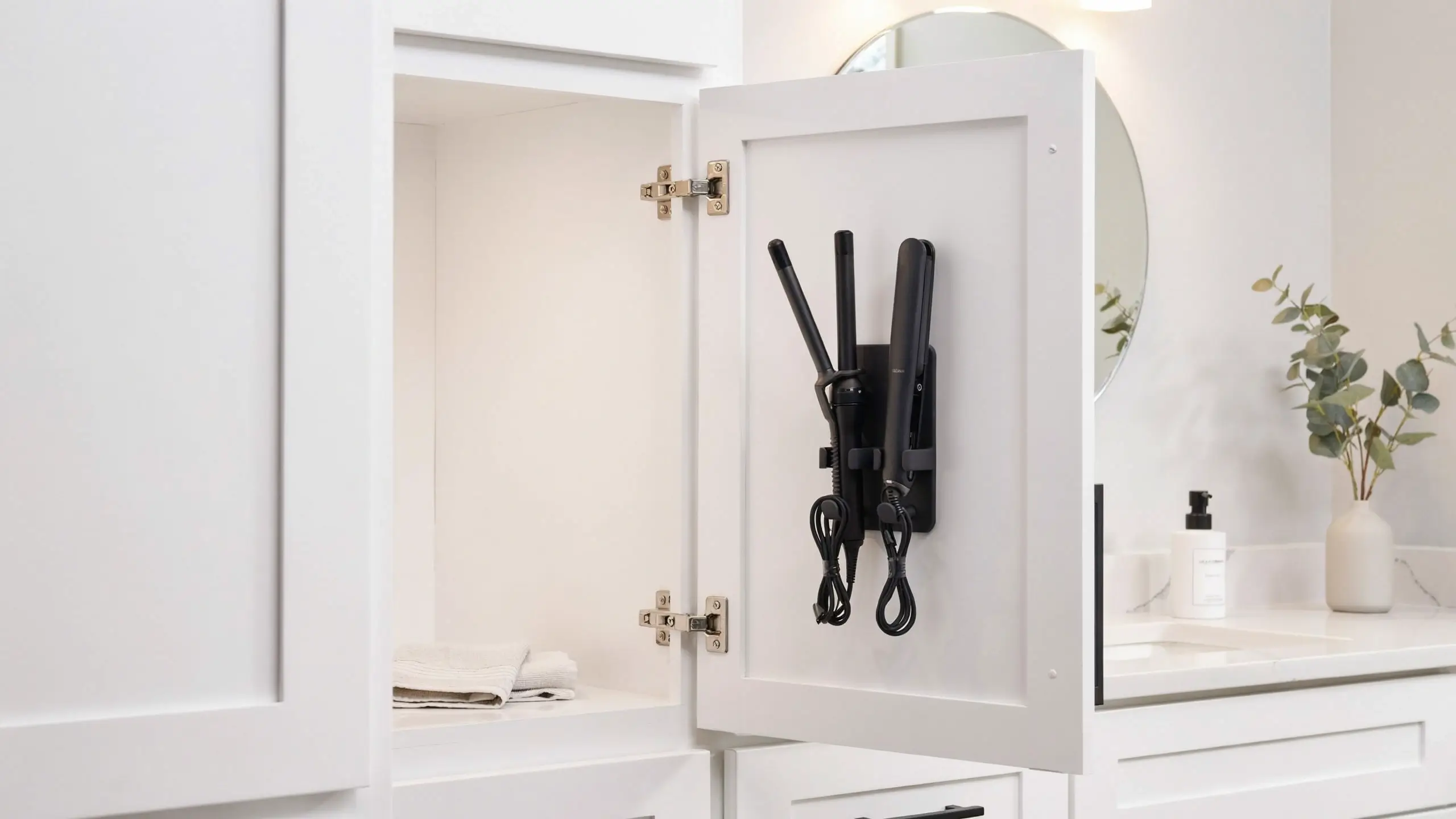
A heat-resistant holder mounted to the inside of your cabinet door keeps your flat iron or curling wand off the counter and safely tucked away while it cools.
Multi-Purpose Furniture Worth Its Square Footage
If a piece of furniture only does one job in a tiny home or camper, it’s probably taking up more room than it should.
15. Get a storage ottoman for your living area
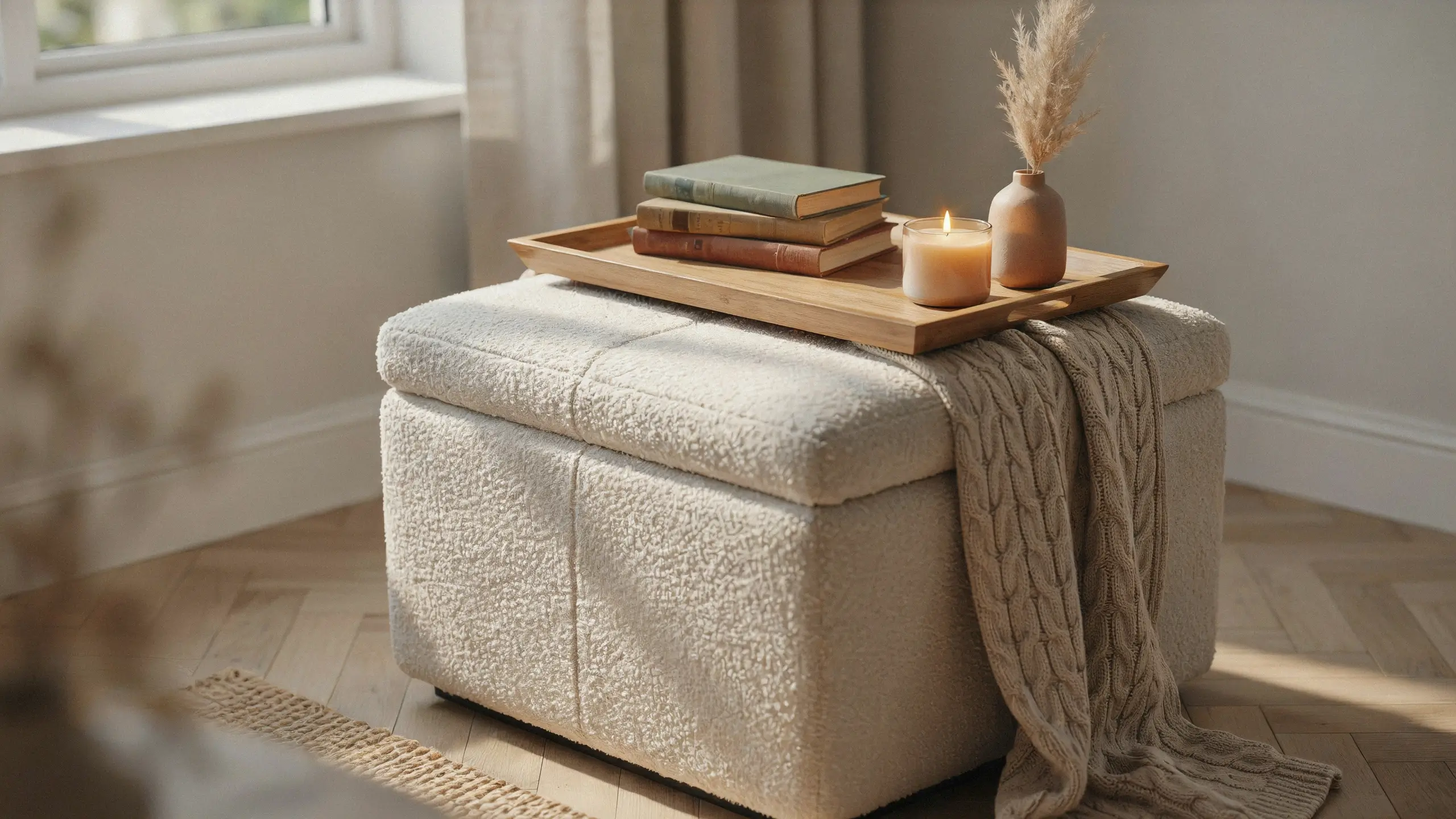
A storage ottoman works as a coffee table, extra seating, and a place to stash blankets or shoes all at once. Look for one in a woven or boucle fabric with a removable tray top so it still functions as a table.
16. Install a fold-down wall table
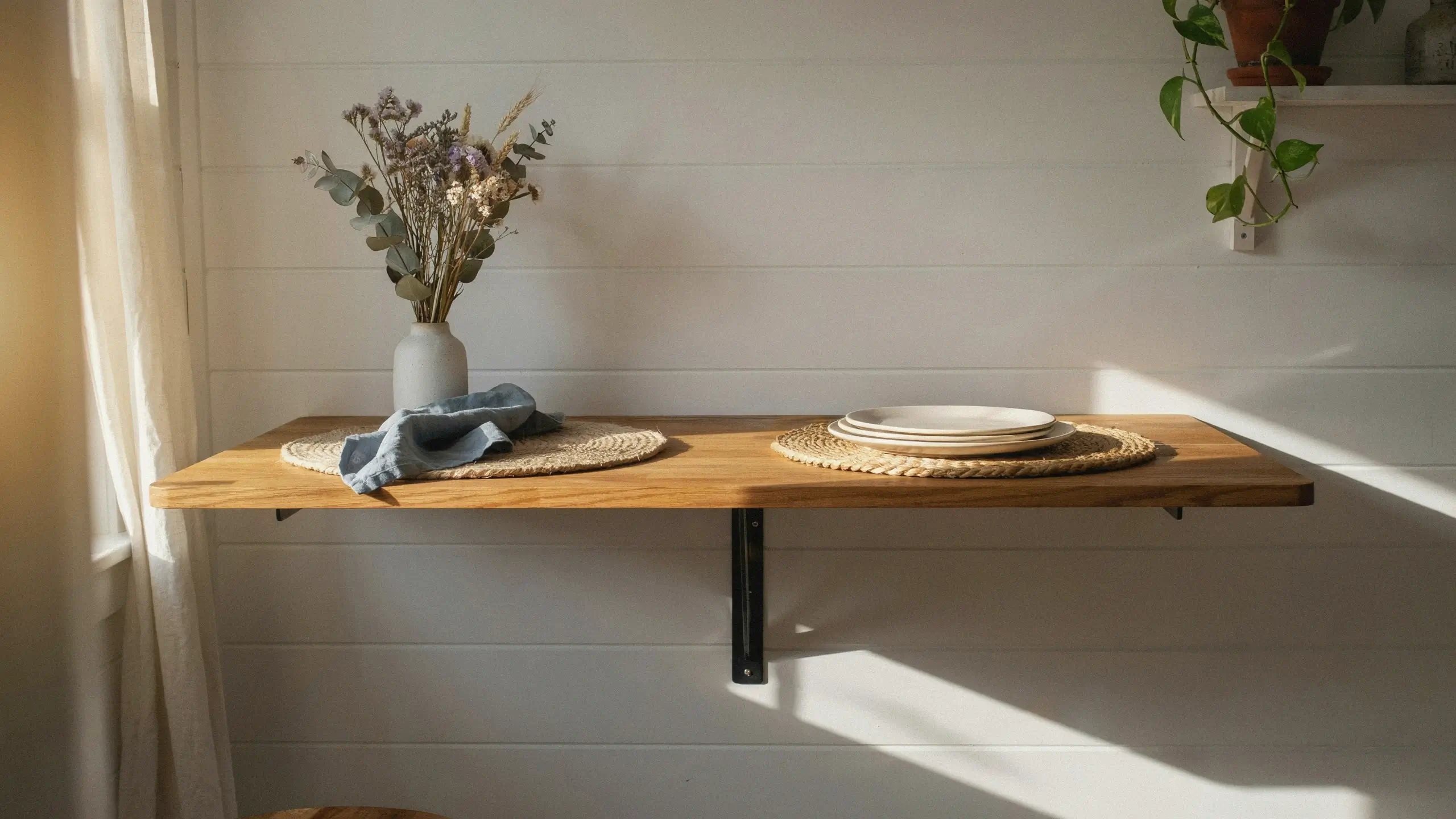
A hinged, wall-mounted table folds flat against the wall when you’re not using it and drops down for meals, laptop work, or craft projects. This is one of the most popular space saving hacks for tiny homes and campers because it solves the “we need a table but don’t have room for one” problem completely. A warm wood finish keeps it from looking too utilitarian when it’s folded up.
17. Add a window bench with lift-top storage
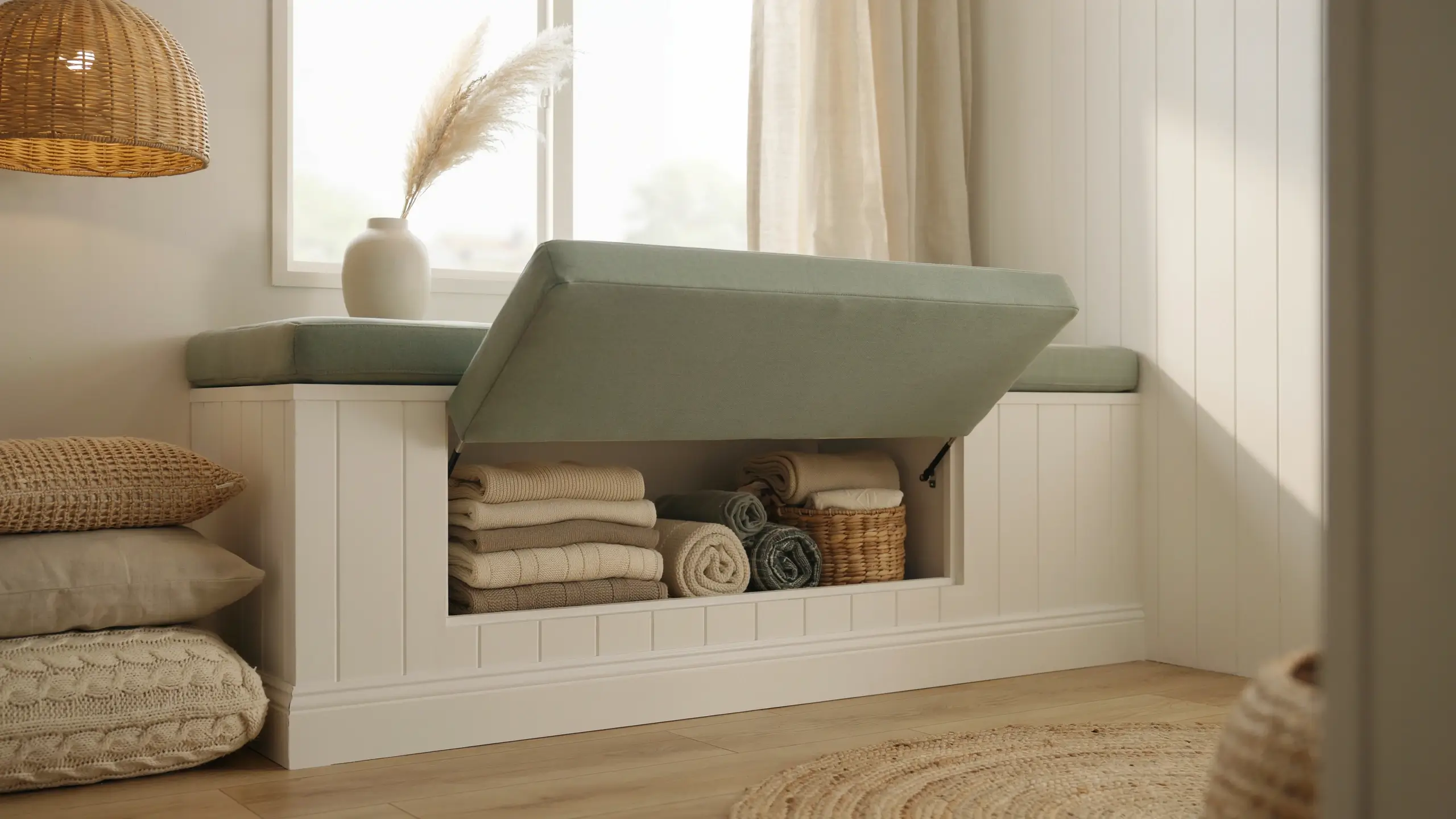
A built-in bench under a window gives you a cozy reading nook and hidden storage underneath for out-of-season items. In a camper, this can double as extra seating for guests around the dinette.
18. Use stacking cubes as side tables
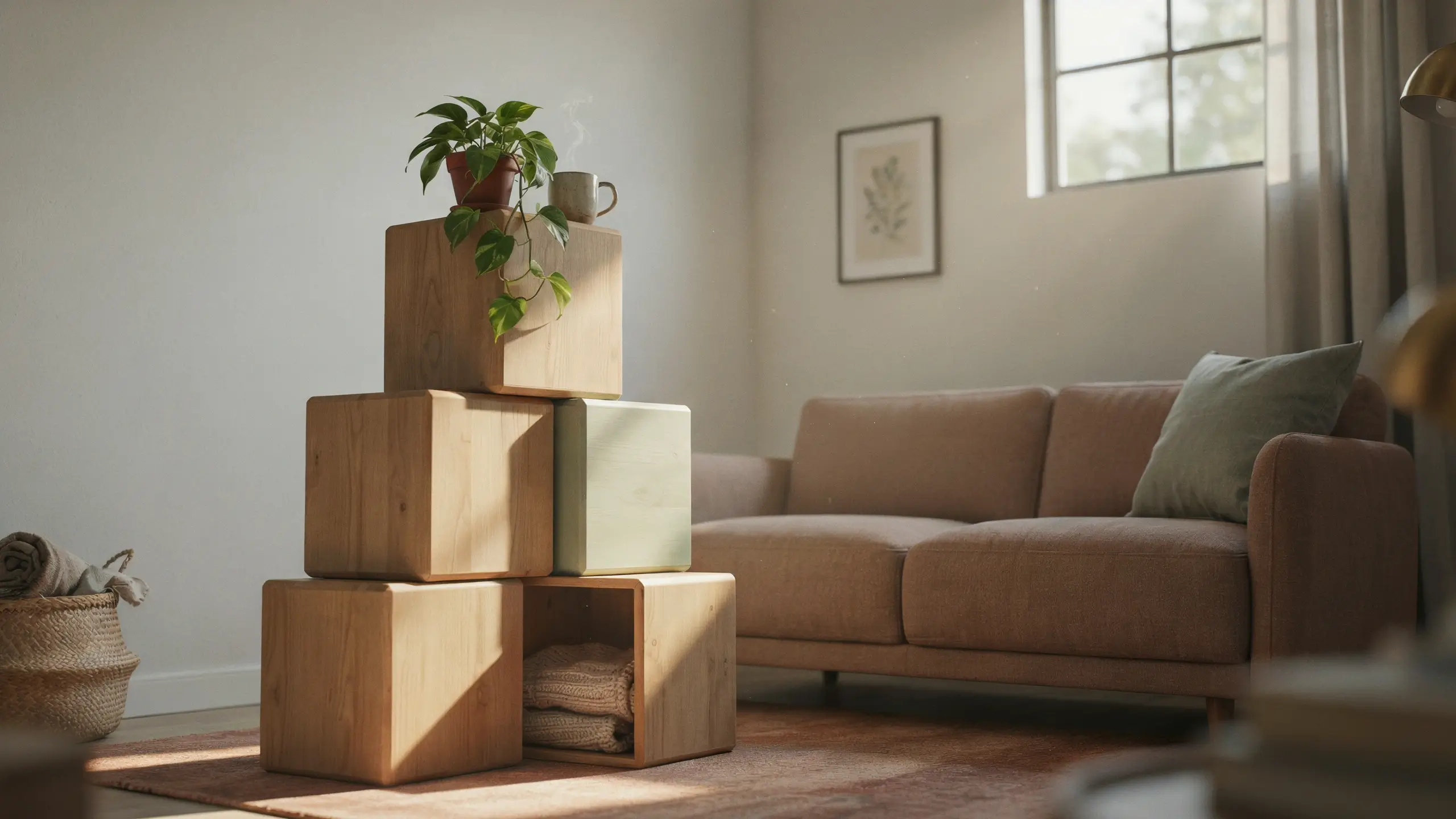
Modular cube storage can be arranged as a nightstand, side table, or bookshelf depending on the day. Rearrange them whenever your space needs change, which is more often than you’d think in a tiny home.
19. Mount a drop-leaf desk to the wall
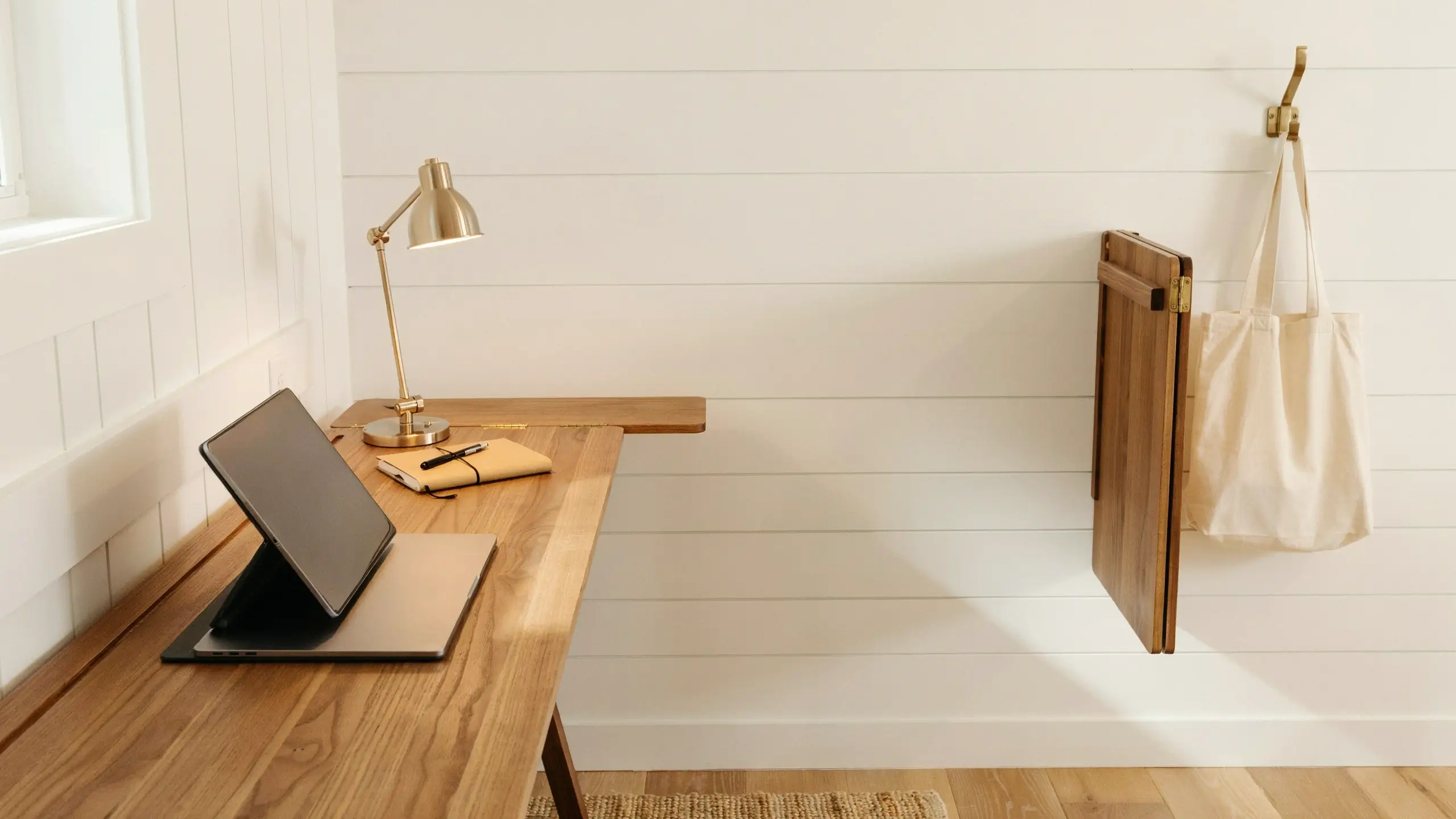
A small drop-leaf shelf mounted at desk height gives you a workspace that folds flat when you’re done. Pair it with a wall-mounted laptop stand so you’re not storing a bulky desk chair too.
Closet and Vertical Storage Hacks
20. File-fold your clothes instead of stacking them
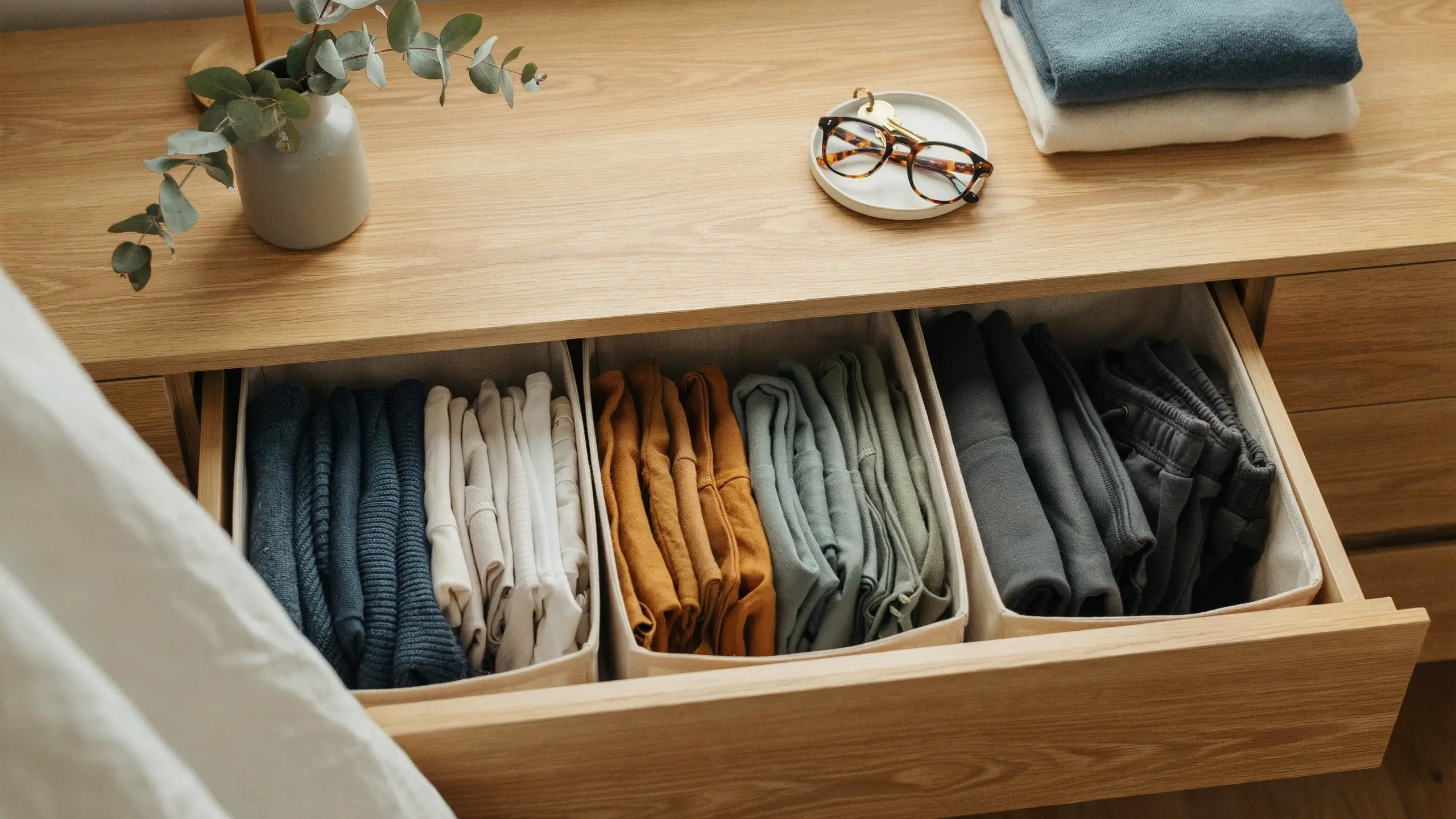
Folding clothes so they stand upright in a bin, instead of stacking them flat, means you can see everything at once and grab what you need without disturbing the rest of the pile. This works in drawers, cubbies, or bins under the bed.
21. Install a pegboard wall
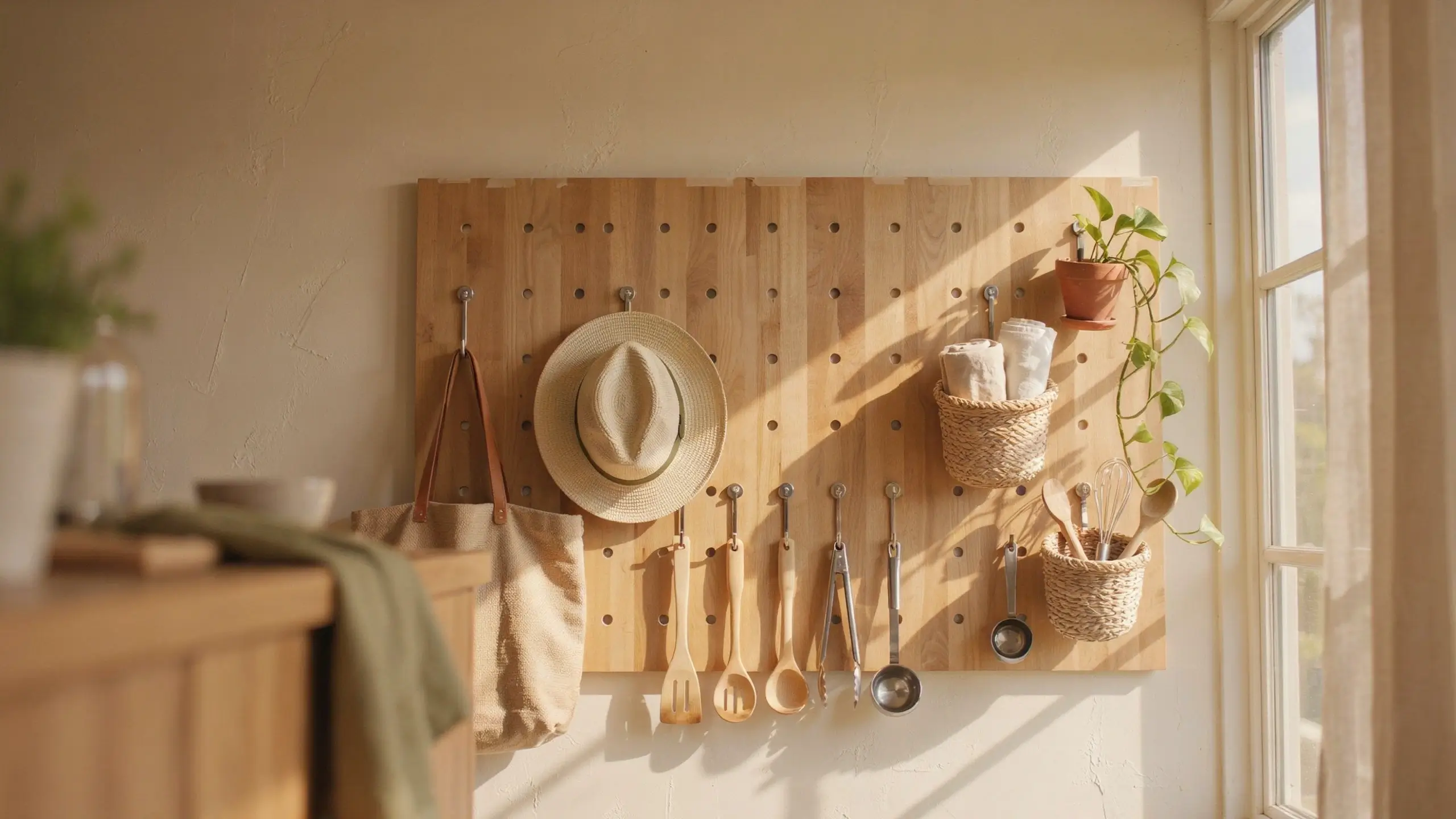
A pegboard mounted with adhesive strips, no drilling required, gives you endless flexible storage for bags, hats, tools, or kitchen utensils. Paint it to match your walls or leave it in natural wood for a look that doubles as decor.
22. Repurpose an over-the-door shoe organizer
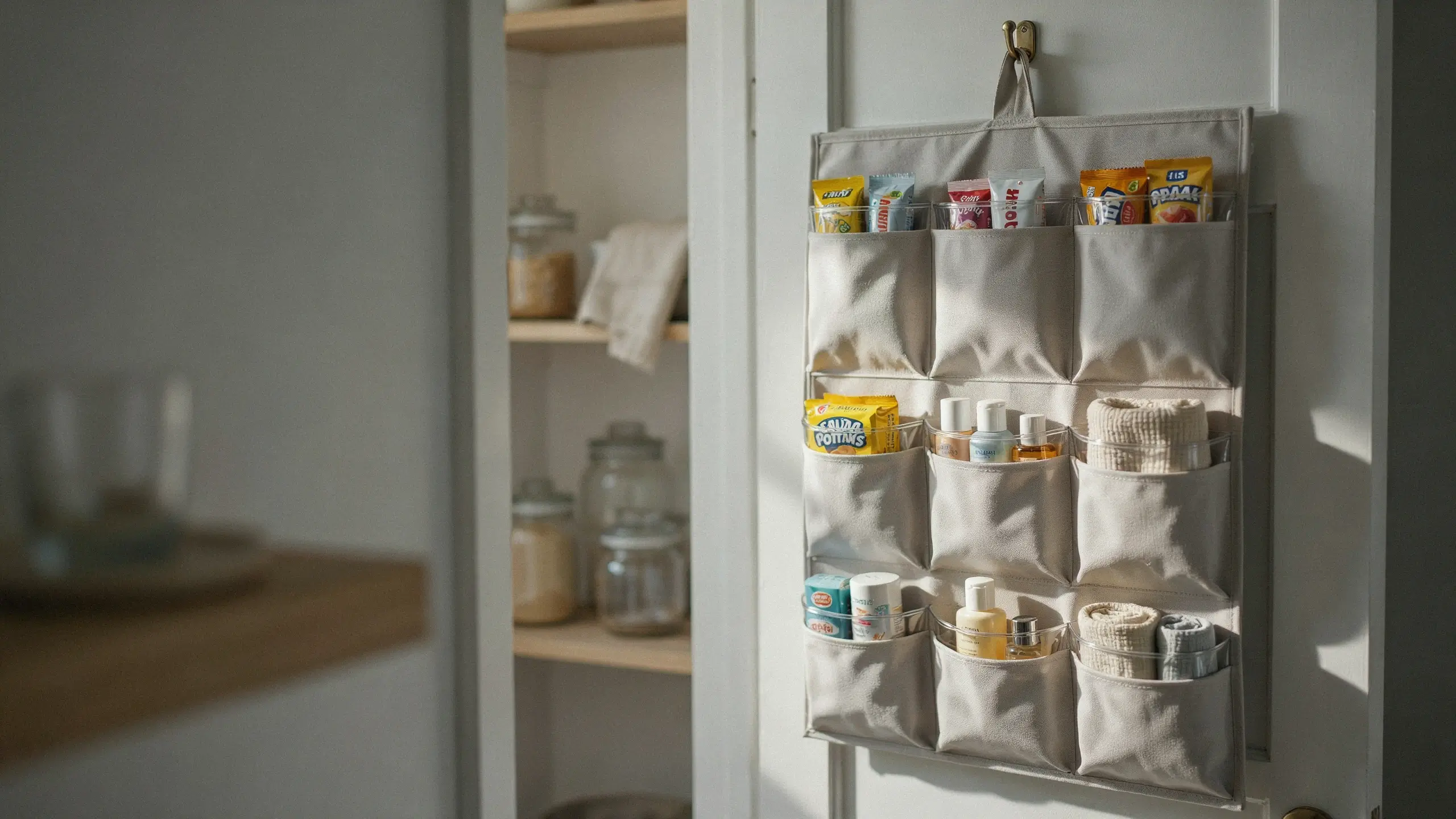
These aren’t just for shoes. Use the pockets for snacks, toiletries, cleaning supplies, or kids’ toys. Hang it on a pantry door, closet door, or the inside of a camper cabinet.
23. Use high shelves for rarely-used items
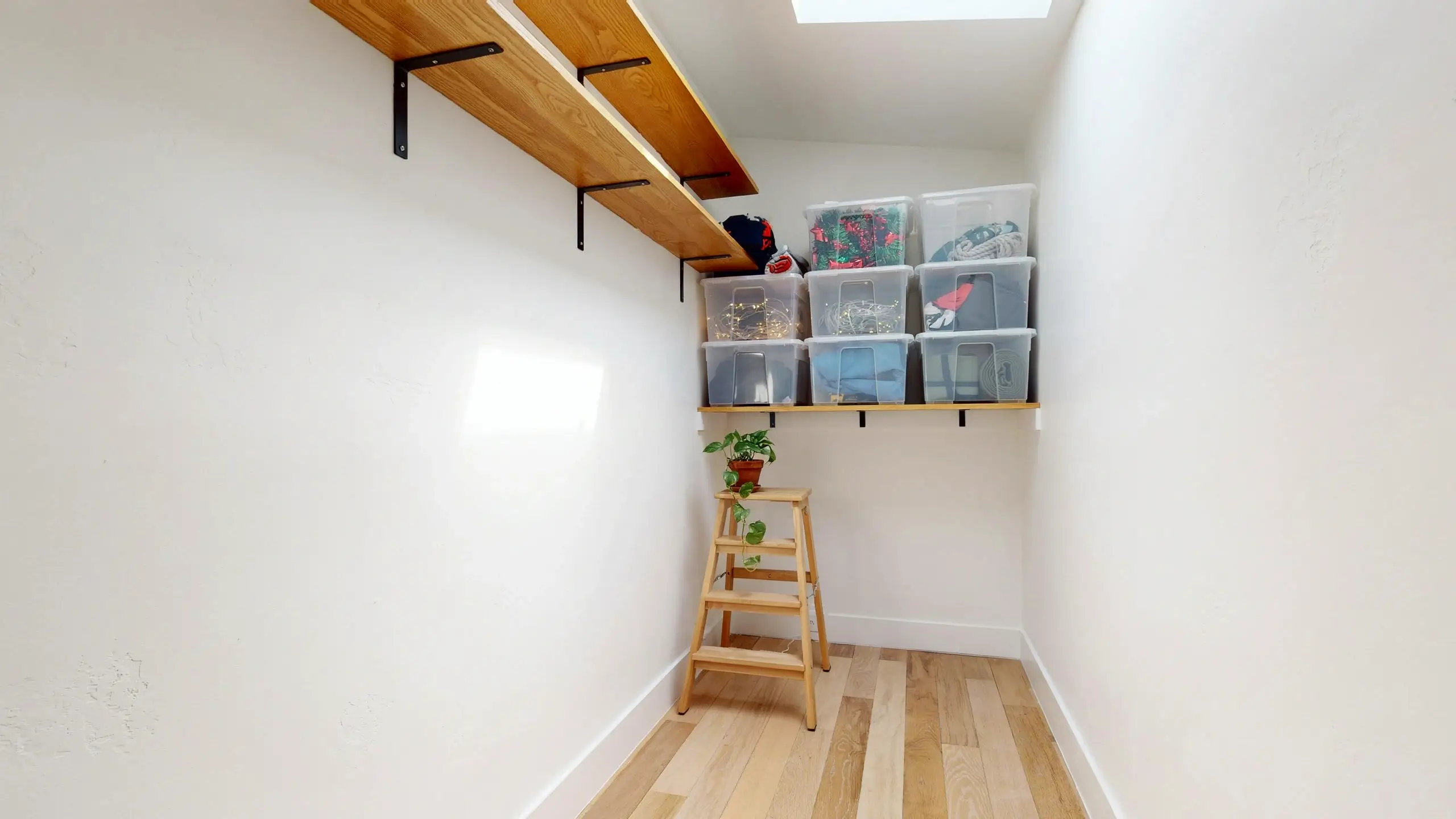
Anything you only need a few times a year, holiday decor, camping gear, extra blankets, belongs on the highest shelf you have. Label clear bins so you’re not climbing up there to guess what’s inside.
Camper-Only Space-Saving Hacks
These next few matter specifically because your home moves, which changes the rules a little.
24. Secure cabinet contents before every trip
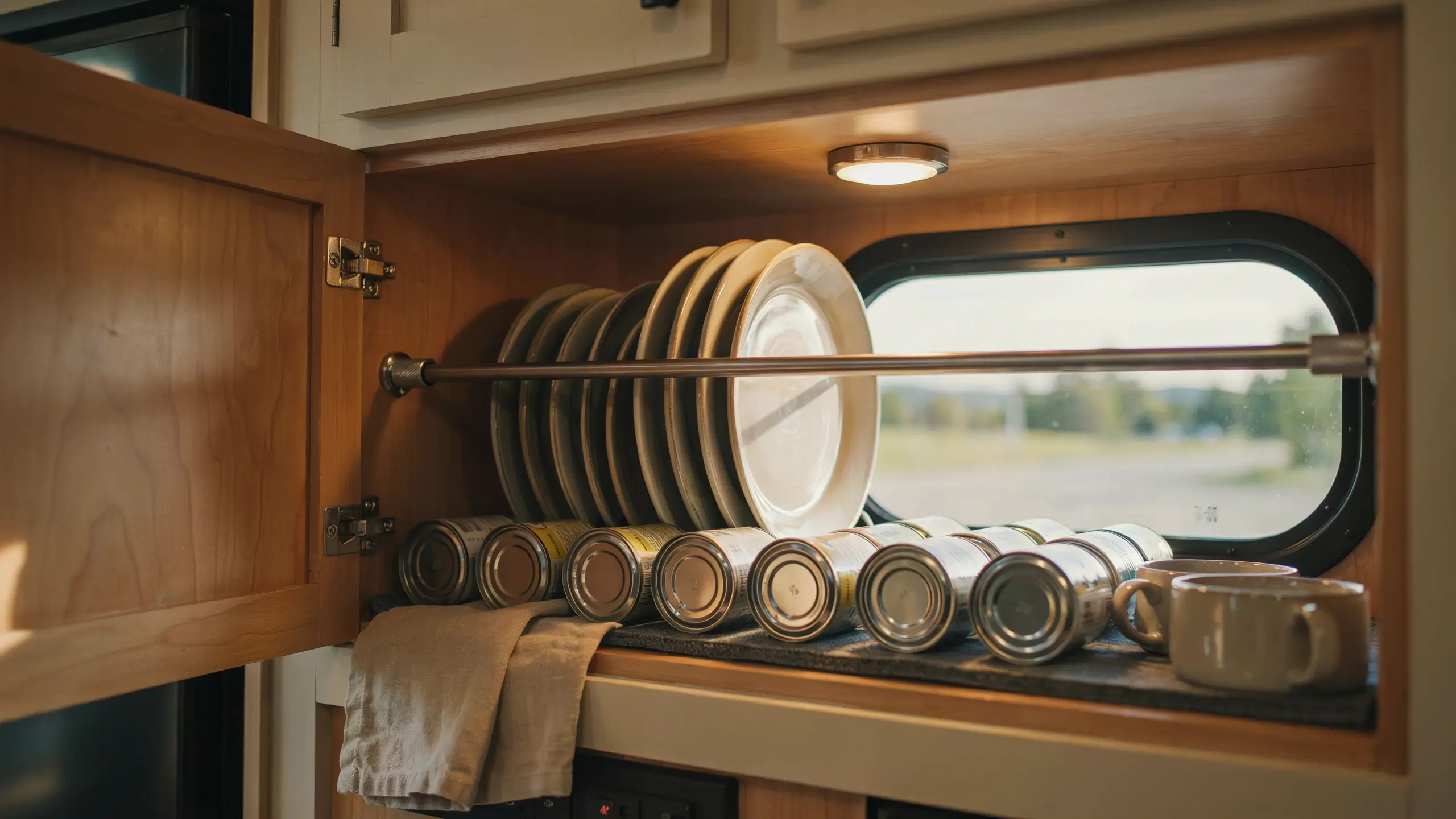
Use tension rods, bungee cord, or non-slip drawer liner inside cabinets to keep dishes and food from shifting or shattering while you drive. This takes five minutes and saves you from a kitchen disaster at your first pothole.
25. Think about weight distribution, not just storage space
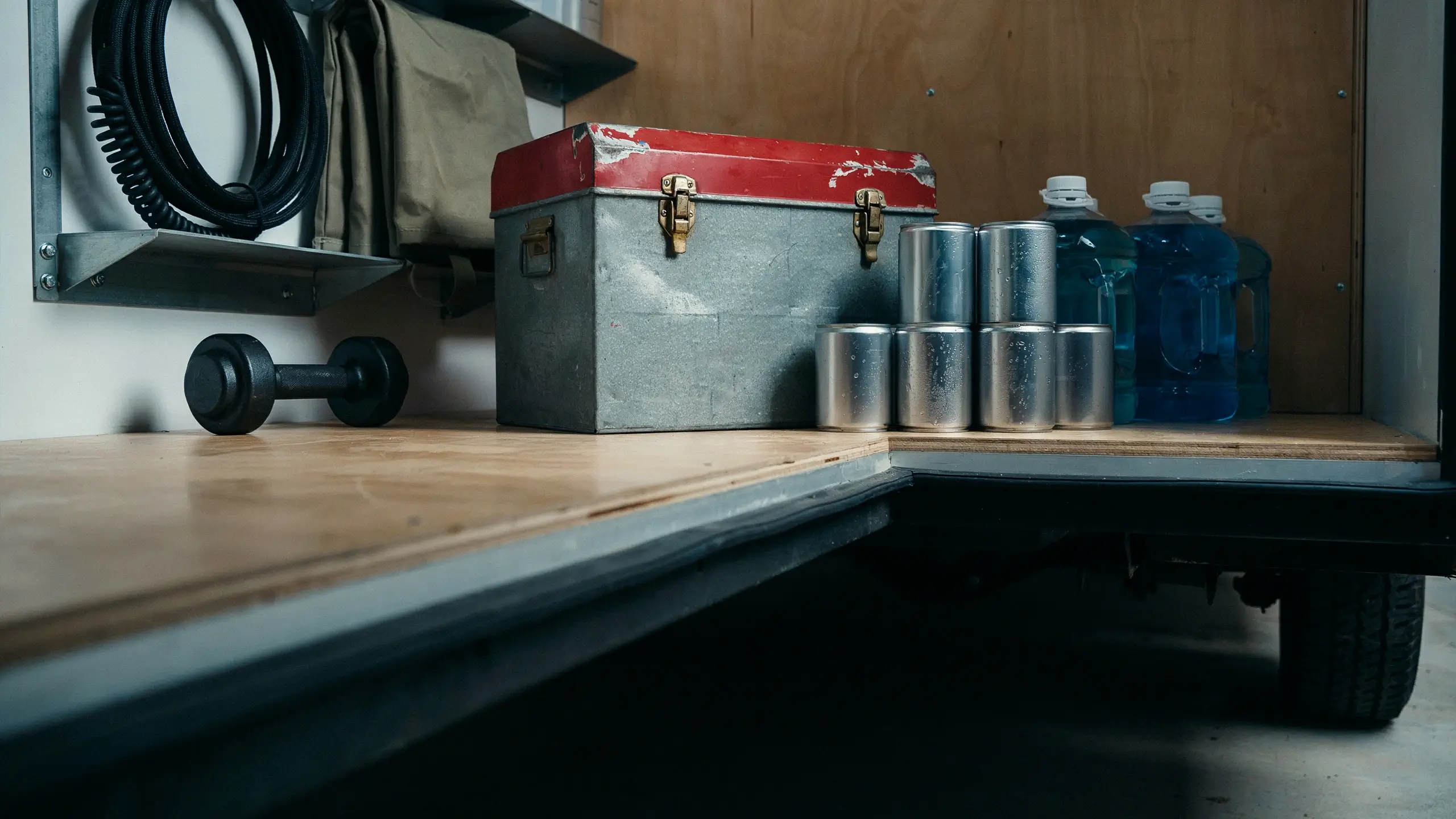
Heavy items like canned food, tools, and water jugs should sit low and centered near the axle, not up high or all on one side. This isn’t just a space issue, it affects towing safety and handling. If you’re unsure how much weight your rig can safely carry, check the GVWR, gross vehicle weight rating, posted on the manufacturer’s sticker before you load up.
26. Control moisture inside cabinets and closets
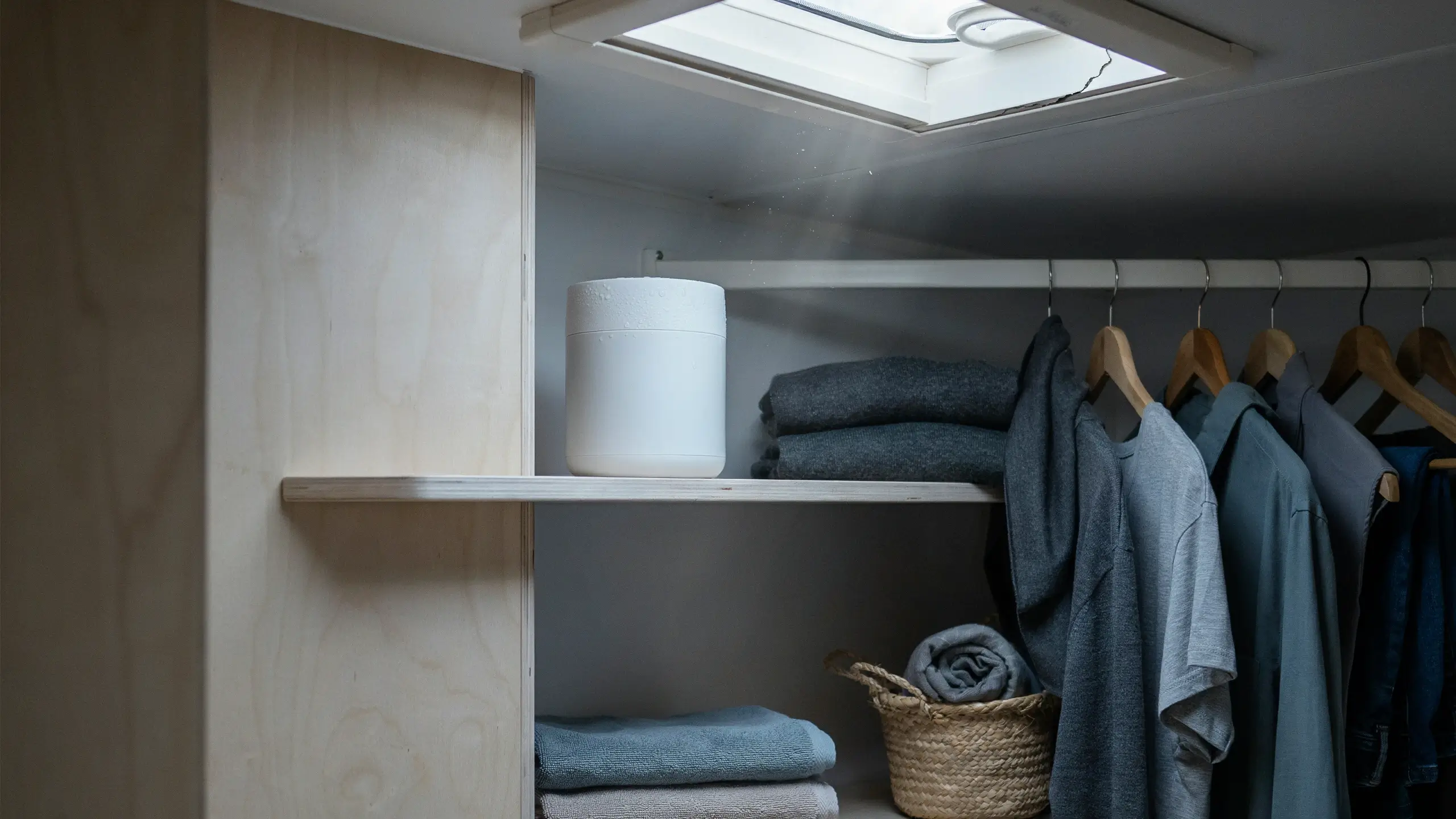
Campers are prone to condensation, which leads to musty smells and mildew faster than you’d expect. A small moisture absorber in closets and under-sink cabinets makes a real difference. Cracking a roof vent slightly while parked also keeps air moving.
27. Use exterior storage bays and hitch cargo carriers for bulky gear
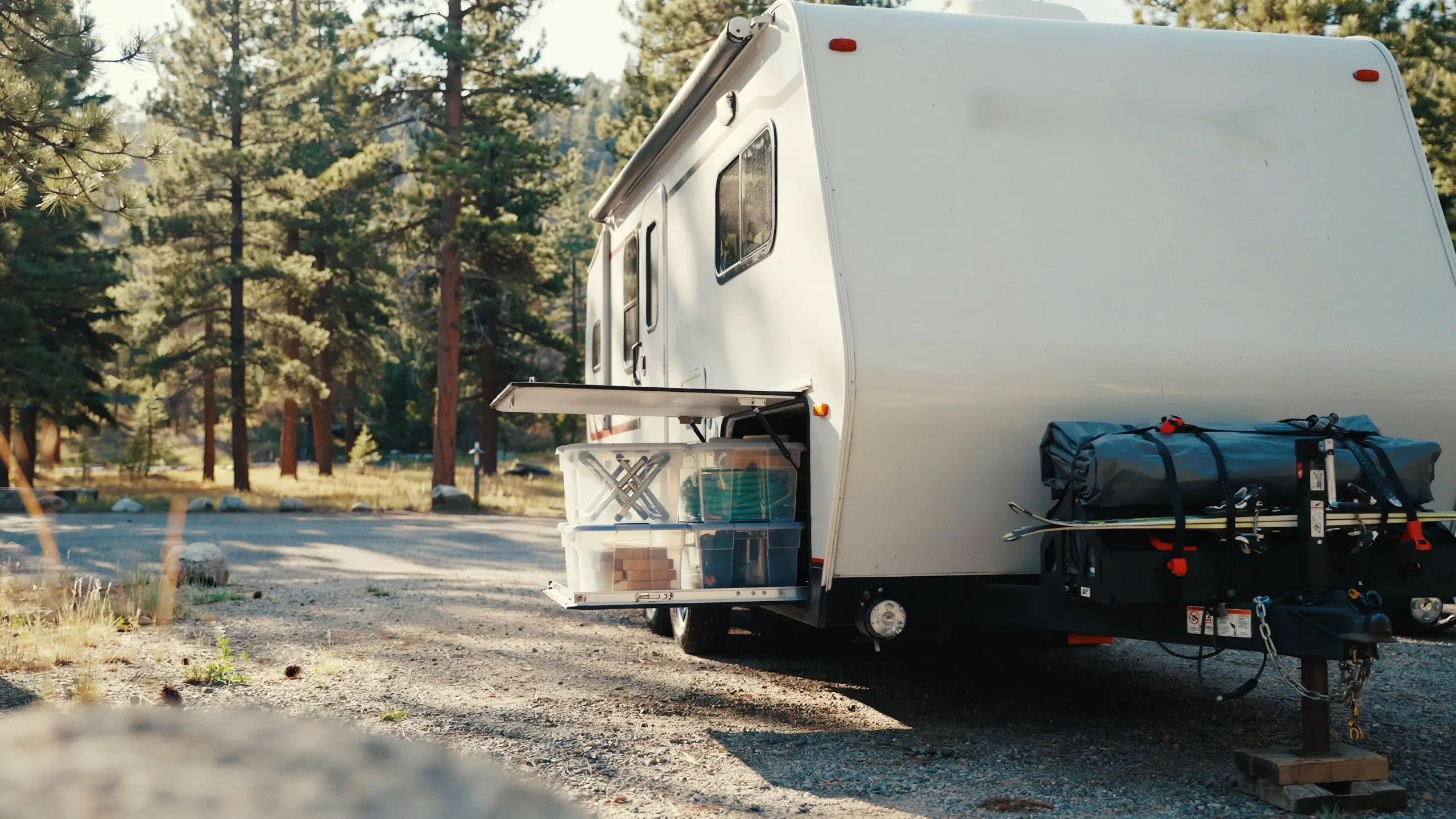
Camp chairs, hoses, leveling blocks, and outdoor gear don’t need to live inside. Stackable bins in your exterior storage bay or a hitch-mounted cargo carrier keep bulky items outside so your interior stays livable.
Space-Saving Mistakes to Avoid
Even good intentions can backfire in a small space. Watch out for these.
- Buying storage bins before measuring your cabinets. A bin that’s an inch too tall means a cabinet door that won’t close. Always measure first.
- Choosing furniture that only does one job. If it doesn’t store something, fold away, or serve two purposes, think twice before it takes up floor space.
- Skipping vertical space. Wall space above eye level is some of the most wasted real estate in a tiny home or camper. Use it.
- Forgetting to secure things in a camper. Open shelving looks great in photos, but anything not secured is a hazard on the road. Save open shelves for stationary tiny homes.
- Overpacking multi-purpose furniture. A storage ottoman crammed so full it won’t close isn’t saving you space, it’s just delaying the clutter problem.
Final Thoughts on Small Space Living
Living in a tiny home or camper forces you to be intentional in a way a regular sized house never does, and honestly, that’s not a bad thing. Once you stop trying to fit a normal amount of stuff into a small footprint and start choosing pieces that actually work for your space, everything gets easier. These space saving hacks for tiny homes and campers aren’t about giving things up, they’re about making the space you do have work as hard as possible.
Start with two or three ideas from this list, the ones that solve your biggest pain point right now, and build from there. You don’t need to overhaul everything in one weekend.
Which of these hacks are you trying first? Tell me in the comments, I’d love to hear what’s been the biggest game changer in your tiny home or camper.




No Comment! Be the first one.