




Should Interior Doors Be the Same Color as the Walls? Here’s the Real Answer
Standing in the paint aisle with a swatch in one hand and your phone in the other, you’re probably asking yourself the same question a lot of us have stood there and asked: should interior...

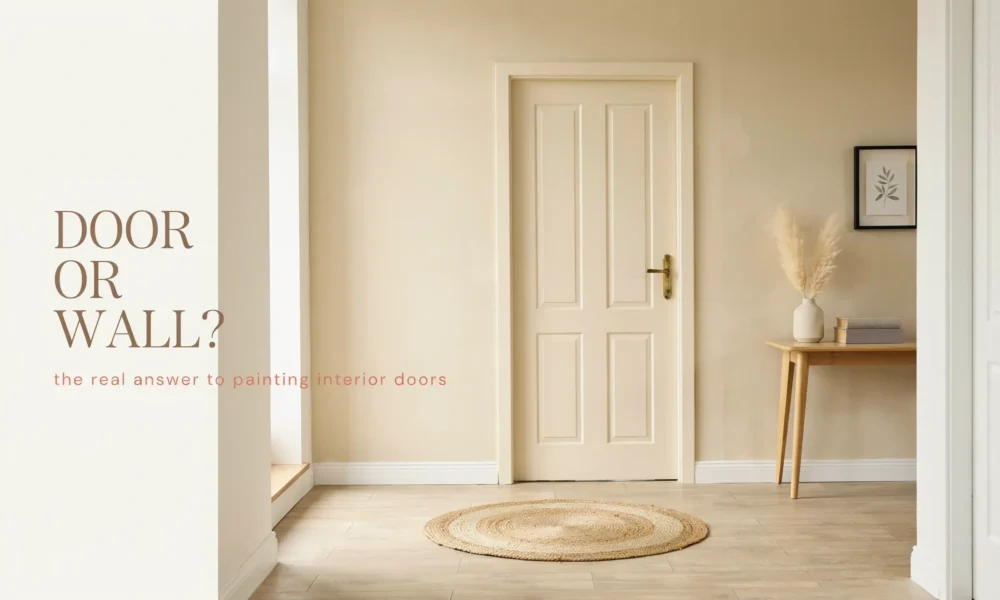
Standing in the paint aisle with a swatch in one hand and your phone in the other, you’re probably asking yourself the same question a lot of us have stood there and asked: should interior doors be the same color as the walls, or is that going to look flat and boring?
Here’s the short version. No, your interior doors do not have to match your walls. But in a lot of cases, painting them the same color is exactly the move that makes a room look bigger, calmer, and more expensive than it actually was. It depends on your room, your goals, and honestly, your personality.
I know that’s not the one-line answer you were hoping for. So let’s break down exactly when matching works, when it doesn’t, and how to make the right call for your specific space, whether you’re a renter who can’t touch a wall or a homeowner ready to commit to a can of paint.
The Quick Answer: It Depends on What You Want the Door to Do
Before you pick up a brush, think about what job you want that door to have in the room. Every door falls into one of two categories:
- Doors you want to disappear. Closet doors, hallway doors, doors in small rooms, or doors that just aren’t very pretty to begin with. These are great candidates for matching the wall color.
- Doors you want to show off. Front-facing doors in an entryway, doors with interesting panel details, French doors, or doors that lead somewhere special like a home office or a nursery. These are better with a contrasting color.
Once you know which category your door falls into, the rest of the decision gets a lot easier.
Why Matching Your Doors to Your Walls Actually Works
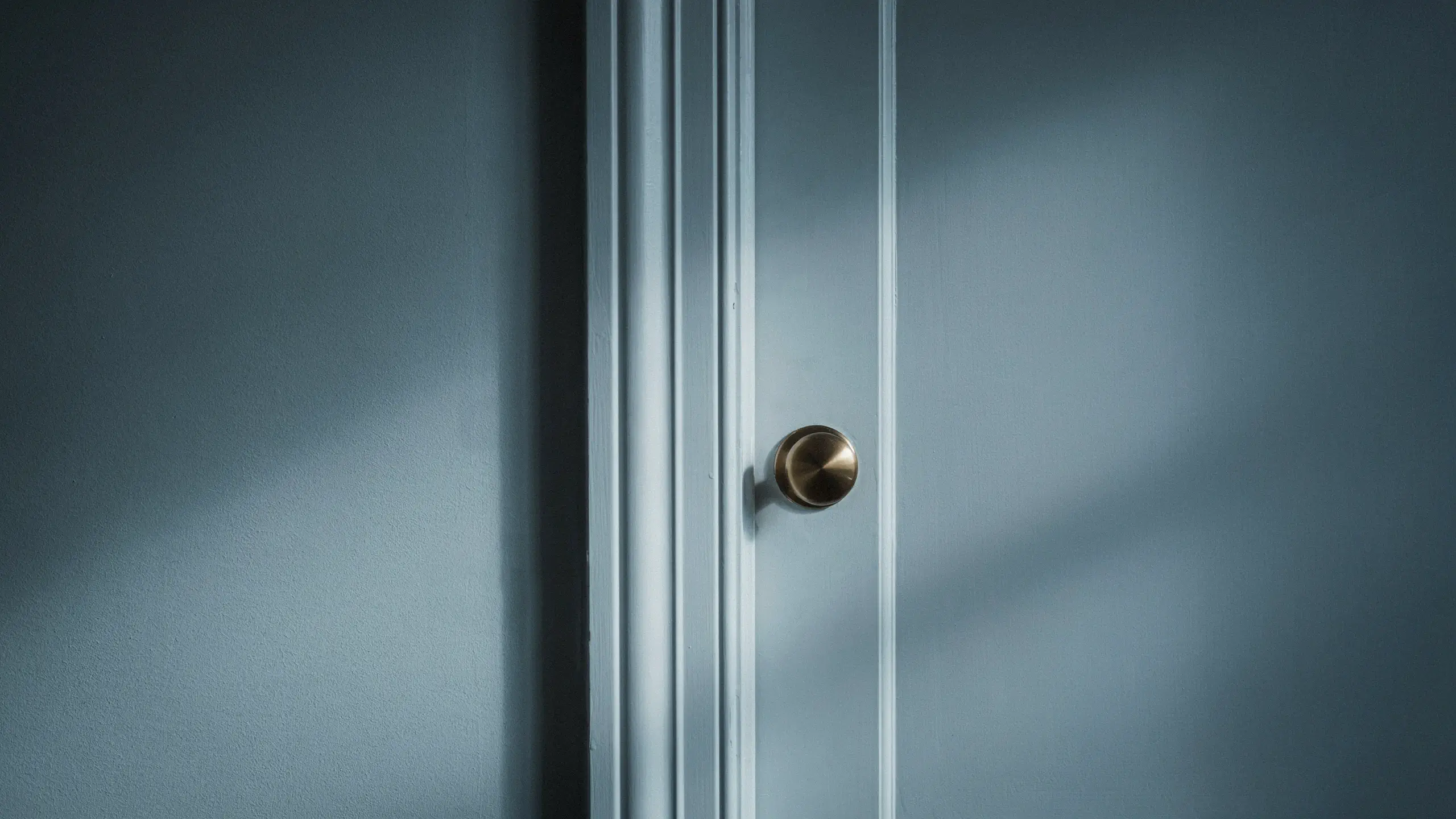
This idea used to feel a little unconventional, but it’s become one of the most requested looks in home design right now. Designers call the full version of this “color drenching,” where the walls, trim, doors, and sometimes even the ceiling all get painted the exact same shade. It’s a design trick where an entire room, including walls, ceilings, doors, and trim, is painted in the same shade, and it has become extremely popular with everyone from high-end decorators to DIYers.
Here’s what that single-color approach actually does for a room.
1. It makes small spaces feel bigger
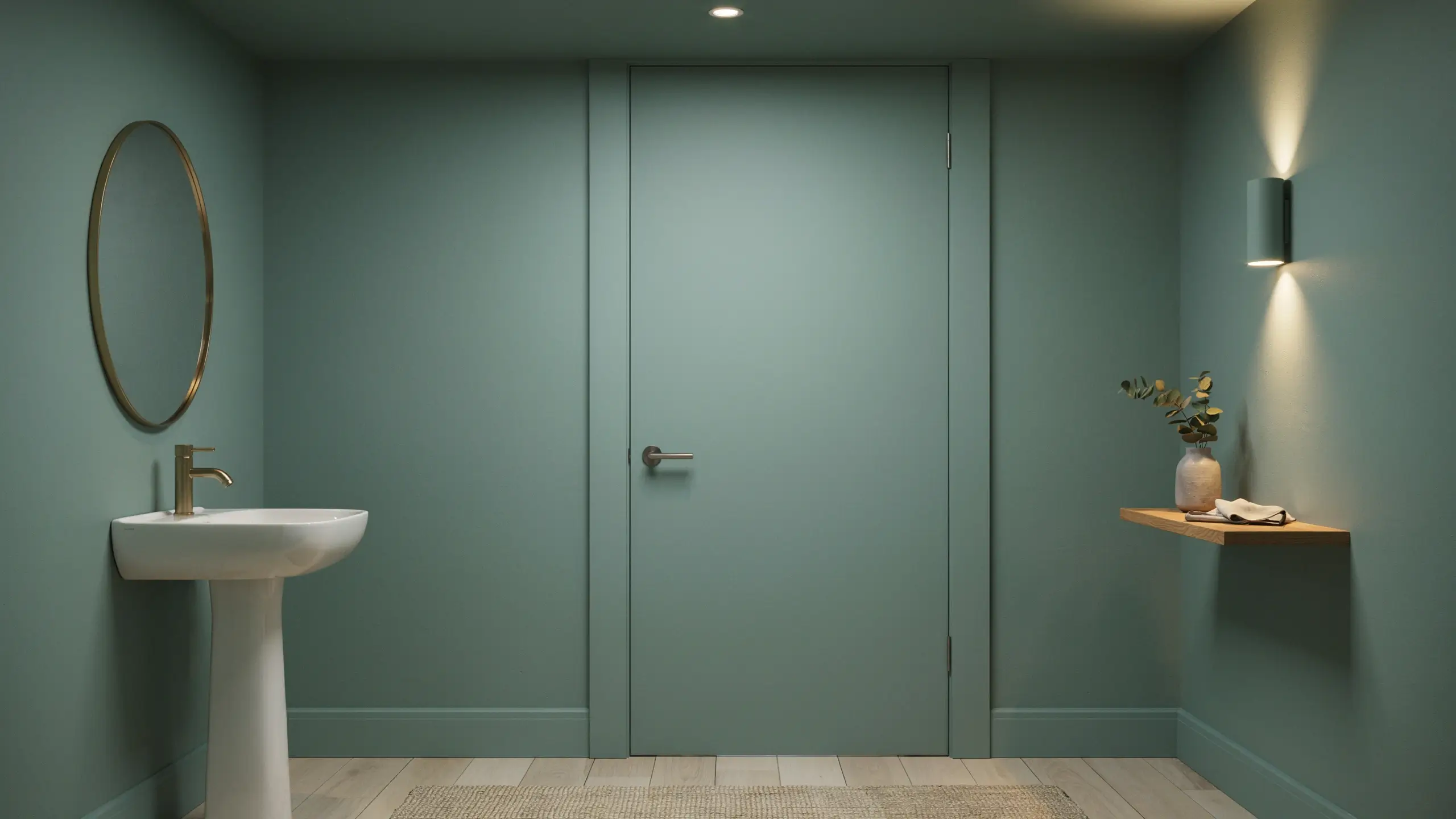
This is the number one reason people reach for matching paint. If you’re working with a smaller house or a room that feels cramped, picking a door color that matches your walls can help create the illusion that the space is bigger. When there’s no color break between the wall and the door, your eye doesn’t stop to register where one ends and the other begins. The whole wall just reads as one continuous surface instead of a wall interrupted by a big rectangle of a different color.
This is especially useful in small bedrooms, hallways, laundry closets, and powder rooms where every visual break makes the room feel more chopped up than it already is.
2. It creates a calm, cohesive flow
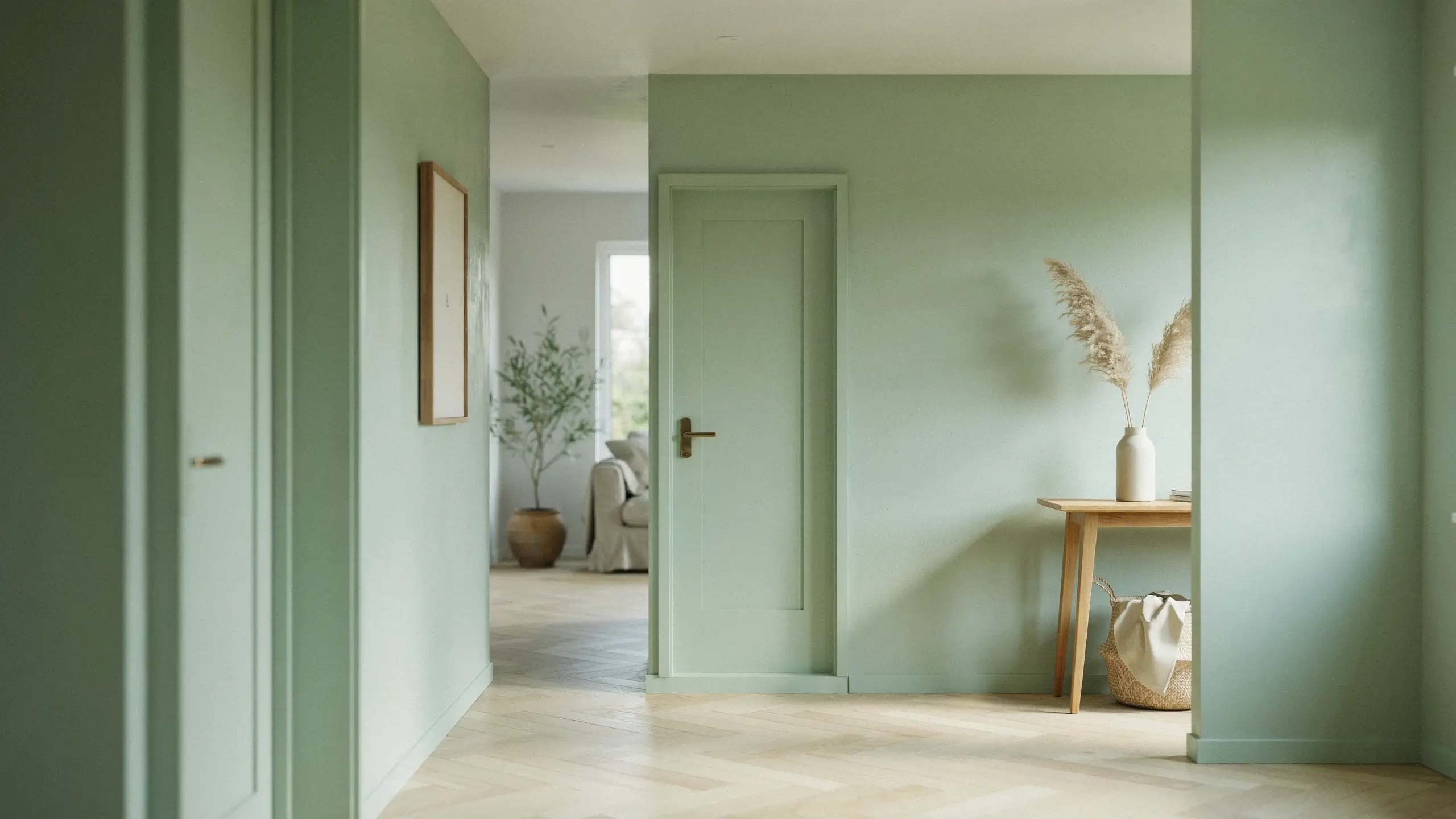
Wall colors take up so much surface area that they tend to set the whole personality of a room, and door colors are usually decided in relationship to them. When the door matches, there’s nothing pulling your attention away from the architecture, the furniture, or the lighting. The room feels settled instead of busy.
Painting interior doors the same color as the walls around them is also a smart way to disguise doors you’re not particularly fond of, letting them blend into the design instead of standing out as an eyesore. If your doors are older, a little dinged up, or just not a style you love, this is basically a free upgrade.
3. It hides doors that don’t need attention
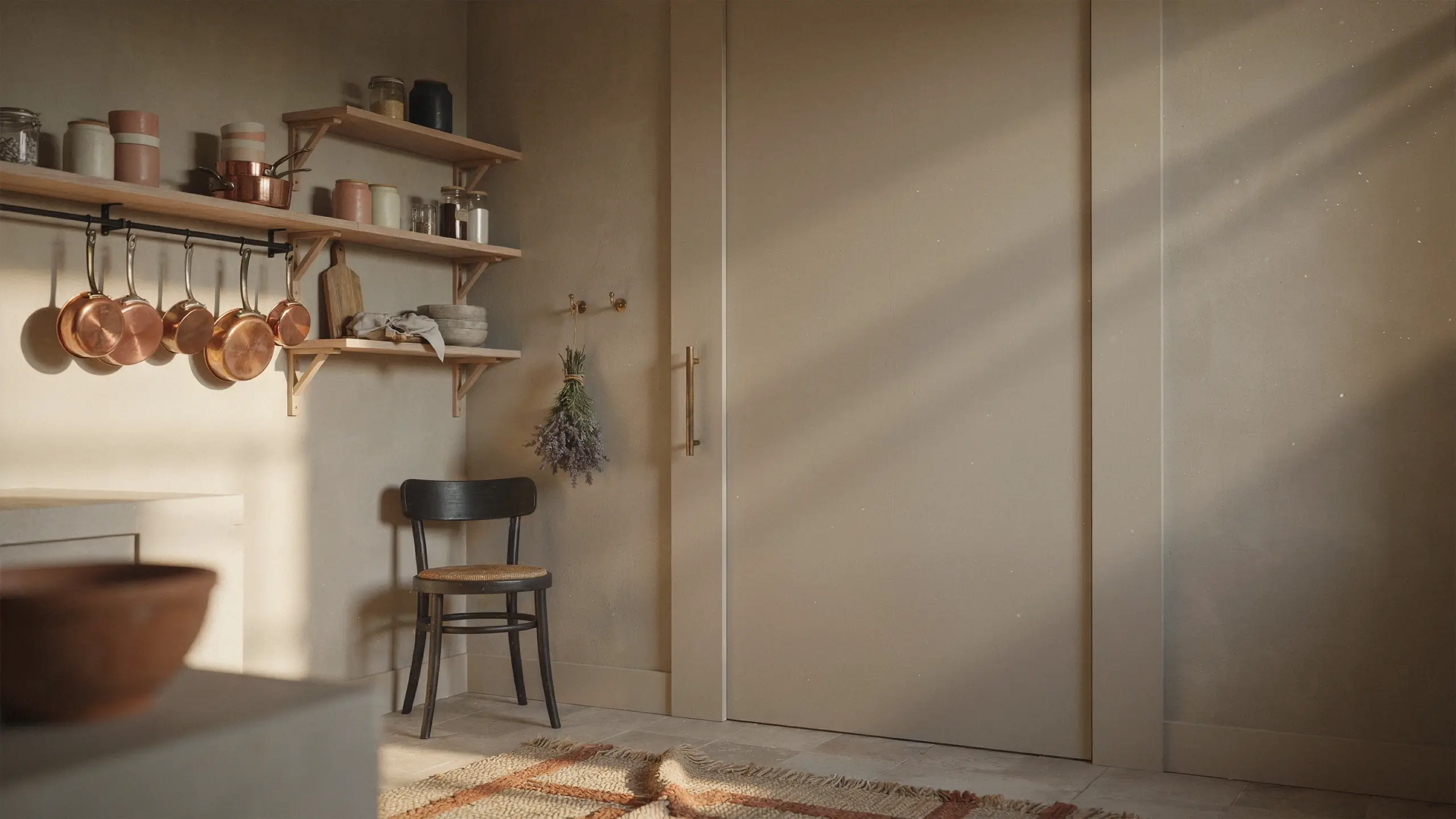
Nobody needs their linen closet door to be a focal point. Painting doors the same color as the walls can camouflage a door and fully integrate it into the design, which is perfect when a door isn’t the most attractive feature of the room. This works especially well for:
- Closet doors in bedrooms
- Pantry doors in small kitchens
- Utility or laundry doors off a hallway
- Doors that lead to a garage, basement, or storage area
- Any door where you’d rather the eye keep moving
4. It’s a huge trend right now, and it’s not going anywhere fast
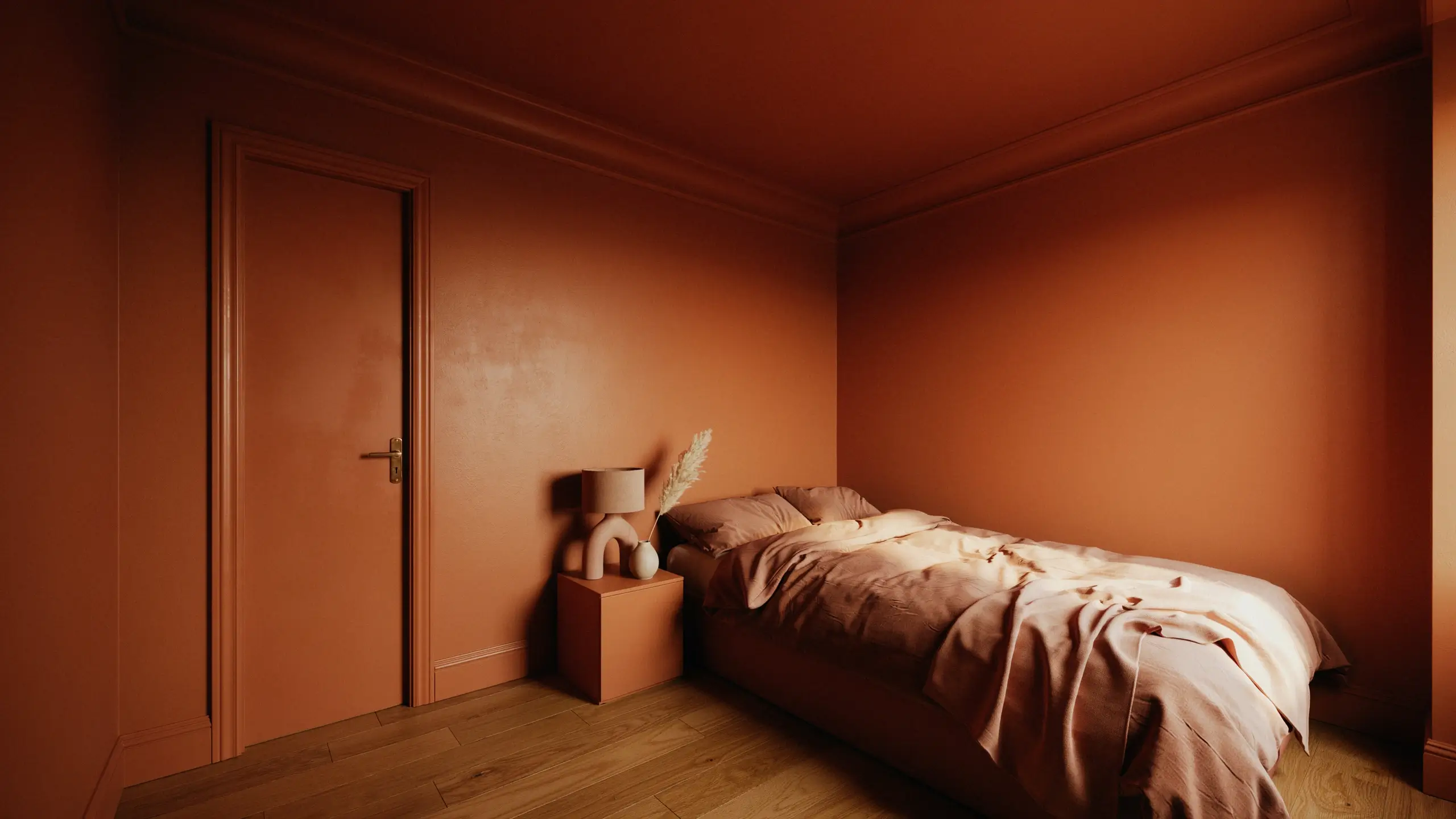
If you’ve been on Pinterest or Instagram lately, you’ve probably seen it. According to Zillow’s 2026 Home Trends Report, mentions of “color-drenching” are up 149 percent in home listings, and it keeps showing up across paint brand forecasts for the year. Colour drenching means painting every surface in the same hue, walls, ceilings, doors, skirting boards, even radiators, so that everything becomes part of one continuous canvas, wrapping the room like a soft blanket of color.
The technique makes small rooms feel larger and more intentional by eliminating the visual breaks between surfaces, which is the opposite of what most people assume dark, saturated color will do. Rather than breaking up a space with contrasting trim or a white ceiling, everything gets painted in one seamless hue, and for a totally cohesive look you can even use the same sheen for the entire space.
Why You Might NOT Want to Match Your Doors to the Walls
Matching isn’t always the answer, and honestly, some of the most striking rooms I’ve seen lean the opposite way.
1. It can feel flat in a large or plain room
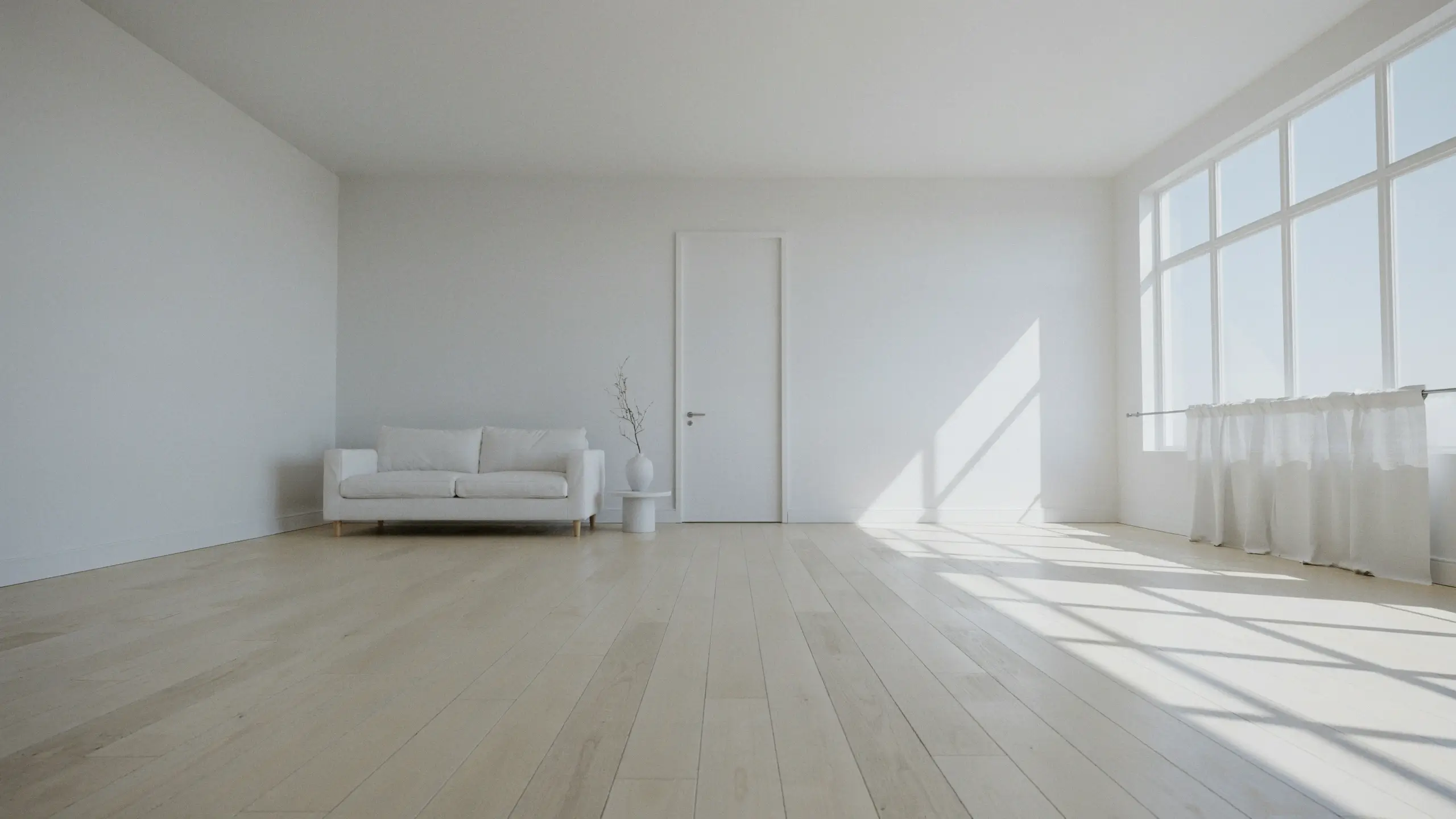
Doors that contrast with the wall color tend to work best in rooms with large or wide spaces because the contrast helps draw the eye and gives the door a purpose, while a contrasting door in a very small room can sometimes make it feel more cramped instead. So size matters here, and it cuts both ways. A giant, open living room with plain white walls and a plain white door can end up looking a little unfinished without something to anchor it.
2. You lose the chance to make a design statement
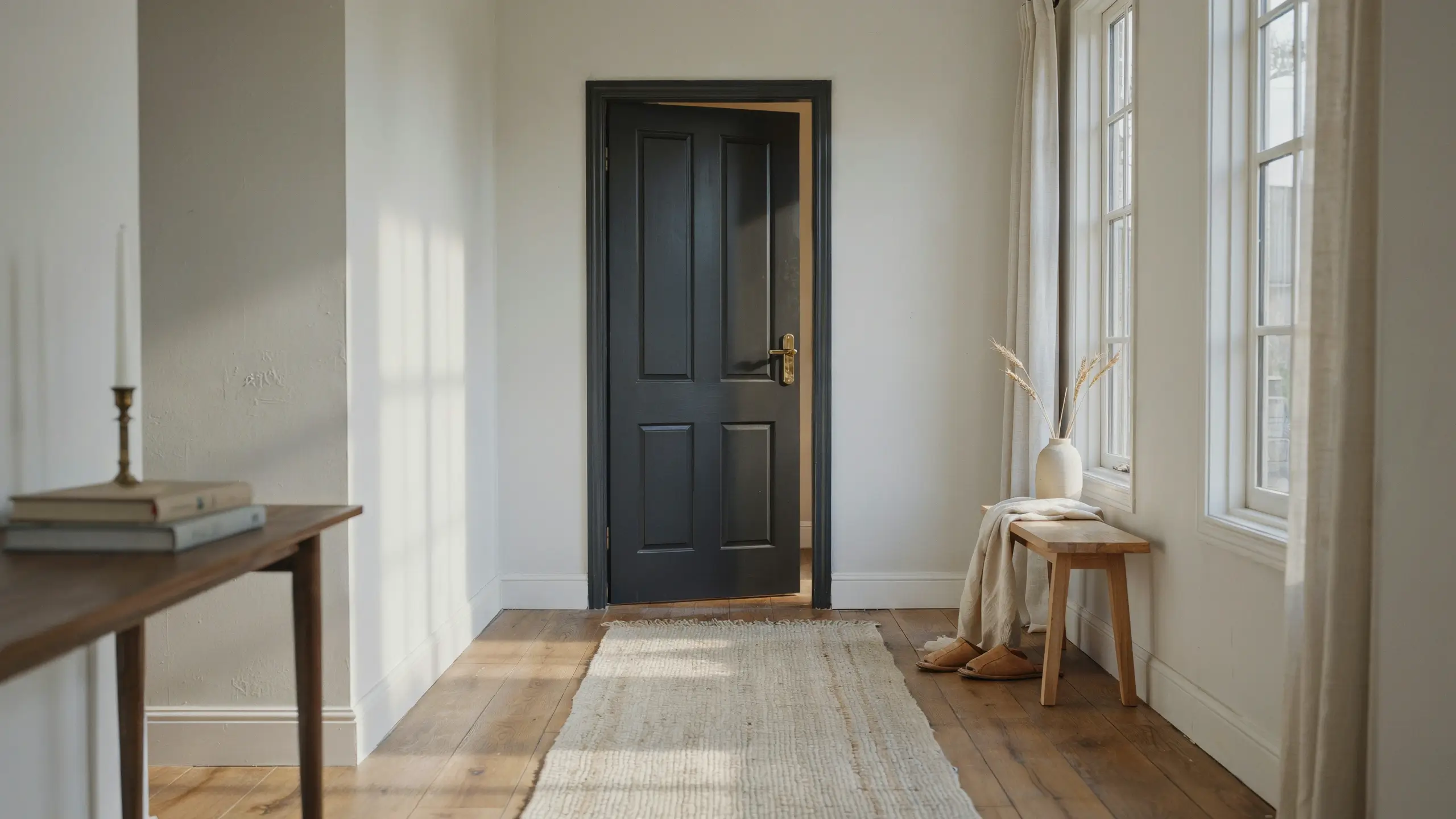
A black door against a soft white or greige wall is one of the most requested looks in modern farmhouse and transitional homes for a reason. It’s a small commitment (one door, not a whole room) that adds instant character. There’s a growing trend for painting doors in a contrasting color to the walls specifically to make a style statement, almost like a mini feature wall within the space.
3. Matching everything takes more time and money than people expect
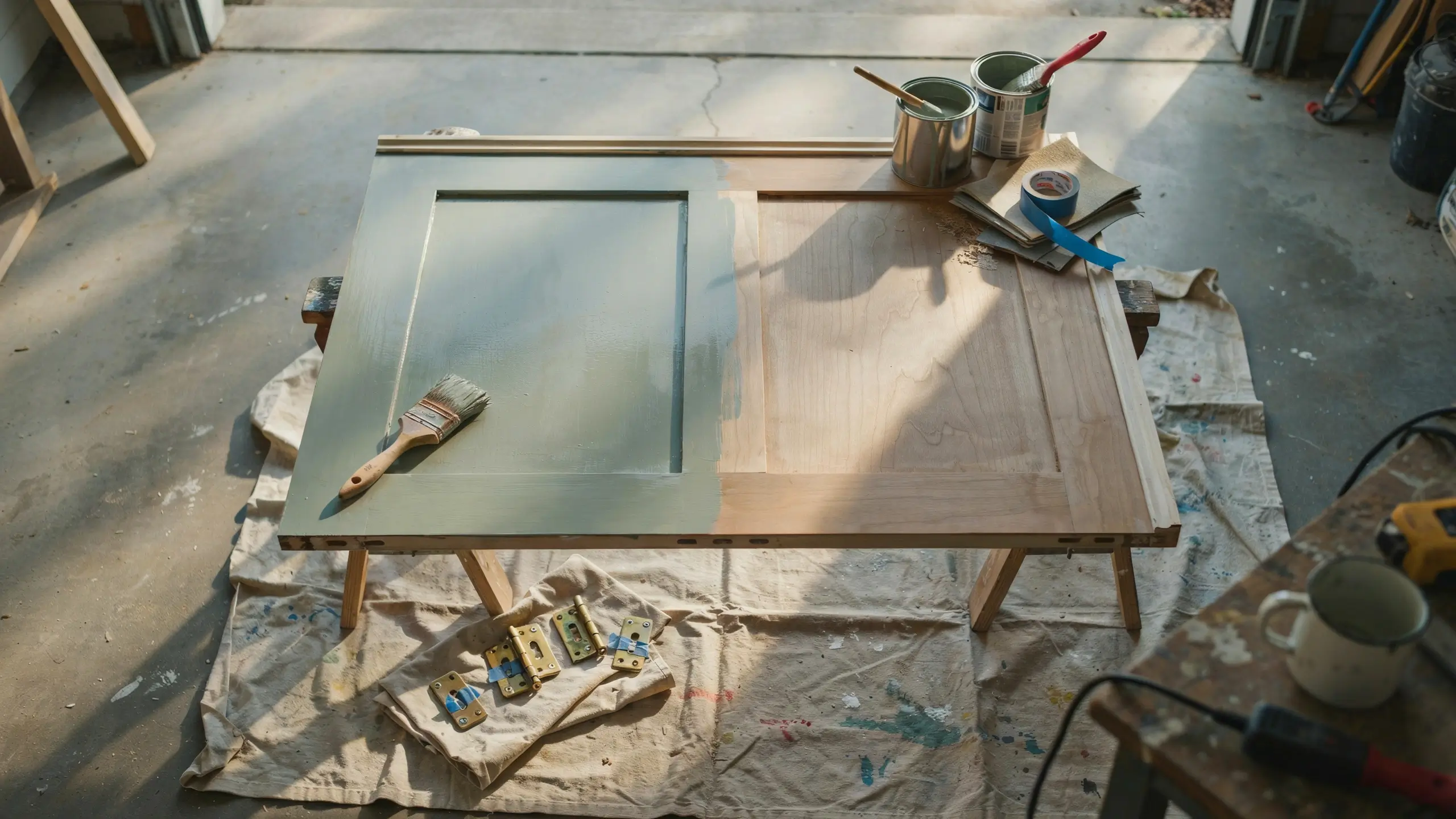
Repainting every interior door in a home takes a real amount of time and effort between cleaning, sanding, and letting everything properly cure, and that’s before you factor in removing hardware, taping hinges, and doing both sides plus the edges. If you’re on a tight budget or timeline, painting just the trim or just one accent door can give you almost the same visual payoff for a fraction of the work.
4. Doors and walls often need different finishes
This one trips people up. Most walls are painted in a more matte finish, so if you want your doors the same color as the walls, consider picking up a satin or gloss sheen instead, which adds a bit of contrast in texture without breaking up the color itself, and higher-sheen finishes also hold up better to fingerprints and daily wear. Doors get touched, bumped, and cleaned far more than walls do, so a flat wall paint on a door will show scuffs almost immediately.
Should You Match the Trim Too? (This Changes Everything)
Here’s the detail most articles skip, and it’s actually the decision that matters most.
If you paint the door the same color as the wall but keep the trim white, you’ll still get a strong visual break, since the white frame outlines the doorway anyway. The room-blurring effect only really kicks in once the trim matches too.
If you want to take the seamless look a step further, painting your trim the same color as the walls can even make your ceilings look a bit taller. This is the real secret behind why color-drenched rooms photograph so well. It’s not just the door, it’s the door, the trim, and the wall all working as one uninterrupted surface.
If you’re not ready to commit to matching trim and door and wall all at once, a nice middle ground is matching just the trim and door to each other while letting the wall be a lighter or darker shade in the same color family. You still get a cohesive look without fully drenching the room.
Same Color, Different Sheen: The Trick Designers Use
If full color drenching feels like too much of a leap, try this instead. Paint the walls, trim, and door in the exact same color, but change the sheen between surfaces.
- Walls: matte or eggshell
- Trim and door casing: satin
- Door itself: satin or semi-gloss for durability
Because the light hits each sheen a little differently, you get subtle definition between the door, the trim, and the wall, even though the color is technically identical. It reads as intentional and layered instead of like everything got rolled with the same can of paint. This is one of those details that looks incredible in photos but is barely noticeable in person, which is exactly the point.
When to Go Bold Instead: The Case for Contrast Doors
If your gut is telling you to skip matching altogether, trust it. A contrast door is one of the highest-impact, lowest-cost updates you can make to a room. Some combinations that consistently perform well on Pinterest and in real homes:
- Black door, white or soft greige walls. The classic. Works in almost any style from modern farmhouse to traditional.
- Deep green door, warm white walls. Feels collected and a little bit old-world without trying too hard.
- Navy door, warm neutral walls. Softer than black, still adds real drama.
- Warm terracotta or clay door, cream walls. This is having a real moment right now and pairs beautifully with wood tones, rattan, and brass hardware.
Keep the trim white or a matching neutral so the contrast door gets to be the star instead of competing with painted trim for attention.
Mistakes to Avoid
- Choosing a pure white that doesn’t match your existing white. There are dozens of whites, and stacking a cool white door against a warm white wall (or the reverse) reads as a mistake, not a design choice, even when the colors are technically “matching.”
- Forgetting the door edges. People paint the front and back of a door and completely forget the top and side edges, which show every time the door is open. Do all six surfaces for a finished look.
- Skipping the primer on stained or varnished doors. If your doors currently have a wood stain or existing varnish, you need a bonding primer first or the paint will peel within months. This is the number one reason DIY door paint jobs fail early.
- Using flat paint on a high-touch door. As mentioned above, flat and matte finishes show fingerprints and scuffs fast. Save the flat sheen for walls and go at least satin on the door itself.
- Matching the wall but ignoring the hinges and hardware. A freshly painted door with old brassy, mismatched hinges instantly looks unfinished. Swap hardware for a few dollars and the whole thing reads as intentional.
Quick Decision Guide
Use this as your cheat sheet next time you’re standing in the paint aisle:
| Your Situation | Best Choice |
|---|---|
| Small room or narrow hallway | Match door to wall |
| Door isn’t attractive or has damage | Match door to wall |
| Large open room with plain walls | Contrast color |
| Want a bold style statement | Contrast color |
| Going for a modern, minimalist look | Match door, trim, and wall (color drenching) |
| Traditional or farmhouse style | Contrast door, white or neutral trim |
| Renting | Removable hardware or trim upgrades |
| Tight budget or timeline | Contrast the door only, skip repainting trim |
The Bottom Line
So, should interior doors be the same color as the walls? There’s no rule that says they have to be, and there’s no rule that says they can’t. It genuinely comes down to whether you want that door to blend in or stand out, how big your room is, and how much of a paint project you’re up for this weekend.
If you’re chasing that calm, cohesive, slightly moody look that’s everywhere on Pinterest right now, matching your door, trim, and wall is worth the extra effort. If you’d rather make a small, punchy statement without repainting your whole house, a contrast door might be exactly what your space needs.
Whatever you land on, the real trick isn’t the color itself. It’s being intentional about it instead of just going with whatever white was already on the walls when you moved in.
Have you painted your interior doors to match your walls, or gone bold with a contrast color instead? I’d love to hear what worked in your space, drop a comment below and let me know what you’re working with.



No Comment! Be the first one.