




How to Decorate Your Table for Easter: A Simple Step-by-Step Guide Anyone Can Pull Off
Easter table decorating always sounds simple until you’re standing in your dining room with a bag of dollar store eggs and no idea where to start. Do you go pastel or neutral? Bunny plates or...

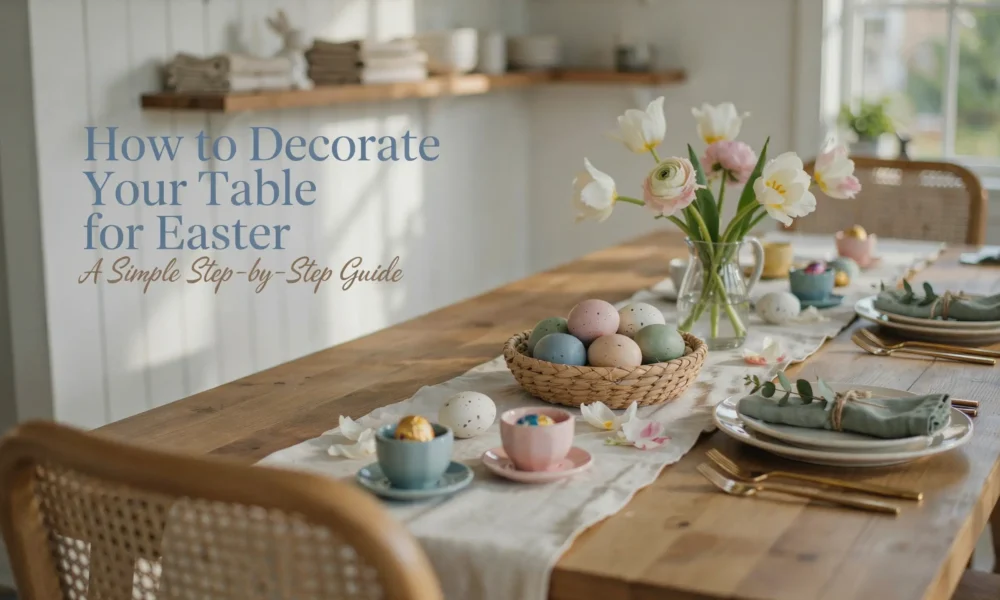
Easter table decorating always sounds simple until you’re standing in your dining room with a bag of dollar store eggs and no idea where to start. Do you go pastel or neutral? Bunny plates or keep it classic? One centerpiece or five little ones?
Here’s the good news. You don’t need a design degree or a garage full of props to pull together a table that looks like it belongs on a spring magazine cover. You need a system. Once you understand how to layer a table (the same way stylists do it), the rest is just picking colors and details you love.
This guide walks you through exactly how to decorate your table for Easter, step by step, with real ideas you can actually recreate, whether you’re hosting twelve people or setting a cozy table for four.
The Simple Layering Method for an Easter Table That Actually Comes Together
Most Easter tables that feel “off” aren’t missing pretty things. They’re missing structure. A table with six gorgeous items scattered randomly still looks cluttered. A table built in layers, even with cheap, simple pieces, looks intentional.
Here’s the order that works every time:
- Base layer (tablecloth, runner, or placemats)
- Dinnerware
- Napkins and glassware
- Centerpiece
- Place cards or personal touches
- Finishing details
Build it in that order and stop after each layer to look at the table before adding the next one. You’ll almost always want less than you think.
1: Start With a Base Layer
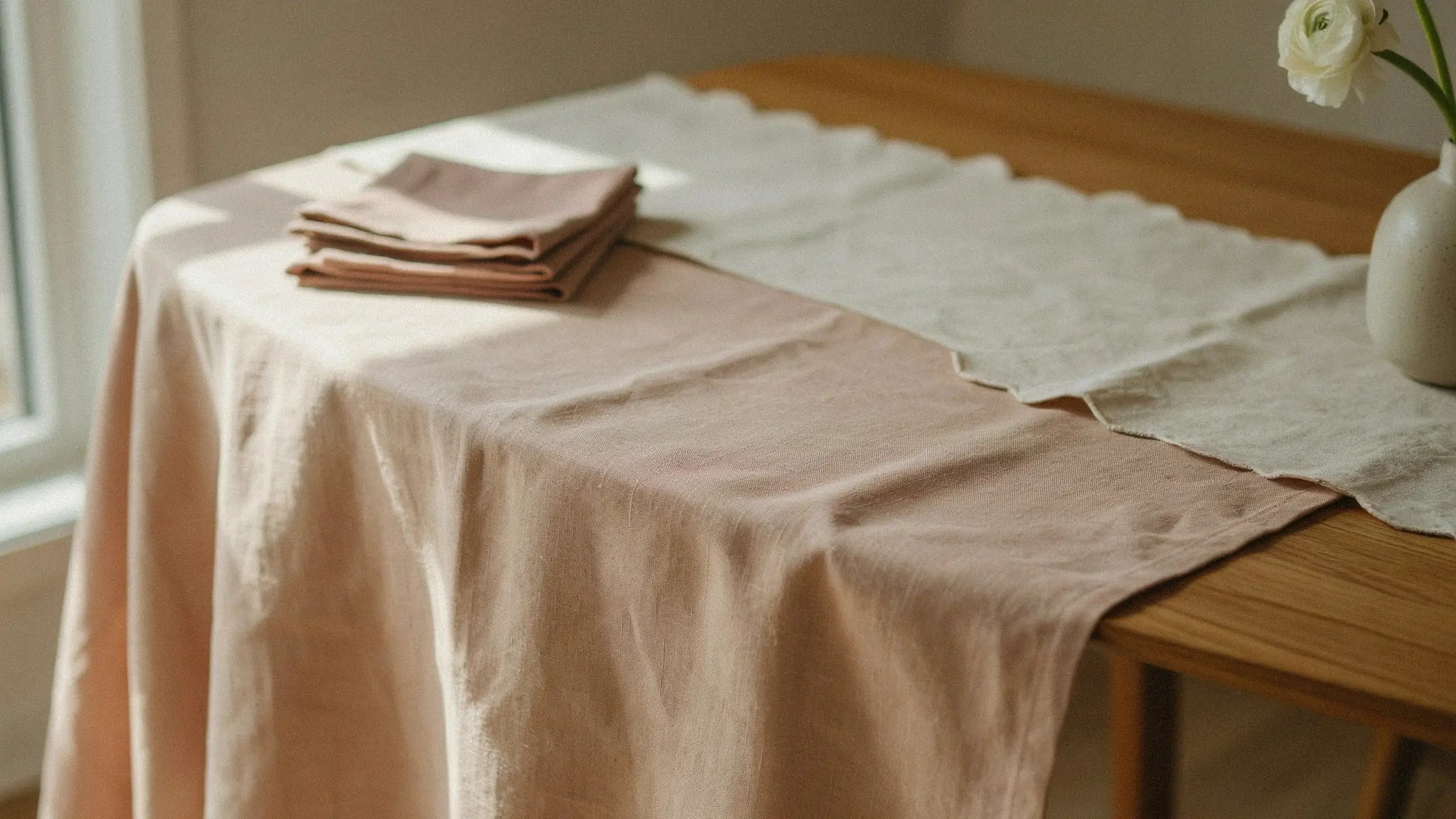
This is the foundation everything else sits on, and it sets your whole color story.
A solid pastel tablecloth. Blush, sage, butter yellow, or soft blue all work as a calm backdrop. Measure your table first and aim for a drop of 8 to 12 inches on each side so it hangs nicely without pooling on the floor. Linen or a linen blend looks more relaxed than stiff polyester and hides wrinkles better.
A table runner over a bare wood table. If you love the look of your wood table, skip the full cloth and run a 12 to 14 inch wide runner down the center instead, with the ends hanging 6 to 8 inches past the edge. Gingham checks and scalloped-edge linen runners are especially popular for Easter right now.
Layer a runner over a neutral cloth. For more texture, put a plain white or cream cloth down first, then add a colored or patterned runner on top. This is an easy way to bring in a bold color without committing your whole table to it.
Placemats for a casual brunch table. Woven rattan or scalloped linen placemats give you texture and definition without the commitment of a full cloth. Great option if you’re short on storage space too.
Renter or small-space tip: if you don’t own a tablecloth or runner, cloth napkins folded into rectangles under each plate create the same layered effect on a much smaller budget, and they pack flat when you’re done.
2: Pick Dinnerware That Sets the Mood
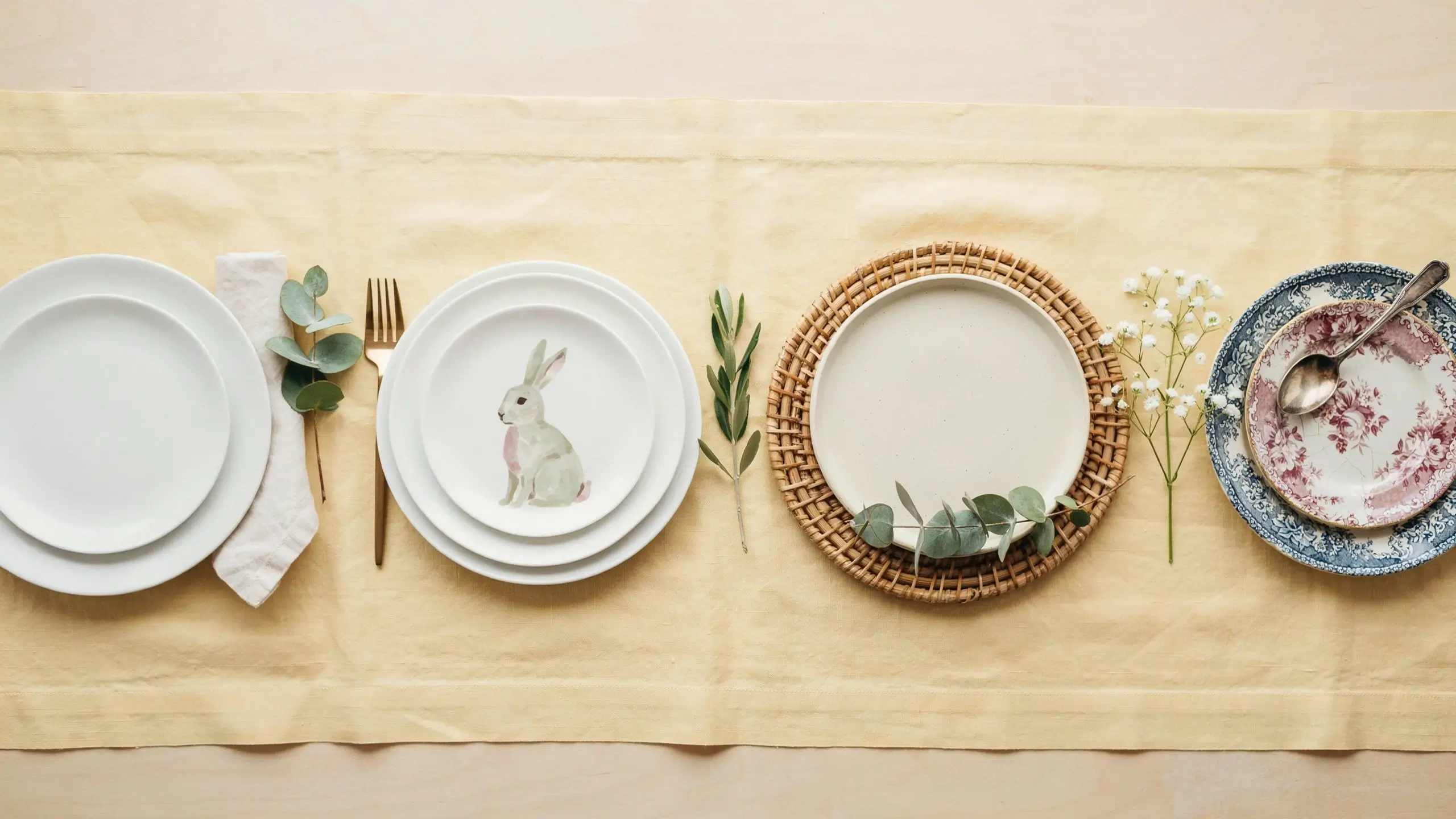
Your plates do more visual heavy lifting than people realize.
All-white plates, colorful everything else. Plain white dinnerware is the easiest way to let pastel napkins, eggs, and flowers stand out without looking busy. It’s also the most reusable choice long term.
One accent plate per setting. Instead of a full bunny-themed dish set, layer a single bunny or floral salad plate on top of a plain dinner plate. You get the charm without it looking like a novelty store exploded on your table.
Charger plates for instant polish. A woven rattan, scalloped ceramic, or simple gold-rimmed charger under each plate adds height and definition, and it’s one of the fastest upgrades if you’re short on time.
Thrifted or mismatched plates. Vintage floral plates in slightly different patterns but similar colors create a collected, cottage-style look that’s genuinely trending on Pinterest right now, and it’s often cheaper than buying a matching set.
3: Dress Up Napkins and Glassware
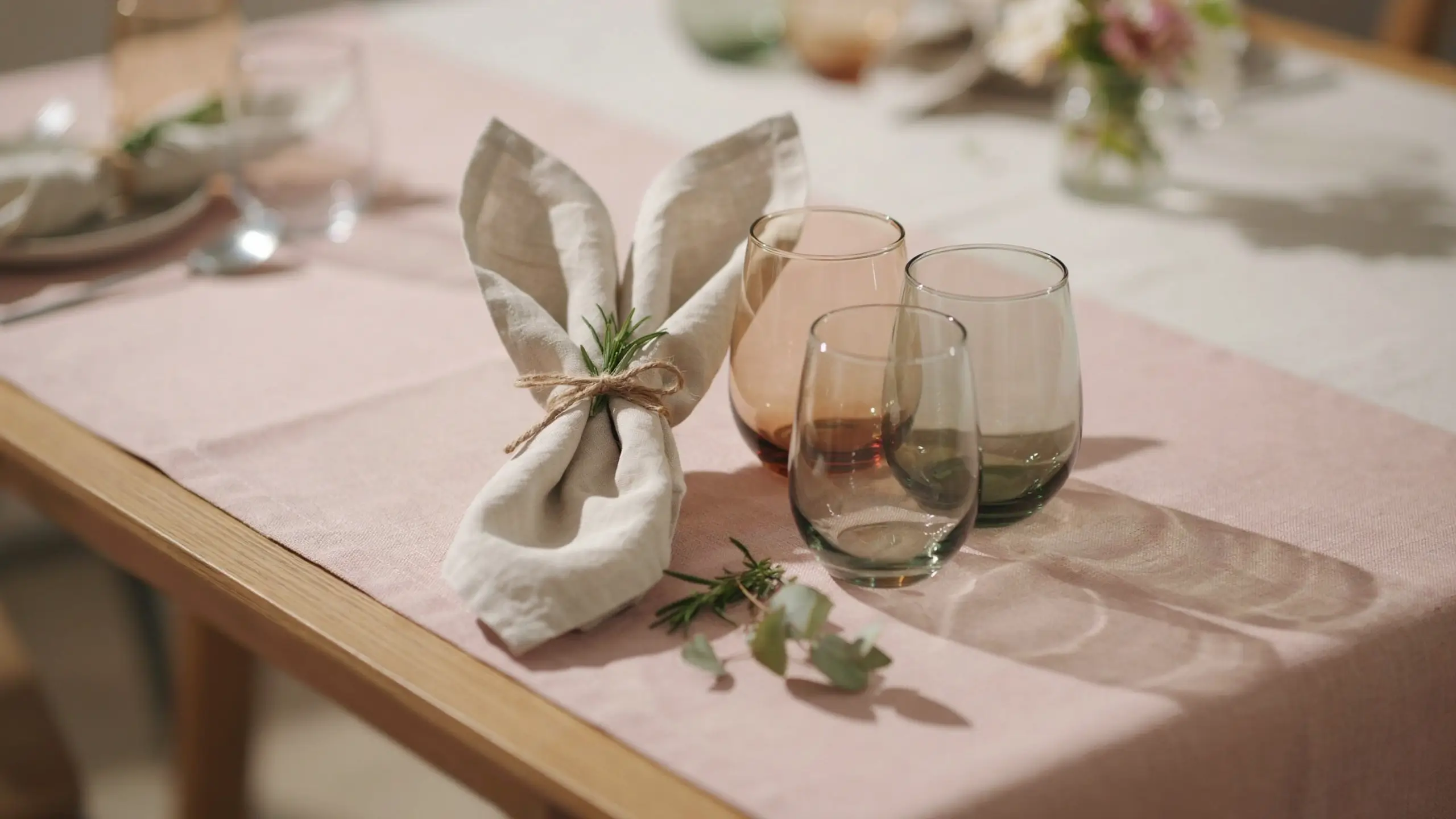
This is where small details make a table feel finished.
The bunny ear napkin fold. Fold a square napkin into a triangle, then fold the two bottom corners up and slightly apart to look like ears, and secure with a napkin ring or twine at the base. It takes about 30 seconds per napkin once you get the hang of it.
Twine and a fresh herb sprig instead of a napkin ring. Wrap plain kitchen twine around a folded napkin twice and tuck in a sprig of rosemary or a small faux flower. Costs almost nothing and looks intentional.
Colored or tinted glassware. Amber, blush, or sage-tinted glasses add color at eye level without touching your tablecloth or centerpiece budget. Jewel-toned glassware (think emerald or cobalt) is a popular way to bring in a bolder accent against an otherwise soft table.
Mismatched vintage glasses. Similar to the plates, a few different but complementary glass styles read as charming rather than sloppy, especially on a rustic or farmhouse table.
4: Build a Centerpiece That Doesn’t Hide Your Guests
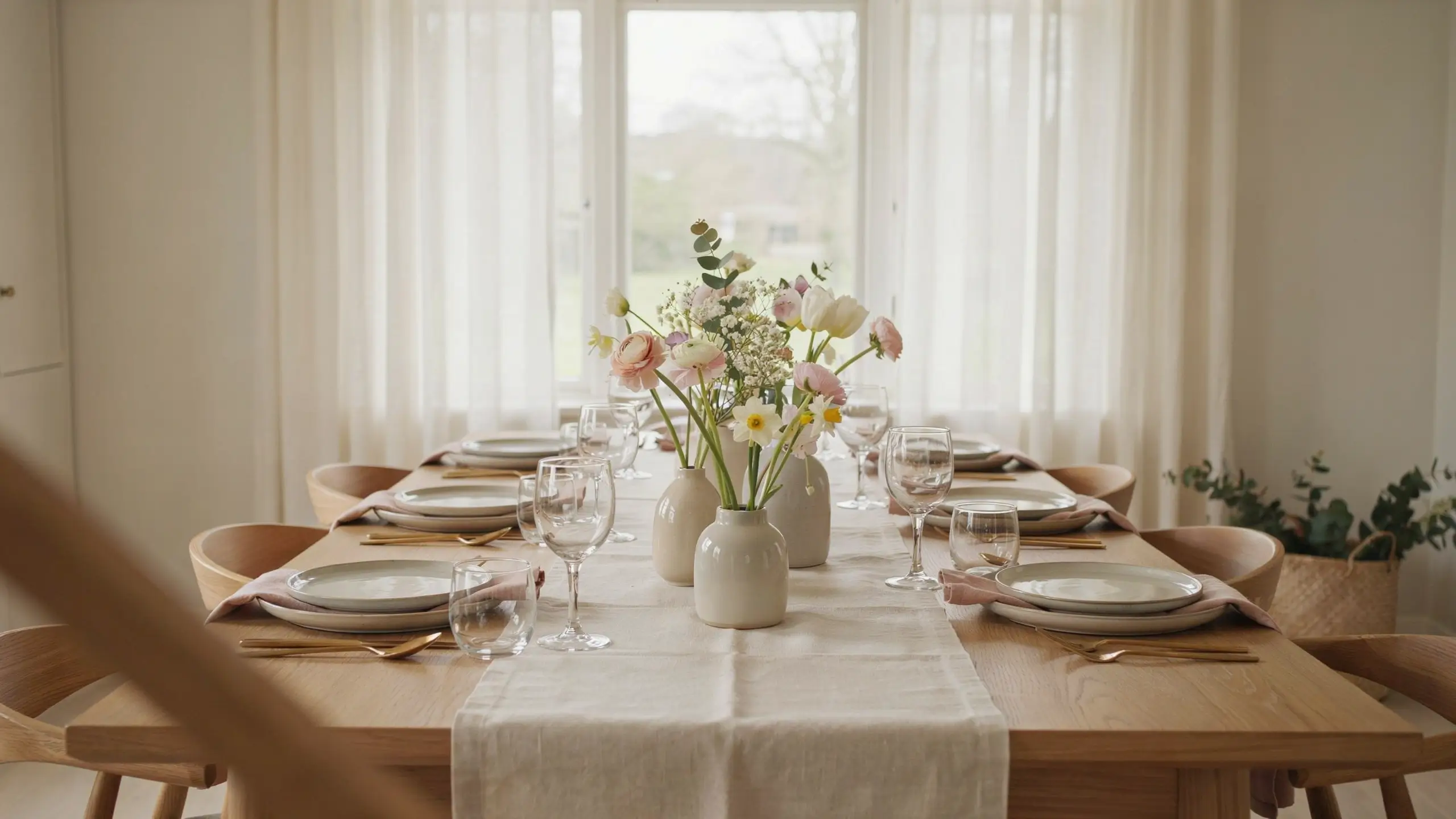
This is the part people overthink the most, and it’s usually where tables go wrong. A centerpiece that’s too tall or too wide makes it hard to see or talk to the person across from you, and that’s the fastest way to make a beautiful table frustrating to actually sit at.
Go low and long instead of one tall arrangement. Use a shallow dish, a wooden trough, or three small vases spaced evenly down the runner instead of one large vase in the middle. Keep the tallest element under 10 to 12 inches if your table seats people on both sides.
An egg tree. Place bare branches (curly willow or forsythia both work well) in a tall vase and hang small faux or blown-out real eggs from the branches with thin ribbon. It’s one of the most photographed Easter centerpieces for a reason: it’s tall without being wide, so it doesn’t block anyone’s view.
A carrot bundle. Tie a small bundle of fresh carrots, greens still attached, with twine or ribbon and lay it across the center of the table or stand a few bundles upright in a short vase. Unexpected, cheap, and very on-theme without being twee.
Potted spring bulbs down the center. A row of small terra cotta pots with hyacinth, mini daffodils, or grape hyacinth brings real color and a little bit of scent to the table. Bonus: after Easter, plant them outside instead of tossing them.
A nest centerpiece. Fill a shallow bowl or a purchased twig wreath with faux moss and speckled eggs. Keeps everything low, textural, and easy to see over.
Pick one of these, not three. A table with one strong centerpiece idea always looks more polished than one with several competing for attention.
5: Add Personal Touches With Place Cards
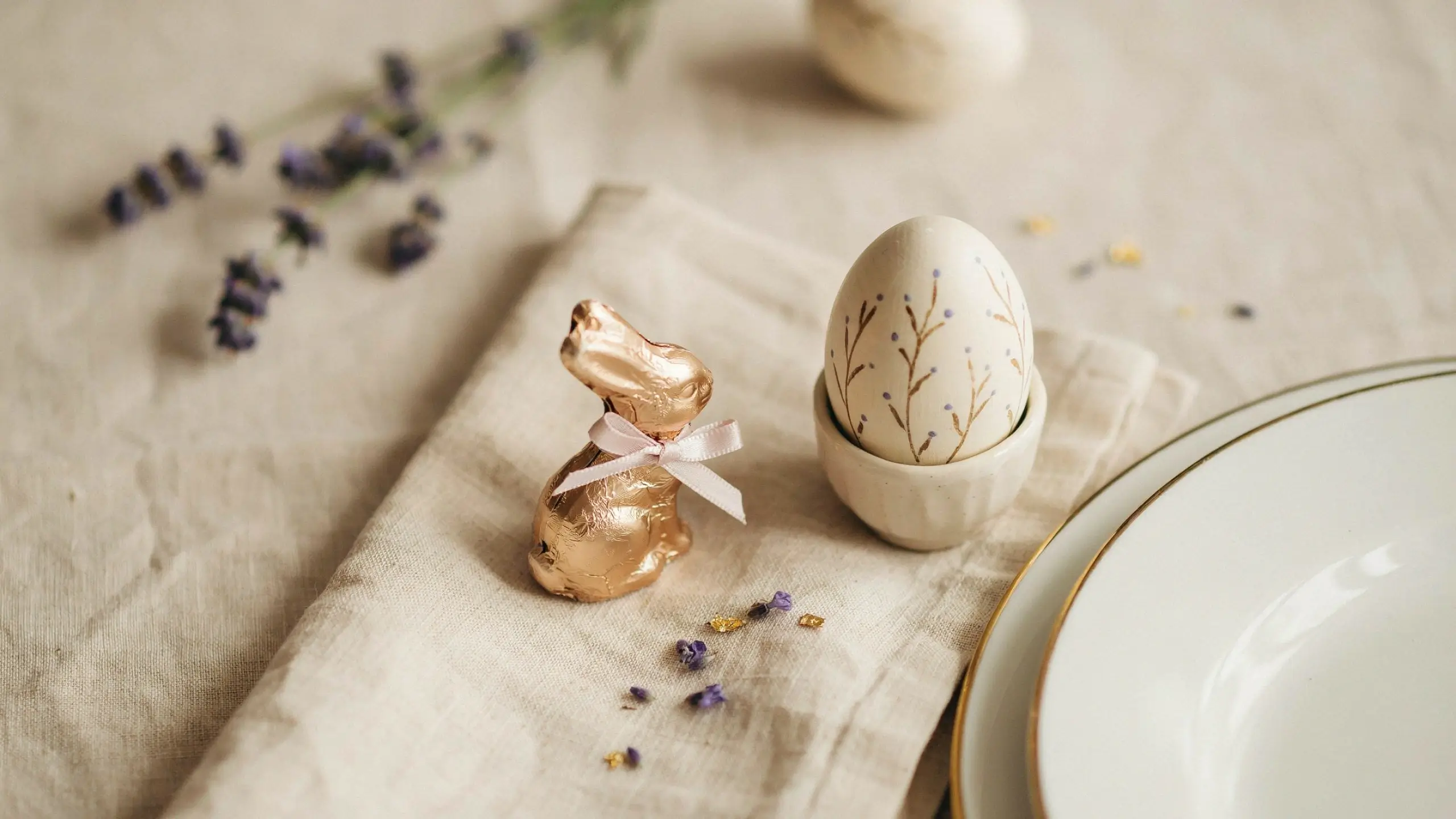
This step is optional but it’s the detail guests always remember, and it photographs beautifully for Pinterest.
Chocolate bunny place cards. Tie a thin ribbon around the neck of a small foil-wrapped chocolate bunny with a name tag attached. Kids especially love finding “their” bunny at their seat, and it works as a favor too.
Painted egg name cards. Use wooden or blown-out real eggs and write names directly on them with a paint pen, then nestle each one in a small egg cup or a folded napkin.
Mini terra cotta pots as place cards. A tiny pot with a sprig of greenery and a name tag tucked in works well for a more grown-up, garden-inspired table.
6: Finish With Small Details That Make It Feel Intentional
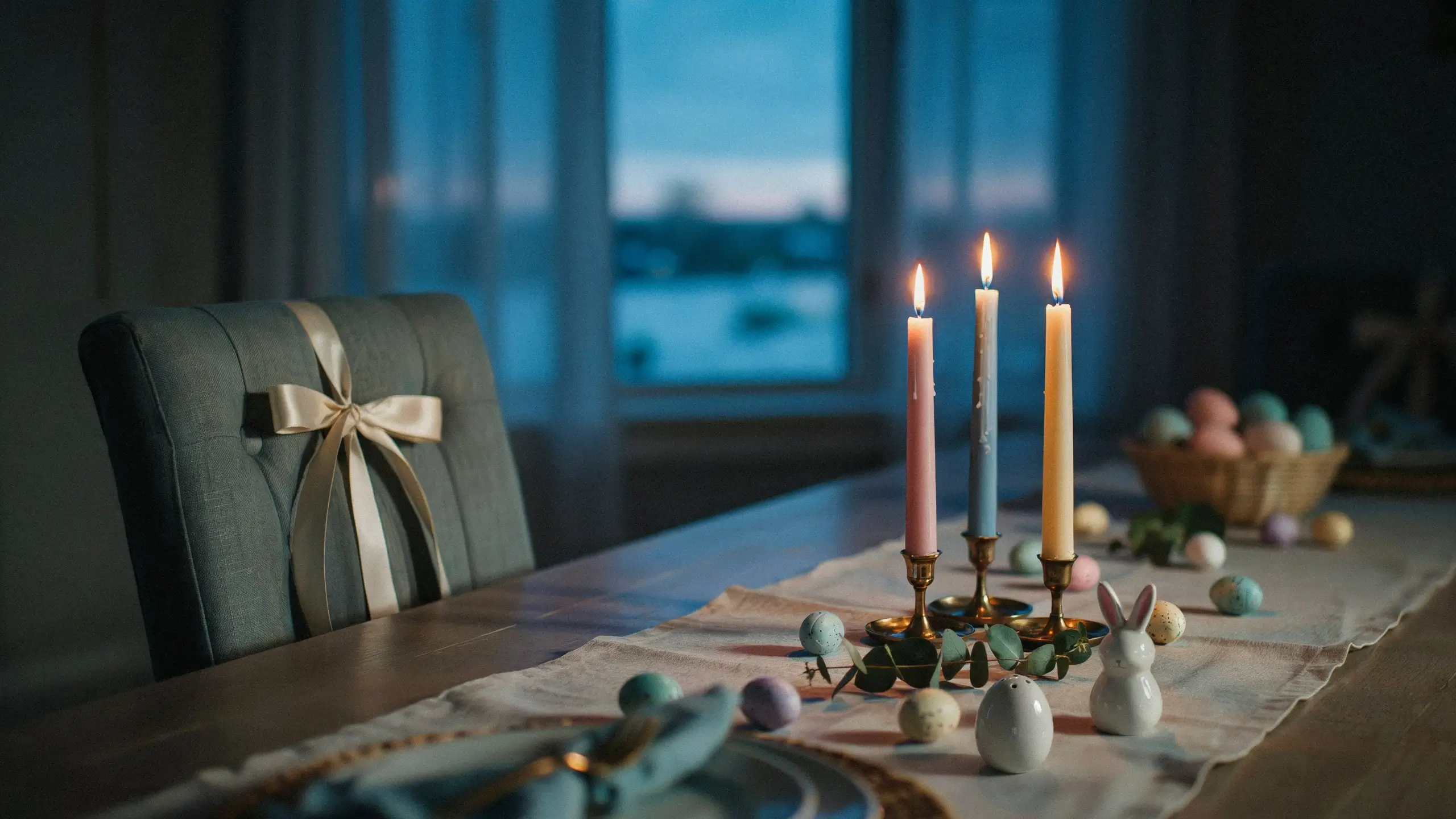
This last layer is quick, but it’s what separates a table that looks “done” from one that looks like it’s missing something.
- Taper candles in pastel or brass holders add warmth, especially for an evening meal. Use dripless candles or battery LED tapers if young kids will be at the table.
- Ribbon tied to the back of each chair ties the whole room together and photographs beautifully from across the room.
- A single sprig of fresh greenery or herb at each place setting, tucked under the napkin or laid across the plate.
- Bunny salt and pepper shakers are a small, low-cost way to add whimsy without going overboard.
- A light scatter of confetti eggs down the runner between place settings. Use washable plastic ones if toddlers will be reaching across the table.
Easter Table Color Palettes to Try
If you’re stuck on where to start, pick a palette first and build every layer around it.
Classic pastel. Blush pink, mint green, lavender, and butter yellow together. Soft, familiar, and works with almost any dinnerware you already own.
Sage and lavender. One of the most-saved combinations for spring tables right now. Pair a sage green runner with lavender florals and neutral plates for a calm, elevated look.
Soft neutral with icy accents. A smoky white or cream base with whispers of icy blue, silvery green, and muted lavender. This palette photographs beautifully and works well if you want a table that transitions easily into everyday spring decor once Easter is over.
Pink and green. A longtime favorite combination for Easter specifically, easy to source in napkins, ribbon, and florals, and flattering in almost any dining room.
Bold with restraint. Keep your base white or neutral and add one saturated color as an accent, like an emerald runner or a set of cobalt glasses. A little goes a long way and it keeps the table from feeling overly sweet.
Budget Easter Table Decor Ideas
You do not need to spend a lot to make this table look good.
- Shop the dollar store for the small stuff. Plastic eggs, faux flowers, twine, mason jars, and mini wreaths (great as budget chargers) are usually available for a dollar or two each.
- Dye real eggs at home with vinegar and food coloring instead of buying a kit. It’s cheaper and you likely already have both in your kitchen.
- Buy pieces that work year-round, not just for Easter. Neutral chargers, glass vases, and taper candle holders can be reused for every holiday table after this one, so the cost stretches further.
- Check thrift stores for glassware and vases. Mismatched glass looks intentional at an Easter table in a way it might not at a formal dinner party, so this is the perfect place to use secondhand finds.
- Use what’s already growing outside. Forsythia branches, tulips, or even flowering weeds from the yard can replace a florist centerpiece completely.
Easter Table Ideas for Small Spaces or Small Groups
Hosting four people at a small apartment table is a different job than hosting twelve, and most Easter decor advice ignores that.
- Skip the tall centerpiece entirely and use a trio of small bud vases with one stem each instead. Easier to see over and easier to store.
- If you don’t have a dining table, a coffee table or kitchen island can absolutely be styled the same way for a smaller gathering or brunch.
- Round tables need especially short centerpieces (under 10 inches) so nobody’s line of sight gets blocked.
- Nothing here requires adhesive, nails, or anything permanent, which makes this an easy option if you’re renting and want everything to pack away without a trace afterward.
Kid-Friendly Easter Table Ideas
If little ones are joining, plan a few of these in so the table stays both pretty and practical.
- Use plastic or wooden eggs instead of glass anywhere within a kid’s reach.
- A paper table runner and a cup of crayons at each kid’s seat doubles as a place setting and an activity while the food finishes up.
- A small basket or bunny cup at each kid’s seat with a few treats keeps them occupied and gives them their own “special spot” at the table.
- Skip open flame candles near young kids and use battery versions instead.
Mistakes to Avoid When Decorating Your Easter Table
- Going too tall in the middle. If your centerpiece blocks eye contact across the table, it’s too big, no matter how pretty it is.
- Buying real flowers too early. Most cut spring flowers only look their best for two to three days. Buy them one to two days before Easter and keep them somewhere cool until you’re ready to arrange them.
- Overdoing the bunny theme. One or two whimsical bunny pieces read as charming. Five competing bunny items on one table start to feel cluttered rather than festive.
- Skipping the measuring step. Always measure your table before buying a runner or cloth. A runner that’s too short or a cloth that pools awkwardly on the floor undoes a lot of the polish you just built.
- Forgetting to protect the table under wet arrangements. Use a trivet, tray, or a layer of plastic wrap under floral foam or a fresh centerpiece so water doesn’t damage your table or linens.
- Not accounting for pets. Tulips and lilies are toxic to cats and dogs if chewed on. If pets roam near the table, keep real flowers in a stable, out-of-reach container or use faux stems instead.
Bringing It All Together
Learning how to decorate your table for Easter really comes down to building it one layer at a time and stopping when it feels right, not when you’ve used every cute thing you bought. Start with a base you love, keep your centerpiece low enough to talk over, and let a few personal details do the rest of the work. Whether you’re setting a big family table or a cozy brunch for four, the same simple system works every time.
I’d love to know which idea you’re saving for your own table this year. Drop a comment below and let me know your color palette, or tag me if you try one of these and I’ll be genuinely thrilled to see it.





No Comment! Be the first one.