




14 Fall Window Box Ideas That’ll Make Your Whole Porch Look Ready for Autumn
There’s a moment every September when you look at your window boxes still full of leggy summer petunias and think, yeah, it’s time. Fall window boxes are one of the fastest ways to change...

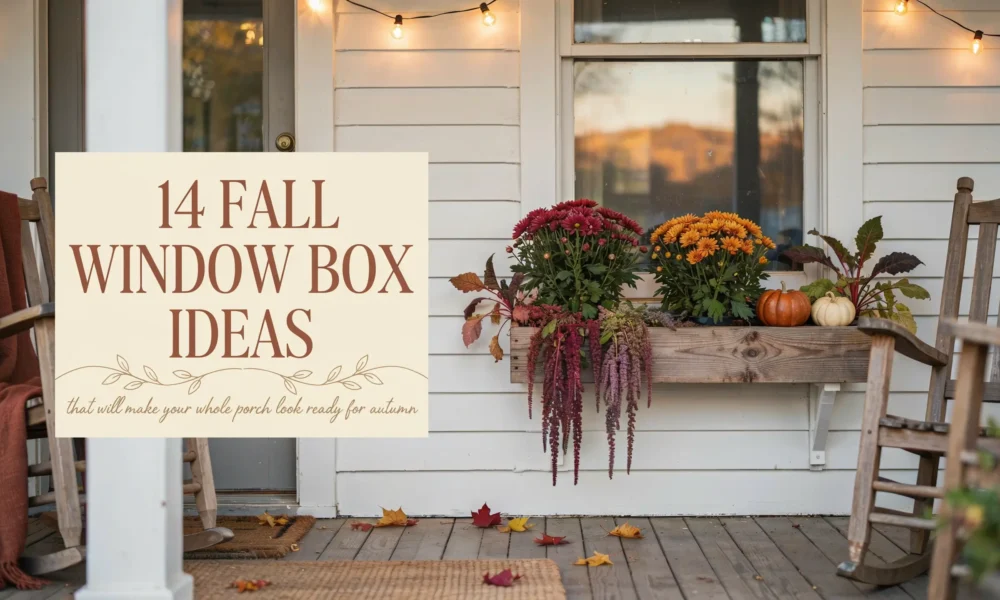
There’s a moment every September when you look at your window boxes still full of leggy summer petunias and think, yeah, it’s time. Fall window boxes are one of the fastest ways to change the whole feel of your house from the outside, and you don’t need a big budget or a green thumb to pull it off.
This guide walks through real, doable fall window box ideas, plus the plant combos, box types, mistakes, and care tips that actually make a difference once the weather turns.
Picking the Right Box Before You Plant Anything
A few practical things to sort out before you fill anything with dirt.
- Material matters more in fall than summer. Vinyl and resin boxes with a double-wall design insulate roots better once nights get cold, which matters if you’re keeping plants going into November. Wood looks the warmest for fall styling but needs a liner to avoid rot. Metal (copper, black steel) looks gorgeous but heats up and cools down fast, so it’s tougher on roots.
- Drainage holes are non-negotiable. Fall brings more rain in a lot of regions, and soggy roots kill mums and kale faster than cold does. If your box doesn’t have holes, drill some or use a plastic liner with holes instead.
- Shape depends on your window. Rectangular boxes fit almost anywhere and are the easiest for beginners. Hexagonal or scalloped boxes add a design detail if your house is more traditional. Copper boxes read as a small luxury upgrade even when the plants inside are simple.
- Check your brackets. A full window box with wet soil is heavy, sometimes 20 to 40 pounds. Make sure brackets are rated for that weight and anchored into a stud or solid trim, not just drywall or thin siding. If you’re not confident the mounting is solid, it’s worth having someone check it before the box is full and hanging over a walkway.
1. Mixed Mums in Every Fall Shade
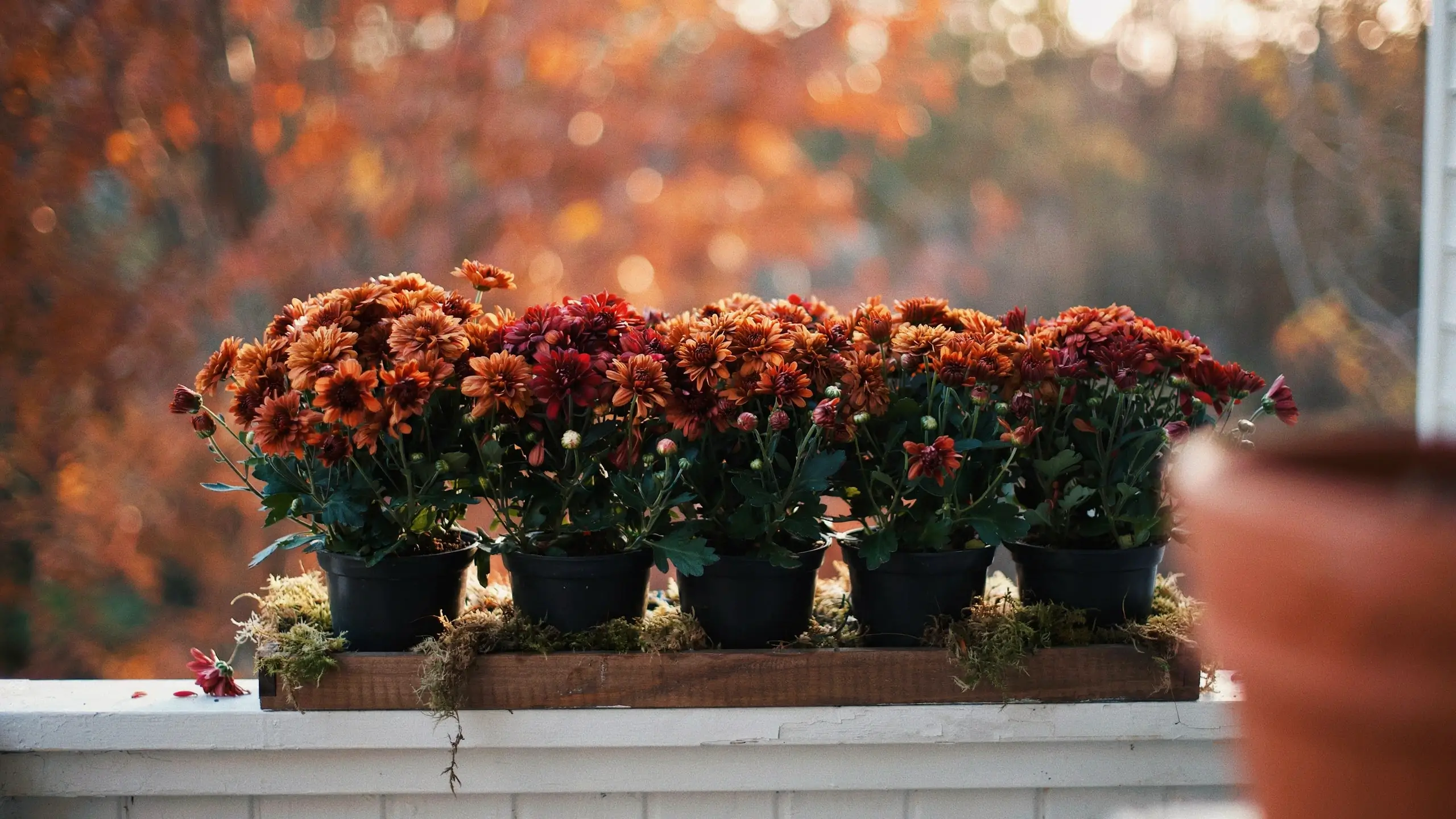
This is the classic for a reason. Skip the single-color pot and mix bronze, burgundy, and burnt orange mums in the same box for depth instead of a flat block of color. Keep them in their nursery pots and nestle them close together, then tuck sphagnum moss over any visible soil or plastic rims. Look for mums with mostly unopened buds when you buy them so the display lasts 4 to 8 weeks instead of fading in two.
2. Flowering Kale and Cabbage for Texture That Lasts
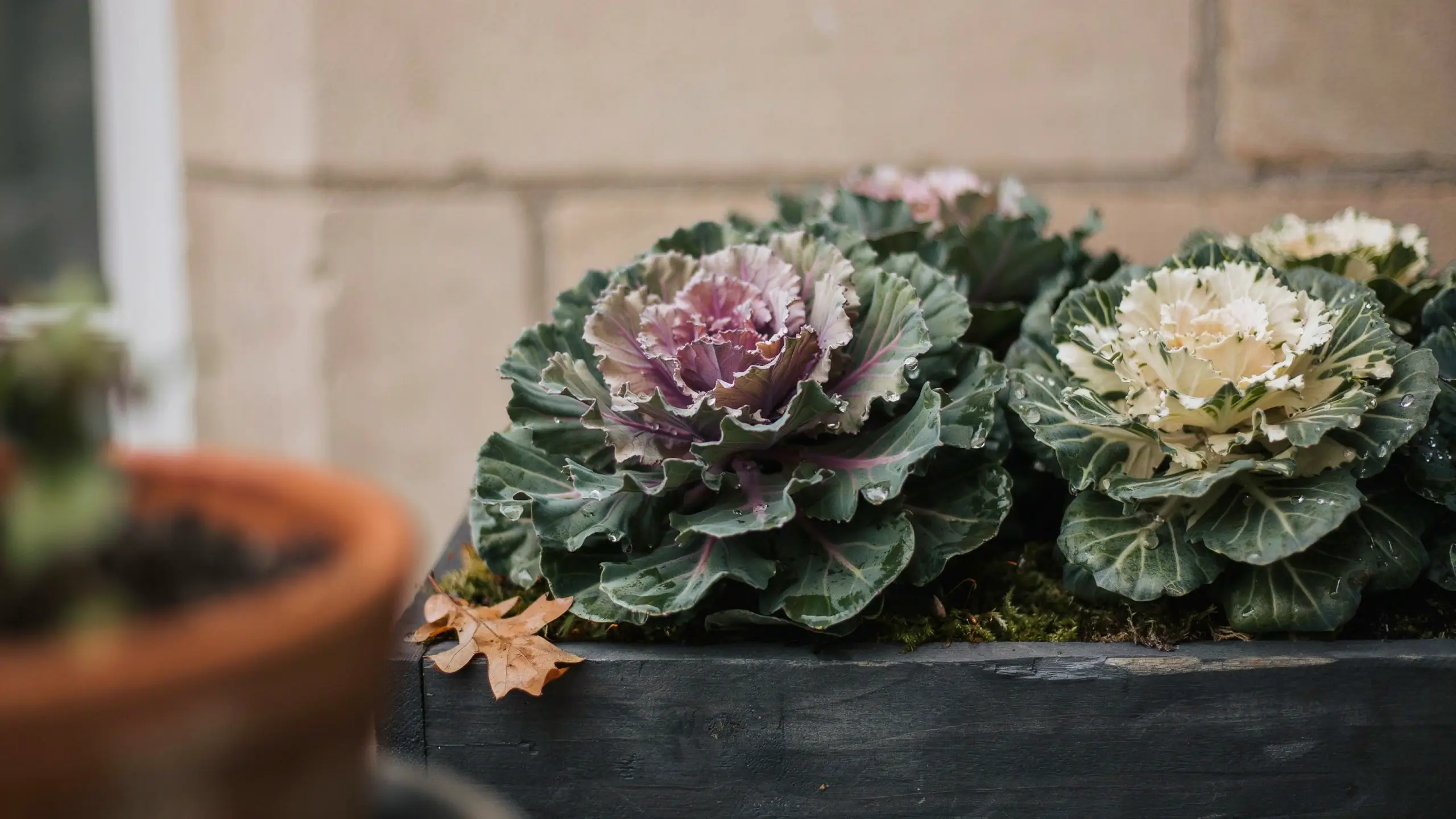
Flowering kale and cabbage are the unsung heroes of fall containers. The ruffled rosettes add texture that mums alone can’t give you, and they’re cold hardy enough to survive a light frost, which means they’ll outlast almost everything else in your box. Plant the base slightly deeper than usual since the rosettes get heavy as they mature.
3. Mini Pumpkins and Gourds Tucked Into Greenery
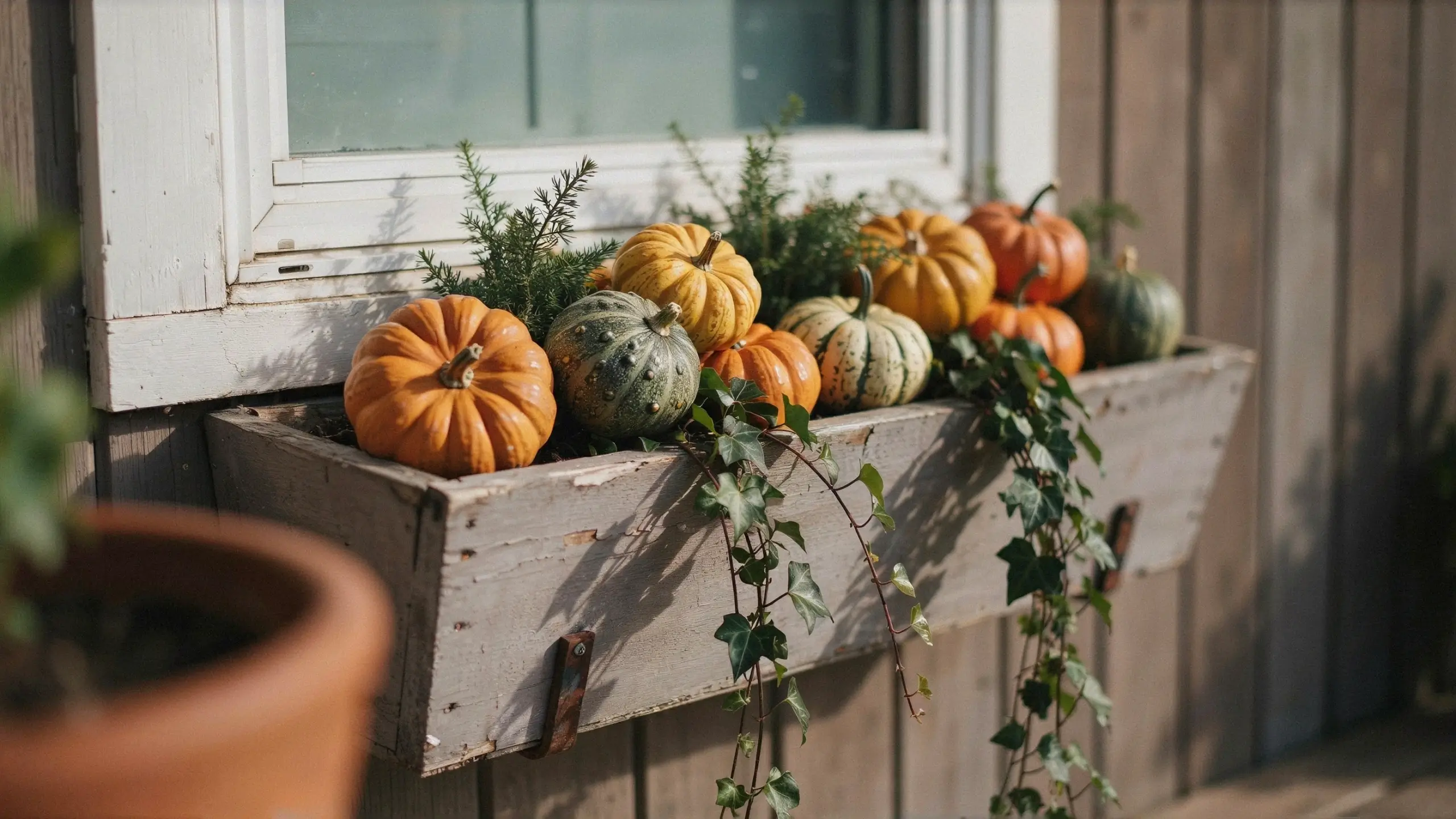
Instead of lining pumpkins up on the porch step, tuck a few mini pumpkins and gourds directly into the window box between the plants. Mix sizes and shapes rather than matching ones so it doesn’t look too staged. If squirrels are an issue in your yard, use faux pumpkins here since real ones tend to disappear or get gnawed within a week.
4. White Pumpkin Farmhouse Look
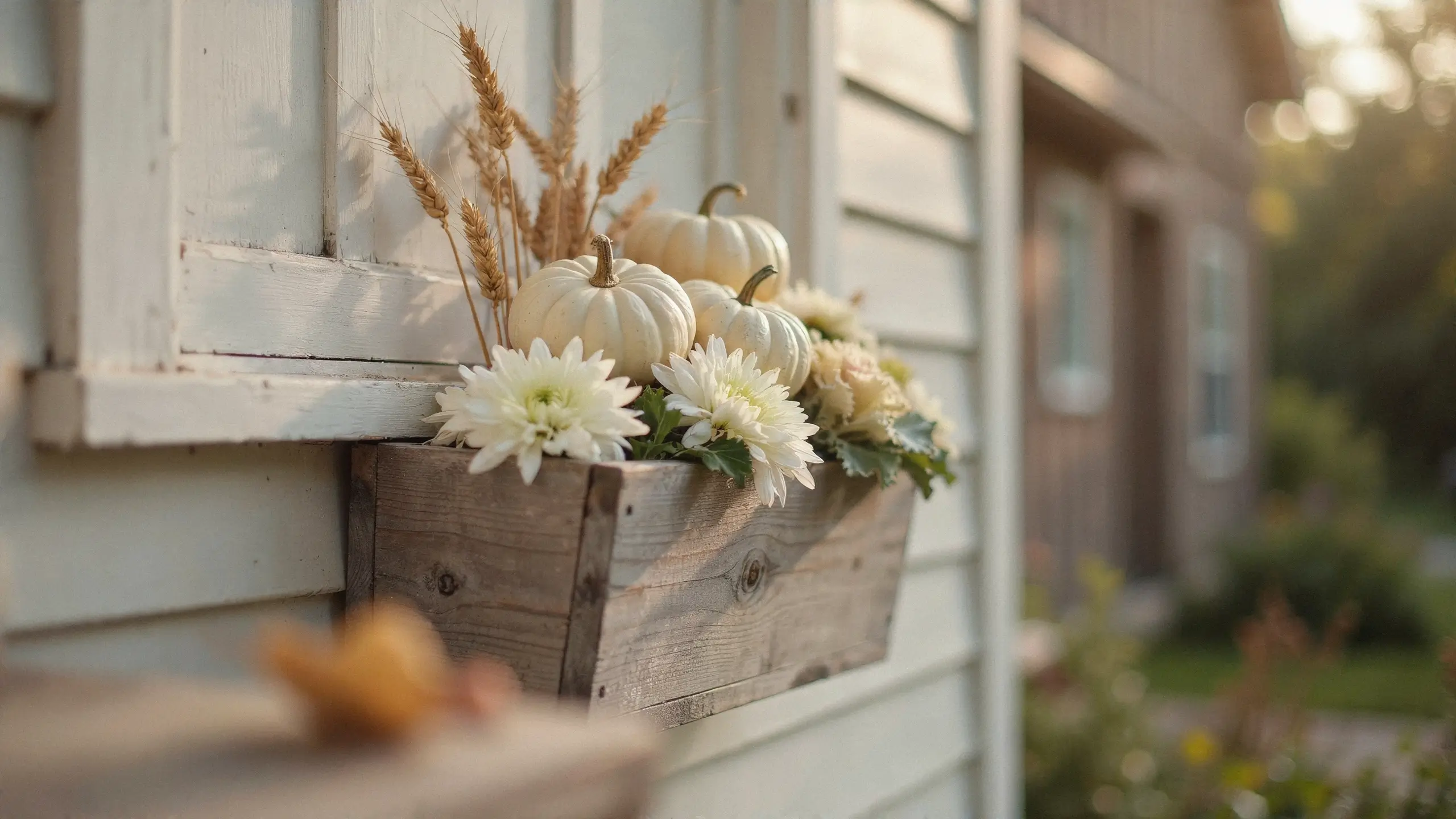
White pumpkins paired with white mums, ivory kale, and a wood-toned box is one of the most repinned looks for a reason. It photographs beautifully in low fall light and works with almost any house color. Add a few dried wheat stems for height and you’ve got a full farmhouse look without a single orange pumpkin in sight.
5. Moody Black and Burgundy Box
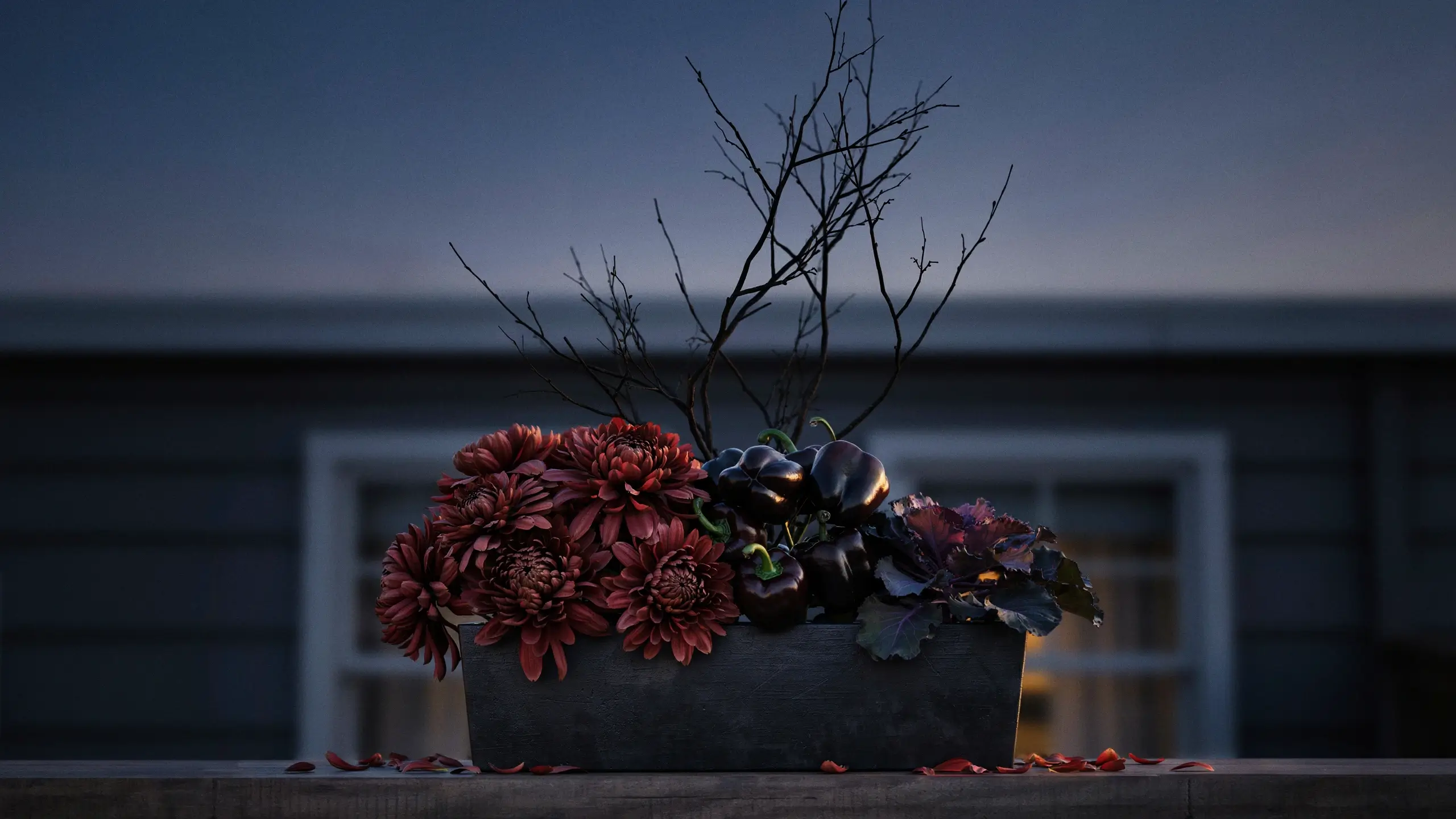
For a more dramatic, modern take, go with a black window box and layer in burgundy mums, near-black ornamental peppers, and dark purple kale. Add a single spray of black-painted branches for height. This look tends to stand out more in a Pinterest feed full of the usual orange and yellow because it’s genuinely different.
6. Copper and Rust Metallics
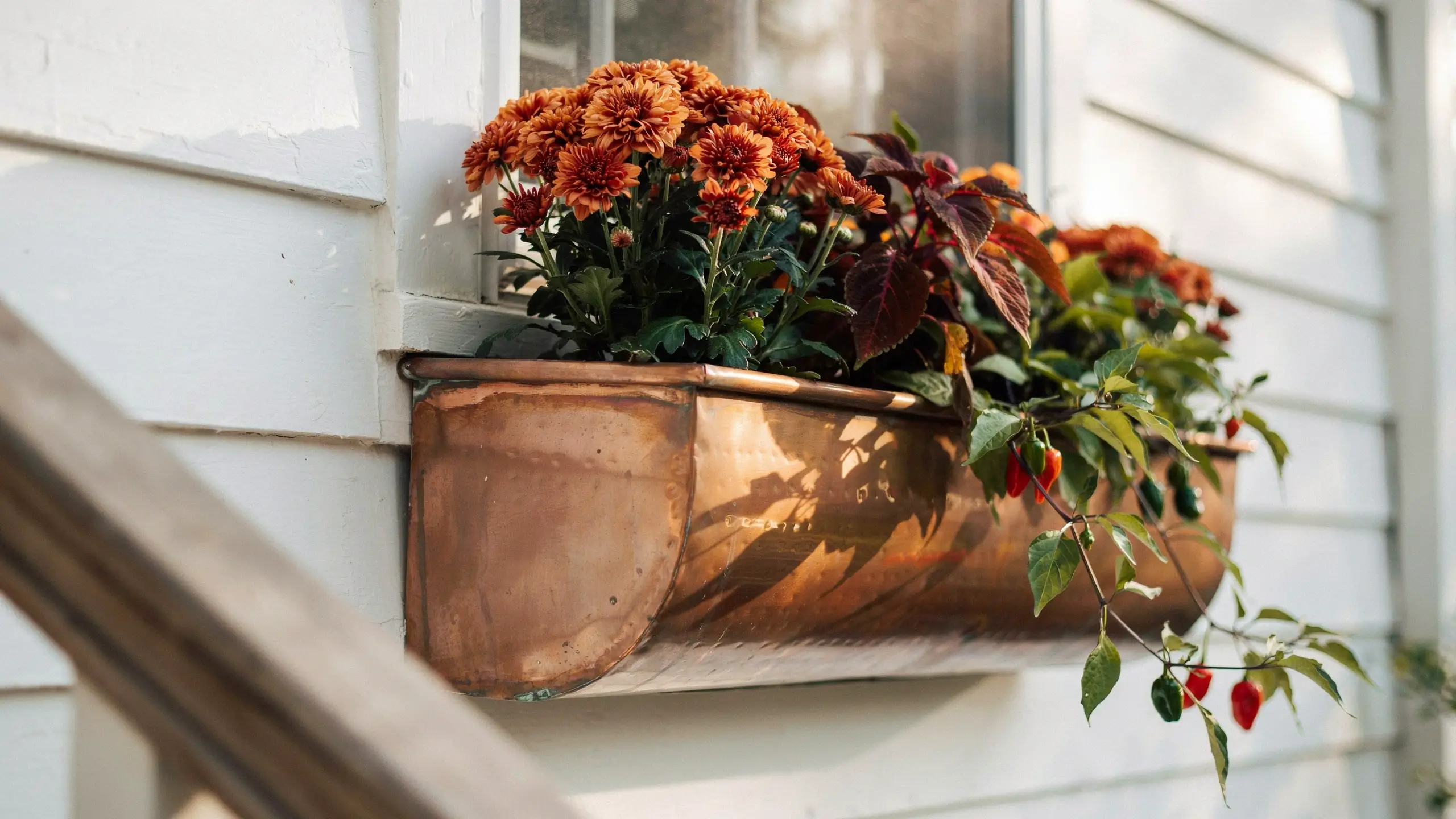
Copper window boxes, copper spray paint on an existing box, or just copper-toned mums and coleus can pull an entire porch together. Pair with rust and terracotta mums, and let a trailing ornamental pepper spill over the edge for movement. This palette photographs especially well against a white or gray house.
7. Dogwood Branches for Height and Movement
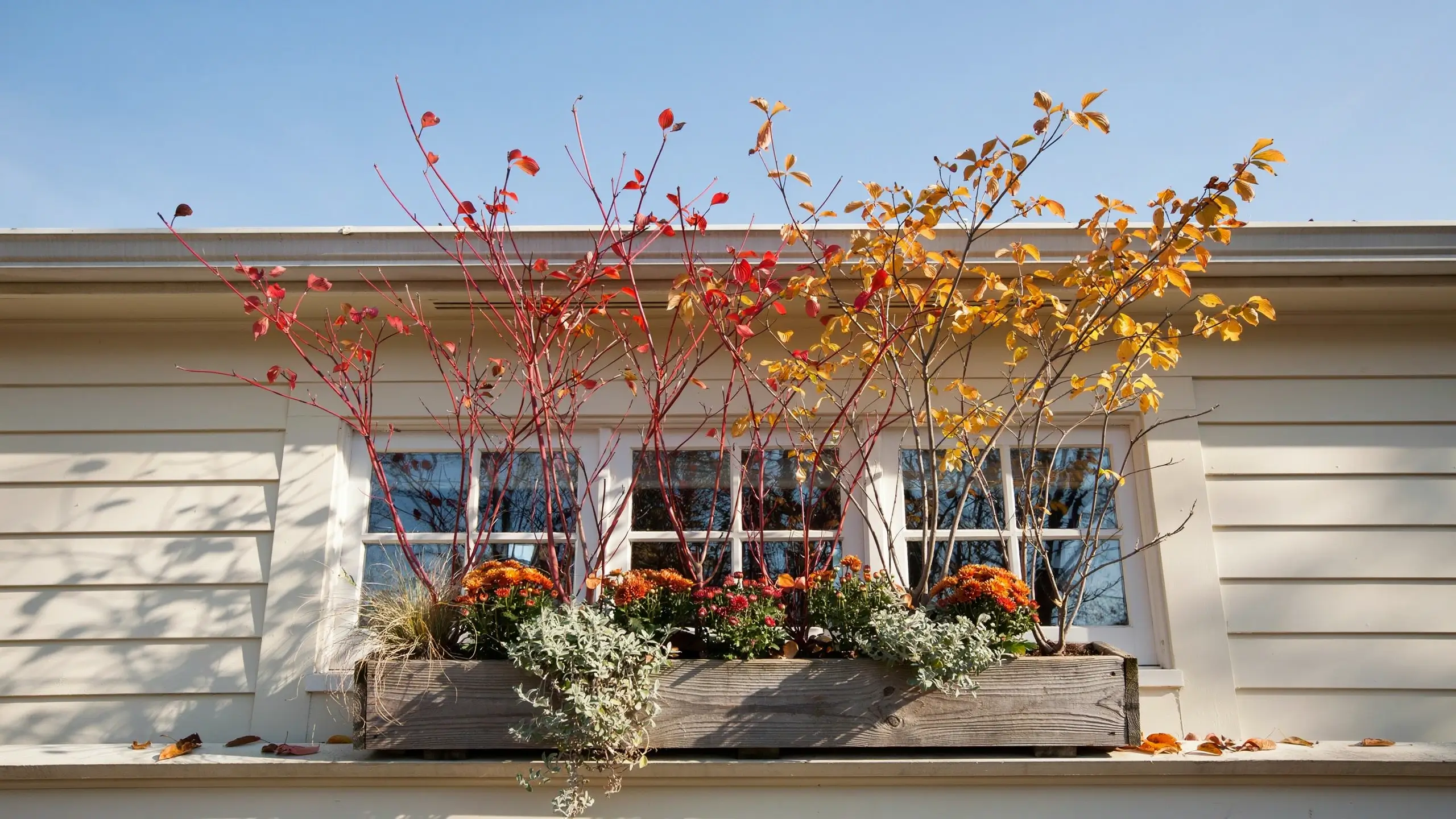
If your window box feels flat once the flowers go in, add a bundle of red or yellow twig dogwood branches as your thriller. They give height without blocking the window, they last for weeks without any care, and they carry the box straight through fall into a winter look if you add pinecones later.
8. Corn Husks and Wheat Bundles
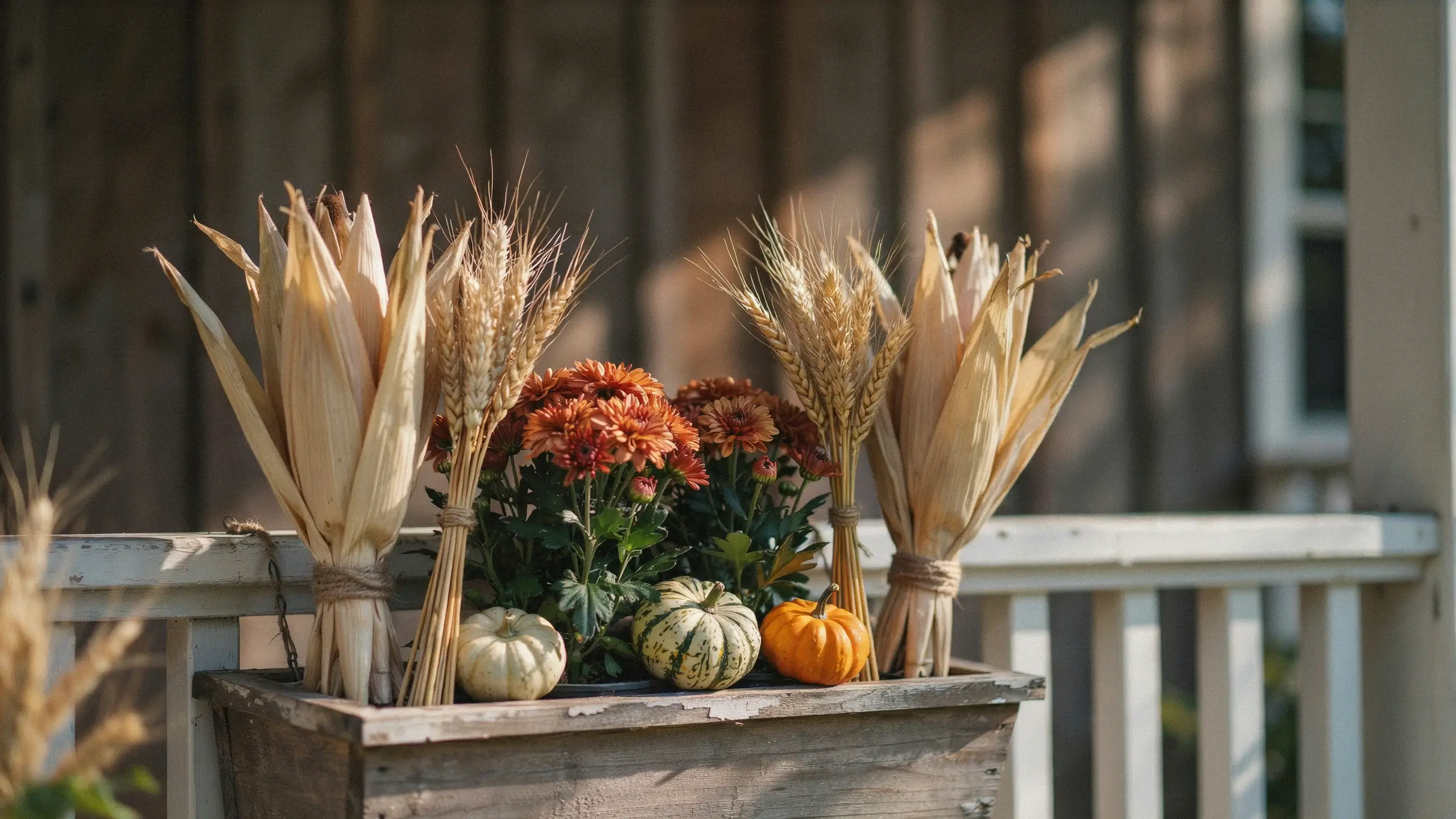
For a more rustic, harvest-market feel, tuck small bundles of dried corn husks or wheat stalks into the corners of the box, standing upright like a mini sheaf. Combine with mums and a few gourds. Keep dried materials away from any nearby light fixtures or exposed wiring since they’re flammable, and skip real candles anywhere near them.
9. Faux Fall Box for Renters or Black Thumbs
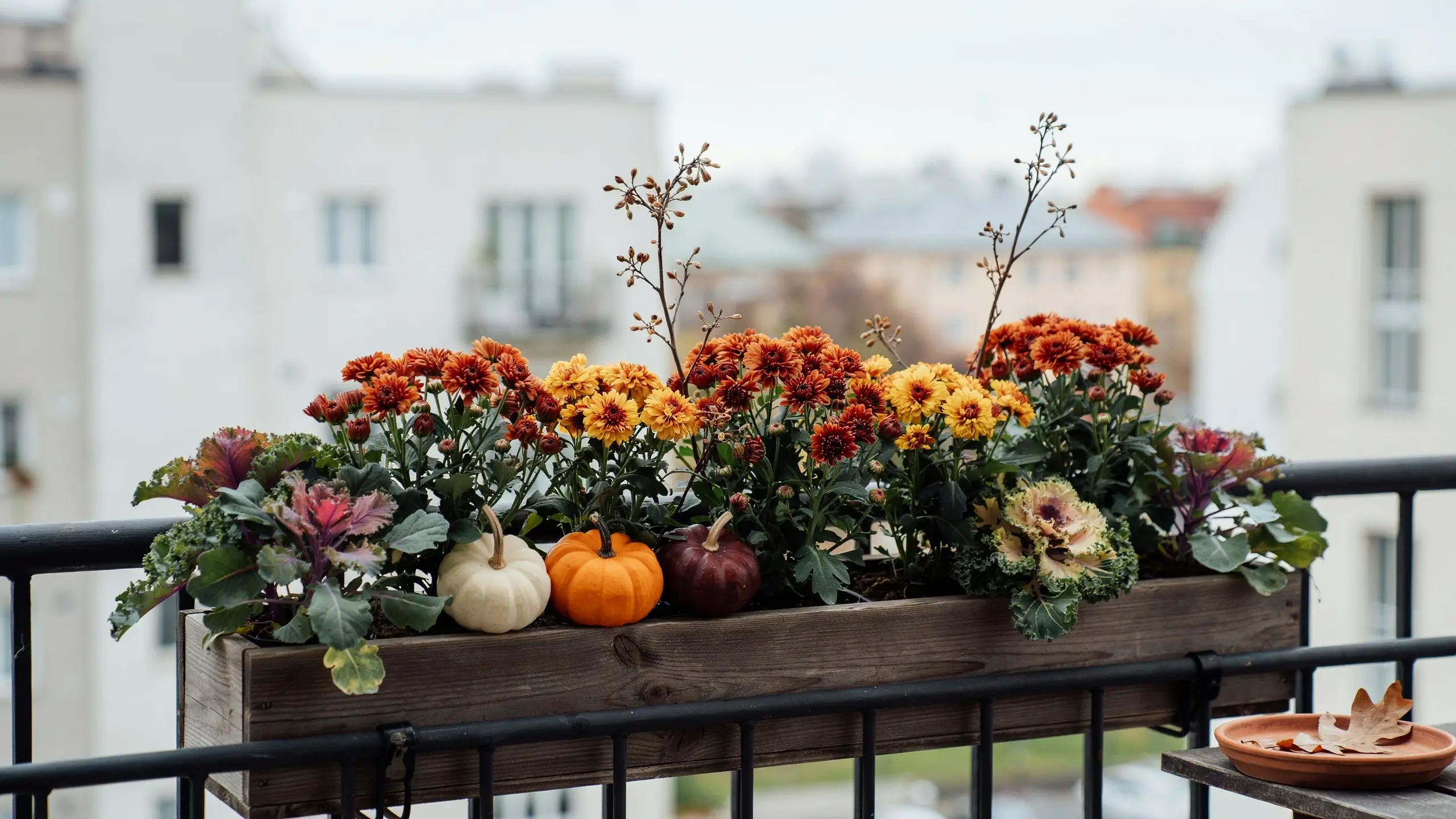
If you travel a lot, kill plants no matter how hard you try, or just don’t want to deal with watering, a faux fall window box is a completely valid option now. Good faux stems (kale, mums, and mini pumpkins) hold up in wind and rain and can be reused for years, which actually makes them cheaper long-term than replacing real flowers every season. Add real dried branches or a few real mini pumpkins mixed in if you want it to read as less obviously artificial.
10. Coastal Neutral Boho Fall
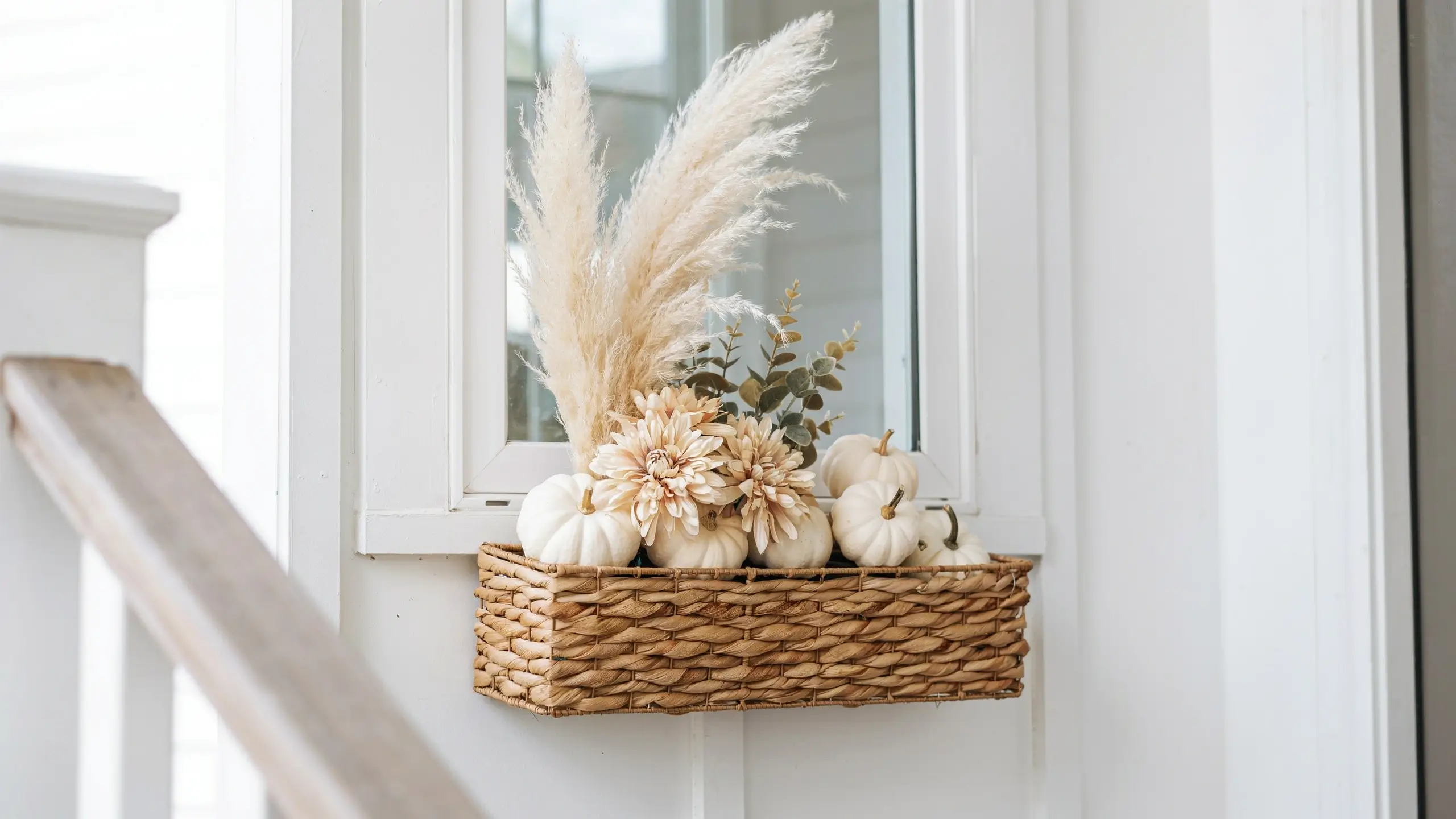
Not everyone wants orange and red. A neutral fall box built from white pumpkins, dried pampas grass, cream mums, and a woven or rattan-style box reads more coastal or boho than traditional autumn. It’s a good option if your house has a more modern or minimalist exterior and orange mums would feel out of place.
11. Cottage Garden Blooms
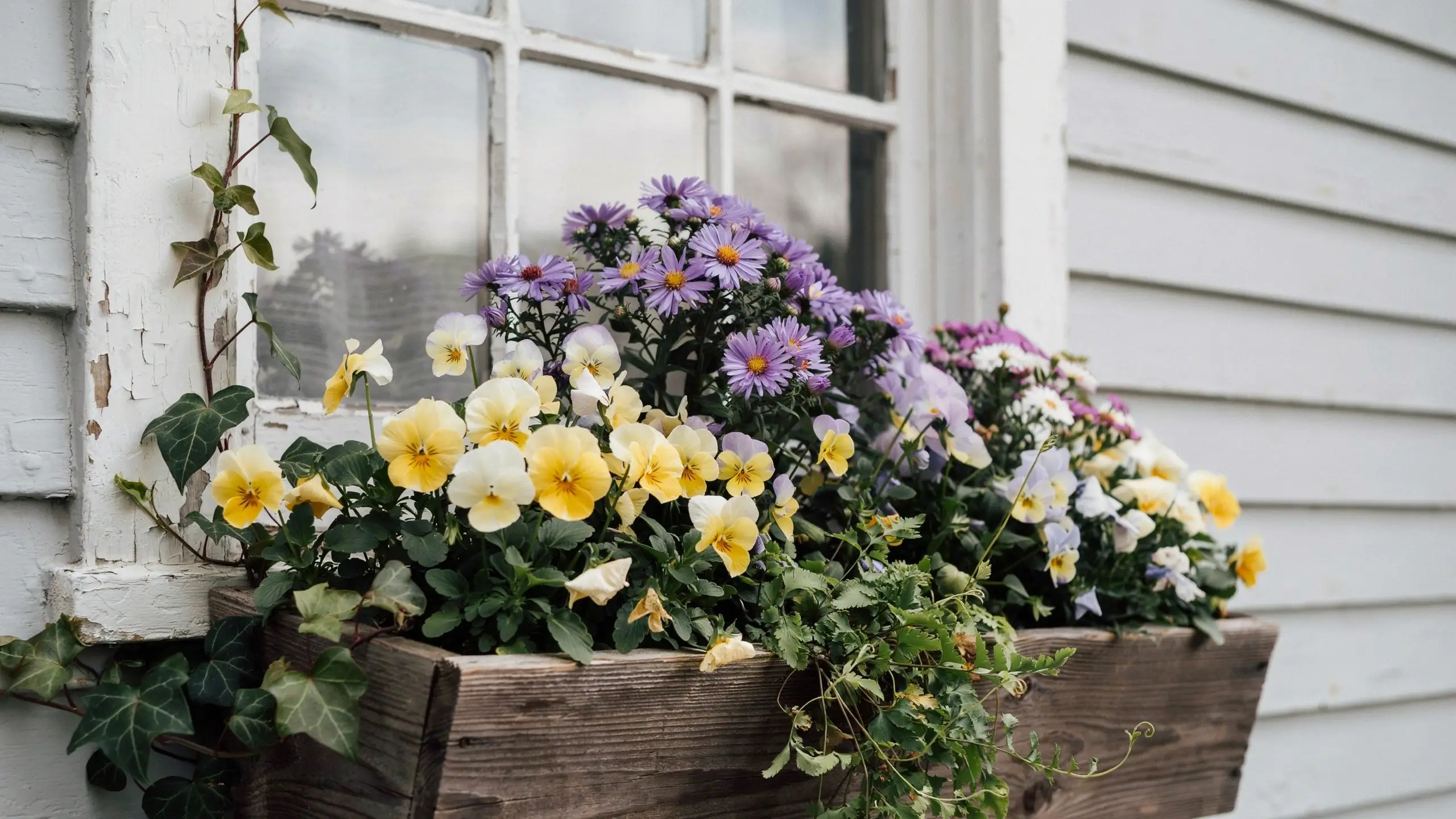
Asters, pansies, and violas in mixed purples, yellows, and whites give a softer, more garden-grown look than the typical mum-and-pumpkin combo. These plants tend to handle cooler nights better than summer annuals and will often keep blooming well past the first light frost, especially pansies and violas.
12. Halloween-Ready Window Box
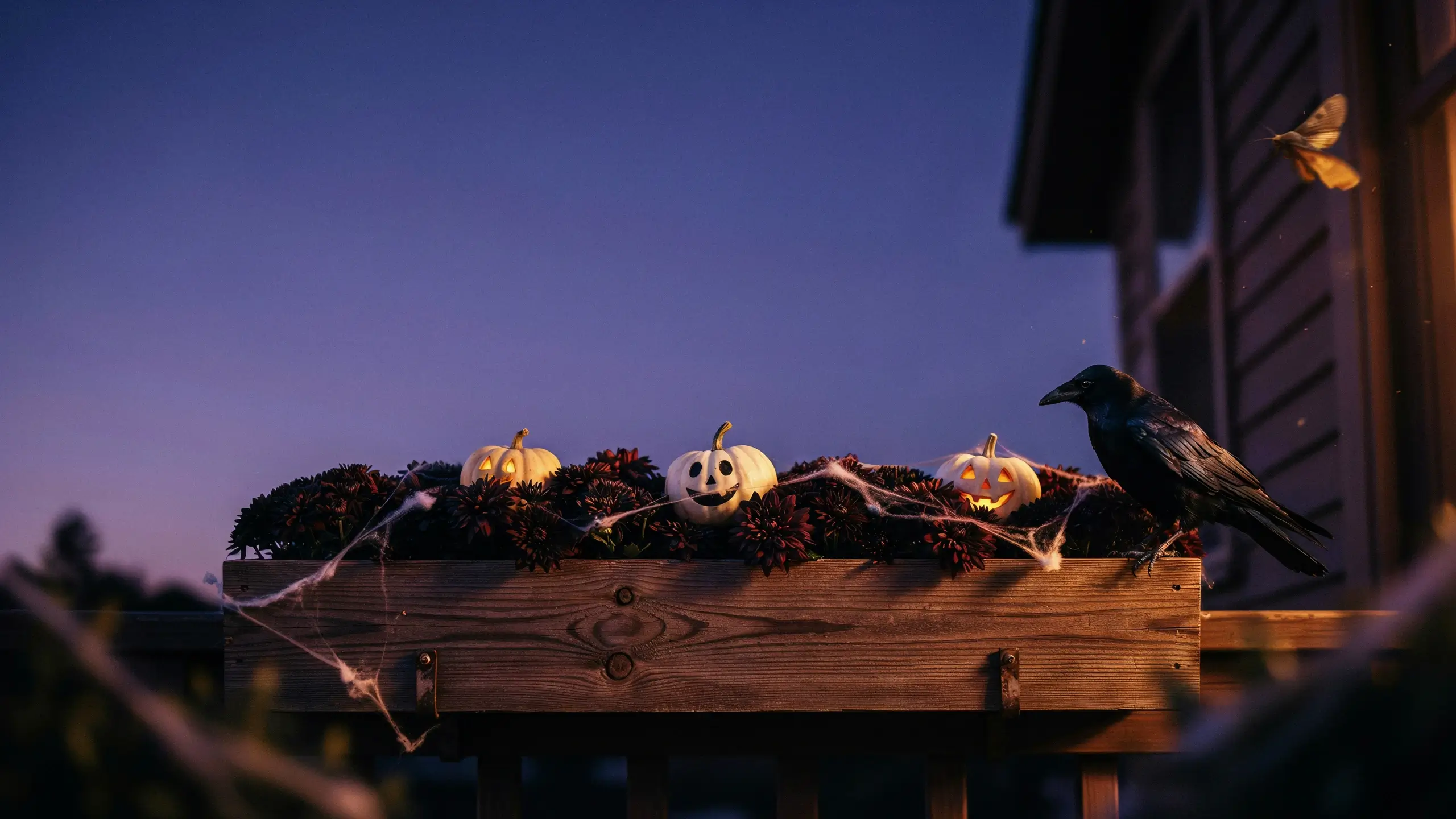
Layer in black mums, white pumpkins with simple painted faces, spooky-but-not-gory touches like faux crows or spiderwebs tucked into the greenery, and a few dried branches for a slightly eerie silhouette at dusk. Keep it subtle if you want it to transition smoothly into a general fall look after Halloween without a full teardown.
13. Thanksgiving Harvest Window Box
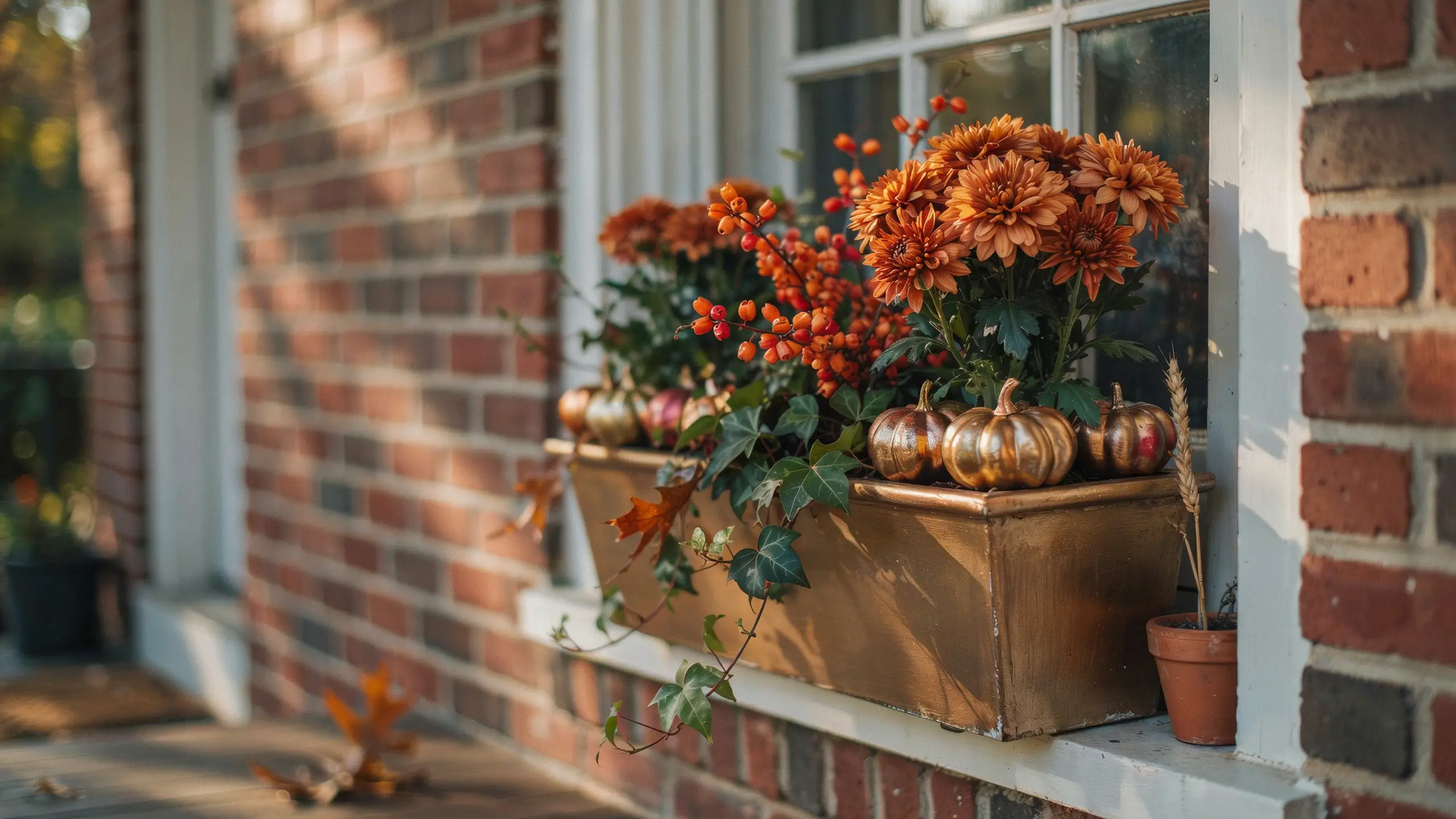
Shift the palette toward deep golds, warm browns, and cranberry red once Halloween passes. Swap out any Halloween-specific pieces, add mini decorative gourds, and tuck in a few sprigs of bittersweet berries if they grow in your area. This keeps the box relevant right through the holiday without needing a full replant.
14. RV, Balcony, or Small-Space Version
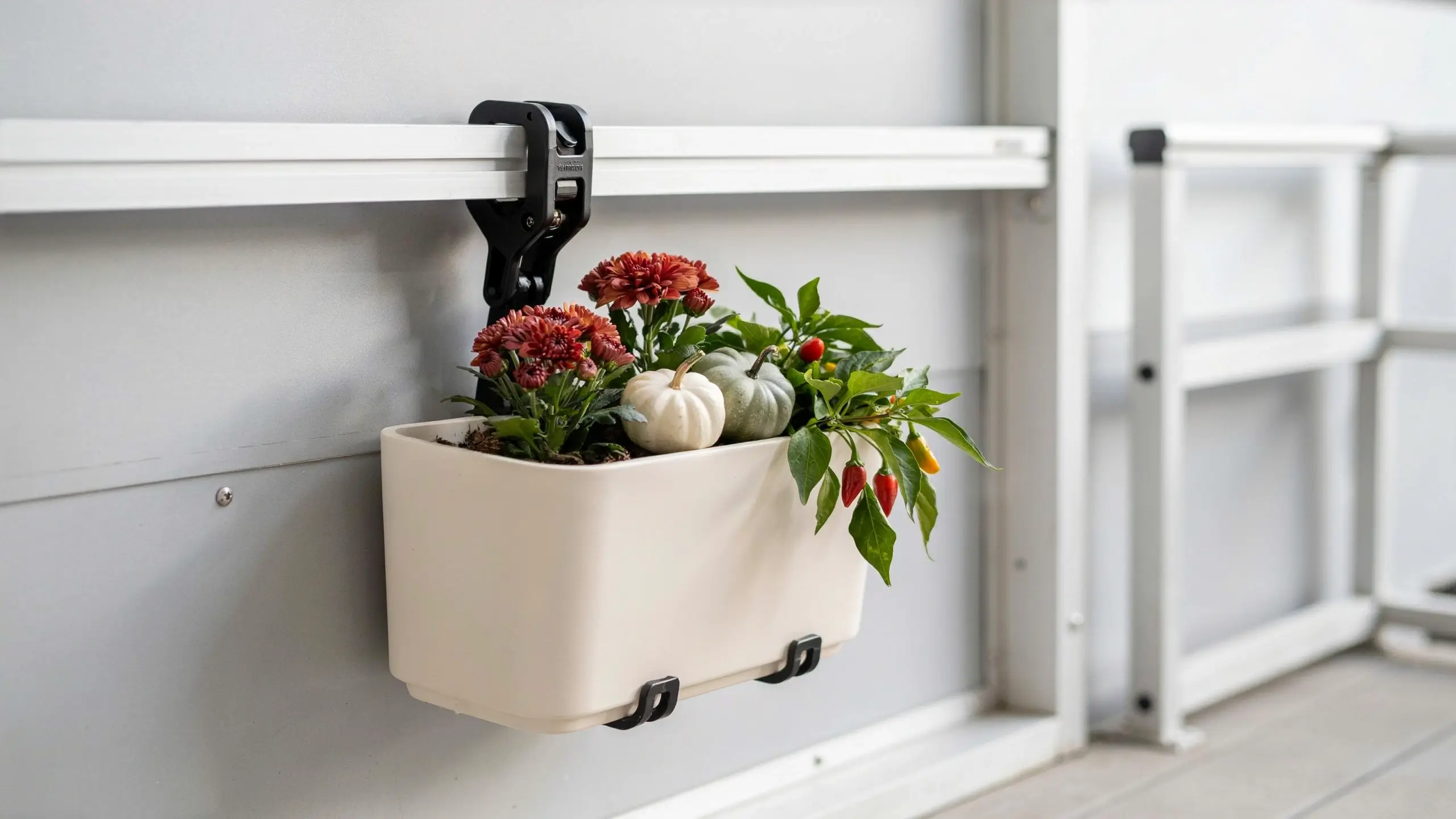
For a camper, apartment balcony, or small railing box, scale everything down. Use one small mum, one trailing ornamental pepper, and a couple of mini gourds instead of a full thriller-filler-spiller layout. Lightweight resin boxes are easier to mount on an RV or a rental railing without adding much weight, and a railing clamp system means no drilling into anything.
Mistakes to Avoid With Fall Window Boxes
- Overwatering. Fall plants need less water than summer ones since evaporation slows down as temperatures drop. Check soil moisture with a finger before watering instead of sticking to a summer schedule.
- Ignoring your frost dates. Mums, kale, and pansies handle light frost fine, but a hard freeze will still damage them without some protection. Know your first expected frost date and have a plan, even if it’s just an old sheet to cover the box overnight.
- Overcrowding for the “full” look. It’s tempting to jam in as many plants as possible for a fuller photo, but overcrowded roots compete for water and nutrients and the whole box declines faster. Leave a little breathing room.
- Using the wrong box material for your climate. Thin plastic boxes can crack in a hard freeze, and unsealed wood can rot fast in a wet fall. Match the material to your actual weather, not just the look you want.
- Skipping drainage. A box that holds standing water will rot roots within a couple of weeks, no matter how well you planted it.
Final Thoughts
Fall window boxes are one of those small projects that pay off way more than the effort they take. A couple of hours on a Saturday, a trip to the garden center, and your whole house reads differently from the street. Start with a look that actually fits your house and your schedule, whether that’s a low-maintenance faux box or a full thriller-filler-spiller mix, and build from there.
Which one of these are you trying first? Drop a comment below, I’d love to see how your fall window boxes turn out.


No Comment! Be the first one.