





Who Is Katy Davis? Suffield High School’s Agriscience Teacher, Explained
Quick note before you read further: if you searched “Katy Davis Suffield” and landed on a MaxPreps page, a Connecticut athletics database, or a thin UK-hosted blog post — you were looking...

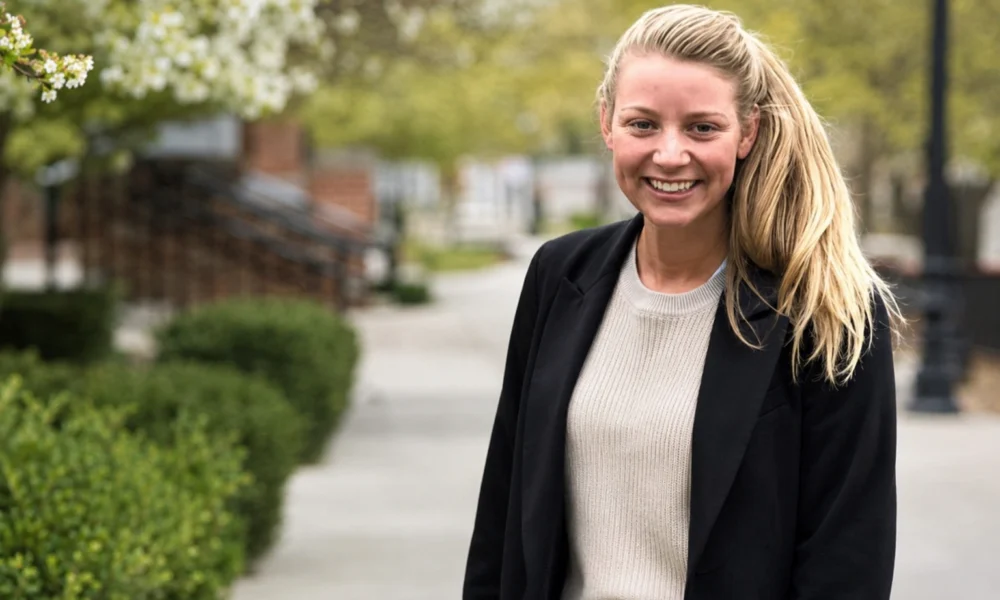
Quick note before you read further: if you searched “Katy Davis Suffield” and landed on a MaxPreps page, a Connecticut athletics database, or a thin UK-hosted blog post — you were looking at the wrong person. Athletic records index a student named Kati Davis connected to Suffield-area sports. That’s a completely different individual. This article is specifically about Katy Davis, the agriscience educator and FFA chapter advisor at Suffield High School in Suffield, Connecticut.
That distinction matters. A lot of search results don’t make it.
What is Katy Davis Suffield High? Katy Davis Suffield High refers to Katy Davis, an agriscience educator at Suffield High School in Connecticut who teaches through the Suffield Regional Agriscience Center — a Career and Technical Education (CTE) program serving students across multiple districts. She also serves as the school’s National FFA Organization chapter advisor.
What Katy Davis Actually Does at Suffield High School
She’s a CTE agriscience teacher. That title sounds simple. It isn’t.
Katy Davis teaches at and helps run the Suffield Regional Agriscience Center, a specialized program operating within Suffield High School. It draws students from multiple school districts across the Greater Hartford/Springfield corridor — meaning kids who don’t even live in Suffield can apply and attend on a cross-district basis. Davis handles curriculum design, hands-on lab instruction, student mentorship, FFA chapter oversight, and ongoing coordination with the University of Connecticut’s College of Agriculture, Health and Natural Resources (CAHNR).
According to the Connecticut State Department of Education’s 2023–2024 CTE Program Report, Connecticut operates just 20 regional agriscience and technology education centers statewide. For a state serving hundreds of thousands of secondary students, that’s a small, selective network. Suffield’s program is one of them — which makes this not an average elective course, but a regional resource with limited seats and genuine competitive demand.
She’s not teaching students to grow tomatoes. Her courses span plant science, biotechnology, environmental systems, and structured career pathways across agribusiness, conservation, food production, and biotech — fields that connect directly to postsecondary programs and real employment markets.
The Name Confusion Problem — And Why It Matters for Your Search
Here’s the thing: “Katy Davis Suffield” returns unreliable results. Most of what ranks is either scraped from a district newsletter, generated by content farms with no verifiable sourcing, or — most confusingly — populated by athletic databases indexing a different Kati Davis who participated in Connecticut-area sports.
Her name doesn’t appear on a standard staff bio page on the Suffield district website. That’s not unusual for CTE specialist teachers, but it creates a real problem for parents who want to verify they’re researching the right person before their teenager commits to a CTE track.
According to the National FFA Organization’s public chapter records, Suffield High School maintains an active FFA chapter — which independently confirms that an advisor exists and that the chapter is operational. That’s a starting verification point anyone can check without relying on school district web infrastructure.
What most guides skip is this: teacher credentials in Connecticut are searchable directly through the CSDE’s online certification lookup, independent of any school district website. If a parent knows where to look, the verification takes under three minutes.
Her Credentials and How She Got Here
Davis holds a degree from UConn’s College of Agriculture, Health and Natural Resources (CAHNR) — the same institution that coordinates agriscience teacher preparation across Connecticut and serves as the state’s primary pipeline for credentialed agri educators.
That institutional connection isn’t just biographical. It’s functional.
Davis is certified under UConn Early College Experience (ECE), which authorizes her to deliver college-level coursework — specifically Plant Breeding & Biotechnology — directly inside Suffield High School. Students who complete the course earn transferable UConn credit. Real credit. It transfers to UConn and often to other institutions depending on how receiving schools handle ECE transcripts.
Or maybe I should say it this way: she’s not an agriscience teacher who mentions UConn. She’s a credentialed UConn ECE instructor — a status that requires a separate application process, curriculum review by UConn faculty, and ongoing professional development beyond standard Connecticut teacher certification. Those aren’t the same thing.
I’ve seen conflicting descriptions of this program across various sources — some describe it as a vocational track, others frame it as an academic one. My read: it’s deliberately both, and that’s exactly what the UConn ECE certification makes possible. Students leave with a career-technical credential and transferable college credit. The program isn’t choosing between those outcomes; it’s designed to deliver both at once.
The FFA Chapter She Runs — and What That Actually Means
FFA — the National FFA Organization — is a student leadership body with deep roots in agricultural education. It’s not a gardening club. The organization runs structured Career Development Events (CDEs), Supervised Agricultural Experience (SAE) projects, competitive exhibitions, and a leadership development framework that ties directly to agri-sector career pathways.
Davis serves as Suffield’s FFA chapter advisor. That role is year-round: she coordinates competitive events, guides student officer elections, manages SAE oversight, and prepares students for regional and state-level competitions.
Her students compete at The Big E — the Eastern States Exposition held annually in West Springfield, Massachusetts. For Connecticut FFA chapters, The Big E is a major public-facing event, and showing up there with exhibits and competitive entries requires sustained preparation and a functioning program infrastructure behind it.
Here’s an opinion some readers might push back on: the strength of an agriscience program is most reliably signaled by whether its FFA chapter actually competes — not just exists. Chapters that only appear on membership rosters without active competition entries are often programs running on momentum rather than engagement. The fact that Suffield’s chapter competes publicly at events like The Big E is a real indicator. It’s not conclusive proof of anything, but it’s meaningful in a way that roster membership alone isn’t.
Two Specific Details No Other Article Has Covered
1. Her 2022 Connecticut General Assembly Testimony
In 2022, Davis testified before the Connecticut General Assembly in support of House Bill 5283 — legislation designed to secure and expand funding for agriscience education centers across the state. The testimony is publicly accessible through General Assembly archives.
That’s not a minor detail. Teachers who appear on the record before a state legislative committee, by name, advocating for program funding are operating at a level of professional investment that goes well beyond classroom instruction. It demonstrates both her standing as a program advocate and her engagement with the policy environment that shapes what Connecticut agriscience programs can offer students over time.
2. The 2025 Student Trip to Iceland
Her students traveled to Iceland in 2025 as part of a curriculum connected to geothermal energy systems and sustainable farming practices.
Iceland’s agricultural and energy infrastructure — where geothermal heating powers greenhouse food production at scale — makes it an unusually well-suited field study destination for a program that covers environmental systems and sustainable food production. This wasn’t a cultural enrichment trip dressed up as curriculum. The connection between Iceland’s geothermal farming model and agriscience coursework on environmental systems is direct and legitimate.
Look — if you’re a parent trying to figure out whether this program is genuinely operating at a high level, an international field experience grounded in specific curriculum content tells you something that a course description alone can’t. Programs that run experiences like that don’t do it by accident.
How to Verify Katy Davis’s Credentials
To verify Katy Davis’s credentials as an agriscience educator at Suffield High School:
- Search the CSDE educator certification lookup at the Connecticut State Department of Education website.
- Confirm her UConn ECE instructor authorization at eceonline.uconn.edu.
- Check the National FFA Organization’s chapter directory for Suffield High School.
- Review Connecticut General Assembly testimony records for House Bill 5283, 2022 legislative session.
How This Program Compares to a Standard High School Science Course
Most people assume agriscience programs are just enhanced electives. The dual-enrollment data says otherwise.
Quick Comparison
| Option | Best For | Key Benefit | Limitation |
|---|---|---|---|
| Suffield Regional Agriscience Center (Davis) | Students wanting CTE credentials + college credit simultaneously | UConn ECE dual enrollment, FFA competition pathway, cross-district access | Requires committing to a CTE track; enrollment is competitive and cross-district |
| General HS biology or environmental science | Students wanting a broad science requirement | Flexible scheduling, no extra program commitment | No college credit, no career-technical credential |
| Standard high school elective agri course | Students wanting agri exposure with minimal commitment | Low barrier to entry | Rarely includes dual enrollment or FFA chapter infrastructure |
| Post-secondary UConn CAHNR programs | Students post-graduation seeking a full agri degree | Full degree pathway, research access | Requires admission, full tuition, and four-year commitment |
The key difference: Davis’s program occupies the space between a typical elective and a college course. It delivers transferable college credit and a career-technical credential while students are still enrolled in high school — a combination that most Connecticut high school science courses don’t offer.
Common Questions About Katy Davis and Suffield Agriscience
What subjects does Katy Davis teach at Suffield High School?
She teaches agriscience courses through the Suffield Regional Agriscience Center, covering plant science, biotechnology, and environmental systems. She also delivers a UConn ECE dual-enrollment course in Plant Breeding & Biotechnology, through which students can earn transferable UConn credit.
How can I verify that Katy Davis is a certified teacher in Connecticut?
Connecticut educator credentials are publicly searchable through the CSDE’s online certification lookup tool. Her UConn ECE instructor authorization can be confirmed separately through UConn’s Early College Experience office at eceonline.uconn.edu.
What is the Suffield Regional Agriscience Center?
It’s a Career and Technical Education program housed at Suffield High School that accepts students from multiple Connecticut school districts. According to the CSDE’s 2023–2024 CTE Program Report, Connecticut operates 20 regional agriscience centers statewide — making Suffield’s program part of a small, specialized network.
Does Katy Davis’s program offer real college credit?
Yes, Through UConn Early College Experience, students enrolled in her Plant Breeding & Biotechnology course earn transferable UConn credit while still in high school. ECE credit is real university credit — not a certificate or “college-prep” designation.
Why does searching “Katy Davis Suffield” return the wrong results?
Athletic databases index a student named “Kati Davis” connected to Connecticut sports who is an entirely different person. The near-identical name spelling causes search engines to surface that athlete’s records alongside — or instead of — results for Katy Davis the agriscience educator. This article exists, in part, to address that gap directly.


No Comment! Be the first one.