






Master Gee’s Net Worth in 2025 and Why the Real Number Is Only Half the Story
The figure you’ll find on most celebrity finance sites is somewhere between $500,000 and $1 million. That’s the estimated net worth of Guy “Master Gee” O’Brien —...

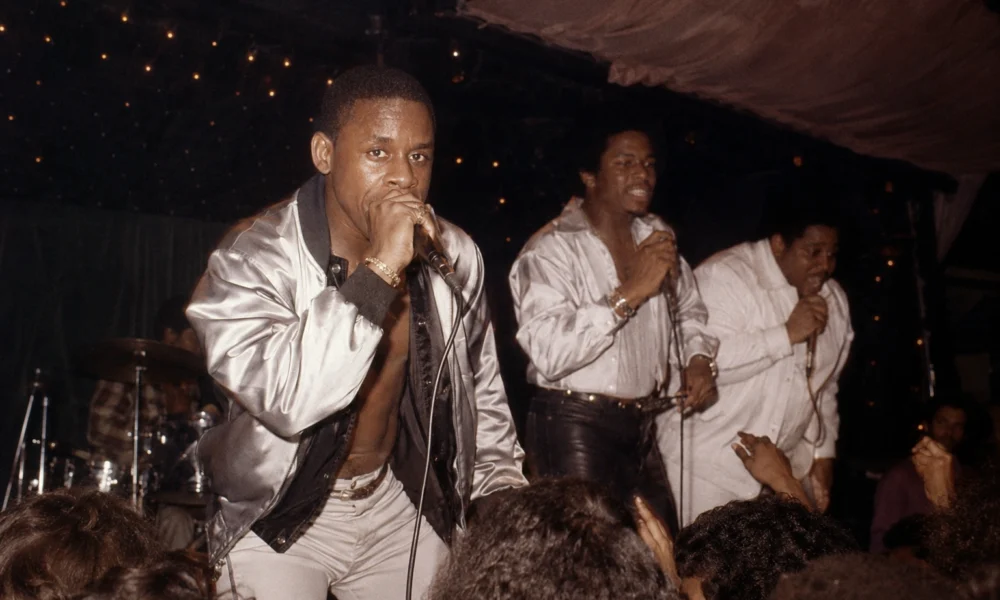
The figure you’ll find on most celebrity finance sites is somewhere between $500,000 and $1 million. That’s the estimated net worth of Guy “Master Gee” O’Brien — founding member of The Sugarhill Gang and one of the first voices ever committed to tape in hip-hop history.
Here’s what those same sites almost never explain: Master Gee was reportedly left penniless after one of the biggest-selling rap records ever made. He and his bandmate later sued the label for millions they claim were never paid. And thanks to a separate legal dispute involving musician Nile Rodgers, Master Gee earns zero songwriting royalties from “Rapper’s Delight” — to this day, nearly five decades after recording it.
The number is easy to find. The story behind it takes more digging.
Who Is Master Gee?
Master Gee net worth refers to the estimated total financial wealth of Guy Anthony O’Brien — rapper, DJ, and co-founder of The Sugarhill Gang, the group whose 1979 single “Rapper’s Delight” became hip-hop’s first mainstream radio hit. Based on available public reporting, his net worth is estimated between $500,000 and $1 million, a range that carries significant caveats explored throughout this article.
O’Brien was born January 9, 1962, in Teaneck, New Jersey. He grew up around soul, doo-wop, and R&B — genres that shaped how he approached rhythm and wordplay. By his mid-teens, he was embedded in the block party scene that stretched from the South Bronx into New Jersey, where hip-hop was being assembled in real time at outdoor gatherings with DJs and MCs battling for crowd response.
In 1979, Sylvia Robinson — founder of Sugar Hill Records — recruited O’Brien alongside Michael “Wonder Mike” Wright and Henry “Big Bank Hank” Jackson to form The Sugarhill Gang. The assembly was deliberate and fast. Robinson had identified hip-hop as commercially viable before the industry had. She needed a group that could record and release something quickly.
Master Gee was 17 years old when they walked into that studio.
The result was “Rapper’s Delight.” It hit #36 on the Billboard Hot 100 — the first rap track to do so — and became the best-selling 12-inch vinyl single in recording history. An estimated 14 million copies have sold since its release.
What Is Master Gee’s Net Worth in 2025?
The straightforward answer: no public financial record gives a precise figure. Personal finances at this level aren’t disclosed, and Master Gee hasn’t commented directly on his net worth in available interviews.
I’ve seen conflicting estimates across multiple sources — some as low as $100,000, a few suggesting closer to $1 million. My read is that the realistic range sits between $500,000 and $750,000, based on three decades of documented live performance activity, limited performer royalties, and a brief entrepreneurial period in publishing after he left Sugar Hill Records in 1984.
According to CBS News reporting, both Master Gee and Wonder Mike were excluded from profits on “Rapper’s Delight” during the label era, with both men descending into financial hardship within years of the song’s release. Wonder Mike described painting houses to survive. Master Gee said he was penniless. These aren’t allegations from anonymous sources — they’re on-record statements from the artists themselves.
His income today is estimated to come from:
- Live performance fees — Master Gee performs globally with a reformed Sugarhill Gang and as a solo DJ, and has done so actively since a name-usage dispute was resolved in 2014
- Performer royalties — separate from songwriting royalties, these are tied to the master recording itself
- Media and brand appearances — including a 2023 appearance on GQ’s Most Expensivest, hosted by 2 Chainz
- Historical publishing ventures — limited; he briefly entered the magazine industry after departing Sugar Hill Records
What he almost certainly does not collect: a single dollar in songwriting royalties from “Rapper’s Delight.”
The Royalty Scandal That Defined His Financial Story
This is the section competing articles consistently skip. It’s also the section that actually explains the net worth figure.
The Nile Rodgers Problem
“Rapper’s Delight” was built on a re-recording of the bass line from Chic’s 1979 disco hit “Good Times.” When Nile Rodgers — Chic’s guitarist and co-writer of that song — heard the Sugarhill Gang record, he pursued legal action. The result: the songwriting credits were entirely rewritten. The original listing had included the three rappers and Sylvia Robinson as co-writers. After Rodgers’ challenge, the only credited composers became Rodgers and the late Bernard Edwards. Edwards’ estate now receives his share.
That reassignment means Master Gee, Wonder Mike, and Big Bank Hank collect no publishing income from one of the most-licensed and most-played songs in hip-hop history.
The Sugar Hill Records Problem
Songwriting royalties and performer royalties are legally distinct income streams. Even without the songwriting credits, Master Gee could theoretically have earned performer royalties from the master recording. According to Sugar Hill Gang members’ own accounts, that didn’t happen either — at least not during the label years.
According to music historian Nelson George in The Death of Rhythm & Blues, “Rapper’s Delight” generated $3.5 million for the Robinson family — Sugar Hill Records’ founders — on initial release alone. In today’s dollars, that figure is roughly $12.3 million. The artists who recorded it saw none of that initial windfall.
Here’s the thing: this wasn’t illegal in the way people might assume. It was contract structure. Artists signed away rights they didn’t fully understand, in deals crafted by people who understood them very well.
The 2008 Lawsuit
In 2008, Master Gee and Wonder Mike filed suit against Sylvia Robinson’s estate and Sugarhill Publishing, claiming millions in uncollected performer royalties and alleging that Robinson had deceived them about the terms of their original contracts. According to HipHopDX reporting at the time, the duo also sought compensation tied to ongoing sampling of the track — which has been interpolated and sampled extensively across decades of music.
The outcome of that litigation was never publicly detailed. If there had been a large settlement, the net worth estimates wouldn’t still be hovering under $1 million.
Or maybe I should put it this way: the absence of a public resolution is itself information.
How Master Gee Earns Money Today
At 63, Guy O’Brien is still active in the industry. He performs regularly across the U.S. and internationally, both as part of the reformed Sugarhill Gang and as a solo DJ. His profile increased meaningfully after the 2014 resolution of a dispute over who had the legal right to perform under The Sugarhill Gang name — a conflict that had split the group’s performing factions for years.
In 2013, Universal Music Publishing reached an agreement to administer Sugar Hill Records’ full catalog. Whether that arrangement improved royalty flow to original performing artists like Master Gee has not been publicly confirmed, but catalog administration deals of this type typically don’t retroactively resolve historical royalty disputes.
Quick note: his 2023 appearance on Most Expensivest — the GQ series where 2 Chainz evaluates luxury products — signals both continued mainstream visibility and the kind of media partnership that generates appearance income for legacy artists.
To understand how artists in his position typically rebuild income streams after label disputes, the pattern generally looks like this:
- Secure live performance rights independently — negotiate fees directly, bypassing label splits
- Pursue sync licensing opportunities — older tracks placed in film, TV, commercials
- Leverage nostalgia through media appearances — podcasts, streaming shows, brand partnerships
- Build merchandise income tied to catalog recognition
The streaming era has partially helped. “Rapper’s Delight” accumulates streaming royalties on platforms like Spotify and Apple Music, though master recording ownership determines how those royalties are distributed — and Sugar Hill’s catalog is now administered by Universal, not the original artists.
Master Gee vs. Wonder Mike vs. Big Bank Hank — A Financial Comparison
Most people assume the three Sugarhill Gang members ended up in roughly the same financial position. The available evidence doesn’t fully support that assumption.
Master Gee vs. Wonder Mike, financially: Both lost all songwriter credits after the Nile Rodgers legal challenge and were reportedly excluded from Sugar Hill Records profits during the label era. Master Gee likely holds a modest earnings edge today, given his more consistent public performance activity since 2014. Neither controls the master recording.
Quick Comparison
| Member | Estimated Net Worth | Primary Income Today | Key Financial Constraint |
|---|---|---|---|
| Master Gee (Guy O’Brien) | $500K–$750K | Live performances, solo DJ sets | No songwriting credits; disputed performer royalties |
| Wonder Mike (Michael Wright) | $500K–$1M | Live performances | Same royalty situation; reported financial hardship post-label |
| Big Bank Hank (Henry Jackson) | N/A — died Nov. 2014 | N/A | Passed before streaming era; his verse used Grandmaster Caz’s uncredited lyrics |
These estimates are drawn from publicly available reporting and industry comparisons. Actual figures are private. This is not financial advice.
There’s a fourth financial story embedded in this table that deserves a line: Big Bank Hank’s portion of “Rapper’s Delight” used lyrics written by Grandmaster Caz of the Cold Crush Brothers — without permission and without payment. Caz has stated publicly that he has never been compensated and remains uncredited as a songwriter to this day. The financial exploitation in this song’s history runs at least three layers deep.
What the Numbers Actually Tell Us About Early Hip-Hop and Money
Most people assume that landing a charting single means financial security. For hip-hop’s first recorded generation, that assumption was almost universally wrong.
The artists who built the genre — The Sugarhill Gang, Grandmaster Flash, the Furious Five — signed contracts they didn’t fully understand, often with labels that retained control of both masters and publishing. Sugar Hill Records wasn’t uniquely predatory; it was operating within standard industry practice of the era. That context doesn’t make the outcome less damaging for the artists involved. It just explains why it happened at scale.
Some researchers and critics argue that Sylvia Robinson deserves genuine credit for creating the commercial infrastructure that gave hip-hop its first national platform. That’s a reasonable position. Without her capital, her connections, and her willingness to bet on an unknown genre, there may have been no recorded “Rapper’s Delight” in 1979. But if you’re specifically examining what the three men who recorded that song took home, the ledger doesn’t balance.
Look, if you’ve spent time reading hip-hop history and kept wondering why so many foundational artists struggled financially while their songs generated wealth for others, here’s what actually explains it: it’s not incompetence and it isn’t simply bad luck. It’s contract architecture. The deals were written to keep revenue with the people who wrote the deals.
Master Gee’s net worth today reflects a career spent trying to reclaim economic value from work he was largely cut out of the first time around.
Frequently Asked Questions
What is Master Gee’s net worth in 2025?
Master Gee’s net worth is estimated between $500,000 and $750,000, based on live performance income, limited performer royalties, and media appearances. He was reportedly excluded from Rapper’s Delight profits by Sugar Hill Records and holds no songwriting credits.
Did Master Gee make money from Rapper’s Delight?
Very little, and not initially. Sugar Hill Records excluded him from profits, and a later legal challenge by Nile Rodgers resulted in all songwriting credits — and royalties — being reassigned to Rodgers and the late Bernard Edwards. Master Gee receives no songwriting income from the song.
Why did Master Gee sue Sugar Hill Records?
In 2008, Master Gee and Wonder Mike sued Sugarhill Publishing and the Robinson estate, claiming millions in uncollected performer royalties and alleging their original late-1970s contracts were based on misrepresentation. The outcome was never publicly disclosed.
Is Master Gee still performing today?
Yes, As of 2025, Master Gee performs globally with a reformed version of The Sugarhill Gang and as a solo DJ. He appeared on GQ’s Most Expensivest with 2 Chainz in 2023 and has been an active performer since a name-dispute resolution in 2014.
How much did Rapper’s Delight actually earn?
According to music historian Nelson George, the song earned the Robinson family — owners of Sugar Hill Records, $3.5 million on initial release, equivalent to roughly $12.3 million in today’s dollars. The performing artists received none of that windfall.



No Comment! Be the first one.